

VIXEN! (1968)

In the untamed wilderness of British Columbia, a bush pilot named Tom picks up fares that give tourist, fisherman, hikers, and the like an experience of a lifetime in raw, Canadian countryside. Also, an experience of a lifetime is when his clients and guests staying the night in his rugged cabin home meet his nymphomaniac wife, Vixen. When Tom’s flying about to-and-fro, Vixen slips out of her clothes and into the comforting arms of varietal strangers of men and women alike. Indoors, outdoors, land, water, men, women…for Vixen, sex is life, and she must take it whatever means necessary, even if that means conniving her way into sleeping with her motorcycling little brother Judd. No Canadian Mountie can stop her from mounting him. No lawyer can litigate his way out of her desiring deposition. In fact, no one can resist the voluptuous Vixen at all except for one man, a negro named Niles, as Vixen’s racist belittlement seeds a strong ambivalence between them.

The first film in Russ Meyer’s “Vixen” trilogy, “Vixen!” is the 1968 produced feature directed by the man dubbed King Leer and The Fellini of the Sex Industry known as Russ Meyer. The World War II combat photographer saw unequivocal carnage and death in his camera lens but his post-war vocation to become an eroticist earned him being one of the most prolific skin flick filmmakers ever between the 1950s to the 1980s. With a penchant for heavy-chested women, Meyer’s “Vixen!” is uninhibition incarnate and is a pleasure-seeking good time when the prim-and-proper hubbub is put to the side in this Robert Rudelson penned philandering orgy of ogling based off an original story by the “Faster, Pussycat! Kill, Kill” and “Motorpsycho!” director and infrequent concept collaborator and producer Anthony-James Ryan (“Black Snake”). Meyers wife, Eve, served as associate producer alongside Richard S. Brummer and George Costello under the production companies of Goldstein Films, Coldstream Films, and Eve Productions.
SUPERVIXENS (1975)

Gas station attendant Clint maintains the steady pumping of gas and washing of windshields that pull up to be serviced, but his insatiable wife, SuperAngel, wants Clint back home for a little pumping of her own. Constantly calling him at work and threatening the dissolution of marriage frustrates Clint to the point where their lovemaking turns heated and violent that results in Officer Harry Sledge to knock out Clint and trifle with SuperAngel’s coquettish whims after its all said and done. Yet, Harry Sledge’s inadequacies release his true nature, a pent-up maniac who mercilessly murders SuperAngel and shifts the blame toward Clint. On the run, Clint finds himself at the mercy of ride givers who either take advantage of his body and what little money he has or provide him a safe place to stay with a caveat of busty, horny temptations knocking down his spare room door. Clint finally lands being a gas station attendant again with SuperVixen, a gas station inheritor running both the pumps and the hamburger grill, and he finally feels he’s back on his feet in life being in love with SuperVxen. That is until Harry Sledge coincidently shows up at his gas pump.
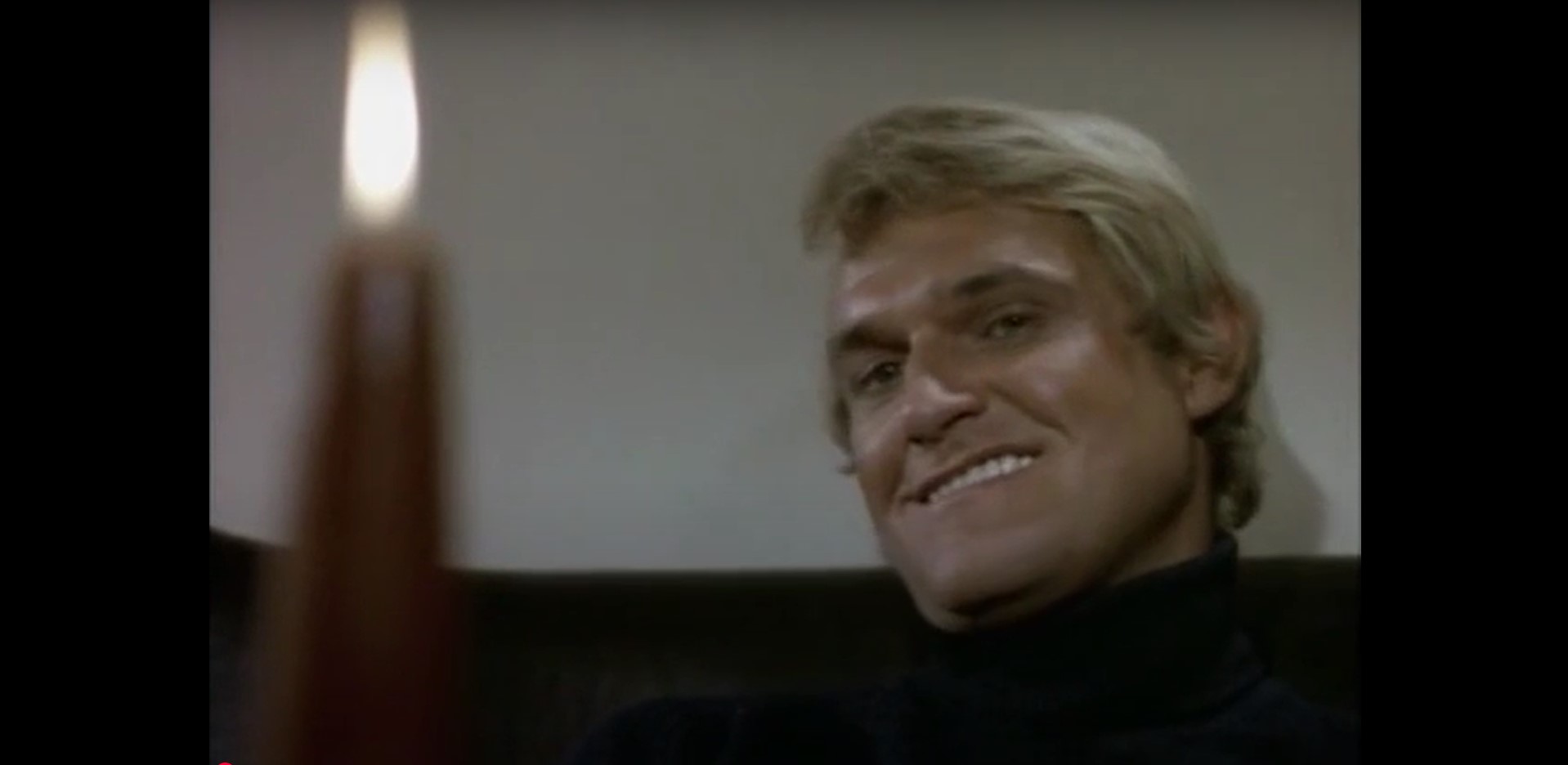
Not so much a sequel to “Vixen!” as one would expect in an unaffirmed trilogy, “Supervixens” is Russ Meyer’s 1975 satirical sex-comedy busting at the seams into insanity and out of blouses. A bigger cast with even bigger boobs, literal and figurative, plays upon a charade of Meyer’s troubled time through divorce that sees a little more violence toward women while still shitkicking characters with well-endowed powers of sexualized influence. Unlike “Vixen!,” Meyer writes the film too, adding his flare of elongated exposition that in itself is a foreplay of phonics with its blend of sophistication, wit, and obscenity. The RM (Russ Meyer) International presented film is produced by Meyer, Fred Owens, Charles Napier, Wilfred Kues, James Parsons, executively produced by Anthony-James Ryan, and filmed mostly in the vast Arizona desert.
BENEATH THE VALLEY OF THE ULTRA-VIXENS (1979)

Junkyard worker Lamar is a studios young man who wants nothing more than to earn his degree in smalltown America. His wife Lovenia is studios in keeping her bed warm by sating her thirst for every man in said smalltown America. Yet, Lovenia wants Lamar only and badly too but the one thing that wedges their sex life apart is Lamar’s obsession with the backdoor only and not being eye-to-eye intimate. To try and fix their broken relationship of rear entries and unrestrained randiness, the two young lovers embark on a journey around town to seek salvation into solace of each other’s arms rather than meeting their needs elsewhere. A gay marriage counselor/dentist with a kinky lesbian nurse, a radio evangelist busting out of her shirt to save souls, 14-year-old athletes being taught adulthood with hands on experience, junkyard and garbageman rendezvous and scrappy scandals, all play a part in working out Lamar’s kinks and sedating Lovenia’s nymphomania.

Now this Meyer entry has more sequel components. “Beneath the Valley of the Ultra-Vixens” has even more sexploitation satire shrouded by a saturation of sordid sleaze in what would be essentially Russ Meyer’s last theatrical feature-length film. The 1979 production really goes into the pubic bush of pushing public boundaries with sexualized situations, intermingling faith with sexualized fervor, and expressing a provocation freedom only in the way Russ Meyer could deliver it. The story is conceived by Meyer but is written by none other than Roger Ebert under the penname of R. Hyde in what was the last of three feature film collaborations with the director behind “Beyond the Valley of the Dolls” and “Up!” Meyer’s RM Films International solely presents the Richard S. Brummer, Fred Owens, and Russ Meyer coproduced “Beneath the Valley of the Ultra-Vixens” shot, yet again, on harsh terrain of the American west in arid and rural portions of California.
CAST
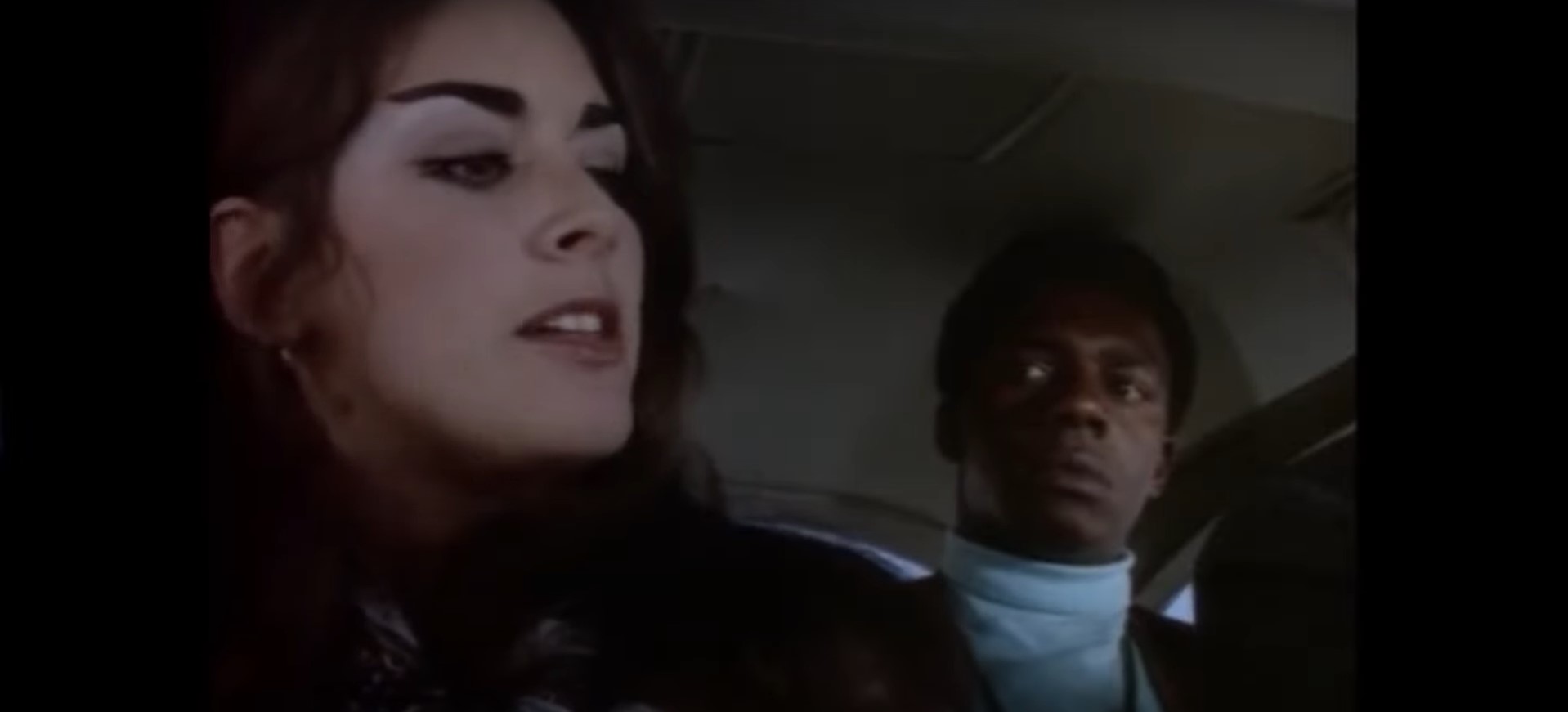
All three films center around one sex-driven consumed woman and one hapless in-one-way-or-another man. Each of the principal lead actress are made up of parts Russ Meyers admires the most: buxom, curvy, and beautiful. Each provide their own eccentricity to the role despite their common core theme of nymphomania. In the titular role of “Vixen!” is the Meyer discovered topless dancer Erica Gavin, sporting D cups that were typically, and funny enough, just a tad small for the Russ Meyer usual collective of busty babes. Gavin’s envelopes herself completely into the promiscuous role that preys upon men like a shark whiffing a solitary drop of blood to get the olfactory senses working overtime. Gavin devours her counterparts on screen as a saucy, sassy seductress with hips that hypnotize and a chest that chastises chastity with extreme prejudice. And speaking of prejudices, “Vixen!” paints an obscene vocabulary depiction of the only black actor through the vile and vicious name-calling by the Vixen herself. Between the verbal bigotry, U.S. military draft dodging, unpopular Vietnam war beliefs and communism, Meyer disguises 1960s socio- and political topical matter underneath a large rack of sexploitation but does evoke the black character Niles (Harrison Page, “Carnosaur”) as a costar rather than a supporting actor. Super Angel in “Supervixens” can also be rancorous but not in a prejudice sense; instead, the actress Shari Eubank portraying Super Angel has an impatient demeanor for her rather unhurried beau Clint and what also separates Gavin and Eubank in their respective roles is that Eubank has a dual performance in the most irony of names being a malicious tease as Super Angel and being sweet as pie as Super Vixen. The contrast between the two women also mirrors a resemblance of what once was even to the detail of Clint obtaining his old job back at a new gas station but their arc as couple must face the formidable Harry Sledge as the peak they both must overcome, representing as perhaps a metaphor, coupled with some sly editing and intention, in being an older version of Clint heading toward impotence, anger, and confusing sexual orientation. The uninhibited nude dancer and adult film starlet Kitten Navidad led the charge in the third film, “Beneath the Valley of the Ultra-Vixens,” as the uber-compulsive sexual Lovenia. Before starring in the stags “Bodacious Ta Tas” and “Eat at the Blue Fox,” amongst others, Navidad ran rampantly new in swanky, silly, softcore in front of the camera lens of her then husband Russ Meyer. Lively and lovely, with large breasts and a hairy bush, Navidad sparks a wide grin under her Latina charm as well as portraying a promiscuous housewife gone wild in a starkly different demean that’s more toon in its titillating manner when compared to “Vixen!” and “Supervixens.” “Beneath the Valley of the Ultra-Vixens” is the only film in the trilogy to be a sequel, and barely at that, with returning characters of “Supervixens” helpful farmer Lute (Stuart Lancaster, “Starlet!”) and his lovely Austrian wife SuperSoul, played by another adult and genre actress Uschi Digard (“Ilsa: She Wolf of the S.S.,” “Superchick”). The three films round out the cast increasingly with Garth Pillsbury, Jon Evans, Robert Aiken, Peter Carpenter, Michaenl Donovan O’Donnell, John Furlong, Charles Pitt, Henry Rowland, John Lazar, Fred Owens, Glen Dixon, Ken Kerr, Patrick Wright, Robert E. Pearson, Michael Finn, Don Scarborough, Aram Katcher, and DeForest Covan with sexploitation and adult industry regulars Vincene Wallace (“A Sweet Sickness”), Deborah McGuire (“The Young Secretaries”), Colleen Brennan (“China and Silk”), Christina Cummings, Ann Marie (“For Your Breasts’ Only”), June Mack, Sharon Hill (“Dawn of the Dead”), and Candy Samples (“Fantasm”).
OVERVIEW
From the flowing creeks and tall pines of British Columbia, Canada, to the arid desert rocks and scantily scenic hardscapes of the western U.S. deserts, Russ Meyer had a fondness for the coarse-nature of the great outdoors put up adjacent to the delicate, soft-skin beauty of voluptuous women prancing, dancing, jumping, skipping and fornicating to the beat of oversexualization, perversion, and the problems that rouse from the unfettered arousal. Meyer’s interests not only laid with gigantic melons and the overall less-is-more clothing on women, but the director also had a fondness for rural, smalltown settings, a subtle paradoxicality to pepper German aspects into the story’s vast and bosomy berth despite his World War II veterancy, and he really tackled sociological issues of race, orientation, and, of course, a broad spectrum of general sexuality too taboo for much of puritanical America. Yet, Meyer had an eye for what makes cinema alluring and not only from a taboo and bare skin angle but from the angles of which he shot and a stylistic eye to match to create and edit unforgettable compositions. An eclectic medley of angles, quick coherent edits, a witty, sarcastic, and philosophical dialogue, a swanky and swinging instrumental soundtrack, and the vibrant, sultry, and pulpy coloring of pinks, reds, blues, yellows, and other fuzzy posh palette colors come together in a beautiful mesh of fast-paced filmmaking that tells about the fast-and-loose times, an exaggerated parallel of the rather an unmentionable underbelly most were too ashamed to mention or even think positively minutely about in that era. Today, sex is more fashionable but 40-50 years ago, Russ Meyer foresaw a future of polyamory in a fun, lightful, sexy, if not borderline sleazy and perverted, way sewn into an alternate universe of risk and reward told in meta fashion.
If you must take one thing away about Severin Films is that the boutique label knows how to restore and package lost treasures. Such is the case with Russ Meyer’s broad bare-bosom view of Americana cinema with the Vixen trilogy. These Russ Meyer Bosomania films are restored and scanned in 4K on the worldwide debut of an AVC encoded, 1080p high-definition, BD50 and presented in a widescreen 1.85:1 aspect ratio except for “Vixen!” which is shown in the European aspect ratio 1.66:1. Noted on the back covers, “Vixen!” print scanned in 4K from the original negative is restored by MoMA, the Museum of Modern Art, “Supervixens’” print is restored by Severin Films in conjunction with The Russ Meyer Trust with the 4K scanned print originating from The Academy of Motion Pictures Arts and Sciences, and “Beneath the Valley of the Ultra-Vixens’” weathered-worn print was painstakingly restored by Severin Films as well with cooperation from The Russ Meyer Trust. Between 1968 and 1979, there’s more than a subtle difference in image presentation, style, and quality, as expected, whether be Meyer growing as a student of cinematography, film stock upgrades, or just plain print wear and tear. “Vixen!” has a more muted color palette but nowhere near being totally vapid as Meyer uses less colorfully charged lighting and shadow work that results in an organic image with some inconsequential anemic and barely perceptible damaged frames sporadically throughout. Details are generally favorable and kind to early colorists, touched up I’m sure in the restoration to pop it out some. “Supervixens” and “Beneath the Valley of the Ultra-Vixens” do color-pop tremendously, punctuated by Meyer’s stroke of lighting and editing genius to have each scene be enthralling to behold and be aggregated into a class known as the Russ Meyer magnum opus. Meyer is the David Lynch of the sexploitation subgenre, seducing with sordid and satirical sex-driven maniacs and a peculiarity of situations and themes that often run silent in the general population. The latter two films are scot-free of print wear which is surprising since “Ultra-Vixens” is noted to have been weathered, which is a true testament to Severin’s dedication to the restoration. All three films have an ENGLISH LPCM Mono mix of fair fidelity that’s akin to the skin soundtracks of a burlesque-like Benny Hill show. “Vixen!,” once again,” strays from the pack with glam swing revelry and sultry notes of passion herald in by a smooth piano, percussion, and guitar. Dialogue renders nicely through from all three films accompanied by more of the near slapstick Foley rather than environment din. “Vixen!” does emit a bit of an echo is certain scenes, more evidently so when Vixen argues or persuades to get what she wants, and you can hear her dialogue again in like a soft breath underneath. English closed captioning is available for selection. Several hours of special hours have been compiled for this set, beginning with “the “Vixen!” allotment that has a second, censor prologue cut of the film in from the theatrical re-release, an archival audio commentary with Russ Meyer, a new audio commentary with Erica Gavin, new interviews with Gavin and Harrison Page in Woman…Or Animal?, a television interview of Russ Meter and Yvette Vickers on the David Del Valle hosted show The Sinister Image, Entertainment… Or Obscenity? Is the Marc Edward Heuck historical and present look at the Cincinnati Censorship Battles against Russ Meyer and his films and rounds out with the feature’s trailer. “Supervixens'” special features include an archival audio commentary with Russ Meyer, an interview between Mike Carroll and Russ Meyer Russ Meyer Versus The Porn-Busters, an interview with The Return of Harry Sledge Charles Napier, S1E5 with Russ Meyer on The Incredibly Strange Film Show, a TV spot, and the trailer. Rounding out the extras on “Beneath the Valley of the Ultra-Dixens” came another archival feature-paralleling commentary with Russ Meyer, The Latin Brünhilde interview with actress Kitten Natividad, an Ellen Adelstein interview with Russ Meyer on her 1979 talk show, a much later and new/current interview with Ellen Adelstein, and the theatrical trailer. All three Amaray cases share the same color scheme of a black case contrasted with a red border on the cover with an inner black border surrounding a still or a retro one sheet with taglines and pulled quotes from past reviews. There are no other tangible elements with the disc pressed roughly with the same primary image. The region free Blus are not rated and have respective runtimes of 71 minutes (“Vixen!”), 106 minutes (“Supervixens”), and 93 minutes (“Beneath the Valley of the Dolls”).
Last Rites: To experience Russ Meyer’s Vixen trilogy is more than these words can ever express. You just have to dive right into the voluminously, voluptuous vixen world and the best, polished way to do it is with Severin’s Russ Meyer Bosomania restored 4K scans!
 It's Bloggin Evil!