

In a time of Kings and nobility, a traveling beggar roams the open landscape. However, this man is no ordinary vagrant, but is the leisurely wary Devil reincarnated into the flesh, walking amongst mankind with one goal in mind: seeking pleasure by any means necessary. From pillaging to cheating and lust to murder, the haughty Devil has embarked on an oppressive journey as Mr. Leonardo, encountering all walks of life and swindling them of their morality and of their wealth. He’s joined by a young and poor servant boy, Tomas, as a traveling companion, schooling the God fearing lad in man’s corruptible virtues and exploiting their naïve or sinful nature. Though being a powerful immortal in true form, as man, the Devil can succumb to sickness, injury, and even death, but still maintains certain metaphysical abilities to provide an edge over those he bamboozles. In his mischievous encounters on Earth, Leonardo comes to realize that man might just be more immoral as the Devil himself when the Devil, in human form, can’t inflict as much havoc as the unscrupulous attributes of a profane mankind.

“The Devil Reincarnate” is worth it’s weight in ducats for all the Paul Naschy fans. Also known as “El Caminante,” not a literal translation with an interpretation as The Walker, the Paul Naschy starred, co-written, and directed film, under his birth namesake of Jacinto Molina, is a staggering approach toward the exhibition of humanity at it’s complete and utter worst in a cloaked slither of an Naschy anecdote that even the Devil couldn’t top man’s relentless and unremitting cruelty. Naschy’s pessimistic views, much which I’ve always agreed with, illuminate all that was, is, and will be wrong with human race and despite how barbaric and nasty his character, Leonardo, might be portrayed, Naschy manages to be essentially one of the only directors to make the Devil an anti-hero of sorts.

Paul Naschy is Spain’s most recognizable horror icon, recreating many of the iconic monsters and macabre films in his native land. Leonardo is a different sort of character for Naschy, one that doesn’t hide behind a mask or makeup, revealing a full-blown Naschy assortment of just him. As himself in Leonardo, he’s plays a terrible, down-right rotten bastardo who even belittles himself as a simpleton to lie and steal from wealthy aristocracy. Leonardo is smooth, skillful, charming, intriguing, and brutish much like I would imagine Paul Naschy would be in real life. Alongside Naschy, David Rocha portrays Leonardo’s servant companion, Tomas, and Rocha provides a youthful exuberance that translate to onscreen, giving Leonardo companionship, aid, and also assists in being the Devil’s experimental subject to see how long and how much the Devil can instill the dastardly advice and actions into the young man. “The Devil Incarnate’s” concupiscence fully enflames with some of Spain’s more provocative actresses such as Eva León (“Bahía blanca”), Adriana Vega (“The Night of the Executioner”), Blanca Estrada (“Horror of the Zombies”), and “Night of the Werewolf’s” Silvia Aguilar, whose bare rear-end is splayed on many of the film’s iconic posters and the limited edition Mondo Macabro Blu-ray cover with an upside down cross etched into her left butt cheek.

Honestly, “The Devil Incarnate” is exemplary of near perfection. Through the journeyman storyline, the performances maintain the highest caliber inside the realm of horror-comedy with Naschy at the helm, steering the multi-façade Leonardo with charisma, magnetism, and callous barbarity. Supporting cast complete Leonardo’s monstrous persona with pinpoint precision by shifting actors and actresses into diverse walks of life who then churn out comical, chilling, and overall controversial performances that spill into horror subgenre territories, like Nunsploitation for example. The powerful theme is an unfortunate, yet timeless blemish on human culture and society. Cheat, steal, and murder are the core elements conveyed by the filmmaker to suggest that the Devil doesn’t need to take form to stir up mayhem, but that there’s a little bit of the Devil inside us all to complete his bidding in a war against God. Story references the renowned biblical tale of Adam and Eve and the Devil’s temptation that ultimately curses the human race, bestowing upon them with original sin. There’s plenty of sin motifs to go around along with phallic notions through the Devil’s own wandering agenda that’s intertwined with leagues of potential disobedient individuals and shamed religious turncoats to paint a gloomy landscape of man’s most horrid shortcomings.
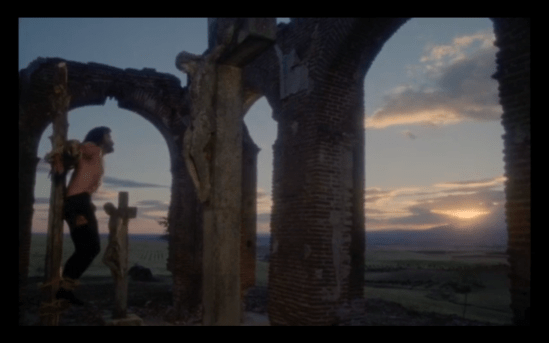
Mondo Macabro and CAV Releasing presents the unrated, non-limited edition of Paul Naschy’s “The Devil Reincarnate” onto a region free, 1080p, BD25 Blu-ray home video with a brand new 4k transfer from the film’s negative and displayed in a widescreen, 1.66:1 aspect ratio. For a negative from 1979, the transfer aims to please with hardly little-to-no damage or other deterioration flaws, no awkward cropping, and no tinkered enhancements detected. Coloring is flattering despite the hint yellowish tint. Some of the darker scenes lose sharp definition do to poor lighting, but there are breathtaking landscapes, especially when Naschy is strung up on the cross, with a vivid, natural aesthetic to the release. The Spanish Dolby Digital LPCM mono, at 24fps, with optional English subtitles packs quite a wallop with robust scuffles, clanking of swords, and a clear rendering of Ángel Arteaga’s zany and harrowing compositions. The extras include an introduction from Paul Naschy, exclusive interviews with costar David Rocha and Naschy’s sons, Sergio and Bruno Molina, a tour of Paul Naschy’s study and home, and exclusive audio commentary by Troy Howarth, author of various horror historical directors and moments in cinema. There’s no contest. “The Devil Incarnate” is, without a single seedling of doubt, the best film of Paul Naschy’s extensive body of work and it’s a film that reinstates an immense amount of melancholy into the soul when regression is setting in that human beings never have been and never will be better than the Devil himself.

Own it today! Click to buy at Amazon!







 It's Bloggin Evil!