Two Van Damme’s Take on Twice the EVIL! “Double Impact” reviewed! (MVD Rewind Collection / 4K UHD and Blu-ray)

“Double Impact” 4K UHD and Blu-ray Will Having You Seeing Double the Damme!

The assassination of their parents separates infant twins Chad and Alex from Hong Kong to different parts of the world, living very different lives.  Chad trains Karate and stretching while living the high, comfortable life in Los Angeles with this uncle while Alex, abandoned at a covenant orphanage, grows up to be a street-savvy importer of illegal and luxury goods.  They’re reunited in Hong Kong by Chad’s uncle, who’s not their uncle at all but their father’s former bodyguard and close friend, to bring down a criminal organization collaborating with their parent’s killer who orchestrated the hit with the Chinese triad.  Outmanned, outgunned, and at odds with each other’s different persona, Alex and Chad must find common ground to stand on to fix the wrong done them, to inflict payback for their murdered parents, and claim his stolen legacy, an underwater passage way between Hong Kong and mainland China, as their own in observance of their birthright from what they’re engineer father had built.

If one Jean-Claude Van Damme wasn’t enough to handle, try your hand at double the Van Damme!  “Double Impact” is the first film Van Damme gets to show his range inside the context of martial arts action film and to break, ever so delicately, the typecast he’s been filled repeatedly to perform by taking on converse brothers.  The 1991 action-thriller with comedic morsels was shot in Hong Kong, one of a handful of films the now 65-year Belgium native did in country, coming in between “Bloodsport” and “Knock Off,”  with years in between, and is written-and-directed by Sheldon Lettich with cowritten credits by Van Damme as well.  “Double Impact” is the sophomore collaboration between Lettich and Van Damme and the two have worked on a number of project since the film’s release, such as “Perfect Target” and “The Order.”  Van Damme also produces the film alongside Paul Michael Glaser, Ashok Amritraj, and the one and only Michael Douglas under his co-founded company Stone Group Pictures (“Flatliners”) in association with Vision International. 

“Bloodsport” Van Damme pulls double duty with ying-yang characters Chad and Alex.  Chad’s an easy-going, well-dressed, expensive-taste, slightly naïve, student of Karate who’s living comfortably in L.A. while brother Alex with slick back hair, leather attire, greasier-appearance and cynical attitude has him pegged as more Hong Kong street smart in his transgressor affairs as a illegal importer.  As far as exhibiting the desired range goal, Van Damme does provide the persona separation to make Chad and Alex individuals but he’s still playing characters he’s been in previous films and the only difference between Chad and Alex is their hair styles.  To ensure their differences, the story is woven for them to compete each other a little bit with evoking some jealous around Alex with the fear Chad may still his woman, Danielle, played by the tall and beautifully blonde “King of New York” actress Alonna Shaw.  Fueled by alcohol and a wild imagination, a wedge drives Alex to view his brother as more feminine than him and shows it with pejorative name calling and brotherly spat violence while in an intoxicated schoolyard tiff.  I will say that one the many glaring plot holes between the two characters is both have the same fighting style, which is Van Damme’s kick heavy Shotokan karate, and while that fits Chad’s backstory, it does not fit Alex who was too busy selling stolen cars rather than learning Karata in a studio.  Geoffrey Lewis (“Night of the Comet,” “The Devil’s Rejects”) dons the forced parental role as Chad and Alex’s former friend and bodyguard Frank who must reunite and rekindle the twins’ harmony with shared, common foe.  That foe, or rather foes, being corrupt businessman and British socialite Nigel Grifith (Alan Scarfe, “Murder by Phone”) and Hong Kong triad boss Raymond Zhang (Philip Chan, “Bloodsport”).  However, the real villains of the story are more interesting and standout with Bolo Yueng (“Bloodsport”) as the scarred face hitman and brute enforcer Moon and six-time Ms. Olympia Corinna Everson as a muscular henchwoman. 

Though Van Damme essentially plays the same person, I wouldn’t necessary dub “Double Impact” a replica of his previous work as it does mix up the narrative formula with dual roles with a one-half antihero theme and the scenes themselves where both Chad and Alex are in together, face unobstructed, present, and forward, are done exceptionally well for a late 90’s production with little-to-no seam and coloring imbalance or weird facing angles from Chad or Alex looking at one another – often times it’ll appear one character is looking at something totally offscreen instead of the appearance of looking at themselves.  The action is also palpable and fun to watch Van Damme go through the motions of making the opposition look foolish with his grunted elbows and roundhouse jumpkicks but there’s really no decent opposition for him in the choreographed mix.  Aside from Bolo Yeung, all the other major playing villains are no real equal match against Van Damme, not even Corinna Everson, who’s a physical and perceived threat, doesn’t provide the satisfactory fight in her brief combat interaction with the Muscles from Brussels.  The fight and action are also more grounded in reality unlike Van Damme’s last Hong Kong venture earlier in the decade in “Knock Off” that had an implausible cartoony design to it’s nonstop physicality.  There are no high-flying rope acts or escaping the inescapable devastation case by nano-explosives; instead, “Double Impact” is truly a fair 1v1 with gunplay and martial arts doing most of the heavy lifting and anything else that’s outrageous is left at the door. 

MVDVisual releases “Double Impact” on a new 4K and Blu-ray dual formatted release on their Rewind Collection sublabel.  As a part of the 4K LaserVision Collection, that emulates the mock trimmings of the antiquated but still celebrated LaserDisc video format, the MVD release 4K is HVEC encoded with 2160p ultra-high definition HDR – DolbyVision – onto a BD100 with the standard Blu-ray encoded with AVC with 1080p resolution onto a BD50.  Presented in it’s original 1.85:1 aspect ratio, the new, director’s approved 4K scan and restoration comes from a 16-bit scan of the original camera negative and looks pretty flawless with image presentation, immersive depth, skin and fabric textures and tones, inky negative space, and a diffused color palette that’s mediumly saturated, slightly muted for a harder, gritty appearance.  Neither format shows areas of concern with compression artefacts in a clean transfer and decoding.  The main audio track is an uncompressed English 2.0 Stereo.  The dual channel audio has enough impact to provide a wide berth of action points with the kick and punch added hits, dialogue is clean and unobstructed even though Van Damme’s heavy Belgium accent which seems more egregious in this feature, and the soundtrack’s your staple culture blend of a Jan Hammer synth-pop rock and traditional notes of Hong Kong influence.  Depth is limited as well in stereo that front loads the action and dialogue with not a terribly immersive ambient track of a bustling Hong Kong city that would be the chief spatial and directional culprit for depth.  UHD special features are limited due to space and, in fact, the 4K disc is feature only.  All your extras are on the standard Blu-ray disc, including a near hour long Making-of featurette segmented in parts I and II that provides retrospective interviews from cast and crew, such as Jean-Claude Van Damme, director Sheldon Lettich, fight coordinator Peter Malota, producer Ashok Amritraj, and more.  The bonus content continues with director a short Sheldon Lettich interview Anatomy of a Scene, a behind-the-scenes featurette with Van Damme interviews archived from 1991, deleted and extended scenes, a raw footage B-roll with behind-the-scenes moments, television promotional clips, and an electronic press kit (EPK) that contains more interviews with Van Damme, Moshe Diamant, and Charles Layton.  The Rewind Collection always comes with a substantial exterior style that begins with the black background of a O-ring slipcover that mirrors the crinkled sleeve of a LaserDisc and has the original poster/home media art of the “brothers” Van Damme.  The black 4K UHD Amaray case has the same front cover image sans mock crinkles with the discs inside pressed with LaserDisc appearance imagery on the UHD and VHS texture imagery on the Blu-ray.  There’s also a folded mini-poster of the slipcover image tucked inside.  The 17th title on the Rewind Collection also has a reversible sleeve of the unwrinkled image.  Rated R for strong violence, sexuality, and langue, “Double Impact” has a runtime of 110 minutes and is region A locked.

Last Rites: You need double the media formats to enjoy double the Jean-Claude Van Damme in “Double Impact!” Double time it to get your copy in stores now!

“Double Impact” 4K UHD and Blu-ray Will Having You Seeing Double the Damme!

EVIL’s Duality May Be More Than What Meets the Eye. “The Ugly” reviewed! (Unearthed Classics / Blu-ray)

“The Ugly” Limited Edition Blu-ray Now Available!

A famed female psychologist is requested to work the possible acquittal case of a serial killer named Simon Cartwright and understand his possible motive for slashing his victim’s throats at seemingly random.  Unscrupulously tormented by a pair of odd orderlies, Simon Cartwright calmly carries himself as a humble, articulate, and friendly conversationalist and confessed killer with a darker side, an ugly side that drives him to kill at will.  Cartwright gives her the anecdotal trappings of his kills that prove to be unprovoked and unsystematic from a side of him he can’t ignore.  Confounded by this, the psychologist pushes him to brink for an exact reason, one Cartwright keeps buried deep inside his subconscious that may or may not be supernaturally driven.  As Cartwright’s past continues to haunt him and with the psychologist assertive herself into his psyche, the dangerous method of analyzing criminal behavior won’t stop a plagued killer from killing again as his next victim might just be sitting across from him in the cross-examination room.  

Themes of split personality, past abuse and trauma, and the limited authority of control course through “The Ugly’s” veins like acid, sweltering with tension and ready to burn a hole through the safety of custody and storytelling once the twisted truth is told.  New Zealand filmmaker Scott Reynolds debuted with his feature length film back in 1997. Reynolds also wrote the script that kept an intimate approach between killer and doctor, kept audiences guessing the supernatural aspect, and made taut the lead-up moments filled with human tenderness that went into subsequent violence that painted a portrait of a conflicted killer afflicted by derangement that might not be his own.  Shot in Auckland, New Zealand, “The Ugly” is a production of Essential Films with funds from the New Zealand Film Commission and is produced by “Jack be Nimble” producer Jonathan Dowling.

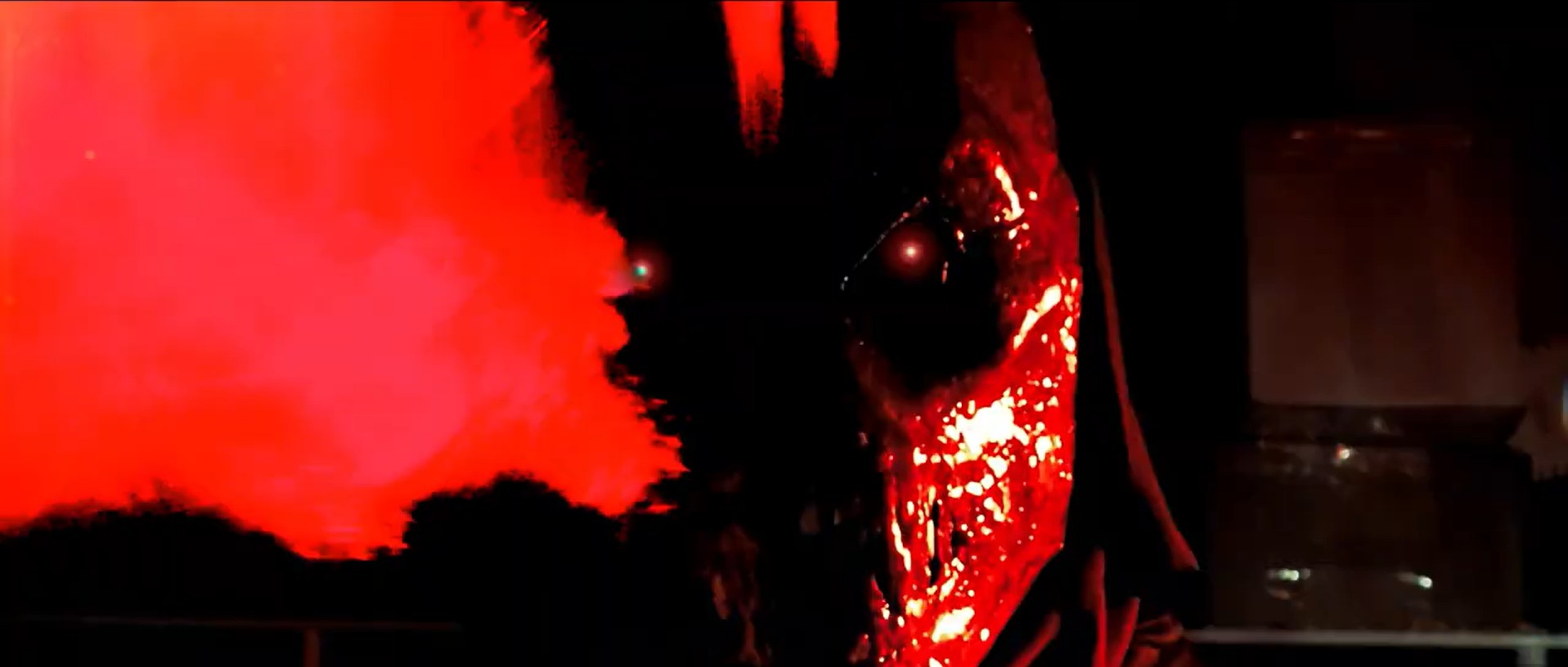
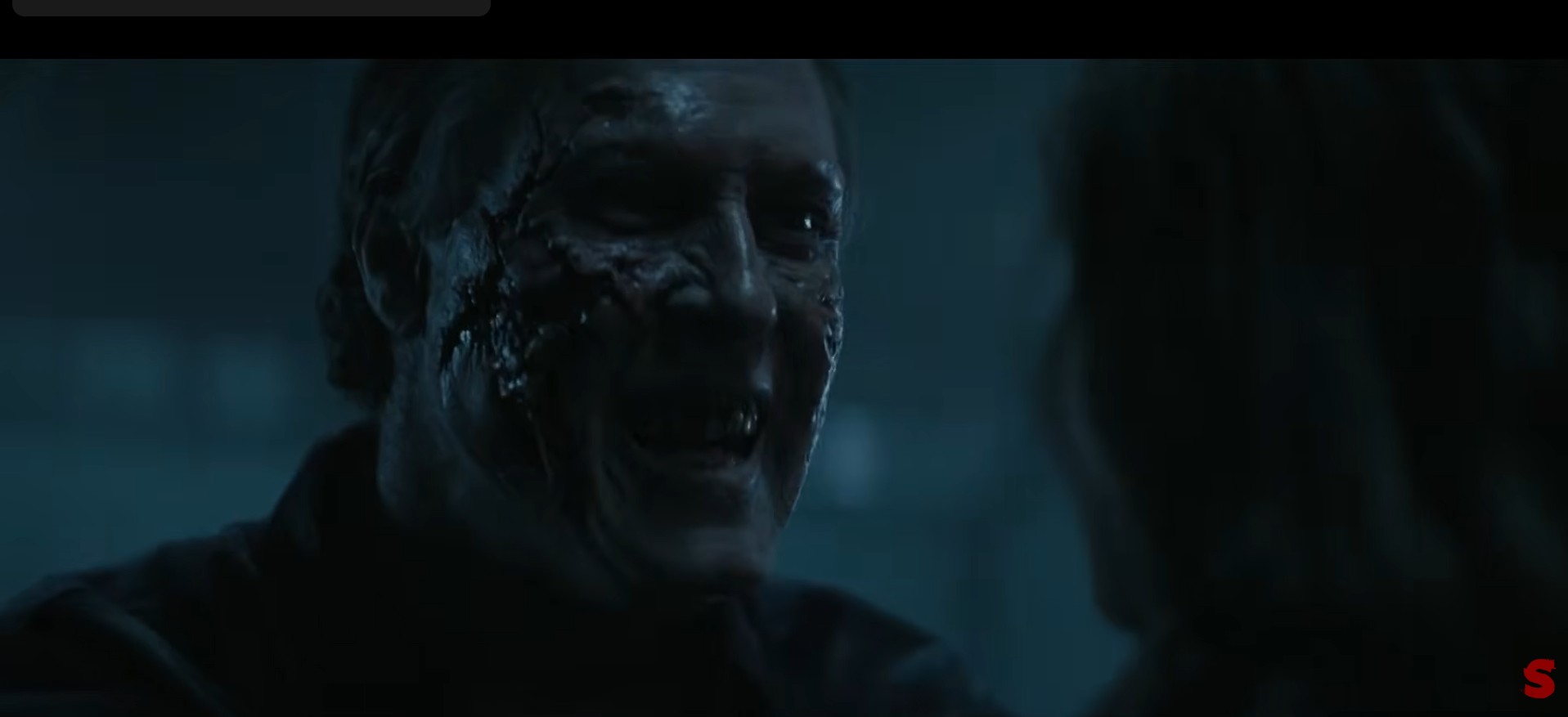
In a vague mirroring of Dr. Hannibal Lector and FBI Clarice Starling from “Silence of the Lambs,” there’s still the intention to understand the mind of a serial killer.  In the Clarice-like role is a civilian, a psychologist to be more precise, one that has received recognition to get the most dangerous criminals released from incarceration, is Dr. Karen Schumaker, played by Rebecca Hobbs (“Lost Souls”) that would be her biggest lead role in the New Zealand film market.  Opposite her, across the table mostly and chained to a chair, is Paolo Rotondo with a cold stare and a handsome face that doesn’t exactly say I’m a serial killer.  When graced with a prosthetic that makes half his face appear melted or scared in fleeting glimmers or reflections, scenes that often felt needed more attention or a longer say, that’s when Rotondo could exact his intimidation upon the viewer as the true monster, as Cartwright has referred to himself in more words.  Instead, Cartwright’s a clean shaven, well-dressed, and respectable Patrick Batman type without the three-piece suit and the Huey Lewis and the News obsession and not as King’s British and as quirky in his demeanor as Anthony Hopkins as Lector.  Both characters fall and fail hard to the supporting case of the two orderlies and their employing resident psychologist.  Sporting dreads and walking with confidence like a WWE wrestling being introduced, Paul Glover (“The Locals”) has more flavor in his mostly stoic intimidating orderly performance alongside his more animated and ragdoll movement buddy in Chris Graham (“Moby Dick”) as the two mistreat the Cartwright with disdain.  Their employer, Dr. Marlowe, has a snooty creepiness about him that’s akin to being a mad scientist-type that’s fits into the goon orderly dynamic with Roy Ward (“Perfect Creature”) at the helm.  Darien Takle and Vanessa Byrnes costar as chief supports. 

‘The Ugly” is certainly a child of the 1990s with that glossy gleam without it a lens flare spark of digital anamorphic.  The aesthetic matches the subject matter with dreary, cold, and gloomy nu metal nuisances, teetering on the edge of being also grungy.  Editor Wayne Cook’s transitions and cuts are indicative of the era in filmmaking with whooshing transitions and flashes of disorienting cuts, such as white outs or seamless segues.  This techniques also translates into Simon Cartwright’s headspace with acute and fleeting glimpses of his mental state visualized into the real word, or it’s the real world sheathed by a layer from beyond the grave, but either way his perspective quickly provides a glimpse into his reason for killing, his duplicitous degradation into insanity, and that it can be projected to others outside the exclusive rights of his person.  Most of the story is told anecdotally through Cartwright’s perspective and as storyteller, his events are muddled by his own struggle with killing that becomes more evident as the story progresses.  What’s most interesting about Reynold’s film is it’s reality bending to keep the audience engaged as he puts the psychologist character, Dr. Karen Schumaker for those who forgot, right into the frame of his story as a third party speaking directly to Cartwright and only Cartwright can see and hear, but she’s implemented naturally as if sitting at the table with the storied characters or being a part of a three-way conversation that but not truly.  Between these style characteristics and the narrative’s odd macabre, along with the deep black, sour crude oil shaded blood, “The Ugly” is grimly beautiful with visuals and stimulating to watch. 

Unearthed Films, under their Unearthed Classics sublabel, provide a new Collector’s Edition Blu-ray release to the table.  The AVC encoded, 1080p high-definition resolution, BD50 has stored on it a 4K restoration from the film’s original 35mm interpositive and looks neat as a pin presented in it’s 1.77:1 widescreen aspect ratio, rendered with a well-diffused color palette of a lighter blues and grays that contrast starkly with the deeper black blood in a semblance of a dystopian or alternate reality in circa late 90s to early 2000s films.  Saturation is copious with all colors and the details are sharp mostly in the peripheral setting with the focal objects having be defined nicely but there is some textural loss on the skin and clothing under its higher contrast.  The audio formats within are an uncompressed LPCM 2.0 Stereo of the original theatrical audio and a relatively uncommon 4.0 DTS-HD MA that caters to the side and back channels rather than a central output and a LFE subwoofer, so the track is not as deep and resonating and it discerns as such with more range and less punchy impact that encompasses at the dialogue, ambience, Foley, and soundtrack excellently considering.  Dialogue is clean and clear without obstruction or touchups to the original audio files.  English SHD and Subtitles are available for selection.  The collector’s edition contents include an isolated score from composer Victoria Kelly (“Black Sheep,” “The Locals”), a 1997 radio interview from New Zealand with writer-director Scott Reynolds, an audio commentary with chief principal actors Paolo Rotondo and Rebecca Hobbs, Reynolds’ early 90’s short films “A Game With No Rules” and “The M1nute,” “The Ugly Visual Essay” compares “The Ugly” to true crime serial killers of reality, a photo gallery, and the original theatrical trailer.  The physical presence of “The Ugly” is anything but with it’s beautiful packaged design, beginning with the commissioned Slipcover cover art that wholly embodies the essence of the story, rather than being an exploitative mislead, by Scott Jackson of Monsterman Graphic.  The clear Blu-ray Amaray case has a reversible sleeve with the same Jackson art with the reverse containing the film’s original one-sheet artwork.  Inside is a 6-page booklet a pair of essays by Jason Jenkins along with monochrome and colored stills.  The disc is also pressed with a tense hunting scene as well.  The 18th Blu-ray title for the Unearthed Films’ sublabel is region A locked, not rated, and has a runtime of 93 minutes.

Last Rites: As far as understanding the mind of a New Zealand serial killer, Scott Reynold’s “The Ugly” depth charges reality with not only a promising supernatural layer but also a strange world these characters live and act against that invigorates a rather talkative and anecdotal story with eccentric and uncomfortable personalities that rival the killer himself.

“The Ugly” Limited Edition Blu-ray Now Available!

C-Cups, D-Cups, and EVIL-Cups All Must Pay! “Big Boobs Buster” reviewed! (Whole Grain Pictures / Blu-ray)

Own “Big Boobs Buster” on Blu-ray Home Video!

Masako is well-liked amongst her high school peers, has an above average grades, and is a cyclist athlete with a killer body.  The one thing Masako doesn’t have but desperate wants is the popular boy Bando to be her boyfriend.  When Masako asks Bando to be his girlfriend, Bando rejects her requests on the account of her washboard chest.  Assigning blame to all her well-endowed classmates beyond a B-cup, Masako transforms into the chesty vigilante, Big Boobs Buster, by subduing targets from a pervert’s stolen list of girls with large breasts and making spray casts of their chests to blackmail them with exposure if they ever date Bando or any other boys on campus.  When she’s finally caught and discovered by a track and field competitor with big boobs, one who also might like girls more than boys, Masako is ironically herself blackmailed into being a substitute in a sprint competition her competitive blackmailer can’t compete in due to injury. During vigorous train, Masako begins to develop friendship feelings and questions the reasons for her body image crusade.

For all you flat chested women out there, don’t fear!  “Big Boobs Buster” is here!  Hailing from Japan, the adult-oriented comedic has a superhero Marvel has yet to call to the frontline!  Director Hisashi Watanabe embraces his debut directorial with burlesque eroticism that touches upon the breast of society’s biggest problems – body shaming and body positivity.  Watanabe pens the script based off a Manga by Kôichirô Yasunaga of the same title with the film adaptation and its sequel, “Big Boobs Buster 2,” released the same year, 1990 directly onto home video, or what’s called in Japan, V-Cinema.  Released by the Tohokushinsha Film Corporation, the company behind the anime-turned-live-action film “Shark Skin Man and Peach Hip Girl” and produced a feature film out of the Android Kikaider series with  Mechanical Violator Hakaider, as well as being a part of video game series, such as Sonic and Final Fantasy, the producing team consists of “Appleseed’s” Tarô Maki and “Wild Zero’s” Katsuaki Takemoto.

The live-action OAV, aka Live Action Original Animated Video, has a game cast of lesser-known actor and Japanese AV idols that really perk up the story.  Harumi Kai leads the charge as the titular character, and the “Oona Rambo” actresses pulls off the sugar-and-spice Masako by being an all-around good schoolgirl scorned by a superficial boy named Bando (Masakazu Arai, “Shigatsu kaidan”) who moonlights is in a tight outfit and disguise being a shakedown artist against girls a C-cup or larger.  In the process of snaring them and spray casting a mold of their chest, she inadvertently turns them on denoting a bit of homoeroticism between the women that continues when she meets field and track star Kyoko Mitoizumi who calls her bluff and becomes uncomfortably touchy-feely with Masako.  Played by Uran Hirosaki, Kyoto is a form of positivity and no fear that puts Masako in a corner of uncertainty but the two eventually become friends with quid pro quo arrangements both will benefit from.  The rest of the case, which in this case are the big-chested highschoolers Masako seeks to humiliate because of her own insecurities, are comprised of Japanese AV idols with Mariko Itsuki (“Groper Train:  Push It Deep!”), Marina Matsumoto (“Stepmother Slave”), and Natsuko Kayama (“Big Boobs Sisters:  The Yellow Panties of Happiness”) as well as a few AV actors in the sought after and large breast-loving role with Masakazu Arai and Tôru Minegishi (“Godzilla vs. Biollante”) and Aya Katsuragi (“Evil Dead Trap”) as Masako’s parents who have this unexplained odd relationship in the peripheral that doesn’t contribute much, or anything at all, to the core elements. 

With a title like “Big Boobs Buster,” audiences can expect an outrageous comedy that lives up to live-action anime standards with an off-the-cuff superheroine on a crusade against one of the most arbitrary and non-threatening to society foci that only affects a flat-chested girl’s ego – big boobs.  Having never read Kôichirô Yasunaga’s manga and with only director Hisashi Watanabe’s film to provide my Johnny-Five Alive input data center, “Big Boobs Buster” is intoxicated with Masako’s character arc of self-deprivation toward body positivity through a minefield of scorn-driven retribution against the wrong and innocently lot of larger than C-cups.  Through this zany premise, that’s about as innocently wanton as cold be, director Watanabe and cinematographer Jun Abe spruce and polish this knob with mood abstracting backlighting and vivify scenes with power poses and interesting framing to closely resemble manga panel moments and the editing by Shigeru Okuhara (“Orgasm:  Mariko”) is multifaceted to tell a quick action narrative with ease of scene cuts and transitions that make “Big Boobs Buster” a breeze to digest it’s melon-sized mania.  The story doesn’t glide through with a single flightpath of the superheroine picking off well-endowed girls one-at-a-time only to be discovered to enact a plot point problem with the antagonist; instead, the story takes a 180 degree turn toward a whole new level of thematic dilemma in trying to win a sprint race for an enemy-turned-friend.  Summarized with a montage of tough exercises that culminate toward Masako being a beast at sprinting strength, the “Big Boobs Buster”  campaign goes into hibernation until the race is done, a subplot that insidiously takes over as the main plot, cleaving the already less than a full-length feature film in half. 

Catalogued at number four on the Whole Grain Pictures label, “Big Boobs Buster” is one large cup size of comedic body positivity done in the style of live action anime.  The new 4K remaster is pulled stems from the original camera 5mm negative and AVC encoded on a single-layered BD25, decoding at approx. 30Mbps.  Presented in high-definition, 1080ps, and in an European aspect ratio of 1.77:1 widescreen, “Big Boobs Hunter” is like being motorboated from your television screen with the rich look of a converted celluloid transfer that elevates Jun Abe’s luminous fogged night scenes, a glowing arura around the titular titillating heroine, and a contrasting shots of day time that offer warmer, slightly yellowis-tan tinted tones.  Skin textures and tones are reflected within the same softer glow but the rigid-contouring, around what can be delineated when shooting close up on a pair of breasts, do define a nice bulging image.  There are scenes, mostly a result of the cinematographer, that look flat between the foreground and background, suggesting possibly an aspherical lens that provides less curvature and less compressed, stretched image.  The release comes with two lossless DTS-HD 2.0 tracks with the original Japan mix and an English dub.  Clarity and a solid amount of punchiness come through nicely enough on the Japanese track that’s review covered but there’s not a ton of depth here with mostly frontloaded dialogue and action and nothing to note in the background or any environmental ambience.  Special features include a blooper reel that doubles as a behind-the-scenes featurette done in a traditional pop culture Japanese style with a gameshow announcer overlay track and translucent title cards in Japanese.  Also included are the original Japanese DVD trailers.  What catches the eye is the very pinku film and retro stylized cover with an in-your-face panty-covered butt overtop thigh high boots set in the foreground framing a scared schoolgirl between the legs.  Who wouldn’t want to watch this based solely off the cover!?  The reverse side of the sleeve contains an enlarged image still of another character and the backside acts humorously like “nutritional facts guide” superimposed onto the back cover.  The release comes in a standard Blu-ray Amaray.  With a runtime of 45 minutes, “Big Boobs Buster” is a breezy microfeature for a region free encoded Blu-ray that is not rated. 

Last Rites: Busting out with body positivity and sexual orientation themes, “Big Boobs Buster” brings out the big guns on a new Blu-ray release, animating manga to life on the big screen to experience Japan’s wildest cinema at its finest.

Own “Big Boobs Buster” on Blu-ray Home Video!

One’s Cool, One’s Crazy, Both Are Chasing EVIL. “Cutter’s Way” reviewed! (4K UHD and Blu-ray Combo / Radiance Films)

“Cutter’s Way” 4K UHD and Blu-ray Now Availble!

Cruising through life and women without much purpose, Richard Bone finds himself the prime suspect of a young woman’s murder.  Realizing he may have witnessed and seen the killer deposing of the body in a back alley where his car broke down on a raining night, he confides in his longtime best friend Alex Cutter, a crazed and paranoid disabled Vietnam veteran with a drinking problem.  Alex sinks his teeth into the case to exonerate his friend’s good name when Richard possibly recognizes the killer, a powerful oil tycoon revered by society and an employer to many and won’t let up on proving to Richard his suspected guilt by pieces the clues together.  Richard’s amuses Alex’s obsession, stemmed possibly from his trauma delusions, alcoholism, or his passive aggressiveness toward Richard’s infatuation with his wife Mo, but when Alex’s evidence becomes more and more convincing, Richard can no longer ignore his lunatic friend’s fixation as just a waste of time and conjecture. 

Based off the novel “Cutter and Bone” by novelist Newton Thornburg, the 1981 comedic-whodunit-drama “Cutter’s Way” is an unorthodox buddy gumshoe mystery with themes of the pitiful and nearly forgotten veterans of Vietnam War, the magnate power of whitewash and concealment, and to have purpose in life before life is taken away from you.  The late Ivan Passer, director of crime dramas “Law and Disorder” and “Crime and Passion,” focuses paper-to-screen transgressional energy to the pen-to-paper script by Jeffrey Alan Fiskin in the screenwriter’s sophomore feature film following the 70’s biker-exploitation and revenge caper “Angel Unchained.”   “Revenge’s” Fiskin tones down the ruffian violence, trading it for another type of irrational behavior in the form of the half-bodied war veteran drowning what’s left of himself at the bottom of a bottle while his best friend, a full-bodied, red-blooded, ladies man, ironically enough wants the one unavailable woman the vet married  and could keep in his possession despite her own form alcoholism and depression.  Once titled “Cutter and Bone,” changed to “Cutter’s Way” to appear less like a medical horror production, the film is produced by Paul R. Gurian (“The Seventh Sign”) under his namesake production company, Gurian Entertainment, shot in Santa Barbara, California.

“Big Lebowski’s” Jeff Bridges has the story’s focal point being Richard Bone, the happenstance victim becoming a murder suspect while trying to coast through life by walking away from hard problems and not taking the steps to advance.  The Bridges of 1981 is certainly a different breed than of grizzlier Bridges of more than four decades later, and even nearly two decades later around “Big Lebowski’s release, with a slender cut and tall physique, baby-smooth shaved skin, and a head full of dirty blonde hair that certainly makes him the ladies’ man as shown in the opening scene of him dressing himself after a bedroom romp with a slightly older woman.  Bridges embodies both Bone’s lackadaisical commit to himself, his friends, to woman he loves, and even to the conspiracy surrounding the real suspect concocted and presented by his friend, Alex Cutter, but when the tone starts to shift more toward the evidence of a coverup and all the dots begin to connect to Cutter’s alcoholic rantings and ravings that could be construed as convincing conjecture, you see the Bone begin to care more than he’s ever allowed himself to.  Bridges’ Bone is actually not the most interesting, complex character as that accolade goes to John Heard as Alex Cutter.  The “Home Alone” actor deserved to be praised for his performance as the untamable and wildly convincing Veteran horribly disfigured by his service in Vietnam that fuels his drinking problem, causing a seemingly impenetrable yet sociable wall between him and his wife, and always seems to put tolerable Bone in the middle of his trouble, such as his use of the derogatory N-word in a joke at a bar where we first meet his uncouth, drunken, yet surprisingly together state.  Heard’s intensity has range and emotional standing in the character’s cocky hop-a-log swagger that gives the big ability middle finger to his disability that doesn’t stop his motivational obsessions.  Caught in the middle is Mo, played by Lisa Eichorn who would later costar with Jeff Bridges over 20-years later in the mystery-thriller “The Vanishing” alongside Kiefer Sutherland and Sandra Bullock.  Also an alcoholic in a less look-at-me kind of way, Mo has the heart of both Bone and Cutter as Bone walked away from their romance years earlier and she marries pre-war Alex, but Bone and Mo’s spark lingers, teases, and eventually comes to fruition as the damn breaks with Cutter’s behavior that leaves Mo isolated and lonely in a pit of depression.  One character that has girth in the first two acts is the murder victim’s sister Valerie from the girl who yelled SHARK! In “Jaws 2” in Ann Dusenberry and while Dusenberry has a sizable part as part of Cutter’s investigating team, almost like an instigator to his whims, Valerie ultimately disappears in near the tale end of act two and completely from act three, making this one of the biggest mysteries alongside the possible murder suspect itself.  “Cutter’s Way” rounds out the cast with Stephen Elliott (“Death Wish”), Arthur Rosenberg (“Cujo”), Nina van Pallandt (“The Sword and the Sorcerer”), and Patricia Donahue (“Paper Tiger”). 

“Cutter’s Way’s” powerhouse duo of Jeff Bridges and John Heard couldn’t be more perfect with two contrasting walks of life that somehow fit and work, drawn together like strong magnets despite their odd shaped and conflicting personas.  At some points during Cutter’s insane theories and aggressive, uncivilized touting, you would think a calm demeanor and conservatively rational Bone would distant himself from Cutter, or even try to stop his stare-induced antics but Cutter’s shenanigans fuel something in Bone that makes this relationship hobble along without any sign of slowing down and that likely is largely in part to Mo being the connective tissue.  There’s perhaps some guilt residing in Bone who escaped the draft whereas Cutter did not, resulting in losing eye, limp, and leg for a country he obviously has contempt for by going against societal norms.  Cutter convincingly lays the framework of suspicion against the big time oil tycoon with intrinsic connections to not only society by to Bone and Cutter’s friends that makes their meaningless existence in comparison to the oil man’s own feels diminutive and impossible to rise up and action against with the evidence toward a police department that already has Bone in their sights because his car was nearby.  However, the investigation follow-up, as well as the acute disappearance of the victim’s sister Valerie, stamp the story with difficulties of resolve and being a well-rounded narrative. These poofs of key parts differ from the death of main character that goes without explanation, or rather has too many explanations that mold in speculation, that adds to story’s deep misgivings of who was there that dark and stormy night of the murder and culminating to a dramatic finish that impresses a linger skepticism and perhaps even a little bit of cynicism between all left involved. 

“Cutter’s Way” has sorely fell under the radar amongst aficionados of cult classics and UK distributor Radiance Films is looking to expand the Ivan Passer directed adaptation to a broader audience of not only to fans of Jeff Bridges and John Heard but to the fans of thought provoking and open-ended features that get the rusted mind gears turning once again for storytelling and not glaze over with immense computer generated special effects.  Radiance Film’s new restored limited edition 4K UHD and Standard Blu-ray set is pretty deluxe with a 4K restoration presented in HDR/DolbyVision.  The 4K is HVEC encoded with 2160p on a BD100 and the Blu-ray is AVC encoded at 1080p on a BD50.  The ample space allows the restoration to fly without constraint with a vibrant and nicely diffused picture through the dynamic coloring with a slight contrast on its essential organic grading that dips into a bluish tone and low light noir here and there when the moment calls for it.  Impressive detail measurement along the texturing as John Heard looks every bit as grizzly as his character entails with a course, unkept beard, long straggly hair, and ill-fitting military-esque attire whereas Bridges has primary color pristine and neat lines about him.  The Panavision spherical lens used creates a natural concise look, often flat but not unnatural, as it doesn’t try to squeeze the framing.  There were no damage spots to note on a well looked after 35mm print.  The English DTS-HD Master Audio mono track is too flat with frontal space only for the enriched dialogue of the script between mostly Bone and Cutter.  The suitability of track doesn’t change despite a lesser vigorous mix that has competent job performance and is adequate to the type of contemporary noir.  Jack Nitzsche’s soundtrack too makes the film more alluring with a blend of Latino influences and an oxymoronic harmonic dissonance of a musical saw and harmonica that plays into the noir undertones.  English subtitles are optionally available.  On the 4K special features coverage there is an introduction by Jeff Bridges and three audio commentaries with novelist Matthew Specktor, assistant director Larry Franco and Production Manager Barrie Osborne, and an archived conversation between film writer Julie Kirgo and late producer Nick Redman.  There’s an isolated soundtrack from Jack Nitzsche formatted in a DTS-HD Master Audio 2.0 compared to the feature’s mono track.  The Blu-ray houses a little more bonus content with all of the above on the UHD and continues with an analyst featurette Piety, Patriotism, and Violence:  The Legacy of Cutter and Bone by film writers Megan Abbott, Jordan Harper, and George Pelecanos, an Ivan Passer interview from 2015, a Lisa Eichorn interview from the Fun City release, an interview with producer Paul Gurian from the Australian Imprint release, an audio only interview with former United Artist exec Ira Deutchman, Cut to the Bone:  Inside the Score is a featurette that interviews music editor Curt Sobel, Bertrand Tavernier is a Sidonis Calysta’s interview of admiration from the French film director, a still gallery, the trailer, and an alternative title sequence with the original “Cutter and Bone” title sequence.  Radiance Film’s physical presence is substance with this limited-edition release held all together in a rigid slipbox with new commissioned artwork by Time Tomorrow on both sides and comes with an obi strip with credit and technical information.  Inside is a clear Scanova Blu-ray case with reversible artwork with the primary art a split still image, one image for either side from the feature, with the reverse containing new artwork as well.  The overlapping stored discs are pressed with a blood red tint.  A 78-page mini book is inserted alongside the Scanova with cast and crew acknowledgements, transfer notes and release credits, and essays from Nick Pinkerton, Christina Newland, and Travis Roberts with an Ivan Passer Q&A by Jerry Roberts.  The book also contains color images as well as composition artwork on the bookends.  The region A locked release doesn’t have a rating listed, assuming not rated, and has a 109 minute runtime. 

Last Rites: Jeff Bridges and John Heard are the dysfunctional detective duo you never thought you needed. “Cutter’s Way” is a cathartic comedy and crime thriller refreshed and renewed for ultra-high definition from the fan’s favorite boutique labels, Radiance Films.

“Cutter’s Way” 4K UHD and Blu-ray Now Availble!

Stranded and Terrorized, Longtime Friends Must Confront Their Own EVIL Past! “The Boat” reviewed! (Breaking Glass Pictures / DVD)

Kee Your Enemies Close but Your Friends Even Closer! “The Boat” Now Available on DVD

Three well-off couples party on a luxury, personal yacht for a holiday getaway and to celebrate Enrico’s birthday.  Sizzling romance, boozy-filled dancing, and smoking weed relaxes the group on the calming waves as the party goes through into the night but when morning comes, they find themselves coming out of a stupor and in the middle of the ocean with the yacht having been sabotage and adrift with no food, water, or means of communication.  A mysterious voice comes over a hidden walkie-talkie poised to punish those onboard in a plight of revenge for a past transgression involving them all and expose the groups’ dark secret kept from each other.  Tensions rise and their tormentor slowly unveils the truth through a series of chastising games that turn the tide on the group’s closeknit friendship for the worse but not everything is what it seems that’ll shed a light of truth on certain ill-conceived perceptions of the past.

Waking from a party-filled night that can’t be remembered and quickly realizing there’s something inherently wrong about the situation, no land in sight with the yacht drifting further out into the ocean, is a sweat-inducing nightmare scenario that has immense palpable fear with a person’s severe disconnect from land and, to make matters worse, all the life-sustaining supplies and modern day conveniences have strangely vanished.  That’s the primal premise setup for the mystery-thriller “The Boat,” a 2025 released Italian-made film from director Alessio Liguori (“In the Trap,” “Shortcut”) and a trio of writers in Gianluca Ansanelli, Nicola Salerno, and Ciro Zecca.  Filmed just off the port of Piano di Sorrento and in the Amalfi Coast, including the illusion of open water scenes, “The Boat” is a Lotus Production, a subsidiary of Leone Film Group, and Rai Cinema feature under producer Marco Belardi and executive producer Enrico Venti.

Reviewing Marco Belardi and Enrico Venti’s producing film repertoire suggests that the duo have hardly tasted tension and experienced thrilling tenterhooks with a more comedic, period piece, and melodramatic works that revolve around the tough, sometimes scathing, human dynamics.  The cast resembles similarly in their credentials, using the melodramatic, soap opera feigns of being hurt, lost, confused, and damaged inside a tight group of longtime friends getting together for a holiday only to find that maybe they’re not so good friends after all, definitely not good people, harboring hazardous secrets.  Diane Fleri (“Ghost Track”) and Filippo Nigro (“Deep in the Wood”) play the epitome of a wealthy yacht owning couple, the reoccurring nightmare plagued Elena and her breadwinning husband Flavio, Alessandro Tiberi (“The House of Chicken”) and Marina Rocco are the fast-lane lovers Federico, the filmmaker, and Claudia, a social media influencer, and Marco Bocci (“Caliber 9”) and Katsiaryna Shulha (“Hypersleep”) play unemployed birthday boy Enrico with his much younger, new girlfriend Martina make up the struggling confounded stranded on a boat.  The once carefree, ready to party friends fall quickly from a standard of grace by a mysterious man radioing from a nearby boat, instructing and commanding them under his thumb with his own set of terms and in a position of authority by holding all the cards as they slept off the hidden sedative, and soon after, they’re perfectly perceived lives are craved in two from a superficial shell of money laundering, betrayal, and murder.   Eduardo Valdarnini (“Bad Habits Die Hard”) helms the calculated antagonist with a plan but his character isn’t kept faceless as first introduced and has his intentions unmasked way too early, running the impact of what naturally would have been a twist moment where it all clicks and makes sense his reason for retribution.  Valdarnini’s depth is in focus, a clear means with a strong case for a longstanding grudge, but the targeted friends rapidly decline into spineless and spiritless absorbents of their fate and are willing to roll over for reside or kill over an emotionally distraught act despite the situation they’re in, both not fitting the narrative bill 

“The Boat’s” strength resides mostly in the first act setup of each couple’s time together before boarding the yacht with tidbit hints of their idiosyncratic lives and their private opinions of each other.  This establishes personas and mindsets that become, or at least should have become, important later to test their surface laid out bond.  The second act transitions from partying the night away into a quickly devolving situation the next morning, discovering their boat adrift and no supplies left on board in apparently robbery.  By now, the tension is high and not set internally amongst the friends as their bewilderment extends to the audience who are too looking for answers.  Only when the mysterious voice over the radio comes a calling do the third act fail to secure a clean sweep of next level thriller.  There’s little-to-no fight in the mostly pampered elite apart from Enrico who only fits in because of his allotted friendships with the other passengers and he brings in the only outsider, his young girlfriend Martina, to which his friends casually mock the age difference behind his back further clueing us in on their true colors, but even Enrico’s fight is reserved for more diplomatic head-way with a man with a vendetta, especially with a gun pointed at him, but his explanation of involvement in past events is too easily taken to heart by the opposition rather than be questioned for its validity.  This leaves an opening of hope and sacrifice that ill-fits the story’s framework and causes an unlikeable situation based either on truth or the mattes of the heart, both of which are never challenged to the extent they should be in a crusade to bring down the affluent guilty.

Sailing up to DVD is “The Boat” from the Philadelphia-based label Breaking Glass Pictures.  The single-layered MPEG-2 video codec on a DVD5 provides a less than crystally defined picture quality in it’s 720p standard resolution, available for converted upscale.  Presented in a widescreen 2.35:1 aspect ratio that truly engulfs the anamorphic image with isolating oceanic oppression, “Orgy of the Dead’s” Mirco Sgarzi’s ability to retain depth without it being washed away in the vast waters creates anticipating moments of visual stimuli with the example being Flavio sitting solo in a life raft with the mysterious man cruising toward him in the background, an iconic culmination of objects in one frame that can be seen in “Jaws 2” when the shark moves in for the kill on a stationary Sheriff Brody holding a powerline while sitting in a raft.  As mentioned, details are shaky at best with objects often appear fuzzy around contouring lines and darker areas are chalky, but the image is more than suitable enough for DVD image delineating.  “The Boat” comes with a mostly Italian, some English PCM 5.1 Surround Sound audio mix that’s cinematically balanced between a forefront and clear dialogue track and a background of diegetic and non-diegetic of ocean grabs, such as waves splashing, distant gull calls, and the roar of a high-powered boat engine.  “Here After’s” Fabrizio Mancinelli’s score doesn’t have an inspiring bone in its ocean body with a route low-key pulse score; it fails to instill that alone enthralling alchemy of being lost at sea with a maniac great-white-circling and looking for blood.  English subtitles are available for selection and while they pace well, there are a couple of infractions on the translation that won’t ruin the visual picture or transcription.   Special features include only a photo gallery and a trailer with the DVD houses inside a standard Amaray case with an aerial pictorial that provides a strong lured interest.  The region 1 DVD comes not rated and has a runtime of 94 minutes.

Last Rites: “The Boat” sails a nautical knot of secrets to reveal not all old friends are faithful and true with a past that eventually catches up to them. The waters will be tested on this newly released Breaking Glass Pictures DVD.

Kee Your Enemies Close but Your Friends Even Closer! “The Boat” Now Available on DVD