
Natalie’s dedication to her religious vocation has led her to become a nun. Her celibacy is a symptom of disgust with her family’s household, a home the young virgin could not bear to live in another second or much rather return to that stems from an uncomfortable inkling of unnatural circumstance, but when she is informed her parents were in a tragic accident involving the death of her mother and a father bedridden by shock, Natalie reluctantly returns home. She’s greeted by Angela, her university studying older sister, and her delinquently dangerous boyfriend, Mauro, and alongside a few of Angela’s classmate, the decision to track down a shaman on an secluded island on the outskirts of town has convinced the group to seek alternative and holistic treatments, such as a brew made from the mystical Ayahuasca plant, to battle their own self-complications. What they discover is that some inner demons should be left untapped and undisturbed or else their souls will pay the consequence.
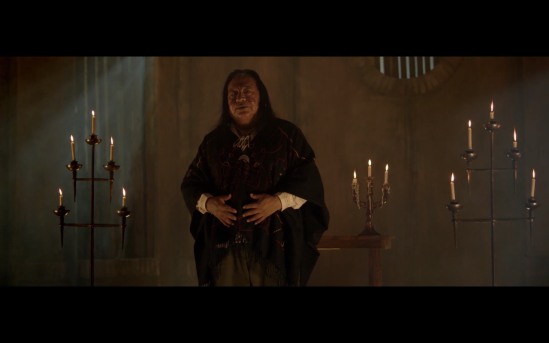
“Luciferina” is a black rites narrative saturated with psychosexual tendencies and religious divergences from writer-director Gonzalo Calzada whose horror mystery footprint, the Argentinian filmmaker’s common foundation for his prior work in “Resurrection” and “The Clairvoyant’s Prayer,” maintains a strong foothold for his latest venture from 2018 with a story of solid foreboding and overshadowing complication that’s naturally opaque, guiding viewers seemingly toward one direction and then obliterating their conjectures in an in a blink of an eye about how characters or events might play out. Layered with themes and heavy with motifs, Calzada summons the internal demon, figuratively and literally, from within an indie picture budget that’s complete with accidental demonic conjuring, eye-devouring effects, and a climax involving temple fornication of various Kama Sutra positions.
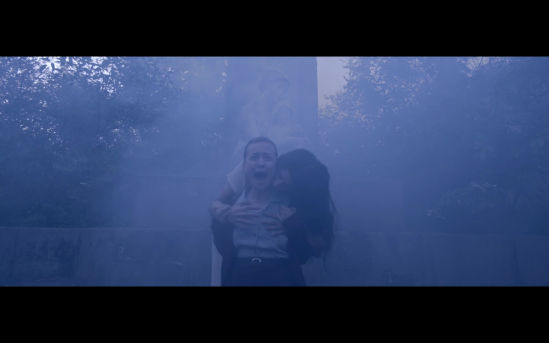
Young, beautiful, and, yet, withdrawn and plain, Natalia has embedded herself into nun-hood, a means to escape the unexplainable discomfort inside her own home and even in herself as she’s haunted by visions of a disheveled woman with crooked arms popping unnaturally out of a white nightgown, but not all of Natalia’s visions are bleak as she’s able to, at times, define a person’s gleaming aura during a momentary spell. Sofia Del Tuffo stars as the troubled vocational woman, a role that demands much from the young actress who can easily transition from a screaming and scared postulate to taking charge of her destiny by gripping Satan’s horns. Tuffo opposites Pedro Merlo as Abel who is, well, more or less a potential love interest. Abel has fire inside him sparked by his desire for Natalia, but goes full inferno after downing the Ayahuasca juice. The light and dark of Abel has Merlo flipping the script continuously and the actor keeps up with relative ease. The opinionated downside to roles Natalia and Abel might be lost in translation, but there’s a sense of disconnect between their multiple purposes: shaman visit, the unspoken connection for each other, and their intertwined destinies. These aspects go fairly unexplored or are either, in the script, diluted in the details. The supporting cast also don’t add volume to the story and though not all of the cast are like this, a good chunk are rather auxiliary for the moment of pinnacle prominence and their sub-stories are quickly squished – that’s the Gonzalo Clazada affect. The remaining cast includes Marta Lubos (“Darkness by Days”), Melena Sanchez, Francisco Donovan, Stefania Kossl, Gaston Cocchiarale (“Terror 5”), and Desiree Gloria Salgueiro.
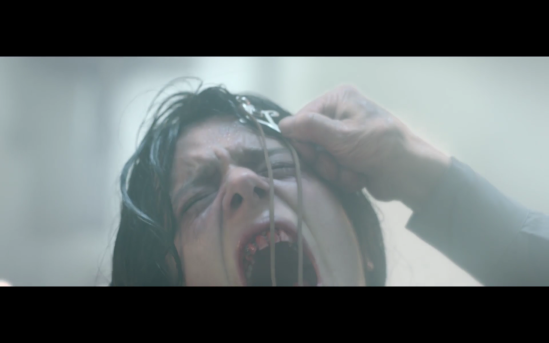
“Luciferina’s” themes bubble quite easily to the surface, the more obvious found in the religious field, but an interesting theme is a woman’s protective, if not problematic, stance toward copulation and the guarded uterus and their right to chose. Natalia has no experience with sex and she’s constantly under the pressure of having sex, even inside the chaste nunnery. Natalia nonchalantly pushes away one of the boys in the nun’s drug rehab program with not much oomph, she then comes under siege by the forcibly accosting Mauro and his verbal rape fantasies toward his girlfriend’s younger sister, and then Abel’s internal struggle with his Faustian under guise who enthusiastically confesses his hard on to score with Natalia to bring forth more evil spawn. A common motif from the baby making is the uterus that pops up in Natalia’s dreams and her late mother’s frantic paintings that circle around the pressures of motherhood and as Natalia procrastinates under the semblance of saving her own life to further prolong her inevitable destiny, she comes to the realization running will prove for naught and becomes empowered. One thing weird in relation is not the uterus in itself, but rather the computer generated baby in the womb; the impression is okay in construction as the baby has some realism in the detail, but the adverse effect is the use of the effect that seems pointless and ostentatious.
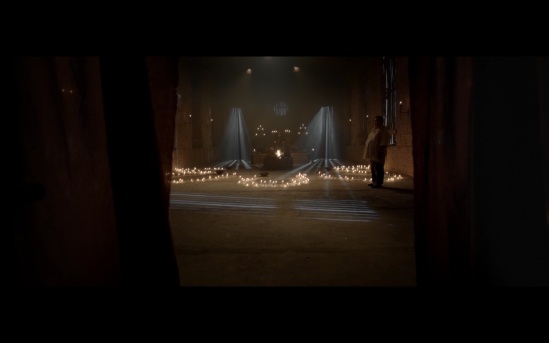
Artsploitation Films and Reel Suspects presents “Luciferina” onto Blu-ray home video. The anamorphic widescreen, 2.35:1 aspect ration, presentation is quite sharp with textures and details in a lossless image. Calzada uses much of the natural coloring in daytime sequences and the night scenes are moderately bluish and director of photography, Claudio Beiza, has immense range and depth that provide astonishing interior and exterior backdrops that can be subtly pleasing. The Spanish language Dolby Digital 5.1 surround sound substantially keeps with the tone and pacing of the story. Dialogue is balanced and verbose in the forefront. The release also comes with a Spanish language 2.0 stereo track. Both audio tracks come with English subtitles that saw minor issues with translation errors and timing. The only bonus feature available is the film’s theatrical trailer. “Luciferina’s” contemporary tale of possession and sexual innuendo is rabid. Director Gonzalo Calzada’s ambiguity of mystery horror is grossly engaging while “Luciferina” can also be glossy with splayed monstrous savagery and graphic sexual content, two genre commodities that churn easy entertainment.
Tag Archives: resurrection
Evil Knievel Eat Your Heart Out! “Psychomania” review!
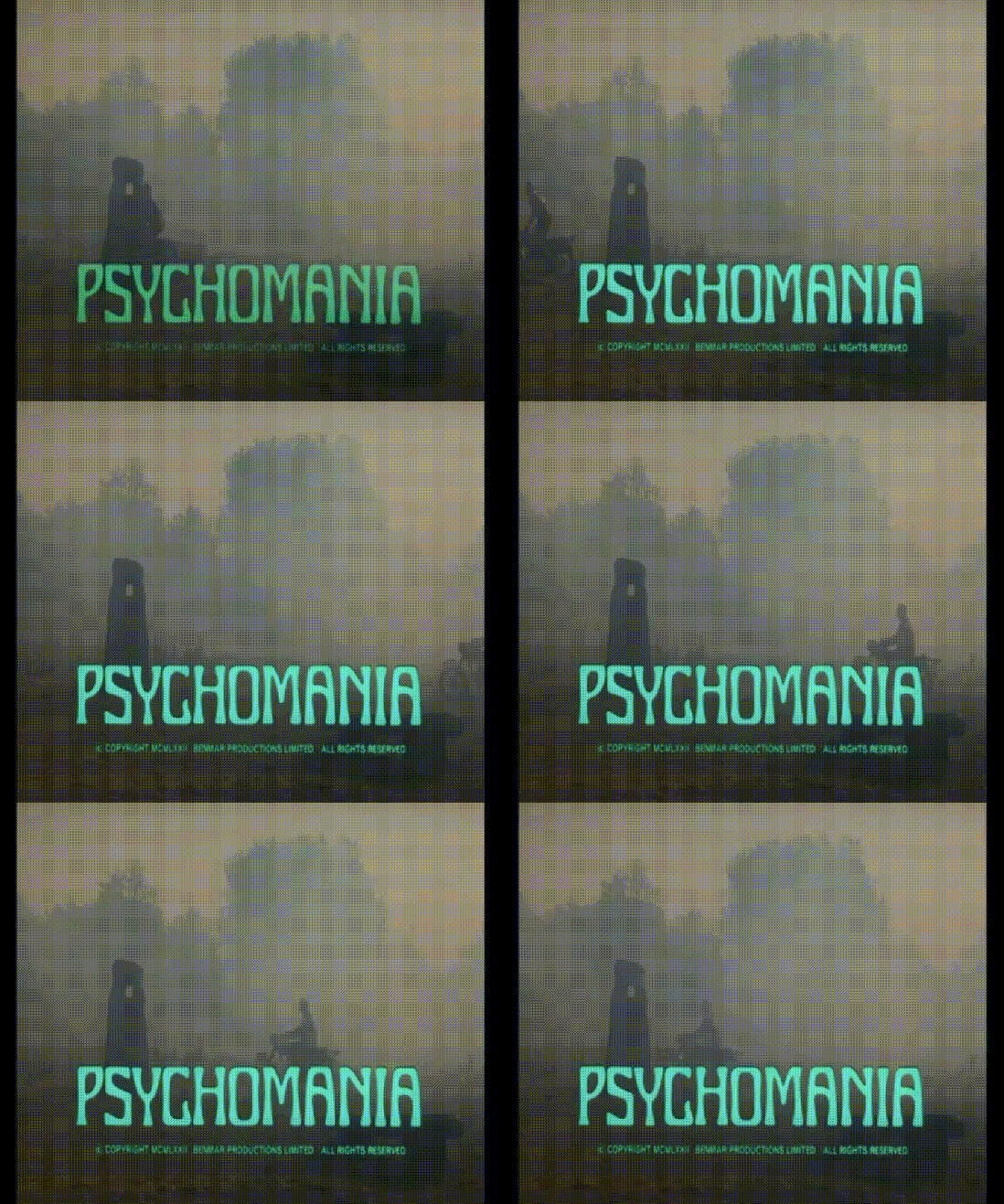
A terrorizing motorcycle gang named The Living Dead wreak mischief and murderous havoc amongst the local residents. When Tom, the gang’s leader, learns of his family’s dark agreement with the devil, he seeks to reap the benefits of the agreement’s eternal life bestowed upon his family, but before claiming a long-life of unstoppable hog-wild carnage, Tom must die first and truly believe he’ll return from the afterlife. Convincing the rest of the gang to kill themselves in order to return from the grave and live forever was easy, except his girlfriend Abby who wants to actually be alive. As the torment rips through Abby involving the man she loves, not all satanic bound agreements can last forever and Tom, Abby, and the rest of the gang are caught in a contract that’s all but binding.

“Psyhomania,” also known as “The Death Wheelers,” is a stunt-heavy horror film from “Kiss the Vampire” and “The Face of Fu Manchu” director Don Sharp and written by “Horror Express’” Julian Zimet and Arnaud d’Usseau. “Psychomania” is a fun, b-horror feature from the swinging London era of the 1970s and rosters a young cast of some seriously talented actors in Nicky Henson as Tom, Mary Larkin as Abby, and Ann Michelle as Jane Pettibone while also being graced with two veterans, George Sanders, who voiced Shere Khan in “The Jungle Book,” and Beryl Reid from “Dr. Phibes Rises Again,” and were most likely the most expensive actors on set, being well worth the cash to balance out a relative unknown cast at the time.

Yes, this film is British. Yes, this film is horror. But, no, “Pyschomania” is not a Hammer Horror film. The Don Sharp film lightly tip-toes through being a horror film with only the supernatural element placing the feature in the thriller category, but the PG-rated horror has other admirable qualities that certainly differentiates itself from the blood-heavy, frighten laden Hammer films. For instance, a story about an undead motorcycle gang should obviously entail motorcycle stunts and “Psychomania” delivers with surprisingly various top-notch stunts with, and without, motorcycles, involving dedicated stunt men and women challenged to be engaged in nearly all stunts, and whereas the blood does not run thick and heavy like with many fright flicks, the bikes certainly do and revs a different, yet welcomed, change of pace.

If the intent here was to make a serious film, the mark was missed by a good margin. Outdated and obsolete, “Psychomania” is the epitome of aging with dated hairstyles, dated clothing, and dated dialogue. If the intent was to be campy, Sharp and his team of willing participants hit the center of the bulls eye. The premise of a motorcycle gang committing themselves to a suicide pact only to come back and continue their barrage amongst humane society while choking out nearly everybody they feel tramples upon their aimless and ferocious cause seems like an outright folly. Who knew that in forty years time that “Psychomania” would be a British cult favorite, sparking a well-deserved upgrade Blu-ray and DVD combo release from the British Film Institute, also known by as the BFI.

BFI Flipside presents “Psychomania” on a Blu-ray and DVD combo presented in the original aspect ratio 1.66:1 and scanned and restored in 2k from preservation negatives. The 1080p Hi-Def Blu-ray runs on a BD50 gigabyte at 24 frames per second with a PCM mono audio mix. The PAL DVD runs about the same, near 25fps, and sports a Dolby Digital 1.0 mono audio mix. I was presented the DVD version for review and I must say the original print looks immaculate. The lens flares in the corner from previous releases have been extinguished. The colors and skin tones have never been more vibrant through the three layers of the black and white master copies containing yellow, blue, and cyan. The mono mix clearly states a purpose and goes through the ears without muddling and much defect. The BFI have also spared no expense on the bonus features that include various interviews with Nicky Henson and other cast, an interview with Harvey Andrews on the “Riding Free” single, a Hell for Leather documentary about the company who supplied the leather for the cast, a short remastering “Psychomania” segment, and other various extras that dive into British culture. I was a bit disappointed with the Sound of “Psychomania” segment as the track portion in the interview with film composer John Cameron seems to be overlaid by something totally off-the-wall and we’re unable to get the full 9 minute audio from the interview. The bonus material rounds out with original theatrical trailer and a nice, vividly colored illustrated booklet with new writing by Vic Pratt, William Folwer, and Andrew Roberts. BFI’s “Psyhomania” release is one of the best re-releases to hit the region 2 market and will re-hit the youth once again on it’s climbing cult success that branches off far from the bloodlust of 1970’s British horror.
 It's Bloggin Evil!