

“Peacock” on Indieflix Unlimited Blu-ray!
Unable to fit into The Foundation’s draconian conducts of an in-home professional caregiver, the organization decides to place Anna into the isolated home of Sarel Cilliers, a once prominent South African theologist aged into a feeble old man with prim and proper, religious convictions and living on the edge of a psychotic break. Anna finds her hands are full with the demanding and stubborn Sarel and his almighty morality but his life’s work and past, strewn about his house as Sarel ceaselessly reopens boxes upon boxes of old files to study, draws in Anna as it strangely feels familiar to her as well as raising internal concerns about Sarel’s esteemed history. The deeper she digs the more Anna falls into a psychosexual fixation that parallel and merge into Sarel’s own delusional state, soon the two share common afflictions of masked followers and surreal, terrifying imagery of a subjugated past that hasn’t loosened its traumatizing grip on them yet.
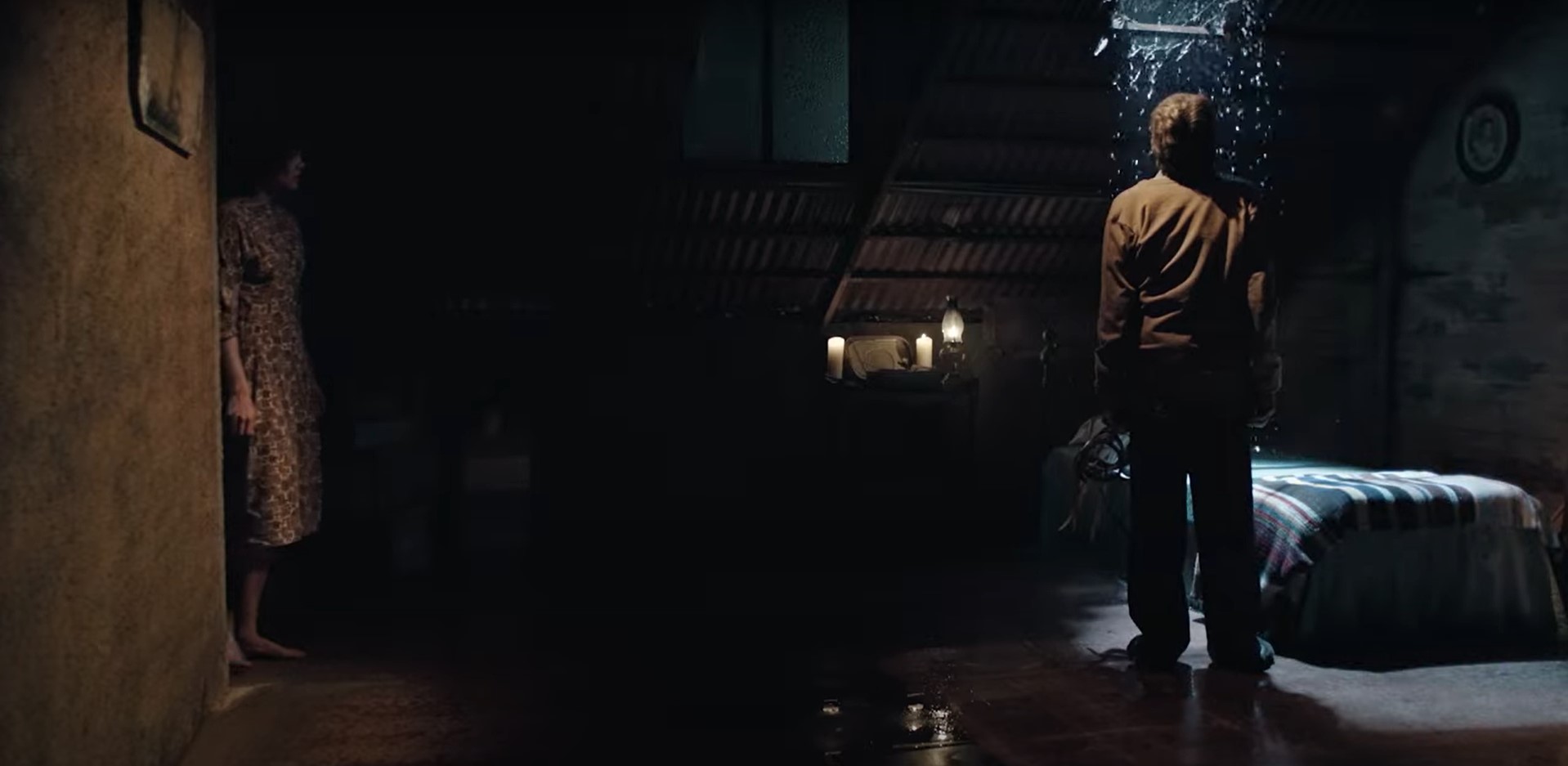
A psychological thriller that aims to suppress and shame youthful desire while simultaneously manifesting guilt as ghosts from an older generation’s sordid past at the behest of righteous expectations and a patriarchal society, “Peacock” is a strangely transfixing mental and sexual tug-a-war horror-thriller full of emblematic evocations and provocations from director Jaco Minaar. Minaar’s debut 2022 feature film, under the native title of “Pou” from South Africa, is cowritten alongside David Cornwell in what has become the duo’s third collaborative project and is the first South African film to employ an intimacy coordinator for the strong sexual content scenes crucial to Anna’s storyline as well as perhaps a few bathing scenes with the older Sarel. The Gothically-charged horror is a financial production of The Ergo Company with the organization’s Dumi Gumbi and Catharina Weinek, who produced “The Tokoloshe,” serving as co-producers alongside David Cornwell. Fever Dream Pictures, Monolith Film, and Indigenous Film Distribution are co-productions of the picture.
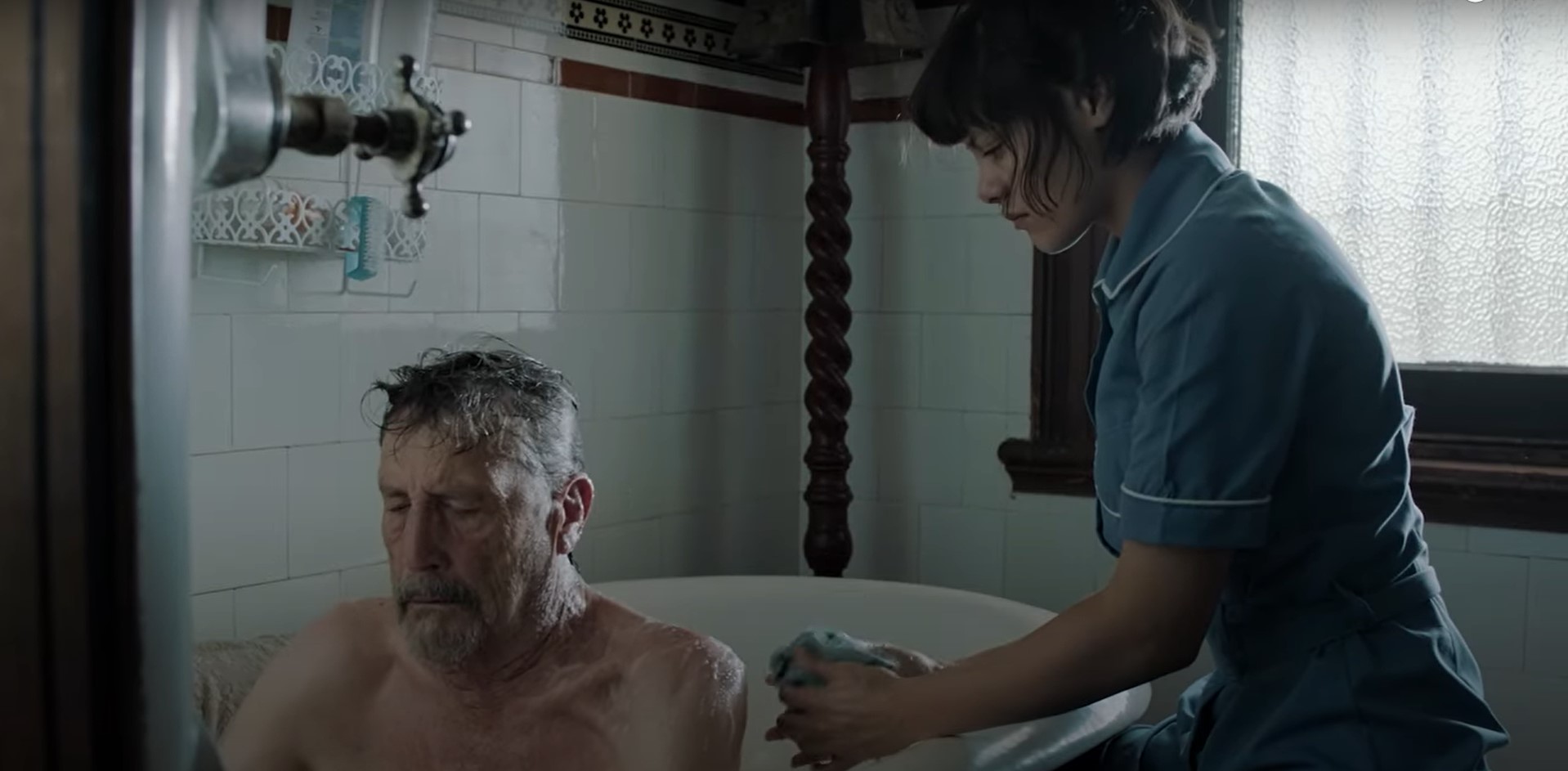
The principal pair of Anna and Sarel, played by South Africa Television actress, “Dam’s” Tarryn Wyngaard, and longtime actor Johan Botha, are representational characters in numerous ways. Sarel is the established, iron-fisted patriarchy of yore having come to the end of his rope in life with his past transgressions, ones that represent heavily in the socio-political air of South Africa in decades ago, finally catching up to him in the form of a sort of indeterminable dementia. Anna, on the other hand, is symbolic of youth, desire, and itching for liberty from a repressive system, such as The Foundation that houses young women, supposedly orphans, to be raised subservient and attentive but Anna’s regarded taboo lifestyle clashes with The Foundation’s, as well as the theologian Sarel’s, archaic belief system and so Anna then goes on this obstacle-laden journey of self-discovery that’s historically painful as well as excitingly new on the horizon as she meets Jean Basson (Ruan Wessels), son of Sarel’s house call doctor (Alida Theron), and whom both are virtually a mirror of Anna and Sarel on a lesser intense level. Wyngaard and Botha earnestly stand firm as individualistic, idealistic characters butting heads to a culminating point of surreal transition of power. Liza Van Deventer and Nicola Hanekom costar.
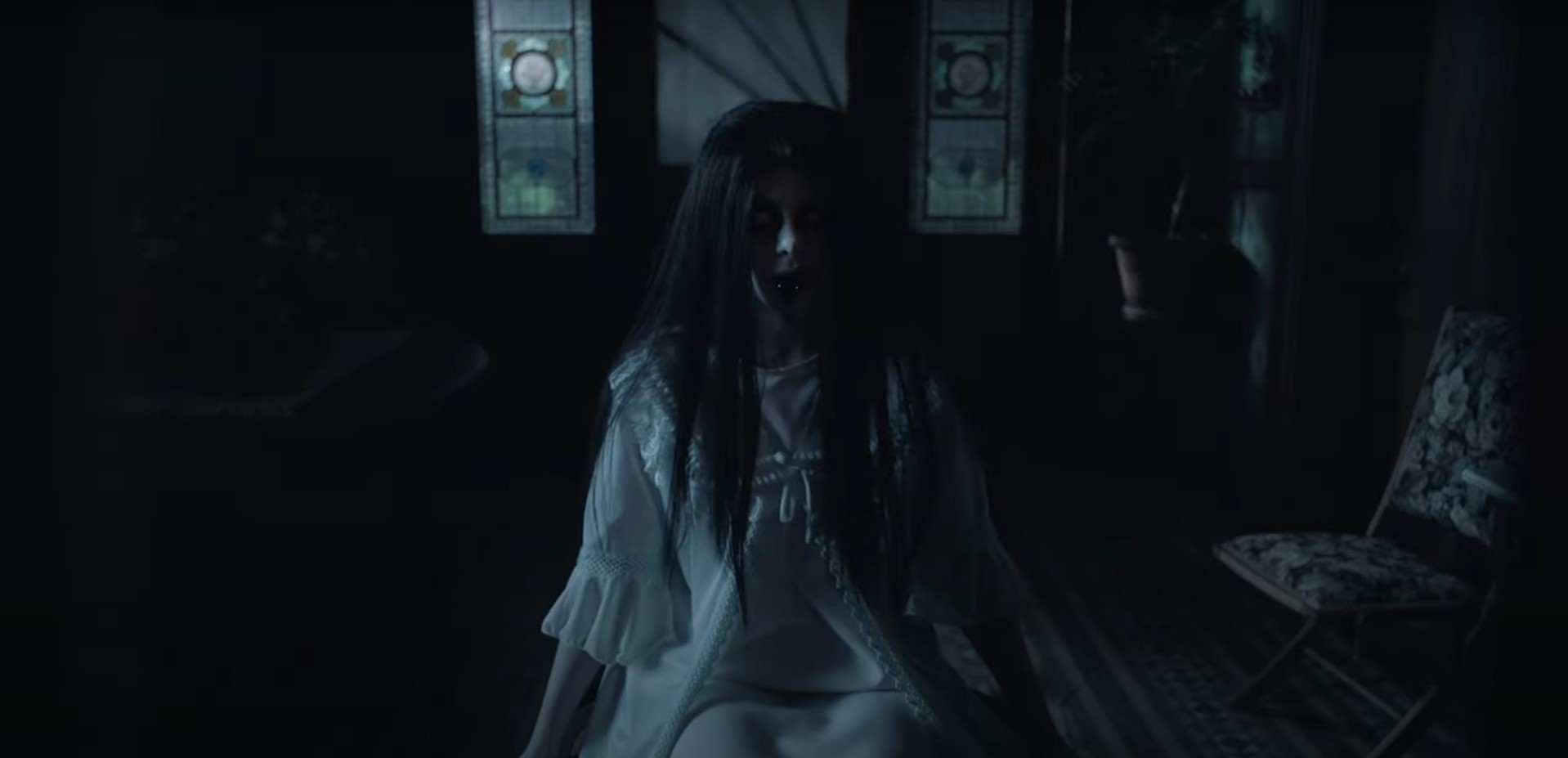
“Peacock” isn’t a knock-your-socks off, popcorn thriller with edge of your seat terror and special effects nor does it claim to be. Instead, “Peacock’s” fable tale is fashioned delicately out of South Africa’s rough transitioning between conflicting oppositions from, and set as the period in the film, of the 1980s dealing with Apartheid. From Anna’s atypical of the times perspective, as an outcast young woman growing and maturing in an era in which the old, patriarchal ways of doing things are quickly dwindling, much like the deteriorating mind of Sarel, the young woman tussles externally and internally in trying to conform to the brittle status quo while that’s not subsiding without a fight, yet the desires inside of her are eager to express themselves in a sexual way. The contrasting phasing out rigidity and the phasing in tolerance courses through a single conduit of uneasy, shared surrealism that frightening and confusing to them both but affects them differently; the ghastly images forces Anna to face her past while those same images torment Sarel like a type of Hell he has to relive over-and-over and that is what the house represents to Sarel, being caged in a purgatory state that parallels the actual peacock living encaged and screeching just outside of the house. The peacock itself embodies Sarel’s daughter, an image kindred to that of Anne’s illicit lover at The Foundation, who he locked away in the attic for having an improper relationship with a young, black man, an archaic and unfounded taboo from South Afrikaners shamefully stubborn history of the racially segregating Apartheid akin to the historical racism of American culture. In the end, it’s the overwhelming guilt that plagues us all in “Peacock’s” thematical version of Hell.
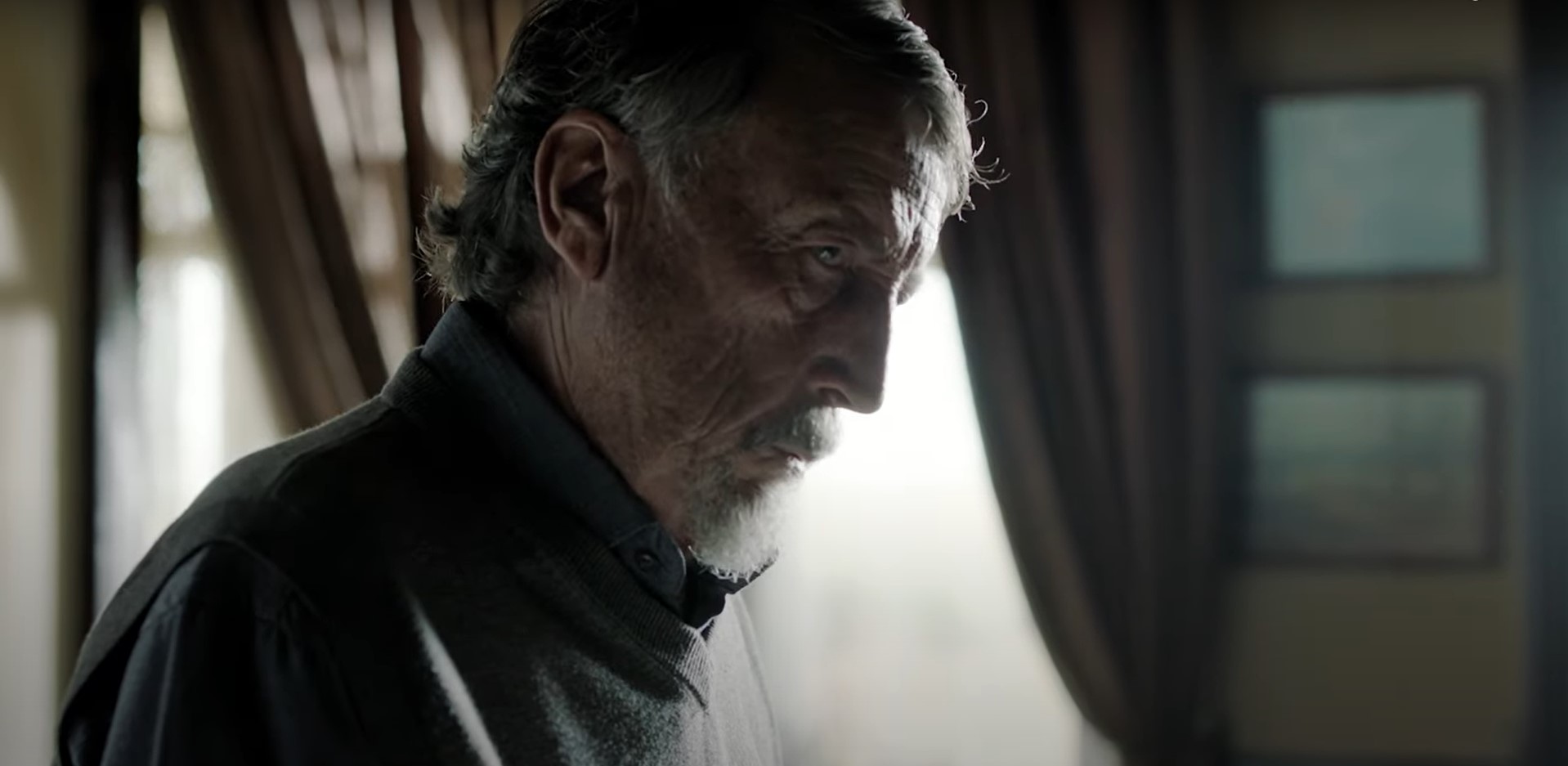
Streaming service Indiepix Unlimited is slowly, but surely, releasing their repertoire onto physical media venue. Granted, these DVD and Blu-ray releases are not top-notch quality, being mostly encoded onto DVD-R and BD-R with very little special features to accompany, but still better suited for viewing than the inconsistent determinants of steaming. The AVC encoded, high-definition 1080p, 25 gigabyte BD-R has sufficient storage to render a decently detailed feature that suffers little-to-no compression issues, presented in a widescreen 1.78:1 aspect ratio. Graded on a darker, bluer scale, “Peacock” does often have color reduction aspects that either is part of the story’s period approach or is a reproachable side effect of the writable disc, losing a richness to the black levels and leaning slightly more on a higher contrast. Details, too, appear smoother to a lesser degree but there are enough texture and tactile elements, such as the cracked leather of dusty old books, Sarel’s haggard and loosely wrinkled skin, or Anna’s striking dark features, to become swirled into its morose mixture of metaphors and surreal horror cerebralism. The Afrikaans language LPCM stereo 2.0 has lossless appeal that fills in the dual channel output quite substantially and with equipoise. Finding depth in a psychological thriller can be a tad be tricky to isolate the terrorizing trepidation trimmings of what’s beleaguering the mind and that can subdue the intended effect on the viewers. Dialogue is strongly delivered in the foreground of all other audio layers with the optional English subtitles available. The English subtitles are of European English translation and are without grammatical error; however, the pacing is at a breakneck speed. Other than the film’s theatrical trailer, the region A encoded, not rated, 89-minute Indiepix Unlimited release does not contain any bonus content. The traditional Blu-ray Amaray houses a lifeless in a monochrome-purple colored print out of Anna and a peacock feather over her eye. Inside is an advert of Peacock with a QR code and a disc pressed with a plain white circular sticker with the title in a font close to American Horror Story.
Last Rites: Noted having inspiration from Francisco Goya’s Black Paintings, the soul-swallowing torment of “Peacock’s” sundering, secluding visuals plays into the deteriorating psyche of forced solitude and the iniquitous guilt that eats away at our being, like an inhabiting demon, recognized in redux of South African sins that sees a trial by fire with a turning in the country’s tide.
 It's Bloggin Evil!