House Music is EVIL’s Jam! “Rave” reviewed! (Scream Team Releasing / Blu-ray)

Get High and Get Pumped for “Rave” on Blu-ray.

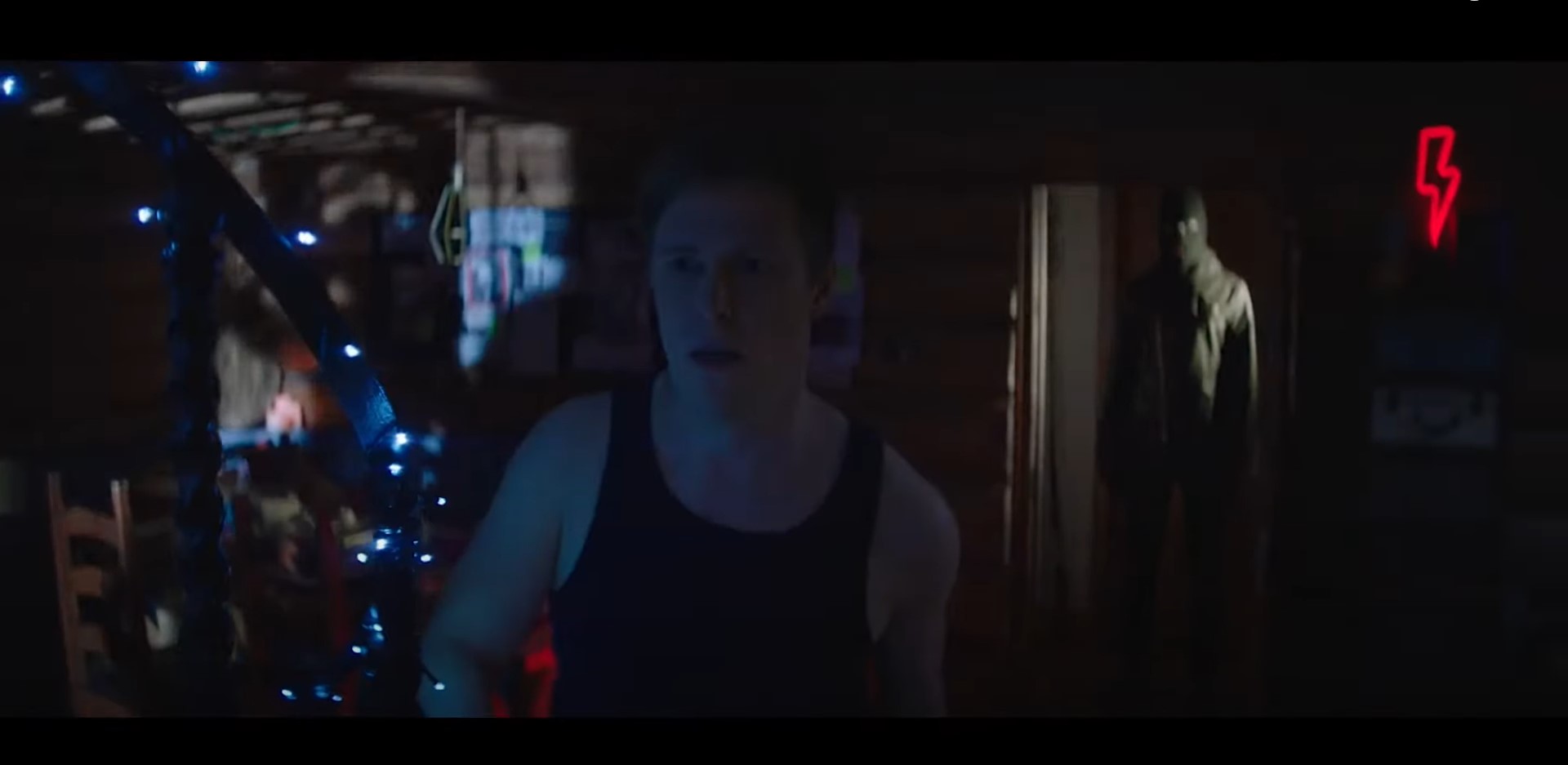
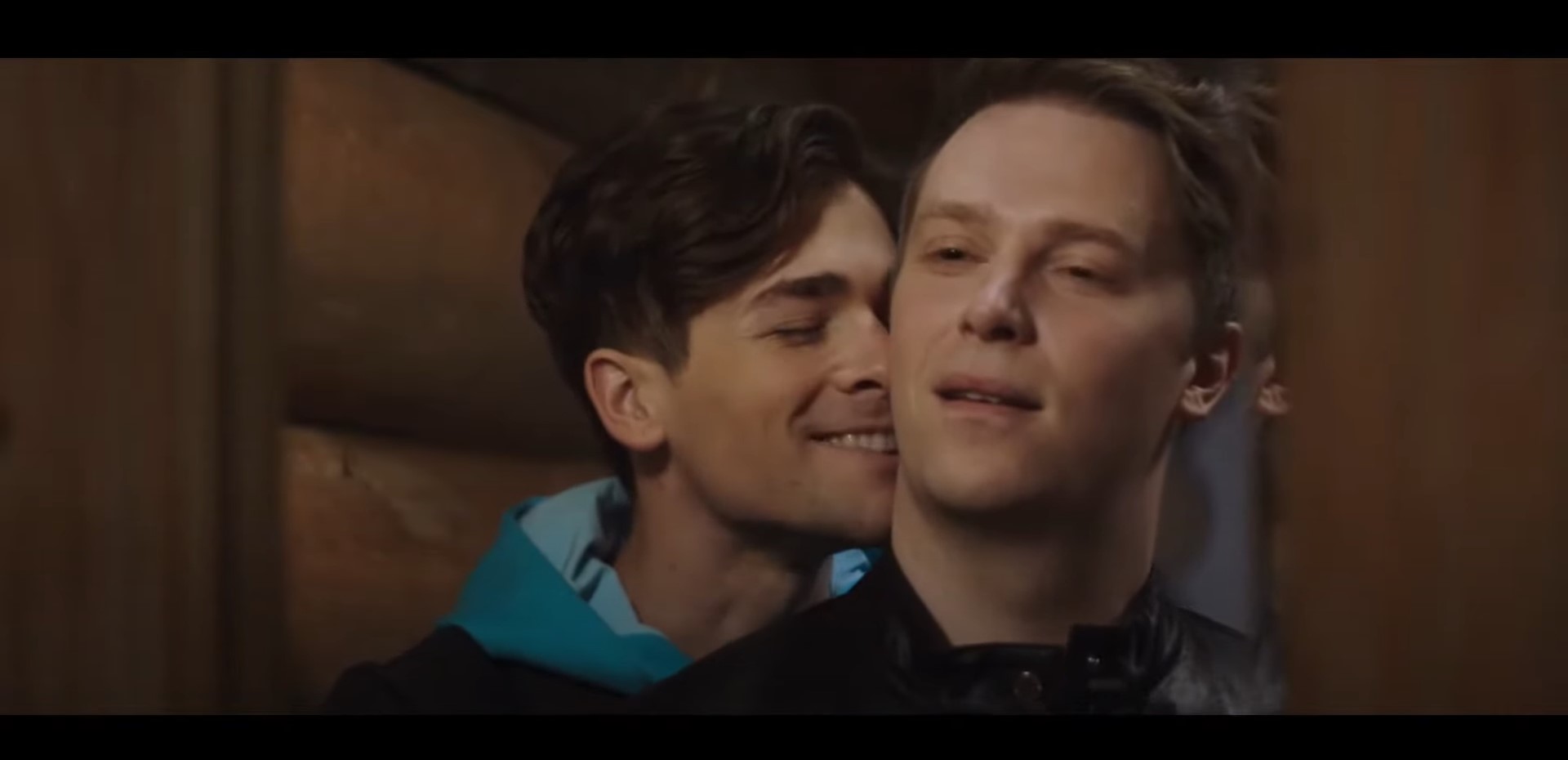
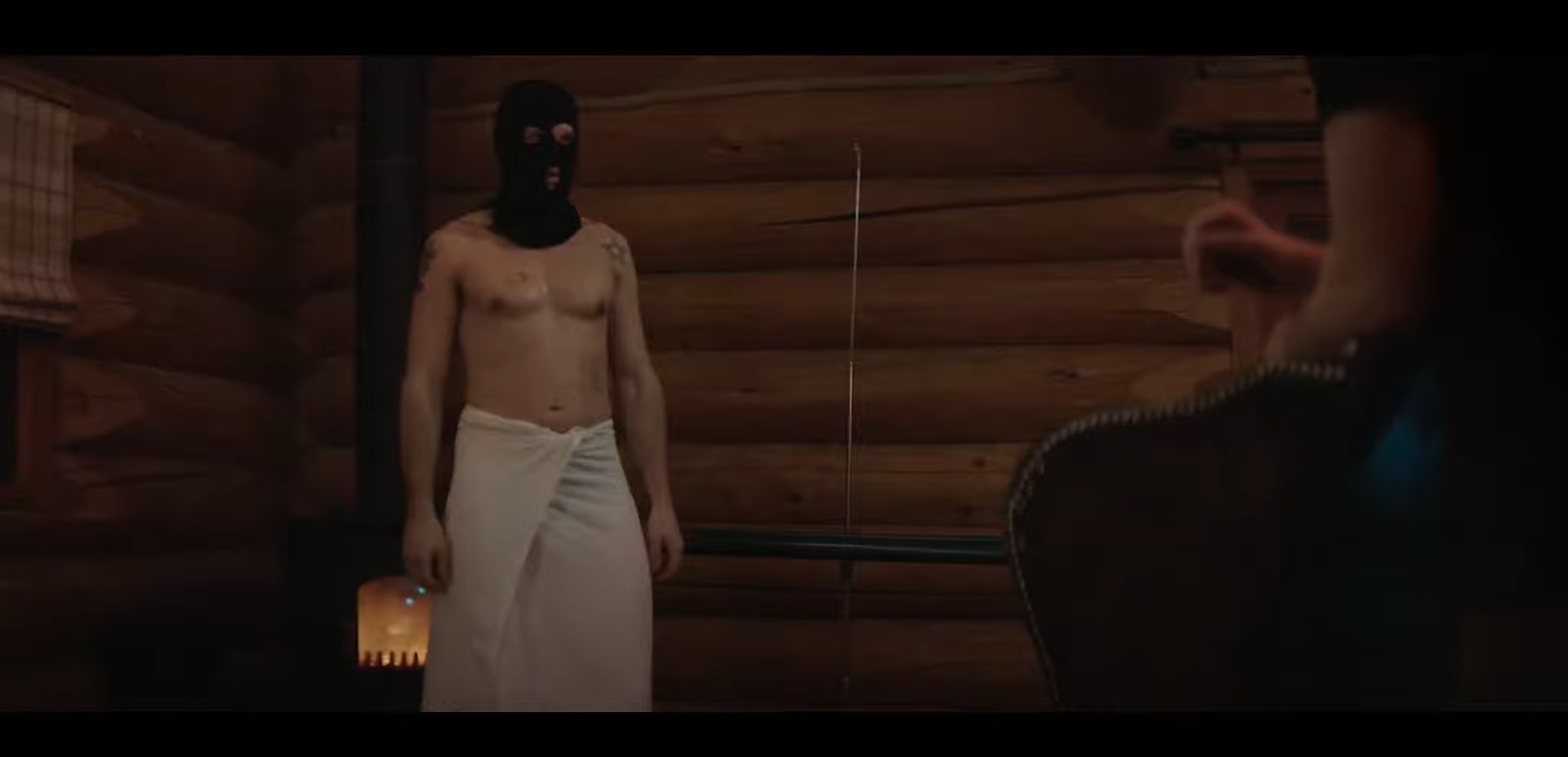
Free flowing Mimmi and her timid pal Lina are invited to an underground night club for one more illegal rave party before the building is vacated for unlawful occupation.  As the two dance the night away, Lina becomes steadily ill and as she tries for the bathroom, she begins to bleed from her skin.  Other rave goers begin to feel the same effects, spewing blood, dripping skin, and a melting away existence while the strobe lights unceasingly flicker and the deep house music pulsates into a fixed one-note bass.  Mimmi and another friend escape the party before even the first signs of the illness, hiding away to do a line cocaine, but when they’re followed by those turned into slow walking bags of oozing flesh, no longer resembling something human, her friend is brutal killed and she barely eludes the ill-fated ravers, becoming trapped inside by those liquifying creatures and a pair of masked individuals seemingly unaffected by what’s occurring around them.

Often times there comes a film that sneaks under the radar and may warrant a second watch for it to sink under the skin or into the recesses the brain’s grey matter.  For writer-director Nils Alatalo, his Swedish melt horror “Rave” is the epitome of context.  The 2020 released independent production, known as “Svartklubb” in the Swedish language, is Alatalo’s debut feature that catapults the filmmaker into the same melt movie categories held in reverence by fans of “Body Melt” or “Street Trash” while kissing the outer edges of vintage and cult iconic eurotrash from the 80’s.  “Rave” will be our consecutive watch, analyze, and review into body horror, following the more gore-gorging merge of man and machine of Davide Pesca’s “Re-Flesh” released last year.  “Rave” proclaims a more stylized and abstruse approach compared to Pesca’s grossly unconcealed transgressions of the body.  Haveri Film is the production company behind “Rave.”

“Rave” asynchronously follows two central characters beginning with the rave-reserved and dry-hesitant Lina before a switcheroo into dipping into the carefree, go-with-the-flow, drug-positive Mimmi.  Played correspondingly by Tuva Jagell (“Girls Lost”) and Isabelle Grill (“Midsommar”), the main principals are a dichotomizing pair of personalities mutually connected to each other by friendship and though Alatalo ultimately decides not to fully explore the intimacies of a cherished bond in post-climax, there’s certainly a relatability audiences will be able to understand amongst their own friendship terms, such as seemingly tired of the meekness or revel in being the dominating friend, as being fostered with empowerment, or on the opposite side of the spectrum, needing a friend to take charge, provide reassures, and be a beacon of exuberance.   However, all the letting go on inhibitions come at a cost, a deadly one at that, and when they essentially are the peak of being identical for perhaps the first time in their lives together, the closeness of Lina and Mimmi become mortally unraveled by what could be described as pure, unadulterated Hell.  What also unravels is their friendship in the midst of drugs coursing through their bloodstream and their minds have shutoff with the trance rhythm of the house music, both aspects of which put up walls to deflect the danger from within and around them, making them clueless to the clues.  Jagell and Grill’s performances have more physical importance than whatever come be extracted from their slim dialogue written for the characters and the two young actresses convert themselves into the roles of psychedelic terror. “Rave’s” partygoers round out with Victor Iván, Sophie Lücke, Ebba Gangoura, Sebastian Norén, Christer Wahlberg, and Celina Braute.

“Rave” is a flash of brilliance tightly confined and bottlenecked to not be bigger than needed by squeezing to contain its claustrophobic purgatory that’s wrapped like a nightmare on molly.  “Rave” is also not a straightforward line of coke, glow sticks, and fleshy fluid fiends within what is an ambiguous narrative that requires an open mind to its reverence for elder Euro horror.  That’s what I suspect Alatalo was shooting for here, an immense adoration and respect for European horror peppered with inspirations from American filmmakers as well.  Soft brilliance of Dario Armento lighting, silhouette eeriness of Lamberto Bava cinematography, and the slow bloodletting of Lucio Fulci’s gore represent the best qualities of same continental yore while including a John Carpenter story-ingrained synth score and paying homage to American melt horror filmmakers, such as J. Michael Muro, Gregory Lamberson, and Philip Brophy to name a few, with his own rendition of what it means to have skin slink and blood secrete from inside the body out.  While the first viewing doesn’t quite stimulate immediately the senses with its slow burn dread, ambiguous cause and effect, and dialogue adverse script, “Rave” glues itself to the psyche and lingers in that cranial netherworld that nags and gnaws at the subconscious and does it enough that a second viewing becomes necessary.  Instantly, piecing together the puzzle through a second visual overlay can jumpstart the engines on what exactly we’re witnessing – Alatalo’s patience with the structure, meticulous details in the scene, and admiration for the genre.  “Rave” is also an indie picture on a budget but considering the composition of the final product, “Rave” strongly accomplishes a persistent uneasiness without exposition that parallels subtle strikes of sharp, startling dread only seen by a handful of filmmakers.    

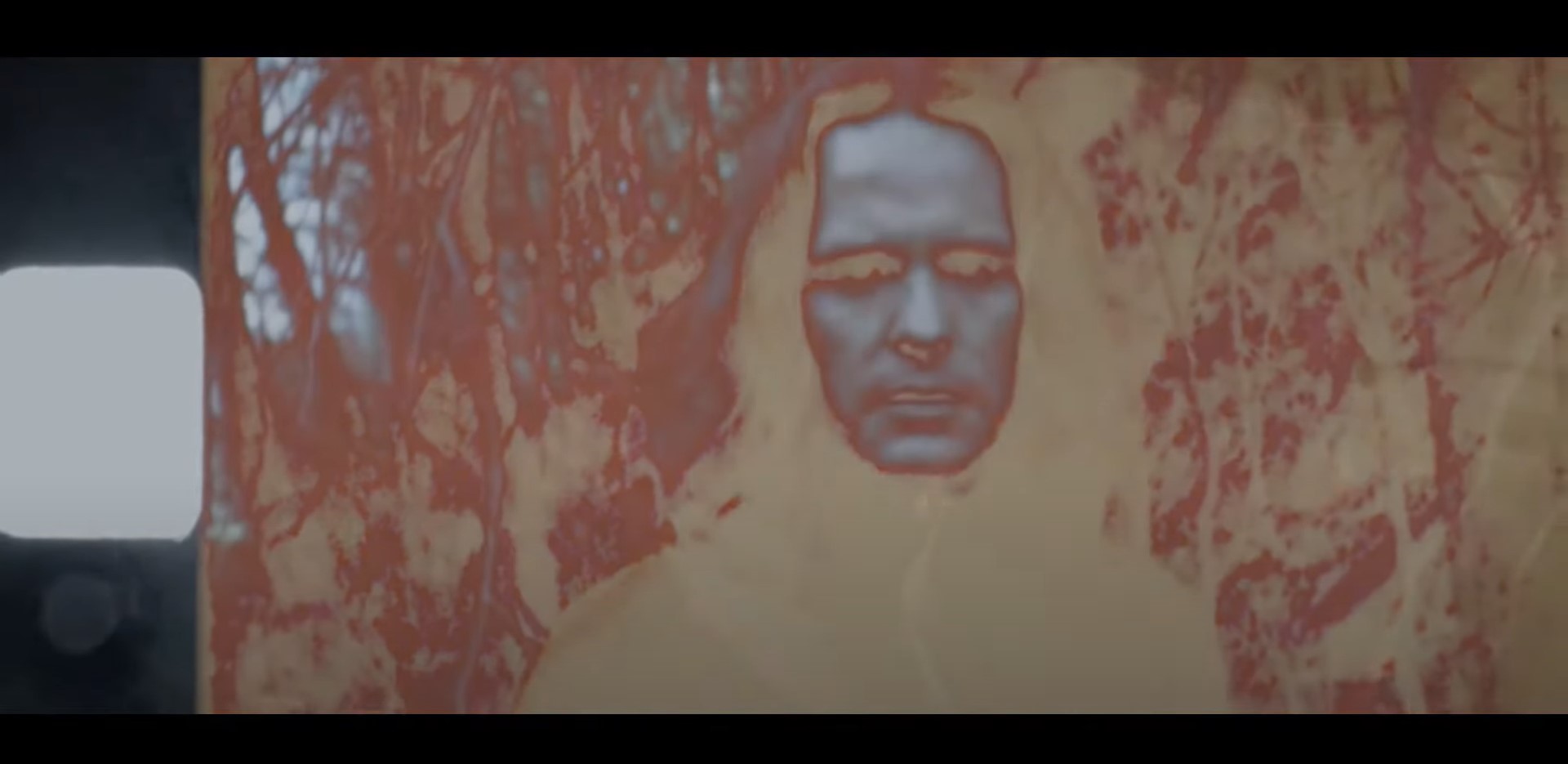
A whole new version of neon dead arrives onto a special edition Blu-ray of Nils Alatalo’s “Rave” from Scream Team Releasing.  The AVC encoded, 1080p high definition, BD25 presents the film in a widescreen 1:78:1 aspect ratio, scaled down from the original aspect ratio of Univision 2.00:1 causing some minor compressed looking scenes.  Not to be deterred, the range of scene setups under the cinematography trio of Jakob Ivar Ekvall, Amelia Finngåård, and Gustav Råström offer an eclectic mix often in the humblest of fashions, such as using just a camera flashlight in a windowless room or the red and blue neon lighting through fog machine.  Silhouettes delineate nicely on screen with the use of backlighting and camera angles.  Framing is a hit or miss coupled with energetic editing, but the overall atmosphere is agreeably chafed with tension.  Minor banding and some aliasing creep out as artifact side effects of a dark-laden story with some of the quicker moments evading the slimy-secretors through the building trying to keep up through the decoding of data.  The compression issues are not terribly invasive during viewing, but they are annoying consistent and notifiable.  The Swedish uncompressed LPCM 5.1 surround mix has lossless binding and sounds really good environmentally albeit many of the tracks are done in post, such as some of the exterior dialogues, which sound natural but softer in the scene, and the itemized milieu ambience.  The Joakim Martinsson and Christer Wahlberg house music and soundtrack are the real victors here integrated into “Rave’s” overall sound design of having the discordant industrial rhythms and irregularities become an antagonistic competitor breathing through the back and side channels, reminiscent of how intrinsic Giuliano Sorgini’s score heightened the intensity of the impending zombie attack.  English subtitles are optionally available.  Bonus features include an English commentary by director Nils Alatalo providing insight on nearly every shot, a soundtrack featurette alternating between Joakim Martinsson and Christer Wahlberg discussing and sample their individualized tracks, a making of montage with soundtrack only, and the film’s trailer.  The physical characteristics of the release contain a beautifully macabre composite in neon coloring and lace slipped into a standard Blu-ray snapper with latch.  Front cover is reversible with a more disheveled and strung-out Isabelle Grill looking blankly upward, which has a variation of her facial posture on the factory-distributed cover.  Disc art contains one of the gloppy ghouls bathed in red with a black background.  “Rave” release comes region free, not rated, and has a runtime of a brisk 72 minutes.  A slow burn melt movie capturing the essence of “Rave” to the grave.

Get High and Get Pumped for “Rave” on Blu-ray.

EVIL Preys on the Goodness of the Weak. “Lady Terror” reviewed! (Sector 5 Films / DVD)

“Lady Terror” is on the Prowl.  Now on DVD!  

Jake Large, a shrewd personal injury lawyer, finds himself in a loveless engagement that’s full of contempt, especially with his finance who makes up excuses to not be around or intimate with him.  When Jake foils a thief’s grab and dash of Candice’s purse, the lawyer and the exotic dancer quickly fall into a relationship that rekindles Jake’s vivacity of work and life.  Breaking off the engagement to his equally two-timing finance, Jake pours every ounce of emotion into the sexually tempest romance that’s rapidly become more than just courtship when Candice suggests the murder of her frequently threatening and abusive stepfather.  Witnessing first hand some of his behavior, Jake agrees to take out her stepfather in a fiery explosion during one of his rabbit hunting trips.  When the dust settles and all seems to be going well with Candice, a watershed moment reveals Candice’s intentions are not what they seem to be and in the middle of taking the fall for everything is Jake. 

An enticingly fervid thriller, “Lady Terror” is the latest directorial from the 30-year industry producer, writer, and director, Nathan Hill.   Filmed in Melbourne, Victoria, Australia, “Lady Terror” harks back to the early 90’s erotic suspenser of sex, deceit, and murder where seduction and predatory persuasion are welded tools to accomplish unscrupulous acts.  Hill has submersed himself chiefly in low-budget genre films from his first feature, a sewer creature that craves Cartel drug pushers in the SOV shot “The Hidden” released in 1993, to more recent and gamut gorging Australian documentary pictures, such as “Bigfoot Down Under” and “Sex Down Under,” as well as keeping tethered to his horror roots with his short film work contributed to compilated anthologies in “Clownsploitation,” “Previews of Coming Attractions,” and “Schlock-O-Rama.”  Hill produces his “Lady Terror” under his company NHProductions with the Alien enthusiastic documentarian, executive producer Warren Coyle, and marks the reconnection of Hill and director of photography Dia Taylor following their debut, feature film collaboration on Hill’s “I, Portrait” and the various filmic vignettes from before. 

Not only does Hill write, direct, and produce, the filmmaker with a penchant for creating J-named characters is also the lead principal personal injury lawyer Jake Large, owner-proprietor of Large Lawyers.  Though successful in his legal craft, Jake’s has developed depression when his once endearing fiancé Celine has turned against him as she sneaks around his back with a mixed martial artist.   A loathing Celine is played severely cutting by Tritia DeViSha who has previous chemistry alongside Hill during their time on Hill’s “Revenge of the Gweilo” production and while the chemistry between their characters is palatably thick with contempt, there’s not much backstory in gain traction for sympathy, compassion, or any other emotive expression.  Jake has a single flashback of his and Celine’s happiness in simpler times during a moment of what could be regret or longing, but there’s simply not enough breadcrumbs for their history to take shape of any form.  Instead, their turmoil feeds into Jake’s unquestionable willingness to concede to a beautiful exotic dancer and damsel in distress named Candice (Phillyda Murphy).  The attention is good, the sex is good, why not just give a little back by murdering her crooked stepfather (Anton Kormoczi – who also goes by Anton Trejo because he mildly looks like Danny Trejo)?  Well, Jake’s lovestruck blindness obscures the real intent but, luckily for Jake, he has what he describes as a lucky rabbit’s foot in his secretary who aspires to be a private investigator and when she’s not punching keys, she’s clandestinely tailing Candice in a spying and snapping pictures behind trashcans and around corners caricature kind of way.  The platinum blonde and distant relative of horror maestro, Dario Argento, Simay Argento is the peripheral probing dick Ayla Harp that initially doesn’t have this close-knit relationship with her boss until the third act when she happens to take it upon herself, after examining Jake’s behavior and reading his desk notes, to snoop into his private life on his behalf.  It’s not entirely clear how she unearthed who exactly Jake became intimate with but she managed track down Candice’s exact location to snap a few black and whites.  “Lady Terror’s” remaining cast feels very much like Ayla Harp in the disconnection of each other’s narratives, ridden along in choppy succession that leaves too many plot holes to fill.  The cast rounds out with Leslie Lawrence, Anthony Cincotta, Robert Rafik Awad, Challise Free, and Adam Ramzi – the 40-year-old Melbourne actor, not the gay porn star.

Perhaps that character disconnection stems from the distracting filler from in between dialogue scenes.  A slew of these filler scenes are of Jake Large driving around town, pulling up into driveways, and entering his home, Candice’s home, or his office, eating into a runtime that could be better suited for character exploration or assembling the fragments of a deceptive thriller involving the key players.  The current design dulls the run-of-the-mill and insubstantial story with nothing new to offer audiences to facelift the core element, a rope-a-dope of relationship pretense in order to con a fall guy into another’s dirty work.  Though I know the answer in the back of my mind, a considerable amount of struggling happens in the deductive logic and complex problem solving regions of my brain for the missteps of what’s supposed to happen after Jake commits to the hit.  Ultimately, the worst outcome to happen to Jake is not what I suspected; in fact, we should be expecting a more disastrous, run-for-your-life fall from grace, but, instead, there’s no sense of urgency or consequence in the unravelling of Jake’s newfound and glorious prospects with Candice.  In fact, police presence is reduced to informing Candice her stepfather had died and that’s the extent of it, not mentioning the gunshot, a gasoline fueled explosion, or any other kind of suspicious death pursuits.  The awkwardness continues to bleed into the narrative continuity.  “Lady Terror” has a time span of at least a week or two, or longer as it’s not entirely clear, but Jake’s outfit rarely differs from the white pants, blue button-up shirt, tan sport jacket, and fedora.  The same goes with his lacy see-through topped assistant Ayla, suggesting that many of the scenes were shot on the same day or two without a wardrobe change.  When Jake does have a different outfit on, the subsequent scenes revert right back to that then by now stale getup. 

“Lady Terror” arrives onto DVD courtesy of Sector 5 Films, long overdue revisit of the distributor’s line of product since our last review from 2016.  Presented on a DVD-R, with DVD5 capacity, in a widescreen 1:78:1 aspect ratio, “Lady Terror” retains an unhewn image that appears soft, smooth, and with slight aliasing.  Overexposure wipes a fair amount of background sky, such as with approx. ten minutes into the story a plane just flies off into a bright void, but the overcast grading leaves this modern noir consistently dreary to where the only thing that stimulatingly pops is Phillyda Murphy in her skimpy intimates.  Again, there’s not a ton of landscape range, especially being set around Melbourne and not taking advantage of the city skyline or it’s Port Phillip harbor with the drone to gain urban rookery.  Sector 5 DVD’s back cover states the film has a 5.1 surround sound mix, but what my player tells me, “Lady Terror” actually comes supplied with an English Dolby Digital 2.0 mix.  The dual channel output would have been a sufficiently adequate mix albeit unpolished, echoey dialogue but for the entire length of the film, a harsh gargle undercuts the sharpness in the dialogue and the Jamie Murgatroyd (“No Such Things as Monsters”) soundtrack.  This also creates faint whispery-hissing.  There are no optional subtitles included.  Bonus features include doomsday, extraterrestrial, and anthropology hypothetical or alternative fact-doc trailers for “Occult of the Secret Universe,” “Nostradamus:  Future Revelations and Prophecy,” “Ancient Origins:  Extraordinary Evidence,” “Alien Paradox:  Legacy of the UFO,” “Demonic Aliens,” “Breaking Free of the Matrix,” “Ancient Origins:  Mankind’s Mysterious Past,” and “Elusive Bigfoot Abroad.”  The Sector 5 DVD is housed in standard black snapper with trashy romance novel resembling front cover of two who are not Nathan Hill and Phillyda Murphy in throes of passion.  The cropped top portion of the cover art that includes Murphy’s face in composited in 3 hues is also pressed onto the disc art.  The release comes not rated with an 80-minute runtime and a region 1 encoded playback.  Though performances are solid, “Lady Terror” ultimately feels underwhelming and unable to live up to the attractive title with an unadventurous noir thriller hamstrung stake to the heart from the DVD-R’s anemic technical and fidelity issues.

“Lady Terror” is on the Prowl.  Now on DVD!  

The Stillness, the Quiet, and the Darkness evokes EVIL to Home In. “Skinamarink” reviewed! (Acorn Media International / Blu-ray)

The Kids Aren’t All Right in “Skinamarink” on Blu-ray!

A night of silence is disturbed when a young boy, Kevin, falls down the stairs of his two story home.  Rushed to the hospital to return to the same silence-soaked house, the restless boy and his sister Kaylee search for their dad who has suddenly vanished from his bedroom.  Doors, windows, and even the bathroom toilet has strangely disappeared right from sight.  Feeling scarred under the cover of isolated darkness, the siblings head downstairs to sleep on the couch softly lit b0 the fluorescent glow of the television set.  As they watch old cartoons, crayon, and build with large Legos, while catching a few ZZZs in between, strange noises resonate through the home, floor based objects are found stuck onto the walls and ceilings, and a twisted, omnipresent voice slips the siblings commands that exposes them the darkness from within the house.

Schismatically different from any other spine-taut chills ever experienced before, Kyle Edward Ball’s written-and-directed 2022 Shudder exclusive “Skinamarink” is no joyful and innocent children’s song in the filmmaker’s debut feature film.  Based and expanded upon Ball’s 2020 short film entitled “Heck,” viewers will be enveloped and swallowed by the very core of childhood fears that plays like a fever dream, or a distant nightmare, where faces are a blur, spatial direction is nothing more than theoretical concept, and the voices around us are distorted, muffled, and cold.  “Skinamarink” offers little warmth under constant blanket of darkness and leaves no room for hope when parents are removed from the picture.  What’s Ball leaves behind is primordial and innate terror that rarely can be seen straightforward and lucid.  The Canadian picture, which was filmed in Ball’s childhood home in Alberta, is a micro-budget production of ERO Picture Company, distributed by Bayview Entertainment, Shudder, and IFC Midnight, crowdfunded by Seed & Spark contributors and produced by “Texas Road” producer, Dylan Pearce.

Shot over the course of a week’s time, “Skinamarink” works more like CCTV footage recording the static surroundings within the scope of the lens.  The cast is small, rarely visible, and when visible, they are often obscured or never directly focused upon to mint atmospheric dread.  Two parents.  Two children.  A nuclear family becomes the objective of an omnipresent, ominous presence, but there are concerning questions about the integrity of the family that Ball incites with clues of broken household.  Father and mother briefly make an appearance, or with one of them just their voice, throughout the course of the night, restricted their attendance exclusively around the children’s perspective that makes viewers shrink and become engulfed in childish fears – sometimes they are adult fears as well – of the dark and of being separated from parents.  Lucas Paul and Dali Rose Tetreault as kids Kevin and Kaylee kill their seldomly seen performances with the patter of little feet running through the house and up-and-down stairs, their soft, angelic voices whispering to each other and calling out for their father, and when briefly in frame, or at least the back of their heads, they manage to complete the succinct shot just in the way Ball intends to secrete fear from our every pore amongst the quiet and stillness.  “Skinamarink” is not a character-driven film in the least as Ball cherishes a chilling atmospheric horror so father (Ross Paul, Lucas’s real life dad) and mother (Jamie Hill, “Grotesque”) receive what essentially is cameo roles to establish a feeling of lost when they’re gone and are perhaps the easiest roles the two actors have ever taken and turn out to be the most eerily effective on screen and over the audio track.

“Skinamarink” experiments more with surroundings, audio and visual senses, and common inborn anxieties rather than progressed by traditional methods of character dynamics and that is where the film will be conflict-ridden and divisive amongst the niche group of diehard horror fans.  General audiences will find “Skinamarink” to be a bore without much popcorn pageantry to keep short-attention spans entertained and a disembodied villain.  Slow burn horror usually has an elevated element to it and Kyle Edward Ball certainly incorporates an open for interpretation access door for the deep-dive genre conspiratorialists to work overtime on reasoning and explaining “Skinamarink” to the masses still trying to process what they just experienced themselves after watching the film.  Theories will run amok with the most prominent being Kevin’s fall that reduced him to a coma state and what we experience is all in Kevin’s conscious-cracked cerebrum trying attempting interpret, at best guess, the dissolution of mom and dad’s relationship.  Again, this is just a theory as Ball aims for ambiguity to fester fathomable, one-solution explanations.   Perhaps in a type of narrative the world is not ready for, but in my opinion, “Skinamarink” fills in what is void from modern day horror, a uniquely fresh and chance-taking pervasive eidolon scare package to revitalize genre numbness with slow burn phobias.

An original parapsychological paralyzer, “Skinamarink” arrives on a Blu-ray home video courtesy of Acorn Media International, the acquired UK distribution company of RLJ Entertainment.  Presented in a widescreen aspect ratio of 2.39:1, the AVC encoded BD25 sustains a purposefully intended lo-fi A/V feature, set to the date tune of 1995, much like when SOV quality films were abundantly popular because of their cost value and accessibility.  If you’re expecting depth of detail, you won’t get it from “Skinamarink’s” dense static approach that all but eliminates object definition.  Delineation is scarce to an effective scare tactic to which Ball tones the film; yet, the static is not, for lack of a better word, static as the current changes within the blips, increasing and decreasing visibility for desired poltergeist potency, if poltergeist is what we want to call it.  Set entirely in nighttime, sleepy home, the basking glow of tube television is the only semblance of color that emits a faint blue luminous while antiquated cartoons provide flat caricature coloring.  Certain scenes are shot in obvious night vision with the spherical focus that becomes unnatural in the frame, but there’s really nothing natural about Ball’s auteur style.  The lo-fi style choice continues into the English DTS-HD 5.1 surround mix that doesn’t exercise every channel.  Instead, we’re back to canned content with intentional hissing, popping, and distorted tracks.  Aside from a couple of innate audio recordings of a squeaking closet door, all the other ambient audio and dialogue is done after the fact in post-production to be rendered appropriately misshaped and muddled.  There’s also no score, retaining realism of a hushed house sound design to pay heed to soft footsteps and other delicate and mortifying milieu noises.  Depending on your audio setup, subtitles may be your friend here as the whispers are so low, they’re nearly inaudible.  There are a handful of scenes that have burned in English subtitles for that very reason, but full menu English captioning is available too for the minute amount of dialogue.  Special features only include an audio commentary track with the director and director of photography Jamie McRae.  Acorn Media’s release mirrors the U.S.’s RLJ Entertainment’s Blu-ray with the exception of a slightly thicker Blu-ray snapper. The front cover denotes essentially what to expect in the future, a low-resolution and a blue-toned, dark, inverted screenshot image of the young boy; this scene also translates to the disc art.  Encoded with a region B playback, “Skinamarink” comes UK certified 15 for strong horror and sustained threat in its 100-minute runtime.  Take my advice:  there’s nothing quite like “Skinamarink” outside the experimental gallimaufry but it’s sleepy time nature should not be viewed at the late-night weary hours or else it’ll lull you into a nightmare of your own.

The Kids Aren’t All Right in “Skinamarink” on Blu-ray!

That Chill from Within is the EVIL that Plagues the Mind. “Bone Cold” reviewed! (Well Go USA Entertainment / Blu-ray)

“Bone Cold” is available on Blu-ray Home Video at Amazon.com!

After a failed mission attempt by their counterparts, a pair of highly trained U.S. Black Op solders are called back from a leave, less than 24-hours on a previous mission, to drop into a snow-covered forest in Northern Ukraine.  The mission is to eliminate a Russian separatist amassing a paramilitary for insurgency strikes.  The skilled sniper and his longtime spotter assassinate the wrong target on bad intel and find themselves running for their lives when separatist soldiers begin tracking them.  Unable to evac until the mission is a success and they lose their hostile pursuers, the soldiers are hard-pressed by their handler to continue to locate and eliminate the intended target, but something else is following them.  A dark figure against the snowy white landscape hunts them.  With no other friendly assets in the area or air support, they must battle to survive the two-fronts alone, relying on their years of trust and training to get them through alive.

“Bone Cold” is the chilling 2022 psychological thriller from first time feature length film director Billy Hanson.  The Main-born, Florida State Film School alum also pens the story that tackles traumatic stress and delusions brought upon military war and operation fatigue mixed with suspenseful arms engagement, displaying phenomenal sniper back-and-forth volleys, and mixes in a sinister and ominous presence in tow.  Shot in the dual locations of Los Angeles, California, for the not-so-frigid-looking scenes, and in the director’s home state in Saco, Maine during the winter months where most of the action takes place, “Bone Cold” plays into that penetrating freeze that sends shivers down your spine as well as getting the blood pumping for the clashes of special and supernatural forces.  Hanson, along with Elise Green, Ness Wilson, Jonathan Stoddard, and music video maker Jaclyn Amor produced the film under Hanson’s own Dirigo Entertainment production company with Mind the Gap Productions and Well Go USA Entertainment handling distribution.

The story opens with a man using a metal detector on a semi-arid land until the strengthening beeps denote his bounty, a cache full of semi-automatic weapons.  Before he can enjoy the cold grip of a powerful rifle in his hand, his temple explodes with a quick blood splatter from the scoped rifle of United States Black Ops solder Jon Bryant at the confirmed behest of his spotter partner, Marco Miller.  The operatives are played by “Away the Dawn’s” Jonathan Stoddard and “Discarnate’s” Matt Munroe respectively who muster and mimic well the jarhead jargon and procedural positioning with their own brand of super soldier camaraderie, building a believable bond based on distinct posturing alone.  Narratively, we’re exclusively in synch with Jon Bryant, the expert sniper whose likely spent more hours killing marks than at home with wife Mel (Jennifer Khoe, “Fear Frequency”) and daughter Wendy (Trinity Jo-Li Bliss, “Avatar:  The Way of Water”) and slowly Jon’s reality begins to fissure under the pile of bodies that he’s claimed over his military career that translates right into the next mission before he can even decompress from the last assignment.  During their clandestine campaign, Jonathan Stoddard can sell stoic reactions with ease unlike the opposite side of the spectrum where crazy isn’t in the actor’s natural repertoire and while the unknown factor nudges a way in between the two soldiers, where their lives depend on the very stability and duty of the other, in what is a fervent wedging that puts them in a tough spot, Hanson throws in an unnecessary monkey wrench that departs from the obvious in a confounding way and trails Stoddard away from his character leading himself out of his own mental maze.  Hanson does attempt to re-ground the solders with combat and the negative affect that life-and-death struggle has on them in a hot zone and at home.  “Bone Cold” rounds out the cast with Elise Greene (“Incantation”), Jeremy Iversen (“Mantus’), and Danielle Poblarp.

Choice domestic locations give “Bone Cold” a broader, international feel, creating a bigger narrative than in actuality, and those illusionary elements provide invaluable production value on a smaller scale production.  Throw in a few Russian speakers and Billy Hanson has transported you into Eastern Europe without having to leave the filmmaker’s backyard.  A decent charge of combat and special forces verbiage tack on a competent conflict between Americans and Russians that’s kept intimate and selective to not overflow beyond the budget’s capacity to be deemed overreaching to a fault.  We’re also treated to a fair amount of fear that’s set isolated in the quiet, snowy woods where tricks played on the eyes are common and every sound resonates from every angle.  The dark figure stalking and glaring from a distance is ever menacingly taut with suspense, especially with the flawless first-time feature editing work by Hanson and co-editor Art O’Leary.  From the distance, the unknown black figure’s piercing eyes and a wide, sharp-toothed grin is undoubtedly creepy obscured behind trees, bushes, and shadows, but up close and well-lit, the creature characteristics are more a cartoon caricature in its rubbery posterior.  The connection between the paranormality of the creature and sanity-breaking guilt trauma is evidently clear as that ugliness and cold-bloodiness is from within clawing to break out, it becomes an object of neglect until it takes a ride home with you to destroy loved ones, physically and emotionally.  Ultimately, Hanson’s able to piece together an allegorical tale in a roundabout charter that encircles a moment of mass belief of what’s really out there stalking them and the unsuspected device feels like a speed bump being hit at 80 MPH so the story goes off the rails a bit to engage tactual fear with viewers that reminisces a “Predator”-esque faceoff that’s quite out of context and not as thrilling.

“Bone Cold” is a low-budget psychological thriller with a large snowbank production value brought to the Blu-ray retail shelves courtesy of Well Go USA Entertainment.  The AVC encoded BD25 is presented in 1080p, high-definition, with a 1.78:1 aspect ratio.  Since much of the duration has a bright, white snow backdrop, compressions issues are limited to only when the sun falls and night engulfs the solders, displaying some high compression low quality issues that blur the delineated trim which is fairly consistent over many Well Go USA releases as I believe their standard single layer format storage is too little for feature plus bonus material.  Shot on a Panasonic EVA 1, the picture is well balanced in contrast as we’re able to see and distinguish the background and foreground images with relative ease despite the blinding white and the lightly opaque blue lens tint provides an extra chill for the wintery setting.  An English DTS-HD 5.1 audio mix offers ample coverage across all tracks, providing an absolute dialogue package and a full-bodied milieu ambience that has capacious range and depth.  Available English subtitles are a menu option. Bonus features include a making of that’s a total package in running down cast and crew interviews discussing precisely and, in every detail, how “Bone Cold” came to fruition, a montage blooper reel, and the original trailer. Physical aspects of the release include a rigid cardboard o-slipcover with embossed title and back cover stills. Inside the slipcover is your traditional Blu-ray snapper case with latch opening with a cover art the same as the slipcover, that of the dark figure standing in silhouette in the background with a foreground, hunkered over, facing it with a rifle, soldier in the snow. Unimpressive is the disc art of a hazy snow covered Ukranian forest. “Bone Cold” has a 109-minute runtime, comes not rated, and is region A locked. “Bone Cold” has a few choice on ice moments that make the third act inconclusive as the story struggles to decide what it wants to be but Billy Hanson’s grasp on the psychological grip is crafted with an arresting visual paradigm on a paranormal level to convey the life-and-death struggles of combat fatigue and psychosomatics.

“Bone Cold” is available on Blu-ray Home Video at Amazon.com!

When EVIL Won’t Let Go to “Those Who Walk Away” reviewed! (VMI Releasing / DVD)

Never Abandon Your Problems.  Face Them!  “Those Who Walk Away” on DVD!

When Max could no longer stomach the sight of his mother falling deeper into severe sickness, he abandons his mother’s side after a year of care.  A year-long hiatus from dating has put a temporary halt on his love life, but as he rejoins the socializing game, he connects with Avery on an online dating app.  Avery appears to be the perfect girl:  smart, witty, and really into him.  The start of their first date is a match made in heaven until the girl too good to be true decides to drive him to a supposed haunted house for uninhibited fun when their original plans fall through.  Inside, a dilapidated abode comes with an appalling story, surrounding a malevolent urban legend spirit known as Rotcreep.  Swallowed by house’s notoriety, Max and Avery grapple with their own personal demons that have come back to haunt them and with no escape, facing the trauma is the only path toward survival.

A lot of films, past and present, are drenched dripping in the trauma theme that the subtopic has become waterlogged in the independent and mainstream scene, but has there ever been a trauma touted full length feature film that was done in one long single take?  That’s the novelty concept to proof of product feature from writer-director Robert Rippberger, a documentary filmmaker who has only recently dipped his toes into fictional storytelling.  After the 2019 unsung release of “Strive,” an urban drama of perseverance starring Danny Glover (“Predator 2”), Rippberger’s latest “Those Who Walk Away” sets two personal distresses into a prevailing evasion of death.   Rippberger’s script, cowritten with Spencer Moleda, materializes one’s own baggage being personified as waking nightmares or a manifestation of shackling malevolence, manacled by past mistakes and centrifugal hurt.  The Chillicothe, Illinois shot picture is a production of Ripberger’s own Los Angeles based SIE Films, Argentic Productions, and is in association with Slated Productions and Sandeep Sekhar Films with Rippberger, Sandeep Skehar, and Argentic’s KT Kent producing. 

At the center of the story are Max, played by “Twilight” franchise’s Booboo Stewart (no relationship to Kristen Stewart), and Avery, played by Scarlett Sperduto (“Float”), as individuals looking for love or connection having met on a dating app.  Necessary lengthy exposition provides the footing for “Those Who Walk Away’s” climatic third act, giving Max and Avery a chance to go to town on their historical credentials during the date as we learn about Max’s ill mother and his sudden departure from her around the clock care before the heartache becomes soul consuming and about Avery’s fight or flight childhood, anecdotal and accounts that are kept closer to her chest,  with her close and adored brother.  The chemistry is palpable between them with nervous conversational exchanges and teasing jocularity that makes their one long scene seem like an actual first date, completely selling the dynamics with the audience who are induced with anxious butterflies and an eagerness to connect, emotionally and sexually, on Max and Avery’s behalf.  The narrative, ultimately, has to change because “Those Who Walk Away” is not a romantic-comedy but rather a dramatic-horror.  Whereas everything seemed to go swimmingly with the two young love birds really getting into the moment, we’re suddenly engaged with a different, if not darker, tone that has come out of the swindling shadows and into the light of a dimly lit, ramshackle haunted house that is the premier first date destination experience, if you’re a sociopathic survivor that is.  “Those Who Walk Away” works with a tight, small cast that finishes off the list with Grant Morningstar, Devin Keaton, Bryson Whereas, Connor McKinley Griffin, and former professional wrestler, veteran stuntman, and veteran actor of such films as “The Mask,” “Barb Wire,” “Hot Wax Zombies on Wheels” with Nils Allen Stewart, aka The Stomper, as the Rotcreep – again, not related to Kristen Stewart, but is father of lead actor Booboo Stewart.

“Those Who Walk Away” has the concentrated acting chops to pull off the two-pronged plot and despite the obscure and incoherencies with the revelation climax, the turn of events still bids a gripping blank check on what to expect next.  Yet, the most interesting portions of the film are not those aspects that do have a degree of excellence for an indie project.  Instead, the single long take from opening-to-ending credits is a mind-blowing feat.  Unless there’s a seamless cut that I’m missing or blind to, “Those Who Walk Away” never edits or cuts away from the action that puts the actors in a position of having to perform to perfection.  Rippberger also doesn’t remain stationary to a single location for the first half of the film, coursing through the populated public park and bustling small town of Chillicothe during Max and Avery’s getting-to-know-you talk-and-walk, and as the story evolves toward more sinister circumstances in a one house setting, Rippberger can’t sit still and uses nearly every square inch of the creepy, boarded up house to his advantage, creating and changing up room interiors that fashion an illusionary creepy funhouse that Max scrambles from room-to-room avoiding Rotcreep and finding a way out of what could be perceived as Hell in a house, a metaphor for Max’s own mother-abandoning torment.  If that isn’t impressive enough, Diego Cordero’s camera handling to make the single take work isn’t bush league cinematography as having the frame trajectory move in tight, confined spaces without a bit of awkwardness, like moving from outside the car to inside the front of the cab then to the back between the driver and passenger seat while keeping characters in frame and keeping the characters acting is a tough, planned shot.  What’s also tough is achieving crisp dialogue in one take and that’s where the film falters a little with the pivotal exposition losing strength and clarity where it’s needed the most, essentially being muddled instead of meticulously articulate if actors are either not vigorously vocal enough, mic placement isn’t exact, or mic picks up other noises that scuttle overtop the dialogue.

Courtesy of VMI Releasing and MVD Visual comes a chilling crucible in “Those Who Walk Away” on DVD.  Presented in 720p on a widescreen 1.78:1 aspect ratio, the film is distributed on a DVD5 with a reasonable compression rate to keep the image sharp without a lot of addition fluff to bog down the overall compacted digital transfer.  Instances of off and on lens focus works against the long take, much like the audio, where timely is key but as far as VMI Releasing’s handling of the storage, the resolution and image quality do the work to represent the best quality possible.  Although the DVD back cover states one audio option – an English Dolby Digital 5.1 – there is a second option with a English Dolby Digital 2.0 Stereo.  Unless you’re setup with a surround sound, the stereo option will have identical dialogue and ambience noise but there is an amplified finish on the soundtrack by video game composer Dmitrii Miachin with the drawn out violins and a brooding, sonorous pitch.  Dialogue is a minorly muddle as mentioned before with the tribulations on a feature length shot but mostly clean and clear to the point of satisfaction.  Aside from the static menu’s original trailer for the film, and the illustratively ghoulish opening sequence, the DVD comes with no other bonus material.  The DVD comes in a standard DVD tall case with a front cover of a bloodied Booboo Steward looking dazed walking through fire and the same image is used for the disc art.  Psychologically scything, “Those Who Walk Away’s” fillets guilt from the bone with scene shooting originality and a cast that nails every second lapse. 

Never Abandon Your Problems.  Face Them!  “Those Who Walk Away” on DVD!