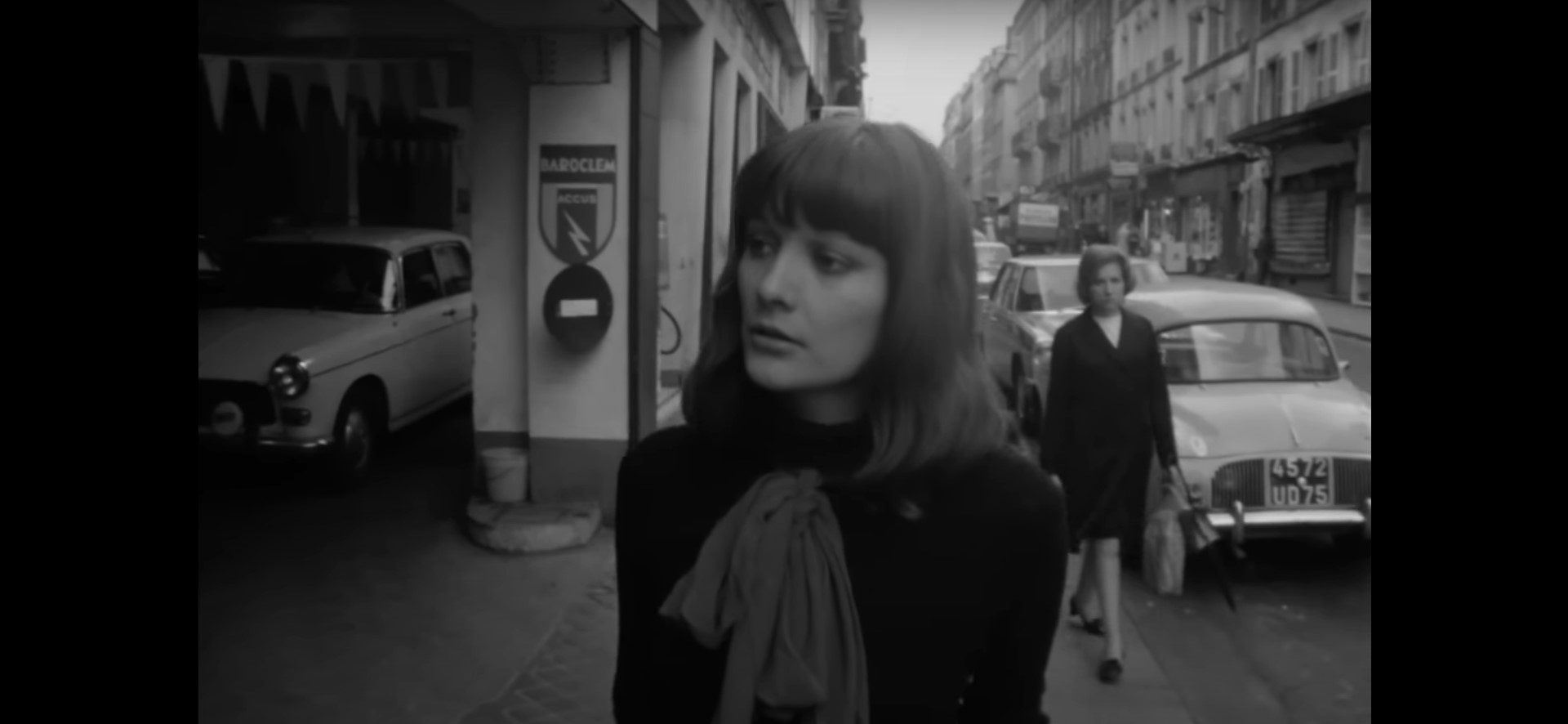
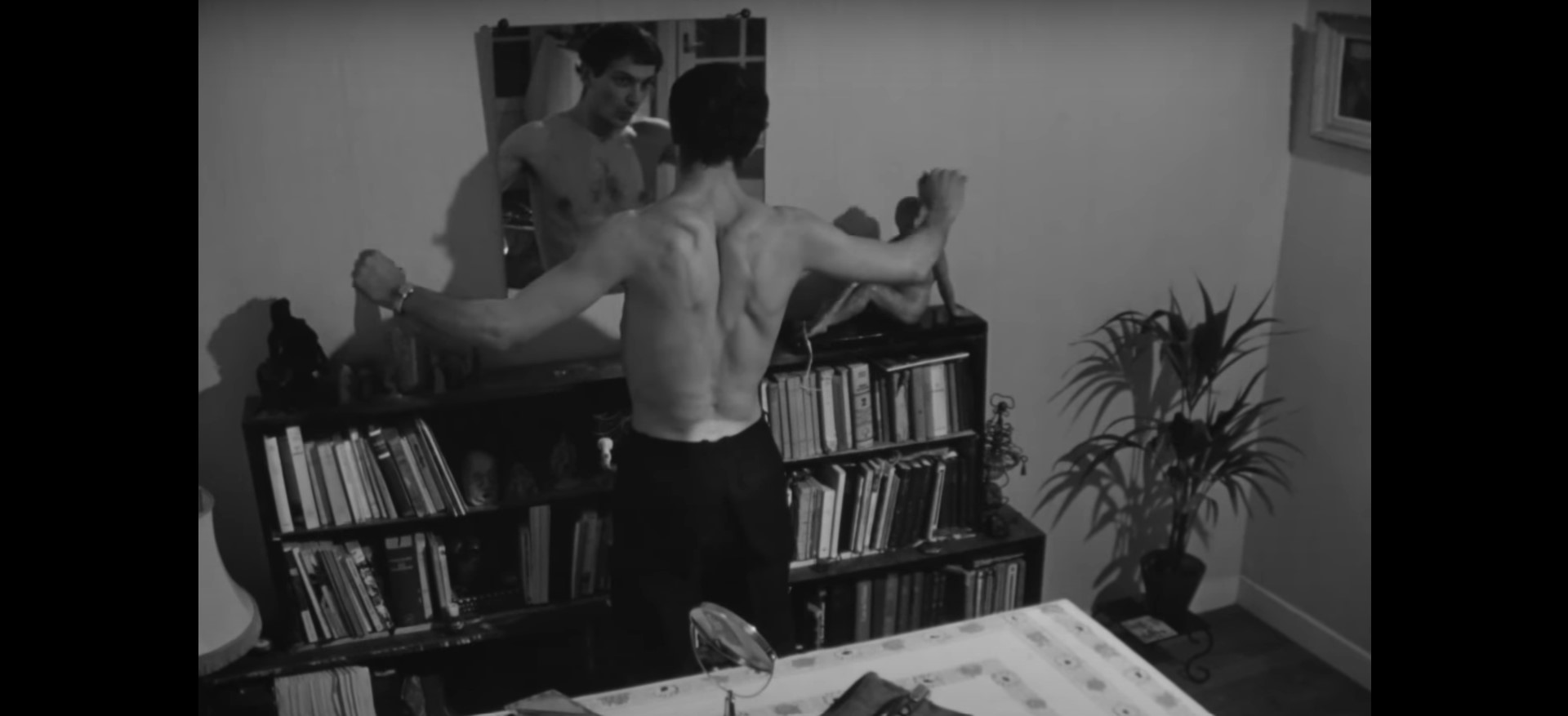
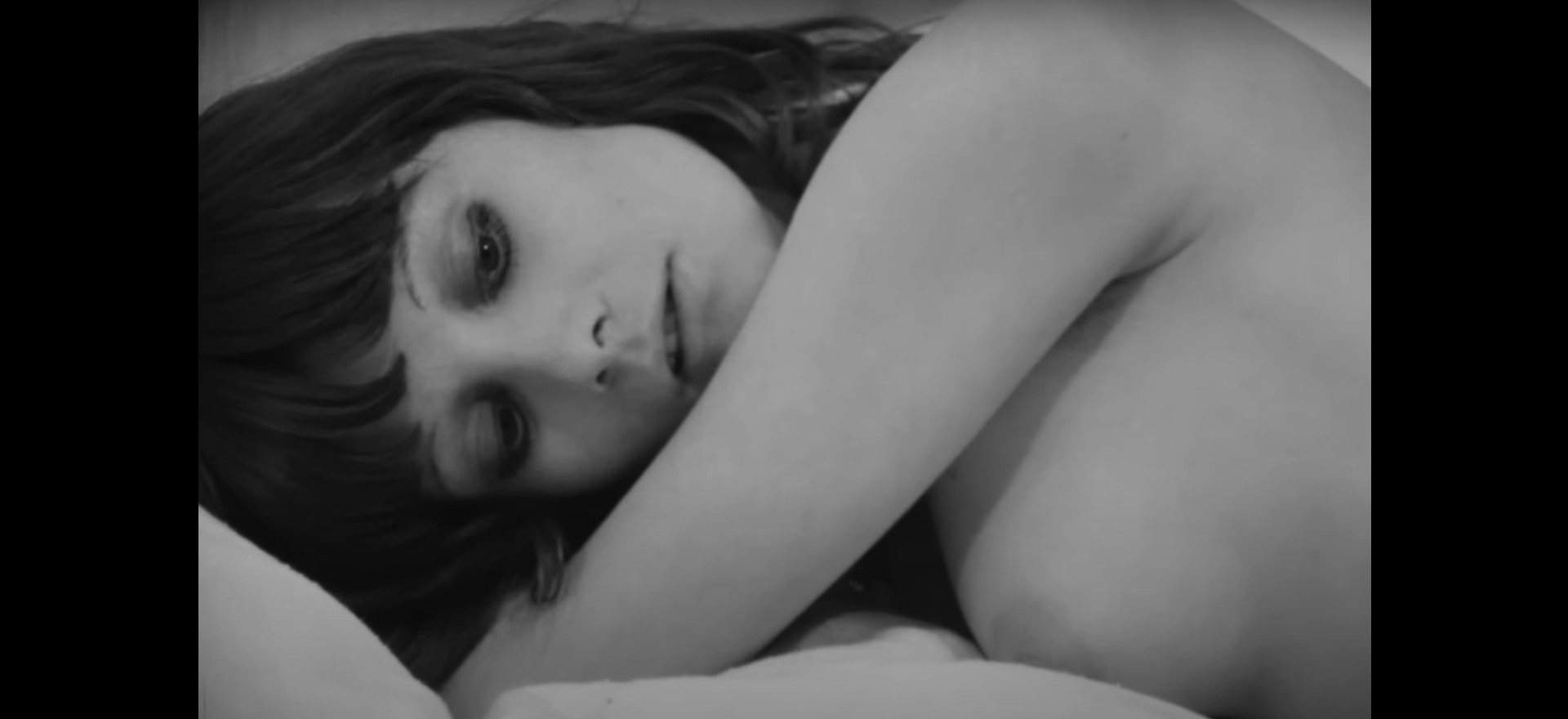
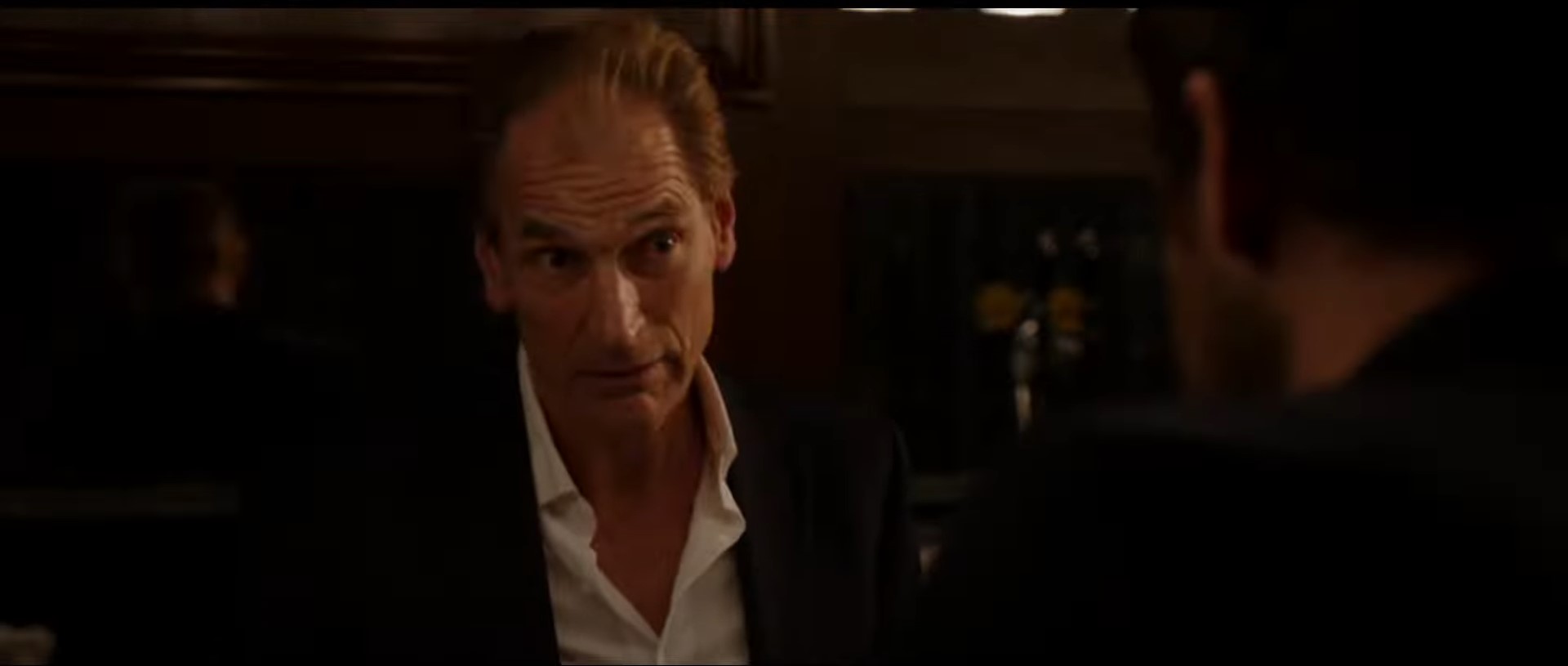
Copperton Cult Commands You to be EVIL! “Heartland of Darkness” reviewed! (Visual Vengeance / Blu-ray)

Own Your Copy of the Lost Linnea Quigley Film “Heartland of Darkness” by Purchasing at Amazon!  Click Here to Amazon.

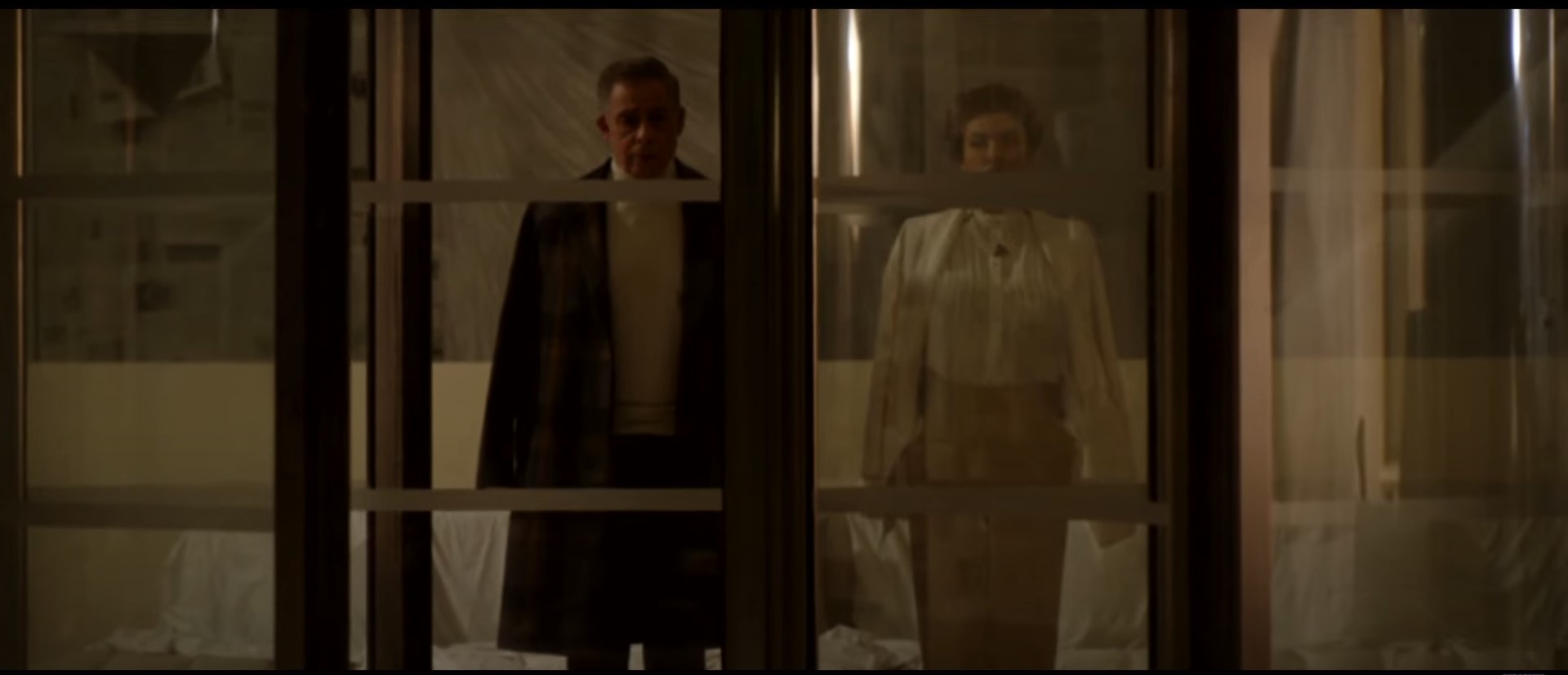
Copperton, Ohio – a quaint and quiet, unsuspecting small town if looking to downsize from the big city hazards.  However, beneath the provincial veneer lies a satanic cult spearheaded by the local Reverend Donovan and his flock of townsfolk worshippers.  Donovan’s grip reaches far beyond just the local municipality as the insidious cult schemes to turn the state’s top officials into devoted followers of Satan.  Copperton’s new local newspaper editor, Paul Henson, along with eager reporter, Shannon Cornell, use their journalistic gut instincts to unearth and expose the corruption by Donovan up to the ladder of the town’s sparse governmental hierarchy, but with only a few residents unsubscribed to Donovan’s fanatical sermons, Paul and Shannon have nowhere to turn in order to protect themselves, Paul’s daughter Christine, and the entire state of Ohio from succumbing to Satanic domination. 

Once lost in limbo for three decades, “Heartland of Darkness” finally sees the light of retail shelves day!  Left unfinished for many years, director Eric Swelstad, then an Ohio State film student, supervises the completion of the horror thriller that revolves around satanic cults, grisly sacrifices, and sheep mentality based on the 1980’s satanic panic craze that swept the nation.  Penned by Swelstad, who moved on with this lift and helmed a handful of direct-to-video titles, such as “The Curse of Lizzie Borden 2:  Prom Night” and “Frankenstein Rising” in the early 2000s, and filmed in and around Columbus and the Granville village of Ohio, the 1989 principal photographed production was thought to be ultimately completed by 1992 but due to funding and production constraints, that was not the case.  The film also went through a couple of other titles, beginning with Swelstad’s original script title “Fallen Angels” and then changed to “Blood Church” at the behest of a possible financier that eventually fell through.  In the end, the film settles on “Heartland of Darkness” as a privately ventured production Steven E. Williams (“Draniac!”), Wes Whatley, Michael Ray Reed, Thomas Baumann, Mary Kathryn Plummer, and Scott Spears (“Beyond Dream’s Door”) serving as producers.

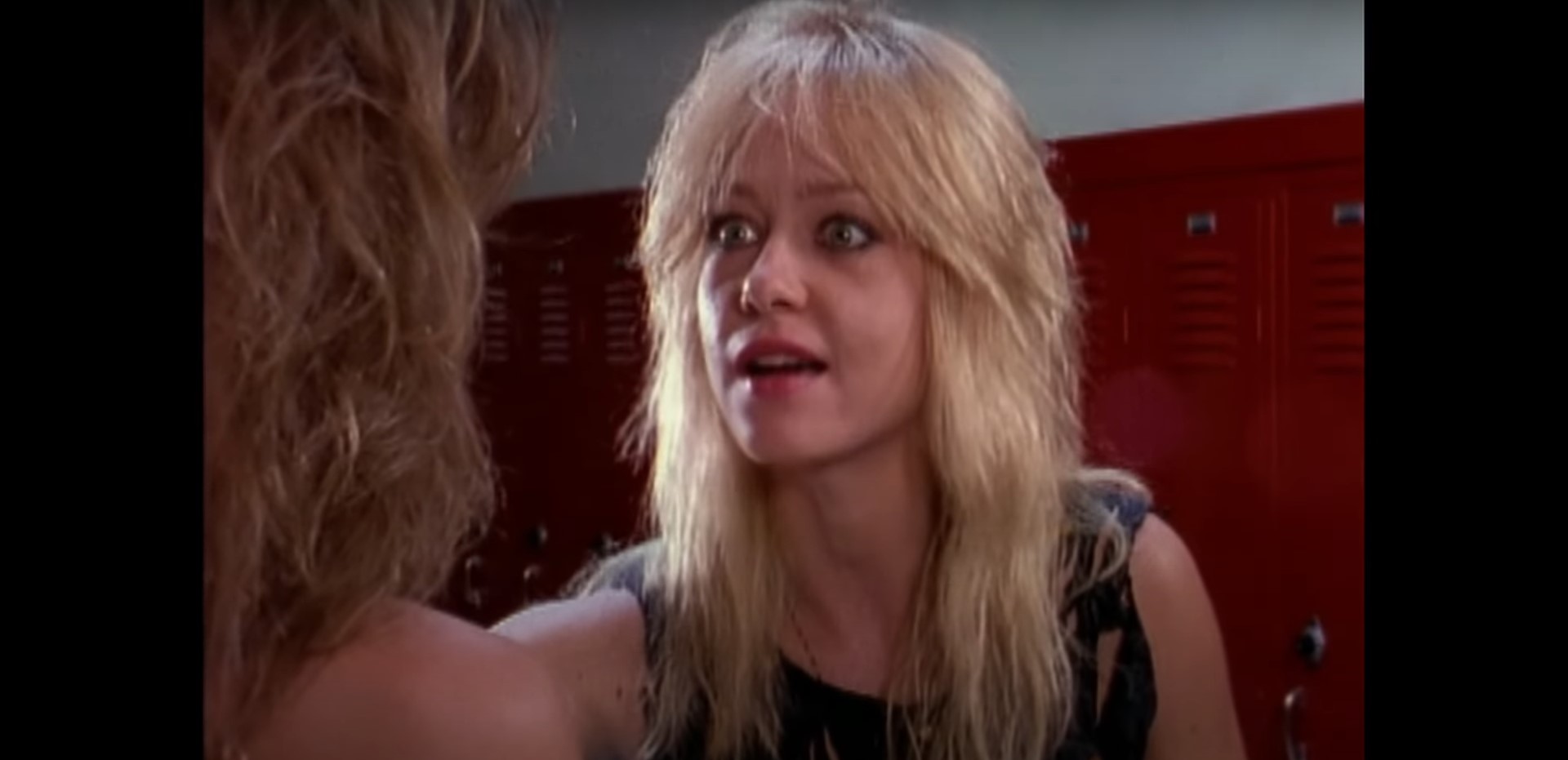
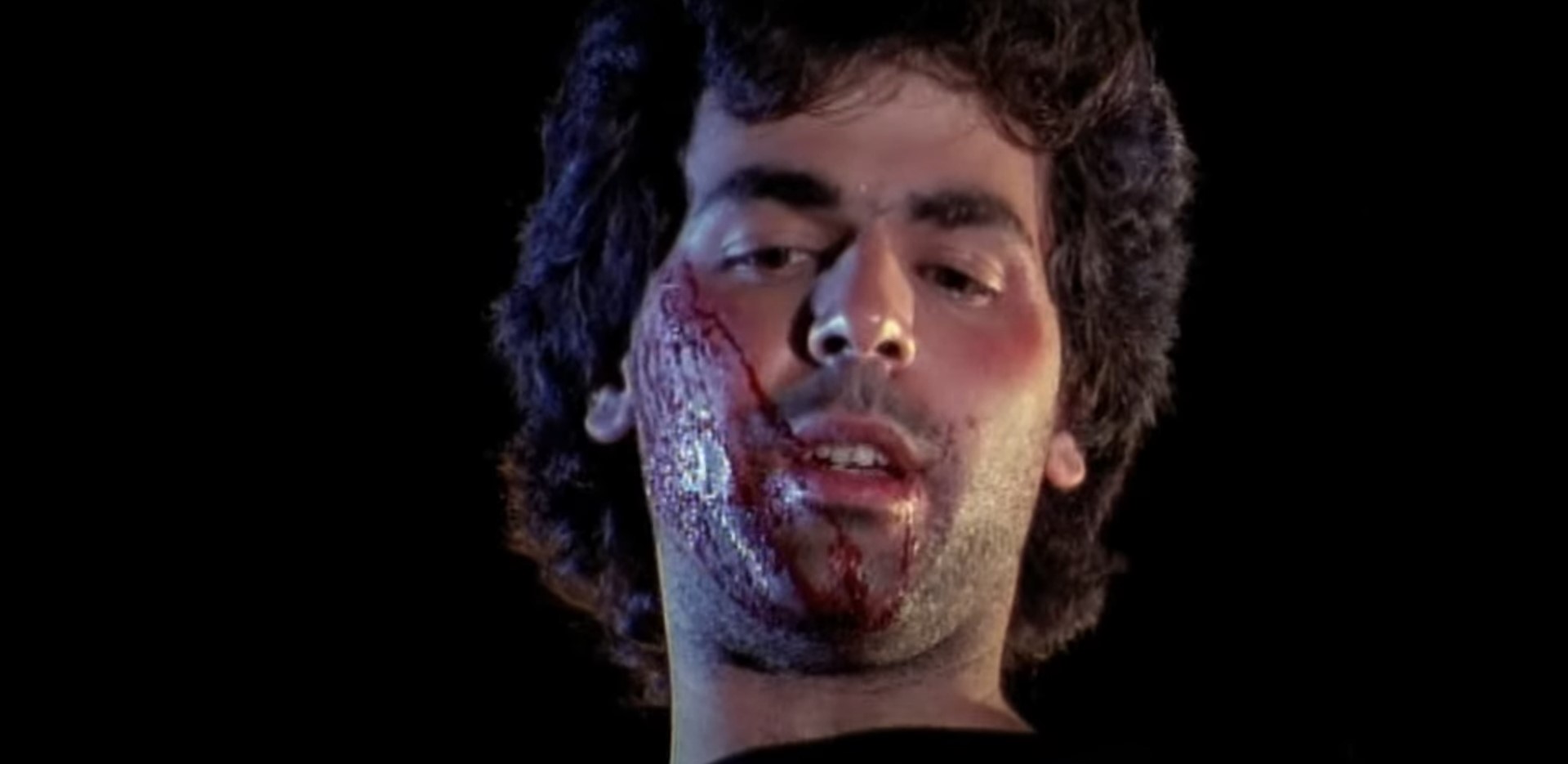
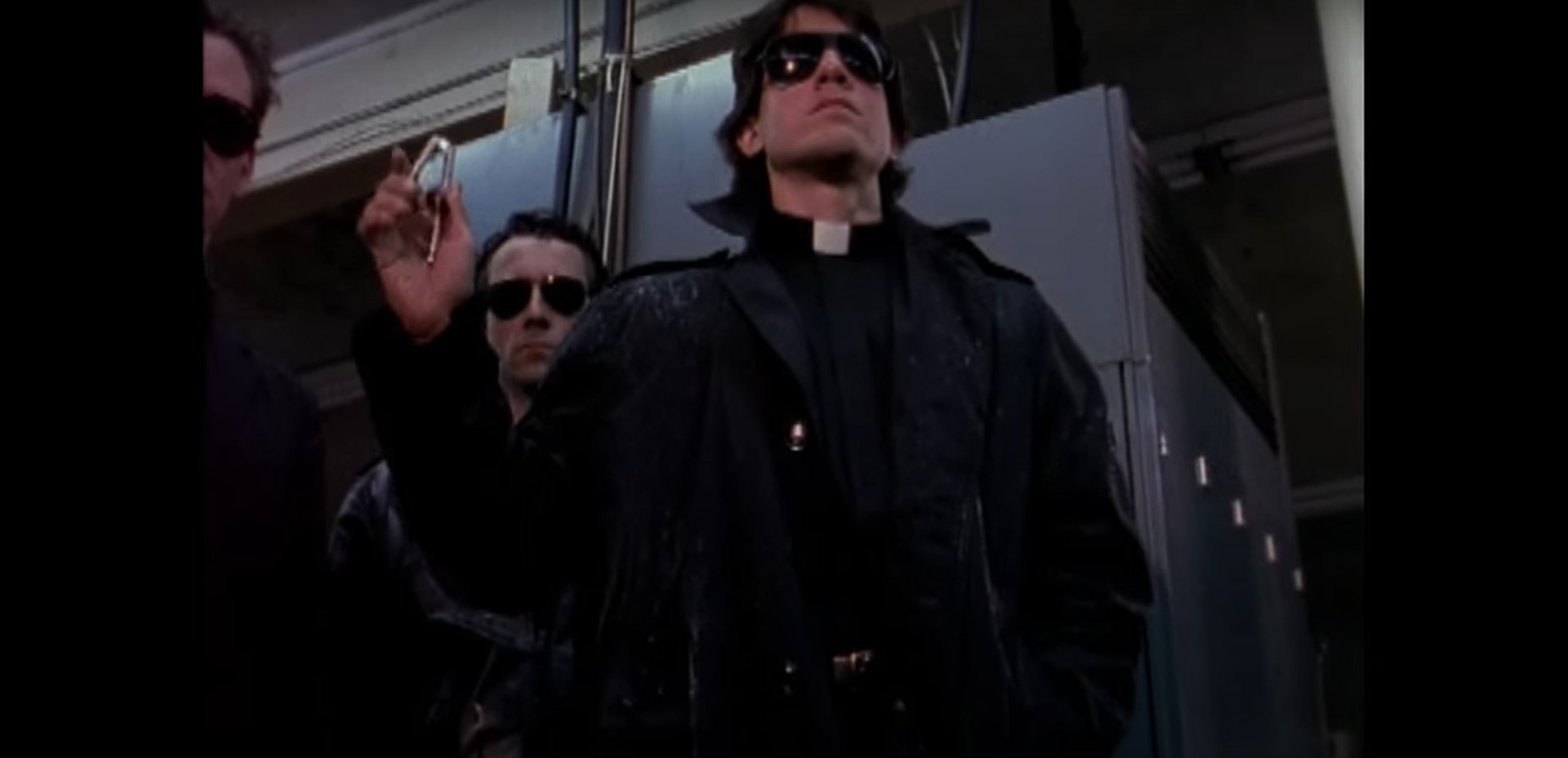
One of the reasons why the obscurity adrift “Heartland was Darkness” was so sought after by horror fans is because the title became one of the lost films of scream queen Linnea Quigley.  Standing at only 5’2’’ tall, the “Return of the Living Dead” and “Night of the Demons” actress was a hot commodity during the late 80’s and a genre film giantess who ended up having a fairly prominent, written-in role just for her hire in what is, essentially, a student film.  Quigley’s role as the town’s high school teacher, Jessica Francine, makes the hormonal boy in me wish my teachers actually looked than beautiful and provocative in high school, but in the same perspective, Quigley doesn’t appear or is barely older than Sharon Klopfenstein as Paul Henson’s daughter, Christine.  The two share a high school hallway moment while sporting crop tops, tight bottom wear, and discussing paganistic occultist Aleister Crowley and Nazi mass murderer Adolf Hitler and while the additional scene gives Quigley screen time, it evokes risibly campy optics.  Dino Tripodis defines the principal lead Paul Henson, a former Chicago Tribunal editor having left the midwestern journalism powerhouse after the death of his wife.  Stepping into a world of cultism, Paul’s eager to save what’s left of his family at all costs by exposing grisly murders as more than just drug-related collateral damage (I didn’t know drug wars were such a big thing in Ohio).  The debut of Tripodis’s performance fairs well enough to solidify himself as the marginalized hero against a Goliathan opposition that’s deep rooted and backed by powerful leaders, but hands down, Tripodis is outdone by Nick Baldasare as the dark featured, maniacally calm Reverend Donovan.  Baldasare has such a tremendous presence as a fire and brimstone agent of the most notable archfiend that his performance swallows the shared screen moments with Tripodis.  A few principals come off as rigid and flat in their efforts.  As the sheriff of Copperton, Lee Page is the biggest offender with an obvious staged act of busting Tripodis’s balls for a better part of the story.  “Heartland of Darkness” is a mixed bag of showings from a remaining hyper-localized cast compromised of new to little experiences actors including Shanna Thomas, Sid Sillivan, Ralph Scott, Dallas Dan Hessler, Ray Beach, Mary Alice Dmas, and with the John Dunleavy in a magnetic role of a cult-crime fighting preacher.

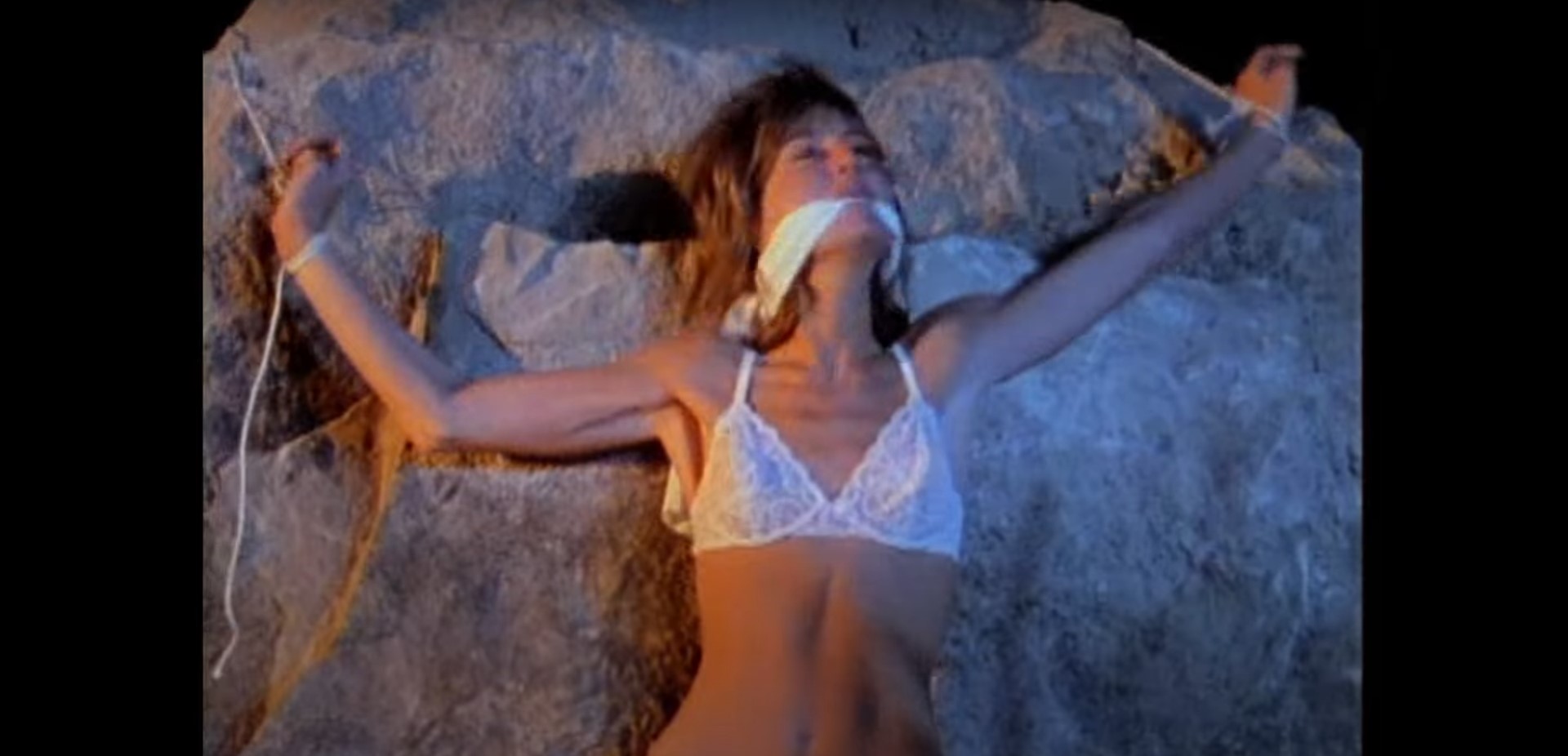
Hard to fathom why but still completely understandable how “Heartland of Darkness” remained in celluloid purgatory for so many years.  Swelstad had tremendous ambitions for a student film that included a visual effects storefront explosion, but the money well dried up to finish shooting, touch ups, effects, and digitizing the filmmaker’s efforts onto a marketable commodity to distribute.   At last, here we are, 33 years later with a finished copy of the “lost Linnea Quigley film” and, boy-oh-boy, does not disappoint, living up to the expectational hype surrounding the film’s once stagnant, hidden from the world existence.  Swelstad creates the illusion of vast world from the small town of Copporton to the big cities where the District Attorney and Governor reside.  Car chases, rock quarries, a church nave, animal intestine smeared ditches, and a slew of constructed sets, an array of offices, and an abundance of diverse exteriors. “Heartland of Darkness” might have a lot going on and is often repetitive in the scenes with Paul and Shannon pleading their case to multiple officials to probe into gruesome deaths and the cult’s leadership but not to the story’s detriment as all the progressive storyline dig Paul and his small band of investigators into a deeper danger hole with Donovan and his Devil devotees under the guise of God’s Church. Scott Simonson’s entrail splayed and blood splattering special effects culminates to a shotgun showdown at a virgin sacrifice and an impressive full-bodied impaling that is, frankly, one of the best edited shots of the film. “Heartland of Darkness” is rayless and scary, callous and cold, formidable and shocking with a pinch of sex and is finally within our grasp!

Visual Vengeance, a pioneer in curating the lost, the forgotten, and the technically shoddy indie cult and horror films, releases for the first time on any format ever “Heartland of Darkness” on Blu-ray. Coming in as VV08 on the spine, the Wild Eye Releasing banner strays their first seven SOV features to bring aboard a 16mm negative transfer, director-supervised from original film elements of the standard definition masters. Visual Vengeance precautions viewers with the usual precursing disclaimer that due to the commercial grade equipment and natural wear of aging, the presentation is the best possible transfer available, but, honestly, the full screen 1.33:1 aspect ratio presentation looks outstanding without much to critique. Obvious softer details were expected but with the celluloid film, there’s not much in way of macroblocking or tracking complications as common with shot-on-video tape features. Compression verges to a near perfect reproduction of the picture quality. Skin coloring and overall grading is congruously natural in grain and stable image. The English stereo mono track doesn’t pack a punch but isn’t also frail with strong mic placement and the dialogue is clean and clear of imperfections as well as major hissing or popping. The faint 16 mm camera whir can be heard but isn’t distracting, adding a comforting churr to the footage. Optional English subtitles are available. Special features include a new 40-minute behind-the-scenes documentary Deeper into the Darkness, an audio commentary by writer-director Eric Swelstad, actor Nick Baldasare, cinematographer Scott Spears, and composer Jay Woelfel, a new interview with cult icon Linnea Quigley, commentary with Tom Strauss of Weng’s Chop magazine, an archival Linnea Quigley TV interview, the complete “Fallen Angels” 1990 workprint, the same workprint with audio commentary with Swelstad, vintage cast and crew Ohioan newscast interviews in the Making of Fallen Angels, the original promotional video for “Blood Church,” a behind-the scenes image gallery and footage, and the original TV spots and trailers, of this feature and other Visual Vengeance films, from the static, composite menu. Ready for more? “Heartland of Darkness” comes with just as much physical bonus swag with a limited-edition prayer cloth, a six-page liner notes from Tony Strauss complete with color beind-the-scene stills, a folded mini-poster of a leather-cladded Linnea Quigley’s high school hallway scene, and retro Visual Vengeance stickers inside a clear Blu-ray latch snapper with new, illustrated cover art that also has reversible art of the original “Blood Church” promo art, sheathed inside a cardboard slip cover with a different and new illustrated cover art. The region free, 101-minute release is unrated. Visual Vengeance continues to pump out gilded, undiscovered treasures and giving them the royal treatment. For “Heartland of Darkness,” this sublime release was 33 years in the making and is one Hell of a bounty!

Own Your Copy of the Lost Linnea Quigley Film “Heartland of Darkness” by Purchasing at Amazon!  Click the Cover Below.

When Your Shame and Guilt Turn EVIL! “Prey for the Devil” reviewed! (Lionsgate / Blu-ray)

“Prey for the Devil” on Blu-ray home video.  Purchase a Copy Today!

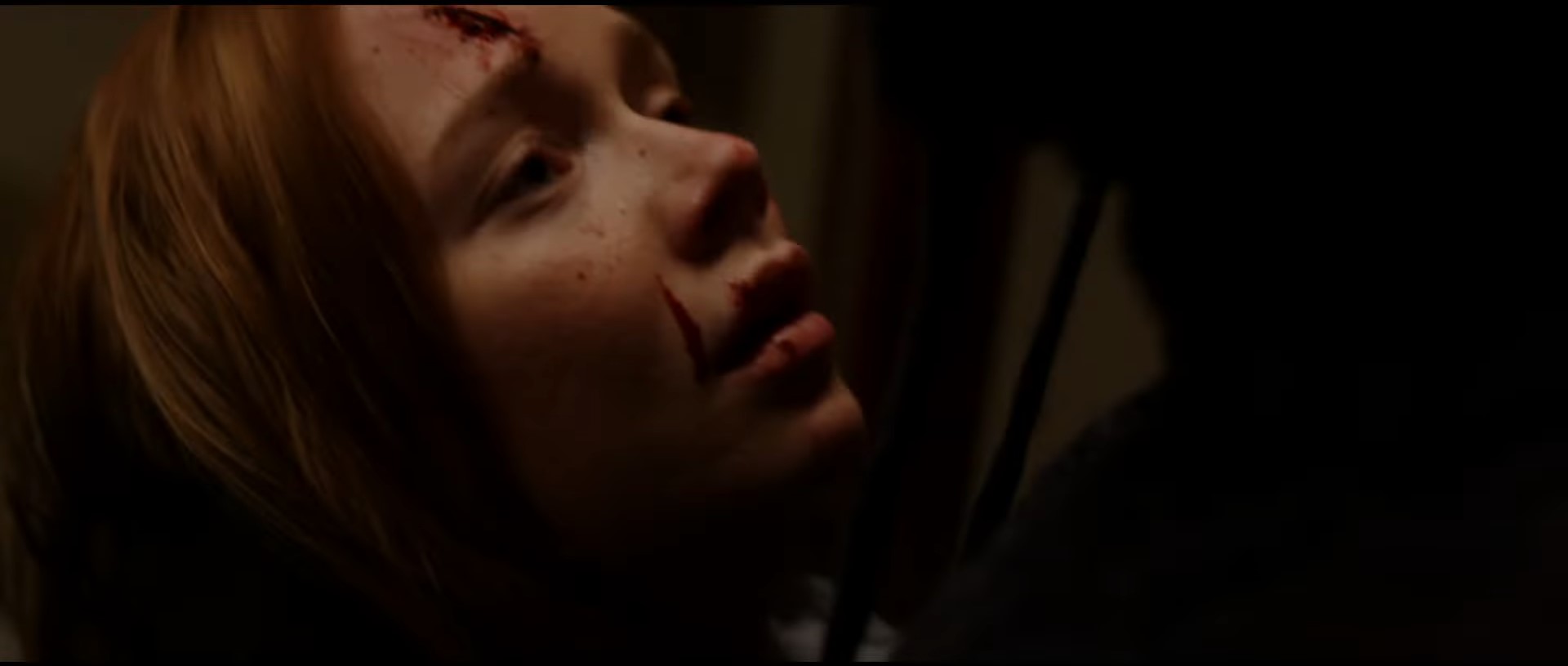
The rite of exorcism has been strictly performed only by Catholic priest; a decree enforced by the Church for more than a century.  At the Saint Michael the Archangel School of Exorcism in Boston, Massachusetts, Ann, a young nurse caring for suspected possessed individuals, finds herself bound personally to a demon from her childhood.  An opened-minded Father invites her to study exorcism as an observer only, but when Ann is able to connect to beyond the demon of a terminally possessed little girl, her theory on exorcisms goes against Church doctrine.  Unable to officially help the little girl without agitating trouble, Ann performs back-alley exorcisms to prove her theories correct, bring her findings to the Church, prepare herself against a demon hungry for her soul, and save the life of a girl bound for transport to the Vatican where she will surely expire.  Ann’s past and present collide in a battle between light and dark with a young girl’s life hanging in the balance.

Possession and exorcism movies have become rather formulaic in the last two decades with more than most being derivative as surpassing the bar on William Friedkin’s “The Exorcist” has been an uphill battle, but, in my opinion, director Daniel Stamm has figured out a path to make the wavering subgenre emerge from the depths of the Netherworld and take possession with a different angle. “Prey for the Devil” is a terrifying tale by screenwriting partners and brothers Earl Richey Jones and Todd R. Jones, the first horror work from the “Rio” and “Johnson Family Vacation” writers, and the script, under the original working title of “The Devil’s Light, is designed by “Halloween H20” co-writer, Frank Zappia.  The Hamburg, Germany-born Stamm returns to the demonically charged, demon possession genre having found moderate success with fans in his 2010 pseudo-doc/found footage film “The Last Exorcism.”  More than a decade later, Stamm is still sending young girls up climbing up the corner of walls in his latest exorcism themed entry produced by the Jones brothers, Jeff Levine, Jessica Malanphy, and Paul Brooks under production companies Gold Circle Films (“Slither,” “Blood Creek”) and Lionsgate (“Saw” franchise).   

“Prey for the Devil” has an embattled protagonist facing two opposing fronts – one fowl demon hellbent on devouring the Godsent Ann from the inside out and one the Church solely for being a woman wanting to practice what’s been appointed as a man’s vocation. Jacqueline Byers has been penned to play the curious and targeted nun and the “Bad Samaritan” actress doesn’t disappoint being the center of attention without overstepping conceitedly into Ann’s habit. The story never feels like it’s Ann, paralleling similar to the overall theme of looking past the surface level demon and understanding the person’s state of consciousness that might have invited the demon inside. Byers evokes more curiosity of a woman drawn to exorcism because of her own past involving an abusive mother (Koyna Ruseva) who, when listening to the voice inside her head, would hurt child Ann with a tough tugging, decorative comb. In Ann’s way is the Church represented by Sister Euphemia (Lisa Palfrey, “The Feast”), Father Quinn (Colin Salmon, “Resident Evil”), and Cardinal Matthews, played by the late Ben Cross (“Exorcist: The Beginning”) who would succumb to cancer after the completion of his role. With a trifecta of solid performances, the Church opposition lacks fortitude in coming down hard on Ann for not only taking a shining toward a priest’s appointed aptitude, but also for performing an unauthorized exorcism on a desperate priest’s sister. Her desperate priest friend, Father Dante (Christian Navarro, “13 Reasons Why“), is a sympathetic friend without much skin in the game of sticking his white collared neck out for Ann. “Prey for the Devil” introduces the teenage actress Posy Taylor with a chillingly consumed Natalie who has a strong semblance to Regan when demonized to the fullest and in a while gown. The film rounds out the cast with Nicholas Ralph, Keith Bartlett, and “Candyman’s” Virginia Madsen as the psychiatrist using science to disprove possession.

“Prety for the Devil” sets the stage strong by defining from the very opening credits that women were forbidden to perform the rite of exorcism. There’s even back support from Sister Euphemia giving her glares of disapproval and a library that limits the access to priest approved restricted texts, but Ann slides into the realm of exorcisms when little push back that begs the question why no other nun ever attempted to enroll in the demon extraction rituals course? Perhaps being set in the permissive Boston and not the draconian Vatican might have something to do with it, but the theme of inequality is ultimately suppressed and dispelled from the story, leaving Sister Ann to face a one-front battle against the unholy creatures of the underworld inhabiting those closest to her. For supernatural special effects, the computer visual imagery renders a meticulously blended and seamless compositional execution from a team under VF/X supervisor Laurent Spillemaecker (“Overlord,” “Martyrs’). The mesh of reality and virtual reality becomes indistinguishable to the point where good scares scenes come about as a result. There are plenty physical effects that are joint into a pivot from the visuals and the motions don’t have an ounce of clunkiness to them. While we touched upon the theme of inequality of women in the Church, “Prey for the Devil’s” other theme revolves around a fairly common one in films today – guilt or shame. The new angle the story provides ceases to look at possession not from a demon focused level but to reach in and try to convince the person within that they’re at fault for whatever it is they grieve in shame for and to tell them whatever the case may be, no fault is put on them. Novel enough to be interesting, guilt and shame will forever be vilified and demonized, literally, in most horror. For “Prey for the Devil,” the element of anguish proves to be more powerful than most who utilize it, capitalizing in on the power of being overcome by it, and turning it into a nasty, soul-swallowing distemper one may not come back from. This is why Virginia Madsen’s psychiatrist character exists, to provide that presence of psychosis and other mental disabilities that sometimes appear to be demonic in nature to the naked, untrained eye. The story does well to create an alternate universe around this idea by having the Church admit patients with undiagnosed disorders as they could be more than what meets the eye.

Not quite the nunsploitation one might be hoping for, but “Prey for the Devil” envisages self-conscious emotions as a wide-open door for pain, suffering, and unmitigated self-punishment. Lionsgate Home Entertainment presents “Prety for the Devil” on a high definition, 1080p, AVC encoded Blu-ray, DVD, and digital code release with a widescreen 2.39:1 aspect ratio. With tight quarters of Saint Michaels, a fictional location setup from Sofia University in Palo Alto, California, the anamorphic lens compacts hallways and auditoriums cylindrically, offering more space than actuality, but the format doesn’t necessarily fit this type of a film that offers no vast landscape or much depth or long shots. Not much else to say negatively about the digital image that offers a darker, low contrasted tone. The audio track has three audio options: an English Dolby Atmos, a Spanish 5.1 Dolby Audio, and a French 5.1 Dolby Audio. For the English Atmos, the format fully immerses the viewer into a complete surround sound experience with each crescendo jump scares as well as in the middle of a good versus evil quarrel. Crisp and spatial, Atmos on the release takes advantage of the infrasound to build tension where it might be lost in other audio formats and also italicizes the ambient composition into the Nathan Barr’s (“From Dusk till Dawn 3: The Hangman’s Daughter”) classical and haunting lullaby scores. The special features include an audio commentary with director Daniel Stamm and principal lead actress Jacqueline Byers, a 41-minute featurette with in-depth and retrospective interviews with cast and crew Possessed: Creating Prey for the Devil, Nathan Barr’s discussion on creating the score for the film A Lullaby of Terror, exposing the film’s visuals effects The Devil’s Tricks, a feature-length, nearly 2-hour roundtable read of the original first screenplay draft from the cast, and an Exorcist and Psychologist discussion about the possession with screenwriter Robert Zappia mediating (or maybe even moderating) the comments. The physical release comes in a traditional Blu-ray snapper case with artwork cover pictured with one of film’s rememberable scenes. Inside is the digital code slip and outside the snapper is sheathed in a cardboard slipcover with the identical cover art. Possession-exorcism films are just as tired as the zombie subgenre, but “Prey for the Devil” possesses symbolic and doleful undertones inside a superbly acted and an intriguing alternate universe story that’s not too far from the truth in one of the Church’s more confrontational, as well as controversial, methods to battle evil.

“Prey for the Devil” on Blu-ray home video.  Purchase a Copy Today!

Continue reading

Sometimes, You Can Feel EVIL Tightening Around Your Throat. “Death Knot” reviewed! (Well Go USA / Blu-ray)

“Death Knot” Hangs Loose on Blu-ray! Purchase Your Copy Here!

Hari and his sister Eka receive the tragic news of their mother’s suicide.  They return to their rural childhood village home to attend her funeral and prepare arrangements for the family home, but the siblings are met with a cold shoulder as the locals have shunned their mother, fearing her as a black magic practitioner who made a pact with the Devil himself.  The suicide and the village distress illicit different responses in both children – Eka wants to put everything behind her and live her life in the city of Jakarta. While Hari drowns himself of guilt over his mother’s death as he hasn’t visited his mother in years and wants to cherish the time left of his mother’s house, despite the not so pleasant childhood memories of his mother’s descent into mental instability.  When a upcoming storm makes leaving the village impossible, in what the superstitious locals note as The Harvest to claim souls, Hari, Ek, and Eka’s husband, Aldi, are forced to stay the night and that’s when strange visions and odd behaviors evoke the presence malevolent entity, an ancient deity, to beleaguer Hari and Eka into submitting to its will.   

Not too many Indonesian horror films see the light of day, buried beneath the massive manufacturing machine from the West, such as North America and Europe, that churns out films about every 8 seconds, the same rate in which babies are born at in the U.S, but that doesn’t mean the country known for its idyllic 17,000 islands and Buddha temples doesn’t have a repertoire of horror. In fact, obscure cult celluloids like “Lady Terminator” and “Satan Slaves,” known to those with indie horror running through their veins like crack cocaine, are the exemplar of the scarcely noticed Indo-horror collective and now that modern technology provides streaming servies far and wide from every corner of the world and advances in filmmaking make accessibility and recording film considerably cheaper and easier to complete, getting exposure becomes greater to other titles mostly hidden gems from the rest of the narrowed focused general population. Point in case, Cornelio Sunny’s “Death Knot” debuts his occult thriller that incorporated the grimly prophesized myth known as the pulung gantung that speaks of a great, fiery meteor being a harbinger of suicide and in Indonesia, the most common suicide method is by gantung aka hanging. “Death Knot,” also known as “Tali Mati,” isn’t the only film based on the myth, but what separates this film from other myth-based works is that the pulung gantung is still relevant today with highly resolute belief amongst the underprivileged and poorer neighborhoods. Sunny co-wrote the script with Ike Klose and is produced by Ismail Basbeth under Sunny’s company banner Matta Cinema in association with Kathanika Entertainment, SRN, and Umbara Brothers.

To ensure his debut directorial goes without a hitch, Sunny slides into the lead role of Hari and how Sunny and Klose write the character counterintuitively to screenplay 101 by not building him up, providing background, or instill preconceived notions through the acts. Hari’s a clean slate from start to near finish from scene one that involves him waking out of a horrible dream about his mother after briefly texting his sister. Written to have no depth in existing or having interests in anything, Hari’s hyper-focus is his mother’s legacy and commorancy, leaving his current mundane left in Jakarta to worry about his decease mother he hasn’t seen or talk to in years. Sunny is swarthy handsome, strong in subdued stubbornness, and limits his range toward his character in being the nondescript nonbeliever of occultism that innately scares the dickens out the poor village people. Hari and sister Eka (model/actress Widika Sidmore, “May the Devil Take You Too”) toss crumbs of background about growing up with an absent father and a community abhorred mother but appear unruffled by a broken home and, for the most part, shrug much of that rich backstory from their tabled history. Sidmore does a better job bottling Eka’ fear and loathing of a place that dejects her existence as villagers shun them for their devil pact bloodline and, eventually, the ooze of unwantedness seeps out of her to the point of being an emotional mess. Only when her loveable and amenable goofball husband, Adi (Morgan Oey, “The Deadly Love Poetry”), suddenly grows an obstinate backbone and refuses to leave the village, acting strange with an uncomfortably warped smile on his face as he fixates his glare deep into the forest, does Eka’s emotions pour toward a direction and hone in on a purpose until she, herself, falls into the same possessed-like predicament that befits her more than Adi but would be two perfectly ear-to-ear, Chesire cat-grinning candidates for Parker Finn’s horror-hit, “Smile.” The entity that has dominion over them isn’t so subtle, but Oey and Sidmore’s performances are, in a good way, awkwardly creepy and perfectly executed. Oey’s mimicking of a twist on the Balinese dance Hari’s mother performed in the opening scene before her demise and with what looks to be Hari’s mother silhouette impelling the dance in the shadows is “Death Knot’s” eeriest moment that lands traditionalism and supernaturalism into a single scene of shadows and visitants.

“Death Knot” is a slow burn, dread building, culture integrating, ambitious debut feature from actor-turned-director Cornelio Sunny.  Performance driven with little-to-no special effects, the surrounding morose atmospherics of “Death Knot” relies on the cast and it’s portentous, jump scare score to deliver a palpable fear without a perceptible villain, keeping very much in tune with one of Indonesia’s notorious folklores.  The limited budget constrains Sunny to character exposition and pursuance of self-selling the concept of an entity inhabiting friends and family with only their God-given talents and appearances to construct ominous opposition.  Descriptively, the notion sounds monotonous in tone, substandard in achieving a certain level of jitters, and gridlocked from a story perspective, but Sunny and his counterparts are able to feed the idle monster with energetic enthusiasm that turns the notion on its head with menacing and foreboding results, amplifying to one of the story’s other themes of paralyzing guilt that affects Hari from moving forward in life because of that equivocal estrangement between him and his mother.  However, one of the biggest problems to come out of “Death Knot” is the ambiguously fated ending for Hari, surrounded by a 50-yard radio of melee weapon-holding villagers like he’s been suddenly dropped in the middle of the Resident Evil 4 video game.  Perhaps not making the connection more evident, Sunny and Klose do faintly paint the picture of social class tensions with big city Hari, Eka, and Adi being met with aversion by the lower-class, rural village who have a strong belief system in the supernatural but is not a major clash or even an apprised motif represented only by a few aloof moments.  I was also hoping to see the myth’s harbinger of death with a great fireball in the sky to signify the beginning of The Harvest, aka hangings to usurp soul energies to feed the devilish deity, but that didn’t happen considering the budget for limited-to-no visual effects. 

“Death Knot” has this somber quality in its characters who are dropped into an unwelcoming village on a dark and stormy night scenario that puts a very Plutonian stamp on what kind Hell-crafted mark an ancient, malevolent God has left on forgotten land.  Well Go USA Entertainment picks up and distributes the home video rights to Cornelio Sunny’s debut hair-raising feature with a Blu-ray release. Presented in a widescreen 1.78:1 aspect ratio, the cinematography by Gunna Nimpuno captures the elemental beauty of rural Indonesia with rolling fields as far as the eye can see and the integrated towns built into hills becomes one seamless graft of spartan man living humbling on nature. Night shot continuity is Nimpuno’s weakest link in the arrangements of shots between the house at night and the forest at night. Outside the house is a natural pitch black with little lighting other than a green gel or another warm color in the house exterior but the forest scenes, every single one, are glazed with blue tint during day shooting to fabricate night sequences. The reproduction compression on this AVE encoded BD25 is rather good with little-to-no signs of banding, artefacts, or other lossy content issues. The Indonesian DTS-HD 5.0 Master Audio is digitally a solid track with a lamentably fine, back of the mind, sound design harmonized with an intense summitting score. There are also no issues with the digital tracks, any audio compression, and each track plays its role in sundered channels, creating an omnidirectional biodome that immerses you into the Sunny’s intimate family curse. English subtitles are option and are well-synched with grammatical accuracy. Aside from the opening previews of other Well Go USA titles, there are no other bonus features with this release. The physical features include the traditional Blu-ray latching snapper with a creepy enough illustrated cover art of a small smiling evil figure standing and surrounded by an engulfing forest. Inside is a leaf insert advertising other new Well Go USA distributed films. The film is not rated with a region A coded playback and has a runtime of 101-minutes. Cornelio Sunny first efforts don’t go unnoticed as “Death Knot” hooks with a mystery that slowly unravels the ugly truth of material myth and renders a stagnant guilt out of a powerfully, paralyzing combination of estrangement and loss.

“Death Knot” Hangs Loose on Blu-ray! Purchase Your Copy Here!

Who Dat? Dat EVIL! “Creature from Black Lake” reviewed! (Synapse / Blu-ray)

“Creature From Black Lake” on Blu-ray is Bigfoot’s Bestfriend

Two University of Chicago students interested in discovering the legendary creature bigfoot take a road trip down to Oil City, Louisiana where there have been multiple reports and sightings of a ape-like man wandering in the Bayou and even an attack on a local trapper, witness by the gruffy drunk, Joe Canton.  Met with stern resistance from the Oil City Sheriff Billy Carter and some reluctance from scared locals in the Bridges family after an mortal encounter with the beast that killed two of their family members, the students dig in and continue their swampy-laden search for bigfoot as well as finding the time to mingle with Louisiana women.  When they discover the mythical beast actually exists, nothing can stop them into catching sight of the creature or maybe even snaring it, not even the Sheriff’s threat of jail time if they don’t high tail it out of town could persuade their mania, but their expedition deep into the swamp and coming in proxmital contact with the aggressive primate outlier may prove to be a fatal mistake rather than a claim to fame. 

Having searched high and low for many years to review just any Bigfoot film that’s above average worthy has been a wearisomely long and arduous task.  A slew of movies dedicated to the big hairy fella have been nothing but a mockery, whether intention or unintentional, of the Sasquatchsploitation horror subgenre.  Instead of being subjugated to the countless, blasphemous modern tales of the mythical monster, I had to travel back in time to 1976 to retrieve what I’ve been searching for in the last decade or so.  The late J.N. Houck Jr’s “Creature from Black Lake” fulfills a great need with very little in its idiosyncratic cast and its obscure visibility of the creature that creates upscale mystery.  The based out of Louisiana “Night of Bloody Horror” and “The Night of the Strangler” director, whose father, owner of The Joy Theaters, already had an established footing not only in the movie business but also in the horror genre when helming a script penned by Jim McCullough Jr. as his first grindhouse treatment blessed by his father, producer Jim McCullough.  McCullough Jr. co-produces the film under the Jim McCullough Productions banner along with William Lewis Ryder Jr. serving as executive producer of the shoot shot on location in Oil City and Shreveport, L.A.

“Creature from Black Lake’s” cast is a distinctive assembly as aforementioned earlier.  Not only do they play their roles well by incorporating localisms where needed but they add a blend of intensity with chunky bits of comedy marbled through a storyline that’s half-anecdotal and half-present action. University of Chicago students Rives (John David Carson, “Empire of the Ants”) and Pahoo (Dennis Fimple, “House of a 1000 Corpses”) set course to Oil City, Louisiana where an indistinct creature is suspected to be in area based of science and suspected fish stories told by local kooks and drunks that turned out to be horribly true. Rives and Pahoo, who in McCullough script is constantly chaffed about his unique name but shrugs and deflects like he’s done it all his life, interview Oil City residents who believed to have bare witnessed firsthand the beast’s atrocities that has taken the lives close to them. These Bayou denizens are enriched by veteran actors with robustly created caricature personalities. Surly voiced with bulging, wild eyes, typecasted western actor Jack Elam had branched out from films like “Gunfight at the O.K. Corral” and “Once Upon a Time in the West” to play a similar grouchy character dwelling in the swamps as a trapper. Elam’s great a feigning an intoxicated mess as you can literally taste the alcohol sweat from his porous skin sheltered by an unkempt beard and a loose fitting crumpled up onesie that’s staple motif for any drunk Cajun or drunk cowpoke, so Elam was fairly comfortable in the role. Dub Taylor is another big old-timey name in the western genre and rarely saw horror as a place to call home. For Taylor, his role as Grandpaw Bridges gave the actor a chance to play an old hayseed complete with a solid effort in Cajun English. Taylor’s lively at times with an animated excitement but can turn somber and stern as soon as his character’s scorned and calls for a more serious tone. Compared to Elam and Taylor, youngsters Carson and Fimple pilfer very little from the veteran’s epic role characteristics but do fine in their own rite with carrying the hunt’s harrowing third act. Bill Thurman (“‘Gator Bait”), Jim McCullough Jr., Cathryn Hartt (“Open House”), Becky Smiser, Michelle Willingham, and Evelyn Hindricks round out “Creature from Black Lake’s” cast.

How could a 1976 bigfoot feature be more surprising and compelling than any modernized version? Well, one of the biggest pros to “Creature from Black Lake’s” success is Jim McCullough Jr.’s script that’s surprisingly well written by the first go-around screenwriter and while I’m not primarily speaking on behalf of the principal leads’ motivation or the slightly lack thereof, there lies more interest in the quick-witted dialogue and the blunt banter to keep Rives and Pahoo from being dullards and to keep the story from being a slog. Another aspect that is sharp as a tack is Dean Cundey’s cinematography that keeps the creature firmly in the shadows, producing that suspenseful and mysterious “Jaws” effect where we actually don’t see the shark until the third act. Cundey, best known for handling the cinematography on titles you might have heard of such as “Jurassic Park,” “Death Becomes Her,” and “Big Trouble in Little China,” made a name for himself first in grindhouse horror and exploitation of the early 1970s.  Cundey keeps the apelike creature shrouded from direct light, lurking mostly in the shadows with only a glimmer quickly streaking across the snarling face and an animalistic outline of its furred body and tall stature.  The full effect of bigfoot is never directly in your face or full in view which can be best at times depending on the look of the creature.  Cundey had partially designed the face of bigfoot and thus covering up perhaps his own shoddy work with how to film the titular antagonist of Black Lake.  Now, Black Lake is an actual lake in Louisiana but is about 100 miles SE of Oil City and Shreveport and likely used a combination of Big Lake and Cross Lake that were near the majority of shooting locations to serve as representation of Black Lake.  Where “Creature from Black Lake” struggles is with the Rives and Pahoo dynamic that barely tether’s to how their friendship, though diverse individually, becomes stronger up the end with a near death experience.  Pahoo’s a Vietnam vet and with his wartime experience, he’s the more on edged character out of the two suggesting an underlining PTSD theme when the creature’s roar and circling of the camp puts Pahoo into an eye-widening internal panic.  Rives is cool as a cucumber and is determined to prove something inexplicable in pushing forth and bagging a big hairy beast.  At times, contention flares up between them but is quickly extinguished with a simple sharing of homemade fireside baked beans to sate Pahoo’s ever ravenous stomach.  Their hot and cold amity and indeterminable mission into the Bayou shapes very unsatisfactory their resulting unbreakable bond that hints at something more than just friendship, as if there is metaphorical points of betrayal and forgiveness that makes their connection scar tissue stronger but are not clearly delineated.

Finally!  A bigfoot feature that works mostly at every angle, is more than just palatable from a story standpoint, and has a formidable bigfoot presence that’s more than just a man in a monkey suit. Synapse Films restores not only “Creature from Black Lake’s” original widescreen 2.35:1 aspect ratio onto a high-definition Blu-ray from the dreadfully cropped VHS and TV versions but also restores the creature feature with a brand new 4K scan from the original 35mm camera negative. The result is phenomenal with a widow’s peak view and the grading is touch of tailored class that freshens the 46-year-old with new vigor. No instantaneous signs of compressions issues on the AVC encoded BD50 with inky black shadows and profiles that are sharp around the edges, never losing sight of image and never losing the quality. The Blu-ray comes with only one audio option – DTS-HD Master Audio 2.0 mono track. Not the best representation but perhaps the best that’ll get, some audio elements succumb to the production limitations, such as the stifled dialogue track early on in the film that leaves exchanges between Rives and Pahoo soft and scarcely perceptible. The dialogue issues alleviate as the story progresses, falling in line into an even keeled dual channel output. “Creature from Black Lake” has ample range between the booming closeup shotgun and rifle shots to the light tinkering of utensils and camping gear. We don’t receive much depth, not even with the creature’s roar as it thunders into much of audio space and overtakes everything else. Newly translated English subtitles are available. Bonus features includes an audio commentary with author/filmmaker Michael Gingold and film historian Chris Polliali, a brand-new featurette with cinematographer Dean Cundey Swamp Stories, the original theatrical trailer, and radio spot. The physical release comes in a blacked-out Blu-ray snapper, Synapse Films’ catalogue insert, and has Ralph McQuarrie illustrated cover art that’s an unmistakable masterstroke of his craft. The region free Blu-ray of “Creature from Black Lake” is rated PG and has a runtime of 95 minutes. If you’re on a quest to quench a midnight movie about bigfoot, journey no further as Synapse Films delivers one of the better, more comical and terrifying, Sasquatch movies of our time and in beautiful high definition!

“Creature From Black Lake” on Blu-ray is Bigfoot’s Bestfriend

Bend a Knee to the EVIL “Alien Goddess” reviewed! (Darkside Releasing / Blu-ray)

“Alien Goddess” available on Blu-ray on Amazon.com!

After school hours is more than just detention, it can be paranormal purgatory when a class reviewing an education course about death, a saucy night photoshoot with a camera man and two models, and two lovers rendezvousing in the hallways are trapped inside the confines of the school building, unable to leave to exit the structure that is seemingly protecting them from an excruciatingly painful force that rings their ears and causes nose bleeds.  Cell phones cease to work and those outside the building inexplicably can’t see or hear their pleas for help.  Without much choice, they roam the hallways in search for answers, but something sinister is behind the walls, a force of evil that manifests out of a formless haze and towers over them.  The alien presence is a wonder to behold and is just as deadly when collecting the hapless souls stuck inside the building with the life-taking lifeform.

Unless you’re a whizz kid and enjoy academia like I enjoy horror movies, most people don’t want to be in school.  If you’re at school during the night and trapped with an amorphous alien with long, sharp talons, then you definitely relish in the terrors of school a lot less!  That’s the surreal sensation of Andreas Marawell’s 2022 cosmic horror “Alien Goddess.”  Marawell, who also penned the film, directs his fourth feature length production, following up from another supernatural hellbound-ish picture, “Black Ghosts,” from 2015.  Marawell trades damned deadly spirits for a more unearthly malaise with many of the interior shoots of inside the Östra Real, one of Sweden’s oldest schools, along with the other shooting locations around the country, such as Matteusskolan and Solna.  The indie sci-fi horror is the filmic production of the audio editing and record studio, Swesound Studios, and is self-produced by Andreas Marawell as well as George Beckman (“Flame Beings,” “Black Ghosts”) and Vassllis Maravelias.

The Swedish produced film comes with a lineup of indie Swedish or other European and Asian-born actors that roam the halls filled with dread and a presence that has selected them for the seizing.  “Alien Goddess” has no real principal lead but an ensemble principal cast to shadow through the dark corridors.  The ensemble is separated into three groups:  Group 1 – an intimate night class with the subject on death taught by instructor Lori (Birgitta Rudklint, “Black Ghosts”) with very knowledge and interested in death students in Alice (Gloria Ormandlaky), “A.Z.A.B”), Phillip (Sebastian From), and the most peculiar, perhaps slightly autistic Max, played by Johan Sjöberg wearing a bad wig.  Group 2 – a suggestive bad schoolgirl shoot with models Julie (played by the real-life fetish model and professional dominatrix by the name of Luna Dvil) and Dorothy (Johanna De Vera) in front of Paul Ray’s (Okan Akdag, “Control the Hunt”) photo lens. Group 3 – a lovers’ tryst between Wendy (Karin Engman) and Miranda (Julija Green) that goes deep into an existentialism and identity conversation that alludes to what’s to come. After a few fall into the Alien Goddess’s daggerish claws, the groups merge together, coming and going, becoming lost in the tenebrous tomb that was once a place for learning (and apparently naked photoshoots). Most of the story progression is pretty straight forward, people become trapped and die off one-by-one for the most part, but there’s a bit of sleight of hand with Miranda, one of the two lovers, who morphs into another person (Chantel Gluic) that is reticently connected to the extraterrestrial presence in a way that’s about as clear as mud. Every other character’s is fairly straight forward under the power of their will until faced against their maker as they try to escape the imprisoning school.

If the abstract of cosmic horror isn’t already opaque enough, “Alien Goddess” is no different with a roundtable approach to introducing cast without actually introducing the cast. Instead, Marawell dives right into their realm of happenings with discussions about the various stages and processes of death decay, an intense and provocative classroom photoshoot that whitewashes men’s sexual misconceptions of women, and nightmarish dreams of depersonalization that Wendy has of girlfriend Miranda changing into someone else and that someone’s dreams are Mirandas. I believe much of “Alien Goddess’s” themes revolve around identity and fear of death that shapes into a Carl Jung smorgasbord of psychotropic maladies that consists of disconnection of self through past dreams that aspire to an unfit future, compounded by the conscious notion of human mortality, and spliced with a sexual awkwardness that all factors into their common predicament that is very much a nightmare where the trapped groups are in an arcane space between reality and subconsciousness. Marawell also creates a colorful, strobing ambience for the groups that differ from outside the school or from those unaffected and view the school from the outside in. The combination of deep lighting gels and tints, mostly in a blue hue, flickered by the white orb light of a dancing flashlight and the flipping on-and-off of the overhead room lighting sends viewers into the portal of purgatory, so if intense strobing negatively effects your senses or triggers your known epilepsy, you’ve been warned as there is no caution before the film itself. “Alien Goddess” pays homage to the select sci-fi horror works of the late English filmmaker Norman J. Warren (“Inseminoid”) and also pulls heavy inspiration from H.P. Lovecraft’s cosmicism and the fear of the unknown as well as delivering the dialogue in prose akin to the Edgar Allen Poe’s Gothicism and macabre, as adverted to with a complete collection book of Poe’s being read and referenced to indirectly by a couple of characters. “Alien Goddess’s” hodgepodge of literary and psychological inspirations often feels jumbled, clunky, and dissonant when clashing with the amorphic idol storyline of a beautiful, awe-inspiring, ethereal evil with eye plucking and chest puncturing bestowments.

“Alien Goddess” is perfectly bizarre and unsettling to fit into the Darkside Collection catalogue of uncanny esoteric obscurities. The distributor’s high definition, 1080p, Blu-ray release is presented in a widescreen 1.85:1 aspect ratio on an AVC encoded BD25 and, unfortunately it shows the inferiority of the low storage capacity against compressing the high-density array of colors and luminance during confined and compacted night shoots. Banding and posterization plague an already heavily digital noise image, leading to no details to be delineated and leaving a contour-less and smoothed over appearance on all focal objects. The result is not terribly unforsaken as far as quality goes and the Marawell effect establishes an eldritch presence despite the lossy definition on a high-definition format at a decoding average of 20Mbps. “Alien Goddess” would have been just fine on DVD. Though a Swedish production, the audio mix is half-English, half-dubbed English 5.1 surround with lossy compression. Consistent electrical interference just beneath a monotonous overlayer of electrical zaps and isolated character actions, lots of shuffling feet no matter the floor surface. Half the actors’ dialogue is in a not-so-terrible dub; the performers are dubbed include Luna Dvil, Sebastian Form, and Julija Green for a semi-seamless, second language experience. Bonus features include Darkside Releasing trailers and interviews with the “Alien Goddess” cast and crew, or so does the back cover states but in reality, it’s all cast with response-portioned interviews from Okan Akdag, Birgitta Rudklint, and Johan Sjöberg. The physical Blu-ray comes in a traditional blue snapper keep case with Lovecraftian inspired, mustard-colored composite art of Octopus tentacles protruding out of a woman’s mouth with the school’s silhouette in the background. “Alien Goddess” has a runtime of 107 minutes and is unrated. Andreas Marawell directs theories and contexts of psychological art and science into an untapped nerve too hard to reach that “Alien Goddess” will simply fall short of being absorbed as full-blown cosmic terror.

“Alien Goddess” available on Blu-ray on Amazon.com!