Evil Wants To Profit From Your Death! “Red Room” review!


When Kyra awakes inside an unadorned room of the second floor of an isolated farm house, the woman, who last remembers herself walking to her car from an afterhours night club, finds her wrists and ankles bound together alongside two other women. The women, Lilly and Allison, have been locked inside the room for days, kidnapped the same way, and treated with an inhumane care that more-or-less maintains their physical beauty. Uncertainty questions their fates, but one thing is for sure, when their captors come to remove you from the others, like selected head amongst the cattle, and relocate you to the red room, that’s when the screaming starts and you’re never heard from again. Between the three captives, anger and fear struggle for common ground on a plan of desperate escape and with the iron grip of their abductors honed into their every move, Kyra’s determination to escape breeds sturdier when the possibility of death is more than likely imminent, but before their inevitable snuff, the red room holds sickening world-wide pleasures that anticipates their particular company.

Poised to be callously unsettling and keen to rip apart compassionate souls, “Red Room” hails from Ireland as a ghastly and shocking exploitation thriller from writer-director Stephen Gaffney. A production of Gaffney’s Deep Web Films and co-written with Erica Keegan, “Red Room” slides ever so covertly into the internet’s interlining of unspoken grisliness that exploits people for the darker desires of other people and Gaffney runs through the typical rational of the irrational abductions, such as sex trafficking, and though that’s certainly taboo enough to quench viewers with a powerful story in itself, the director taps a sex and death geyser a few filmmakers have reaped, perhaps more so retrospectively, the machiavellian benefits in finding a home in a rather thin genre with films that are akin to the plot, including works of malevolent personal satisfaction as such as in Dusty Nelson’s “Effects” or the investigated side that encompasses the snuff world in Joel Schumacher’s “8mm” starring Nicholas Cage.

The 2017 film thrills to inflict tortuous anticipation for what lies ahead of the tethered three women. Amy Kelly’s Kyra is the only colleen to be shown physically abducted and while Kelly maintains a fine performance as the strong female protagonist with no-choice-but-to-escape attitude, Kyra’s character arc has a confounding impact where Gaffney involves non-linear scenes into the story, providing the events leading up to her abduction and also other more linear scenes with her mother on the phone with the police irate with her disappearance, but none of those scenes had significant impact to Kyra’s predicament or motivation and felt out of place. Kyra doesn’t necessarily talk about her child much either, which is always a powerful motivator for anyone with a need to live. Instead of carrying on with Kyra’s needless background, Richard, played by John D’Alessandro, could have benefited from the excess framework capacity of how he became groomed by his stern father, a role fit for a cruel king by “Game of Thrones'” Brian Fortune, and how his calm, sensible, and business casual character admixed himself with various complex villainy, roles donned by JP Albuquerque and Rodrigo Ternevoy, and how they became a triad of high end brunette liquidators of sorts. The other two women with Kyra, Alison (Saoirse Doyle) and Lilly (Sohaila Lindheim) spread the reactionary affects in a petrified Alison and a realist in Lilly when contrasted to Kyra’s defiance, but Alison carries the crux of the story, the reason why there is a story, that falls right smack dab in the red room and, frankly, she becomes the star of the gritty show. “Red Room’s” tops out the cast with another “Game of Thrones'” star Eddie Jackson and Fiona Twamley Hewitt.

“Red Room” has been compared to “Hostel” with a plot that does walk a familiar path of a pay-to-die morbidity and that comparison is a fair assessment with the ancillary connotation that “Red Room” could be seen as an extension or a byproduct of Eli Roth’s sadist of a film. However, a microscopic obstacle provides just enough to dispute that claim, to whither back a formidable opponent in the game of who has the most visceral body of work, and that evidence lies in Gaffney’s creative style. The filmmaker, for lack of a better term, pulls punches, not delivering the full on aggression required to provoke and stimulate the masses. The scenes of gore are ghastly to a point and that’s not necessarily the issue that’s more so with the unravelling of their inhuman nature that doesn’t genuinely denote a persuasive emanation of their victims damnation. We see a little of spark with JP Alburquerque’s Andras who is clearly insane with an limitless immoral conscious whereas the others teeter about more of the business margins or struggle with a tough guy image.

From Stephan Gaffney’s Deep Wed Films in association with Sicario Pictures enters “Red Room” onto DVD home video from Breaking Glass Pictures. Presented in a widescreen, 2.35:1 aspect ratio, on a one-sided, doubled layered DVD9, the Canon C300 Mark II digitally shot feature cleanly and sharply provides quality throughout that falters occasionally with some choppy video speed controlling in the more extreme scenes. Color palette isn’t lush with brilliant hues, but with the darker tone of the film, the expectation of vividness lies more so with graphic content and adds to the value. The English language Dolby Digital 5.1 surround mix is meaty and balanced, strong enough to even tune uneducated ears to the Irish accents. The dialogue is rightfully upfront with fine range and depth with no issues on mic placements. Bonus features include a short and sweet radio interview with director Stephen Gaffney, cast interviews, test screen reaction with the finale climax, a director’s audio commentary, a single deleted scene, and a concept promo. Ireland makes a play for extreme horror with Stephen Gaffney’s “Red Room,” a twisted and a humanly fathomable thriller with a cold-hearted gape at the worst of human nature that lingers into the vast virtual and essential disconnect amongst online gawkers that will never face the exploitive repercussions of what wets their appetites as they sit behind computer screens.

“Red Room” DVD available at Amazon!

An Evil Backyard Barbecue in “Garden Party Massacre” review!


Caleb and Addison are having a party with a small gathering of friends, and a few enemies, to enjoy a hotdog cookout in their charming garden backyard. Caleb only has one strict stipulation that all cell phones be prohibited in order for everyone attending to live in the moment. Things seem to be proceeding relative well: the beef and vegan wienies are grilled to perfection, the wine flows freely to and fro, and a love triangle arises for a possible romantic outcome for a pair of singletons. What small party doesn’t expect is a pickaxe wielding manic strolling through their backyard and crashing the festivities. With one person dead and the rest trapped inside the house, a wide range of survival hypotheses begin to kick in, squashing the idyllic soiree into panic frenzy molded by a very tall, very deranged house circling murderer.

Gregory Blair’s “Garden Party Massacre” is the 2017 horror-comedy that takes progressive comedy back a decade when material was simpler, straight forward, and where satire reigns supreme from casual conversation. Blair, who not only directed, but also penned the script, is one of those recognizable names and faces entrenched into the independent film grid with credits like 2013’s “Ooga Booga” and, directing one of Its Bloggin’ Evil’s personal favorites, “Deadly Revisions,” starring Bill Oberst Jr so this will be our second PIX/SEE Productions film coverage. “Garden Party Massacre” has been on this reviewers radar for about three years now and Blair’s sophomore feature film takes a lighter approach to horror that’s more beneficially cliché, designed to be safe in the story, and still able to provide generous humor. Just as quirky as it’s titled, “Garden Party Massacre” won’t be an aggressive avalanche of bodies and blood to consume so the highly squeamish audiences can sit and tolerate the sludge-fast bloodletting to nearly the credits with a steady amount of Gregory Blair etched absurdity to push those horror-intolerants forward.

Caleb and Addison extend beyond a couple’s normal range of quarreling. Their verbally combative relationship breaks hyperbole levels on the most mundane and trivial things couples argue over. Andy Gates (“The Blessed Ones”) and Nichole Bagby hash it out as two estranged lovers at each other’s throat that becomes a candy coated resonation of the very real reality of relationship woes. They’re each joined by a pair of friends that have previously established a relationship with them as part of their character’s background. David Leeper plays Wesley, a gay friend of the couple who also is on the Caleb’s softball team, who is perhaps the most rational character in the pack and brings another teammate to the party, Lincoln, as a possible match to his testosterone desires. Gregory Blair goes full on fool with Lincoln’s thick skull persona and the writer-director is spot on as also co-star in his role. The other established friend is Reena, a role presided by fellow “Dead Revisions” star Lisa Hart who has rash moments of exaggeration, but the timing is good for her character who serves as the odd woman out of the group. Then, “RoboWoman” herself, Dawna Lee Heising, enters the picture as Melanie, the obnoxious friend with a hankering for Lincoln’s man meat, and Heisings brings her delectable indie-horror presence to the folding table and lawn chairs! Other garden partygoers includes Matt Weinglass and Marv Blauvelt (“Snake with a Human Tail”).

“Garden Party Massacre” lampoons traditional genre tropes, highlighting the flaws and exaggerating their characteristics, and director Gregory Blair purposefully intended on constructing this fun and bubbly example of how silly the situational elements can be and, sometimes are, despite the pickaxe psycho lurking around outside and the whole neighborhood turning upside down when the sudden zombie apocalypse comes spilling into their backyard like spilt lemonade. Blair pokes fun in a homaging kind of way and that’s quite endearing. However, the character dynamic became stale faster than day old bread as scene-after-scene was nearly all about bashing the other person. Someone comes up with a plan and judgement rears an ugly head. Someone heeds a warning and, again, ridicule rolls right off the tongue. After one receives their fill of colorful raillery, Lincoln’s blockish guilelessness becomes the drug of choice and a root for character.

SGL Entertainment and MVDVisual layout the picnic for “Garden Party Massacre” onto an all region DVD presented widescreen 16:9 aspect ratio. Imagine presentation has all the digital pros and without any night shots, the digital noise has virtually no ground to flicker. Coloring and skin tones looks natural, aside from the obvious blue-ish green makeup of the zombies, and didn’t catch really any distortions to note. The English language stereo 2.0 surround sound favors the dialogue fairly well, upfront and with authority, but the ambience tracks, such as the birds chirping especially, are intrusive at times. There’s faint feedback at times during screaming moments. The runtime clocks in at 70 minutes and includes extras such as a music video to the film’s trashy-punk theme song, which is sung by “Constantine’s” Peter Stormare oddly enough, and trailers. “Garden Party Massacre” is the recipient of 9 film festival awards, including Best Comedy and Best Film, and rightfully so considering being a purposeful caricature mockup of horror well executed by Gregory Blair and crew.

Garden Gnomes and Killer Psychos in “Garden Party Massacre!” Buy at Amazon.com

Bank Robbers Find Evil in “The Vault” review!


Leah and Vee, Two estranged sisters, their knee deep in debt brother, Michael, and a couple of money hungry hired hands take siege of an old bank to score a half a million dollar payday. With hostages bagged and tagged, security cameras disabled, and no outside communication to the police transmitted, the situation and plan seems to be going smoothly, but when the actual pay load is lighter than expected, desperation takes over and panic overwhelms when the prospect of load sharks will seek to take more than just fingers for payment. A more than helpful assistant bank manager is eager and willing to share information about how to obtain the 6 million dollars in an archaic vault beneath the upper levels just as long as nobody gets hurt, but the heist’s meddling into the basement’s vault stirs a malevolent evil force and their fates will be sealed inside an unsafe repository.

The 2007 “The Signal” director, Dan Bush, directs and co-writes 2017’s “The Vault,” a supernatural thriller co-written by “The Reconstruction of William Zero” scriber Conal Byrne. Tense and polished, “The Vault” has the makings of a velvety heist film that holds up formidably strong, setting up a hostage situation after a well-executed pilferage involving zesty characters with dire complexities that drive them to villainy. The opening credits provide glimpses into the duration along with associative theme, much along the same lines as Victor Salva’s “Jeepers Creepers” that scores the Harry Warren and Johnny Mercer’s jazzy “Jeepers Creepers” track from 1938 that inspired fear before the arrival of The Creeper. “The Vault” uses a song 30-years junior to “Jeepers Creepers” with Tommy James and the Shondells’s psychedelic pop track, “Crimson and Clover.”

The sisters could be exemplary examples of fire and ice; Vee’s hotheaded obstinacy and violent tendencies makes her a volatile wildcard whereas Leah’s calm, cool, and calculating measures maintain their heist from derailing into violent panic. Their estrangement boils from a tiff about Leah’s loyalty to her family as Vee burgeoningly bludgeons Leah and her their brother, Michael, that Leah will skate soon after their escape, leaving the family one-third complete yet again, but Leah being involved in this heist, coming to her brother’s aid from her possible story bred locale of South America, or wherever she might have been, has Michael questioning Vee’s steadfast position. “Orange is the New Black’s” Taryn Manning is a natural born roughneck on screen and Vee is no stretch from her Pennsatucky character on the Netflix hit comedy-drama. Manning opposites Clint Eastwood’s piercing round-eyed daughter, Francesca Eastwood, whose a complete badass in her own rite. The two actresses might be short in stature, but Manning and Eastwood effectively symbolize large personalities in “The Vault” to the point where no other character can come close to competing with them, not even James Franco as an assistant bank manager with an all-too-happy to help personality. Franco, who sports a sweet stash and wavy dark hair, provides a steeliness shroud around his character, whose credited as Ed Mass in the credits, but never specially mentioned by name. Mass is a pivotal character to the story and, if analyzed thoroughly, can be unsurprisingly figured out with relative ease, but the who, what, and why are vital questions that go unfortunately unanswered. Scott Haze rounds out the four main roles with Michael, the gentle brother to Vee and Leah whose deep in debt with collectors who have already diced off one of his fingers. Haze, who has worked alongside “127 Hours’” star in a number of films such as “The Institute,” “Future World,” and “In Dubious Battle” to name a few, doesn’t have much interaction with Franco, but is more a satellite in his own regard becoming the protector of his two more than capable sisters. Supporting cast includes Q’orianka Kilcher as lead teller, “Day of the Dead: Bloodline’s” Jeff Gum as bank officer, the late Keith Loneker as a shotgun toting cohort, Michael Milford as the safe cracker, and “Traffic’s” Clifton Collins Jr. as the shady detective Iger.

Initially, Dan Bush played his cards right setting up the pre-heist all the way through the locking down the bank and all bank employees and customers are bound and gagged. Conal Byrne’s characters spill enough backstory to water our mouths, eager to know more about the angst between the two sisters, the lopped off finger of their brother Michael, and how the turmoil between the robbers is spurred and transitioned to resolution with the introduction of the helpful assistant bank manager and his helpful information about more money in a dank, dark basement vault. At this point, the salivation is intense when only tidbits of bank’s frightening phantasms are given that place the ball on the tee, stomach high, ready to knock the living daylights out our hapless and woebegone thieves, but the surefire, can’t miss swing tops the ball that scuttles in and out of bounds. The second and third acts are a completely clunky with abrupt and disjointed storytelling involving a copout exposition on the bank’s wretched backstory that ultimately leaves that important Ed Mass character hanging out in the pointless wind. Near the tail end, the film just didn’t feel complete, bordering dangerously in choppy filmmaking waters without a woolly and unexplored antagonist at the helm and Bush can’t quite pull all the end strings together to tightly knit a harrowing climax, vacating character substance with disingenuous plot twists.

MVDVisual and FilmRise introduce “The Vault” for the first time on a full HD Blu-ray home video. The widescreen, 2.39:1 aspect ratio, presentation is a great digital asset that favors a night and day conception. Ground level on the bank is pure daylight or exact lighting that vibrant and clear, not a lot of noise, and no observation of aliasing. In the basement, the abyss like somber darkness doesn’t fade away any details, but in all fairness, the haunting figures in the dark are nearly saturated with creeping ill-lit blackness. The English Dolby Digital 5.1 and stereo 2.0 audio tracks evenly set the dialogue and ambient tracks with diverse depth, but with the 5.1 surround sound and basement dwelling apparitions that indirectly cause explosions, the range didn’t embark through the varying to and fro levels appropriately and, thus, impresses a lackluster lasting impact. FilmRise has been quite a bust for bonus content lately and “The Vault” is no different with only the theatrical trailer attached. “The Vault” has sturdy initial framework of agitated vehement characters and a clouded venomous basement, teasing the prospect of two powerful rams running to tangle horns, but, without warning, the narrative unfairly falls to pieces as if one of the male sheep decided to swerve last minute before the game of chicken came to a crash and morbid curiosity becomes sorely deprived of cinematic lethal misgivings.

Buy “The Vault” on Amazon.com

Take A Magical, Evil Ride on the “Caroushell” review!


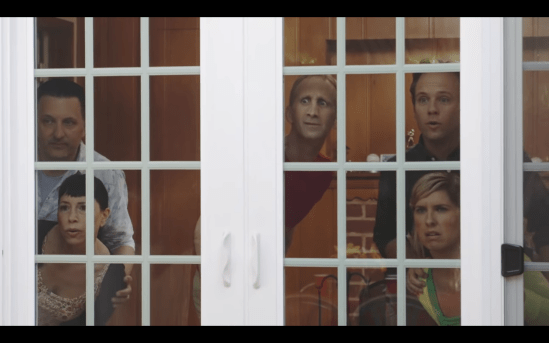
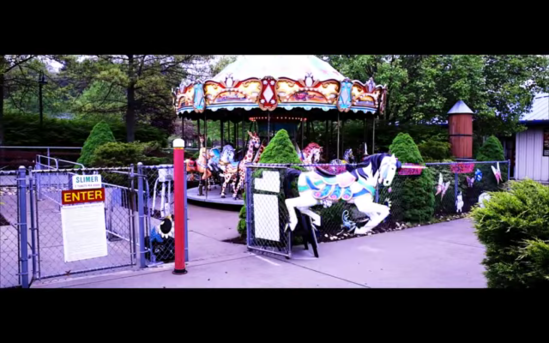
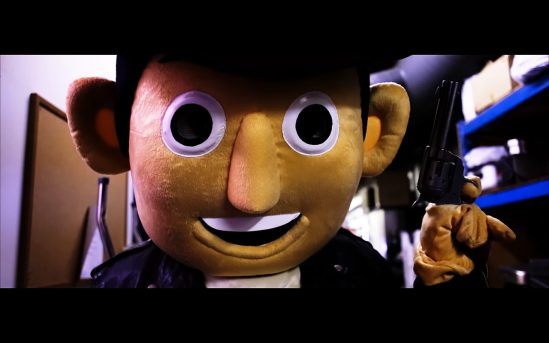
Extremely frustrated with the lack of respect from snot nose kids and the monotonous, round-the-loopy-loop that is his life existence, Duke, the carousel unicorn, has finally had enough the moment after a fat kid mounts him for a ride, smacks him like a giddy-up horse, and wiping his snot onto Duke’s glossy wooden eyeballs. The latter being the final straw that broke the unicorn’s back. Duke breaks free from the amusement park ride in search for a better quality of life when he happens to discover that killing makes him feel good, real good. With a newfound purpose, Duke vows to hunt down and end that fat brat, slaughtering anyone and everyone in his path of carnival-esque carnage that leads the unicorn not to water, but to a house party where the kid stuffs his chubby face full of cake and other goodies while his older sister and her friends order pizza and hit hard the alcohol as they discuss a love and hate for a popular kids show, My Tiny Unicorn. When Duke shows up at the front door, his statue-like presence is a big party hit amongst unicorn show fanatics who are unsuspecting of his murderous desires. The only person capable of stopping the mayhem is the amusement park mascot, a jovial warden cowboy named Cowboy Cool with his trusty, evil unicorn stopping six-shooter.

Step right up! Step right up! Behold and be amazed by the stupendous and the downright bonkers horror-comedy, “CarousHELL,” about a killer carousel unicorn from big top maestro, writer-director Steve Rudzinski. The “Everyone Must Die!” filmmaker helms a satirical slasher co-written by Aleen Isley in her first credited treatment. “CarousHELL,” a whimsical play on carousel and hell if you somehow couldn’t figure that out, inexplicably sprints with the inanimate killer concept that visually livens an old “Family Guy” wisecrack about the latest Stephen King novel being about a killer lamp! Instead of a bright bulb shining blood red and using the electrical cord as a noose, Rudzinski and Isley explore the macabre qualities of an inorganic unicorn by extending its cache of weapons beyond the obvious long, pointy horn to also being able to wield a machete without opposable thumbs, sharp shoot with a bow-and-arrow with hooves, and even have the capability to kill with ninja stars despite the sloping shoulder conformation. Impressive…

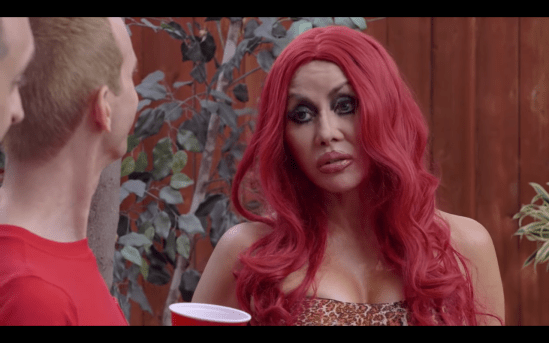
Rudzinski also co-stars as Joe, a diehard pizza delivery guy and passionate dog lover who is desperately trying to earn money for his ill-stricken four legged friend. Rudzinski, sustaining both roles as a director and a performer, solicitously molding Joe as an oblivious nice guy just looking to do his job and even though he’s a bit of an impatient spaz, Joe’s not the biggest spaz swimming in the character pool. Rudzinski could be considered the lead male in the one of many boisterous roles of “CarousHELL” who certainly manages to get the girl without having to lift an finger. That girl being the self-indulgent Laurie, big sister to the unicorn pissing off brother. With her face glued to her social media phone and being a spoiled brat herself, Laurie has little-to-no attachments to anything: she’s not tied down to one boy, weighs social media clicks heavily in life, and finds disrespect the choice of attitude even toward her pole–strapping stripper of a MILF mother. Pittsburgh, PA born Sé Marie (“Cryptids”) does bitchy well, finding a nice niche to nest in with this harebrained, but light-hearted slasher with bite. Joe and Laurie have excessive personalities, but nothing can top Preston who sets the field bar. The house party co-host starts off as a complete douchebag complete with popped collar and an unquenchable thirst for bare chests and the introduction of Chris Proud really makes a first impression in a truly unbearable, over-the-top role, but believe it or not, Preston is one of the few characters of the film to have what could be construed as an arch storyline. Preston, by the end, transforms into a likable character with penchant expertise for the My Tiny Unicorn universe (a spoof toward Hasboro’s “My Little Pony”) and is the only character to perceive the first hand danger from the infiltrating and evil unicorn from hell. Duke is hands down the best scribed character of the entire film. Voiced by veteran voice actor, Steve Rimpici, Duke can literally stand inanimate and still be a vital part of the story. The versatile Rimpici is like the movie trailer voiceover guy with an uncanny Duke Nukem-type voice who has movie credits including the Dustin Mills’ directed features, “The Puppet Monster Massacre” and “Easter Casket,” as well as stints in video games such as “Red Dead Redemption” and “Mafia III.” The cast rounds out with Sarah Brunner, P.J. Gaynard, Judy H.R. Kirby, Josh Miller (“Amityville” No Escape”), Teague Shaw, Haley Madison (“Haunted House on Sorority Row”), Cindy Fernandez-Nixon, Shawn Shelpman (“Red Christmas”), Corella Waring and Michael Mawhinney.

With a film like “CarousHELL,” killer special effects need to be a must as marketing an inanimate villain will be hard sell. Yeah, “CarousHELL” has catchy dialogue, witty enough banter, and gratuitous and non-gratuitous nudity. There’s even multi-positional sex with the unicorn. Thanks for that searing image Steve Rudzinski and Haley Madison! However, a slasher requires good kill moments and the special effects work by Cody Ruch meets the demand with a brutal that include a beautiful gored unicorn horn kill to the neck, a double impale followed by a goopy string entrails, and an Ronald Lacy melting scene with charring laser eyes! Even with a high body count and delectable moments of insanity at it’s peak, “CarousHELL” will undeniably find a general audience outside the scope of genre fans who will understand the context behind fashioning a unicorn slasher, those who are just easily entertained, and maybe a slither of fans of westerns.

MVDVisual and Wild Eye Releasing delivers the hell raising attraction, “CarousHELL,” onto DVD home video presented region free, unrated, and in widescreen format. The digitally shot video has a pleasing standard of quality. A few moments of brief aliasing but nothing to specifically note that matters. The dual-channel audio was the most disconcerting issue that’s affecting the release. More so with the exaggeration of performances with the screaming and the screeching, the feedback distortion is pesky and jarring. Dialogue is prevalent and forefront, but lacks range and depth and so the verbal tracks tend to blend together. The bonus features are a welcoming site with a commentary track, cast interviews that explain how the film came to fruition and that better explains what the “CarousHELL” they were thinking when creating this fun flick, a few deleted scenes that explain the disappearance of minor characters, bloopers, and Wild Eye Releasing trailers. Just like “JAWS” did with ocean, “CarousHELL” will cause hesitation when deliberating if riding a unicorn will endanger your mortality. “CarousHELL” is fun, campy, and a whole bunch of nonsense that has our full 100% support in the horror community.

Evil Rips through the Whitechapel District. “Jack the Ripper” review!


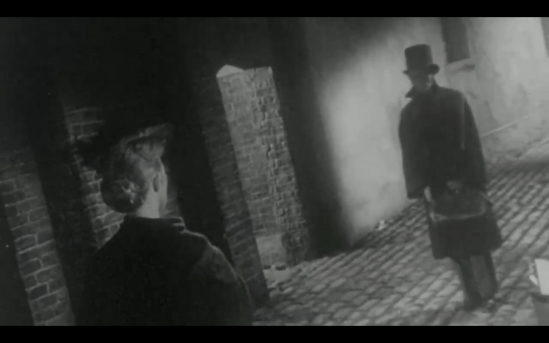
On the streets of London’s Whitechapel district, women are afraid to walk the streets alone at night and angry mobs have begun to turn their backs on the police’s ineptness on catching a killer. Jack the Ripper is what the people of London label the maniacal murderer who, with surgical precisions, guts his victims and leaves their lifeless bodies on the dark, dank cobblestone streets. Scotland Yard Inspector O’Neill is joined by his friend and American counterpart, a New York police officer named Sam Lowry, to hunt down and stop Jack the Ripper’s killing spree. Deeper into the investigation, the officers are informed that the suspect they track would have medical background with a skilled blade hand, but even with that information, Jack the Ripper alludes authorities. Lowry’s romantic involvement with a young woman named Anne Ford, whose under the ward of the notable Dr. Tranter, might be very connective tissue between the constabularies and the secretive medical society needed to crack the case of the notorious Jack the Ripper before he strikes again!

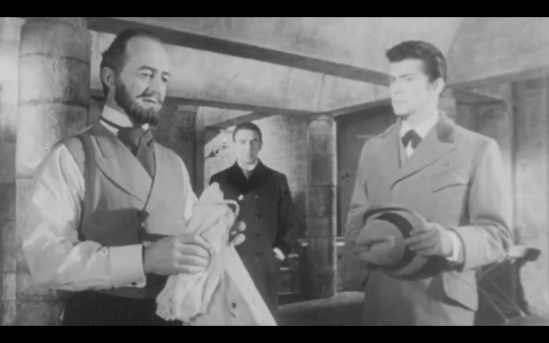
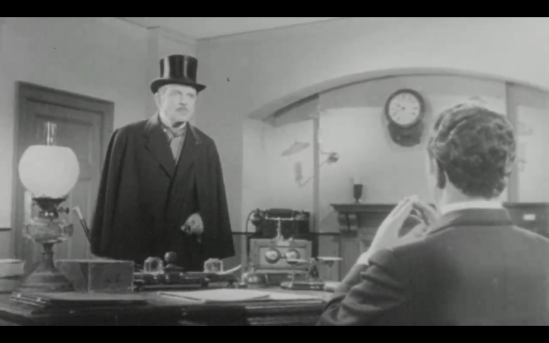
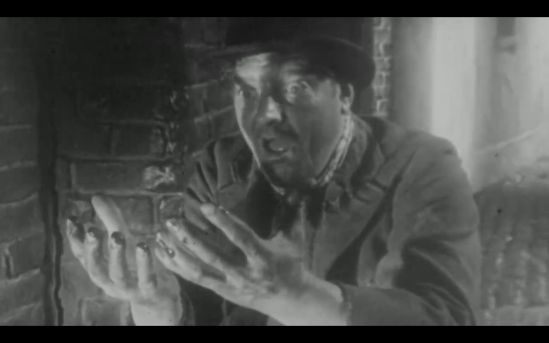
Jack the Ripper is a real and iconic villain that not only terrorized the streets of London, but had later graced the screen many times over from Bob Clack’s 1979 thriller “Murder by Decree” to the 2001 Allen and Albert Hughes gothic and graphic “From Hell,” starring Johnny Depp. Before the production of those films, before Jack the Ripper really had any kind of footprint in cinema, Robert S. Baker and Monty Berman directed the 1959 mystery-thriller “Jack the Ripper” from a screenplay by Jimmy Sangster and Peter Hammond based off the theory that Jack the Ripper had a medical practice history. Baker and Berman’s film hit the controversial market from right out of the gate with grisly and ghastly murders, for the circa 1950s, and bared topless actress frivolously to insinuate the lady drunkards, the showgirl dancers, and the lone walking women as ladies of the night. Prostitutes would have been burden the selling of an already certifiable X film from the BBFC and the MPAA. However, the filmmakers constructed alternate cuts, shorting the grisliness to just grim and sheathing bare breasts with articles of clothing in shot for shot censorship. Only on the continental, aka French, version does a truly uncut and complete film live to excite, but instead a complete feature, the unmolested scenes are only available on the bonus features of the Severin Films’ release. That’s not to say that the U.S. and British versions are a complete waste of time. The classic time is utterly timeless and gripping that offers up immense amounts of whodunit suspense, implied sensationalisms, and an adequate take on how incompetent law officials can be exhibited when politics and women are afoot. Plus, the U.S. version, bought and presented by legendary producer Joseph E. Levine, comes with a brassy score by Jimmy McHugh and Pete Rugolo. The British version, also known as more of the approved director’s cut of the film, is scored by Stanley Black.

Tall, handsome, and walking into another country like he owns the land, detective Sam Lowry is introduced at about 10 minutes in, standing at a bar and reluctant to be rough and tough with a mob ready to lynch him for potentially being the Ripper because of his inquiries. Lowry’s charming persona with the women, like the bar maiden and Anne Ford, are only offset by his complete incompetence to be a police detective. Lowry does absolute zilch investigation and, instead, goes out on a date with Dr. Tranter’s niece and makes snarky comments at a merciless, ready to judge horde of scared Whitechapel residents. American hunk Lee Patterson stands out amongst the gothic rich atmosphere to the point where’s he, like his character, is an outcast and Patterson’s talents could only take him so far into a gloomy, morbid narrative that was unwilling to accept his chiseled chin and starry eyes. Eddie Byrne fit the mold better than Petterson as the Scotland Yard Inspector at rope’s end with not only Scotland Yard, but also the rest of London. As Inspector O’Niell, Byrne, who went on to star in “Island of Terror” and “Devil’s Darkness,” humbly accepts his restraint as the Irish born actor takes a wallop from all sides and still remains calm, collective, and ever present on the task at hand with a character being beat from all ends of the spectrum. Anne Ford opposites Lowry as the potential love interest who has come of age, as she notes a few times, to takeover temporary responsibilities at the hospital where her uncle performs dire surgeries. Being oppressed by her own family and seeing London being ripped a part by its own people, Anne latches onto Lowry, an outsider, to find a connection or a release from sullen cloud that hangs over Whitechapel. Unfortunately, Betty McDowall is sorely overshadowed by many of “Jack the Ripper’s” formidable characters and that Anne is not wholeheartedly written though her character is important to the story. Even the showgirls sizzle in more ways than one than does McDowall whose kept in check by Lowry, doused with someone’s problems, and only given an allusion of her worth in a moment of fright. Ewen Solon (“The Curse of the Werewolf”), John Le Mesurier (“The Jabberwocky”), Barbara Burke (“Blood of the Vampire”), Denis Shaw (“Curse of the Werewolf”), Bill Shine (“Burke & Hare”), and Anne Sharp (“Murder on the Campus”) round out the cast.

“Jack the Ripper” is a classic, literally and physically. The scaled down sets of the Whitechapel area bring to life the tenebrous soil of 19-century London. The elegantly painted backdrops of tall mast ships enshrouded by synthetic fog paint an archaic picture of how movie magic has progressed over the decades. Attention to detail in the set construction and the flavor of time period customers brought a sense of authenticity that nostalgically harps on the once was that now only exists as recorded cinema history. “Jack the Ripper” casts a forgotten beauty in the barbarism. By today’s standards, “Jack the Ripper” would be written off as banal and uninspired by critics and audiences, but if you can imagine yourself in 1959-1960, Robert Baker and Monty Berman just blew your mind with onscreen taboos and in America, Joseph Levine’s technicolor blood scene, with a duration of only a few seconds, would be the viral talk of the town.

Severin Films presents “Jack the Ripper” onto a region free, 1080p Blu-ray for the very first time anywhere! Complete with two cuts of the film, the British and American version, Severin presents both in their released aspect ratios of a lossy standard 1:33:1 in the British version and 1.66:1 in the American version, both in B&W with a pop of technicolor in one scene in the American version. Severin’s transfer is perhaps the best we’ll see from an original print that’s laced with scratches, but a bit more light, or some brighter contrast, sheds some light in the inky corners while managing a rich appearance that’s not monochrome or sepia. The English 2.0 audio track maintains an equal quality with some static in dialogue and ambient tracks. Jimmy McHugh and Pete Rugolo’s brass-heavy score thunderously pack the scene that surely takes the lead amongst the tracks. Bonus features include snippets of the continental versions with the extended violence and nudity and the audio commentary with Robert S. Baker, screenwriter Jimmy Sangster, assistant director Peter Manloy is extracting and interesting helmed by horror historian Marcus Hearn. Also included is an interview with the author of “Jack the Ripper” The Murders of the Movies” Denis Meikle, “The Real Jack the Ripper” featurette, theatrical trailer, and poster and stills gallery. Exposed and disclosed, the various faces of Robert S. Baker and Monty Berman’s “Jack the Ripper” now have a hi-def upgrade and though a full continental version eludes this release, Severin provides the cliff notes in order to not overcook the same story a third time.