The Mountains Are Alive With the Sound of EVIL! “Cold Prey” trilogy reviewed! (Second Sight Films / 3-Disc Limited Edition Blu-ray)

“Cold Prey” limited edition trilogy set! Get it while it lasts!

Five snowboarding friends travel to a remote mountain to shred the best scenic power Norway has to offer.  When one of them hurts their leg, the group hunkers down in an abandoned hotel for the night, a hotel with a horrible history of a child and his parents who went mysteriously missing decades earlier.  As the night carries on, a mountain man living underneath the main floor hunts them down.  A lone survivor of the night is taken to a closing down hospital with a skeleton crew.  The mountain man had followed her, prolonging her ordeal of terror, and continues his murderous killing spree through a new batch of medical staff and police officers.  Decades earlier, the mountain man’s abused backstory sets a coming-of-age path of homicidal tendencies as he lives in the woods 12 years later after departing his parents and the hotel.  A group of hikers wander into his woods where he can’t differentiate man from animal game and begins his thirst for the kill that would claim the lives of many years to come.

What I’ve just given is the three basic plotlines for all three of the Cold Prey films, a trio of Norwegian-made slashers with a murderous mountain man at the center of it all.  Including a sequel and a prequal, the films were all produced in a relatively short amount of time of four years between 2006 and 2010.  For the original film, Thomas Moldestad (“The Conference”) wrote the script based off a story he wrote alongside Martin Sundland (“The Wave”) and Roar Uthaug, the latter directed the film and would later go on to direct the 2018 reboot of “Tomb Raider” with Alicia Vikander in the Lara Croft role.  The sequel, “Cold Prey 2,” directly follows the first film but helmed by a different director in Mats Stenberg with Moldestad returning to pen the project.  The prequel innately disconnects the continuous nature of Cold Prey I and II for more history on the homicidal mountaineer with Sundland taking a backseat story idea role to Peder Fuglerud and Lars Gudmestad with Mikkel Braenne Sandernose bringing up the rear in the director’s chair.  The real-world location used in all three shoots was the Jotunheimen mountains and the studios connected to each project are Helgeland Film, SF Norge A/S, Norsk Filmstudio, Film i Väst, Storyline Studios and with the Norsk Filmstudio subsidiary, Fantefilm, involved in all three as the movie’s presenting studio. 

Ingrid Bolsø Berdal (“Chernobyl Diaries”), Thomas Alf Larsen (“Troll Hunter”), Viktoria Winge (“Inside the Whore”), Rolf Kristian Larsen, and Endre Martin Midtstigen play the five friends venturing to the mountains to shred some nice powder but wind up finding themselves stranded with a madman in their company.  That madman is played by Rune Melby, not to be confused with Sweden’s national hockey team player of the same name, to impose his large stature and husky look to be a formidable, silent antagonist that doesn’t need vocals to be threatening.  Surface level inspect of “Cold Prey” has it pegged as another typical slasher but this slasher rolls back the tropes, desaturating the themes and motifs to a reasonable amount and in a more realistic approach rather than having established personas, such as the nerd, jock, slut, etc., having gratuitous sex scene moments, and reduce the bonehead moves that ultimately result in their demise.  The sequel houses a new cast apart from Ingrid Bolsø Berdal making her return as a survivor recovering in a soon-to-be-closed hospital following the events of the first film.  She’s joined by Martha Snorresdotter Rovik, Fridtjov Såheim, and Johanna Mørck as the skeleton crew hospital staff, Kim Arne Hagen as Camilla’s boyfriend and utility emergency service person, Mats Eldøen, Per Schaanning, Andreas Cappelen, and Mads Sjøgård Pettersen as the limited bandwidth local law enforcement, Vetle Qvenild Werring as a boy patient, and Robert Follin replaces Rune Melby as the killer.  A larger cast equates to a larger body in this direct story follow-up and really capitalizes on the killer’s brute force and unstoppable grit that sets up a delusion of him against the world as a misanthropic maniac with some underlying superhuman force, like we see with Michael Myers. Berdal takes on the true survivor and heroine role helping those unaccustomed to the fight and even takes the fight to her tormentor, solidifying more of the final girl trope.  The rest are stuck in the middle as potential kill fodder and support to provide emotional capital as lives hang in the balance in their various relationships, which reminds me one relationship that’s hint at but never explored is the seemingly undercover or seedlings of affection between two medical staff that is quickly squashed by the rise of a killer in their midst.  The scene interaction would have stirred up controversy wither another involved character but never had a change to be problematic.  The prequel doesn’t involve any returning characters and really invests into the mountain man’s background more.  Played by a different actor in Endre Hellestveit and having an appearance more akin to the WWF Undertaker instead of a pelt and parka-cladded mountain man, each filmic version has varying style that almost feels heavily contrasted to the previous one and that can be jarring to that connective tissue for some.  A new band of friends become the hunted prey as they stumble into the mountain man’s forest home under the rough tutelage of illegal game hunter Jon (Nils Johnson) whose brother, police officer Einar (Terje Ranes), pieces the puzzle together the disappearance of the backpackers and Jon’s involvement in something more than poaching.  The backpackers play more into conventions without many complexities in their depth chart with Ida Maria Bakkerud, Julie Rusti, Kim Falck, Pål Stokka, Arthur Berning, and Sturla Rui are put into the mountain man’s crosshairs.  

As you’ve might have noticed, the prequel doesn’t receive high marks but it’s an entertaining bloodbath nonetheless, overshadow by the predeceasing counterparts because of the developing characters and the more interesting story that plays to a similar tune of the first two “Halloweens” and even more so with the continuation storyline between the first and second film with the latter set inside a sparsely populated hospital that definitely gives off “Halloween II” vibes.  That’s not to say the “Cold Prey” films are a carbon copy of notable classics and their sequels as “Cold Prey” brings a Norwegian staple into play with the summitting Jotunheimen mountains and their existence within that snowy terrain and mountain air, building a story around a mountain code that’s often spoken of, a code about safety that goes in deadly contrast toward the inexperience and nativity of youth believing they’re invincible to their surroundings when in reality mother nature, a natural evil within the mountain man living off the land, leaves more than a dent into their humility.  “Cold Prey” will often feel unoriginal with a severe lack of gore as that has almost become intrinsic to contemporary slashers but it’s refreshing to see a step back in the violence, though it’s nonetheless harsher.  Audiences will not be treated to impact violence that creates squeamish reactions and ghastly shock.  Instead, implied violence is the name of the game that results in the same blood-spattered crime scene look without the initializing, violent show of the blade sliding into the sternum.  These stylistic choices, executed perfectly by DoPs Daniel Voldheim (“Cold Prey”) and Anders Flatland (“Cold Prey 2”) in their camera work and expertly cut by Jon Endre  Mørk, are sold convincingly to ensure death is impenetrable when the pickaxe strikes while still flaunting a good amount of practical effects in makeup wounds, prosthetic props, and gallons of fake blood.  “Cold Prey III” dabbles in the same inferences and off-screne violence but shows a lot more too as we see a machine pierce and then slice away the insides of man and that knife going right int between the rib cage of a poor young woman, keeping up with the times of a modern slasher.  

The three film, Blu-ray set comes from Second Sight Films.  The UK label rolls out the red carpet with their high-definition release that’s an AVC encoded BD50, presenting each film with 1080p resolution and in a compressed widescreen aspect ratio of 2.39:1 to capture the majestic Jotunheimen mountains.  Despite having three different directors of photography in Daniel Voldheim, Anders Flatland, and Ari Willey, each “Cold Prey” entry has the same gray sepia grading with a solid reducing of color saturation in attempt to harness cold and bleak surroundings of a harsher landscape.  IN the same breath, each DoP also tries to make the mountains and forest feel awesome and breathtaking while coursing its perilously imposing strength in size and, ironically enough, confining isolation.  You may find the Blu-ray details and textures on “Cold Prey” and “Cold Prey 2” not to be a sharp as expected for an early mid-2000s slasher as both were shot on 35mm for a better film cell texture rather than a captured texture to accentuate the landscape in a cinematic view rather than the digital polish that often downgrades pictures with a one-note aesthetic.  Since the snowcapped mountains were not used in the prequel, replaced with a forest setting, digital film was used to flesh out more raw textural details amongst the dense foliage and in the midst of a dilapidated mountain property.  No compressions issues in the codec to note.  Each film is fitted with a Norwegian language DTS-HD Master Audio 5.1 surround sound, suited to bring the soundtrack and the directional tension to the frontlines of the sound design to setup an impacting impression when the action saunters into frame.  Diffused nicely throughout, depth and direction of sound creates not only the atmospheric of a malevolent presence, it also creates environmental anxiety when sounds go bump in the night or just in the abandoned motel or echoing forest setting.  Dialogue is crystal clear and the English subtitles pace well with the speed and have no noticeable grammatical errors.  Each disc comes with its own special features:  “Cold Prey,” Disc one, has a new audio commentary with Director Roar Uthaug and actress Ingrid Bolsø Berdal, a new interview with Uthaug This is the Vibe, a new interview with Ingrid Bolsø Berdal Draw the Process, an alternate ending shown in storyboard that extends the final cut ending, a behind-the-scenes look at the visual FX of the film, additional car scenes, blooper reel, two short films: “Mountain Rose Run Amok” and “An Evening in the Green,” and Bloodlights’ music video for their hit “One Eye Open.”  “Cold Prey 2,” Disc Two, has a new audio commentary with director Mats Stenberg, a new interview with Stenberg A Blessing and a Curse, new interview with actress Berdal Dissociation, a new interview with fomer director turned solely producer Roar Uthaug Stepping Aside, behind-the-scenes, blooper reel, and extended and deleted scenes.  “Cold Prey 3,” Disc 3,” has a new commentary by Christer Andresen and Phillip Escott of an outsiders’ perspective looking in on the film prequel and a behind-the-scenes featurette.  The limited-edition rigid slipbox is massive and perhaps one the biggest physical copies for a 3-disc production.  James Neal provides new artwork for the front cover that truly represents the story as well as the aesthetic to expect.  The trifold jewel snapcase holds all three discs and have dramatic character portrays from all three films.  Also inside are 5 collector art cards and a 120-page book with new essays from Matt Donato, J.A. Kerswell, Just LaLiberty, Paul Le, Ariel Powers-Schaub, and Nathaniel Thompson, plus the book comes with new artwork, stylized stills, cast and crew acknowledgements, and Blu-ray production acknowledgments and thanks.  The Blu-ray holds a UK certified 15 rating for strong horror, bloody violence, language, sexual threat, injury and abusive behavior.  This particular release is region locked on B and has a total runtime of 278 minutes.

Last Rites: The “Cold Prey” trilogy doesn’t flash new spins on the slasher genre that’s as old as horror itself. Instead, “Cold Prey” a satisfactory slasher that scratches the killer maniac itch with its mountainman maniac!
“Cold Prey” limited edition trilogy set! Get it while it lasts!

Stick With Jordan Peele’s EVIL Social Commentary. “Afraid?” reviewed! (Cleopatra Entertainment / DVD)

What Are You “Afraid” of? Check out the DVD now Avialble!

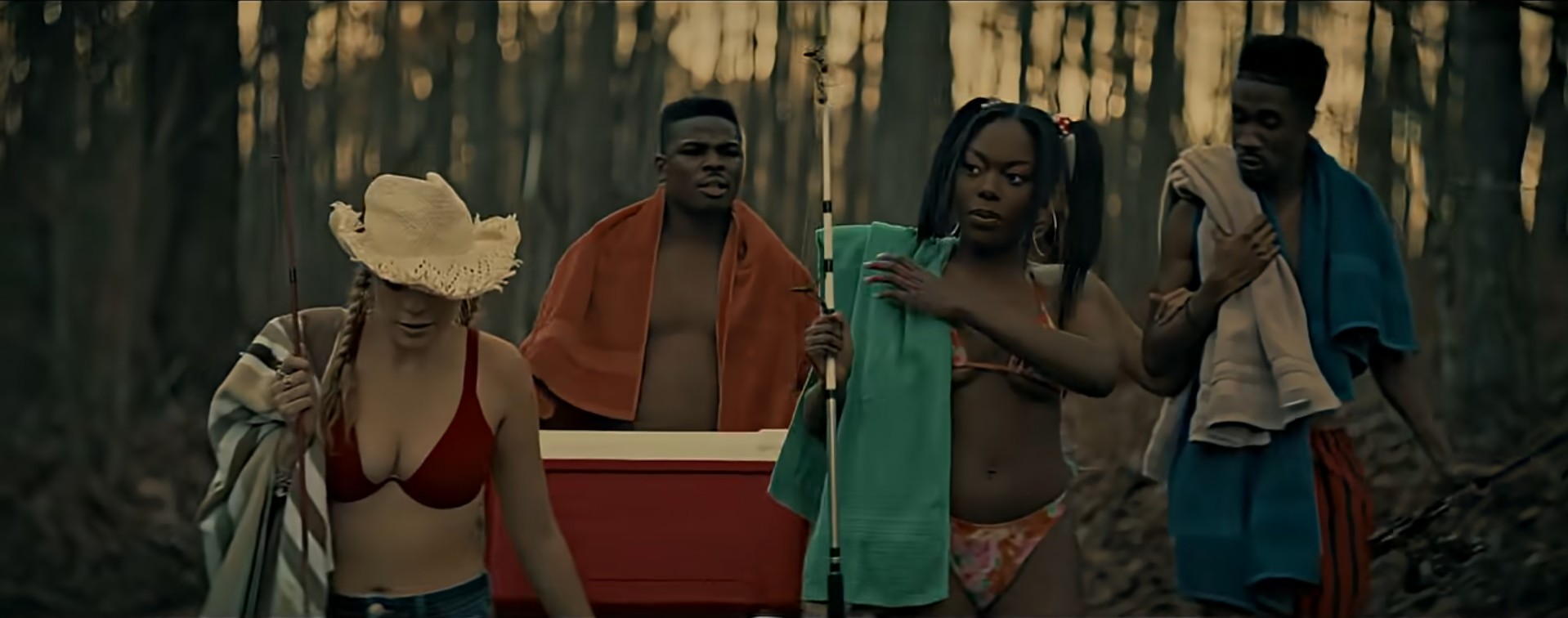
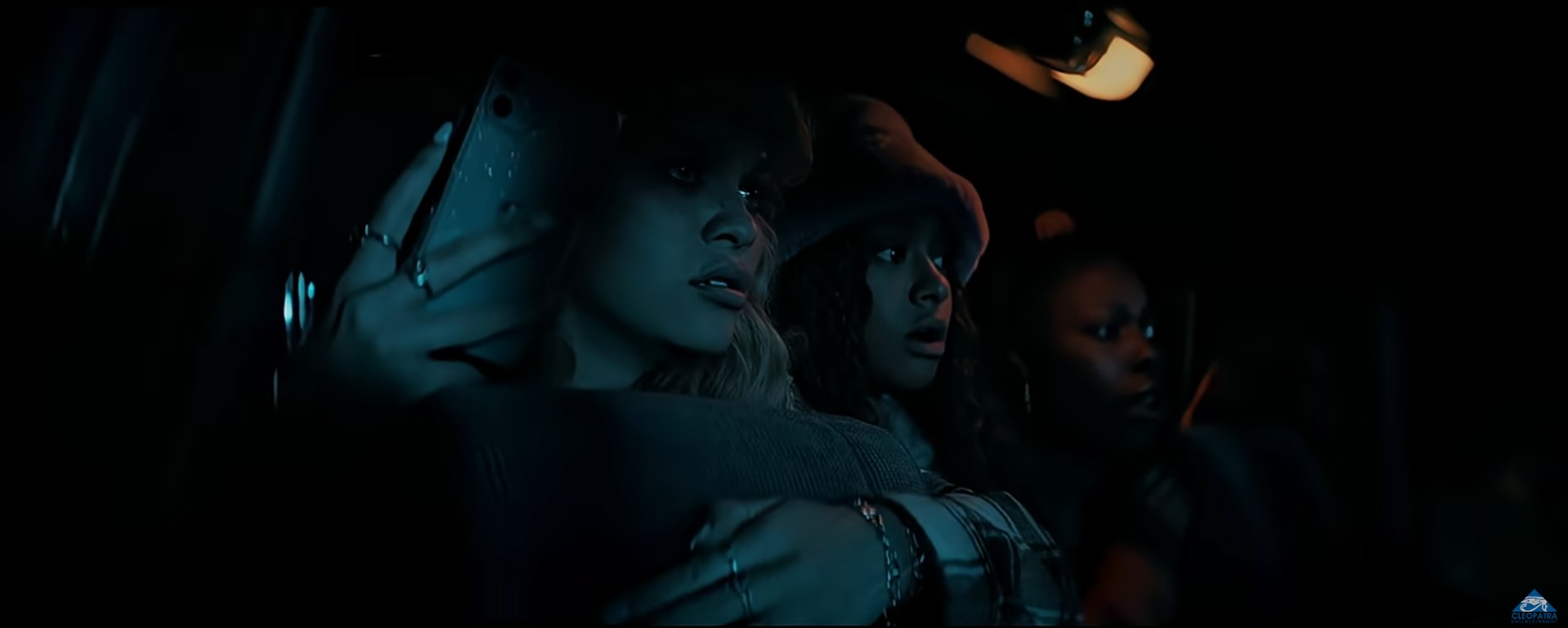
After going through a physical domestic violence incident with her aggressive stepfather that ended with her a little banged up and with his arrest, Sarah can’t wait to spend time with her high school friends at an isolated cabin near Bin Bow Lake over the Halloween season.  Sarah feels like a fifth wheel while her friends have significant others in their party of five, but she makes the best of the situation with anything being better than at home on the weekend with her abuse-recovering mother and unpleasant memories of her stepfather, but the boozy, time-alone getaway turns into a fight of survival when a masked killer targets them, hunting them down one-by-one.  With no cell service, the car not starting, and not a single person around to help, the group scrambles for options of escaping the killer’s malice aforethought in a rural area that wasn’t all that friendly toward their kin color to begin with. 

Claiming to have the same Jordan Peele story vibes, “Afraid?” is the Sky Palmer, aka SkyDirects, helmed urban slasher from 2025 that faces social justice issues point blank in front of a masked killer backdrop.  “Afraid?,” aka “What Are You Afraid Of?,” is the sophomore feature length film for the California-born director fashioned from his own screenplay treatment with an infused racial overtone amongst the horror trope allotment.  The PR and communications tech startup founder and film director SkyDirect’s involvement doesn’t quit there as writer-director, as he also serves as executive producer under his production company SkyDirects Flix alongside co-executive producers with Cleopatra Record’s film entity, Cleopatra Entertainment, with “Frost” and “Cocaine Werewolf’s” Tim Yasui  and Brian Perera, who handle the exclusive distribution of the film, with freelance producers Gregory Mejia and Brian Cooper, the latter Cooper having collaborated with SkyDirect’s debut feature, “Run Nixon.”

The urban thriller is cast with primarily African-American actors and Caucasian actress Rezia Thornton in a semi-lead protagonist role of Sarah with the teen girl’s harrow opening skirmish with an aggressive stepfather and she also becomes the bookend storyteller of survival stemmed from events involving four of her friends, a pair of romantic couples, looking to getaway for a weekend as a group.  Thorton’s doesn’t portray to be your traditional mayo-vanilla character as she fits socially inside the dynamic of culture that surrounds her.  Kendre Berry plays Terrence, a high school football athlete exploring the possible opportunity of collect scholarship while testing the potential distant relationship waters with Latina girlfriend Lisa (Teairra Mari).  Berry and Mari are to have a strong character bond tested by the Sarah’s flirtatious eyes for Terence and while there’s a moment of heated tiff between the lovers, they go right into the one trope you’re not supposed to do in a horror movie, do sex acts in the woods.  The contention is nothing more than a spat when Sarah’s brought in under fire from Lisa’s Latina wrath in a nearly forgotten character plot foil.  Those types of fizzling devices extend to the other couple, Jamal (Gemaine Edwards) who is a military prospect and Jasmine (Nakosha Briggs), with Jamal’s decision to quit his path toward service because of military operations and causes he can’t support because of their support for wealthy interests.  This too gets murky inside the couple’s progression with the quick snap introduction of the killer, never influencing their characters and acts in a solely spout-off with the movie being a platform to convey the message, a common theme throughout “Afraid?’s” hollow horror shell.  There’s one character Dexter (but credited as Nerd Kid?) trips into the discussion of getting away this weekend during their high school hallway hangout, as if part of the crew, but never makes the trip and isn’t seen again in an odd character introduction of wasted space and missed opportunity to become kill-or-hero fodder.  The rest of cast rounds out s and to support to Sarah’s backstory and suspicious rednecks, any of which could be our killer, with Michael A. McGrath, David Ian Wood, P.T Ashlock, and Ashley Heath. 

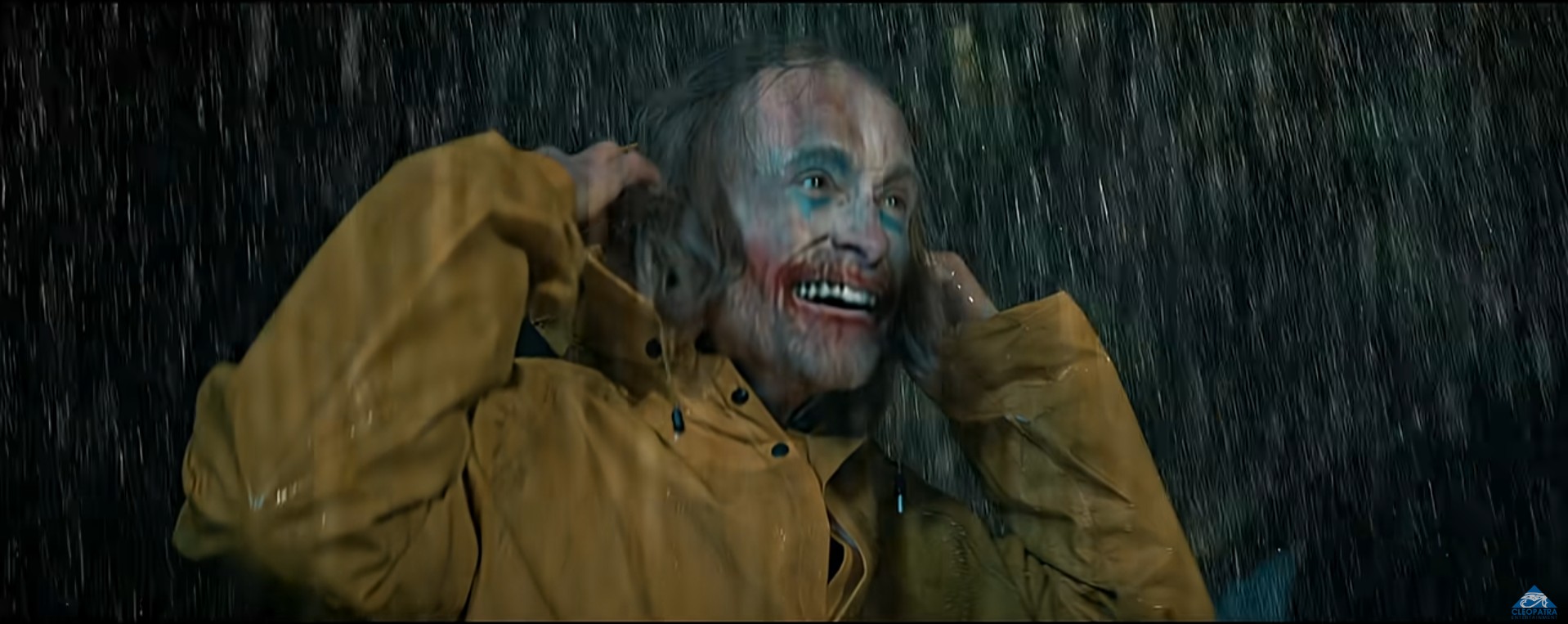
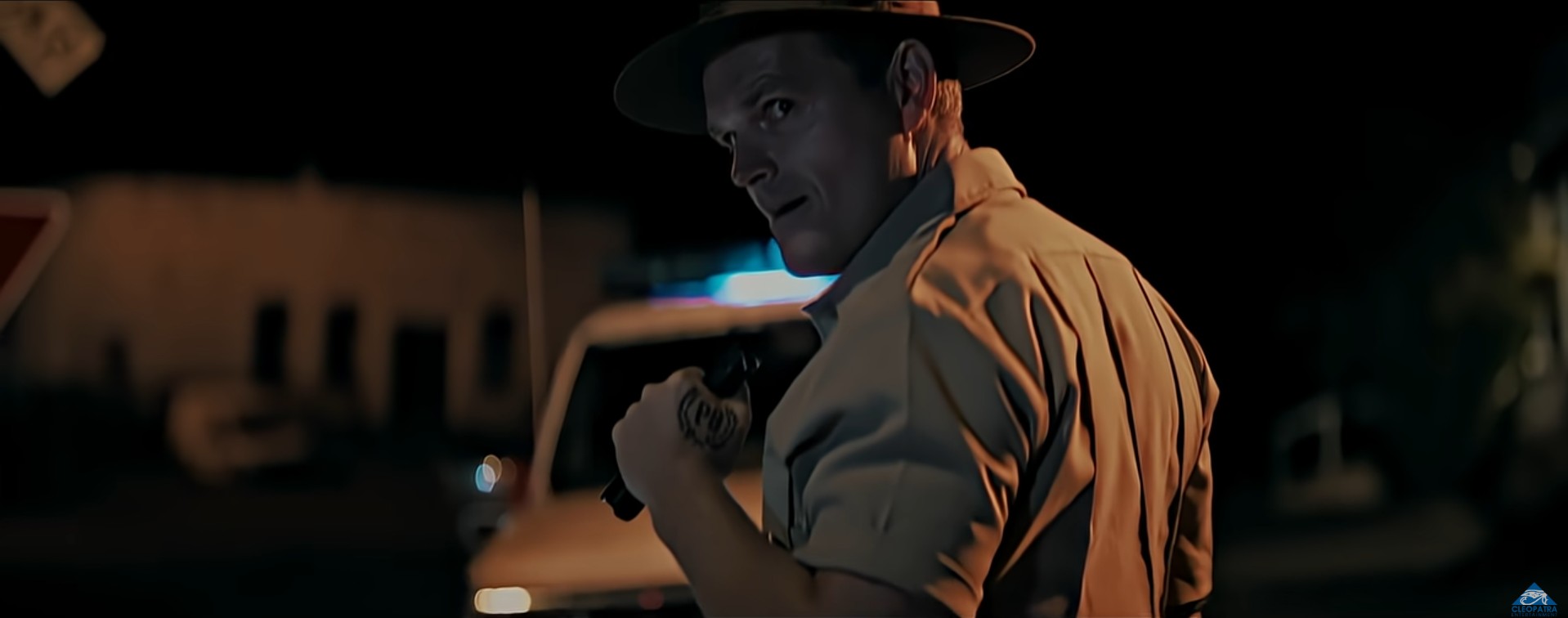
SkyDirect’s entry into the slasher genre is exploited for platform messaging gain on social and political issues and conspiracies against race and culture as well as the American dream, subverted by wayward government intentions and systematic bigotry of authoritative figures.  “Afraid?” is a film that’s compared to the likes of Jordan Peele, using horror as a metaphor for the undertone, and also often blatant, glitches in American society, typically against African-Americans and other minority groups.  However, “Afraid?” very much feels like a bald-faced weaponization, like a caricature of concept, that doesn’t try to hide the fact under a blanket of horror as characters play into conventions and stereotypes with a hefty amount of exposition to back it up.  The idea of “Afraid?” is that fear inside every black person’s they’re made to be the target of prejudice, whether by the Podunk population of rural, nowheresville America or by unprovoked police offers who question their late-night purposes.  Scenarios of being shot run through their mind, depicted in an unjust nature, and even the interaction with an uber-creepy, stuttering roadside assistant instills a fear despite him being nothing but helpful with their flat tire.  SkyDirect’s introduction of multiple characters with callback actions and lines don’t ever flesh out, such as with Sarah’s abusive stepfather opening that doesn’t add anything to the rest of the storyline or Terence and Gemaine’s partially contentious friendship with a corner drug dealer who was a high school friend where Gemaine’s beef with him is never fully opened and explored.  The acting from the cast renders over fine enough but the scripted dialogue is hackneyed and exclamatory hyperbole in its stating of the obvious that it makes scenes almost painful to hear.  All these negative elements take away from the film’s core slasher theme that does have some decent kills and a definite eerie atmosphere and appearance. 

Cleopatra Entertainment distributes their co-produced venture on DVD home video, a MPEG2 encoded DVD5 with an upscale 720p standard definition, presented in a widescreen 1.78:1 widescreen aspect ratio.  Despite its narrative and character shortcomings, “Afraid?” has a polished picture with a dark, cold grading with a higher contrast to formulate shadow work around the tenebrous trees to the ominous inky corners of a pitch-black cabin without power.  Cobalt toned in its processed coloring, and perhaps some gel work here and there, brings traditional horror color schemes back to the horror table.  Details are not too terrible either but can be eroded by the grading’s creeping shadows and some scenes fair better than others, such as medium-to-close up shots are better equip to handle capacity pixels rather than drone medium-long-to long shots with a drone or a crane, you see the image start to block when Sarah becomes lost in the woods and the camera pulls and away from overhead.  Though not listed, the DVD comes with an English PCM 5.1 surround sound mix.  The audio assortment finds fair footing amongst it’s clear and verbose dialogue that’s the dominating layer, it’s ambience that places last amongst the layers but still pulls off a variety of diegetic and non-diegetic environment noises in a spooky-laden, rain-drenched woods with potent thunder and a deluge of pelting rain pitter-patter, and a vigorous selective soundtrack produced and hyped by its Cleopatra Records’ artists DMX, Pleasure P, and Mase, to name a few.  Bonus features include promotional trailer clips of the film and a image slideshow with the physical DVD, inside a standard tall Amaray, has a photoshop rendered image of a masked killer looking through inky eye openings and over his shoulder with title just below and the tagline Don’t Look Back underneath that.  Disc is pressed with the same image and there are no other extra materials inside.  The 89-minute production is not rated and is region free for global playback,

What Are You “Afraid” of? Check out the DVD now Avialble!

Never Steal EVIL’s Dead Body and Think to Get Away Scot-Free! “Frightmare” reviewed! (Troma / Tromatic Collector’s Edition)

It’s not a Nightmare. It’s a “Frightmare” on Blu-ray!

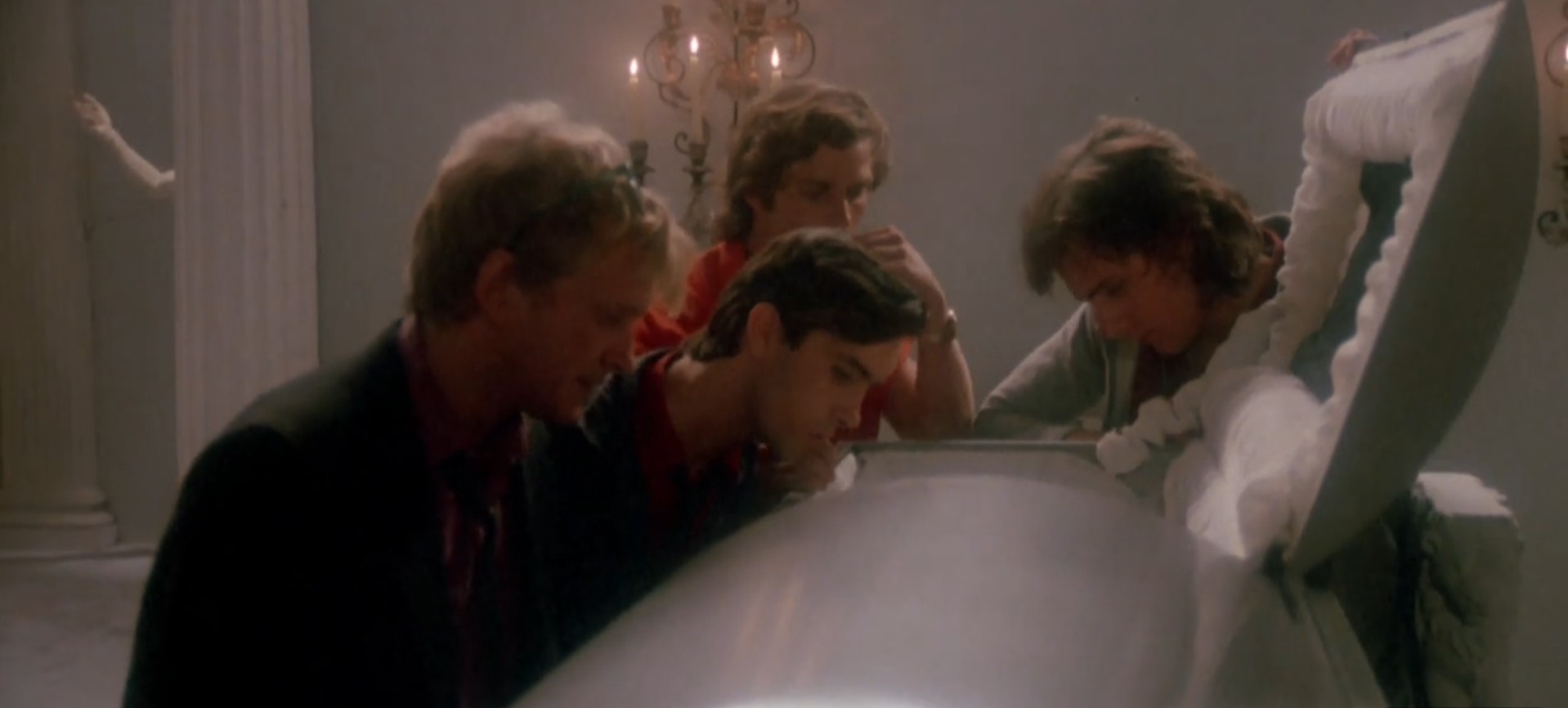
Aging horror icon Conrad Radzoff is on the verge of being forgotten by all except for a few handfuls of diehard fans who gather around a horror society that appreciate classics that are quickly fading from public view.  Arrogant and conceited, Radzoff doesn’t take criticism all too well.  In fact, he kills over it.  After murdering a commercial director and his longtime collaborating director, both of whom loathed his tyrannical, prima donna attitude, Radzoff dies of heart failure shortly after.  The youthful members of the horror society steal his body from Radzoff’s elaborate decorated and booby-trapped mausoleum on a whim and spends the night dining, dancing, and photographing with his lifeless corpse until Radzoff’s wife uses a medium to locate her late husband’s body and inadvertently resurrects him from dead with supernatural psychic powers to pick off his naïve graverobbers one-by-bone in what will be his last great horror performance. 

“Frightmare,” aka “The Horror Star,” is the supernatural slasher that tears into the fabric of being forgotten with a lasting impression, one with deadly consequences for a mischievous teens disrespecting the past in order to live with impunity in the present.  The 1983 picture is written-and-directed by Norman Thaddeus Vane, co-director of “The Black Room” and the Elvira-inspired 1988 film “Midnight.”  Shot mostly in the Los Angeles area, “Frightmare’s” principal photography and wrap was completed during 1981 but the film itself was not released until two years later and is not a remake of and has no connection to the Pete Walker film of the same title years earlier in 1974, which focuses on a seemingly mentally disturbed rehabilitated woman released years after committing deadly crimes.  This more necromancing and resurrecting slasher “Frightmare” is produced by Callie and Patrick Wright and with “Shadow of the Hawk’s” Henry Gellis serving as executive producer under the Screenwriters Production Company. 

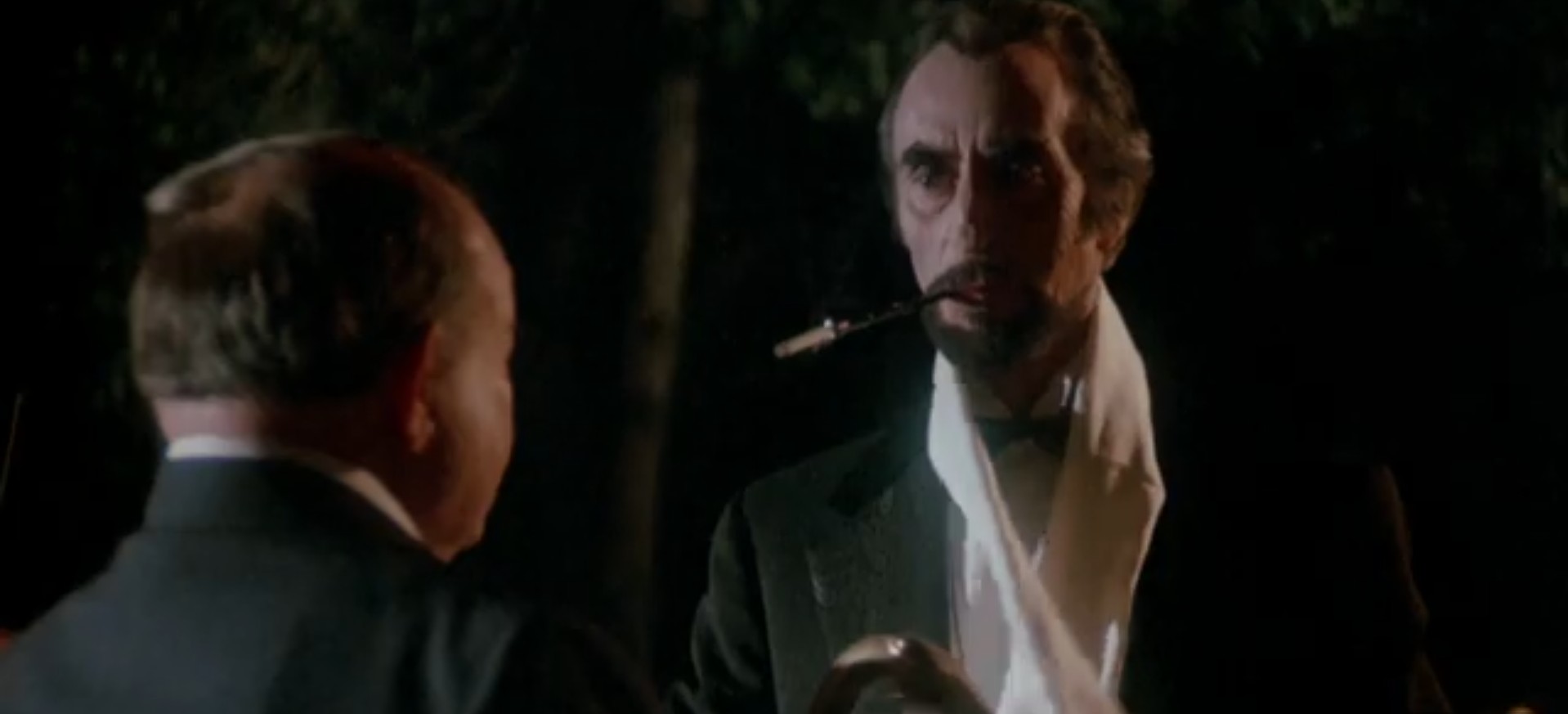
“Frightmare” would undoubtedly become director Norman Thaddeus Vane’s first attempt at replicating a horror icon shell that would later inspire him to direct “Midnight” that pulls influences off horror hostesses, such as Elvira or Vampira.  The centralized character, one who’s prim-and-proper snobbish attitude and flair for the theatrical in film and in life, is loosely, in Conrad Radzoff is loosely based off the Vincent Prices and the Christopher Lees of the genre, classically trained method actors astute to the craft.  Radzoff is, however, embellished with a hellish soul, unlike Price or Lee who sustained a rather indifferent or benevolent character.  There’s a lot to take in and enjoy from Ferdy Mayne’s performance as Radzoff.  Mayne’s first role of it’s kind for the actor with its meta intent to be an actor playing a horror actor reawakened as psychic sociopath from the depths of Hell groomed and garbed as a Vincent Price/Christopher Lee-like gothic vampire, in which Mayne was quite trained for having starred in vampiric films such as “The Vampire Lovers” and “The Fearless Vampire Hunters” in the 1970s, and he crushes the performance with profound effect with Vane’s Euro-style slasher that keeps tabs on the killer as he lurks through the property of the horror society, consisting of going from contravening teens to the unfortunate victims played by Luca Bercovici (“Parasite”), Jennifer Starrett (Run, Angel, Run!”), Alan Stock (“Poison Ivy”), Scott Thomason (“Ghoulies”), then Michael Biehn’s now ex-wife Carlene Olson, Donna McDaniel (“Angel”), and one Jeffrey Combs that would be one of his first films pre-“Re-Animator.”   Narratively, this laid out is the core cast of characters but there are peripheral support characters that are introduced and have key moments but are quickly diminished or erased from completing their story arc.  Radzoff’s wife Ette (Barbara Pilavin, “Maniac Cop 3:  Badge of Silence”) barely has five minutes of screentime but provides the undead Radzoff the key, go-ahead directive to kill his body snatchers but after that intense moment where they psychically connect, her scenes are no more other than one moment with a lightly knotted loose end.  Same can about the intensity of Mrs. Rohmer (Nita Talbot, “Puppet Master II”) that it pops clean off after connecting with Radzoff.  Leon Askin (Doctor Death:  Seeker of Souls”), Chuck Mitchell (“Porky’s”), and Peter Kastner (“Steambath”) fill in the cast.

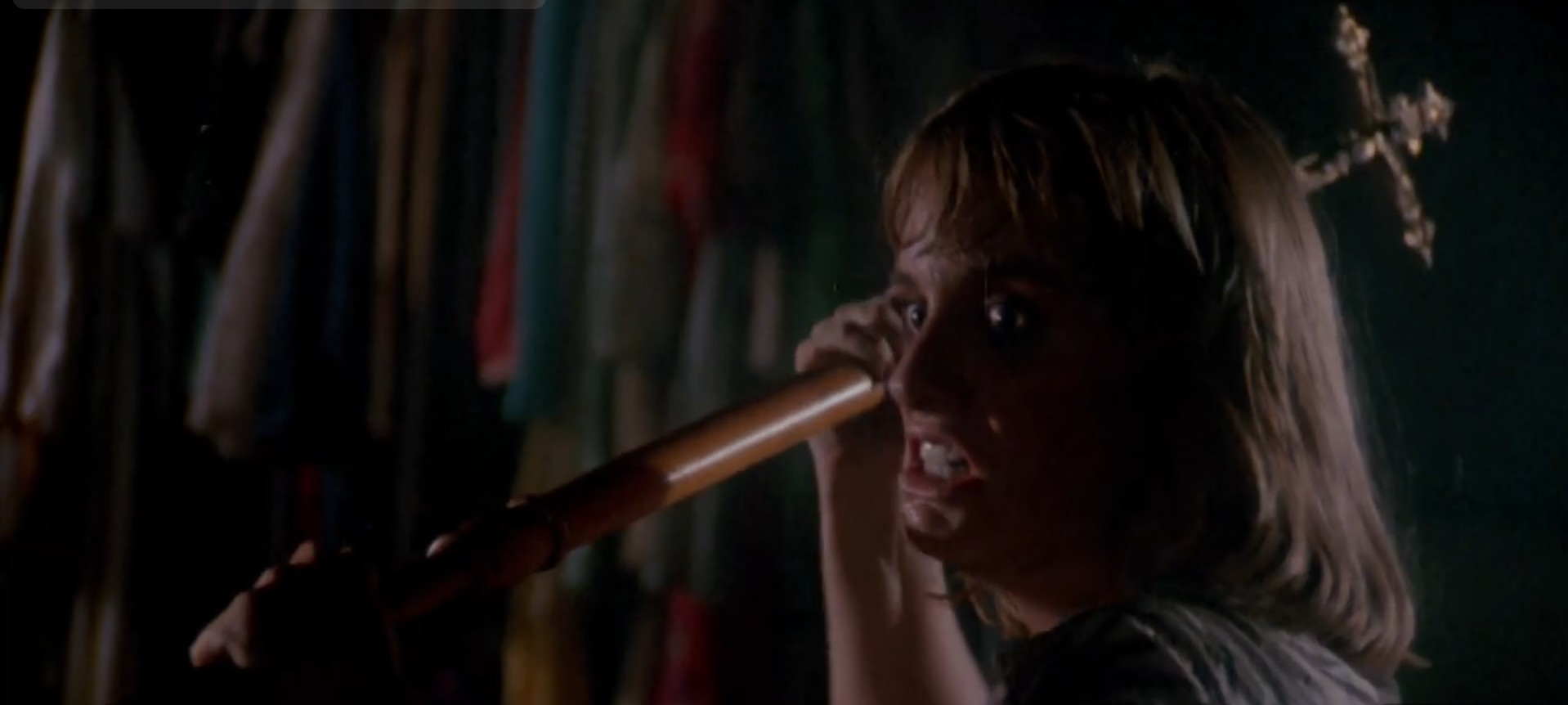
If only one element stood out as “Frightmare’s” most redeeming characteristic, Joel King’s cinematography takes the top spot on the podium with a diffused fog machine backlighting that’s out of this world, angles and movements that complex the simplest and most stationary scenes, and an ingenuity that manifests the magic of a macabre movie also assisted by both of the aforementioned lighting techniques and the camera placements.  “Frightmare’s” also heavily infused with Gothic nuances that pay tribute to the subgenre as well as add to the sinister and oppressive tone of a rapidly enclosing atmosphere of darkness, shadow, and vaulted architecture from Radzoff’s Victorian-era, aristocratic black and white attire to the wood dark-toned and concreated exterior, two-story mansion that becomes the prison to the horror society they can’t escape from, in life with their hobby and in death with Radzoff hunting them through secret passages, dumbwaiters, and its delicately antiquatedly trimmed rooms and hallways.  Blood is accentuated with slow motion and splatter along walls and out of gash wounds with practical effects constructed by “Critters’” Chuck E. Stewart who can build a ghastly looking burned up and smoking body dead on the ground.  “Frightmare” isn’t a narrative that’ll strike fear around every corner but is rather a campy, supernatural slasher with hammed performances and a solid method for one-by-one offing.  The story’s a bit thin with motivations that keep Radzoff’s egocentric boasting about his last performance in death, his deathtrap mausoleum as if the actor knew there would be intruders, and the whole stealing of the corpse that just seemed to be a fruitless, ill-advised whim where there would be no escape from authorities or even the smell of an actively rotting corpse being stowed away in a non-climate controlled attic. 

Troma re-releases the Vinger Syndrome transfer onto their own Blu-ray through a partnership contract where Vinegar Syndrome receives first dibs on the upgraded, high definition 1080p, 2K transfer from the original amera negative with the title holding partner, Troma, releasing their own Blu-ray upon after the agreed term and the VS edition now out of print circulation.  The identical AVC encoded onto a BD50 “Frightmare” is presented on a Tromatic Special Edition set that retains the same quality as the Vinegar Syndrome 2021 release even, carrying over some Vinegar Syndrome special features.  Graded toward a dark tone, Joel King’s diffused backlighting and primary color tint elevates “Frightmare’s” kitschy, campy posture toward saturated spooky atmospherics.  Details are more than generally reproduced with deep absorbing in the smaller aspects of eliciting skin surfaces and object textures, such as the mansion wood-grain aesthetic and cobweb strung attic.  There are darker scenes that have unavoidable crush outside the colorful haze key lighting, but most retain pitchy space in the 1.78:1 aspect ratioed framing.  The English audio mix is a DTS-HD Master Audio Mono mix that also the same as Vinegar Syndrome’s release that has adequate audio propagation and diffusion without the lift of distinct layer and multi-channeling.  All through single channel can collide at times, especially between Jerry Mosely’s (“Bloodtide”) inclusively gothic score and the dialogue, but despite the rough audio patches, the single-conduit tracks are constructively discernible for a better part of the runtime.  English subtitles are available.  Special features are blend between Vinegar Syndrome produced historical commentary with David Del Valle and David DeCoteau, a now historical commentary by The Hysteria Continues podcast hosts, an archived interview with director Normal Thaddeus Vane, and a video interview featurette with director of photography Joel King and Troma exclusive supplementaries that are not entirely related to the feature, those include an old Debbie Rechon and Lloyd Kaufman generic intro from the original DVD version (Rechon and Kaufman a years younger), Lloyd Kaufman gives his personal lesson opinion to aspire indie filmmakers from the set of “Meat for Satan’s Ice Box,” the music video for “INNARDS!,” an artwork gallery, the original theatrical trailer, and the ever included Troma Radiation March.  “Frightmare” receives new Troma sleeve art that covers the macabre more than the usual campy slapstick with a horror flair, slipped inside a Blu-ray Amaray with no extra accoutrements inside or on the reverse side the sleeve.  The 86-minute Troma release is region free and is like the R-rated version, much like the Vinegar Syndrome was, but is unlisted on the backside or on the disc.

Last Rites: A supernatural slasher gothic in tone and crude around the edges, “Frightmare” is one of Troma’s more earnest acquirements into the horror genre that looks now leagues better in high-definition with Joel King’s hazy effervescent lighting, Norman Thaddeous Vane’s looping self-referential narrative, and reliable physical gore.

It’s not a Nightmare. It’s a “Frightmare” on Blu-ray!

EVIL’s Blonde, Beautiful, and Without Genitalia! “Darbie’s Scream House” reviewed! (Wild Eye Releasing / DVD)

Uh Oh Darbie! “Let’s Go Buy “Darbie Scream House” on DVD!

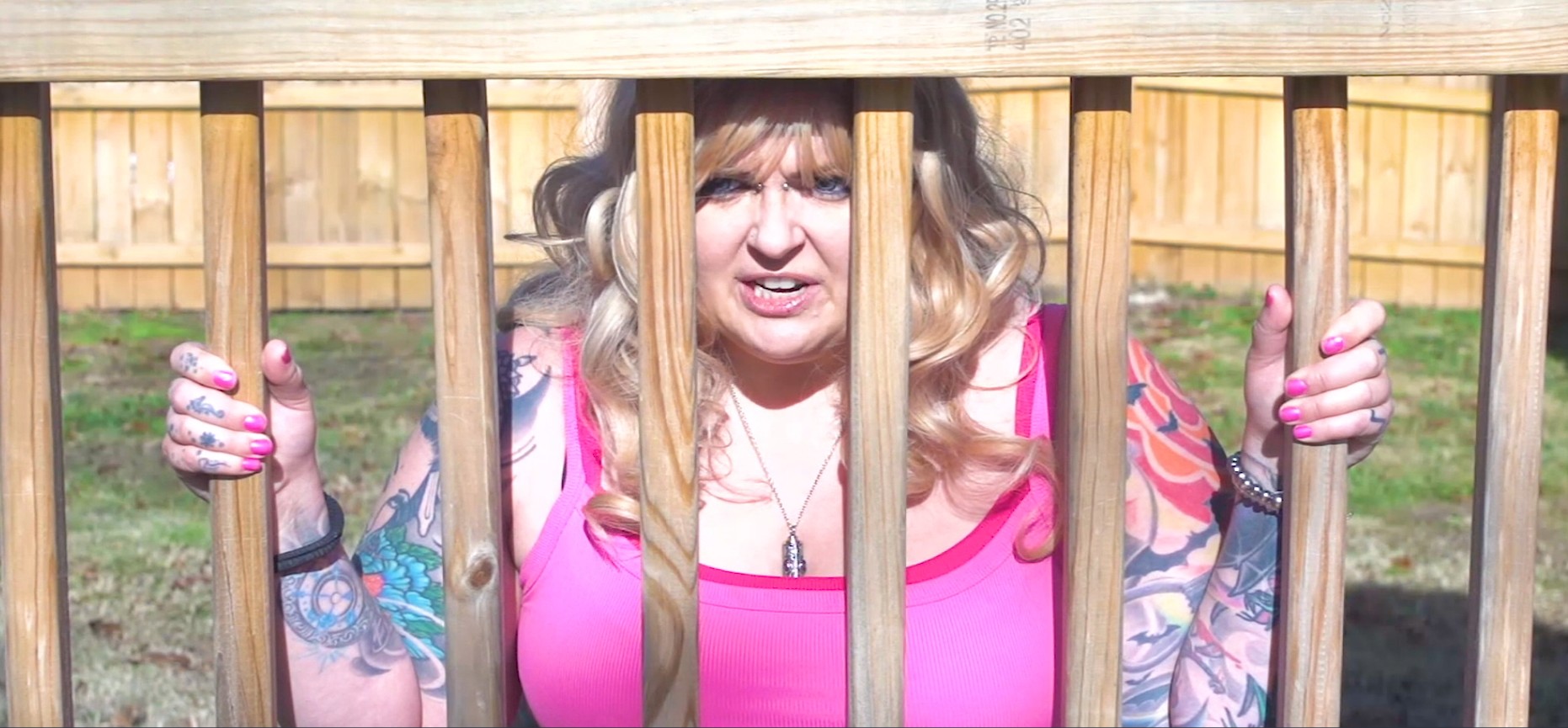
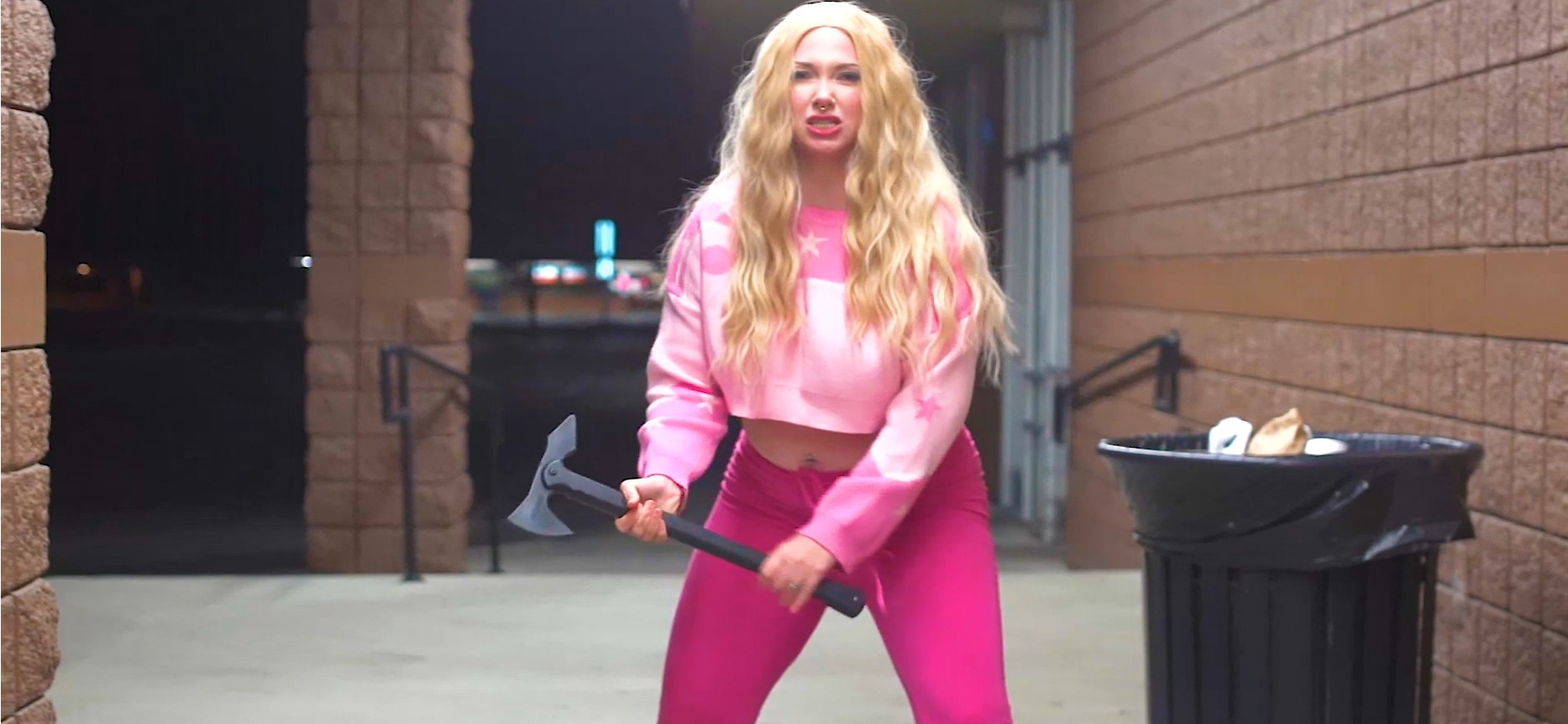
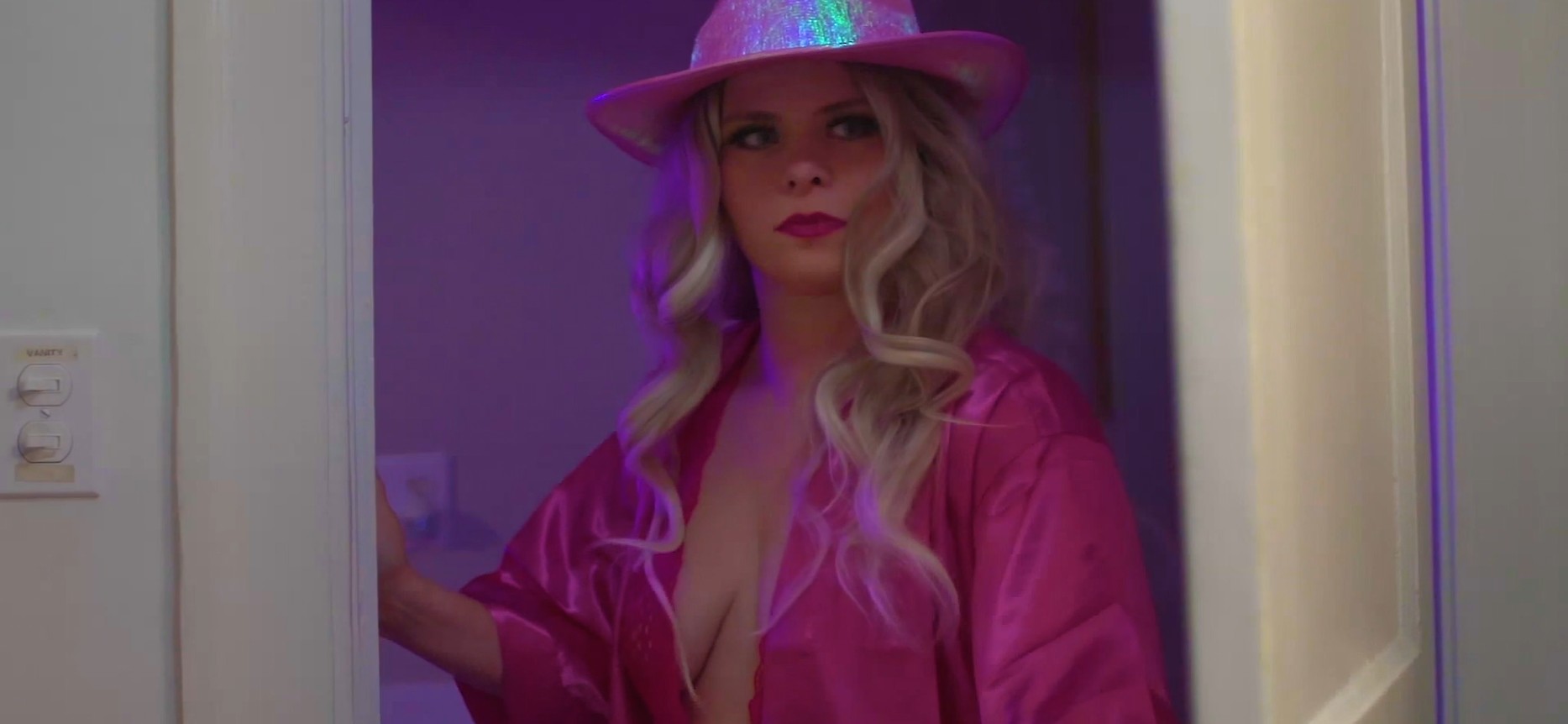
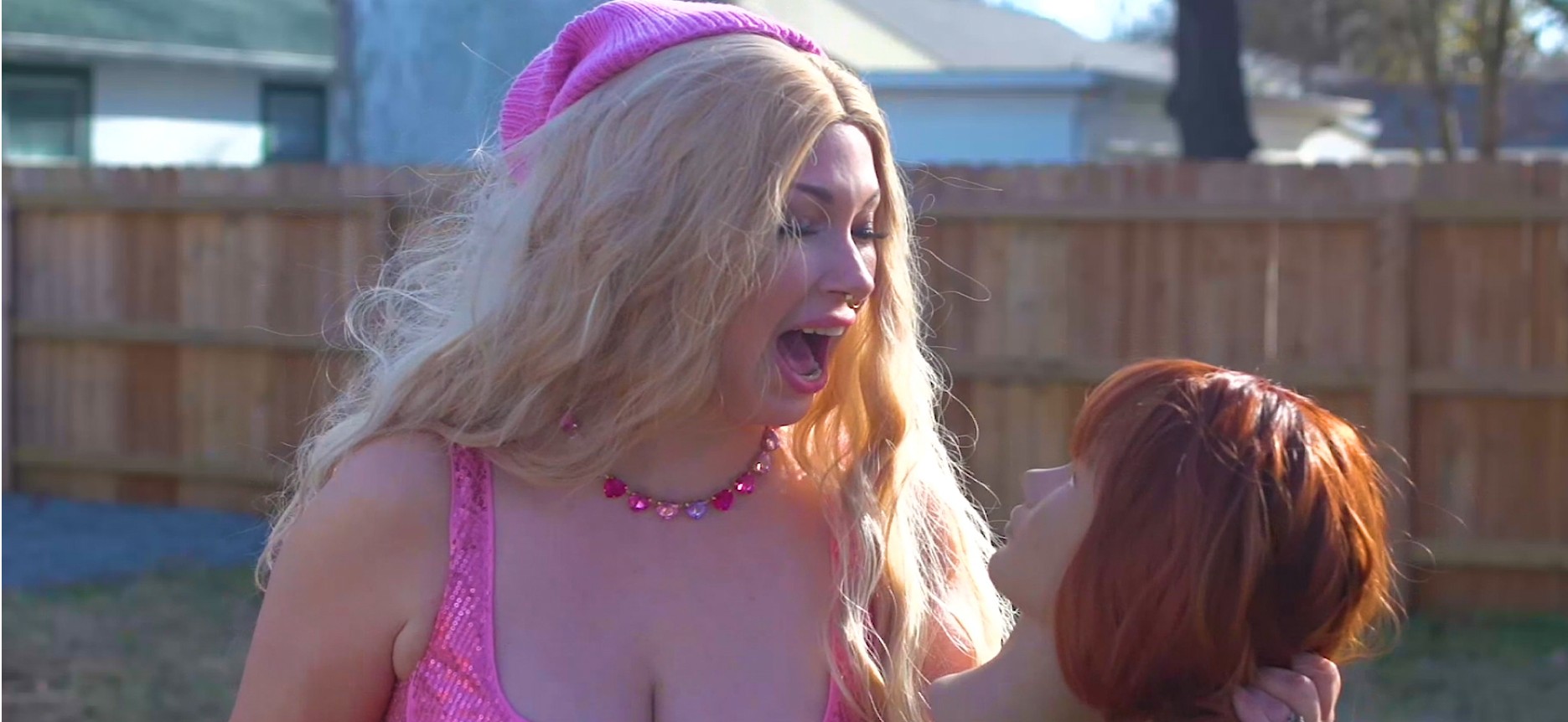
In Doll Town, Darbie is the most popular doll around.  Blonde, beautiful, and busty, Darbie lives a perfect plastic existence.  When her boyfriend Ben wants to plan a surprise birthday bash for Darbie, Tripper, Darbie’s helpful yet gossipy little sister, interprets Ben’s interactions with Darbie’s friends – Danger Darbie, Ditzy Darbie, and Rodeo Darbie – as infidelity despite no evidence of sexual activity, as well no doll in Doll Town having genitalia, and reports back to Darbie with the unpleasant news.   With her perfect world seemingly crumbling down, Darbie pledges to rid Doll Town of her now ex-best friends by taking a big knife to them in vengeful spite, turning her dream life into a spiral nightmare based off a simple misunderstanding and an obsession with contentment, that drives her insane and no one from her friends to boyfriend Ben, to even her sister Tripper, are safe from her accessorial wrath.  

Former, or current depending on how you look at it, alternative adult content creator turned this next generations cult film scream queen, Jessa Flux (“Murdercise,” “Onlyfangs”) co-writes and co-produces her latest venture “Darbie’s Scream House,” a comedy-horror lampooning of Mattel’s Barbie universe.  Flux’s independent film talents hop aboard a legendary name of the same market in Donald Farmer.  The “Cannibal Hookers,” “An Erotic Vampire in Paris,” and “Hi-8 (Horror Independent 8)” filmmaker co-writes and produces with Flux while helming at the seat of the director’s chair.  Together, Flux and Farmer materialize a plastic doll world full of jealousy, rage, scandalmongering, debauchery, and homicidal tendencies.  Crowdfunded through Indiegogo, the campy horror parody.  The 2026 film is a production of Stratosphere Entertainment. 

Not only collaboratively writing and producing the feature, but Jessa Flux also stars as the titular character Darbie, the buxom queen of Doll Town with an amiable personality up to a point.  That point is when boyfriend Ben comes under the scrutiny of Darbie’s nosy, troublemaking sister, Tripper.  Claude D. Miles has collaborated with Farmer and Flux on a few other projects, such as Donald Farmer’s “Debbie Does Demons” and “Scream Queens Weenie Roast,” and between Flux and Miles, their rapport doesn’t seem forced as it’s flexed to work as comedic love interests in a parody setting.  Ana Xaden, another indie alternative horror actress, also has worked with Farmer, Flux and Miles on “Scream Queens Weenie Roast” from the year prior, turning the trio into a regular entourage for the “Cannibal Hookers” director.  Xaden also busts out along with Flux as the two become elementary with their dialogue, by that I mean their conversations, whether written in the script like this or just the style of acting incurred by spontaneity upon filming, has an artificiality to it with monotonic delivery and exposition.  Funny thing is, you only really see this flat conjecture between Darbie and Tripper, and maybe even a little bit from Ditzy Darbie (Ashleigh Amberlynn, “Night of the Dead Sorority Babes”) but that’s more expected because of her dunce character.  Ben conversing with Beach Blanket Ben (Joe Casterline, “Shark Exorcist 2”  Unholy Waters”), or any other minor male character, has more natural back-and-forth without any fabricated flavoring, and it’s curious to think that maybe “Darbie Dream House” has a layered depth to that nuisance that speaks to the fake talk and gossip associated generally around women and men letting it, generally again, hang all out.  The cast rounds out with Mel Heflin (“Scarlet Rain”) as aggressive lesbian Rodeo Darbie, Fallon Maressa (“Bloodrunners:  Vampire Wine”) as Dream Date Darbie, and Kasper Meltedhair (“Hooker with a Hacksaw”) as a Doll Town reporter with Kimberly Lynn Cole (“Bloodthirst”) listed in the credits but her scenes cut and placed in the special features’ deleted scene. 

This is not one of those This Is Not Barbie:  An XXX Parody type of film but “Darbie Scream House” very much cold have been with it’s dolled up and naked-positive female cast, male characters with bad wigs and depraved names like Sleazy Steve, and a premise around creeping sexual promiscuity.  However, blood axe-wielding aggression, reared by jealousy, fill in the gaps to level up a cheap stag production to a barebones indie horror that doesn’t take itself very seriously in this meta-existences for the chief characters who are playable dolls of a young, imaginative young girl but who are also moving autonomous with their movements and affairs that are not sanctioned by Barbie or Mattel for that matter.  “Darbie” is a different kind of female empowering doll but in the same breath lacks the informed judgement of a jump-to-conclusions partner, insecure and obsessive over people and ideals.  “Darbie Scream House” caters to that what if scenario if Barbie didn’t have mental positivity and broke into sociopathic tendencies?  The core of the story is there but does heavily rely on the gratuitousness of Jessa Flux, Ana Xaden, and Ashleigh Amberlynn to carry it over the finish line, yet the shoddy effects, poor acting, and mishandling of the meta perspective sink this Donald Farmer production like cemented pink platform and rhinestone shoes. 

This is a no playtime, you can be anything Barbie movie with a house in Malibu and driving a pink convertible.  This is “Darbie’s Scream House,” a bizarro, alternative universe mined form the same vein as the classic children’s characters, such as Winnie the Pooh, Mickey Mouse, and The Grinch, turned into monstrous villains of your nightmares.  “Darbie’s Scream House” is right up Wild Eye Releasing’s alley with plenty of against-the-grain filmmaking, attitude, and shlocky satire, now available on a DVD home video that’s an MPEG2 encoded DVD5 with 720p resolution.  Even if you’re player + television combo can upscale the quality, the image quality is limited to the commercial grade equipment with passable delineation and detail that offers immersive detail but gets the job done. Lots of the details are washed away also but the use of blue or pink saturating gels that flood tense moments of Darbie’s life on the downspin and much of the exteriors are ungraded, using natural the deflection of natural light to the best of their ability.  The English PCM Stereo 2.0 carries an unbalanced depth that’s inconsistent on keeping characters dialogue level within the shot.  Those closer to the camera often have strength priority with the second person only a step or two back sounding as if they’re a good ten yards away in the closeup-to-medium marked shots.  The recording mic also can’t sustain sounds beyond its limitations, such as screaming that breaks the reproduction into bits of static and distortion at high peaks.  Special features contain a blooper reel, a deleted scene, and feature and other Wild Eye Releasing trailers with the physical package sporting an embellished, AI generated cover, which I aways appreciate the fluffing-up of an indie film.  In this instance, the art doesn’t stray from the truth per se but aggrandizes the finer details quite a bit; however, the nice touch here is the Barbie font used for the title.   The reverse sleeve image inside the clear Amaray isn’t afraid to be gory with a severed head from the story that has been lightly touched up for effect.  The not rated DVD is region free for all players and has a runtime of 75 minutes, enough to satisfyingly slay. 

Last Rites: Jessa Flux’s “Darbie’s Scream House” skewers Barbie into an unperfect, deranged universe of emotional unstable killer toy dolls but leaves much on the table of possibility and has a hard time gluing together an airtight campy story that’s too reliant on the kink than the gore.

Uh Oh Darbie! “Let’s Go Buy “Darbie Scream House” on DVD!

EVIL Pays High Dollar to Hunt, Kill, and Play With their Prey! “Game in the Woods” reviewed! (Jinga Films – Danse Macabre / DVD)

Survive the “Game in the Woods!” Buy the DVD!

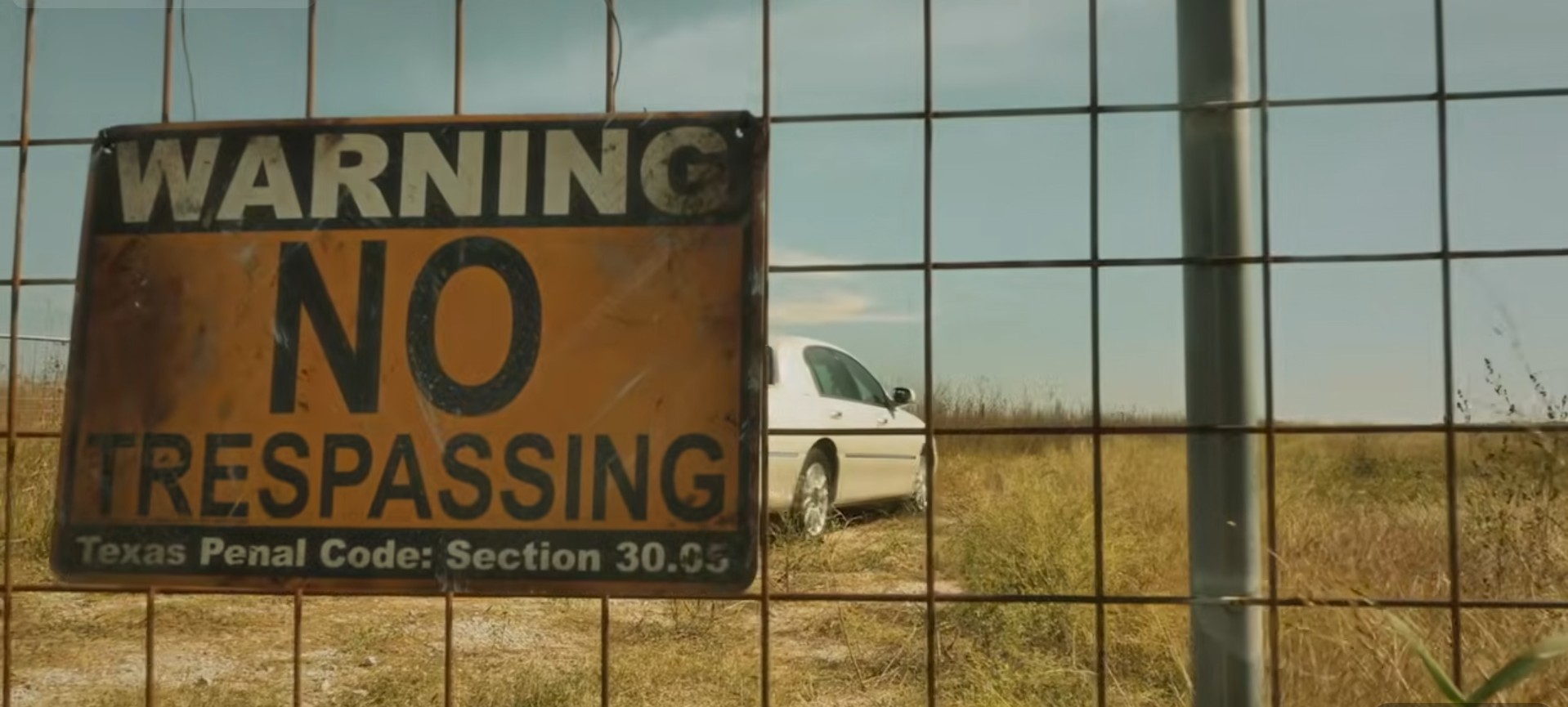
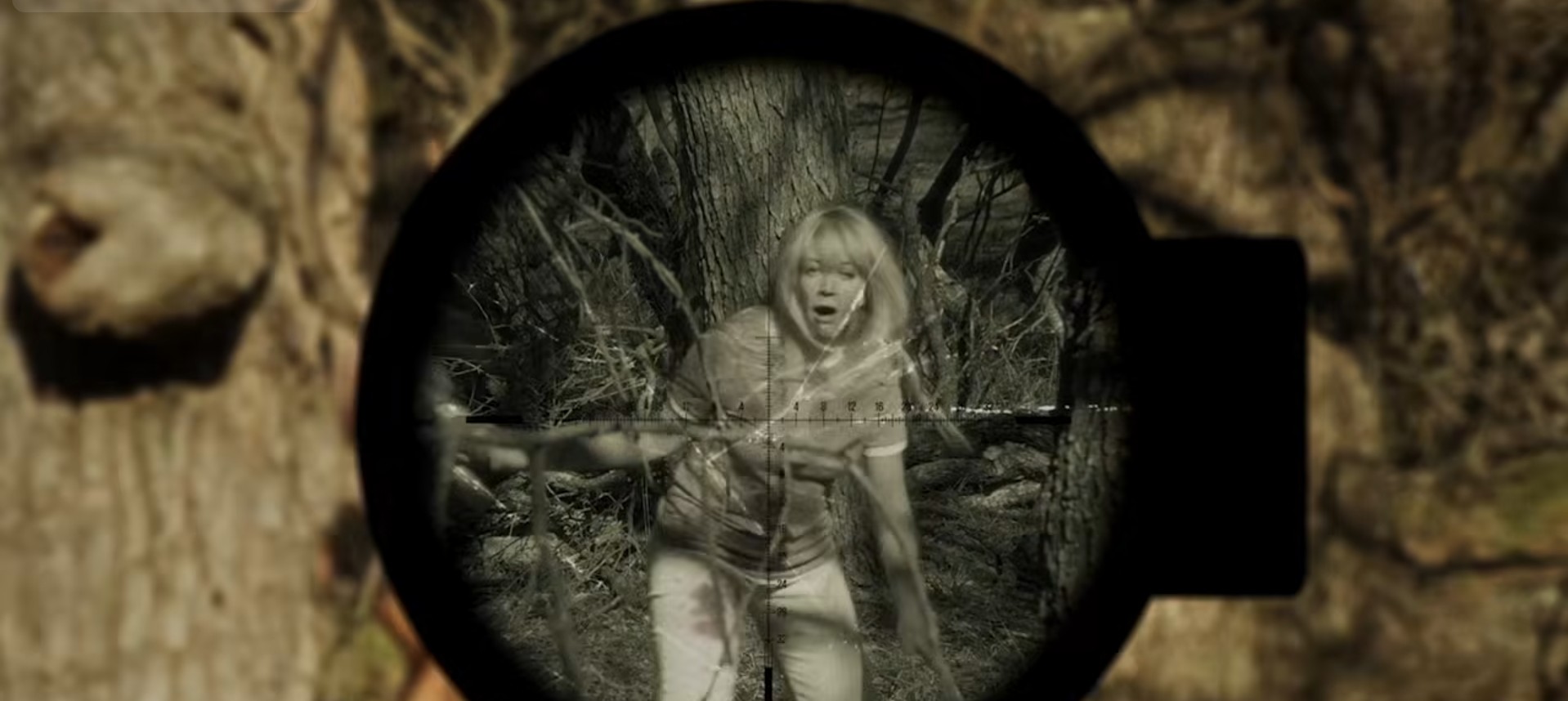
After her grandfather’s death, Ash travels through Texas with her brother Ted and girlfriend Sam to his isolated ranch cabin to be the first to claim his most valuable possessions before their Ash’s cousin, Bobbie Jo.  They arrive to find the cabin unlocked but about the same as it always been and go into woods for a little rest and relaxation, enjoying nature with a little alcoholic to supplement the relief of tension between the turbulent odds of Ash’s fast-and-loose ways and Sam’s more strict conservatism in regard to their relationship.  When they found a spray painted, screaming woman with a metal collar around her neck and a bear trap lodged into her ankle, they found themselves in the middle of a hunting party of masked men with melee weapons.  Ran by The Game Warden, Ash’s grandfather leased the land for a deadly game of sadistic clients hunting down non-English speaking immigrants for sport and depravity with their bodies no matter if they were alive or deceased. 

A surely bastardized version of “The Most Dangerous Game,” a novel that’s been re-imagined many times over about one man’s obsessive hunting for man, director Mike McCutchen follows up his debut violent chase thriller film “The Next Kill” with “A Game in the Woods” as his sophomore feature that eases him into the horror and exploitation subgenre.  McCutchen cowrites the script with Drew Thomas, the first feature film writing credit for the “Sex Terrorists on Wheels” cinematographer, and is based off a story by the collaboration between McCutchen and Drew Guajardo set in the boondocks of nowhere, Texas where land is aplenty and help is scarce if cried for.  The 2024 produced picture is a product of McCutchen’s Austin, TX based Fault Pictures and is produced by J.J. Weber (“The Next Kill”) with Andrew Bragdon and Kyle Seipp serving associate producers with Lonnie Seipp in the executive producer role. 

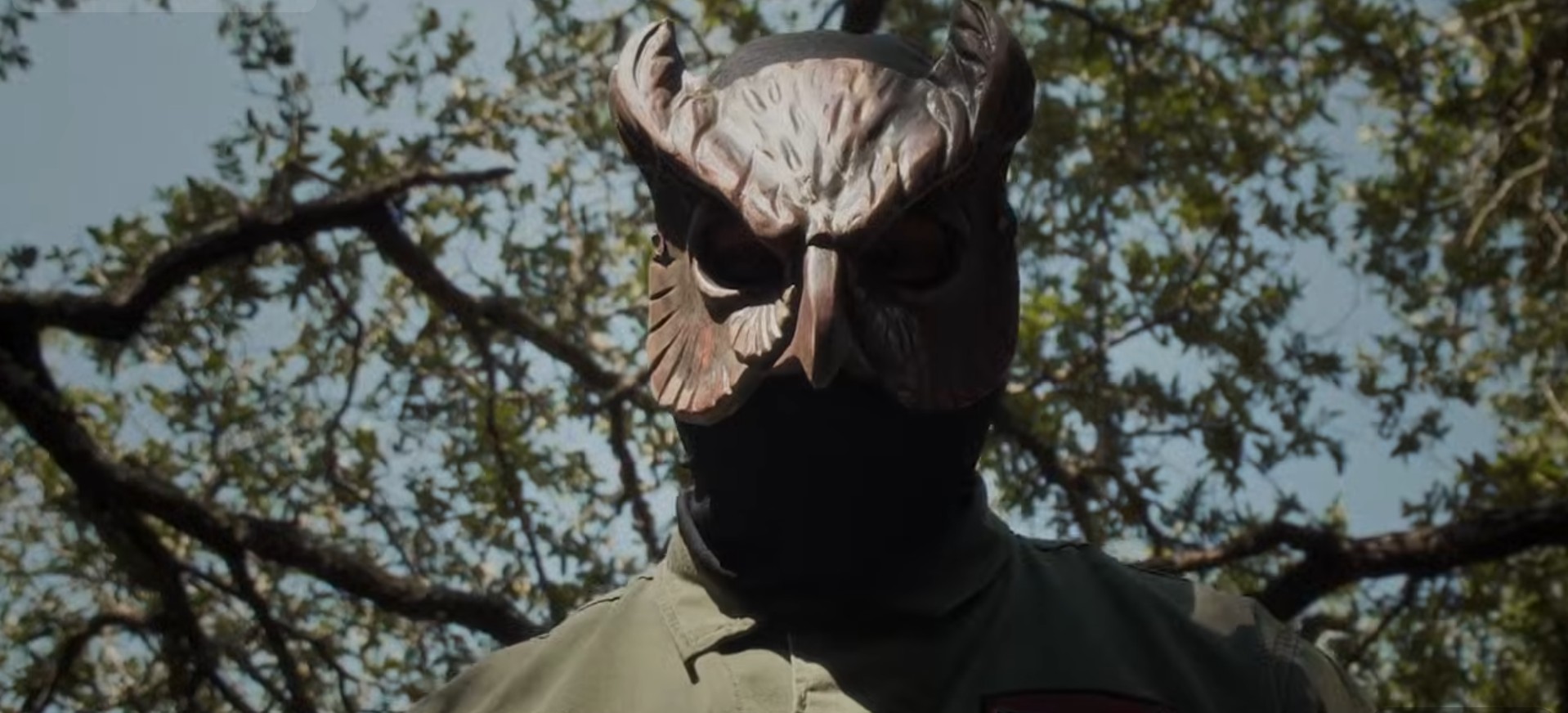
Eleanor Newman and Emily Skeen play the lesbian couple Ash and Sam and I make it a point to call out their characters’ sexuality because it feels inherently important to the story.  Newman comes to light in the sophomore Mike McCutchen feature that takes her from out of a minor role to a key lead, if not near final girl protagonist, in the unconventional fearful female but rather head-on heroine in “A Game in the Woods.”  Skeen’s more sensible Sam becomes a quasi-damsel in distress without the distressing part but tries to formulate plans on the fly to escape her demented captors.  Ash and Sam have a palpable troubled relationship like oil and water but find themselves commingling when the right sadistic additives are involved, spearheaded by the apathetic Game Warden from John P. Crowley who also finds himself in a more visible and prominent principal role.  Crowley’s Game Warden harnesses a Bill Moseley energy and sarcastic tone but not in a carbon copy way that adjusts just enough to make confident and cocky Game Warden is own.  The lesbian portion of Ash and Sam does feel engrained into the narrative, especially with two women with shortened names for Ashley and Samantha but it also implies a male identity, as if equal sex.  All the women in the story have a common them about them too, they all have tenacity and a fighting spirit from Ash and Sam’s battling Crowley and the masked hunters to the captured women who fight and kill, to even Ash’s cousin, Bobbie Jo (Grace Robbins), who joins in on the offensive fight for survival.  There are zero helpless women, which is an amazing elemental theme and characterization.  As mentioned, all the male hunters wear masks, hiding themselves behind theiran masks, and the hunted men are tied to an object, make poor decisions, and just have no fight in them.  Even Ash’s brother Ted (Jamison Pitts) doesn’t put up resistance when confront and is more of the farting, comic relief.  Aside from the Game Warden, the male presence is weak charactered by far.  The hunters and the hunted fill out with Gary Kent, Steve Wilson, Kevin Corn, Caroline Schmitt, Doug Field, Scott Kimbrough, J.J. Weber, Ray L. Perez, Kyle Seipp, Yane Carvalho, Lonnie Seipp, Morgan Faber, and Michelle Mendiola with Lloyd Kaufman (“The Toxic Avenger”) making a cameo appearance. 

Working on one’s relationship with their partner usually takes a time, some self- reflection, or maybe even a little therapy.  For Ash and Sam, they come together be means of violence, tossed into the throes of their grandfather’s ghastly involvement in man’s flawed thirst for the cruel and unusual sadism, and though there’s never a come to Jesus epiphanic moment that they can overcome anything, the blood-soaked trial by fire is proof enough.  McCutchen immerses the women, and explosive collar device and spray-painted prey, into a whole new world of hurt in Earth’s backyard.  The clandestine organization the Game Warden works for laces are slightly untied and unkempt with the full scope of their national, maybe even international, chapters of a snuff wonderland where murder is king and nearly anything goes from chopping up bodies to molesting corpses.  McCutchen brings enough gore to the table without it being over gratuitous and overkill, literally.  Exploding heads, a chainsaw eviscerated torso, body parts strewn here, there, everywhere are what to mostly expect as the game devolves with the hunters becoming the hunted as the emotional depth is quickly pushed aside for the conflict ensued rising action, leaving no time for Ash and Sam to master their relationship troubles as the spider never contemplates life when winged food is snared in it’s web. 

From Danse Macabre and Jinga Films LTD comes “A Game in the Woods” on region free, R-rated DVD.  Encoded with MPEG-2 compression onto a single layer DVD5, the film is presented in with an upscale 720p resolution and a widescreen 1.78:1 aspect ratio.  Basking in the warmth of a dessert brown and tan, Cinematographer Zedrick Hamblin DiMenno opts for a natural approach aesthetic that focuses heavily on the medium-close to extreme closeup shots of gory bits and pieces of tear away flesh.  There’s nothing too terribly stylistic to note with only a hint of television glow and a momentarily use of key lighting with interior scenes.  Compression encoding goes without a hitch that captures image reproduction just find for viewing pleasures, losing only some minor background details of blended foliage and objects viewed from afar.  The English audio formats include a PCM stereo 2.0 and a 5.1 Surround.  The surround sound mix will be the preferred option dependent on your audio setup as the environment layers diffuse evenly through the back and side channels, leaving dialogue and proximity action, such as the kill scenes, to translate with full-bodied effect to squeeze out every squish and squirt from the practical effects carcass.  There are ideal pitch, tone, and range with the clear and prominent dialogue without any underlining interference or hissing effect through the clear, digital recording.  English subtitles are available for selection.  Aside from the feature trailer on the main static menu, there is no other encoded bonus content.  Though the movie is engaging enough through evisceration through torture and there’s a a glimmering theme of women empowerment, if I saw this DVD on the store shelf, the cover art isn’t attractive enough to pickup with its dark imagery of a shadowy hunter drawing his bow toward something off scene.  The façade doesn’t offer a flutter of fancy and there’s no other physical features to warrant a second glance if physical media shopping.  However, give this region free film a once over and there’s a solid film underneath’s it’s dull shell. 

Last Rites: Despite the run-of-the-mill, uninspired DVD cover, check out this sadistic Jinga Films and Danse Macabre “Game in the Woods” where the hunt is solely for the thrill to kill.

Survive the “Game in the Woods!” Buy the DVD!