Three Women Murder to Stand Up Against EVIL! “A Question of Silence” reviewed! (Cult Epics / Blu-ray)

“A Question of Silence” Laughs Louder than Words on Blu-ray!

Three different in age and lifestyle women carry on with the routine of their normal lives until police offices arrest them on the charge of murdering a male owner of a clothing boutique.  Having seemingly no motive and have no connection to each other, never having met each other before, the confounded prosecution hire a psychiatrist to determine the women’s mental state for the brutal beating of the shopkeeper.  As the psychiatrist interviews and digs into their personal lives to give rationality to an irrational crime, she finds herself drawn to the women and their heinous act stemmed by a life history that paints a picture of dehumanizing neglect and of providing zero respect.  Subjectively overwhelms objectivity the deeper she looks into their case and her professionalism is put to the test when she has to decide whether being labeled insane fits the accusation or if a more gender bias systemic issue is at play.

After a rousing first part of feminist revenge with “Red Sun” from 1970, we fast-forward slightly over a decade later in 1982, and moving from out of Germany and into the Netherlands, with Marleen Gorris’s acclaimed crime drama “A Question of Silence.”  With little-to-no film prior film experience, Gorris becomes a provocateuse with her debut picture that stirs controversy amongst one side of the sexes.  “A Question of Silence,” natively titled “De stilte rond Christine M,” or “The Silence around Christine M.,” became the best Dutch film of the year with local accolades, including a Golden Calf for best film at the Netherlands Film Festival the year of release.  Along with the Rudolf Thome’s “Red Sun” and the German social commentary on women integrating into equal social and professional positions, Gorris comes at a time where the status of Dutch women were on the lower end of the gender equality scale, especially in the workforce.  Matthijs van Heijningen, who produced polemic features directed by women filmmakers, such as Nouchka van Brakel’s “A Woman Like Eve” and “The Cool Lakes of Death,” risked yet another credit to his name with the virtually unknown writer-director Marleen Gorris and her sizeable undertone story under his company, Sigma Film Productions.

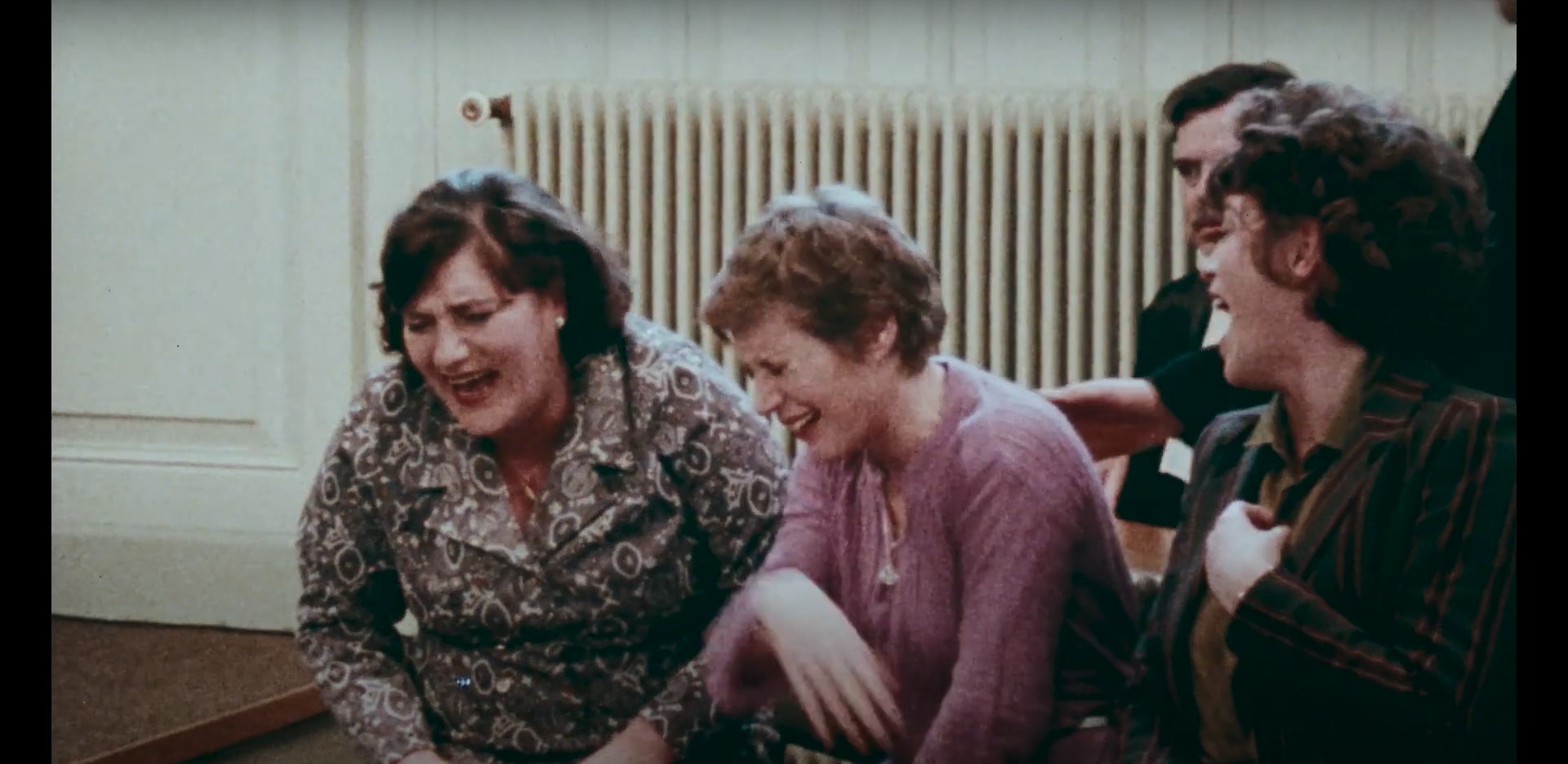
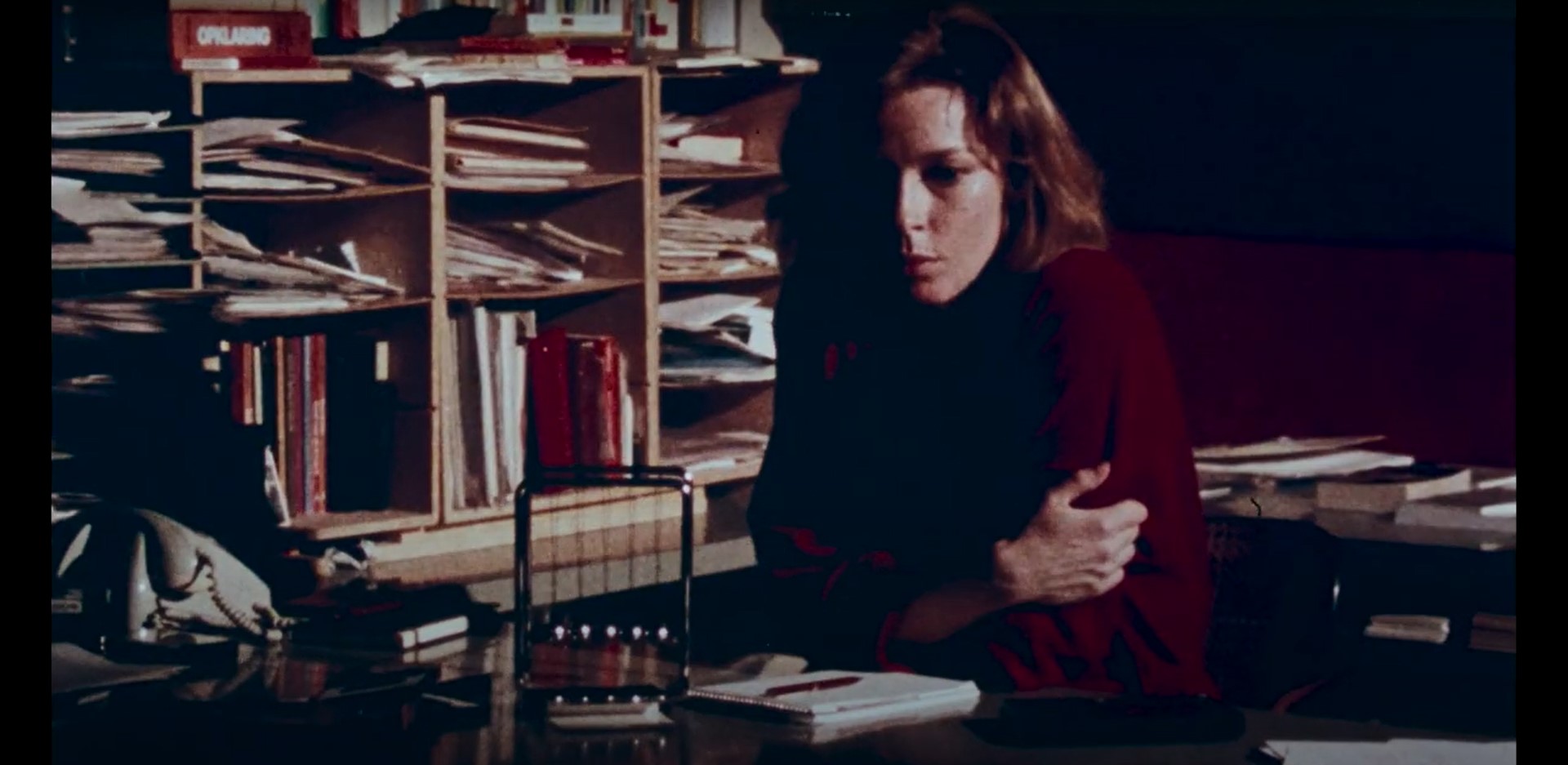
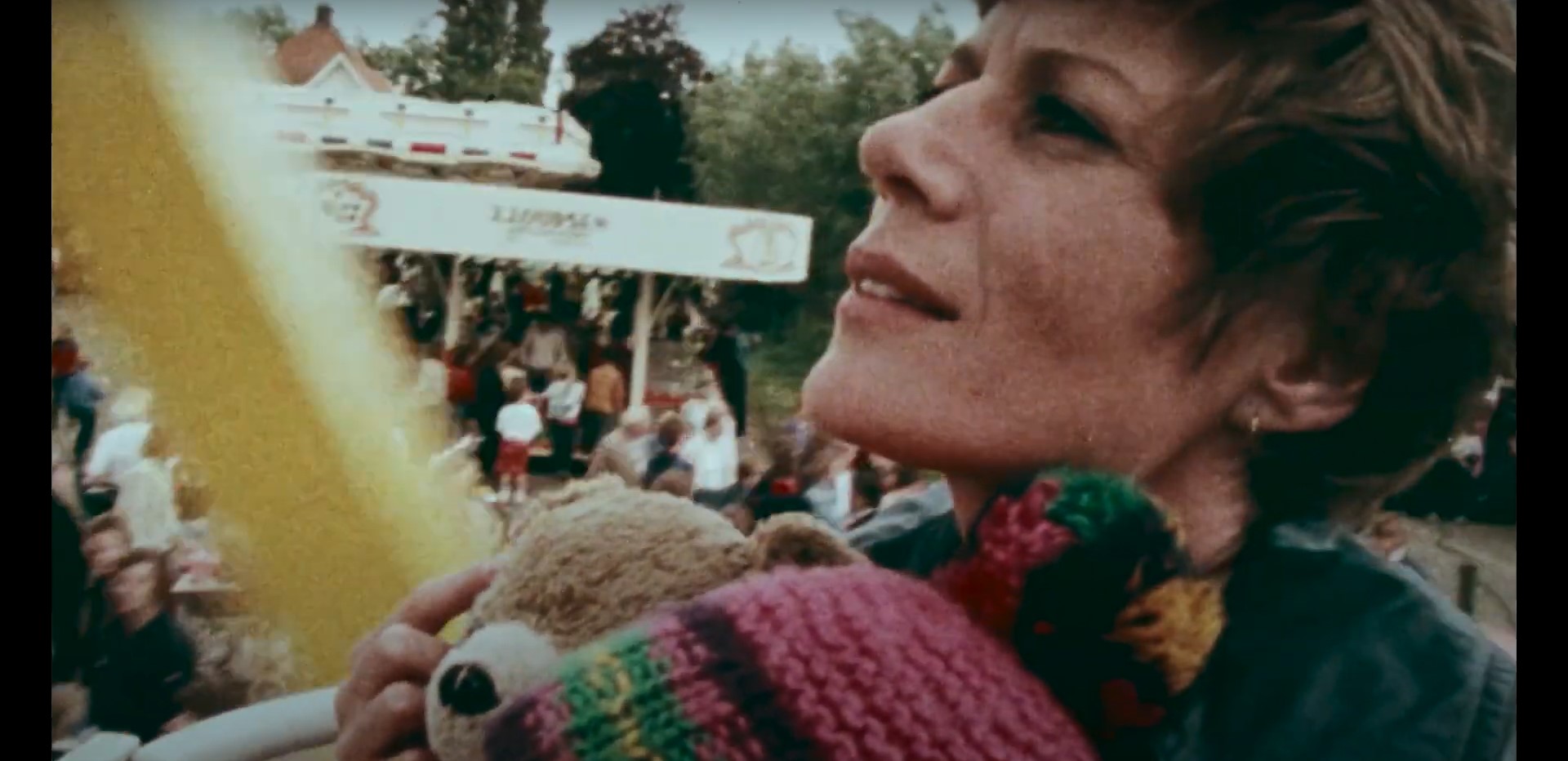
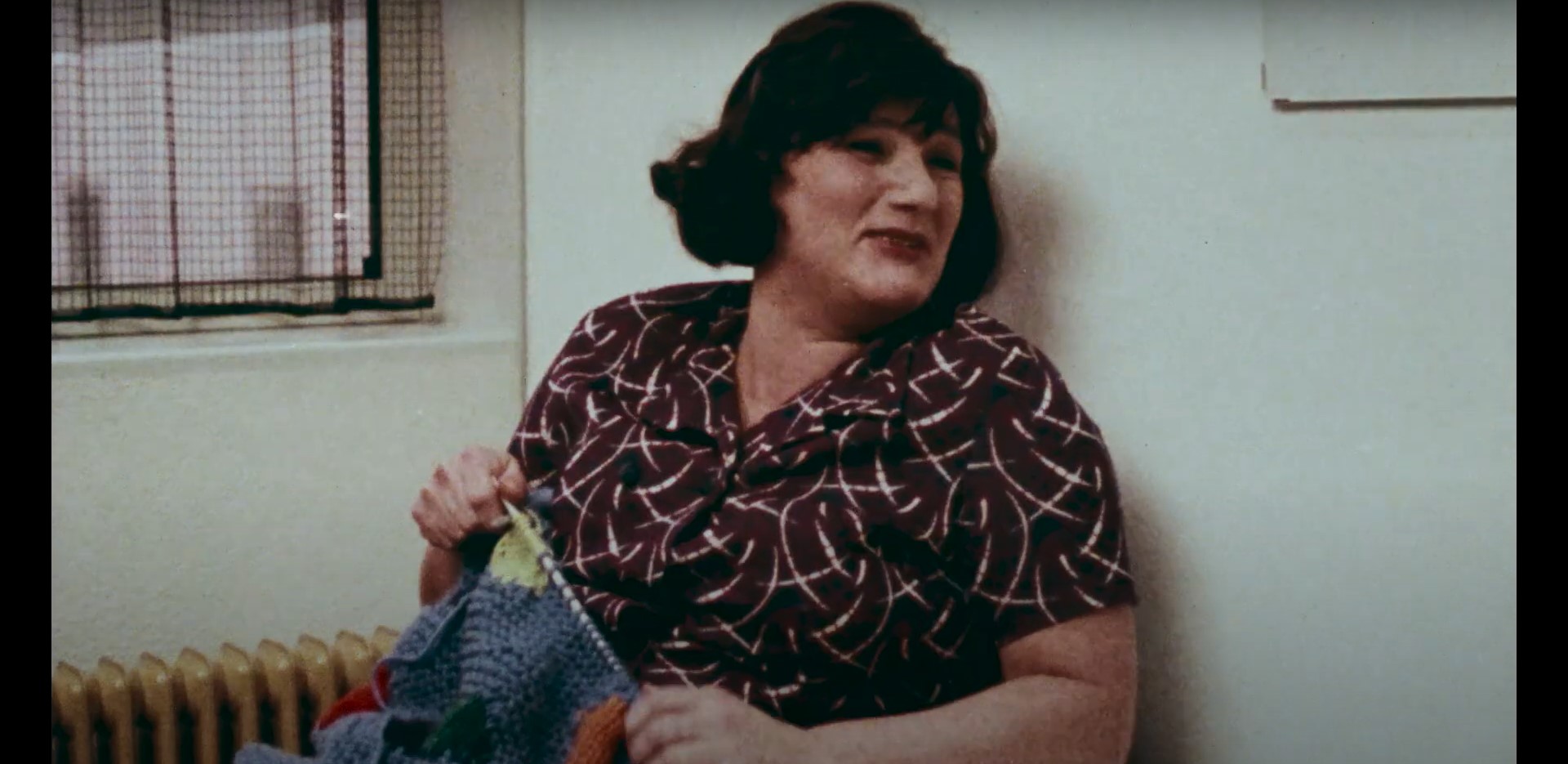
The narrative opens with Janine van den Bos and her husband Ruud having a flirtatious moment on the couch where Janine playfully annoys her book-reading husband with advances sexual foreplay.  Without knowing who these two people are exactly, other than they’re in a version of a relationship, Janine, played by Cox Habbema, and husband Ruud, played by Eddy Brugman setup metaphorically what’s inherently wrong with society with a woman seeking something and the man ignoring her and practically commanding her to stop the foolishness in a dismissive way.  This opening scene then cuts to the three women being arrested, led up to by intercuts of their daily routine before the police confront them.  We’re treated to some of the most idiosyncratic and grounded performances by Edda Barends as the muted housewife Christine, Nelly Frijda as the cackling coffee barista Annie, and Henriëtte Tol as the beautiful and intelligent secretary Andrea.  The three women never met before, never plotted before, and never killed before but a sudden epiphany while shopping became the straw that broke the camel’s back, turning watershed into bloodshed that unveiled something just as sinister as murder.  Cox Habbema engrosses herself into the psychiatric role as an educated woman analyzing and judging other women while also being judged herself by the opposite sex despite a higher-level of learning and professionalism.  Without exposition, characters express themselves through action while being ambiguous through dialogue, working to convey the lopsided gender equality across the screen perfectly without even one ounce of explanatory detail dropped. 

What’s most intriguing about Gorris’s film is it’s mirroring quality to society.  “A Question of Silence” doesn’t fabricate grand futures or alternate universes with eccentric, wily characters to be metaphorical fodder of expression; instead, Gorris remains earthbound, present, and timely by incorporating true-to-form examples that create derogatory silence on women.  The non-linear narrative, cutting back-and-forth from investigative present to the chronicled past visualizes the women’s struggles and frustrations living inside a male-dominated culture.  From being expected to handling all aspects of the household and childcare, to being brushed off and dismissed by colleagues, to forgotten and underappreciated, Gorris forces a frank contemplation on a patternized and patronized patriarchy.  Heightening the tension, Lodewijk de Boer and Martijn Hasebos’s giallo-esque and experimental soundtrack adds a layer of loadstone to see whether these extempore femme fatales executed a crime. 

Cult Epics, in association with the Eye Film Institute, continue their campaign on delivering thought-provoking, provocative, and controversial Dutch masterpieces onto the high-definition stage with their latest release, “A Question of Silence.”  The AVC encoded, 1080p, BD50 stored feature is presented in the 1:66:1 European widescreen aspect ratio.  The 2K HD scanned transfer and restoration is based off the 35mm print; however, judging by the grain levels and very little preserved detail, especially in a HD scan, I’d say the original negative was 16mm and then blown up for 35mm project, which was a fairly common process.  The noticeable enlargement of grain dampens picture details less favorable yet not the image quality is not a total wash with a stable graded rendering, with a natural skin tone and pigment of objects, and the presence of imperfections kept in a minimum – such as the occasional cigarette burns and dust/dirt.  What excels here mostly is the lack of compression issues so we’re only treated to the innate quirks of the original celluloid film.  The release offers two Dutch language audio options – a LPCM 2.0 mono and a DTS-HD MA 2.0.  Toggling between both tracks, there’s not much different between them until Nelly Frijda’s crone-cackle distinguishes itself with robust HD prominence projecting full-bodied through the dual channel.  Again worth noting, Lodewijk de Boer and Martijin Hasebos synthesizing score, coupled with Marleen Gorris’s tense and taut flashback storyline, casts a disquieting tone that’s very fitting for a film entitled “A Question of Silence.”  Dialogue, as well as the score and overall soundtracks, suffer very little from the slight hum of the running camera and some minor hissing but the general result has tremendous.  English subtitles are optional and synch well with error-free translation; however, upon watching the special features, the Cult Epics’ feature translations differ from the copious amount of snippet clips of the interview segments.  Roughly the same interpretation but the phrasing maybe clearer and less wordy in the snippets so I’d be interested in the, what I assume would be, the original English translation.  Special features include an audio commentary by film scholar Patricia Pisters, an archival Cinevise interview with Marleen Gorris from feature release year 1982, a sit-down, one-on-one interview with lead actress Cox Habbema and Cinevise host a year later, a Polygoon Journal Newsreel from ’82 that mentions the Golden Calf award from the Netherlands Film Festival, a promotional gallery, and trailers.  The clear Blu-ray cover comes with the tear-drenched and shadow-obscured face of Cox Hebbema with a reversible still image of the three accused women on the inside.  No insert included and the disc is pressed with the same front cover art.  Cult Epics Blu-ray comes with region free playback and the feature is 97-minutes and unrated.  Marleen Gorris first run as a filmmaker denotes her as a masterful storyteller with a timeless tale of close-quartered and subtle masculine tyranny in an attempt to open the unwilling eyes of the narrow focused. 

“A Question of Silence” Laughs Louder than Words on Blu-ray!

In EVIL’s Chair and Ready for a Cut. “The Stylist” reviewed! (Arrow Films / Digital Screener)

Excellent at styling hair, but not so much at making friends, Claire lives a solitary life as she’s unable to personally spark connections, even with those who she interacts with on a daily basis.  As a hairstylist, she absorbs a plethora of private information provided willingly by her clients who see her as someone not significant enough to be troublesome or detrimental to hurt them, but, little do her clients know, Claire has a dark secret with obsessively overstepping into their lives and, sometimes, directly into their shoes as murder becomes a conduit for Claire to experience a slither of momentary solidarity and belonging happiness.   Brief in its euphoria, the elated feeling doesn’t last and Claire finds herself back into a vicious cycle beginning with being defeated, but when a regular client, Olivia, begs for wedding hair help, Olivia befriends the stylist who begins to sink deeper into a misinterpreted friendship with Olivia fabricated inside Claire’s disturbed mind. 

Whenever stepping onto the hair clippings of a barbershop, sit on the padded, pump-hydraulic chair, and be asked by a for certain fallible person how I want would like my haircut, my hands nervously clutch each other, the space between my eyebrows fold in and crunch, microscopic beads of sweat go down my hair raised back and the agitation in my mind grows louder than a blow dyer on a high setting.  Why do all these externally stemmed irritants happen to me at the seemingly communal and smile gracing barbershop?  Think about my situation, one driven by introverted behaviors and pessimism for the human race, this way:  your neck is choked tight with a hairdresser body-bag resembling cape, sharp, haircutting sheers clipping swiftly overhead, and the loud buzzing of a motor purring around your ears’ edge before they detailing the side of your face with tiny razors moving hundreds of miles per hour.  Let’s not also forget about the straight-razor across your neck to attack the five o’clock shadow!  No, thank you!  So, there was already an abundance of established anxiety heading into Jill Gevargizian’s written-and-directed hairdresser horror, “The Stylist,” that takes just a little bit more off than just what’s on top.  The “Dark Web” filmmaker reteams with co-writer Eric Havens to extend the profile of the quiet and quaint, Victorian chic hairdresser, Claire and her lonely killer inclinations based off their 2016 short film of the same title and add Los Angeles based copywriter and “Night of the Wolf’s” Eric Stolze into the salon of psychological horrors mix. “The Stylist” is a production of Gevargizian’s Sixx Tape Productions, that also includes Eric Havens and lead star Najarra Townsend, alongside co-productions Claw Productions, Method Media, and The Line Film Company.

Najarra Townsend reprises her role as Claire, the lonely hairstylist bedeviled by a lack of belonging and rapport with no family or friends. Claire spirals into internalized madness that unveils when trying to step inside the lives of others as her own. The “Wolf Mother” star becomes a granular speck of torment plagued severely by social awkwardness to the point of her need for perfecting the imaginary bond between her and Brea Grant’s character, Olivia, goes into destruction level transgressions that’s normal, living rent free, in Claire’s headspace. Grant, writer and director of one of our favorite films of 2020, “12 Hour Shift,” and in the recently released, critically acclaimed, Natasha Kermani thriller, “Lucky,” has to be a larger than life persona whose the center of attention, as soon-to-be-bride going through the throes of wedding planning, that can draw in the wide-eyed and impressionable Claire like a moth to a flame. Townsend’s a specific kind of talent to get inside Claire’s ennui state not once, but twice. The latter precisely nails down Claire’s outlying, exterior behavior, but also smooths out a mustard nuance veneer of vintage chic that becomes a part of the building blocks peculiarly exclusive to her quietly disruptive cause. Starkly contrasted against Claire, Grant relates to who we all see on the outside as Olivia, a shining glow of smiles and worries that most people can digest with ease on a daily bases and while her life, as chaotic as may seem with a wedding near on the horizon and questioning a deep down decision about marriage, is juxtaposed with such distinction that Gervargizian literally puts Claire and Olivia side-by-side in a split screen early in the film to expose one hiding her secrets and the other letting them all hang out. Sarah McGuire (“The House of Forbidden Secrets”), Millie Milan (“Clownado”), Davis DeRock and Laura Kirk round out the supporting cast.

Take a moment and breathe the very essence of women-driven horror that’s as stylish as it is deliciously deranged.  “The Stylist” echoes similar psychopathic traits of William Lustig’s “Manic” and displays self-careening elements soaked in barbicide and Gothicism.  The junior film of Jill Gevargizian narrates through the eyes of Claire’s unraveling humanity from the stylist’s quick fix of bloody hair removal to the potential for climbing out of that deep, dark hole of loneliness only to be suddenly sideswiped by the falters of manufactured delusions. “The Stylist” is wrapped in a sullen hairnet that never shows the jovial side of Claire’s pleasures as she’s embodying someone under their locks after calculatingly cutting more than just their hair; a perspective exclusively held within Claire’s head, leaving viewers entangled in her in seemingly normal beauty shell and her inner demented chaos. You feel sorry for her forlorn life, but creeped out by that same life’s byproduct. One aspect that “The Stylist” lacks, that can be off-putting for some, is the mold that made Claire. Miniscule slips of her upbringing becomes not enough to paint an exact portrait of Claire as a malevolent monster with sociable dysphoria and as the story builds to a climax and Claire tries to imitate her mother, who died in her mid 30’s when Claire was 17, the mimicry fairs to say that her mother also had similar problems that has innately passed and has coped a different way of dealing with mental illness by way of alcoholism, mentioned by Claire in a moment of courting a friendship with an eager bridezilla, Olivia.

What a fitting film to be discussed and celebrated on International Women’s Day 2021 in the Jill Gevargizian directed and Najarra Townsend lead “The Stylist” now released exclusively on Arrow Film’s UK VOD platform ahead of the physical Blu-ray package and digital HD releases come June 2021. Film film clocks in at a 105 minute runtime and is presented in a widescreen 2.39:1 aspect ratio. Behind the camera is Robert Patrick Stern whose composition of imagery is based mainly in natural lighting while dabbling in warm coloring such as reds, the occasional vibrant magenta, and a consistent yellow mustard, a favorite not only in Claire’s wardrobe but also tinged on the lens whenever a part of Claire’s localized disturbia. Stern’s clean and sleek picture palpably elevated John Pata’s editing of montages that were superimposed with transitions and the soul searing music of Nicholas Elert’s melancholic inducing piano-industrial score. There were no bonus features included nor were there any bonus scenes during or after the credits. “The Stylist” honors the past by reinventing the wheel in Jill Gevargizian’s clipping thriller with a hair-raising performance by Najarra Townsend as the maniacal hairdresser lonely next door.