

“Reality Killers” Entering the U.S. Torture Porn Market! Buy it Here!
Serial killer known as “The Sculptor” narrates his obsession and love with documenting the stalking, capturing, torturing, raping, and killing of his victims. As he watches and video tapes his next target, Mary, from afar, a woman he’s chatted with online extensively about recording home snuff movies, The Sculptor opens up his personal library of snuff movies, labeled and numbered dark web bought tape cassettes exhibiting the videoed brutal deaths of strangers by strangers for their pure sordid joy of taking another life. An adventurous couple lure a promiscuous young girl on the promise of a threesome, a group of three masked teens take pleasure in the torture of a young woman, a couple enticement a child to their backyard pool, father and son roam the streets for call girl action and a little home invasion, and an underground, all-female rock band’s music video takes male fans to new extremes.
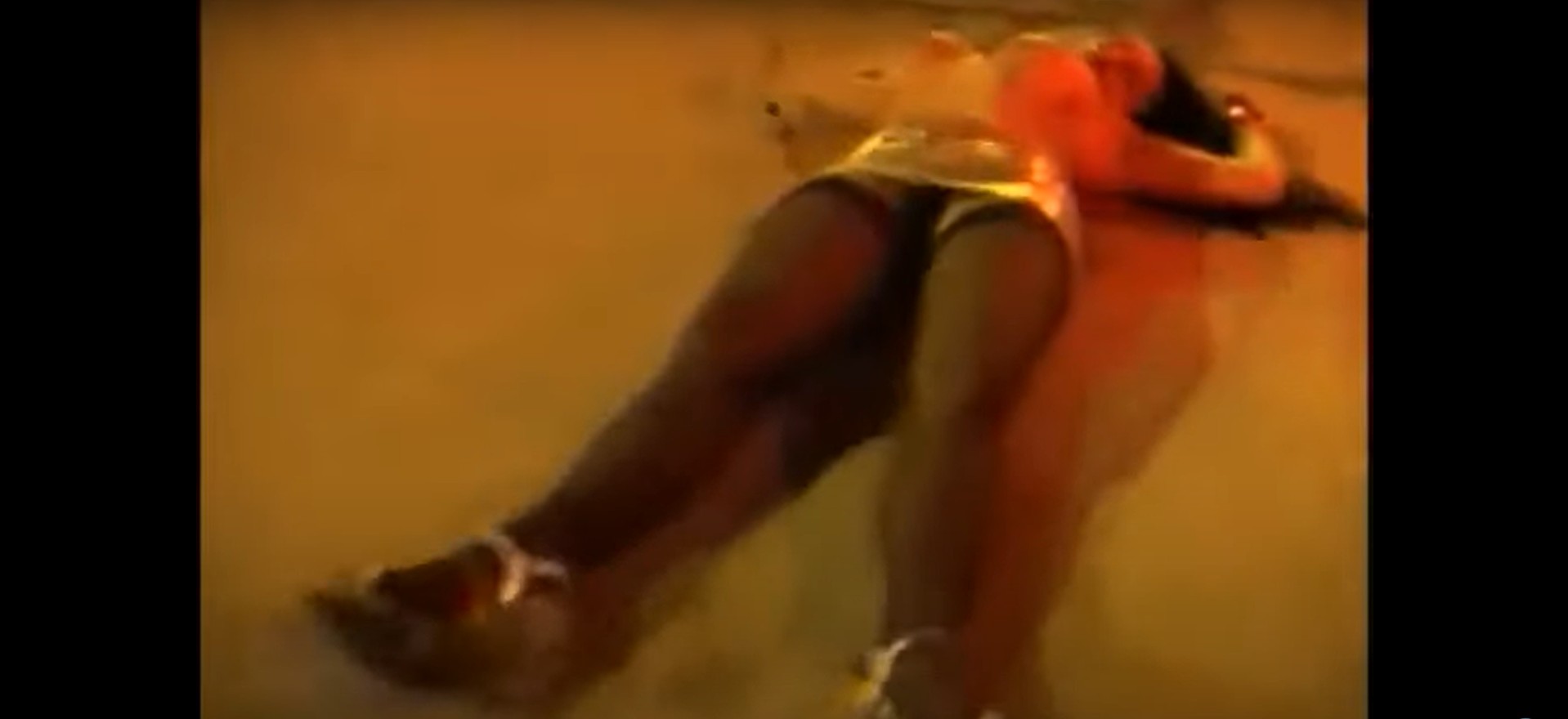
A title and a film unabashed and fully accepting the phrase torture porn, as if it’s a pithy elucidative to be proud of, “Reality Killers” is a shot-on-video, found footage anthology and snuff horror from 2005 helmed by “Witch Story” director and “Body Count” writer Alessandro Capone. The Italian production contains shorts and a wraparound story that connects them together in an ugly tale of sadism, written by four aspiring, young filmmakers in Pablo Dammicco (“A Deadly Compromise”), Francesco Maria Dominedò (“Dedalus”), Volfango de Biasi (“Help! My In-Laws Are Vampires”), and a writer simply known as Zedd with Alessandro Capone also contributing with his own screenplay while project managing filmic newcomers as they shoot mostly in Los Angeles using American actors. Alternatively known under the title of “Project K,” the 2005 film of nihilistic sadism is produced by Eagles Pictures’ Ciro Dammicco and Pablo Dammicco and executively produced by Luca Dammicco and Fabrizio Manzollino.

“Reality Killers” is one of those rare breed films that shares a connection with pictures 70+ years it’s senior with having no after credits. With no before or after cast credits, acknowledging the cast and their ignoble roles is a challenge to say the least. If fact, it’s impossible. The wraparound segment with The Sculptor has some clarifying character elucidation online connected to one of the more well-known Italian extreme violence and horror filmmakers in modern times with Domiziano Cristopharo, director of the surrealistic yet broad-stroked with intense visceral “Confessions of a Necrophile Girl” and “House of Flesh Mannequins,” in a role credited as The Monk. However, there seems to be some melding overlap between The Monk and the large, oiled-up, and masked concentrated sadist on screen in the wraparound story, played by Valter D’Errico, in a disturbing show of vain and perverse expression. Alongside D’Errico, in a handful of scenes of being stalked around a metropolitan city and in a naked position of vulnerability on D’Errico’s slab of slaughter, is Cristina Puccinelli (“Phantasmagoria”) playing as the aspiring snuffer enthusiast and killer as well as the online conversationalist Mary who turns prey to her own betrayal going against and essentially humiliating a masterclass maniac like the oily and masked maniac. After that and within the shorts, none of the other actors are repeated or credited for their work that waver between being exaggeratedly overacted and staged to the point of disingenuous means and the thought of the inflicted violence that spur a subtle creepiness.
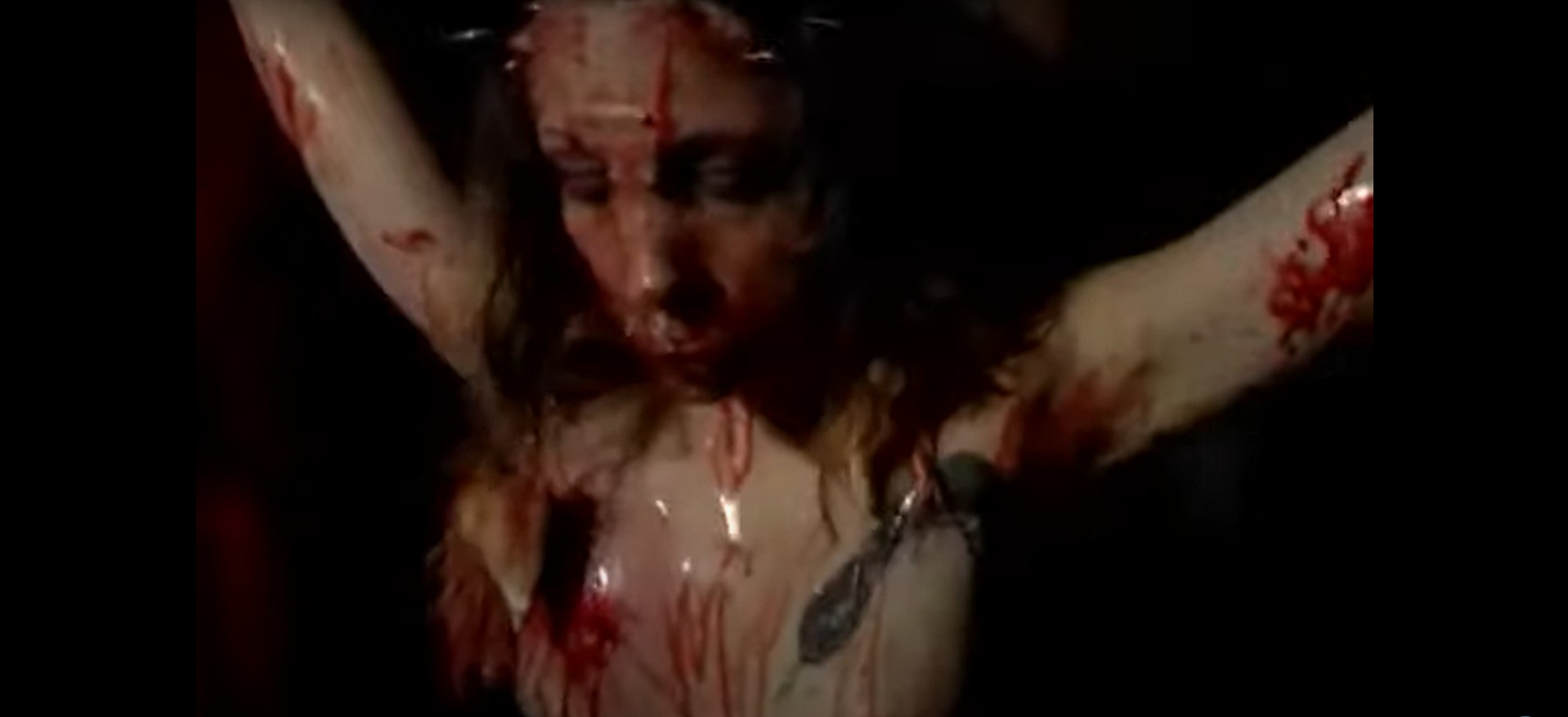
The trouble with “Reality Killers” is the inherent topsy-turvy post-production that revamped the anthological storyline with a linear outer story with an anthological storyline connected with a threadbare connected wraparound. Initially story structured with a sheriff unearthing a library of snuff films and going through selected VHS examples of the killer’s cache with a journalist to explicate the rare breed of butcher. The videos were also lengthier, more narratively in depth of character and plotline, and have digestible connective tissue with the main shell story that’s redesigned for a body round and glistening, conventionally narcissistic, masked chatterbox, “The Sculptor,” who’s just a physical and commanding orb of a presence in a dark and grimy setting, spouting a deluge of devilish details about his devotion to snuff filmmaking and his own contribution to the perversion. The told tales vary in degree of both explicit violence as well as story structure as some become more glimpses than a perusal of a three act analog anecdotes to which, in all fairness, found footage, especially pulled from VHS, are only short-lived windows into the lives of others, literally short-lived. The vignettes are mostly hyper concentrated on the gore, leaving little room for a yard to build, lengthen, and become deeper to invest audiences when the decisive moment comes to take a life with sociopathic heartlessness. However, “Reality Killers” pales in comparison to the likes of others, such as Fred Vogel’s “August Underground” features that really hammer down on violence and gore with sickening special effects and concentrated shock. Capone’s entry into the niche subgenre feels reversed at times, never really going for gold in the gutting of precious human life, but the film still evokes a visceral response to the extreme content.

“Reality Killers” arrives into the U.S. market hailing from the UK label Treasured Films, squeezing itself into the ever tightening commerce of boutique distributors. Treasured Films’ debut special edition Blu-ray is MPEG-2 AVC encoded, 1080p high-definition resolution, BD50 is presented in a 1.33:1 aspect ratio and either scanned through a VHS record or implements a VHS or commercial handheld camera filer to achieve that passé effect that’s slowly making an aesthetic comeback. There’s not a ton of other stylistic options used in the vignettes to instill a realism effect and result while the wraparound ups the contrast and grades darkly into its grim substance, leaving attenuated tones of yellows, greens, and reds to be coloring that seep through the oily voids. The featured presentation carries more of the filtered aspects but in the special features’ Original Production Scenes, the alternate telling of “Reality Killers” embarks on a cleaner, conventional approach in the different outer story with the vignettes either slightly less boxed in by a matte or are outright more defined. The audio track is an English DTS-HD stereo. Though an Italian production, the vignette actors are primarily American and the wraparound story is voiced over. Dialogue coincides with an onboard camera mic that picks up every little detail but also captures varying degrees of volume. Discerning clarity is, must I say, pretty excellent for the differing sub-productions without an overbearing lopsidedness that usually stems with some who don’t have the technical knowhow to engineer audio precision; each episode achieves what’s strived for without interference, or even with the physical release, compression issues. English subtitles are available. Special features include a new interview with director-producer Alessandro Capone From Witch Lore to Snuff Gore in Italian only with English subtitles, a new interview with coproducer Gabriele Pacitto A Killing Reality in Italian only with English subtitles, a new English language essay by Giacomo Calzoni Cutting Deep : Mapping the Origin of Torture Porn which takes a look at films like “Saw” and “Hostel” that generated the coining of descriptor torture porn and how it influenced horror pop culture, a teaser trailer, storyboards, and an image gallery. The Original Production Scenes I’ve mentioned previously tells a completely different story and, in my opinion, is more interesting with longer story sequences, more nudity and gore, and the first vignette is scored with music from Nine Inch Nails, specifically “Dead Souls” from The Crow soundtrack, which adds another element to the coarse-riddled subject matter. Treasured Films standard special edition set comes in a rigid slip box with a hazed face of the masked Sculptor. The clear Amaray case houses new Ilan Sheady illustrative, compilation cover art in all its explicit detail with the same art pressed onto the disc. Inserted is a 31-page color booklet with film stills, Blu-ray acknowledgments, and a David Flint essay “The Forbidden Films of the 21st Century” that discusses the films banned in Britian, which includes “Reality Killers’ rejected by the BBFC. The all-region release has a runtime of 75-minuts and is, obviously, not rated.
Last Rites: Torture porn snuff films are, for a lack of a better world, repetitive in their controversial narrative and “Reality Killers” is no exception but it’s the style choices that and effects that entertain us or makes the sweat run down our brow. Alessandro Capone’s entry to torture porn has a visceral bite but isn’t the repulsive best-of-the-worst. Yet, Treasured Films’ entry into U.S. market is remarkably unforgettable.




 It's Bloggin Evil!