EVIL Terrorizes the Parisian Women of the Night! “A Woman Kills” reviewed! (Radiance / Blu-ray)

“A Woman Kills” Now Available on Blu-ray! Click the Cover Art to Purcahse!

The execution of Hélène Picard, a convicted murderer of prostitutes in Paris, France circa 1960s, is carried forth and thought to have snuffed out a string of brutal killings.  Louis Guilbeau carried out the execution orders that gave Pairs a moment of relief and a sense of safety for the working girls on the streets, but when the similar murders spark public fear and the newspapers compare the scenes as Hélène Picard handywork, Paris is once again thrown turmoil with a serial killer.  Is Hélène Picard really dead?  Is it a copycat?  Or did they not catch the real killer?  Guilbeau, unphased by the recent atrocities, begins an affair with the lead investigator into the murders and continues to always be one step behind the suspected female culprit with no remorse, no shame, and no limits to her brutality against prostitutes.
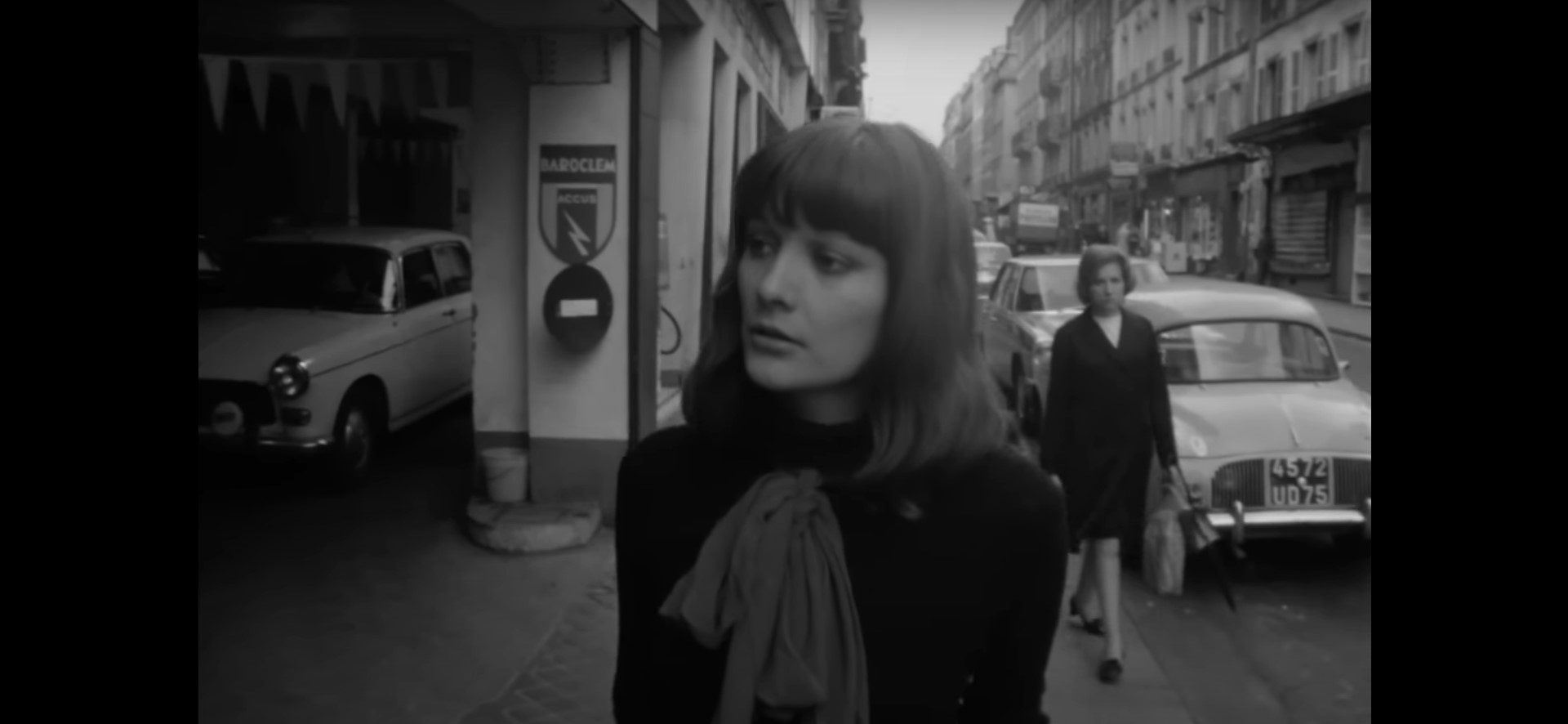
Thought to be lost in obscurity for forever, the reels for French director Jean-Denis Bonan’s “La femme bourreau,” aka “A Woman Kills” was discovered in 2010.  The master of the unfinished film became destined to be born again with a new home video release as Bonan’s debut directorial embodied parallelisms of the French sociopolitical unrest and protests, known as the Paris economic-stopping May 68 event, during the late 1960s, and hitched a ride on the narrative wave of post-“Psycho” gender identity complexes within the confines of a La Nouvelle Vogue, or the French New Wave movement.  Though “A Woman Kills” was the inaugural film of the young director’s career, Bonan simultaneously also became one of the few to document in real time the May 68 upheaving protests as he and the crew went back-and-forth filming a fiction story and nonfictional protests.  The film incorporates a semi pseudo-doc that treats the script like a mixture between a crime thriller and the experimental qualities of its playful, singsong soundtrack and harsh editing.  The 1968 film is a production of Luna Park Films and is self-produced by Jean-Denis Bonan.
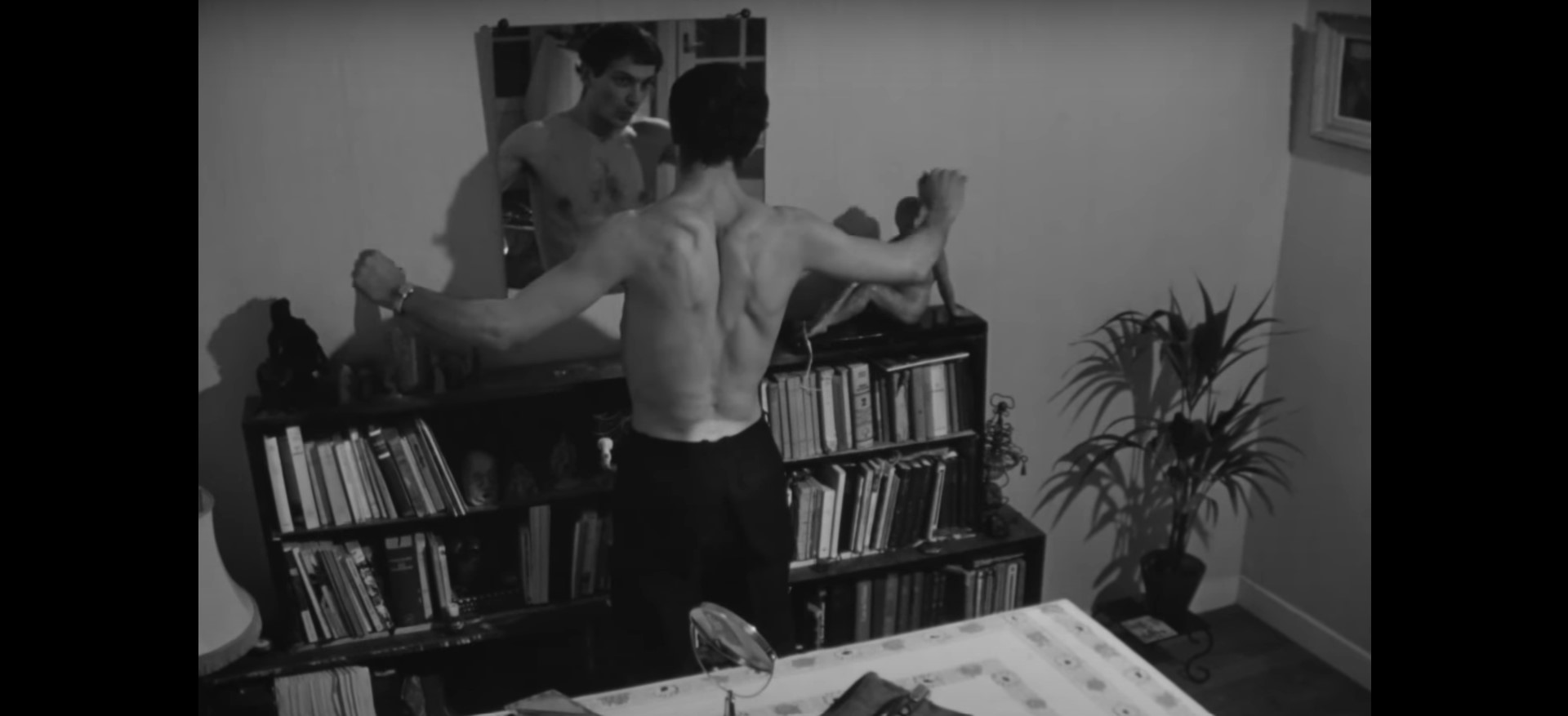
For those casted in film, “A Woman Kills” was there first auteur film if not their first feature film role all together. What could be considered as a blend between New French Wave and Neorealism, Bonan rarely has his cast express their own vocal cords. Lots of action and expressiveness devour the attention but that doesn’t go on to say Bonon completely nixed dialogue altogether with his montage of interviewees, a jest-and-jovial troubadour descriptive songs of the scenes, the narrator’s file readings of victims, the newsboys hawking of murder headlines, all become the dialogue in lieu of the real McCoy. The cast does have their voices heard in rare moments, often in scenes of great exposures and difficult in detail. A case in point is Claude Merlin as the prison executive Louis Guilbeau. Merlin, who went on to be involved in another May 68’s connected film from 2001, “Toutes les nuits” or “Every Night,” is eager and excited in character when going into the medical details of the various way his profession executes prisoners or falls into a somber regarding his mother’s abusive behavior to him when he was just a boy. Guilbeau’s dialogued moments are precise and point plots toward his character and toward the end game. The affair Builbeau has with police investigator Solange Lebas, from Jean Rollin’s “Rape of the Vampire” and Bruno Gantillo’s “Girl Slaves of Morgana Le Fay’s” Solange Pradel, provides roughly the equal amount of dialogue time in a role that’s typically casted for men, a lead investigator on a high-profile murder case. Gender reversal and identity themes are accentuated by Merlin and Pradel’s tenues of the characters. Myriam Mézières (“Spermula”), Jackie Raynal, Catherine Deville (“Rape of the Vampire”), and Velly Beguard (“Endless Night”) work out the remaining cast.
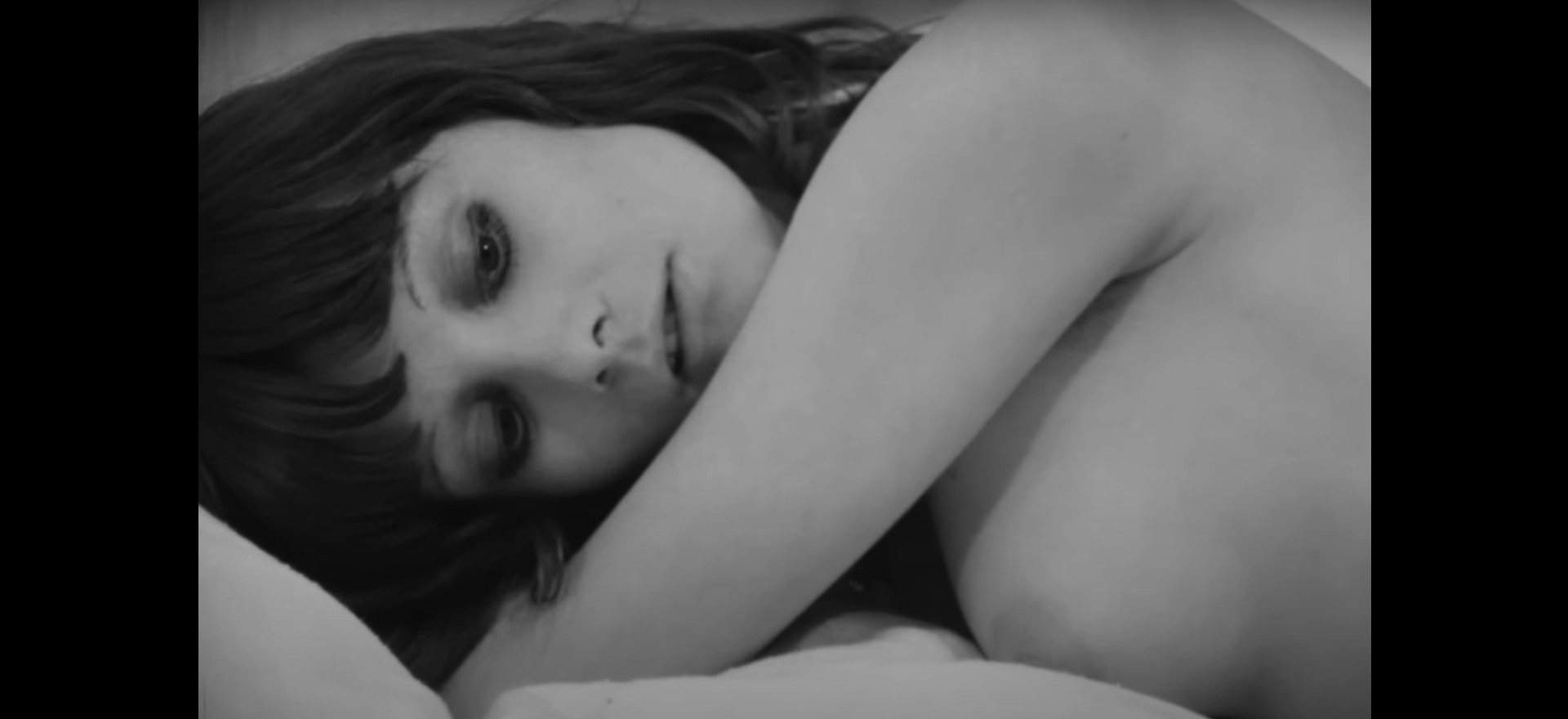
I wouldn’t necessarily call “A Woman Kills” avant garde.  In fact, I firmly believe the propagating audio and video experiments and the themes are far from it.  Bonan borrows a little here and there from different techniques and cinematic trends to fashion a stake in the French New Wave movement.  Splashes of eroticism, which are greatly descriptive visually and narratively, don’t warrant “A Woman Kills” to be a full-fledged erotica film.  The same can be said about the crime or investigator angle that too just seems to be woven sporadically through this melee of classification. Pseudo-documentary montages and script narrator push the labeling in another direction as well. “A Woman Kills” doesn’t exactly fit into a mold, wears patchwork pastiche, but also has flare ups of Bonan’s call to add chaos into the traditional scheme of filmmaking. More so linear than not, the narrative transitions between scenes without a care for being comprehensible early on. Heavily relying on the narrator to give exposition on the background of the notorious prostitute murderer Hélène Picard and how she became under the executioner’s thumb, this event provides framework in introducing the executioner Louis Guilbeau and his professional ups-and-downs that ultimately land him working in the prison system. The association that connects the murders, Louis Guilbeau, and Hélène Picard is all very vague during initial proceedings and Gérard de Battista’s freeholding over-the-shoulder camera work provides passim POV shots and agley angles to keep the wheels of motion mysteriously slipping in order to not fully grip the reality of the situation. Bonan borders the edge of German Expressionism toward the third act by disenchanting the way of guilty thinking aesthetics and to root the killer in insanity on various levels, ending with a chase sequence that is seemingly endless amongst a pile of building rubble and ruin.

A provocateur of storytelling and of the celluloid vision, director Jean-Denis Bonan finally has his film, “A Woman Kills,” released onto a limited-edition Blu-ray home video from Radiance Films twelve years as being unearthed. First released on DVD in 2016, distribution for the film was all but easy due to Bonan’s deemed unclassifiable feature by large scale and indie firms. Today, the original reversible 16mm elements have gone through a 2K restoration scan for the feature’s Blu-ray debut and the presented in the original 1.33:1 aspect ratio and black and white format. For being undiscovered for four decades, unfinished, and receiving literally no support from any state funds to complete, the image has remained nearly pristine with only a few dust specks and faint scratches being the worse of the wear. The Cinémathèque de Limousin and the restoration by producer Francis Lecomte doesn’t feel to have overcorrected the natural grain or go high on the contrast but rather retain much of the classic, original elements for an honest viewing aside from the liner notes mentioning a few special effects added to remove equipment from out of the picture. Father time has forgotten all about Bonan’s lost relic, staving off age degradation to those with more day-to-day exposure. The French language Dolby Digital mono track also retains a remarkable, near stainless net result. The absence of the camera whirring and lack of electrical interference points to a complete dub track of the actors’ voiceovers to which the dialogue is distinct with only a handful of crackling peppered in throughout. English subtitles are optional on the menu settings and offer an error free, well-paced synchronization. The bonus features include a video introduction to the feature by Virginie Sélavy, an audio commentary by Kat Ellinger and Virginie Sélavy, the trailer, and a 37-minute, newly updated 2015 documentary On the Margin: The Cursed Films of Jean-Denis Bonan featuring one-sided interview responses from Bonan, cinematographer Gérard de Battista, editor Mirelille Abramovici, composer Daniel Laloux, and actress Jackie Rynal. There is also Bonan’s short films – “la vie breve de Monsier Meucieu,” “Un crime d’amour,” “Tristesses des Anthropophages,” Mathieu-fou, “and “Une saison chez les hommes.” The limited to 2,000 copies release does not disappointment with tangible material within this clear snapper, untraditional Blu-ray case that doesn’t sport the Blu-ray logo at the top. Much like Bonan’s work, the Blu-ray, too, rebels against marketing norms with cover art that displays the film’s synopsis and documentary bons feature on the front cover. The reversible cover also has the original 2016 DVD art on the inside along with a limited-edition booklet featuring “A Woman Kills” essay by film author and scholar Catherine Wheatley and writer-broadcaster Richard Thomas regarding the film’s themes and Bonan’s short films. The 51-page booklet also includes newly translated interviews and offers film credits as well as black and white stills of “A Woman Kills” and other Bonan credits. The feature has a runtime of 69 minutes, the release is region free, and Unrated. Jean-Denis Bonan disrupts the narrative routine, but his film remains a timeless, psychosomatic portrayal with a contentious backdrop of French sociopolitical unrest that makes the context of “A Woman Kills” that much more engrossing.

“A Woman Kills” Now Available on Blu-ray! Click the Cover Art to Purcahse!

A 13-Year-Old Girl is EVILLER than Skinheads! “Becky” reviewed! (Ronin Flix / Blu-ray)

“Becky” is Clearly a Special Girl!  Purchase the Blu-ray by Clicking the Below Cover!

Cancer has taken Becky’s mother away from her.  Over the past year, the 13-year-old girl finds comfort in being angry, especially at her father who choose to move forward with his life that stirs a flurry of pent up uncomfortable, rage-filled emotions inside the teen.  As Becky stays in her constant stew of angst, her father surprises her with a trip to their cabin getaway he initially planned to sell but had a change of heart.  There is one small caveat, he plans to propose to his girlfriend who joins them on the trip, cornering Becky into one-sided fight and meltdown with those who love her and care for her and sending her to retreat into her woodland fort.  At the same time, a group of escaped convicts take her family hostage in search for a mysterious key left behind by the escapee’s neo-Nazi leader, Dominick.  Dominick has planned for years every possible scenario to secure the key that will undoubtedly serve every race with what he thinks they deserve, but Dominick didn’t plan for one scenario:  Becky. 

Amongst the movie nerds, there’s a particular phenomenon that occurs when a film is first mentioned across the internet and an immediate acclaim and attraction follows in its wake toward the film’s actors or actresses flipping the script on their stereotyped industry roles and playing totally unorthodox personalities that may shock. “Becky” was one of those films.  The 2020 released home-invasion, revenge thriller has been labeled by critics and fans alike as a horror, but the Jonathan Milott and Cary Murnion codirected production is more than just blood and guts.  The Ontario, Canada production is based off an original and debuting script from Nick Morris with “The Devil to Pay” and “Rattle the Cage” screenwriting husband and wife team, Lane and Ruckus Skye who have specialized credentials in the thrillingly brutal, hardnose character genre.  With a punk energy and engrossing family themes, “Becky” is a heart-stopping, heart-stomping, mischief making, ball of fury.  Jordan Beckerman of Yale Entertainment (“Cut/Print”) and Boulderlight Pictures’ J.D. Lifshitz and Raphael Margules (“Barbarian”) serve as the U.S. production companies in association with Bondit Media Capital, SSS Entertainment and Buffalo 8 Productions and is presented by Quiver Distribution and Redbox Entertainment. 

Aforementioned, this strange manifestation of hype for an upcoming feature leads the world, or at the very least film aficionados, in extreme anticipation. The conspicuously, incongruous piece glimpsed briefly in the trailer, one-sheet, posters, and stills claws for our attention as our brains can’t quite compute or process Kevin James in an Aryan acolyte. With a shaved head, long beard, and covered in swastikas, SS doppel sigrune, and other various Nazi-symbolic tattoos, Kevin James transforms his loveable and comedic “Paul Blart: Mall Cop” and “I Pronounce You Chuck & Larry” self into a ruthless and irredeemable skinhead. James absolutely nails the look of escaped convict and neo-Nazi Dominick with growing out his facial hair and shaving his head that takes his usually unassuming presence to a whole new level of calculated evil, but the script spoon feeds Dominick too much leeway to tolerate insubordination amongst his four-man crew, to allow hostages to talk back, spit in his face, and antagonize against his goals, and lacks the know-how of how to appropriately bait Becky with her own family, if Dominick is truly a despicable person as we’re lead to believe in earlier scenes of an approved prison leadership shanking and the implied murdering of children sitting in the backseat of a family roadster he aims to hijack. Yet, Dominick allows to be taken advantage of despite his cruelty stating to the contrary. In a stark contrast to evil embodied, there’s teenage girl Lulu Wilson.  The New York City child actress has been quickly making a name for herself in the horror genre, as a scream queen prodigy of sorts, with having supporting roles in “Deliver Us from Evil,” Ouija:  Origins,” “Annabel:  Creations” and Netflix’s “The Haunting of Hill House” before landing the titular lead in “Becky.”  Instead of scared pretense, Lulu Wilson gives a visceral, violent performance.  It’s teenage angst on steroids.  “Becky” is the only child versus adult cat-and-mouse game where the audience will get more out of the younger, smaller rival full of enraged paroxysms.  Joel McHale is another comedic actor wiggling his way into more dramatic roles that expand not only his resume but his range to showcase the other side of the once syndicated television comedy host.  From his stint into horror alongside Lulu Wilson in “Deliver Us From Evil” and in dark comedy, such as “Happily” that released the same year as “Becky,” McHale is finding a different voice other than laughter that has come natural to the actor and does show a lot of promise in more compelling roles as in “Becky’s” widowed father looking to move forward with his life but treads on pins and needles with his angry daughter.  Those relationship complications between Becky and her father never wander but rather do wonders for the connection on coming to terms with little go of the past.  The robust range of characters continue with an eclectic and noteworthy remaining cast that includes Amanda Brugel (“The Handmaid’s Tale”, “The Infinity Pool”), former Canadian-turned-actor Robert Malliet (“Pacific Rim,” “300”), Ryan McDonald (“He’s Out There”), James McDougal (“Heinous Acts”), and Isaiah Rockcliffe (“Random Acts of Violence”).

Kids committing hyper-violence in films is not entirely uncommon but they’re also not run-of-the-mill either.  Yet, films like “Becky” produce an unsettling affect that churns in the back of our psyche when witnessing a young teen girl intently stabbing a grown man with a jagged ruler and a handful of colored pencils in the neck.  Fans and critics label “Becky” as an adult, violent version of “Home Alone,” but the comparison I would draw would be closer to “Die Hard” for the barely young adults.  “Becky” plays out like a graphic novel or a young adult novel, stylish and impulsive in its edgy execution and character.  Unlike “Home Alone,” hardly anything sweet and endearing radiates from Milot and Murnion’s ferocious family retaliator and though Becky may set a trap or two (really just one trap) to inflict pain and punishment on her pursuers, the youngster is more inclined to John McClane wing it as the plot plays out, going toe-to-toe, face-to-face with adults two and three times as big as her without a moment of hesitation. There are some unique and graphic death scenes that ooze Becky’s personal satisfaction, and the Derek Liscoumb (“Possessor”) special effects blood reel is perforating, shredding, and cutting to pile on perfection as the kills go deeper into mutilate pool. Tremendous raw emotion superhumanly strengthens Becky’s adrenaline rush as the tragedies aggregate into one big horrific destruction of familyhood, contradicting the first act’s despisal of her father with a regret-filled, redemptional theme that without family there’s nothing else to lose. Its powerful for Becky to lose people she, in the moment, abhors yet are close to her because of her own unworked out pain and suffering that in all innocence pit her against the world.

“Becky” is the quintessential diamond in the rough as an unsurprising hit with fans. This small, independent Canadian film can hold its own in story, style, and sanguinary. With a sequel in the works, entitled “The Wrath of Becky,” our friends at Ronin Flix have released a collector’s edition Blu-ray to enlighten those new to Becky’s inherent mean streak. Released on an AVC encoded BD50, the feature is presented in 1080p high-definition on a widescreen 2.39:1 aspect ratio. Nothing to particularly note negatively on the digitally recorded image quality to the tune of compression storage as there doesn’t appear to be an issue with a clean-cut picture that delineates the hell out of the image, capturing every contour, fiber, and skintag inconvertible. Colors are potent with a natural grade along with plenty of textures to salivate over with a palpable tongue, such as Becky’s wool hat or Kevin James’s thick beard. The compressed image unloads at a gloriously hefty 36-38Mbps. The CE comes with two lossless English audio options – a Dolby Digital 5.1 Master Audio and a Dolby Digital 2.0 Stereo. Unless your audio outputting on the television speakers, the surround sound is the optimal and preferred choice for “Becky’s” unmanage mischief making through the rustling brush. The small aspects of her plotting and executing her revenge are what give the ambient padding meaning and offer a plentiful and grotesque semiliquid, semi-flesh sound effects. Dialogue comes through clean, clear, and robust. Optional English subtitles are available in SDH. Over 60 minutes of bonus features are on this release with interview commentary by directors Jonathan Milott and Cary Murnion, an interview with Joel McHale, and an interview with Lulu Wilson that all pretty much do a similar roundtable of remarks of their time and experiences working with each other. Milott and Murnion provide more backgound, backstory, and insight to their directing process compared to solo directors. Behind-the-scenes gallery, fan art, audio commentary with Lulu Wilson and screenwriters Ruckus and Lane Skye, and individual pre-feature introductions by the directors. Physical features include a cardboard slipcover of composite art by Tim Johnson, which is also on the latch-featuring clear snapper case cover art, a reversible cover art featuring a solo Lulu Wilson, and an anime-esque, illustrated disc art by Andrea Michel. The Blu-ray is rated R for strong bloody violence, graphic images, and language with a runtime of 94 and is region A locked. “Becky” is brutal with blood and guts galore and is more fun than can be describe with Lulu Wilson delivering an atomically hot-headed performance and Kevin James sporting uncharacteristic, fascist tats.

“Becky” is Clearly a Special Girl!  Purchase the Blu-ray by Clicking the Below Cover!

Before Careful What Hotel You Book Online. There Just Might be an Ancient EVIL Lurking in the Basement! “The Ghosts of Monday” reviewed! (Cleopatra Entertainment / Blu-ray)

 “The Ghosts of Monday” is now on Blu-ray Home Video!  Click to Cover to Purchase!

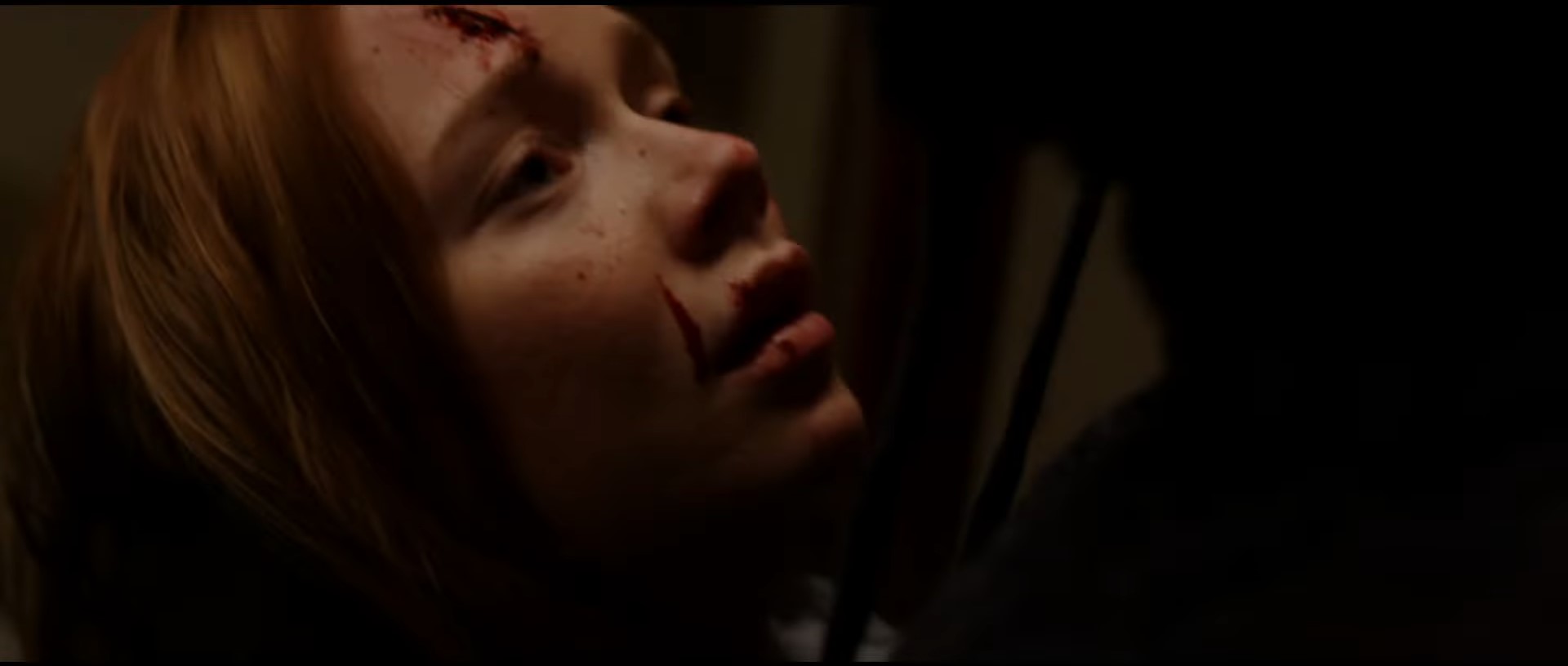
A small film crew of ghost hunters travel to the Grand Hotel Gula, a magnificent resort that accommodated tourists from all over the world, to document the hotel’s horrible past on a rare 53rd Monday of a year when the hotel befell into notorious tragedy as guests attending a party were poisoned and the three owners had committed suicide soon after.   Eric, the director of the show, is on his last leg to make the show a success as he becomes pressured by local benefactors and even the show’s host personality, Bruce.  At the request of Bruce, Eric brings his wife Christine who Bruce raised as a child.  From day one, the empty stunning foyer and luxurious accommodates pale against the ambient creepiness of the dark corridors and basements and the ominous sounds that lurk from within the shadows.  When the shooting commences into an investigation, the unsuspecting filmmakers find themselves in an ill-boding situation with an ancient evil that has been kept hidden away from the world for eons.

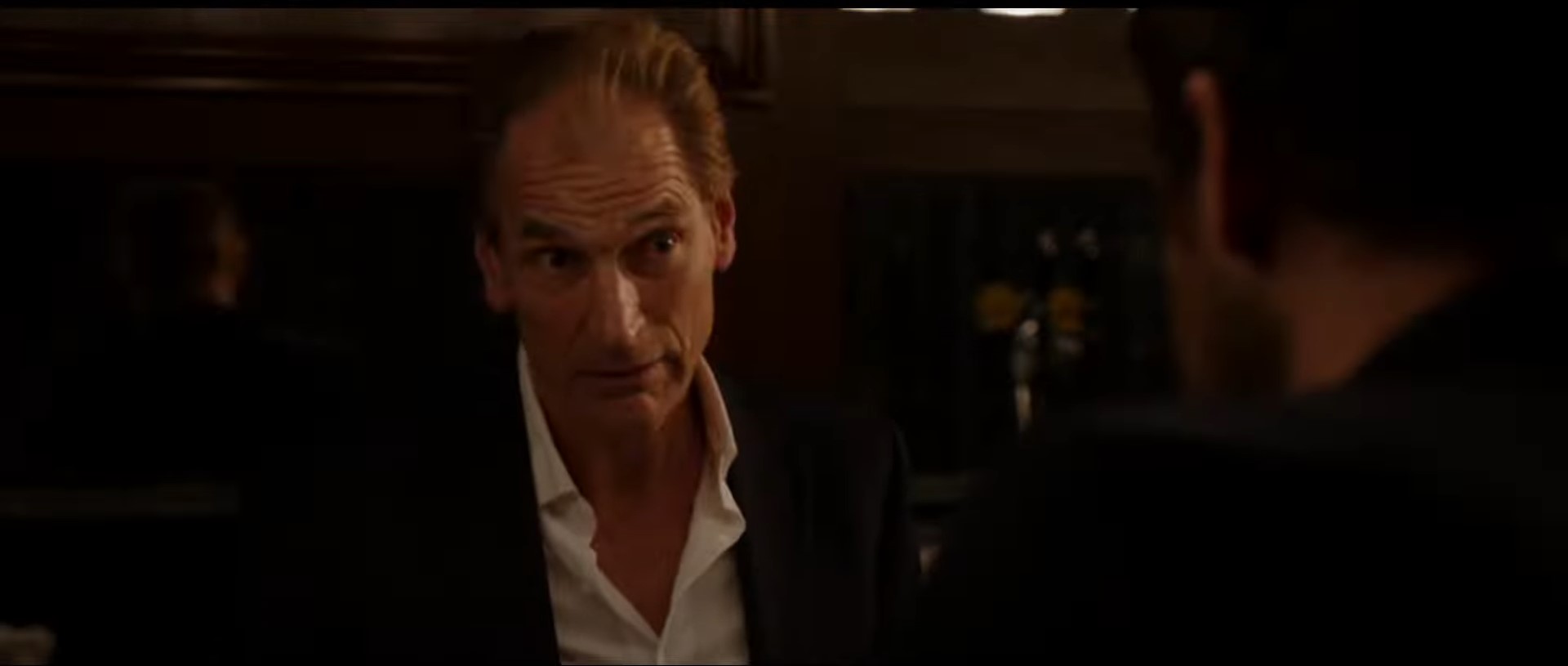
I want to prelude this review by saying that my thoughts are with Julian Sands family and if there is any hope left to grasp onto, we want sincerely to yearn for the outcome of Julian Sands disappearance in the hiking region of Mount Baldy, California to be a positive one and see the actor, the husband, the father of three alive and well.  As an entertainer, Sands gave us a malevolent sorcerer in the “Warlock” trilogy and providing us with notable performances in David Lynch’s “Naked Lunch” and the fear of spiders-inducing “Arachnophobia.”  Since the turn of the century, Sands has more-or-less fell out of the limelight with sustaining his presence mostly on direct-to-video releases and appearances on TV series.  The British actor’s latest low-budget horror “The Ghosts of Monday” is a film helmed by Italian director Francesco Cinquemani on the little-known getaway island of Cyprus, a country located in the Mediterranean Sea.  Cinquemani, who typically directs his own scripts, co-writes the film with Andy Edwards (“Zombie Spring Breakers,” “Midnight Peepshow”), Mark Thompson-Ashworth (“POE 4:  The Black Cat”), and Barry Keating (Killer Mermaid,” “Nightworld: Door of Hell”).  “The Ghosts of Monday” appears to be a blend of region myth and cultural belief pulled locally and from the stories of Greeks Gods into one abandoned hotel horror full of cult sacrifice and betrayal, produced by the “S.O.S.:  Survive or Sacrifice” producing team of Loris Curci (“The Quantum Devil”), Marianna Rosset, and Vitaly Rosset under the Cyprus production company, Altadium Group.

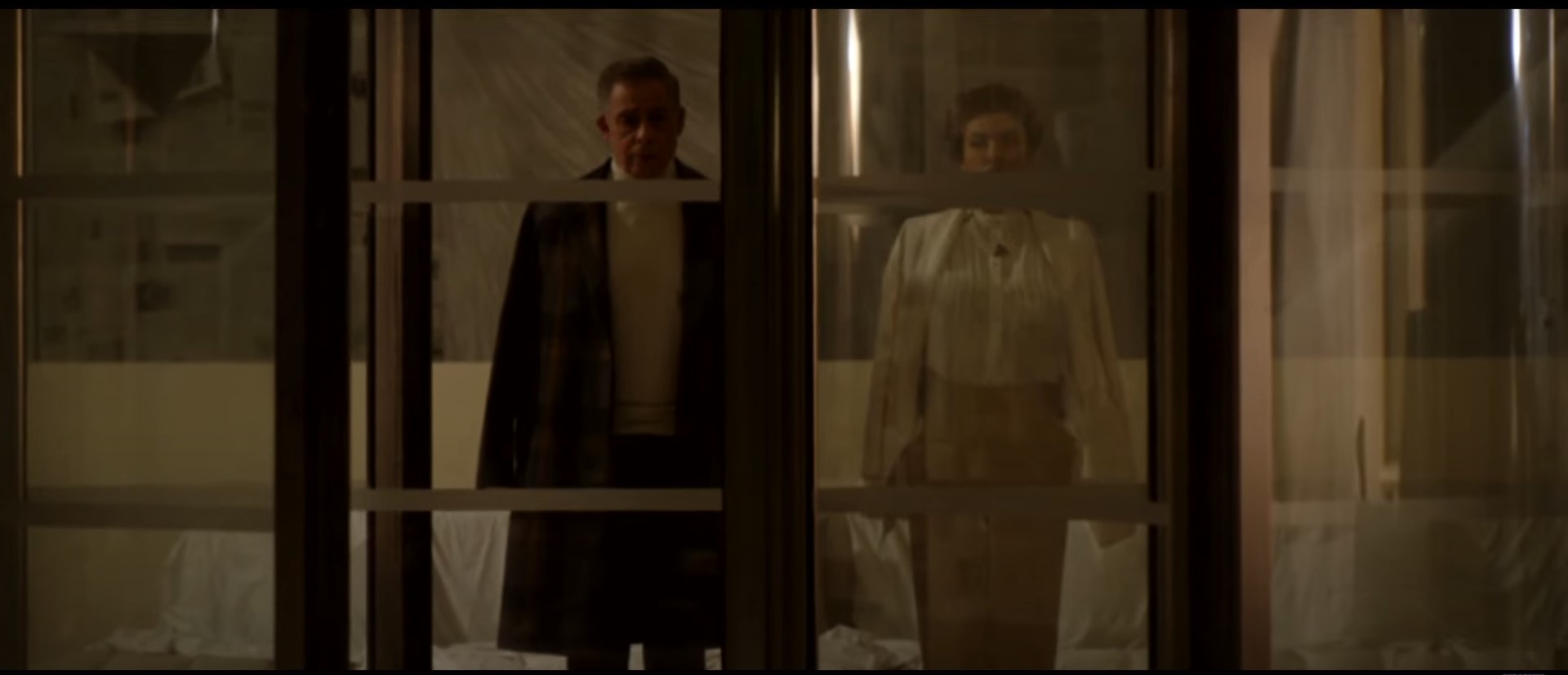
Julian Sands might not be the principal lead of the story but is a major player in what culminates into an ambuscade of doomsday deliverance at the expense of others.  As the documentary’s host and a Cyprus local, Sands plays the eccentric, often frisky, heavy drinker Bruce who has been a father, or the adopted father-figure as it’s not entirely clear, to Sofia (Marianna Rosset, “S.O.S.:  Survive or Sacrifice”).  Christine is distant and disordered returning to her Cyprus homeland with her husband Eric, the director, played by “The Turning’s” Mark Huberman.  Almost seemingly estranged from each other, Eric and Sofia display some noticeable pensive and tension-riddled issues between them that the story never fully fleshes out for the audience.  Christine is under medication for a sleep disorder, Eric’s feeling the pressure from powerful producers, and none of that external strain has defined or even as much delineated itself in full in their aloof relationship that has glimmers of hope and smiles as the wall between them is more up than it is down despite Eric’s constant vigil over her.  Performances from Rosset and Huberman meet the need of concern, desperation, and pressure forced upon them more from in the outside than in, especially in Huberman with a slightly better angle on his creative-driven, project-lead sudden derailed from his narrow focus to deliver a quality product as his career careens out of control and that brings out his rougher edge we see in the latter half of the story.  In comparison, the more iconic and recognizable figure, Julian Sands, doesn’t land his role well in what could be seen as if his performance landing gear only had one wheel down before touching pavement but was able to jerry-rig a not-big-enough wheel to get him safely through.   “The Ghost of Monday” has some mysteriously odd and menacing individuals in hotel owner Frank (Anthony Skordi, “Carnal Sins”), his wife Rosemary (Maria Ioannou, “Waiting Room”), and the producer couple Dom (Loris Curci), and Pat (Joanna Fyllidou, “Girls After Dark”) as hovers, prowlers, and the overall conventional creeps in the corner, watching you.  On the other side of the coin, you have a film crew who are more or less victim fodder for the evil powers to be with Anna (Kristina Godunova) and suspected lesbian lovers in sound designer Christine (Elva Trill, “Jurassic World:  Dominion) and cinematographer Jennifer (Flavia Watson) because A/V is just another acronym for LGTBQ+.  With the exception of Frank and Rosemary’s background on why they bought the forsaken hotel, none of the other characters constitute a piece of the pie as they are thrown into the mix, sprinkled with tidbits of intrigue, before their dispatched into the feast or famine categories.

We have ghosts in the title. There are cult members, sometimes shrouded in obscuring clothing, sometimes just lingering exposed outright. We have silent but deadly twin girls with kitchen knives. There is also a slithering creature lurking in the basement. “The Ghost of Monday” is a variety show of vile villains with very little coherence to bring the elements together, but what is clear is a mythical being at the center of the surrounding maelstrom that’s quickly closing in on the protagonists. With the script penned by a cohort of writers experienced in resort massacres and killer aquatic creatures, all director Cinquemani has to accomplish is the effectuation of ideas, but what results is haphazard derision from what feels like “Ghostship” in a hotel and looks like “The Shinning” without the isolating madness all in the confines of a very shaky and marred cinematography. The core of the story is inadvertently lost amongst the competition of where audiences should retain their attention which is a shame because at the core is a deeper, broader, and more mythically rich in Grecian horror with a gorgon immortal that’s equated as the devil itself and linked to life’s destruction if not sacrificed a corporeal shell.  Viewers will be treated to only a glimpse of that circling terror during the climatic end and, more than likely, budgetary reasons ground the story’s larger-than-life concept with only a mixed bag clash of content leading up to the end.

Plugged as Cyprus’s first native horror production, “The Ghosts of Monday” arrives onto a Blu-ray home video release from the Cleopatra Entertainment, film division of Cleopatra Records, and Jinga Films with MVD Visual distributing.  The featured release is presented in a widescreen 2.35:1 aspect ratio, shot on what IMDB has listed as the Sony CineAlta Vince with a Zeiss Supreme Prime Lens.  The AVC encoded Blu-ray retains a quite a bit of compression issues throughout the entire digitally recorded package as video ghosting is the biggest image culprit.  I’m sure that type of ghost was not what “The Ghosts of Monday” were referring to in the title.  Aliasing, banding, and small instances of blocking also appear occasionally and in conjunction with the ghosting which makes this transferred format nearly impossible to watch with hardly any detail in what should be a high-definition release that renders closer to 480 or 720p as the video decodes at a low 22 to 23Mbps average.  The Blu-ray has two audio options, an English 5.1 Dolby Digital and a LPCM Stereo 2.0. Though both outputs render nearly identical because of the lack of explosions or an extensive ambient track, the surround sound mix offers a better side to the A/V attributes with a barren-disturbance sound design and a solid score that keeps the concerned glued to the television sets, waiting for something spooky to pop out from behind. Dialogue doesn’t perceive with any issues with clear and clean conversation, as expected with most digital recordings, and is greatly centered and balanced without sounding echoey and out of depth’s scope. The bonus features are scantily applied with only an image slideshow and feature trailer, plus trailers from other Cleopatra Entertainment productions, such as “The Long Dark Trail,” “Frost,” “A Taste of Blood,” “Baphomet,” “Scavenger,” “The Hex,” and “Skin Walker.” The physical attributes of the release come with a traditional Blu-ray snapper cast with latch and cover art, that’s slightly misleading, of a glowing apparition. The region free release has a runtime of 78 minutes and is unrated. “The Ghosts of Monday” doesn’t buck the trend for Cleopatra Entertainment’s string of C-grade horror but is an unusual, new venture in the sense of strictly being a horror story without an eclectic soundtrack of signed artists to carry it through to the end.

 “The Ghosts of Monday” is now on Blu-ray Home Video!  Click to Cover to Purchase!

Copperton Cult Commands You to be EVIL! “Heartland of Darkness” reviewed! (Visual Vengeance / Blu-ray)

Own Your Copy of the Lost Linnea Quigley Film “Heartland of Darkness” by Purchasing at Amazon!  Click Here to Amazon.

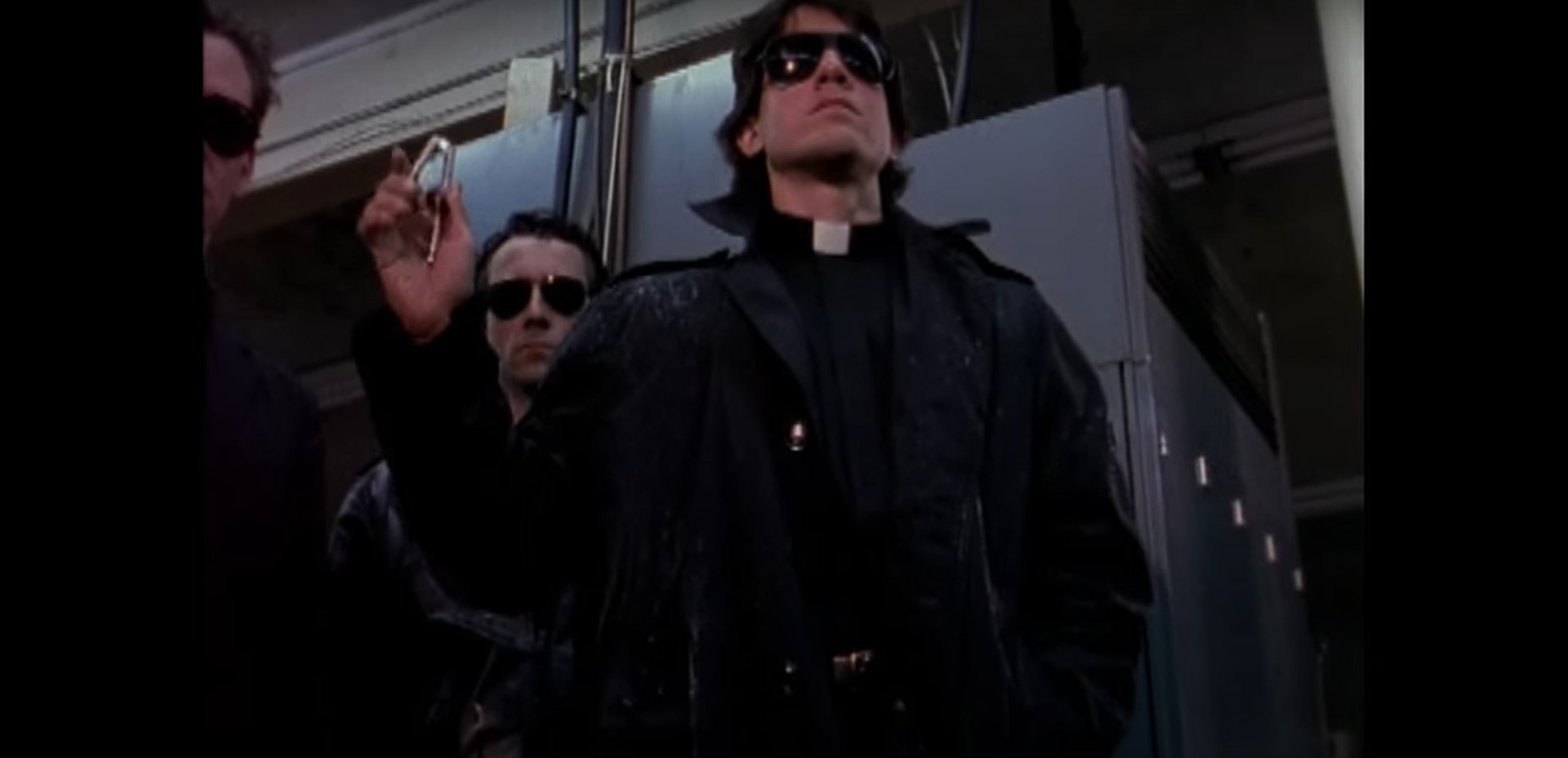
Copperton, Ohio – a quaint and quiet, unsuspecting small town if looking to downsize from the big city hazards.  However, beneath the provincial veneer lies a satanic cult spearheaded by the local Reverend Donovan and his flock of townsfolk worshippers.  Donovan’s grip reaches far beyond just the local municipality as the insidious cult schemes to turn the state’s top officials into devoted followers of Satan.  Copperton’s new local newspaper editor, Paul Henson, along with eager reporter, Shannon Cornell, use their journalistic gut instincts to unearth and expose the corruption by Donovan up to the ladder of the town’s sparse governmental hierarchy, but with only a few residents unsubscribed to Donovan’s fanatical sermons, Paul and Shannon have nowhere to turn in order to protect themselves, Paul’s daughter Christine, and the entire state of Ohio from succumbing to Satanic domination. 

Once lost in limbo for three decades, “Heartland of Darkness” finally sees the light of retail shelves day!  Left unfinished for many years, director Eric Swelstad, then an Ohio State film student, supervises the completion of the horror thriller that revolves around satanic cults, grisly sacrifices, and sheep mentality based on the 1980’s satanic panic craze that swept the nation.  Penned by Swelstad, who moved on with this lift and helmed a handful of direct-to-video titles, such as “The Curse of Lizzie Borden 2:  Prom Night” and “Frankenstein Rising” in the early 2000s, and filmed in and around Columbus and the Granville village of Ohio, the 1989 principal photographed production was thought to be ultimately completed by 1992 but due to funding and production constraints, that was not the case.  The film also went through a couple of other titles, beginning with Swelstad’s original script title “Fallen Angels” and then changed to “Blood Church” at the behest of a possible financier that eventually fell through.  In the end, the film settles on “Heartland of Darkness” as a privately ventured production Steven E. Williams (“Draniac!”), Wes Whatley, Michael Ray Reed, Thomas Baumann, Mary Kathryn Plummer, and Scott Spears (“Beyond Dream’s Door”) serving as producers.

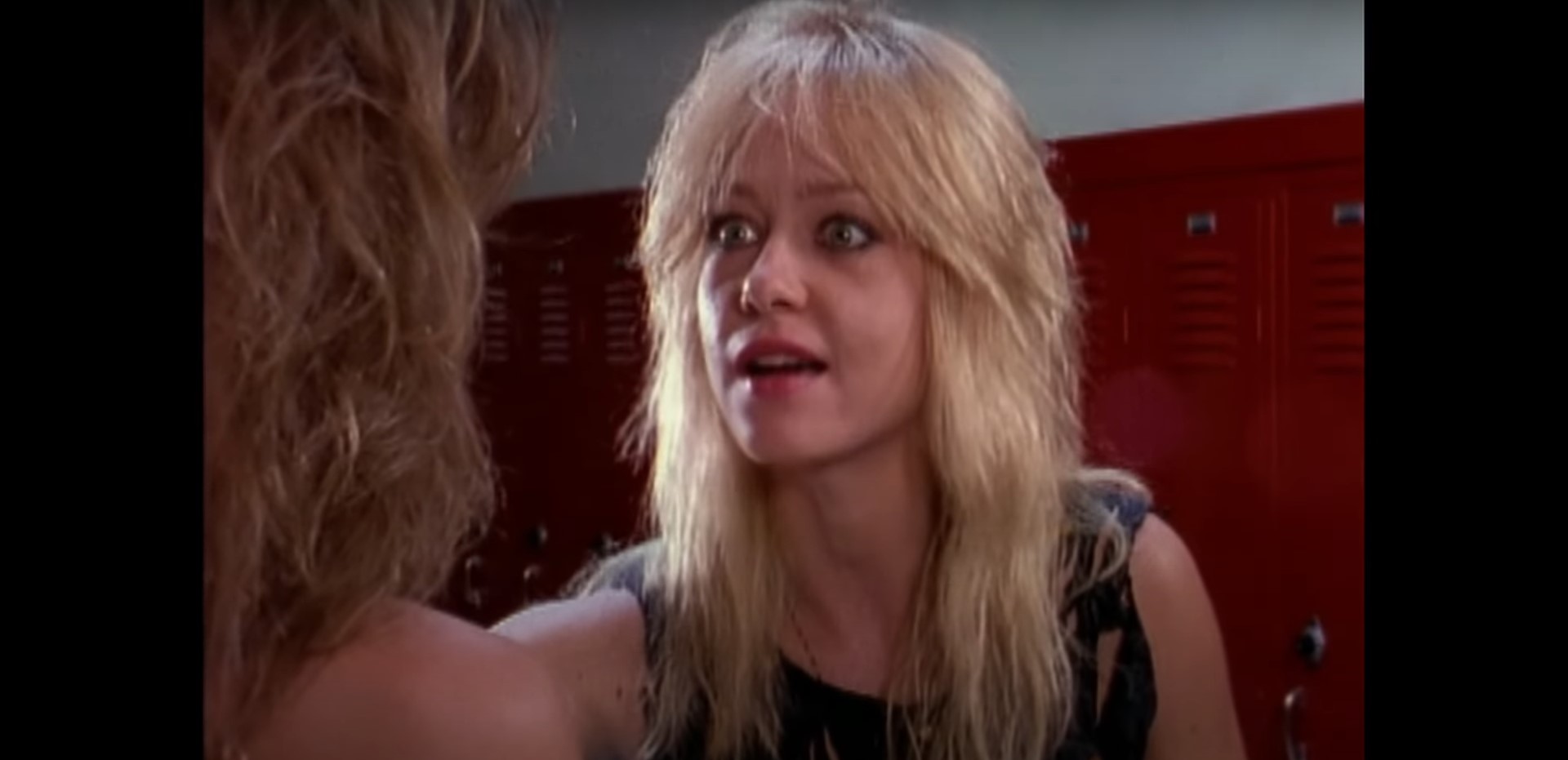
One of the reasons why the obscurity adrift “Heartland was Darkness” was so sought after by horror fans is because the title became one of the lost films of scream queen Linnea Quigley.  Standing at only 5’2’’ tall, the “Return of the Living Dead” and “Night of the Demons” actress was a hot commodity during the late 80’s and a genre film giantess who ended up having a fairly prominent, written-in role just for her hire in what is, essentially, a student film.  Quigley’s role as the town’s high school teacher, Jessica Francine, makes the hormonal boy in me wish my teachers actually looked than beautiful and provocative in high school, but in the same perspective, Quigley doesn’t appear or is barely older than Sharon Klopfenstein as Paul Henson’s daughter, Christine.  The two share a high school hallway moment while sporting crop tops, tight bottom wear, and discussing paganistic occultist Aleister Crowley and Nazi mass murderer Adolf Hitler and while the additional scene gives Quigley screen time, it evokes risibly campy optics.  Dino Tripodis defines the principal lead Paul Henson, a former Chicago Tribunal editor having left the midwestern journalism powerhouse after the death of his wife.  Stepping into a world of cultism, Paul’s eager to save what’s left of his family at all costs by exposing grisly murders as more than just drug-related collateral damage (I didn’t know drug wars were such a big thing in Ohio).  The debut of Tripodis’s performance fairs well enough to solidify himself as the marginalized hero against a Goliathan opposition that’s deep rooted and backed by powerful leaders, but hands down, Tripodis is outdone by Nick Baldasare as the dark featured, maniacally calm Reverend Donovan.  Baldasare has such a tremendous presence as a fire and brimstone agent of the most notable archfiend that his performance swallows the shared screen moments with Tripodis.  A few principals come off as rigid and flat in their efforts.  As the sheriff of Copperton, Lee Page is the biggest offender with an obvious staged act of busting Tripodis’s balls for a better part of the story.  “Heartland of Darkness” is a mixed bag of showings from a remaining hyper-localized cast compromised of new to little experiences actors including Shanna Thomas, Sid Sillivan, Ralph Scott, Dallas Dan Hessler, Ray Beach, Mary Alice Dmas, and with the John Dunleavy in a magnetic role of a cult-crime fighting preacher.

Hard to fathom why but still completely understandable how “Heartland of Darkness” remained in celluloid purgatory for so many years.  Swelstad had tremendous ambitions for a student film that included a visual effects storefront explosion, but the money well dried up to finish shooting, touch ups, effects, and digitizing the filmmaker’s efforts onto a marketable commodity to distribute.   At last, here we are, 33 years later with a finished copy of the “lost Linnea Quigley film” and, boy-oh-boy, does not disappoint, living up to the expectational hype surrounding the film’s once stagnant, hidden from the world existence.  Swelstad creates the illusion of vast world from the small town of Copporton to the big cities where the District Attorney and Governor reside.  Car chases, rock quarries, a church nave, animal intestine smeared ditches, and a slew of constructed sets, an array of offices, and an abundance of diverse exteriors. “Heartland of Darkness” might have a lot going on and is often repetitive in the scenes with Paul and Shannon pleading their case to multiple officials to probe into gruesome deaths and the cult’s leadership but not to the story’s detriment as all the progressive storyline dig Paul and his small band of investigators into a deeper danger hole with Donovan and his Devil devotees under the guise of God’s Church. Scott Simonson’s entrail splayed and blood splattering special effects culminates to a shotgun showdown at a virgin sacrifice and an impressive full-bodied impaling that is, frankly, one of the best edited shots of the film. “Heartland of Darkness” is rayless and scary, callous and cold, formidable and shocking with a pinch of sex and is finally within our grasp!

Visual Vengeance, a pioneer in curating the lost, the forgotten, and the technically shoddy indie cult and horror films, releases for the first time on any format ever “Heartland of Darkness” on Blu-ray. Coming in as VV08 on the spine, the Wild Eye Releasing banner strays their first seven SOV features to bring aboard a 16mm negative transfer, director-supervised from original film elements of the standard definition masters. Visual Vengeance precautions viewers with the usual precursing disclaimer that due to the commercial grade equipment and natural wear of aging, the presentation is the best possible transfer available, but, honestly, the full screen 1.33:1 aspect ratio presentation looks outstanding without much to critique. Obvious softer details were expected but with the celluloid film, there’s not much in way of macroblocking or tracking complications as common with shot-on-video tape features. Compression verges to a near perfect reproduction of the picture quality. Skin coloring and overall grading is congruously natural in grain and stable image. The English stereo mono track doesn’t pack a punch but isn’t also frail with strong mic placement and the dialogue is clean and clear of imperfections as well as major hissing or popping. The faint 16 mm camera whir can be heard but isn’t distracting, adding a comforting churr to the footage. Optional English subtitles are available. Special features include a new 40-minute behind-the-scenes documentary Deeper into the Darkness, an audio commentary by writer-director Eric Swelstad, actor Nick Baldasare, cinematographer Scott Spears, and composer Jay Woelfel, a new interview with cult icon Linnea Quigley, commentary with Tom Strauss of Weng’s Chop magazine, an archival Linnea Quigley TV interview, the complete “Fallen Angels” 1990 workprint, the same workprint with audio commentary with Swelstad, vintage cast and crew Ohioan newscast interviews in the Making of Fallen Angels, the original promotional video for “Blood Church,” a behind-the scenes image gallery and footage, and the original TV spots and trailers, of this feature and other Visual Vengeance films, from the static, composite menu. Ready for more? “Heartland of Darkness” comes with just as much physical bonus swag with a limited-edition prayer cloth, a six-page liner notes from Tony Strauss complete with color beind-the-scene stills, a folded mini-poster of a leather-cladded Linnea Quigley’s high school hallway scene, and retro Visual Vengeance stickers inside a clear Blu-ray latch snapper with new, illustrated cover art that also has reversible art of the original “Blood Church” promo art, sheathed inside a cardboard slip cover with a different and new illustrated cover art. The region free, 101-minute release is unrated. Visual Vengeance continues to pump out gilded, undiscovered treasures and giving them the royal treatment. For “Heartland of Darkness,” this sublime release was 33 years in the making and is one Hell of a bounty!

Own Your Copy of the Lost Linnea Quigley Film “Heartland of Darkness” by Purchasing at Amazon!  Click the Cover Below.

When Your Shame and Guilt Turn EVIL! “Prey for the Devil” reviewed! (Lionsgate / Blu-ray)

“Prey for the Devil” on Blu-ray home video.  Purchase a Copy Today!

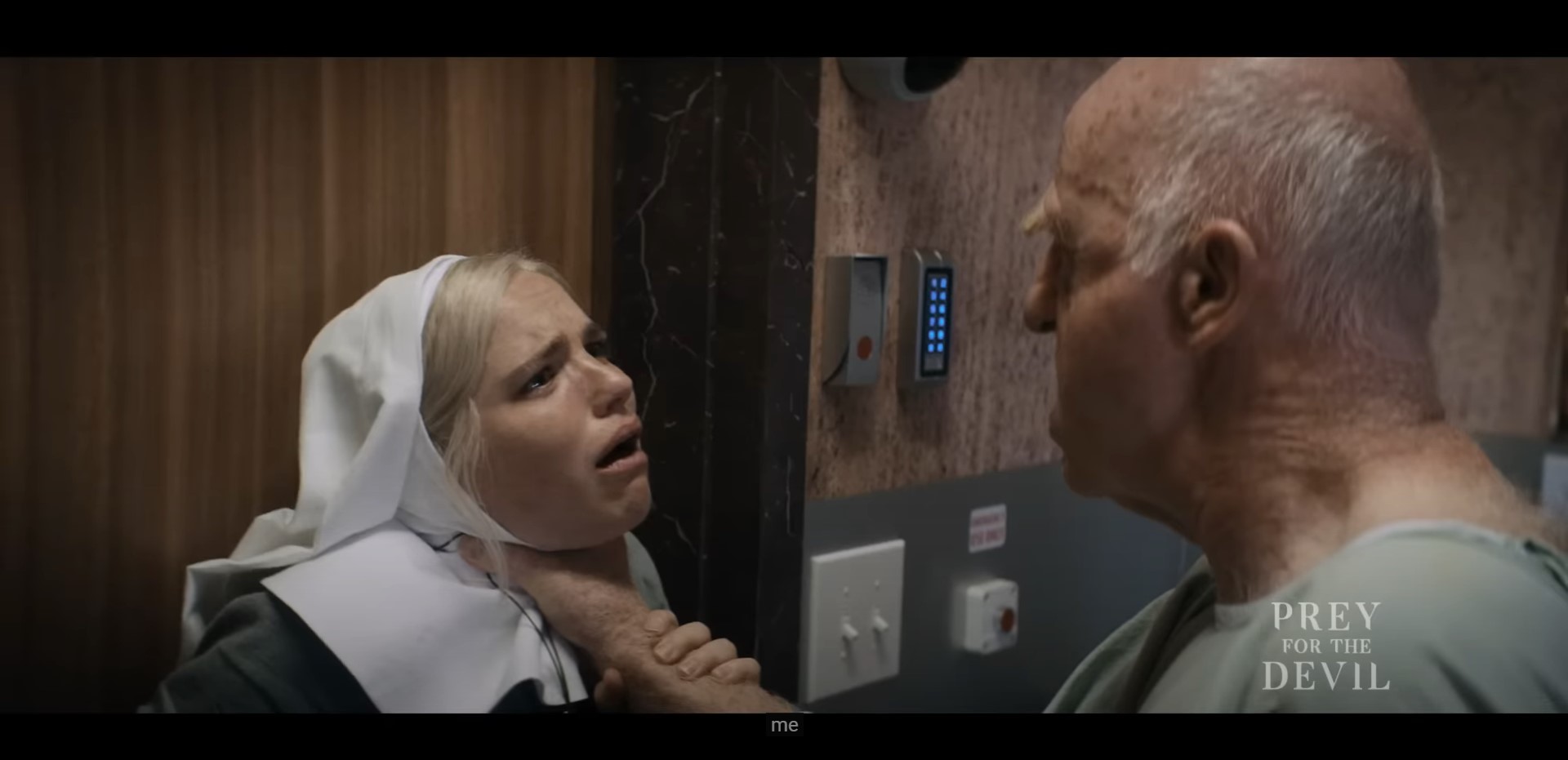
The rite of exorcism has been strictly performed only by Catholic priest; a decree enforced by the Church for more than a century.  At the Saint Michael the Archangel School of Exorcism in Boston, Massachusetts, Ann, a young nurse caring for suspected possessed individuals, finds herself bound personally to a demon from her childhood.  An opened-minded Father invites her to study exorcism as an observer only, but when Ann is able to connect to beyond the demon of a terminally possessed little girl, her theory on exorcisms goes against Church doctrine.  Unable to officially help the little girl without agitating trouble, Ann performs back-alley exorcisms to prove her theories correct, bring her findings to the Church, prepare herself against a demon hungry for her soul, and save the life of a girl bound for transport to the Vatican where she will surely expire.  Ann’s past and present collide in a battle between light and dark with a young girl’s life hanging in the balance.

Possession and exorcism movies have become rather formulaic in the last two decades with more than most being derivative as surpassing the bar on William Friedkin’s “The Exorcist” has been an uphill battle, but, in my opinion, director Daniel Stamm has figured out a path to make the wavering subgenre emerge from the depths of the Netherworld and take possession with a different angle. “Prey for the Devil” is a terrifying tale by screenwriting partners and brothers Earl Richey Jones and Todd R. Jones, the first horror work from the “Rio” and “Johnson Family Vacation” writers, and the script, under the original working title of “The Devil’s Light, is designed by “Halloween H20” co-writer, Frank Zappia.  The Hamburg, Germany-born Stamm returns to the demonically charged, demon possession genre having found moderate success with fans in his 2010 pseudo-doc/found footage film “The Last Exorcism.”  More than a decade later, Stamm is still sending young girls up climbing up the corner of walls in his latest exorcism themed entry produced by the Jones brothers, Jeff Levine, Jessica Malanphy, and Paul Brooks under production companies Gold Circle Films (“Slither,” “Blood Creek”) and Lionsgate (“Saw” franchise).   

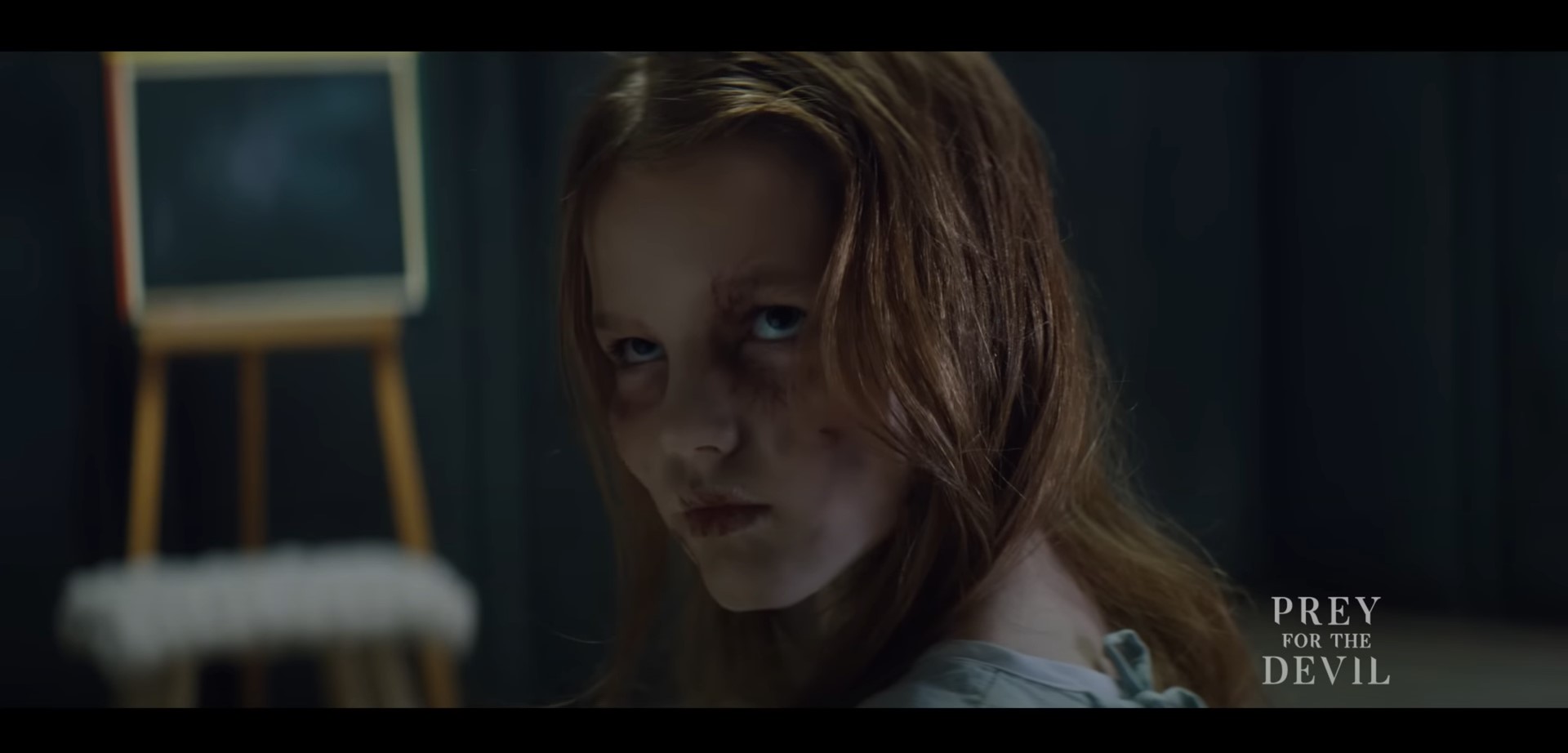
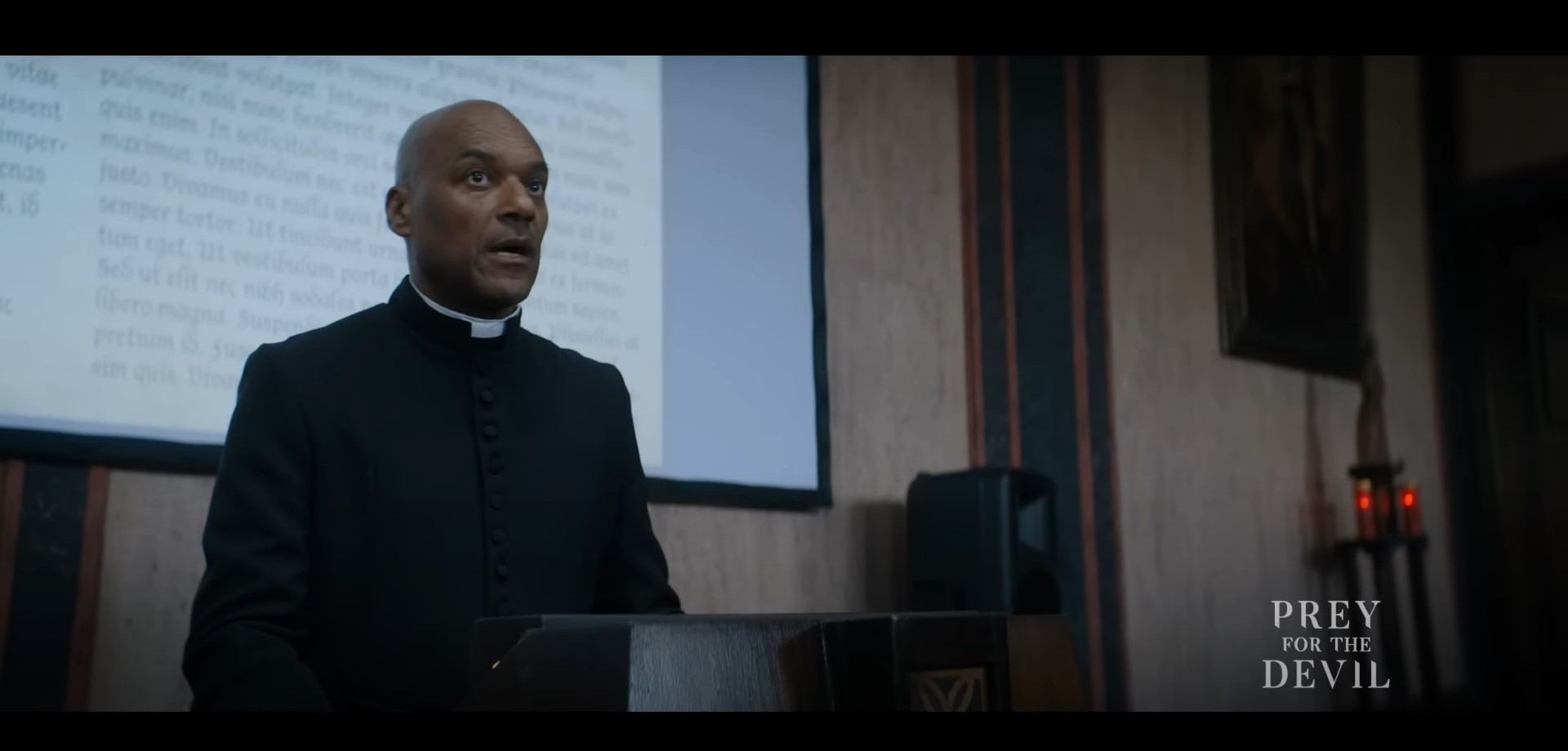
“Prey for the Devil” has an embattled protagonist facing two opposing fronts – one fowl demon hellbent on devouring the Godsent Ann from the inside out and one the Church solely for being a woman wanting to practice what’s been appointed as a man’s vocation. Jacqueline Byers has been penned to play the curious and targeted nun and the “Bad Samaritan” actress doesn’t disappoint being the center of attention without overstepping conceitedly into Ann’s habit. The story never feels like it’s Ann, paralleling similar to the overall theme of looking past the surface level demon and understanding the person’s state of consciousness that might have invited the demon inside. Byers evokes more curiosity of a woman drawn to exorcism because of her own past involving an abusive mother (Koyna Ruseva) who, when listening to the voice inside her head, would hurt child Ann with a tough tugging, decorative comb. In Ann’s way is the Church represented by Sister Euphemia (Lisa Palfrey, “The Feast”), Father Quinn (Colin Salmon, “Resident Evil”), and Cardinal Matthews, played by the late Ben Cross (“Exorcist: The Beginning”) who would succumb to cancer after the completion of his role. With a trifecta of solid performances, the Church opposition lacks fortitude in coming down hard on Ann for not only taking a shining toward a priest’s appointed aptitude, but also for performing an unauthorized exorcism on a desperate priest’s sister. Her desperate priest friend, Father Dante (Christian Navarro, “13 Reasons Why“), is a sympathetic friend without much skin in the game of sticking his white collared neck out for Ann. “Prey for the Devil” introduces the teenage actress Posy Taylor with a chillingly consumed Natalie who has a strong semblance to Regan when demonized to the fullest and in a while gown. The film rounds out the cast with Nicholas Ralph, Keith Bartlett, and “Candyman’s” Virginia Madsen as the psychiatrist using science to disprove possession.

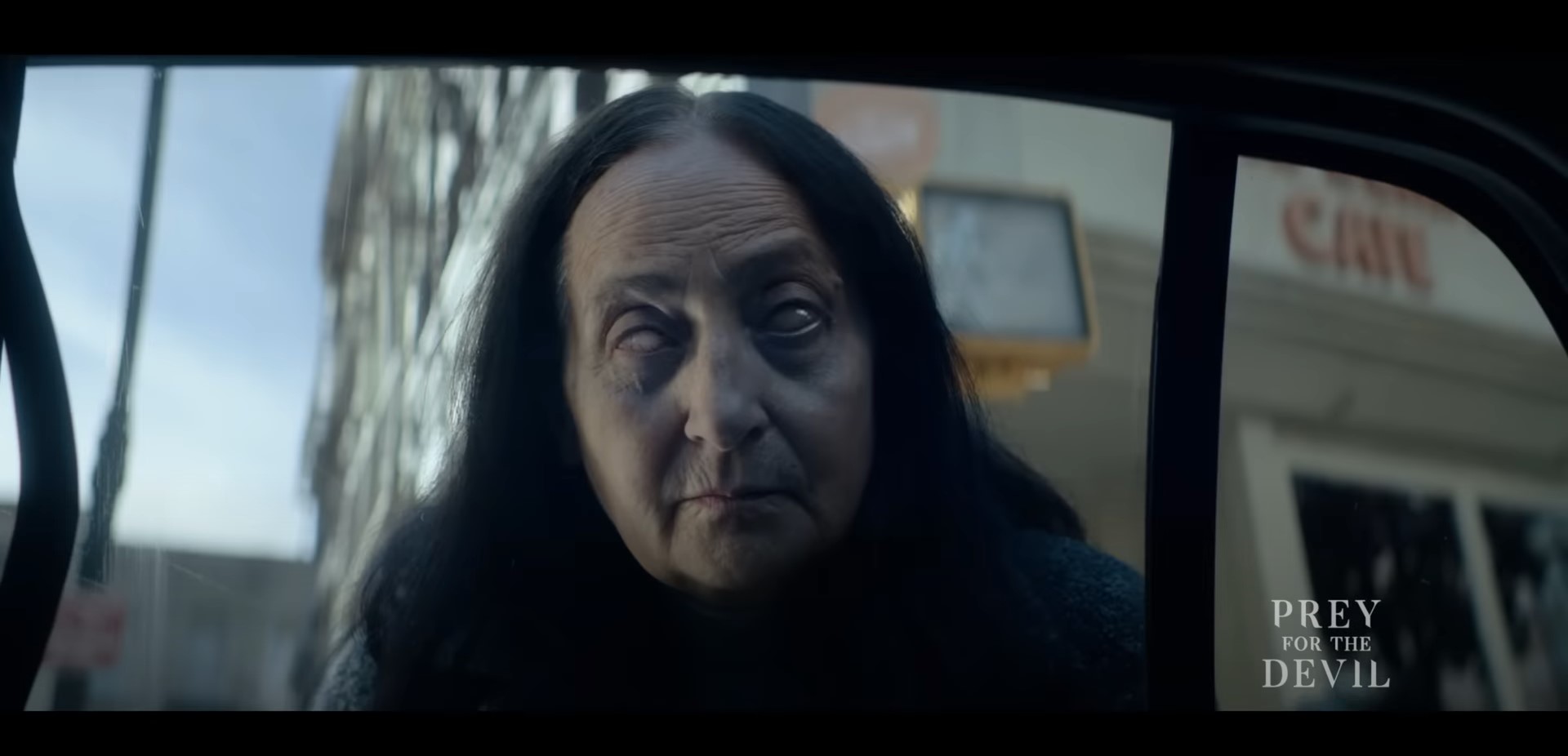
“Prety for the Devil” sets the stage strong by defining from the very opening credits that women were forbidden to perform the rite of exorcism. There’s even back support from Sister Euphemia giving her glares of disapproval and a library that limits the access to priest approved restricted texts, but Ann slides into the realm of exorcisms when little push back that begs the question why no other nun ever attempted to enroll in the demon extraction rituals course? Perhaps being set in the permissive Boston and not the draconian Vatican might have something to do with it, but the theme of inequality is ultimately suppressed and dispelled from the story, leaving Sister Ann to face a one-front battle against the unholy creatures of the underworld inhabiting those closest to her. For supernatural special effects, the computer visual imagery renders a meticulously blended and seamless compositional execution from a team under VF/X supervisor Laurent Spillemaecker (“Overlord,” “Martyrs’). The mesh of reality and virtual reality becomes indistinguishable to the point where good scares scenes come about as a result. There are plenty physical effects that are joint into a pivot from the visuals and the motions don’t have an ounce of clunkiness to them. While we touched upon the theme of inequality of women in the Church, “Prey for the Devil’s” other theme revolves around a fairly common one in films today – guilt or shame. The new angle the story provides ceases to look at possession not from a demon focused level but to reach in and try to convince the person within that they’re at fault for whatever it is they grieve in shame for and to tell them whatever the case may be, no fault is put on them. Novel enough to be interesting, guilt and shame will forever be vilified and demonized, literally, in most horror. For “Prey for the Devil,” the element of anguish proves to be more powerful than most who utilize it, capitalizing in on the power of being overcome by it, and turning it into a nasty, soul-swallowing distemper one may not come back from. This is why Virginia Madsen’s psychiatrist character exists, to provide that presence of psychosis and other mental disabilities that sometimes appear to be demonic in nature to the naked, untrained eye. The story does well to create an alternate universe around this idea by having the Church admit patients with undiagnosed disorders as they could be more than what meets the eye.

Not quite the nunsploitation one might be hoping for, but “Prey for the Devil” envisages self-conscious emotions as a wide-open door for pain, suffering, and unmitigated self-punishment. Lionsgate Home Entertainment presents “Prety for the Devil” on a high definition, 1080p, AVC encoded Blu-ray, DVD, and digital code release with a widescreen 2.39:1 aspect ratio. With tight quarters of Saint Michaels, a fictional location setup from Sofia University in Palo Alto, California, the anamorphic lens compacts hallways and auditoriums cylindrically, offering more space than actuality, but the format doesn’t necessarily fit this type of a film that offers no vast landscape or much depth or long shots. Not much else to say negatively about the digital image that offers a darker, low contrasted tone. The audio track has three audio options: an English Dolby Atmos, a Spanish 5.1 Dolby Audio, and a French 5.1 Dolby Audio. For the English Atmos, the format fully immerses the viewer into a complete surround sound experience with each crescendo jump scares as well as in the middle of a good versus evil quarrel. Crisp and spatial, Atmos on the release takes advantage of the infrasound to build tension where it might be lost in other audio formats and also italicizes the ambient composition into the Nathan Barr’s (“From Dusk till Dawn 3: The Hangman’s Daughter”) classical and haunting lullaby scores. The special features include an audio commentary with director Daniel Stamm and principal lead actress Jacqueline Byers, a 41-minute featurette with in-depth and retrospective interviews with cast and crew Possessed: Creating Prey for the Devil, Nathan Barr’s discussion on creating the score for the film A Lullaby of Terror, exposing the film’s visuals effects The Devil’s Tricks, a feature-length, nearly 2-hour roundtable read of the original first screenplay draft from the cast, and an Exorcist and Psychologist discussion about the possession with screenwriter Robert Zappia mediating (or maybe even moderating) the comments. The physical release comes in a traditional Blu-ray snapper case with artwork cover pictured with one of film’s rememberable scenes. Inside is the digital code slip and outside the snapper is sheathed in a cardboard slipcover with the identical cover art. Possession-exorcism films are just as tired as the zombie subgenre, but “Prey for the Devil” possesses symbolic and doleful undertones inside a superbly acted and an intriguing alternate universe story that’s not too far from the truth in one of the Church’s more confrontational, as well as controversial, methods to battle evil.

“Prey for the Devil” on Blu-ray home video.  Purchase a Copy Today!

Continue reading