

Become Caught Up in the Mystery of “AmnesiA” on Limited Edition Blu-ray!
Alex, a meek photographer, is called back to his family home by his estranged identical twin brother, Aram, on the news of their mother’s severe illness. Agreeing to help look after her for a while, Alex travels back home with his new girlfriend in tow, a pyromania epileptic named Sandra. Upon his arrival in Amnesia, the home of the family business of tinkering on broken down cars around the property, Alex is met face-to-face with a past he’s long tried to forget. Aloof Aram’s peculiar involvement with organized crime, his heart-healthy mother’s obsession with heart conditions, Sandra’s fire infatuation, and himself crippled by a imprinted, photographic fear swirls with ridicule tension around the crumbling junkyard estate. The years long secrets between the brothers about their childhood past have taken a personalized toll on them and being in the same space together after a long time a part has loosed embedded raw emotions and dug back up the past again to finish what they started all those years ago.

“Amnesia” is a curious and mysterious black comedy thriller from the Netherlands and is the surrealistically bold effect of duality and family skeletons in the closet from filmmaker, the Hague native, Martin Koolhoven. Taking similar household elements from the avant, 60’s inspired “Suzy Q,” writer-director Koolhoven pours another fractured glass of dysfunctional family-ade to sour perfection, squeezing every last drop out of neglected relationships in order for the truth to the be tasted. With themes around secrets, guilt, processing that guilt, and family, “Amnesia,” or as originally spelled, “AmnesiA,” progresses a narrative of an irreversible broken family from through the looking glass of dark comedy and layered mystery to it’s ultimate destruction perceived as bittersweet. Shot in Belgium, “Amnesia” is produced by Paul Verhoeven “Black Book” producers, Jeroen Beker and Frans van Gestel, under the partners’ 1995 established, Amsterdam-based production company, Motel Films.

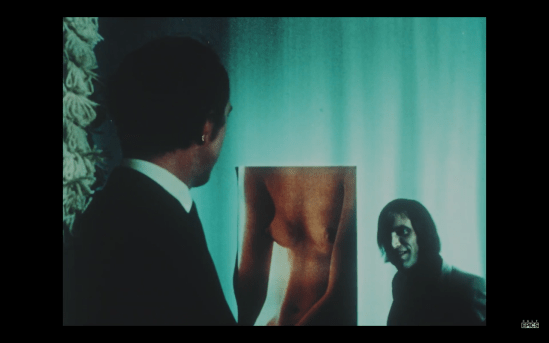
If unable to locate two suitable actors to play siblings, why not have one great actor to be both? That’s the approach Martin Koolhoven erected when falling head over heels with Fedja van Huêt who could intuitively give Koolhoven the exactness of each brother’s personality. Brothers Alex and Amar are so distinct in how they carry themselves as well as in their appearance that your mind and eyes can barely keep the registered fact that the brothers are inhabited by the one and the same Huêt. Huêt, along with some good writing from Koolhoven, keeps insecurities close to the chest, blossoming a massive bubble of enigma that often repels the brothers against one another to keep audiences from homing in too close to the exact cause of their personal strife. Tension works wonderfully despite not having the ability to act against the actual physical embodiment of the antithesis to spar with and the editing fully supports the duality with perfectly seamed visual effects touchup efforts. Other support efforts come from a great supporting cast, including the international success Carice van Houten who starred in Verhoeven’s “Black Book” and won an Emmy for her high priestess role of Melisandre on HBO’s “Game of Thrones.” Houten’s cagy, pyromaniac Sandra is just as odd as her appearing suddenly into Alex’s life, or rather into the backseat of his car, when things are beginning to feel complicated for Alex having to return home after many years away. Sandra’s emotionally supportive, almost as Alex’s backbone or a buffer, when dealing with Aram but she’s interpreted as not normal by the brothers’ mother (Sacha Bulthuis) who herself is a representation of the past that keeps the individualized brothers connected and tries to keep both boys nearby without angering them; she even attempts to turn Alex into his mechanic father, whether done consciously or subconsciously goes unsaid, but in the end, the past always creeps back to the present and the unresolved coming to a close will put the final nail into the coffin of the Amnesia family business for good. Theo Maassen, Cas Enklaar, Eva van der Gucht, and Erik van der Horst costar.

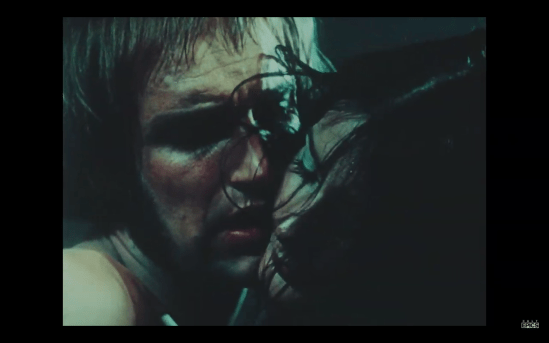
“Amnesia” is a thought-provoking puzzle box of rearranging clues and drop in visitants that instill an uneasy, surrealism surrounding chiefly these two brothers. Bubbling to the surface through a series of baby step flashbacks is the root cause for much of the tension coursing the narrative. History becomes the driving force behind Alex’s apprehension in returning home, seeing his naive mother, and interacting with sycophantic brother who’s also jaded by the life’s little lurid lesson by turning toward a life of crime and holding onto not only a grudge against his brother’s abandonment but also against a decision his father made many times over that he now sees as unfinished and unsatisfied. What’s even more interesting is the lack of urgency and empathy surrounding them and to resolve what has been stayed stagnant for years from their adolescence and into their adult established lives. Immediate attention matters become secondary to the underfoot game that occupies mental space between them, infects those around them, and spills out of the shadows to eventually into the light. For example, Amar’s partner Wouter is critically injured after a botched heist and comes to Amnesia to wait for further instructions from Eugene, Amar and Wouter’s boss; yet, while Wouter bleeds from his abdomen, Amar saunters around the house and Wouter is equally leisured when it came down to his mortal wound. Eventually, Sandra and the brothers’ mother grow accustomed to Wouter’s state, just like Wouter, and though their mother’s deteriorating health inches itself back and forth into the conversation, the only thing that doesn’t shy from the forefront and never becomes accustomed is the lingering sense of that something isn’t copacetic between Alex, Amar, and their father in what transforms into a problem of masculinity affairs in which Amar steers the way in accordance to alpha theory. Koolhoven uses closeups and arranges characters in scenes that makes them feel right on top of each other, in various ways, that perpetuates the incommodious communalism of Amnesia.

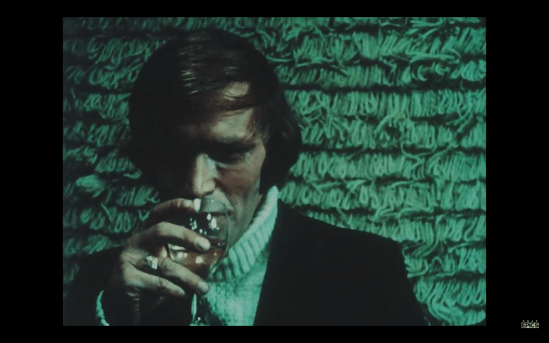
With the associated restoration from the Eye Film Institute, Cult Epics introduces a new 4K HD transfer and restoration of Martin Koolhoven’s “AmnesiA” onto a limited edition, 2-Disc, dual-layered Blu-ray from the original camera negative. IMDB.com lists “Amnesia” as an Arriflex 16mm film blown up to 35mm, but the is incredibly sharp for 16mm and there doesn’t appear to be a ton of makeup work to cover 16mm’s sizzling grainy and jitteriness. However, the film is presented in the European standard 1.66:1 aspect ratio that’s shot in Super 16 and is particularly fascinating how Koolhoven’s color schemes and depth shadowing adds to the noir fashion of Menno Westendorp’s beautifully warm and splintering specious cinematography. Restoratively, “AmnesiA” is a perfectly graded film with a sharp, invigorating image that exhibits no compressions issues on the dual-layer BD50, available on both discs. The Dutch language audio options on the Cult Epics release has three options: a LPCM 2.0 stereo, a DTS-HD 5.1, and a Dolby Digital 5.1. Jumping back and forth between the audio choices, I settled upon the DTS-HD surround sound mix that produces a better full-bodied output, if only by a little better with notifiable sharper crackling of the tire and car fires to bring an audible warmth to the scene. Sometimes, it’s the smallest vibrations that make a biggest impact. Dialogue renders nicely on each of the three tracks with clarity and a cleanliness of the recordings. Tracks are dynamically distinct in each scene that creates a nice depth in many of the closeup scenes with more than one actor. English subtitles are available on all three audio options. Special features on the first disc include an optional presentation introduction by director Martin Koolhoven, audio commentary by Koolhoven and star Fedja van Huêt that’s moderated by Peter Verstraten, a 44-minute theater aisle retrospective conversation with Koolhoven and actress Carice van Houten, a making-of featurette, an archive behind-the-scenes with Carice von Houten from 2001, and the theatrical trailer. The second disc includes two bonus films from Martin Koolhoven’: “Suzy Q” from 1999 and “Dark Light” from 1997. The release itself comes in a clear traditional Blu-ray snapper case inside a cardboard slipcover with a new burning tire lens illustrative artwork from Peter Strain. The snapper cover art is a split screen of Alex and Amar with Sandra divisively in the middle and the reverse side of the artwork contains original poster reproductions for “Suzy Q” and “Dark Light.” Disc art is pressed with the same cover design on the feature presentation while the disc two is pressed with an image for “Suzy Q.” The 89-minute “AmnesiA” comes unrated and the both Blu-rays are tested region free. A real mind flayer that gets under your skin in a humorously surreal way, director Martin Koolhoven’s “AmnesiA” stuns as an official debut feature film, a real under-the-radar sleeper hit for the Netherland filmmaking canon, that only Cult Epics could deliver pristinely with a time-of-day restoration and high-definition scan.



 It's Bloggin Evil!