One Out of 7 Most Freaky, if not EVIL, Places on the Planet! “Gonjiam: Haunted Asylum” reviewed! (Second Sight / Limited Edition Blu-ray)

Become Engulfed by the “Gonjiam: Haunted Asylum” on Second Sight’s LE Blu-ray!

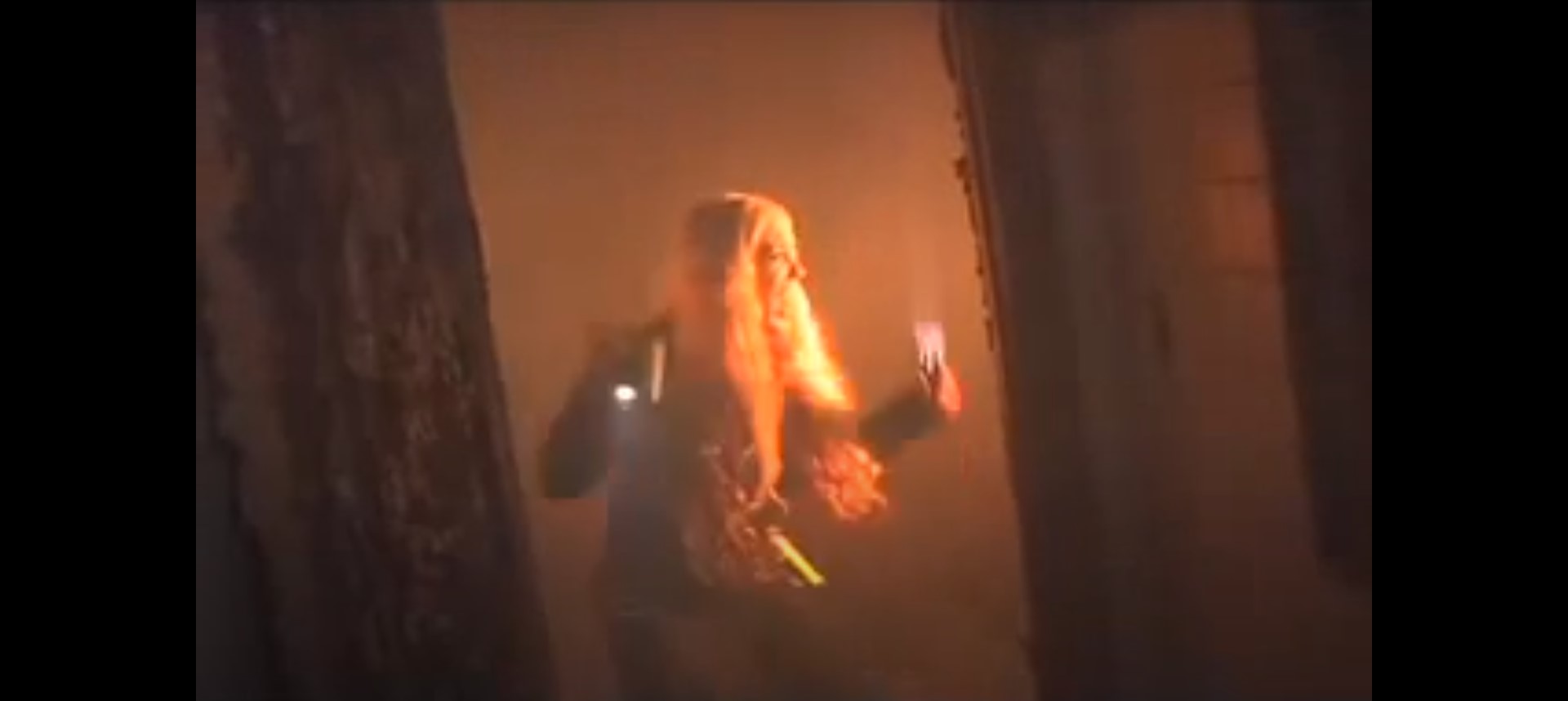
Horror Times, a web series dedicated to horror and hits, travels to the Gwangju providence for their next big event, a special episode aimed to rake in 1 million views worldwide as they explore the supposedly haunted, deserted, and derelict Gonjiam psychiatric asylum after midnight on its anniversary date of its closing.  Already buzzing with historical disappearances of those curious and brave enough to investigate the dilapidated corridors and rooms, Horror Times brings in four guests to join his three-man crew to record every second of what CNN labels one of the seven freakiest places on the planet.  Setup with wall-mounted motion activated cameras, harnessed with individual GoPros, and given a multi-layered script to follow on each of Gonjiam’s four floors, all is going as planned broadcasting live the strange atmospherics that slowly see climbing views from the director’s camped base outside the structure, pulling some fabricated strings to not only heighten his viewer pool but also get genuine frightened reactions from his guest team, but when the team and the cameras unexplainable paranormal occurrences, how far will a director go to reach his milestone goal.

Based off the actual CNN listicle of the top 7 freakiest places on the planet, “Gonjiam:  Haunted Asylum” was a real brick-and-mortar edifice committed to the committedly insane and one of the most suspected haunted places in South Korea until it’s demolishment shortly after the 2018 film’s release.  “Epitaph” writer-director Jung Bum-shik joins the ranks of the South Korean supernatural spookies, accompanying notable entries such as “The Tale of Two Sisters,” “Phone,” and “Cinderella.”  Cowritten by Sang-min Park, Gonjiam:  Haunted Asylum” refreshens the ramshackle mental institutionalized horror subgenre with a dash of social media influence and found footage that entangles grudging ghosts with cyber terror.  Historical thriller and drama producer Won-guk Kim spearheads the project under Hive Media productions and distributed globally by Showbox Films. 
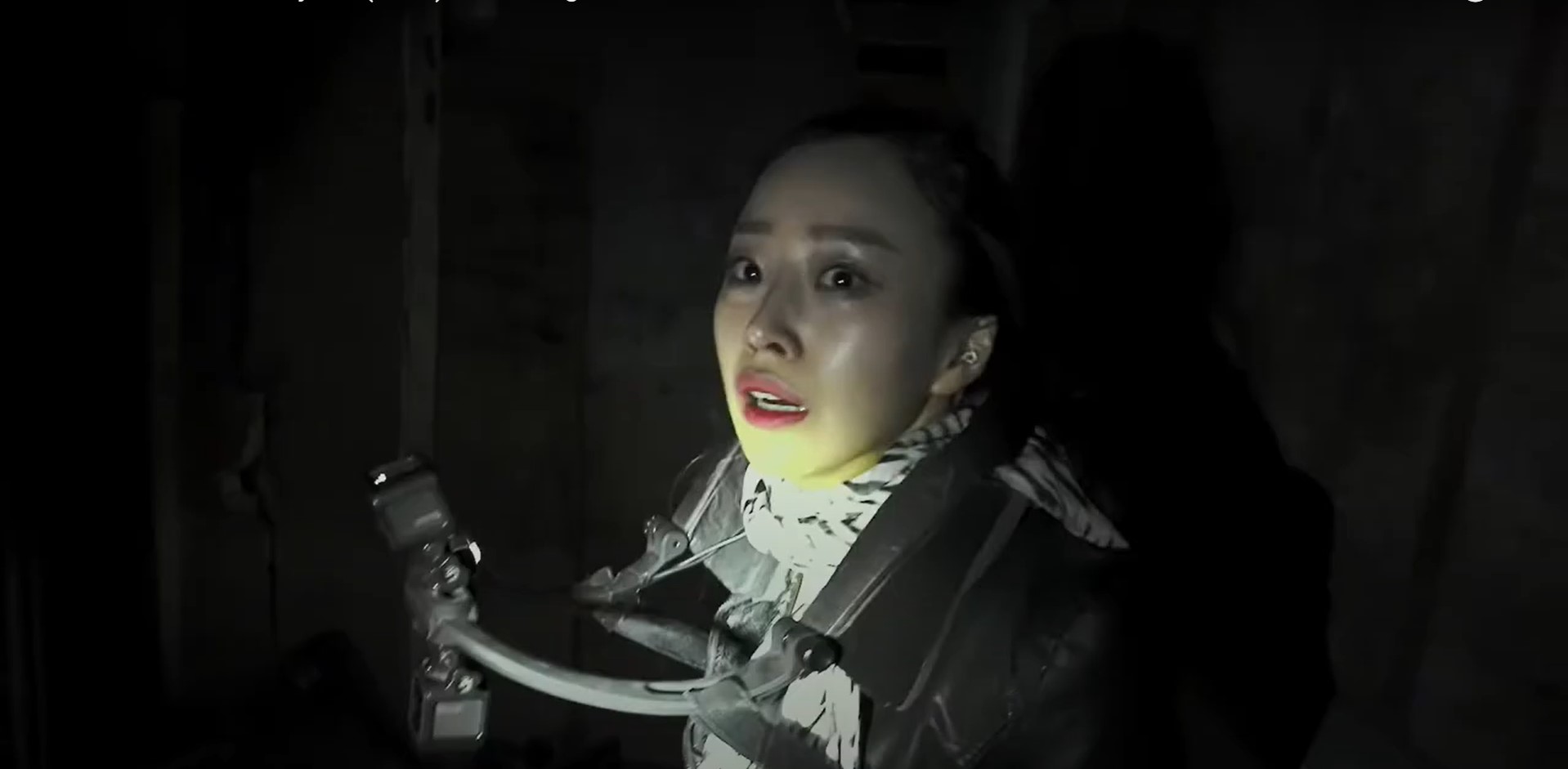
Like a cable-aired, modern-day version of “Ghost Hunters” or “Kindred Spirits,” the vessel Horror Times exploits people’s spirituality beliefs by mingling the exploration of urban legends with gimmicky ploys to keep eyes glued to the show, run up viewership, and earn the root of all evil, money.  The Mystery Incorporated meddling kids might not have a talking Great Dane, but the Gonjiam ghost hunters are a dynamically doomed blend of greed and curiosity, helmed by their captain Ha-joon (Wi Ha-joon, Squid Game) and his on-the-ground, string-pulling marionettes Seung-wook (Lee Seung-wook) and Je-yoon (Yoo Je-Yoon) to conjure up not spirits but pranks under the guise of Gonjiam ghosts.  The unsuspecting portion of the team react as expected, believing the unexplainable as genuine articles of a haunted asylum, until the jokes bleed into the reality of the structure’s incensed force.  Other than Charlotte (Mun Ye-won), a Korean American who travels to Gonjiam to add the location to her lists of CNN’s freakiest places on the planet, there isn’t another mise-en-place character.  Perhaps the others’ backstories are lost in translation but Sung-hoon (Park Sung-hoon, “Hail to Hell”), Ji-hyun (Park Ji-hyun, “The Divine Fury”), and Ah-yeon (Oh Ah-yeon) lose sympathy points for just being there for the sake of being there.  If you haven’t caught on already, the characters and actors name match to add to the faux realism of found footage. 

Veritably surrounded by the actual notoriety of the former Gonjiam psychiatric hospital, the story adds to the established frightening folklore of the rundown building and though the filmmakers were not allowed to shoot inside or on the grounds of the restricted abandoned building, Gonjiam blueprints were used to reconstruction the grimy, trash-laden hallways and various rooms inside a high school.  The effect works like charm used to teleport audiences, along with the help of social media GoPros, selfie sticks, and the like, right into the crumbling ruins; you can almost smell the mold and stank of beyond putrid chemicals and filth.  Yoon Byung-Ho’s cinematography plays with the signal disruption touch, often deploying randomized and intentional interference to convey signal disruptions or, perhaps even, the foreshadowing with the wraithy wrath of spirits; yet “Gonjiam” never truly feels like a found footage film due to its radical differences in video media being implemented and there’s often the unexplainable, no camera-in-use angle that dilutes the subgenre medium.  “Gonjiam” falls into this unquantifiable realm of storytelling that’s hard to digest.  The chaos that ensures in the third act is more palpable, geared toward developing a heavily reliant, hard and fast tension and trembling fear without needing bloodshed for the crowd-pleasing shock factor.

Second Sight sees through the dense barrage of found footage films and spots the pearl amongst the muck with “Gonjiam:  Haunted Asylum,” curating a limited edition, big box, Blu-ray release.  The AVC encoded, 1080p high-definition, BD50, presented in a widescreen 1.85:1 aspect ratio, nears 24 FPS and has flawless technical recording in its digital capturing.  Blacks are dense and rich to create that unknown void apprehension, the neglected belongings of a forlorn hospital have palpable consistency that’s grimy and rusty, and skin textures appropriate lose definition but maintain quality to the extent of equipment limits with GoPros, cell phones, and camcorders in low and hazy key lighting, onboard camera lighting, and some night vision for authentic found footage grip.  There’s not much in the way of diverse color for what is a graded tone of tenebrous obscurity throughout.  I’ve already touched upon Byung-Ho’s purposeful transmissive trouble that impresses more of an annoyance than an integrated factor of fear.  The Korean DTS-HD Master Audio 5.1 delivers on the need-to-hear atmospherics that shudders in echoes and the frantic churn of survival.  What there is not a ton of, and gratefully kept to a minimum, was the eerie wails of the dead as their moments are kept mostly visual in a virtually scoreless runtime that focuses on the surrounding milieu rather than building tension artificially through minor key notes.  Dialogue comes through clearly and clean, especially when muzzled by video camera audio band transmissions.  English subtitles are translated well and synch fine enough with the rapid procession.  Special features include an feature-length audio commentary by Mary Beth McAndrews (Dread Central editor-in-chief) and Terry Mesnard (Gayly Dreadful editor-in-chief), UK’s Zoë Rose Smith’s Fear the Unknown visual-essay on the Gonjiam’s origin, history, and what makes the Korean film scary, and archived featurettes with interviews, including with director Jung Bum-shik amongst various crew, that explore the rumored beginnings of Gonjiam’s notoriety that fuels the production into recreating Gonjiam nearly identically, live recordings of the film’s sheer eeriness told through the images captured by the camera harnesses and phone footage, the new faces of fear that circles around the cast and behind-the-scenes table reads, The Sanctum of Horror that aims to explore the connection between the actual freaky locations and their cinematized yarn to create a legacy of folklore for the now demolished Gonjiam hospital, The Truth of the Ghostlore explores Gonjiam’s history and urban myth and how that forms the ghosts in the film, Korean press conference film launch, and the film’s trailers.  As much as we love Second Sight’s authored special features, which from films of the East are rarely produce, there also plenty to be excited about with the physical attributes of the limited edition set, including a rigid and thick sleeve box with a Luke Headland designed Gonjiam building in red and black.  The inside contents include a 6 collector’s art cards in the same red and black color scheme, a 70-page book with new essays from Sarah Appleton (“The J-Horror Virus”), James Marsh (“Wisconsin Death Trip”), film critic Meagan Navarro, and horror content creator Amber T, and finished off with the film itself, encased in a green-colored Amaray with the same front cover artwork as the rigid slip box.  There are no inserts, and the disc is pressed simply with the title, English and Korean, splashed in red on a black background.  The LE set is hardcoded with a region B playback, has a runtime of 94 minutes, and is UK certified 15 for Strong Supernatural Threat and Language.

Last Rites: “Gonjiam: Haunted Asylum” is not just another shaky cam of paranormal activity. The film incorporates a component of reality, embellishing more on top an already suspected haunted building by giving the story teeth, and released with cultural purpose that binds fact and fiction with a terrorizing outcome of some really pissed off spirits.
Become Engulfed by the “Gonjiam: Haunted Asylum” on Second Sight’s LE Blu-ray!

A Dilapidated Terminal Full of EVIL Spirits. What Could Go Wrong? “Prison of the Psychotic Damned” reviewed! (Wild Eye Releasing / DVD)

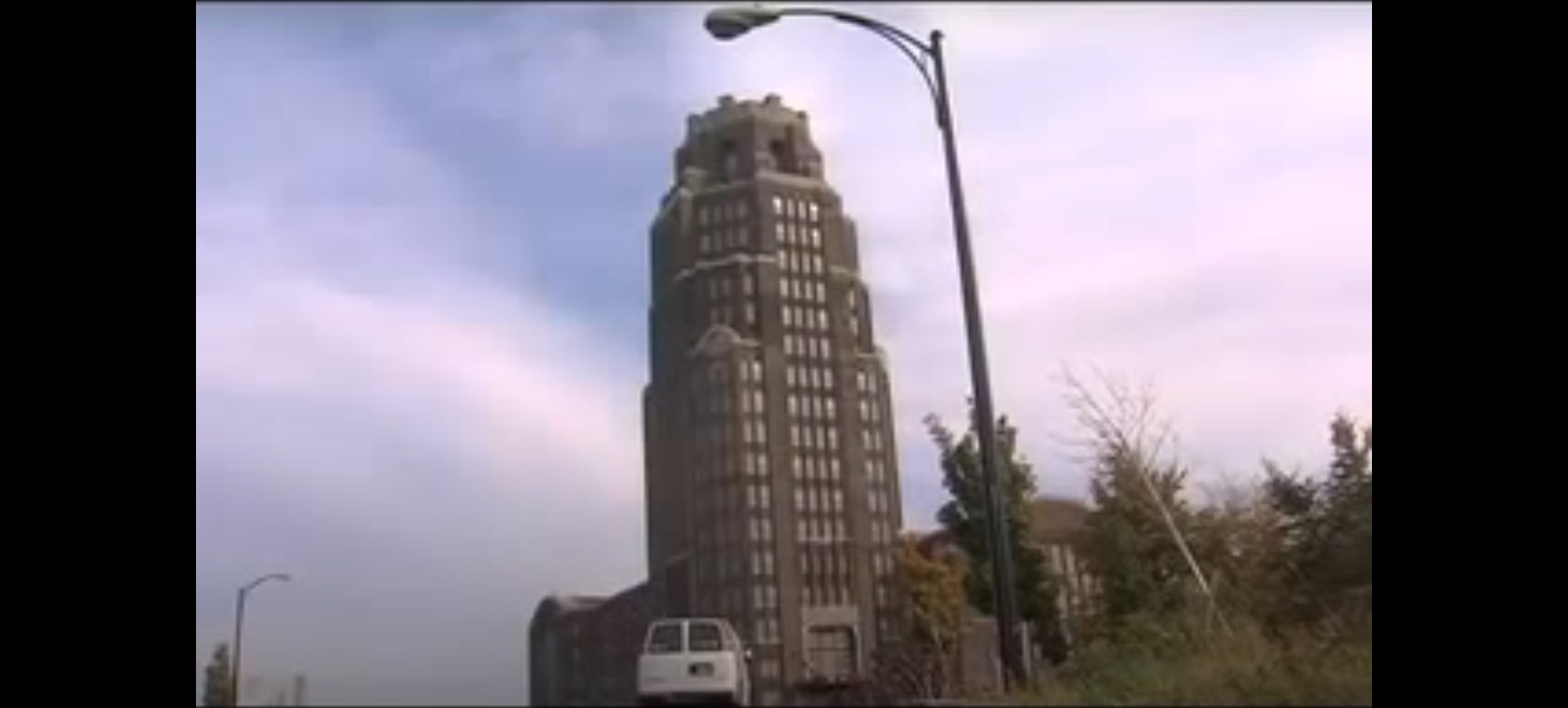
A pre-depression era railway terminal is now an aging and decrepit structure left to ruin in Buffalo, New York. It’s also the site where an experienced paranormal investigator, her ghost-tech guru, and three volunteers venture for exploration, hoping to uncover something spooky that goes bump in the dark because of the buildings long-marred and infamous history that includes an insane asylum, an unorthodox cattle abattoir, and many unexplained and terrible deaths throughout the decades. The deeper they dig down into the terminal’s underground corridors, the more they find themselves lost in a labyrinth amongst a taxonomic diversity of unhinged ghosts and ominous orbs. Lost and being hunted down, the ghost hunters fight for topside survival before absorbed by the terminal’s evil past.

Ghost hunters investigating the eerie ambience has been a source of easy pickings for producers and filmmakers from television’s “Ghost Adventures” to the popular James Wan phenomena that is “The Conjuring” franchise based off the Ed and Lorraine Warren investigations. The then mid-30s, New England filmmaker, David “D.W.” Kann hops aboard the investigator train with his own specter-sleuthing indie film, “Prison of the Psychotic Damned,” penned by producer David R. Williams (“Frightworld”) and released in 2006.  Also known as “Prison of the Psychotic Damned:  Terminal Remix,” the once puppetry and props master, who worked on such classics as “Carnosaur 2” and “Children of the Corn III:  Urban Harvest” as well as hitting the big time with Jim Carrey’s “The Mask” and the 1995 video game adaptation, “Mortal Kombat,” showcases the historic Fellheimer & Wagner Art Deco-architecture that once stood grand inside the Buffalo Central Terminal.   Built in 1929, the 15-story building has been abandoned since 1979 and left for the whim of vandals until its sloth restoration in the 2000’s that even saw paranormal activity themed reality shows take a crack of discovering spirits beyond the grave.  “Prison of the Psychotic Damned” also is an imprisonment of psychotic fraud as David R. Williams was arrested and convicted of embezzlement of his then employer’s capital back in 2010 to fund his schlock ventures under his production company, Red Scream Films, including this film but that didn’t stop Williams who went on to continue producing and directing long after his short stint in the slammer. 

About as volatile as Mount Vesuvius wiping out Pompeii in 79 A.D. are the five, dynamically counterpoised ghost hunters driving toward their insensible doom at the Central Terminal.  Spearheading the venture is the most experienced investigator Rayna (Susan Andriensen, “The Blood Shed”) with the intention of reviving her dwindling career before becoming defunded by the grant investors.  Rayna is joined by her longtime tech assistant Jason (James Vaughn) looking to capture something, anything, supernatural with his homemade psychokinetic-detecting gear as he innocently enough flirts with the snarky unwilling participant Kansas (Melantha Blackthorne, “Bloody Slumber Party”) who finds herself on the brink of losing her funded wayward lifestyle if she doesn’t join Rayna’s expedition per her moneybag father’s direction.  The relation between Rayna and Kansas is being step daughters, but that connection isn’t made entirely clear with only one brief exchange regarding Kansas’s forced attendance.  While Kansas disparages much of the investigation, and many of its participants, she’s joined by fellow volunteers Nessie (Noel Francomano, “Kottentail”) and Aurora (Nemesis 5:  The New Model’s Daiane Azura, credited as Demona Bast) in their respective roles of Rayna’s geeky fanatic and go-to psychic.  The one aspect that really kills these characters (pen intended) for me, and probably the audiences, is the consistent, continuous, ceaseless contentiousness between them with a slew of nitpicking, name-calling, and verbal and physical abuse that makes you wonder why should we even care for a bunch of people who can’t get along.  Brief moments of reasoning flash between them that could end up turning the dynamic around, but the fleeting qualities subside to blunt anger and hate to the point they’re bashing each other’s heads with bricks and leaving each other to fend for themselves against a horde of surgery-conducting ghost-zombies with revoked medical licenses, played by Kidtee Hello, Terry Kimmel, Michael Ciesla, Kelly Budniewski, and Jessica Grangler rounding out the remaining cast list. 

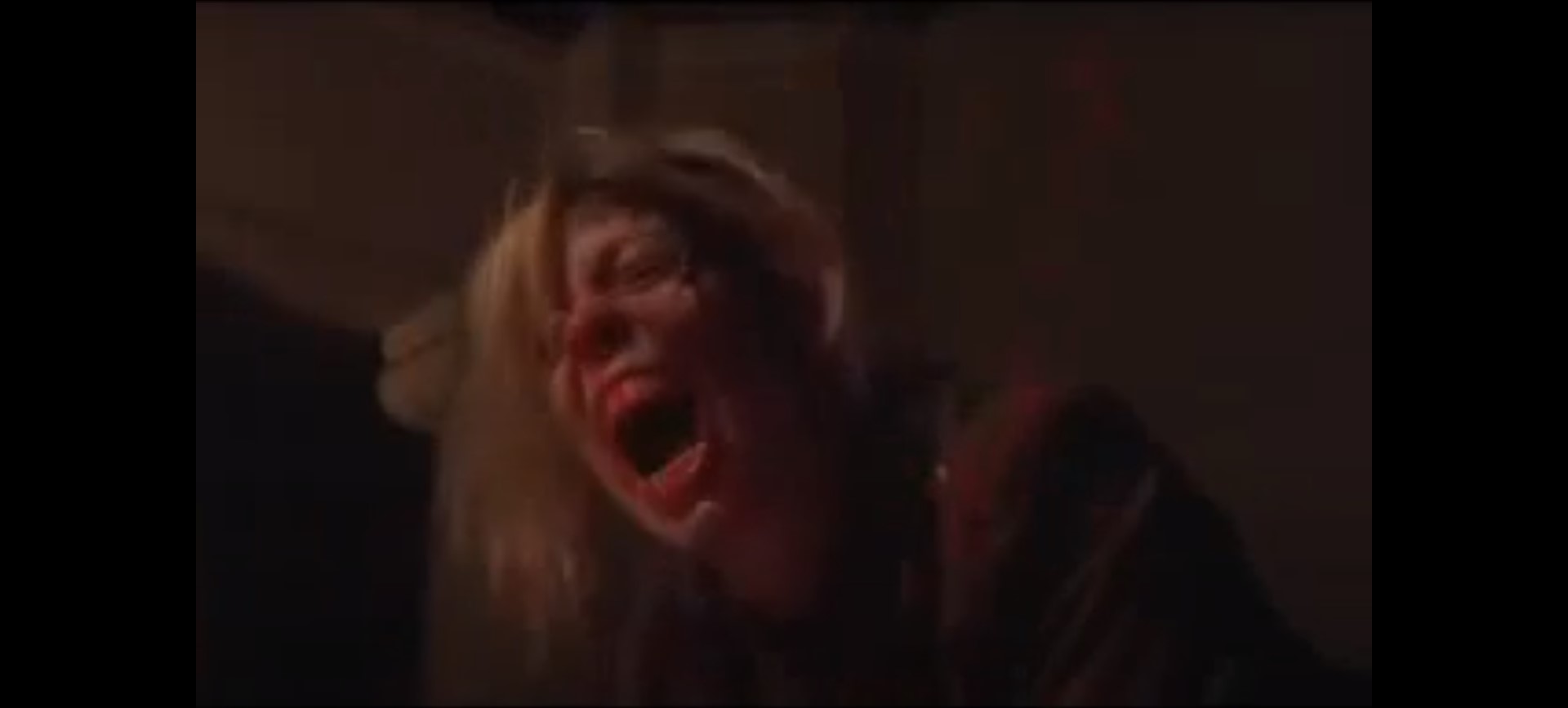
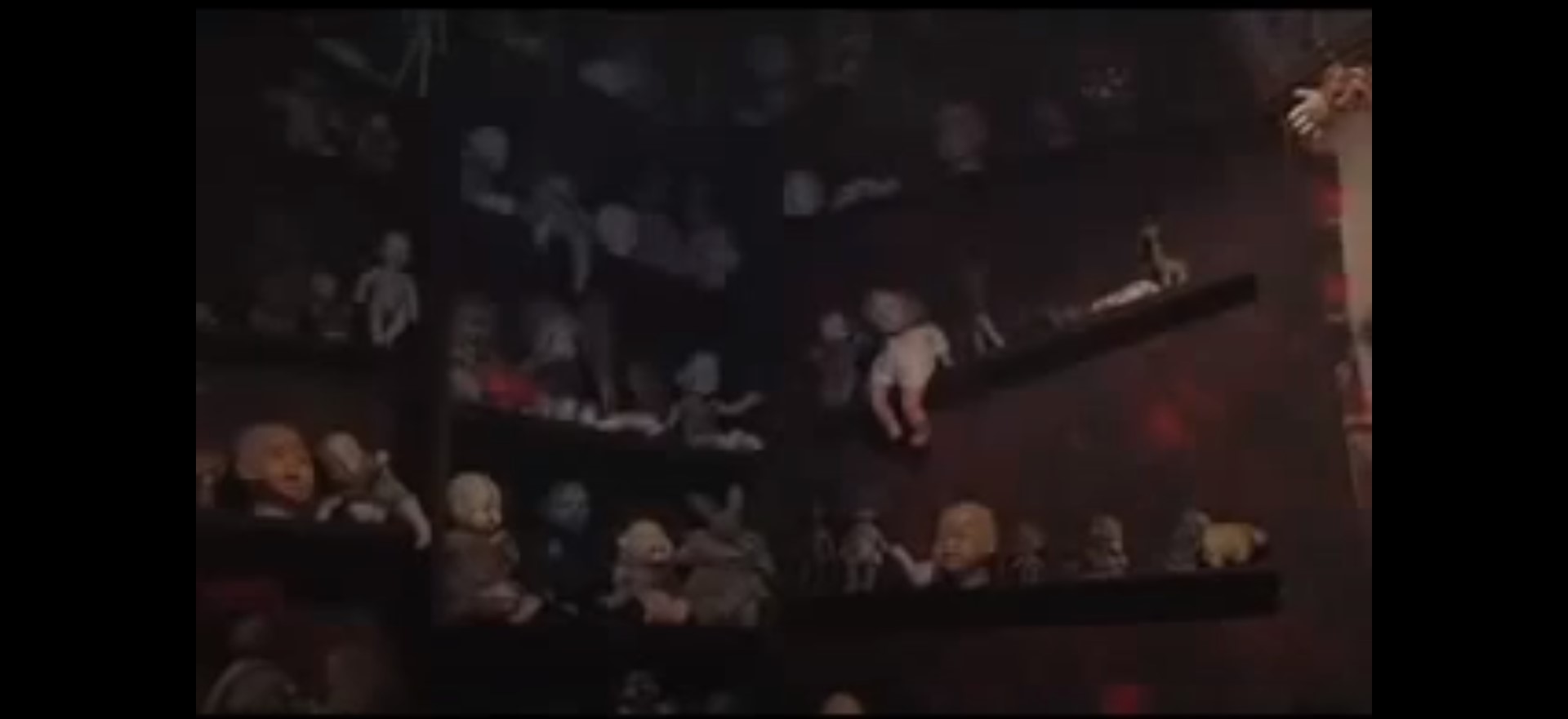
In what feels like the distant cousin, watered down version of “House on Haunted Hill” lite, Kann’s lowbrow, Digital8 shot film is a talkative spew of exposition that lends itself to pretentious prologue surrounding Kansas’s opening scenes of self-mutilation and prosaic nudity as if she’s on an unidentified narcotic.  What’s more confusing about the out of context opening scenes is we don’t really know it is Kansas alone in her apparent apartment.  The film begins with a woman slashing her wrist and licking the blood from her wound, before two medically masked men rush through apartment door and whisk her away.  Next scene, the same woman is back in perhaps her same dingy, dim lit apartment, but this time she’s spouting out philosophy and exposing her breasts by ripping her cheap cotton, tight white top before getting into a warm, steamy bath to stare at the candles at the other end of the tub.  Next thing we know post title creds, we’re riding in a van with the five paranormal investigators and Kansas, sitting in the back seat with Nessie and Aurora, doesn’t even look like the person we saw in the prologue as her hair is put up tight in a bun and she outfits more makeup and gothic drapery.  Once Rayna and Kansas have a sidebar chat and Kansas’s hair progressively loosens and falls, the pieces begin to fit together that Kansas’s disturbed impulses has forced her father’s hand to pair his errant daughter with Rayna for some extracurricular activities that maybe will do her some good…?  Ghost hunting must be the new vogue therapy the kids are into these days, or at least back in 2006.  Structurally, “Prison of the Psychotic Damned” runs faithfully the same obscured narrative course with Rayne expiating mouthfuls of the Terminal’s anecdotal infamy to build a dark dome above the longstanding history, but we rarely see any of the said mythos come for blood and get punted random glowing orbs, creepy doll room, and gloppy possession in return.  Along the way, Kann finds some ways to expose all but one of the actresses’ breasts in a gratuitous-laden attempt to advert our attention from the misaligned components like the story or the performances that just consist of ball-breaking personalities becoming trapped underground with killer spooks and have to duck and dodge the malevolent spirits to survive.  Though the gory bits sate nicely and David Williams erratic editing of eerie filler shots of the Terminal and surrounding area renders like a formidable damaged homemade movie on screen, “Prison of the Psychotic Damned” ultimately boils down to just more of the same rebranded indie slop we’ve all seen before.

Wild Eye’s DVD is released under the indie company’s Raw & Extreme sublabel and is the third physical release of “Prison of the Psychotic Damned” behind the cheap York Home Entertainment DVD and the SRS Cinema limited edition Blu-ray that was released approx. 2 years ago.  The DVD back cover lists the region free film as a widescreen presented transfer, unrated, and clocking in a 100 minutes.  Producer David R. Williams once noted that the surviving master transfer of a flood that destroyed nearly all material is the best there ever will be and with many dark areas shot on a Digital8 camcorder, the presentation is practically raw footage switching back and forth between digital third person and POV with ghosting and soft details amid the thick grain that collaborates the fact of a cruddy transfer. The lossy English 2.0 stereo sound mix toggles with the ears about as much as you have to toggle with the volume. From dialogue to score, insipid flat audio mix universally stiffens the Terminal urban legends Rayna rambles on about as well as extinguishing the score to a putter of insignificant industrial tones with a bookend and backup soundtrack by The Voodoo Dollies and actress Demona Bast serenating with the gothic-vamp vocals with Sonic 14 on an outro track. Among a static menu with scene selection, only Wild Eye trailers are included with the release. Buried beneath the torment of deranged souls, “Prison of the Psychotic Damned” sequesters itself from originality and from graspable, relatable, or even likeable characters in a vanilla story with decent gore effects.

Own “Prison of the Psychotic Damned” on DVD from Wild Eye!