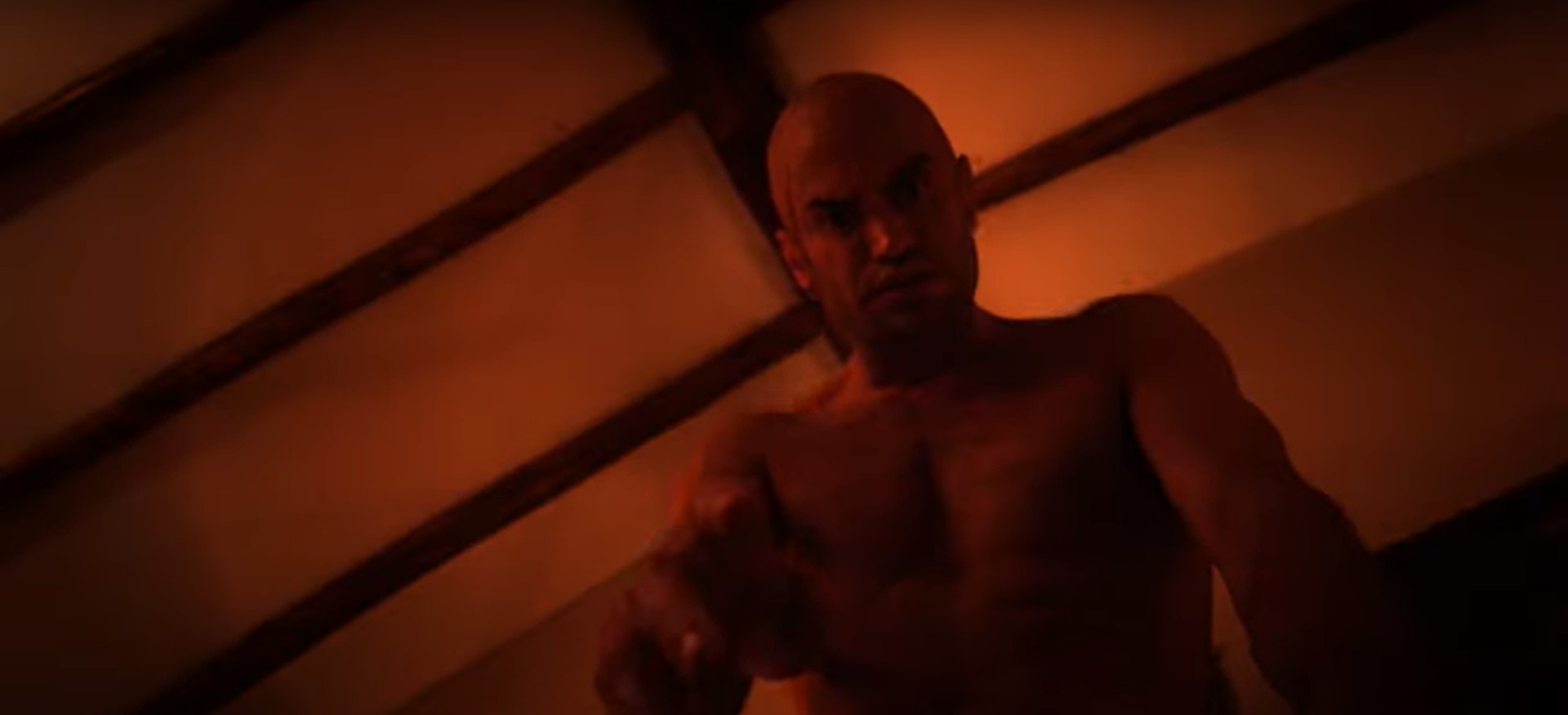
Staying in the Closet Can Lead to an EVIL Series of Events! “The Latent Image” reviewed! (Cinephobia Releasing / DVD)

Out today on DVD “The Latent Image” from Cinesphobia Releasing!

An aspiring novelist isolates himself in a secluded cabin to write his work-on-progress thriller without distractions, especially avoiding he contentious ones with his longtime boyfriend. Working through the night hours on the precipice of a storm, a mystery man drifts into the cabin, injured and claiming car trouble. After letting him stay the night on the couch and knowing he should ask the drifter to leave, the man’s rough allure instills deep desiring dark fantasies to bubble up to the surface that result in keeping his lingering presence around while also the experience doubles as subject inspiration for his novel. Yet, there’s something off about his unexpected and unusual visitor that lends to curiosity into what’s being hidden or being unsaid. The drifter’s trunk becomes an object of obsession that turns into wild speculation. Fear and fantasy collide into an explosive and destructive cat-and-mouse game of downlow and deadly secrets.
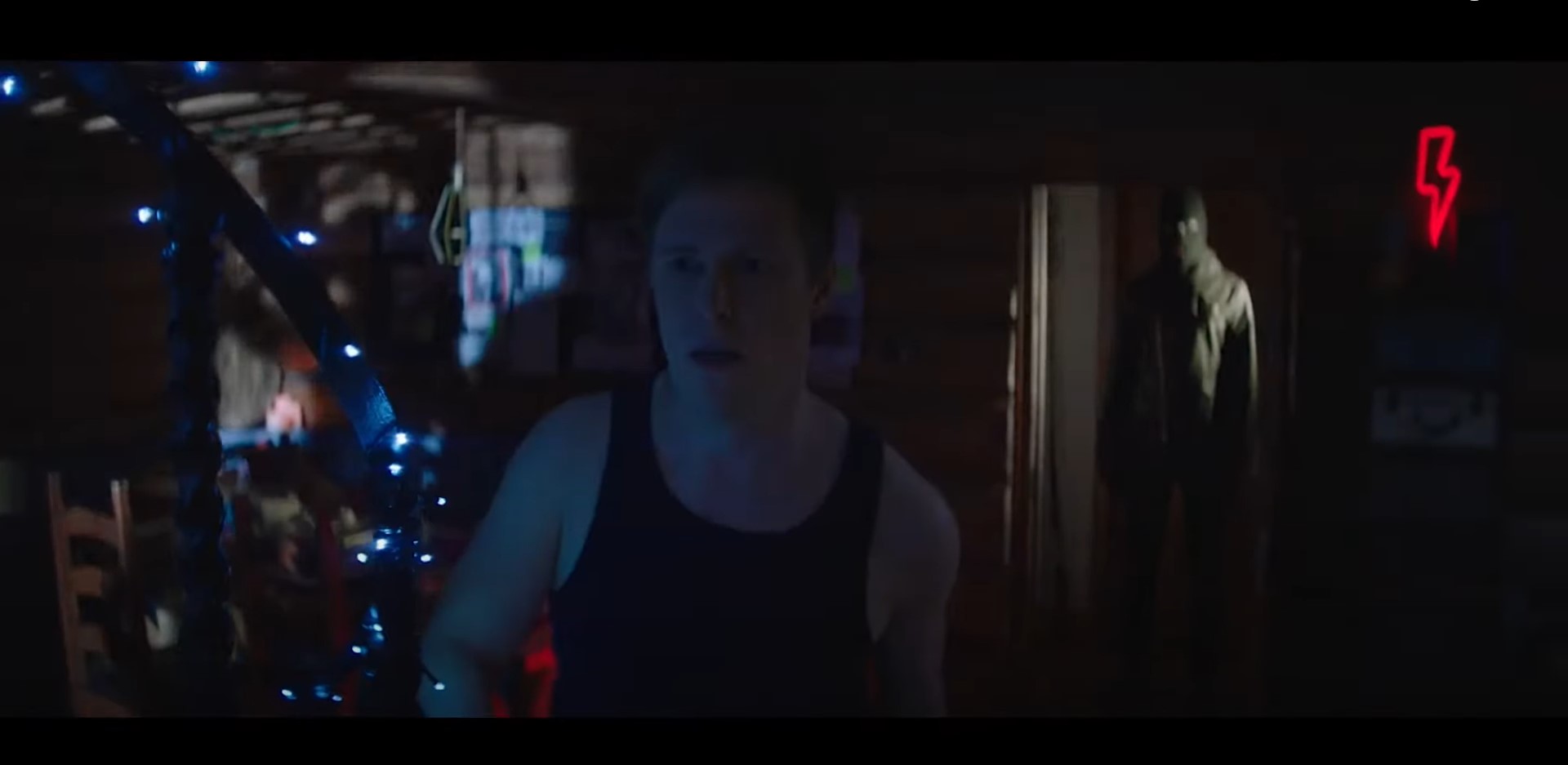
Based on the 2019 short film of the same title, writer-director Alexander McGregor Birrell (“Braincell,” “Sleepaway Slasher”), alongside co-writer and star Joshua Tonks, return to “The Latent Image” for a 2022 full script treatment to flesh out a fleshy grass isn’t always greener on the other side homoerotic thriller.  “The Latent Image” is Birrell’s third feature length film of essentially is Joshua Tonks inaugural writing and producing credit into the United Kingdom production that clashes tantalizing and dangerous one-time temptations with the safety and security of routine and longevity woven out of being inside a complicated gay relationship that stings with old systematic-induced worries and consequences.  Latent Image defines as an exposed picture or film not yet developed and Birrell and Tonks use that to purposely shield viewers from the utmost truth until the petrifying picture is clear.  Latent Image LLC in association with the queer community storytelling serving June Gloom Productions are the picture’s production handlers with the latter company’s Brandon Kirby and Michael Varrati as executive producers and Tonks and Birrell co-producing their debut feature collaboration.
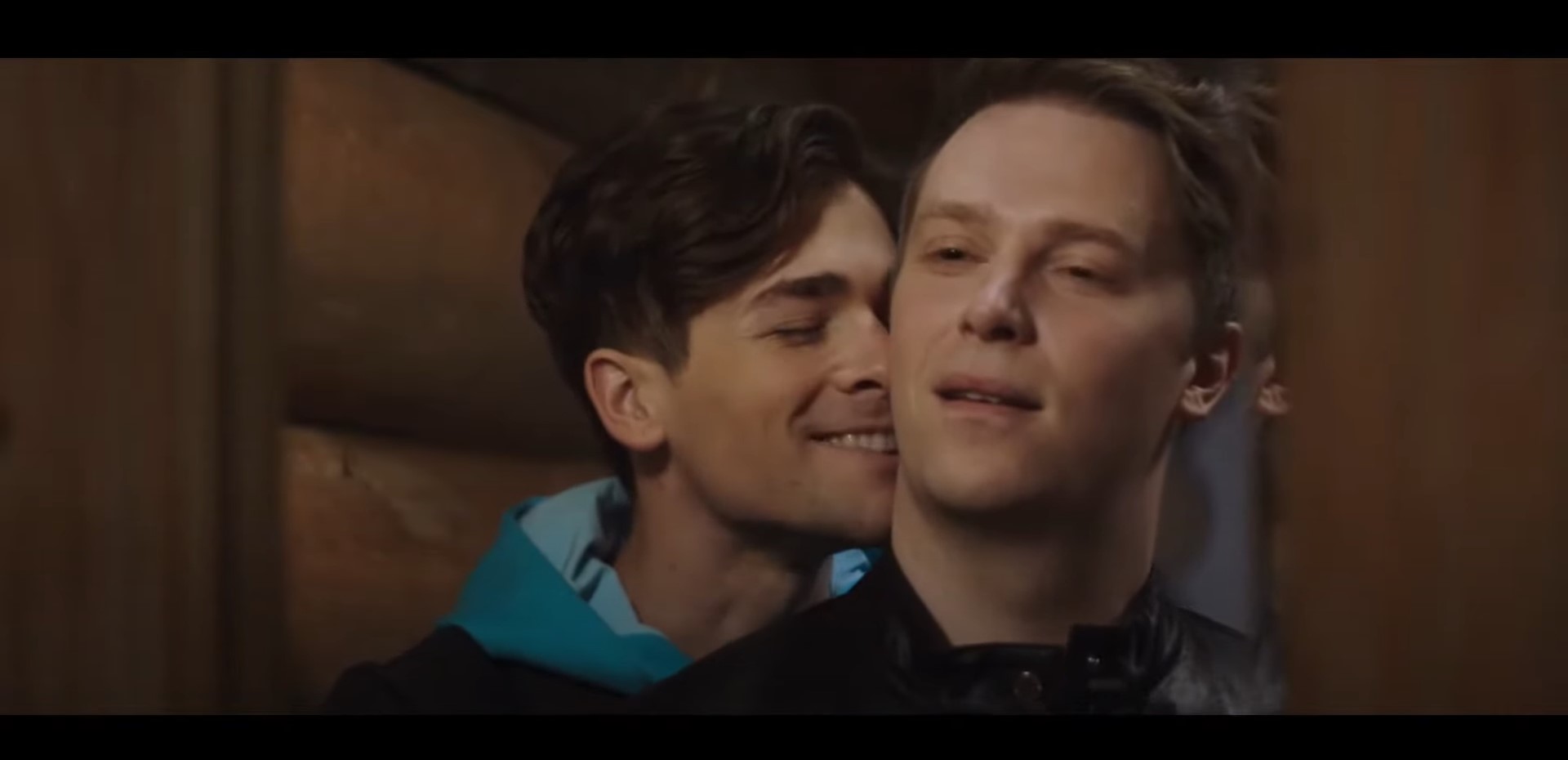
Being Joshua Tonks’s grandstand into his first feature production and as the lead character, the British-born, Vancouver film school-trained actor reprises his short film part with only two significant differences:  one being a principal name change from Robert to Ben and the other in providing Ben with more substantial backstory in the form of reveries or creative abstractions of a linear trickster narrative.  Ben’s old school, a reflection seen through his love for old photography without a display screen, his typewriting of the novel, and filming on celluloid film stock with a Super 8 camera.  This affinity for the antiquated matches his sexual stigmas, a flaw that shepherds in more harm than good.  Tonks readily handles Ben’s technological quirks as well as deepen his character’s philandering fantasy life with sexual daydream and night terror trances of being pursued, abused, and enjoying it.  Tonks works off the more indelicate stranger-danger of fellow Vancouver film school graduate Jay Clift.  Long hair, leather jacket, rugged approach, Clift in the role simply known as The Man portrays patience as weapon to wield to win over the quasi confidence and trust of the lonely and relationship confused novelist with an active imagination, a deadly combination to be caught with your pants down.  Clift becomes the character interloper in Ben’s life in more ways than one, some more subtle than others, and equivocally provides baited lure to either seduce the novelists or setup him for a fate far worse.  To complicate matters, Ben’s boyfriend, who he has a current agitated relationship with and viewers will initially think is safe and cozy back at their abode, will eventually enter the picture with newcomer William Tippery in the role to complete the all-male, three-man cast.
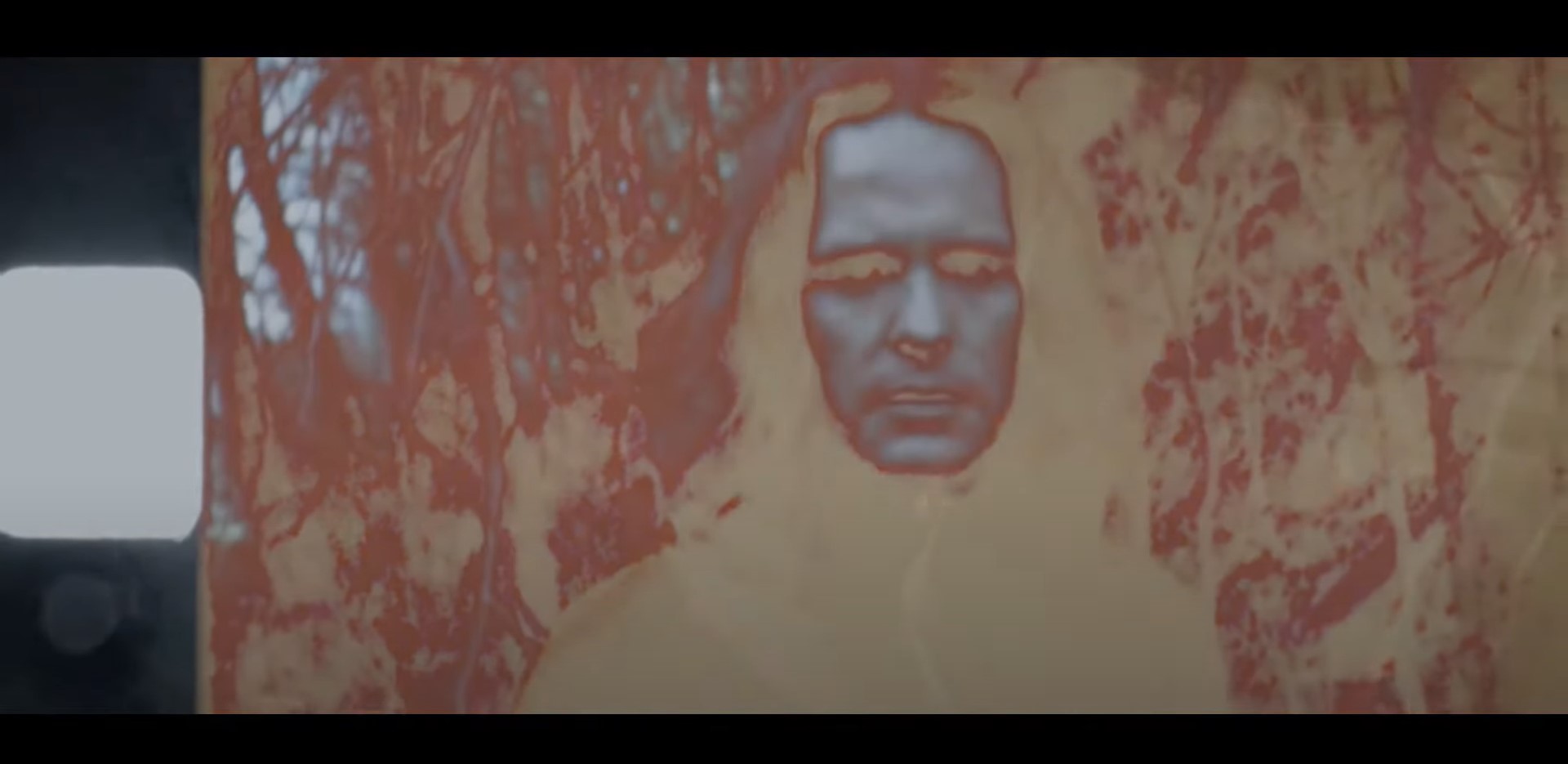
“The Latent Image” plotline doesn’t justify Birrell’s picture as anything else but another stranger showing up at cabin in the woods thriller.  However, beyond the shallows of the film’s surface level tension are deeper waters surrounding Ben’s parting of pathways.  The novelist not only struggles to conjure up a decent spinetingling narrative, but he also struggles personally with an uncertainty of where he fits into his relationship with at-home boyfriend Jamie and with this new, dark fella wandering into the cabin in rake portance.  From the beginning, Birrell and Tonks often visits Ben’s unconscious chimera but also often feels very real in its merge of reality and fantasy of what Ben’s sometimes wishes would happen, but don’t expect this thriller to be a based in psychosis.  “The Latent Image” is not a mental health movie of one man’s isolation snaps his baseline reality.  That would have overdone, overcooked, and overserved with stale bread and flat soda.  What “The Latent Image” taps into is not the age-old tale of a drifter’s in doubt motivations but rather a fear of being found out or fear of oneself when they themselves are unsure of who they are as a person and that can be a scary thought to let the imagination run wild. 
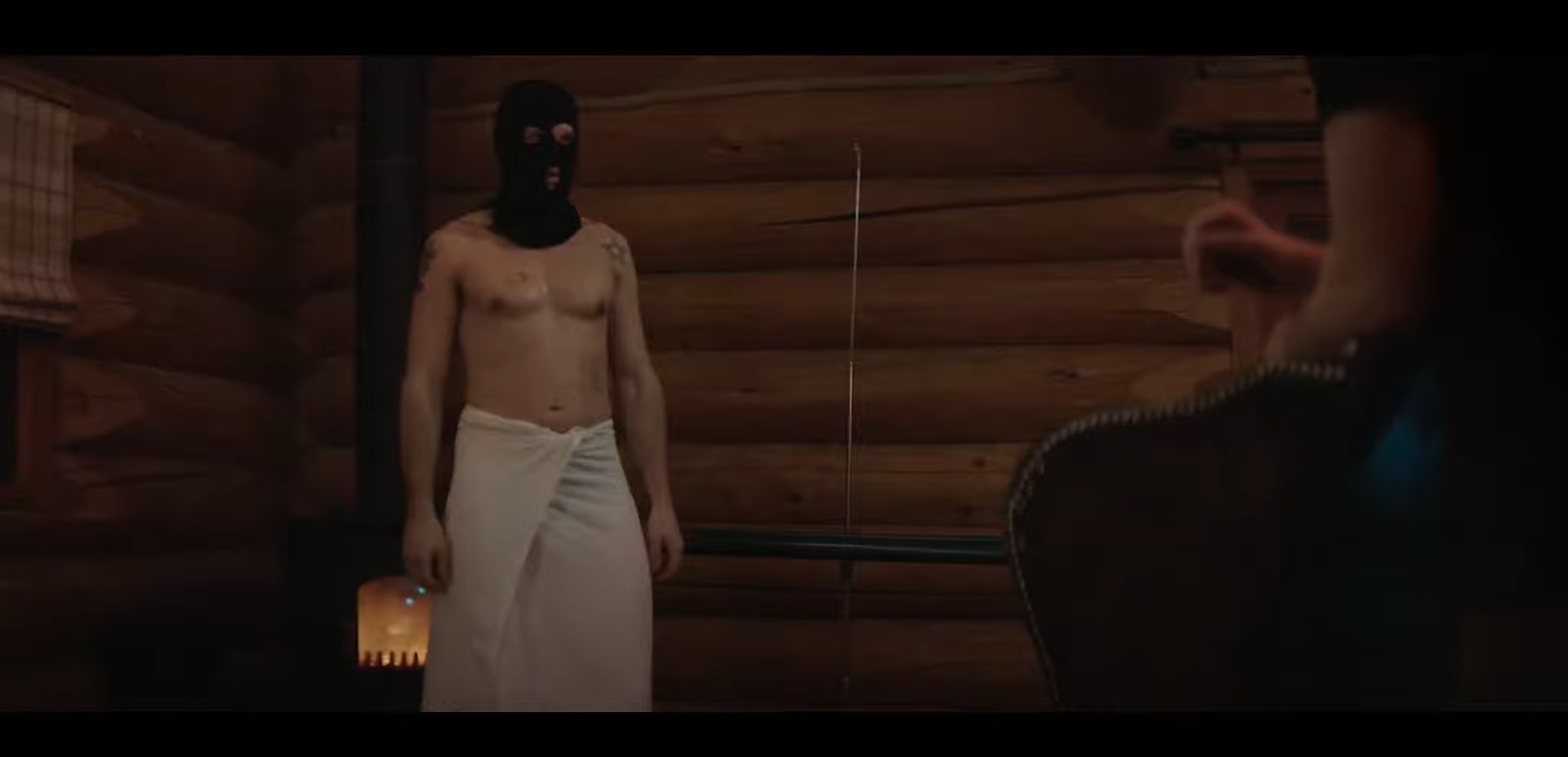
“The Latent Image” lands a debut distribution deal with the Philadelphia based Cinephobia Releasing.  The single layer DVD, arriving on retail shelves September 12th, is a compressed MPEG presented in anamorphic widescreen 2.39:1 aspect ratio.  Between the use of anamorphic lens, split lens, Super 8 reverse stock, and a ton of mood lighting, “The Latent Image” really pops cinematically with a variety of visuals and looks that can induce a breadth of emotions.  For a DVD presentation in an age where Hi-Def continues to the upward climb, the Cinephobia Releasing has tremendous sharpness and detail inside and out of the fuzzy warmth and often the vividly brilliant, focused lighting that induce back and front shadowing, decoding at average of 8 to 9 Mbps that eliminates any prospect of compression complications.  The English audio options include a Dolby Digital 5.1 surround sound and a Dolby Digital 2.0.  The 5.1 trumps the 2.0 In offering much environmental elements of rustled foliage and depth of character actions.  Dialogue conveys strongly, securing its spot Infront of the other tracks where depth allows.  English optional closed caption subtitles are available in the setup menu.  Special features include an audio commentary with director Alexander McGregor Birrell and stars Joshua Tonks and William Tippery going over their mindset of the characters, background, and visual and stylistic choices in an enlightening discourse, the 2019 short film “The Latent Image,” the audio commentary for the short featuring just Birrell, and other Cinephobia Releasing trailers.  The 83-minute film is released not rated and has region 1 layback, untested for other regions.  Well executed indie suspenser with a subtext clout to one’s essential nature and a smartly planned story has exposed “The Latent Image” as impressively top-notch and worth seeing. 

Out today on DVD “The Latent Image” from Cinesphobia Releasing!

This Relationship is a Complicated EVIL! “Blood-Red Ox” reviewed! (Breaking Glass Pictures / DVD)

Purchase “Blood-Red Ox” on DVD home video!

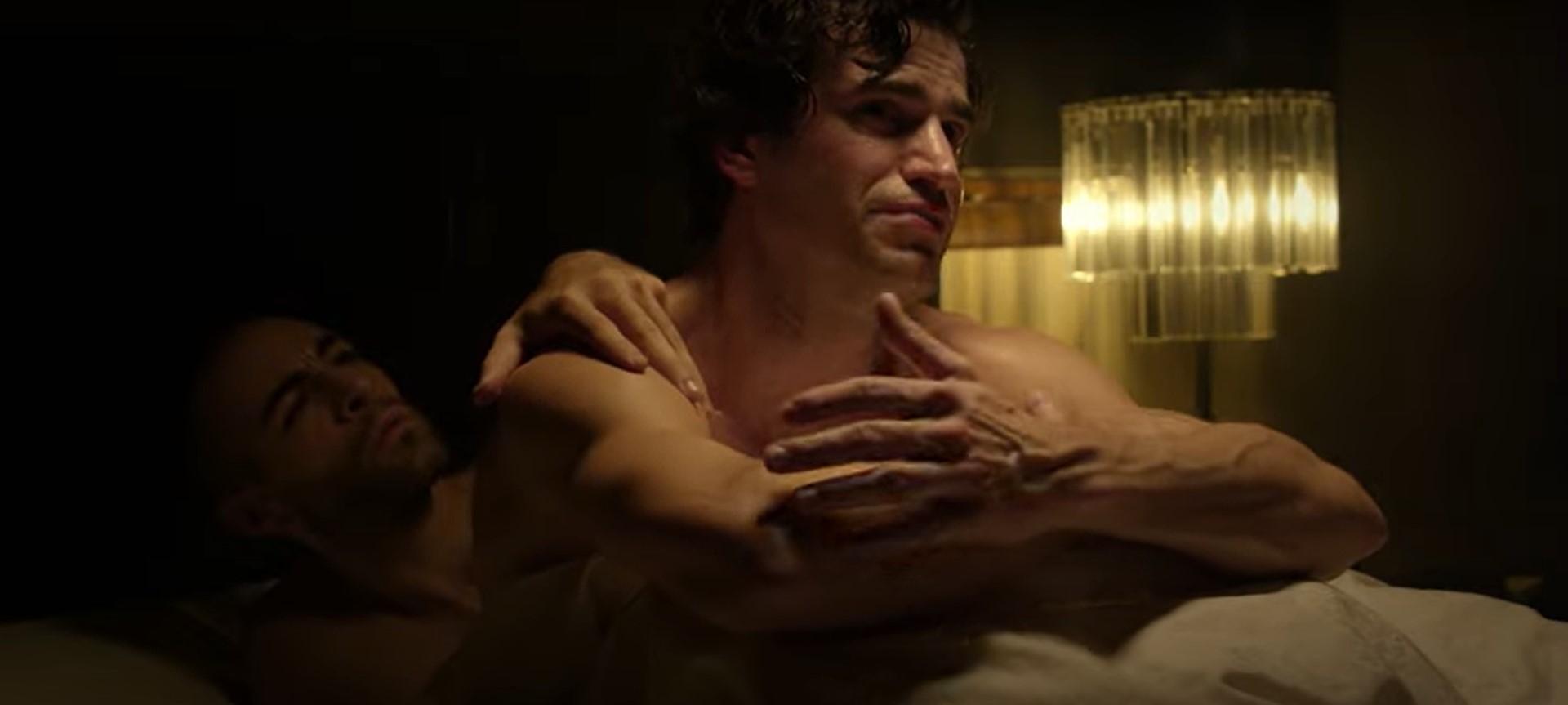
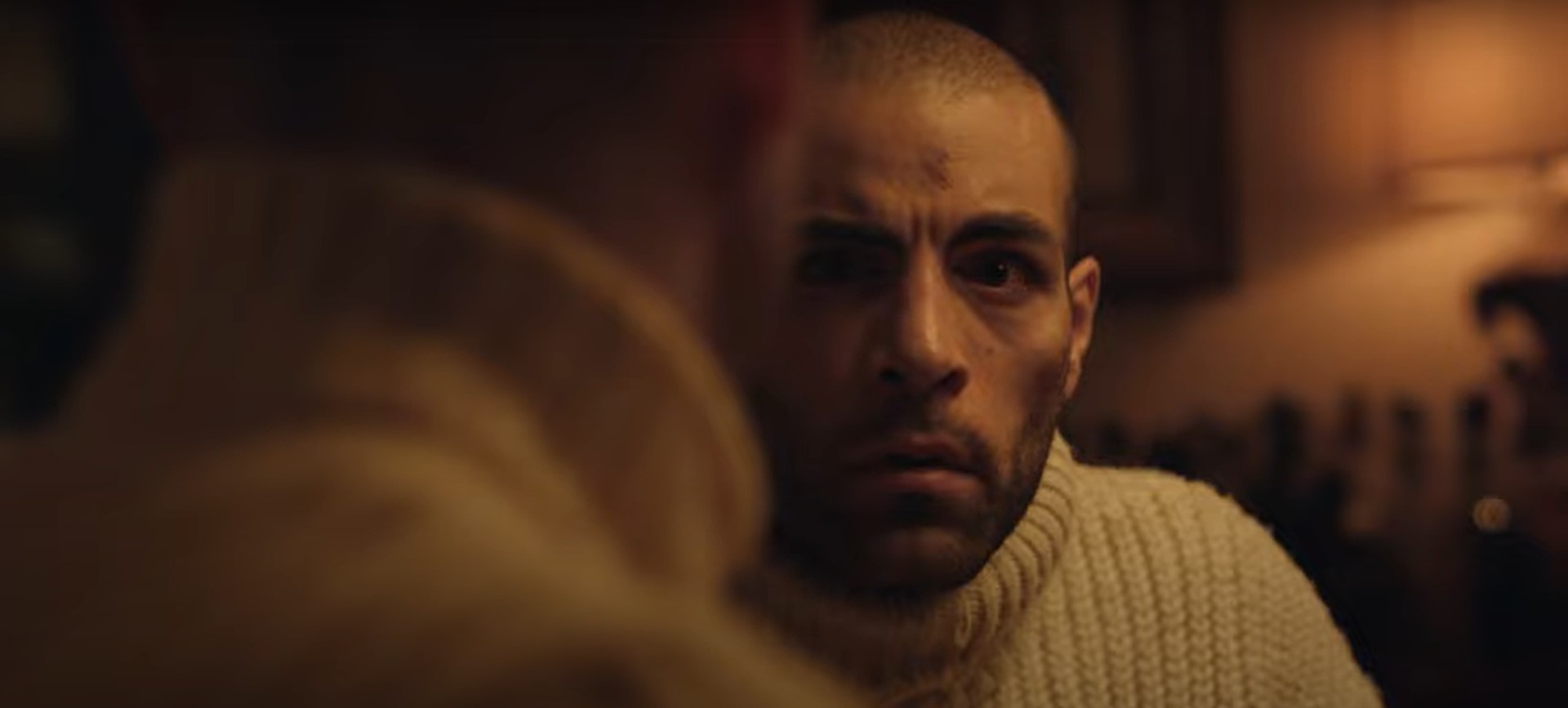
Writer Amir and his boyfriend Amat, whom have a hot-and-cold, off-and-on relationship, travel down to Bolivia on behalf of Amir’s friend seeking an expose on protecting the local endangered rainforest from land developers.  Upon arriving and settling into Amir’s friend’s childhood home set on the outskirts of town, Amat begins to experience reoccurring vivid nightmares that used to plague him prior to meeting Amir.  Disorienting, blood-soaked, and with a vicious-looking therianthropic beast – half-ox and half-human, Amat slowly begins to lose memories and even the memory of Amir fades.  Amir struggles to reconnect with Amat who’s continues his spiraling decent into paranoia and also struggles with juggling timelines as events of the past and present intersect in a surreal pattern of irrepressible madness.

For someone like me who has married into a Bolivian family and culture, you would think I would have been exposed to the entire cache of Bolivian cinema that could utilize the Earth-centric culture, a rich yet tumultuous history, and the vast number of landscapes that stretch from the Andes Mountains to the lush Rainforests to the desert plateaus.  However, the Bolivian film industry is microscopically small, and I’ve only ever experienced two Bolivian produced films in my 10+ years of marriage and my 39+ years of living on this Earth.  Both from 2021, the first was Kiro Russo’s “El Gran Movimient” aka “The Great Movement” about the destructive city life and how an unprincipled young man is saved by connecting himself back to mother earth by way of a Brujo, a male witchcraft practitioner living disconnected from modern society and living off the land.  The second was this film we’re about to cover, “Blood-Red Ox,” that was written and directed by Rodrigo Bellott, co-written alongside Nate Atkins (“Sinister Savior”).  Bellott bounces between native Bolivia and New York, having graduated from Ithaca College, and regularly uses the two locations in a broader sense in his films.  Bellott is also a part of the queer community and reflects a queer theme in much of his repertoire, including “Blood-Red Ox” where the two central characters are gay men in a relationship.  “Blood-Red Ox” is a production of Narrative Engineer, presented by Media Luna New Films, and is produced by Bellott, Andrea Componovo, Rodrigo A. Orozco, Kaolin Bass, and Yasser Casal Moreno with Nate Akins and Bernardo Ratto serving as executive producers.

Lebanese American Mazin Akar stars in his breakout feature length film as journalist Amir whose been called to write a story about the threat of an oil company deforesting and disrupting one of Bolivia’s natural and beautiful preservations, the rainforest.  Akar is accompanied by producer Kaolin Bass in what would be Bass’s debut feature film as well, playing Amir’s complicated love interest Amat.  Akar and Bass make a handsome couple, natural in on screen affections, and there’s a fair amount passion, compassion, and cathartic emotions to understand not only their love for each other, but also their surface issues of trust.  Bass provides an engaging performance as lover moving backwards in time in regard to his relationship with Amir while Amir remains the constant, stuck in the now but disoriented by his consciousness of Amat’s seemingly erratic actions but not conscious of the settings and timeframes that change and only noticeably by the audience.  All the while, Amir is encountering Bolivian and New York-based characters, some strange to them, some with changing personas, and others not terrifyingly abstract, such as the ox-headed naked man huffing and puffing like an ox.  Side principals Amancaya (Andrea Camponovo, “The Shades”), Amaru (Vitorio Lema) and Amro (Julián Mercado) have a parallel story of their own that becomes shadowed by Amir and Amat’s, leaving the story imbalanced by its perhaps narrowed focus on the queer aspect that relates better to Bellott, which the director had mentioned that “Blood-Red Ox” is a personal story to him in other articles.  Performances are raw with intimate and bold love scenes as well as makeup heavy and continuity intense details that really impress from the actors that requires of them full or partial nudity and to be able to be in the mindset of a swirling narrative.  If you haven’t noticed by now, all the character names begin with A that’s either a fun little characteristic or a far more trouble clue about characters as the cast rounds with Miguel Michel, Ana Dominguez, Idalmis Garcia, Shawn Brown, Toto Vaca, and Mary Ellen Liepins.

Atmospheric, surrealistic, and elevated horror, Bellot’s “Blood-Red Ox” feels like a labyrinth of the mind that’s partly eco-horror with the motifs of a looming ox figure reoccurring in and out of reality and the backdrop of Tarija’s rainforest threatened by industrial outsiders.  In 2017, Tarija suffered a large-scale forest fire that resulted in 3 deaths. many injured, and severe loss of ecosystem crucial vegetation, a fact that was incorporated into the dialogue and becoming the very foundation for the story built around it with a subtle theme of dependency that translates to the Amir and Amat relationship and we can see how that is all folded together when the finale reveals the truth. Before then, the seemingly straightforward mystery narrative following a rocky-at-best same-sex couple deep diving into the South American jungle, surrounded by unfriendly, perhaps slightly appalled locals that are either wary about outsiders or, what’s typical of South American culture, troubled to see two men in a relationship because of the male-dominated society. Much of the reactions are indirect and ambiguous but there, a hidden jab against noticed only by those being pelted by side-eyed glances, disapproval gestures, or curled lips of disgust. Bellott doesn’t chiefly focus on this nagging undertone but rather takes the narrative off road onto rocky, perilous terrain that increasingly becomes abstract and is riddled with conundrums. Timelines cross over one another as we’re teleported seamlessly, effortlessly back and forth between upstate New York and the colonialized-esque villas and mountain country of Tarija, Boliva. Bellott deconstructs Amir and Amat’s relationship by keeping Amir constant in the current and Amat moving backwards in time, creating friction as well as non-linear disorder leading to something just isn’t right with the whole situation. “Blood-Red Ox” descends into a lurid state that works until Bellott’s envoi of explanation that splits the story unevenly and without sensical justification as the story becomes too wrapped up and complicated where a less is more philosophy would have perfectly sufficed.

Provocative and boundary-pushing independent home release film distributor, Breaking Glass Pictures, strikes a deal with Media Luna New Films to release “Blood-Red Ox” onto DVD.  Presented in an unmated 1.78:1 aspect ratio, the wall-to-wall image is hotly lit gel and tinted for most of the fever dreams and hallucinations with the ox-irritating color – a deep shade of red or otherwise known as oxblood red.  However, there are obvious compression issues with fanned out dithered banding on the primary color and on certain negative spaces.  The feature, shot in 2K on a RED camera, is housed on a DVD5 and while a quite few scenes appear unfazed with measured detail, a DVD 9 would have better suited to render the sizeable color use and enhanced the textures, such as a skin to which there is plenty of in the film.  With any digital recording, the transfer is free from any kind of deterioration, wear, age, and other miscellaneous plights.  The audio is track is a lossy Spanish/English Stereo 2.0.  For a dual channel audio output, the result is reasonable enough with the ancillary ambience and dialogue is clear and clean.  The English subtitles are synched well and flawless up until one spelling error late in third act.  There are no bonus features included with this release and there are no bonus scenes during or after the credits. The physical DVD comes in a standard snapper case with a composite of the two principal men embracing each other from one scene with a large, augmented ox head with glowing red eyes and smoke coming out from the side looming above. Locked in a region 1 code, the DVD runtime is 94 minutes and is not rated. “Blood-Red Ox” can be labeled many things – a mental health story, a queer story, an eco-activist story, an avant-garde psychological thriller story – but what the film really symbolizes is the constant day-to-day struggle, in the thick of surrounding horrors, to live a normal life.

“Blood-Red Ox” on DVD home video!