
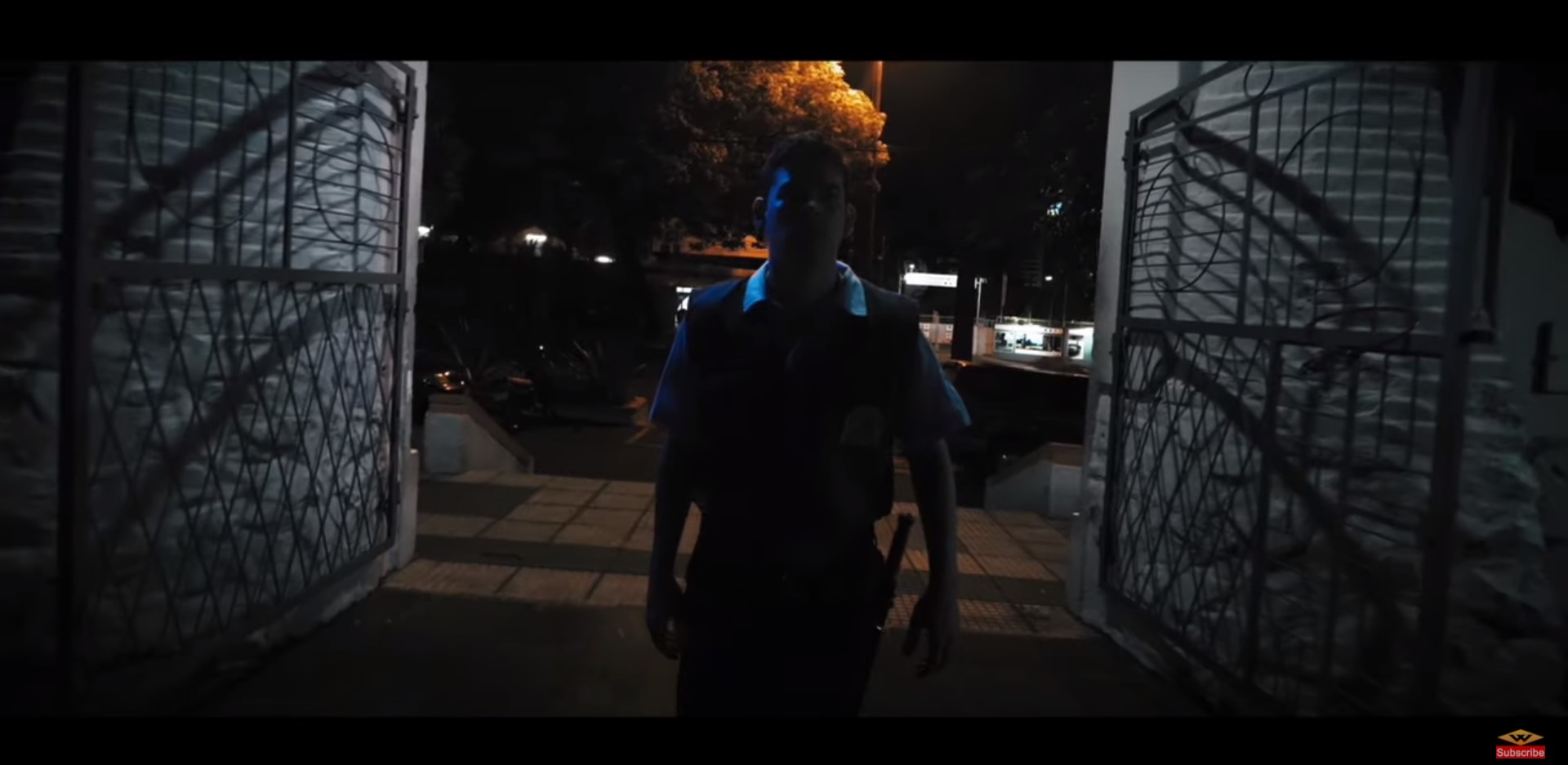
After fleeing a hit and run on his way to his girlfriend’s house, night security guard Diego Martinez is called to work a shift at the hospital morgue later that evening. Seemingly showing very little concern for what transpired earlier, Diego goes through the motions of the night, checking doors and making sure the area is locked up tight and secure. When a pursuit of a vagrant ends with Diego trapped inside the eight table slab morgue, he comes face-to-face with the malevolent paranormal in a terrifying night of survival. Could what be happening to the scared night security be connected to the pedestrian he hit with his car or the transcendence of a purgatory afterlife from those who pass through the morgue without a pulse?
“Morgue” is the Paraguayan poltergeist and purgatory thriller of high anxiety and tenebrific atmosphere proportions from the introductory feature film directorial debut of Hugo Cardozo. The 2019 released horror film, which only recently made Stateside debut onto home video, is supposedly based on real events and written and produced for the silver screen by Cardozo and not only does the filmmaker showcase a hair-raising fright of a foreign film, “Morgue” also highlights the intrinsic South American infostructure and societal norms that’ll certainly be eye-catching details and differences to audiences from Paraguay’s northern neighbors. From the Toyota Hillux trucks that are not sold in the U.S., to the wheel valve toilet flushes, to the open plaza compounds, “Morgue” is a down-to-Earth Latin American production that offers no unrepresentative notional misconceptions of other parts of the world. Trust me, I’ve been to South America and to me, the city framework is authentic to the location. With the support of FilmSharks’ subsidiary, The Remake Co., and HJ (Hugo Javier) Producciónes, a music video and film production company, “Morgue” is filmed in the district city of Encarnación, the capital city of Itapúa in Paraguay.
Much of the story lands on poor Diego Martinez’s shoulders. A cheapskate and a bit of an overall scoundrel, Martinez’s loafing life only has one thing going for it, his doting girlfriend who keeps him on thin ice because of his wandering eye and penchant for breaking promises. Pablo Martinez has no problem playing a fool in Diego’s pitiful life as the actor shifts right into being indolent young man driving a beat-up jalopy and steel shavers just to keep ups his groomed look. On the job, Pablo Martinez has to shift postures to a more diligent security guard which, for a character already established in a foundation without throwing down a trickster trope card, creates an uneasiness and a sense of empathy for Diego during his otherworldly ordeal as he follows his duties without much messing around. Martinez, in both the character and actor, radiates fear once the tables turn and he realizes what he’s up against isn’t human or in figment of his imagination. Or is it? The role is written with some ambiguity on whether his experience might be guilt induced, but that’s for you, the audience, to decide. “Morgue’s” one man show fleshes out with some strong supporting performances from Francisco Ayala, Willi Villalba, María del Mar Fernández, Abel Martínez, and Raúl Rotela.
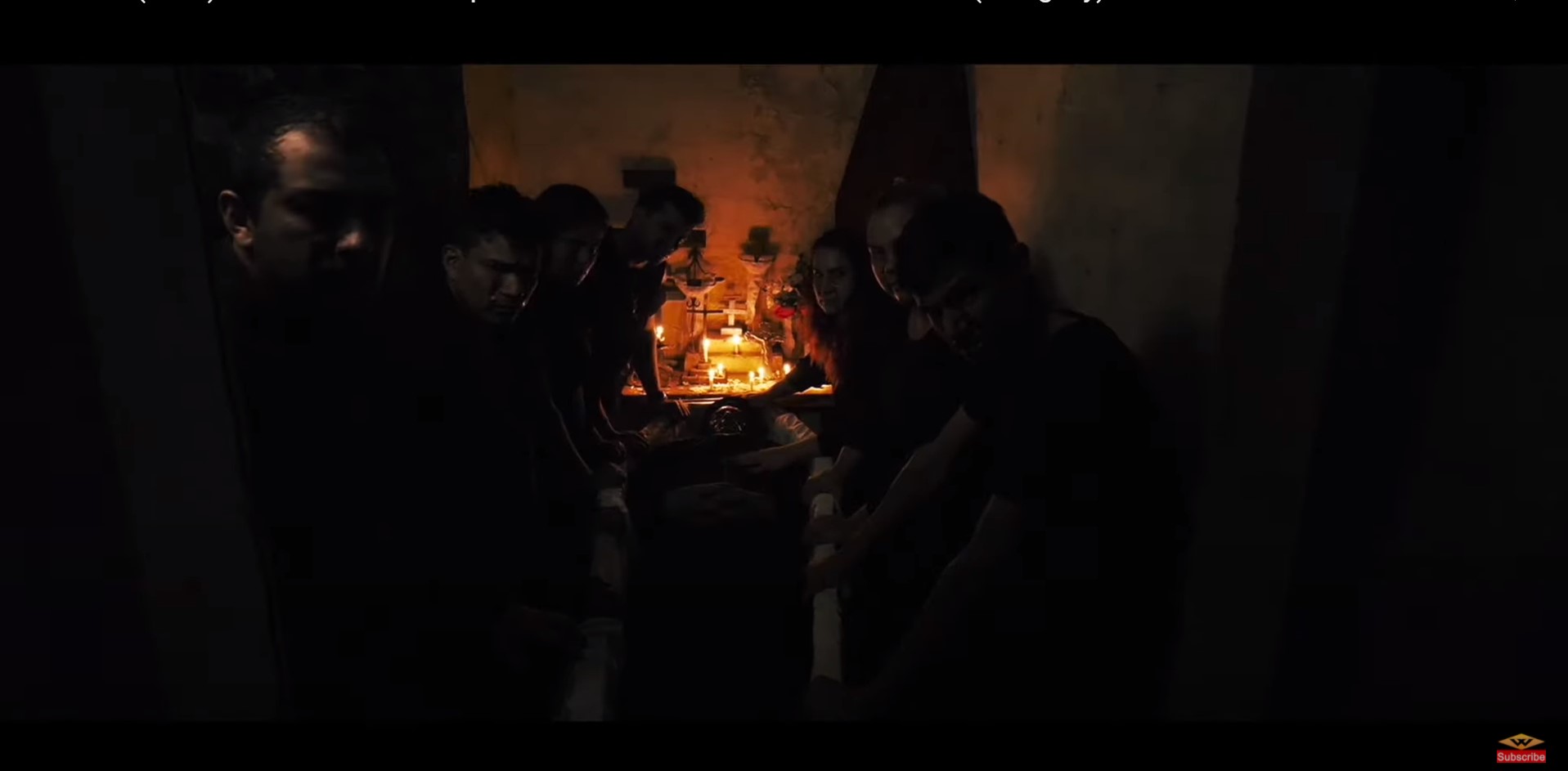
Not many horror films hecho en Paraguay come across our screener desk; in fact, Cardozo’s “Morgue” is probably the first from the country and not too sound like a stuffy harsh critic, but I wouldn’t exactly say I’m more than pleasantly surprised by the overall design; yet, I’m not not impressed either. The middle of the road impression balances the bone-shivering atmospherics of a dark and tightly confining morgue where mischievous spirits seriously terrorize and toy with Diego’s physical and mental being with an about-face in Diego nonchalant behaviors and the established and recognized grim tone Cardozo slowly builds around the bonehead protagonist quickly fades at the very tail end with cheesy special effects and unfitting Latin rock music. Without going too much into spoiler details, “Morgue” strongly reminds me of some elements of the “Creepshow 2” segment, “The Hitch-Hiker,” blended with Ore Bornedal’s “Nightwatch” while being stuffed with paranormal psychotic-nightmare fuel straight into the guts of story for gaslighting a terrified response. The slow burn beginning might seethe a few eager to dive right into the you can’t-spell-pandemonium-without-demon action, but does set up perfectly, in a few suppressed laughs kind of way, Diego’s series of events that serve as a bread crumb trail to his frightening ordeal. Cardozo utilizes various shooting techniques, many stunningly achieved in the manipulation of the film, to capture Diego’s fear and hikes the tension to a bite your lip in suspense level that’s well deserved.
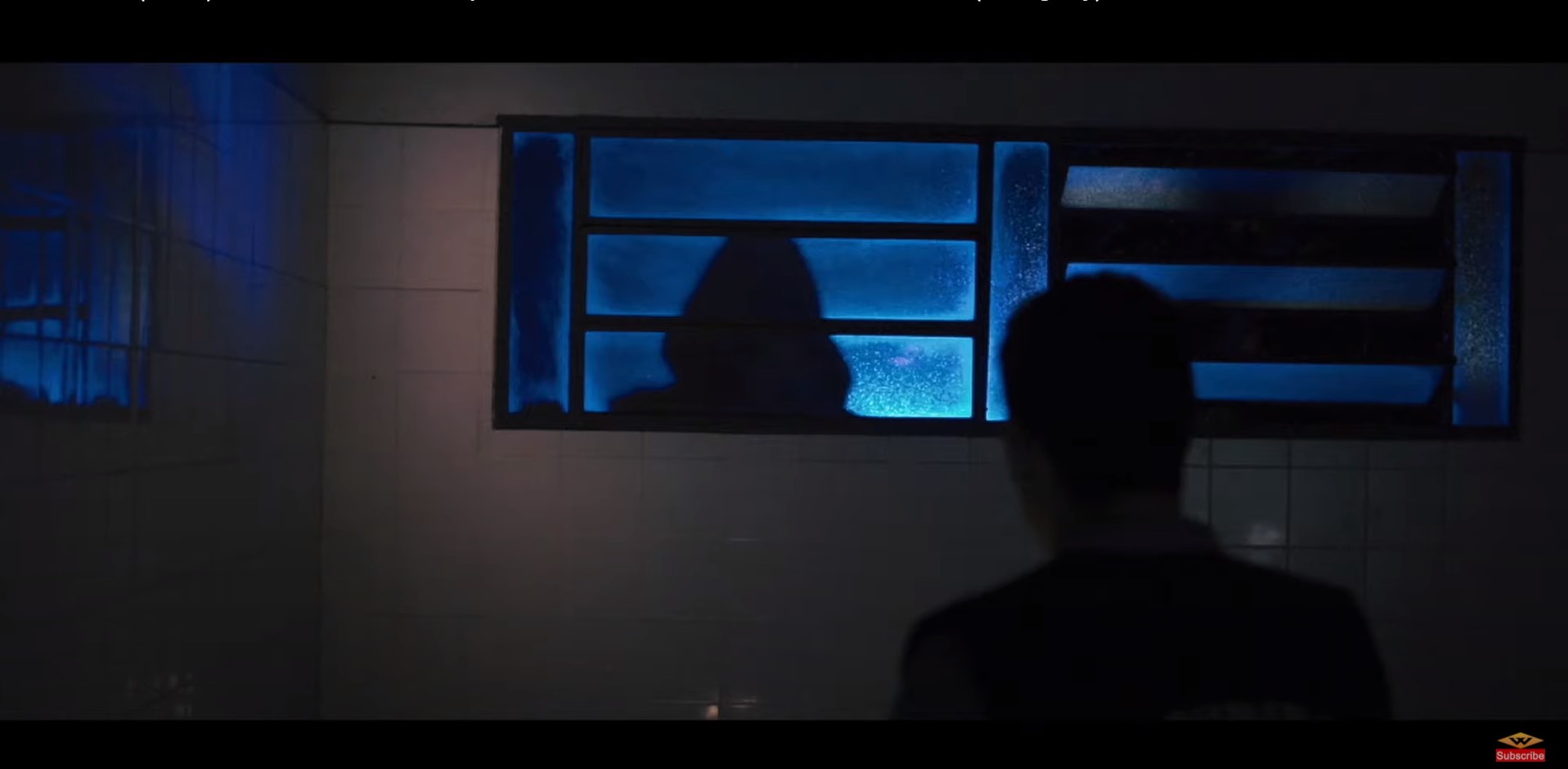
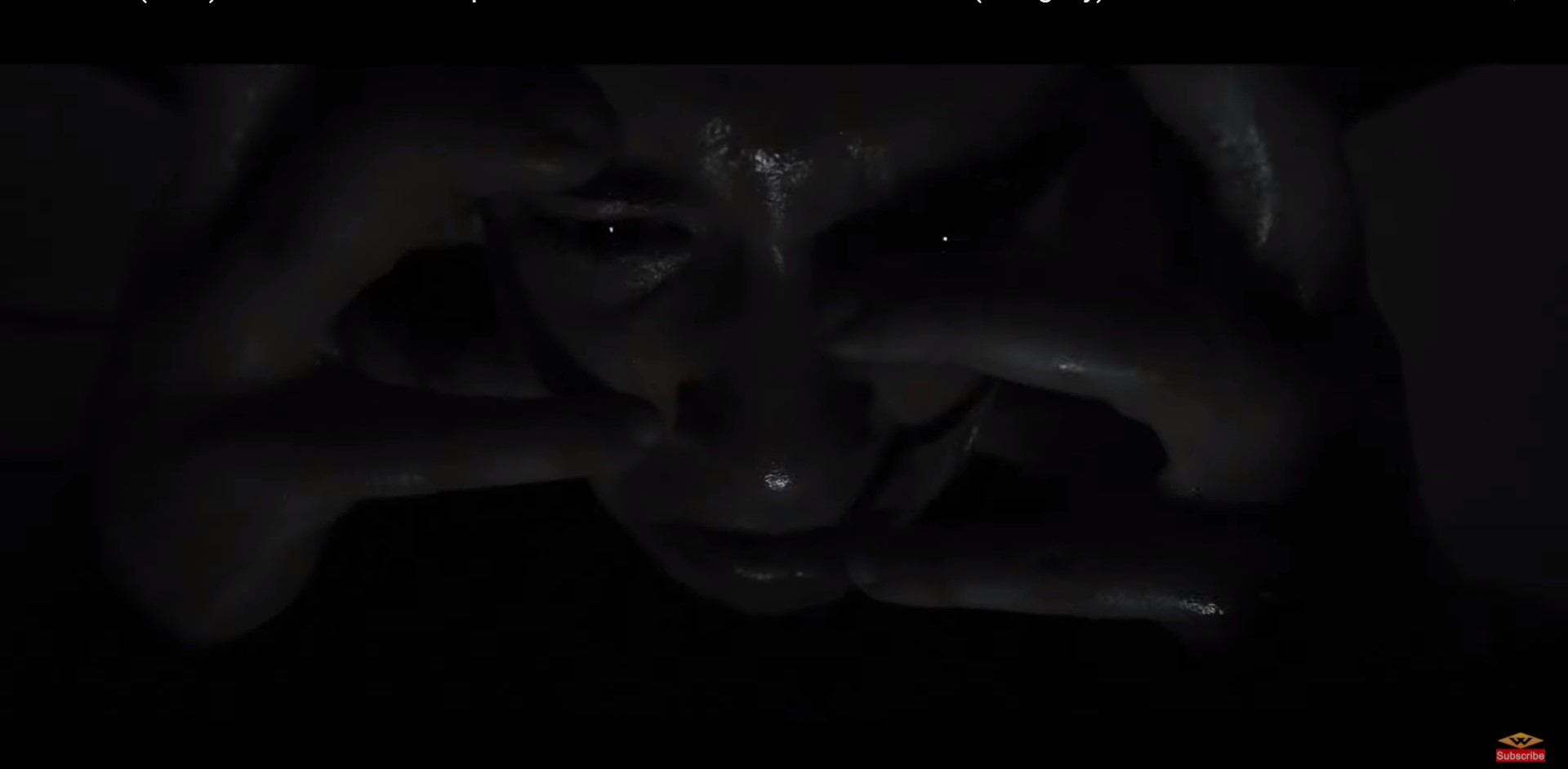
Light and spooky, “Morgue” is a lean, shivering supernatural story machine released onto digital and Blu-ray courtesy of Well Go USA Entertainment this past May. The not rated, single-layered AVC encoded disc, 1080p Blu-ray is presented in a widescreen 16:9 aspect ratio, has a runtime of approx. 81 minutes, and has a region A playback. Director of photography, Blas Guerrero, discerns a softer touch that you can more or less notice around Diego’s face as the details are not as fine, but the deep blue and purples hued tints (and other lightly used color grades) and lighting make for elevated stellar direction toward the things that go bump in the morgue at night. Cardozo employs closed circuit cameras, extreme closeups, sped up playback, and a nifty deep focus of indiscernible corporeal silhouettes that is just creepy in itself. The Spanish and Guarani DTS-HD 5.1 Master Audio track has little to muster in the dialogue department with Diego having very little interaction with others, such as his girlfriend through a video call or the night guard he’s relieving, but the dialogue track does come through clearly. The captioning is synched well with no obvious errors aside for some translational preferences from Spanish to English. Catered to be a startling romp, “Morgue” is heavy on the ambient LFE effects that do a nice job filtering through and landing the desired whip-in scare and then quiet again, resetting for the next go around. In the background, there is a slight engine-esque hum throughout and I thought maybe it’s presence was just in the Morgue, the rumbling spans the almost the entire duration of the story and doesn’t seem to be emanating from the dialogue track. Bluntly, the Blu-ray release lacks bonus features with only a theatrical trailer along with preview trailers before the film. The physical release does have a cardboard slipcover but of the same images and stills as the snapcase. A good time can be had with “Morgue’s” karma emerged psychological torment of one man and the spooky energy swarmed in shadows and dodgy point of views that solidifies Cardozo’s Paraguayan thriller as a rival to most name brand counterparts, but because of the ending that kills the entire mood of “Morgue’s” misery lashing, that bad taste of an anticlimactic drop off finale cuts far deeper than expected.





 It's Bloggin Evil!