
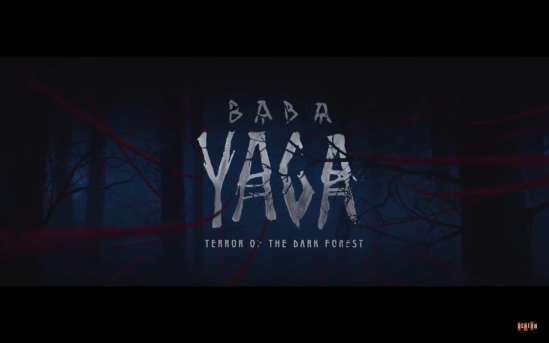
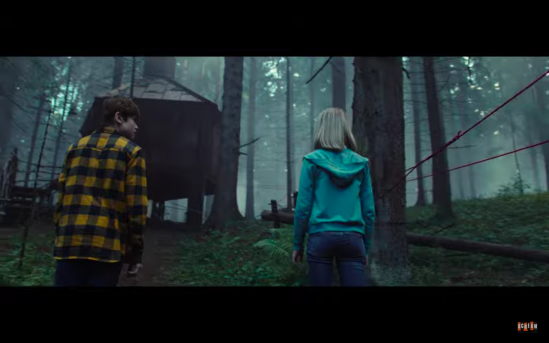
Still reeling over the loss of his mother, a disheartened Egor has moved to a new apartment on the forested outskirts of the city with his father, step mother, and infant half-sister. A nanny is hired for house upkeep and to look after him and his sister, but the nanny’s strange behavior borders hostility toward him while also bewitching his father with her beauty and charm. Since her hire, the nanny cameras alert Egor of movement in the nursey, projecting an unknown and disfigured woman in the room hovering over the baby. When his parents don’t believe him, there’s nothing more the older boy can do until his baby sister goes missing and his parents don’t remember her, as if she never existed. Egor, along with his friends, track down a man living in the woods who seems to have an inkling about the mysterious disappearances of children and why everyone forgets about them as he has experienced the loss of his daughter and can barely remember her. Based off the man’s ramblings, their search for Egor’s baby sister leads them to an old and abandoned power shack that serves as conduit to the world of Baba Yaga, a Slavic witch with the influencing ability in kidnapping and devouring children’s souls for power and Egor’s sister, along with the rest of the nearby children population, have been abducted to lure in the pivotal pure child to set her free into their world.
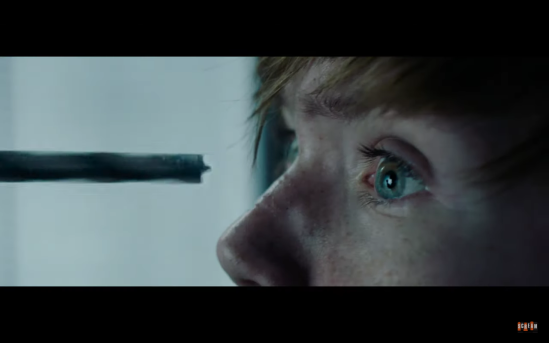
“Baba Yaga: Terror of the Dark Forest” is the second part of this unintentional two part Russian horror film appraisal following our extrospective look into Olga Gorodetskaya’s psyche serrating “Evil Boy” that just happens to have another protagonist by the name of Igor, but in this case, the spelling is Egor and, instead of a middle-aged doctor, Egor is a pre-teen boy with pre-teen issues – just to jazz it up a little. Also originally known as “Yaga. Koshmar tyomongo lesa,” the supernaturally Slavic folklore tale, directed by Snyatoslav Podgaevskiy (“Mermaid: The Lake of the Dead”), was released February in motherland Russia and is making a distributive second coming toward the States on September 1st courtesy of a collaboration between Shout! Studios and Leda Films. Penned by Podgaevskiey as well as Ivan Kapitonov and Natalya Dubovaya, the scribing trio pickup right where the wrote off form the gritty mysticism of fabled creatures beginning with “Mermaid: The Lake of the Dead” and into a classically frightening and morose villain salivating for juvenile souls spurred from one of the numerous variations of one of the more popular, if not grotesque, Russian mythological being. “Baba Yaga” is a production of the Cinema Foundation of Russia, Central Partnership Productions, Non-Stop Productions, and QS Films.
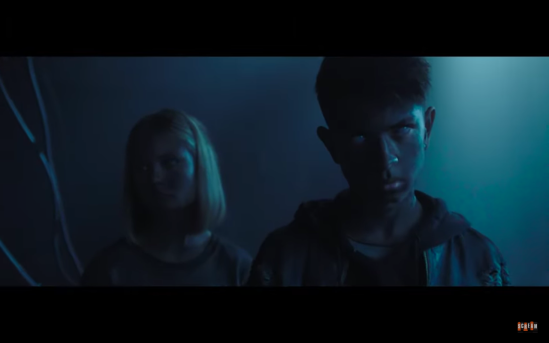
In much of the reverse from “Evil Boy,” Podgaevskiy’s “Baba Yaga” rocks the cradle in a “Goonies” approach with a condiment and courageous group of pre-teen, developmentally spongy, angsty, and hormonal driven children to solve the big bad witch mystery that not only afflicts the very lives of their brethren age group, but also the parental halfwits who have their minds erased like a chalkboard with nothing more than tiny dust particles to cling to to keep their missing children alive in their memories. From the visually powerful alien invasion thriller “The Blackout” (ItsBlogginEvil review here), Oleg Chugunov spearheads a trio of adolescents on the cusp of being witch-fodder. Chugunov plays Egor, a dispirited youth unhappy with his father’s remarriage to another woman and the target of bullies at his new school before becoming the chosen meal plan for Baba Yaga’s unholy escape for an ethereal world. Egor’s experience of an afterthought to a savior of child-kind isn’t represented well through Chugunov and how the character is written as Egor just falls into the “pure” child role without much explanation to why, staying flat on the personal growth scale for 113 minute runtime. Egor’s followed by a love interested in Dasha (Glafira Golubeva) and lead bully Anton (Artyom Zhigulin) who both have bouts with their parental caretakers; Dasha’s mother is a scorned beauty hellbent on controlling Dasha’s life form outside influences while Anton is a parentless brute with a guardian who is equally as callous as him, if not more. Svetlana Ustinova (“Hardcore Henry”) has two roles in this film and both are bad guys: Baba Yaga and Baba Yaga’s half-bird, half-human hench-thing. Ustinova shows immense range by fielding human to hybrid to full out witch qualities, inching the insidious intentions through the storyline that requires varying degrees of discourse with other characters along the way. The cast list rounds out with Aleksey Rozin (“Leviathan”), Maryana Spivak (“The Outbreak” TV series), Igor Khripunov (“The Bride”) and Marta Timofeeva (“Welcome to Mercy”).
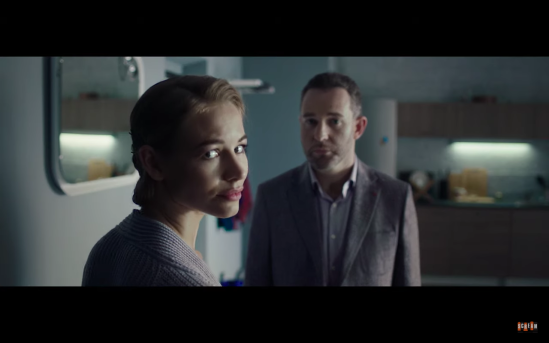
Out of the two terror inducers from Russia, “Baba Yaga” inches out “Evil Boy” on the supernatural spectrum. Between Anton Zenkovich’s colorfully prismatic photography, Vlad Ogay’s sleek-straight and modernally tight architectural designs juxtaposed against a vastly rustic and chaotic woodland lore, and topped off with Podgaevskiy’s highly effective misdirection jump scares, “Baba Yaga” inveigles to a palatable lore horror invigorated by a two-timing enchantress with a sweet tooth for kid blood. Despite not being exact to the Baba Yaga’s tale, as the creature’s house is supposed to erected by actual chicken legs, Podgaesvkiy shoots a fear-laden heartstopper where anything can happen in any scene at any moment. Yet, something is indubitably missing from “Baba Yaga.” Perhaps, what’s missing is that meaningful message about rekindling that spark between parent and child, patching up the tears in the relationship that’s been strained by XYZ reason. Perhaps, what’s missing is the unsatisfactory ending of easily dethroning of a powerful and mighty mage. Perhaps, what’s missing is the explanation on why Egor is the key to Baba Yaga’s tyrannical freedom from cursed exile. I’d say all three contribute to the cause and not much, not even a wonderfully animated s storybook prologue depicting the phantasmal enterprise and downfall of Baba Yaga, could save the heartache in wanting more substance from the already loaded story but, then, we would be looking at another hour of runtime though its sorely warranted. In sum, “Baba Yaga: Terror of the Dark Forest” slips in a variant version dispersing a tingling tale of Russian folklore with stunning visuals and dutiful scares that ends deficiently and mediocrely.
Hide your children! “Baba Yaga: Terror of the Dark Forest” will be unleashed on VOD, digital, and on Blu-ray and DVD September 1st from Shout! Studios and Leda Films. You can look for it digitally or on-demand from the following providers: AppleTV, Amazon, VUDU, GooglePlay, PlayStation®, XBOX, hoopla, Fandango Now, DirecTV, Comcast Xfinity, Spectrum, Cox, Charter, and AT&T U-verse. Since the review is based off a digital screener, the A/V aspects will not be examined but the Scream Factory Blu-ray and DVD release will be region A/1, presented in a widescreen 2.35:1 aspect ratio, and will include a powerful Russian language Dolby Digital 5.1 audio mix with English subtitles and will also include a dubbed English Dolby Digital 5.1 mix. Unlucky for me, I had to screen the movie with the dubbed version. Lucky for you, I can confirm that though obvious, the dubbing isn’t horrendously overly-hyperbolized or too asynchronous. There were no bonus features or bonus scenes included nor none announced on the press release. Grab a bottle of Vodka, pop some Zefir candies, turn off the lights, and sink into an Eastern European mythos horror with Svyatoslav Podgaevskiy’s “Baba Yaga: Terror of the Dark Forest” that’ll scare the Ushanka right off your head.

Pre-order “Baba Yaga: Terror of the Dark Forest” on DVD or Blu-ray for Sept 1st release!





 It's Bloggin Evil!