
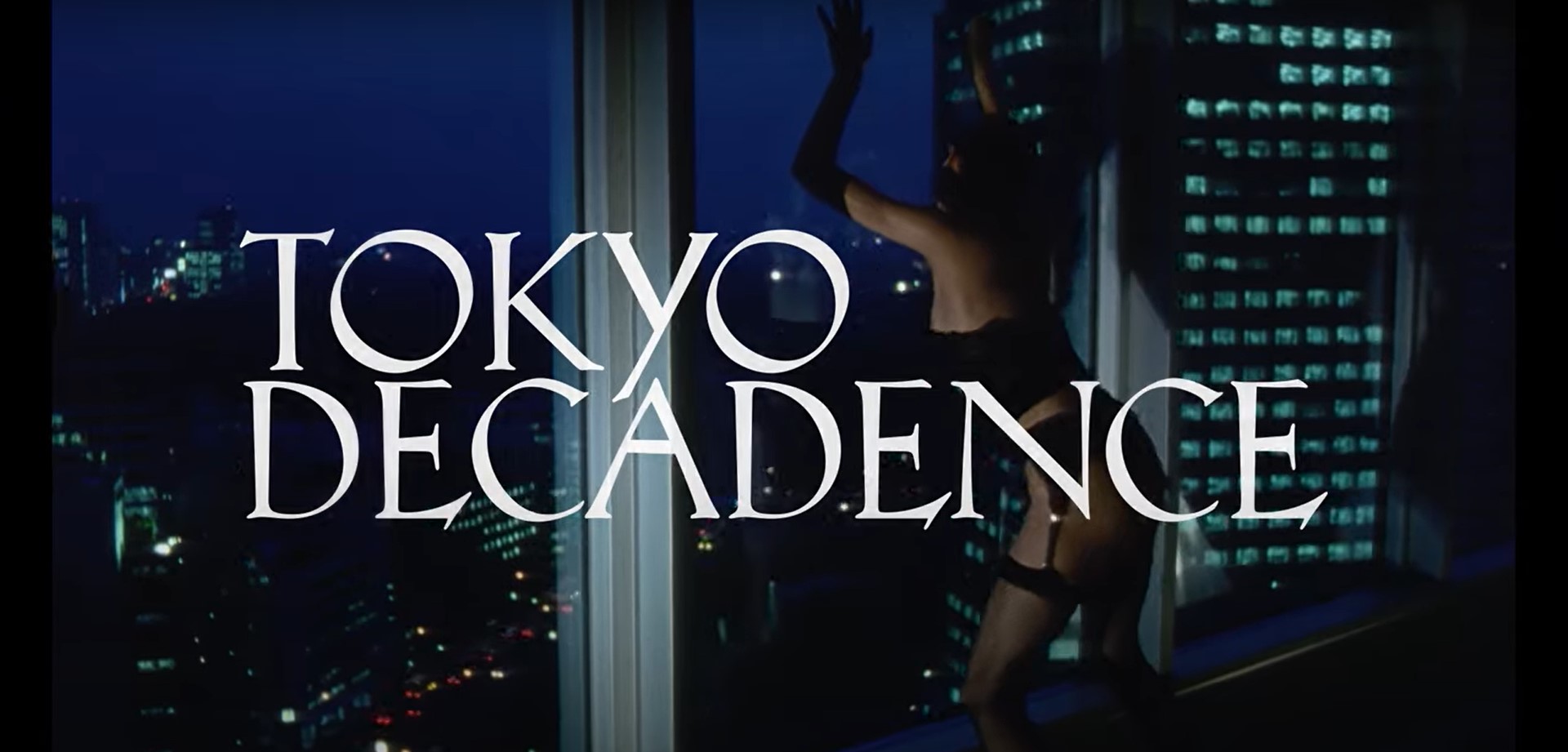
Own the new Unearthed Films Blu-ray of “Tokyo Decadeance” today!
Ai doesn’t believe she is not good at anything. Her youth and beauty provide the early 20-year-old financial means of survival as a high class, Japanese prostitute with a fetish niche for clientele desiring sadism, masochism, or both. Eccentrically demanding and various in age customers range their likes from total self-humiliation by pain and punishment to rape and necrophilia fantasies. Unable to stop herself from accepting jobs because of her self-loathing cycle, Ai continues to endure most of the sexual whims no matter how outrageous or aggressive they may be during the sometimes hours long sessions. What keeps her knocking on strangers’ doors is the pining for a former lover, a now famous celebrity she at one time dated pre-stardom, who has since married and left the memory of a fragile Ai in his life progressing wake. After taking a gig alongside a fellow mistress in humiliating a real estate mogul like a dog, Ai’s invited back to the mistress’s elegant home where she’s exposed to a long night of unlabeled drugs that sends her into an uncontrollable high, looking for her former lover on the quiet streets of Japanese neighborhoods.

“Tokyo Decadence” makes “50 Shades of Gray” look like an inexperienced couple’s first time fumbling into cutesy foreplay. Though both films are adapted literary works made into controversial features surrounding sultry nipple clips, whips, chains and other playthings, the 1992 Japanese psychosexual drama is the only one out of the two where the novel’s author, Ryu Murakami, has total creative control of his tale of one woman’s squirming through perversion land as the screenwriter and director. Titled Topâzu in its originating country’s language, “Tokyo Decadence” opens up a carnalized world rarely seen amongst the daylighting fray and the price paying struggles of someone as meek as Ai in that position’s lustfully gripping vise that begs the question, is S&M obscurity an insatiable erotic hunger or is it a choking dangerous fantasy? Shot mainly in the titular city of Tokyo, the film is a production of the JVD (Japan Video Distribution) with JVD’s Tadanobu Hirao (“High School Ghostbusters,” “Celluloid Nightmare”) as producer alongside Chosei Funahara, Yousuke Nagata, and Akiuh Suzuki.
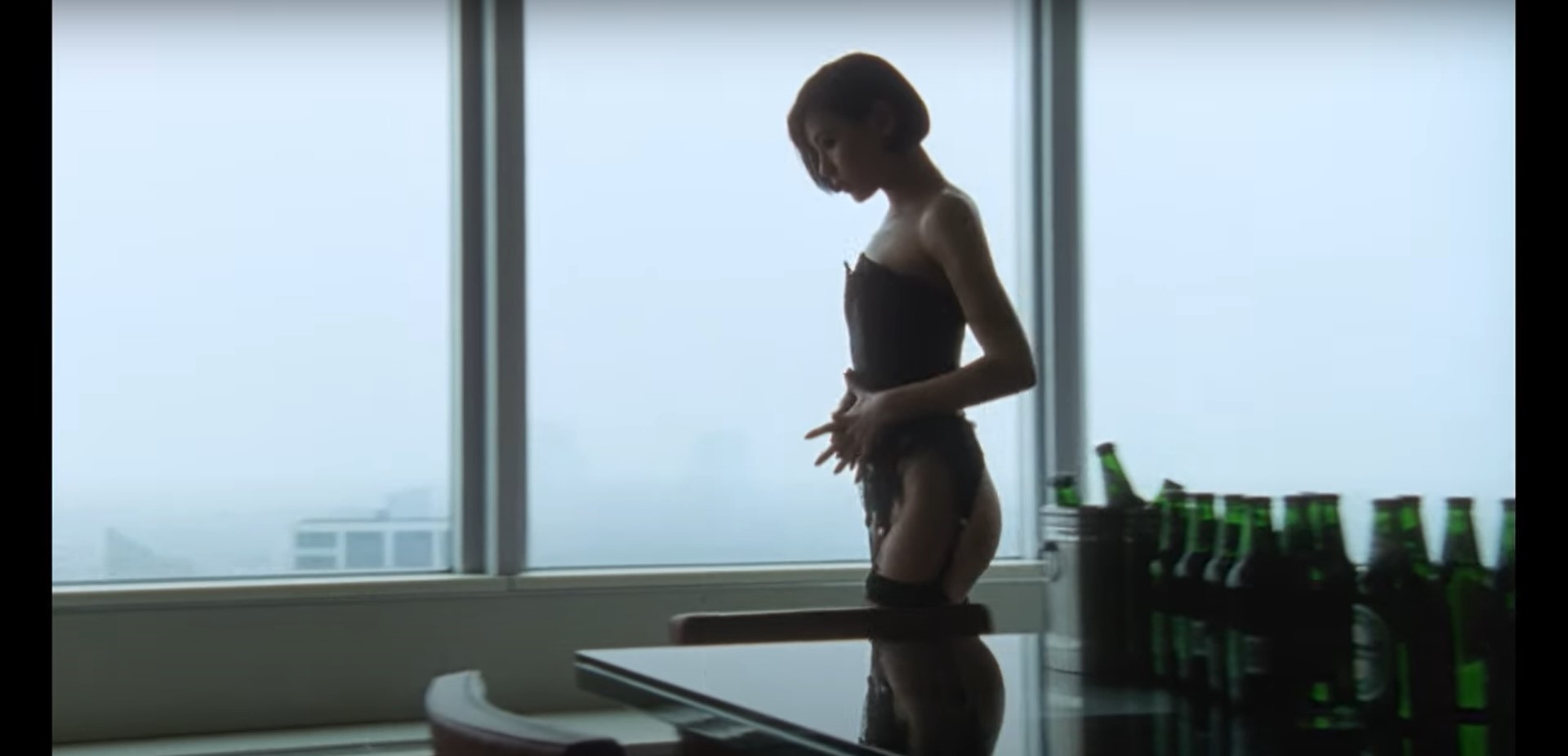
“Tokyo Decadence” is a sure-fire way to start the beginnings of an actress’s career with a rousingly provocative and difficult role that garners attention. For Miho Nikaido at the very start of her career, the lead role looked like a Tuesday. The then 26-year-old Nikaido, playing a 22-year-old Ai, stuns as a sympathetically shy S&M prostitute with underlining conflicting issues surrounding her social position, personal interests, and mental status. The opening scene with her legs lifted and spread strapped into stirrups and her bold colored red lipstick mouth buckled with a black open mouth gag complete with matching blindfold diverts eyes away from the usual nudity focal point. Instead, we’re more attuned to the happenings of a mild manner, smiling man, who we assume bound her down under professional servicing, as he stands over her, gently stroking her, and telling her to trust him and that he won’t hurt her. Then, out comes the drug pouch and needle. The jab sends shock waves of pleasure down Ai’s submissively fastened naked body, ending with Ryu Murakami’s extreme close up on Nikaido’s face after being released from the facial constraints. Her slightly crooked teeth shiver just past her stark red lips, agape by ecstasy, and the single tear drops from her soft eyes express the gargantuan amount of pleasure coursing through her helpless corporeal temple in a look that says, I am in pure, undiluted heaven. The opening sets the tone. Funny enough, Nikaido would go on to have a role in another underground S&M inspired drama “Going Under,” but instead of acting like the subservient dog or humiliating customers by having them suck on her stiletto heels, Nikaido steps aside as the girlfriend to Geno Lechner’s dominatrix role. Sayoko Amano, Tenmei Kano, and Masahiko Shimada co-star.

Perhaps one of the most noticeable or mainstream pink films from Japan because of its titillating and iconic cover art of Miho Nikaido arched forward and hands pressed high on the glass above her head, leaning against a tall and large window pane in a skimpy black lace and leather getup and overlooking the city lights and bustling residents, The very image epitomizes erotica and taboo acts and the narrative itself is nothing short of that slight zing of sordid pleasure we all experience in our minds, bodies, and especially in our more private areas. Pulled straight from Ai’s first job encounter, post-opening credits, with a wealthy business type Mr. Satoh’s and his perversion in dominating and humiliating without much physically contact in the first few couple hours of their session. The long-standing stint pushes Ai’s sexual limits without breaking her spirit that solidifies a baseline for what’s to come and what came crushes Ai’s sexual stimulation beyond the means of pleasure with a petri dish of distinctive peculiarities outside her already fringed tastes. Ai’s self-dismissiveness keeps her plugging away at a profession that’s eating away her, coming close to death in many various forms involving clients’ perversions. When she’s hired by another mistress in a co-op of dominance on a client, an unveiling of empowerment and a lavish lifestyle promises potential happiness away from her fairytale dream of reconnecting with her former lover, but that ultimately becomes a hard pill to swallow after swallowing an unidentifiable pill popper provided by her newfound friend in the trade, a pill that inebriates her into wandering the streets in search for her ex-lover. “Toyko Decadence” is as somber as it is sexy with a paralleling dark trip down delusional happiness and demented fantasy for a young woman clinging onto a past that has completely forgotten her.

Landing in at number seven on the spine is the Unearthed Films release of Ryu Murakami’s “Tokyo Decadence,” receiving a Blu-ray release on the label’s Unearthed Classics line in a widescreen 1.66.1 aspect ratio. The region A release has a runtime of 112 minutes and is plainly evident in exhibiting no rating listed on neither the back of the Blu-ray case nor the cardboard slipcover. After doing some light digging, there is a longer cut of the film with more explicit scenes, especially with Mr. Satoh, that would have adorned the U.S. release with a X-rating. The Unearthed Films release is not that cut; nonetheless, the film before us is still just as decadently beautiful in content and in quality. Stable image and color under the 35mm stock, Tadashi Aoki flipflops between mood lighting and natural light, contrasting the duality of Ai’s worlds with a lightly softness reflecting off the focal subjects. Details extend the same softness as skin textures appear overly smooth most of the time albeit the design of natural color tones. One instance of continuation concern is a prominent scene miscut left in during post at the editing room table. Though the miscut, of a closeup on Miho Nikaido, doesn’t cause a continuity error in the narrative, it does break the integrity of the scene. The Japanese LPCM 2.0 mono sound has a phenomenal, 1920kps bitrate, sound design created around a lite soundtrack that doesn’t leave room for ambient and dialogue tracks to hide behind, as if this release needed to hide behind its brawny audio output. “Tokyo Decadence” is all about the experience and every breath and movement is as felt as it is heard with a discernible dialogue well synched with the English subtitles. An optional English dub track is also available. The Blu’s special features include a release-party featurette/promo trailer that has snippet interviews from the Ryu Murakami during the event, gallery stills, and trailers. An absolute ideal upgrade for one of the best pinksploitation films to ever walk that thin line between sadism and masochism; however, I do believe Unearthed Films insisted upon the safe word by not, whether by choice or other circumstances, retrieving, updating, and releasing the fully uncut and unedited “Toyko Decadence.”


 ]
] It's Bloggin Evil!