A Teacher’s Raunchy Romance is Not the Only EVIL Being Committed! “Amor Bandido” reviewed! (Cinephobia Releasing / DVD)

Forbidden Love and Severe Malefactions in “Amor Bandido” on DVD July 18th!

A remiss 16-year-old Joan is the son of a wealthy magistrate who doesn’t see eye-to-eye with his father’s wishes.  What was supposed to be the last day of school before Easter break turns into Joan’s most anxious day when he learns that his mistress, his teacher Luciana, is exiting her position at the school that very day.  Pleading to Luciana to take him with her, she reluctantly accepts his tagalong despite him being underage and her being more than double his age.  Their unlawful affair leads them to an isolated manor where they can romantically explore themselves in a paramour tour of passion.  A couple of days have past and Joan is completely smitten until Luciana’s brother arrives and the whole getaway has been a trick at Joan’s expense.  Now, the adolescent is being held captive and has to fight for his very life before he’s executed for being nothing more than a wealthy judge’s son and a naïve, jilted lover. 
More by more, news stories are printed of older women, specifically women in education, having intimate relations with a young, student boy – sometimes, another girl as well.  Men have always been the archetype of the infamously ugly term pedophilia, but women can be just as predatory despite the lack of widespread printed and televised attention.  Mostly, these new bites are mostly obscured in the newsfeed of an online aggregated newsreel, hyper-regionalized to the area where the crime was committed, but the story is nearly always the same – young (often good-looking) 20-30 year old teacher abuses young, under 18-year-old boy in the car, at her home, via text with lewd pictures, etc.  Honestly, boys have long been hot for teachers, but there is an inherent sliminess to the idea that has been rooted in steamy fantasy pubescent minds.  Iconic films like 1967 Mike Nichols’s “The Graduate” starring Dustin Hoffman aroused the notion of forbidden lust while others like George Bower’s 1983 “My Tutor” and even the more recent “No Hard Feelings” with Jennifer Lawrence, to an extent, makes light of the subject matter; however, no other filmmaker really captures the act’s grooming nature like director Daniel Werner.  Werner’s “Amor Bandido,” or “Bandit Love” depicts minor exploitation like never before with fellow screenwriter Diego Avalos in their feature film together after the production of their 2019 short, another contentious teacher-student relationship, entitled “Nadador.”  The Argentinian film is a co-production of The National Institute of Cinema and Audiovisual Arts (INCAA) and Werner Cine, produced by Werner and Nicolás Batlle.
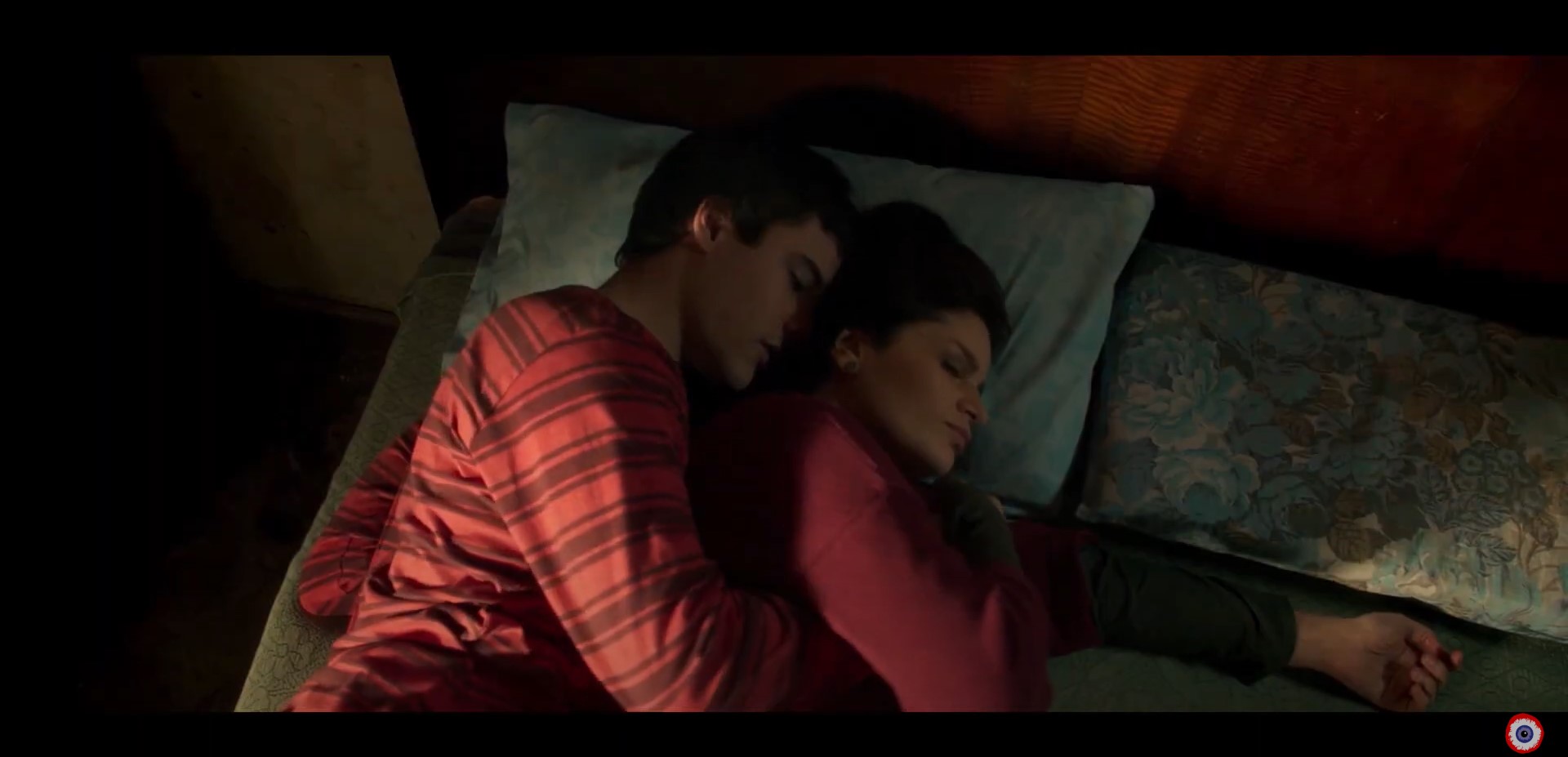
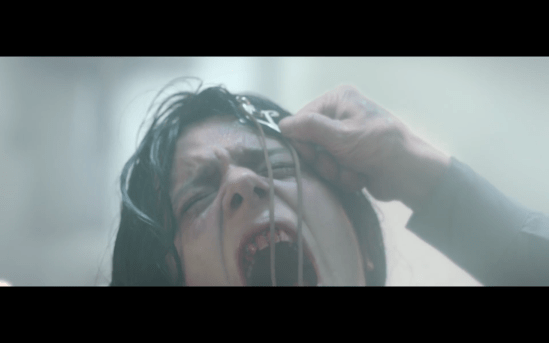
The film opens up to Joan, a 16-year-old student with a bit of a chip on his shoulder as he glues together a volcano-like model in slapdash fashion.  Spoiled further into his innate teenage angst by his own abundance of wealth, Joan is able to get away with essentially disrespecting his empty-threatening father and boozy mother.  The extent of his entitlement spills into the classroom when learns his teacher, Ms. Luciana, is leaving the school at the end of the day and this is where we learn that Luciana and Joan have been in a forbidden affair as they meet in a storage room where she caresses his crotch as they kiss.  Though looking very much like a 16-year-old brat, Renato Quattordio is actually in his early 20s when the Buenos Aires born actor becomes passionately intertwined on screen with early 40’s actress, Romina Ricci.  The noticeable age difference places a stamp of scuzzy approval as the principals really put on a show of sensuality that defies the numerical age gap while also defining the maturity and the experience of individuals.  Quattordio hits the mark as the naïve teen eager to jump at the behest of his older, curvaceous companion.  And, boy, is Romina Ricci curvaceous, luring Joan in as the wanton teacher cautious of their alluring affair.  The erotic thriller quickly turns into a survival thriller when Joan’s eagerness to grow up comes face-to-face with Luciana’s past, embodied by Rafael Ferro (“Terror 5,” “White Coffin”) and Sergio Prina as two money greedy thugs eager to milk Joan for all that he is worth.  “Amor Bandido” rounds out with a few more bandidos in Mónica Gonzaga, Carlos Mena, Jurge Prado, and Santigao Stieben.
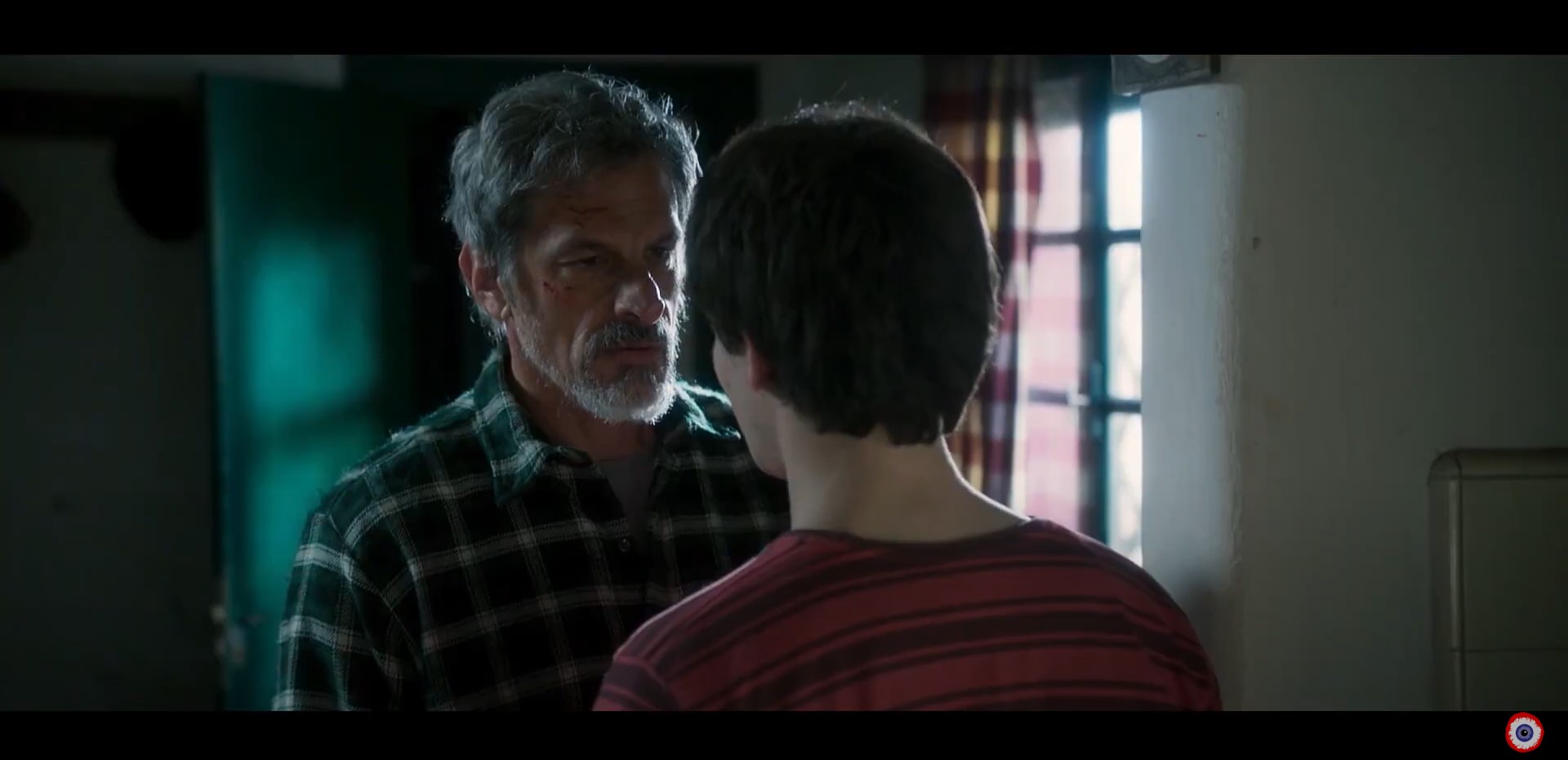
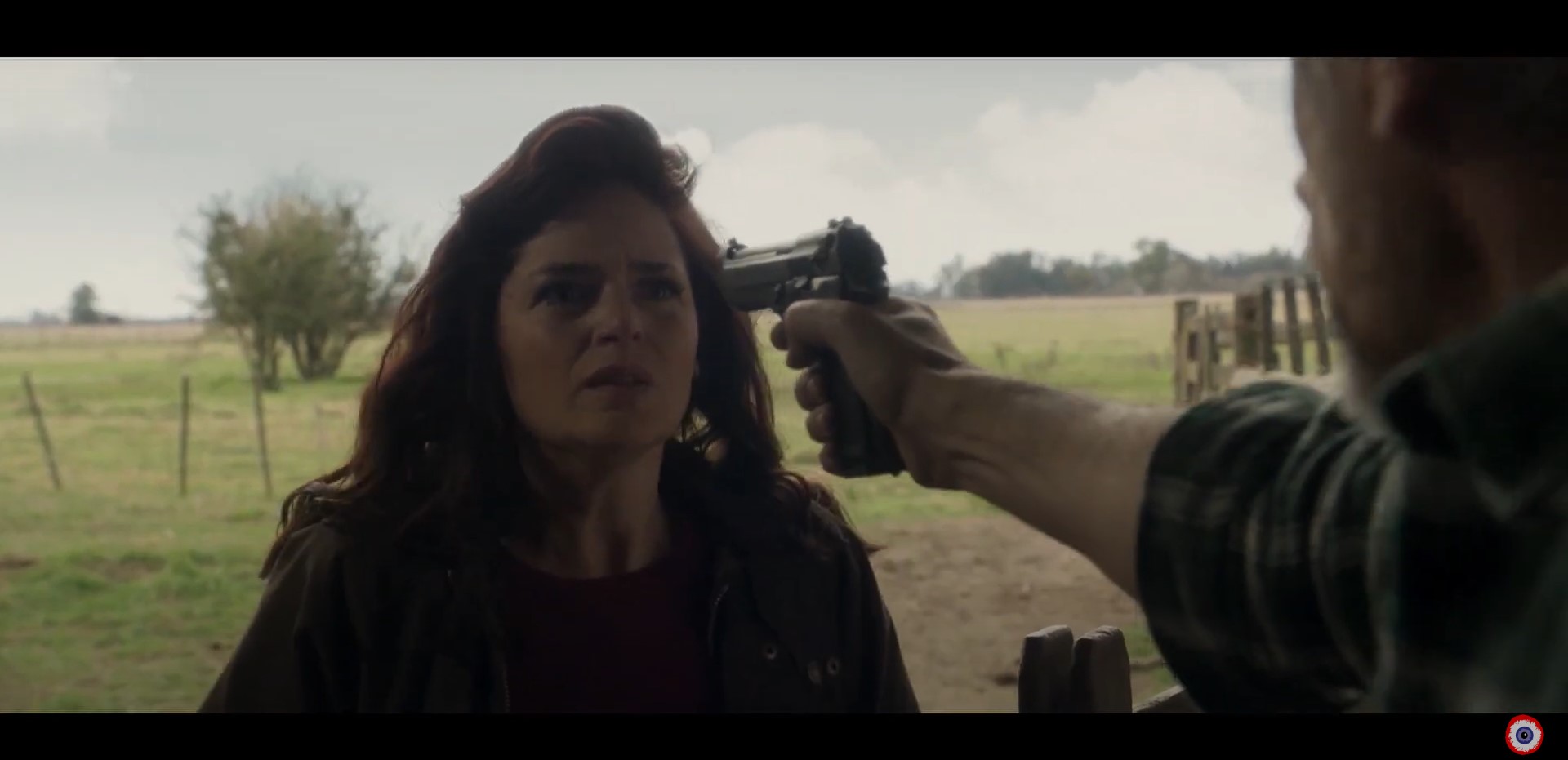
“Amor Bandido” is a coming-of-age tale with a pair of dichotomizing facades strung together by opposing forces in choosing between love or money.  Essentially, those two driving forces boil down to the relationship’s core and that is what director Daniel Werner simmers on, a test of idolatry strength between two people.  Werner pretenses the narrative with a forbidden love escaping to the rurality to make passionate, unjudged lust in a love context, well, at least for one of them.  The absconding is only a diversion for another unlawful act and is palpable in the undertone that something isn’t quite right with Joan and Luciana’s relationship, something that you can’t quite put your finger on and it’s not the surface fact that she’s a mid-30 something-year-old teacher screwing her 16-year-old student.  Werner leaves a breadcrumb trail of concerning clues that make sense when all is exposed but keeps those hints closed to the chest, protected to not giveaway too much until the summiting turning point of the exiting passion and entering perpetration.  Yet, despite our intuitive inklings of the funky air, the pivot still hits hard like a blindsided punch to the jaw that dislodges the mandible and rattles the teeth when the two lovebirds are struck with one payday load.  The only aspect that could be narratively tweaked is the introduction of the wounded stranger whose motives are understood but not quite absolutely clear his connections and how he became wounded in the first place with a gnarly gash on the calf that looks like a Great White shark attack had a snack on.  Digressing to figure out where he fits into it all becomes a distraction and a divergence from the main story that has now snowballed into additional but unwanted molestation, possible incest, and a ransom deal that won’t be faithfully upheld. 
“Amor Bandido” is the first feature to be covered by us courteously supplied by our friends as Cinephobia Releasing, a new distribution label from original world-searching and independent cult worshipping cinephiles of Artsploitation Films.  Coming soon to home video on July 18th, the single-layer DVD is presented in a widescreen 1.85:1 aspect ratio from a digitally recorded print and renders an expected damage and dust/dirt free picture with nature, yet smoothed out detail, skin tones and natural coloring.  There’s not a ton of visual risk here from cinematographer Manuel Rebella (“A Taste of Blood”) with the stimulation coming strictly from performances and the erotic, forbidden spirit.  The DVD5 format falls below par for darker portions within the frame that are seen with splotchy banding as well as the aforementioned smoothness around facial features.  The Spanish Dolby Digital 5.1 surround sound and a Spanish Dolby Digital 2.0 are equally comparable with the focus primarily on the dialogue and less on the sound design to warrant extra channels so both tracks output relatively the same.  There are scenes or sequences all other tracks are muted or receded to make way for a vivacious musical soundtrack to accentuate the moment.  Dialogue comes across clean and clear without any interference in the balance of the little ambience of rustling leaves, water splashing, and gun shots.  Option English subtitles are available, but I did spot a pair of typographical errors.  Bonus features include a 3-minute sale and promotional make-of with director Daniel Werner, the original trailer – separated from the bonus features on the static menu – and trailers for future Cinephobia Releasing films, such as “Sublime,” “Emmanuelle’s Revenge,” “Brightwood,” “The Latent Image,” and “The Goldsmith.”   Pressed with the cropped but same image as the front cover, the DVD comes in a standard tall snapper with the front cover sporting that crotch-fondling moment of intimacy.  The Cinephobia Releasing title comes unrated, runs at 80 minutes, and is has region 1 playback.  The coming-of-age arc prevalently scores into the naïve, angsty adolescent tale but “Amor Bandido” also suggests that maybe maturing too quickly should be left off the table, keeping fantastical temptation at bay and keeping innocence intact for kids to be kids just a few years more.

Forbidden Love and Severe Malefactions in “Amor Bandido” on DVD July 18th!

Evil Takes Form in the “Terror 5” review!


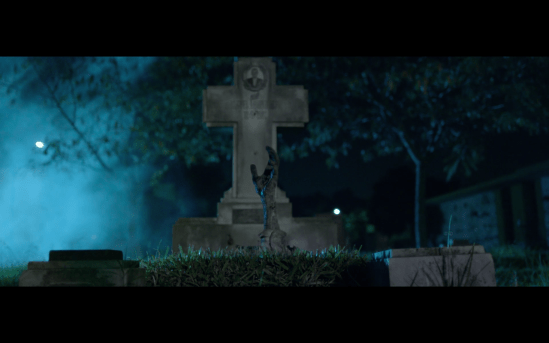
In the wake of a tragedy that resulted in the loss of life, a small Argentinian funeral procession progresses in tandem with the court hearings of a supposedly corrupt politician, the governmental figurehead indirectly responsible for the deaths of innocents. When the verdict of not guilty surfaces over the news media waves, the grief-stricken family and friends, praying at a cemetery memorial, shrill in anguish their displeasure that becomes a calling for the undead to rise up and exact revenge toward the capital. In the midst of the resurrecting chaos, others simultaneously face terror in other forms such as exacting sadistic punishments in a backwards universe of role reversals, the elaborately ill-fated plan of swapping girlfriends on the streets of the city, a night of sordid carnalities at a hotel becomes a night of horrendous violence, and a group of candid friends indulge in a snuff film comfortably and safe inside an apartment, but an evil is slowly boiling to ahead right before their very unsuspecting eyes.

“Terror 5,” a title that one would assume on first thought that five horror icons team together for utter slaughter of hapless cheerleaders or, perhaps, clash in one epic villainous mêlée of monumental proportions, but the film is actually an Argentinian anthology of urges and terror and for the record, if “Terror 5” was a collection of the top five horror icons, this reviewer’s enlistment would include Michael Myers, Freddy Krueger, Pinhead, Predator, and Charles Lee Ray aka Chucky. Jason Voorhees is a bit of a mama’s boy, if you ask me! Let’s get back on the topic of the brothers Sebastian and Federico Rotstein’s helming of an interweaving, anthological horror film from 2016. The Buenos Aires born siblings collaborate with the “The Vampire Spider” writer, Nicholas Gueilburt, to construct five tales that plant the seed of danger from the sordid impulses that motivate impure, and sometimes supernatural, malevolencies. The five tales digs into the depths of quivering human interaction and the immorality of their choices that inevitably leads them toward their own gruesome destruction.

The complete South American cast will be more than likely unknown faces to audiences of the United States, unless broadening your film library is a must-do compulsion. In which case, Gaston Cocchiarate is a familiar face who had a supporting role in Gonzalo Calzada’s devilishly feministic empowering thriller, “Luciferina.” Cocchiarate’s character goes from being a naïve college kid in “Luciferina” to a bullied simpleton that gets pushed too far by his peers in “Terror 5.” Nicknamed Cherry for his plump figure and, more likely, his untapped virginity, Cocchiarate’s character seems like a nice enough guy, but powerful when provoked and Cocchiarate embraces the oppression punishment-to-maniacal psychosis well. Another fascinating actor to look for is Walter Cornas as the KISS-cladded Juan Carlos on a night of costumes, drugs, and booze during a small get-together. The dirt-bike riding jokester has a hard on for it all: booze, women, Cherry, and even snuff porn. The character is brutally charming like that one asshole guy who always manages to get with the girls no matter how much of a douchebag they are and the character is very relatable to us all because we all know someone like Juan Carlos. Under the black and white makeup and reckless cruelty is Walter Cornas whose versatile demo reel on IMDB.com and performance in “Terror 5” gives a great insight into his vibrant character performances that make him so enjoyable to behold. Cocchiarate and Cornas stand out with the better and most chilling performances amongst the remaining cast that includes Augusto Alvarez, Juan Barberini, Nai Awada, Magdalena Capobianco, Cecilia Cartasegna, Rafael Ferror, Lu Grasso, Flavia Marco, Jorge Prado, and Marcos Woinsky,.

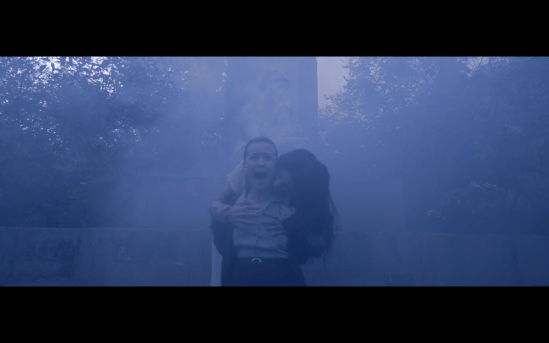
As far as anthologies are concerned, “Terror 5” favors a string of scary stories to be strung together being each a cataclysm spun from the negativity produced by the outer story that includes blazingly blue-eyed revenge zombies and the result is, on the surface, quite convoluted. What doesn’t help “Terror 5’s” case either is that the Rosenstein brothers decided to interwoven all but one of the stories together, creating a multi-narrative mesh. Instead of individual chapters or title card introductions, the stories have a lattice blueprint and the audiences are forced to go back and forth between the dissimilar story lines that, on initial viewing, would be assumed that one story is a fraction to the other. The stories also didn’t have that killer kick in the pants that makes you go , “WTF!” Each tale ends rather abruptly, leaving morsels of the carnage to be further imagined rather than be digested in full and I’m sure, though couldn’t locate any background about it, that these tales are based in part of an Argentinian, or even in a broader South American sense, contemporary urban legends that are unfortunately not explored in detail. If approached positively, the human thirst for flesh, morbid curiosity, and unflinching corruption is well laced throughout and that’s the real terror behind the surface level macabre.

Artsploitatoin Films and Reel Suspects introduces Sebastian and Federico Rotstein’s “Terror 5” onto DVD home video presented in an anamorphic widescreen, 2.39:1 aspect ratio. Director of photography Marcelo Lavintman works in the shadows with a very cloaked and dark alleyway approach. Some minor digital jumping in the blacks that’s underwhelming at best and in more lit scenes, clarity reigns with promising detail and natural coloring, despite not being variably hue heavy. The Spanish language 5.1 Dolby Digital surround sound has prominent dialogue and a balanced, foreboding score by Pablo Borghi, but the tracks lack a range and a depth magnitude and, essentially, all the sound is right in front of you without the bulk of the surround sound too enhance the effect. English subtitles are available and though generally translated well, there were some slight typos. The only bonus material included is the trailer. As far as Argentinian horror anthologies go, “Terror 5” leads the pack with directors, Sebastian and Federico Rotstein, pulling from familiar filmic influences and gutter cravings with turnaround consequences and mortal coil tussles. Schematically, “Terror 5” has profound leap frogging narratives that challenge the conventional way we view anthologies or overall films, creating a bit of havoc on the tale or tales at hand.

Argentinian horror anthology available to purchase at Amazon.com

The Devil’s Greatest Trick is His Evil Being a Part of You. “Luciferina” review!


Natalie’s dedication to her religious vocation has led her to become a nun. Her celibacy is a symptom of disgust with her family’s household, a home the young virgin could not bear to live in another second or much rather return to that stems from an uncomfortable inkling of unnatural circumstance, but when she is informed her parents were in a tragic accident involving the death of her mother and a father bedridden by shock, Natalie reluctantly returns home. She’s greeted by Angela, her university studying older sister, and her delinquently dangerous boyfriend, Mauro, and alongside a few of Angela’s classmate, the decision to track down a shaman on an secluded island on the outskirts of town has convinced the group to seek alternative and holistic treatments, such as a brew made from the mystical Ayahuasca plant, to battle their own self-complications. What they discover is that some inner demons should be left untapped and undisturbed or else their souls will pay the consequence.

“Luciferina” is a black rites narrative saturated with psychosexual tendencies and religious divergences from writer-director Gonzalo Calzada whose horror mystery footprint, the Argentinian filmmaker’s common foundation for his prior work in “Resurrection” and “The Clairvoyant’s Prayer,” maintains a strong foothold for his latest venture from 2018 with a story of solid foreboding and overshadowing complication that’s naturally opaque, guiding viewers seemingly toward one direction and then obliterating their conjectures in an in a blink of an eye about how characters or events might play out. Layered with themes and heavy with motifs, Calzada summons the internal demon, figuratively and literally, from within an indie picture budget that’s complete with accidental demonic conjuring, eye-devouring effects, and a climax involving temple fornication of various Kama Sutra positions.

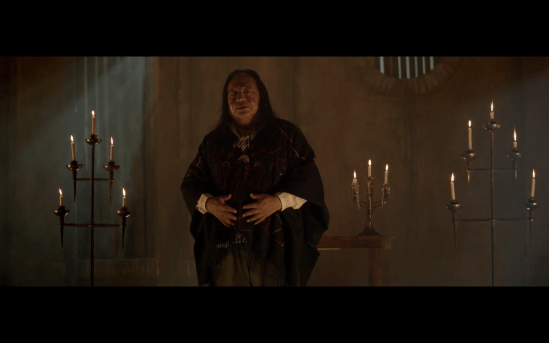
Young, beautiful, and, yet, withdrawn and plain, Natalia has embedded herself into nun-hood, a means to escape the unexplainable discomfort inside her own home and even in herself as she’s haunted by visions of a disheveled woman with crooked arms popping unnaturally out of a white nightgown, but not all of Natalia’s visions are bleak as she’s able to, at times, define a person’s gleaming aura during a momentary spell. Sofia Del Tuffo stars as the troubled vocational woman, a role that demands much from the young actress who can easily transition from a screaming and scared postulate to taking charge of her destiny by gripping Satan’s horns. Tuffo opposites Pedro Merlo as Abel who is, well, more or less a potential love interest. Abel has fire inside him sparked by his desire for Natalia, but goes full inferno after downing the Ayahuasca juice. The light and dark of Abel has Merlo flipping the script continuously and the actor keeps up with relative ease. The opinionated downside to roles Natalia and Abel might be lost in translation, but there’s a sense of disconnect between their multiple purposes: shaman visit, the unspoken connection for each other, and their intertwined destinies. These aspects go fairly unexplored or are either, in the script, diluted in the details. The supporting cast also don’t add volume to the story and though not all of the cast are like this, a good chunk are rather auxiliary for the moment of pinnacle prominence and their sub-stories are quickly squished – that’s the Gonzalo Clazada affect. The remaining cast includes Marta Lubos (“Darkness by Days”), Melena Sanchez, Francisco Donovan, Stefania Kossl, Gaston Cocchiarale (“Terror 5”), and Desiree Gloria Salgueiro.

“Luciferina’s” themes bubble quite easily to the surface, the more obvious found in the religious field, but an interesting theme is a woman’s protective, if not problematic, stance toward copulation and the guarded uterus and their right to chose. Natalia has no experience with sex and she’s constantly under the pressure of having sex, even inside the chaste nunnery. Natalia nonchalantly pushes away one of the boys in the nun’s drug rehab program with not much oomph, she then comes under siege by the forcibly accosting Mauro and his verbal rape fantasies toward his girlfriend’s younger sister, and then Abel’s internal struggle with his Faustian under guise who enthusiastically confesses his hard on to score with Natalia to bring forth more evil spawn. A common motif from the baby making is the uterus that pops up in Natalia’s dreams and her late mother’s frantic paintings that circle around the pressures of motherhood and as Natalia procrastinates under the semblance of saving her own life to further prolong her inevitable destiny, she comes to the realization running will prove for naught and becomes empowered. One thing weird in relation is not the uterus in itself, but rather the computer generated baby in the womb; the impression is okay in construction as the baby has some realism in the detail, but the adverse effect is the use of the effect that seems pointless and ostentatious.

Artsploitation Films and Reel Suspects presents “Luciferina” onto Blu-ray home video. The anamorphic widescreen, 2.35:1 aspect ration, presentation is quite sharp with textures and details in a lossless image. Calzada uses much of the natural coloring in daytime sequences and the night scenes are moderately bluish and director of photography, Claudio Beiza, has immense range and depth that provide astonishing interior and exterior backdrops that can be subtly pleasing. The Spanish language Dolby Digital 5.1 surround sound substantially keeps with the tone and pacing of the story. Dialogue is balanced and verbose in the forefront. The release also comes with a Spanish language 2.0 stereo track. Both audio tracks come with English subtitles that saw minor issues with translation errors and timing. The only bonus feature available is the film’s theatrical trailer. “Luciferina’s” contemporary tale of possession and sexual innuendo is rabid. Director Gonzalo Calzada’s ambiguity of mystery horror is grossly engaging while “Luciferina” can also be glossy with splayed monstrous savagery and graphic sexual content, two genre commodities that churn easy entertainment.