It’s in Human Nature to be EVIL! “Cradle of Fear” reviewed! (Unearthed Films / 2-Disc Limited Edition Blu-ray)

“Cradle of Fear” Available on a 2-Disc Unearthed Films Release!

Occultist and hypnotician Kemper has been locked away in a criminal asylum for years for a gruesome series of murders, involving not only men and women but also some children.  Kemper seethes against the arresting and prosecuting team who = put him away.  Able to sneak out a list of targets and their addresses, Kemper uses his black magic lineage to carry out revenge on his behalf, a violent revenge on the loved ones of who incarcerated him to a life in imprisonment.  Four gruesome assassins through Kemper’s supernatural means leaves a body trail for eccentric Inspector Neilson whose unusual investigative methods has him highly sensitive to the case and his temper has him in the crosshairs of his commanding supervisor.  With no leads on how Kemper is committing a new string of gruesome crimes, Neilson pieces together that all the victims are related to the case that put Kemper away and when his son becomes the last target, Neilson goes to extreme lengths to see the serial killer is put down for good. 
A gory and cynical narrative of indelicate irony, “Cradle of Fear” is the British, anthological horror that speaks to the insidiously widespread evil that courses through the inevitable fallible and immoral side of human nature, leaving no good deed unpunished in its circumference of supernatural punitive karma.  The early 2000s anthology is written and directed by Alex Chandon, director behind the 1980s sex comedies “The Perv Parlor” and “Pervirella” as well as directing select music videos for the UK extreme black metal band Cradle of Filth, whose Goth-cladded lead signer Dani Filth stars in the film and is the poster boy for film art, hence the title’s similarity to the band’s name.  Eddie Kane, Ciska Faulkner, and Nico Rilla produced the film with Paul Luke and Andy Skivington serving as executive producers for the Pragmatic Pictures production. 
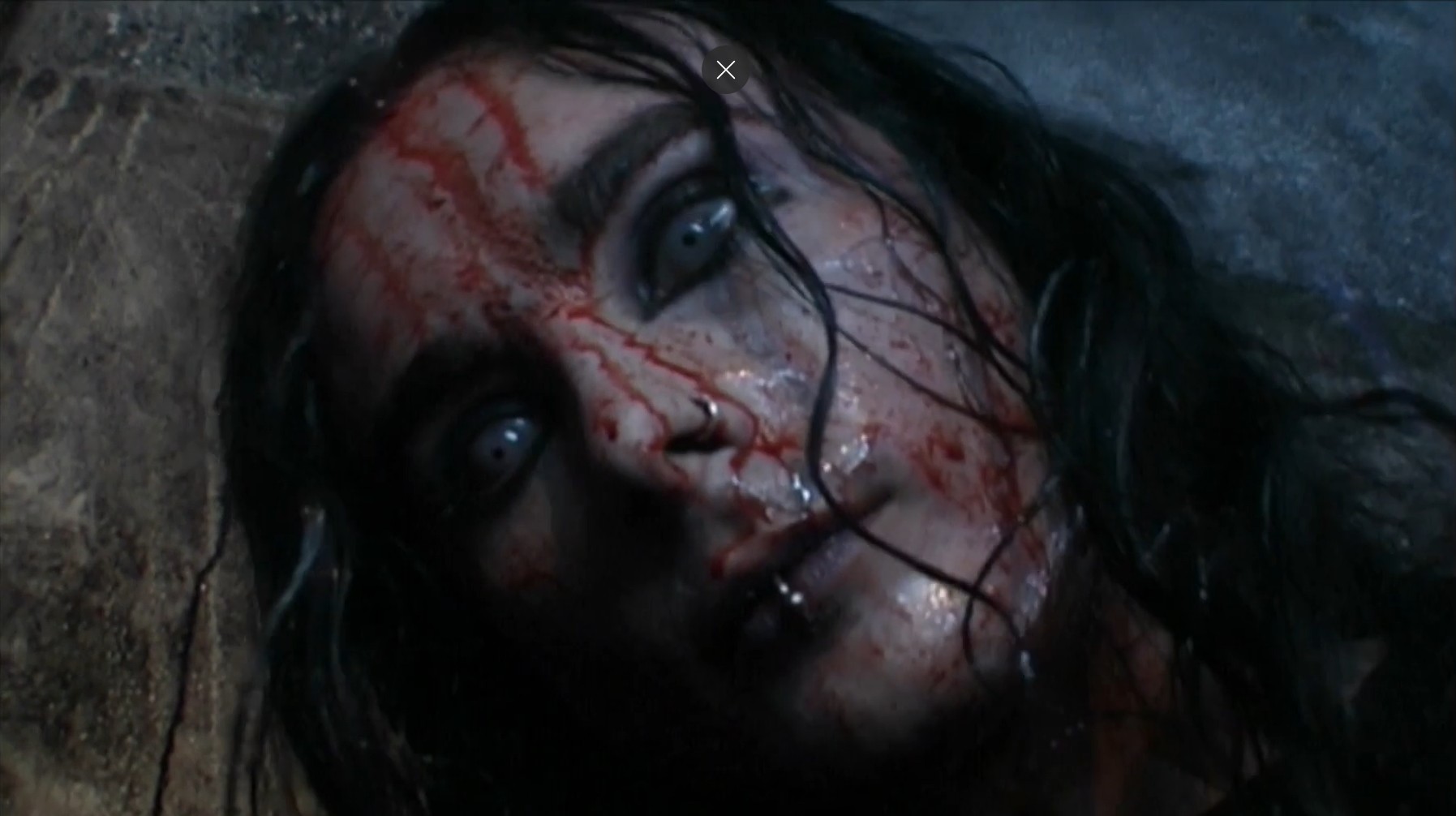
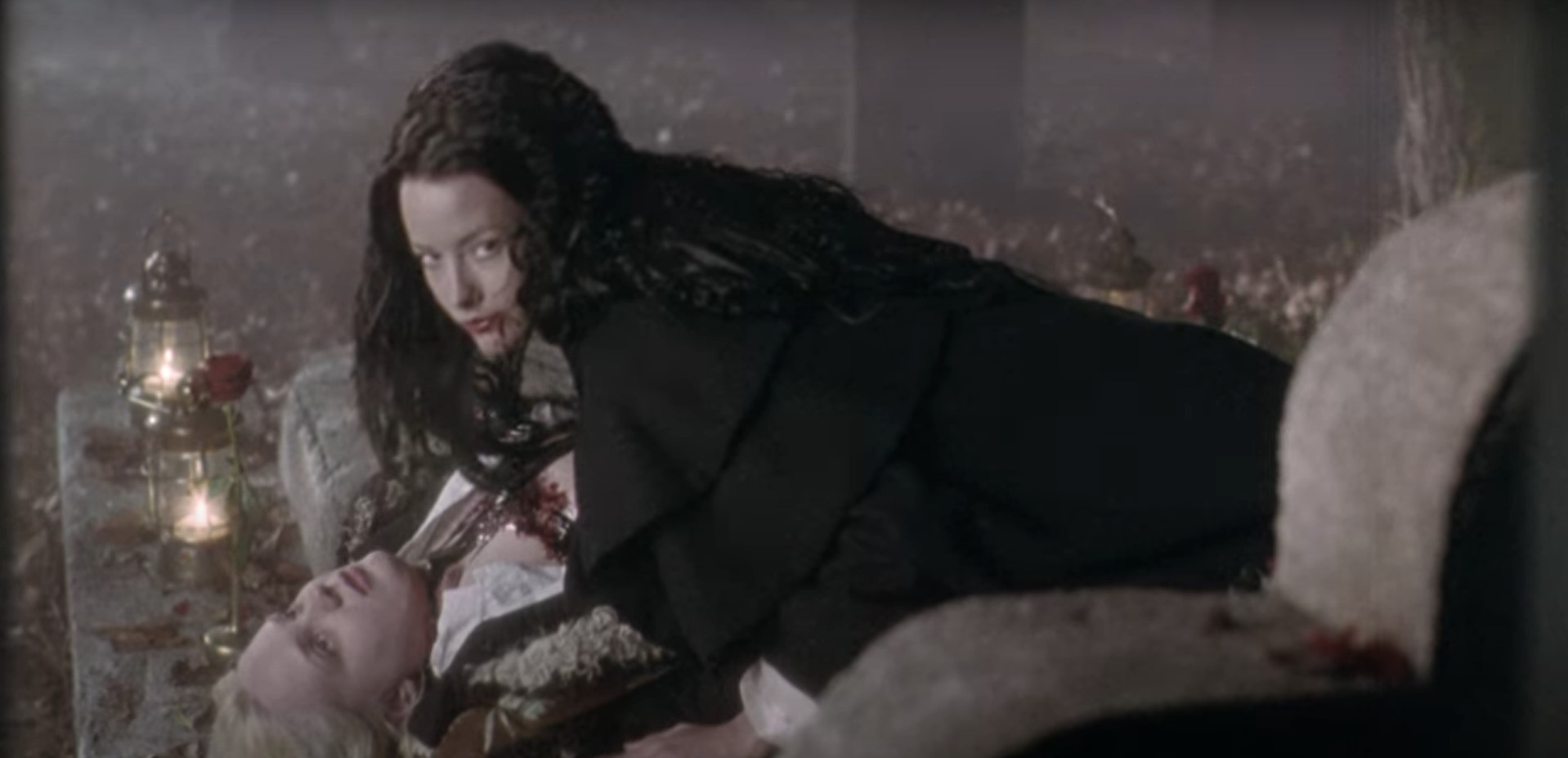
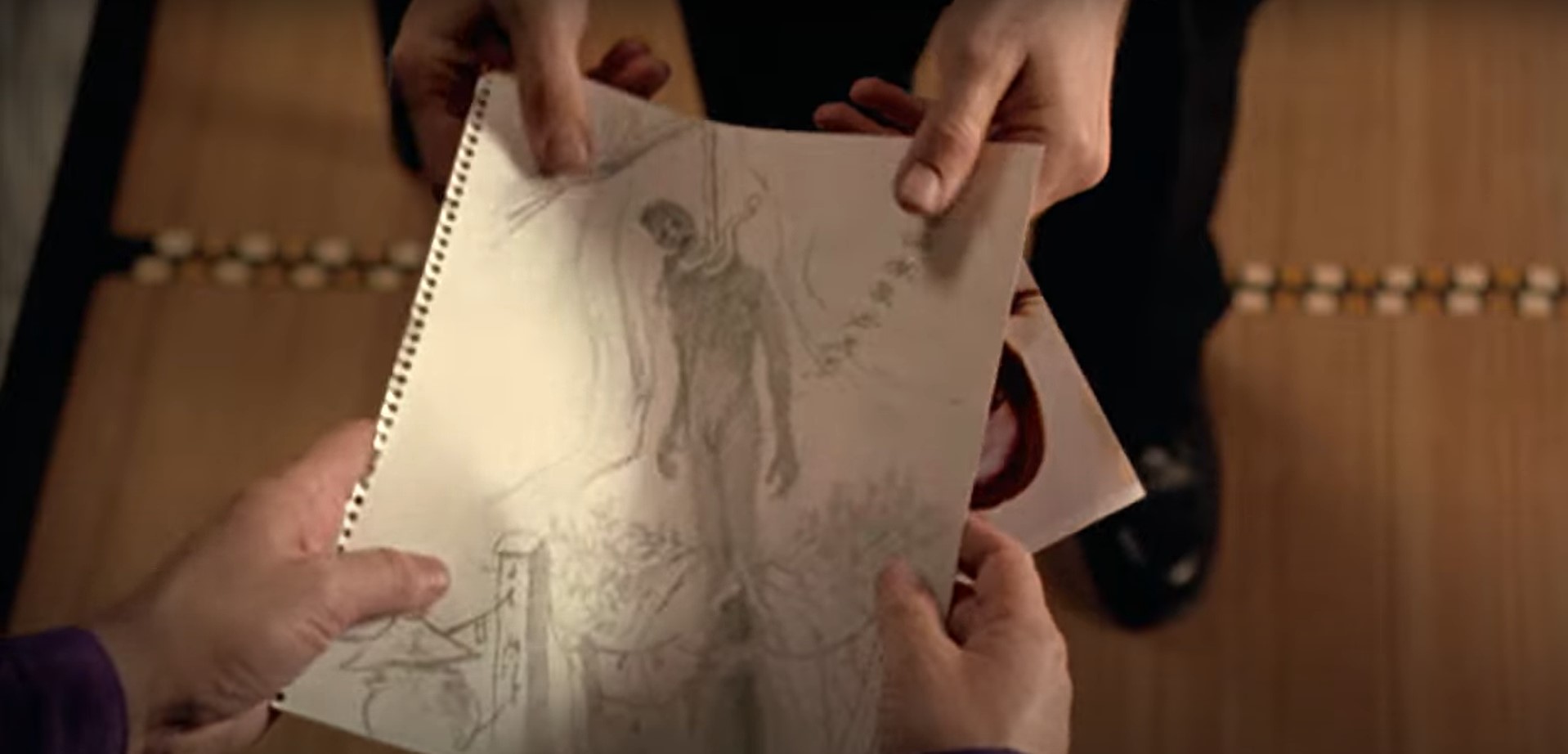
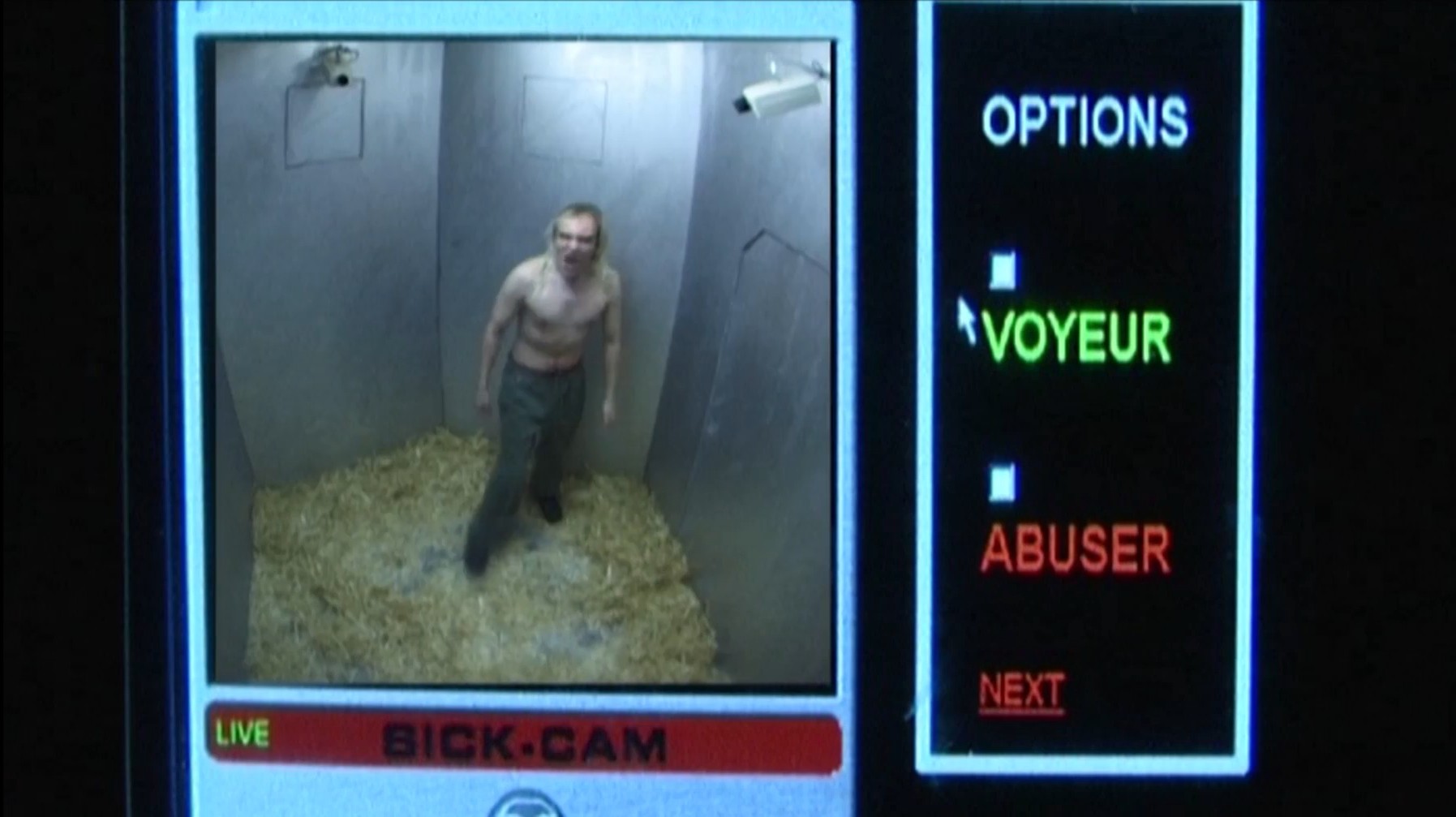
Aforementioned, Dani Filth stars as the ghoul with the ultimate evil of transforming his human form into a demonic creature that can rip to shreds those unlucky to be in his path, the opening gives us a glimpse into his power by viciously terminating two would-be, back-alley muggers.   From there, the story goes into the gruesome crime scene of two young women (Emily Bouffante, “Evil Aliens,” and Melissa Forti) laid strewn with their innards outwards and inspector Neilson (Edmund Dehn, “The Containment”) copping a feel as his way of rain-manning the scene.  Their end first storyline begins the moment the two goth club women were fated for untimely demise when they spotted Filth’s more-goth-then-they-are The Man.  Eventually, Inspector Neilson figures out the victims are connected by their last names and those related to trial participants with the next tales of sharing ill-fated death in the ghastliest and most gruesome ways, anthological style.  Another two women (Rebecca Eden, “Pervirella,” and Emma Rice) try to nick an old-timer of his bed stashed savings but find there is no honor between the combination of friends and thieves, an amputee (Louie Brownsell) murders an acquaintance to use his leg for longshot transplant only to have his leg reject in the most horrifying way, and a officer man (Stuart Laing, “Lie Still”) risks everything in life to get his rocks off gawking at online snuff films only to find himself in one!  There’s also the wrap around story that peppers transition scenes in between to bridge gaps and bring the short stories together into one long feature.  Kemper is the story’s chief antagonist but isn’t the only bad guy in the narrative but is our resemblance of a hero Inspector Neilson’s force to stop as the inspector doesn’t really just how purely symbolizing the embodied of pure evil Kemper really is perhaps even the Devil himself, as the orchestrator is the marionette pulling the strings that leaves Neilson chasing his tale.  Performances all around are gritty, apathetic, cynical, and mean that leaves no ounce of hope or feel-good intentions.
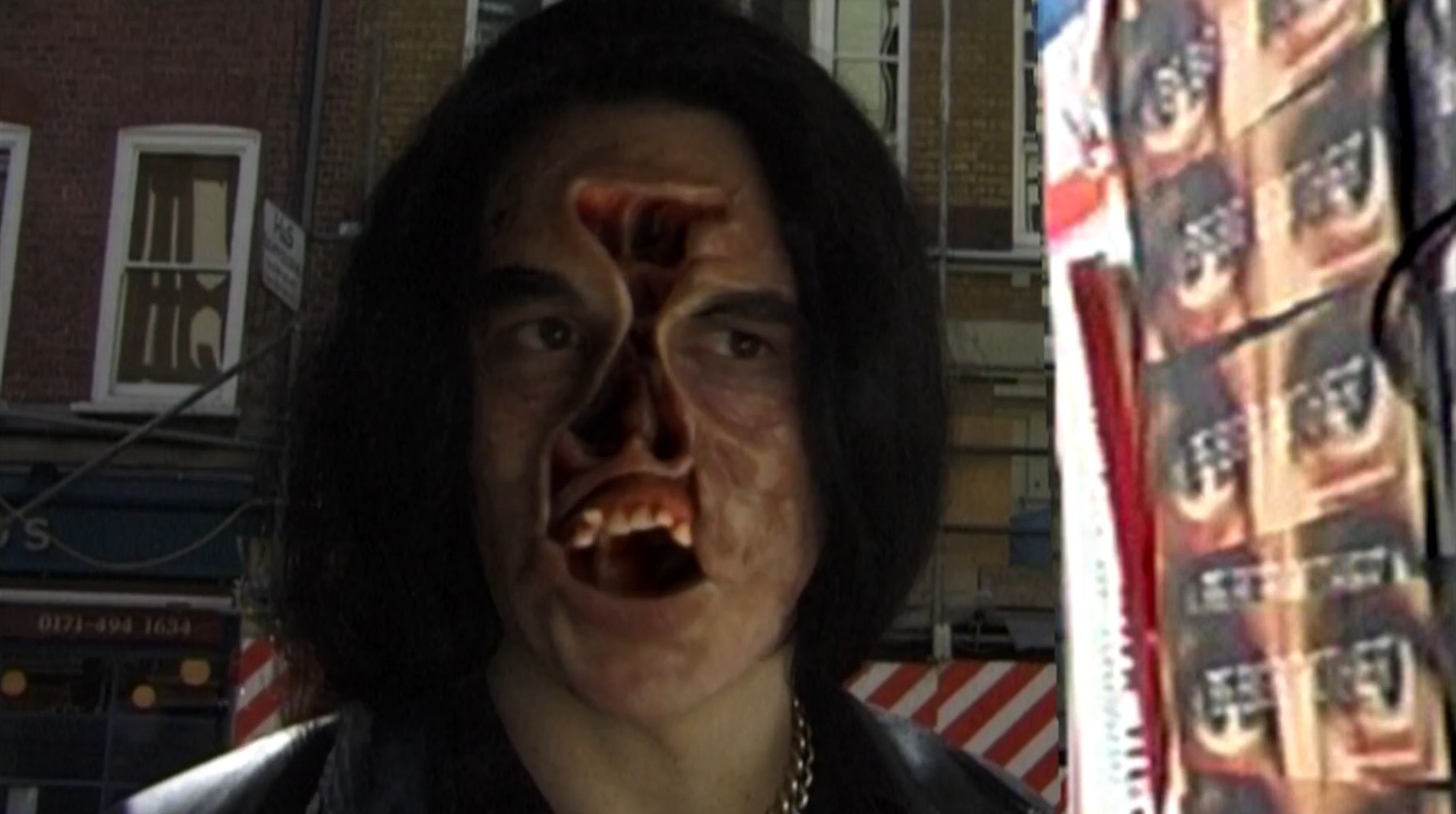
The early short films are not set up with Kemper as the man behind the curtain and this can put some confusion into the mix with seemingly rough transitions from one story to the next.  Plus, the non-linear first film isn’t mirrored into the other three, leaving the first third of the movie wandering, or grasping, to cling to something whole.  By the end of the second short, “Cradle of Fear” levels and becomes clear that an anthology is playing out with each tale containing a formula narrative:  a setup, the rising action or transgression, a brief, jovial high, and then it all comes crashing with gory horror.  The gore is a blend between practical and composite VFX that gets away with a range of simple stab wounds to more complicated head popping deaths while the visual effects has obvious green screen incongruity but dishes some devilish effects from deformed spider-like legs sprawled out from a half-severed head to some shoddy-level effects like a European car flying through and crashing through traffic.  What’s ingrained in the gore and horror is the sex, an element that’s immensely weighed in “Cradle of Fear’s” content that showcases scenes of sensual romance, to gratuitous nudity, to tasteful moments but keep the skin touched upon at least once in every episode.  “Cradle of Fear’s” circulated theme speaks toward the persistence and ever-present evil that’s within us all and from within it can’t be contained as human nature is ultimately fallible and every soul can be conditioned to expel the verhy worst in us all. 
Unearthed Films “Credle of Fear” arrives onto Blu-ray home video with a new 2-Disc, limited-edition collector’s set release encoded with AVC onto a BD25 and presented in an European widescreen of 1.66:1 aspect ratio with 1080p, high-definition resolution.  The 2-Disc set has for a long time seemingly vanished out of Unearthed Films’ newly released lineup, aside from the dual-format releases but it’s nice to see a comeback that’s more special features driven rather than playback format.  The dark grading leads to plenty of finer detail loss but the film has clear delineation and when it is key lit, textures flourish.  With a color scheme of mostly darker shades, keeping in line with its bleak noir tone and the gothic model, this early 2000’s horror fashions a polished veneer as one of the earlier pioneers of digital capturing.  The CGI is not at its finest being that it’s early early 2000’s VFX tech and on a budget too nonetheless and you can the shift in reality whenever the effect is composited into a scene.  Depth is mostly retained for closeups and medium closeup shots as Chandon’s does stylize quite a bit with fade in and outs, negative images, lighting, slow-motion, and various edits to make a swirl of designer continuity.  The British English audio is encoded with an uncompressed PCM 2.0 stereo.  Strong dialogue track doesn’t clash with the imposed, arterial soundtrack comprised of industrial goth and rock bands including Cradle of Filth, for obvious reasons, and The Dark Poets, Jezebel, Slacker, Lungworm, Intense, Quicksilver, and Crotchet.  Often, the ambience and Foley has chaotic aversion to one another that disrupt the audiological flow of the film, except for a few excellently crafted scenes such as Mel’s walk Emily Bouffante’s walk through the downtown area and see demon faces is harmonized very well.  The Foley can be slapstick at times with hits to the body being overexaggerated with cartoonish tones.  English subtitles are available on the feature disc. Disc one contains some ride-along aspecial features, including a brief making-of, a second behind-the-scenes Important Words that has direct Alex Chandon and cast members rambling about other topics rather than being topically relevant to the film, the German DVD making-of the feature, a behind-the-scenes gallery, and three original trailers for the film.  Disc two is mainlhy comprised off Alex Chandon’s short films – “Chainsaw Scumfuck,” “Bad Manor,” “Bad Karma,” “Drillbit,” “Night Pastor,” “Bullshit News,” and “Borderline.”  Also included is a promo for Film Extremes 3, outtakes for the shorts, a behind-the-scenes gallery for the shorts, and their trailers.  Packaging includes a traditional Blu-ray Amaray with new composition cover art on a one-sided sleeve.  The limited-edition O-ring slipcover contains the same primary image.  The discs are held in place on the inner layer of the Ameray with snaplocks and pressed with controversial and provocative imagery including a bloodied baby head and an illustrated eviscerated naked woman.  The region A locked film has a runtime of 120 minutes and is unrated. 

Last Rites: “Cradle of Fear” rocks the anthological horror subgenre not to sleep but to give rise to the killer instinct from within and to show the self-inflicted suffering from the innate debasement in the dark recesses of our soul.
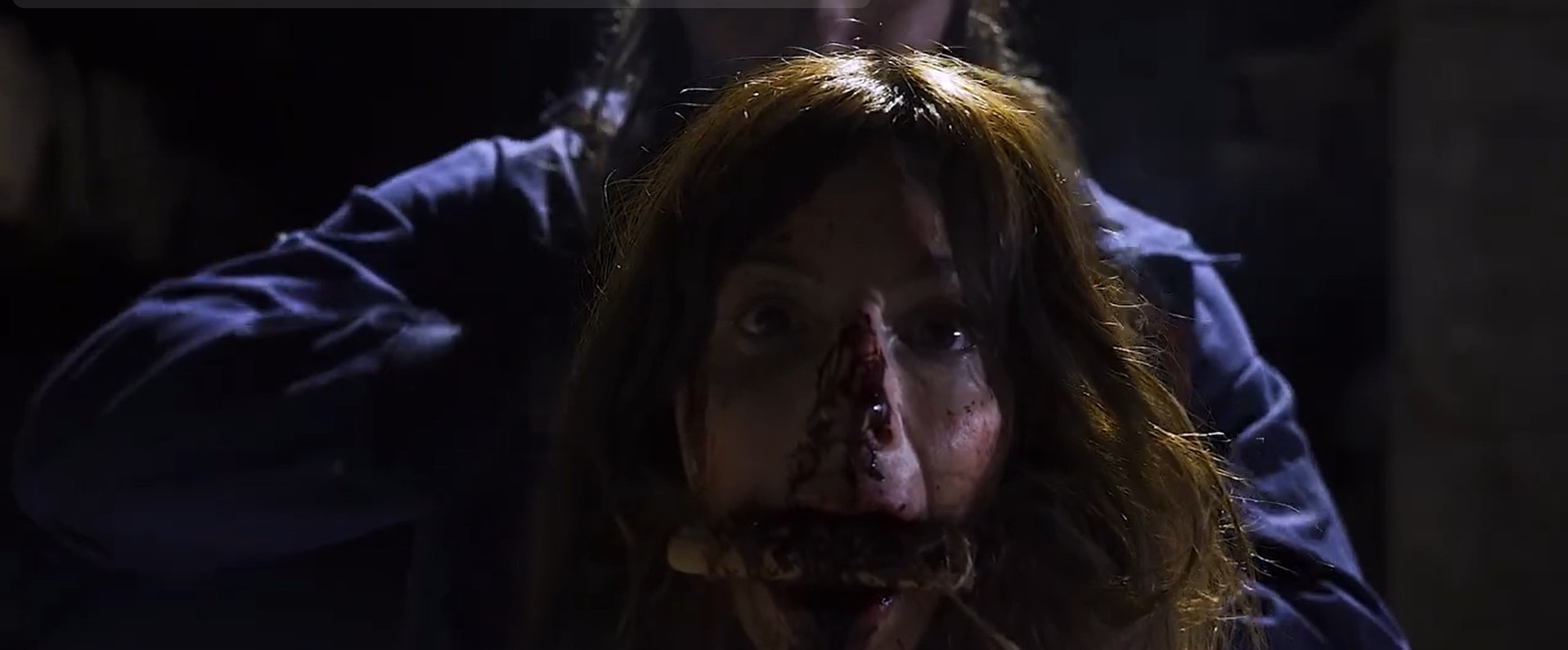
“Cradle of Fear” Available on a 2-Disc Unearthed Films Release!

Add This EVIL SOV to Your Halloween Watch List! “V/H/S/Halloween” reviewed! (Acorn Media International / Blu-ray)

Spend Halloween With What Scares You on Blu-ray!

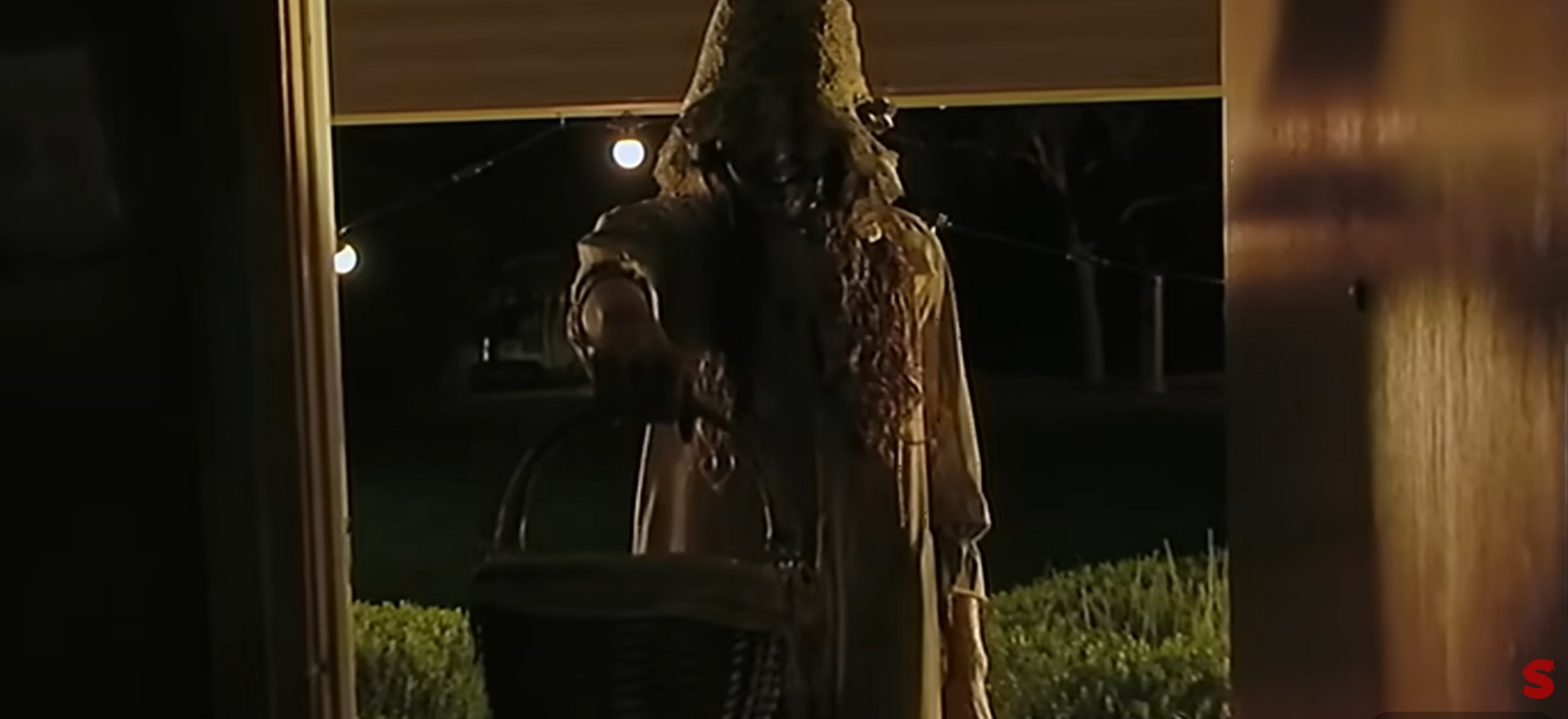
A new soda from the Octagon company is about to hit commercial retail shelves but before it does, voluntary testing is recorded for posterity with test subjects examined as they drink Diet Phantasma, a spirt-infused carbonate drink surely to die for.  In between the mopping up of test subjects, four more tales of terror penetrate the safety of the soul.  Two high school seniors go out trick-r-treating for one last mischievous hurrah only to find themselves trapped inside with Mommy, a matriarchal creature from the afterlife that kidnaps bad children on Halloween and makes them her own kids.  A night of revelry trespass onto the mansion grounds of a past gone necromancer who communicated with the dead and when the partygoers pickup the calls from the dead, a tremendous terror can’t go unanswered nor unseen.  Another group of adult trick-r-treater comes upon an unattended bowl full of obscure chocolates only to find themselves suck into the bowl itself and inside a desolate factory where the candymaker toys with his new fun size ingredients.  A media service aims to protect children with their videography services, especially from an unidentified abductor who mutilates and kills kids, but the service may be doing much more harm than good collecting children’s information as they walk through the store.  Lastly, a waning father-and-son bond over their makeshift Halloween maze turns into a nightmare when a record incantation brings to life each of the maze’s horrifying scenarios from ghosts to zombies, to child-eating witches.

For over a decade, the horror anthology series “V/H/S” has been terrifying audiences with short, original tales that break the scale of reality and enter a new dimension of horror that illuminated the careers of modern horror directors Ti West (“X”), Adam Wingard (“Godzilla vs Kong”), and David Bruckner (“Hellraiser” ’22), to name a select few.  The concept created by Bloody Disgusting’s founder Brad Miska in 2012 has one more installment with a new focus, Halloween.  All Hallow’s Eve already has a spooky air about it with a bit of treat to counteract its trick but in the 2025’s “V/H/S/Halloween,” there’s more sinister means than there are chocolates and sweets for new blood enters the series with filmmakers Bryan M. Ferguson writing-and-director “Diet Phantasma,” Anna Zlokovic writing-and-directing “Coochie Coochie Coo,” Paco Plaza directing and co-writing “Ut Supra Six Infra” with Alberto Marini, Casper Kelly writing-and-directing “Fun Size,” Alex Ross Perry writing-and-director “Kidprint,” and R.H. Norman helming a cowritten script of House Haunt” with Micheline Pitt-Norman.  Miska returns as producer alongside Michael Schreiber (“V/H/S/94,” “V/H/S/99”), Steven Schneider (“V/H/S/Beyond), Roy Lee (“V/H/S/Beyond),, James Harris (“V/H/S/85”), Josh Goldbloom (“V/H/S/94,” “V/H/S/99”), and Derek Dauchy (“Late Night with the Devil”) making his producing debut into the franchise.  “V/H/S/Halloween” is a coproduction of Shudder Films, Cinepocalypse Productions, Imagenation Abu Dhabi, and Spooky Pictures. 

In true “V/H/S” fashion, the anthological shorts include a cast few would be familiar with, fresh faces for the grinder as each short touches Halloween night in a different, diabolical way than what we’re use to seeing.  The wraparound story “Diet Phantasma” opens with the Octagon corporate COO Blaine Rothschild being escorted into the manufacturing and testing plant devising the experiment.  David Haydn takes charge of his COO character that flashes a false grin but conveys an authenticity directive while doing it that leads a number of testers to their carbonated demise, from a cast comprised of UK and American actors.  In “Coochie Coochie Coo,” mother knows best as minor hooligan high school friends Lacie (“Samantha Cochran) and Kaliegh (Natalia Montgomery Fernandez) embark on their last night of mischief before moving away to college and stumble upon a light-pulsating house where they discover milk-induced deform adults acting like babies and their six-breasted mother has more milk to give!  Cochran and Fernandez are in the shoes of characters you wouldn’t root for as they’re more rulebreakers than young women with healthy goals and desires as they smoke weed, steal candy from children, and overall take life for granted and the two actresses do criminal-type behavior with justice, pun intended.   Underneath Mommy’s unnatural milkers, talk stature, and evil grin, all underneath a white nightgown and bonnet, is Elena Musser’s phenomenally creepypasta take on fictional lore for the short.  The Spanish-language “ Ut Supra Sic Infra” opens with a back and forth between an interrogation of sole survivor Enric and his eye-removed, bone-crushed friends strewn about a medium’s sacred chamber where Enric, detectives, and his lawyer return to unearth what went down that night.  Spaniard Teo Planell runs polar opposite with his centralized character Enric who begins in fear and ends in wicked confidence as the re-enactment of events turns into a repeat of that fateful night.   One of the more unfavorable performance stories is “Fun Size,” a quirky, corporate consuming double entendre that teleports four friends into a human meat manufacturer that turns their smallest body parts into chocolate covered goodies.  Lawson Greyson (“Herman”), Jenna Hogan (“Surviving the Sleepover”), Riley Nottingham (“The Demoness”), and Jake Ellsworth’s (“Party of Darkness”) performances hit the nail of artificiality and not-so-fun sized corniness.  The cringe acting coupled with stilted dialogue will have audiences root for the antagonist, a candy-headed, crown-wearing, suit-sporting supernatural entity named Fun Size provided with his best “Terrifier” like playfully menacing movements by Michael J. Sielaff with “V/H/S/Halloween” not being his first rodeo with the series having played Pale Face & Babysitter in the “Stork” segment of “V/H/S/Beyond.”  “Kidprint” perhaps has the most disturbing and realistic tale of a child abductor and murderer with a storyline set in the late 80s-early 90s.  Stephen Gurewitz (“The Scary of Sixty-First”) plays Tim Kaplan, owner of Kaplan’s video services where parents can record VHS tapes containing their children’s appearance and information in case they go missing for XYZ reason, and the do-gooder shop owner becomes intertwined with the real killer, someone close to him, who has access to all the tapes and all the information needed to indulge his sociopathic whims, a role “Hostile’s” Carl Garrison was born to play.  Last short shows through home video the decaying stability of a son’s bond with his father over a shared interest in what is a natural progression of coming of age with the now teen boy who’s tired of being bullied by his peers for his dad’s obsession over a Halloween haunt maze he builds every year.  Jeff Harms and Noah Diamond are father-son Keith and Zack in the throes of phasing out their once beloved bond because of teenage angst and peer pressures.  That tension and rebinding of affection is interrupted by the sudden personification of their inanimate horror show that goes straight for the throat in a show of supernatural and classically-creaturfied blood shedding within a homemade maze, leaving teenage angst to be wiped up with a mop. 

Like most “V/H/S” installments, each entry has hits, and each has misses, and this first of its kind holiday-themed ‘V/H/S” anthology produces the same effect.  Spanning across decades from the 80’s to the 2000’s with a series no longer cornered by a particular era, each SOV production produces an original tale all of which grab a handful of disturbing and unsettling content, most with a gore edge.  “Coochie Coochie Coo” and “Fun Size” are two good examples with each carrying opposite elements that make horror horrifying.  Though both shorts are my personally my least favorite of the six, “Fun Size” offers that grossly disturbing factor that invades a person’s private parts for candy making satisfaction but the while the story is short and sweet, there’s nothing shuddering about it where as “Coochie Coochie Coo” trades the vulgar gore for another unsettling factor, pure creepiness that feels like one of those cheap survival horror PC games but can jump scare the hell out of you.  “Ut Supra Six Infra,” “Kidprint,” and “House Haunt” seize a more traditional inlaid suspense with a properly encased twist moment, quickly downgrading a tense by calm story evolution to spiral out of control with madness of monsters, maniacs, and mayhem violently gnashing what’s left of a good around the campfire spooky tale.  “Diet Phantasma” is also a neat premise with an evil spirit infused soda under a corporation eager for obedience and mind control, a metaphor for soda companies running the world as we see such situations in other countries where Coca-Cola is the leading provider of clean purchasable water.  Ferguson also treats fans with an homage to Tommy Lee Wallace’s “Halloween III” by riding a similar plot but with trick-or-treat masks that kill children to resurrect Gaelic, or Samhain, sacrifices.  The COO is also seen reading a Fangoria magazine with hee John Carpenter penned off-shoot sequel on the front cover, suggesting further the idolizing connection.

Acorn Media International distributes the Shudder production onto an AVC encoded, 1080p high-def resolution, BD50.  Like it’s predecessors, the imitated and authentic SOV shoots go through periods of interlaced distortions and static snow that simulate the signal interference, tape artefacts, and low quality, low-graded detail and saturation with some shorts elbowing their way into the cleaner digital camcorder era.  No issues with the true compression of the Blu-ray format; audiences will be pleased to see they will get exactly what the filmmakers’ intended, a harried shaky cam first person view that has it’s monsters looking right back at you under a veil of vagueness and to be a hostage to the purposed angles that translate immense fear just out of frame, presented in a widescreen 1.78:1 aspect ratio rather than the organic 4:3 framing for the stories from the 80s to mid-90s with videotape.  The English and Spanish language DTS-HD 5.1 Master Audio has no issue delivering a vigorous and balanced mixed layers of sound depth based on design short that may contain areas of static, a weaker strength, and certainly a lot of screaming that reaches the mics physical limits to capture and reproduce the sound.  Dialogue is clear and prominent but, like I said, lots of screaming and wailing when events turn southward that it doesn’t matter often what is being said when it all just comes out of as chaotic cacophony.  I will say that “V/H/S/Halloween” is one of the better sound designed productions with more attention to the individual layering.  English subtitles are optionally available as well as French.  Special features include a director’s commentary for each short, a behind-the-scenes featurette for “Diet Phantasma” and “Coochie Coochie Coo” that’s is a swing between mostly raw footage during in between shots and some during shots with commentary here and there, a deleted scene from “Kidprint,” “Diet Phantasma” uninterrupted without the cut-to other shorts, “Diet Phantasma” faux commercial, and a gallery for the Ferguson short.  The physical appearances have the traditional “V/H/S” themed skull front and center on its one-sided sleeve art, sheathed inside the plastic of a Blu-ray Amaray.  There are no other tangible accompaniments.  The UK certified 18 film is region B locked and has a runtime of approx. 115 minutes. 

Last Rites: “V/H/S/Halloween” has original spooky tales centered around the holiday but as a collection, this anthology is a mixed bag of often great knee-buckling terror with considerable absurd tailspin that tries too hard to be scary out of the most unalloyed.

Spend Halloween With What Scares You on Blu-ray!

Milan Has All the Best Short Film EVIL! “Drag Me To Fest” reviewed! (Rustblade / DVD)

Hurry! Grab the Limited Edition Copy of “Drag Me to Fest” Before Its Gone!

An outpatient nurse is requested by an old woman leaving by her lonesome.  Always forgetting and troubling eccentric, the humble nurse finds he’s in way over his head with a clearly unstable, possibly delusion woman, until the truth of her hidden secret unveils a web of horror.  A young couple looking to help a lonely farmer find themselves erecting a sheep fence as well as maintaining the upkeep of a strange rock formation known as a Tursemorkel that emits ooze out of black orifices and soon find the psychological and physiological energy from the Tursemorkel is more than they can withstand.  An elderly couple, tucked away inside their roadside camper trailer, whips up a finger-licking meaty stew made from all natural, locally sourced ingredients as they watch the nightly news’ top story of a missing person.  A man answers the doorbell and finds a package on his step, scratching and crawling out is a festering corpse eager to play with him.  A priest with an obsessive bug collection has him turnaround when a recently caught rare beetle toys with his mind.  Dafne, a young woman lost in another state of mind, is in the presence and in the arms of her own, personal demon. 

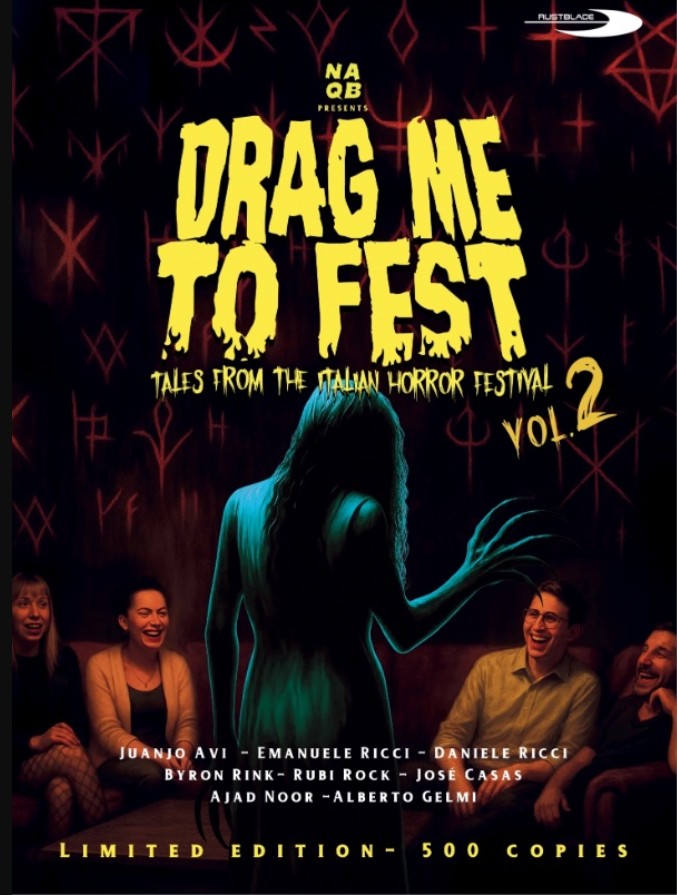
These bloodcurdling tales are the latest batch of horror shorts from the annual Milan, Italy hosted Drag Me to Fest.  The festival brings together Italy and international filmmakers to submit their unique brand of terror.  The 2024 lineup were submitted to the Milan collection in 2023, hit the festival the following year, and has now been compiled onto a home video release for North American audiences to enjoy and cower in teeth chattering fear under its namesake title, “Drag Me to Fest,” from Italian distributor Rustblade Records in association with MVD Visual, a subsidiary of MVD Entertainment Group.  Norway’s “Vevkjerring,” or “The Weaving” by Øyvind Willumsen and “Tistlebu” by Matthew Valentine kick off the anthology followed by Italian filmmaker’s Riccardo Suriano’s “Long Pig”, Julie Gun’s “Dafne is Gone,” and Jacopo Vismara’s “Il Coleottero” and finally rounding out with Japanese director Nori Uchida’s “For What the Doorbell Tolls,” all of which are self-produced.

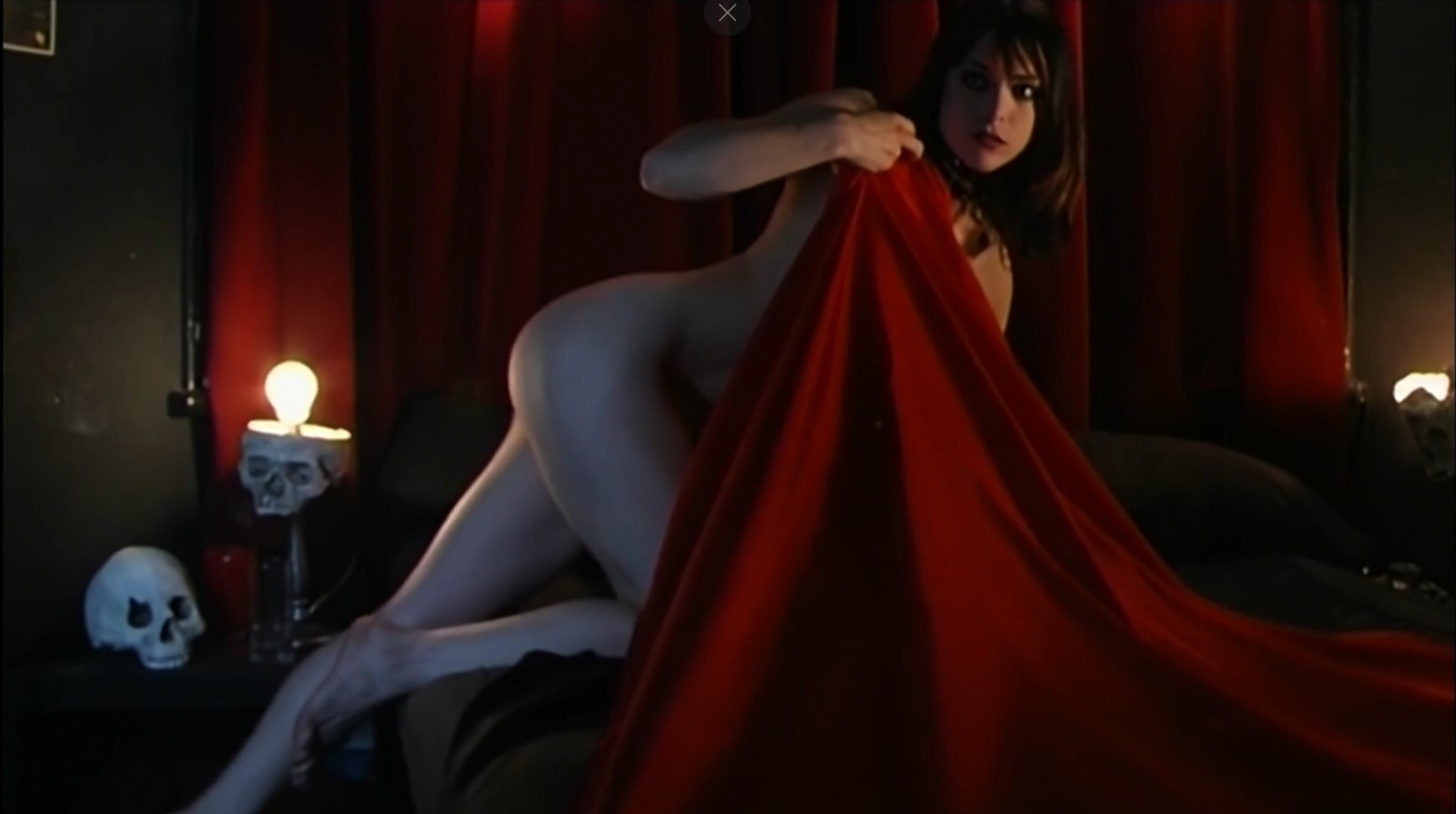
Three countries, six distinct films, and all packed into the unusual side of ambiguously horrifying elements contained inside six short films.  Each character is curated to fit inside the narrative design, no matter how outrageous or avant grade the message is.  Willumsen’s “The Weaver” is a more straight forward, common structured horror of building up tension in an already uncomfortable situation of a friendly, living assisted male nurse Henrik (Fredrik Hovdegård) knocking on the doorstep of a haggard and kooky old croon named Gudrun, played devilishly and disgustingly by Isa Belle.  The next four episodes become a bit vaguer in their intentions of madness, purgatory, survival, and obsession that intends to either harm or transfigure into something beyond the dimensional standard.  “Tistlebu” aims to transfigure as a young city couple (Sascha Slengesol Balgobin and Sjur Vatne Brean) look to connect with nature and their curiosity, coupled by intrusive misuse and sexuality, toward an earthy pillar of energy inside a widow’s (Oda Schjoll) barn enraptures them into something more primordial, literally connecting them to an omnipresent natural world that’s much bigger than their insignificant need.  Uchida provides his own one-of-a-kind performance based immensely off Sam Raimi’s “Evil Dead” by playing not only the hero but also the decaying plaything that arrives at the hero’s doorstep in one’s mirrored rotting of loneliness.  “Il Coleottero’s” Don Antonio (Mimmo Chianese) has a crisis of faith that become sidetracked by his diligent hobby of entomology when his prized find, a rare beetle, suddenly disappears from his collection.  Chianese finds the balance between being a disenchanted priest and an anxious man hunting for the beetle that got away and that will eventually destroy him.  Julie Gun’s “Dafne is Gone” is more operatically finessed with interpretive dance between Dafne (Giulia Gonella) and a demon (Jason Marek Isleib) that’s completely absent of dialogue, stagecraft visualized, and characteristically naked to showcase Dafne’s descent into the Demon’s spellbinding movements.

The collected and presented works are not the highest dollar productions but do encase a prosthetic practicality as seen in Willumsen’s “The Weaver” with a shedding of an exterior layer into a more grotesque freak of nature while Uchida takes the tribute route using filleted flesh and milky contacts, along with LFE tones and grading, modulated vocals, to accomplish his own version of “Evil Dead” without the presence of Ashley Williams.  The others are not as cut and dry with their infinite interpretational insights that likely will speak more on a personal level than a glossy buttered popcorn one that requires little effort to absorb.  “Tistlebu” and “Dafne is Gone” entrench themselves in their respective unknown and modern art by providing very little in the one thing they both have in common, a shared sense of unsettlement.  There’s also an undertone of sexualism as if it equates to the very beast that entrances, which in these shorts is the Tursemorkel, which is a large surface growth that emits an allurement of safety and gratification, and, in comparison, to the demon, perhaps her own visceral demon, that frolics to breach Dafne’s temptation, drawing her closer to his own colorfully neon netherworld in a production of warmly dark euphemism.  “Il Coleottero” is perhaps the best understated undercurrent between the skepticism that plagues man and his faith.  Shot mostly naturally, tension is built on Father Antonio continuous deviations from his religious duties, distracted in his homilies and divine surroundings, by the mere fact of a lost beetle, a beetle, similar to the appearance of a Stag Beetle, that toys with him.  One could assume the beetle represents a test from God to challenge the priest’s diversification balancing his faith between realism against spirituality, to quote biologist J.B.S. Haldane, and I paraphrase, if the creator had made life, it must have been inordinate fondness for beetles because of their profound species diversity.

“Drag Me to Fest” has now hit DVD home video for the first time in its 3rd annual run with a limited edition to 500 copies courtesy of Rustblade Records, routed through the North American distribution channels of MVD Entertainment Group under their MVDVisual label.  The region free release, presented in a widescreen 1.78:1 aspect ratio, is encoded onto a MPEG2, upscaled 1080p, DVD5 with palatable average of image quality in its varying degrees of filming equipment, lighting, and technical know-how to get the intended look without suffering cinematography faux pas.  Compression wise can be a different story but, generally, “Drag Me to Fest” has an adequate presentation albeit a less-than-desirable color saturation, especially Gun’s “Dafne is Gone” that implements warm neon primary coloring in a high contrast, hard light emulsion.  Skin and pattern textures vary from short-to-short, but the delineation is there to not blend depth nor create solid, smoothed out surfaces.  Valentine’s “Tislebu” relies heavily on the rolling hills and greenery farmscape to enact its character qualities for an Earthy or terrestrial mystery important to the sentient and engrossing formation.  The Italian, Japanese, and Norwegian language Dolby Digital 2.0 Stereo offers a passable mix that doesn’t elevate the atmospherics or construct tension to the max but neither does it flounder or lay waste to the support of the shorts.  There’s not a profound amount of leveled depth or creative sound design to fabricate space as much of the dialogue and environment resides in the foreground, and the dialogue does render over clean and clearly with forced errorfree English subtitles, but the focus is primarily on moving the story in a matter of minutes for some of the shorts, leaving narrative devices, such as characters and the effects, to drive the story and its tension.  The DVD is a barebones released that does not come with any encoded extra content, but the slim, trifold jewel case does depict a grouping of cherry-picked ideas from the shorts in a green bath illustration from graphic artist Gonz and has individual taglines and color stills for each short.  The 92-minute anthology is unrated. 

Last Rites: Abroad anthology with a goal to highlight and amplify short filmmaker voices, “Drag Me to Fest” finishes up from the main screen and extends to home video for the first time! Rustblade and MVDVisual illuminate the cinema obscure for the general public and we’re all the richer for it!

Hurry! Grab the Limited Edition Copy of “Drag Me to Fest” Before Its Gone!

EVIL Wants You Tour Your Own Personal Hell! “Trapped Ashes” reviewed! (4K UHD and Blu-ray / Deaf Crocodile)

4K and Blu-ray “Trapped Ashes” from Deaf Crocodile. Available Here!

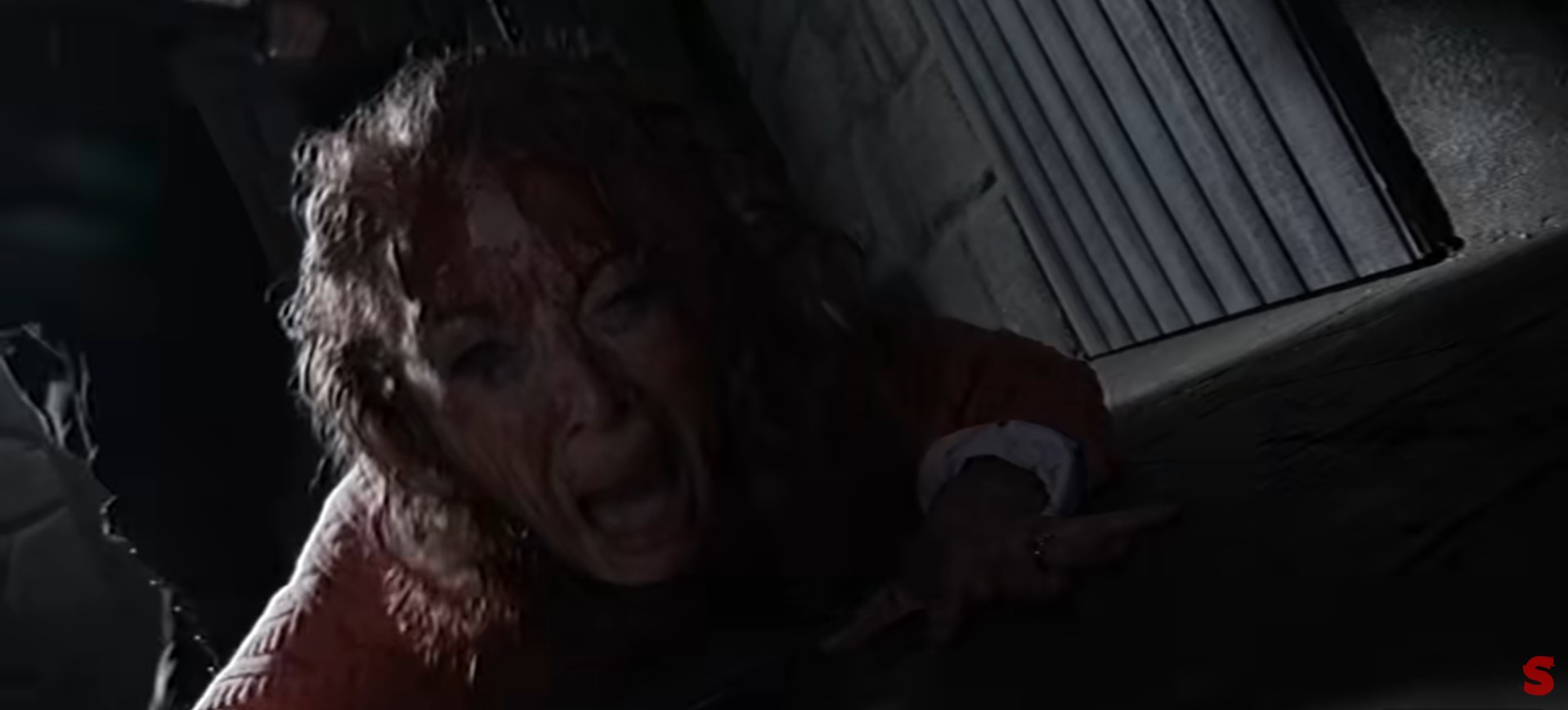
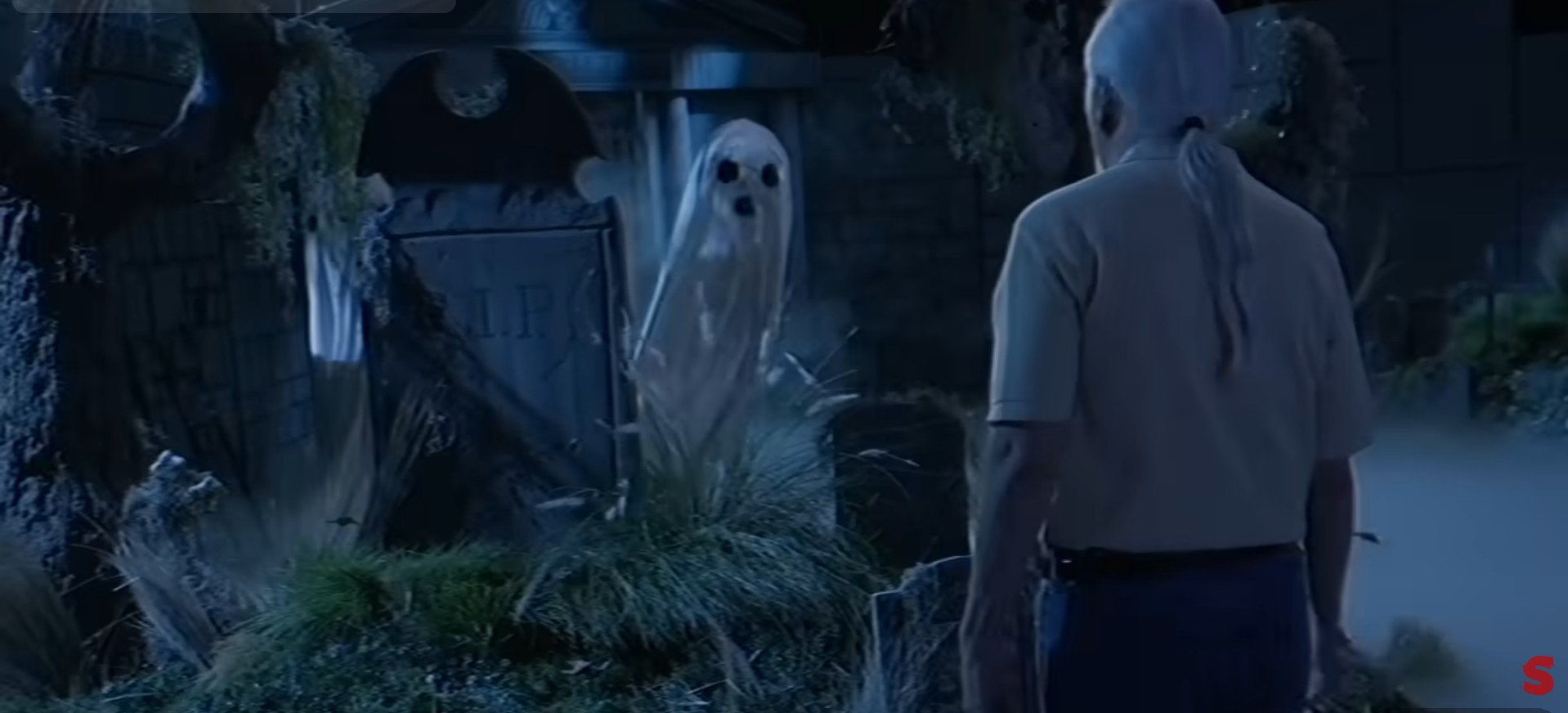
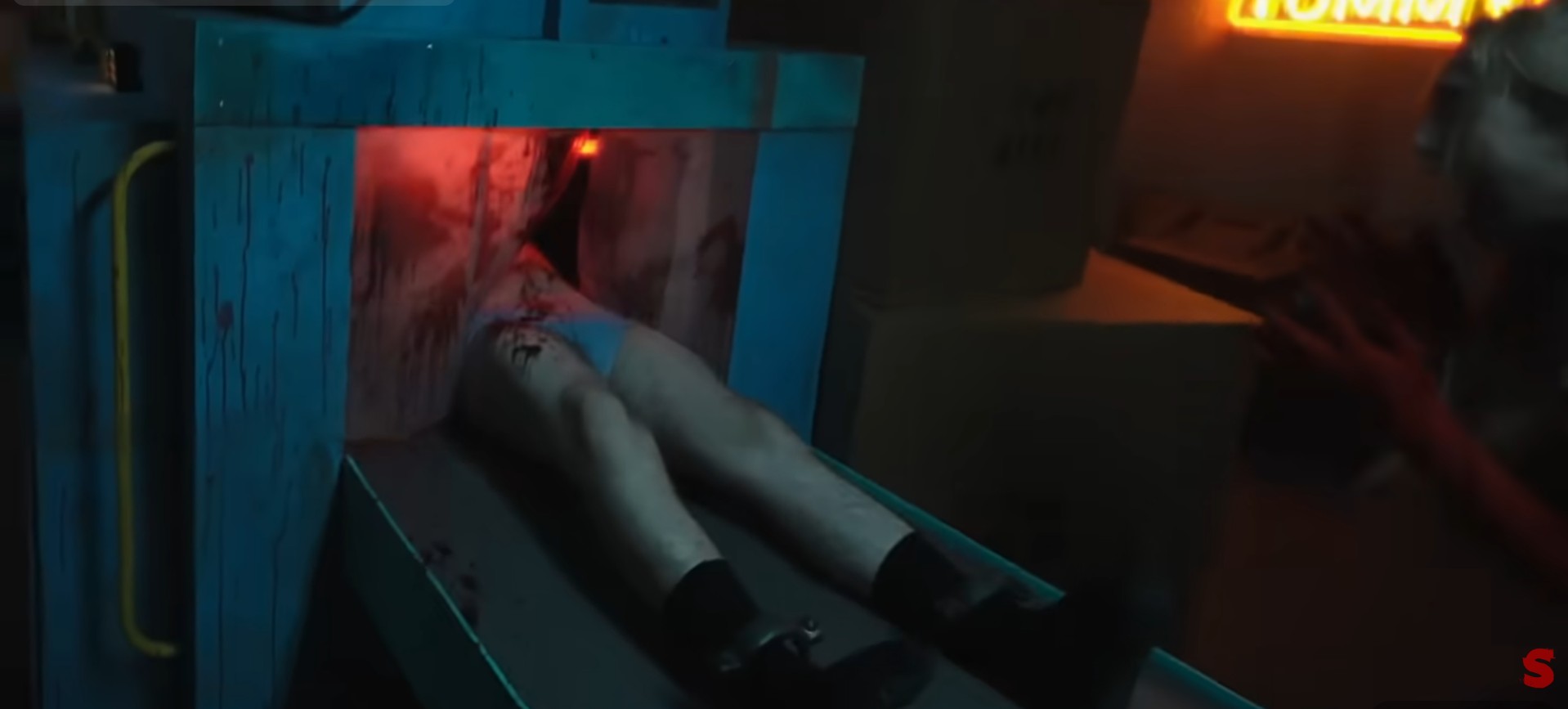
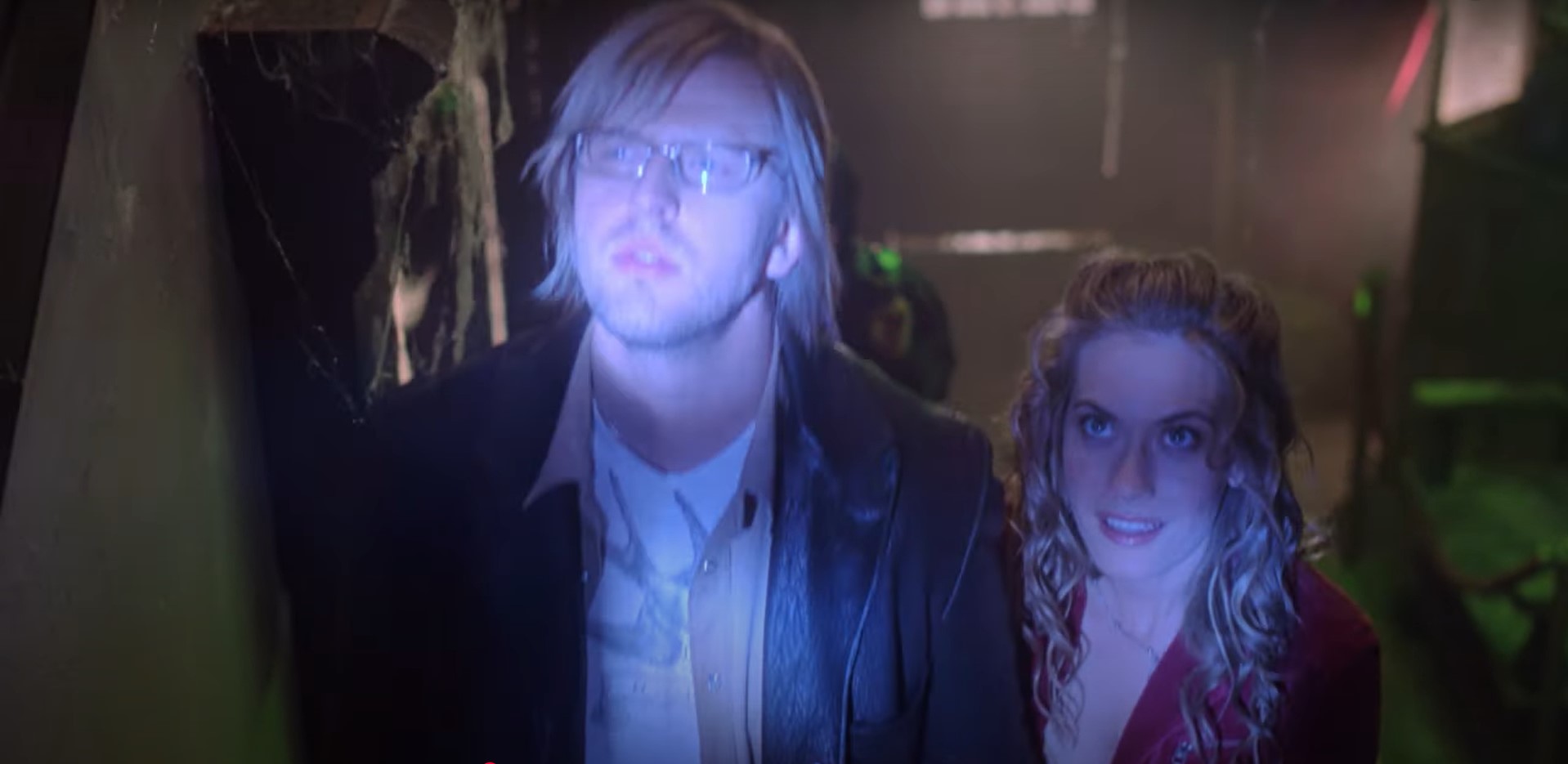
The VIP package for a historical studio backlot tour gives seven strangers a behind-the-scenes look at how movies were made and the background behind them.   When their cart pulls up to one of the more infamous movie houses for Desmond Hacker’s fright flick Hysteria, the tour group are eager to explore what’s typically off limits for normal, non-VIP tour attractions.  Once inside the backlot house, much of the Hacker’s funhouse tricks and odd designs are although covered in cobwebs are still very functionally practical as the group separates and goes room-by-room to peruse a movie house.  When they all gather in what looks to be the commune dining area, they find themselves unable to locate the way out no matter which unlocked door they choose, which circles them back.  The tour guide mentions Hacker’s movie had similar parallels and that the only way to free themselves would be to tell their own personal horror story.  With nowhere to go and nothing to lose, the stories begin their descent into terror. 

For someone who doesn’t go out of their way to watch horror anthologies, I’ve been on a kick lately with a decent string of short film compilation feature, starting with the latest entry from the popular “V/H/S” franchise, “V/H/S/Beyond.”  Next up takes us back to 2006 with “Trapped Ashes,” a campy horror anthology that not only brought together legendary genre directors, such as “Friday the 13th’s” Sean S. Cunningham, “Gremlins’s” Joe Dante, “The Matrix” visual effects arts John Gaeta, “Silent Night, Deadly Night 3:  Better Watch Out’s” Monte Hellman, and the late director of “Altered States,” Ken Russell, but also brings together aged, yet still legendary, familiar faced actors that have since past that short time between 2006 and 2025   Dennis Bartok wrote the anthology piece and is his brainchild, producing the film.

Those aforesaid actors have a combined nearly centuries (plural!) of experience with careers spanning an average of 50 years each.  Henry Gibson (“The ‘burbs”), John Saxon (“A Nightmare on Elm Street”), and Dick Miller (“Gremlins”) all together in one film.  Granted, Dick Miller’s cameo was so short that all three were only together for a brief scene but the trio alone should bring in genre fans to witness Henry Gibson in a persona he does best, a round faced under stark white hair and with puppy dog eyes that draws one closer to his innocence only to have the rug snatched right from under you when he turns sinisterly dark as the seemingly harmless tour guide.  Saxon also plays true to his conventional character archetype as a wise-cracking tough guy too cool for school; this time, he plays a screenwriter haunted by his own betrayal toward his best friend while being infatuated with a bewitching beautiful woman.  Unlike most horror anthologies, “Trapped Ashes’” individual tales contain mostly the same cast as the wraparound with Saxon, Jayce Bartok (“Founder’s Day”), Lara Harris (“The Dogfighters”), Rachel Veltri (“Pray for Morning”), Michèle-Barbara Pelletier (“Brainscan”), and Scott Lowell as the tour guests with personal hell to tell.  The heterogeneous group convey their supernatural-laced anecdotes that mingle inside the context of their being or life whether body image, marriage, friendships, and childhood, subjective intimacies that shape their excruciating experiences that, if audiences see them on screen for the first time, wouldn’t be clear how deeply burdened or troubled they are at first glance.  Once the story is told, moods and personalities shift, or perhaps seemingly normal habits are made clearer, and this is made possible by the eclectic bunch of actors to carve away their characters’ exterior shells to see who they really portray.  Ryo Ishibashi (“Audition”), Yoshinori Hiruma, Mina E. Mina (“Eastern Promises”), Winston Rekert (“Eternal Evil”), Ken Russell, Tahmoh Penikett (“Trick r’ Treat”), Tygh Runyan (“Disturbing Behavior”), Amelia Cooke (“Species III”), Luke Macfarlane, Deanna Milligan, and Matreya Fedor (“Slither”).

Riffling through the obvious camp “Trapped Ashes” touts very proudly, there are nuggets surrounding the unsavory themes.  Body dysphoria within “The Girl with Golden Breasts” is one of these topics, where an actress feels compelled to enhance her bosom for better, younger roles, and that speaks the relevance ill of the movie industry’s perverse tidings of late as actors and actresses continue to fill, inject, scar, and manipulate themselves into being their unnatural self to satisfy producers, execs, and audience likes and expectations when, in reality, hurts nothing but themselves.  Dissatisfaction marriage, or perhaps better labeled stagnant marriage, leads into invasive third party to sate long neglect passion and in this case, that third party is an ancient Japanese demon named Seishin (Japanese for Spirit) who lures the wife’s sexual appetite down to the pits of the netherworld.  From there, themes love triangles, obsession, cheating, and dysfunctional family structures formulate a pod of personal pate smeared with victimization, the victims being the storytellers stuck in the Desmond Hacker’s Hysteria backlot house.  “Trapped Ashes” isn’t about being victim, it’s more about playing the victim and those playing may not be victims of their own tales at all that adds a morsel of supernaturality to the recipe that changed the course of the idiosyncratic anecdotes that are close to their emotions and mental well-beings as well as proximally physically hazardous. 

Our first time covering the Dennis Bartok and Craig Rogers founded Deaf Crocodile release and it doesn’t disappointment with a sleek new 2-Disc 4K UHD and Blu-ray of “Trapped Ashes,” scanned and restored in 4K for its Blu-ray debut.  Presented in a widescreen 1.85:1 aspect ratio, the Deaf Crocodile UHD is HVEC encoded, 2160p Dolby Vision, BD66 and the Blu-ray is AVC encoded, 1080p high definition, BD50.  For an early 2000 production, “Trapped Ashes” doesn’t have the digital veneer of early 2000s film besides some visual effects work of the image manipulation drooping effect.  The extra pixels of UHD really brighten and elevate the image to today’s standards to surface the most inconspicuous details lost in standard definition.  Color saturation and skin tones appear natural and organic with no signs of compression issues or imbedded problems with the digital equipment.  Depth has really opened up in areas like the funhouse illusions of the Hysteria house in the wraparound segment and or in “Twin” when reality of the situation is made clear to put the explanation in one single medium-to-medium closeup frame.  Blu-ray copy mimics a lot same UHD accolades with a less fine tune edge around the background.  The English DTS-HD 5.1 surround sound is the only audio option available on both formats.  More than ample, the lossless provides a deepening immersion the deeper you go into stories with balanced side and back channels complimented by an even-keeled LFE to register the bass near the front while whispery events hover around a surrounding backside, such as with Cunningham’s “Jibaku’s” drawing-in hallucination moment of a Japanese painting that instills reverberating echoes and Shepherd tones.  English SDH subtitles are available.  Bonus features include threw new interviews – Dennis Bartok moderates a feature-length, online platform interview with director John Gaeta, cast members Jayce Bartok, Scott Lowell, and Lisi Tribble, producers Yuki Yoshikawa and Yushifumi Hosoya, and cinematographer Zoran Popvic, a second feature-length interview with cast members Tahmoh Penikett and Tygh Runyan and production designer Robb Wilson King, and the last approx. 40-minute interview is with producers Mike Frislev of Nomadic Pictures.  Extras do not stop there with a director’s cut of Monte Hellman’s “Stanley’s Girlfriend,” the original full-length cut of Ken Russell’s “The Girl with the Golden Breasts,” and a 5-part making-of with cast and crew archive interviews, a new visual essay Hollywood Parasite:  Hysteria in Trapped Ashes by journalist and physical media expert Ryan Verrill and film professor Dr. Will Dodson.  This is the so-called standard release compared to its Deluxe Limited Edition companion release, but this release is also pretty deluxe physically.  There’s no limited O-slipcover but the unique, almost 70’s-eseque cover design is appealing yet simple with a reverse side depicting an image of the wrapround characters inside the Hysteria house dining room or commune area.  The UHD and Blu-ray overlap each other in their differentiated locking mechanism on the ride of the clear Amaray case while the left insert portion holds a Deaf Crocodile QR code for access of the transcribed bonus content.  This release has the rated R cut with a runtime of 104 minutes and is region encoded A playback only.

Last Rites: Anthologies can be the antithesis of horror – building and dropping tension, an innate broken narrative, different stylistic choices that disunify the entire film, etc., but if campy enough, if not taken too seriously, if cast John Saxon, Henry Gibson, and Dick Miller, “Trapped Ashes” can find a home in the genre and in our collections with a new and extra-loaded Deaf Crocodile 4K UHD and Blu-ray set.

4K and Blu-ray “Trapped Ashes” from Deaf Crocodile. Available Here!