A haughty and unpleasant stock trader taking an Uber to a late-night business meeting stumbles upon a drug deal gone bad. Monstrously bad. A werewolf intrudes into the exchange, killing three people and biting the trader on the shoulder. Stumbling into the nearby woods disoriented and with a pocketful of cocaine, his desire to relieve the pain from his shoulder as well as to escape the nightmare of being lost and confused in the woods lies within the white as snow narcotic housed on his person, but every time he takes a nasal hit, his addiction curses him into becoming like the wolf that attacked him. Happening across a film crew shooting a microbudget horror film and having no clue what’s happening to him, he partakes with the director’s cocaine habit that fuels his inner beast to come out and hunt them down one-by-one to rip them to shreds high on nose candy.
Much the same way the farcical “Sharknado” gave birth to a few analogous action-horror spoofs with similar ridiculously punned titles, such as “Clownado” or “Lavantula,” that combines a vilified thing with one of the many wraths of mother nature, 2023’s “Cocaine Bear” too began the same conceptual nonsense that spewed out “Attack of the Meth Gator,” “Cocaine Shark,” and now, we’re treated to the next level of hopped-up creatures with “Cocaine Werewolf.” Helmed by longtime microbudget horror filmmaker Mark Polonia, under the Polonia Bros. Production banner, and penned by first time screenwriter Tyger Torrez, the 2024 horror-comedy cuts the werewolf’s bane with powdery coke, spiraling the legendary lycanthrope into a stimulated frenzy of blow. “Camp Blood’s” David S. Sterling of Sterling Entertainment funds the in-and-around Wellsboro, Pennsylvania-shot project with fellow producers Ford Austin (“Dahmer vs. Gacy) and Cleopatra Entertainment’s Tim Yasuni and Brian Perera (“Frost,” “The Black Mass”) serving as producer and executive producer.
Returning to the schlocky world of penny-made horror is Brice Kennedy who has reconnected with Mark Polonia since “Razorteeth” and “Splatter Beach” from 2007. Shortly after Mark’s brother, John Polonia, unexpectantly died in 2008, Kennedy returns to the in front of the camera scene in 2024 after a lengthy hiatus of 17 years. Kenney takes the lead role of the cocaine addicted stock trader bitten to become a rampaging werewolf with a proclivity for nose blow. The West Virginia native never lost a step in those 24 years of off camera with a smooth slip into an obnoxiously crass stock trader jostled to wander the woods and to be anxious to get to the next snort of his pocket narcotic. Kenney plays on a fraction of the rubber masked werewolf, with Mark Polonia and others donning the snarling molded and faux hair stitched latex, but we don’t know or can’t tell which portion of the man-wolf Kenney portrays. Brice carries much of the story until he meets the film crew halfway, through the muck of drug deals gone sour between actors James Carolus and Titus Himmelberger of “Sharkula,” a pair of unlucky drivers behind the wheel of their cars in Michael Korotitsch (“Motorboat”) and Marie DeLorenzo (“Sister Krampus”), and two hunters, from James Kelly (“Sharkula”) and Jeff Kirkendall (“Motorboat”) suspicious of the recent mauling deaths of their neighbors and find themselves way over their head with the animal that’s causing all the carnage. Principal position shifts from being solo to a shared introduction of the film crew, exploring satire of making a low-budget, independent horror movie about a hackneyed clown slasher (Noyes J. Lawton, “Virus Shark”) chasing two girls through the forest. Those two females leads, Jamie Morgan (“Motorboat”) and Greta Volkova (“The Last Frankenstein”), get put through the trope wringer with lesbianism tendencies and gratuitous shower nudity, not to also neglect mentioning being damsels in distress from a killer clown, and become centrically the focus toward heroine, aka the final girl, as the cocaine werewolf infiltrates their small band of filmmakers. Hot on the savage beast’s trail is Ken Van Sant (“Virus Shark”) as the local sheriff baffled by what’s tearing people apart. If you couldn’t tell already, the cast is comprised of Mark Polonia regulars, those who have worked together on numerous projects, and have a kind of inner circle rapport with each other from the various Mark Polonia Bros. productions and this also includes Cody Losinger, Tim Hatch, Yolie Canales, and Alyssa Paige that rounds out “Cocaine Werewolf.”
I had promised myself after reviewing “Motorboat” dismally, I would stay away from another Mark Polonia production but because of my personal philosophy and prejudge avoidance policy of not researching and previewing films before watching them for critical analysis, I burned myself into Mark Polonia’s world once again. I was duped in part of Cleopatra Entertainment being partnering producers and the distributing label as they’re becoming well known for release moderately subpar horror product and have their own entourage line of actors, actresses, and filmmakers, such as Devanny Pinn and Brandon Slagle, with notable B-movie guest stars like William Shatner (“Star Trek”), Vernon Wells (“Commando”), and Udo Kier (“Blood for Dracula”) in some of their releases. Additionally, I absolutely enjoyed “Gun Woman’s” Kurando Mitsutake from print-to-film manga adapted “Lion Girl” that recently saw the physical media light. Unfortunately, I did not get the same pleasure out of “Cocaine Werewolf” under Polonia’s formulaic filmmaking and while Polonia does apply some effects techniques, mostly off-kilter visual f/x such as the added cold breath, the blood spurts, or the swirling faces that indicate human-to-wolf transition, but there isn’t a consistency to them and doesn’t blend into “Cocaine Werewolf’s” whole tone in what is more of a convenience choice rather than a unifying or connective element. “Dead Ant” and “Psycho Goreman’s” Josh Wasylink’s werewolf mask design would be any kid’s Halloween wet dream in what has pretty remarkable detail contrasted against the microbudget. Granted, there are not pneumatic or hydraulic components to the constant mask but a little blood here, a little blood there, and some glowing red eyes and you got yourself a damn good-looking, classic-feeling werewolf.
From Cleopatra Entertainment, the film division of music label Cleopatra Records, comes “Cocaine Werewolf” onto an AVC encoded, 1080p high-definition, BD25 Blu-ray. Frequently lacquered in a CIG haze, the ungraded image manages to retain a solid definition of sharp detail presented in an anamorphic 1.85:1 aspect rato. This can be good and bad for the image quality that while really creates delineation around textural clothing and the ample foliage it can also really expose to a fault and emphasize the rubbery inanimate mask along with the large cut out eyes, blackened with dark makeup to try and make the mask and the actor seamless. Depth is fine and medlied across multiple locations and the color range has natural, varied pop, diffused into the smokey trope atmospherics and angled up and key lit cinematography by Paul Alan Steele. Blacks are slight washed but not crushed or with significant banding. Like most Cleopatra Entertainment releases, the soundtrack overwhelms enough of the other audio layers in this English language LCPM Stereo 2.0 that it slightly takes of the edge of the impact, but the lossless quality awakens the snarling, growling werewolf noises and the dialogue is amply consistent throughout that even the Gothic rockabilly score from The 69 Cats doesn’t fully immerse viewers solely in the band’s dark melodiousness. Bonus content includes a Mark Polonia commentary, which the director is usually pretty good about supplying and supporting for most of his work, an image slideshow, and the trailer plus trailers for other Cleopatra Entertainment releases. Physical attributes of the conventional encased Blu-ray include an uncredited but insane Red Riding Hood inspired illustration on the front cover. There is no reverse side of the cover nor are there any inserts included in his release and the disc is pressed with the same front cover image. The unrated Blu-ray comes region free and has a runtime of 80 minutes.
Last Rites: “Cocaine Werewolf” is better than most of the contemporary Mark Polonia body of work, but the heart-pounded effects of his laced comedy-horror is not addictive enough to produce the euphoria to warrant another line hit, leaving this derived werewolf indie in withdrawals.
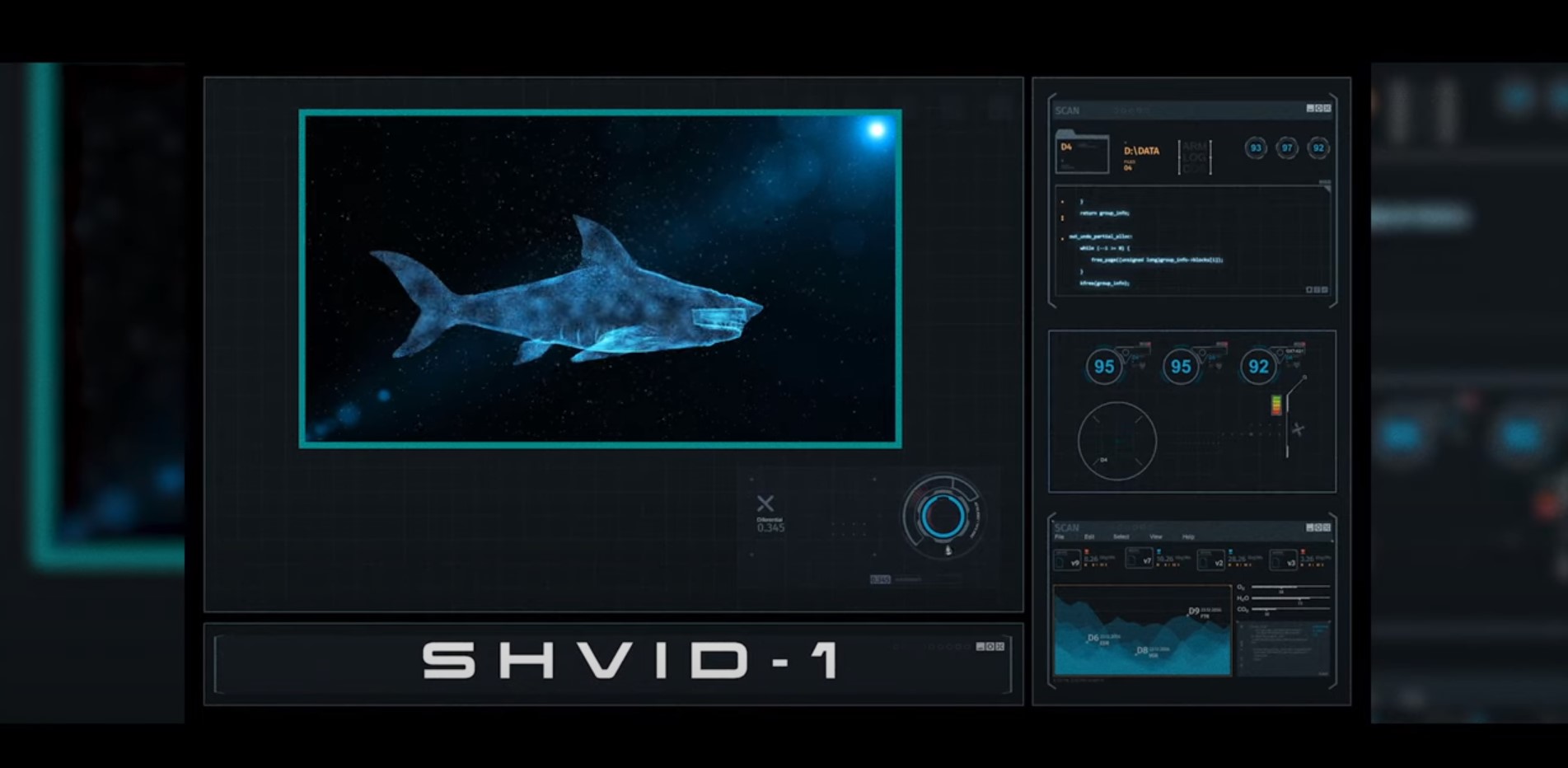
Deep at the bottom floor of the ocean is CYGNIS, a research laboratory retrofitted to be a race against the clock in finding a cure for a world devasting virus called SHVID-1. Spread by infected oceanic sharks, a handful of shark attacks on unheeding beachgoers turns the world’s populace into mutated marauders and blood thirsty, zombified killers. Running quickly out of time, the handful of scientists, a maintenance chief, and a security guard find themselves under pressure, literally, as the 30-year-old antiquated CYGNIS station is beginning to show signs of buckling under the ocean’s immense weight. Factor in virus-mad sharks chomping at the station’s life sustaining systems and a betrayal by the project leader looking for cure glory in greed, a perfect storm brews 1000 leagues down overshadowing the severe global pandemic that has swallowed the world whole. Survivors must surface topside with the cure before all hope comes crumbling down on top of them.
Okay! I’m pretty sure director Mark Polonia parallels or exceeds my own unhealthy obsession of the sharksploitation genre with his own series of outrageous D-flicks dedicated to the gross profit of the monstrous shark rampage stigma seen in the Pennsylvania born filmmaker’s previous works in “Sharkenstein,” “Land Shark,” “Amityville Island,” “Shark Encounters of the Third Kind,” and the soon-to-be-released, the vampire and shark alliance, “Sharkula.” Polonia’s latest, “Virus Shark,” is written by Aaron Drake and echoes the pro-Trump public ideology of willful ignorance in snubbing governmental official warnings about staying away from large crowds unmasked during the COVID-19 pandemic. Polonia throws Megalodon-sized shade at partygoers and right wing conspiracists with SHVID-1, an obvious play on the real virus, and the sun and sand worshippers who venture into the shark infected and infested waters despite the recommended counsels to stay on shore. Aside from the social commentary lampooning, the rest of “Virus Shark” is in shambles as a super low-end indie production from Polonia Bros. Entertainment and produced by SRS Cinema’s Ron Bonk.
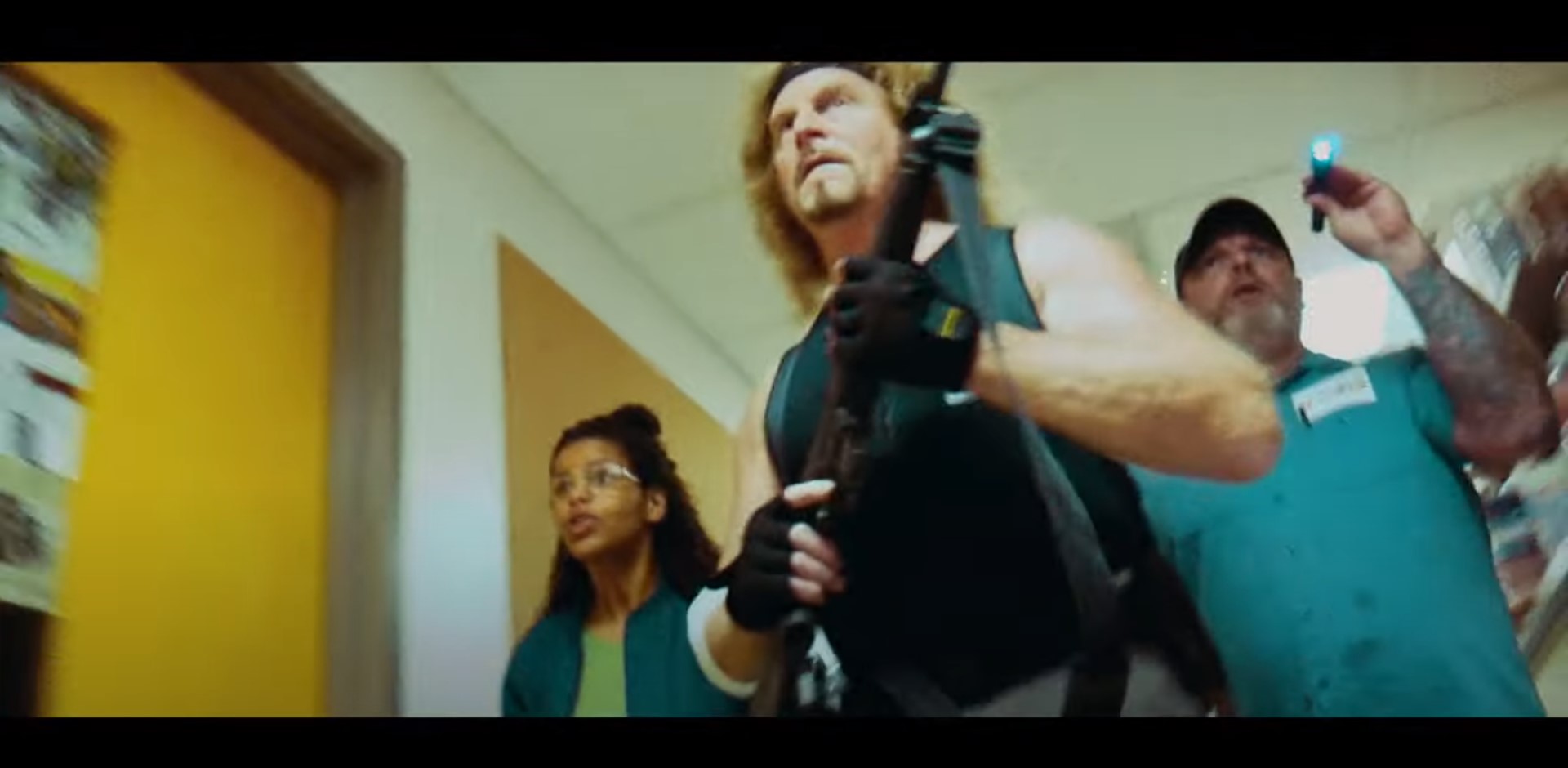
Served up as chum for contagious sharks are a troupe of regular independent staples beginning with lead actress Jamie Morgan entering her second bout with a killer shark after surviving another SRS Cinema gem, “House Shark.” In the role of marine biologist Kristi Parks, Morgan is not free diving into the vivarium pens and wrangling or bareback riding the maneaters like “Deep Blue Sea’s” Thomas Jane; instead, the actress has a more meek stance as her limiting character transforms into a protective shield over mankind’s last known hope – a cure for the virus. Fellow scientists Anne Satcher (Natalie Himmelberger, “Shark Encounters of the Third Kind”) and Gregory McLandon (Natalie’s real life husband, Titus Himmelberger, “Sharkenstein”) don the lab coats and spectacles to look the researcher part without actually seemingly doing anything of importance, or anything that makes sense anyway. The team is rounded out with “Queen Crab” actors Steve Diasparra as the maintenance man Rickter D’Amato, an homage to Joe D’Amato who has helmed a trashy sharksploitaiton film himself with “Deep Blood” (read our recent coverage review here!), and the awesomely 80’s hairdo’d Ken Van Sant the dated commanded-cladded security guard and horn ball, Duke Larson. Deliveries and any sense of conveyed emotions are a smidge above forced as if reading straight from a cue card. The off camera stare has to be my favorite gaze into space moments, especially when an aggressive Great White beelines right toward them and the reactions are nothing more than a gaping mouth. Van Sant wins top prize for at least giving a half-hearted attempt at empathy for a character completing a character arc. “Virus Shark” fleshes out with Yolie Canales, Noyes J. Lawton, and Sarah Duterte who are also a part of the tight knit celluloid circle of deep-six cinema.
Speaking of deep six, as in “DeepStar Six,” a semblance toward notable underwater horror films of the deep really do crest through “Virus Shark’s” stagnant flat surface. Little bits of adulation toward “”DeepStar Six” with the jettisoned escape pod, “Deep Blue Sea” with the shark pool, and “Leviathan” with the topside communication sans Meg Foster sprinkle a blanket of welcoming derivativity amongst a cheaply endeavor. When I say cheaply, I mean “Virus Shark” scrapes the bottom of the barrel with embarrassingly bad shark hand puppets, interior locations of the underwater sea lab are about as realistic as the innards of your run of the mill High School building, and every single gunshot is the same soundbite stuck on repeat, no matter the gun or the caliber. I do admire the innovation at times. An example I would pull would be the two miniaturized pincers matted on top of a live-action still frame used as hydraulic clamps to pickup the rather rigid shark figurine from the “pool.” You can call it sloppy, but on a pea-sized budget, I call it thinking outside the box. Much of the story felt underdressed, missing parts pivotal to the impelling actions that either progress cataclysmically or just drop off the face of “Virus Shark’s” malfunctioning sonar. Under the table deals and sexual innuendos made between project head Dr. McLandon and topside liaison Shannon Muldoon are skimpy at best as well as Kristi Parks’ all for naught endgame to saving the world. Everything seemed and felt pointless, senseless, and without merit that the “Feeders” and “Splatter Farm” director shouldn’t be totally judged by as we’ve seen much better on much lower budgets from Polonia who he and his late twin brother, John, have been around for decades making movies up until 2008 when John passed away. Mark Polonia continues to carry the torch but the lack effort has seemingly been replaced with chugging out one scab film after the next to the tune of tone deaf gratification.
Wash your hands, wear your mask, and maintain a social distance of 6-feet from the television when swimming with the “Virus Shark,” that has beached itself onto DVD home video courtesy of SRS Cinema. The unrated DVD is an AVC encoded single layer DVD-5 and presented in a widescreen, 1.85:1 aspect ratio. The image quality appears relatively sharp without a hefty loss from compression, especially around the spectrum of low-cost effects that range from rigidly clean to absolutely warped and absurd, but what do you expect from a release that has the cameraman’s reflection visible in the shot and spells region with an extra I – reigion0 – on the back cover? Underwater sea lab shots filtered through an oceanic blue hue make due the illusion of a domed research station on the sea floor bed whereas the insides lack a production manager’s personal touch as much of the interior scenes look to be a school with an obvious swimming pool setting and many insipidly sterile hallways and rooms. Extras on the 74 minute film include a commentary track and SRS trailers with no bonus scenes during or after the rehashed intro credits for the end credits. The English language 2.0 mono track isn’t the peak of fidelity with the lossy audio compression and inadequate mic placement made apparent by the limited depth and range in dialogue tracks. The overlaid narrow foley remains on one level from start to finish finished by stock soundboard snippets. As far as Sharksploitation goes, “Virus Shark” ranks near the bottom of the food chain. Of course, there have been far worse killer shark films threshing in the genre pool, but the COVID parodied subaqueous actioner wades underneath the skills of Mark Polonia.
Get Infected by the “Virus Shark” on DVD Home Video!





 It's Bloggin Evil!