

When half of an archaic crucible is discovered while excavating in the basement of an old Victorian mansion, Isabelle, an assistant museum curator, is hastily dispatched to authenticate the finding and to confirm the analyst that the cauldron is, in fact, the missing second half to the one in the museum’s possession. Isabelle is greeted by the estate owner, Karl, his wife Evelyn, and their eccentric daughter Scarlet who welcome Isabelle to stay with them while she evaluates the crucible. The unnerving manor home keeps Isabelle awake at night as she frightfully witnesses silhouettes of a young woman wandering through the haunting corridors and the untended rooms. As Karl brushes Isabelle’s nightly concerns to the side, impatiently urging her to summon for the other half of the piece and finalize a match that would then focus on the crucible’s value, the young curator can’t shake the continuously dreadful sensation that danger lurks in every dark corner of the estate and that the residents are inherently grooming her for a sinister awakening of immortality and power.

Writer-director Iain Ross-McNamee has diffidently checked all the British-gothic horror boxes in his latest film, a brooding vampire macabre entitled “Crucible of the Vampire.” “The Singing Bird Will Come” director co-writes the script with Darren Lake and “I Bought a Vampire Motorcycle” screenwriter John Wolskel to reel in the once was, the gilded age of British horror that made a nick in time with the vehemently violent and boldly colorful enriched Hammer Horror. Like other genetic make-ups of horror bodies, Hammer Horror has a genome of a check list of self-defining attributes and “Crucible of a Vampire” aims to notch a few key elements including the Gothicism finesse, the sexually unchaste vampire, and, also, to deliver big horror on a small budget. Ross-McNamee places stakes not into the cold, bloodthirsty hearts, but more so into construing a film that isn’t a carbon copy of the old days, adding a contemporary digital presentation that’s laced generously with contemporary photography techniques even when the opening prelude is set in the 17-century and shot in a sepia style.

The story centers around the assistant curator, Isabelle, who has wearisome tendencies of 24/7 suspicion, being a pawn in every sense of the word. From the head curator to Karl’s family, Isabelle finds herself alone in tight spots and not many people she can count on. There are a couple of characters that are potential allies, but their feeble attempts in buffering Isabelle from the house’s evil secret are no thinker than a single sheet of college rule paper. Isabelle herself is her strongest defense and when push comes to shove, the curator turns ass kicker against a family of vampire acolytes. Katie Goldfinch handles Isabelle with reasonable composure, if not slightly timid at times, especially during fight sequences. Goldfinch sustains her lead performance of her sophomore feature film that is exposition heavy to formulate an isolating and intimidating dynamic between her and Karl’s family. Karl’s portentous cruelty is town-renowned, shaped by rumors and peppered with truisms and Larry Rew channels Karl precisely. The “Underworld: Rise of the Lycans” actor has traditional methods of able to creep one out by standing still and speaking with a vigorously commanding tone, but Rew feels significantly older compared to his wife and daughter. Karl’s wife, Evelyn, stammers as a wild card in a role that seems to go nowhere and Babette Barat can only strut her hippie performance of Evelyn so far until we’re wondering what’s significance as a mother, as a wife, and as part of the crucible grand scheme. Scarlet had the opposite effect as the daughter was overly forward with defining her intentions that toward Isabelle that involved stealing, desiring, and chastising. Scarlet’s predestined for villainy and actress Florence Cady provides a fringe heavy and tantalizing seductive performance. So much so, Cady nearly becomes the female lead, but certainly overshadows the crucible’s calling, a vampire named Lydia, a non-verbal role with barely much screen time given to wild-eye, teased haired, and paled Lisa Martin. Angela Carter, Brian Coucher (1995’s “Underworld”), Phil Hemming, Aaron Jeffcoate (AMC’s “The Terror”), Charles O’Neill (“Cripsy’s Curse”), and the UK Bob of “Bob the Builder” Neil Morrissey co-star.

If “Crucible of the Vampire” is supposed to be a reawakening of British gothic horror, Ross-McNamee went without the vibrancy of color and went without much of the fervent violence that Hammer Productions was keen on. “Crucible of the Vampire” sustains a dissimilar path focally toward more exposition to forefront a narrative until an action climax that’s initiated by awkwardly edited gratuitous nudity and weak character flaws. Like being brewed inside the ironclad enclosure of a crucible, the filmmaker simmered a story that quietly bubbled to the surface until it boiled over uncontrollably and extinguished itself, splattering onto the floor below in a heap of smoke. Act three is misshapen by the prior two acts with one issue being Isabella transforming in an instant into a complete bad ass when faced with death because of her pure, virgin blood. In a blink of an eye, she literally kills five acolytes with a melee weapons that include a rustic knife, the crucible, a metal pipe, and a fired filled chalice. The kill by fire chalice and other igniting instances during the film saw shoddy outcomes of superimposed, computer generated fire which really do speak the inane quality of the visual effects. Even with the practical effects, blood doesn’t spray or gush onto a wall when a vamp victim has his throat become the main course; instead, the effect squirts on the adjacent wall like from a condiment squeezer, losing a sense of convincing value.

ScreenBound Pictures presents “Crucible of the Vampire,” a Ghost Dog Films’ production, onto an all region PAL dual format, DVD/Blu-ray home video release. The Blu-ray is presented in 1080p with a widescreen, 2.35:1 aspect ratio. Picture looks absolutely gorgeous with the natural color palate, but slightly stodgy with the blood red vampire vision in only a couple of brief scenes. Details are fine and textures slice through, especially in the opening segments of Isabelle walking along the river line, and in conjunction with aesthetic wide shots that monolithic structures, like an old giant tree or the Victorian home. The English Dolby Digital 5.1 LCPM uncompressed audio track is not a film that necessarily needs five channels, but does utilize them when the night churns out bumps in the darkness. The dialogue has prominence, depth, and range without breaking or interrupting the audio lineage. The staid score by Michelle Bee and Amanda Murray floundered in the lossless audio as an unfortunate miscue to reel in and hammer away the gothic vision. This release came with no bonus features in a day and age where most Blu-rays do have some sort of extra content. “Crucible of the Vampire” has earned merit in the traditional British gothic horror sub-genre that’s been flailing over the years, reinvigorating the concept of dark arts and lesbian vampires, but loses footing at crucial moments that ultimately unglues the narrative.
Category Archives: Chilly Thrilly


Evil Rips through the Whitechapel District. “Jack the Ripper” review!
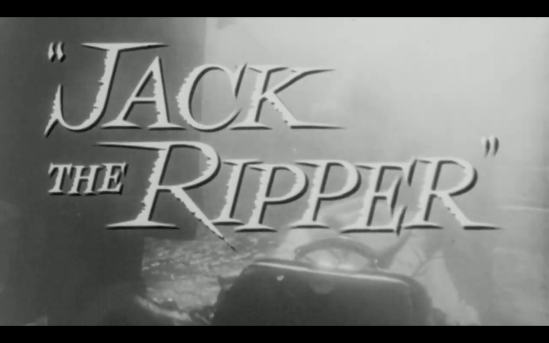
On the streets of London’s Whitechapel district, women are afraid to walk the streets alone at night and angry mobs have begun to turn their backs on the police’s ineptness on catching a killer. Jack the Ripper is what the people of London label the maniacal murderer who, with surgical precisions, guts his victims and leaves their lifeless bodies on the dark, dank cobblestone streets. Scotland Yard Inspector O’Neill is joined by his friend and American counterpart, a New York police officer named Sam Lowry, to hunt down and stop Jack the Ripper’s killing spree. Deeper into the investigation, the officers are informed that the suspect they track would have medical background with a skilled blade hand, but even with that information, Jack the Ripper alludes authorities. Lowry’s romantic involvement with a young woman named Anne Ford, whose under the ward of the notable Dr. Tranter, might be very connective tissue between the constabularies and the secretive medical society needed to crack the case of the notorious Jack the Ripper before he strikes again!
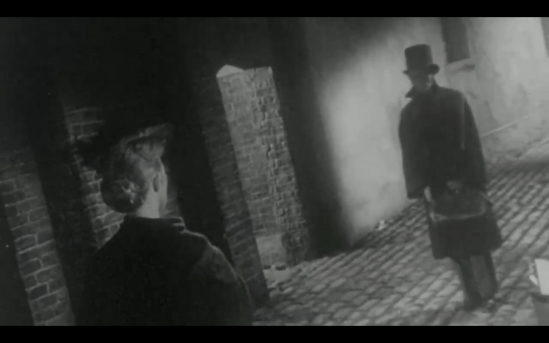
Jack the Ripper is a real and iconic villain that not only terrorized the streets of London, but had later graced the screen many times over from Bob Clack’s 1979 thriller “Murder by Decree” to the 2001 Allen and Albert Hughes gothic and graphic “From Hell,” starring Johnny Depp. Before the production of those films, before Jack the Ripper really had any kind of footprint in cinema, Robert S. Baker and Monty Berman directed the 1959 mystery-thriller “Jack the Ripper” from a screenplay by Jimmy Sangster and Peter Hammond based off the theory that Jack the Ripper had a medical practice history. Baker and Berman’s film hit the controversial market from right out of the gate with grisly and ghastly murders, for the circa 1950s, and bared topless actress frivolously to insinuate the lady drunkards, the showgirl dancers, and the lone walking women as ladies of the night. Prostitutes would have been burden the selling of an already certifiable X film from the BBFC and the MPAA. However, the filmmakers constructed alternate cuts, shorting the grisliness to just grim and sheathing bare breasts with articles of clothing in shot for shot censorship. Only on the continental, aka French, version does a truly uncut and complete film live to excite, but instead a complete feature, the unmolested scenes are only available on the bonus features of the Severin Films’ release. That’s not to say that the U.S. and British versions are a complete waste of time. The classic time is utterly timeless and gripping that offers up immense amounts of whodunit suspense, implied sensationalisms, and an adequate take on how incompetent law officials can be exhibited when politics and women are afoot. Plus, the U.S. version, bought and presented by legendary producer Joseph E. Levine, comes with a brassy score by Jimmy McHugh and Pete Rugolo. The British version, also known as more of the approved director’s cut of the film, is scored by Stanley Black.
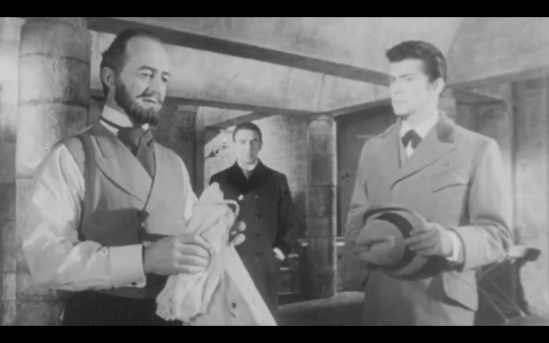
Tall, handsome, and walking into another country like he owns the land, detective Sam Lowry is introduced at about 10 minutes in, standing at a bar and reluctant to be rough and tough with a mob ready to lynch him for potentially being the Ripper because of his inquiries. Lowry’s charming persona with the women, like the bar maiden and Anne Ford, are only offset by his complete incompetence to be a police detective. Lowry does absolute zilch investigation and, instead, goes out on a date with Dr. Tranter’s niece and makes snarky comments at a merciless, ready to judge horde of scared Whitechapel residents. American hunk Lee Patterson stands out amongst the gothic rich atmosphere to the point where’s he, like his character, is an outcast and Patterson’s talents could only take him so far into a gloomy, morbid narrative that was unwilling to accept his chiseled chin and starry eyes. Eddie Byrne fit the mold better than Petterson as the Scotland Yard Inspector at rope’s end with not only Scotland Yard, but also the rest of London. As Inspector O’Niell, Byrne, who went on to star in “Island of Terror” and “Devil’s Darkness,” humbly accepts his restraint as the Irish born actor takes a wallop from all sides and still remains calm, collective, and ever present on the task at hand with a character being beat from all ends of the spectrum. Anne Ford opposites Lowry as the potential love interest who has come of age, as she notes a few times, to takeover temporary responsibilities at the hospital where her uncle performs dire surgeries. Being oppressed by her own family and seeing London being ripped a part by its own people, Anne latches onto Lowry, an outsider, to find a connection or a release from sullen cloud that hangs over Whitechapel. Unfortunately, Betty McDowall is sorely overshadowed by many of “Jack the Ripper’s” formidable characters and that Anne is not wholeheartedly written though her character is important to the story. Even the showgirls sizzle in more ways than one than does McDowall whose kept in check by Lowry, doused with someone’s problems, and only given an allusion of her worth in a moment of fright. Ewen Solon (“The Curse of the Werewolf”), John Le Mesurier (“The Jabberwocky”), Barbara Burke (“Blood of the Vampire”), Denis Shaw (“Curse of the Werewolf”), Bill Shine (“Burke & Hare”), and Anne Sharp (“Murder on the Campus”) round out the cast.
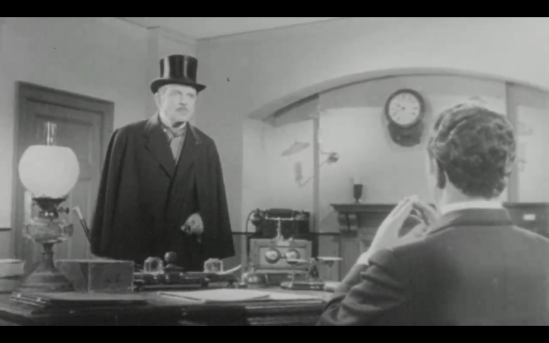
“Jack the Ripper” is a classic, literally and physically. The scaled down sets of the Whitechapel area bring to life the tenebrous soil of 19-century London. The elegantly painted backdrops of tall mast ships enshrouded by synthetic fog paint an archaic picture of how movie magic has progressed over the decades. Attention to detail in the set construction and the flavor of time period customers brought a sense of authenticity that nostalgically harps on the once was that now only exists as recorded cinema history. “Jack the Ripper” casts a forgotten beauty in the barbarism. By today’s standards, “Jack the Ripper” would be written off as banal and uninspired by critics and audiences, but if you can imagine yourself in 1959-1960, Robert Baker and Monty Berman just blew your mind with onscreen taboos and in America, Joseph Levine’s technicolor blood scene, with a duration of only a few seconds, would be the viral talk of the town.
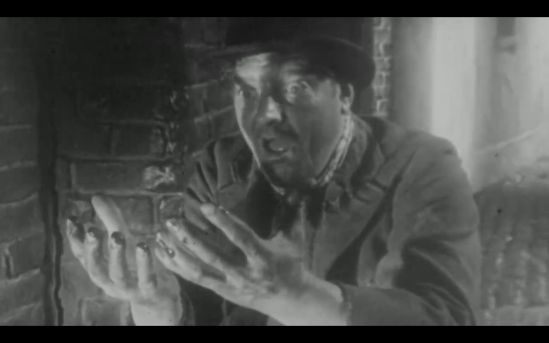
Severin Films presents “Jack the Ripper” onto a region free, 1080p Blu-ray for the very first time anywhere! Complete with two cuts of the film, the British and American version, Severin presents both in their released aspect ratios of a lossy standard 1:33:1 in the British version and 1.66:1 in the American version, both in B&W with a pop of technicolor in one scene in the American version. Severin’s transfer is perhaps the best we’ll see from an original print that’s laced with scratches, but a bit more light, or some brighter contrast, sheds some light in the inky corners while managing a rich appearance that’s not monochrome or sepia. The English 2.0 audio track maintains an equal quality with some static in dialogue and ambient tracks. Jimmy McHugh and Pete Rugolo’s brass-heavy score thunderously pack the scene that surely takes the lead amongst the tracks. Bonus features include snippets of the continental versions with the extended violence and nudity and the audio commentary with Robert S. Baker, screenwriter Jimmy Sangster, assistant director Peter Manloy is extracting and interesting helmed by horror historian Marcus Hearn. Also included is an interview with the author of “Jack the Ripper” The Murders of the Movies” Denis Meikle, “The Real Jack the Ripper” featurette, theatrical trailer, and poster and stills gallery. Exposed and disclosed, the various faces of Robert S. Baker and Monty Berman’s “Jack the Ripper” now have a hi-def upgrade and though a full continental version eludes this release, Severin provides the cliff notes in order to not overcook the same story a third time.
Evil from the Sky! “Devil’s Gate” review!

In the small rural community of Devil’s Gate, Oregon, a boy and his mother disappear without a trace. FBI Special Agent Daria Francis spearheads the investigating to atone for a regretful previous child disappearance case. She’s accompanied by a local deputy, Colt Salter, to assist her. During her brief investigation upon arriving at Devil’s Gate, Agent Francis comes to the determination that Jackson Pritchard, the father and husband of the missing boy and mother, is directly involved in their sudden disappearance. The investigation turns from a seemingly straight forward, open and shut case to a colossal mystery that’s beyond their comprehension when arriving at the religious dogmatist’s boarded up and disturbing cladded farm house where unearthly forces lay claim to the Pritchard family home for sinister reasons. With one of the beings caged in his basement, the desperate Pritchard seeks an exchange with the creatures he labels as the fallen angels in attempt to regain his wife and son, but as the night falls, trapping Agent Francis and Deputy Salter with Prichard inside the residence, they become surrounded by the fire in the sky creatures aimed to reap not only the world, but their souls.

Like an enigmatic report straight from the non-redacted portions of a nail-biting X-Files case, “Devil’s Gate” is a we are not alone sci-fi horror film from 2017 under the apocalyptic eye of director Clay Staub and co-written by video game plot scriber, Peter Aperlo. The considerably financed project is the first feature film for both filmmakers in their respective roles with Staub having served as an assistant director on other paranormal plotted projects like Zack Snyder’s heavily praised remake of George Romero’s flesh-eating zombie classic, “Dawn of the Dead,” and Matthijs van Heijningen’s underrated “The Thing,” a prequel to John Carpenter’s film of the same title. One quality that we can all can be pleased about is that Staub carries over from his previous experience as a genre filmmaker participate is the use of gore in the “Devil’s Gate” because, honestly just by looking at the cover and reading the plot, the bloodletting expectation was low on the totem pole. Staub doesn’t unload a gratuitous splatterfest of alien and human entrails, but subtly sanctions the right amount of extrasensory chest bursting and finger snapping goo that plays an ill-fated role of circular or motivational circumstances for the characters.

Putting the pieces of the Pritchard mystery together is Agent Francis who is a to the point and tough national law enforcement officer with a bleeding heart complex after her very first assigned case went tragically sour that looms an unexplainable root cause cloud over her straight blonde hair. Desperate to cure her past, Agent Francis rushes into Devil’s Gate, bypassing the notable chicken fried steak meal offered by Deputy Salter upon her tarmac arrival and defying the local Sheriff’s heed to not interview husband Jackson Pritchard, that sorely causes her to land in the virtually the same predicament of just trying to get the right thing done no matter the unclear ancillary evidence. “12 Monkey’s” television star Amanda Schull spearheads the character with the characteristics aforementioned with drab appeal, lacking the emotion and the intensity her character is supposed to be exhibit when trying to solve a case of personal redemption as well as the fear from an higher ominous power that can shoot lightning down from the sky and flash velociraptor toe-claw sized fangs. Colt Salter might be a small time, Podunk deputy, but the born and raised Devil’s Gate officer can match wit with his FBI counterpart. Salter strikes me as a character who doesn’t stray far from home, mentioning various times, in various ways, his parallel path to high school friend Jackson Pritchard. Shawn Ashmore, from Joe Lynch’s “Frozen,” opposites his costar Schull like Mulder and Scully type as well as an all-around good guy who happens to stray from his protocol path once Agent Francis puts her federal fingers into his already investigated investigation. Like his performance in “Frozen,” “X-Men” franchise, and even in FOX’s television thriller “The Following,” Ashmore is a pretty solid actor, showing a range of emotion that transcends him from easygoing deputy to mortality fearing when mankind’s on the verge of extinction comes into the equation. An equally solid performance by Milo Ventimiglia, who recently starred in “Creed II,” really sells the crazy portray by Jackson Pritchard, a God-fearing man with a long lineage of misunderstood family heritage that leads him to the uncanny bombshell that has been bestowed upon his family farm. Ventimiglia, in his roughest, toughest country twang, creates such an anxiety-riddled and frantic character that unravelling his fate is not too clear which is refreshing to be able to retain mystery to a role as we can kind of figure out how Agent Francis and Deputy Salter when fair in the end game. Rounding out the cast is Bridget Regan (“John Wick”), Javier Botet (“Slender Man”), and “Star Trek: The Next Genergation’s” Jonathan Frakes, still sporting that iconic beard even if it has grayed, as the town Sheriff.

In spite of some really cool visuals, especially of the man underneath the mask, Javier Botet, inside a ghoulishly white extraterrestrial suit that only his elongated and thin body (and perhaps also Doug Jones’) could snuggly fit into, “Devil’s Gate” tells a narrative that hails from a lot of re-spun material. Whether intentional or not, viewers more than likely won’t be able to help themselves as they’ll eagerly point to the television screen and say, ““Independence Day” did that first,” or exclaim, “didn’t Donald Sutherland star in the same kind of thing???” I know I did. However, Staub and Aperlo don’t completely ape the concepts that surely haven’t inspiring them, making the effort more endearing, and visually crafted a well-blended plot into an enjoyable and captivating story; a story that has been mostly devoid of underlining messages and symbolism other than the themes of religious zealots are extremely bad for the world and living with past regrets can be hazardous for your health if not properly accessed. “Devil’s Gate” focuses more directly on just entertaining another version of visitors from another world and how those no-so-little-green-men play an assimilating role into humanity.

Umbrella Entertainment releases “Devil’s Gate” onto a region 4 DVD presented in widescreen 2.35:1 aspect ratio. The vast Midwestern landscape with the foreboding rolling clouds stretches from top to bottom with an exact sharpness and crisp from the digital picture. The textures in the broad, yet barren-esque fields look especially detailed, more so with the wind and brownish-yellow color. Speaking of color, the hue is a filter of shadowed purple and on a sepia side that works the dread atmosphere. The English 5.1 Dolby audio track has ample range and depth. Lightning strikes boom equally from the five channels, alien shrieks trembles through, and the dialogue is not obstructed. Surprisingly, there are no bonus features with this release as the Stateside counterpart even has a trailer in the extras. There isn’t a static menu either as the film goes right into play feature mode. c
Time Travel to Stop Evil via Astral Projection! “Mandao of the Dead” review!

Astral projection defined per Wikipedia: an interpretation of an out-of-body experience that assumes the existence of an “astral body” separate from the physical body and capable of traveling outside it. The otherworldly experience befalls suddenly upon Jamison Mandao, a young man living off the royalties of his late father’s flailing popular cereal brand, and his recently discovered, and also bewitching, new astral plane exploring powers land him in a macabre laced predicament with his adult squatting nephew, Jackson, and his nephew’s blood hungry, murderous ex-girlfriend, Maeve. With a little help provided by Jamison’s astral enthusiast relative, cousin Andy, and Maeve’s recent victim whose ghost is stuck in limbo, Jamison must use his astral projection to travel back in time, rearranging the series of events in order to not only appease the desperate pleads of a ghost, but to also save his daft, but good natured nephew becoming her next hapless fatality before the stroke of midnight segueing into the Day of the Dead when their chance to live again will rest in peace for eternity.
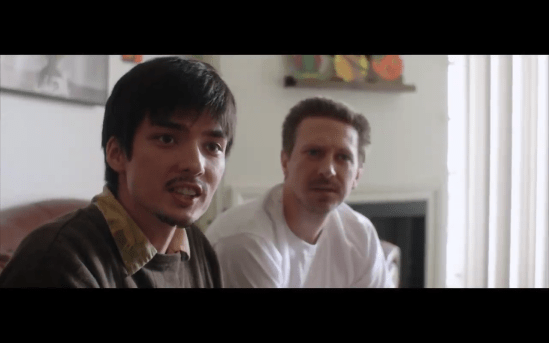
Here we go again with a time traveling genre film, the horror-comedy “Mandao of the Dead” from writer, director, and star Scott Dunn. Dunn’s sophomore feature film of 2018 dares the chances in being overly and, frankly, unnecessarily lambasted by internet trolls aiming to pick apart the film, hunting vigorously for time travel plot holes, but, and I reiterate this point again, that Dunn’s film is mainly a comedy where the laws of physics and ideas of probability have no bearing on Dunn’s grim fantasy loop. Despite the rather clichéd title suffix implying a facet from the zombie genre, “Mandao of the Dead” refers toward the post-Halloween, more traditionally Hispanic recognized Day of the Dead on November 2nd and while Dunn uses the day typically held for respect of past lives, the “Schlep” director conjures up a lively twist upon deathly circumstances that forms a cut-off date when that slither of twilight time for the dead ceases to be no more.

Alongside Scott Dunn as Jamison Mandao, Sean McBride buddies up as the freeloading nice nephew, Jackson. Dunn and McBride have previously worked together in Dunn’s first feature entitled Schlep and their rapport in “Mandao of the Dead” indubitably confirms a harmonious witty banter and a light-hearted dark comedy in fine, mechanical form. McBride’s spot on heartfelt halfwit Jackson nicely compliments Mandao’s knack for impatient contemplating. Throw a dude name Darth into Jamison and Jackson’s inert existence and things get dire and interesting. “2-Headed Shark Attack’s” David Gallegos isn’t portrayed as your friendly neighborhood ghost nor is he a malevolent one; instead, Darth begs for help and the cosmic universe delivers to him an astral projector and Gallego’s couldn’t be more sharply colorful with his spontaneous humor. Together, the three 30-something year-olds are pitted against the dark horse that is Maeve. Playing an incognito blood drinker, Marisa Hood has an innocence about her that renders a false sense of security and, in Jackson’s case, a pair of weak knees. Alexandre Chen, Sean Liang, and Gina Gomez round out the cast as characters finding their ways into the Day of the Dead debacle.

While we’ve seen where timelines become mangled by the interference of a time traveler and where the theme is fondled with in “Mandao of the Dead,” Dunn doesn’t over knead the narrative with it though certainly a centerpiece of the film as a whole. Mandao’s adventure with astral projection and his middling with the planes are only the beginning that have stirred a frenzy of unhappy campers in the spiritual world. The whole event of Mandao going back in time, twice, to save people is the proverbial tip of the iceberg and a welcoming taste of what’s to come from Dunn and his team. Shot in 10 days with a tight budget, Dunn, who also self-produced and edited the final product, has crystal clear storytelling abilities even with some of the rough, less glamourous edges encompassed within the world indie filmmaking. The characters are well written, from Cousin Andy, to Jackson, and to Darth, as their three various personalities colliding under a thin, blurry gothically influenced omen line.

“Mandao of the Dead” arrives onto Amazon Instant via Prime Video and presented in a widescreen, 2.35:a aspect ratio, and clocking in at a runtime of 74 minutes. No physical media specifications were provided now or for future release. With a budget around $13,000, the English stereo audio track and Panasonic GH5 image quality are finely calibrated and a flat out success for streaming platforms. No bonus features are included with this release. Vampirism, science-fiction, spirits, and astral planes, “Mandao of the Dead” is Scott Dunn’s golden genre-bending film of ghoulish and space and time continuum disproportions! So much so, a sequel has been announced, “Mandao of the Damned,” sparking a positive anticipated interest, by at least this reviewer, for the next chapter of a hapless, macabre adventures that Jay Mandao and Jackson will step into in the next astral plane!
Evil Asks, Why Haven’t You Checked the Children? “When A Stranger Calls” and “When A Stranger Calls Back” review!

High schooler Jill takes a babysitting job, overseeing two sleeping children while the parents have date night. The phone rings and an assumed prankster tries to scare Jill, either asking why she hasn’t checked the children or doesn’t say a word, but as Jill fields calls throughout the night with the same terrorizing voice, the terrified sitter phones the police whom trace the call from inside the house. Jill barely escapes the deadly encounter that left two children victims to a psychopath; yet the now happily married, mother of two small children is faced with the same killer seven years later after he escapes from a mental institution. Hot on his trail is detective turned private eye John Clifford who will stop at nothing from stopping a maniac who will kill again. Years later, Jill and Clifford team up once more to investigate a similar case of a co-ed being specifically terrorized by an obsessive stalker through the span of five years to the point where his next move could be her last.

Perhaps one of the best, if not the best, openings to a horror movie ever, Fred Walton’s “When A Stranger Calls” puts a freeze on the heart, forces to choke down the breath, and tightens the already painfully clenched fists with sheer, thick tension bred from an urban legend of the babysitter and the man upstairs. Walton, and co-writer Steve Feke (“Mac and Me”), develop two successful thriller from script to screen, spanning over the course of 14-years. Walton’s uncanny ability to invoke fear through a conduit of simple objects, such as a telephone ring or in the thicket of dead silence, and leading a direction of motivational hesitation or slowness to the story and through it’s characters is dread absolute. There’s similarities between Fred Walton and “The Driller Killer” director Abel Ferrara with a scent of realism and grittiest blanketed with a knack for the abstract in certain facets. Though slightly fluffier to Ferrara’s shock value, Walton builds anticipation in not just his hit first film in 1979, but also in his made for TV movie in 1993.

Starring as the lead in both films is Carol Kane. The “Scrooged” actress shells out a white knuckling performance in Jill, the terrorized babysitter phoned inside the house by man upstairs. The harrowing night that will scar for Jill for life will continue through into the sequel, “When A stranger Calls Back.” As Jill grows through both films, so does Kane who builds the character a tougher exterior to match wits with second psychopath stalking a hapless co-ed. She’s teamed with legendary actor Charles Durning. Essentially in Walton’s “When A Stranger Calls,” Kane and Durning never have any scenes together, performing in almost two separate stories until the climatic that intertwined that collaboration. During’s a fine actor and can be the bull of any detective and/or private dick lead, but, to be honest, Durning always carried a hefty, front-heavy load that didn’t quite fit his character, John Clifford, chasing on foot a much leaner foe. “When A Stranger Calls” cast also includes Ron O’Neal (“The Final Countdown”), Tony Beckley (“In the Devil’s Garden”), and Colleen Dewhurst (“The Dead Zone”) while “When A Stranger Calls Back” also includes Jill Schoelen (“The Stepfather”) and Gene Lythgow.

A fleeting glimpse of brilliancy can go relatively unnoticed in Fred Walton’s “When A Stranger Calls.” Much of what makes the film so effective is essentially obsolete; for example, rotary phones are dinosaurs or even landlines for that matter. Also, the way Walton breaks up the film into a definitive three separate acts perfectly stretches the urban legend much more than warranted and the director also completes the story and character arcs. Dana Kaproff’s sophomore score can be characterized as menacing, suspenseful, and aesthetically unfit to the point of inspiring dreadful sensations that heighten the story’s already engrossing nature. In “When A Stranger Calls Back,” the opening is basically a mirror image of the original film with a slight (of hand) change and the narrative itself is captivating enough to get engrossed with, but there’s something about the made for TV movie that doesn’t quite sit right. Perhaps, the killer’s underdeveloped motives doesn’t make things crystal clear or just maybe the killer’s use of a ventriloquist and body art into his perverted and obsessive arsenal is too zany. Despite being a made for television movie, Walton’s followup film was premiere on Showtime back in 1993, giving the movie a not-so-diluted and PG-13 appeal; instead, bits of grittiness and some strip club nudity rivals the tone of it’s predecessor.
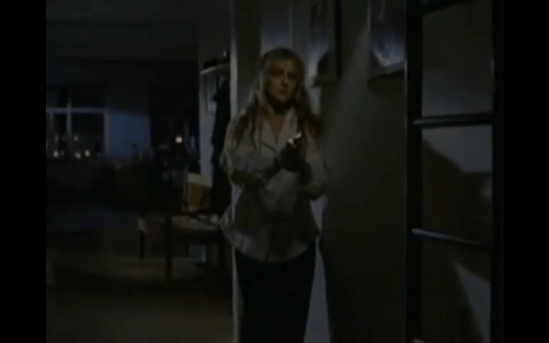
Second Sight presents “When A Stranger Calls” and “When A Stranger Calls Back” double feature on Blu-ray home video in the United Kingdom. Despite the upgrade, a DVD-R was provided for the review so technical aspects will not be reviewed. The disc did include bonus features such as Fred Walton’s inspirational short film “The Sitter” and interviews with director Fred Walton, Rutanya Alda, and Dana Kaproff, and Carol Kane. Carol Kane has more recently been the quirky and city-salty landlady that’s quick to whip sarcasms and clobber any hipster with a gentrifying agenda with a baseball bat in “The Unbreakable Kimmy Schmidt,” but Fred Walton saw Kane for how the actress could truly perform under a realistically terrifying moment, a moment that savors being on tenterhooks and frozen in time for almost the last 40 years as a classic and iconic scene in horror movie history. “When A Stranger Calls” and “When A Stranger Calls Back” is simple, yet deploys effective thrills with pure impending loom and dread in massive, lucrative quantities that may have been antiquated by time, but is epitomized as vintage and elegantly construed horror.
 It's Bloggin Evil!