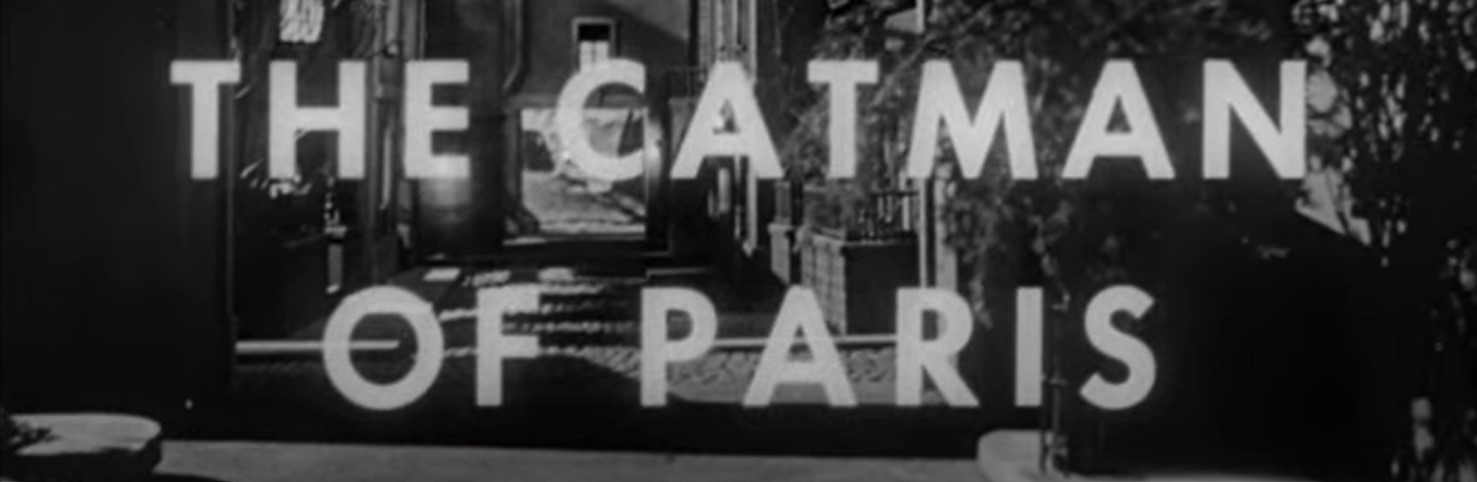
Who Let EVIL Out of the Bag? “The Catman of Paris” reviewed! (Imprint / Blu-ray)

Meow!!  “The Catman of Paris” is on the Prowl on Imprint Blu-ray!

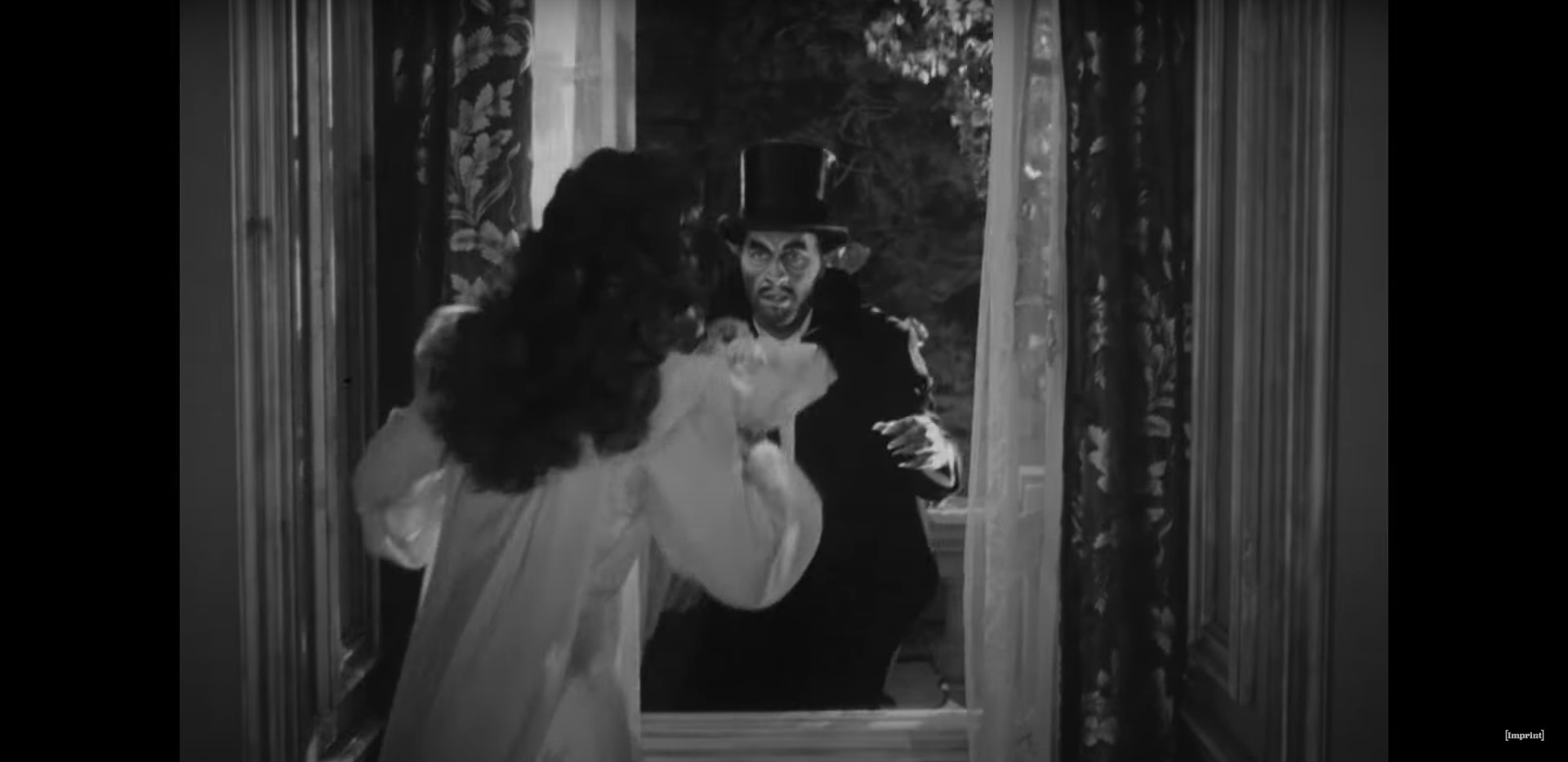
From rags to riches, writer Charles Regnier pens one of the most popular and polarizing books of France.  Titled Fraudulent Justice, the subject matter coincidently contains secret court case information in it’s text.  Regnier stands firm his book is creative fiction while the French government think otherwise.  When a government agent of the Ministry of Archives, carrying the detail accounts of the case to be reviewed, is found slashed to death and the case file missing, the police naturally suspect Charles Regnier while also another, eccentric police theory circulates of a monstrous cat person.  Regnier, who suffers from headaches and blackouts from a tropical fever he contracted during his two year travels away from Paris, begins to suspect himself as the deranged killer on the loose, attacking and killing those around him.  Without a solid alibi and the unknown from his blackout memories, Regnier evades the police by hiding with his darling lady friend, Marie Audet, but when the headaches begin and Regnier conscious slips into a strange darkness, will he let the cat out of the bag to strike again?

Let’s travel back in time to 1946, just after the Great Second War, when the movie industry rolled film once again and take a pawing look at Lesley Selander’s shapeshifting film noir “The Catman in Paris.”  Though story set in Paris, the black and white horror film helmed by “The Vampire’s Ghost” director is a United States product shot on location at the Republic Productions studios in Los Angeles, reusing and transforming many of the company’s stout storage of Western set pieces into Parisian milieus.  From the spittoon saloons to high end restaurants and from dusty stagecoaches to redesigned aristocrat carriages, Republic Pictures aimed to take transformative risks in order to hop on the Val Lewton and his 1942 “The Cat People” success train while making statements of his own from a Sherman L. Lowe (“Valley of the Zombies”) script.  “The Catman of Paris” is produced by Belarus expat Marek Libkow who fled Europe because of World War II but the feature would be his last producing feature.

In the ambiguous role that puts into question his sanity and his humanity is the Austrian actor of “Slave Girl,” Carl Esmond.  Esmond plays the rift creating writer adored by the public and despised by the government, driving him back into a corner of continuous defense of his work that has been argued to be plagiarized form secret documents and unlawful for the access of aforesaid secret documents regarding a controversial court case decades prior. On his tail is a paranormal receptive prefect of police (Fritz Feld, “Phantom of the Opera” ’43) and a more pragmatic inspector named Severen (Gerald Mohr, “The Monster and the Girl”) who, based on little-to-no evidence, immediately suspect the writer by affiliation to the court case he could in no way possible have known. This dichotomy of theory doesn’t affect the prime suspect, doesn’t seep into a larger suspect pool, and keeps the investigation status quo up until the revealing finale, but the police state characters have subjectively targeted Regnier with all but a harassment mentality, adding to Regnier’s conflicted dismay about the association between the killings and his disassociation with consciousness – which is visualized by a series of random, inverted images of a gusty barren tundra, a buoy gushing ocean water, a dark and cloudy moon, and a black cat’s eyes at the center. Regnier finds comfort in the bosom of Marie Audet (Lenore Aubert, “Abbett and Costello Meet Frankenstein”) over his finance (Adele Mara, “Curse of the Faceless Man”) and in his promised fickleness, broke her heart before falling victim to the cat’s claw in a metaphoric gesture of aggressive sexual assault. The whole love triangle is loosely adhesive to “The Catman of Paris’s” integral entanglement of un-kittenish affairs. In fact, Regnier is very kittenish with Marie to the point that his engagement appears to be frivolously made and has locked him into an inescapable promise because of emasculating masculine posture. Instead, the writer could care less about his word, or rather conveniently forgets, as he plays footsy with the girl of his dreams. “The Catman of Paris” rounds out the cast with Douglas Dumbrille, Francis Pierlot, and Georges Renavent.

Long thought derivative of Val Lewton’s “The Cat People’s” success, Republic Pictures challenges the perspective with a cattier fracture of manhood, putting the main protagonist of their own cat person horror, “The Catman of Paris,” through the whiskery wringer of test and tribulations of harboring suspicions about oneself. Charles Regnier has seen the other side of the tracks. For all intents and purposes, Regnier was a nobody who suddenly rose to respect and wealth in the eyes of the general public with the stroke of a pen for creative thought to formulate an enthralling story, out of the fabric of his own mind he assumed he wrote. Yet, his work of fiction has also become a sign of guilt, suspicion, and unlawfulness in the eyes of the authorities. If the weight of the government isn’t burdensome enough, Regnier is also divided with personal doubt when a killer’s bodies pile during his time spent in a stint of amnesia and all of evidential signs point in his clueless direction. The more dire latter echos his former self in a subconscious belief that he isn’t his true self, such as with imposter syndrome in which he questions his current, more affluent status and fame with being contributed by a darker, murderous side, perhaps a sign of his impecunious past. The story has Regnier averting decisions to marry into opulence when he really just wants to continue his fervent pursuit of his publisher’s daughter, a sign that now he’s worth a pretty penny, he can muster enough confidence to chase after the woman of his dreams and still feel grounded to the common people despite is sudden wealth. At one point in time, “The Catman of Paris” was a harrowing horror tale with fantastic prosthetic cat features, a decent carriage chase and crash sequence, and a whodunit mystery quencher for the masses, but, for today, the 1946 is about as antiquated as they come like most of “The Golden Age of Film” features with a one-note suspense narrative and a monotone melodrama that’s imposing and frank without a lot of flair. I will say one thing about “The Catman of Paris'” twist ending is it’s not easily reckoned as Selandar has beguiling direction to pile on guilt to the point that audiences will have to submit to the director’s feline frisky hokum.
A part of the Imprint Collection, coming in at #219 on the spine, is “The Catman of Paris” on an Australian Blu-ray release. The limited edition high-definition release is AVC encoded on a single layer, BD25. The 1080p Blu-ray presentation comes from a 2017 4K scan of the original negative and is presented in the Academy ratio of 1.37:1. The original print material has sustained a few visible marks of infrequent vertical scratch damage, minor dust and dirt, total loss single frames, noticeable cigarette burns, and wavering levels in grayscale and contrast stability during edit transitions. Yet, there’s still a richness of the black and white image for the majority that refuses to fold outside the competent restoration attempt that gives dimension to a nearly 80-year-old film. The overall picture is a solid pass above par as it’s likely the best we’ll ever see in our time. The English language LPCM 2.0 mono track crescendos with a run of the mill brass band score overtop a quite clean dialogue track. Sure, the unmitigated track is slightly sullied by a consistent yet unimposing shushing with sporadic, stifled popping; however, there are no major issues with the mix and the dialogue through the dual channel is clean and distinguishable. Optional English subtitles are available. Special features include a new audio commentary track feature film historians Kim Newman and Stephen Jones, an oldfangled feature length documentary running through the cinematic history of stills and video clips from Republic Pictures The Republic Pictures Story, and a film historian Kat Ellinger video essay entitled Mark of the Beast: Myth Making and Masculinity in The Catman of Paris. Imprint’s tangible package is eye catching with color-washed front cover image on a thick cardboard side-slipcase; the illustration is pulled from one of the feature’s various marquee posters. Inside the slipcase, a character composition mockup includes the menacing Catman at the forefront with Regnier and female principals frozen in fear. The Imprint release runs at a slim 64 minutes, is unrated, and has a region free playback. “The Catman of Paris” is in servility of early Cat People productions but stands on its own two, or rather four, feet with an entrenching murder mystery that can keep you anthropomorphically guessing.

Meow!!  “The Catman of Paris” is on the Prowl on Imprint Blu-ray!

The Slammer is Full of Correctional Officer EVIL in “Lust for Freedom” reviewed!

The Jailed Chicks “Lust for Freedom” on Blu-ray!

Broken by the violent death of her partner, who she was also engaged to marry, after a drug bust goes south, undercover officer Gillian Kaites abandons law enforcement and drives across country in an internal turmoiled mess.  She’s pulled over by a Georgia County cop after she aids a frantic woman fleeing to escape two men in a black van.  Framed for narcotics possession by the corrupt officer, Gillian is drugged and locked away in the County’s women’s penitentiary overseen a strong-handed matron and an unscrupulous warden who dabbles in prostitution trafficking, drug smuggling, and even the occasional snuff filmmaking.  Back into a cellblock corner, Gillian must defend herself against the warden’s goons, protect other girls also falsely incarcerated, and lean into the sympathetic ear of the same corrupt cop that framed her after voicing his years of disgust with the warden’s malfeasance.

Part II of our bamboozled behind bars and following the 1986 examination of Eric Karson’s military simulation turned enslavement “Opposing Force,” is our next feature helmed by another director named Eric, notably Eric Louzil, with “Lust for Freedom.”  The debut film of Louzil, who went on to helm “Class of Nuke ‘Em High Part II and Part II” for Lloyd Kauman and Michael Herz of Troma Entertainment as well as slaving over standalone horror and sleazy schlockers in “Bikini Beach Race” and “Night of the Beast,” was also the first feature penned by the American-born, UCLA grad with a penchant for low-budget lewidies, cowritten alongside the “Shadows Run Black” writing duo, Craig Kusaba and Duke Howard.  With the working title of “Georgia County Lockup,” which in actuality the film was shot in various California and Nevada locations, such as Ely, Nevada, “Lust for Freedom” is an 8 x 8 cell of nudity, violence, and corruption under the co-production companies of Mesa Films and Troma Entertainment, with the latter reediting the original script and adding ADR adlibs to apply a sexed up and Troma-fied integration of product into their independent collection.  Louzil and Laurel A. Koernig produce the film with Troma bigwigs Lloyd Kaufman and Michael Herz as executive producers.

“Lust for Freedom” has many eccentric characters with many assorted plotlines in what is essentially an all women battle royal brawl in the cat-scratchin calaboose.  Stirring up trouble like a piece of scrap metal lodged in the gears of a well-oiled machine is tall and beautiful former cop, Gillian Kaites.  Played by Melanie Coll in her only known role, Kaites is only the bear in the bees’ nest, forced into confinement under false pretenses and to be subjugated by the likes of a wayward officialdom with lust in their eyes, greed in their pockets, and a disdain for disobedience.  Coll’s a bit flat footed with her performance and her Karate Kokutsu Dachi stance could use some improvement, but the tall, muscular, curly haired and light blonde actress can wield a multi-round popping automatic rifle with authority.  Stark against her Amazonian physique, not in a hard pressed and sexualized way, is main antagonist is the unbecoming Southern gentleman Warden Maxwell under the balding and overweight guise Howard Knight, but Kaites is more in tune against the procrustean penitentiary matron Ms. Pusker and Judi Trevor gives a Hell in a cell pastiche of early fascist women of Roger Corman produced WIP films, enforcing her will with prison muscle in the miscreant tough Vicky (Elizabeth Carlisle, “Evil Acts”) and the oversized guerilla (professional wrestler Dee “Matilda the Hun” Booher, “Spaceballs,” “DeathStalker II”).  Ultimately, Kaites sees her only path to escape through the very same person that wrongly confines her in the first place.  William J. Kulzer (“Class of Nuke ‘Em High Part II:  Subhumanoid Meltdown”) doesn’t quite fit the corrupted bill of Sheriff Coale, a mild manner and seemingly reasonable officer who goes with the despicable flow of sex trafficking amongst other indelicacies.  Yet, maybe that’s the purpose in Kulzer’s character, to be conflicted by the choices he and his callous cohort has made that made him stick out as the least repulsive individual behind the concreate and metal barred big house.  “Lust for Freedom” rounds out the cast with Donna Lederer, John Tallman, George Engelson, Rob Rosen, Shea Porter, Rich Crews, Raymond Oceans, Elizabeth Carroll, Lor Stickel, and Joan Tixei.

Gratuitous, full-frontal lesbian sex.  Yes, “Lust for Freedom” appeals to the very definition of its own title, like many other WIP productions and though a core element to the integrity of the subgenre, the creamy smoothness of two curvaceous, naked bodies getting it on shouldn’t always be the main selling point.  Luckily, Louzil ponies up more salacious material for his pinks in the clink caper.  An elaborate spiderweb of activity balloons and pulsates outward from the moment Kaites crosses path with an evening-dressed escapee being chased by a scary looking Native American and his sociopathic hooligan partner in a black van.  “Lust for Freedom” may be hammy and cheesy but what it’s definitely not is dull in its multifaceted approach to expose character layers.  Some characters grade more toward deviancy, such as Warden Maxwell and Ms. Pusker, while others are lifted toward a more redemptive means, such as with Sheriff Coale; that shepherd “Lust for Freedom” into a culminating jailbreak.  The narrative doesn’t necessarily focus around Kaites but she’s on a redemption arc to dig her out of a despair pit and into a fight worth fighting for purpose after the death of her finance, set up in the opening act.  As she evades the Vickey’s directed infringement to rough up the new girl, Kaites takes under her wing a fright clink chick named, another wrongly accused prisoner after being taken wandering the road, a theme that is a reoccurring motif from Kaites to Donna in thinking the young women can manage the world and their problems on their own accord but at a cost. However, whatever semblance is left of Louzil’s original script has likely been lost once Troma revamped it into the finished product you see today. Riddled with choppy cuts and incoherent segues, we have to wonder about Kaites’ role that may have been transmuted into a lesser core commodity in the final product.

Troma Entertainment releases a high-def, Blu-ray release of “Lust for Freedom.” The AVC encoded, 1080p resolution, widescreen release, in a 1.78:1 aspect ratio, compressed from its original aspect ratio of 1.85:1. Lloyd Kaufman mentions Louzil had shot the film on 16 mm and Troma subsequently blew up the negative to a 35 mm print that reframes the transfer for projection. Image-wise, the picture appears relatively clean albeit a plush grain and a few visible 16 mm cigarette burns with little-to-no age wear or exposure issue and the BD25 storage format has capacity aplenty to render an adequately compressed image with hardly any loss to the quality. Since the quality is heavily granulated, definitely no DNR implemented, the compression doesn’t suffer from a lack of a sharper, restored image. The audio is an English language Dolby Digital 2.0 Stereo can be echoey at times, as if the boom is catching warehouse reflection, but dialogue does topple in an appropriately laid out track mix that’s intertwined with hair metal band Grim Reaper’s titular “Lust for Freedom” single. We don’t get a ton of depth in the close quarters of the prison set but neither do we receive any depth in the exteriors either, sustaining most of the volume in a forefront stasis. Troma adds spotty ADR to kitschy up to Troma’s ludicrous level and its quite evident like a sore thumb that doesn’t quite match the ingrained audio mix. There are no subtitles available. Extras include the original DVD intro by Lloyd Kaufman, which also plays automatically at the startup of the feature, a directory’s commentary by Eric Louzil that is asynchronous with the feature in what is an approx. one-minute delay behind the Louzil’s retrospect, the original theatrical trailer, an interview with Lloyd Kaufman, a brief, brief clip of Eli Roth’s encouragement to just go and do a movie to the best of your ability, a Troma-themed showcase of one of their more modern Tromettes – Mercedes the Muse, the Radiation March, Gizzard Face 2: The Return of Gizzard Face, which has been on a slew of Troma’s releases over the past year, and coming attractions from the independent company. The Blu-ray comes in a tradition snapper with a guard tower, barbed wired, and Gillian Kaites with a semi-auto in her grip and barely cladded and torn clothes. No insert inside the case and the disc pressed art is the same as the cover illustration. This Troma release comes unrated, is region free, and has a runtime of 94 minutes. Plenty of desire for “Lust for Freedom,” busty babes behind bars barely bores and this vintage Troma keeps the WIP lacquer wet with self-satisfactory sadism and sexual spiciness.

The Jailed Chicks “Lust for Freedom” on Blu-ray!

Beckerland Fosters Deranged EVIL Upon POWs! “Opposing Force” reviewed! (Scorpion Releasing / Blu-ray)

“Opposing Foce” now in Control of Blu-ray Home Video!  

Air Force Lieutenant Casey has initiative, determination, and something to prove being the first woman to be approved for a special and notorious evasion and escape course on a remote U.S. base Philippine island.  The course simulates downed Air Force pilots behind enemy lines where they either have to evade capture or escape as POWs without divulging U.S. secrets.  The simulating is meant to break down the individual physically and mentally through psychological and physical torture that nearly blurs the regulation guidelines of the United States military, but has been proven to be an effective training to withstand the most brutal of POW conditions despite the course’s infamous reputation.  Casey joins the ranks of participants, a young group of eager male officers and one experienced Major Logan looking to requalifying for action, and are dropped into the simulated enemy combat zone controlled by General Becker, a calculating commanding officer who has succumb to his opposing force role.  Becker’s unconventional and illegal tactics exploit Casey’s gender in the name of training her, but his knowingly criminal activity puts the rest of the trainees in danger and it’s up to the Logan and Casey to stop him and his opposing force in an all hell breaks loose war.

POW exploitation has been missing in modern day cinema.  A subgenre that is a dark, degrading note of unscrupulous and vengeful action has been exclusive to the 1980s for far too long, barely being reprised throughout the proceeding decades.  Not to be restricted to the popularization films of Chuck Norris of the “Missing in Action” franchise or of Sylvester Stallone’s Rambo II and III, these camp from Hell films run the money and production gamut, pulling inspiration on conflict wars before the decade, such as Korea, Cambodia, and even as far as World War II.  For mainstream, the jungle entices with harrowing heroism that glorifies determined, strong-arming patriotism while showcasing America’s enemies as Geneva Convention ignoring villains who deserve every ounce of blow’em up, shoot’em up at the hands of escaped captees or an elite team, or a one-man, rescue mission.  Nazis saw more action in the low-budget Eurotrash market with sexploitative women-in-prison camps ran by the sleazy, inhumane, and experimenting Gestapo mostly.  American filmmaker Eric Karson, director of Jean-Claude Van Damme actioners “Black Eagle” and Lionheart,” moves away from the Muscles from Brussels and into Tom Skerritt’s mustache behind bamboo bars in the 1986, American-versus-America military-thriller “Opposing Force.”  Penned by Linda J. Cowgill, under the pen name of Gil Cowan in what’s likely a name change spurred by sexism in the industry, originally titled the script as “Hell Camp” but took the name “Opposing Force” based off the antagonistic enemy labeled as OPFOR right on their chest.  “Opposing Force” is coproduced by “Skinner” and “Final Mission” producer Tamar E. Glaser and “Sometimes They Come Back… for More” producer Daniel Zelik Bert under the theatrical distributors of Orion Pictures. 

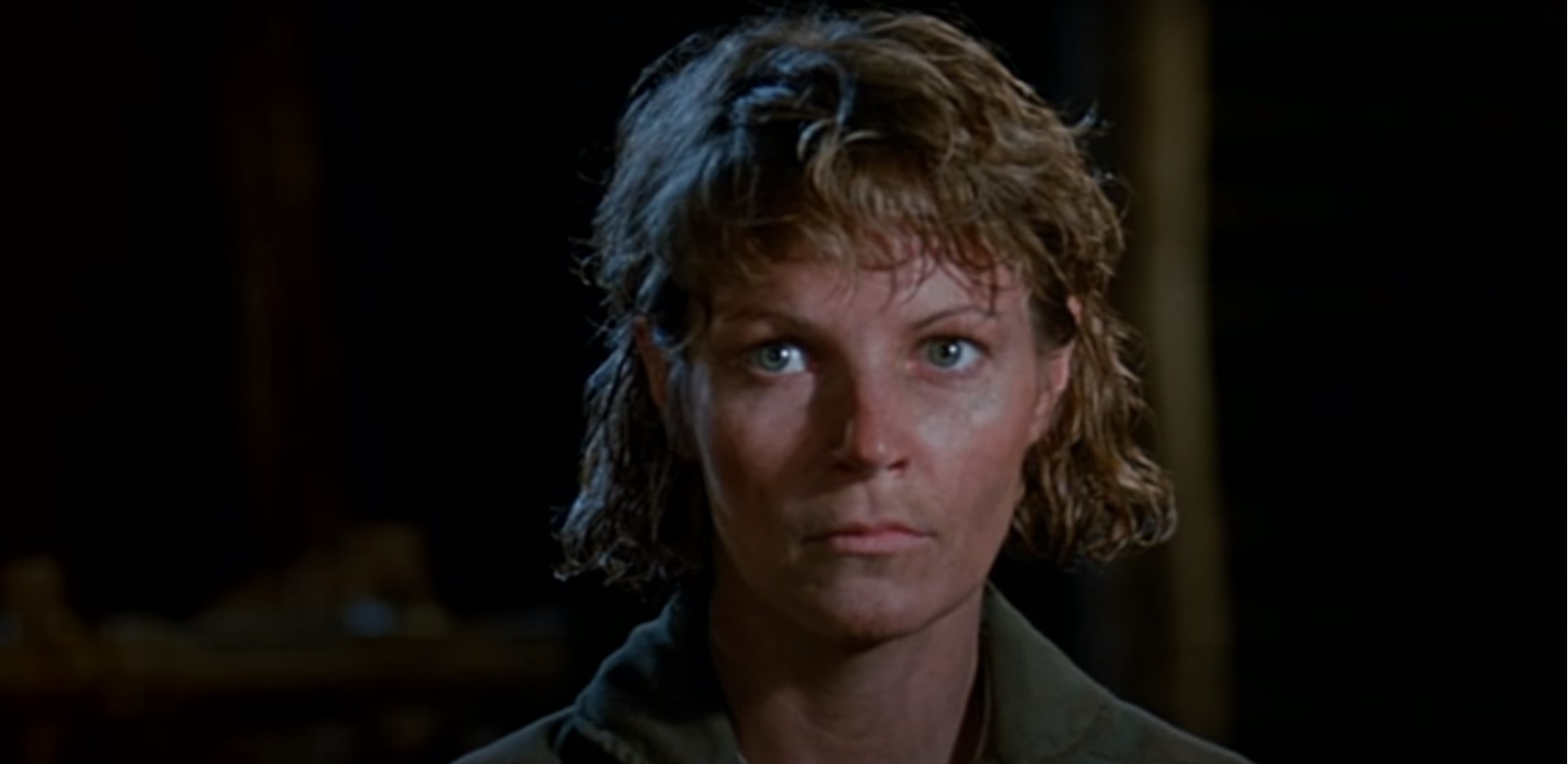
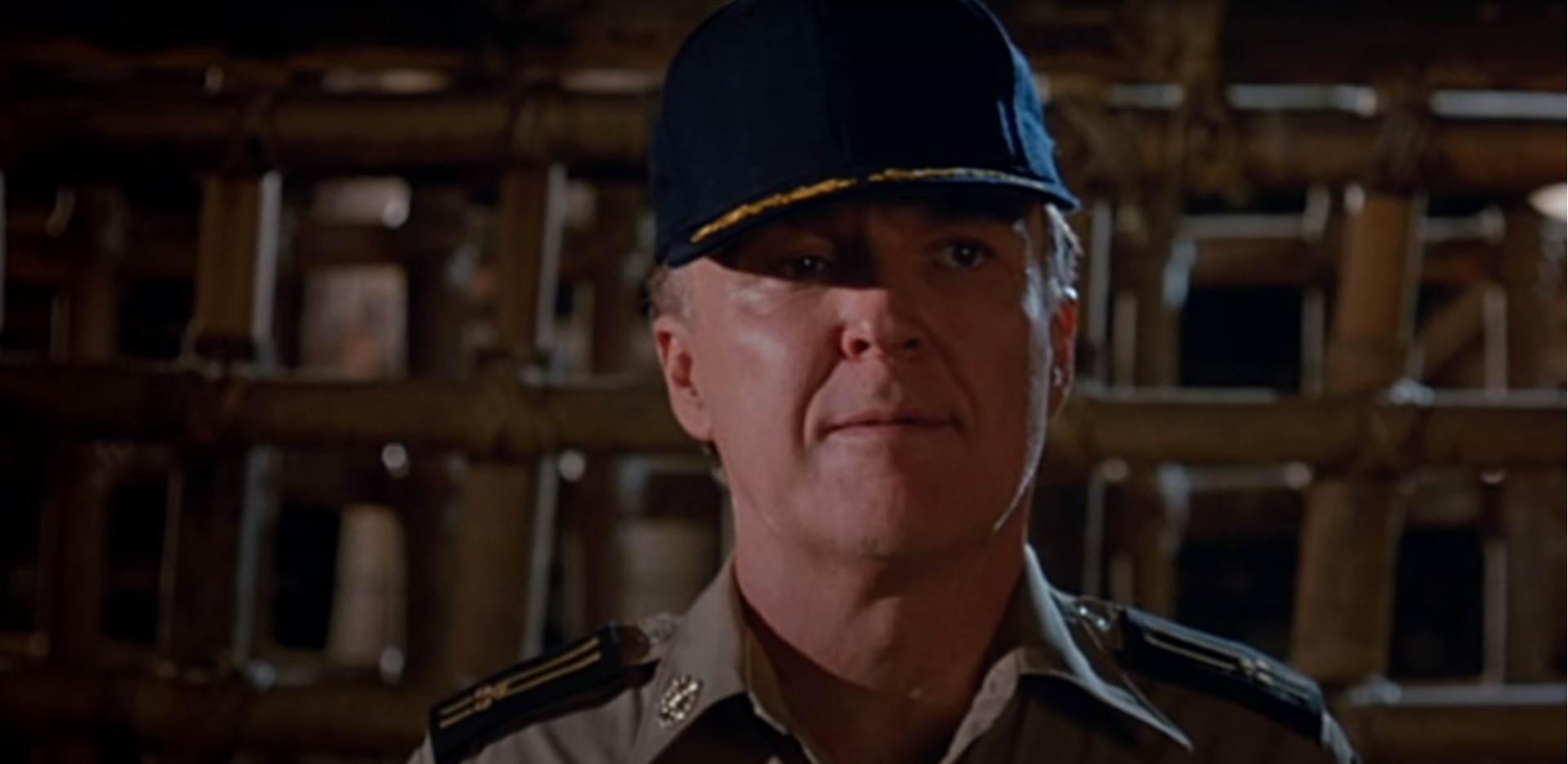
We already know Tom Skerritt’s world-renowned mustache is in the movie and is the star of the show, but Tom Skerritt is in there as well as the man behind the stache as the seasoned boot Major Logan.  The “Alien” and “Contact” actor become the patriarchal figure to a bunch of figurative sons in younger course participants and overprotective of one figurative daughter in Lt. Casey in a wildly uncharacteristic situation brazenly exploited in unconventional mainstream means in the uncomfortable skin of Lisa Eichhorn (“Deus”).  What Lt. Casey goes through is more on familiar ground with the low-budget sleaze of women-in-prison grindhouse and while it’s certainly jarring and unexpected, It’s a welcoming chance for an upper tiered independent film with big names attached.  A couple of the other big names attached are Anthony Zerbe (“The Omega Man”) and Richard Roundtree (“Shaft”) as Commander Becker and his staff sergeant Stafford.  Becker and Logan mirror each other as veterans that have graded into either being corrupted by power or to be righteous in doing what’s right.  Yet, but Zerbe and Skerritt play into what the experienced actors know best, their trademark stoicism.  Tack on Eichhorn’s equally endurable fortitude and a three way standoff erects a monumental solemn stalemate of relatively the same attitudes until the last straw breaks the proverbial camel’s back and war erupts.  Roundtree at least develops Stafford’s internal conflict when the job bites at his conscious, becoming the connection needing convincing of Becker’s crossing over to the darker side of power like a Sithlord in public face disguise.  The narrative physicality aspects piece together a grueling atmosphere that each actor undertakes appropriately by their determined military rank, but as eloquently as Lt. Casey puts it to the aging Major Logan, “You got a limp and I got tits; these aren’t great things ot have in the military,” sets up themselves as misfits-to-heroes that were being crapped on all their careers for their antithetical military image.  “Opposing Force” rounds out the cast with a bunch of moaning male air force participants in the middle of it all with performances from Paul Joynt (“Echos”), Robert Wightman (“Impulse”), George Cheung (“Rambo:  First Blood Part II”), and John Considine (“Circle of Power”).

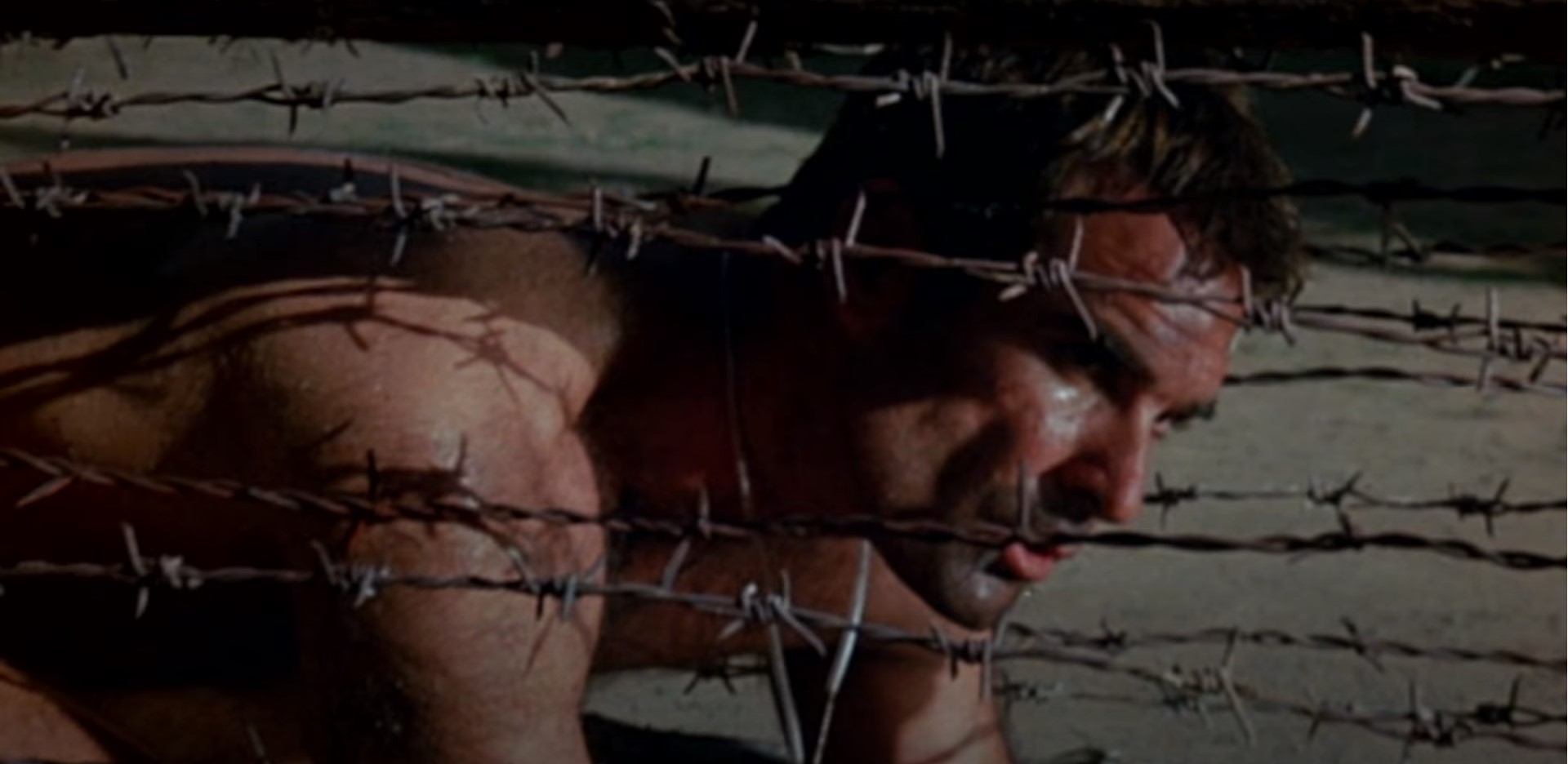
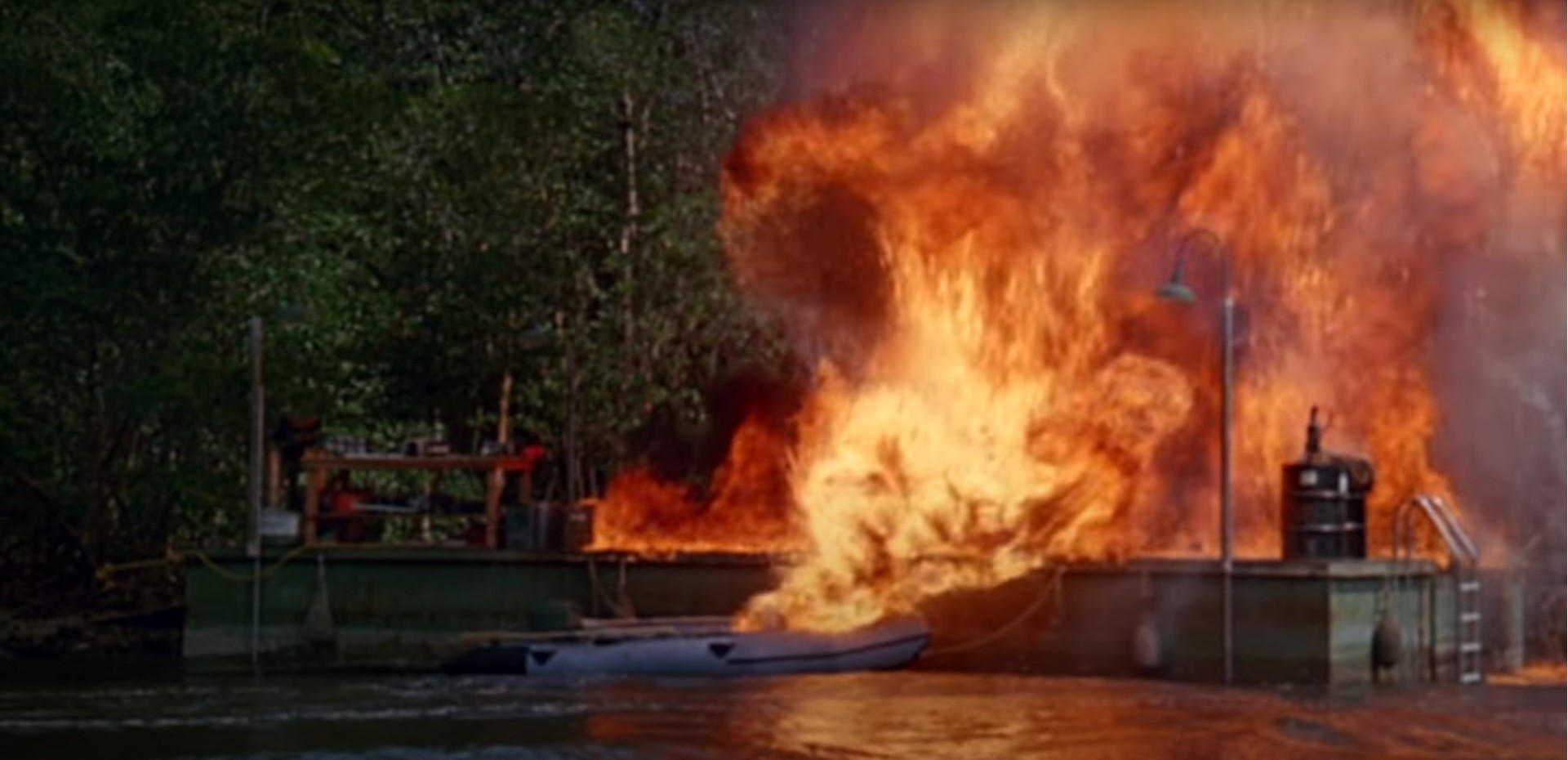
Influenced by the U.S. Military’s real life training program known as S.E.R.E. (Survival, Evasion, Resistance, and Escape.), Cowgill uses the program to formulate “Opposing Force’s” principle groundwork in setting up the jungle POW scenario on a remote island that goes through the motions of no chance of a rescue and aid of any kind.  Participants are throw into a survivalist gauntlet that turns surprisingly rough aggressive when physical and mental tortures are instilled upon those thinking the training would be a walk in the park.  This particular training simulation is unique to the OPFOR team with an aging officer looking to requalify for combat and the first woman to ever be accepted into the course due to a loophole, throwing new challenges to an embedded far too long commander who can easily break a man’s spirit but tiptoes around the possibilities of what to do with a woman until his insidious power and authority blurs right from wrong and takes the torturous tactics and enhanced interrogation techniques too far, beyond the limits of what’s necessary and beyond the limits of human decency all in the name of reinforce training.  The grueling torture and bush action is palpable enough to contrast the naked, sweaty, and battered bodies with the M1A1 bursts and munition explosions galore.  Only one aspect adds an out of place measure in the narrative and that is of the rest of the POW contingent and their seemingly wishy-washy decision on whether to escape, stay put, or join in the fight against Becker and his live-round shooting island battalion; the group disperses into the jungle only to fade from the climatic third act Major Logan, Lt. Casey, and Botts defending their lives against a treacherous throng and their wicked commanding warden.  Their disappearance doesn’t allow for closure for the acts against them during the entire ordeal and becomes a fizzling distraction.  Another distraction is the severely cut ending that freeze frames on Eichhorn’s final act with her voiceover exposition post-battle in what feels sorely rushed to complete.  The Blu-ray bonus features has an extended ending that’s more completist approach in wrapping up the story sutibly.  For a POW film, “Opposing Force” is an archetype of its originating decade that sates the subgenre’s need to pit an overreaching and ruthless camp head against the resiliency and determinate of the America fighting spirit. 

A re-release from the 2019 Scorpion Releasing Blu-ray comes “Opposing Force” reprising a presence on online retail shelves.  The AVC encoded, high-definition, BD25 is presented in 1080p resolution with a widescreen 1.78:1 aspect ratio.  Identical to the earlier Blu-ray 4 years prior, the image quality is freshened up quite a bit from the likely 35 mm print source into a detail-laden HD transfer that offers a lush jungle-scape to be in juxtaposition against the camp from within its center, a large guerilla compound bathed in browns and greens make for good POW-themed pageantry.  Skin tones and individual features flesh out nicely, adding detailed levels of salubrious status over the course of the day-to-day detainment. The English language DTS-HD master audio 2.0 leans toward a softer dialogue mix that, for the majority, is discernible despite favoring “Opposing Force’s” selling points: large explosions, pepper potshots, and militant vehicles running rampant around and above the island terrain. Dialogue’s clear enough to emerge without much hinderance with enough depth to provide a sense of position and the audio layer is remarkably clean with no hissing, popping, or static. English subtitles are an available option. Special features include an audio commentary with director Eric Karson, the trailer, and that extended ending I mentioned, and noted preferred, earlier in the review. The traditional Blu-ray snapper casing includes a rendition of the alternate titled “Hell Camp” poster with a more titillating illustrative lookalike of Lt. Casey in shredded rags and ride-up shorts with hands tied above her head and looking over her shoulder. The warm yellow with a hint of white stirs in an element of jungle heat ramped up by also providing the cage accommodations in the background to let it be known you’re about to watch an exploitation POW film. Locked on a region A playback, “Opposing Force” has a runtime of 98 minutes and is rated R. Eric Karson manages to find a place amongst a serrating subgenre that takes an ostentatious, yet not entirely fictious look, at prisoners of war with his “Opposing Force” actioner that goes to convey that not every unethical and malintent camp leader is a foreigner; evil can also be domestically grown.

“Opposing Foce” now in Control of Blu-ray Home Video!  

Heart and Body Reunited Forges Immortal EVIL! “Witchtrap” reviewed! (MVD Visual / Blu-ray)

Get Caught in the “Witchtrap” on Blu-ray!

A motley crew of parapsychologists and private security are hired to investigate the haunted house of powerful warlock and accused serial killer Avery Lauter.  Before the graveyard side home can be turned into a themed Bed & Breakfast by Lauter’s inheriting next of kin, the team is brought in to eradicate the infamous house of any kind of malevolent spirits after the mysterious and gruesome death of a magician who agreed to stay at the house as a test run of the level of malignance.  When the investigators make contact with a confident and evil Lauter, the warlock tricks them by using the team’s physical medium to murder a far-too-inquisitive investigator one-by-one in order to finish a satanic ritual he started before his death that will make him immortal.  It’s up to non-believer, and wise-cracking, private detective Tony Vincente to make sense of the murders and put an end of Lauter’s reign of terror from beyond the grave before it’s too late.

A necromantically-charged slaughterhouse of a film, “Witchtrap” is the 1989 phantasmal thriller of the omnipresent, omni-powerful dead versus a group of clueless living always one-step behind in attempting to make sense of everything.  Also known as “The Haunted” or “The Presence,” the Kevin S. Tenney written-and-directed film succeeds the director’s cult classic “Night of the Demons” and Tenney’s debut film “Witchboard,” which is not a sequel to “Witchtrap” despite a similar title and the hiring of some of the same actors.  Shot in Fairfield, California on a 400K budget, the independence production showcases topnotch gore and pyro effects from makeup artist Judy Yonemoto (“Dance or Die,” “The Newlydeads”) and special effects supervisor Tassilo Baur (“House,” “DeepStar Six”) and is produced by Tenney alongside Daniel Duncan under Mentone Pictures; Duncan also produced Tenney’s “Brain Dead” later in the filmmaker’s career.  Cinema Plus, represented by executive producer Ryan Carroll, serves as the presenting company.

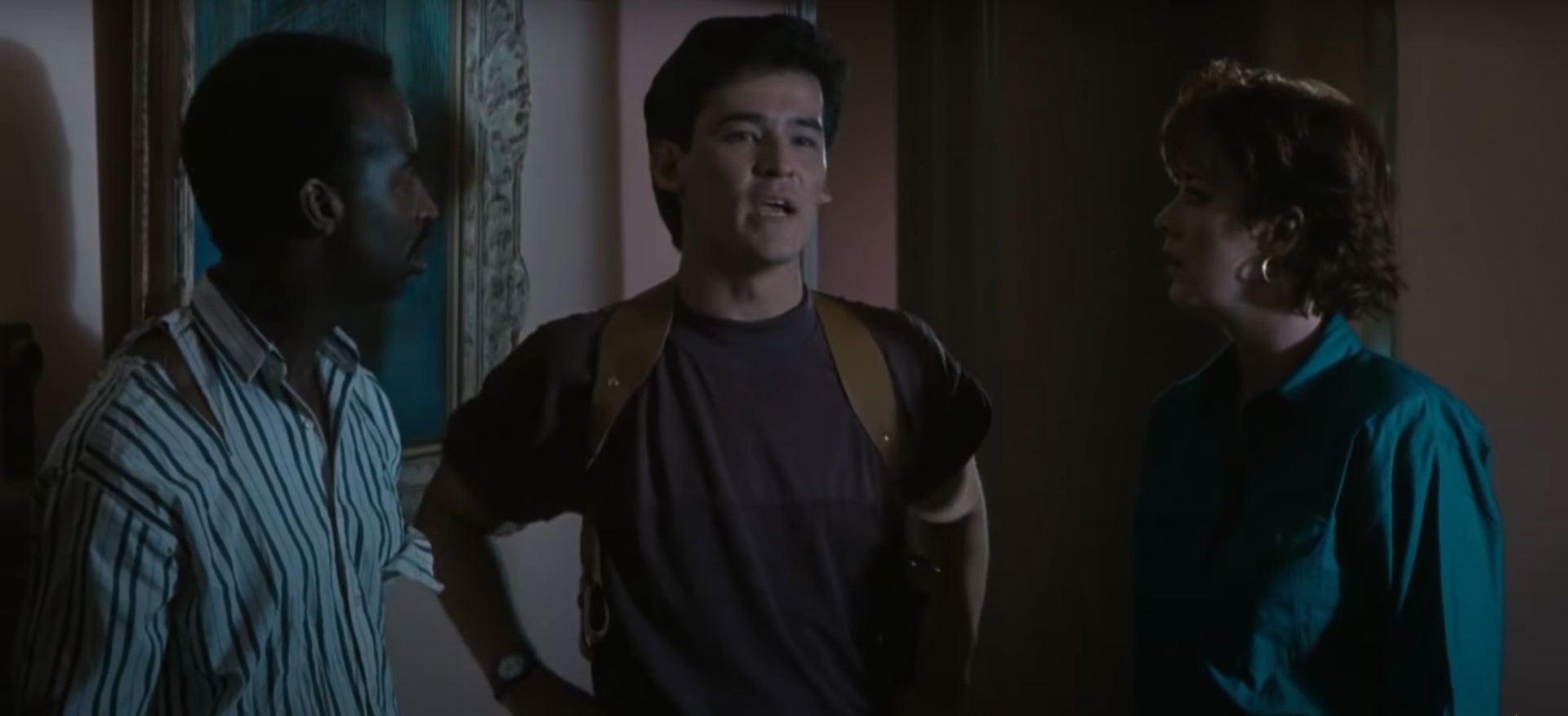
Tenney has been noted saying “Witchtrap” was a gift for the actors who have stuck with him over the years, playing pivotal parts in his student films that pole-vaulted his career into being a cult horror director.  “Witchtrap’s” leading man, James W. Quinn, has worked with Tenny since grade school and was cast in a principal role in “Witchboard” as well as in a minor role in “Night of the Demons.”  Quinn’s Tony Vincente is by far the best dialogue deliverer of the principal ensemble with a smartass ex-cop script that highlights Quinn to be the good guy but while being a complete jerk.  The rest of the cast is painfully flat, with little-to-no inflections, and a severe lack of dynamism or gesticulation that, despite how interesting their character backgrounds are, are just too dull with monotone script-reading.  “Night Visitor’s” Kathleen Bailey is likely the second best to liven up her character of Whitney O’Shea, the religious and reluctant physical medium with shark thrashing spams every time Avery Lauter channels her for to violently wipe out a parapsychologist team member, spearheaded by an eager ghost trapper Dr. Agnes Goldberg (Judy Tatum, “Witchboard”) and her mental medium husband Felix (Rob Zapple), and the accompanying private security forces that also include Vincente’s partner Levi Jackson (Clyde Talley II) and boss man Murphy (Jack W. Thompson).  Dangerous ambitions and irrational greed stir the pot between each of these groupings that side with personal stake over the safety of their existence that make for better character building underneath the rickety performance framing.  And, of course, we can’t neglect mentioning Linnea Quigley bringing up the rear with her rear as the bleached blonde, cropped seater topped A/V technician that can capture ghosts with her ectoplasm detecting gear.  Quigley, and also Judy Tatum, provide a bit of T&A, especially Quigley with an eye-popping full frontal in the prime of her career.  The remaining cast includes Hal Havins (“Sorority Babes in the Slimeball Bowl-O-Rama”) as the creepy groundskeeper and J.P. Luebsen (“Witchboard”) as the cap-wearing and wild-eyed bearded warlock Avery Lauter. 

Oddly enough, what makes “Witchrap” entertainingly great, is Tenney’s attractive and amusing dialogue.  Between the quips, banters, diatribes, and the depth conversations, Tenney formulates a dialogue that can match or even surpass the outstanding special effects that course through the narrative.  Without Vincente’s brutal mockery of the entire paranormal research and investigation scheme as well as an unmercifully, nonstop degrading position toward his contentious boss, left with only the tedious prosaic to hear, “Witchtrap” would be one of those great-gore, dull-dialogue features that force your hand to fast-forward to the good parts in order to not pass out asleep from the in between drag.  Instead, “Witchtrap” is 80’s cult-horror treasure, comfortably embedded somewhere between the cinematic Earth’s lithosphere and asthenosphere layers just waiting for someone to unearth and dust off its sheening crimson colored cabochon.  Definitely not elevated horror that makes one think about the auteur intended message, the feature remains true to Tenney’s previous like-mad credits with an outlandish and mortally fair game theurgy that’s surface-level eye candy and audibly dulcet, despite the audio recording snafu that sent the entire dialogue track to the post-production recording studio.  Though producers and marketing attempted to cash-in on “Witchboard’s” moderate success with a similar, familiar title, “The Haunted” and “The Presence” are no more than generic designation fodder that lacked tremendous flavor; “Witchtrap’s” a kitschy and blunt title that works and literally estimates what audiences should and will expect although Avery Lauter is a Warlock and not necessarily a witch per se. 

A part of the Eric Wilkinson’s throwback video club and Rewind Collection series from MVD Visual, “Witchtrap” arrives a fully restored, high-definition Blu-ray, presented on an AVE encoded, 1080p, BD50 and in a widescreen 1.85:1 aspect ratio.  This transfer essentially mirrors the Vinegar Syndrome release a few years back that had reinstated many of the MPAA cuts the general public hasn’t laid eyes for nearly 30 years until 2016.  Picture quality retains a fresh, renewed look without compromising the natural characteristics, such as grain, of the 35 mm celluloid.  There are sporadic scenes that slip due to generational loss but, for the most part, a solid 2K scan restoration of the interpositive. The English LPCM 2.0 mono track is post-production concomitant due to an inexperienced sound mixer that resulted overbearing hum throughout the dialogue. ADR was introduced in post subsequently diminishing depth and creating an artificial sounding mix with a silver lining being a near perfect match for actor emotionality, inflections, and synchronization. Optional English subtitles are available. Bonus material includes a commentary track with director Kevin Tenney, producer Dan Duncan, Cinematographer Tom Jewett, and actor Hal Havins. Also included are interviews with Kevin Tenney, Linnea Quigley, Tom Jewett, and Tassilo Baur who more-or-less say a lot of the same retrospective accounts regarding “Witchtrap’s” sound issues, pranks on Kevin Tenny, cheap film hints outside of L.A., and how constrained the budget was. This release also comes with the edited VHS version at 92-minutes, same as the Blu-ray, a photo gallery, and the original trailer. Physical features include a sweet throwback cardboard O-Slipcover of the original poster compressed inside a 1-inch, matte red border that’s back and front. The O-slip covers a clear Blu-ray case that holds a reversible Rewind Collection cover art that’s roughly the same as slipcover poster art with cropped out credits for a vivid red filled, white-lined title. On the other side of the cover is alternative European cover art of a puffy white cloud merged with a demonic face hovering over a white picket fenced house, reminiscent of the MGM “Return of the Living Dead” or the original Columbia “Fright Night” DVD covers. Inside the case is a folded mini-poster of the factory-wrapped front cover. MVD’s release is rated R and comes region free. “Witchtrap” epitomizes restless ghost syndrome with a head coup de grace motif and is a seance that conjures potent witty dialogue to hoist Kevin Tenney’s third feature up to another plane of existence.

Get Caught in the “Witchtrap” on Blu-ray!

That Chill from Within is the EVIL that Plagues the Mind. “Bone Cold” reviewed! (Well Go USA Entertainment / Blu-ray)

“Bone Cold” is available on Blu-ray Home Video at Amazon.com!

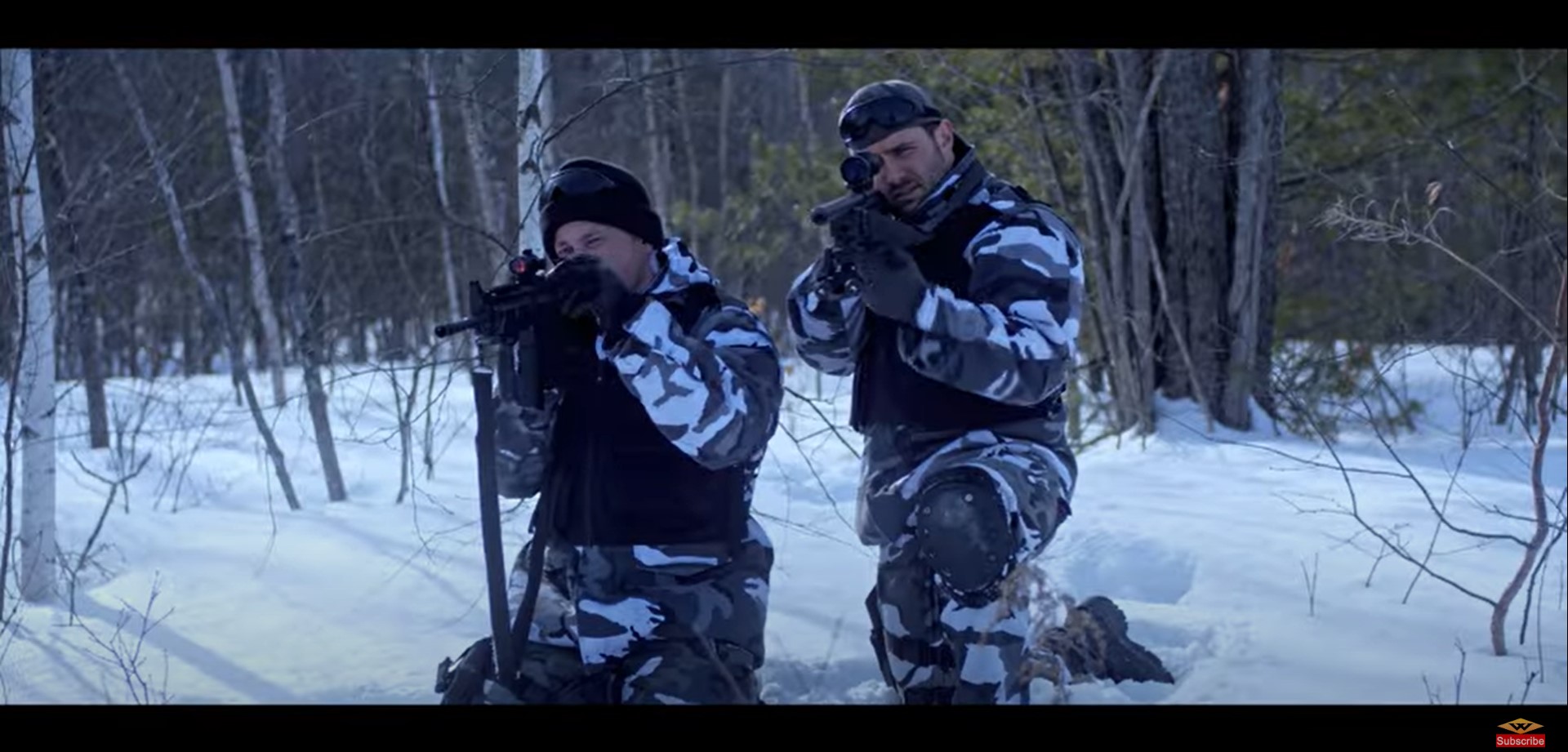
After a failed mission attempt by their counterparts, a pair of highly trained U.S. Black Op solders are called back from a leave, less than 24-hours on a previous mission, to drop into a snow-covered forest in Northern Ukraine.  The mission is to eliminate a Russian separatist amassing a paramilitary for insurgency strikes.  The skilled sniper and his longtime spotter assassinate the wrong target on bad intel and find themselves running for their lives when separatist soldiers begin tracking them.  Unable to evac until the mission is a success and they lose their hostile pursuers, the soldiers are hard-pressed by their handler to continue to locate and eliminate the intended target, but something else is following them.  A dark figure against the snowy white landscape hunts them.  With no other friendly assets in the area or air support, they must battle to survive the two-fronts alone, relying on their years of trust and training to get them through alive.

“Bone Cold” is the chilling 2022 psychological thriller from first time feature length film director Billy Hanson.  The Main-born, Florida State Film School alum also pens the story that tackles traumatic stress and delusions brought upon military war and operation fatigue mixed with suspenseful arms engagement, displaying phenomenal sniper back-and-forth volleys, and mixes in a sinister and ominous presence in tow.  Shot in the dual locations of Los Angeles, California, for the not-so-frigid-looking scenes, and in the director’s home state in Saco, Maine during the winter months where most of the action takes place, “Bone Cold” plays into that penetrating freeze that sends shivers down your spine as well as getting the blood pumping for the clashes of special and supernatural forces.  Hanson, along with Elise Green, Ness Wilson, Jonathan Stoddard, and music video maker Jaclyn Amor produced the film under Hanson’s own Dirigo Entertainment production company with Mind the Gap Productions and Well Go USA Entertainment handling distribution.

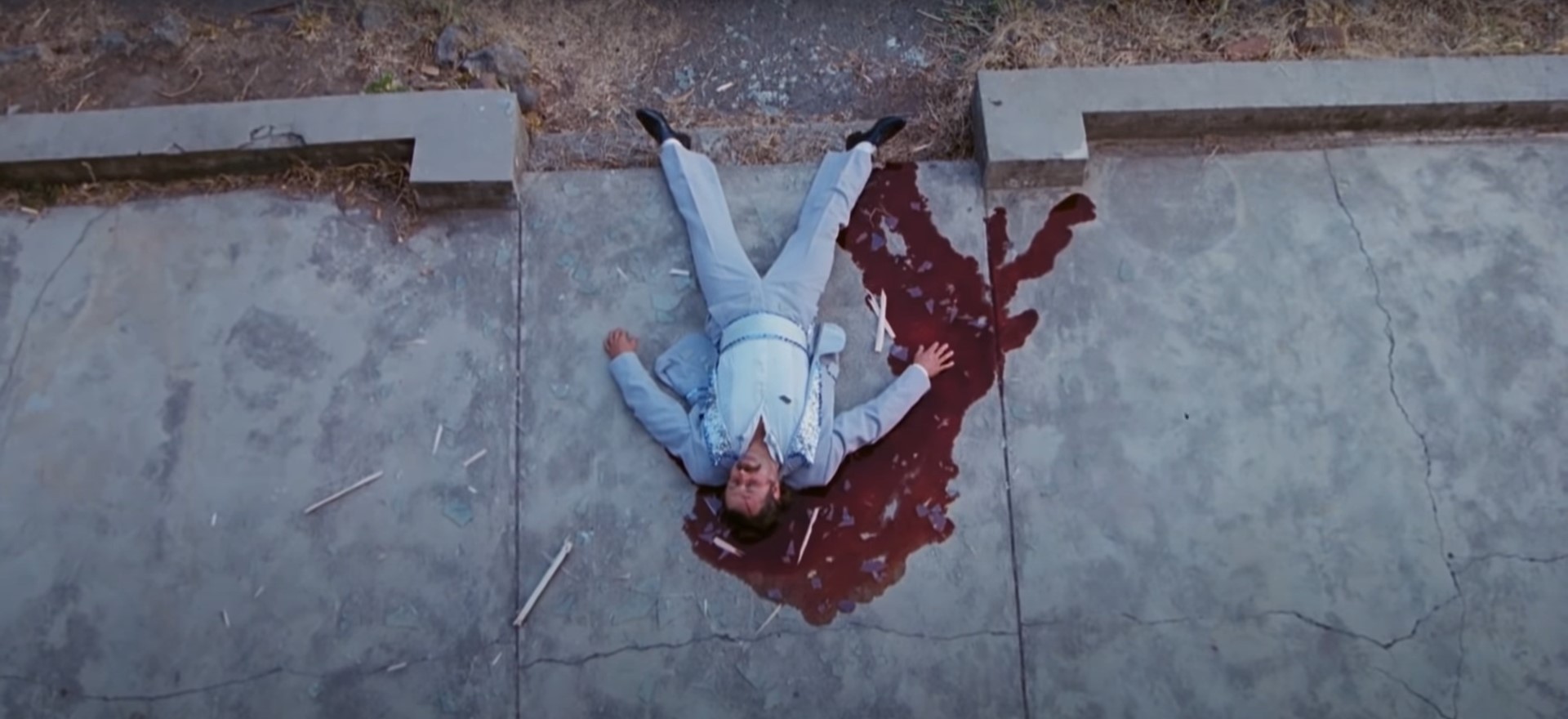
The story opens with a man using a metal detector on a semi-arid land until the strengthening beeps denote his bounty, a cache full of semi-automatic weapons.  Before he can enjoy the cold grip of a powerful rifle in his hand, his temple explodes with a quick blood splatter from the scoped rifle of United States Black Ops solder Jon Bryant at the confirmed behest of his spotter partner, Marco Miller.  The operatives are played by “Away the Dawn’s” Jonathan Stoddard and “Discarnate’s” Matt Munroe respectively who muster and mimic well the jarhead jargon and procedural positioning with their own brand of super soldier camaraderie, building a believable bond based on distinct posturing alone.  Narratively, we’re exclusively in synch with Jon Bryant, the expert sniper whose likely spent more hours killing marks than at home with wife Mel (Jennifer Khoe, “Fear Frequency”) and daughter Wendy (Trinity Jo-Li Bliss, “Avatar:  The Way of Water”) and slowly Jon’s reality begins to fissure under the pile of bodies that he’s claimed over his military career that translates right into the next mission before he can even decompress from the last assignment.  During their clandestine campaign, Jonathan Stoddard can sell stoic reactions with ease unlike the opposite side of the spectrum where crazy isn’t in the actor’s natural repertoire and while the unknown factor nudges a way in between the two soldiers, where their lives depend on the very stability and duty of the other, in what is a fervent wedging that puts them in a tough spot, Hanson throws in an unnecessary monkey wrench that departs from the obvious in a confounding way and trails Stoddard away from his character leading himself out of his own mental maze.  Hanson does attempt to re-ground the solders with combat and the negative affect that life-and-death struggle has on them in a hot zone and at home.  “Bone Cold” rounds out the cast with Elise Greene (“Incantation”), Jeremy Iversen (“Mantus’), and Danielle Poblarp.

Choice domestic locations give “Bone Cold” a broader, international feel, creating a bigger narrative than in actuality, and those illusionary elements provide invaluable production value on a smaller scale production.  Throw in a few Russian speakers and Billy Hanson has transported you into Eastern Europe without having to leave the filmmaker’s backyard.  A decent charge of combat and special forces verbiage tack on a competent conflict between Americans and Russians that’s kept intimate and selective to not overflow beyond the budget’s capacity to be deemed overreaching to a fault.  We’re also treated to a fair amount of fear that’s set isolated in the quiet, snowy woods where tricks played on the eyes are common and every sound resonates from every angle.  The dark figure stalking and glaring from a distance is ever menacingly taut with suspense, especially with the flawless first-time feature editing work by Hanson and co-editor Art O’Leary.  From the distance, the unknown black figure’s piercing eyes and a wide, sharp-toothed grin is undoubtedly creepy obscured behind trees, bushes, and shadows, but up close and well-lit, the creature characteristics are more a cartoon caricature in its rubbery posterior.  The connection between the paranormality of the creature and sanity-breaking guilt trauma is evidently clear as that ugliness and cold-bloodiness is from within clawing to break out, it becomes an object of neglect until it takes a ride home with you to destroy loved ones, physically and emotionally.  Ultimately, Hanson’s able to piece together an allegorical tale in a roundabout charter that encircles a moment of mass belief of what’s really out there stalking them and the unsuspected device feels like a speed bump being hit at 80 MPH so the story goes off the rails a bit to engage tactual fear with viewers that reminisces a “Predator”-esque faceoff that’s quite out of context and not as thrilling.

“Bone Cold” is a low-budget psychological thriller with a large snowbank production value brought to the Blu-ray retail shelves courtesy of Well Go USA Entertainment.  The AVC encoded BD25 is presented in 1080p, high-definition, with a 1.78:1 aspect ratio.  Since much of the duration has a bright, white snow backdrop, compressions issues are limited to only when the sun falls and night engulfs the solders, displaying some high compression low quality issues that blur the delineated trim which is fairly consistent over many Well Go USA releases as I believe their standard single layer format storage is too little for feature plus bonus material.  Shot on a Panasonic EVA 1, the picture is well balanced in contrast as we’re able to see and distinguish the background and foreground images with relative ease despite the blinding white and the lightly opaque blue lens tint provides an extra chill for the wintery setting.  An English DTS-HD 5.1 audio mix offers ample coverage across all tracks, providing an absolute dialogue package and a full-bodied milieu ambience that has capacious range and depth.  Available English subtitles are a menu option. Bonus features include a making of that’s a total package in running down cast and crew interviews discussing precisely and, in every detail, how “Bone Cold” came to fruition, a montage blooper reel, and the original trailer. Physical aspects of the release include a rigid cardboard o-slipcover with embossed title and back cover stills. Inside the slipcover is your traditional Blu-ray snapper case with latch opening with a cover art the same as the slipcover, that of the dark figure standing in silhouette in the background with a foreground, hunkered over, facing it with a rifle, soldier in the snow. Unimpressive is the disc art of a hazy snow covered Ukranian forest. “Bone Cold” has a 109-minute runtime, comes not rated, and is region A locked. “Bone Cold” has a few choice on ice moments that make the third act inconclusive as the story struggles to decide what it wants to be but Billy Hanson’s grasp on the psychological grip is crafted with an arresting visual paradigm on a paranormal level to convey the life-and-death struggles of combat fatigue and psychosomatics.

“Bone Cold” is available on Blu-ray Home Video at Amazon.com!