Unleashed, Nature Inspires the EVIL in All of Us! “In The Earth” reviewed (Neon / Digital Screener)

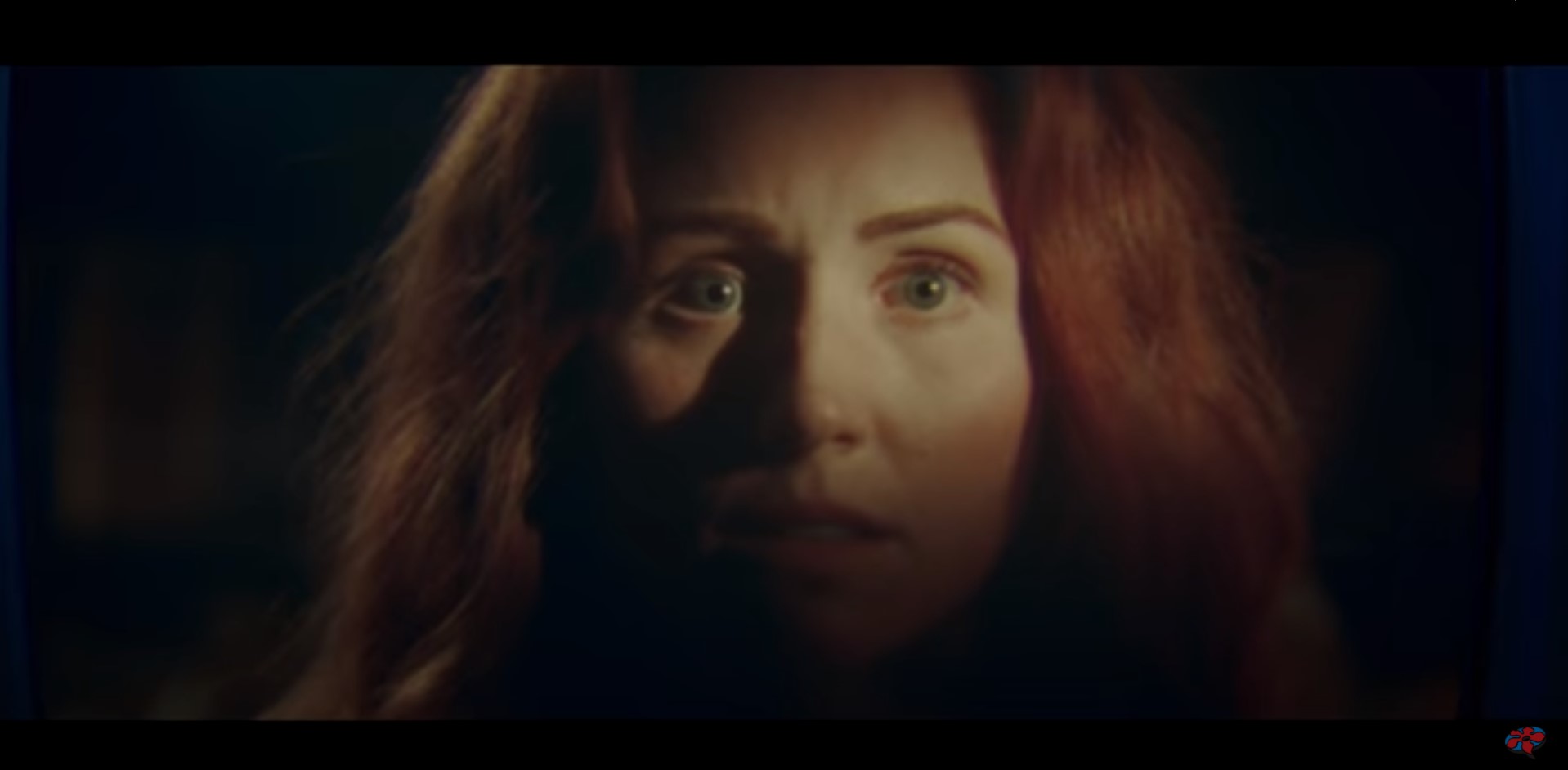
A deadly virus has ravaged the world, placing the inhabitants on a high alert edge of incessant sanitation and relentless paranoia. Martin, a scientist from the city, ventures to an ecological nature preserve to convey equipment for tests being conducted deep in the forest. Park Ranger, Alma, guides him on a two day trek toward a camp in total isolation supervised by Dr. Olivia Wendle, but during the second day of the journey, Martin and Alma are attacked in the middle of the night, left with no gear and a vague sense of what happened. The virus has yet to stake a claim on those living within the woods, but another malicious-driven presence, entombed by superstition and mental manipulation, enacts the forest to come alive around them, forcing them into a direction that presents a summoning of nature’s folkloric revenant.

COVID-19 has brought a tremendous amount of sorrow and an unforgiving plight upon the world, but for a few filmmakers, a global pandemic has been a source of inspiration that been a silver lining amongst the Earth’s population upheaval. Director Ben Wheatley tapped into that filament, you could say ,with his man versus nature mystery horror “In The Earth.” The filmmaker of “U is for Unearthed” short from the “ABCs of Death” and soon-to-be helming the follow up big screen sequel to novelist’s Steve Alten’s widely popular monster shark book series with “Meg 2: The Trench,” Wheatley writes and directs a quarantine start-to-finish feature that also incorporates the pandemic into the story, much to the same likes as Rob Savage’s “Host” that uses the virus as a means to drive the characters into doing something they normally wouldn’t be doing. The UK production is from Wheatley’s founded Rook Films and Neon, who last co-produced Brandon Cronenberg’s violent sci-fi thriller, “Possessor.”

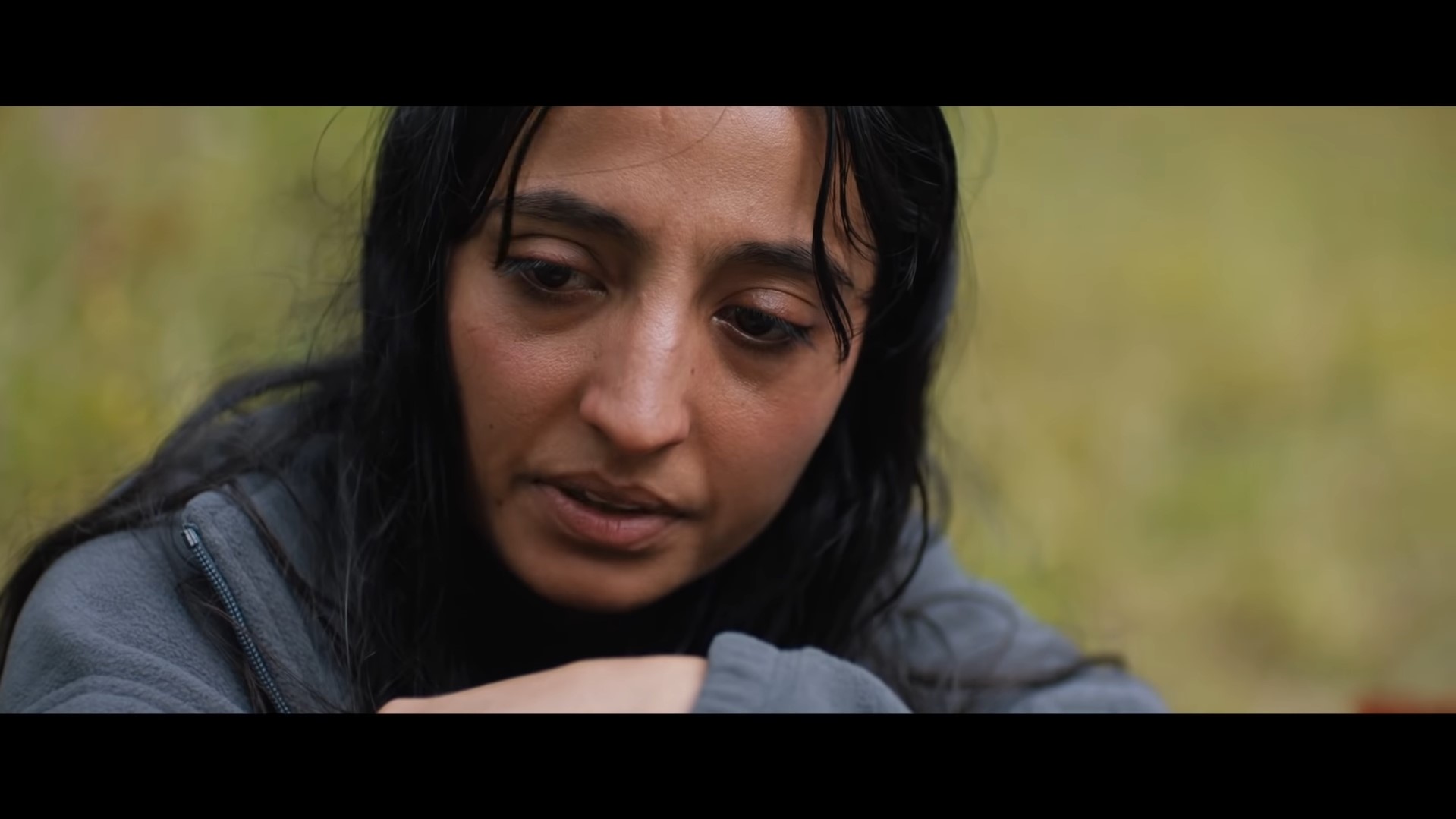
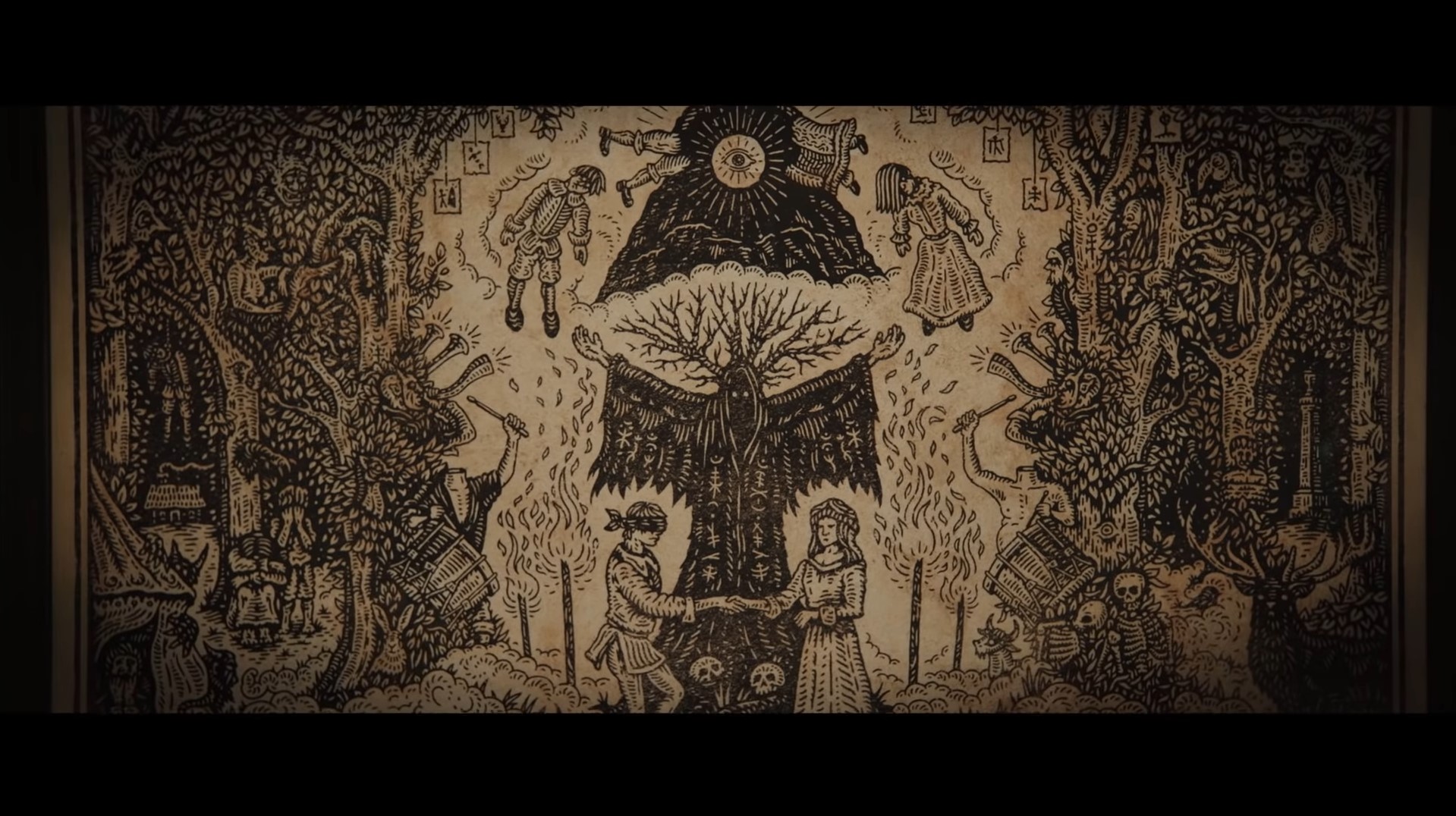
With the pandemic resulting quarantine and a story set in the thicket of woods, “In The Earth” is innately slim around the casting waistline that concentrates the performance zest amongst a few, beginning with the introduction of Martin the scientist walking up to the sentry lodge located at the forest edge. Played by Joel Fry (“Game of Thrones”), the London born actor must endure as a hapless city boy taking woodland shots on the chin without much complaint, but definitely a grimace, a whimper, and a pass out. Guiding Martin through the woods is Alma, a seasoned park ranger under the eye of “Midsommar’s” Ellora Torchia who balances out her travel companion’s near ill-equipped, yet hazardously attempting, roughing the outdoors. Martin and Alma are nearly mirrored by the only other two people they come across in the forest – Zach and Dr. Wendle. Yet, Zach and Dr. Wendle’s similarities channel through how they instrument a link to the forest being, known as Parnag Fegg, that calls them to release it from the timber and foliage prison. Zach (Reece Shearsmith of “Shaun of the Dead”) honors Parnag Fegg with ritualistic images and symbols while Dr. Wendle (Hayley Squires) uses a combination of technological lights and experimental music to speak with the powerfully alluring presence. Shearsmith is devilishly certifiable with Squires backing up his character craziness with her own version that never places Martin and Alma into a safe haven’s circle. “In The Earth” rounds out the cast with Mark Monero and John Hollingworth.

“In The Earth’s” binary coding of nature versus urban, plus sublets of traditions versus technology, runs as a seamless motif to a bigger theme that nature has a global network web of personified communication and reason. I imagine Wheatley succeeded in what M. Night Shyamalan tried to accomplish in the Mark Walhberg’s headlining “The Happening” with bringing nature to the forefront stand against man who continuously seeks to destroy themselves and the world, forcing nature’s hand to take drastic measures, but Wheatley’s film more so tells not the story of a worldwide assault on mankind but rather as the resurrection of a single entity, an archaic necromancer of local legend, eager to walk the Earth once again after being driven to disembody their spirit to the forest. “In The Earth” also provokes a literal meaning toward an age old saying of “nature calling” by using the aforesaid network to unconsciously lure specific individuals into the woods and gather near a gateway relic or stone,. This act of intention calls for a sacrifice of purity and so one of the four individuals – Alma, Martin, Zach, and Olivia – will involuntary be the vessel of Parnag Fegg’s return while the others, under the persuasion of forest spirit, due it’s song-and-dance bidding. Ben Wheatley taps into a very John Carpenter archetype of people on the cusp of unleashing certain doom upon the world, invoking not only a spirit but also that very sense of last stand against damnation as epitomized in “The Thing” and “The Prince of Darkness.” “In The Earth,” however, isn’t so easy to see the forest through the trees with an first act setup that zips through the situation that leads Martin and Alma trekking through the woods and Parnag Fegg is only briefly dappled to be a dangled carrot for bigger things to come.

A chiseled, fey story with a dark, ominous cloud of impending doom lingering overhead, “In The Earth” is transcendence horror at it’s finest. Neon is set to release the R-rated, 107 minute film, “In The Earth,” in theaters on April 30th. The scaled down budget didn’t hinder Wheatley’s grand platform and with Nick Gillespie’s sophomore credit as feature film cinematographer, the playbook was unwritten for Gillespie to rework how to shoot a film under the confines of a pandemic with limited cast, a living forest, and still maintain safe social distant practices under strict mandated guidelines. Gillespie formulated wide-angles to capture an expanse of trees diminutively enshrouding the characters, almost like the forest was going to gulp them at any moment. A composition of artful imagery compiled together in a collage of intoxicating colors and feverish styles interprets nothing concrete in the heroines journey of an nearly unknowable presence only knowledgeable by world of mouth, leaving also the audience induced with a psychedelic vision at the whims of Wheatley’s direction. There were no bonus scenes during or after the credits and the perfunctory ending opens the door for interpretation that can be more impacting than a firm resolution. Born and bred from the depths of the coronavirus pandemic, “In The Earth” dispatches a diversion from the immediate, the real world, and the tumult of a virus with a bewilderingly diversion of troubling folk horror sown directly into Mother Nature herself.

Family Tree Rooted by Grounded EVIL. “Sator” reviewed! (Umbrella Entertainment / DVD)


Living alone deep among the tall trees and the dark and deafening foliage around him, a tragic past involving the disappearance of his mother haunts the very core of Adam’s broken spirit as he wanders the forest he grew up in and that has also been an afflicting mystifying presence of family lore.  His grandmother, Nani, for a long time has been commenting being the receptor of a dark forest entity named Sator who internally speaks to her and has her write down unintelligible messages; Sator’s words have also whispered in Adam’s ears as well as his vanished mother’s.  Adam ceaselessly searches the clues daily, even setting up a night vision deer cam and ringing out into the woods with a homemade calling flute.  As Adam and his family struggle to rebuild their once strong bond, Sator emerges with an intent to sever what’s left of the tattered strings of family ties, bearing down on the isolated Adam in attempt to insidiously claim more of his kindred for the forest.    

Rich in personal family indispositions that trickle down to unravel everything dear, Jordan Graham’s sophomore supernatural film of a sinister spirt, “Sator,” is much better than my attempt at an alliterated sentence structure.  The 2019 film, hailing out of California, with the forest sequences from Yosemite National Park, is a blend of pristine splendor as it is a nocturnal nightmare in an allegory of mental illness and the distortion of family because of the effects.  For the “Specter” director and screenwriter, particulars of “Sator” intertwine the authenticity of the filmmaker’s ancestry with the ominous unknowns of horror in a DIY production that looks bigger and grander in worth than in actuality.    Graham’s production banner, Mistik Jade Films, and in association with Yellow Veil Pictures, the company behind the colorful demonically intrusive thriller, “Luz,” funds the film with Jordan Graham serving as executive producer alongside Jennifer Graham and Elias Adamopoulous.

“Sator’s” a family and friends affair that opens with Gabriel Nicholson silently, patiently, and near aimlessly wandering through the woods as Adam walking alongside his mutt and carrying a hunting rifle. Jordan Graham’s childhood friend since early teens, Nicholson fills adequately the role’s achy privation and does so without saying so much as a paragraph in the full 85 minute runtime. While “Sator” snuggles up to Adam’s incessant need to check deer cams and conduct daily searches around every rock, tree, and bush, the character isn’t the nucleus essential to Sator’s generational influences that spread like a cancer over Adam’s lineage and he’s where the buck stops. Instead, Jordan Graham’s grandmother, June Peterson aka Nani, bears unwittingly and unimpressed brunt of the actor’s burden to perform due to Peterson’s longtime battle with dementia. Her scenes are authentic and natural in discourse with the recollective ramblings of Graham’s family’s resident topical presence – Sator. Peterson holds all the cards for her grandson’s inspiration from the very name of the entity that speaks to her to the automatic writings set in motion during a stint of Sator’s sometimes hours upon hours of inner ear verbal instructions. Graham doesn’t exploit his grandmother, but rather tells her story in a way dementia allows her not to with recording her experience, with the papers of her automatic writings, and with extending Sator into a metaphor for family strife and mental illness. Rarely are Nicholson and Peterson on screen together, but they come in proxy of one another through the supporting characters played by Michael Daniel as Adam’s troublesome brother, Pete, Rachel Johnson as an unusual relative, Evie, and Wendy Taylor as the bygone mother only remembered in flashbacks and Adam’s documentary memories.

There are movies out in cinema land released for the sole purpose of dishing out entertainment complete with exorbitant special effects and a high profile cast surely to make good on bank statement returns and then there are some with a more somber, but well-crafted, personal story.  “Sator” is the very epitome of that latter category as director Jordan Graham’s profoundly personal story that is tailored to his specifications without the temptation of commercial success.  With dividends on the backburner, “Sator’s” arthouse quality stamps a staid dread of distressing imagery and stillness emblematic from an imprinted personal experience that has been dissected and dispersed to give the entity known as Sator a fluid corporeal form.  What also scores high marks is the ideology of Sator created by, or perhaps more accurately channeled through, June Peterson, forming the breadth of life out of an unseen concept glamourized with unimaginable abilities and attributes that can foraged out of Paganism or Satanic scriptures and have nature be the embodiment of its unholy divinity.  Graham not only unnerves you as passenger looking into eerie family history with “Sator’s” transmissions at the narrative core, but also serenades with serrating stridency in his audio and visual compositions that includes some fantastic gore and torching.  The one thing to point out that “Sator” falls short on is understanding the next jump in the narrative as Graham leaves unclear wide gaps unexplained with only a bit of passive dialogue to gnaw on to get caught up.  In a story that’s already subversive on the plainspoken, “Sator” could use some straight talk to get more inside the dissonance of the entity’s inimical ways.

Let “Sator” whisper into your ear on an Umbrella Entertainment home DVD release. The region 4 DVD comes standard in a NTSC format, like of the Australian distributor’s releases do, and is presented in a widescreen, 2:35:1 aspect ratio. Image quality is paramount for a downbeat psychological horror set inside the absence of noise of a pin drop forest and the release delivers a stunning transfer with elaborating details in the forest setting. Perhaps slightly on the darker on the scale, the engulfing blackness of the cabin, the woods, and Nani’s home add to the surrounding cryptic presence notwithstanding the absence of a body to call the villain. The darker shadows Graham creates sees better contrast in dreamlike sequences with the deep blue sky with a moon over head, the silhouette of the trees, and Adam standing small against the tall trees in his white skivvies, creating stark poetry in the image alone. Graham also incorporates a documentary style, through the mind’s eye of Adam, to replay events like flashbacks that set the stage for the present. The English language Dolby Digital 5.1 surround sound is works inline with the rubato score that creates a pulls and tugs on the emotions. The dialogue isn’t so lucky as actors can only be heard mumbling the lines with the exception of Nani with her natural, genuine talk. Like many of the Umbrella DVD releases, there are no bonus features includes and there are also no bonus scenes during or after the credits. “Sator” thrives as holistic horror with the insurmountable belief that there are far worse things out in the world than mental deterioration that spur random acts of equivocality.

Own Sator on DVD from Umbrealla Entertainment (Region 4)

Furbish the Four Walls EVIL Lives Inside of Your Brain with “The Yellow Wallpaper!” (Hysteria Pictures / Digital Screener)

A prominent physician escorts his wife, Jane, and newborn child to a secluded countryside home after a severe episode of hysteria rattles Jane’s mental state.  For three months in the Summer, Jane is confined to the house grounds with strict instructions to do nothing to exert herself other than to partake in a little gardening.  Even writing, which was profusely Jane’s pursuit, is harshly forbidden.  The bedroom she shares with her husband is nearly unadorned with only their bed in the middle of the room and yellow wallpaper ornamenting all four walls.  As the weeks pass in isolation, Jane can’t escape the feeling the yellow wallpaper is creeping into her mind, imprisoning her, and driving her mad, lending her relaxing retreat from societal nervousness be laid to waste in solitude. 

Charlotte Perkins Gillman’s short story, “The Yellow Wallpaper,” has seen a fair share of filmic adaptations in over a span of a century since being published back in 1892, but all of those variated works have been grounded in the last four decades .  Amongst the numerous shorts and a handful of features, the most notable version of “The Yellow Wallpaper” would be Logan Thomas’ 2012 interpretation, starring Juliet Landau, daughter of the late Martin Landau.  That’s the funny thing about public domain property is it opens up a plethora of pathways to spin and redefine creativity to rework Gillman’s feminist tale from the artists’ voices speaking of the times when women’s mental health, and mental health in general, was perceived naively as anxiety.  Kevin Pontuti steps up to the plate to take a crack at the spiraling to madness story as the filmmaker’s inaugural feature directorial of the American and Ireland co-produced celluloid from an adapted screenplay written by the director and co-written with the story lead actress and producer, Alexandra Loreth.  Under the duo’s entertainment banner, Hysteria Pictures in association with Ireland’s Emerald Giant Productions, the crowdfunded “The Yellow Wallpaper” project receives the latest contemporary treatment that brings Gillman’s words back to the screen.

Co-writer and producer, Alexandra Loreth, takes the lead as Jane coming down off the ledge of a nervous breakdown but still ballooning with instability that’s stretching her fashioned societal-front seams. “The Yellow Wallpaper” is also the California based filmmaker’s first feature film alongside Pontuti, basically penning Jane’s entire mindset of combating the time’s unfamiliar sexisms and mental health. Loreth crawls on her hands and knees, feign glossy, far away eyes, and be cold and distant to be in tune to a woman disassociating with herself and reality and, truth be told, portrays a convincible case that shows feature debut courage with on screen nudity and a stamina for being the focus for the entire 99 minute runtime; however these acts remain stuck in a excessive loop that roots Loreth’s character decline to one a taciturn setting, lacking range and depth to carry Jane into full metal straightjacket crazy. Opposite Loreth is Irish actor Joe Mullins as John, the physician, the only character mentioned in Gillman’s short story. Mullins impels like an automaton through the role with not a lick of zestful misogyny to contrast against. Loreth completely dominates the screen as you barely notice Mullins whisk in and out of scenes to medicate Jane or comfort her with little white lies. John’s dismissive attributes were more dispassionate with Mullins behind the wheel that leaves only half the work’s presence omitted and it’s sorely felt. In the role of Jane’s domicile caregiver, Jeanne O’Connor paves a road of sturdy era authenticity that also is fleeting from “The Yellow Wallpaper” and with her 19th century genteel aesthetics, we’re sucked into the period to keep us grounded in time. Performances round out with Clara Harte as the abstruse infant caregiver and Mark P. O’Connor briefly standing in as Jane’s doctor brother.

Pontuti and Loreth’s “The Yellow Wallpaper” targets the very essence of Gillman’s journal narrated themes of the downplayed and untapped mental health and the secondary expectations of women in 19th century society.  The differences between the 1800’s paper and 2021’s movie narratives are ever so slightly tweaked into the contemporary medium with Loreth narrating right from Gillman’s pages word-for-word in between the auxiliary scripted dialogue and the finale concluding toward a more grim avenue that will surely satisfy the more macabre of hearts.  Yet, not enough material could be extracted from the short story to entice as entertainment as the adaptation lingers in monotone fashion. Jane carries on about the woman trapped behind the yellow wallpaper and is shown going in circles of staring at the wallpaper, crawling on her hands and knees on the estate grounds (as describe in the short story), and just being listless throughout the entirety with her mental issues linked to post-partum and drowning in passive despair.  Perhaps better suited for a short film, as many have been completed already, audiences will become tiresomely and frustratedly lost in all of Jane’s 99-minutes of tedium as there just isn’t enough to sate a feature length film unless you add embellishing bells and whistles in the realm of supernatural or the puppeteering of an unseen force symbolizing Jane’s fractured mindset. Don’t expect “The Yellow Wallpaper” to paint a gripping tale of feministic horror as the story peels off in a superannuated ream of soapbox issues.

“The Yellow Wallpaper” made its world premier this past March at Cinequest in San Jose, California. The film is shot in a modernly unconventional 4:3 pillarbox aspect ratio aka the black bars on each side of the near square image presentation. The intention by cinematographer Sonja Tsypin (“Scare Package”) was to meet the age of Gillman’s original. Yes, I know in 1892, video wasn’t exactly a thing, let alone pillarboxed formats, but aspect ratio does point the a modern adaptation into the right blast from the past direction. What is also curious about Tsypin’s photography, and I’m not positive if this is in fact intentional or not, is the lesser frame rate that induces jumps in the picture in an almost lag effect that doesn’t add much but of annoyance to the viewing pleasure. I was slightly more impressed with Robert J. Coburns score fathomed the depth of disturbance going through Jane’s head and lured out the creepy that played like a broken-melody music box. There were no bonus scenes during or after the credits. Even with a well established and powerful ending shot, a preserving memento of the patriarchy’s ill-conceived mansplaining of a woman’s mind and body, and an intrepid performance by Alexandra Loreth, “The Yellow Wallpaper” stagnates in faithfulness to Gillman’s short and doesn’t offer new and improved ideas of century old, feminist gothic literature.

EVIL in the Family Tree Makes for a Terrifying “Reunion” reviewed! (101 Films / Digital Screener)

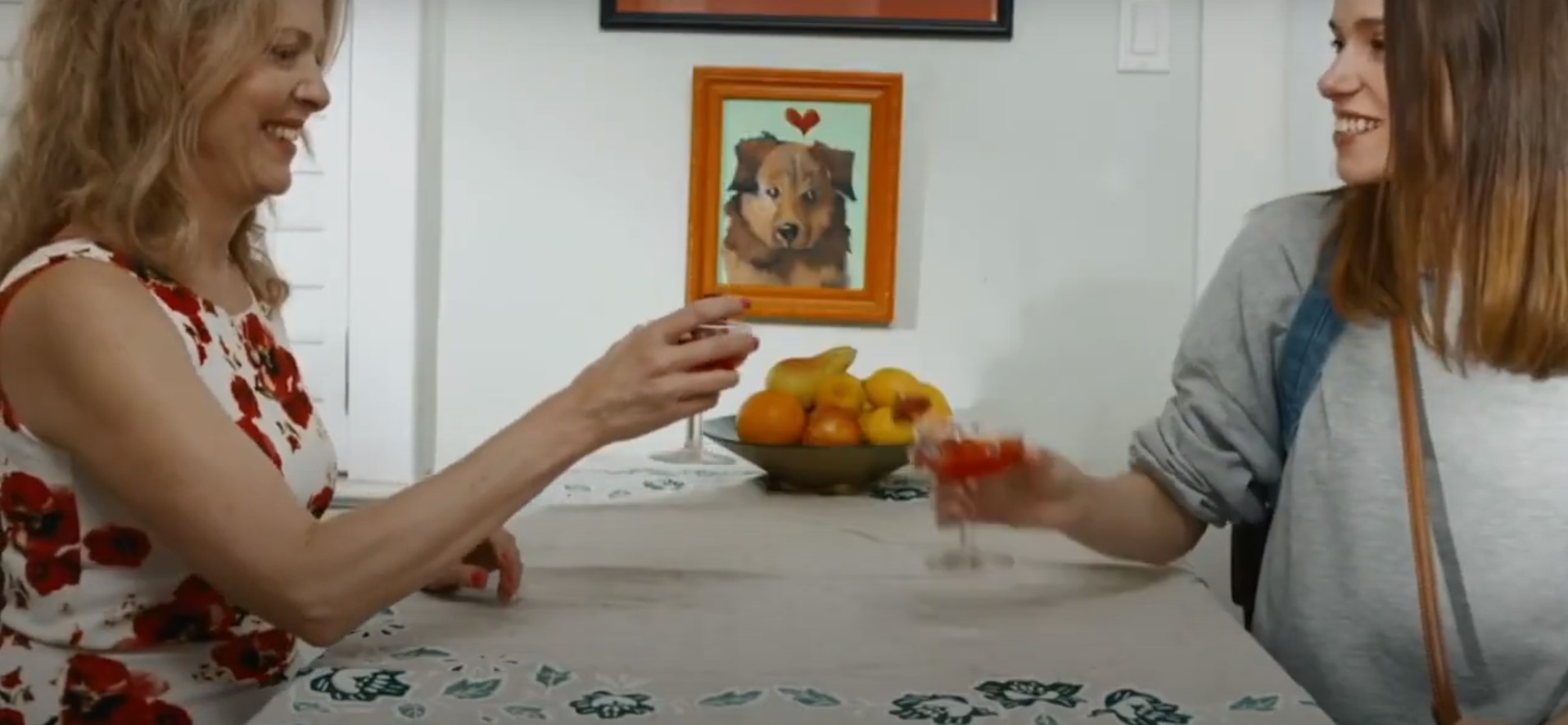
Recently separated from her philandering fiancé, a pregnant Ellie moves in with her estranged mother, Ivy, whose staying at Ellie’s recently-deceased grandparents family home and packing up home furnishings to put the house on the market.  Strained with going through a pregnancy alone and tirelessly working on her theoretic book of modern medicine deriving from the roots of barbaric magic and medieval practices, Ivy pledges to take care of her while providing space to let Ellie continue research work, but the house lends to the painful memories long thought suppressed in Ellie’s mind, manifesting visions of her adopted sister, Cara, who died suddenly in house when they were children.  As the visions become more prominent, stronger, and real, Ellie questions her remorseful memories and her mother’s recollection of events that sheds light on her family’s horrendous secret of anatomical science.

From the start, the realization that Jake McHaffy’s “Reunion” isn’t going to be a happy one comes as soon as Ellie crosses the threshold into her late grandparents’ home and is immediately swathed with a blanket of unsettling ambiance.  The “Wellness” and “Free the Deed” McHaffy writes-and-directs his third film with a steadfast sense of dread in the New Zealand mystery-thriller that tackles human inbred themes of long suffering guilt, prenatal anxiety, and the role of an estranged family during a time of need.  McHaffy compounds layered fears by compositing them with the confines of an old dark and creaky house witness to all the past secrets.  “Reunion” is a production from a conglomerate of New Zealand and U.S. companies that embark on independent filmmaking endeavors by Greyshack Films, the strong female character supporting Miss Conception Films, Overactive Imagination, and Water’s End Films in association with New Zealand Film Commission, MPI Media Group, and Department of Post.

“Reunion” obviously isn’t going to be your typical relative gathering shindig with your bad joke-telling uncle wisecracking over his 10th Miller Lite or a nose picking brat of a cousin cheating at horseshoes near the pit; instead, “Reunion” a tightknit cast playing the roles of mother, father, daughter, and adopted daughter drawn together not by the sake of longing for bloodline companionship but by necessity and circumstance and imploding by the unfun games of revelations hidden inside the closest deepest and darkest of descendants. “Witches of East End” stars Julia Ormond in a nearly unrecognizable far cry of her more glamourous bewitching role in Joanna Beauchamp on the FOX produced Lifetime Television series. The English actress, who hails from Surrey, assumes the matriarchal presence of a helicopter mother overextending herself beyond the limits of her control in order to seize some kind of power she once had living in the archaic house. Ormond bounces off mother-daughter indignities with her sole child, Ellie, played by Emma Draper in her first feature lead performance. Thick tension between them causes reserved friction Ormond and Draper do well to nurture throughout while a stammering posture by “Lord of the Rings” actor John Bach as the wheelchair bound infirmed father adds a whole new layer of irregular rigidity to Ellie’s nerves and to Ivy’s patience. Aside from being blood related, father, mother, and daughter also have another thing in common – present in the moment of the death of Cara (Ava Keane). Peeling back each emotion output struggles, in a good way, to grasp the character mindset made murky by uncontrollable shaking and crying, sneaking and conniving, lies and deceits, and the disillusioned rambles that vortex around the house without pure clarity. “Reunion” rounds out the cast with Nancy Brunning, Cohen Holloway, and Gina Laverty as young Ellie.

Jake McHaffy’s “Reunion” has the hairs on the back of your neck standing from beginning to end with prolonged foreboding leading up to a shocking finale.  Between the manic and enigmatic performances from Julia Ormond and Emma Draper, a chance to rekindle the past feels like a distant thought and a lost cause being blockaded by the past’s poignant trauma they share.  McHaffy isn’t hesitant about revealing a stymieing history with flashes of image splices and flashbacks cut with an antiquated VHS-style playback producing a statically charged visual incumbrance.  The stress and strain burden’s Ellie’s pregnancy, dam breaking flood of memories, her research into the occult, and the surrounding chaotic state of the house contributes to teetering mental stability creating a visceral unintelligible and augmented reality that is too real for Ellie to keep an authentic perspective and the longer she stays and the more she’s immerse into Ivy’s poisonous maternal supremacy, only fabricating a new and scary world can Ellie dig herself out of her family’s troubling past.  There’s much going on in McHaffy’s story to be bog down fully understanding what you’re seeing and trying to piece together the puzzle is nearly impossible – I, frankly, still don’t understand much of it – but the beleaguered attention of beguiling imagery and that overwhelmingly wild ending entrusts “Reunion’s” place in psychological terror. 

Modern gothic has never looked this good as “Reunion” rises to be a stalwart of horror. 101 Films and MPI Media Group has released “Reunion” digitally this month of March, one year after the start of the pandemic that has kept families away from each other and when eases of restrictions set in that’ll shorten the gap between estranged loved ones that becomes a distressing reunion in itself. Quite a masterful brush stroke from director of photography Adam Luxton building the house into the frame and framework of the story, which goes hand-and-hand with a house that’s deemed a toxic surrounding symbolized by the black sludge that drips out of the sink and into Ellie, as well as crossing video outputs and weaving them in as well. Luxton’s imagery has formulation maturity that combines hard and soft lighting, blurring, a range of depth shots, delineated night scenes, and the capitalization of utilizing the clutter of boxes and knickknacks to tell an eclectic visual odyssey culminating toward an all-consuming finale. The 95 minute runtime film is presented in a widescreen 1.85:1 aspect ratio with no bonus scenes during or after the credits. “Reunion” creeps unsuspectingly into the skin, eyes, and soul as a metastasizing slow growth of appalling family drama.

All Hail the EVIL Slumbering One! “Sacrifice” reviewed! (101 Films / Digital Screener)

Years after being quickly whisked away to America as a small child from his remote Norwegian island birthplace, Isaac returns nearly 30-years later with his new, pregnant wife, Emma, after the death of his mother leaves the empty family home in his inheritance.  With their heart set on fixing up and selling the house before the birth of their child, Isaac and Emma learn that marketing the seaside and scenic estate comes with a tragic past when the local sheriff discloses the brutal murder of Isaac’s father inside the home.  The dreadful information and the bizarre locals with their customary traditions doesn’t alarm Isaac who, instead, feels a strong connection and is drawn to staying whereas Emma, plagued by terrifying nightmares ever since stepping onto the island, is eager to sell and return to American as soon as possible, fleeing a community that worships an aquatic deity beneath the water’s surface.   

Based off dark fantasy and science fiction writer Paul Kane’s short story, “Men of the Cloth,” found in the author’s “The Colour of Madness” collective works, “Sacrifice” is an alienating folklore horror bound by the influence of a Lovecraftian core under the direction of a filmmaking due in Andy Collier and Toor Mian.  As their sophomore film as collaborating directors, following their 2017 psychological cop horror “Charismata,” Collier and Mian tackle Kane’s short story head-on by changing only a few details, such as location, family structure, and the title from formally known as Kane’s “The Colour of Madness” to “Sacrifice”, but keep rooted the foremost principles of “Men of the Cloth’s” cultish discomfort that’s greatly inspired with the otherworldly sensation of an amiss atmosphere akin to Robin Hardy’s “The Wicker Man.”  Filmed around the idyllic and mountain enclosed shore town of Bjørk, Norway and in the town of Volda, Norway, the 2020 film seeks to plop strangers into a strange land as a production of the London-based companies, Loose Canon Films and Hydra Films RKM, in association with Dread.

Over two years ago was the last time we reviewed a Barbara Crampton movie with “Death House,” that included a plethoric cast of her all-star genre brethren with Kane Hodder, Bill Moseley, Dee Wallace, and others, and, now, Crampton makes her glorious return to the Lovecraftian turf that nostalgically brings most of us horror fans back to the New York-born actress’s “From Beyond” and “Re-Animator” days.  “Sacrifice’s” Cthulhu spirit finds Crampton playing a small town Norwegian sheriff, Renate Lygard, in which Crampton, under the training of a dialect coach, surprises us with a fair Norway accent as she provides a quasi-warm hospitality set of manners upon island outliers in Isaac (Ludovic Hughes) and Emma (Sophie Stevens) Pinkman. Hughes and Stevens nudge their way into a solid man-and-wife, but their dynamic density becomes crispy at times and pale from their initial arrival soon after rustling with the natives. The lack of vitality doesn’t stem from the wedge being driven between from the lure of Isaac being called by the natural phenomena of the Northern Lights, the drunken friendly benevolence of Gunnar (Lucas Loughran) and Ledvor (Jack Kristiansen), and the full frontal skinny dipping of Renate’s beautiful daughter, Astrid, an eye-opening film introduction from Johanna Adde Dahl; instead, the Pinkman’s bond held together about as tight as using kindergarten grade craft glue that bled into the performances as well that came off stiff and unnatural. Aside from Hughes and Stevens hailing from the United Kingdom and Crampton from the U.S., the remaining cast was curtailed to Norway nationals, as such with Loughran and Kristiansen, rounding out the cast with Erik Lundan, Dag Soerlie, and Ingeborg Mork Håskjold.

“Sacrifice’s” cult mania lays on a thick coating of grass roots that really set the tone for an foreboding outcome.  An idyllic Norway fishing village propped between the eclipsing mountain range and marine inlet intrinsically obscures an already unspoken secret that’s only been rendered on the faces and actions of the residents.  At the center of village’s idiosyncrasies are the two hapless protagonists venturing into unknown territory with only an inherited house in their back pocket and a vague sense of youthful recollection; this sets up for an obvious antagonism theme of locals with a sense of xenophobic nationalism, especially against two Americans.  The initial friction opens the flood gates for cultural customaries to be weaponized against Isaac, who wants to strongly embrace his heritage, and Emma, who can’t seem to grasp the village’s peculiar beliefs and even goes as far as being naïve of and mocking the village’s traditions and deity.  The tension is compounded by the ominous presence of the labeled slumbering one, sleeping beneath the glossy surface of the inlet waves, but conjuring up tangible and intense nightmares that plague the every island inhabitant, a mystery Emma can’t explain, won’t entertain, and ignores exploring that turns Emma floundering more into Isaac’s sudden disinterest in her albeit soon-to-be-parents.  “Sacrifice’s” climatic, tell all scene harbors more secrets regarding Isaac and Emma’s purpose on the island that are to be interpreted by the audience, but don’t connect back to any string along clues leading up to a poignant and sharply-shocking ending.  Instead, “Sacrifice” acutely wraps up not only the story but also the characters like a paper wrapped fish at the fish market ready for sale without any huff about where, why, and how that particular bug-eyed fish became the gutted victim of man’s delicacy.

“Sacrifice” shores folklore horror swelled with Lovecraftian roots and is docking digitally today, March 15th, in the UK courtesy of 101 Films. The film has a runtime of 87 minutes and is presented in a widescreen 2.35:1 aspect ratio, shot on a Sony CineAlta Venice camera. Co-director Andy Collier tackles his first credit director of photography gig with interesting shots looking up through all different angles and vessels that hold water. Whether boiling eggs, taking a bath, or in small cove, Collier, and Mian, put eyes on the bottom surface, promoting all varieties of water within it a lurking presence and the imagery is done extremely well with depth and space to pull off the illusion. A fair amount of soft lighting, moments of bright primary color glow, and the specs of well-placed lighting to barely illuminate a scene is broodingly worthwhile. Tom Linden’s original score is fiercely compliment as a folklore staple, harsh-chord intensity that lingers well after the boiling blood levels drop to a mere tentacle dwelling simmer. There were no extra features or bonus scenes included with the digital screener. While the build up didn’t pay off at the bloody end, the two-tone terror of “Sacrifice” wrecks the nerves and frays warm pleasantries with wicked wallowing, slumbering, nearby in the shallows.