Unleashed, Nature Inspires the EVIL in All of Us! “In The Earth” reviewed (Neon / Digital Screener)

A deadly virus has ravaged the world, placing the inhabitants on a high alert edge of incessant sanitation and relentless paranoia. Martin, a scientist from the city, ventures to an ecological nature preserve to convey equipment for tests being conducted deep in the forest. Park Ranger, Alma, guides him on a two day trek toward a camp in total isolation supervised by Dr. Olivia Wendle, but during the second day of the journey, Martin and Alma are attacked in the middle of the night, left with no gear and a vague sense of what happened. The virus has yet to stake a claim on those living within the woods, but another malicious-driven presence, entombed by superstition and mental manipulation, enacts the forest to come alive around them, forcing them into a direction that presents a summoning of nature’s folkloric revenant.

COVID-19 has brought a tremendous amount of sorrow and an unforgiving plight upon the world, but for a few filmmakers, a global pandemic has been a source of inspiration that been a silver lining amongst the Earth’s population upheaval. Director Ben Wheatley tapped into that filament, you could say ,with his man versus nature mystery horror “In The Earth.” The filmmaker of “U is for Unearthed” short from the “ABCs of Death” and soon-to-be helming the follow up big screen sequel to novelist’s Steve Alten’s widely popular monster shark book series with “Meg 2: The Trench,” Wheatley writes and directs a quarantine start-to-finish feature that also incorporates the pandemic into the story, much to the same likes as Rob Savage’s “Host” that uses the virus as a means to drive the characters into doing something they normally wouldn’t be doing. The UK production is from Wheatley’s founded Rook Films and Neon, who last co-produced Brandon Cronenberg’s violent sci-fi thriller, “Possessor.”

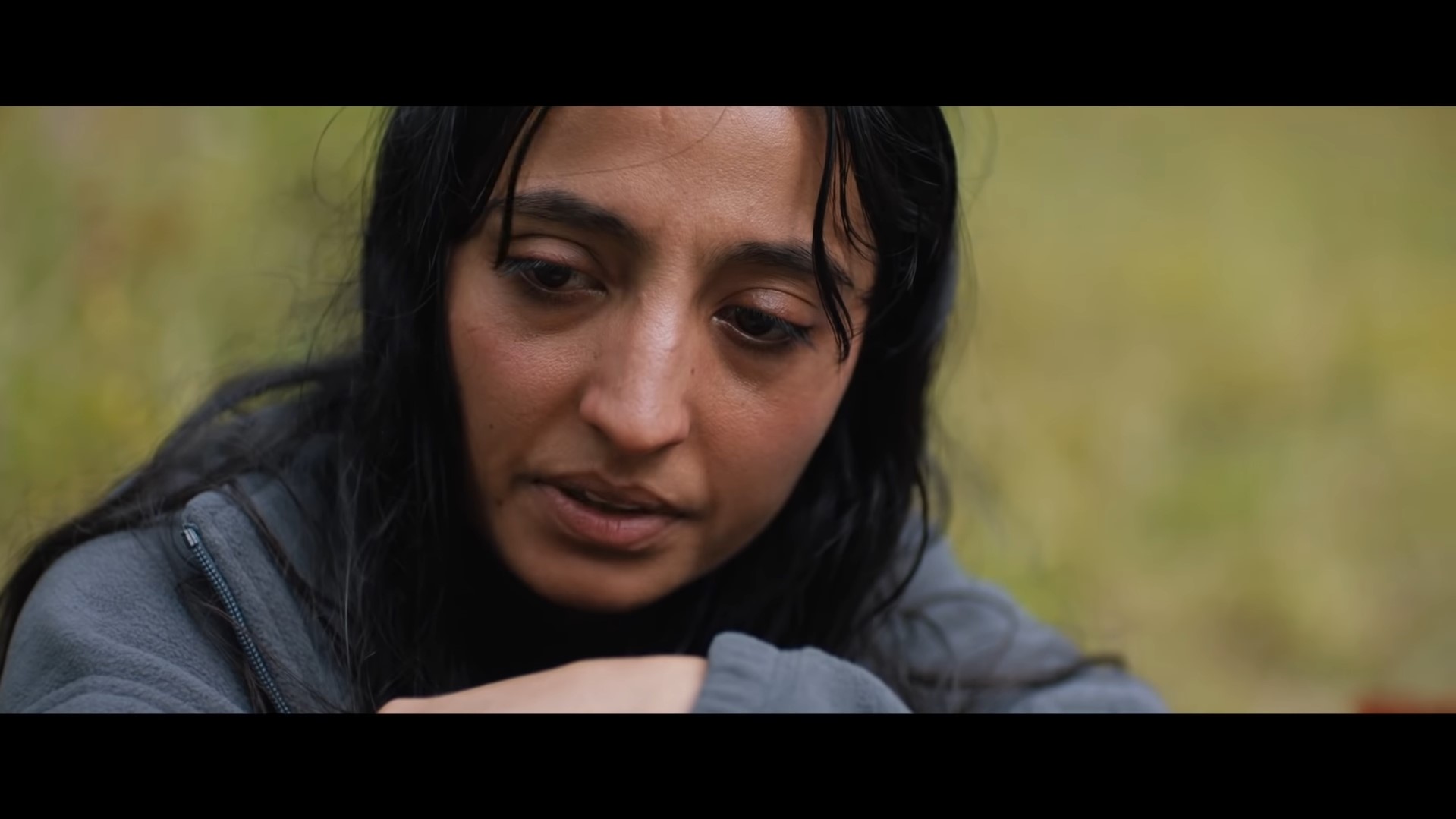
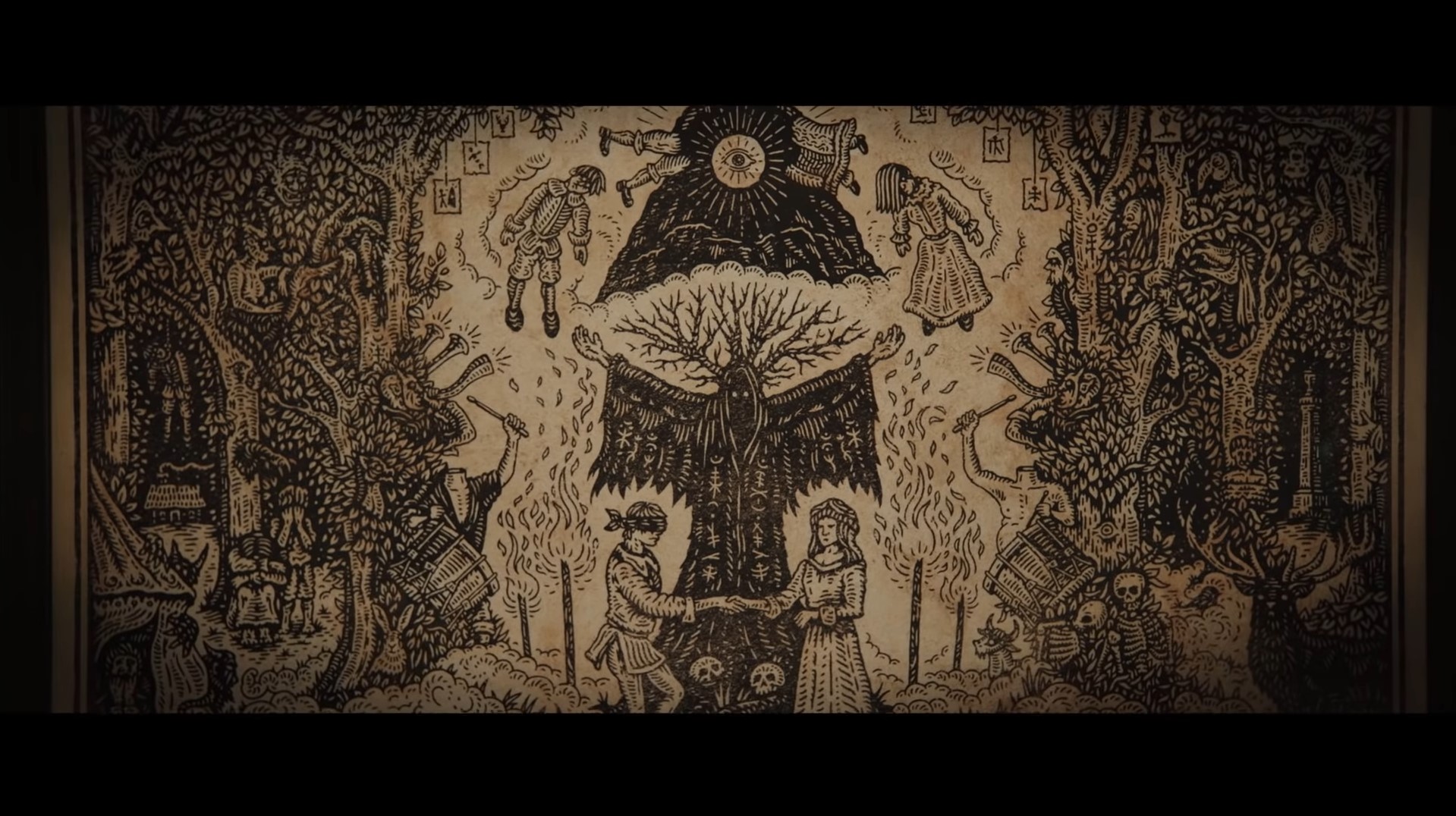
With the pandemic resulting quarantine and a story set in the thicket of woods, “In The Earth” is innately slim around the casting waistline that concentrates the performance zest amongst a few, beginning with the introduction of Martin the scientist walking up to the sentry lodge located at the forest edge. Played by Joel Fry (“Game of Thrones”), the London born actor must endure as a hapless city boy taking woodland shots on the chin without much complaint, but definitely a grimace, a whimper, and a pass out. Guiding Martin through the woods is Alma, a seasoned park ranger under the eye of “Midsommar’s” Ellora Torchia who balances out her travel companion’s near ill-equipped, yet hazardously attempting, roughing the outdoors. Martin and Alma are nearly mirrored by the only other two people they come across in the forest – Zach and Dr. Wendle. Yet, Zach and Dr. Wendle’s similarities channel through how they instrument a link to the forest being, known as Parnag Fegg, that calls them to release it from the timber and foliage prison. Zach (Reece Shearsmith of “Shaun of the Dead”) honors Parnag Fegg with ritualistic images and symbols while Dr. Wendle (Hayley Squires) uses a combination of technological lights and experimental music to speak with the powerfully alluring presence. Shearsmith is devilishly certifiable with Squires backing up his character craziness with her own version that never places Martin and Alma into a safe haven’s circle. “In The Earth” rounds out the cast with Mark Monero and John Hollingworth.
“In The Earth’s” binary coding of nature versus urban, plus sublets of traditions versus technology, runs as a seamless motif to a bigger theme that nature has a global network web of personified communication and reason. I imagine Wheatley succeeded in what M. Night Shyamalan tried to accomplish in the Mark Walhberg’s headlining “The Happening” with bringing nature to the forefront stand against man who continuously seeks to destroy themselves and the world, forcing nature’s hand to take drastic measures, but Wheatley’s film more so tells not the story of a worldwide assault on mankind but rather as the resurrection of a single entity, an archaic necromancer of local legend, eager to walk the Earth once again after being driven to disembody their spirit to the forest. “In The Earth” also provokes a literal meaning toward an age old saying of “nature calling” by using the aforesaid network to unconsciously lure specific individuals into the woods and gather near a gateway relic or stone,. This act of intention calls for a sacrifice of purity and so one of the four individuals – Alma, Martin, Zach, and Olivia – will involuntary be the vessel of Parnag Fegg’s return while the others, under the persuasion of forest spirit, due it’s song-and-dance bidding. Ben Wheatley taps into a very John Carpenter archetype of people on the cusp of unleashing certain doom upon the world, invoking not only a spirit but also that very sense of last stand against damnation as epitomized in “The Thing” and “The Prince of Darkness.” “In The Earth,” however, isn’t so easy to see the forest through the trees with an first act setup that zips through the situation that leads Martin and Alma trekking through the woods and Parnag Fegg is only briefly dappled to be a dangled carrot for bigger things to come.
A chiseled, fey story with a dark, ominous cloud of impending doom lingering overhead, “In The Earth” is transcendence horror at it’s finest. Neon is set to release the R-rated, 107 minute film, “In The Earth,” in theaters on April 30th. The scaled down budget didn’t hinder Wheatley’s grand platform and with Nick Gillespie’s sophomore credit as feature film cinematographer, the playbook was unwritten for Gillespie to rework how to shoot a film under the confines of a pandemic with limited cast, a living forest, and still maintain safe social distant practices under strict mandated guidelines. Gillespie formulated wide-angles to capture an expanse of trees diminutively enshrouding the characters, almost like the forest was going to gulp them at any moment. A composition of artful imagery compiled together in a collage of intoxicating colors and feverish styles interprets nothing concrete in the heroines journey of an nearly unknowable presence only knowledgeable by world of mouth, leaving also the audience induced with a psychedelic vision at the whims of Wheatley’s direction. There were no bonus scenes during or after the credits and the perfunctory ending opens the door for interpretation that can be more impacting than a firm resolution. Born and bred from the depths of the coronavirus pandemic, “In The Earth” dispatches a diversion from the immediate, the real world, and the tumult of a virus with a bewilderingly diversion of troubling folk horror sown directly into Mother Nature herself.

Family Tree Rooted by Grounded EVIL. “Sator” reviewed! (Umbrella Entertainment / DVD)


Living alone deep among the tall trees and the dark and deafening foliage around him, a tragic past involving the disappearance of his mother haunts the very core of Adam’s broken spirit as he wanders the forest he grew up in and that has also been an afflicting mystifying presence of family lore.  His grandmother, Nani, for a long time has been commenting being the receptor of a dark forest entity named Sator who internally speaks to her and has her write down unintelligible messages; Sator’s words have also whispered in Adam’s ears as well as his vanished mother’s.  Adam ceaselessly searches the clues daily, even setting up a night vision deer cam and ringing out into the woods with a homemade calling flute.  As Adam and his family struggle to rebuild their once strong bond, Sator emerges with an intent to sever what’s left of the tattered strings of family ties, bearing down on the isolated Adam in attempt to insidiously claim more of his kindred for the forest.    

Rich in personal family indispositions that trickle down to unravel everything dear, Jordan Graham’s sophomore supernatural film of a sinister spirt, “Sator,” is much better than my attempt at an alliterated sentence structure.  The 2019 film, hailing out of California, with the forest sequences from Yosemite National Park, is a blend of pristine splendor as it is a nocturnal nightmare in an allegory of mental illness and the distortion of family because of the effects.  For the “Specter” director and screenwriter, particulars of “Sator” intertwine the authenticity of the filmmaker’s ancestry with the ominous unknowns of horror in a DIY production that looks bigger and grander in worth than in actuality.    Graham’s production banner, Mistik Jade Films, and in association with Yellow Veil Pictures, the company behind the colorful demonically intrusive thriller, “Luz,” funds the film with Jordan Graham serving as executive producer alongside Jennifer Graham and Elias Adamopoulous.

“Sator’s” a family and friends affair that opens with Gabriel Nicholson silently, patiently, and near aimlessly wandering through the woods as Adam walking alongside his mutt and carrying a hunting rifle. Jordan Graham’s childhood friend since early teens, Nicholson fills adequately the role’s achy privation and does so without saying so much as a paragraph in the full 85 minute runtime. While “Sator” snuggles up to Adam’s incessant need to check deer cams and conduct daily searches around every rock, tree, and bush, the character isn’t the nucleus essential to Sator’s generational influences that spread like a cancer over Adam’s lineage and he’s where the buck stops. Instead, Jordan Graham’s grandmother, June Peterson aka Nani, bears unwittingly and unimpressed brunt of the actor’s burden to perform due to Peterson’s longtime battle with dementia. Her scenes are authentic and natural in discourse with the recollective ramblings of Graham’s family’s resident topical presence – Sator. Peterson holds all the cards for her grandson’s inspiration from the very name of the entity that speaks to her to the automatic writings set in motion during a stint of Sator’s sometimes hours upon hours of inner ear verbal instructions. Graham doesn’t exploit his grandmother, but rather tells her story in a way dementia allows her not to with recording her experience, with the papers of her automatic writings, and with extending Sator into a metaphor for family strife and mental illness. Rarely are Nicholson and Peterson on screen together, but they come in proxy of one another through the supporting characters played by Michael Daniel as Adam’s troublesome brother, Pete, Rachel Johnson as an unusual relative, Evie, and Wendy Taylor as the bygone mother only remembered in flashbacks and Adam’s documentary memories.

There are movies out in cinema land released for the sole purpose of dishing out entertainment complete with exorbitant special effects and a high profile cast surely to make good on bank statement returns and then there are some with a more somber, but well-crafted, personal story.  “Sator” is the very epitome of that latter category as director Jordan Graham’s profoundly personal story that is tailored to his specifications without the temptation of commercial success.  With dividends on the backburner, “Sator’s” arthouse quality stamps a staid dread of distressing imagery and stillness emblematic from an imprinted personal experience that has been dissected and dispersed to give the entity known as Sator a fluid corporeal form.  What also scores high marks is the ideology of Sator created by, or perhaps more accurately channeled through, June Peterson, forming the breadth of life out of an unseen concept glamourized with unimaginable abilities and attributes that can foraged out of Paganism or Satanic scriptures and have nature be the embodiment of its unholy divinity.  Graham not only unnerves you as passenger looking into eerie family history with “Sator’s” transmissions at the narrative core, but also serenades with serrating stridency in his audio and visual compositions that includes some fantastic gore and torching.  The one thing to point out that “Sator” falls short on is understanding the next jump in the narrative as Graham leaves unclear wide gaps unexplained with only a bit of passive dialogue to gnaw on to get caught up.  In a story that’s already subversive on the plainspoken, “Sator” could use some straight talk to get more inside the dissonance of the entity’s inimical ways.

Let “Sator” whisper into your ear on an Umbrella Entertainment home DVD release. The region 4 DVD comes standard in a NTSC format, like of the Australian distributor’s releases do, and is presented in a widescreen, 2:35:1 aspect ratio. Image quality is paramount for a downbeat psychological horror set inside the absence of noise of a pin drop forest and the release delivers a stunning transfer with elaborating details in the forest setting. Perhaps slightly on the darker on the scale, the engulfing blackness of the cabin, the woods, and Nani’s home add to the surrounding cryptic presence notwithstanding the absence of a body to call the villain. The darker shadows Graham creates sees better contrast in dreamlike sequences with the deep blue sky with a moon over head, the silhouette of the trees, and Adam standing small against the tall trees in his white skivvies, creating stark poetry in the image alone. Graham also incorporates a documentary style, through the mind’s eye of Adam, to replay events like flashbacks that set the stage for the present. The English language Dolby Digital 5.1 surround sound is works inline with the rubato score that creates a pulls and tugs on the emotions. The dialogue isn’t so lucky as actors can only be heard mumbling the lines with the exception of Nani with her natural, genuine talk. Like many of the Umbrella DVD releases, there are no bonus features includes and there are also no bonus scenes during or after the credits. “Sator” thrives as holistic horror with the insurmountable belief that there are far worse things out in the world than mental deterioration that spur random acts of equivocality.

Own Sator on DVD from Umbrealla Entertainment (Region 4)

Furbish the Four Walls EVIL Lives Inside of Your Brain with “The Yellow Wallpaper!” (Hysteria Pictures / Digital Screener)

A prominent physician escorts his wife, Jane, and newborn child to a secluded countryside home after a severe episode of hysteria rattles Jane’s mental state.  For three months in the Summer, Jane is confined to the house grounds with strict instructions to do nothing to exert herself other than to partake in a little gardening.  Even writing, which was profusely Jane’s pursuit, is harshly forbidden.  The bedroom she shares with her husband is nearly unadorned with only their bed in the middle of the room and yellow wallpaper ornamenting all four walls.  As the weeks pass in isolation, Jane can’t escape the feeling the yellow wallpaper is creeping into her mind, imprisoning her, and driving her mad, lending her relaxing retreat from societal nervousness be laid to waste in solitude. 

Charlotte Perkins Gillman’s short story, “The Yellow Wallpaper,” has seen a fair share of filmic adaptations in over a span of a century since being published back in 1892, but all of those variated works have been grounded in the last four decades .  Amongst the numerous shorts and a handful of features, the most notable version of “The Yellow Wallpaper” would be Logan Thomas’ 2012 interpretation, starring Juliet Landau, daughter of the late Martin Landau.  That’s the funny thing about public domain property is it opens up a plethora of pathways to spin and redefine creativity to rework Gillman’s feminist tale from the artists’ voices speaking of the times when women’s mental health, and mental health in general, was perceived naively as anxiety.  Kevin Pontuti steps up to the plate to take a crack at the spiraling to madness story as the filmmaker’s inaugural feature directorial of the American and Ireland co-produced celluloid from an adapted screenplay written by the director and co-written with the story lead actress and producer, Alexandra Loreth.  Under the duo’s entertainment banner, Hysteria Pictures in association with Ireland’s Emerald Giant Productions, the crowdfunded “The Yellow Wallpaper” project receives the latest contemporary treatment that brings Gillman’s words back to the screen.

Co-writer and producer, Alexandra Loreth, takes the lead as Jane coming down off the ledge of a nervous breakdown but still ballooning with instability that’s stretching her fashioned societal-front seams. “The Yellow Wallpaper” is also the California based filmmaker’s first feature film alongside Pontuti, basically penning Jane’s entire mindset of combating the time’s unfamiliar sexisms and mental health. Loreth crawls on her hands and knees, feign glossy, far away eyes, and be cold and distant to be in tune to a woman disassociating with herself and reality and, truth be told, portrays a convincible case that shows feature debut courage with on screen nudity and a stamina for being the focus for the entire 99 minute runtime; however these acts remain stuck in a excessive loop that roots Loreth’s character decline to one a taciturn setting, lacking range and depth to carry Jane into full metal straightjacket crazy. Opposite Loreth is Irish actor Joe Mullins as John, the physician, the only character mentioned in Gillman’s short story. Mullins impels like an automaton through the role with not a lick of zestful misogyny to contrast against. Loreth completely dominates the screen as you barely notice Mullins whisk in and out of scenes to medicate Jane or comfort her with little white lies. John’s dismissive attributes were more dispassionate with Mullins behind the wheel that leaves only half the work’s presence omitted and it’s sorely felt. In the role of Jane’s domicile caregiver, Jeanne O’Connor paves a road of sturdy era authenticity that also is fleeting from “The Yellow Wallpaper” and with her 19th century genteel aesthetics, we’re sucked into the period to keep us grounded in time. Performances round out with Clara Harte as the abstruse infant caregiver and Mark P. O’Connor briefly standing in as Jane’s doctor brother.

Pontuti and Loreth’s “The Yellow Wallpaper” targets the very essence of Gillman’s journal narrated themes of the downplayed and untapped mental health and the secondary expectations of women in 19th century society.  The differences between the 1800’s paper and 2021’s movie narratives are ever so slightly tweaked into the contemporary medium with Loreth narrating right from Gillman’s pages word-for-word in between the auxiliary scripted dialogue and the finale concluding toward a more grim avenue that will surely satisfy the more macabre of hearts.  Yet, not enough material could be extracted from the short story to entice as entertainment as the adaptation lingers in monotone fashion. Jane carries on about the woman trapped behind the yellow wallpaper and is shown going in circles of staring at the wallpaper, crawling on her hands and knees on the estate grounds (as describe in the short story), and just being listless throughout the entirety with her mental issues linked to post-partum and drowning in passive despair.  Perhaps better suited for a short film, as many have been completed already, audiences will become tiresomely and frustratedly lost in all of Jane’s 99-minutes of tedium as there just isn’t enough to sate a feature length film unless you add embellishing bells and whistles in the realm of supernatural or the puppeteering of an unseen force symbolizing Jane’s fractured mindset. Don’t expect “The Yellow Wallpaper” to paint a gripping tale of feministic horror as the story peels off in a superannuated ream of soapbox issues.

“The Yellow Wallpaper” made its world premier this past March at Cinequest in San Jose, California. The film is shot in a modernly unconventional 4:3 pillarbox aspect ratio aka the black bars on each side of the near square image presentation. The intention by cinematographer Sonja Tsypin (“Scare Package”) was to meet the age of Gillman’s original. Yes, I know in 1892, video wasn’t exactly a thing, let alone pillarboxed formats, but aspect ratio does point the a modern adaptation into the right blast from the past direction. What is also curious about Tsypin’s photography, and I’m not positive if this is in fact intentional or not, is the lesser frame rate that induces jumps in the picture in an almost lag effect that doesn’t add much but of annoyance to the viewing pleasure. I was slightly more impressed with Robert J. Coburns score fathomed the depth of disturbance going through Jane’s head and lured out the creepy that played like a broken-melody music box. There were no bonus scenes during or after the credits. Even with a well established and powerful ending shot, a preserving memento of the patriarchy’s ill-conceived mansplaining of a woman’s mind and body, and an intrepid performance by Alexandra Loreth, “The Yellow Wallpaper” stagnates in faithfulness to Gillman’s short and doesn’t offer new and improved ideas of century old, feminist gothic literature.

EVIL Wears a Mask, Has Sex Parties, and Likes to Watch. “X” reviewed! (Cinedigm / Digital Screener)

Christian King was handed the philanthropic The Foundation once was directed by her mother Lynda, a legendary singer with powerful vocals who is now on the decline with onset dementia.  Christian, along with her business partner and friend, an equestrian stable hand named Danny, uses The Foundation as a façade for monthly masquerades of elaborate dinners and afterhours sex parties that rake in substantial donations from her clients, but Christian, who clads no mask, doesn’t partake in the normal debauchery of the orgiastic stage.  Her perversions are more privately invasive as she gets off on voyeurism with a hidden camera recording every thought-to-be discreet act her clients are doing in the bathroom.  When a Stella, a familiar face from Christian’s High School past, crashes one of the parties, forgotten secrets bubble to surface that lead to nail-biting paranoia.  Compounded with the seemingly recorded rape of Stella in her bathroom, Christian King’s money and monarchy threaten to expose her peeping Tom habits to the world. 

Sex, lies, and video tape.  “X” is the Generation X’s response to Stanley Kubrick’s “Eyes Wide Shut” doused in cynicism and a disaffection spray.  “X’s” carnality of deceits is the edited and directed work of LGBT+ advocating filmmaker and music artist, Scott J. Ramsey, who co-wrote the 2021 released film with Hannah Katherine Jost.  Ramsey and Jost previously collaborated on Ramsey and producer, Kevin De Nicolo’s short music videos, “Knave” and “Queen,” for the duo’s queer electro goth-pop band, The Major Arcana; the shorts inspired the feature films voyeuristic qualities, majestically medieval terminologies, and, of course, a queer theme.  A garnered support sees “X” as a family produced suspense thriller from not only Kevin De Nicolo, but also Alex serving as producer with Susan and Tazio De Nicolo as executive producers for the self-funded production under Ramsey’s indie banner, The Foundation, completing the filmmaker’s trifecta of multi-media storytelling.

Following polar oppositely a minor role in her first feature film, “Sleep Away, a family comedy, Hope Raymond quickly jumps the rated for everyone shark and right into the complex titular character a melodrama sexcapade and illicit perversion. Raymond plays a King, a character named Christian King, who employs the definition of her name by applying the real world as her kingdom, or at least her lavish home, to used for the monthly orgy shindigs. Christian King was probably name more suited for a male lead, and was at one point most likely written for such, but tweaking the role for a female actress gave Christian King new meaning, a new perspective, and a whole new depravity intrinsically worked into a system that’s thrives off of identity anonymity, ambiguity, and gender reversal. While Raymond plays the royal King, her business partner, Danny, plays the royal Queen under the sexuality masking by Brian Smick, also making his sophomore feature film appearance. Raymond and Smick comfortably indulge themselves into roles of pansexuality without having the lifestyle be the crux of “X’s” core. Zachary Cowan and, introducing, Eliza Bolvin play the, whether intentional or not, monkey wrenches thrown into the King and Queen’s perfect, cash-cow machine. “X” endows Bolvin’s Stella as a threat to the King’s illicit Kingdom, but Stella provides strategic publicity as a renowned cam girl in certain circuits to which the Queen aims to market for new members. When Stella invites her boyfriend, Cowan’s Jackson, that’s when things get complicated with misperception and mistaken identities. Rounding out “X’s” cast is Valerie Façhman, Hans Probst, Ashley Raggs, Vickey Lopez, Mira Gutoff, Miyoko Sakatani, and Wendy Taylor.

The five act chaptered narrative, described a Shakespearean tragedy and a Hitchcockian thriller, continues the regal motif all along the way, exploiting the means to sound ritzy, refined, and provocative and to show the power of sovereignty with Christian King’s thumb over every single orgy participant’s dirty little bathroom secrets or as she puts it, “I know them better than anyone else,” as she shamefully masturbates to what should be the privy of relinquishing the bladder. The idea of getting off on watching people in the bathroom isn’t just a twisted, one-off fetish, but also symbolizes a power aspect against the unaware, leading to self-serving and self-induced loneliness because of the one-up she holds over them. “X” tries to justify King’s rationale for exploiting her sexually engorging guests with flashbacks of sexuality shaming by the snarky high school boys, which in my opinion, dilutes the LGTB+ perception of you are who you are because something terrible happened to you. However, on the other side of the spectrum, you have Danny who is also taken advantage of in more than one way and in a different and separate context, but doesn’t react in the same regards as his King. Their dichotomy exposes true personalities and gives audiences a defined line of ego and humble attributes to experience different perceptions and events that speak to who they are as an individual. “X” circulates around the titular King of self-proclaim monstrous perversions in a dicey cinematic case study in vanity, arrogance, and the sexy manipulation power.

From being entirely shot in Northern California to the five year, labor-intensive production, “X” marks a spot with a digital and DVD release from Cinedigm with digital platforms including VUDU, Google Play, Amazon, and iTunes. “X” runs a lengthy, but well entertaining pace of 127 minutes and is presented in a widescreen 2.35:1 aspect ratio. In a little buyers beware tidbit, the dialogue track might feel dubbed and that’s because it is. Director Ramsey has noted that due to the constant crashing waves in the background, much of the the three year post production included re-recording all the dialogue as well as creating a 11-track score album accompaniment entitled “At the Devils Ball” from his band The Major Arcana. Chantel Beam’s first feature credit is a good solid effort with a slew of medium closeups and framing of multiple actors in a single scene while tip-toeing outside the box and into another world with a playful black and white sequence and the hidden bathroom camera reel that’s spun like a kinky comedy, but renders into the realm of diabolical depravity. As a pillar of anonymity, X has always served as the wild card for anything goes and the same rings true for Scott J. Ramsey’s autarkic ball room blitz between sex and perversion film.

Buy “X” on DVD or Stream from Amazon Prime Video!

Obey EVIL’s Every Last Command! “Held” reviewed! (Magnolia Pictures / Digital Screener)

Emma and Henry Barrett celebrate their 9-year marriage anniversary by renting an isolated house complete with modern day automation bells and whistles. On the morning following their first night’s stay, they come to a horrifying realization someone was in the house and has displaced their clothing. As panic begins to set in and the couple try to flee, the house suddenly locks down, barring the windows and doors under the smart home controls, and a Voice commands them to obey every word in order to reveal devastating secrets and fix what’s broken in their splintered marriage by returning to antiquated ideas of a patriarchal system. Implanted with an electroshock device, Emma and Henry have no choice but to comply to every authoritative command, turning their romantic getaway into a house of wringing pawns.

Out of all of fight against misogynism and #MeToo inspired films that have been released in the last few years, Jill Awbrey’s scripted story is the most fascinating with an implausible overkill plot derived from, and this would be the scariest part, actual male frames of mind that were not systemically changed too long ago and are still ineradicably infesting a good chunk of male psyches today. The Fresno, California-shot film is entitled “Held,” a literally captivating suspense-thriller with whispers of James Wan’s “Saw” crisscrossed with, and I may get flak for this, Wes Craven’s “Scream.” “Held” is steered by Travis Cluff and Chris Lofing, directors of “The Gallows” and the subsequent “Act II”, with a follow up with edgy confines of a pintsize location embellished with hidden rooms and secret passageways bringing normalcy to the forefront of topsy-turvy inequity. Under Cluff and Lofing’s Tremendum Pictures banner, “Held” is also produced by the directors alongside Kyle Gentz and Cody Fletcher.

Jill Awbrey is not only the screenwriter of “Held” but also stars as the Emma Barrett, an internally traumatized woman weary of strange men asking none-of-their-business questions. Her feature film actress debut plays opposite of vet actor Bart Johnson. The television and “Simon Says” actor Johnson puts on his husband hat as Henry Barret frustrated and disheartened by Emma’s recent lack of intimate interest. All of the Henry’s resentment and Emma’s self-reproach fades away when the house comes down on top of them, literally, in a barrage of hidden spy cameras, an uncontrollable to them security system, and by an obscured voice coursing through various wall intercoms with ground rules and instructions. Before trouble finds them in the guise of a vacay rental, Awbrey and Johnson make a fairly convincing seasoned husband and wife with all the rapport familiarity trimmings; Awbrey instills a meekish quality that makes Emma reserved in not being assertive enough to help herself, a condition stemmed from a traumatic event in her past as the opening moment of “Held,” while Johnson follows Awbrey’s lead in an equally good job showing a nurturing and doting husband who wants nothing more than to take care of everything for his wife. When the panic sets in and the possibility of escape seems futile, Awbrey and Johnson have to use separate approaching methods and mindsets that become essential to “Held’s” time warp speeding male chauvinism undertones. The supporting cast is folded into “Held’s” firm two-lead narrative with precision story placement from Rez Kempton (“Stag Night of the Dead”) and Zack Gold (“Fear Lives Here”).

“Held” is a fight in hell for women who feel that there is life bares no choice in the matter, when their voice is silenced by fear, when the prospect of death is as strong as a masculine build, and when an atrocious past experience hinders personal growth. The commanding-to-demanding obedience tale freefalls from worse case scenario to the absolute worst case scenario of a clear cut redeeming need for change and to once and for all extinguish the old-fashioned binary thought of men being stronger, faster, smarter, better, and more dominate then women. Speaking of old-fashioned, Cluff and Lofing incorporate 1950s era technology, such as a tube television set, rotary phone, and computers with nobs and dials, into the vacation rentals’ futuristic hardware as a symbolizing blend of the seemingly evolved present day man being motivated and driven by antiquated thoughts. The filmmakers also work in nicely Awbrey’s misinterpretation of a Biblical paradise by parochial views by warping the fabled beginnings of man and woman for their own selfish desires. The plot point twist was uncomplicatedly easy to predict but wasn’t necessarily unwelcomed either as the turning point layered a crazy subplot involving a radical marketed and hairbrained scheme with such audacity it’s felt unbelievable. And there were a handful of select scenes that did feel unbelievable by computing more a comical reaction than a petrifying one as perhaps intended. What’s probably more even more of a quirk in “Held” is the script’s subdued dialogue that garnished with not one single obscenity, but the action, which includes multiple graphic stabbings, a self-surgery extraction, and one particular scene where Emma is choked slammed through a wall, conveys extreme intensity in a superficial imbalance with the dialogue. Underneath the tender discourse, “Held” has a crupper of brutal violence that never slips.

Those following Ephesians 5:22-24, reading wives should “submit yourselves to your own husbands as you do to the LORD,” will find “Held” as a blasphemous counterattack of disobedience against the strong arming of a behind-the-times complementarian marriage. “Held” will be released by Magnolia Pictures as a Magnet released film, presented in a widescreen 2.35:1 aspect ratio with a runtime of 94 minutes. The Frightfest 2020 film is a perfect union of imperfect times and feminism fight back and director of photography, Kyle Gentz (“The Gallows Act II,” “Zombies 2”) captures it all with a bright, nearly sterile, perspective full from closed circuit voyeurism, to aerial shots of isolation, and to shaky cam with flashing lights to produce ear splitting pain effect. There were no bonus scenes during or after the credits. The Garden of Eden has been man and woman’s place of paradise and destruction but for Travis Cluff and Chris Lofing’s “Held,” the battle of the sexes is more barbaric than it is biblical when Adam’s machoism stakes claim to Eve’s forbidden fruit.