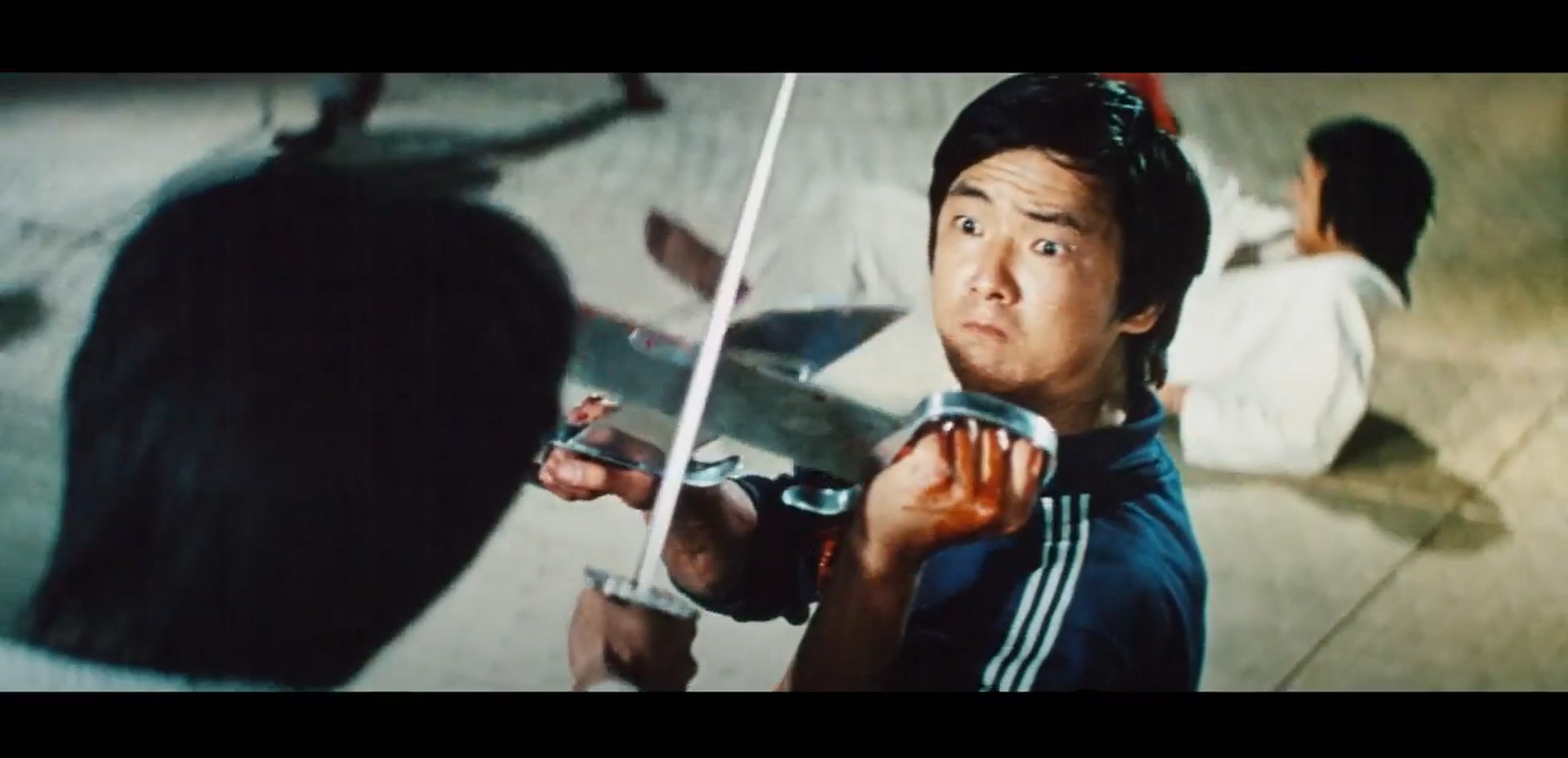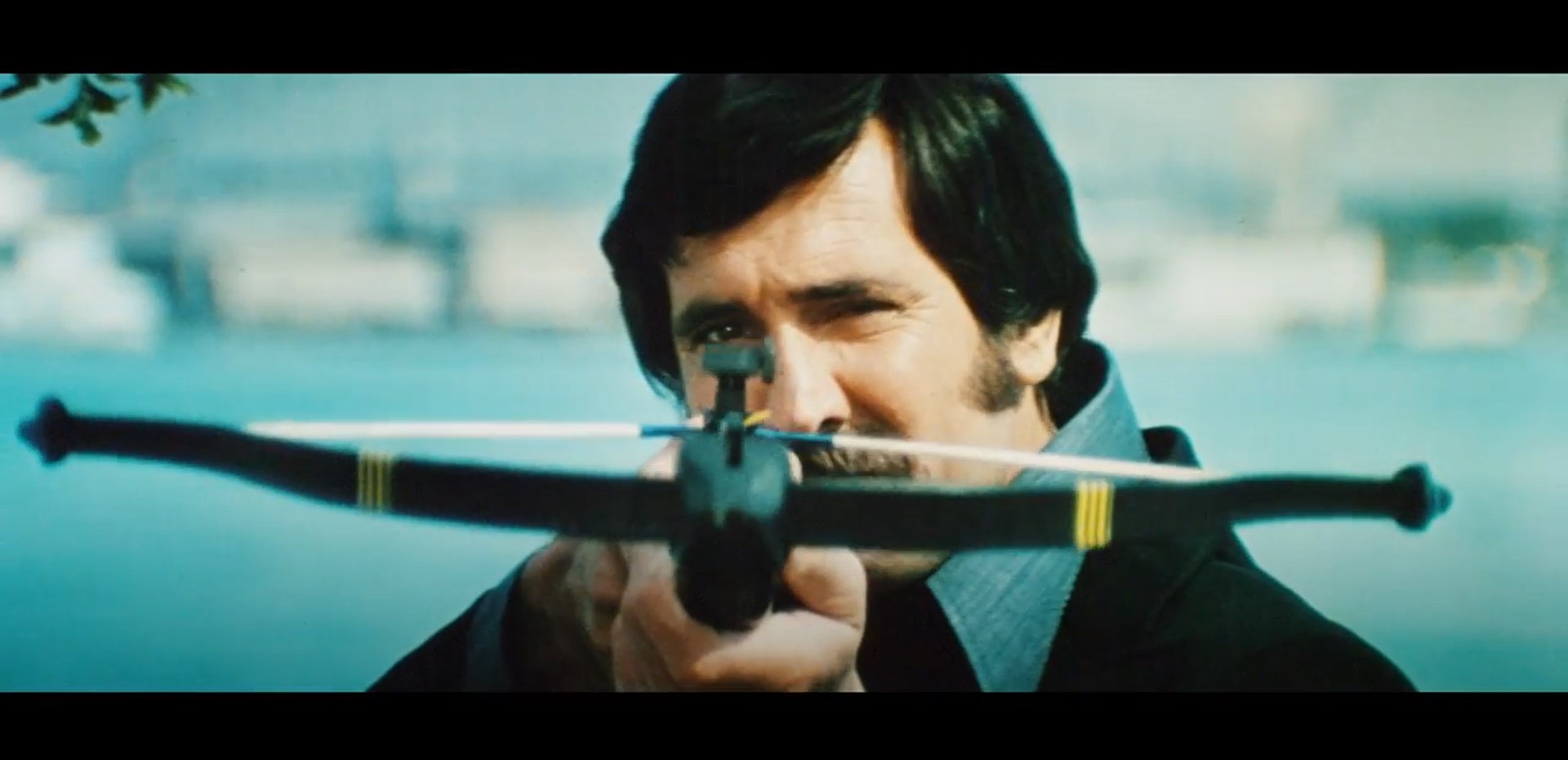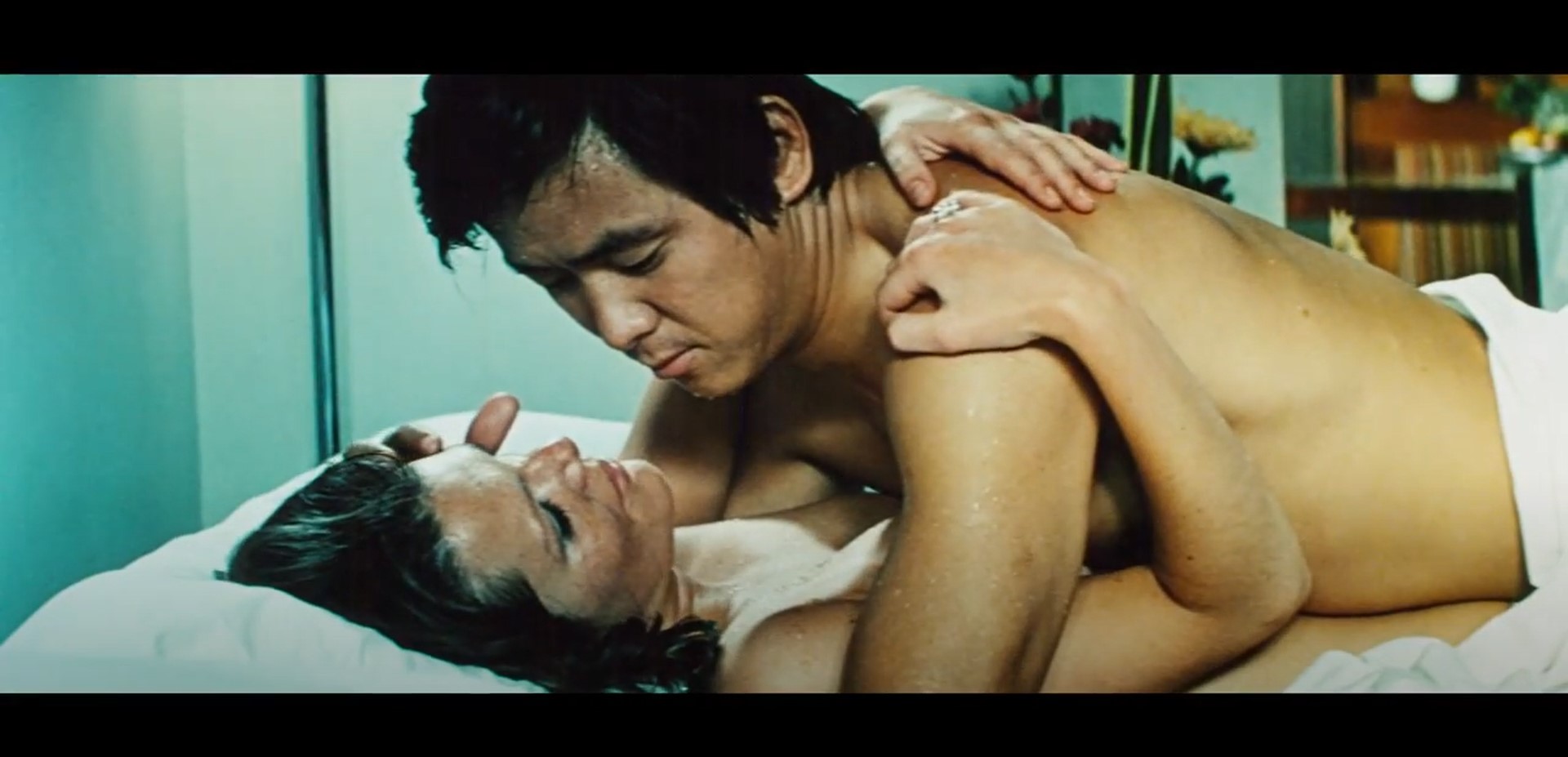
Caught in the Act, Evil Must Do Evil’s Bidding. “The Killer Must Kill Again” reviewed! (Rustblade / 50th Anniversary Blu-ray)

“The Killer Must Kill Again” on a restored, 50th Anniversary Blu-ray!

Giorgio and Norma’s hot-and-cold marriage takes a turn for the worse when Giorgio’s greed convinces him to plot her murder after she threatens to cut him off from her family’s money.  When Giorgio catches a sexually perversive killer in the act of dumping a young girl’s body in an isolated canal, he devises a blackmail agreement with the killer to murder his wife and falsely claim a ransom from her father to satisfy Giorgio’s gluttony.  Killing Norma was easy enough but after the killer brings the car around to put her body in the trunk, a young couple steal the car for an all-night joyride to the beaches of Seagull Rock, unbeknownst to them a dead body stowed in the trunk.  With the killer in pursuit of the couple and the police suspicious of Giorgio’s involvement of his wife’s disappearance, it’s only a matter of time before the killer must kill again.
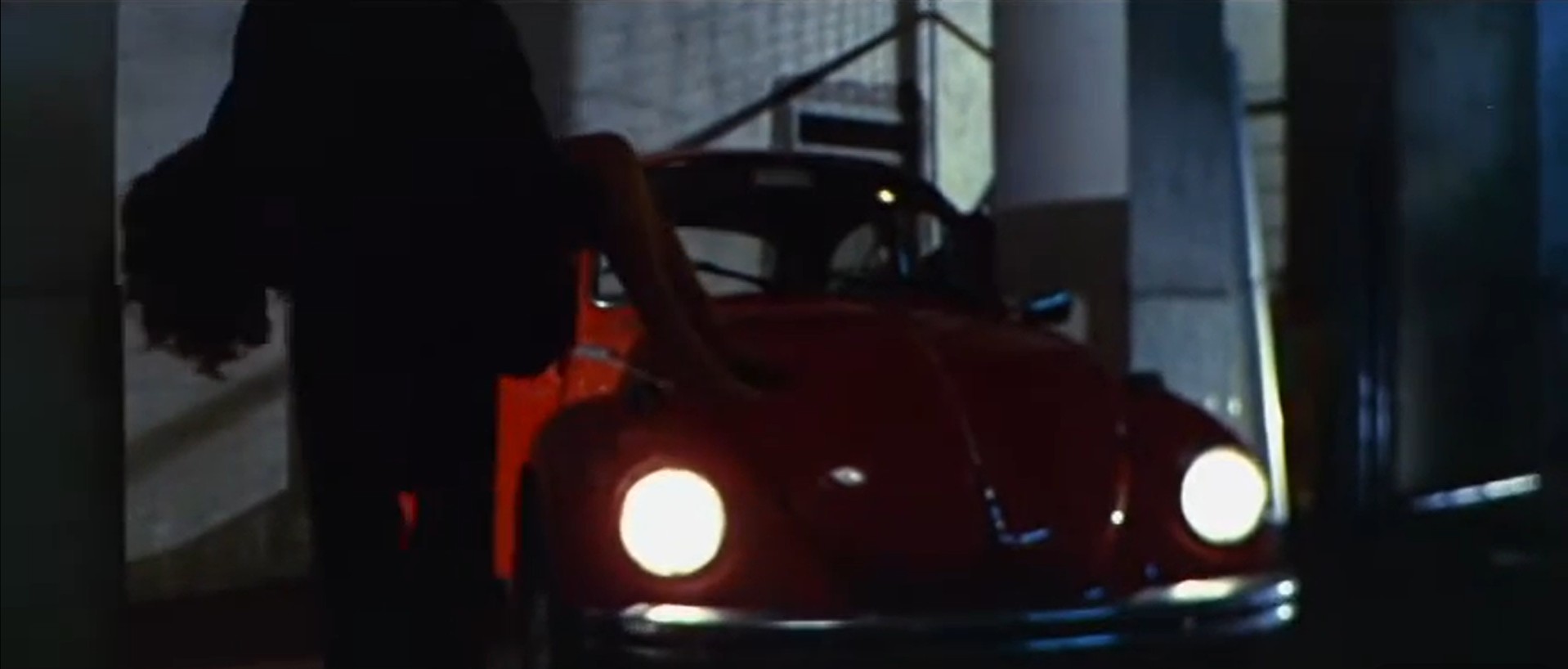
“L’assassino è costretto ad uccidere ancora,” aka “The Killer Must Kill Again,” is a straying kind of Italian psychotronic film from the typical giallo overload being produced out the country between the 1960s and up to the early 1990s.  Released right in the middle in 1975, the film never enshrouds viewers in mystery with a blunt, clearcut case of who and who is not the villains, the victims, and the heroes.  “The Naked Doorwoman” and “Contamination” director Luigi Cozzi helms the script he cowrites with Daniele Del Giudice (“The Story of a Poor Young Man’) with an inclination of slipping darkly dry comedy into the fold of a cold and callous killer’s purview of an extorting mastermind’s bidding and the uncomfortable self-serving sexualized force thrust upon women, the dead and the living.  Sergio Gobbi (“Vortex”) and Umberto Linzi coproduce the GIT International Film, Paris-Cannes, and Albione Cinematografica coproduction. 

The cast is comprised of an ensemble lot and for an Italian production, there are hardly any Italian actors leading the charge.  Most of the principal cast hails from Europe, mostly Spain, and with a few outliers from France and even one from Uruguay in South America.  Each actor and actress have a rough fair share of screen time, preluded with the titular killer, played by Frenchman Antoine Saint-John.  Saint-John has a face for television, villainy television that is, with high cheekbones that create deep contoured shadows, a danger stare, and a round head with cranium hugging, short dark hair that make him distinct amongst his fellow castmates.  “The Beyond” actor’s heart put effort into a heartless role of the unnamed perverted murderer of young, beautiful women for unknown reasons and motivations.  That’s not the case for the opposite transgressor, the killer’s blackmailer Giorgio Mainardi who’s a scheming businessman and money leech off his wealthy wife (Tere Velázquez, “Night of 1000 Cast”), two reasons and motivations to put a kill contract on his wife.  “The Strange Vice of Mrs. Wardh’s” George Hilton dons the dapper swindler with trim suits, neat hair, and a handsome façade underneath his ugly intentions as he tries to fraud his wife’s ransom for himself.  Caught in the middle of this plot are two young lovers, who in themselves are not so innocent by stealing the killer’s car with a dead woman in the trunk.  Cristina Galbó (“The Living Dead at Manchester Morgue”) and Alessio Orano (“Lisa and the Devil”) are the couple Laura and Luca, two teens on a stolen car joyride to a distant beach front in order Luca to try and convince Laura to take her virginity.  While there’s ransom fraud, murderous plots, murdering, corpse disposal, and other heinous crimes, the most disturbing in the story is Luca’s pressuring to get into Laura’s pants and his means of satisfying his lust by picking up car stranded blonde (Femi Benussi, “Bloody Pit of Horror”) and cheating on Laura while she is raped when confronted by the pursuing killer.  The sleaze and skeeze level on Luca is beyond reproach and it really makes him more the villain than the actual killer who’s up two bodies by this point.  The principal cast can’t be complete without police presence and that is where Eduardo Fajardo (“The Murder Mansion”) steps in as the cool, suave, know-it-all-and-see-how-it-all-plays-out inspector, a cliched role of the time and even in today’s whodunit ventures.   
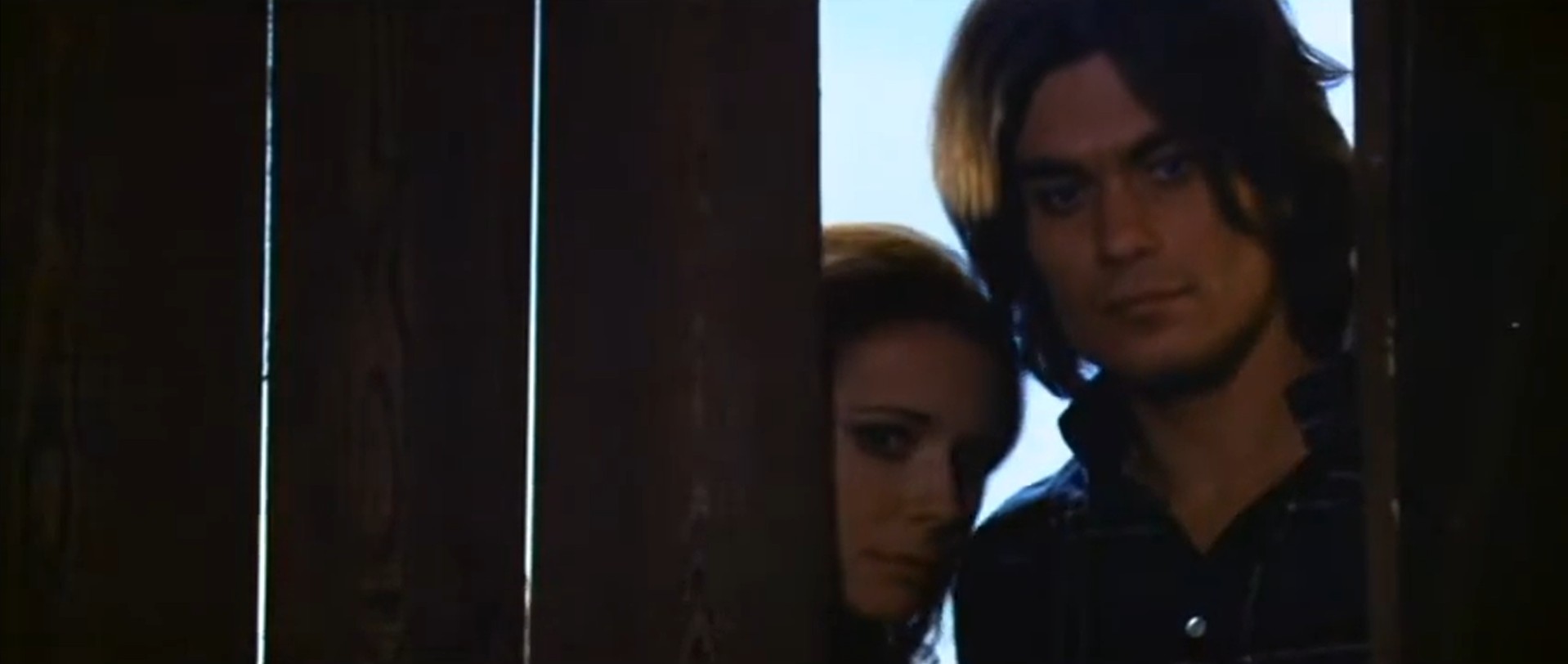
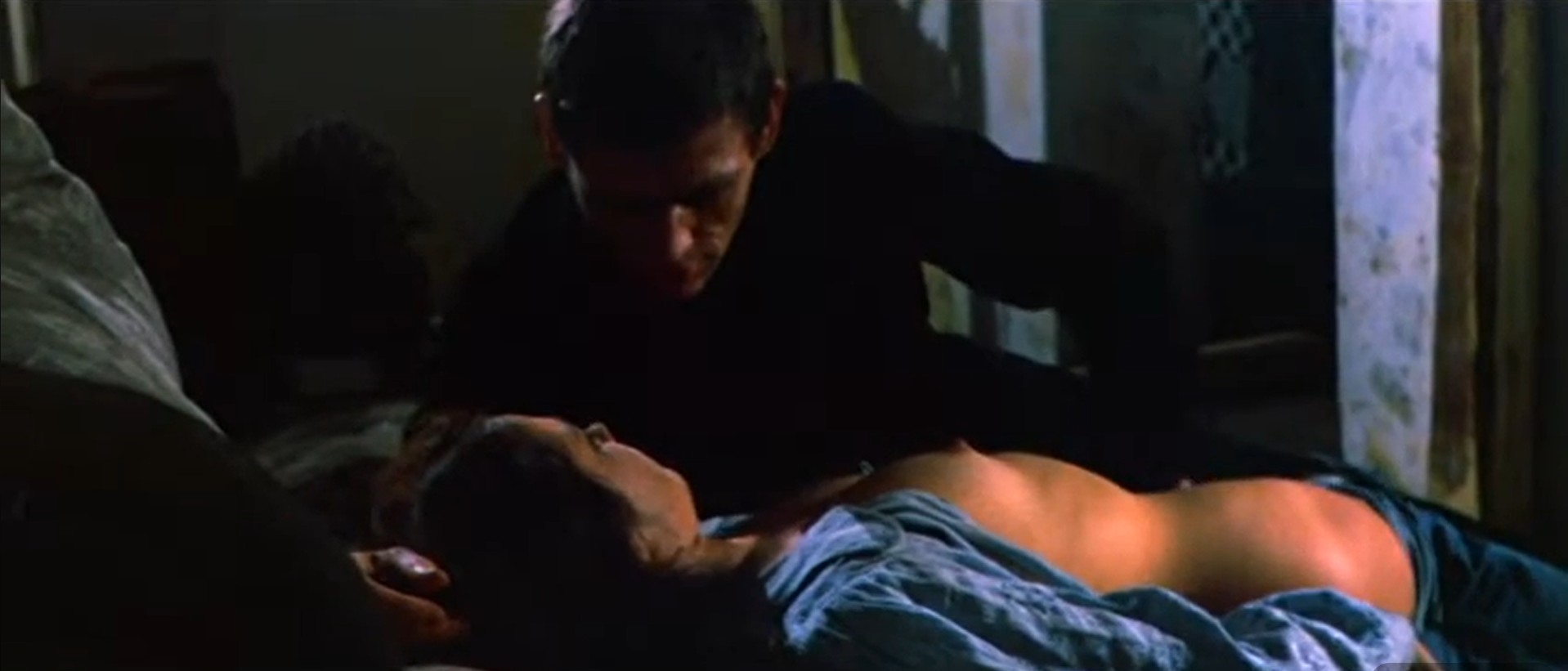
This crime giallo lacks mystery but makes up for it with rich characters, a sleaze-bag crime, and a little style from director Luigi Cozzi and cinematographer Riccardo Pallottini in their choice to visual effects to insulate the moment within a scene by matte narrowing the focus and using a sharp spherical lens to heighten the tension around the center focus with a semi-fishbowl effect.  Coupled with solid editing and great lighting for the night drive sequences between the two cars and it’s reflexive, subsequent chase, the story’s pace doesn’t rush into the more gushing violence and sexual subversion, effectively building up a pressure cooker of a confrontation between the killer and the kids that’s brilliantly edited in a taut juxtaposition that flips back and forth between the killer’s virtually explicit raping of Laura and Luca’s wanton encounter with a stranded licentious blonde motorist; both elicit wrongdoings, rendered around the crave of naked flesh, but they are from different perspectives with one being a clean cheat of carnality with another person and the other being a malicious rape of innocence yet both leave that sour taste of discomfort in the mouth but the edited design is about as sweet as it gets. 
The Italian distributor Rustblade Records, under the movie release sublabel of simply Rustblade, release L’assassino è costretto ad uccidere ancora,” aka “The Killer Must Kill Again,” onto a new Blu-ray in its complete Cozzi’s original vision and is a restored transfer for worldwide audiences in association. The 50th anniversary Blu-ray is AVC encoded, 1080p high-definition resolution, on a surprising BD25. The BD25 is surprising because the restored picture quality looks phenomenal considering the capacity, retaining deep shadows, vibrant color palette, and no incongruous signs of compression artefacts. There is however some detail smoothing fragmented throughout depending on the interior or exterior scene. More of the opening moments between Giorgio and Norma look quite polished and intricate regarding textural skin and fabrics but a good number of moments appear to smear portions of the face, especially in Antoine Saint-John’s more distinct facial characteristics. Depth and range favor the bold with Cozzi able to obtain decent amount of space between objects within his stylized choices and the color spectrum, like many giallo films, is saturated with intensity. An Italian and an English 2.0 DTS-HD Master Audio are the reigning encoded audio choices, both of which are post-production ADR and both of which show the obvious synchronization discord. The English translation, as well as the English subtitles, contain generalizations of a perhaps more complex scripted dialogue intent. With ADR, dialogue clean and clear with present, defined space right in the front two channels but lacks milieu acoustics, depth, and little range with the action added with Foley. Nando De Luca’s lingering avant score blend single low-note guitar chords, resonating piano keys, and Theremin wooing lift up the story with ominous tension. The English subtitles appear accurate without any grammatical errors. Special features include an interview with director Luigi Cozzi, a film analysis by Federico Frusciante, a horror enthusiastic musician from Rustblade Records, film locations toured by Giallo Italiano, and the feature trailer. The 50th Anniversary Edition comes with two versions: a limited-edition DVD/Blu-ray Deluxe mediabook with postcards and a single disc Blu-ray. For this review, the single disc was provided in a clear Amaray case with double sided art sleeve of a giallo yellow and contrast shadowed illustrated composition of characters and the reverse side depicting two moments from the movie drenched with giallo yellow. Presented in widescreen 2.35:1 aspect ratio, the not rated, region free film has a runtime of 90 minutes.

Last Rites: A giallo unlike the rest, “The Killer Must Kill Again” is a perversion of greed, lust, and murder without virtuous players in a plot gone awry. Luigi Cozzi’s 1975 classic is a genre staple for fans old and young in this Italian murder shocker and Rustblade offers a new and improved, director approved vision that collectors will see to acquiring immediately.

“The Killer Must Kill Again” on a restored, 50th Anniversary Blu-ray!

One Man Takes on the EVIL Australian Crime Syndicate! “The Man from Hong Kong” reviewed! (Umbrella Entertainment / Blu-ray)

“The Man From Hong Kong” on the Ozploitation Classics Blu-ray from Umbrella Entertainment!

A newly formed Australian narcotics unit busts up a major drug deal that lands a crime syndicate pusher into the custody of the authorities.  The pusher, low on the totem pole of a larger drug organization, speaks no English and with the inexperience of the Australian unit, Hong Kong special branch inspector, Fang Sing-Leng, is requested for interrogation interpretation and be the escort of extradition back to the pusher’s native Hong Kong residence, but while in custody, the pusher is gunned down by an assassin.  Sing-Leng thrusts himself into Sydney’s criminal underworld the Hong Kong way, leaving a trail of destruction in his solo-takedown of formidable drug kingpin, Jack Wilton.

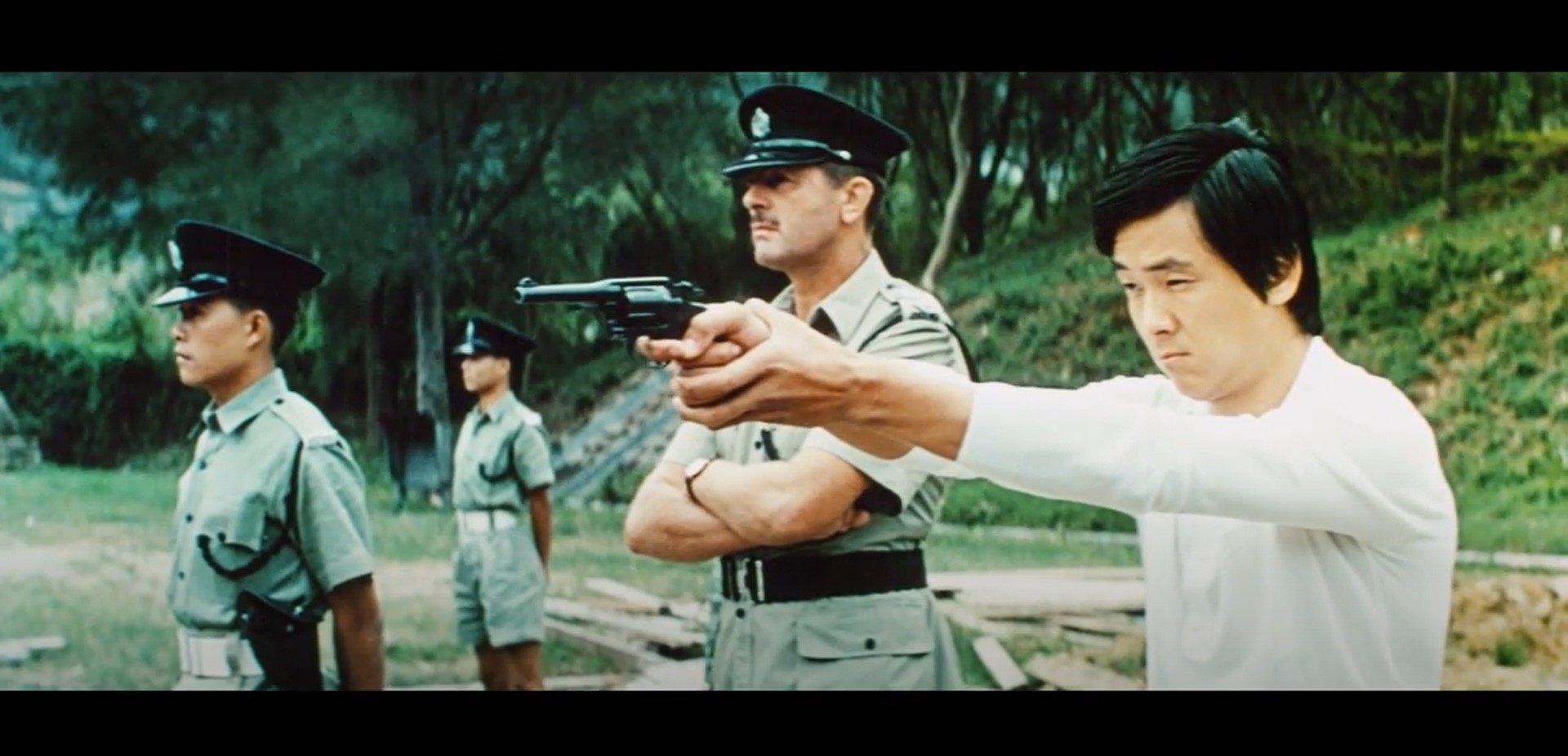
For film loving youngsters, would they know what cinema was like before green screens, motion capturing technology, and other computer imagery devices to create alien worlds and improbable fight sequences?  Would comprehending the idea that before the pre-implementation of these technological advances in film there was a just-do-it fortitude toward the physical and raw aspects of special effects and stunt work?  Those wee moviegoers’ heads would explode into itty-bitty chunks of brain matter by the very slight thought of a man jump kicking another man off a high-speed dirt bike without even one ounce of a tethered harness or helmet for safety.  Hazard upon dangerous hazard is what writer-director Brian Trenchard-Smith offers on the table from his debut martial arts film “The Man from Hong Kong,” the first martial arts film of its kind hailing out of Australia.  Trenchard-Smith’s working title “Yellow Peril” sought to sprinkle in between the high kicks and hyahs an amusingly intended, but greatly nearsighted, prejudice of the subtle racism in how Australian people viewed East Asia; however, Raymond Chow, the Hong Kong-side producer for this two-country co-production, ozploitation actioner, didn’t quite see the humor in “Yellow Peril” (and we don’t blame him).  Thus, “The Man from Hong Kong” title was born with some minor contentious distaste for its generic branding.  Trenchard-Smith’s The Movie Company Pty. Ltd (“Stunt Rock”) and Hong Kong’s Golden Harvest Company (“Sex and Zen”) served as co-productions, releasing the joint venture in 1975 with variable success across the globe.

The first choice Brian Trenchard-Smith had in mind for the role of Fang Sing-Leng was mega-martial arts superstar Bruce Lee hot off the success of 1972’s “Fist of Fury,” 1972’s “The Way of the Dragon,” and 1973’s “Enter the Dragon.”  “The Man from Hong Kong” seemed to be a perfect segue into Lee’s next martial arts box-office hit that may have also reclaimed cinematic stardom for his soon-to-be co-star George Lazenby who fell into a blacklist slump after declining to reprise his 007 James Bond role from “Of his Majesty’s Secret Service.”  Unfortunately, and tragically, Bruce Lee suddenly died at the age of 32, leaving a void to fill not only Trenchard-Smith’s first film but also in the martial arts entertainment world.  In comes Jimmy Wang Yu, China’s former #1-turned-#2 after the quick rise of Bruce Lee.  The “One Armed Swordsman” series Wang Yu not only entrenches himself into the titular role at the behest of producer Raymond Chow as a suitable replacement, but Wang Yu also became Trenchard-Smith’s directorial counterpart of the Hong Kong shot scenes and the fight sequences, the latter being superbly thrilling by Wang Yu and his stunt team’s dedicated skillset to make the showmanship look authentic and bruising.  The extended chase through the streets of Sydney and into a no holds kitchen brawl with legendary stunt man Grant Page (“Stunt Rock”) is one of the best one-on-one rundown combat arrangements of its era.  Lazenby’s an effective villain with his towering height, broad build, and Tom Sellick mustache and has the ability to choreography not-so-half-assed kung fu, meeting and matching Wang Yu’s on screen moves without looking dopey or forced.   Australia’s film industry was so small at the time, there are number of recognizable actors mostly from the “Mad Max” series with the likes of Hugh Keays-Byrne (“Mad Max,” “Mad Max:  Fury Road”), Frank Thring (“Mad Max Beyond Thunderdome”), Roger Ward (“Mad Max”) in key or notable performance roles along with Bill Hunter (“Mad Dog Morgan”) and a pair of titular character love interests in Rebecca Gilling and Rosalind Speirs.

When judging a martial arts film, one critiques the hand-to-hand or melee weapon play contests, scrutinizing every punch thrown and kick taken, for complexity and believability.  If it looks real, it sure as hell feels real when conveyed from off the screen and to the audience.  Though “The Man from Hong Kong’s” scenes feel a little airy, pulling punches slightly too perceptibly, the choreography is quick and exhibits naturally enough through a variety of action and locations, including on top of Australia’s famous tourist attractions Ayers Rock for a wham-bam, drug sting and bust opening with a great-looking and thrilling car explosion shot that nearly takes the camera man’s head off with an unplanned, detonation jettison of a spinning car door toward the camera crew.  Those sorts of risky stunts are prevalent throughout that lends to “The Man from Hong Kong’s” enthralling physicality tone with Trenchard-Smith and his team’s wiliness to learn as they go in their death-defying acts.  The film is a tour de force of stunts, ranging from car chases, glider flights, skyscraper plunges, and an unforgettable kitchen skirmish with real melee weapons kneaded into its very fabric, with a Dirty Harry hero whose more of an anti-hero lawbreaker than the villains he’s up against by specializing in China’s miscreant brand of investigative police work. 

Perfectly suited as number 9 on the spine of the Umbrella Entertainment’s Ozploitation Classics banner is Brian Trenchard-Smith’s “The Man from Hong Kong,” now released on a region free, 2-disc AVC encoded Blu-ray.  Presented in a widescreen 2.35:1 aspect ratio with full 1080p, high-definition resolution, Umbrella has pulled out all the stops to release the best transfer to drool over.  Subtle vertical scratches here and there have no standing impact on viewing and the distinguished color palette is quite good and natural-looking for a film from nearly five decades ago.  There is a healthy amount of positive grain from the 35mm film stock, but the compression never comes into an issuance of sacrificing the quality, leaving darker scenes appearing bright and visible without the effect of enhancement or zealous contrasting.  My only substantiated gripe is with the subtitle cards that, in a way to not have to redo the English subtitles for the Mandarin dialect, the original frames were seemingly kept in and the image reverts back to a lesser quality degree.  Two audio options are available, an English-Mandarin language DTS-HD 5.1 Master Audio and a lossy DTS-HD dual channel.  Umbrella’s kbps output erratically fluctuations between 2400-3400 but even with the rollercoaster ups-and-downs, “The Man from Hong Kong” still had a robust action track and the dialogue came through discernibly clear.  Only goofy aspect about the audio is “Game of Death” and “Bloodsport’s” Roy Chiao’s English dubbing of Jimmy Yang Yu who obviously knew English or knew how to act like he knew English by watching his mouth articulate the native vernacular.  Umbrella also pulls out all the stops for the special features department in this limited to 3000 copies 2-disc set with the second disc a CD soundtrack arranged with Noel Quinlan funk-rock score and the main Billboard topping opening theme “Sky High” by the band Jigsaw.  Also included is a 2001 audio commentary from director Brain Trenchard-Smith, actor Hugh Keays-Byrne, and stunt director Grant Page, an all-new(ish) interview with Grant Page from 2008 entitled Real!Quick! pulled from Mark Hartley’s ozploitation documentary “Not Quite Hollywood,” extended interviews with the director, executive producer David Hannay, cast members George Lazenby, Roger Ward, and Rebecca Gilling, cinematographer Russell Boyd, 2nd unit cameraman John Seal, and first assistant director Hal McElroy from the same Hartley documentary, Trenchard-Smith’s 50-minute documentary “The Stuntmen,” a 75-minute “Kung Fu Killers” TV special directed by Trenchard-Smith and featuring Grant Page and George Lazenby, behind the scenes footage, opening night press conference footage, various and alternate  trailers and promos including a HD theatrical trailer, a cardboard slipcover with new illustrated design, and a reversible Blu-ray case cover art that also lists all 23-tracks on the CD.  The special features runtime outshines the 106-minute feature with a slew of interviews; however, much of the interviews really harp over-and-over upon George Lazenby’s set-on-fire coat mishap scene and Jimmy Wang Yu before the camera rolls catching and eating dragon flies ahead of a kissing scene with Rebecca Gilling.  “The Man from Hong Kong” isn’t notable because it’s Australia’s first martial arts film.  It isn’t notable for the attempt of resurgence of a former James Bond actor or because of its robbed promise of the late Bruce Lee.  What makes “The Man from Hong Kong” important to the film industry as a whole is its precursor value for being the example of a cast and crew to put life and limb on the line for the sake of motion picture art and be damn good at it.

“The Man From Hong Kong” on the Ozploitation Classics Blu-ray from Umbrella Entertainment!

Bestiality. Borowczyk Pushes the Boundaries with EVIL Themes. “The Beast” reviewed! (Blu-ray / Umbrella Entertainment)

“The Beast” Available on Umbrella Entertainment’s Beyond Genre label at Amazom.com

Marquis Pierre de l’Esperance, a French lord on the brink of financial ruin, is able to swing a deal before the death of the well-off English tycoon Philip Broadhurst. Under the conditions of Broadhurst’s will, his daughter Lucy must marry I’Esperance’s introverted, and equestrian obsessed son within six months after his death. Lucy, and her aunt Virginia, travel deep into the French forest to the deteriorating chateau to do a first ever meet and greet between the two soon-to-be married. Marred by centuries old local legend of a lustful beast who sexually defiled the Lady of the estate’s family lineage, I’Esperance aims to restore order by marrying into fortune and leave old cockamamie tales behind him. Yet, Lucy can’t shake vivid and stimulatingly graphic dreams of the romping woman and beast, leading to speculation whether the legends are true or not?

Certain types of filmmakers push the limits and exude their provocative talents to blur the lines between arthouse cinema and pornography. Those same filmmakers would argue that arthouse cinema and porn are, in fact, nearly one in the same if complimented with an intriguing story full of subversive subtext sure to outrage the status quo. Walerian Borowcyzk is one of those auteur artists basking in the absurdity and the arousing aspects of his films. The Polish writer and director wrote and helmed “The Beast,” aka “La Bête,” a one-part sex-comedy and one-part fantastical horror that is one-whole bizarre beyond our wildest dreams. “The Beast” was once considered to be a part of Borowcyzk’s short film collection of erotic stories known as “Immoral Tales;” however, the short film shot was scrapped from the project and then reimplemented into a full-length feature with outer rim narrative built around it’s very thematical essences of bestiality and the corruption of man due to woman’s virtue, the latter inspired by the French novella “Lokis” by Prosper Mérimée. The France originated film was produced by Anatole Dauman under the French studio, Argos Films, which produced much of Borowyczk’s work.

“The Beast’s” ensemble cast play intrinsic notes toward the fullest extent of the narrative’s shell machination as well as the saturation of eroticism from the grifting lord l’Esperance to the chateau’s only manservant, who when not answering his Lord’s beck and call, is fooling around secretively and lustfully with I’Esperance’s daughter. Veteran actor Guy Tréjan unearths the very ill-humored presence of a struggling lord seeking to reclaim fortune and glory to his estate and family. Most of the time, we feel sympathy for I’Esperance’s inability to catch a break, but on the deeper, darker scope, I’Esperance hides many truths, keeps many secrets, and even black mails his uncle, Duc Rammendelo de Balo, played by legendary actor Marcel Dalio (“Super Witch of Love Island”), making the lord a villain of his own haphazard design. I’Esperance’s nitwit and reclusive son Mathurin is played by Pierre Benedetti, who has worked with Borowcyzk later his career in “Immoral Woman.” Not much of Benedetti is profoundly showcased, leaving much of Mathurin in the dark despite being a principle figure in the plot as the husband-to-be for the aspiring romantic Lucy Broadhurst from “Le diaboliche’s” Lisbeth Hummel. Hummel, along with 1995 “Castle Freak’s” Elisabeth Kaza as Lucy’s aunt Virginia, are supposed to be affluent English women travelling to France in order to settle future marital affairs with the I’Esperances, but Hummel and Kaza have such thick accents that no matter how proper their English may be, there’s still present the French and Hungarian elocutions in their English dialogue. Hummel does capture Lucy’s free-spirited, free-form sexuality so inclined by Borowcyzk as the director envisions her as the clairvoyant trigger that unsheathes an age-old curse to light, but Hummel is not the only participant in “The Beast’s” amativeness with Hassane Fall, Pascale Rivault, Julien Hanany, and sex-symbol Sirpa Lane (“Nazi Love Camp 27,” “Papaya: Love Goddess of the Cannibals”) paving a more perverse course with illicit affairs, object sexuality, and, of course, bestiality. Though none of these aspects were more than disturbing in comparison to Roland Armontel’s version of a local priest setting an uncomfortably affectionate dynamic with two of his alter boys that Borowyczk focused and lingered on when the chief characters have left the scene.

Trying to understand Walerian Borowyczk’s “The Beast” is akin to trying to understand the wanton complexities of the human psyche. In all its whirlwind of implications, “The Beast” is heavily and artfully abstract in a non-abstaining manner as sultry desires, no matter how forbidden, are the superior playthings utilized for Borowyczk’s totality of storytelling. The uber-sexual graphic tale invests little into the imagination with vivid imagery of genitalia in all shapes and sizes in organic and mythical forms. Yes, there is a lengthy opening scene of horse copulation with emphasis on each of the bulbous male and female’s sexual organs. Yes, there is also a satirical creature chase that transforms into a frolicking romp between a human woman and a dog-bear creature with a miniature representation of an erect horse member ejaculating like a geyser without an end. The excessive vehemence towards sex is Borowyczk’s gift to the audience toward feeling a flurry of mixed emotions from being a little bit peed, to a little bit put off, to even a little bit strangely turned on all in one sitting. Though sex is unusually celebrated in “The Beast,” the beast itself is also the representation of perversion, an animalistic and libidinous savage horndog lusting after the chastity of virgin women that’s allegoric to spoiled bloodlines and cursed households in a path of ruinous destruction, especially in the downfall of a crumbling aristocracy. Borowyczk injects and interjects comedy to lighten the socially disturbing atmospherics of paraphilia and the social consequences that follow.

As part of their Worlds on Film:  Beyond Genres banner, Umbrella Entertainment releases Walerian Borowczk’s “The Beast” as volume #13 on a region free, 2K scanned Blu-ray in full 1080p High Definition.  Presented in the original aspect ratio of what once was the European theatrical standard widescreen 1.66:1 aspect ratio, the 35mm transfer provides a relatively clean viewing free of aging and blemishes albeit the innate agreement of healthy amount of grain that comes standard with celluloid film stock.  While color grading definitely looks non-existent in the release, a once over would have sharpened the image immensely from the slightly flat and natural color scheme.  The tri-lingual French, English, and Italian DTS-HD Master Audio 2.0 mono track is a compressed version from the 2015 Arrow Film’s Blu-ray release with an uncompressed LPCM 2.0 audio.  Virtually no difference in the lossless audio with also no difference in the synchronizing between visual and audio elements.  Dialogue runs smooth and clear with little-to-no hissing or pops and the same can be said about the more than adequate ambient track, the lively French Harpsichord piano soundtrack, and even the outlandish foley of beast sounds through the limited parameters of the two channeled output.  Special features pale in comparison to previous Blu releases, but are none-the-less impressive including 16mm behind-the-scenes, archival documentary footage in the making of “The Beast,” an introduction by film critic Peter Bradshaw, a featurette of Borowczyk’s beast sketches, letter of confidence to the producer, and a treatment to a potential sequel that never materialized The Frenzy of Ecstasy, an philosophical interview with the director Walerian Borowczyk, the director’s biography, a still gallery, and theatrical trailer.  Illustrator Simon Sherry designs new and exquisite cover art for the cardboard slipcover and snapcase cover that perfectly represents the tone of the story.  The cover art is also reversible with Hispanic poster art and praising critic reviews and quotes.  The release is certified R18+ for high level sexual themes and sex scenarios. “The Beast” is an upfront, artful, and confrontational film about bestiality and sexual corruption bred to challenge the formulaic narrative with a call of unbridled seduction and a flamboyant flare for a firm erect furry.

“The Beast” Available on Umbrella Entertainment’s Beyond Genre label at Amazom.com