

When EVIL is so Ingrained, Drastic, Dangers Measures Must Be Taken. “Confessions of a Police Captain” reviewed! (Radiance Films / Blu-ray)

“Confessions of a Police Captain” Now Available on Blu-ray!

Police captain Giacomo Bonavia is a dog with a bone when it comes to pinning an arrest against the corrupt and criminal kingpin Ferdinando Lomunno.  Lumunno is seemingly immune and untouchable to conviction, having been acquitted of charges three times already while in Bonavia’s custody after key witnesses go missing or are found dead deemed by accidental circumstances.  Determined to stick it to Lumunno by going outside the limitations of the law, Bonavia strong arms the release of a professional hitman from a psychiatric ward and who has a lethal grudge against Lumunno for dating his sister.  When the plan backfires in a bloodbath, the captain becomes the subject of investigation for assistant D.A. Traini who suspects Bonavia to be no less corrupt than those he pursues, but when the evidence suggests corruption at the highest level within the public office, Traini wavers on the captain’s crusade against inexorable crime.  
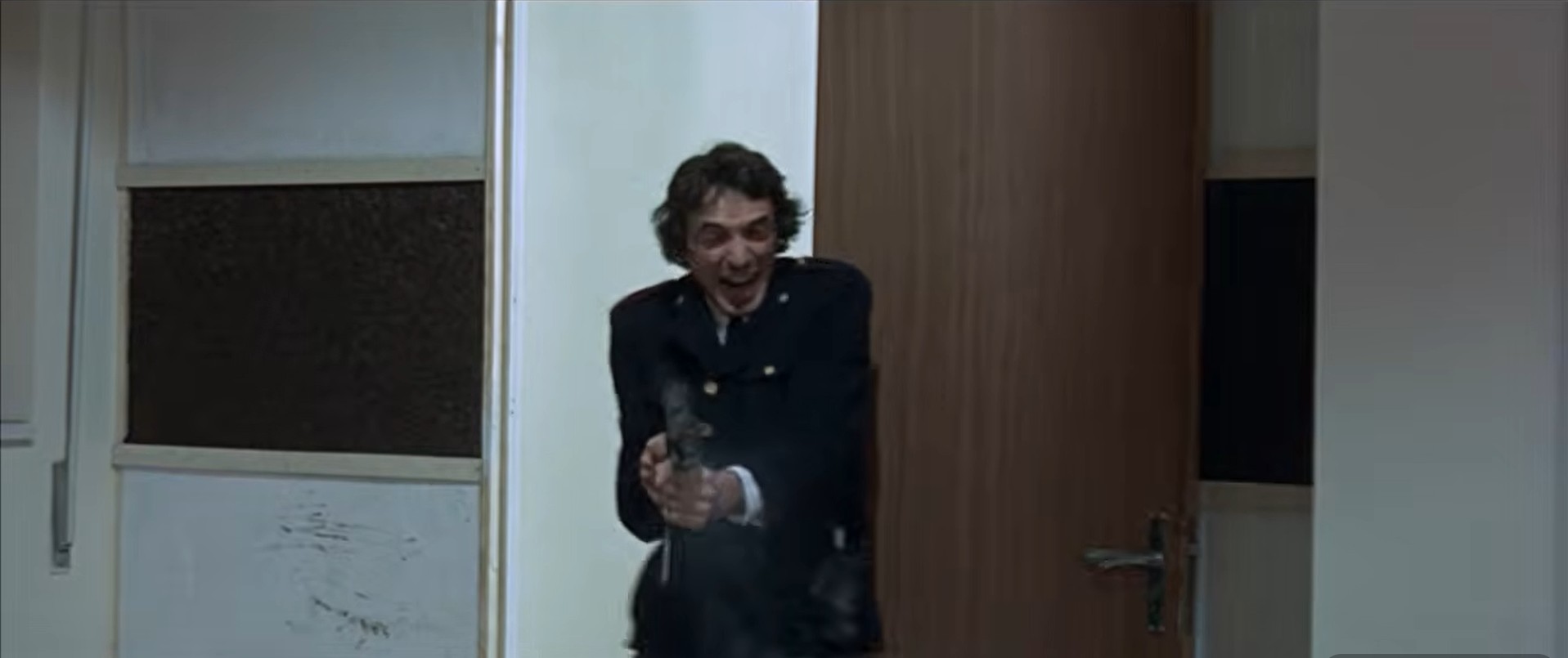
Before moving into a follow-up of powerful possession of one of America’s favorite haunted houses in “Amityville II:  The Possession” and even before formulating a planned coup of an Arican nation with a meticulous plan that involves the hijacking of a major hotel and taking key hostages in “Goodbye & Amen,” Italian director Damiano Damiani tackled corruption on every level with “Confessions of a Police Captain,” released 1971.  Originally titled “Confessione di un commissario di polizia al procuratore della repubblica,” the script is written by Damiani, who usually has his hands mixed into his directed projects, and Salvatore Laurani, based off a story by Damiani and Italian genre utility screenwriter Fulvio Gicco Palli (“The Designated Victim”).  The Italian crime thriller is shot on location in Palmero of the Sicily region and is produced by “Hitch-Hike” producers Mario Montnari and Bruno Turchetto with Euro International Films and Explorer Films ’58 as the coproduction studios.
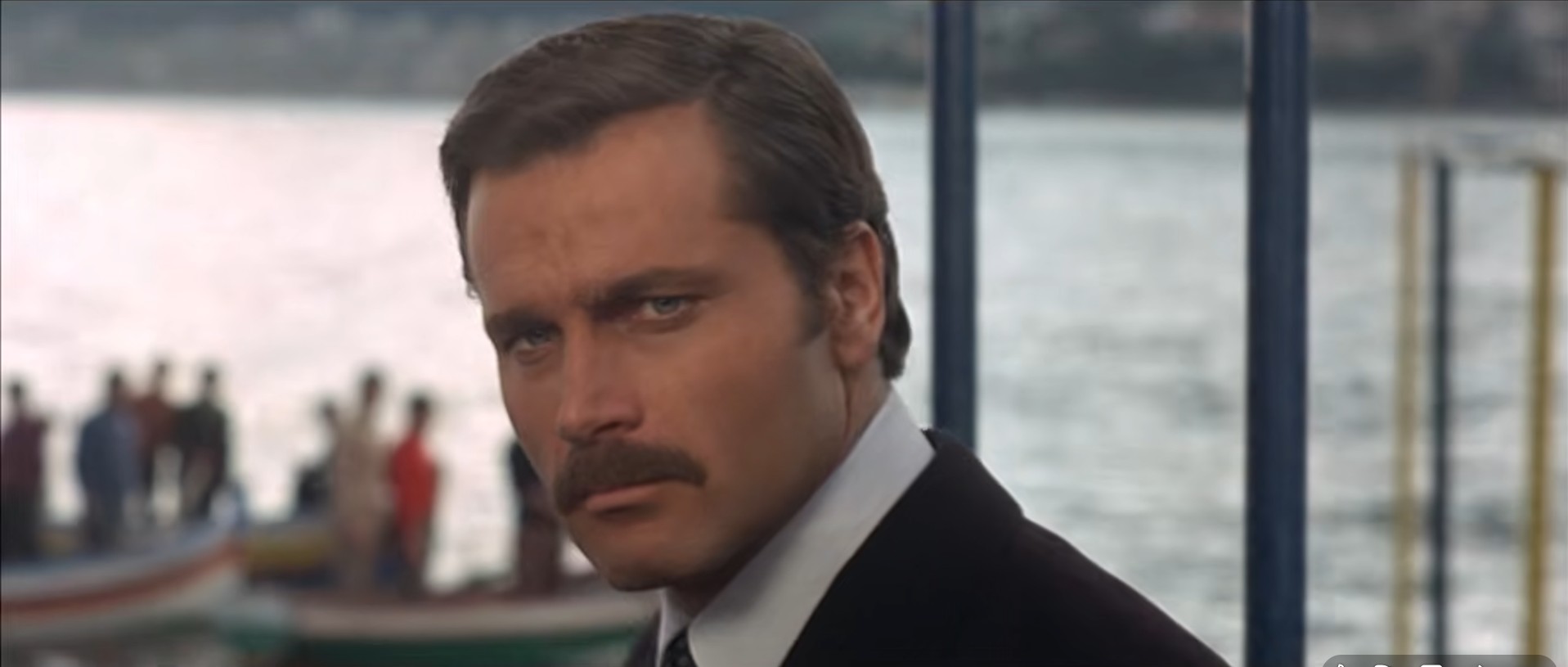
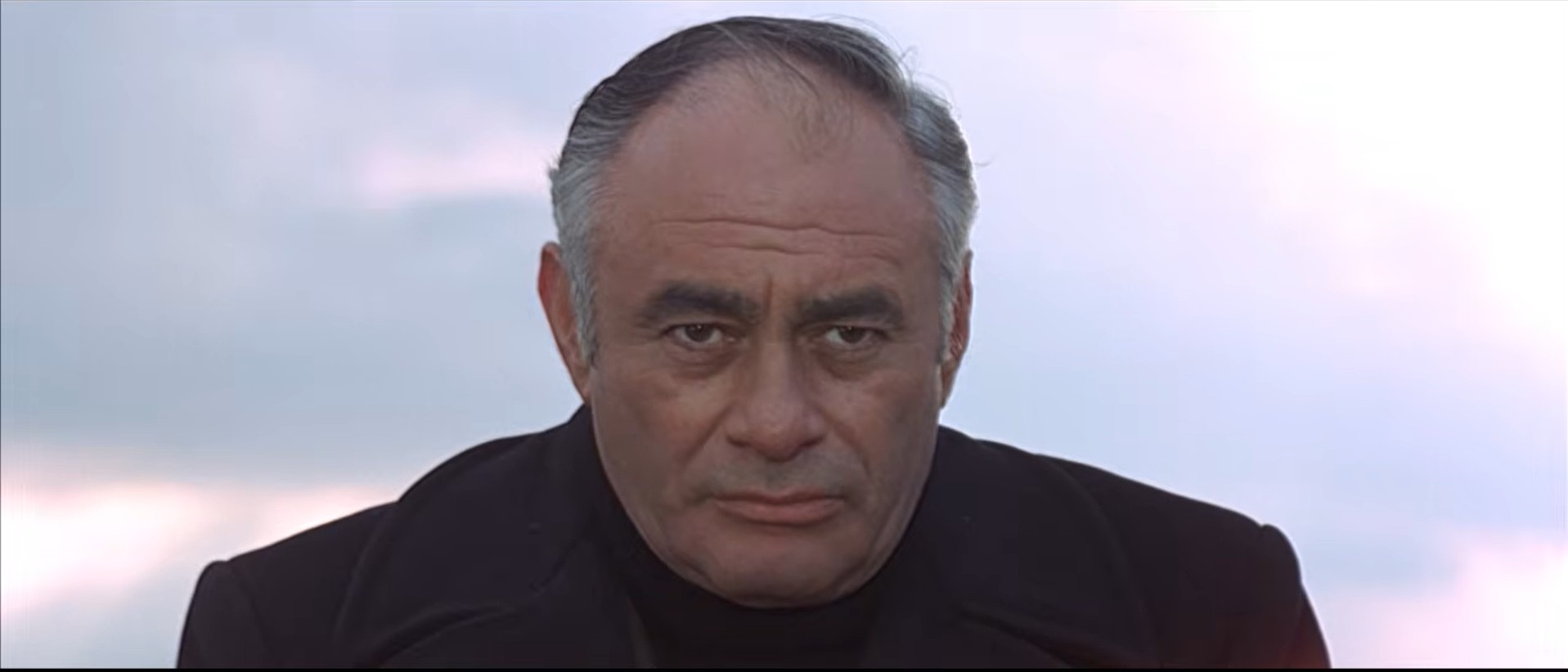
One of the biggest names in Hollywood shares the screen with one of the biggest names in Italian cinema as questionable colleagues against crime as Martin Balsam of “Psycho” and “12 Angry Men” plays the cynical police captain Bonavia who has lost all faith in the justice system and takes a covert vigilante approach with a dangerous plan that hopefully kills two birds with one stone.  Balsam fashions Bonavia as a man exhausted by law’s red tape, lack of enforcement, and the justice system need for hard evidence, turning the hardnose captain into playing the game just as the criminals do with deceit, guile, and ruthlessness.  While Bonavia’s intentions are in the right place but executed with malice and frustration, deputy D.A. Traini sees the world in black and white and not as red and complex as Bonavia as the deputy is almost near clueless to the corruption with his straightforward approach to the justice system her serves, believing it works without wickedness.  “Django” actor Franco Nero compliments Martin Balsam’s tranquil plotting and coverup with headstrong thoroughness to cover every base to nab the captain in his own misstep or vocally browbeaten and accuse him into a confession.  Nero purposefully feels lost but never out of the cat-and-mouse game that he plays to a character’s fault, losing sight of the real danger of blatant criminality and the scum that pull the strings right under his nose.  The supporting cast includes colorful peripheral characters who double as cynical expendable fodder or are possibly a double agent with their own set of vices with Marilù Tolo (“The Scorpion with Two Tails”), Luciano Catenacci (“Syndicate Sadists”), Arturo Dominici (“Castle of Blood”), Claudio Gora (“Seven Blood-Stained Orchids”), Adolfo Lastretti (“Venus in Furs”), Giancarlo Prete (“Escape from the Bronx”), and Michelle Gammino (“The Virgo, the Taurus and the Capricorn”) in those roles. 
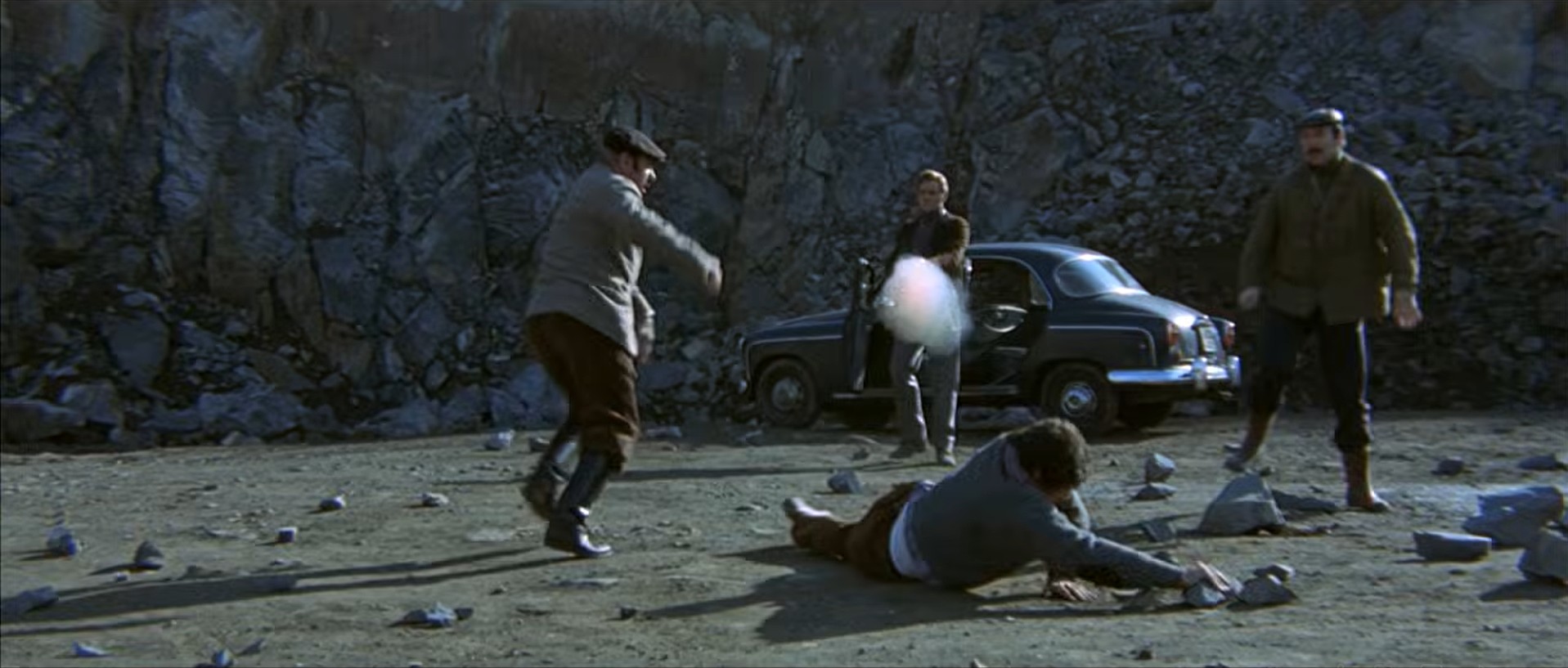
As far as Italian crime thrillers go, “Confessions of a Police Captain” is about as brutal and unforgiving as they come with a medley of fair game for mortal coil and where high rankings, who are opposed to pure corruption, must go beyond that upstanding public official role to bend or break the law to be effective against the insidious nature and unkillable cockroach conduct of crime.  The story puts to question the moral judgement of good men who want to do the right thing but our bound by the shackles of statutes and can do nothing about the misuse of the justice system and how career criminals in high places can get away with murder without even a scratch.  Is Captain Bonavia the good guy of the story as he goes after a hefty criminal or is he the story’s villain for stirring up trouble with a plotted assassination attempt that in turn leads to a string of homicides?  The latter seems pretty damning but, at the same time, it exposes more truth to the underlining criminal element that disguises itself as powerful public figures who are supposed to be on the right side of the law.  Audiences will be neutral with Captain Bonavia and feel more relatable with Deputy D.A. Traini and his confusion and frustration about the internal conflicts of the law, the transgressions, and the blurred line of vigilantism.  There’s also a remark in the story about how integrated crime is the institutions and this goes as far as being very literal too by comment and even exhibiting a scene of a snuffed-out corpse being encased in cement used for pillars of new skyrise construction.  The ruthless and plausibility of cementing someone inside a concrete pillar is one aspect that makes “Confessions of a Police Captain” a visceral Italian crime thriller amongst an already stacked of powerhouse performance.
Damiano Damiani’s “Confessions of a Police Captain” is a taut crime thriller now available on a 2K transfer restoration, limited-edition Blu-ray from Radiance Films.  The UK distributor releases the Blu-ray for the North American market, encoded with both regions A and B, under is AVC compressed BD50 with Hi-Def, 1080p resolution, and presented in a widescreen 2.35:1 aspect ratio.  The restoration refreshes the image with a stronger color saturation and deeper details that make people and objects pop off screen and have a tactile appearance.  This is the best the Damiani picture has ever looked that remains consistent through the runtime with no issues with the well-preserved and maintained print and no issues with compression codec.  Even wide shots of large landscapes around Palmero, from rock click formations to the cityscape are highly detailed and don’t have that washed out and stretched to lesser image discernability.  The Italian uncompressed PCM mono track offers an about as expected with a post-production, or ADR, audio layer distinctly detached for the action, more so with the dialogue that the action effects as gunshots are particularly well integrated.  Not a native Italian linguist, Balsam’s English performance was noticeably mismatched and had an Italian overlay track with a voice acting dub.  English subtitles are available and they pace well without grammatical error.  Special features include new interviews with actors Franco Nero and Michelle Gammino, a new interview with editor Antonio Siciliano, and a new interview with film score export Lovely Jon.  The new artwork sleeve has a reversible side with a replica of original Italian poster art.  Inside, a limited edition booklet feature a pair of archival interviews with Damiano Damiani conducted by Gerard Langlois and Guy Braucort, cast and crew listing, transfer notes and acknowledgement, and black and white stills from the film within the 23 pages.  Housing the release is a clear Scanova Blu-ray case.  The film is not rated and has a runtime of 104 minutes.

Last Rites: “Confessions of a Police Captain” is the epitome of an Italian police story with subversive city corruption, a vigilante lawman, and unflinching narrative that puts every character in the crosshairs of its noir-like composition.

“Confessions of a Police Captain” Now Available on Blu-ray!

Kissing Cousins and a Foreboding EVIL Feline in “Seven Deaths in the Cats Eye” reviewed! (Twilight Time / Blu-ray)


“Seven Deaths in the Cat’s Eye” now available on Limited Edition Blu-ra from Twilight TIme!

Set in the 1970s, the aristocratic McGrieff is on the verge of collapse with financial ruin that’ll cost the once respectable family their castle set in a small Scottish village.  Full of intrigue and ominous mystique, foreboding supernatural superstitions surrounding the McGrieff name, but that doesn’t frighten the young London residing Corringa from visiting her aunt Lady Mary’s castle.  Not before too long, Corringa’s mother, Lady Mary’s sister, mysterious dies in her bed and in the wake of her death more bodies are found with their cut throats all in the presence of the Castle’s roaming domestic feline.  Suspects range from Lady Mary herself in desperation for her sister’s sudden fortune to her unstable, gorilla-saving son James to also her in-house doctor lover who’s also sleeping with a live-in promiscuous woman intended for the young James.   Melodrama runs rampant and so does a killer who cuts down McGrieff Castle residents one-by-one in the dark corridors and gothic-laden rooms.

The Gothic-“Clue” of the 1970’s, “Seven Deaths in the Cat’s Eye” is the wildly entertaining Italian-produced giallo horror from the “Castle of Blood” and “The Long Hair of Death” director Antonio Margheriti credited under his more English-sounding pseudonym of Anthony Dawson.  Otherwise known with more animal ferocity as “Cat’s Murdering Eye,” as well as simply “Corringa, or in the native tongue as “La morte negli occhi del gatto, this mad family murder-mystery thriller is speculatively based off a novel by Peter Bryan, an extremely English sounding author whose original novel has yet to be revealed as the adapted base for Margheriti’s film or if a book even ever actually existed on what is more than likely, in my opinion, based off an obscure Italian author’s oral narrative or short story since the country at that time had laxed or nonexistent copyright laws – a method that produced a mass amount of unauthorized piggyback sequels for quick cash in on the popularity.  Either way, “Seven Deaths in the Cat’s Eye” is a thrilling, uncontained, and verbose black letter giallo co-written by Margheriti and Giovanni Simonelli (The Crimes of the Black Cat), produced by Luigi Nannerini (“A Cat in the Brain”), and is filmed in Italy under Capitole Films who appealed to westernized audiences with low-budget popular genre films at their peaks. 

At the heart of the story is Corringa, a progressive and modern Londoner travelling to join her mother and aunt at Castle McGrieff a few days earlier than expected after being kicked out for sneaking out on late nights from her all-girl Catholic boarding school and consorting with boys.  The “Dark Places’” English actress Jane Birkin embodies Corringa’s free-loving and innocent spirit becoming the white sheep amongst the Castle’s broody and plotting inhabitants.  Corringa is thrusted into the happenstance heroine of unravelling a mystery that causes her to freak out upon every discovery whether be the gruesome and distressing visual she walks into to the mere mention of someone’s throat being sliced open that sends her running and screaming into the arms of her cousin James, played confidently cool with a hint of madness in a red herring role by American actor, Hiram Keller.  The “Smile Before Death” actor had a small stint working in the Golden Age of Italian cinema with “Seven Death’s in the Cat’s Eye” being one of those projects, but his role of James is an interesting one as the Lord of the Castle who is considered mad, uninterested in either women or continuing the family lineage, and keeps a former circus gorilla caged up in his room.  One other at a loss and gross side of James, and also of Corringa, is their incestuous affair.  Yes, that’s right, the first cousins get it on like Donkey Kong as they share the bedsheets whilst embroidered in another arcana that’s more in the life and death taboo category.  Yet, all the characters are essentially in some wanton fashioned relationship with each other.  While cozying up to the Lady of the Castle, French actress Françoise Christophe (“Fantômas”) in order to gain favor within lordliness, physician Dr. Franz (Anton Diffring, “The Man Who Could Cheat Death”) also porks the “French Tutor” Suzanne on the downlow for some lust and relaxation.  German actress Doris Kuntsmann plays nomadically alluring to the dark-haired red herring outlier who is hired off the streets from her solicitating sex position by Lady Mary and Dr. Franz to be James’ break from his internal shell, bedfellow companion.  Meanwhile, the promiscuous Suzanna tries to sack up with Corringa in this full house of varied sexual appetites.  The ensemble cast continues with Dana Ghia (“My Dear Killer”), Serge Gainsbourg, Luciano Pigozzi, Venantino Venantini, Konrad Georg, and Bianca Doria. 

With an international cast, “Seven Deaths in the Cat’s Eye” enlists heterogeneous talent to continuously keep one on their toes surrounding every dead body that winds up throat mangled or moved from the original death stroke spot and Margheriti certainly has a firm grip on our attention between the polyamorous and dissolute sexual anarchy and the tension toned suspiciousness that ceaselessly keeps not only the characters on edge of each other but also rattles audiences anxiously squeezing their pressurized minds wrapped tightly around a castle-sized amount of distrust and suspects. “Seven Deaths of the Cat’s Eye” evokes the mad family subgenre with Margheriti’s family contending to be one of the most psychosexually and depraved group of backbiters and backstabbers of its time. Margheriti and Simonelli’s story is sensationally complex without being terribly complicated by beginning with the death of an unknown man where rats gnaw and eat away his decaying flesh. From then on, the narrative works ever so hard to purposefully not touch upon or identifying the mystery man’s demise until the bitter encounter end with a revealing finale exposure of a shocking killer that speaks volumes on the filmmakers’ intrinsic misdirection, a machination that keeps characters endlessly on the fence with their motives, and a conversation that is indecorous in a gothic setting.

If you’re looking for a different kind of giallo, “Seven Deaths in the Cat’s Eye” is that atypical wild card and now the Antonio Margheriti 1973 film has been released onto a limited-edition Blu-ray from Twilight Time and distributed by MVD Visual. The unrated, region A Blu-ray runs 95 minutes long in a 1080p high-definition resolution, presented in a widescreen 2.35:1 aspect ratio. I wouldn’t say the image is a complete polished look, but the transfer restoration from Rewind Film and the Screen Archives Entertainment has excellent detail surrounding the textural complications of the cast, interiors, and exterior settings, especially the graveyard. There are minor instances of banding around the skin in low lighting and the illuminating contrasts is rather low, leaving quite a few frames in the dark so to say. Although an Italian production, English is the language spoken and amongst an international cast, dubbing over certain performances was more than likely done, but the overall dialogue track didn’t match precisely the image in about a quarter of a second delay on the English LPCM 2.0 stereo track which also very muffled like being underwater. However, the “Cannibal Holocaust” composer Riz Ortolani has a score of majestically inspirational proportions as far as horror soundtracks go with a tingling guitar riff that sits heavy in the pit of your stomach as the master of orchestration compositions brings this feature to ahead with this arrangement. The Italian LPCM 2.0 is a more obvious lips out of synch dub but offers an equally robust Ortolani soundtrack. While there are no bonus features on the release, the Blu-ray package itself comes with a 11-page color booklet with images and an essay by author Mike Finnegan along with a reversible Blu-ray cover art containing images from the film and a snazzy disc cover art designed by Twilight Time. Much deserved and sorely underrated, “Seven Deaths in the Cat’s Eye” is back on the prowl with a new limited-edition release to sink your teeth into.

“Seven Deaths in the Cat’s Eye” now available on Limited Edition Blu-ra from Twilight TIme!