Magnetism Will Separate the EVIL from the Rest of You! “Black Circle” reviewed! (Synapse Films / Blu-ray)

Cosmic horror is the “Black Circle.”  2-Disc Blu-ray/CD on Amazon!

After Isa manages to clean up her life and obtain a upper management job, she’s eager to share her tremendous focus secret with sister Celeste, a university student hitting a mental wall with an important term paper.  Isa says the key to her success came after cleaning out the belongings of their grandmother’s deceased cousin, where she unearthed a record LP on magnetism produced decades ago by a master of the craft.  Celeste is instructed to listen to the LP’s backside right before going to sleep with the promise of her life changing for the better.  After setting the needle, Celeste wakes up next morning feeling unburdened by the challenges ahead and is able to knock out her paper in one day, but she senses another presence following her, watching her, and having vivid dreams of a monstrous double of herself from being inside what the LP calls the black circle.  Shortly after, Isa has disappeared, exiting her new job with erratic and paranoid behavior, only to resurface on Celeste’s doorstop ranting about LP’s frighteningly powerful suggestion and that she’s being followed by someone driving her car.  The sisters track down Lena, creator of the LP and master of magnetism, where they also meet a pair of young psychics who explain the unforeseen, accidental harmful side effects of the LP she thought were all destroyed.  Lena agrees to save the sisters who are faced with losing themselves from themselves. 

Hypnotism has diminutively entranced storytelling, scratching only a limited surface of films with only a few being widely known, such has “Office Space,” “Stir of Echoes,” or “The Cabinet of Dr. Caligari” to name a select few recognizable titles.  To further hypnotism into obscurity, a similar spellbinding field is introduced by filmmaker Adrian Garcia Bogliano.  The Spanish writer-and-director of “Here Comes the Devil” and “Come Play with Me” chills us with a cosmically laced and existentialism albatross with his 2018 “Black Circle.”  The Swedish production, natively titled “Svart cirkel,” pulls loose inspiration from the often-controversial works of German physician Franz Anton Mesmer, as in mesmerize, who first coined animal magnetism as an invisible force within the human body that can be manipulated by skilled magnetizer.  “Black Circle” is produced by Bo and Rickard Gramfors and Bogliano’s longtime collaborator Andrea Quiroz within a conglomerate of production companies that include Klubb Super 8, Njuta Films, Salto de Fe Films, and Evilinski Productions.
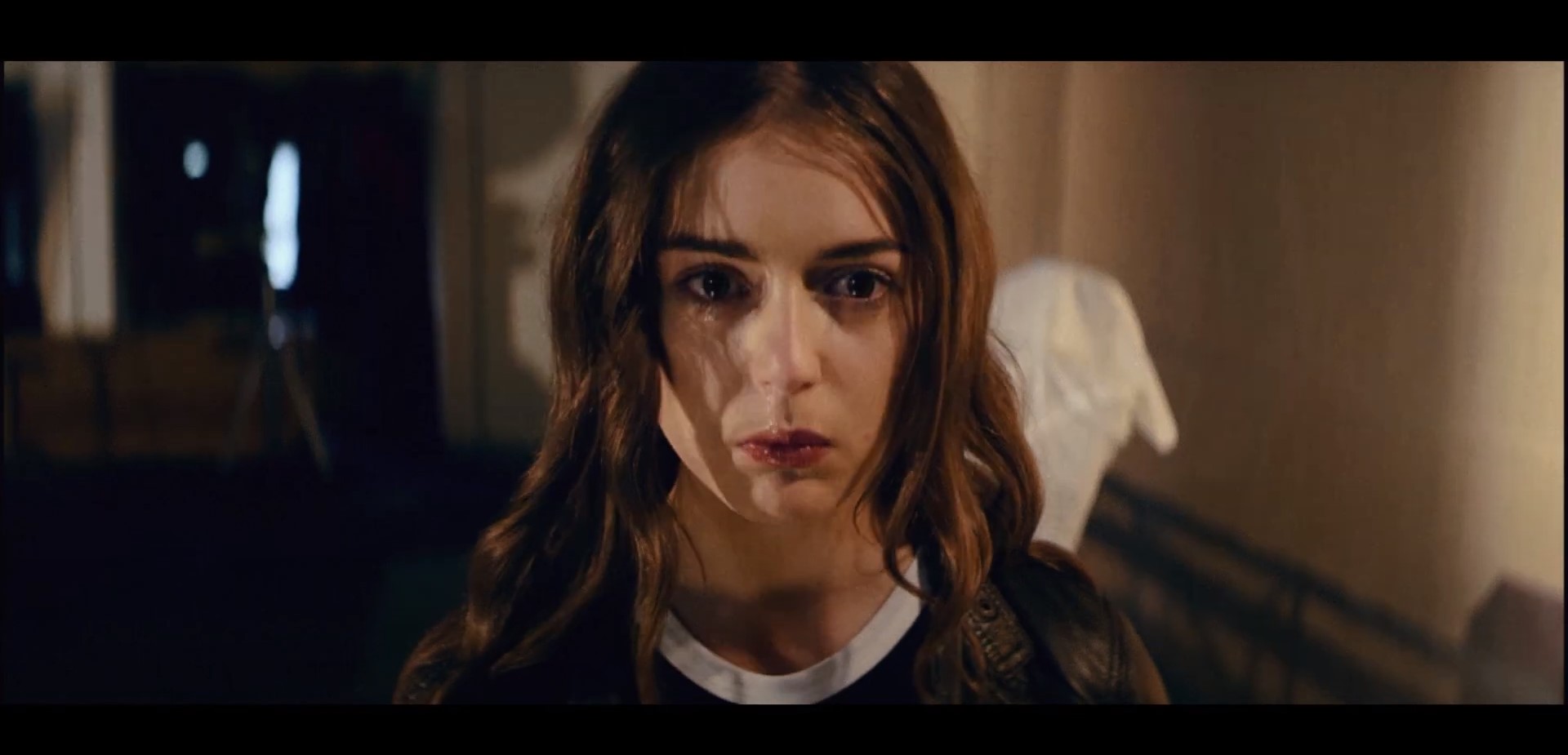
Felice Jankell (“The Bunker Game”) and Erica Midfjäll play the two sisters, Celeste and Isa, embroiled in magnetism bad luck happening up on an old of circ 1970s-1980s LP in today’s age.  There’s quite a bit of tension between the two sisters who are not conjoined at the hip like most close-in-age siblings as they battle their own personal demons that are only talked about rather than exhibited.  Yet, we get the sense of their daily struggles through Jankell’s body language for Celeste and the recollecting conversations both sisters have regarding Isa’s troubles keeping glued together and those existential problems are what connects them, or rather what connect us all as sentient beings, making the characters relatable.  Isa exposes Celeste to the LP in hopes to help Celese regain control over her life but what ensues is not only a weight lifted off her capacity to overcome but also an underlining fear of being followed, watched, and frightened by grotesque dreams of herself in a monstrous form.  At this point, Isa and Celeste are experience parallel psychosis spurred by the record that leads them, and us, to the headliner of film, genre icon Christina Lindberg   The once sweet-faced Swedish brunette, who once donned an eyepatch and took a shotgun to her rapists in the role of Madeleine in “Thriller:  A Cruel Picture” and who once debuted as a 16-year-old virginial maiden in the sexploitation “Maid in Sweden,” has now grown up to become a woman basking in the essence of power and control at all times with Lena, a magnetism expert attempting to rectify unintended mistakes distributing a soul separating, charmed-grooved vinyl from decades earlier.  Lena has rich history that’s dropped in segments from the moment she’s introduced on screen, almost immediately displaying her limitless power on two young, intrusive psychics (Johan Palm and Hanna Asp) who enter her home by the summoning Supreme, an exterior planed creature who supervises the psychic realm.  Performances are incredible skintight as actor brings an elevated show for their individual role, including the rest of the supporting cast in Hans Sandqvist, Iwa Boman, Inger Nilsson, and Erica Midfjäll’s twin sister, Hanna, to sell the “Black Circle’s” premise and promise more convincingly terrifying.
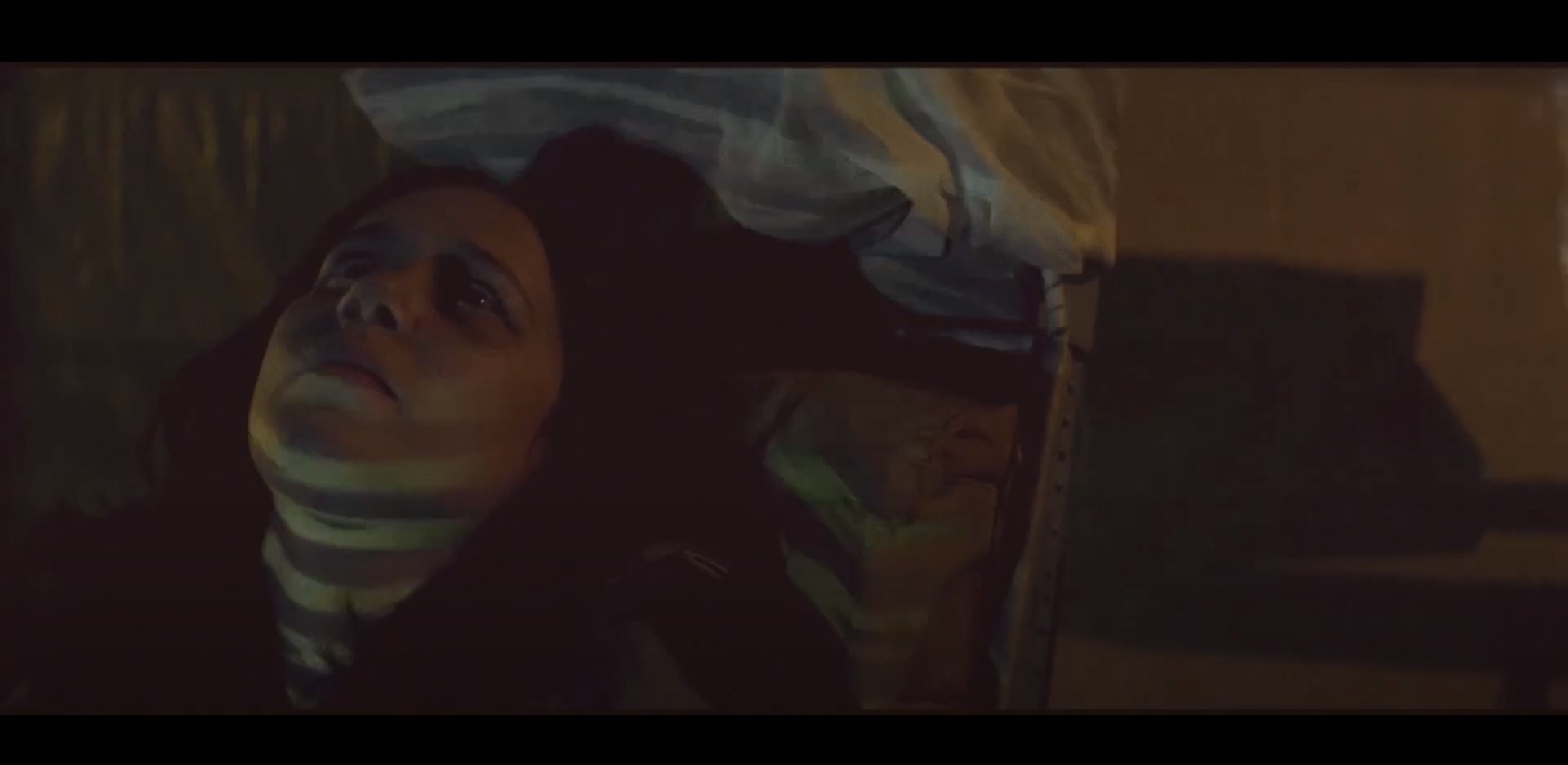
If you were forced to only see one indie contemporary release this year, “Black Circle’ should be it.  Bogliano’s “Black Circle” doesn’t dazzle with a ton of effects nor is production value or exotic and grand set locations applied to lure in viewers, but what Bogliano does do well, and what ultimately instills a fascinating story, is the well-written script, character developments, and the subtle effects that bore a fear of the unknown dread persistently and consistently throughout.  Bogliano delivers a unique story sold on the rarity of proto-hypnosis with a premise fashioned around the development of his own mythos of psychic realm rules and beings. Best part about Bogliano’s piece of the macrocosmos is the way he chapters the narrative, ushering viewers gently and with explanation inside a context construction that uses phantasmagorical visuals and voice over narration to interpret magnetism jargon or to provide inside to setup the next chapter. This processing style of breaking up the acts accentuates, or offsets, the rather raw Dario Goldgel cinematography of the reality story, turning “Black Circle” in pedagogic inside into the basis of the wildly scrutinized, often criticized, hypnosis. What’s also neat about “Black Circle’s” story is the lack of a clearcut antagonist. Neither Lena, the two psychics, or even the monolithic, fazing Supreme serve as opposition against the two sisters but, in a twist of the tale, the sisters are actually their own worst enemies with doppelganger trouble in what afflicts us all at one point or another – existence. Yes, “Black Circle” is about the existential encounter that relates to good and evil, a theme of duality done without a tale of twins (or if you want to get technical, “Black Circle” was casted with a set of twins) and involves more with a separation of, what the story calls, an ethereal double that will eventually absorb itself into being the stronger, dominant replacement if the magnetism vinyl continues to be listened to in enough times it will weaken the original, strengthen the evil carbon copy, and there will be no going back.
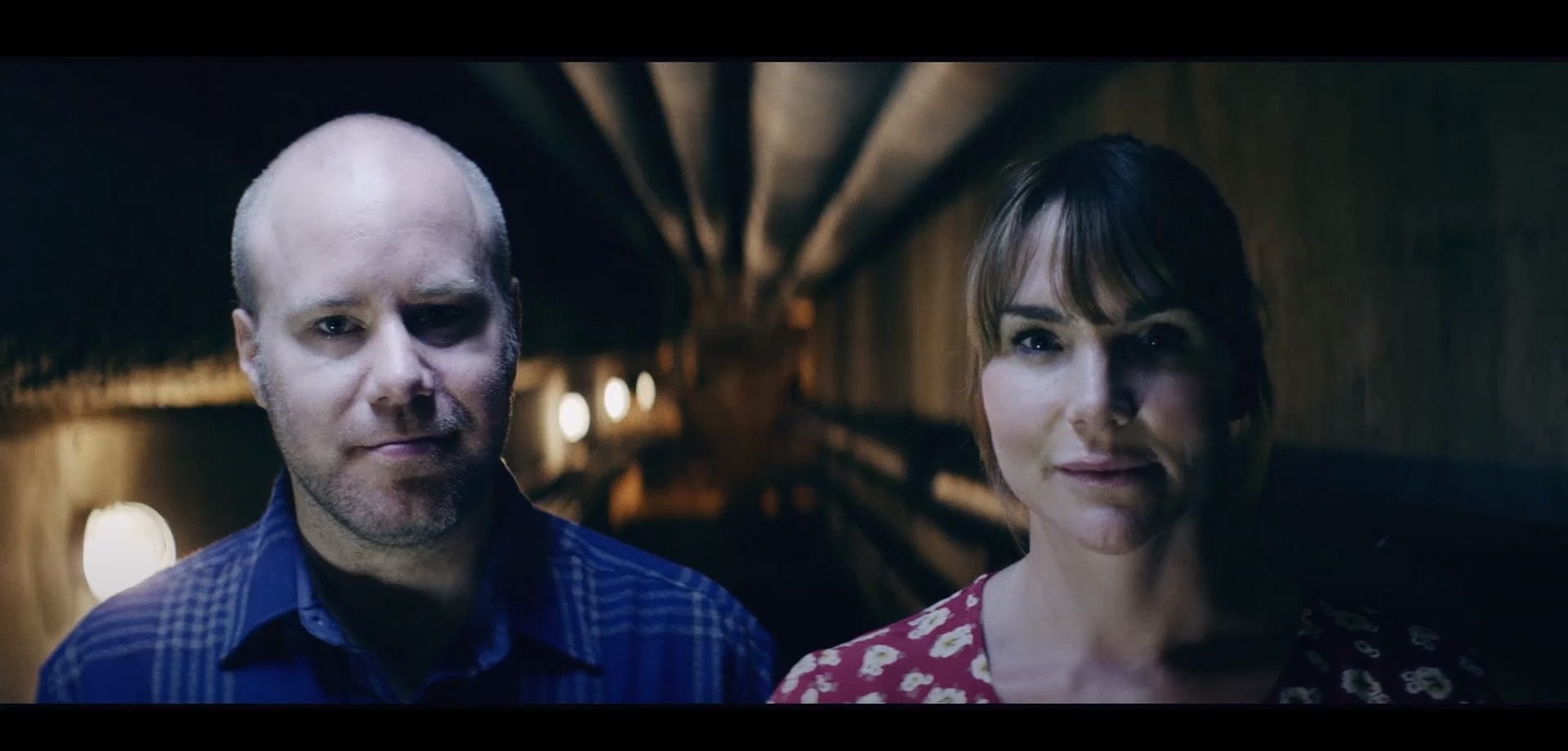
Become entranced by Adrian Garcia Bagliano’s “Black Circle” now available on a Synapse high-definition Bluray release. The AVC encoded, 1080p, dual-layered BD50, presented in a 2.40:1 to really grab the space of tighter quarters and lengthen the berth, has less transfer complications than let’s say most of Synapse’s catalogue. The digitally recorded video doesn’t require as much remastering as a decades old production on celluloid or videotape, but the narrative does feign video degradation or aging in the more elucidation scenes on magnetism 101. Details are fine and textured, blacks are especially inky and void-encompassing, and no signs of compressions issues with a bitrate average around low-to-mid 30s. The light sepia grading envelopes a welcoming, steely coldness around the characters and their astral plight. The Blu-ray comes with a Swedish DTS-HD 5.1 surround sound mix and an English dub Dolby Digital 2.0. With being reliant on pulsing waves to match the hypnotic scheme, the backdropped soundtrack adds to the unsettling pensiveness, like the metallic hum of a tuning fork, that never protrudes outright and even into the character’s dialogue space. Not a ton of spacing depth between dialogue and ambient but enough to sate directional awareness and atmosphere. English subtitles are optionally available. Bonus features include an audio commentary with the director, two individual interviews with director Andrea Garcia Bogliano and star Christina Lindberg, both in fluid English, an Inside Black Circle behind the scenes featurette, a still gallery, and the original teaser trailer. Synapse’s release is actually a 2-disc set containing a CD of producer Rickard Gamfors score. Inside the black Blu-ray casing, a red and black insert card with the three faces of main principal characters, the sisters and Lena, in linear composition overtop the black circle with the title underneath. On the backside, the complete 18-piece CD track list complete with instrument and mixing acknowledgements. Also in the insert liner is a 2023 Synapse product catalogue. Front cover art has retro appeal with a black background emphasizing the perfect spiral red and black circle being touched by disembodied and flat matted red hands. The disc itself mirrors the front cover’s spiral but sheens like a vinyl LP but in red and black alternate rings. Dread the duplication, fear the far-side of yourself, when becoming magnetized by magnetism of the underutilized genre that knows no limits and has a plethora of petrifying possibilities inside the “Black Circle.”

Cosmic horror is the “Black Circle.”  2-Disc Blu-ray/CD on Amazon!

Ever Get the Feeling that Your Downhill Relationship is an Endless EVIL Loop? “Brightwood” reviewed! (Cinephobia Releasing / DVD)

“Brightwood” available on DVD August 22nd!  

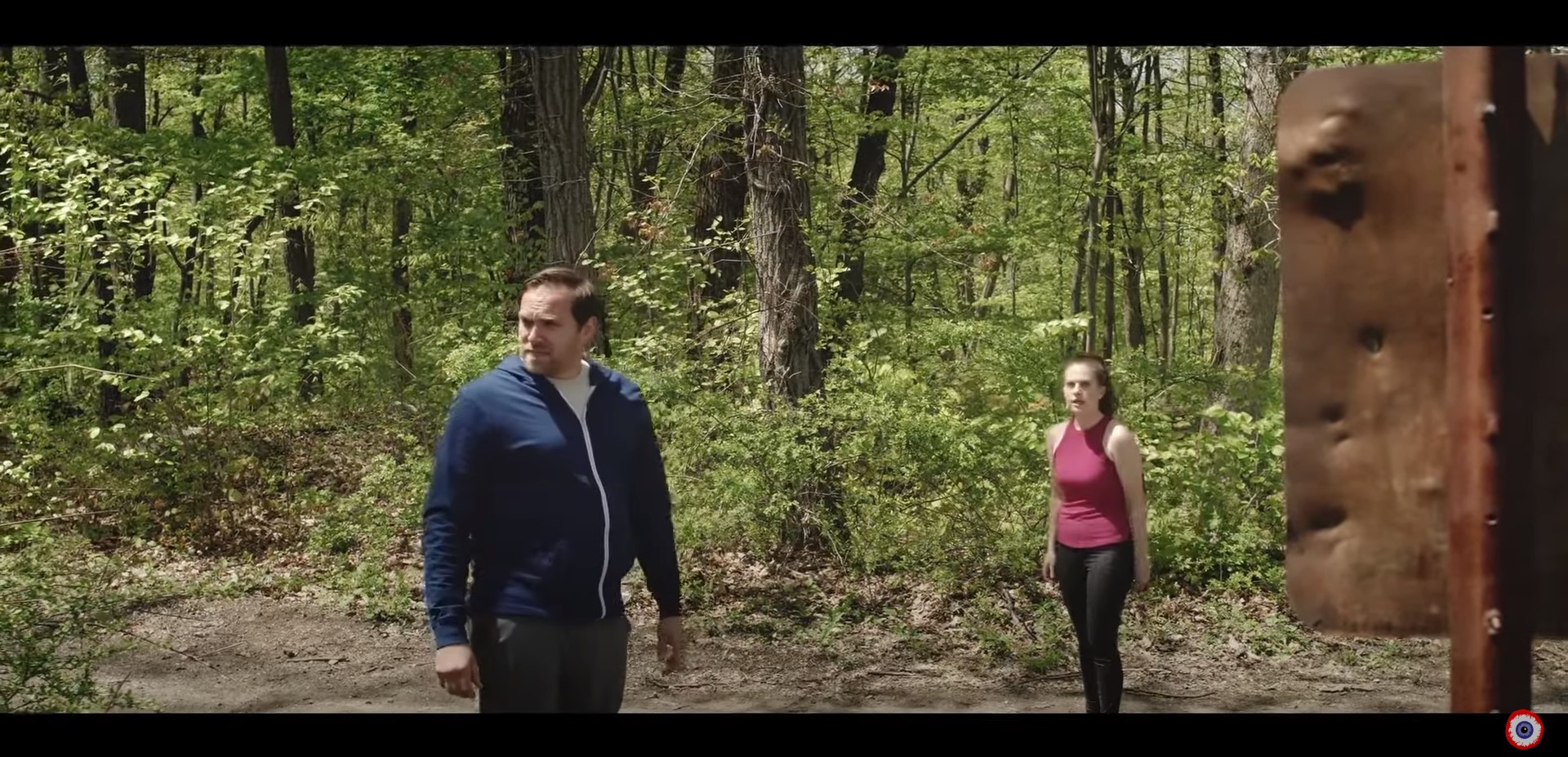
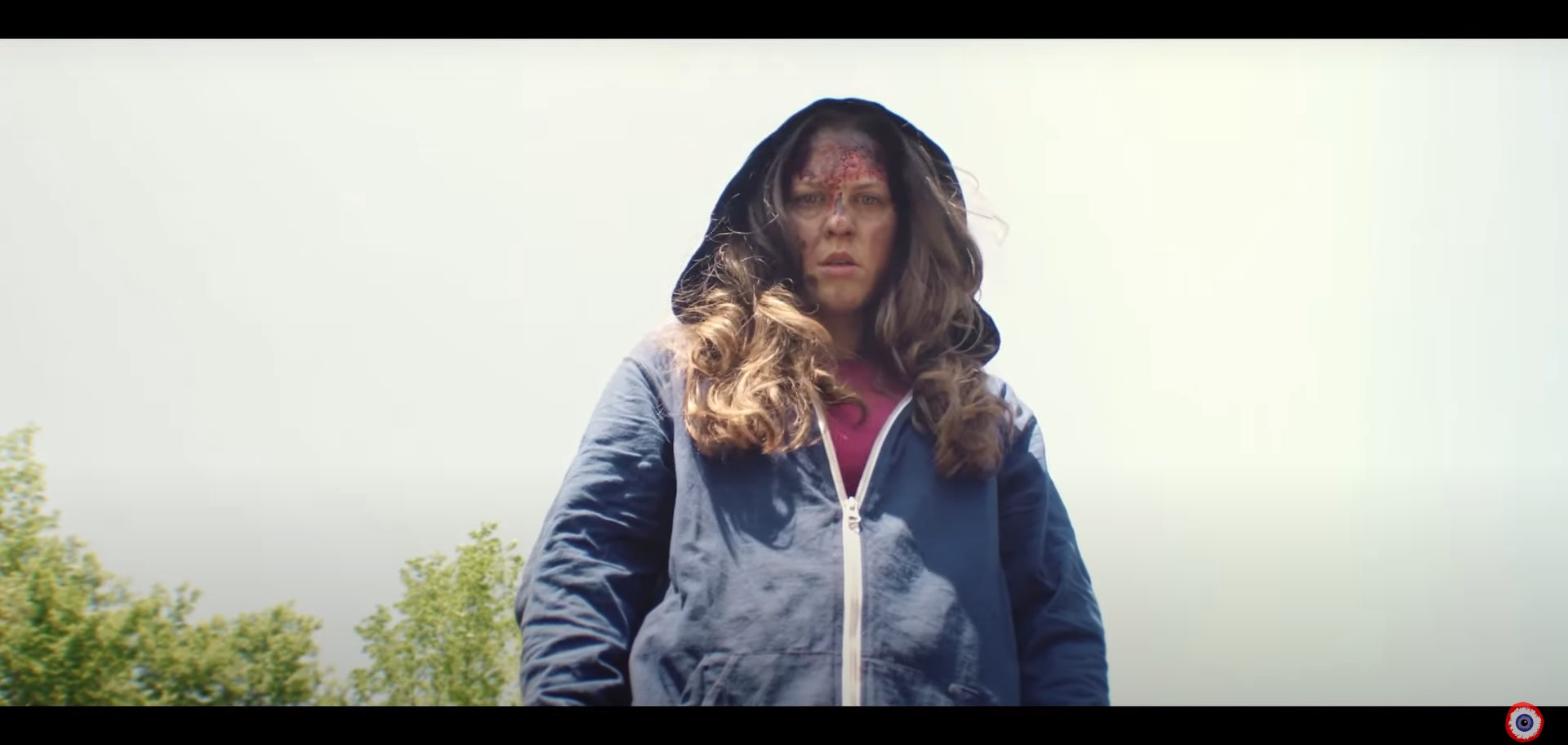
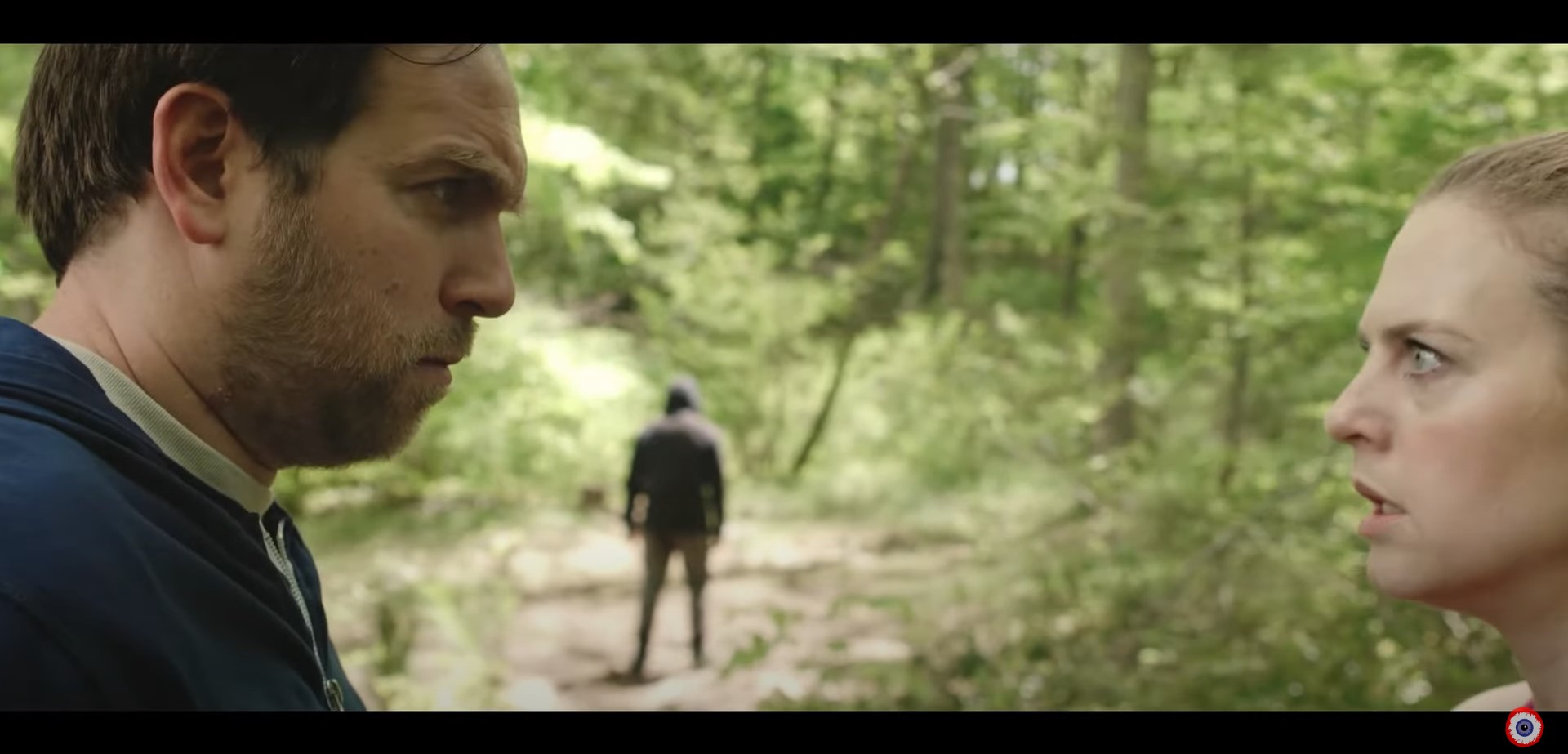
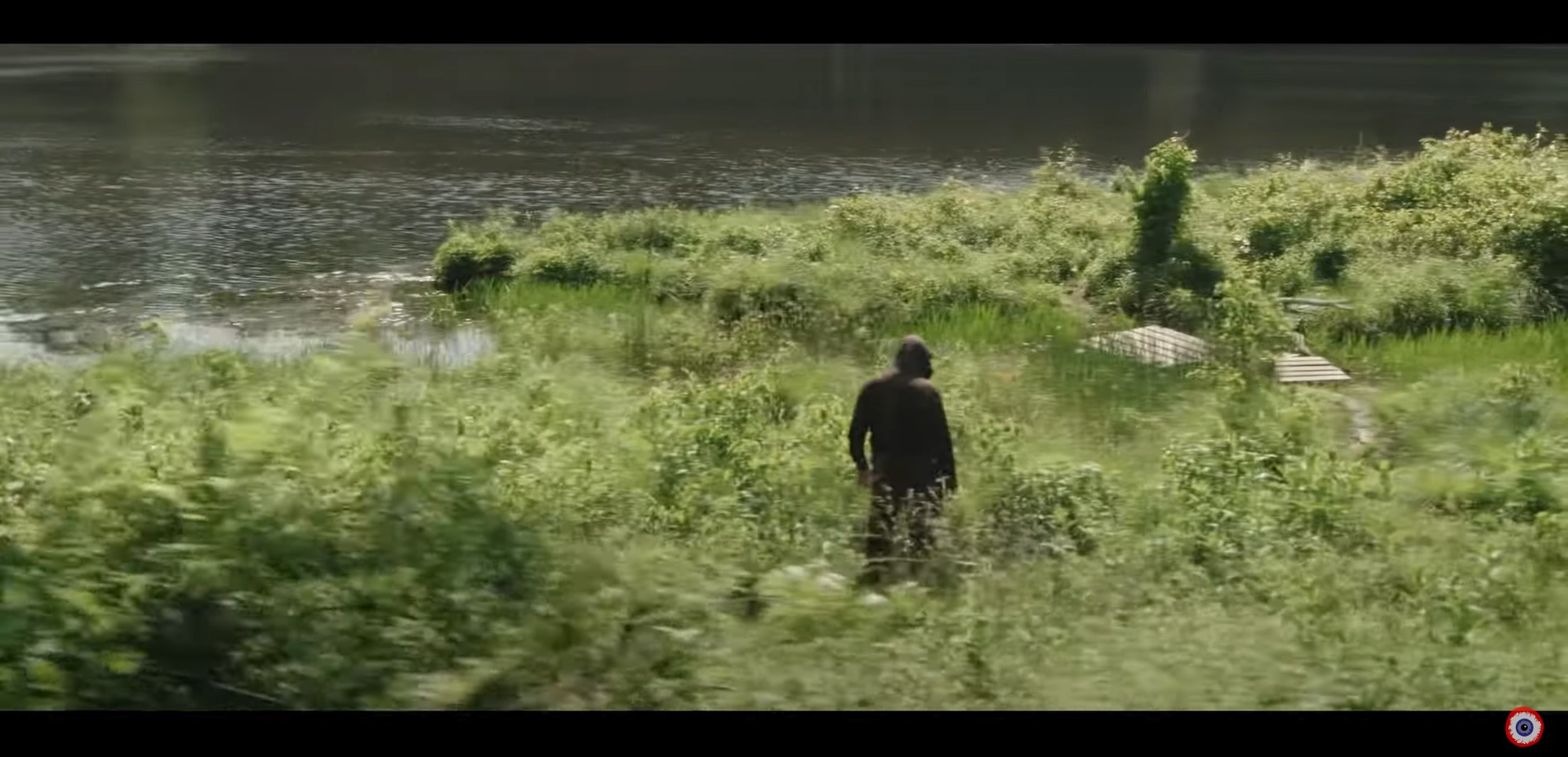
Jen and Dan have been a couple for a long time.  A stupid long time.  Such a long time, Jen has come to loathe Dan for everything he is worth.  On the other hand, Dan self-deprecates himself into submission despite his love for Jen, even a loveless, spit firing Jen.  When the two go for a run, hashing out the contentious night before, Jen heads for the pond to run laps around Dan in avoidance.  Having circled around a few times, Jen realizes the once exit trail from the pond, the trail she run through to the pond, is now no longer visible.  Perplexed, she voices her concern to Dan who also can’t seem to find the exit trail and every attempt to navigate through the surrounding forest reverts in them being brought back to the pond.  With no way to escape a dead cell service zone, the couple realize their not alone when they come across different versions of themselves stuck on a time loop from the very beginning moment the quarreling couple first ran onto the pond circuit to the future, disheveled versions that no longer have humanity.

Strained relationships and cosmic horror go hand-in-hand.  Or, at least, sometimes they feel like they do with an endless and revolving stagnation of being one with another as the hatred for the other and the fear of being alone cancel out any promise of an amiable or favorable solution.  Instead, staying put seems safe albeit the loop around effect of revising old and reoccurring snags that keep the relationship stale and hopeless instead of moving forward.  That’s possibly how writer-director Dane Elcar sees the suffocating time warping scenario playout symbolized in his debut cosmic horror feature “Brightwood.”  Based off and remade from Elcar’s 2018 20-minute short film entitled “The Pond,” anxiety riddles an already one-sided contempt couple who can’t find the path out of not only the pond but also their relationship in the thriller that’s peppered with dark comedy.  The 2022 feature, filmed around Egbert Lake in New Jersey, is produced by the director as well as star Max Woertendyke under Noble Gas Media productions presented by Media Moove and the LLC, Pond Pictures. 

“Brightwood” has a whopping cast of two and, honestly, the story doesn’t require the need for more and the principals, who may be better described as neutral characters or possibly as far as anti-protagonists, run the gamut of moral principles depending on which in-time version of them we’re witnessing.  Dana Berger and Max Woertendyke play the beleaguered and one-sided cantankerous couple Jen and Dan who are unable to escape the mysterious circumstances of being trapped around and forced to endured permanent residence at the trail that encircles a nearby pond.   The couple’s relationship dilemma relates irreconciled differences once adoring lovers cross beyond into when the romance goes stale.  Jen notes this by saying how she hates Dan’s smell as if it just lingers in her nasal cavity.  Hate is sowed deep after years of living with the person she has come to despise because of Dan’s lack of gumption to be anything but mediocre.  Like a puppy trying to keep up with an odiously pissed off owner, Dan mostly fears losing the one woman who likely puts up with his inadequacies.  Berger and Woertendyke really do nail the exposition history while feeding into these dynamics to setup their characters’ climatic, life-altering stuck in an invisible cosmic cage.  Stuck, the word that best describes both a worn-out relationship and the unnatural situation they’re in.  Jen and Dan are stuck together, possibly forever, to work out couple complications or to give up and just terminate it all.  The actors tap into that cathartic back-and-forth by giving a range of therapeutic emotion performances that purges truth and guilt from their characters, like any relationship would in order to grow and/or move forward.

“Brightwood” is one diabolical tale of torment of being indefinitely stuck in relationship Hell.  Analogies and metaphors compile along the way in a parallel stream of unfavorable situations.  To add more layers, Dane Elcar throws them for a loop, literally.  Jen and Dan are copied over-and-over again in a replay of moments and time and each time they’re copied, new developments emerge in the time loop that were different from before, ascertained by previous versions of themselves.  Conceptionally, the idea has it’s convoluted moments in trying to make the characters appear derived from a particular staring point and interact with each other in various behavioral outcomes, but this particular subtenant, niche layer of the cosmic horror genre is innately difficult to represent but a moderate degree of success can be conveyed or extracted depending on how much you’re willing to be opened minded, or stretched the limits of reasonability, or just don’t plain give a damn about it making sense.  Films like Justin Benson and Aaron Moorhead’s saturated cosmic horror “The Endless” or not-so-cosmic but tantamount to the concept is George Moïse’s “Counter Clockwise” are examples that work and work well to entertain a coherency and a consistency of repeated time.  If expecting a flashy and full-fledged effects driven feature, “Brightwood” is the opposite with a low-key approach that relies on staggering scenes to eventually overlap them, keeping the common core element of the pond as a center focus and turning it instantly in our minds as an undercurrent source of evil despite’s its serenity and idyllic nature.  Little do we know, our instincts might be more on point than lead to believe.

Psychotic endlessness is synonymous with loveless relationships in Dan Elcar’s “Brightwood” available on the 3rd DVD distributed by Cinephobia Releasing come August 22nd.  The single layer, interlaced DVD is presented in a widescreen 2.35:1 aspect ratio.  Image quality on the release displays a subtle overexposure, shot mostly with natural daylight, and desaturated video image not terribly rich with coloring.  Basic detail renders over nicely, exhibiting fair delineating and depth within a nature coloring scheme that micro blends characters into the foliage and mirror pond landscape.  Minor aliasing shows within the frame but the overall compression artefacts end there, decoding data at the higher end of where DVD’s can perform around 7-8 Mbps. “Brightwood” comes equipped with two English audio options – Dolby Digital Stereo 2.0 and a Dolby Digital 5.1 Surround Sound.   Between the tracks, dialogue transcends the others in a very line heavy narrative to push the small cast along but there’s a suffice amount of leaf rustling and trail running ambience and range to expand the sound into the back channels.  Jason Cooks composed score a lightly melodious score mixed with harsh tones to keep viewers edgy with suspense.  English subtitles are available.  Bonus features include a feature commentary from director Dane Elcar and stars Max Woertendyke and Dana Berger, 11-minutes of deleted scenes, the original 17-minute short “The Pond,” and Cinephobia Releasing trailers.  The standard DVD sports “Brightwood” poster art with no insert on the inside and the disc art the same as the poster with release spec, which are a not rated feature and a runtime of 84 minutes with an unlisted regionality of region 1 playback.  “Brightwood” endures the subgenre’s stumbling blocks with concentrated acting stability and synergy between the 100% invested Dana Berger and Max Woertendyke who could literally perpetuate Dane Elcar’s vision endlessly.

“Brightwood” available on DVD August 22nd!  

A Gnostically, Esoteric EVIL Acid Trip. “Archons” reviewed! (Syndicado / DVD)

“Archons” are Watching You.  You Can Watch Them on DVD!  Click the Cover to Purchase!

A once promising, up-and-coming rock trio struggles years later to exit the shadow of their only hit song. They embark on an acid-stimulated spiritual canoe trip down the meandering river pathways of British Columbia, hoping the creative juices will flow under the influence while connecting the native wilderness. Along the way, they pick up a beach camping super fan and continue their trek toward mapped out checkpoints and take a hit of acid at each stop. The drugs have seemingly taken effect in a strange, voyeuristic way as if someone, or something, is watching them at each campsite. The visions become terrifyingly vivid as a pair of humanoid creatures rummage through their gear during the night and survey them from afar no matter where the band are or how far they travel. To make the situation worse, the acid they’re ingesting might be the root cause that not only expands their mind beyond the brain’s limited scope but also grows a biological entity wriggling for more room space.

The influence behind Nick Szostakiwskyj’s “Archons” is something fascinatingly outlandish in what’s a simile to the Scientology handbook. Rulers of the realm, creators of the physical universe, guardians of the celestial heavens, architects of the kingdom of darkness, archons, as some historical cultural teachings would have it, rise above traditional and conventional spiritualities with an expanse and infinitude of spiritual knowledge as related to the Gnosticism belief system. For the Vancouver filmmaker, Szostakiwskyj adapts the ideology with a bad acid trip in his 2020 cosmic horror that was once under the working time, “Hammer of the Gods.” “Archons” is the third feature film for Szostakiwskyj and the second otherworldly horror following “Black Mountain Side,” a precursing complementor that also captures the spectacularly natural, yet ominous lit, Canadian terrain in the Winter opposite season compared to “Archons’s'” Summer. The independent Canadian feature is A Farewell to Kings Entertainment production and is produced by Szostakiwskyj with Cameron Tremblay and alongside with the now defunction A Farewell to Kings Entertainment executive producer team of Samantha Carly and Steve Kaszas, who are now in the leadership team of Alright Alice Productions, and James and Susan McDonald.

“Archons” is tightly casted with less than a handful of canoers being spied upon by the gnarly gatekeepers of the universe. The story surrounds the spiritual and drug-laced scull trip of Dog Sled, a three-piece rock band who have lost their creative mojo and star power momentum with a fickle music fanbase. Lead singer Mitchell Ashley-Hoffman doesn’t have the emotional range to synthesize great lyrics but has the vocals of a sway fans and is played with Kurt Cobain-esque and mellow concern by Josh Collins. Rob Raco and Samantha Carly play bassist and songwriter Eric and drummer Olivia, aka Liv, and the pair are more in tune with each other while Mitchell mind wanders and drools over the ride hitcher and tarry eyed fan, April (Parmiss Sehat). The Vancouver based cast have enough chemistry to be slowly dismantling as a band on the fringe of collapse with backdoor dealings from one of them aiming to go solo into the limelight and to hold secrets that lead to life-threatening consequences all in the name of spiritual retreat.  However, to the extent of the being followed, spied upon, and endangered by hostile creatures, the character concern level is too low as if apathy for interdimensional beings that at first were cloaked and now are full view is not at the top of the internal fear alarm list for any of them.  The situation is written downplayed and the subtle actions to understand what’s in front of them mutes the anxiety for the audience.  “Archons” rounds out the cast with radio voices, minor roles, and two archons with Billie-Rae Grant, Lauren Donnelly (“Viral”), Michael Dickson (“Driver From Hell”), Timothy Lyle (“The Revenant”), Cameron Tremblay, Nathaniel Gordon, Marc Anthony Williams (“Black Mountain Side”), and Quinton Boisclair (“Demonic).

“Archons” has this beautiful backdrop of British Columbia’s topographical nature in a panoramic view in a breathtakingly serene opening shot and continues the wilderness motif with a thick forest and a never-ending river that seemingly swallow a group clearly not in their usual element.  “Archons” also has a beautifully disturbing breadth of perception concept laced with drugs and the gnostic universe.  The cosmic horror element is not forced or over-the-top being wrapped and shrouded in ambiguous mystery that keeps audiences glued to the progression baby steps before coming to terms with a dropped veil that causes reactionary looks over your shoulder with every unexplainable sound not in view.  Szostakiwskyj is in no hurry to quickly build an underlayer reality that ties into a dualistic system of two worlds running parallel to each other and colliding when drugs produce the sneak peek behind the curtain.  What shouldn’t be seen is clearly bad for the protagonists’ health, much like drugs in themselves if abused, and Szostakiwskyj plays into that limitation of the mind as if the part the brain or the organism that allows to see it all overloads, or overdoses if you will, the network of tissue and neurons until it bursts outward like a Yellostone geyser in a spray of blood in what is a pretty neat and simple effect, one of the few practical effects by Geoff Ingeberg in this rather performance driven film, as well as a neat scene to behold while the group travels down river when the unexpected pop occurs.  “Archons” is open for a numerous of interpretations, leaving the possibilities endless, but we don’t exactly know where Eric the bassist obtained the snack baggie drugs, what the creatures are intently undertaking, or if the vague final scene is the aftermath of a horrible acid trip gone fatally wrong and has dislodged memories of events, jumbling them up to the point where nothing makes sense and leaves more questions than answers.  The story definitely ends with more desires in detail, delineation, and context but isn’t the less-is-more concept the bread-and-butter of cosmic horror where the unknown is the scariest part that makes us feel infinitely small knowing the world around us is infinitely bigger?

Splice into a new and startling reality with your own DVD copy of “Archons” courtesy of Syndicado Distribution. Stored on a DVD9, “Archons” is presented in a widescreen 2.39:1 that enhances the initial landscape shots in the opening scenes. From then on out, Cameron Tremblay’s cinematography sticks to eyeline mid-to-closeup framing with a here-and-there upward angle to inject foreboding if the scene calls for it. Despite being pitch black, the aphotic zones Tremblay creates without the use of artificial lighting or tinting day scenes provides a sobering and somber authenticity of young people being stalked in the woods. Syndicado stakes a larger storage capacity for a low-budget film and the result pays off despite the decoding 5-6Mbps rate with the blacks looking especially inky without an inkling of compression issues, such as banding or splotchiness that plague darker scenes. The cooler color pallet digs a little more into bleak atmospherics, but there are warm pops of the BC bush with lime green leaves. The English Stereo 2.0 challenges to be more potent than it should be as the quiet and desolate trek the nature should incite more directional channels for a sound design that relies on the rustle of branches and the creatures’ low gutturals off in the distance and in an undeterminable bearing. What’s essentially a bare bones release, the region 1, clear cased DVD comes with the theatrical trailer on a static menu that also includes chapter selection. “Archons” is unrated with a runtime of 88 minutes. A low-key cosmic horror with eye-opening chills, “Archons” is cabbalistic cinema for the selective few who will understand it but does harp on the relatable proverb of with seeking fame comes a price.

“Archons” are Watching You.  You Can Watch Them on DVD!  Click the Cover to Purchase!

Bend a Knee to the EVIL “Alien Goddess” reviewed! (Darkside Releasing / Blu-ray)

“Alien Goddess” available on Blu-ray on Amazon.com!

After school hours is more than just detention, it can be paranormal purgatory when a class reviewing an education course about death, a saucy night photoshoot with a camera man and two models, and two lovers rendezvousing in the hallways are trapped inside the confines of the school building, unable to leave to exit the structure that is seemingly protecting them from an excruciatingly painful force that rings their ears and causes nose bleeds.  Cell phones cease to work and those outside the building inexplicably can’t see or hear their pleas for help.  Without much choice, they roam the hallways in search for answers, but something sinister is behind the walls, a force of evil that manifests out of a formless haze and towers over them.  The alien presence is a wonder to behold and is just as deadly when collecting the hapless souls stuck inside the building with the life-taking lifeform.

Unless you’re a whizz kid and enjoy academia like I enjoy horror movies, most people don’t want to be in school.  If you’re at school during the night and trapped with an amorphous alien with long, sharp talons, then you definitely relish in the terrors of school a lot less!  That’s the surreal sensation of Andreas Marawell’s 2022 cosmic horror “Alien Goddess.”  Marawell, who also penned the film, directs his fourth feature length production, following up from another supernatural hellbound-ish picture, “Black Ghosts,” from 2015.  Marawell trades damned deadly spirits for a more unearthly malaise with many of the interior shoots of inside the Östra Real, one of Sweden’s oldest schools, along with the other shooting locations around the country, such as Matteusskolan and Solna.  The indie sci-fi horror is the filmic production of the audio editing and record studio, Swesound Studios, and is self-produced by Andreas Marawell as well as George Beckman (“Flame Beings,” “Black Ghosts”) and Vassllis Maravelias.

The Swedish produced film comes with a lineup of indie Swedish or other European and Asian-born actors that roam the halls filled with dread and a presence that has selected them for the seizing.  “Alien Goddess” has no real principal lead but an ensemble principal cast to shadow through the dark corridors.  The ensemble is separated into three groups:  Group 1 – an intimate night class with the subject on death taught by instructor Lori (Birgitta Rudklint, “Black Ghosts”) with very knowledge and interested in death students in Alice (Gloria Ormandlaky), “A.Z.A.B”), Phillip (Sebastian From), and the most peculiar, perhaps slightly autistic Max, played by Johan Sjöberg wearing a bad wig.  Group 2 – a suggestive bad schoolgirl shoot with models Julie (played by the real-life fetish model and professional dominatrix by the name of Luna Dvil) and Dorothy (Johanna De Vera) in front of Paul Ray’s (Okan Akdag, “Control the Hunt”) photo lens. Group 3 – a lovers’ tryst between Wendy (Karin Engman) and Miranda (Julija Green) that goes deep into an existentialism and identity conversation that alludes to what’s to come. After a few fall into the Alien Goddess’s daggerish claws, the groups merge together, coming and going, becoming lost in the tenebrous tomb that was once a place for learning (and apparently naked photoshoots). Most of the story progression is pretty straight forward, people become trapped and die off one-by-one for the most part, but there’s a bit of sleight of hand with Miranda, one of the two lovers, who morphs into another person (Chantel Gluic) that is reticently connected to the extraterrestrial presence in a way that’s about as clear as mud. Every other character’s is fairly straight forward under the power of their will until faced against their maker as they try to escape the imprisoning school.

If the abstract of cosmic horror isn’t already opaque enough, “Alien Goddess” is no different with a roundtable approach to introducing cast without actually introducing the cast. Instead, Marawell dives right into their realm of happenings with discussions about the various stages and processes of death decay, an intense and provocative classroom photoshoot that whitewashes men’s sexual misconceptions of women, and nightmarish dreams of depersonalization that Wendy has of girlfriend Miranda changing into someone else and that someone’s dreams are Mirandas. I believe much of “Alien Goddess’s” themes revolve around identity and fear of death that shapes into a Carl Jung smorgasbord of psychotropic maladies that consists of disconnection of self through past dreams that aspire to an unfit future, compounded by the conscious notion of human mortality, and spliced with a sexual awkwardness that all factors into their common predicament that is very much a nightmare where the trapped groups are in an arcane space between reality and subconsciousness. Marawell also creates a colorful, strobing ambience for the groups that differ from outside the school or from those unaffected and view the school from the outside in. The combination of deep lighting gels and tints, mostly in a blue hue, flickered by the white orb light of a dancing flashlight and the flipping on-and-off of the overhead room lighting sends viewers into the portal of purgatory, so if intense strobing negatively effects your senses or triggers your known epilepsy, you’ve been warned as there is no caution before the film itself. “Alien Goddess” pays homage to the select sci-fi horror works of the late English filmmaker Norman J. Warren (“Inseminoid”) and also pulls heavy inspiration from H.P. Lovecraft’s cosmicism and the fear of the unknown as well as delivering the dialogue in prose akin to the Edgar Allen Poe’s Gothicism and macabre, as adverted to with a complete collection book of Poe’s being read and referenced to indirectly by a couple of characters. “Alien Goddess’s” hodgepodge of literary and psychological inspirations often feels jumbled, clunky, and dissonant when clashing with the amorphic idol storyline of a beautiful, awe-inspiring, ethereal evil with eye plucking and chest puncturing bestowments.

“Alien Goddess” is perfectly bizarre and unsettling to fit into the Darkside Collection catalogue of uncanny esoteric obscurities. The distributor’s high definition, 1080p, Blu-ray release is presented in a widescreen 1.85:1 aspect ratio on an AVC encoded BD25 and, unfortunately it shows the inferiority of the low storage capacity against compressing the high-density array of colors and luminance during confined and compacted night shoots. Banding and posterization plague an already heavily digital noise image, leading to no details to be delineated and leaving a contour-less and smoothed over appearance on all focal objects. The result is not terribly unforsaken as far as quality goes and the Marawell effect establishes an eldritch presence despite the lossy definition on a high-definition format at a decoding average of 20Mbps. “Alien Goddess” would have been just fine on DVD. Though a Swedish production, the audio mix is half-English, half-dubbed English 5.1 surround with lossy compression. Consistent electrical interference just beneath a monotonous overlayer of electrical zaps and isolated character actions, lots of shuffling feet no matter the floor surface. Half the actors’ dialogue is in a not-so-terrible dub; the performers are dubbed include Luna Dvil, Sebastian Form, and Julija Green for a semi-seamless, second language experience. Bonus features include Darkside Releasing trailers and interviews with the “Alien Goddess” cast and crew, or so does the back cover states but in reality, it’s all cast with response-portioned interviews from Okan Akdag, Birgitta Rudklint, and Johan Sjöberg. The physical Blu-ray comes in a traditional blue snapper keep case with Lovecraftian inspired, mustard-colored composite art of Octopus tentacles protruding out of a woman’s mouth with the school’s silhouette in the background. “Alien Goddess” has a runtime of 107 minutes and is unrated. Andreas Marawell directs theories and contexts of psychological art and science into an untapped nerve too hard to reach that “Alien Goddess” will simply fall short of being absorbed as full-blown cosmic terror.

“Alien Goddess” available on Blu-ray on Amazon.com!

EVIL is One Big Vagina Looking Stain on the Wall! “Dead Dicks” reviewed! (Artsploitation Films / Blu-ray)


Becca’s careworn life, concerning for her mentally unstable brother as well as maintaining her expenses through the up and down cashflow of a bartender’s tour, suddenly gleams with a ray of hope when a prestigious opportunity she’s earned calls for her to move across country in a matter of weeks, but when her brother, Ritchie, leaves multiple distressing messages on her phone, Becca’s continuing efforts to care for her troubled older brother forces her to abandoned the bar’s night shift duty and check on him. What Becca finds is Ritchie’s dead body strung up in the closet, and another Ritchie dead body electrocuted in the tub, and a very much alive Ritchie walking around naked. The perplexing phenomena all stems around a vaginal resembling wet stain on the bedroom wall that birth’s another copy of Ritchie after each death, but with every copy comes copious amounts of provocative questions that keep Becca from leaving Ritchie’s forlorn and tormented side or is it something much more paranormal detaining her?

Welcome back to our part two of the unofficial look at independent Canadian horror with a totally different and existential horror entitled “Dead Dicks” from the dynamic directing duo of Chris Bavota and Lee Paul Springer. Also possessing creative control of their own script, Bavota and Springer flex their filmmaking muscles by initiating themselves into the feature film market with an alternative impression on the lingering effects of mental illness and suicide, which Bavota and Springer preface the film responsibly with a public service announcement for audiences where those struggling with suicide or those who know someone struggling can reach out for information and help via a suicide prevention hotline telephone number. Believe it or not, ItsBlogginEvil has been exposed to some script work by Chris Bavota who penned the tyke-terrible, otherworldly beings in “Ghastlies,” helmed by Brett Kelly, and while I admire Kelly’s legendary practical effects ambitions on a microscopic budget and “Ghastlies” praise to the cult of small creature features villains, like “Gremlins” or “Critters,” I ultimately found the film and the screenplay to be fragmented and unflattering that doesn’t live up to honoring the retro creature ideals in a heavily slapstick and erroneous attempt. However, from 2016 to 2019, Bavota has shown to have an increased level of story maturity in his writing with, perhaps, an assist from his colleague Springer for their subject matter and execution of “Dead Dicks,” a production of Bavota and Springer’s Postal Code Films company in association with Red Clay Productions and distributed by Devilworks and Artsploitation Films.

The low-key cast brings a blanket of intimacy that’s synonymous with how suicide is often a loner’s internal battle with themselves. In this regard, Bavota and Springer needed an alleviator for the somber material with a pitch perfect front man in order to radiate the dry humor and convey the relatively taboo message of speaking up, speaking out, and speaking for suicidal tendencies. They found that man to be Heston Horwin who the filmmakers had had in mind to play the role of Ritchie. Bringing the quick wit and exact timing to Ritchie’s compromised soul, and serving also as executive producer on the film, Horwin becomes the vexed tinkerer trying to problem solve the causality of his own immortality who is stuck in a loop, a motif of in death there is life that continues to pop up, and also contorts his personality to make Ritchie a Rubik cube of anxiety, twisting and turning with tacit body language that serves as a roadblock to his frequently burdened little sister, Becca, played by newcomer Jillian Harris. The strong female role is outlined with meticulously sage from a new actress submersed for the first time credited in an existential and cosmic horror with a genitalia fascination. The duo becomes a trio when Matt Keyes enters the fold as the annoyed apartment neighbor one floor door to be jostled into Ritchie and Becca’s abundant death dilemma. Also known in character as Matt, Keyes deceives as a snarky, impatient prude masking his nice guy principles but when enough is enough, Keyes goes into angry neighbor mode whose fed up with Ritchie’s loud music and building shaking incidents.

“Dead Dicks” doesn’t boil down to simply suicide as the main theme to digest, but sharpens the graphite toward a much broader point that incorporates the lingering shockwave effects of severe mental illness while touching upon the bitter aftertaste of post-suicide. Becca’s caught in Ritchie’s woeful web that results in her always picking up the pieces left in her big brother’s wake. The act of unreciprocated love for Ritchie stems from almost losing him when they were younger, an anecdotal story brought up a couple of times between Becca and Ritchie, and the image of his lifeless body in the hospital has been forever seared in Becca’s mind and body matrix to the point she feels indebted to protect him. It took Ritchie to die, multiple times, for him to understand the inflexibilities of the loop Becca is coiled into with his own unhinged state and can’t proceed forward with her own life. Each copy of his former self slices away a layer of unstable irrationality that have become blinders detrimental to his and his sister’s life and once he’s reached the core of his true self, clarity forms around processing the chaos around him, but doesn’t ever remove the sadness and pain that has been imprinted onto him over the years from family and friends distrust and disdain and that makes his argument to die that much more logical to himself because for Becca to be free from the loop, which is represented by being trapped inside Ritchie’s apartment and objects around him that go into restart mode like the earshot cacophony of heavy rock music starting over after every death, one of them must die and the other be reborn. All of this is in encompassed with a display of in your face genitalia, a discolored wall that suspends death, and grimly funny gore that seamlessly blend computer imagery and practical effect, making “Dead Dicks” a taut downcast, dark comedy full of ostentatious and provocative symbolism from our Canadian neighbors!

The seismically cosmic “Dead Dicks” is intrinsic to the creative fluidity of the indie film culture and is now available on an Artsploitation Films’ Blu-ray release. The release is presented in in a widescreen, 2.39:1 aspect ratio, captured with an Arri Alexa camera providing a clean digital picture vivid in detail and distinct depth. The entire color package denotes warm atmospherics, more so from Ritchie’s off white and mustard yellow apartment to the hot soft pink of the vaginal canal scene, that becomes a consistent and engrossing product worked by cinematographer Nicolas Venne to still be able to find the humanizing angle of each individual character. The English language Dolby Digital 5.1 surround sound for the first half is quite wonky that perhaps stems from mismanaged discerning the vocals properly, leaving the dialogue depth obscured from background to foreground and from foreground to background. On the story’s flipside, the issues are worked out which would suggest the cluster of shots and audio takes were eventually adjusted or tweaked to sync appropriately. Julien Verschooris’ score and the introduction of Tusk and Bruiser on the soundtrack is an eclectic mix of dramatic synth and grunge rock that impeccably keeps the nearly one-location film from getting stale with a coagulating of an energizing and mellow temperment which would usually have a counter-effective result. Bonus features include commentary by directors Chris Bavota and Lee Paul Springer, four video diaries from the directors that span from pre-production to after the first week of production, a FX featurette that exhibits Matt Keyes going through a cast mold for his head and how his wonderfully gore scene was accomplished, and, lastly, four trailers from films distributed by Artsploitation Films. “Dead Dicks” is pneumatically bursting with the compressed scent of David Cronenberg; a deluxe doppelganger dark comedy bound with provoking the consequences surrounding death in a surrealistic effort to ease in and move past an inexorable acceptance.

“Dead Dicks” available on Blu-ray and DVD!