
Get “Paranoiac” on the Collector’s Edition Scream Factory Blu-ray!
The parents of siblings Tony, Simon, and Eleanor Ashby die in a tragic plane crash. Two years later, Tony commits suicide by plunging himself off a cliff into a watery grave with his body never having been recovered from the ebb and flow of crashing waves upon the oceanic rocks. Eleven years later, the long thought dead Tony suddenly and unexpectedly returns to what’s left of his family: an overprotectively cold and matriarchal substitute in Aunt Harriet, a narcissistic and alcoholic brother Simon, and a sister, Eleanor, on the precipice of losing her mind from grief over Tony’s death. Shocked by this return, the surviving Ashby siblings split their concerns regarding Tony’s authenticity. Eleanor believes her brother is alive and has come back to rebuild the happy relationship between them whereas Simon denounces Tony’s validity and works underhandedly to either expose Tony as a fraud or to get rid of the imposter by any means necessary, especially when the conditions of receiving the Ashby family fortune have nearly come to an end and a hefty inheritance awaits his opulent tastes. Tony’s arrival causes complications with the inheritance, opens up old wounds, evokes new romantic sensations, and regresses transgressional guilt toward a fiery conclusion to the Ashby family mystery.

A ravishingly dark, mystery thriller inspired by Scottish author Josephine Tey’s crime novel “Brat Farrar” from 1949, the 1963 “Paranoiac” works from off of Tey’s dysfunctional and deceptional family building blocks and extending it into a gothic framework of demented greed in a brand-new of-shooting avenue of psychological thrillers from Hammer Films, hoping to branch off the traditional horror trunk and piggyback success off of the American released, 1960 Alfred Hitchcock film, “Psycho.” “Paranoiac” is the junior film of Freddie Francis (“The Skull,” “Torture Garden”) and penned by the longtime Hammer writer, who basically wrote all of Hammer’s classics, Jimmy Sangster (“Horror of Dracula,” “The Revenge of Frankenstein”). Anthony Hinds and Basil Keys served as producers.
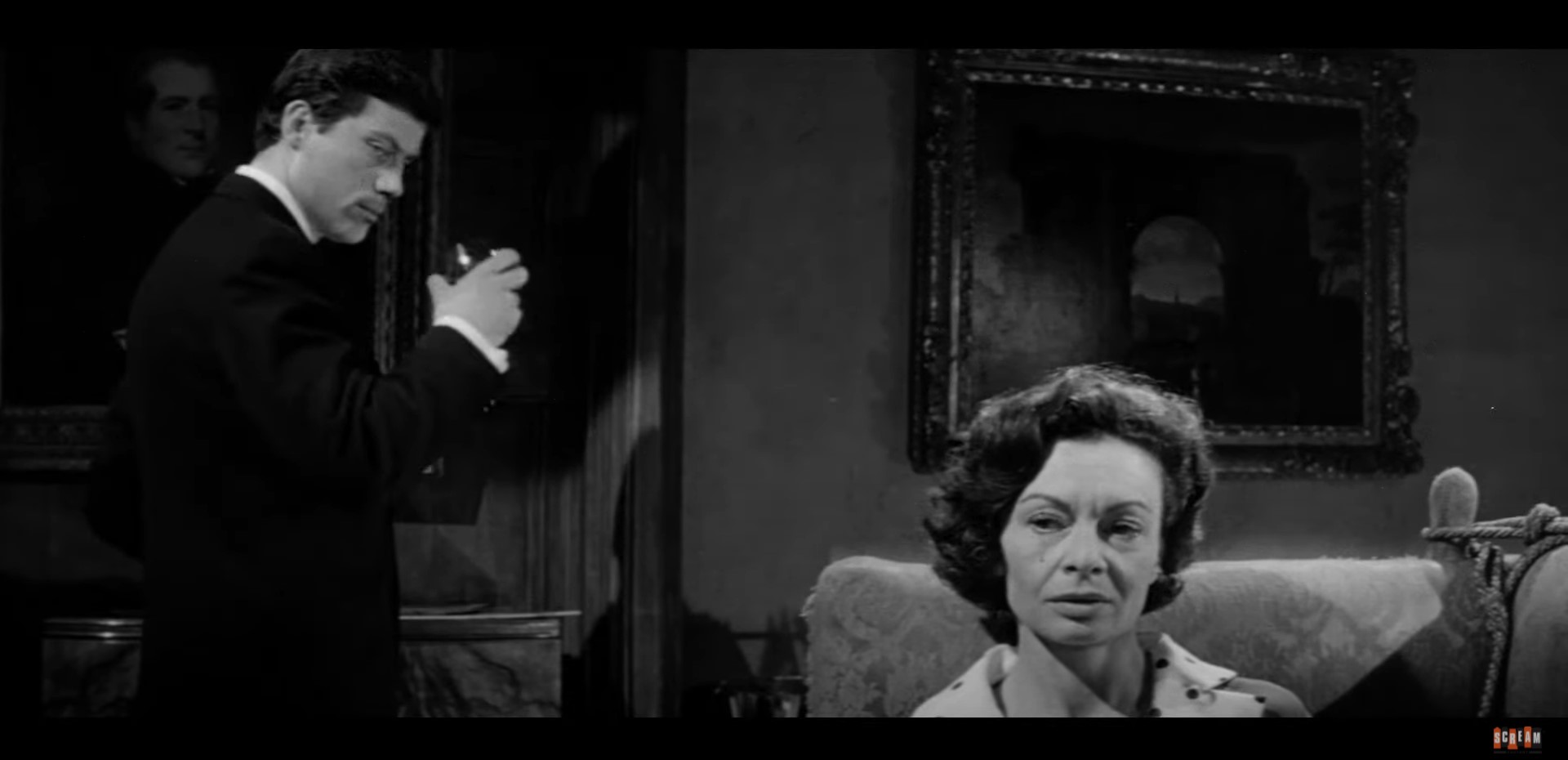
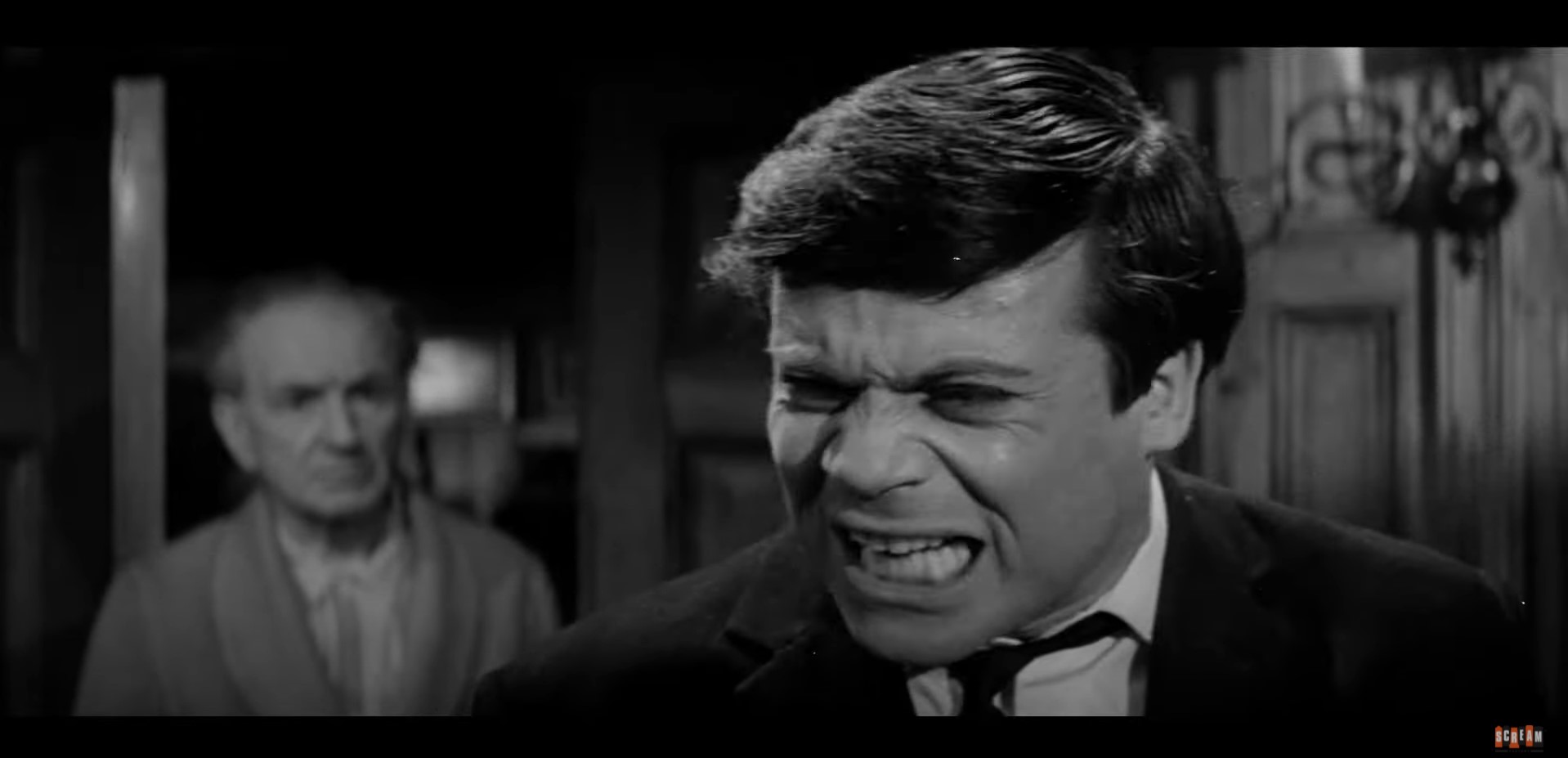
“Paranoiac’s” ensemble cast is quite brilliant in their respective roles. Oliver Reed (“Curse of the Werewolf,” “Gladiator”) stands out immensely with a flamboyantly cruel and warped performance as the erratic Simon Ashby constantly under the influence of Brandy, Champagne, or whatever alcoholic beverage he can get his organ-playing hands on. Reed puts out this hateful energy that can’t be ignored and outlines Simon with defined truth about where the character stands with his own flesh and blood – a callously cold and calculating black sheep. Simon becomes fascinating in every scene, every scenario, and continues to unravel as a wild card that always leave us wondering what he’s going to do next. Then there’s sweet and innocent but overly distraught Eleanor from Janette Scott in complete sibling behavioral polarity that sinks Eleanor further and further into madness designed by those close to her. Scott, who also had a starring role in “The Old Dark House” that was released the same year, came aboard relatively new to Hammer but equates her status against Reed, who Hammer was grooming to be a prominent leading man for more of their productions, by selling Eleanor’s despair and the deep-seeded craving for her other, more sweeter, brother, Tony. Encompassing the thought dead younger brother is Alexander Davion, another newbie to Hammers’ brand with, in my opinion, a neutral and bland face that doesn’t fit the Bray Studio’s swarthy and distinguished lot of male actors. Davion’s also doesn’t do terribly much with Tony’s sudden resurrection as he folds himself back into Ashby manor. While this could be Freddie Francis’s shrouding display of truth upon Tony’s legitimacy, there is literally no life or passion behind Alexander Davion’s eyes as he stares blankly at accusations and even Eleanor’s incestuous flirtations. Yes, incest becomes a rummaged theme that walks a tightrope between more than just two family members. “Alone in the Dark’s” Sheila Burrell is the stern protector in Aunt Harriet, “Blood Beast from Outer Space’s” Maurice Denham ruffles Simon’s feathers as the Ashby estate treasurer holding all of his inheritance, “The Maniac’s Liliane Brousse nurses a façade over the well-being of Eleanor and the love interests of Simon, and the cast wraps up with John Bonney as the treasurer’s fraudulent son.

Hammer had by 1963 already established itself as a horror powerhouse with the success of colorfully bold, violently stout, and sexually-saturated innuendo classic monster features, such as with “Horrors of Dracula,” “The Curse of Frankenstein,” and “The Mummy.” Capitalizing on the coattails of Hitchcock’s “Psycho” and sitting on the adaptational rights for Josephine Tey’s “Brat Farrar,” Hammer decided to pivot into the crime and suspense thriller direction that alluded to the aftereffects of cerebral breaking blended into elements of collusion, creating an endless tense-filled turbine revolving around the whodunit particles and the who’s veneer is covertly smeared by corruption. In a way other than the similar one word title and an unhinged theme, “Paranoiac” could be mistaken as a Hitchcockian-shot production with the larger than life and depth rich landscapes; the vast wide shots of Isle of Purbeck’s peaks and cliff steeps are engulfed oxymoronically as an idyllically menacing key peninsula landscape centric to Tony’s long thought demise as well as a place of hopelessness as the natural English Channel waves crash relentlessly onto the rocks below. Francis and Sangster hinge the film success on the colossal subtext of brittle strength, guilt, and a vague but prominent suggestion of incest between sister and brother and brother and aunt that, in all honestly, was a personal surprise to myself that it passed the British Board of Film Certification (BBFC). Yet, the insinuation did and paved a real pothole plague path for viewers in a good way that the story kept evolving, kept us on our toes, and when it spiraled, it spiraled quickly and sharp in a descent onto those very hopeless rocks below waiting for our emotions to be swept away lost in a mobile, violent current.
Paranoia runs rampant like an epidemic in this Freddie Francis aptly entitled sullen celluloid “Paranoiac,” the next Hammer film receiving a collector’s edition Blu-ray treatment from Scream Factory, the horror sublabel from Shout Factory! The region A locked encoded Blu-ray features a new 2K scan from the interpositive. By 1963, Hammer was well versed in technicolor, especially for Stateside releases of UK films, but “Paranoic” opts for the black and white picture in another subtle nod to “Psycho.” Under veteran Hammer Film’s cinematographer Arthur Grant, that famous gothic-cladded manor house is aesthetically fetching with in every detail captured by Grant’s 35mm camera as well as the broad wide shots in the bird’s eye view of Isle of Purbeck. Scream Factory releases the film in 1080p, full high definition of the original aspect ratio 2.35:1 with sterling results in extracting details and balancing the contrast without brightening or darkening where not needed or intended. There were no real damage spots to point out nor were any crops or enhancements made to touch up possible problematic or stylistic areas. The release comes with a single audio option in a DTS-HD Master Audio monaural track with slight static in the background. Dialogue is clean and mostly clear with an occasion hiss during more boisterous moments, but the range and depth of a faultless ambience and Elisabeth Lutyens brassy and bass soundtrack comes through symmetrically balanced. English SHD Subtitles are also optional. The special features include a new audio commentary with Film Historian Bruce Hallenbeck, two new interviews with author and critic Kim Newman in Drink of Deception and with film historian Jonathan Rigby in A Toast to Terror – two familiar faces seen in recent Scream Factory’s restorations of Hammer productions, a making-of segment that dives archive interviews with Jimmy Sangster and others going over the genesis of the story and into Hammer’s aspirations at the time, and a theatrical trailer. “Paranoiac” is more than just its creepy, bulbous mask that graces the Mark Maddox gorgeously green illustrated slipcover and snapper case cover art. Rarely does a film evolve from one narrative into another without crisscrossing the stitchwork, becoming overly convoluted beyond repair, yet “Paranoiac” digs in and dilates the already volatile chemistry with integrated and powerful performances from Oliver Reed and Janette Scott that makes this film high on the Hammer watch list.


 It's Bloggin Evil!