House Music is EVIL’s Jam! “Rave” reviewed! (Scream Team Releasing / Blu-ray)

Get High and Get Pumped for “Rave” on Blu-ray.

Free flowing Mimmi and her timid pal Lina are invited to an underground night club for one more illegal rave party before the building is vacated for unlawful occupation.  As the two dance the night away, Lina becomes steadily ill and as she tries for the bathroom, she begins to bleed from her skin.  Other rave goers begin to feel the same effects, spewing blood, dripping skin, and a melting away existence while the strobe lights unceasingly flicker and the deep house music pulsates into a fixed one-note bass.  Mimmi and another friend escape the party before even the first signs of the illness, hiding away to do a line cocaine, but when they’re followed by those turned into slow walking bags of oozing flesh, no longer resembling something human, her friend is brutal killed and she barely eludes the ill-fated ravers, becoming trapped inside by those liquifying creatures and a pair of masked individuals seemingly unaffected by what’s occurring around them.

Often times there comes a film that sneaks under the radar and may warrant a second watch for it to sink under the skin or into the recesses the brain’s grey matter.  For writer-director Nils Alatalo, his Swedish melt horror “Rave” is the epitome of context.  The 2020 released independent production, known as “Svartklubb” in the Swedish language, is Alatalo’s debut feature that catapults the filmmaker into the same melt movie categories held in reverence by fans of “Body Melt” or “Street Trash” while kissing the outer edges of vintage and cult iconic eurotrash from the 80’s.  “Rave” will be our consecutive watch, analyze, and review into body horror, following the more gore-gorging merge of man and machine of Davide Pesca’s “Re-Flesh” released last year.  “Rave” proclaims a more stylized and abstruse approach compared to Pesca’s grossly unconcealed transgressions of the body.  Haveri Film is the production company behind “Rave.”

“Rave” asynchronously follows two central characters beginning with the rave-reserved and dry-hesitant Lina before a switcheroo into dipping into the carefree, go-with-the-flow, drug-positive Mimmi.  Played correspondingly by Tuva Jagell (“Girls Lost”) and Isabelle Grill (“Midsommar”), the main principals are a dichotomizing pair of personalities mutually connected to each other by friendship and though Alatalo ultimately decides not to fully explore the intimacies of a cherished bond in post-climax, there’s certainly a relatability audiences will be able to understand amongst their own friendship terms, such as seemingly tired of the meekness or revel in being the dominating friend, as being fostered with empowerment, or on the opposite side of the spectrum, needing a friend to take charge, provide reassures, and be a beacon of exuberance.   However, all the letting go on inhibitions come at a cost, a deadly one at that, and when they essentially are the peak of being identical for perhaps the first time in their lives together, the closeness of Lina and Mimmi become mortally unraveled by what could be described as pure, unadulterated Hell.  What also unravels is their friendship in the midst of drugs coursing through their bloodstream and their minds have shutoff with the trance rhythm of the house music, both aspects of which put up walls to deflect the danger from within and around them, making them clueless to the clues.  Jagell and Grill’s performances have more physical importance than whatever come be extracted from their slim dialogue written for the characters and the two young actresses convert themselves into the roles of psychedelic terror. “Rave’s” partygoers round out with Victor Iván, Sophie Lücke, Ebba Gangoura, Sebastian Norén, Christer Wahlberg, and Celina Braute.

“Rave” is a flash of brilliance tightly confined and bottlenecked to not be bigger than needed by squeezing to contain its claustrophobic purgatory that’s wrapped like a nightmare on molly.  “Rave” is also not a straightforward line of coke, glow sticks, and fleshy fluid fiends within what is an ambiguous narrative that requires an open mind to its reverence for elder Euro horror.  That’s what I suspect Alatalo was shooting for here, an immense adoration and respect for European horror peppered with inspirations from American filmmakers as well.  Soft brilliance of Dario Armento lighting, silhouette eeriness of Lamberto Bava cinematography, and the slow bloodletting of Lucio Fulci’s gore represent the best qualities of same continental yore while including a John Carpenter story-ingrained synth score and paying homage to American melt horror filmmakers, such as J. Michael Muro, Gregory Lamberson, and Philip Brophy to name a few, with his own rendition of what it means to have skin slink and blood secrete from inside the body out.  While the first viewing doesn’t quite stimulate immediately the senses with its slow burn dread, ambiguous cause and effect, and dialogue adverse script, “Rave” glues itself to the psyche and lingers in that cranial netherworld that nags and gnaws at the subconscious and does it enough that a second viewing becomes necessary.  Instantly, piecing together the puzzle through a second visual overlay can jumpstart the engines on what exactly we’re witnessing – Alatalo’s patience with the structure, meticulous details in the scene, and admiration for the genre.  “Rave” is also an indie picture on a budget but considering the composition of the final product, “Rave” strongly accomplishes a persistent uneasiness without exposition that parallels subtle strikes of sharp, startling dread only seen by a handful of filmmakers.    

A whole new version of neon dead arrives onto a special edition Blu-ray of Nils Alatalo’s “Rave” from Scream Team Releasing.  The AVC encoded, 1080p high definition, BD25 presents the film in a widescreen 1:78:1 aspect ratio, scaled down from the original aspect ratio of Univision 2.00:1 causing some minor compressed looking scenes.  Not to be deterred, the range of scene setups under the cinematography trio of Jakob Ivar Ekvall, Amelia Finngåård, and Gustav Råström offer an eclectic mix often in the humblest of fashions, such as using just a camera flashlight in a windowless room or the red and blue neon lighting through fog machine.  Silhouettes delineate nicely on screen with the use of backlighting and camera angles.  Framing is a hit or miss coupled with energetic editing, but the overall atmosphere is agreeably chafed with tension.  Minor banding and some aliasing creep out as artifact side effects of a dark-laden story with some of the quicker moments evading the slimy-secretors through the building trying to keep up through the decoding of data.  The compression issues are not terribly invasive during viewing, but they are annoying consistent and notifiable.  The Swedish uncompressed LPCM 5.1 surround mix has lossless binding and sounds really good environmentally albeit many of the tracks are done in post, such as some of the exterior dialogues, which sound natural but softer in the scene, and the itemized milieu ambience.  The Joakim Martinsson and Christer Wahlberg house music and soundtrack are the real victors here integrated into “Rave’s” overall sound design of having the discordant industrial rhythms and irregularities become an antagonistic competitor breathing through the back and side channels, reminiscent of how intrinsic Giuliano Sorgini’s score heightened the intensity of the impending zombie attack.  English subtitles are optionally available.  Bonus features include an English commentary by director Nils Alatalo providing insight on nearly every shot, a soundtrack featurette alternating between Joakim Martinsson and Christer Wahlberg discussing and sample their individualized tracks, a making of montage with soundtrack only, and the film’s trailer.  The physical characteristics of the release contain a beautifully macabre composite in neon coloring and lace slipped into a standard Blu-ray snapper with latch.  Front cover is reversible with a more disheveled and strung-out Isabelle Grill looking blankly upward, which has a variation of her facial posture on the factory-distributed cover.  Disc art contains one of the gloppy ghouls bathed in red with a black background.  “Rave” release comes region free, not rated, and has a runtime of a brisk 72 minutes.  A slow burn melt movie capturing the essence of “Rave” to the grave.

Get High and Get Pumped for “Rave” on Blu-ray.

When Machine and Man Merge, Which EVIL Will Emerge? “Re-Flesh” reviewed! (SRS Cinema / DVD)

“Re-Flesh” DVD Available Now to Replace Your Old Skin!  

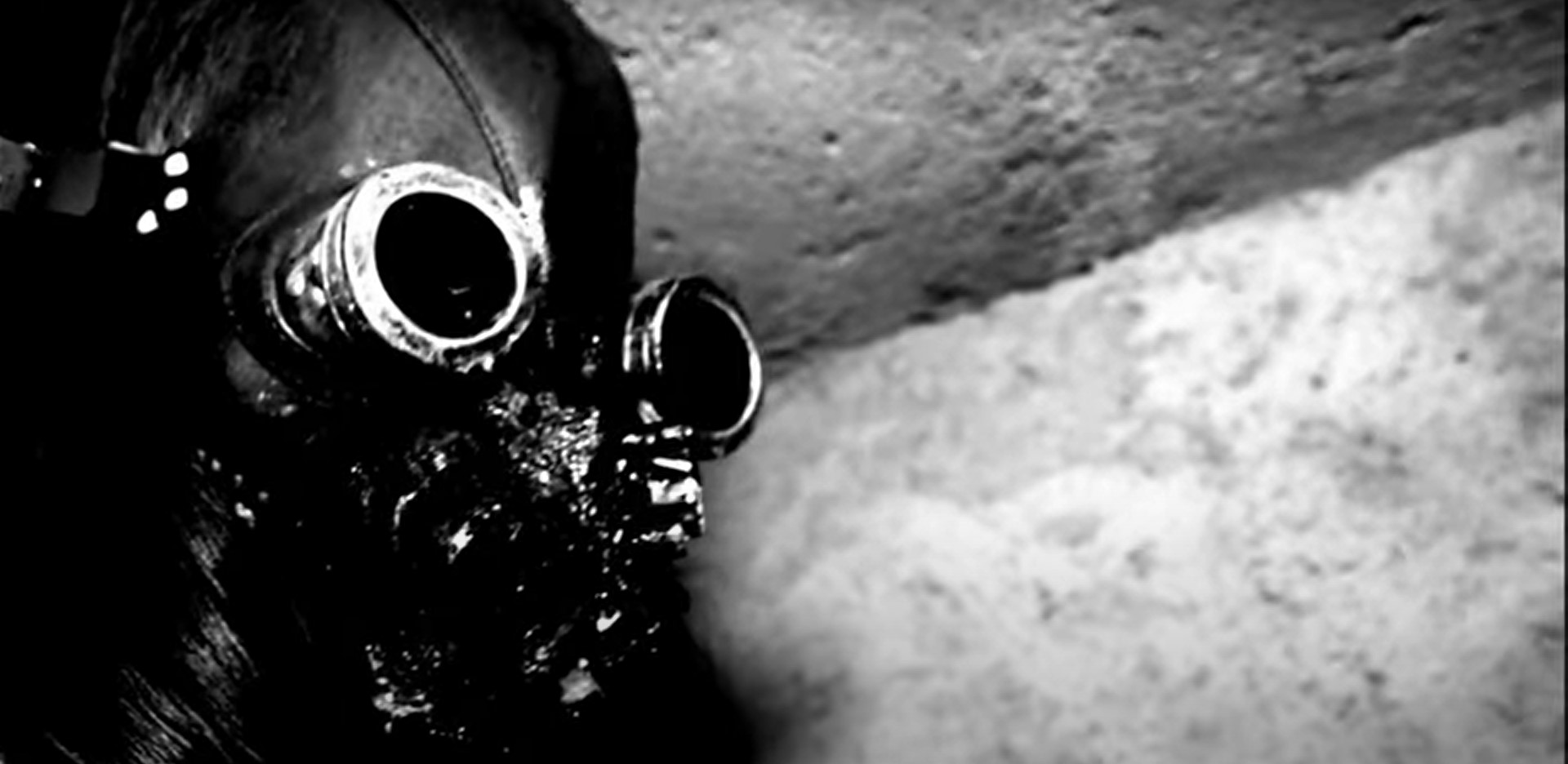
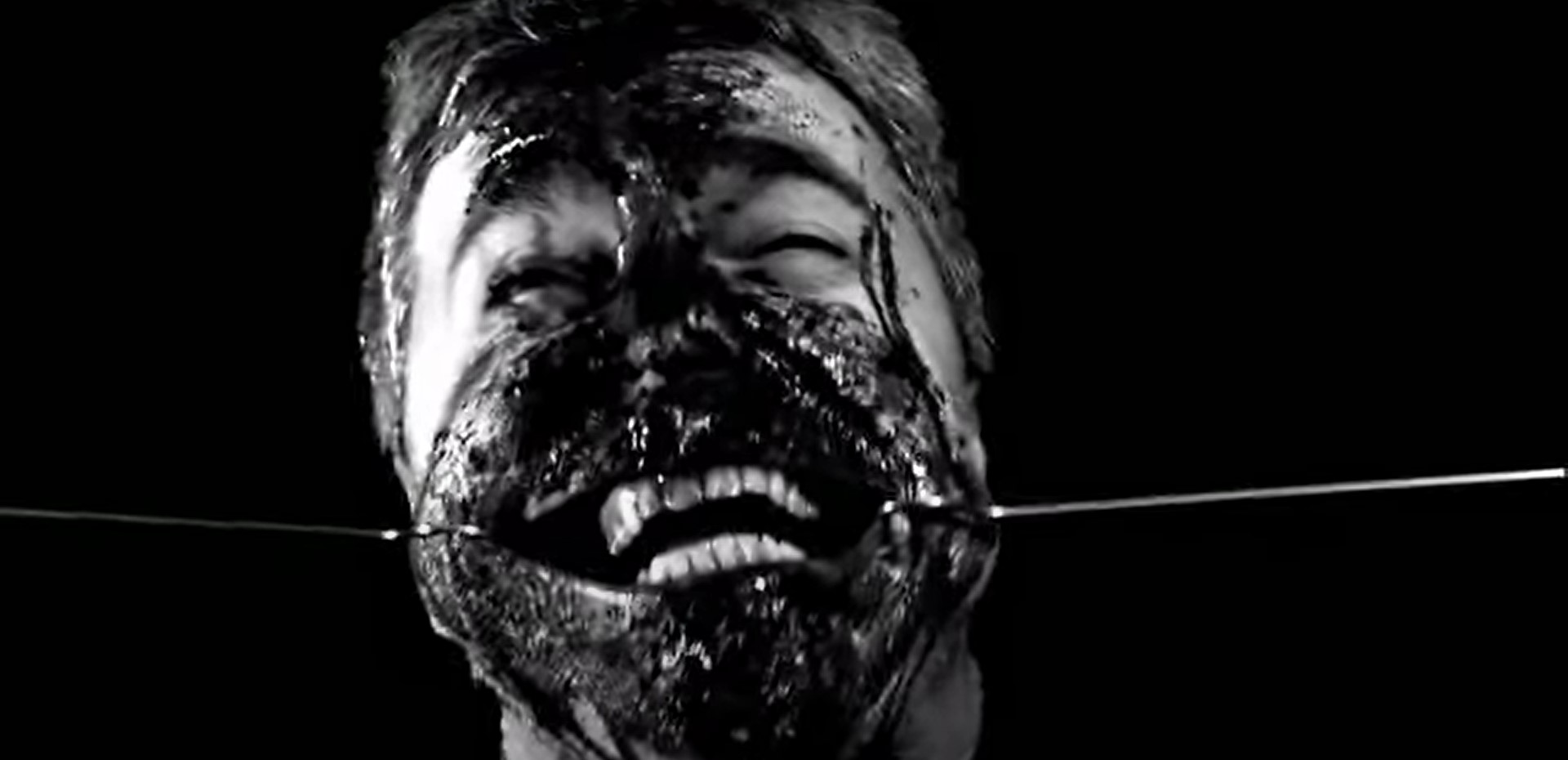
In a dystopian future, machine and man have merged into an asymmetrical symbiosis where machine is preponderantly present to corrupt man’s benevolent humanity.  Such corruption removes compassion at the core level with the use of neurol inhibitors of technological ascendency over mankind in a gruesome, unpleasant fashion.  The exhibited process is exampled with a masked nurse pushing a wheelchair bound masked man down a dank and dark hallway and into a reprocessing room where he’s plugged with a cable attached to his arm.  From there, the man is fitted with a virtual viewfinder displaying five short reprocessing-to-repair files, transmitted before his eyes to incite organic machinery violence that’ll absorb and eradicate years of human psychological evolution.  Slowly through the images and videos of visceral excision does the man morph into an automaton of flesh, blood, and commingled organic cabling and mechanical veins that will render him resolved as biologically re-fleshed.

Japanese splatter punk Body horror inspired “Re-Flesh” becomes “Deep Web XXX” and “Suffering Bible’s” director Davide Pesca’s tribute to the very distinctive denaturalization of the man-machine mix cinematic movement from the unabashed narrative risktakers hailing from land of the rising sun, Japan.  Made popular by the likes of auteurs Shinya Tsukamoto and Shozin Fukui and cult favorites like “Tetsuo:  The Iron Man” and “Tokyo Gore Police,” “Re-Flesh” adds to the niche palate with an unconfined, Italianized take to ambiguate that blurry line between the soul and the soulless as man comes to terms with a terror-inducing technological takeover.  Writer-director Pesca’s underground anthological tale pits the human condition, it’s mortal coil if you will, up against the cold and heartless tech to create coded layers of neova carne, or new flesh.  Pesca and fellow coproducer Massimo Bezzati reteam after “Night of Doom” to collaborate the 2020 released production under their respective indie companies Demented Gore Productions and M.B. Productions.

The five-story anthology with the interweaving wraparound of a man being reprogrammed casts a lot of visual performances without the need for dialogue.  Dialogue is reduced to only a pseudo medical television advert or surgical endorsements for a better, prosperous life to eliminate human flaws, advancement in new, and improved, flesh, and can even cure homeless afflictions like drugs and addictions.  Pesca keeps a simplicity about his scenes by keeping sullying dialogue removed to just retain the beauty of body horror and a sonorously cacophonous industrial soundtrack.  Each story’s characters are also fairly simplified.  Without dialogue, individual complexities and depth remain shallow in what is “Re-Flesh’s” sole celebration of horror based cybernetic organisms.  This creates no emotional attachment to any of the characters being violated by fiber optic cables and experimentally operated on with crude animatronic gizmos, but Pesca does implant an imploration of at least one emotional response from his audience through gratuitous nudity on half of the female protagonists going through a rapture and ruination of bodily rape and mutate connected by inhumane sentient cybernetics.  Most of the women protagonists are half-naked women ensnared by the inescapable new world of merged new flesh but the tail end episodes dig a little deeper, perhaps even stretch the theme to the limits of cyberpunk horror, to where women are more than just ravaged victims.  “Re-Flesh” sees skin in the game from Alessandra Pellegatta (“Night of Doom”), Giacomo Clerici, Mery Rubes (“Rage Killers’), Reiko Nagoshi (“Devil Times Two – Quando le Tenebre escono dal Bosco”), Giulia Reine, Paolo Salvadeo, Amira Lucrezia Lamour (Devil Times Two – Quando le Tenebre escono dal Bosco), Alessandro Davoili (“Alice Was My Name”), Ivan Brusa (“7 Days, 7 Girls”), and Marco Cinque.

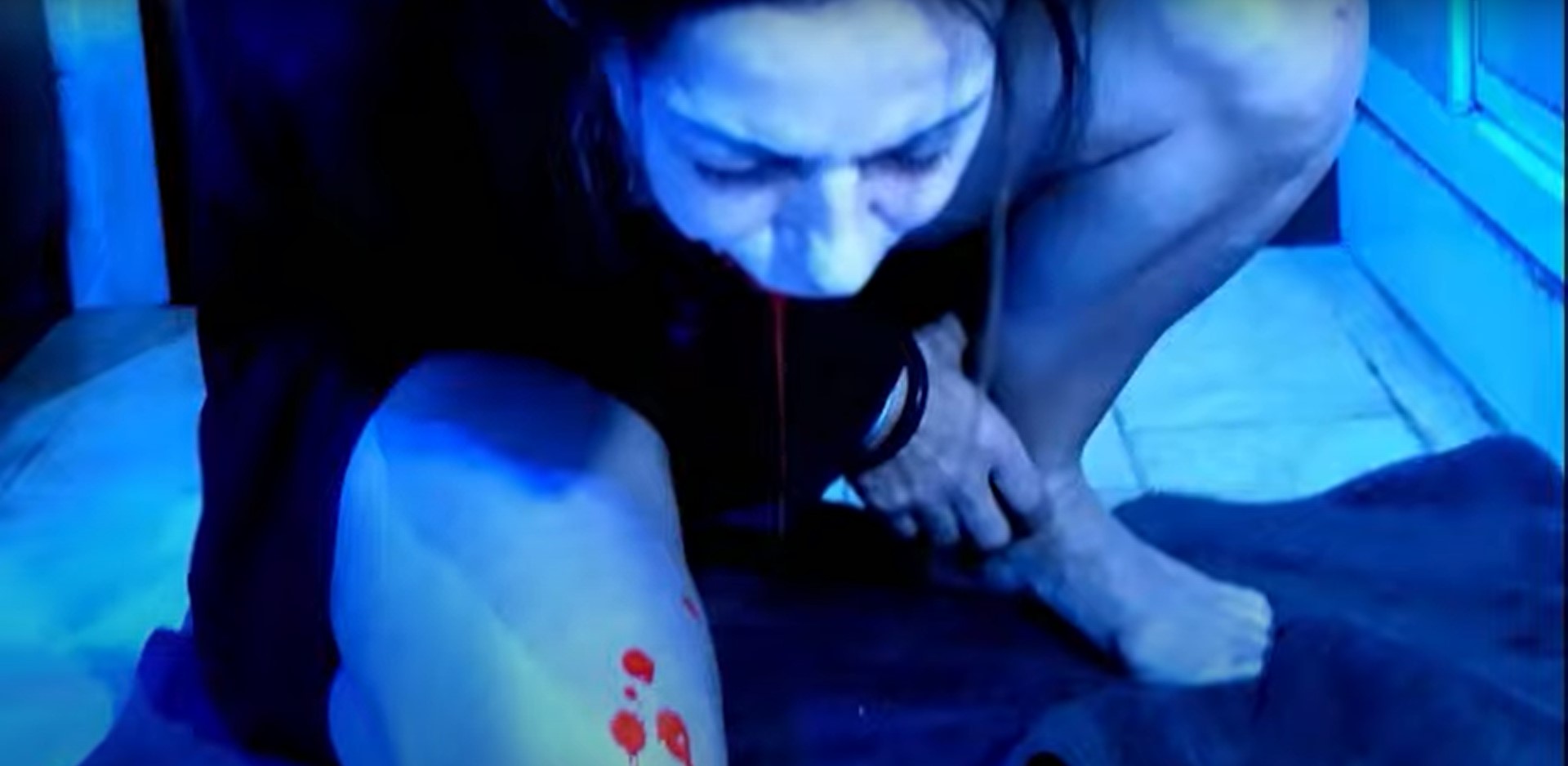
David Pesca is no stranger to short, gore-laden, underground films having been a featured segment director on a pair of anthologies in the last decade from “A Taste of Phobia” and “After Midnight.”  For “Re-Flesh,” Pesca doesn’t have to share the spotlight in his very own tech-themed, feature length compilation that narrates transmitted computer files as tech insidiously infiltrating our insubstantial innards.  The first three episodes revolve around phones and solitary women become enslaved to the devices with a link of invading their bodies with a foreign object, whether be adopted a virtual, grotesque pet to being the reason for infection that spreads throughout the body like a flesh-eating disease, to being beamed up and constrained for a thorough, if not sexual, examination of one of mother nature’s creatures.  I’m intentionally skipping the review of fourth short and head straight into the terminal episode that is more dystopian splatter punk than the others with an experimental bio-cybernetics company called Neo Vita, or New Life, ridding the world of lowlifes by module implants that turn them into society-controlled puppets.  Yet, all these stories are not terribly straight forward with the rub being the ambitious nature of interpretation and the fact there isn’t a dialogue track for most of the runtime.  Taking a step backwards to the fourth short, I found this particular short doesn’t fit “Re-Flesh’s” theme with a demonic woman damning three inert souls to a black void of pain and death.  Perhaps, a construal could be constructed to lay in code into the technology sequence strand, but the code would be a fractional stretch in comparison to the surrounding system.  As a whole, “Re-Flesh” may side more with gory sanguine than an illuminating story but does depict the scourged with a front row seat in this bloodcurdling network of body horror.

Befitting to be distributed on SRS Cinema’s Nightmare Fuel – Extreme and Unrated sublabel, “Re-Flesh” emerges as a bizarre aghast mix of tentacle erotica and technical dysfunction onto a 480p DVD, presented in a widescreen 1.85:1 aspect ratio.  Technical dysfunction also applies to the image quality.  Though combating some lossy compression issues, the standard definition resolution and budget filming equipment sustain a level of image softness under a desaturated color palette.  Depth and delineation range from hazily outlined to a complete wash out from the frame’s JPEG conversation.  Pesca operates under a wide-stylistic format that incorporates varied black-and-white schemes (a gritty B&W wraparound story compared to a more defined desaturated monochrome for the fourth segment), natural lighting, harsh gel lighting and tint, and green screen for CGI backdrops.  The English dub stereo 2.0 mix will obliterate your sound setup if not careful and without a subwoofer with a booming LFE industrial soundtrack that has produced an inherent crackle and since there is no in-scene dialogue or ambience, all of which is 100% done in ADR, the lower frequencies engulf the other channels that may pop in for phone effects or squishy surgery sounds.  “Re-Flesh” is an Italian film, but the cybernetic implant advert shot, originally spoken in Italian, is dubbed in a burned-in expeditious English dub that is what it is.  Bonus features include a promo and original trailer, a behind-the-scenes featurette entitled Backstage which is a look at some of the gory scene effects the first two segments, the short “Electric Dreams” which is an alternate graded version of the second segment, and other SRS trailers.  The traditional DVD snapper case comes with the illustrated front cover art of the man plugged in under a faux harsh white neon glow with the disc art containing the same art but superimposed with a red hue layer.  There is no insert inside the casing.  The unrated feature has a runtime of 72 minutes, more than enough time for this type of anthology, and has a region free playback.  A kitschy and schlocky graft of “Re-Flesh” will get under your skin, but this anthology quickly grinds gears toward a blue screen of death.      

“Re-Flesh” DVD Available Now to Replace Your Old Skin!  

Pray EVIL Isn’t This Cruel. “Suffering Bible” reviewed! (Sub Rosa Studios/DVD)


Welcome to the Suffering Bible, a collection of violating and gory interpreted religious allegories digging into stark contrasts of sin and piety and illuminating the darker side of these allegories with a lacerating gruesome perspective. These short stories include the internal strife of a psychopaths strong urge for forbidden lesbian companionship with the contentious, bigoted teachings of finding forever friends inside God’s eyes, a visceral performing depiction of the Incredulity of St. Thomas, an extreme mortification of the flesh, the prideful consequences with a Devil’s pact, and the murderous portrayals of lost souls needing redemption into God’s good graces.

Right in time for the Easter holiday, where Jesus Christ has risen back from the dead for our salvation, comes Davide Pesca’s written and directed “Suffering Bible” of sinfully derived tales of reverent and irreverent perfervid images. The Italian made and produced anthology that’s a contexture of stories is forged together with a wraparound story of the Adam and Eve in the Garden of Eden apologue. “Suffering Bible” begins with a title card excerpt, Tear thy neighbor as thyself, from an unknown storyteller named saamang Ruinees with a skewed version of the second commandment, Love thy neighbor as thyself, subtly denouncing the evils in popular religious culture and then slithering them, not so subtly, into the shorts of those suffering at behest of the bible. Pesca’s shock efforts have come across ItsBlogginEvil.com’s radar once before with another short framed macabre tale, “Hemophobia,” from Artsploitation’s home distributed release of “A Taste of Phobia” anthology and “Hemophobia” is and feels more commercialized with less than salutary toward mutilation and variety body meat, but the filmmaker does fly on a parallel body horror plane and has had his shorts featured alongside with fellow Italian auteur and shock director, Domiziano Cristophario (“House of Flesh Manniquins,” “Red Krokodil”) with a more rudimentary, analogue-video-feel approach. “Suffering Bible” is self-produced by his independent production and distribution company – Demented Gore Productions.

Being an Italian made cast functioning on the performances grounds of a heel budget writing up about “Suffering Bible’s” actors and actresses past credits, influences, methods and so on is proving to be a challenging task. Most of the cast is comprised of alternative, half-naked women, such as Nicola Fugazza and Mary Rubes who are the sole credited on IMDB.com. Rubes, an erotic model, becomes “Suffering Bible’s” inadvertent poster girl that graces the Sub Rosa Studio’s DVD cover and static menu as her seductively deceptive solo performance of body and genital self-mutilation is the most unsettling story revolving around mortification of the flesh. Rubes has previously worked with Pesca on a 2017 short film entitled “Fame de Vampira,” which also co-stars Beata Walewska. Both Rubes and Walewska sizzle in the Italian action scene with “Rage Killers” by director Roger A. Fratter, who co-directed “Fame de Vampira.” As you can see, a casting inner circle is starting to form, but that’s the extent of the network with Simon Rocca, Simon Macleod, Catlin Strange, Pate Douce, Paolo Salvadeo, Emilio Stangalini, Paolo Borsa, Emanuela La Neve, Chiara Digonzelli, and Marilena Marmo.

On the surface, “Suffering Bible” has a unwieldly, pigeonhole affect that places the impervious shutters around one’s peepers and thinking cap for the pleasures of gore and nudity that run continuously rampant, but Davide Pesca has a connect-the-dot vision that aims to unveil the worst of religious culture, using graphic imagery in a reverse psychological and divinity experience that’s wildly novel inside a less commercialized parameters and the more I stew on this film, the more I like it. Without this review not seeming to be a theoretical paper on Davide Pesca and the “Suffering Bible,” examples of the filmmaker using gore as the pain and suffering vessel for those struggling to be closer to God can be modeled from the first short, “My Only God” aka “Friends Forever,” in which a woman stitches herself to her now dead friend to be closer to her, as if their friendship, which was severed insinuated by the dead woman, will continue in the afterlife. Same can be said about the last, if not more potently gristly, short, “The Redemption of Last Souls,” where a druggie, a terminal ill person, and a homeless man who has lost family connectivity have nothing left to lose, have lost faith, and seek redemption through being chair strapped subjects of a snuff film. While “My Only God” and “The Redemption of Lost Souls” caters to the barbaric rite of celestial passage, Davide Pesca’s specialty falls more within the lines of body horror as the filmmaker has saturated himself in the infatuation of the Body Modification culture, reflected in his “St. Thomas” and “In The Name of The Father” that include Doubting Thomas reaching protractedly into a crucified Jesus’s side slit and include the extreme mortification of the sinful flesh – eyes, breasts, and clitoris – by a devout devotee.

“Suffering Bible” is a throwback moxie livid on sin and body destruction and it’s a title coming to you on DVD home vide like a disastrous, break faith, miracle from SRS Home Video and MVDVisual. Though listed as a retro release by SRS, “Suffering Bible” released in 2018, shooting over the course of a few years prior more than likely, with a combination sepia-color approach and the result outputted a strained and digitally cursed image of a widescreen, 1.78:1 presentation that suffers from severe compression artifacts in conjunction with digital interference. The errs are absolved by the very label of a throwback “erotic art house horror” gracing the retro, faux-VHS DVD back cover. The single channel stereo has limited flexibility with some ostentatious, if not laughable, Foley work. Aside from a little dialogue in two of the shorts, “Suffering Bible” takes a vow of silence and speaks volumes in actions alone; this creative choice, along with some probable glitch art, saves much of the technical woes already plaguing Pesca’s stain on profane. The robust grunge-brood style of OKY’s prolong guitar distortions, delicate strum and percussion echoing, and reverse melodies bedazzles in a cathartic relief that no dense, run of the mill metal band is attached to the soundtrack. Special features include a short interview with Davide Pesca, which turned out to be more of a behind-the-scenes look at handful of shorts for the film, a lengthy ultra violent and gory showreel for Pesca’s “Tales from the Deep Hell,” and SRS trailers. More grimly poetic than sleazy gore-porn, the book of the “Suffering Bible” can open eyes to the unsettling infernal of holy virtue with transfixing horrid death rooms.

Shock, gore, profane! “Suffering Bible” DVD has it all!

Fear is Evil. “A Taste of Phobia” review!


“A Taste of Phobia” brings together 14 international directors to the fold, executing their creative version of terror of various fears. From the fear of the dark to the fear of feces, each short compiled into this feature length film delves into what it means to be afraid of something that an average person regularly encounters on a daily basis. No ghouls, no monsters, and no ghosts stories here; “A Taste of Phobia,” or otherwise known as “Phobia,” explores the inherit human element, the everlasting internal struggle, and the mental conjuring of demons and the anxiety of the unknown that fabricates by and into fear itself. The psychological terror of phobias plagues each and every one of us and is never exclusive to a particular group or race of people, and that’s a haunting reality, especially in an time and age where suppressed personal emotions and issues lead to unfortunate suicidal circumstances. Some of the directors include Lorenzo Zanoni, Alessandro Sisti, Alessandro Redaelli, Alessandro Giordani, Rob Ulitski, Sam Mason Bell, and Davide Pesca.

A number of these filmmakers I’m not familiar with, but I do recognize a few names from the bunch by examining their previous work. Somniphobia is a sleep anxiety disorder which is the basis for the short written by Sophia Cacciola and directed by Michael J. Epstein, who also steps into the lead. “Blood of the Tribabes,” a vampiric melodrama, was my last experience with the Cacciola and Epstein duo, who have a passionate dynamic and chemistry when it comes to horror. Somniphobia is a whole different animal that’s more on a compact scale in comparison to their vampire feature and doesn’t necessarily tackle the perpetual fear of sleep; instead, Epstein portrays a contractor pushed to the limits, practically threatened by an employer, to finish coding a project to the point where he hasn’t slept in days. The lack of sleep and the various methods to try and stay awake by the power of suggestion have fried his brain to the point of self-inflicted harm. The writings good and the dark humor direction is a nice touch. Another recognizable filmmaker that stands out to me is Domiziano Christopharo. The “House of Flesh Mannequins” and “Red Krokodil” director has always exhibited a thirst for body horror and the Italian director places his talents in the kitchen with Mageirocophobia, aka the fear of cooking. Christopharo continues his brand of body-manipulation motif by telling a story of a woman, whose seemingly very good at putting together a tasty and savory fish dish, into a deeply disturbed woman who contemplates and nightmarishly fantasizes herself being the sliced, diced, and cooked to a crisp main dish.

Then, there are many filmmakers I’m not familiar with at all, but did enjoy their short entries. Sunny King’s Nyctophobia, aka fear of the dark, is hands down one of the best entries despite the slight ghost-like manifestation, but the Nigerian director fosters a tangible evil constructed by fear and his version of Nyctophobia is classic, very timeless, sans blood and shock to the point where the story plays out like a simple spook film. Very enjoyable, subtly powerful, and basically classic in tone, King reigns “A Taste of Phobia.” Now, that doesn’t mean Nyctophobia stands alone; UK’s Jackson Batchelor and his fear of politics, Politicophobia, has to be one of the more honest entries and, certainly, one of the more timely. The political undercurrent of two-faced politician is a phobia we can all get behind with their scummy, repetitive, and subliminal messaging campaign ads. Batchelor polar extreme sheds light on what a fear invoked person might experience when viewing just one of the hard-hitting, lying through the teeth campaigning juggernauts. The previous examples pinpoint heighten the emotional aspect of fear, but what if fear perpetuated madness, such as in Poison Rough’s Mysophobia, or fear of germs. The idea of bugs, dirt, or even microbes, crawling in the hair or on the skin gives one very particular man the creepy-crawlies to the breaking point where he’s forced to self-remove his own skin in order cease the sensation.

On the opposite end of the spectrum, some shorts didn’t make muster. Fear of feces, or Coprophobia, was just bizarre, daft, and, well, not even that gross for the titular phobia. The approach by churning schlock director Jason Impey was more juvenile than expected with a feces covered stuff animal rising out of the depths of a shit covered toilet and have actor Martin Payne portray a fight of physicality in a small bathroom that ends with Payne naked stabbing the metaphorical stuff animal. Dustin Ferguson’s Mazeophobia, fear of mazes, was another that flared out with a hispanic man driving around lost in America’s unforgiving conservative countryside. He eventually winds up in the hands of a pair of Trumpian wing nuts and the climax becomes a little fuzzy from there into editing shambles that hesitates to make sense of how the series of events play out.

Artsploitation Films, a Philadelphian based distributor seeking the dark and desolate corners of the world to bring to light international entertainment, releases horror-anthology “A Taste of Phobia” onto DVD home video. The anthology is presented in various ratio formats due to the different styles of filmmaking and, thus, a range of image qualities stand out to some that’s suffer from aliasing and blotching atrocities to others that surprising peak in picture value. The 2.0 stereo audio track, mostly English with some Italian and Spanish, have varied ranges, depths and balances as well. Bonus features include a bonus fear mini-movie entitled Achluophobia from director Jason Impey, a behind the scenes look at Michael J. Epstein’s Somniphobia and Chris Milewski’s Pharmacophobia, an interview with producer and one of the 14 fear directors Domiziano Christopharo, a little inside on the special effects for Pharmacophobia and Mageirocophobia, and a theatrical trailer. “A Taste of Phobia” pushes the limits to extremely visualize the niche fears in us all by packing 14 deadly phobias up into an anxiety-riddled anthology released by the good, but probably psychologically insane, people at Artsploitation Films!

Buy Artsploitation Films’ “A Taste of Phobia”