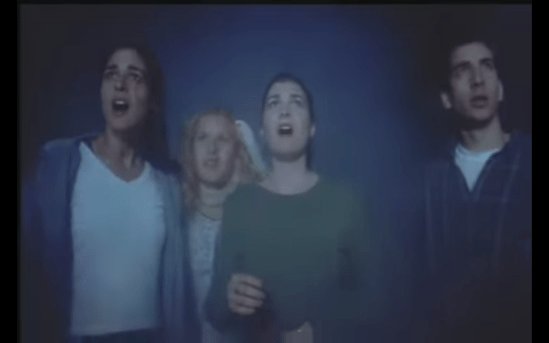
Todd’s birthday starts out fun with a birthday cookout that includes family, friends, and his girlfriend Valerie. Afterwards, his easy going uncle Carl drives Todd, his friends, and cases of beer to an abandoned factory in the woods where Todd has planned a one-night, underaged boozing, camping trip. The infamous factory has a manifold of ghost stories that circle around a single common piece – a cannibalistic maniac. When night falls, Todd suddenly disappears and his friends, including Valerie, believe Todd and his uncle Carl are revving up a good scare after Carl’s creepy campfire story earlier in the day, but when a dead, mutilated body is discovered, something sinister is hunting them and those stories about a cannibal killer no longer seem farfetched in an all-nighter fight for survival.

“What’s Eating Todd?” is a Here and Now production from a duo of women filmmakers with director Renata Green-Gabor making her directorial feature film debut from a story penned by first time screenwriter Brandi Centeno. The 2016 horror-thriller is a spun take on the weary zombie genre without necessarily going the full-fledged slow shuffle and moan zombie route from a story involving an antagonistic infected metamorphosing from an infestation strain of flies. The parasitoid concept is a closely related to a sensationalized man versus nature horror tale seen with a fair amount of anonymity attached and, the film, perhaps, could be an indie homage version of the George Langelaan’s short story, “The Fly.” Almost for certain that Green-Gabor received some sort of influence for “What’s Eating Todd?,” which she shot through the summer of 2013, from her thespian mentor Jeff Goldblum, the face of David Cronenberg’s remake of “The Fly” released 1986, and thus answered the call to chance her first steps into feature films that had this connect to her mentor while providing and retaining her own originality into incubational horror or even a small minute into body horror, releasing the film three years later.
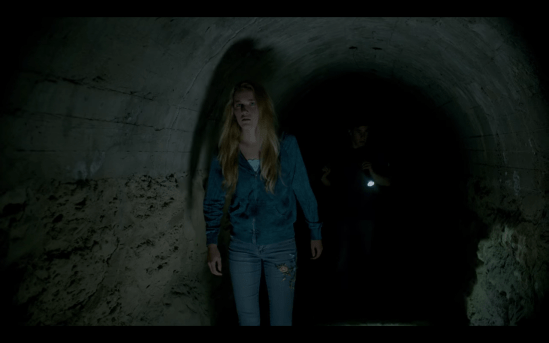
The marketing and selling points for “What’s Eating Todd?” is not the humble acting talent. It’s not a criticism. It’s the truth, as the cast is constructed of unknown names and unrecognizable faces. However, what is also true for a film written by female writer and quarterbacked by a female director is a leading role arising for an aspiring or established female actress. In this case, the role of Valerie goes to a modestly versed Madison Lawlor (“The Axe Murders of Villisca”) who not only becomes the strong and adaptive survivalist protagonist painted against a backdrop of coarse and flawed men who are either exposed of their short comings, involved in illegalities, or anguished to reveal their true nature. Lawlor maintains Valerie’s unwavering love and faithfulness to Todd, being the voice of reason amongst a naïve and obnoxious crowd that are mostly consisted of her cousin Alex (“Mega Shark vs. Mecha Shark’s Phil Biedron) and his friend Duane (“The Zombinator’s” Scott Alin). Alex and Duane are a couple of super frivolous “bros” primarily integrated into the story to raise the body count. Cousins Valerie and Alex do attempt some kind of meaningful connection regarding identity and status in the hierarchy of high school, but was meagerly written and comes to be more a bickering battle of perspectives. Biedron and Alin sufficiently exact the right amount of goofball, oversexed, and dumb-wit to pull off a surface level duo. Todd (“The Z’s” Adam Michael Gold) is certainly the biggest failure out of the group of friends. The birthday boy’s upheaval from being the luckiest guy in the world to the world’s biggest problem goes into squandered territory that floods more questions than answers into Todd’s from baseline growth relationship with Valerie to his revamped mentality and accomplishments from ambiguous, circumstantial backstory of flesh eating and conspiracies. The weight of Todd and Valerie’s connection is only expositional rather than shown and the groundless Todd absorbs the downfall during an anti-climactic finale of internal struggle with Valerie as the source material. The film rounds out with Danny Rio and Carlos Antonio.

Though the cast won’t draw in an audience, the snappy “What’s Eating Todd?” title might turn some heads in it’s direction. However, “What’s Eating Todd?” inherently sounds like a farce and if you’re expecting humor, disappointment will rear its ugly, funny-less head as Green-Gabor had no intentions for a comedy element. Another misleading of marketing is the Indican Pictures’ DVD cover, which I’m assuming is also the film’s actual poster, of a woman in a cutoff sleeve jersey t-shirt with “Zombie Killer” in the name field and holding a sword (katana, maybe?) while blurry silhouettes of lumbering undead move at an unknown pace toward her in the background. Let’s analyze the comparison between cover art and actuality. As mentioned, the story’s female heroine is appropriate to the cover, but isn’t contextually accurate to the film. Valerie, the supposed character on the cover, isn’t holding a sword nor is she dressed in a “Zombie Killer” jersey t-shirt. As for the zombies, the term zombie is only made in jest by one of the bros and there is some undead moments of gore including gnawing and ripping out the jugular, but no tearing out of intestines, no munching on fingers, nor are there any instances where eating people like finger-licking fried chicken is happening here. Plus, there is only one adversarial fiend and not more as the cover suggests.

Indican Pictures distributes a Here and Now Production of “What’s Eating Todd?” onto a not rated DVD home video. The region 1 release has a runtime of 89 minutes and is presented in an anamorphic widescreen, 1.85:1 flat aspect ratio, on a 35mm, hand held camera. The digitally shot image renders brightly and clean with hardly any flaws worth disclosing. The night scenes are slightly tinted blue with a higher contrast to lighten up the image without being overly dark in the middle of the woods without much natural lighting and the digital noise has little intrusiveness despite the budget constraints of an indie production. The English language Dolby Digital surround sound has adequate range and depth and, for the most part, a dominating dialogue presence. Brief moments of Revenge of the Bimbot Zombie Killers’ Andy George’s original score would drown out dialogue during imperative, but happened too far and few in between. Other than a typical static menu and preview trailers from Indican Pictures, no other bonus materials reside on the release. “What’s Eating Todd?” is not a zombie movie despite the hoodwinking cover. What Renata Green-Gabor did direct can be categorized as a branch of the undead, an infestation altering DNA that mounts to destruction on and around of the affected that, technically, no longer makes them a part of the living human race. In short, expect a sheep in wolf’s clothing in this roughly run-of-the-mill horror that aims high, but misses low by offering too little to sanction a good story.
Tag Archives: dvd
There’s Not a Big Enough Pipe Cleaner to Exorcise this EVIL! “Drainiac” reviewed!

Julie, troubled by her mother’s suicide one year ago, is forced by her deadbeat dad to accompanying him in cleaning up an old house he purchased for renovation and resale. As he takes off to attend to “important business” at the local watering hole, Julie is stuck alone with the mop and bucket inside a mysterious, rundown house she’s suspicious of being haunted after strange occurrences and horrifying visions transpire during her isolation. Lurking beneath the house and seeping through inside the rusted pipes, a figureless water demon’s presence persists with malicious intentions and things become worse when Julie’s friends check in on her. Drowning in the supernatural seepage amplified by Julie’s trauma, they become trapped on the property that won’t allow them to escape, draining them of hope against a bodiless, hell-bent entity until a certifiable exorcist shows up at the door arrogantly confident of ridding the flood of evil from this house for good.

Back in the year 2000, Brett Piper’s written and directed volatile ghost house feature, “Drainiac,” saw the light of day for the first time on DVD home video. Unfortunately, through the dismal proceedings of post-production funding and a less than enthusiastic distribution company, that version of the film is undercooked and unfinished in the artistic eyes of Piper who worked with a slim budget of $10,000, making every detail crucial and required to flavor the dull taste of anemic financial support. Luckily for the “Queen Crab” director, his collaborations with Shock-O-Rama Cinema, a sublabel to the indie film doting POPCinema, gave the 20+ year indie filmmaker access to digitally remaster to ultimately finish “Drainiac,” leaving the issues with the previous version water under the bridge, water related pun intended. “Drainiac,” believe it or not, has extraordinary relate-ability to today Americans who are frightened from the mistrust of confidence in their local water treatment systems and drainage pipes for the fear of lead poison and other harmful contaminants, which, in these affected citizen’s circumstances, is a “Drainiac” monster of sorts, hidden from sight with an uncertainty of product quality that drips from their faucets and into the bathtubs their kids play in and into their water drinking glasses.

Another amazing aspect of “Drainiac” is the fresh-face, young cast in their humble beginnings that flourished into solid careers and feels absolutely energetic and stimulating to know their roots reach far back to a cellular grindhouse organism becoming their vocation life. Georgia Hatzis debuts as the beleaguered Julie, a resilient survivor of her mother’s suicide with an oil and water dynamic with her estranged live-in father. Maintaining Julie’s sanity while still fronting a stable façade couldn’t be easy, but Hatzis builds upon Julie’s strength and owning the character’s self-doubt. Hatzi extended her career into television, but Julie is her most memorably performance, especially braving bathing full front to be attacked by a drain’s quasi tentacle erotica sequence. Perhaps the most recognizable face in the film co-starring in the film in her mid-teens, Alexandra Boylan is conscripted to be Julie’s best friend, Lisa. Boylan, who went on to have roles in “The Hitchhiker” remake and the invasive thriller “Home Sweet Home” as well as branching out into life behind the camera as a producer and writer, plays consistently a rationally steady bestie that grounds Julie when needed and is the firm leader of their group of friends that also includes a shaky and nearly spineless Jake (Ethan Krasnoo) and a shallow beauty Tayna (Samara Doucette). As the black sheep in the group, perhaps not even a friend at all, was Wade, a hog riding, wisecracking jerk who didn’t have sense of personal space, especially when the rapey urge washes over him. Wade is an abhorrent human being that came to life due in part of Robert Gorden’s performance. Soon to be seen in the television comedy entitled “My Wife Divorced Me Because I’m a Zombie” that is taglined “The Walking Dead Meets Modern Family,” Gorden will make you hate his guts and despise his obnoxious 90’s haircut and wardrobe and the overall package is enjoyably cathartic to have him pitted against a conventional set of friends. Other colorful talent includes roles by Philip Barbour as an exorcist who reassembles the fisherman Gordon from the frozen fish stick packaging, Steven Bornstein as the despicable dad of the year, Todd Poudrier as a melting derelict, “Sgt. Kabukiman N.Y.P.D.’s” Andrew Osbourne as the melting derelict’s friend, and Elizabeth Hurley! No, not the Austin Powers’ Elizabeth Hurley, but an Elizabeth Hurley nonetheless!

“Drainiac” is Brett Piper’s finest work. Copiously laced with assorted practical effects now completed with a coloring touch up and enhancement by Penn State grad colorist Dave Northrop, “Drainiac” is now has a definitive package that includes Piper hyper-psychedelic matte effects, creepily good stop motion clay creatures, and an abundance of well-crafted gag effects to give the drain presence a slimy drain-protuberance without exposing a tangible thing in the pipes. “Drainiac,” in every category, has a vibrant late 80’s, early 90’s epoch authority even though clearly set and stated at the turn of the century and this is partially because of how the film was shot in 16mm, giving the feature a grindhouse texture. Along with the turn of the century, CGI becomes a huge factor no matter the budget of the film as long as portioned appropriately, but Piper sticks with a practical craft which, in a sense, is a large piece of his filmmaking passion and so “Drainiac’s” is the essence of Brett Piper.

Courtesy of POPCinema’s Shock-O-Rama Cinema horror banner comes Brett Piper’s “Drainiac” onto a special edition with a 24 progressive segmented frame, high definition DVD from the original camera negative and presented in a widescreen, 1.78:1 aspect ratio. Having never experienced the original, unfinished cut of the previous release, watching this present cut will forever be seared into my soul as the best possible rendition in the past, present, and future. The 16mm film stock quality has a lot of natural grain upon a semi-washed look over a gradient-lenient color range sanctioned around the natural lighting that then explodes into a varying vividness of hues when the FX-enhanced scenes spark an immense saturation of color schemes…in a good way. No sign of damage to the original print nor any other signs regarding frame or edge enhancing and cropping. The English language 2.o stereo track, with a re-edited mix as part of the remastered package, is free of distortions, prominent dialogue, and a classic chilling piano soundtrack that pays homage to notable horror films before it’s time. The only issue to mention is some synchronization with the dialogue track and the picture seem to be off early on in the presentation where actors move their mouths to vocalize the lines, but nothing comes out. Special features are a little anemic considering the painstaking involvement and time gap in remastering “Drainiac,” but they include an audio commentary by writer-director Brett Piper and a read worthy tidbit of an inner-lining booklet written by commentary moderator, Greg Conley. THe DVD cover art is very snazzy (or snotty-like) similar to of another POPCinema release, Greg Lamberson’s “Slime City.” Reminiscent of “Evil Dead” or even some inklings of early Peter Jackson, Brett Piper has a knack for proving low-budget horror’s misconceptions are nothing more than that, misconceptions, by keenly tinkering to perfection a story that’s made is seemingly funded from a pot of unlimited gold from nifty, traditional effects and a narrative that works wonders on the imagination, keeping you glued to guessing from start to finish.
A Child’s Toy Masks a Hidden EVIL! “Kaleidoscope” reviewed!

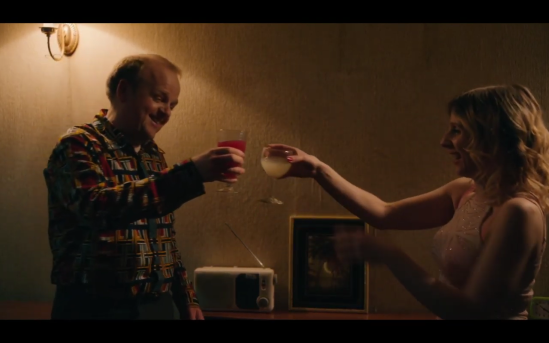
Just released from prison after 15 years and living alone in a high capacity apartment building, Carl is anxious to finally go onto a date after a long time of solitude. Mild-mannered and quiet, he manages to strike up a date with an uncultivated young woman named Abby who takes a strange, if not alluring, interest in Carl’s humble lifestyle, but when his estranged mother, Aileen, arrives back into his life, Carl’s seemingly perfect date comes crashing down into millions of pieces and old feelings of hate and urges for substance return to a warping fold. The lust and youthfulness he feels for Abby is replaced with fear and anger as reality bends on the verge of breaking as the past and present collide to an unfathomable finale.

The first thought that pops up about director Rupert Jones’ 2016 film, “Kaleidoscope,” is to instantly relate this film to the Dutch sex wave film, Wim Verstappen’s “Blue Movie,” because of a major structural similarity that’s important to both films, is essentially an inanimate character, and is a looming presence despite the “Blue Movie” being an erotic film and “Kaleidoscope” a suspenseful psychological thriller. Both movies feature a monolithic motel-esque apartment building complex in which both house the feature character, a former inmate, and the complex becomes part of the story where as Michael in “Blue Movie” runs his pornographic business and Carl interacts with the building as an obstacle to hurdle or a contributing factor to his problem. “Kaleidoscope” marks Rupert Jones’ sophomore feature directorial and his debut as the credited writer that lightly placed notes of hinting at a Roman Polanski picture.

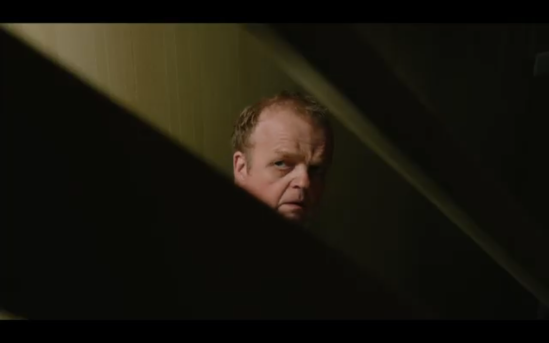
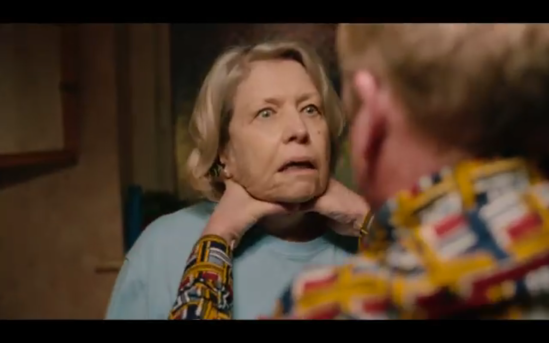
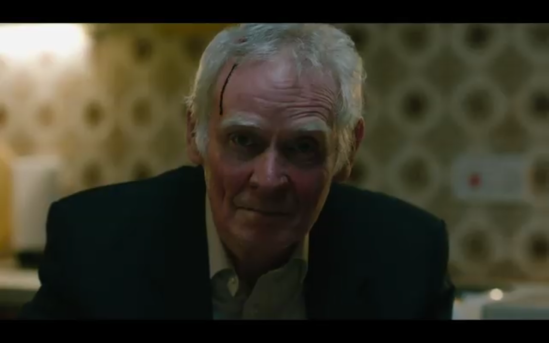
Toby Jones is sorely an underrated actor. The versatile supporting English actor has been underused since non-fictional performance of Truman Capote in “Infamous” that was crudely undermined by the late Seymour Hoffman’s titular role in “Capote” of nearly the same year more than a decade ago. However, Jones maintains a presence both in Hollywood and the indie circuit with the latter honing in on a film about a man with severe mother issues and Jones nails a browbeaten and tortured soul performance perfectly. The mother issues come courtesy of “Hot Fuzz’s” Anne Reid as a intrusive and sickly, yet superior matriarch to Carl’s whimpering passiveness. Reid’s somehow manages to pull off being manipulative and sweet in one single persona and bespoke the relationship between mother and son with the mixing water and oil. In the middle of Carl and his mother’s love-hate dynamic is a third person of an unequivocally different persona, making a trifecta of clashing personalties. Abby, played by Sinead Matthews (“A Serial Killer’s Guide to Life”), brings a little jovial pleasantry to a dark cerebral tale. Rounding out the cast is Karl Johnson, Joseph Kloska, and Cecilia Noble.

So how does a child’s toy factor into Carl’s descent into madness? The cylinder device creates optical illusions, usually in a colorful spectrum and mirroring pattern that refract when spun in a circular motion and looking at a light source to illuminate the effect. The experience is fantastical and Carl, browbeaten by not only the criminal system, but also by his family, uses it as a means of escape, an allegorical path of avoiding darkness in his life and a way to advert the melancholy that is his existence. Even his date with Abby is a gloomily skewed as she has ulterior motives to further push Carl to a metaphorical breaking point. Yet, he’s at peace with his assumed childhood toy in the handful of scenes he’s using it which recalls the image of his father; a joyful moment that’s ironically the sore point of most of his tribulations. The Kaleidoscope could also symbolize seamless duality as Carl has difficult establishing what’s real and grasping the hardline of time. Rupert Jones subverts linear and conventional storytelling magnificently to not only put Carl in a twisted world, but also throwing the viewer into chaos along with him.

Sparky Pictures and IFC Midnight presents Rupert Jones’ psychological asphyxiation thriller and Stigma Films production of “Kaleidoscope” onto UK region 2, PAL DVD home video. The DVD image is presented in a widescreen, 1.78:1 aspect ratio, on a DVD9 and the digital quality, like always, is a unfathomable well of picturesque with crisply defined shades of black combined with some variant lighting techniques to tell Carl’s current mood. “Kaleidoscope” touches more on the natural skin and coloring, but does use some dry yellow tinting and some visual effects to embark on the once penitentiary patron’s mental break journey. The English language Dolby Digital 5.1 surround sound audio mix has multi-channel sensitivity utilizing all channels to jar the senses even more and to, seemingly, weaponize Mike Prestwood Smith’s chaotic score to take the state even further. Dialogue has supremacy and clarity. Bonus features includes a standard array of extras in the cast and crew commentary, trailer, photo gallery, and storyboards. “Kaleidoscope,” like in the toy’s changing patterns, shatters hope only to rejoin it back together to then shatters it again in Rupert Jones’ heated and confrontational tale of mirthless character and taxing parental abuse affecting one soul’s chances of normalcy and redemption into society even in the face of societal kickbacks.
An Interpretation of Charlie’s EVIL in “Manson Family Movies” reviewed!

Charles Milles Manson was a notorious criminal and cult leader living a commune lifestyle in the peace and love era of the 1960’s. The Mason Family was his communal cult following that squatted in the outskirts of Californian desserts and self indulged in hallucinogens. Radicalized and dangerous, Manson exploited their unwavering loyalty to his radicalizing behavior of a hippie way of life. Filmmaker John Aes-Nihil, a collector and lionizer of all things Charles Manson, shoots a recreation of the daily activities of Mason’s cult members, filmed at infamous Manson locations that gave a taste of commune life while also providing shuddering atmospheric insights of kill spots. To Aes-Nihil, Charles Manson lived and breathed through interpretation of their, so called, home movies.

Filmed between 1974 to 1979, three years after Charles Manson was convicted of first degree murder, director John Aes-Nihil filmed his rather homage-life rendition of what he calls the “Manson Family Movies.” Not released until 1984, Aes-Nihil also brings legend to fruition of a rumor that Manson and his followers filmed much of their daily rituals and societal deviancies, giving “Manson Family Movies” more stigma to the already controversial obsession the filmmaker already made mania in such a short turnaround from Manson’s conviction finale. “Manson Family Movies” is also a silent film, a rarity for a late 70’s, early 80’s that was just in an industrial transitional point of visual special effects and larger than life performances; yet Aes-Nihil’s remains silent and crudely finesses his interpretative documentary with stage play performances and badly scrawled title cards that instill an engrossing affect of internal sliminess toward the already visceral nature.

The cast consists of many unknown faces who have come and gone even before “Manson Family Movies” was first viewed by the public. Their involvement begs the question of their pride for subject matter involving the brutal stabbing murder of a pregnant woman with the senseless and, almost, toying deaths of couple as their listed names are more than likely pseudonyms, credited as if themselves were a part of a hippie commune with names like Rick the Precious Dove as Charles Manson, Krista Meth (Crystal Meth?), Porn Michael, Miss Sheila Star, and Sister Audress just to name some of the more eye-catching credits. As aforesaid, performances are choreographed indiscriminately that much of the violence goes by the waist side, but as characters go, more than most look the part with the exception of some transvestism as some actors and actresses don multiple roles in the bottom of the money barrel feature. Other dime actors included Katie Lazarus, Knarly Dana, Mr. Jacquetta, Judy, Ms Mule, Danny, Lori, Miss Head, Ms Brad, Moka, Chucky, Rusty, King Mama, and The Cosmic Ray. Seriously…

Not much is first-rate about the “Manson Family Movies” aside from a couple of exceptions: 1) Cult Epics amazing two-disc re-release that’ll be covered later and 2) the fact that Aes-Nihil constructed home like movies using what looks like 8mm negative film complete with deterioration and defects, providing a desensitizing and demoralizing halo around the heavy material. “Manson Family Movies” won’t be many audiences cup of historical tea and many folks will probably point out that this is only an interpretation of events, but was the raid on “Pearl Harbor” accurately depicted by Jerry Bruckheimer or did James Cameron give every minute detail correct in “Titanic?” I think not. Not to compare apples to oranges to blue berries, but as base observation, Aes-Nihil did what any director would have more than likely done with an influential historical moment, a little embellished reenactment no different from the stud Hollywood filmmakers.

Cult Epics’ re-release of the “Manson Family Movies” is now presented in a region free, two-disc set complete with a slip illustrated with the same composited Charlie Manson head cover art by Brian Viveros and the same disc art by Charles Manson himself from the 2005 release. The film is presented in a 4:3 aspect ratio with the black bars on either side of the frame and, as previously mentioned, the image clarity is marked by scratches, flares, and dirt. Surely, for visual stimulation. Billed a silent film, the dual channel mix of the redux and remastered score is resoundingly poignant and strangely vibrant with Charlie Manson and his Manson Family recorded music as the soundtrack. Plus, there are actually less aesthetically audio tracks from Sloppy Titty Freaks, Beyond Joy and Evil, Glen Meadmore, and some sampling of the Beatles from, you guessed it, Helter Skelter. Special features include John Aes-Nihil commentary track, outtakes with director’s commentary, last interviews with Charles Manson, the original LADP crime and morgue photos, and the second disc contains Sharon Tate’s home movies without an audio track. After watching “Manson Family Movies,” John Aes-Nihil comes to suspicion as perhaps one of Charlie’s commune followers as he depicts a chilling look into the past, through a window of ghastly sovereignty over impressionable young people, and champions a real home movie approach that makes the entire package, along with a invigoratingly haunting score, a black gem.
Sanities Dissolve in a Concoction of EVIL! “Ladyworld” reviewed!

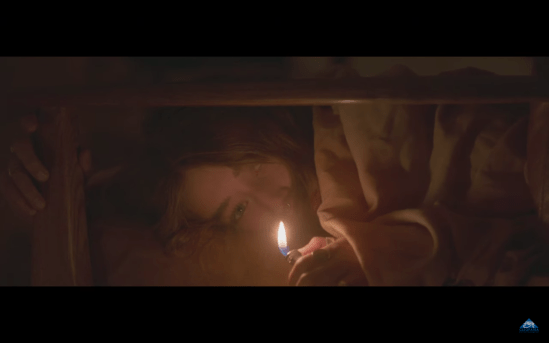
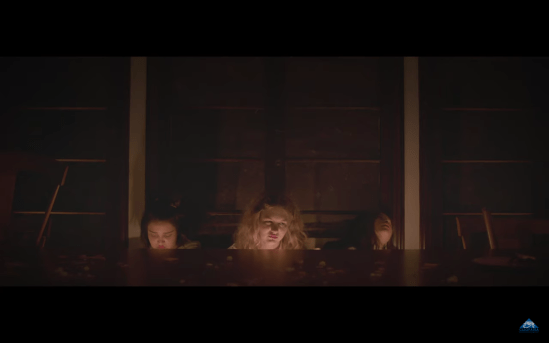
When a catastrophic ecological event traps eight teenage girls celebrating a birthday inside a house, they find themselves at the mercy of limited resources and with no adult supervision. With every window and door inescapably blocked, being trapped isn’t the only obstacle that looms over their adolescent minds when factions begin to form between sane and insanity as their cache of already scarce food and water quickly dwindle. Before her eventual disappearance, the birthday girl spoke of seeing a man attacking her right before the destructive shaking that left them befuddled. The remaining girls quickly line their thoughts in various ways from either spiraling out of control and embarking on a psyche control measure to deal with the haunting information or accepting the information and use it as a fear inducer for power. One-by-one, fears are exploited and minds are broken down to their most hostile and primal qualities that rapidly become an epidemic to those still in the realm of reality.

To preface director Amanda Kramer’s “Ladyworld,” there’s little background exposition or visual representation to really set the stage of psychological deterioration. The 2018 thriller can be said to be a modern, all-female take on the William Golding 1954 novel, “Lord of the Flies.” Produced by Pfaff and Pfaff Productions as well as A Love and Death production film, “Ladyworld” is essentially female centric and comes close to being true to form to its title in front and behind the camera with the debut feature directorial from Amanda Kramer. The script was also co-penned by Kramer and Benjamin Shearn. “Ladyworld” is credited as a festival circuit novelty with institutions such as the TIFF New Wave, BFI London, and Fantastic Fest, but “Ladyworld” is also novel in another way as in a doppelganger representation of Amanda Kramer herself as a filmmaker who sincerely believes in art house expressionism.

While all the actresses involved, portraying eight teenage girls, are spectacular in their own rite or as a pack, one particular actress stands out above the rest in name alone and more recently because of her debut in a popular science-fiction-horror Netflix series set in the 1980’s. Yup, “Stranger Things’” Maya Hawke, daughter of Ethan Hawke and Uma Thurman, has a co-starring role that elicits the use of her usually charmingly raspy voice into a gasp of unnerving bellows amongst her colorfully expressive mental deprivations. Yet, Hawke’s role, though equally headlined, seems more supportive against musician and television actress Ariela Barer and “Quija: Origin of Evil” actress Annalise Basso as the two teenage girls that consistently butt heads to jockey for leadership. The tension created between Barer and Basso is plumed unanticipated friction and is about as wild as any unpredictable scenario can muster. The last prominent character, the introduced unstable Dolly, has familiar parallels Ryan Simpkins’ Fangoria Chainsaw Award nominated performance in the also predominated all-female film, “Anguish,” from 2015. Simpkins trades in supernatural crazy for disastrous crazy as a teenage girl with a penchant for adding ten years her junior. Together, alternate and combative personalities fluctuate the proceedings, marking “Ladywold” unpredictable from not only Amanda Kramer’s broad-minded expression stance but also in solitary performances manage to flow as one. Rounding out the cast is Odessa Adlon, Tatsumi Romano, and Zora Casebere.

“Ladyworld” is an interesting experimental film and, unfortunately in this opinion, that’s about as far as this film might top in a market filled with visual pops, depth performances, and something new and shiny at every angle and turn. “Ladyworld” comes off a bit monotone to the preceptors in a flat line of congealed, unwavering tension from start to finish, despite coming to a head. Structurally, Kramer frames their environmental entrapment with just enough to make their plight more feasible without having to visually showcase it; the assumption, in one interpretation, is a Californian earthquake that resulted in a landslide that blocks all the windows and doors with hundreds, if not thousands, of pounds of pressure against the opening. Though this is only one interpretation of events, Kramer is very good at cascading the effect into being much more dire by reminding us that no sires can be heard, cell service has ceased, and all hope is lost within the limited space their held. That kind of compelling of the unknown and cerebral warping uncertainty is quite alluring, but that gripping element is not found equally invasive throughout.

MVDVisual and Cleopatra Entertainment has positive womenism vibes with Amanda Kramer’s “Ladyworld” being released onto DVD home video. The 94 minute presentation is in a widescreen, 16:9 aspect ratio format that leans conveying more to a bland and flat coloring scheme. Essentially faded, no pops of primary hues are implemented as if to devoid all hope from a helplessness scenario. Details are a bit fuzzy too resulting from an aliasing issue or jaggies around the outer edges of things. Usually with Cleopatra Entertainment releases, lossy audio tracks have been rearing their ugly heads which would cause many questions marks with reviewers familiar with Cleopatra Entertainment as its a sublabel to Cleopatra Records – a Los Angeles-based independent record label, but with “Ladyworld,” the English dual channel audio tracks is rather robust with accompanying range and depth. However, the Callie Ryan experimental acapella instrumental can be nails on a chalk board that, again, sets a gloomy tone that consistently punches you in every perceivable sensory organ. Bonus features are slim, including an image slideshow and the theatrical and teaser trailer. “Ladyworld” has niche appeal, but Amanda Kramer and crew really put themselves out into the cinema-verse with style and performance to ultimately deliver a surreal and frightening tapestry of the unhinged and underdeveloped teenage psyche.