

When half of an archaic crucible is discovered while excavating in the basement of an old Victorian mansion, Isabelle, an assistant museum curator, is hastily dispatched to authenticate the finding and to confirm the analyst that the cauldron is, in fact, the missing second half to the one in the museum’s possession. Isabelle is greeted by the estate owner, Karl, his wife Evelyn, and their eccentric daughter Scarlet who welcome Isabelle to stay with them while she evaluates the crucible. The unnerving manor home keeps Isabelle awake at night as she frightfully witnesses silhouettes of a young woman wandering through the haunting corridors and the untended rooms. As Karl brushes Isabelle’s nightly concerns to the side, impatiently urging her to summon for the other half of the piece and finalize a match that would then focus on the crucible’s value, the young curator can’t shake the continuously dreadful sensation that danger lurks in every dark corner of the estate and that the residents are inherently grooming her for a sinister awakening of immortality and power.

Writer-director Iain Ross-McNamee has diffidently checked all the British-gothic horror boxes in his latest film, a brooding vampire macabre entitled “Crucible of the Vampire.” “The Singing Bird Will Come” director co-writes the script with Darren Lake and “I Bought a Vampire Motorcycle” screenwriter John Wolskel to reel in the once was, the gilded age of British horror that made a nick in time with the vehemently violent and boldly colorful enriched Hammer Horror. Like other genetic make-ups of horror bodies, Hammer Horror has a genome of a check list of self-defining attributes and “Crucible of a Vampire” aims to notch a few key elements including the Gothicism finesse, the sexually unchaste vampire, and, also, to deliver big horror on a small budget. Ross-McNamee places stakes not into the cold, bloodthirsty hearts, but more so into construing a film that isn’t a carbon copy of the old days, adding a contemporary digital presentation that’s laced generously with contemporary photography techniques even when the opening prelude is set in the 17-century and shot in a sepia style.

The story centers around the assistant curator, Isabelle, who has wearisome tendencies of 24/7 suspicion, being a pawn in every sense of the word. From the head curator to Karl’s family, Isabelle finds herself alone in tight spots and not many people she can count on. There are a couple of characters that are potential allies, but their feeble attempts in buffering Isabelle from the house’s evil secret are no thinker than a single sheet of college rule paper. Isabelle herself is her strongest defense and when push comes to shove, the curator turns ass kicker against a family of vampire acolytes. Katie Goldfinch handles Isabelle with reasonable composure, if not slightly timid at times, especially during fight sequences. Goldfinch sustains her lead performance of her sophomore feature film that is exposition heavy to formulate an isolating and intimidating dynamic between her and Karl’s family. Karl’s portentous cruelty is town-renowned, shaped by rumors and peppered with truisms and Larry Rew channels Karl precisely. The “Underworld: Rise of the Lycans” actor has traditional methods of able to creep one out by standing still and speaking with a vigorously commanding tone, but Rew feels significantly older compared to his wife and daughter. Karl’s wife, Evelyn, stammers as a wild card in a role that seems to go nowhere and Babette Barat can only strut her hippie performance of Evelyn so far until we’re wondering what’s significance as a mother, as a wife, and as part of the crucible grand scheme. Scarlet had the opposite effect as the daughter was overly forward with defining her intentions that toward Isabelle that involved stealing, desiring, and chastising. Scarlet’s predestined for villainy and actress Florence Cady provides a fringe heavy and tantalizing seductive performance. So much so, Cady nearly becomes the female lead, but certainly overshadows the crucible’s calling, a vampire named Lydia, a non-verbal role with barely much screen time given to wild-eye, teased haired, and paled Lisa Martin. Angela Carter, Brian Coucher (1995’s “Underworld”), Phil Hemming, Aaron Jeffcoate (AMC’s “The Terror”), Charles O’Neill (“Cripsy’s Curse”), and the UK Bob of “Bob the Builder” Neil Morrissey co-star.

If “Crucible of the Vampire” is supposed to be a reawakening of British gothic horror, Ross-McNamee went without the vibrancy of color and went without much of the fervent violence that Hammer Productions was keen on. “Crucible of the Vampire” sustains a dissimilar path focally toward more exposition to forefront a narrative until an action climax that’s initiated by awkwardly edited gratuitous nudity and weak character flaws. Like being brewed inside the ironclad enclosure of a crucible, the filmmaker simmered a story that quietly bubbled to the surface until it boiled over uncontrollably and extinguished itself, splattering onto the floor below in a heap of smoke. Act three is misshapen by the prior two acts with one issue being Isabella transforming in an instant into a complete bad ass when faced with death because of her pure, virgin blood. In a blink of an eye, she literally kills five acolytes with a melee weapons that include a rustic knife, the crucible, a metal pipe, and a fired filled chalice. The kill by fire chalice and other igniting instances during the film saw shoddy outcomes of superimposed, computer generated fire which really do speak the inane quality of the visual effects. Even with the practical effects, blood doesn’t spray or gush onto a wall when a vamp victim has his throat become the main course; instead, the effect squirts on the adjacent wall like from a condiment squeezer, losing a sense of convincing value.

ScreenBound Pictures presents “Crucible of the Vampire,” a Ghost Dog Films’ production, onto an all region PAL dual format, DVD/Blu-ray home video release. The Blu-ray is presented in 1080p with a widescreen, 2.35:1 aspect ratio. Picture looks absolutely gorgeous with the natural color palate, but slightly stodgy with the blood red vampire vision in only a couple of brief scenes. Details are fine and textures slice through, especially in the opening segments of Isabelle walking along the river line, and in conjunction with aesthetic wide shots that monolithic structures, like an old giant tree or the Victorian home. The English Dolby Digital 5.1 LCPM uncompressed audio track is not a film that necessarily needs five channels, but does utilize them when the night churns out bumps in the darkness. The dialogue has prominence, depth, and range without breaking or interrupting the audio lineage. The staid score by Michelle Bee and Amanda Murray floundered in the lossless audio as an unfortunate miscue to reel in and hammer away the gothic vision. This release came with no bonus features in a day and age where most Blu-rays do have some sort of extra content. “Crucible of the Vampire” has earned merit in the traditional British gothic horror sub-genre that’s been flailing over the years, reinvigorating the concept of dark arts and lesbian vampires, but loses footing at crucial moments that ultimately unglues the narrative.
Tag Archives: dvd


This Apartment Block is All About the Evil Beast with Two Backs! “Blue Movie” review!

After spending five years in incarceration for being convicted of having sexual relations with a 15-year-old girl, the now 25-year-old Michael has been released and is in the hands of a parole officer, Eddie. Eddie arranges housing for Michael in an apartment block, providing some pocket cash and job prospects to get the reserved demeanor parolee back on his feet and reintegrate him back into society that has radically changed in his favor in half a decade. Though having these advantages at his fingertips to start a new life, non-violent sexual urges still race through Michael’s blood and Eddie has nested him right smack in the middle of many young women with hefty promiscuous appetites. Michael must try to keep up the tiresome façade of clean living when Eddie’s sudden pops up as he continues his sexual escapades through the likes of married women, threesomes, and kinky block flat neighbors.

Viva la revolucion! Or should I say, “Lang leve de revolutie” in this censor ban breaking Dutch sex-comedy, “Blue Movie,” from breakthrough writer-director Wim Verstappen alongside cowriter Charles Gormley. Verstappen and Gormley’s experience on the 1971 feature forms a long time collaboration through an immense body of work of films in the 1970’s including “Dakota,” “Alicia,” and “Don’t Worry Too Much.” Masked an adult romance, “Blue Movie” exploits sex to be the symbolism of choice when exhibiting the Netherlands antiquated view on censorship that bogged down their local film industry and led a bold, new Dutch filmmaking expanse that goes onto dismantling the Dutch Censorship board.

Michael is a cool cucumber, who just step one foot free out of prison. On parole and looking to restart his life again from the generous assistance by a parole-like officer, Michael is set up an a apartment block with a view of the land, but the ex-con looks inward, at his neighbors, his beautiful, succulent, and promiscuous flat mates that hone in the fresh meat. Hugo Metsers captures Micheal’s essence, a gentle ex-con, even when Metsers’ sporting thick, under-jowl mutton chops. Then there’s Eddie, whose in a parole officer type position, yet tries eagerly to be puritanical guardian angel on Michael’s sordid shoulder. Seemingly part of some foundation that helps ex-cons get back on their feet, as I assume this to be a Netherlands’ societal reform program of sorts, Eddie solicits his steer clear and keep your nose clean advice, randomly checks in at all times of the day, and even makes furniture purchases for Michael’s bare flat. Eddie’s nose is so intrusive, he oversteps his position in an attempt to sweet talk a building tenant on Michael’s behalf, right out outside the parolee’s flat door. Helmert Woudenberg, another actor in Wim Verstappen’s cache of talent, does annoyingly helpful well. Woudenberg, who later had a role in Dick Maas’s “Amsterdamned,” portrays Eddie’s antiquated beliefs on Netherlands sex culture with such poised conviction that the character does feel like a lonely satellite cut off from progressing mothership. The women characters are extremely important in Blue Movie because they’re key to Michael’s motivation to not be only rooster in the hen house but to help him find actual love and while not one actress plays opposite to Michael, Ine Veen’s Julia stands out as the pivotal moment in Michael’s stagnant and sleazy stint. Julia is beautiful and coy as she’s casually noted to Michael upon their first exchange that she rather listen than to talk, but Julia comes with baggage – a child. The only child in Verstappen’s film is the main obstacle in Michael’s conquering of the opposite sex in the entire apartment block. He even backs out of a date with Julia upon seeing her tending to the child’s need first, transferring his needs into being very brash and childlike, but once Michael sustains and profits from his transient lifestyle, an obvious void is left unfulfilled until Julia strolls back into his life. Veen’s blue eyes are striking and could be theorized why this movie is titled “Blue Movie” as she’s truly the object of his affection. Ursula Blauth (“Sex is Not for Virgins”), Kees Brusse, Carry Tefsen (“Diary of a Hooker”), Marijke Boonstra (“Obsessions”), Monique Smal, and Mimi Kok from “De mantel del Liefe” costar.

While Verstappen’s film was an influential piece during the Netherland’s anti-censorship and freedom of expression movement that allow creativity and taboo material to flow less restrictively, the filmmaker, or rather Jan De Bont, was a technically careless cinematographer. Sure, “Blue Movie” was on produced on micro-budget shot in a cramped location that’s very intimate and authentic for the material, but Verstappen and Bont let slide various goofs in the final cut, such as boom mic shadows, the boom mic itself, and, I believe, the director’s hand going in and out of frame twice in one scene. Along with the crew and equipment mishaps, the script or scheduling shooting has perplexing timing issues that defy the natural order of passing time. Michael goes through a series of events in, what is assumed, his initial weeks at the apartment block and even the jump between having elicit affairs with a married women and being the third party of group sex in a romping montage have plausible time possibilities. Yet, Michael’s story teleports into his money-making scheme of selling the sexual lifestyles of the rich and horny. There was no brainstorm light bulb that sudden illuminates his status from no job bed wanderer to the CEO of variety sex shows staged in his 2 bed, 1 bath flat.

From the company that delivered “Frank & Eva,” Cult Epics presents another Netherlands film, “Blue Movie,” onto a Blu-ray/DVD combo release. Shot in a 1.37:1 aspect ratio, aka Academy Ratio, the original negative has remained virtually unvarnished and Cult Epics presents a new high definition restoration and transfer by the Eye Film Institute. Natural grain looks great. The coloring remains stable throughout and the hues border the natural and just below slightly too brilliant – Ine Veen’s blue eyes could be made a case. The Dutch and German Dolby Digital 2.0 audio track is, again, a fine transfer with clear dialogue and not a pinch of pops or crackles. The optional English subtitles are well synched without translational error. Bonus material includes pre-debut film interview with director Wim Verstappen, interview with producer Pim de la Parra at the Sex Wave Festival, interview with Hugo Metsers Jr. about his father later in life and his erotically charged moment on the first time he saw his father’s film, Eye Film Institute featurette, “Blue Movie” HD poster and photo video gallery, and the original Scorpio Films trailer of the film. Wim Verstappen pioneered the Dutch Sex Wave with “Blue Movie,” a controversial artistic brief rendition of the Netherlands’s breakneck cultural upgrade to a more fluid and modern lifestyles and cinema sauté.
Evil Ousts Evil in “Christmas Blood” review!

On Christmas Eve for over a Decade until 2011, a psychopath dressed as Santa Clause hunts down people on his naughty list, people whom have, at one time or another, been incarcerated. Santa’s violent kill streak ends when detective Thomas Rasch tracks puts multiple bullets into Santa after the gruesome slaughter of three people. After 6 years of imprisonment, with no sign of improvement from his holiday hallucinations, Santa escapes to continue checking and crossing those unlucky souls off his naught list, leading him to Alta, a small, quiet village in the northern most part of Norway where one woman when unpunished on his list. Unbeknownst to Santa, the woman he intends to frightfully dispatch has committed suicide, leaving behind a daughter, Julia, to oversee her mother’s home. Struggling to cope with her the loss of her mother, Julia’s college friends from all over the world embark to comfort her on Julia’s first Christmas without her mother, but the gesture of goodwill only speaks to their impending doom with a serial killer Santa ready to reign in Christmas with red blood soaked, holiday fear.

“Christmas Blood, aka “Juleblod” in the original Norwegian lingo, is Reinert Kiil’s yuletide splattering spectacular. Kiil writes and directs a new horror-holiday classic of the Norwegian variety that turns the jolly, red nose, cookie-eating fat guy into an axe wielding maniac. “Silent Night, Deadly Night.” “Black Christmas.” “Jack Frost.” “Christmas Blood” joins the high ranking level of a niche genre, the X-Mas horror genre, which doesn’t see really the light of day in conventional theaters, but home video unsheathes the new life into films one may have never heard of such as Kiil’s “Juleblod” Yet, the overall body of work for Christmas films is very black and white. They’re either overly feel good films with a blanket of pure white joy and happiness or utterly insane and soaked with the crimson interior body fluid, unless you count Die Hard or Lethal Weapon as Christmas films than one can make a case. “Christmas Blood” is certainly in that far right polar opposite of extreme violence, but is solid and engrossing, chopping body parts away with trepidation and stringed up with multi-colored lights.

Ringing in the holiday screams are young victims typically associated with familiar slasher archetypes. The “Christmas Blood” prey, typically adorned by actresses due to their ability produce toe curling, are a pact of university school friends gathered together to rally around one who has recently lost her mother to suicide. Helen Eidsvag, Haddy Jallow, Yassmine Johansen, Karoline Stemre, Kylie Stephenson, and Marte Saeteren share the limelight as unsuspecting Christmas carnage-fodder and all of the actresses hail from Norway with the exception of Kylie Stephenson, who has odd interjecting into Norwegian conversations with her Australian English dialect. Written as great friends, but also depicted as the worst of enemies as various facets of animosity slithers between them, the actresses pull off of their ill-fated character quirks well: Eidsvag as the innocent and naïve Sanne, Jallow as the drug indulgent and secret keeping black sheep Kitika, Johansen does stern and uptight girlfriend well in Katja, Stemre as a favorably licentious mute Elisabeth, Stephenson is the fun-loving non-national in Annika, and Saeteren as the heartbroken Julia with loss of her mother. I’m not sure if “Christmas Blood” would be a socially acceptable film in the States and not because of the blood-spatter blasphemy of traditional holiday and Christianity values, but because of how the one and only black character is treated throughout the narrative in a predominately white movie. Kitika has no verbal filter, smokes weed despite her host’s severe objection, slept with and was going to sleep with again her friend’s boyfriend, is kicked out into the freezing cold along with said friend’s boyfriend by the rest of her white friends, and is eventually slaughtered and stuffed into Santa’s sack. The remaining cast includes Jørgen Langhelle, Stig Henrik Hoff, Sondre Krogtoft Larsen, and Andreas Nonaas.

“Christmas Blood” is a retro-grade horror film that very merrily feels like a product of the Golden Age of slasher-survival genre from the 1980’s with a powerful and unstoppable aggressive killer, a delectable high body count, and a significant calendar date to infamously memorialize the event, similar to Friday the 13th or Halloween dates that are have been synonymous to Jason Voorhees or Michael Myers. Generally speaking, Santa’s already this jolly mystical being worshipped by all and in “Christmas Blood,” that mysticism is really exploited, but as a frightful killer Santa who is seemingly able to be in two places at once and survive a barrage of bullets. Only a couple gripes linger that don’t necessarily derail Santa’s slay-ing of bitchy former co-eds, daft police offers, or any unfortunate person in his blizzard path of butchery. For one, the wordy title card sequence explaining the background of serial Santa’s 13-year killing spree is sorely out of place and slightly kills the buzz built up initially by the gruesome opening scene that sets the morbid tone. Secondly, on the technical side, the lighting is very dim lit. The coloring scheme from the decorative bulbs is festively great and there’s also a very low-tone neon red, blue, and yellow juxtaposed against a bleak, cold setting as if walking through Amsterdam’s Red Light district at night, but with less people, more snow, and no peep shows, but the overall lighting is thin-to-damn near black at times that, shamefully, shades some of the gore work into a silhouette something and your eyes attempt to define what is being seen, but can’t definitively consume the form. Luckily, numerous gory moments make the cut in the light that include exposed entrails and some sheer brutal force with an axe to the neck and to the vagina!.

Artsploitation Films present “Christmas Blood” onto DVD this December. Presented in a widescreen 2.35:1 aspect ratio, the details are a little lost in the dim lighting as mentioned before, but the image quality looks vibrant on colorful in the mise-en-scene lighting and there are no issues with artefacts. The Norwegian Dolby Digital 5.1 surround sound track is rather pristine like a bow-wrapped present under the tinseled tennenbaum, gifted with clarity, synchronization, and no distortion in any aspect. English subtitles are available and are synched well. However, Artsploitation’s release offers no bonus materials aside from a static menu, but this Reinert Kiil’s “Christmas Blood” snarls Merry Fucking Christmas by bastardizing the popular Scandinavian folkore of the genial Saint Nick into a fierce and frightening killing machine!
Evil Isn’t Home. “Death House” review!

Top law enforcement agents, Boon and Novak, achieve special access through steep sacrifice during job assignments and are permitted to tour their upcoming placement in the highly exclusive Death House, the ultimate maximum and multi-level penitentiary home to the nastiest criminals known to society and the deadly threat to mankind in a metaphysical way. Death Houses uses virtual reality to keep inmates stimulated to the point of calm submission as well as drugging the homeless and the unwanted to supply killers with victims upon victims in an their personalized virtual surroundings, but when an outsider uses an EMP to knock out all power within the facility, the cages are open and the ruthless animals are free to overrun, beating to death the guards and staff. Boon and Novak must fight their way to the bottom level that hold the Five Evils, criminals with grotesque supernatural abilities and a wickedly grisly past, where the two agents believe the Evils are their best hope for survial against a Five Evils acolyte named Sieg and his faithful jailhouse followers.

Considered as “The Expandables” of horror, “Death House” had gained almost instant fandom solely from the long-list of horror icons in the cast. Director B. Harrison Smith (“Camp Dread”) re-writes most of Gunnar Hansen’s original “Death House” story produced by Cleopatra Entertainment and Entertainment Factory. Cleopatra Entertainment is more notably a music label that has delved into films the last few years and, in my opinion, haven’t faired positively in the horror genre, but “The Texas Chainsaw Massacre” star fought tooth and nail to try and get his script off the ground, even in the face of death. “Death House” saw release after Hansen’s death, but from interviews with the filmmakers, Smith had almost totally revamped the original treatment, leaving The Evil’s at Hansen’s request if his script was to be entirely cleaned. Shot right in this reviewer’s backyard of Philadelphia, Pennsylvania at the historic Eastern State Penitentiary, the defunct prison is an ideal location as the “Death House” due in part to John Haviland’s separate cell design and gritty appeal that was once of the home of Al Capone, but more of the focus is on the interior than exterior with green scenes and Los Angeles shots constructing the story-lined scenes.

Like aforementioned, “Death House” has been called the “The Expendables” of horror. An immense, if not soaked, cast of horror fan favorites are peppered about around the main characters of Agent Boon and Novak. “Sushi Girl” and “Zombeavers” star Courtney Palm embodies the Agent Boon character with G-man toughness, but finds difficulty leaving that b-horror mentality with shakiness in working climatic scenes. Palm’s also roped into doing an extremely gratuitous shower scene with Cody Longo (“Piranha 3D”) as Agent Novak. Novak’s a hotshot and Longo has the looks and the talent to out perform his character, but Smith’s script doesn’t do justice to either Boon or Novak’s character that blatantly underwhelms their performances with cameo star power and a shoddy narrative. Dee Wallace (“Cujo”), Barbara Crampton {“Re-Animator”), and Kane Hodder (“Jason Goes to Hell”) have prominent roles that are pertinent to the story and are enjoyable to see them in more of a supporting capacity. Andrenne Barbeau {“The Fog”), Sid Haig (“The Devil’s Rejects”), Vernon Wells (“The Road Warrior”), Bill Moseley {“The Devil’s Rejects”), Lloyd Kaufman (Mr. Troma), Michael Berryman (“The Hills Have Eyes”), Tony Todd (“Candyman”), Sean Whalen (“The People Under the Stairs”), Debbie Rochon (“Killer Rack”), Bill Oberst Jr. (“Deadly Revisions”), Felissa Rosa (“Sleepaway Camp”), Danny Trejo (“Machete”), Tiffany Shepis (“Abominable”), Brinke Stevens (“The Slumber Party Massacre”), Camille Keaton (“I Spit On Your Grave”), Gunnar Hansen (“The Texas Chainsaw Massacre), and R.A. Mihailoff (“Leatherface: Texas Chainsaw Massacre”). Whew. Rounding out the remaining cast is Lindsay Harley (“Nightmare Nurse”), Vincent M. Ward (“The Walking Dead”), and Bernhard Forcher.

While the genre star-studded ensemble cast is a wet dream for horror fans, “Death House” fails in numerous filmmaking categories with the first being the most important, the script. Smith’s re-work of Hansen’s original story requires another drastic once-over, or two, as the final result attempts to push, stuff, and cram 100 lbs of multi-subgenre elements into a 10 lb, inflexible bag, cramping the ambitious project with dis-connective storyline tissue braced together with shoddy visual effects, like the two agents free-falling down a bottomless elevator shaft and able to precisely shoot their targets on each level. The overall result of “Death House” just endures an unfinished varnish and seems slapped together with pre-schooler glue and claggy spit. Singular moments surface as diamond specks amongst cubic zirconias, like the Mortal Kombat fatality-esque practical effects, but are too far and in between to muster up an enjoyable film. The Five Evils definitely and desperately needed more presence in the story instead of just flexing the talking heads muscle; well, the only two Evils to say anything at all were Bill Moseley and Vernon Wells. The Five Evils didn’t quite have that oomph to be a force to be dealt with as Gold-described beings who philosophical interpretations on the concept of good and evil.

Cleopatra Entertainment and MVDVisual present B. Harrison Smith’s long-anticipated “Death House” onto DVD home video. The unrated, all-region DVD is presented in a widescreen format that displays some frayed flaws like contrast; there’s way too much inky black in the dark scenes and little-to-no definition in more visible sequences. The compression suffers from blotchy artefacts at times too and lacks hues, which works with the gritty tone inside the Eastern State Penitentiary’s decomposing walls of rubble and decay. Visual effects are glossy with virtually no textures to give detail or, essentially, life amongst the continuous death. Bonus features include multiple interviews with director B. Harrison Smith, Courtney Palm, and more. Also included is a behind-the-scenes feather, a gallery slideshow, and theatrical trailer. Despite being true to the title and highly anticipated since it’s inception into the public market, “Death House” ultimately disappointments as an unfurnished mess enlisted with big names in the horror domain that’ll unfairly sell the film on it’s own, but all-star cameos won’t establish “Death House” as a solidified cult favorite, being unfortunately one of the biggest release flops of 2018.
Evil’s Ultimate Climax. “Gorgasm” review!

A low on the totem poll detective receives the chance to get out from behind a paperwork overloaded desk to investigate the gruesome death of a seemingly BDS&M gone array. The case lures the investigator through the muck of the sleazy and sexy underground to where an independent zine lists GORGASM as the ultimate climax. With every lead, GORGASM connects them all and there’s one person, one suspect, on his radar and her name is Tara, the face of GORGASM. Tara’s a psychopathic call girl, aiming to dish out a finitely pleasurable zenith to those who want more than just sex, and the unlikely hero detective embraces the case personally to put a stop to Tara’s gruesome delusional calling before he’s sucked into an inescapable world blended with lustful carnalities and death.
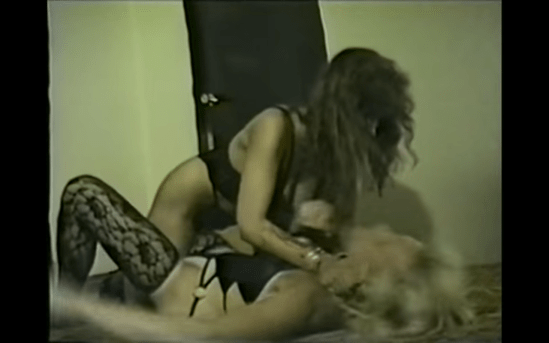
“Gorgasm.” By title alone, “Gorgasm” has already peaked interest and paved for a path of optimism and delight despite the inkling in the back of the mind about the film’s low-budget shlock. In any case, the title comes from the imagination of creator, writer, director of “Dead Silence,” a one Mr. Hugh Gallagher, and is his 1990 sophomore feature that showcase plenty of violence in an ostentatious psychosexual thriller. Gallagher, perhaps, isn’t the first to delve into porn’s mucky and sleazy underworld that’s universally stigma in many cultures, but, and again perhaps, is the first to explore the many facets that porn has to offer and highlights the habituating circumstances porn has to morph into to keep up with customer demand, whether it involves whips, clips, and chains or to be more specific in the realm of fetishes.

Gallagher didn’t manage to make any old, run-of-the-mill low-budget venture, but managed to do so with a professional lead in Rik Billock. The name might sound familiar to horror fanatics. Billock has been a stock regular in George Romero films: “Dawn of the Dead,” “Knightriders,” “Monkey Shines,” and in “The Dark Half.” He also had a small, yet door knocking down roll in Tom Savini’s “Night of the Living Dead.” Billock’s a bright star with an organic singularity amongst a mechanical lineup, popping out like a child’s pop-out book that solidifies his presence. Even his co-lead, introducing an actress only known as Gabriela, a former wrestling-affiliated performer in her first feature film. Gabriela is stunning, beautiful, and well-endowed, perfectly casted to be the personal-placing killer call girl with dark features and though her method is a bit monotoned and monologuing, Gabriela’s looks really do standalone. “Gorgasm” also co-stars Paula Hendricks who puts a real damper into the ebb and flow of being a strict and condescending sergeant to Billock’s character, but the silver lining is that this Hendrick’s sole credited role. Rounding out the cast includes Paula Gallagher, Kevin Patterson, Denis Hellrung, and co-producer Flint Mitchell in a show-stopping slimeball performance as a sleazy magazine owner.

With an extreme and inviting title like “Gorgasm,” there comes a usual, if not blatantly given, perception that blood will flow and guts will be strung and plastered on forefront of the featured scenes, but to an extent, the gore and the blood splatter were surprisingly granular results and doesn’t ultimately champion an autassassinophilia effect. However, don’t be scornfully turned away from Gallagher’s film if “Gorgasm” isn’t locked and loaded with blood drenching entrails and other body fluids and fleshy tissue. Gallagher executes tasty scenes of violence and mortality on a budget with examples being a garage door decapitation and a kill shot to the vagina. There’s also a weed whacker chewing through a pervs face. “Gorgasm,” perhaps, does find space in the gore and shock subgenre pie, even if only a sliver of a piece.

MVDVisual and SRS Cinema release the Draculina Productions film, “Gorgasm,” onto DVD home video and present the film on the original SOV, full-frame format that’s pleasantly held up over the last 28 years. Aliasing is quite common on shot-on-vide, even on Super VHS that director Hugh Gallagher shoots the film, and the coloring has a slight washed look, but considering the VHS monstrosities out in the world today on DVD, “Gorgasm” has no ill-will toward this release. The uncompressed PCM 1.0 mono track has limited depth and range with a consistent static hiss throughout, but generally adequate with clear dialogue upfront. The “bloody” bonus features include a commentary with Hugh Gallagher, behind-the-scenes footage, and trailers. Also, the grisly-gorgeous illustrated cover art by Mike Mez Phillips is exquisitely killer and on point. While director Hugh Gallagher mediocrely went through the nuts and bolts of vehement slasher violence without really thickening already deep pool of gore, the director did manage to fulfill a promising title with meshing sexual deviancy and blood in an entertainingly provocative feature. Rik Billock and Gabriela, whose half naked through more than half the 82 minute runtime, embraces their twisted characters that you’ll love to death!

