
After the tragic car accident that claims the life of their son Nathan, grieving Rachel and Anthony move from New York City to a sublime region of Finland, a place where Anthony’s lineage lies and where he spent time as a child. Nathan’s twin brother, Elliot, is frequently overprotected by his mother after the loss. When Elliot begins to exhibit troubling signs in his behavior that links to his deceased twin brother, Rachel grasps out for explanations, looking for a rational and irrational answer that could contribute to such erraticism in her son. One possibility, paved by a local outsider with her own personal demons, is the Finnish community is beholden to a supreme darkness that seeks to possess the child from the beyond. With nowhere to turn for help, Rachel relies of her motherly instinct to protect her child at all costs and from all malice from all forms. but what the evil that plagues Rachel and Elliot might be closer to her than she realizes.
Identical twins are already at about a 10 on the creep factor scale. Margot Kidder in the dual psychotic role of Brian De Palma’s “Sisters”, the unnerving Jeremy Iron performance of manipulation and cruelty in David Cronenberg’s “Dead Ringer,” and even those Grady twin sisters from Stanley Kubrick’s “The Shining” are an eerie extract overlooking the fact that two people can look so exactly alike. The biological phenomena goes against what proclaims us to be human in the first place – our individuality – and to be regularly utilized as a factor of the strange and unusual in a horror film just fills the cup up with a whole bunch of, and I quote Jordan Peele, nope! Finnish writer-director Taneli Mustonen is the next filmmaker to implement the oddity of identical siblings in his latest horror-thriller entitled simply “The Twin.” Co-written with Aleksi Hyvärinen, “The Twin” is the sophomore horror feature behind 2016’s “Lake Bodom” to emerge from the writers who have found cadence writing, producing, and directing comedies. Spun from Mustonen and Hyvärinen’s production company, Don Films, Don as in the title of respect, along with collegial line producer Mika Pajunen. Responsible for funding “The Twin” are returning “Lake Bodom” executive producers Fabian Westerhoff, Joris van Wijk, and Toni Valla with Shudder’s Emily Gotto acquiring distribution rights with financial backing.
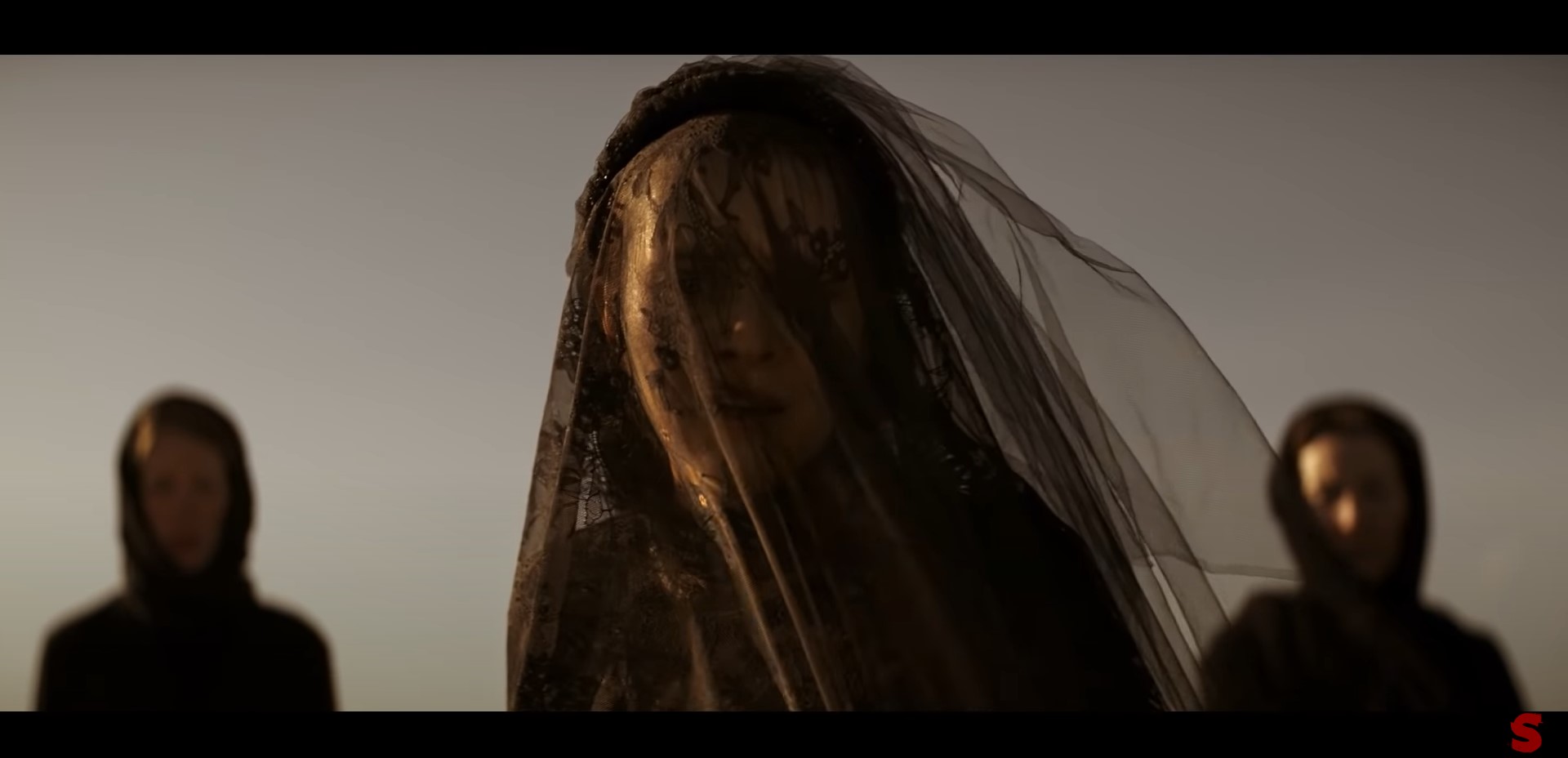
Like most films about twins, the 2022 released twists and turns of a back-and-forth intrapersonal thriller uses one person to Eddie Murphy the roles. That person in “The Twin” is the pintsized Tristan Ruggeri who made his television debut as young Geralt in the hit Netflix book-adapted dark fantasy series “The Witcher.” Unlike most films about twins, Ruggeri really only has to play one but teeter the personality of the other in a symbolic showing of painful sorrow manifested to sorely miss what’s essentially your exact self. Imagine you’re a twin of a deceased sibling and you look at yourself and see your brother or sister. Rugger’s able to capture that emotional payload at such a young age despite being rigid as many child actors typically unfold early in career. Much of the story is seen through the eyes of Rachel, a distraught mother coping with the tragic loss, and the audience experience darkening, supernatural plot that’s unravelling a Satanist cult’s clandestine desires to bedevil her now only son Elliot. “Warm Bodies” and “Lights Out” star Teresa Palmer plays the now the mature and safeguarding motherly role in the grand horror scheme alongside fellow “Discovery of Witches” costar Steven Cree (“Terminator: Dark Fate’) playing her novelist husband, Anthony. For “The Twin” to actually work for the viewer to understand on a sympathetic level, you need to feel the love between them and finding love between Palmer and Cree is about as loveless as a platonic relationship. Aside from sharing a bed and a child, the romance and amorous has been removed from play, but that of frigid factor could have very well been intentional for the story. The principal casting concludes with Barbara Marten (“The Turning”) and the town eccentric, a foreigner who Rachel relates to and latches on to when the crisis with Elliot worsens.
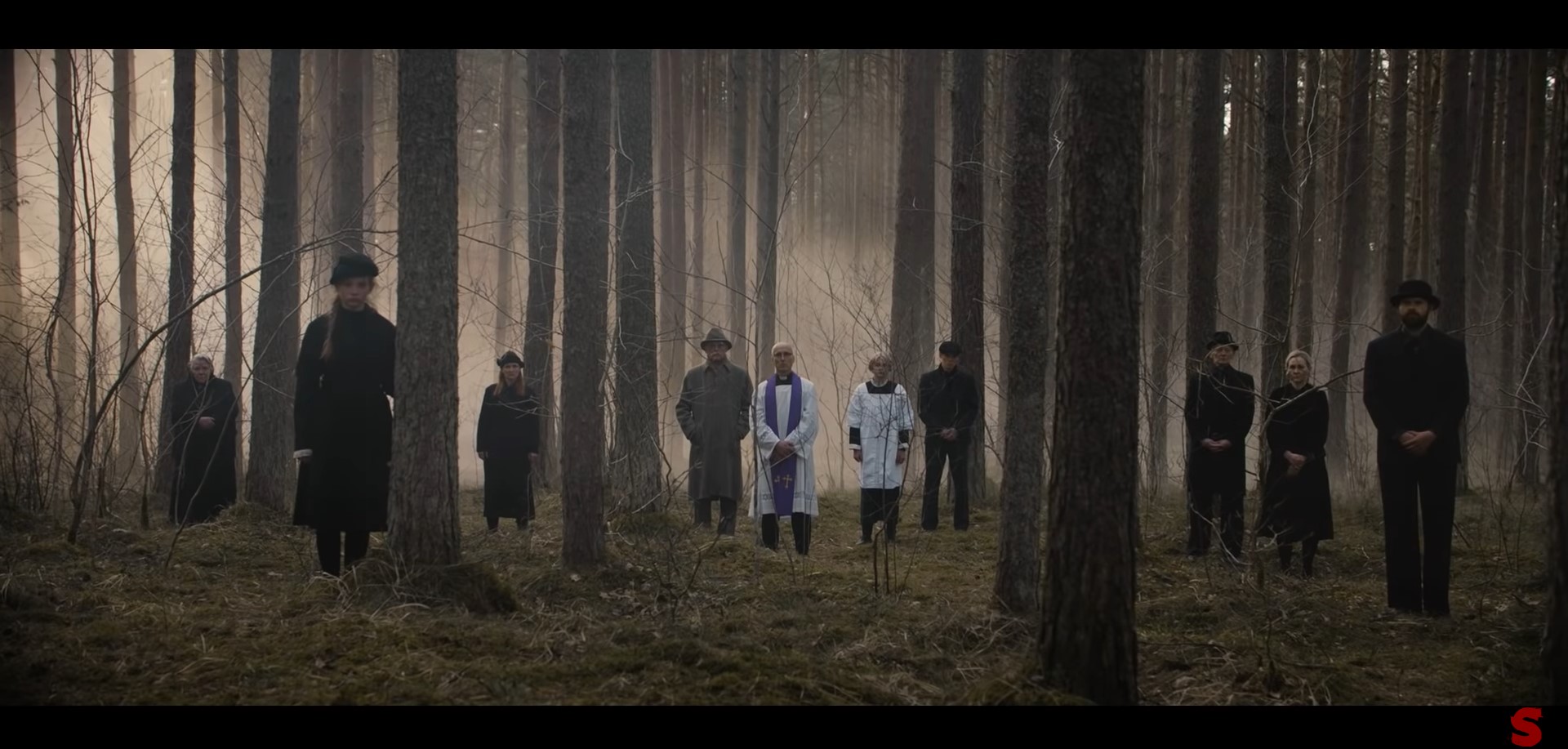
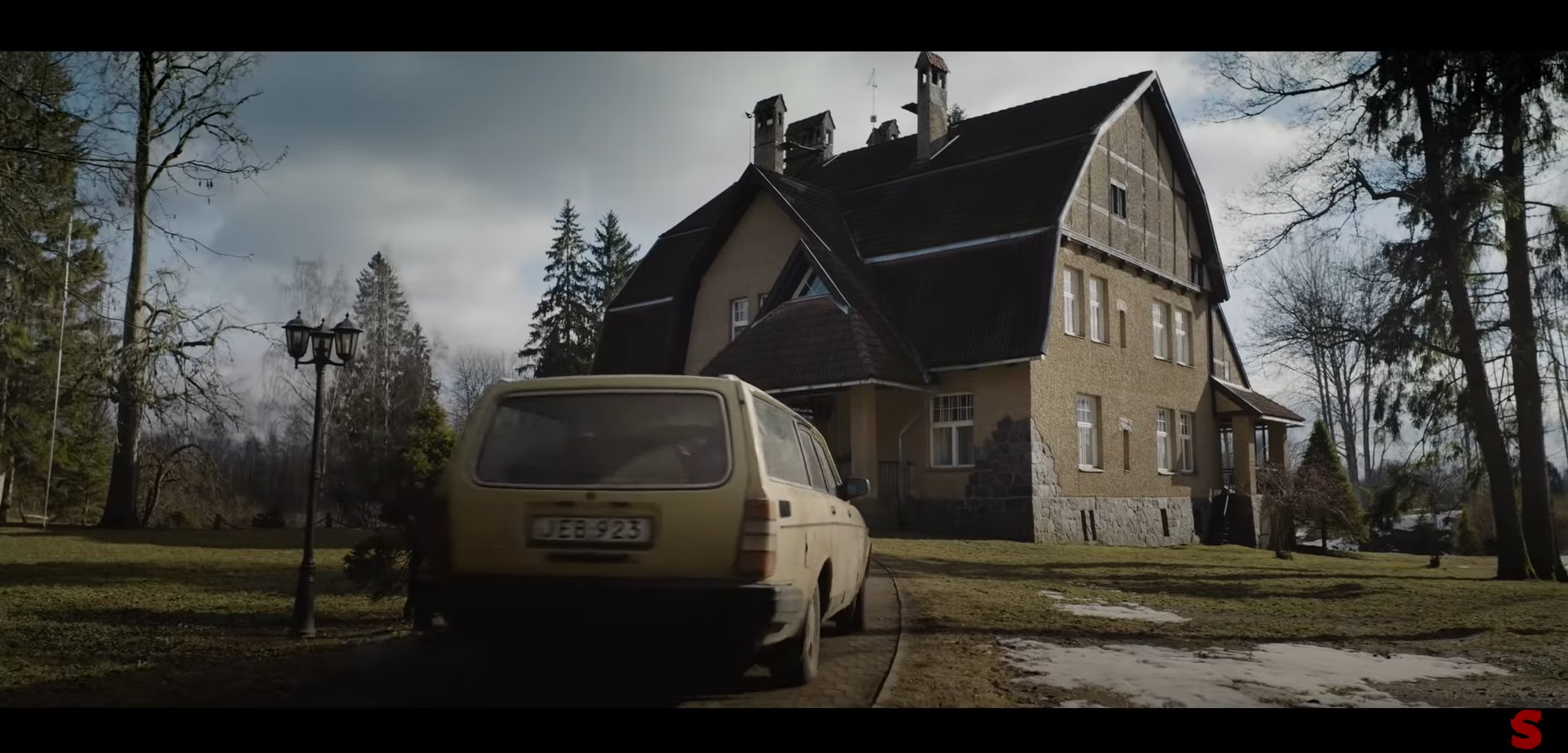
“The Twin” is small principal cast with big background actors that menacingly swallow nonconformers alien in nature to their surroundings. Foggy atmospherics, looming, creaky wooden house, and the dissociative difficulties that put Rachet through a tizzy compound the fear and the affliction of anxiety that turns everything close to you against you in a heap of isolation. All the dead silence and surreal nightmares build tension effectively, keeping the audience on the edge for that peak moment. Mustonen and Hyvärinen throw in a capacious curveball that lets characters wander and explore then develop and action against before pulling the rug from under our one-directional firm footing for a twist. That twist, however, is a play fake we’ve seen before in recent years with the armor of horror shielding the true trepidation. When the peeling begins and the revealing shows us more complicated layers beneath the rotten onion, the once randomized vectors formulate a picture and within the systematic process of slowly uncoiling initial perceptions and believed facts, the story takes on a whole new meaning and, sometimes, even begs the question if what we just watched is still a horror picture after all? “The Twin” very much fits into this goose chase genre but fits like a size two times too small. The path Rachel follows is a yellow brick road to Oz. Oz being the satanic cult is scheming kid-snatch in place of the Beast more vigorous. Mounds upon mounds of hearsay, circumstantial evidence, and even a factoid or two lead the film by the nose to an unwittingly demise of its importance to the story as a whole once all the cards are laid out before us. “The Twin” then goes into heavy exposition to try and explain much of what Rachel experiences and it really felt like a bunch of hot air, a passive attempt to briefly summarize the last 109 minutes without really telling us much about anything. There’s still lots of questions concerning Anthony’s wealth, background, and mental fortitude. Questions also arise about the story’s hook that suddenly drives the characters to make radical changes in a blink of an opening montage eye. “The Twin” has shuddering moments of stillness suspense and a disorienting subcurrent that severs safety at every turn but flirts with unoriginality too much for exhilaration in an all-been-done-before dogleg…with twins.

Acorn Media continues to be the leading UK home video rights distributor for exclusive Shudder releases as “The Twin” makes it’s Blu-ray debut in the region. The PAL encoded region 2 Blu-ray is presented in 1080p high definition with a 2.40:1 aspect ratio. Retaining mostly in gray and blue hue to convey melancholia to the fullest extent possible, the picture quality doesn’t retain a terrific amount of detail. Textures are often softer during gel-night scenes with no well-defined lines and when compared to day-lit scenes, the details are starkly steelier. The English language Dolby Digital 5.1 surround sound caters to a sound design that can differentiate between the bumps in the night as well as the stock-still silence that strikes at the nerves. Dialogue amplitude is on the softer side but very clean and very clear to comprehend. English subtitles have optional availability. Special features include a making-of featurette with cast interviews spliced in. The standard Acorn physical releases for Shudder remain the same for “The Twin” with a common blue case snapper with one-way cover art of uninspired creation. The film is certified 15 for strong horror, threat, bloody images, and violence. As far as doppelgänger bearing horror, “The Twin” is nowhere near identical to others but as for its fraternal individuality, there’s little unique about the Taneli Mustonen picture involving paranoia and primal maternal instinct.


 It's Bloggin Evil!