It’s in Human Nature to be EVIL! “Cradle of Fear” reviewed! (Unearthed Films / 2-Disc Limited Edition Blu-ray)

“Cradle of Fear” Available on a 2-Disc Unearthed Films Release!

Occultist and hypnotician Kemper has been locked away in a criminal asylum for years for a gruesome series of murders, involving not only men and women but also some children.  Kemper seethes against the arresting and prosecuting team who = put him away.  Able to sneak out a list of targets and their addresses, Kemper uses his black magic lineage to carry out revenge on his behalf, a violent revenge on the loved ones of who incarcerated him to a life in imprisonment.  Four gruesome assassins through Kemper’s supernatural means leaves a body trail for eccentric Inspector Neilson whose unusual investigative methods has him highly sensitive to the case and his temper has him in the crosshairs of his commanding supervisor.  With no leads on how Kemper is committing a new string of gruesome crimes, Neilson pieces together that all the victims are related to the case that put Kemper away and when his son becomes the last target, Neilson goes to extreme lengths to see the serial killer is put down for good. 

A gory and cynical narrative of indelicate irony, “Cradle of Fear” is the British, anthological horror that speaks to the insidiously widespread evil that courses through the inevitable fallible and immoral side of human nature, leaving no good deed unpunished in its circumference of supernatural punitive karma.  The early 2000s anthology is written and directed by Alex Chandon, director behind the 1980s sex comedies “The Perv Parlor” and “Pervirella” as well as directing select music videos for the UK extreme black metal band Cradle of Filth, whose Goth-cladded lead signer Dani Filth stars in the film and is the poster boy for film art, hence the title’s similarity to the band’s name.  Eddie Kane, Ciska Faulkner, and Nico Rilla produced the film with Paul Luke and Andy Skivington serving as executive producers for the Pragmatic Pictures production. 

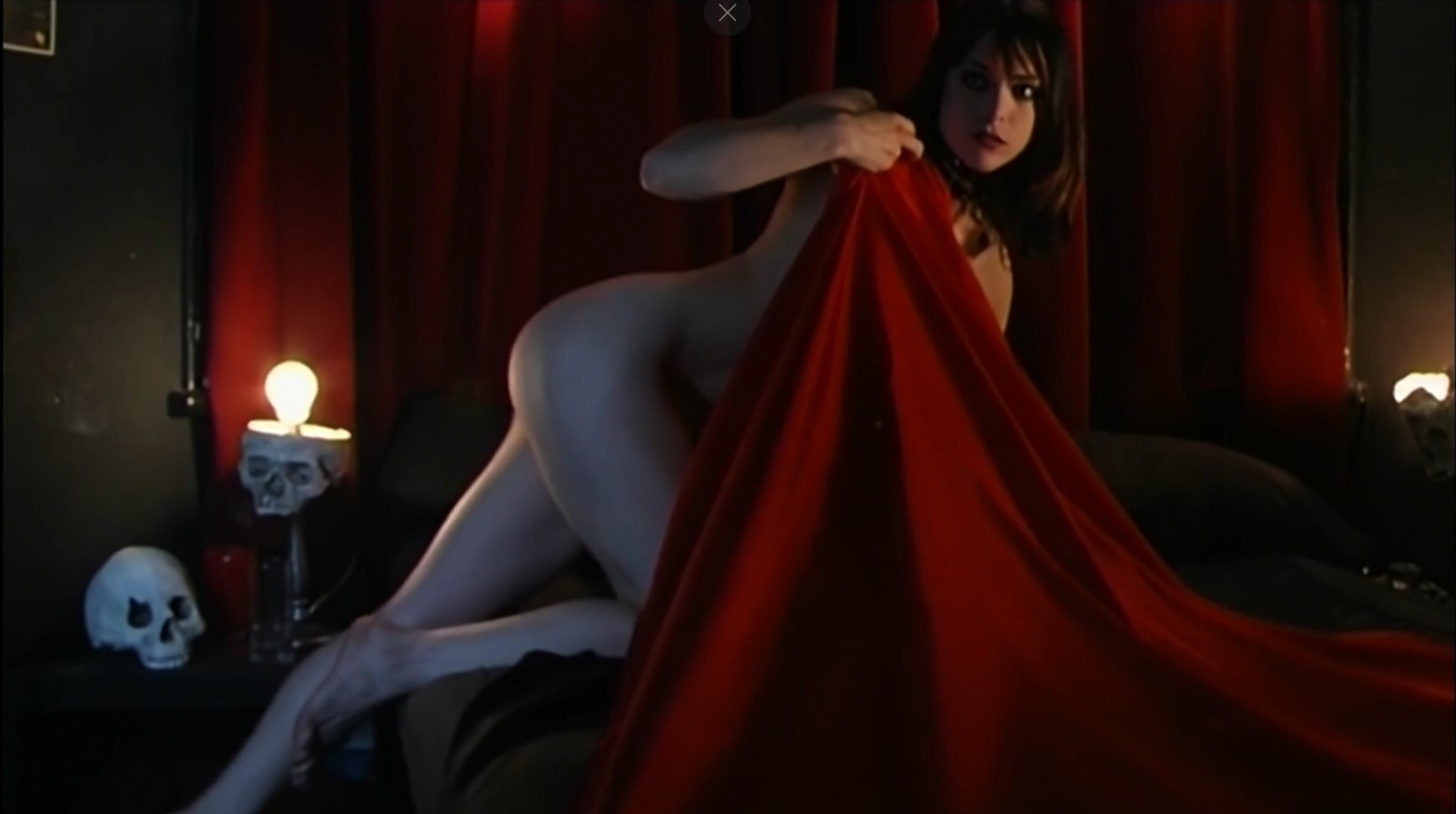
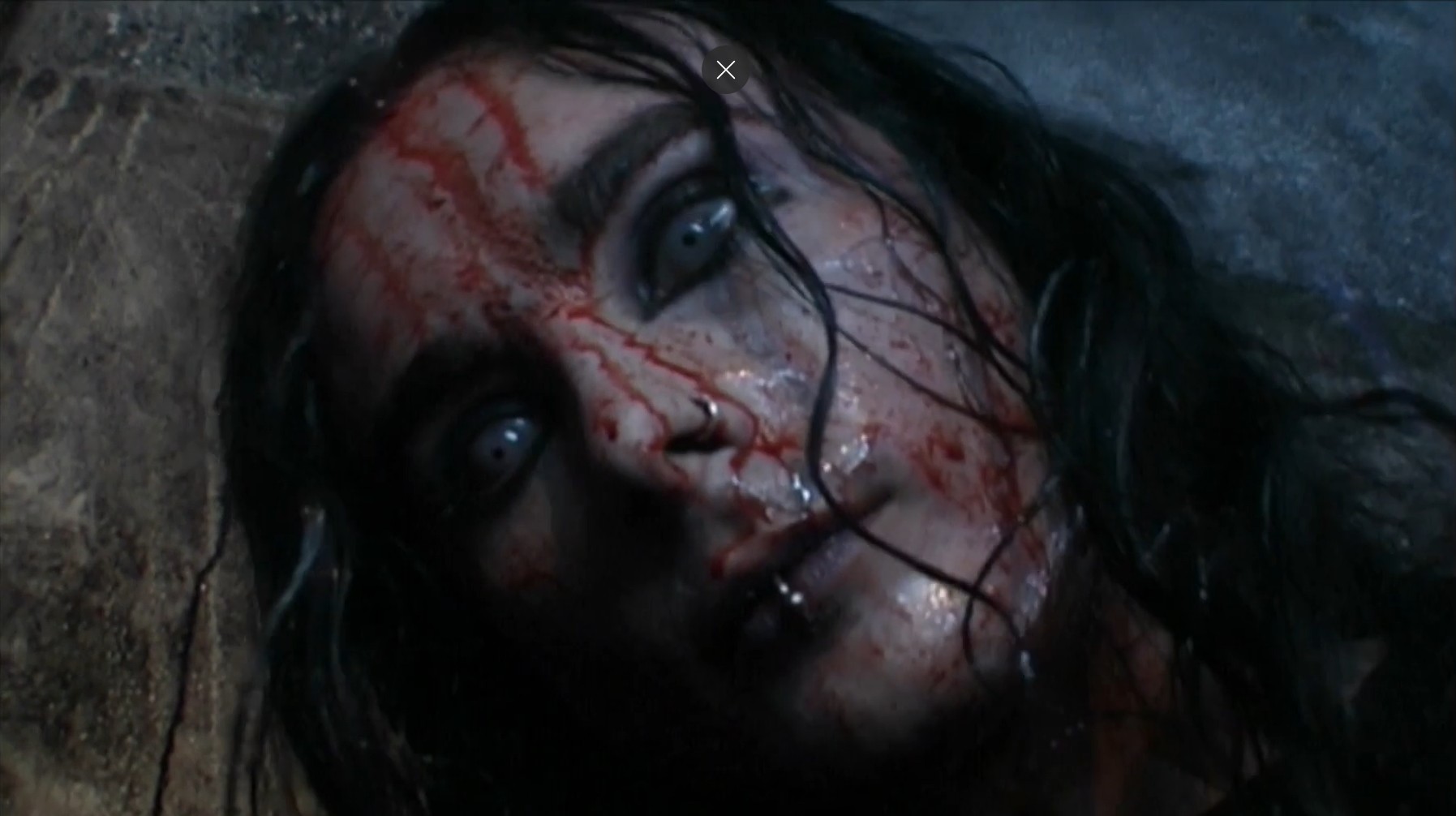
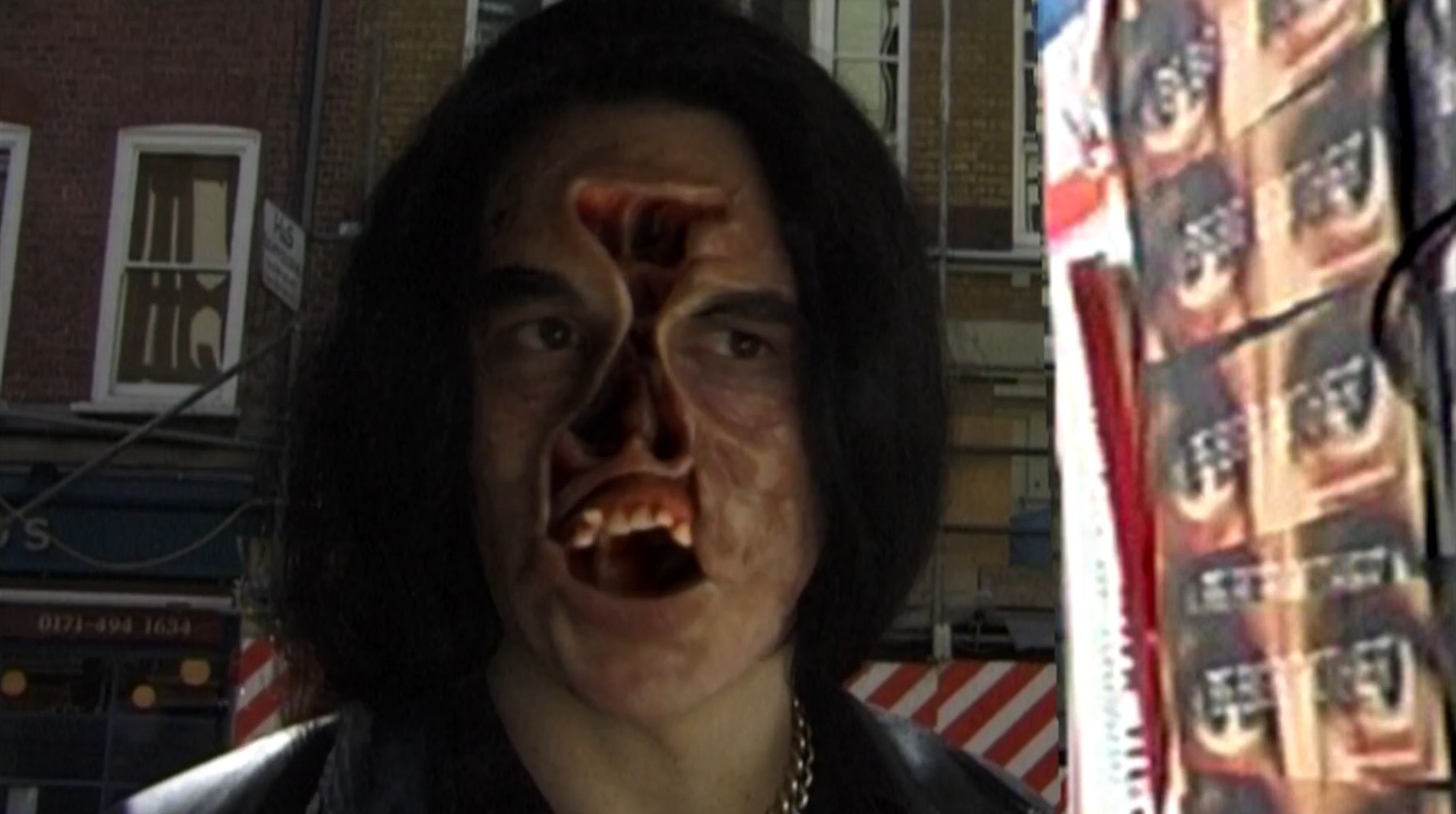
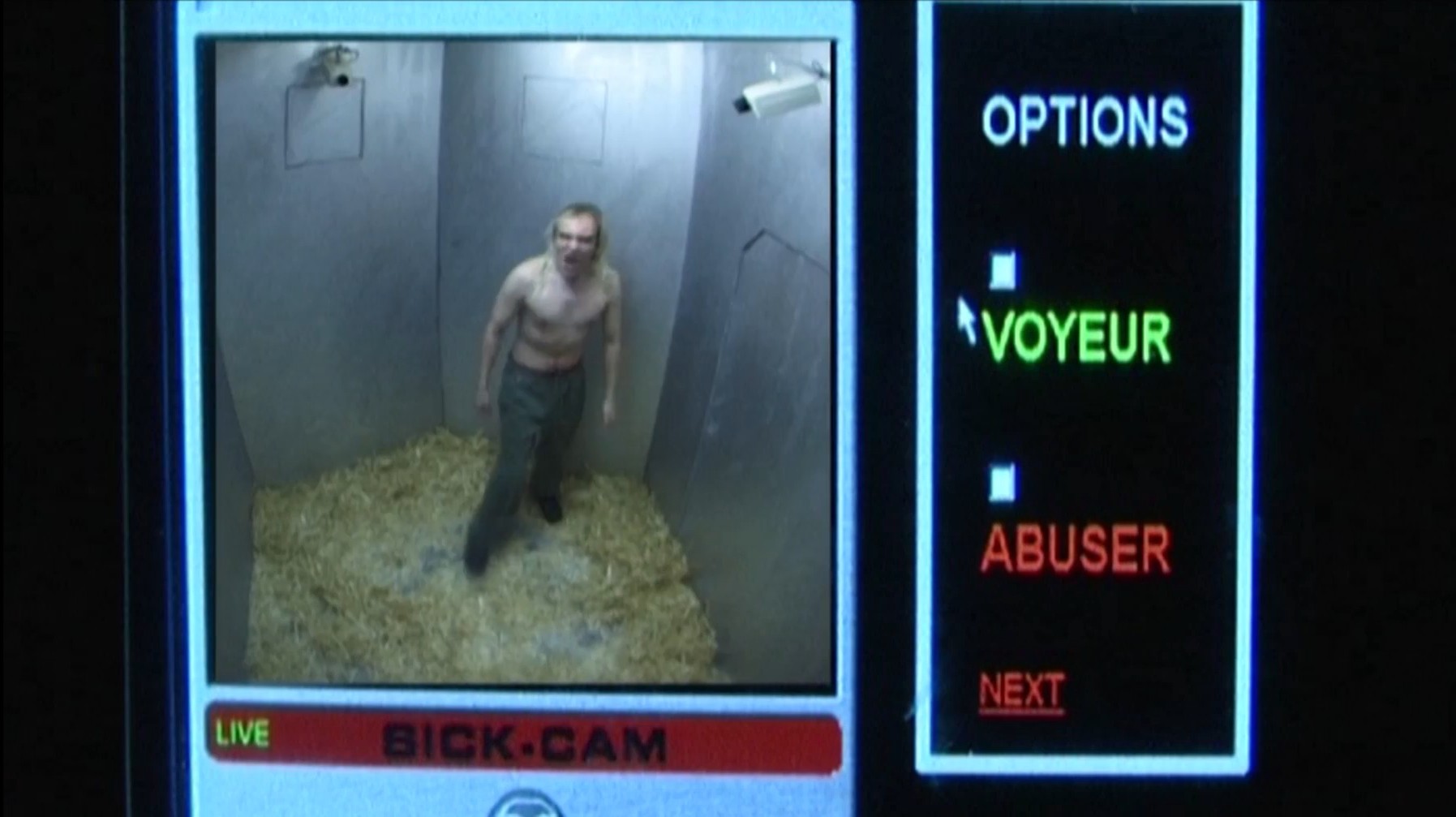
Aforementioned, Dani Filth stars as the ghoul with the ultimate evil of transforming his human form into a demonic creature that can rip to shreds those unlucky to be in his path, the opening gives us a glimpse into his power by viciously terminating two would-be, back-alley muggers.   From there, the story goes into the gruesome crime scene of two young women (Emily Bouffante, “Evil Aliens,” and Melissa Forti) laid strewn with their innards outwards and inspector Neilson (Edmund Dehn, “The Containment”) copping a feel as his way of rain-manning the scene.  Their end first storyline begins the moment the two goth club women were fated for untimely demise when they spotted Filth’s more-goth-then-they-are The Man.  Eventually, Inspector Neilson figures out the victims are connected by their last names and those related to trial participants with the next tales of sharing ill-fated death in the ghastliest and most gruesome ways, anthological style.  Another two women (Rebecca Eden, “Pervirella,” and Emma Rice) try to nick an old-timer of his bed stashed savings but find there is no honor between the combination of friends and thieves, an amputee (Louie Brownsell) murders an acquaintance to use his leg for longshot transplant only to have his leg reject in the most horrifying way, and a officer man (Stuart Laing, “Lie Still”) risks everything in life to get his rocks off gawking at online snuff films only to find himself in one!  There’s also the wrap around story that peppers transition scenes in between to bridge gaps and bring the short stories together into one long feature.  Kemper is the story’s chief antagonist but isn’t the only bad guy in the narrative but is our resemblance of a hero Inspector Neilson’s force to stop as the inspector doesn’t really just how purely symbolizing the embodied of pure evil Kemper really is perhaps even the Devil himself, as the orchestrator is the marionette pulling the strings that leaves Neilson chasing his tale.  Performances all around are gritty, apathetic, cynical, and mean that leaves no ounce of hope or feel-good intentions.

The early short films are not set up with Kemper as the man behind the curtain and this can put some confusion into the mix with seemingly rough transitions from one story to the next.  Plus, the non-linear first film isn’t mirrored into the other three, leaving the first third of the movie wandering, or grasping, to cling to something whole.  By the end of the second short, “Cradle of Fear” levels and becomes clear that an anthology is playing out with each tale containing a formula narrative:  a setup, the rising action or transgression, a brief, jovial high, and then it all comes crashing with gory horror.  The gore is a blend between practical and composite VFX that gets away with a range of simple stab wounds to more complicated head popping deaths while the visual effects has obvious green screen incongruity but dishes some devilish effects from deformed spider-like legs sprawled out from a half-severed head to some shoddy-level effects like a European car flying through and crashing through traffic.  What’s ingrained in the gore and horror is the sex, an element that’s immensely weighed in “Cradle of Fear’s” content that showcases scenes of sensual romance, to gratuitous nudity, to tasteful moments but keep the skin touched upon at least once in every episode.  “Cradle of Fear’s” circulated theme speaks toward the persistence and ever-present evil that’s within us all and from within it can’t be contained as human nature is ultimately fallible and every soul can be conditioned to expel the verhy worst in us all. 

Unearthed Films “Credle of Fear” arrives onto Blu-ray home video with a new 2-Disc, limited-edition collector’s set release encoded with AVC onto a BD25 and presented in an European widescreen of 1.66:1 aspect ratio with 1080p, high-definition resolution.  The 2-Disc set has for a long time seemingly vanished out of Unearthed Films’ newly released lineup, aside from the dual-format releases but it’s nice to see a comeback that’s more special features driven rather than playback format.  The dark grading leads to plenty of finer detail loss but the film has clear delineation and when it is key lit, textures flourish.  With a color scheme of mostly darker shades, keeping in line with its bleak noir tone and the gothic model, this early 2000’s horror fashions a polished veneer as one of the earlier pioneers of digital capturing.  The CGI is not at its finest being that it’s early early 2000’s VFX tech and on a budget too nonetheless and you can the shift in reality whenever the effect is composited into a scene.  Depth is mostly retained for closeups and medium closeup shots as Chandon’s does stylize quite a bit with fade in and outs, negative images, lighting, slow-motion, and various edits to make a swirl of designer continuity.  The British English audio is encoded with an uncompressed PCM 2.0 stereo.  Strong dialogue track doesn’t clash with the imposed, arterial soundtrack comprised of industrial goth and rock bands including Cradle of Filth, for obvious reasons, and The Dark Poets, Jezebel, Slacker, Lungworm, Intense, Quicksilver, and Crotchet.  Often, the ambience and Foley has chaotic aversion to one another that disrupt the audiological flow of the film, except for a few excellently crafted scenes such as Mel’s walk Emily Bouffante’s walk through the downtown area and see demon faces is harmonized very well.  The Foley can be slapstick at times with hits to the body being overexaggerated with cartoonish tones.  English subtitles are available on the feature disc. Disc one contains some ride-along aspecial features, including a brief making-of, a second behind-the-scenes Important Words that has direct Alex Chandon and cast members rambling about other topics rather than being topically relevant to the film, the German DVD making-of the feature, a behind-the-scenes gallery, and three original trailers for the film.  Disc two is mainlhy comprised off Alex Chandon’s short films – “Chainsaw Scumfuck,” “Bad Manor,” “Bad Karma,” “Drillbit,” “Night Pastor,” “Bullshit News,” and “Borderline.”  Also included is a promo for Film Extremes 3, outtakes for the shorts, a behind-the-scenes gallery for the shorts, and their trailers.  Packaging includes a traditional Blu-ray Amaray with new composition cover art on a one-sided sleeve.  The limited-edition O-ring slipcover contains the same primary image.  The discs are held in place on the inner layer of the Ameray with snaplocks and pressed with controversial and provocative imagery including a bloodied baby head and an illustrated eviscerated naked woman.  The region A locked film has a runtime of 120 minutes and is unrated. 

Last Rites: “Cradle of Fear” rocks the anthological horror subgenre not to sleep but to give rise to the killer instinct from within and to show the self-inflicted suffering from the innate debasement in the dark recesses of our soul.

“Cradle of Fear” Available on a 2-Disc Unearthed Films Release!

As Videogame Adaptations Go, This Ones the EVILEST! “Exit 8” reviewed! (Blu-ray / Visions Home Video)

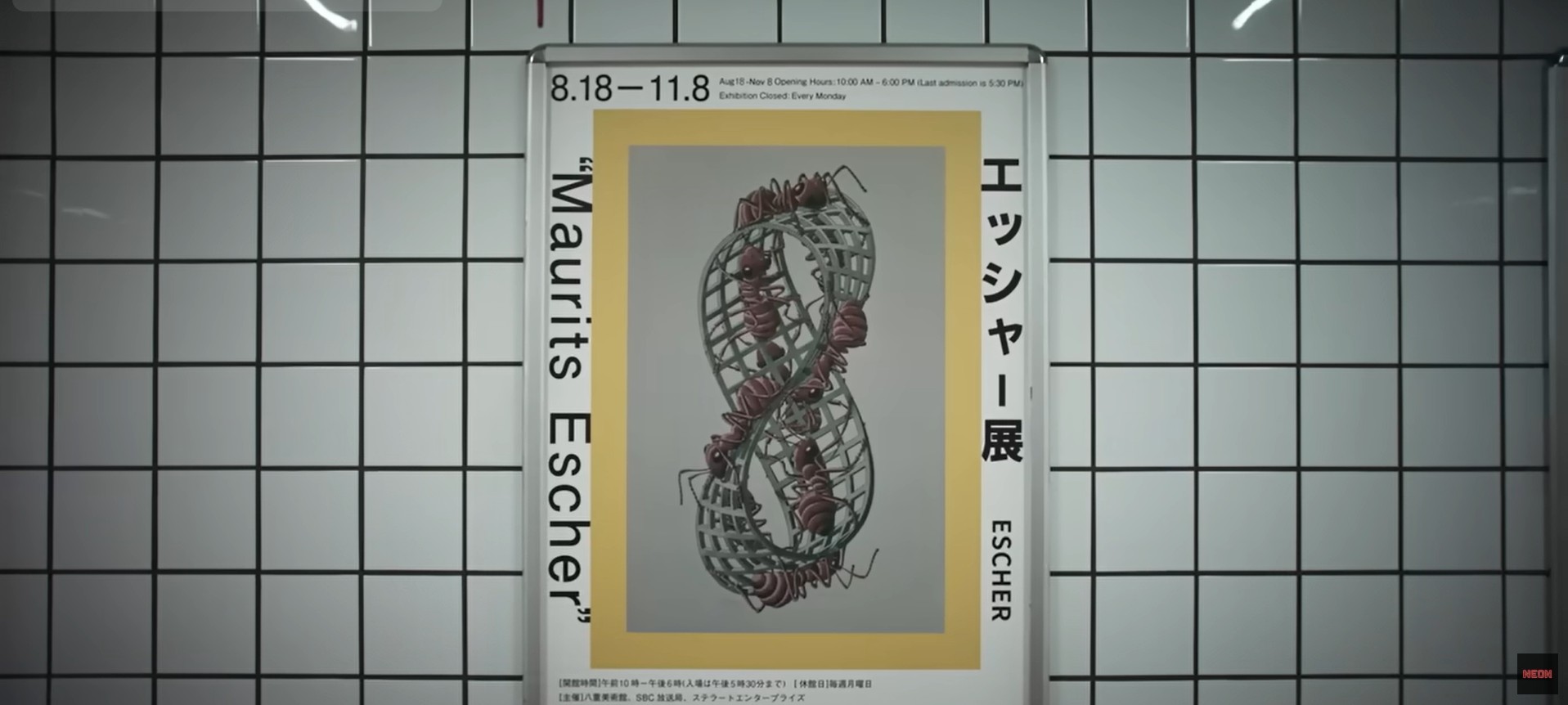
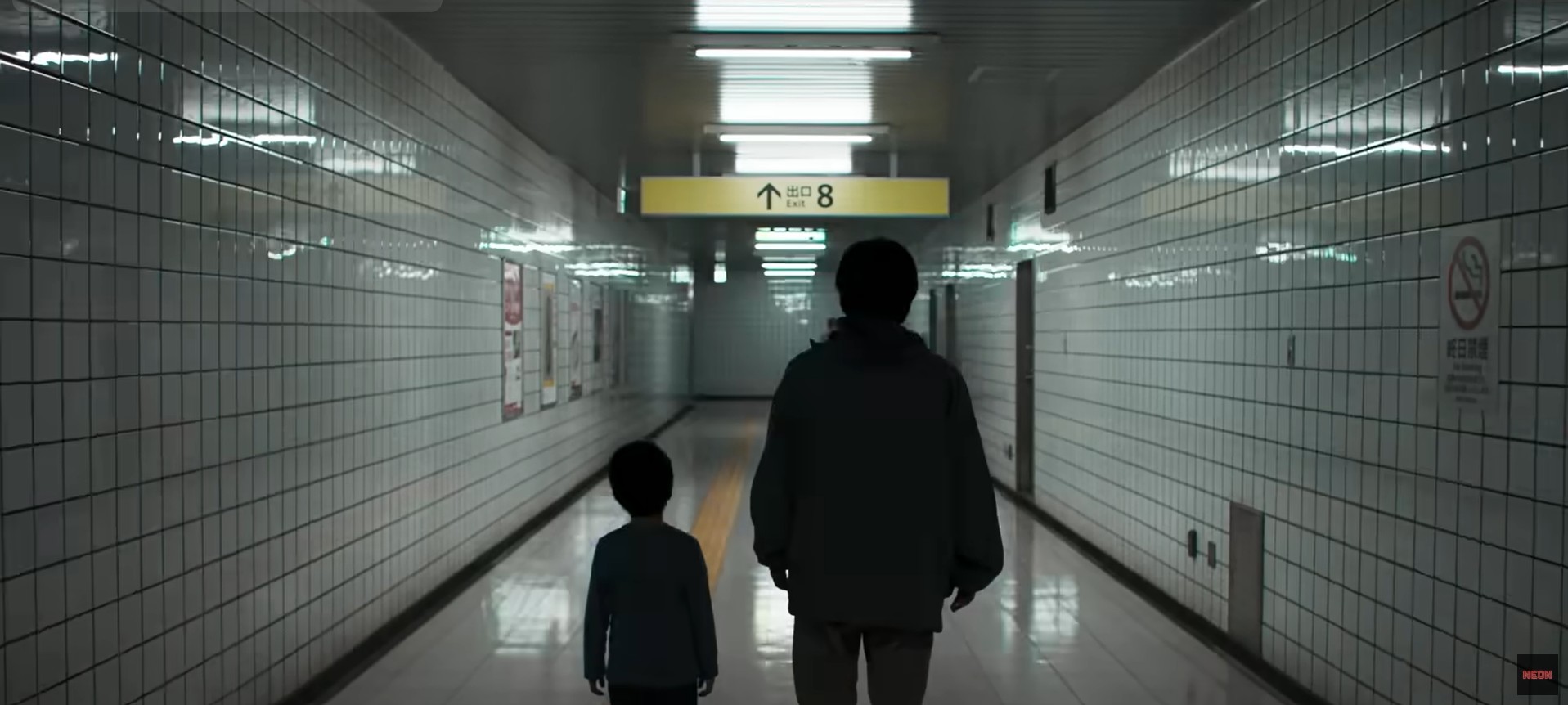
Keeping to himself and listening to music on a subway car, just like everyone else, a man exits the train car at his stop and learns his ex-girlfriend is pregnant with their child when she unexpectedly calls him.  Undecided how to feel about the news of being a father, he walks up a flight of stairs to exit the subway station only to find himself trapped in a zigzag hallway that loops the same series of advertisement images, directional signs, and a businessman walking intently down the seemingly sterile and ordinary, tiled corridor.  After reading the hallway’s information sign, noting specifically to not ignore any anomalies and providing the direction to take when an anomaly is discovered, the lost man realizes he’s trapped inside some sort of twisted game and must determine if 8 hallways are either anomalous or not to be free and exit.  If he misses an irregularity, he must start from zero again and not every anomaly is as harmless as a sign out of place.  The anomalies can psychological, monstrous, terrifying, and deadly.

Based off the Japanese horror and psychological video game of the same title, “Exit 8,” the film, also originates out of Japan.  Kotake Create is the indie video game developer behind the “Exit 8” concept and its sequel “The Platform” from 2023 and 2024.  The 2026 film is the sophomore directed film by Genki Kawamura who co-wrote the filmic adaptation “Sai:  Juchang ban” co-writer and director Kentaro Hirase.  Both the video game and movie indulge into the theme of the Noble Eightfold Path, a teaching core of Buddhism that serves a guide from suffering to enlightenment through eight corrected attitudes, such as mindfulness, intention, and effort.  A conglomeration of producers, including Yoshihiro Furusawa, Minami Ichikawa, Taichi Itō, Yuto Sakata, Taichi Ueda, Kenji Yamada, Akito Yamaoto, and director Kawarmura, bring the film to fruition under the Toho Film Corporation and AOI Pro. Inc. and in association with Story Inc. 

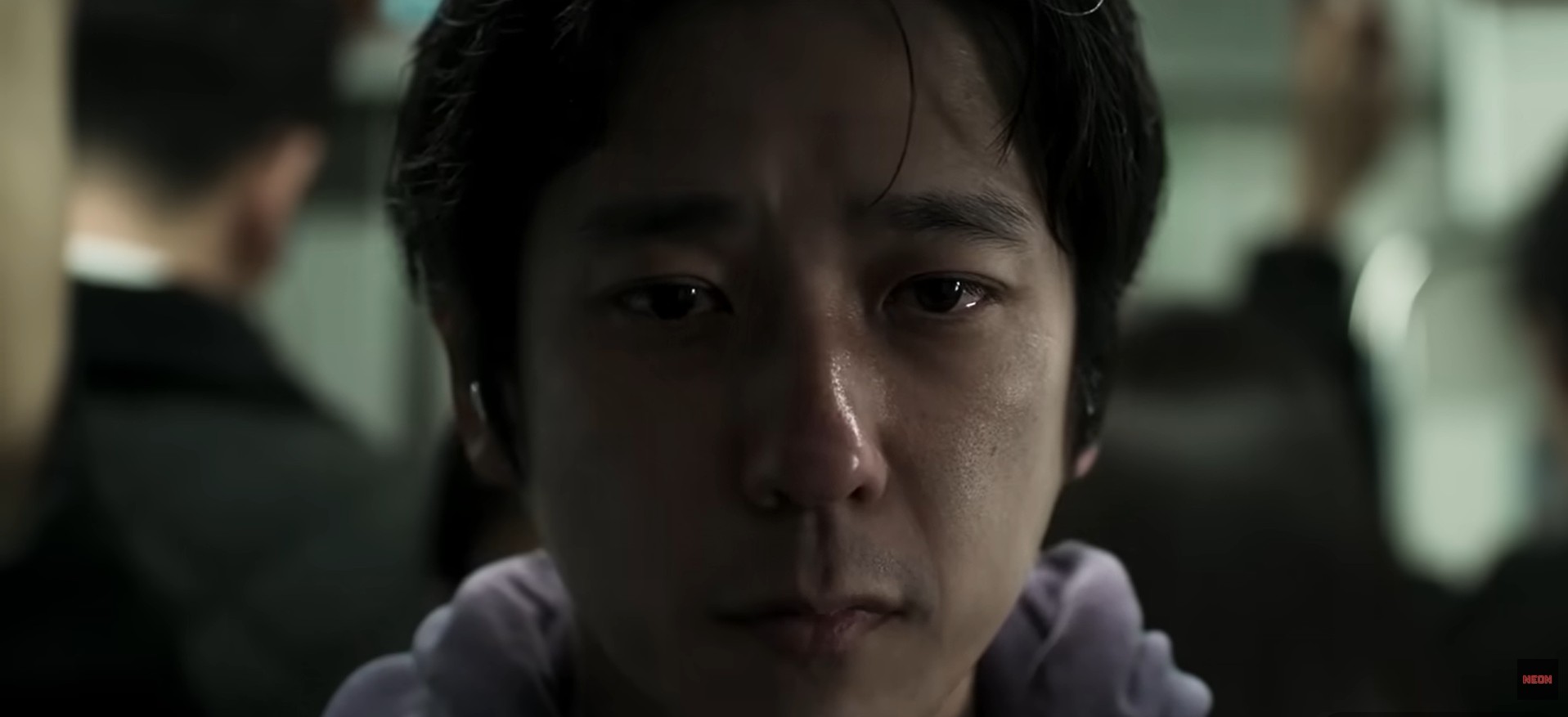
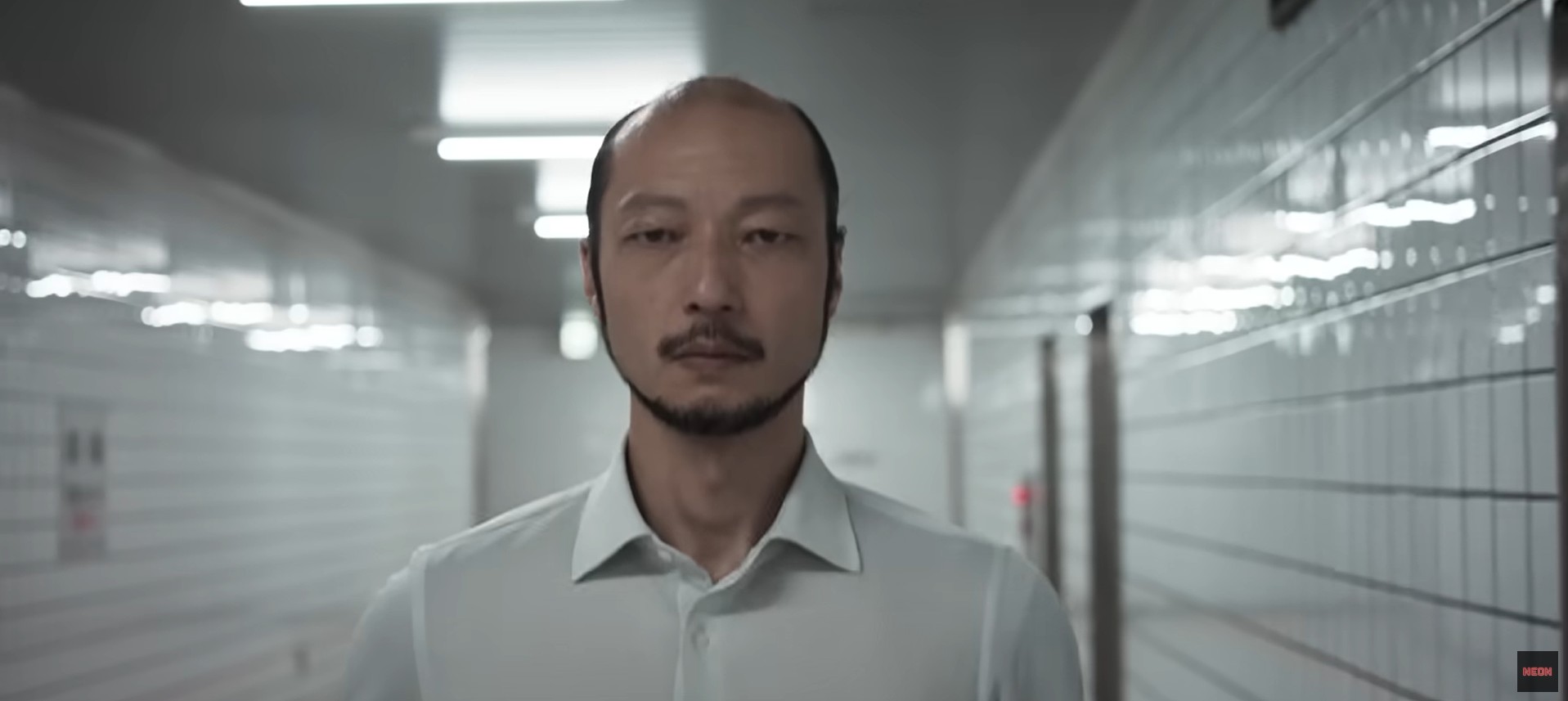
“Exit 8” has a limited cast of key characters, mostly trapped inside the sterile, tiled subway walls, playing real and unreal characters depending on the perspective in turn.  Mostly, the center focus is around a male character only known as The Lost Man, a young man who shrugs off responsibility to his fellow man as well as being undecisive when it comes down to important decisions; we see examples of this on the subway train of a businessman yellow at a mother who’s infant is crying and when his girlfriend phones him to inform him of her pregnancy in which she poises a pivotal question he can’t either fathom, process, or ultimate just decide upon.  “Letters from Iwo Jima” actor Kazunari Ninomiya plays the nameless Lost Man to character arc his way from skirting responsibility to fill him with purpose and round the character out as a person of great attention, detail, and decision.  The only downside to the Lost Man is with how he’s written on the initial experiences of the hallway loop in what’s an obvious disturbance in reality he quietly absorbs without freaking out, even to the point he’s able to quickly red and process the rules of the scenario and understand their purpose.  This, in itself, is an anomaly of human processing and rationality as the average person would be overwhelmed by surreal receptiveness and break down before they could build themselves up.  Ninomiya performance lifts the Lost Man with a more positive performance that sets the emotional rollercoaster back on track and when the audiences to get that break of the character’s mental state, its crippling effect translates and is greatly empathetic.  In the loop, the Lost Man meets the Walking Man (Yamato Kochi) who cycles passes through the anomalous-or-not corridor at an expressionless pace, but we also get his backstory too as he was once real and trapped just like our protagonist.  Another character the Lost Man meets is The Boy (Naru Asanuma), another victim playing the game, and has an eye for detail despite his quiet demeanor.  The Boy also represents the Lost Man’s future being the protector and parent to the boy as they try to escape together through the harsher anomalies.  “Exit 8” rounds out the cast with more minor parts from Kotone Hanase, Hirota Ôtsuka, Tara Nakashima, and Nana Komatsu. 

An uncanny and ambiguous horror, providing no explanation for why the man is trapped inside a loop, “Exit 8” serves to be a metaphor for life’s hard decisions, ones that affect fate in the futre.  Paying attention to the small things have the same direct result as paying attention to the much larger, obvious ones despite the being blatant and the threatening anomalies, no matter big or small, can have disastrous consequences.   Kentaro Hirase is an obvious fan of the game by rendering a faithful adaptation of Kotake Create’s creation that walks, talks, and acts just like the mystery horror and existential crises symbolizer.  There’s even a first-person perspective at the beginning of the film that provides more homage to Create’s first-person game.  After that, the switch to omnipresent third person has its own distinct brand of tension and it also achieves grabbing the fearfully fret expressions on the actors faces, that’s if they’re human or otherwise it’s creepier and menacing in the surround sterile environment that can be subtle or flooded with odd occurrences only to go back to normal in a matter of a few steps and one left turn away  Aside from vague purpose of the 8 level loop, there are more creepypasta anomalies that don’t make a lot of sense on its face but share an underlying connection to those cut off from the rest of normalcy in what’s can be considered a subconscious ensnarement of personal strife that has put them in a precarious position with unexplainable and terrifying results.  The acting carries with a repetitiveness about that that is not tired or mundane as the Walking Man walks the same corridor, at the same time, and in the same manner at least ten times in the duration, an exemplary one-note performance by Yamato Kochi to never break the automaton gait and persona no matter how involved the Lost Man gestures or speaks to him.

Visions Home Video’s “Exit 8” Blu-ray is a great addition to anyone’s collection of Japanese modern cinema or overall film library.  With a 1080p high-definition resolution, the AVC encoded BD50, presented in a widescreen 1.85:1 aspect ratio, has natural, run through digital brilliance meaning the walls are sterile white, the color saturation has an innate organic measure through primary grading, and skin tones render like they would off camera but all with the clean look of digital.  There is some noticeable aliasing on the tile that lose some of the definition and blurs as objects move through the scene, effecting in at least a couple of scenes the texturing.  The Japanese DTS-HD 5.1 Master Audio has a kick with a sound design that plays with the perspective of the Lost Man’s environment, providing excellent directional and immersive audio space from the diegetic and non-diegetic muffled and non-muffled sounds from first person perspective with earbuds in to the intensity depth of walking from background to foreground.  Dialogue has strong presence and is clear.  Subtitles are well paced and contain no noticeable grammatical mistakes in the UK English translation.  There may be some key vocabulary differences as anomalies is perhaps more British than the word used in Japan. The English subs come in two options:  SDH and audio descriptive.  The special features include a behind-the-scenes of “Exit 8,” an On the Carpet at Cannes Film Festival featurette, an On the Carpet Busan Film Festival featurette, the UK trailer and the Japanese trailer..  The stark physical presence of “Exit 8” is eye-catching with a mostly golden O-ring, cardboard slipcover with an illustrated figure eight, tiled like the subway corridor with illustrated story characters standing on it.  Sheathed is the clear Scanova case with the same primary image from the slipcover on the sleeve but drops the sheeny gold coloring for more canary yellow.  The reverse side of the sleeve has a creepy image of the Walking Man.    A double-sided, folded mini-poster and art cards of the corridor wall signs are inside the clear case with more yellow themed display pressed on the disc.  The UK 15 certified film lists two different explanations between the slipcover and the clear snaplock case.  The slipcover has strong horror while the clear case has infrequent strong language.  The region B locked region has a runtime of 95 minutes. 

Last Rites: Personal growth is hard. It’s even more difficult when a subway tunnel becomes the ultimate mind-messing and deadly trap to steer you in the right direction. “Exit 8” is a guileful guide of molding moral behavior done with a twisted circumference. This video game adaptation is one of the better ones in a long time!

A Father and an Assassin Fight Against EVIL Corruption! “On the Run” reviewed! (88 Films / Blu-ray)

“On the Run” Now Available from 88 Films!

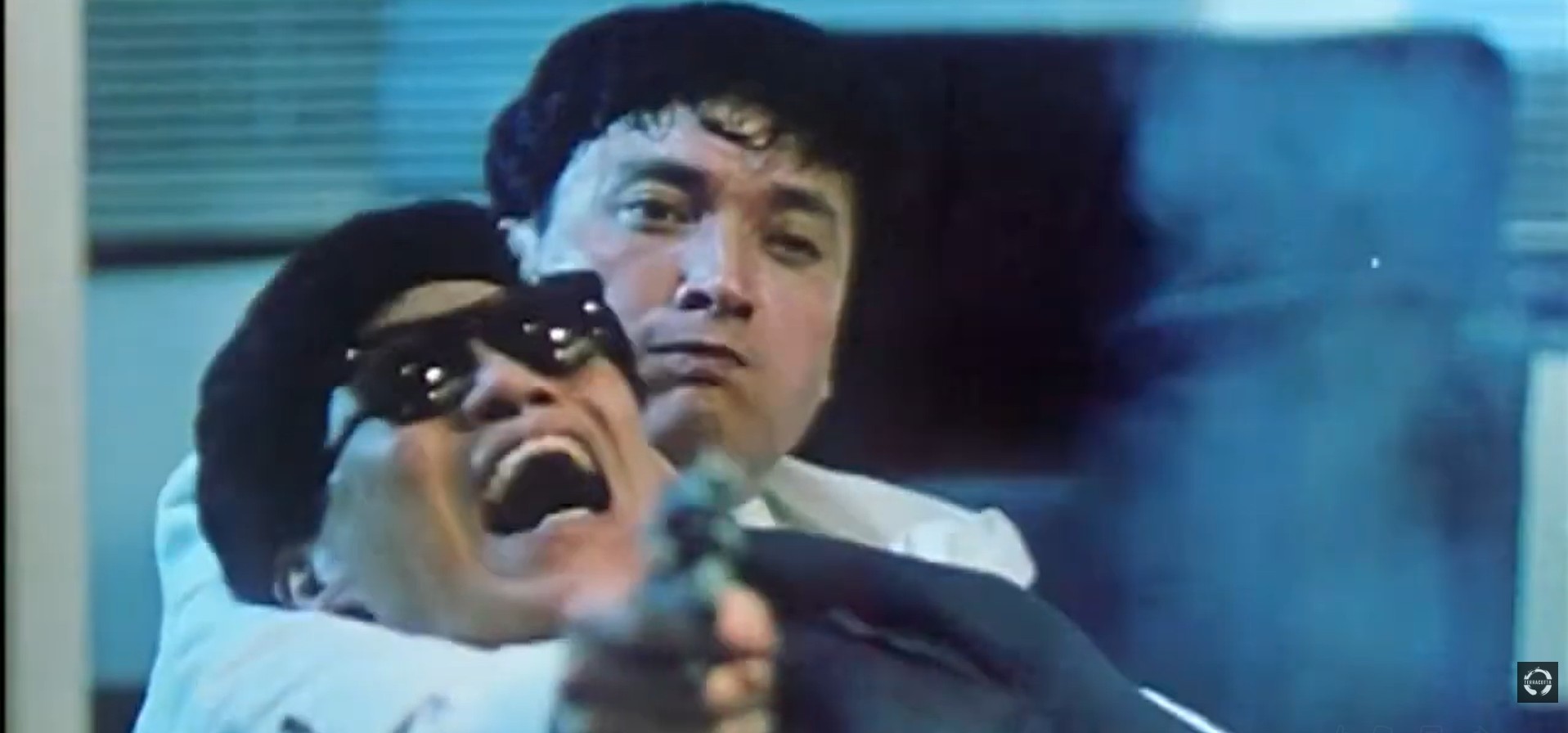
CID special operations police officer Hsiang Ming is going through a separation with his wife, who also works for the CID in the narcotics division.  As the two attempt to work out an amiable agreement with their young daughter before she moves to the U.S., his wife is brutally slain by a female assassin, a hired gun employed by corrupt cops involved in a large drug smuggling operation.  One of those cops is her new boyfriend, a high ranking CID officer.  Accused of murder, Ming is on the run with his youngest daughter and even tracks down his wife’s murderer, Miss Pai.  Extenuating circumstances leaves Ming at the mercy of Pai who didn’t know her target was a cop and has immense sympathy for Ming and his daughter, a problem she’s directly responsible for.  Outnumbered, outgunned, and friends quickly diminishing. Ming has no other option but to accept the deadeye Pai’s help and the two quickly form a bond that goes beyond just surviving insidious corruption.

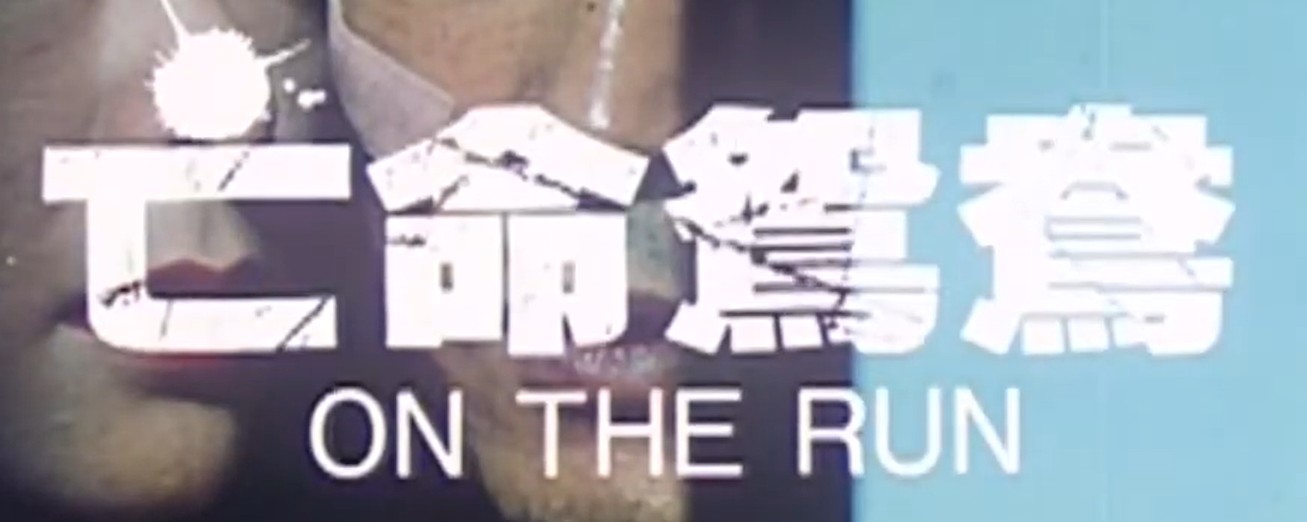
In 1988, Bo Ho Film Company and Golden Harvest Productions released the Alfred Cheung-directed, Hong Kong heroic bloodshed flick “On The Run,” penned by Cheung alongside cowriter Keith Wong (“Her Fatal Ways” trilogy). “Mong ming yuen yeung,” aka “Fleeing Couple,” is the literal title which also included another alternate title, “Hong Kong Connection – On The Run,” in more broad English titles.  The fast-paced, action-packed fight or flight thriller told a narrative of ingrained corruption within the ranks of the law, bonded unlikely heroes with conflicting professionals and a sore point connection, and really pushed the exodus, or export, of emigration at the time because of the seedlings of British rule coming to an end with a handover of Hong Kong back to the Republic of China, an act that eventually took a decade to complete.  Anhtony Chan, Leonard Ho, and Sammo Kam-Bo Hung produced the film with Paragon Films and Mobile Film Production as associated studios.

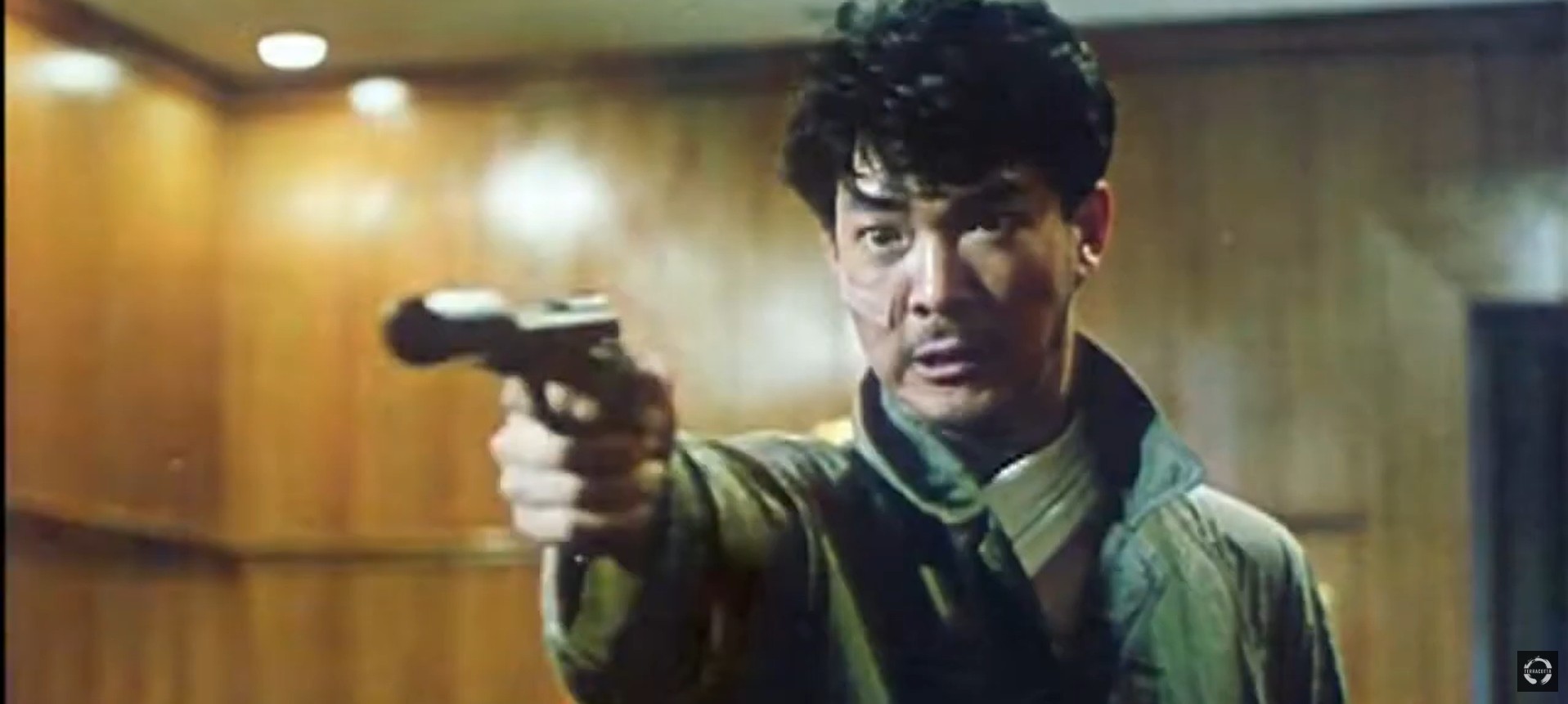
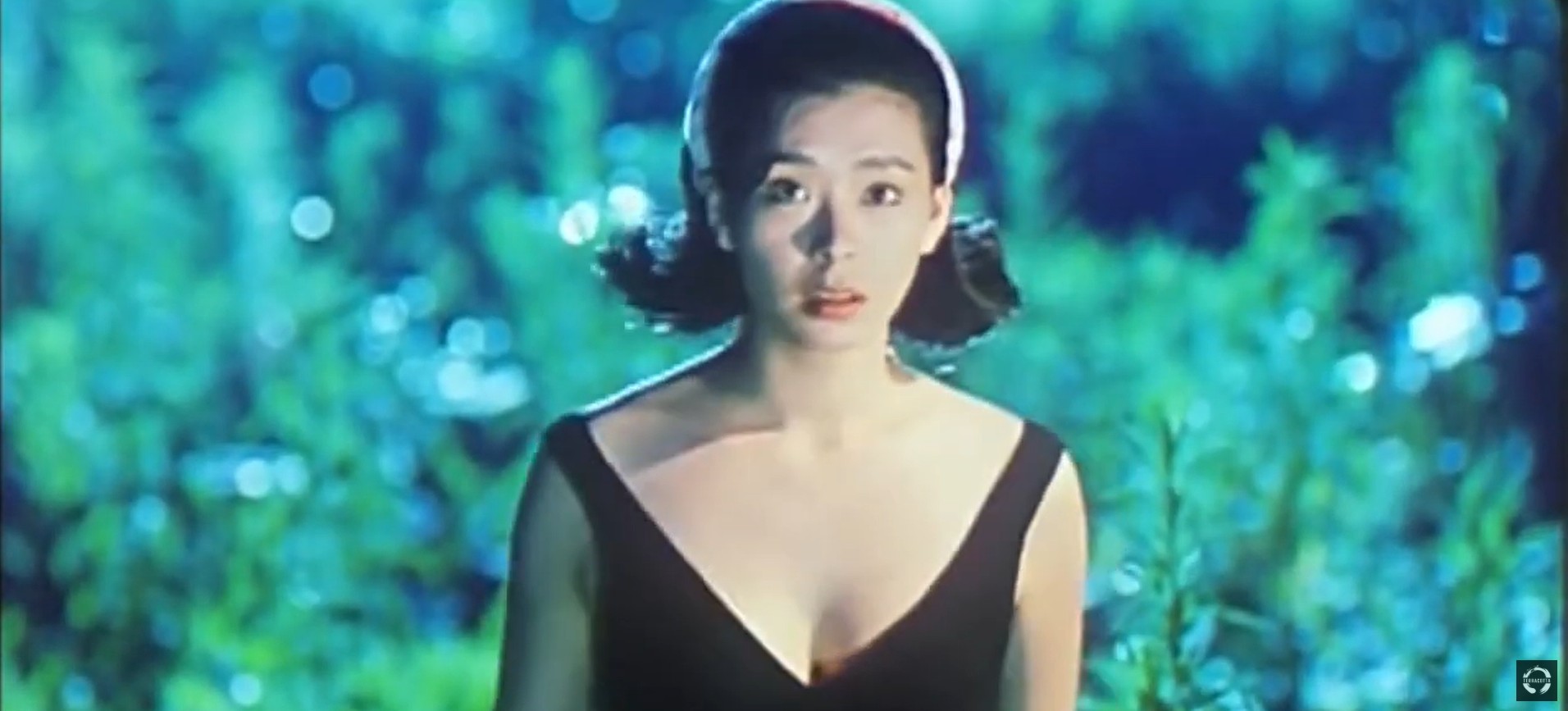
“Picture of a Hymph” and “The Peacock King” martial arts action star Biao Yuen is a sorely underrated action star from the 1980s, overshadowed greatly by the versatile Jackie Chan and the quickly rising through the heroic bloodshed ranks Chow Yun-Fat.  Though immensely popular in Hong Kong for his contribution to the acrobatic style of fighting and palpable stunt work, Yuen should be a household name in the States with select films that carried over.  The only problem was Yuen was never really a part of those niche works unlike the aforementioned stars and amongst others, but Yuen never stopped working, starring in a co-principal production as Hsiang Ming, a CID officer whose special operations department is being phased out, mirror his own life as he is being phased out amicably by his emigrating wife (Idy Chan, “The Siamese Twins”) and child (Chan Cheuk-yan, “Bless This House”).  As Ming, going through a separation is already difficult enough and Yuen’s able to show the meek and reserved desperation that initially stunts him as a husband but breaks through that limitation when she’s shot in the head and he must step up to be the protective father for his young daughter.  The father -daughter aspect is a narrative opposite that strays from the typical damsel in distress device.  Instead, Patrica Ha (“Flaming Brothers”) embodies the strong protector as the assassin Miss Pa.  Quiet natured and a crack shot, we’re introduced to Ha’s unique solitude of naked contemplation and, later, her retro appearance of a woman plucked from the 1960s with the flick up hairstyle.  Ha’s portray adds a lot to Pai’s mysterious past and her cold nature but her character’s arc travels across a sympathetic bridge when Miss Pai’s target ends up being an law officer with a cute family being hunted by money greedy and morally corrupted officials in Lu played by Charlin Chin (“The Imp”) and his entourage of varied goonies (Lo Lieh, “The Untold Story III”) – Wah Yuen, “Mr. Vampire” and Phillip Ko, “Cannibal Curse”) who are so individualized they are worth more than just the general and broad charactered henchmen that tend to be forgettable.  Bowie Lam, Kam Kong Chow, Peter Pau, Lap Sal Lam, Yung Kwan, Cheuk Yan Chan, Shek-Yin Yau, Kwai-Bo Chun and Heung-Kam Lee costar. 

Cheung’s “On the Run” is not only fast-paced, hard-boiled, and well-executed, the story is also dark and unforgiving.  No one is safe from the ingrained corruption even when lives are already upended through a natural course of hardships between sentient people making conscious choices that best suites them, such as Ming and his wife’s separation involving a small child.  Good guys are bad, bad guys are good, “On the Run” doesn’t define and cement the roles of the players as cops turn out to be corrupted drug smugglers and ruthless killers and an assassin for hire becomes a life savior for a father and his daughter with immense sympathy.  Each one of them are looking to escape one way or another:  Ming’s wife wants to move to America, Miss Pai wants to go back to Thailand, Lu’s looking to get away with murder and money, and Ming is open to explore the possibility of either moving to American before all the chaos ensued or flee to Thailand with his wife’s assassin in attempt to not only be out of the reach of Lu and his men as a witness to their treachery and victimizing transgressions but also to escape from his accusations of murder as well as be with his new found affection for his wife’s killer.  This speaks to the current Hong Kong climate of the looming power change and the state of affairs that drive denizens to abscond an unwanted change in rule with Lu and his men likely representing Chinese corruption of a communism power.  The film’s neo-noir veneer capitalizes suspense and danger around every corner and the level of trust certainly wavers in a directional wind that gives a scent of deceit.  “On the Run” is not gun-fu nor is it straight up martial arts; instead, the conflict basis is strictly melee and projectile based without the heavily influenced martial arts action of Hong Kong historical cinema, grounding “On the Run” with more realism in it’s darkest, grittiest narrative that makes the Andrew Cheung thriller more intense.   

88 Films releases “On the Run” onto a new Blu-ray home video that’s AVC encoded with Full HD 1080p high-definition resolution on a BD50 capacity disc.  The new 2K transfer from the original film elements has no qualms about it with a clean picture quality underneath it’s naturally healthy grain and diffused color palate that’s designs around shadows, neon lighting, and low-key lighting.  The negative spaces are often pleasantly inky without any decoding blotches or issues to divide into a couple of shades of black.  Skin and fabric textures are nicely highlighted with full perspective of the grime that builds up on the characters put through the violent wringer.  Patrica Ha is stunning with her character’s introductory getup much to the thanks of the transfer’s refined detail from her retro hairdo to the equally attributed outfit ensemble that’s plain, but she wears plain in a cool, sexy fashion.  The film is presented in a widescreen 1.85:1 aspect ratio.  The uncompressed Cantonese LPCM mono track funnels right, left, and center audio through a singular speaker so there’s an unfortunate lack of spatial direction, but this cleanly presented ADR track still offers strong, robust audio in its action and in its unobstructed dialogue albeit some low buzzing interference from the studio recording.  This strength of quality also extends to the action that has powerful measure despite being held in a crowded, single audio design.  The new remastered, optional English subtitles are of the UK lexicon with 88 Films being a UK label.  Special features include an audio commentary by Kenneth Brorsson and Phil Gillion from their Podcast on Fire Network, a second audio commentary with Asian cinema expert Frank Djeng and F.J. DeSanto, an interview with director Alfred Cheung Running Away, an interview with David West Predicting the Future, an alternate ending that cuts shaves off scenes on the tail end, and the Hong Kong trailer of the feature.  Graphic artist Sean Langmore continues to supply 88 Films with tremendously detailed slipcover and primary sleeve art compositions of characters and memorable moments meshed into a single image.  The reversible sleeve inside the green Blu-ray Amaray case houses the original Hong Kong poster art, which is more simplistic and not as busy as Langmore’s.  The region A/B encoded Blu-ray is not rated and has a runtime of 89 minutes.

Last Rites: Hong Kong heroic bloodshed and noir is defined by many filmic entries but “On the Run” has paradoxical attractiveness about it that separates it from the rest as it treads a gloomy disposition and an expat dream.

“On the Run” Now Available from 88 Films!

The EVIL Clown Takeover is Has Begun! “Helloween” reviewed! (101 FIlms / Blu-ray)

Just in Time for the Season. “Helloween” on a 101 Films “Bluray!

October 31, 1996 – A disturbed 10-year-old Carl Cane, donning red and white lashes and slashes clown makeup, slayed his fostered before brutally axing down a healthcare social worker assigned to his case. Twenty years later, Cane has been locked away at Morton Psychiatric Prison for most of his life but still manages to be a high-risk inmate wearing the same clown makeup.  In ward of his care is Dr. Ellen Marks who endorses stringent safety protocols and has a stern bedside care for her dangerously persuasive patient.  Flash forward 20 years later during the 2016 #clownpanic craze, the mass clown sightings provide cover for Cane to mastermind his escape and influence the disenfranchised to wear his lashes and slashes maquillage and rise against all of Britain, Dr. Marks must race home to protect her daughters as they become marked in Cane’s chaos scheme of nationwide epidemic violence.  This year, Halloween is more tricks than treats in a manipulative game of incited rise against authority with a murderous madman at the helm. 

Not to be confused with the German metal band of the same name, the 2025 film “Helloween” is a UK production that’s been compared to “The Purge” meets “The Joker” from writer-director Phil Claydon (“Vampire Killers,” “Within”).  “Helloween’s” story pans briefly from 1996 to primarily set in 2016, the year when clown panic was a national news item where mysteriously scary clowns would show up in random places and projecting a menacing way about them, enough so to cause public concern.  Claydon expands upon the year-specific-craze with a killer clown motif and a coordinated attack on a nation’s infrastructure, creating national havoc while the mastermind of ceremonies stays with his bubble of motive, to completely destroy his psych ward physician in charge of his austere care.  “Helloween” is a production of Shogun Films under the producing eye of Jonathan Sothcott with Lance Patrick co-producing. 

For “Helloween” to be centered around an incitive massive violent force, one that’s purely evil, demented, wicked, etc., that character is required to be bigger than life in a show of calculated malevolence and will be ultimately the driving juggernaut key to the film’s success.  Carl Cane is that described character, an educated mental case hellbent on being a reign of chaos from the very moment his 10-year-old self, fostered and abused through the social childcare system, chops up his foster parents and social worker without blinking an eye of hesitation.  However, the 1996 boy and the 2016 man of Carl Cane showcase two different genus of the same sociopathic species as adult Carl Cane has a knack for the flamboyant flair and is a talkative taskmaster whereas his younger version is about as quiet as a calculating church mouse.  Forever the bridesmaid and never the bride, Ronan Summers finally receives his time to shine and expel his talent to the world as a prominently gaudy villain donning edgy Joker-esque clown face makeup and sporting a dirty inmate jumpsuit.  There’s always the expectations Batman will be coming down from the rooftop or creeping from out of the shadows at any moment!  Summers, who did have a small role in “The Dark Knight” as well as be a supporting actor alongside Richard Brake in “The Dare” and had numerous voice acting roles in notable videogames, such as “Dead Island 2,” “Wolfenstein:  The Old Blood,” and “Cyberpunk 2077,” has tremendous presence with a spine-shattering laugh and creates a dark arura around Cane’s ambivalent supernatural abilities.  Jeanine Nerissa Sothcott, wife of Shogun Films producer Jonathan Sothcott, goes up against the antagonist playing Summers as Dr. Ellen Marks, head of Cane’s psychiatric ward.  The “Peter Rabid” actress finds herself on the precipice of a clown barrage against her family that has its own secrets and troubles teenagers (or adult?) as there is divisive tension between the planned daughter of Leah (Caroline Wilde, “Ghost”) and the unplanned and resentful daughter Alice (Megan Marszal).  Michael Paré (“Streets of Fire”) is perhaps the biggest name, an American name, attached to the project as an investigative reporter unearthing a theorized connection between Cane and the coordinated clownpanic sightings and Paré’s about as straightforward and conventional unimpactful in performance as they come.  The cast rounds out with Shanton Dixon, Samantha Loxley (“Hosts”), and Tamsin Dean (“Everyone is Going to Die”).

Though “Helloween” borrows pieces of “The Purge” and “The Joker,” another generous portion of the inspirational pie is “Halloween.”  Not only does “Halloween” and “Helloween” share similar titling but also certain “Helloween” plot points and framed shots that resemble a clown costumed Micheal Myers expressionlessly exiting his family home after murdering older sister Judith.  Claydon’s nods may dilute the original story some but the mashup manages to curate an interesting tale of a large scale terror on a small time budget by using televised media to indicate Cane’s grandiose scheme from the confines of his impenetrable holding cell and creation tension with good, old-fashioned editing and framed shots for those jump scare and distressing moments.  One thing is for sure that hinders the large-scale scenario but doesn’t obliterate the affect it has in its entirety is the small number of locations used.  Much of the story takes place between two locations:  the Morton Prison and Dr. Ellen Marks’s home.   These two primary locations service most of the story’s core elements and, perhaps, Claydon relied too heavily on news media to spread the clown carnage rather than have it unfold in frame with not only more locations of active aggressive assaults, like we see in “The Purge” series but also hire more extras as clown faced Cane acolytes and have a number of victims suffer at the hands of clownpanic.  Set designs, colorful lighting, stark contrasting features, the rapid pace storytelling, and the performances do pick up the slack and hold onto that collapsing of society sensation in more of a localized manner rather than widespread.  The twist ending pops disjointedly with a welcomed turn of events but isn’t setup with a crucial visual or expositional detail, leaving on the table the one important puzzle piece of the considerable why rather than focusing on the exposed when and how. 

101 Films isn’t clowning around with their new Blu-ray release of “Helloween.”  AVC encoded, 1080p high-definition resolution, and stored on a BD50, “Helloween” has plenty of picture quality positives going for albeit the film’s primary color spectrum, a Spirit Halloween store amount of haze and smoke machines, and plenty of negative area shadows all of which wreak havoc of the encoding of data.  One way to judge video compression is the ability to delineate every object in the feature from inanimate to animate and there’s no questioning in the presentation as all objects have an elucidation effect that doesn’t work the mind harder than it should.  Claydon works depth to create effective highly taut moments while staying in the purge of light and hope atmospherics of omnipresent darkness.  Curiously, the Blu-ray back cover mentions the feature containing an English uncompressed Stereo PCM and a compressed English DTS-HD MA 5.1 with the extras solely being a Stereo PCM.  However, the Dolby audio icon is stamped on both back cover and DVD art.  While there’s no menu option to toggle between either feature track, my play listed the encoded audio as the PCM Stereo and DTS-HD MA 5.1 which can be concurred with by the uninhibited punchiness that heightens the scares and the eerie hallmarks of lightning cracks, creaky floors, and other loud bang sounds.  Ronan Summers’s is a proper English speaker with great emphasis on his pronunciations, much like Paré’s classic westerner approach to any situation and role, but there are some UK dialects that skirt the cockney accents and though difficult to cling to, the mix greatly makes clear the intended word or sentence without any issues.  UK English subtitles are optionally available.  Special features include a commentary track with director Phil Claydon, a behind-the-scenes featurette with cast and crew interviews going through their experiences and roles, and the film’s theatrical trailer.  There is also listed deleted scenes but there’s an issue with the encoded playback as when pressed, the option glitches back to the bonus features scene, never moving forward into the deleted scenes.  The clear Amaray case with one-sided art has a less-is-more cover art with a face closeup of Summers in a sinister expressed Cane makeup with a blade silhouette just in front-right of him.  While we’ve seen a few inconsistencies with these release – the audio track conflicts and the deleted scenes bug on the encoding – there’s one more variance with the UK rating.  The case has a UK rating of 15 for Strong Violence, Bloody Images, Threat, and Language; however, the disc is pressed with a UK 18 classification.  “Helloween” clocks in at 93 minutes and is locked with a region B playback. 

Last Rites: The energy from Phil Claydon’s “Helloween” amps up and matches Ronan Summers’s intellectual madman persona with a smoke and mirrors widespread mayhem and reliable jump scares that breed infectious tension for clowns and the disenfranchised in this quaint and modern day clownsploitation.

Just in Time for the Season. “Helloween” on a 101 Films “Bluray!

Enjoy The Last Night in EVIL’s Hotel. “The Innkeepers” reviewed! (Second Sight Films / 4K UHD Blu-ray)

Book a Copy of “The Innkeepers” on 4K Ultra High-Definition!

The Yankee Pedlar is a historic hospitality hotel with over 100 years of service that comes with its own notorious past and haunted tidings.  On the verge of closing for good, the Yankee Pedlar has one more weekend to remain open and house guests but with only a handful of rooms occupied, there’s not much else to do for the two innkeepers, Claire and Luke.  As a way to pass the time, Claire is eager to video capture spooky events to feed into Luke’s website based off the hotel’s history in the death of Madeline O’Malle, a bride to be who committed suicide on her wedding day when the finance no-showed and her corpse was left to rot for 3 days in the basement as hotel owners feared for bad publicity, but when eerie begin to plague, call for her, with visions of a bloodied O’Malle in a white gown, Claire finds herself in the dangerous company with a permanent guest at the dying hotel. 

Ti West, the established genre director with the famed “X” trilogy, kept audiences pale in fear and the hairs on the back of their neck stiff and straight up with his written-and-directed horror films that retained staying power amongst fans.  2009’s “The House of the Devil” is considered one of the more recent better throwback horrors of our time surrounding classic tropes like a satanic cult and a home alone babysitter.  West’s 2011 film  “The Innkeepers” comes at a rebound time when his commercial picture, “Cabin Fever 2:  Spring Fever”, sequel to Eli Roth’s breakthrough hit from 2002 about a flesh-eating virus, didn’t quite feel like his film and “The Innkeepers” also hit a little different by shielding audiences from any type of horrific, on screen splatter violence and be concentrated on pure fear of the senses.  Though narratively set in perhaps Pennsylvania due to some references of towns an hour outside of Philadelphia, “The Innkeepers” was actually filmed more North in Connecticut with the real-life Yankee Pedlar building.  Larry Fessenden (“The Last Winter,” “Rehab”) of Glass Eye Pix and Derek Curl of Darksky Pictures co-produce the film along with Peter Phok and Ti West. 

In the two principal roles of Claire and Luke is “Barbarian’s” Sara Paxton as an unmotivated hotel clerk coasting until the very, bitter end and “Cheap Thrill’s” Pat Healy as a blasé and uninterested front desk colleague interested in getting on the popular haunted house train with his own website about their employer’s centenarian hotel.  Paxton inarguably shoulders much of the screentime as the girl who cried wolf when she experience’s the sounds of a wolf, aka the spooky serenades of one Madeline O’Malle, and the visual eviscerations of her bloodied corpse that would scare the bejesus out of anyone.  However, the frights are not enough to seemingly strike fear in Paxton’s shield of composure or even enough to put West’s story to rest with a simple I’m outta here as most of us chickens would flock toward the exit on the first instance waking from a vivid dream too real for comfort.  Healy ultimately steals the primary performance away from Paxton with his own gruff and irritated by everything:  the hotel, the guests, his own pitiful existence.  Healy does a nice job creating that subtle tension between Luke and Claire, knowing Luke’s own hangups lie somewhere in between and haven’t been exposed yet, all the while being a sarcastic boor for most of the time.  There are also side characters in the form of random guests occupying the skeleton-crewed hotel bringing with them their own set of baggage.  One of guests is Kelly McGillis and the “Top Gun” actress, in a bit of a meta-role of an aging actress turned mystic.  There’s also Alison Bartlett (Gina from various Sesame Street shows and specials) and Jake Ryan (“Asteroid City”) as scorned wife and her son and the peculiar older gentlemen, played by George Riddle, who requests a special room and will not take no for an answer.  One of the more curious castings is Girls’ Lena Dunham as a coffeeshop barista in a one and only brief scene that doesn’t add really anything to the whole in a pointlessly random interaction with Claire that, perhaps, plays off Claire’s repetitiveness and stasis life of going there everyday but not really knowing much about the barista, who is apparently always there too. 

Juggling between the blended tones of comedy and horror, Ti West doesn’t commingle the two directly into one scene, keeping distinction for one or the other in their individualized moments.  This leaves little room for alleviating dread levity inside the scare moment after building tension and fear of being chased or waiting for the silence to be broken but an unsuspected jump scare.  Outside the context of the fright-filled moment, back and forth quips and playful antics between Luke and Claire as two bored and starved for company innkeepers in the hotel’s waning days are delivered in brightly lit rooms and mostly shared with another person to be a telltale safe space against the malevolence of serrating spook-house intensity that often lingers and waits on with bated breath.  In the innermost between is Claire’s internal struggle to cope with the impending outcome that there is nothing on the horizon for her.  No secure job, no ambitions, no plans of any kind are seemingly providing the character with no hope and in that stagnation, she desperately holds onto what’s nearby – Luke’s interest in the Yankee Pedlar’s hauntings.  Enhanced by the odd actions and placement of the modicum of guests – McGillis as a crystal charm intuitive and Riddle as a strange-enough older man with a specific room fascination – Claire motivation to reveal Madeline O’Malle becomes tenfold because of her unconscious lack to move forward in life, which then spurs the question, is Claire’s experiences grounded in truth or are they just a downspout of manifestations induced compensation?  You’ll have to be the judge.

Like “House of the Devil,” another of Ti West films makes the Second Sight Film cut onto a newly restored 4K scanned UHD Blu-ray release.  “The Innkeepers” HVEC encoded, 2160p ultra high-definition, BD100 has the true presence of quality video with a gradual improvement in the finer details of a greater pixel count inside the HDR with Dolby Vision.  Though digitally recorded with a no imperfections to note from previous releases, Second Sight’s release does appear sharper and deeper around the black levels that often improve with better resolution and suitable compression and with a good portion of the story taking place in the dark recesses of a hotel basement and the in the shadows of unlit rooms, there’s no visual compression issue or loss of expected detail.  Contrastively, darker scenes appear more lit by a lower contrast but still, the details are there in depth and in closeup.  The English DTS-HD 5.1 surround sound audio track diffuses the spread of atmospheric creepiness – ghosts whispers, nondiegetic bangs and clangs, and a Jeff Grace building orchestral score that keeps the heart bumping (think Richard Band’s “Re-Animator” but with more lulls”).  Dialogue is prominently clear and in front of the aforesaid layers with depth mostly between Claire and Luke’s conversing in the lobby and range limited to, again, the aforesaid.  English subtitles are available.  Though this review is catered to the limited edition, rigid slipbox release full of tangible goodies, the standard release does have encoded a small army of special features that has two audio commentaries with the first including Ti West, producer Larry Fessenden of Glass Eye Pix, producer Peter Phok, and sound designer Graham Reznick and the second commentary also West but with principal actors Sara Paxton and Pat Healy.  A slew of new interviews provide a well-rounded, in-depth look at the creative design as It West A Lasting Memory, Pat Healy Let’s Make This Good, Larry Fessenden Our Dysfunctional World, director of photography Eliot Rockett Living in the Process, composer Jeff Grace Cast a Wide Net, and line producer Jacob Jaffke A Validating Moment contribute to the retrospective.  Special features round out with archival behind-the-scenes and the trailer.  The physical presence of Second Sight’s “The Innkeepers” keeps in-line with previous standard edition 4K releases with a black Amaray case and a monochromic grayish illustrative cover art setting audiences up for ghostly expectations.  The UK certified 15 release contains strong horror, gore, language, and sex reference – though the gore is subtle and definitely not over-the-top or even explicit.  This particular UK release, that has a runtime of 101 minutes, is region free and presented in a widescreen 2.40:1 aspect ratio.

Last Rites: “The Innkeepers” works, if not wriggles, into the brain, much like the invasive worthlessness inside Claire’s swirling mind, and the Second Sight Films’ 4K UHD Blu-ray is an ultimate celebration of not only the film itself, but also the venerable work of the horror genre’s freshest master Ti West.

Book a Copy of “The Innkeepers” on 4K Ultra High-Definition!