
 In a small South Korean village, tight-knit families practically know one another in the quaint middle-class community. When mysteriously deadly destructions from inside local families and strange stories of animal carcass devouring creatures in the woods surface, local police sergeant Jong-Goo begins an investigation to connect a pattern of violence and superstition and at the center of it all is a suspicious and reclusive Japanese traveller. Bound by the law and an overall lack of courage, Jong-Goo proceeds to investigate with extreme caution, but when his young daughter, Hyo-jin, becomes subjected to the same symptoms that overtook destroyed families from within, the desperate father sets aside rules and regulations and uses threats and force when visiting the Japanese Stranger, whose rumored to be an evil spirit that’s plaguing the small village with terror and death.

By far, “The Wailing” sets the precedent on folklore horror. Acclaimed writer-director Hong-jin Na lands a harrowingly ambitious, well-constructed film right into the lap of horror fans with “The Wailing,” known also as “Goksung” in the film’s country of South Korea. South Korean filmmakers have once reestablished proof that foreign films can be as masterful, as bold, and as elegant when compared to any other film from major studio productions. Hollywood has started to come around by remaking one of South Korea’s most notorious films, the vengeful thriller “Oldboy,” and seeks to remake recent international hits in “Train to Buscan” and “I Saw the Devil.” Lets also touch upon that top Hollywood actors are beginning to branch out to South Korean films. “Captain America” star Chris Evans had obtained a starring role in Joon-ho Bong’s “Snowpiercer” alongside co-stars Ed Harris and the late British actor Sir John Hurt. “The Wailing” will reach similar popularity being one of 2016’s most original horror movies and one of the more unique visions of terror to clutch the heart of my all time favorite’s list.
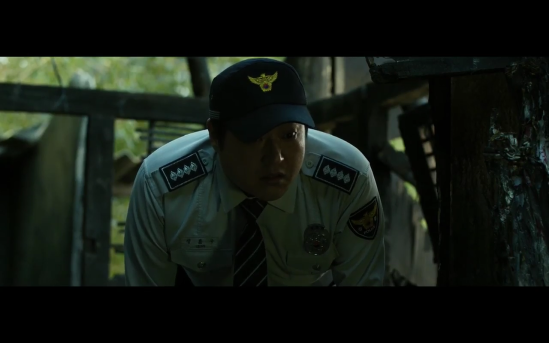
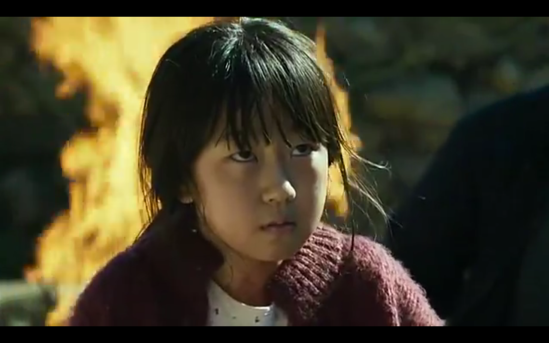
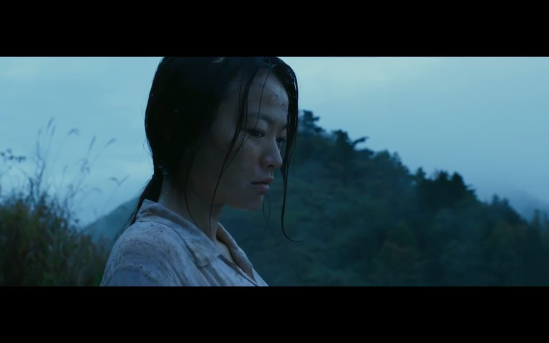
Do-won Kwak stars as Sergeant Jong-Goo, a officer who avoids trouble at all costs and has no motivation to be on time for anything. Kwak, basically, plays the fool character, comically going through the routine of investigating brutal murders complete with stabbings, burnings, and hangings despite his Captain’s constant chastising and seizes every opportunity to act dumb and look stupid, but once the story starts to focus “The Wailing” as nothing more than an offbeat black-comedy, Hong-ja Na devilishly about-faces with a severe turn of events that’s a mixed bag of genres. Kwak no longer plays the lead role of comic relief; instead, a more self-confident Sergeant Jong-Goo takes control of the investigation as the deeper he finds himself involved in the dark plague that’s ravaging his village. He hunts down the Japanese Stranger, the debut South Korean film for long time Japanese actor Jun Kunimura (“Kill Bill,” Takashi Miike’s “Audition”) with a zen like aurora that’s enormously haunting to behold and captivating when his presence is lurking amongst the scene. Though Kunimura’s demeanor contrasts with other actors, he’s very much in tune with the dynamic, but it’s the maniacally, foul-mouth ravings of Hyo-jin, played by Hwan-hee Kim, that stand out and are the most distraught during her possession state that could give “The Exorcist” a run for it’s money and is a visceral vice grip to the soul that has to be experienced. Woo-hee Chun and Jung-min Hwang round out the cast in their respective and memorable co-starring roles as a peculiar no named woman and a flashy shaman.
“The Wailing” incorporates various folklore stemming from cultures all over the world including the Koreas, China, Japan, and even from China’s bordering neighbor Nepal and meshes them with religious practices of Buddhism to even the far corners that the Catholic faith possesses. The luxuriant green South Korean mountain backdrop sets an isolated, ominous cloud over a beautiful and serene archaic village, an awe-inspiring juxtaposition created by cinematographer Kyung-pyo Hong that coincides with the complete dread piercing through the heart of the story; a perspective vastly opposite to Hong’s works in the previously mentioned “Snowpiercer” that’s set in the tight confines of a class dividing bullet train. “The Wailing” bundles together mythos with visionary concepts and landscapes in an epic mystery-thriller that’s unforgettable; it will cling to you, like a evil-dwelling spirit, well after the film is over.
20th Century Fox, in association with Ivanhoe Pictures and Side Mirror, produce Hong-jin Na’s top horror contender “The Wailing” with Well Go USA and Kaleidoscope Home Entertainment distributing on DVD and Blu-ray. Unfortunately, I was provided with a DVD-R screener and can’t specifically comment on specifications and image or audio quality. Accompanying the screener were two bonus features: a behind-the-scenes featurette and the beginning tale of “The Wailing” featurette. Both were fairly informative that gives insight on Hong-jin Na’s mindset and how the director’s ambitious story in a malignant tale of comedy, horror, and mysterious involving demons, shamans, and, quite possibly, the devil himself. “The Wailing” significantly captivates, sucking you into the darkness with an uncanny amount of pull with a story too terrifyingly original to avert and too thick with vigorous characters in a plot twist too harrowing to forget.
Tag Archives: hanging
Evil Rollerblades Over Your Neck! “Murderdrome” review!

Cherry Skye and her all girl roller derby team, The Alamos, find themselves gravely threatened by a summoned vengeful demon named Mamma Skate, the best and brutalist skater from the MurderDrome rink 20 years ago who was viciously murdered ritualistically by a Satanic-obsessed rival. Called back from Hell by a mystical charm necklace once in her possession, Mamma Skate rollerblades through the night, cleaving her way through the roughest of roller derby girls, and seeking to possess the soul of charm’s current owner, Cherry Skye, so she may live once again!

In 2013, Australian director Daniel Armstrong had a vision. A vision that includes skimpy-cladded, brazenly jagged roller derby girls, a resurrected she-demon wielding a butcher’s cleaver, and a helluva lot of rock-n-roll! A joint effort between Strongman Pictures and a slow drip of miscellaneous funding constructs that very exact vision, originally not conceived to have been a feature length film. Writing along side Trent Schwarz and Louise Monnington, who also had a co-starring role, Armstrong’s rockabilly ozploitation is a blood diamond in the Australian under bush with kangaroo pouches full of ocker comedy and skater mayhem. However, Armstrong’s terrorizing roller-demon imagery sat on the edge of being nonexistent and his film suffers the associated consequences of financial hardships and production problems. “MurderDrome” has a vibe more akin to a music video with interjections of storyline in between various psychobilly laid tracks that’s perhaps a pure result of the film’s financial inability to fill the void, but the style’s unique outline contends strongly in independent or abstract cinema outlets. Aside from the atypical structure, “MurderDrome,” granted, has some sloppy and choppy editing that disrupt not only the opening credits, but also waters down a death scene or two and affects character motivations.

Australian accents are thick coming from an indigenous talent of actors led by Amber Sajben, a downright heaven-sent leading lady starring as Cherry Skye. With her cutesy pig tails, high-knee fish stockings, and an acute fascination with always popping bits of food in her mouth, her contrast with the dialogue-stricken antagonist and steel, chain, and blade attired roller-demon badass Momma Skate, portrayed by Be-On The-Rocks (Yes, you read that right), redefines the old phrase a game of cat-and-mouse that doesn’t quite fit the overall artistic style. When a group of rough and tough roller derby girls who elbow check others for the fun of the sport, some fight should commence without being said; instead, the characters who proudly carry the names Cherry Skye, Psych, Thrusty, Trans Em, Princess Bitchface, and Hell Grazer option to scurry without giving a second thought to bucking up to a sole skating murderess. Armstrong subsides more toward a comedy route peppered with a resilience attitude toward the situation with co-writer Louise Monnington leading the charge in her character’s crude humor, especially having Pysch, her character, note descriptively what exactly is ‘duck butter.’ Urban Dictionary has you covered if you care to look up the term. The cast rounds out with Kat Anderson, Rachael Blackwood, Jake Brown, Anthony Cincotta, Gerry Mahoney, Max Marchione, Daisy Mastermann, Dayna Seville, and Laura Soall.

Plot integrity is flimsy at best striking influentially at the development of certain characters, most importantly with villain Momma Skate. Her conjuring doesn’t go through the comprehensive ringer as the demoness just appears without establishing a connection with the charm necklace bringing her demonic lankiness above ground. Max Marchione’s The Janitor bares some importance that whizzes like air out of a rapidly deflating balloon as we learn less-by-less about this character throughout the duration of the film. The Janitor’s key mentoring role wavers, resulting in just one more confusion aspect into the blend. Remaining character developments are fairly cut and dry sans forgetting their eclectic attire, electrifying neon makeup, radical hairstyles, and overall lifestyles, but expansions upon the roles could have been more favorable for the Aussie production.

Camp Motion Pictures and Alternative Cinema skate the “MurderDrome” DVD right onto the North American market rink, providing the film’s first region one release. Extras are abundant with music videos from The Dark Shadows and other bands, a gag-reel, and a behind-the-scenes special effects featurette. The 72-minute feature is presented in a widescreen 16×9 aspect ratio that’s a bit hazy at times on the grayscale, but adds charm to the bargain bin brimstone fire and smoke computerized effects that truly defines Armstrong’s slasher as a campy ozploitation with Italian Giallo undertones and a supernatural core. “MurderDrome” rocks, literally, with great pyschobilly tracks from The Jacks, The Sin & Tonics, and The Dark Shadows to name a few of the head banging headliners on the soundtrack in the confines of a cavity heavy plot for a film more suitable as a music video than a feature flick. In the end, “MurderDrome” provides an endearing look upon horror even with all the obvious flaws, but renders some nice moments of searing barbarity overshadowing, just slightly, some of the misfires. Lastly, if you like girls in skates, who never take them off at any point, then “MurderDrome” is right for you!


Buy “MurderDrome” on DVD at Amazon!

 It's Bloggin Evil!