

When developer project manager Daniel, on the verge of a lucrative deal in flattening an old rental property , meets Nina, a clairvoyant who rents space on the property, an mystifying, and on the house, psychic reading opens up old wounds of Daniel’s previous life involving the death of his beloved artist wife, Maggie. The successful developer becomes frantically obsessed with reaching Maggie from the other side, believing he is paying Nina handsomely to be a vessel conduit, but as a single mother on the verge of losing everything, Nina exploits Daniel’s fixation on the past that’s more dangerous than initially presumed. Daniel and Nina become sexually and spiritually entangled on two false pretense fronts while behind the scenes, a malevolent presence orchestrates a sinister campaign of perverse revenge.

In her fiction feature film debut, Ilana Rein writes and directs “Perception,” a 2018 suspense thriller aimed unsheathe and reactivate the agonizing secrets and those who reap the benefits from them. Rein, who previously helmed documentaries that includes the award winning Battlestar Galatica fandom documentary, “We Are All Cyclons, pivots from non-fiction into creative invention alongside producer and writing partner Brian Smith. “Perception” tackles various themes from severe mental illness, to dangerous obsession, to how we initially and naively perceive individuals without knowing exactly who they really are, especially when they’re in the white collar, high dollar, social category. Rein focuses on rooting out psychotic and sociopathic qualities through the power of flashbacks while chucking in a scornful spirit into the background for good climatic measure.

“Perception” perceives hard bodies and chiseled faces over a few recognizable ones, which typically isn’t a bad aspect of filmmaking but may not draw a wide viewership. Though in the entertainment industry for some time, Wes Ramsey is one of those fresh faces, headlining as Daniel, the successful developer with an unhealthy mania for his deceased wife. Ramsey has seen more roles in television than in feature films, but the “Brotherhood of Blood” and “Dracula’s Guest” actor pockets horror theatrics here and there and uses his tall, dark, and handsome charm to be a good source for Daniel as the presumptuous, if not stereotypical, good guy. Opposite Ramsey is Meera Rohit Kumbhani, an Indian American actress with beautiful big and round eyes, to star as the clairvoyant Nina. Kumbhani has solid onscreen sincerity and a sexiness to match, but as Ninia’s has a principle crises, Kumbhani is able to sell practically a RickRolls performance that fools us all as uncertainty clouds judgement about her ethics when it’s whether to exploit a desperate widow or pay for her troubled young son’s educational necessities. Together, Ramsey and Kumbhani contently compliment each other’s performances and when you mixed the specter playing Chaitlin Mehner in flashback sequences, an out-of-body love triangle experience ensues. Rounding out the cast is Max Jenkins, J Ro, Vee Kumari, and J. Barrett Cooper as the only face I recognize more recently from Nathan Thomas Millinar’s “A Wish for the Dead.”
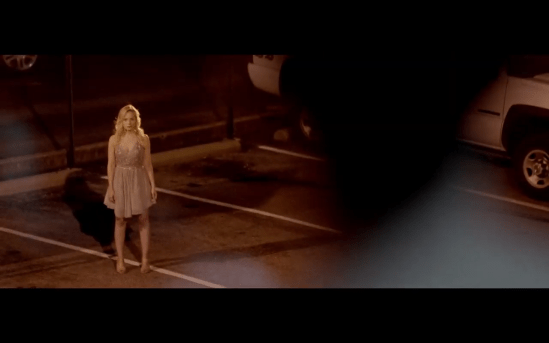
The depth of the story, especially with main characters Daniel and Nina, really hinders judgement on the outputted result. Not enough vivid and harrowing memories of Daniel and Maggie’s rocky relationship stir very little toward a stroppy receipt for disaster. Their coupling went from casual to 120 mph in two scenes flat never laying down a sturdy foundation on why viewers should put stock into their story if there’s no stock to really sell. Same can be said for Nina and her son’s simmering obtuse relationship where Nina believes all is hunky-dory, despite her son’s suddenly mute stature, and her unmotherly attentiveness to his disturbingly illustrated clues to his inner demons. Stronger supporting characters saw through the boy’s facade, such as Nina’s friend J Ro (who plays himself, by the way) and her mother; both of whom are on the polar opposite sides of the clairvoyant spectrum. Those underwhelming characters flaws suck the energy out from the main arteries in Daniel and Nina’s carnal exploits and meddling to thwart the very fiber of “Perception’s” thrilling suspense.
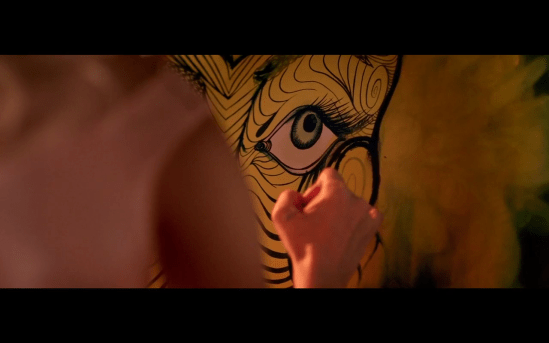
Ilana Rein’s “Perception” comes to DVD home video courtesy of Gravitas Ventures and presented into a widescreen, 16:9 aspect ration. Image quality is obvious clean as with all digitally shot, yet the hues are a slightly warm, favoring more of a yellowish tint into every scene, and while maintaining solid definition, some scenes bask in a softer glow at times. Stylistically, not much to report as the film follows conventional strides. The English language 5.1 surround sound has strong, dialogue favoring, and balanced with depth and range. There is also a dual channel track available, but not really needed, as enough dramatics flare up to tip into the five channel. As bonus features go, there are none. Ilana Rein’s debut into the feature film market could have been worse, but “Perception” is a strong entry into the horror-thriller market with some Hitchcockian undertones. Definitely sexy and psychotic, “Perception” puts onto a pedastal humanity’s worst when the sheep’s clothing has finally shed and that’s worth reviewing.
Tag Archives: haunting


Tell, Don’t Ask, Evil to Go Away! “The Addiction” review!

NYU Philosophy doctoral hopeful, Kathleen Conklin, has a run-in with a woman on the night streets of New York City, attacking her into a secluded dark enclave, and biting her on the neck after Kathleen is unable to comply with the woman’s bizarre instructions of ordering her to go away. The incident instills fear into Kathleen that quickly turns to a painful vampirism transformation that involves aversion to sunlight, self-antipathy, and a craving for blood. She continues to her studies that evolve into a deeper analytical parallelism of her newly acquired immortality, the results of it, and the human aspect that’s affected by it while along the way, feeding and turning friends, colleagues, and strangers into her brood of own image. Kathleen happens upon Peina, a vampire like herself, that has claimed to conquer his own addiction to blood and can even mirror himself as human, such as eating normal food and jogging. The agonizing withdrawal with Peina drops a slither of a notion into Kathleen that her gargantuan thirst for blood will overdose her soul to pure evil and she has to come to terms with her immortal being on the life she wants to live.

Abel Ferrara’s “The Addiction” has such anti-Hollywood tenacity that the black and white aurora of the 1995 noir vampire film goes against the more conventional grain that is Ferrara’s body of work, but still maintains a healthy amount of the director’s trademarks and his dispositional motifs to give the feature enough claim to clearly become his imprint of a screw you onto the big money motion pictures. The “Driller Killer” and “Bad Lieutenant” director orchestrates a film from without the complications of a union, with producers breathing down his neck to do this or that, and on such a minuscule budget; the vampires here are not transforming in bats, their eyes do not glow in the dark, and they even don’t have jugular piercing canines. Nicholas St. John’s script was written to portray monsters as just people with a severe addiction this particular drug of choice – the blood. The symbolism is so potent that’s hardly symbolism as the main character literally injects a syringe full of blood into the crook of her arm to get a fix.

Ravished without hesitation, Lili Taylor seizes Kathleen Conklin as if Taylor herself was addicted to the character, overtaking the character to an enlightened savagery of an academic disciple on the cusp of achieving stress-inducing doctoral status. Through the studious muck and death of mankind’s prior carnage, the “The Haunting” star goes for the full throttle transformation in the blink of a bite and never blatantly displays the hesitation of her former mortal self until the tide turns to whether stay blood thirsty or to live with the embattlement of struggling addiction. Kathleen crosses paths with Peina whose been undertaken by a classic Walken, Christopher Walken that is, and the New York City born “Communion” star had a big year in horror as “The Prophecy” was released the same year – 1995. Though Peina is crucial to Kathleen’s ultimate survival, the character has little screen time and Walken nails the performance with credence and gusto as some sort of subversive mentor to the young vampire protégé. The cast rounds out with Edie Falco, Paul Calderon (“Fear the Walking Dead”), Fredro Starr, and “The Hand That Rocks the Cradle’s” Annabella Sciorra as Casanova, the female nightstalker who takes a bite out of Kathleen and initiates the carnage.

Ferrara’s choice for black and white isn’t all surprising. At the time, numerous notable directors were doing the very exact concept in the 1990s, examples being Steven Speilberg’s award winning “Schindler’s List” in 1993 and Tim Burton’s dark comedy biopic “Ed Wood” with Johnny Depp in 1994, but Ferrara had a conceptually aesthetic noir appearance that created distance between the rest and established a solid black and white film that renders being akin to, perhaps, George Romero’s “Night of the Living Dead.” Not only did Ferrara’s film fit in the scheme of the 90’s fad, but extended “The Addiction’s” disturbing dramatic value and horror sensationalism in which color would have for sure diluted the story due in part to the pocket change budget. Taylor, Walken, and Sciorra very much believed in the project and that belief brought their characters to the formidable forefront to where a color picture didn’t really matter in the end.

Arrow Films presents “The Addiction” onto Blu-ray home video and is distributed by MVD Visual. The Blu-ray has been newly restored 4K scan of the original camera negative and approved by director Abel Ferrara and director of photography Ken Kelsch. The high definition 1080p widescreen, 1.85:1, picture has a clean palate and despite the lack of the color palette, the black and white has virtually little-to-no blotching or DNR, leaving a flawless image. The English 5.1 DTE-HD MA and 2.0 LPCM soundtracks, with optional English subtitles, is well-balanced, at least in the 5.1 DTE-HD Master Audio. Dialogue in the forefront with a brooding and jarring score by composer Joe Delia has great distinction and range, but there’s a curious lack of ambiance that focuses more on direct action of characters. NYC should be booming with surrounding noise; yet the direction Ferrara takes with reduced ambiance is risky, but exquisitely done to add a more personal touch to Kathleen Conklin’s struggle. Bonus material includes an audio commentary by Abel Ferrara, moderated by critic and biographer Brad Stevens. There also includes a new documentary, entitled Talking with the Vampires, directed by Abel Ferrara that features new interviews with composer Joe Delia, Ken Kelsch, Christopher Walken, Lili Taylor, and Ferrara himself. A new interview with Abel Ferrera going into the background of the film’s construction and the era of filmmaking, a new appreciation by Brad Stevens, an achival piece from the time of production, original trailer, and a reversible sleeve featuring original and newly commissioned artwork by Peter Strain. A supremely inclusive Blu-ray release by Arrow Films and MVD Visual of Abel Ferrara’s grittiest work of his gritty catalogue and the very spartan vampire film has an outlook of what future vampire films should aspire to with great beneficial expectations.

Buy “The Addiction” today!

Subletting Manager is an Evil Shrew! “The Resident”review!
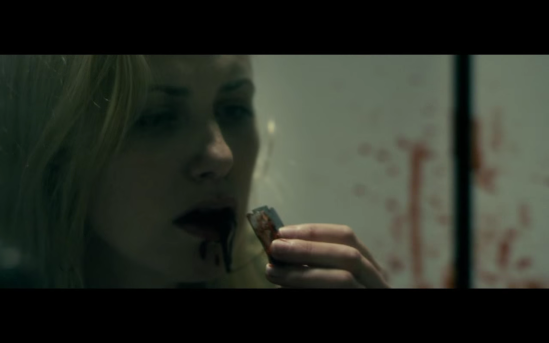
Joanna and her fiance, Geoff, enter a sublet agreement sight unseen. With her fiance being a struggling actor with gigs teetering on the line and domineering most of his time, Joanna struggles to find ways to pass the day alone in her apartment on unpaid maternity leave. The creepy, unwelcoming apartment doesn’t feel like home when Joanna has yet see another living soul in the building, but hears footsteps on the next floor above, violent wall banging thumps next door, and extremely unpleasant dreams that seem to cause her to lose time in reality. When Geoff neglects her pleads to leave the sublet, Joanna becomes enthralled with a newfound journal from an off limits room and as soon as she starts to read from the pages, her life in the apartment strangely follows a parallel path of the journal’s previous owner, a house wife named Margaret, that leads to jeopardizing everything Joanna knows: her sanity, her husband, and her baby.
“The Resident,” aka “The Sublet” as known in other parts of the world, is the debut psychological horror directed by the writer of “Jack Brooks: Monster Slayer,” John Ainslie, who also co-wrote the script with Alyson Richards. The 2015 film is also produced by Chad Archibald, whose name might sound familiar if you’re a regular reader of this review website where you can read about interesting horror feature films like “The Resident.” Archibald helmed the body horror delicacy “Bite” the same year. Together, the qualified credential crew steps up to a challenge with “The Resident” that, on the surface, appears to be another run-of-the-mill tired premise of a young couple coping with a malevolent presence and with a common subplot involving a stay-at-home mom being the unfortunate victim. Ainslie and Richards, obviously, go through the stages of that realm, knocking down the expected pillars of conventionalism, but the duo do touch upon a couple of things. For one, they make “The Resident” very interesting and entertaining by seriously messing with Joanna’s state of mind, forcing her to question every little aspect of her mundane existence in that small sublet. The second thing is is that the whole story can be seen a metaphor for postpartum depression that’s driving psychosis right into the thick of Joanna’s unhappiness. More than once, Joanna mentions how ugly she feels and she becomes overly jealous of Geoff’s ex-girlfriend, even if rightfully so.
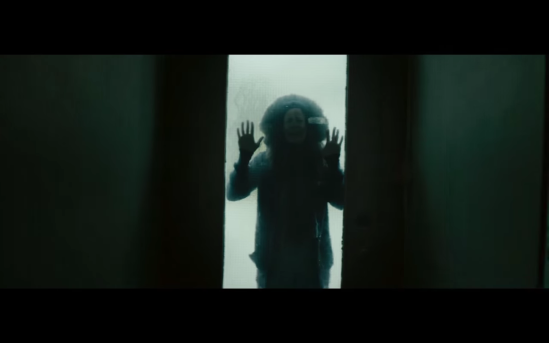
“Bite’s” Tianna Nori gluttonously takes on Joanna’s dwelling punishment. Nori’s par performance sells sufficiently, but doesn’t completely enthrall Joanna into the depths of madness, leaving a rather tame aftertaste. The same can be said for Mark Matechuk, who plays opposite to Nori with Geoff. His struggling actor shoes fit his two-bit stiff and starchy outfit, but Matechuk and Nori do work well together even if some scenes feel forced and scripted. By far, Rachel Sellan was my least favorite of the three main actors with her portrayal of a snobby, yet beautiful, ex-girlfriend of Geoff’s. A world built solely on the inner walls of the apartment, literally 95% of the film is inside this constructed sublet, has more personality and life than the organic material composing an orchestrated dialogue and I personally don’t blame the cast. I believe the sublet, the construed presence, subversively overshadows the intended characters. Krista Madison, James Murray, Mark Ettlinger, and Jeff Sinasac make up the supporting cast.
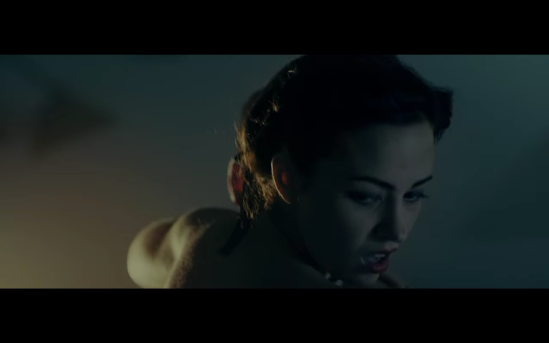
“The Resident” has modest effects that spur mostly off screen, but on the rate instance when mise-en-scene effects happened, they didn’t go unnoticed. “The Resident” brought and delivered the appropriate psychological nightmares associated with brain-warping spirits, shelling out an introverted dreaminess in Joanna that only she could experience with those unfortunate family and foes surrounding her witnessing only the outer chaos. Sometimes the story gets lost in itself when attempting to further Joanna’s skewed circumstances. Is Joanna dead already? The answer is possibly. Every external scene of the apartment building or even the brief scenes of Joanna with the stroller sets the moments in dreary rain and when going further into the film, Joanna is no longer able to leave the apartment. She even becomes a part of her own missing person’s investigation conducted by two belligerent cops, played venomously by Mark Ettlinger and Jeff Sinasac, who inform Joanna that her family hasn’t heard from her in days. It’s the final scene that sets the whole rest of the film in stone, that solidifies Joanna’s mental state, and yet the simple moment still leaves questions and reflection. That’s a considerable tall tell sign of good story telling from Ainslie and Richards.
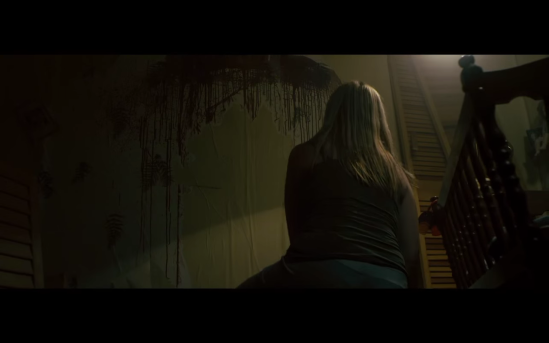
Canadian production company, Black Fawn Films, headed by Chad Archibald have another successful odious anecdote in their arsenal of horror and the company has quickly gained momentum in becoming a juggernaut in sustainable low-budget horror. Second Sight will be heading the home distribution portion of the title with a May 22nd release onto DVD and On Demand. Unfortunately, a press DVD-R was provided and the audio and video qualities can’t be commented on nor can any critique on the bonus material. John Anislie has the tools and the means to labor a chilling trap of supernatural spookiness. With a cast of similar caliber, “The Resident” would have made it higher on the list, but manages to keep a solid bleep on the radar when the next scene always begged the question – what’s going to happen next?
 It's Bloggin Evil!