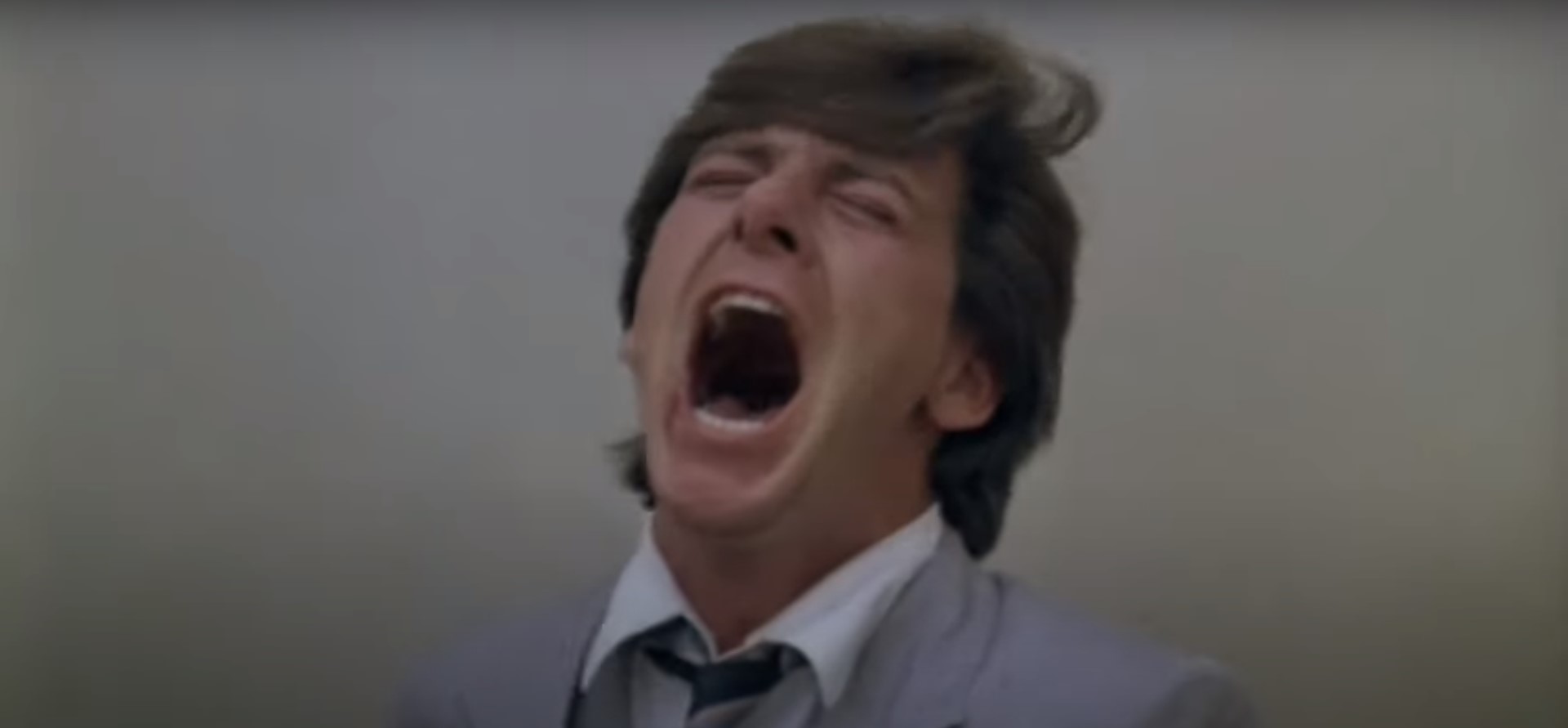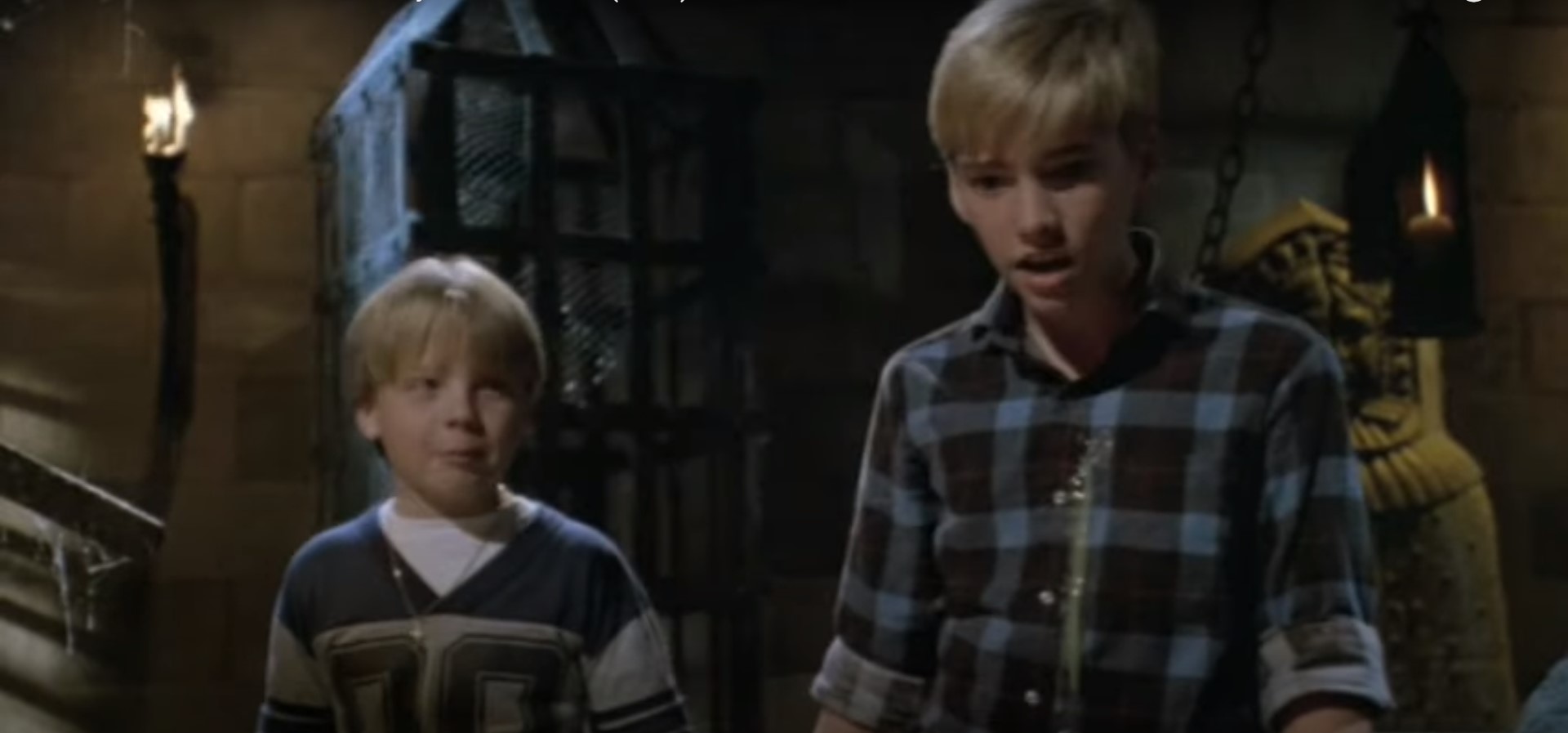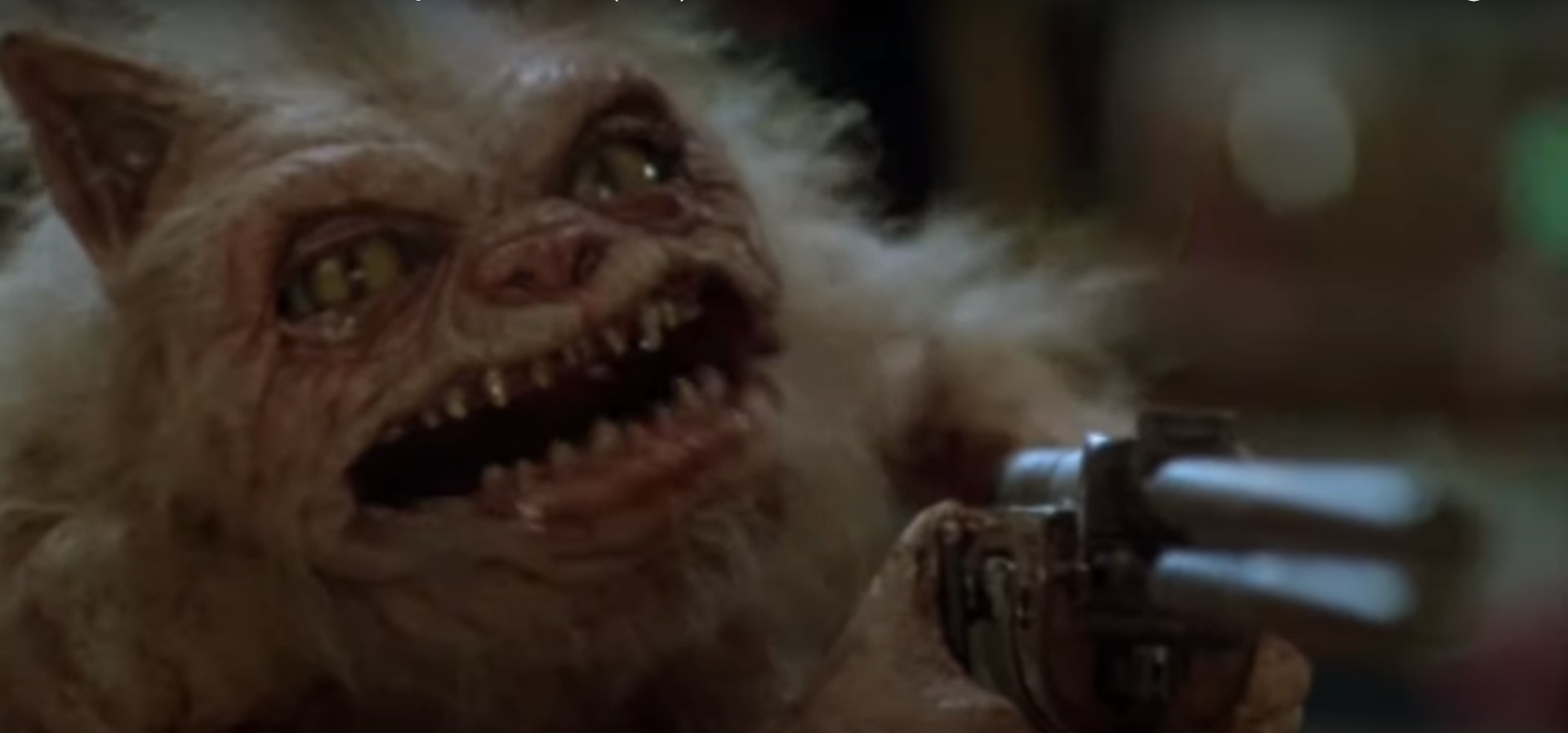
Earth’s Greatest Threat of Destruction is an EVIL Extraterrestrial Slug! “Slither” reviewed! (Visions Home Video / 2-Disc Steelbook 4K UHD and Blu-ray)

“Slither” Steelbook Can Be Yours! Buy it Here Today!

Wheelsy, South Carolina is a small town where the biggest event of the year is the countdown to deer hunting season.  On the eve to the start of the great hunt, an aggressive, parasitic alien entrenches itself inside a human host.  It impregnates a young woman to gestate thousands of its spawn, slug-like creatures that form telepathic link to the host and undertake its bidding.  Newly appointed Sheriff Bill Pardy, alongside his deputies, the eccentric town mayor, and longtime high school crush, Starla Grant, who’s husband was first infected by the invading extraterrestrial creature, must fight through the zombified hordes of alien controlled friends and neighbors townsfolk to stop the source from spreading and taking over the world but with their force numbers dwindling and the alien growing bigger and uglier by the second, Pardy must himself avoid being a host to the meat-hungry creature that has come to plague his small town community.
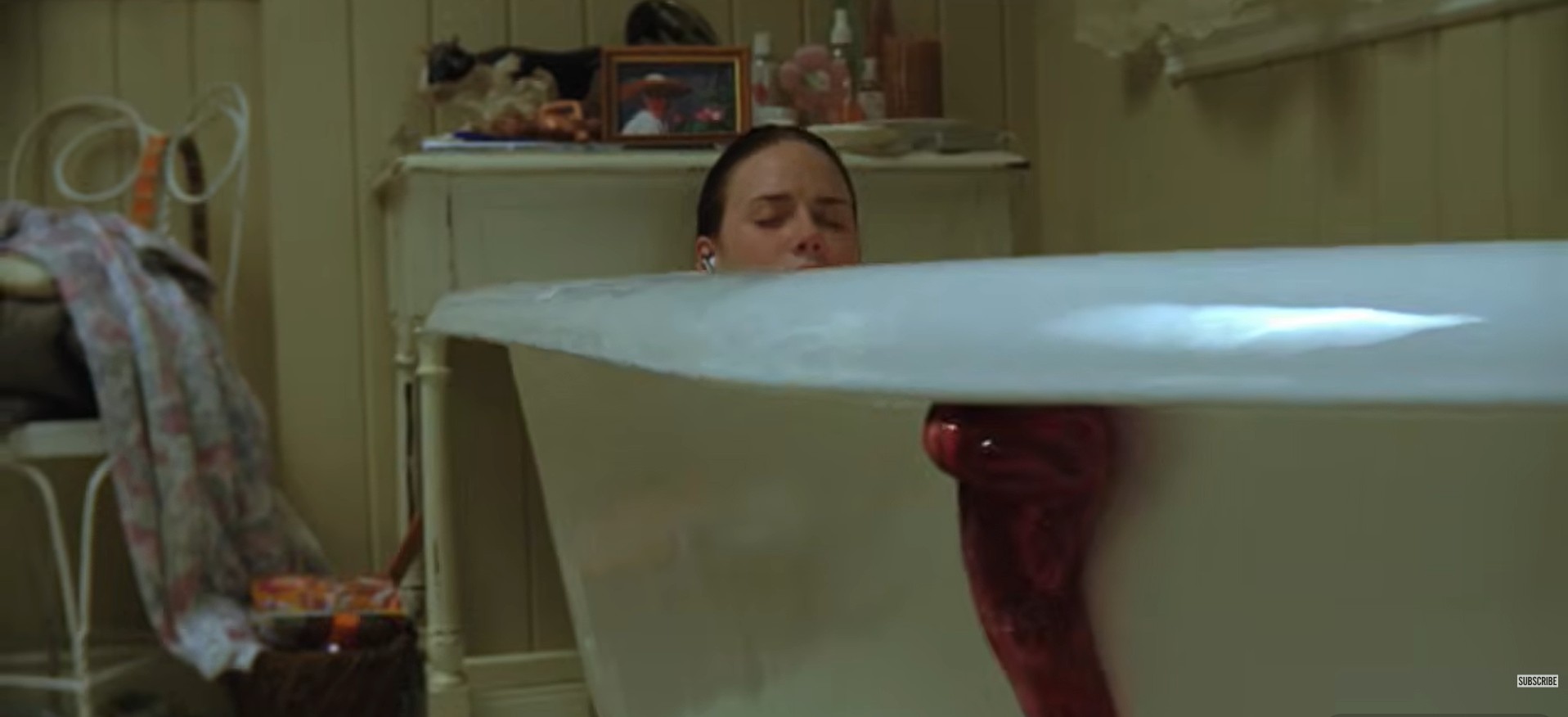
James Gunn, who has taken the MCU and DCU by storm with his creative involvement directing all of the “Guardians of the Galaxy” films, and upending the David Ayer and Zack Synder-universes with his divergent take on “Suicide Squad, and “Superman,” while also producing the just released “Supergirl,” use to bask in horror with “Slither,” a creature feature that captured the appreciation of 80’s monster movies and body horror with a zombie chaser and plenty of practical, tangible effects.  Gunn wrote and directed the now 20-year-old, 2006 movie filmed in a collective of portions of British Columbia, Canada doubling as a backwater town in South Carolina.  Brightlight pictures and Strike Entertainment produce the Gold Circle films presented movie with Paul Brooks (“White Noise,” “The Fourth Kind”), Eric Newman (“Dawn of the Dead” ’04, “The Thing” ’11), and Jeff Levine (“Shadow of the Vampire,” “ATM”) serving as producers. 
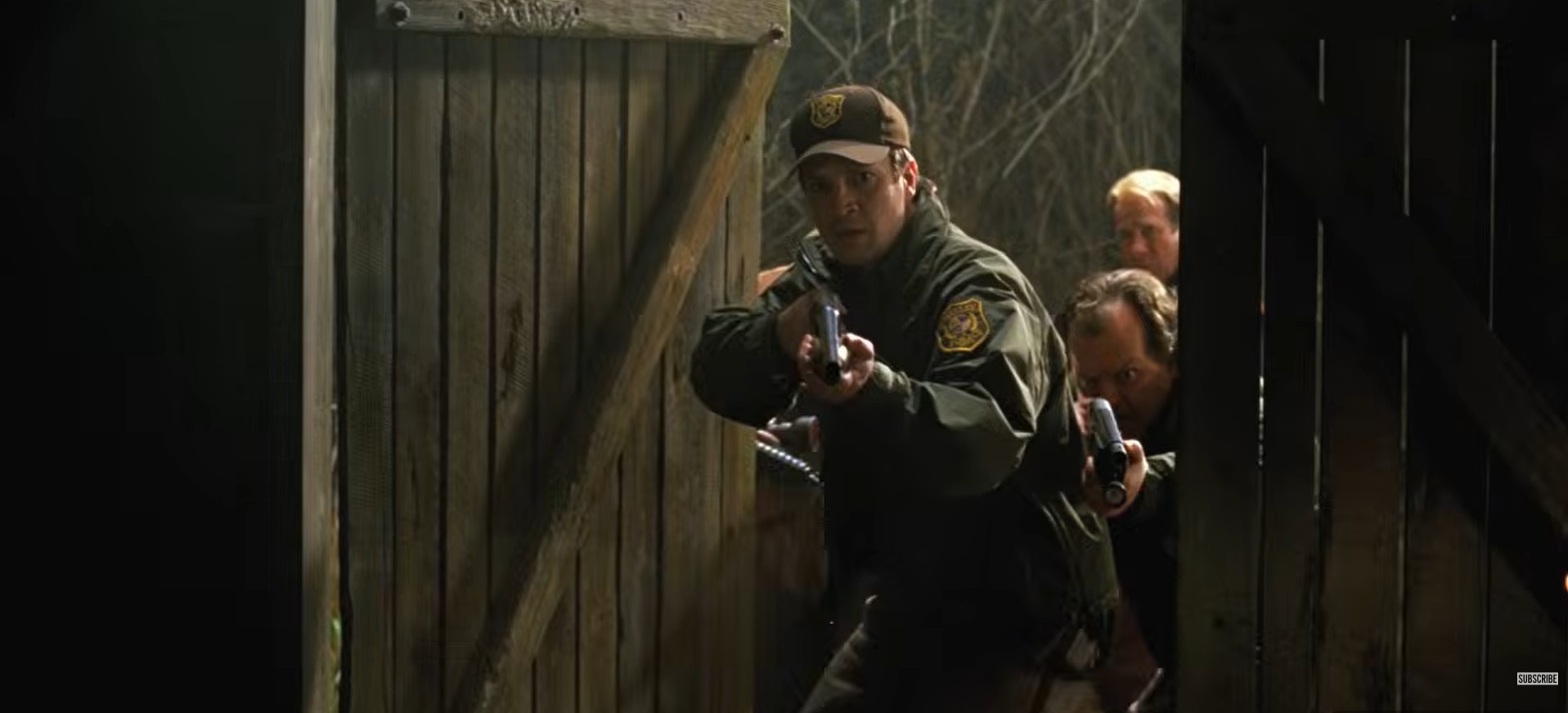
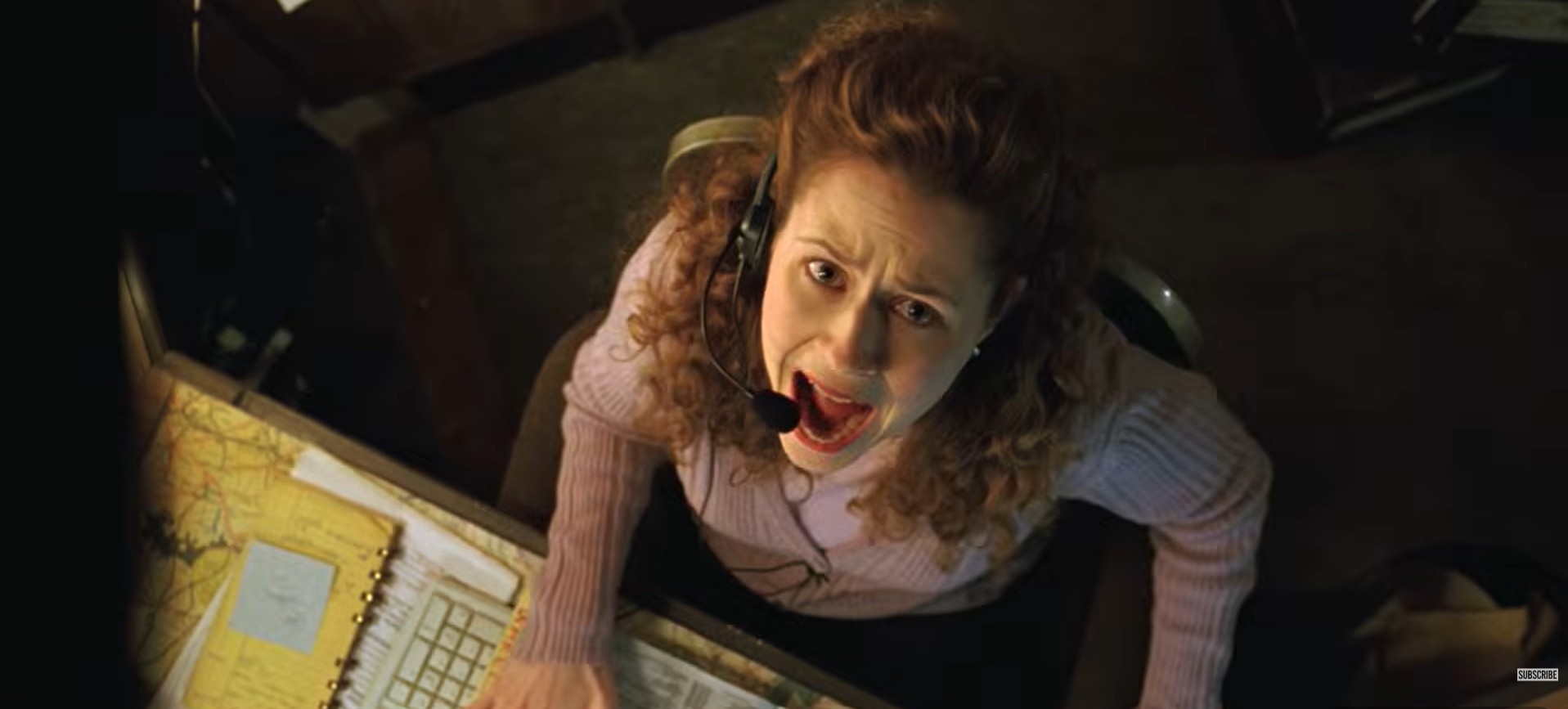
An established cast of talent comprises “Slither’s” eclectic character pool of townies being invaded by an outer space slug with a bad attitude.  “Firefly’s” Nathan Fillion is in the newly appointed Sheriff Bill Pardy and Fillion adds his usual spaceship captain comedic charm and swagger in the more grounded role as he stumbles into a world of slithering extraterrestrials that infest, digest, and gestate inside organic organisms.    Fillion’s hung up projection is for Elizabeth Banks’s Starla Grant, perhaps the most beautiful, and nicest, woman in all of Wheelsy, South Carolina,  The “Uninvited” actress adds pleasantries that are a compliment to Starla Grant but also a detriment as she’s unable to express how she really feels about her much older, well-off husband Grant Grant, played by “Henry:  Portrait of a Serial Killer” Michael Rooker.  Effectively, a love triangle ensues between the three with themes of true happiness, dissolution of a marriage, saving a marriage, love, and heartache coming into play amongst a body transformative horror that exceeds our solar system.  Rooker’s the rich Wheelsy resident who’s very protective of his trophy wife and is starting to feel the pangs of his wife pulling away from his advances but still loves her.  The fourth principal character in this quartet “The Darkling’” Tania Saulnier in what is essentially her debut protagonist role as a teen touched by the shared collective of the slugs and with her insight, provides pivotal information for the survivals to work against.  Each play their respective roles to perfection inside the chaos and mayhem of a more dominant species quickly spreading, even Gregg Henry (“Bodily Harm”) and his jaggedly crude role of town mayor fields a certain level of entertaining value to the frantic fray to keep “Slither” a light-hearted Hard-R creature feature.  The remaining cast includes Brenda Gutierrez (“Stone Cold”), Haig Sutherland (“Halloween:  Resurrection”), Jenna Fisher (“The Office”), and Don Thompson (“Horns”).
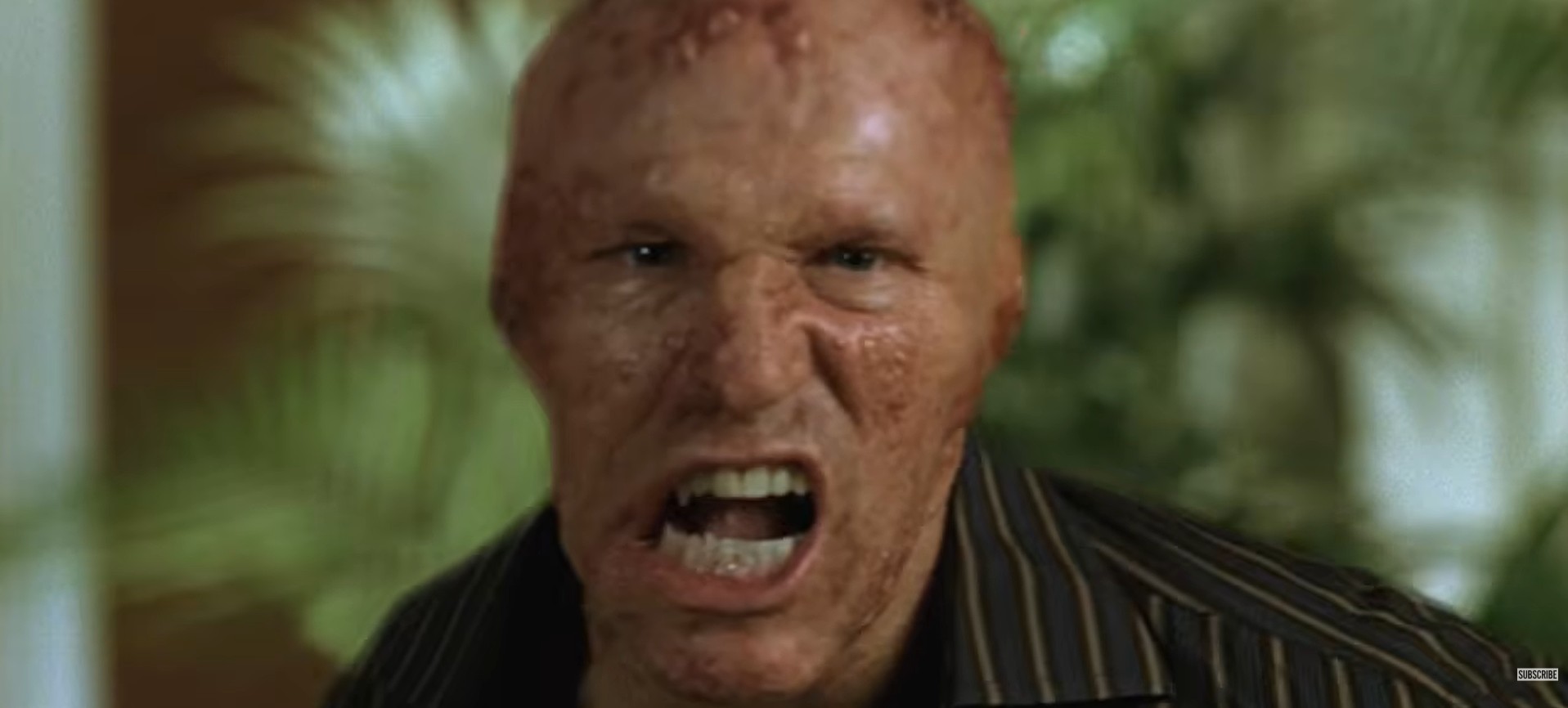
“Slither” is one of those seminal movies of the creature feature that could, or more accurately did, being a small fry horror movie that made a positive profit financially and amongst the audiences.  Of course, James Gunn found influence in his favorite horror works and borrowed, to an extent, key elements to spin his own craft that works to stand on its own two feet told mostly by its fine performances of the cast.  The down-to-Earth sci-fi action and gore is palpable and designed well in its composition of practical and computer-generated effects, especially for a mid-2000’s horror.  Gunn’s knack for black comedy works to the advantage of his brand of small-town satire and eccentric characters who can range from being charismatic and likeable to crude and inimitable.  Seeing the influences from John Carpenter’s “The Thing,” George Romero’s “Night of the Living Dead,” and Irvin S. Yeaworth Jr. and Russell S. Doughten Jr.’s “The Blob,” or maybe more so closer to  Chuck Russell’s 1988 remake of “The Blob,” won’t create a rift between the film and audiences as there’s too much to like and laugh about “Slither’s” slimy infiltration and invasion concept without it feeling hackneyed and reaching to strive to be something it’s not in its hark of a classic creature feature and science fiction monster movie.
The first time transferred in 4K, Visions Home Video, a subsidiary label of Vertigo Entertainment, releases “Slither” onto a new 2-disc, steelbook 4K UHD and Blu-ray set.  Disc specs include a 4K UHD HVEC encoded with 2160p resolution on a BD100 and a Hi-Def Blu-ray that’s AVC encoded with 1080p resolution on a BD50, and both films are presented in a widescreen 1.85:1 aspect ratio.  Image quality has been greatly found immersion with an image that pops off of the screen in the 4K option with the additional pixel count.  The Blu-ray holds its own and is also a fine presentation but in UHD, we’re treated to a little extra texture and a little extra clarity from the DolbyVision that can’t be achieved on the standard Blu-ray, especially around night sequences which most of the chaos and action takes place.  This is not to say the Blu-ray is unclear or obstructed as too has plenty of clarity and detail but what it doesn’t have is that deep sensory engagement of picture.  Coloring and grading are equal on both presentations that involve a more organic approach during the date and a bluish grading during night sequences to work in against the lighting.  No issues with the original 35mm elements as it’s kept clean and persevered well last 20 years, contributing to the natural resolution enhancement of the 4K transfer while also maintaining a healty but subtle grain.  The lossless English DTS-HD 5.1 Master Audio has no suppressive issues with fidelity and is just as immersive as the picture quality with distinctive directionals of the back and side channels and a balanced output of stereo, LFE, and central action.  Dialogue has no issues with clarity and is prominent above the audio layering.  The effects, such as slithering slugs sounds and gunfire, offer a good amount of bang for the cinematic budget and the overall main creature sound production eclectically engineered to be funny, in its whipping tentacles with that distinctive whip crack, as it’s scary and gross with its guttural growls and slimy trails.  English SDH subtitles are available for selection.  There’s also an uncompressed Stereo 2.0 audio format available.  Special features include an audio commentary with writer/director James Gunn and actors Nathan Fillion and Michael Rooker, featurettes The Sick Minds and Slimy Days of Slither and Bringing Slither’s Creatures to Life, Gunn discussions The Genesis of Slither in an interview with the writer/director, an interview with director of photography Gregory Middleton We’ve Got Worms, an interview with editor John Axelrad Feed the Fear, an interview with special make-up effects designer Todd Masters Just a Bee Sting, an interview with composer Tyler Bates What’s Gotten Into You, a location and set tour with actor Nathan Fillion, deleted and extended scenes, a blooper reel, and trailers for film.  The Visions Home Video set case comes in a steelbook with metallic luster and an exclusive, and uncredited from what I can tell, illustrated artwork of survivors in the throes of tentacle mayhem.  The backside also includes additional artwork that has the semblance of a veiny, Resident Evil-like giant eyeball.  Both sides are primarily colored in reddish orange with blue slithering in on the front cover.  Inserted inside is a dual-sided mini folded poster with the same front cover artwork plus alternative compositional artwork on the opposite side on its rigid heavyweight construction paperwork.  The 4K UHD is region free while the Blu-ray is region locked B as it’s a UK release.  The 95-minute film is certified 15 for strong gory violence and language.

Last Rites: An early 2000s oldie but a goodie, “Slither” gives a glimpse of James Gunn’s caliber of losers become winners and to not hold back much of the violence, gore, and rough dispositions of uncouth, unsavory, and unsophisticated characters. This new 4K UHD and Blu-ray release from Visions Home Video re-invades “Slither” into our lives, taking over our brains, and becoming part of our physical media collective.

“Slither” Steelbook Can Be Yours! Buy it Here Today!

The Holidays Are Over, but the EVIL Remains With Us in this Cookie-Cutter Classic “The Gingerdead Man” reviewed! (Full Moon Features / Blu-ray)

Get Ready to Chomp on this Cookie! “The Gingerdead Man” Blu-ray Available Here!

Cold-hearted, mama’s boy killer, Millard Findlemeyer, brutally gun downs Sarah Leigh’s father and brother before wounding during a diner robbery.  Two years later, Findlemeyer is executed with the help of Sarah’s damning testimony and the traumatized survivor attempts to pick up the pieces of her life by keeping her crumbling family bakery business afloat.  With her mother a raging alcoholic and a competing business threatening to shut the business down, Sarah doesn’t realize the gingerbread seasoning dropped off at her doorstep is actually the ashes of the evil Findlemeyer.  Thrown in a gingerbread mix and baked to live again, Findlemeyer returns to continue his carnage but as a delectably devilish cookie sporting candied buttons and wielding a knife.  Trapped inside the bakery, a handful of survivors are being more-than-gingerly picked off one-by-one by Findlemeyer’s possession of a pint-sized cookie and Sarah must face again the evil that destroyed her family.  

“The Gingerdead Man” is one of Full Moon’s more contemporary repeat villains this side of the century.  Christmas may be over, but the holiday cookie carnage doesn’t just pack on the pounds, it also can shred and cut the waist, literally, with guts spilling out everywhere.  The Charles Brand directed, 2005 film that kicked off the icing for not one, not two, but three sequels and a timeline intertwinement with Full Moon’s “Evil Bong” series.  Pot and cookies, a perfect combination when blazed.  The script was penned by Full Moon regular and “Night of the Living Dead” remake actor William Butler, under the pseudonym of Silvia St. Croix, and fellow Full Moon regular Dominic Muir (“Critters,” “Doll Graveyard”), under the pseudonym of August White.  Filmed in Los Angeles, the indie horror-comedy is a Shoot Productions and Full Moon coproduction venture with Band producing and Dana Harrloe serving as executive producer. 

Adding to “The Gingerdead Man’s already zany resurrecting the evil dead into a baked good concept (there’s nothing good about this cookie monster), the untamed energy and distinguished voiceover from Gary Busey is better than self-rising flour for this doughy production.  The “Predator 2” and “Lethal Weapon” actor headlines as the despicable killer Millard Findelmeyer but only in the flesh for the opening diner sequence that establishes Findelmeyer as a coldblooded murderer.  The backstory of his apprehension, trial, and execution is whisked into a frothy afterthought after the title credits to establish more of Robin Sydney’s Sarah Leigh character of rebuilding her life.  Sydney, who would become Charles Band’s wife nearly two decades later after debuting in this role, reserves Sarah into a stasis of plugging along into a woe-as-me state as a setup for her to be heroine nemesis to Findlemeyer’s flaky, killer crust.  What’s neat about her character, along with a handful of other principal characters, is they’re subtly and smartly named after notable cookie making companies.  Sarah Leigh is an obvious rework of the frozen desserts company Sara Lee, Ryan Locke, an unlikely Sarah Leigh love interest cladded and carried by all things from early 2000s, is Amos Cadbury, a mixed play on Famous Amos and Cadbury confectionary, and Jonathan Chase as commercial wrestling enthusiast Brick Fields lends to believe the character’s name pulls inspiration from Mrs. Fields soft baked cookies.  There’s also the corporate-commercial takeover statement with an adjacent restaurant that threatens to put Sarah’s bakery out of business and the owner’s name is Jimmy Dean, as in the sausage company, with Larry Cedar (“The Hidden,” “C.H.U.D. II”) in the role.  Alexia Aleman, Margaret Blye, Daniela Melgoza, and James Synder fill out the cast.

Kitschy personification horror is all the rage in the independent genre circle.  Murderous dolls at are dime a dozen, but a few outliers stray into something more risking and adventures, like an evil llama pinata in “Killer Pinata,” a wicked snowman in “Jack Frost,” or even a killer unicorn standing figure in “CarousHELL” that make the niche subgenre fascinatingly tacky for all the right reasons.  Charles Band and team tap into that peculiar ripe vein to extract their own usually joyous, kid-friendly object and transfigure its G-rated image to a hard R with death, sass, and a whole bunch of mischief and what better wholesome inanimate object to vilify than a scrumptious gingerbread man?  Voiced by Busey and animated by the always preferred practical means, “The Gingderdead Man” evokes promises of a so-bad-its-good composite, especially since the antagonist for this franchise starter fits right into the Full Moon small things come in killer packages niche, and while half of “The Gingerdead Man” delivers on a havoc-wreaking spiced cookie, the execution, as a whole, leaves much to be desired by whirling through a two year story gap of the capture and execution of Findlemeyer and how and why his malevolent essence is mixed into the batter for resurrection.  The slapdashedly before and after title credits causes a brief loss of thought as the brain frantically tries to catch up and fill in the gaps as much of the images and exposition haphazardly piece together.  The Gingerdead Man isn’t also quite as quippy as his human form counterpart, but a ton of appreciation goes into the multiple renditions of the distorted faced Gingerdead Man character from hand puppets, to animatronics, to full size human suit provides that breadth of range in angles, perspectives, and appearances that shape a personality package to where dialogue can nearly be neutralized altogether.  “The Gingerbread Man” lives and breathes as its marketed image, a mediocre kill possession-slasher with a bunch of characters scratching their heads instead of building upon who they are and what hurdles, figuratively and literally, to jump, the latter mostly falls into the hands of Sarah Leigh and her depression-induced fear, an aspect she has to face when being revisited by the man who killed her father and brother. 

An all-new transfer and remastered from the original 35mm elements, Full Moon Features re-bakes “The Gingerdead Man” onto a new physical media cookie sheet.  The AVC encoded, 1080p resolution, BD25, presented in a widescreen 1.78:1 aspect ratio, had elevated some lower resolution complications with better definition appeal but the overall package isn’t an epitome showcase of the format possibilities with softer contrasts that leaves voids and shadows milkier, textures fluctuate during decode that sways in a range between 15 to 25 Mbps, and minor damaged portions, such as light scratches and speckling, are not touched up in the restoration.  Skin tones and other colorist applications appear organic and, when reaching peak performance, displays a nicely diffused sweat sheen in the lighting.  Two English, lossy audio options are available, a Dolby Digital 5.1 and a Stereo 2.0.  A clean and clear presentation on all layers with an amalgamated cast that just as good as any other solid sound design with powerful forefront and intelligible dialogue, an above par ambient dispersal that has suitable depth and range, and a Roger Ballenger carnivalesque score that isn’t from Richard Band but is a great mimic.  English subtitles are available.  Extras include an archival behind-the-scenes featurette with interviews with cast, crew, and Charles Band with some BTS-footage in creating the cookie monster, a blooper reel, the original trailer, and trailers for other Full Moon features.  Front cover on the Amaray Blu-ray is an illustrated composition of characters that clue in a sense of what to expect but other than that, this standard re-release has physical bare bones.  The region free release has a runtime of 71 minute and is not rated.

Last Rites: Though doesn’t reinvent the recipe nor does it not make this naughty killer cookie stale, “The Gingerdead Man” has come a long way with a new, revitalizing release onto a high-definition format pulled from the extensive and vast Full Moon catalogue that’s slowly but surely updating the filmic cache. This schlocky bad baked good should surely be in everyone’s holiday horror collection.

Get Ready to Chomp on this Cookie! “The Gingerdead Man” Blu-ray Available Here!

Interrogating EVIL Mounts to Hundreds of Deaths. “Confessions of a Serial Killer” reviewed! (Unearthed Films / Blu-ray)

An Unearthed Classic Now Available on Blu-ray! “Confessions of a Serial Killer”

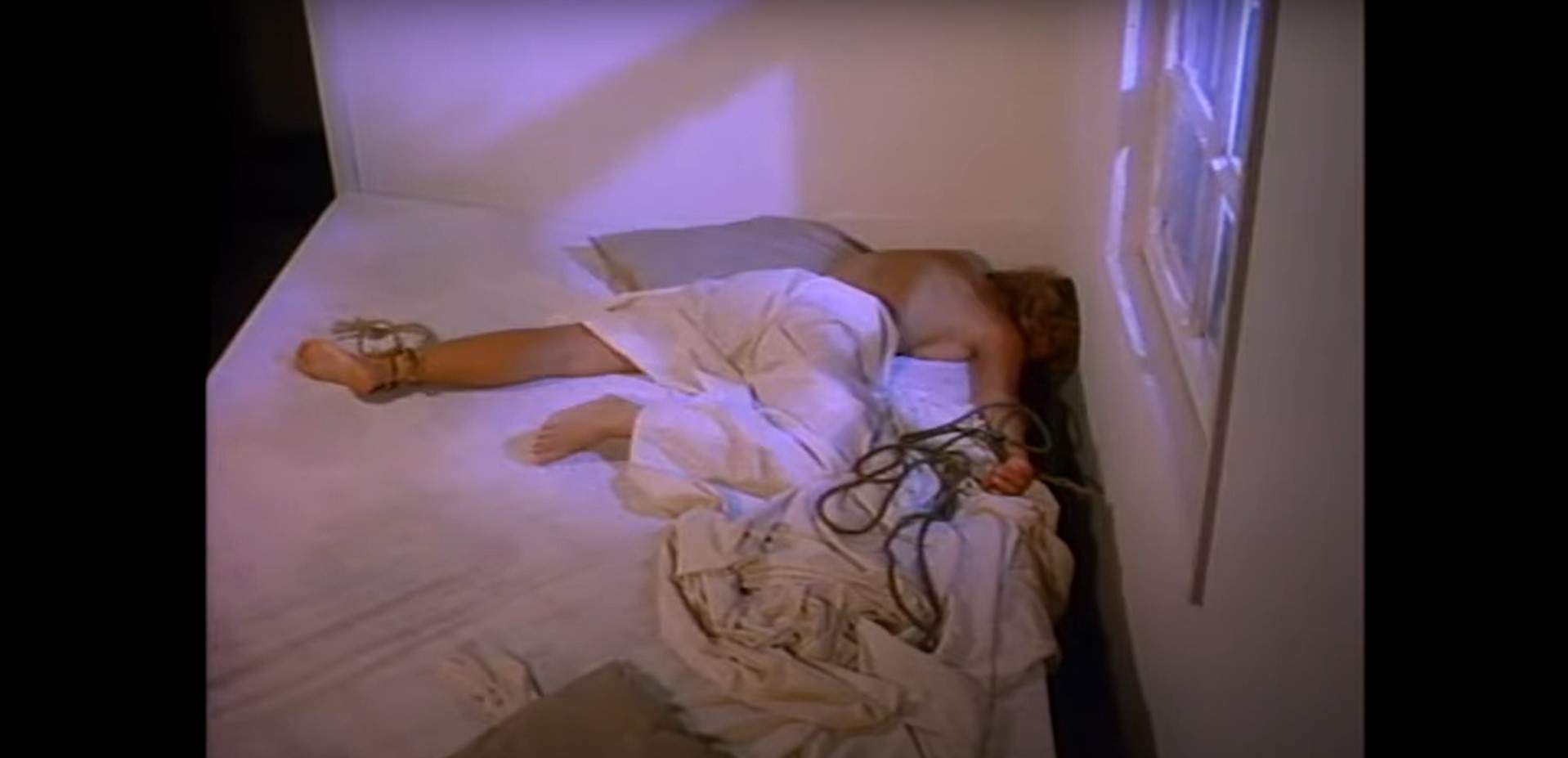
Daniel Ray Hawkins drives an unsettling, nomadic lifestyle as he travels across different parts of the country.  With no money, no place to call home, and little friends, Hawkins lives a life of mostly solitude, odd jobs, and equally as strange as him acquaintances spurred from his childhood, shaped by his promiscuously prostitute mother and a war veteran disabled father who gruesomely took his own life, both of which displaying their iniquities right in front of him.  Hawkins also lives a life of torture and murder, being one of the most prolific American serial killers ever of mostly young women.  When caught by authorities, Hawkins is willing to confess to everything and help unearth bodies from over decades on the road to ensure families he’s stolen from receive some sliver of solace.  His anecdotal accounts of individual disappearances and murders shock authorities to the core, so much so that Hawkins may just be unstable and not telling the truth.  That is until he informs them of and leads them to the cached polaroids and decaying corpses. 

Based on the American serial killer Henry Lee Lucas, who notoriously claims killing over 200 people has earned him a trio of film adaptations, at least, with “Henry:  Portrait of a Serial Killer,” directed by John McNaughton and starring Michael Rooker in the titular role, the subsequent lesser part II, and the more obscurely known Mark Blair written and directed production, “Confession of a Serial Killer.”  Much like “Armageddon” and “Deep Impact,” or “End of Days” and “Stigmata,” both movies fall into the paradoxical twin film phenomena of sharing the same them and having both been released approx. within a year of each other.  While “Henry:  Portrait of a Serial Killer” may have taken the top spot with a bigger budget played in more widespread venues, Blair’s rendition was released prior and closer to Lucas’s active killing spree that saw an end in 1983, just didn’t get released in America until a few years later to not duel with McNaughton’s film and thus didn’t succeed as much.  The Cedarwood Productions film was produced by Cecyle Osgood Rexrode, distributed by Roger Corman and his company, Concorde Pictures. 

While he was not the first choice for the titular character of Daniel Ray Hawkins, production designer, the late Robert A. Burns, filled in the sociopathic shoes with great monotonic conviction.  Burns, who has ties as Art Director and makeup effects on some of the most iconic and seminal genre films, such as “The Texas Chain Saw Massacre,” “The Hills Have Eyes,” and “Tourist Trap,” matches the makings of an unempathetic, unsympathetic, natural born killer with a glazed deadpan austere and matter-a-fact knowledge and every evil committed.  “Confessions of a Serial Killer” would not be as laced with depravity if Burns didn’t push the demented drugs to keep audiences hooked on overdosed deviancy.  Not a tall or broadly muscular stature, curly outstretched and receding hair, scruffily unshaven with a consistent 5 o’clock shadow, and wide rimmed glasses, Daniel Ray Hawkins epitomizes the very essence of a creep and accentuates the behavior even further with his leisurely composure and straight-faced simplicity.  Other side characters exist around Hawkins’ maniacal run with the bisexual Moon Lewton (Dennis Hill) and his sister Molly (Sidney Brammer), who marries the pansexual Hawkins out of necessity rather than sexual desire, and while Moon and Molly share Hawkins deranged apathy, they are completely overshadowed by the more controlling and interesting lead principal character due to half the murderous anecdotes are solo ran and all of the perception in the stories is through Hawkins’ recollection, giving him more power in the trio in perceptional self-interest, if Hawkins is capable of such consciousness.  The cast fleshes out with lawmen and victims in Berkley Garrett, Ollie Handley, DeeDee Norton, Demp Toney, Eleese Lester, Colom L. Keating, and Lainie Frasier in the opening stranded motorist scene that sets up Hawkins diabolical reach in turning a car into a trap. 

Bathed in realism, “Confessions of a Serial Killer” does not embellish with surrealistic temperament.  The story never dives into Hawkins’ head to show any indication or any kind of visual mental degradation or reality breakage toward being a coldblooded killer.  His violence is spartan, acidic, and raw to the bone, leaving a gritty taste in your mouth, with only a bleak childhood to blame for his adult obsessions to kill that he describes as necessary as breathing.  Blair distills the story to a “Mindhunter’” episode in trying to understand the killer and recover skeletons from his past, literally, through rational and respect ways rather than boiler room beatings and power-tripping threats.   Blair’s concept humanizes the inhuman and having Hawkins’s reminiscence each account is like recalling childhood memories with a smirk and fond remembrance splayed across his face adds another layer of iciness.  Grounded by pedestrian scenarios, “Confessions of a Serial Killer” disrupts the routine, the familiar, and the unscripted ways we live our lives unconsciously to the fiends living among us that look like you or me.  It’s a very palpable fear Blair conveys under the semi-biopic film.  The director does eventually let loose the reigns in the final third act with a finale account of Hawkins, Moon, and Molly shacking up with an amiable doctor, his suspicious assistant, and his shapely young daughter that boils to a head when one bad decision leas to another. 

For the first time on Blu-ray anywhere as a part of Unearthed Films’ Unearthed Classics sub-banner, “Confessions of a Serial Killer” receives a high-definition, 1080p release on an AVC encoded, single ring BD25.  Higher contrast and a lesser diffusion to create a harsher, flatter color scheme, the intention is to fully base the story in reality as much as possible, to structure an abrasive look of grain and low lighting that parallels the seediness the tale touts. inspired from the facts of an American serial killer without having to fully give recognition to the actual killer.  Shadows are key to Hawkins nightly runs, adding back-alley value to his viciousness, and the more lighter scenes, such as brighter-by-color interiors or day exteriors, are ample with natural grain that cut into the details but don’t necessarily knock them out entirely.  With the lesser capacity disc, compression doesn’t appear to be an issue with no sign of macroblocking, banding, or posterization. The English language LCPM 2.0 mono possesses lo-fi aspects kept true to the original audio master. The dual-channel conduit amasses the layers mostly in the forefront without ascendancy in the environment, creating a flat approach, rendering the audio mostly fixed and depthless with the action creeping onto the dialogue, but this also adds the realism of a real world chaos where cacophony reigns. William Penn’s effectively, inlaid soundtrack has hallmarks of Wayne Bell and Tobe Hooper’s “Texas Chain Saw Massacre in the minor key with added notes of an otherworldly tune fork keyboard and lingering bass elements that’s just infests with the sounds of deceit and death, reminding me also a lot of a George A. Romero’s “Night of the Living Dead’s” atmospheric arrangement. English SDH are an available option. The collector’s edition contents include a commentary with director Mark Blair, aka John Dwyer, director of photography Layton Blacklock, and actor Sidney Brammer (Molly), The Henry Lee Lucas Story by author and former TV news reporter James Moore, and a full-lengthy documentary Rondo and Bob examines Robert Burns being the foremost expert on uniquely deformed actor Rondo Hatton as well as examines Burns’ own career, a polaroid gallery, promotional gallery, and the trailer. Displaying the iconic poster, a profit from rip of Hannibal Lector with a devilishly masked killer behind bars, Unearthed Films’ releases the stark image onto a planar cardboard slipcover. Same image is used from the standard Blu-ray Amaray case with no reverse side. Disc is pressed with a memorable and anxiety-filled chase scenes. There are no inserts material included. The region A encoded Blu-ray has a runtime of 107 minutes and is unrated.

Last Rites: One of the better biopics on U.S. serial killers even if a little bit of speculation and sensationalism increases the already verbose notoriety of one Henry Lee Lucas. Scary and bleak, “Confessions of a Serial Killer” continues to remind us that no one is safe from the everyday sociopath.

An Unearthed Classic Now Available on Blu-ray! “Confessions of a Serial Killer”

Blind, EVIL, Undead Templar Knights Hunt for a Bite to Eat! “Tombs of the Blind Dead” reviewed! (Synapse / Special Edition 2-DiscBlu-ray)

“Tombs of the Blind Dead” 2-Disc Blu-ray Available for Purchase Here!

Maria, Betty and Roger take a train across the Spanish countryside to see the landscape sights.  When Maria feels like a third wheel stuck in between Betty and Roger’s flirtations, she jumps off the moving train, leaving her friends aboard, and camping out under the ruins of an old countryside Church.  There’s only one problem, the Church was home to the ancient order of the Knights of Templar who took a blood oath for Satan by sacrificing young virgins by drinking their blood and lynched by the Church for their crimes against man and God.  The Cursed Knights, reduced to rags, bones, and without eyes, rise from underneath their graves every night and roam the countryside on the hunt for anybody in proximity they can feast upon.  Betty and Roger learn of Maria’s strange demise without knowing the details and form a four-person search party only to step into the same dangerous den of the Knights of Templar. 

“Tombs of the Blind Dead,” or as known as the U.S. as just “The Blind Dead,” is the first in a series of four undead Templar Knights films that would come to be known as The Blind Dead collection by Spanish filmmaker Amando de Ossorio.  Natively titled “La noche del terror ciego” was released in 1971 and penned by Ossorio who laid a new path of Spanish horror that didn’t involve Paul Naschy or Jess Franco with undoubtedly slow dread of the undead that resembled more of the Italian-bred beyond the grave films where ghouls and ghosts return to life and wreak bloody havoc on the living, a guise for social context and for political dictatorship.  Themes of rebellions, rape, and bisexuality course through the feature’s necrotic veins as the film receives Spanish and Portugal co-production support from Plata Films and Interfilme with executive producer Salvadore Romero (“The Werewolf Versus the Vampire Woman”) spearheading pre-production and behind the scenes.   

Following of a newly formed trio of friends traveling the countryside to take in the sights, an underlying green-eyed trouble brews right from the moment when an enchanted Roger, the debut film and character of 1973’s “Green Inferno’s” César Burner, meets gorgeous red head Betty, “It Happened at Nightmare Inn’s” Lone Fleming,” and Roger’s travel companion and Betty’s Catholic boarding school roommate/best friend, Virginia, “The House that Screamed’s Maria Elena Arpón, feels the twinges of jealousy as her amorous covets for Roger never materializes and she sees her future with relationship with roger forever in the friend zone.  Virginia becomes so intolerant of Roger and Betty’s innocent flirtations that she’s willing to hop off a not-so-speeding train and camp inside the creepy, ruined structures at centerstage of a burial ground.  Arpón’s passive aggressive behavior is quite convincing, even the part where she tucks and rolls off a moving train in what stupid things do when people are frustrated, especially in the gray territory of love.  The love triangle is so simplistically arranged, each behavioral component goes without being farfetched.  From Virginia’s first sexual experience at the caressive, soft hands of her roommate/best friend Betty while at boarding school to Roger and Betty’s blameless attraction to one another that spurs Virginia’s irrational, self-serving behavior, Ossorio’s characters are written very well when homogeneously compared to other outside of cinema love triangles.  José Thelman (“Night of the Sorcerers”) indulges as the smuggler swine Pedro who’s roped into the reconning of the Templar tomb to clear his name with authorities by proving someone else had murdered Roger and Betty’s friend.  Joined by his floosy sidepiece María, played by another María in the iconic Spanish B-horror actress.  María Silva (“The Awful Dr. Orlof”), Pedro brutishly flaunts arrogance and confidence, taking what he wants, especially with the women uncharmed by the male sex, and that’s curious, fluid attribute when he attacks Betty but in the wake of the moment, the two of them are silently surfeited as they share the scene and that’s severely different from what anyone other filmmaker was doing at that time.  Andrés Isbert (“The Kovak Box”), Antonio Orengo (“Love Letters of a Nun”), Francisco Sanz (“Django Kill… If You Live, Shoot!”), Rufino Inglés, and Verónica Llimerá (“Hatchet for the Honeymoon”) round out the cast.

Performances give “Tombs of the Blind Dead” credibility in anxiety-riddled survival and turbulent human interactions but where those performances start to give way coincides with Ossorio’s building of dread.  No doubt the use of slow-motion sets the ghoulish, harrowing tone of the depraved, unabating, skeletally-cursed Templar Knights giving chase on horseback as they track down their flailing fresh meat, but in the process of that spinetingling, in between the Knights self-unearthing and the eventual snare and snack of their human victims, Ossorio doesn’t quite know how to flesh out formidable trepidation.  Pursued, screaming characters stand in the face of danger as if their feet are hardened in cement, stopping at every brief moment when out of sight of the hooded decaying bones and rags with dusty swords, and absentmindedly run right into the exposed radius and ulnas of the slow-moving and blind medieval damned maniacs in sequences that run out too long to be wholly gratifying.  Ossorio better pedestals the ingrained Spanish themes of never escaping your gruesome, haunting past, as seen with the circular narrative of always return back to the Knight’s ruins, and the sexual taboos of bisexuality and rape that lead to destruction.  These course through a more classically presented gothic horror. Perhaps explaining the fervent melodramatics of flamboyant fear, under the dictatorship regime of Francisco Franco and his cult-like ritualization in fascism oversight of Spain.

The sightless, flesh-feasting Templar Knights have found a new home in the Synapse Films’ tomb of terror with a new restoration transfer on a 2-Disc Blu-ray. Refurbished from the uncut original camera negative, the AVC encoded, 1080p high-definition, BD50 capacity suppresses any compression issues to display polychromatic decadence in front of a backdrop of steely graded blues. Plenty of a darker scenes to be affected by artefact corruption but the blacks are greatly dyed-in-the-wood saturated and not delineated or in spectrum of lesser decoding. Scenes never approach being flat, in color tone and in field depth, as beads of glistening sweat can be visually elaborated on and the distinction between color, shadow, and scale discern wonderfully. Two audio option tracks are available: a lossless Spanish PCM 2.0 mono track and a lossless hybrid of Spanish-English (Spanglish?) PCM 2.0 mono track. Both tracks are of a post-production dub with the Spanish option having greater synchrony with the articulating native Spanish actors of this Spanish coproduction. Audibly clean with little-to-no hissing, popping, or crackling, Synapse’s singular restoration is in good company with a high impact, high clarity, and low distortion dialogue track that meets eye-to-eye with the visual components as well as the film’s ambience cluster and Antón García Abril’s breathy and discordant, Gothically canticle score. Option subtitles are available in English on both tracks. Special features on the first disc contains individual audio commentaries by horror film historian Troy Howarth, Betty actress Lone Fleming, and the NaschyCast podcasters Troy Guinn and Rod Barnett. A feature-length documentary Marauders from the Mediterranean go from head-to-toe on not just detail Ossorio’s “Tombs of the Blind Dead” as the Spanish stamp in the juggernauting zombie genre of the times but also going in depth with the Spanish laid in horror from the 1960s to 1980s, featuring interviews with Lone Fleming, John Russo (“Night of the Living Dead”), director Jorge Grau (“The Living Dead at Manchester Morgue”), Sitges Film Festival director Mike Hostench, critics Kim Newman and John Martin, film academics Steve Jones and Calum Waddell, actors Helge Line, Manuel de Blas, Antonio Mayans, and Jack Taylor, and even Paul Naschy’s son, Sergio Molina. An alternate U.S. opening sequence Revenge of Planet Ape gives expositional insight on how the success of “The Plant of the Apes” films influenced the American distribution market to rebrand “Tombs of the Blind Dead” as an ape rebellion piece to ride the coattails of the series’ success on a lower, foreign budget. Rounding out the special features is a featurette Awakening of Spanish Horror Cinema, Salem Pop’s “Templar Tears” music video, the original theatrical trailer, and a still gallery. While Synapse has 3-Disc limited-edition set of only 4000 copies made with all the bells-and-whistles of the visual elements of new artwork, a slipcover, and a 3rd disc audio CD, the 2-Disc standard edition comes with all the same special features and all three versions of the film inside the black Amaray Blu-ray case and classic “Tombs of the Blind Dead” poster for cover art. Inside, you’ll get Synapse’s physical media catalogue and a disc on each side of the Amaray’s interior with disc 1 “Tombs of the Blind Dead” and disc 2 “The Blind Dead,” housing the shortened 83-minute U.S. re-edit on a BD25, that sport their own pressed artworks. The uncut disc 1 has a runtime of 101-minutes and has region free playback.

Last Rites: “Tombs of the Blind Dead” is Spain’s answer to “Night of the Living Dead” with discerning individualities ingrained by director Amando de Ossorio to include his country’s own social and political subtext and while Blue Underground’s The Blind Dead DVD collection is an impressive physical media crown jewel of upscaled 720p, the Blu-ray gods favor Synapse with an impressive hi-def A/V release with stellar bonus features.

“Tombs of the Blind Dead” 2-Disc Blu-ray Available for Purchase Here!

Amusing Little EVIL Enjoying the Carnival Rides! “Ghoulies II” reviewed! (MVD Visual / Blu-ray)

Next Time You Sit On the Can, Check the Bowl First!  “Ghoulies II” on Blu-ray!

The travelling Hardin Family carnival has been on a steady decline through the years.  The Hardin Holdings group, aka Mr. Hardin, dispatches his young senior accountant and son, Philip Hardin, as authoritative proxy to ensure sustainable profit.  One of the longstanding attractions, Satan’s Den, lies headfirst on the chopping block with a dismal profit rate.  Determined to recover and avoid being permanently shut down, Larry, his drunk uncle Ned, and actor Sir Nigel Penneyweight won’t give up so easily despite needing a miracle.  That miracle comes in the form of the Ghoulies who hitch a ride on Satan’s Den’s trailer while escaping persecution.   The pintsized demons bring the slowly withering Satan’s Den back to lucrative life but at the deadly cost of the patrons and carneys who fall victim to the Ghoulies impish behavior.  Larry vows to rid the amusement on their infestation after uncle Ned perishes at the demons’ tiny hands but Philip has glimmering money signs in his eyes. 

They’re back!  The Ghoulies return as masterless nomads after a failed attempt of abduction by a devout crusader aiming to destroy the pagan evocations and wreak mischievous havoc on a two-bit amusement park suffering from low attendance.  The late Albert Band, father of Full Moon’s Charlie Band and director of “Dracula’s Dog” and “I Bury the Living,” took over the reins from first film director Luca Bercovici and helmed “Ghoules II,” a vastly different kind Ghoulies tale of terrorizing totality based off the Charlie Dolan story and a polished script from “Re-Animator’s” and “From Beyond’s” Dennis Paoli.  Filmed entirely in Rome, and mostly in a soundstage, where Empire Pictures headquarters were located, the 1987 sequel was the last Ghoulies venture from executive producer Band and his Empire Productions empire before Vestron oversaw the subsequent sequels.  Albert Band produced the feature with Frank Hildebrand (“Once Bitten,” “Project Metalbeast”) serving as associate producer. 

With the contestable exception of the five prosthetic creatures receiving a dust off and sprucing up paint job, none of the lively characters from the first film return for the sequel in what becomes a principal clean slate.  The story starts off with who appears to be a man of God fleeing on foot with a bag over his shoulder from three cloaked cult acolytes.  There’s never a reference to this escaping man (Anthony Dawson) or the shrouded cultists in torch-in-hand tow but does arouse a bit of enigmatic energy around the Ghoulies misadventures through the human plane and happening upon the likes of two opposite side of the spectrum carneys who are also related between the long-in-the-tooth and drunk Ned by the loveable character actor in Royal Dano (“Killer Klowns from Outer Space,” “Spaced Invaders”) and his big top tenderfoot nephew Larry played by Damon Martin.  Ned’s alcoholism combined with stress over possibly losing Satan’s Den makes causes him complexity within his closest confidants for when he happens upon the Ghoulies after citing an incantation, he’s also in a drunken stupor, and so he words of exciting, or maybe even warning, fall on deaf ears as intoxicated imaginations that result in a pity for his dependency.  As Larry and the Shakespearean line spewing Sir Nigel Pennyweight (Phil Fondacaro, “Willow”) continue with setting up the ragamuffin that is the antiquated Satan’s Den, they let Neg wander despite suspecting his delusions of demons due to the pressures of one carnival hotshot Phil Hardin (J. Downing, “Robot Wars”) who has come to town to clean up his family’s carnival act with threatens of shutdowns and layoffs.  Hardin’s your typical weight-throwing antagonist with a pompous attitude and wandering eye for the most gorgeous girl under the tent, in this case it’s with Larry’s love interest Nicole (Kerry Remsen, “Pumpkinhead”), a once great high-wire performer turned belly dancer for the departmental freakshow act.  Nichole’s hidden talents, buried deep beneath past personal pain, will undoubted be utilized for climatic gain as all chaos breaks loose on carnival grounds with the Ghoulies break free of Satan’s Den menagerie of cardboard and latex-crafted horrors.  “Ghoulies II” rounds out the cast with Jon Pennell, Sasha Jenson, Donnie Jeffcoat, Donald Hodson, Dale Wyatt, Romano Puppo, Ames Morton, Michael Deak, and Full Moon actor-turned-director William Butler (“Night of the Living Dead” ’90, “Baby Oopsie”).

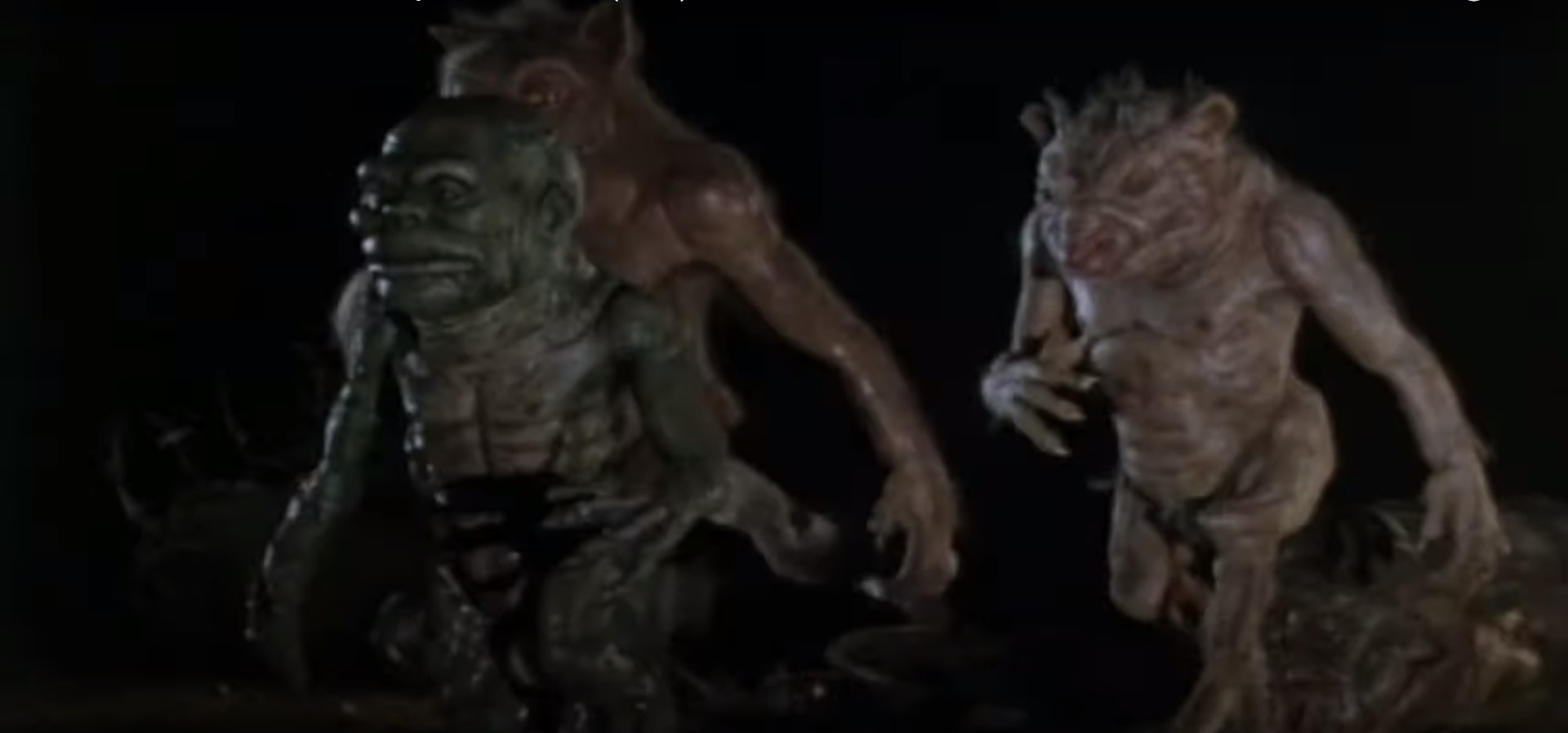
Along with a new set of human characters, “Ghoulies II” also freshens up the trajectory by focusing less on the black magic that saturated the plot of the first film and relying more on the gremlin-like playfulness of the Ghoulies themselves, rightfully giving way into the very creatures of the title. There’s some magic involved but only to the extent that doesn’t have the Ghoulies rely on a master to evocate them from the Netherworld or for the dark powers to be used to perpetuate wickedness upon others.  Instead, the ghoulies are depicted utilizing their skillsets, such as flying, oral expelling sticky-gunk, super-strength, and chomping, which obviously lead to more of a micro-level apocalypse of carnage; however, the print obtained for the MVD Blu-ray release is the edited down version for theatrical circulation so some, not a lot mind you, of the gory bits have been taken out and this makes the storyline stutter with misplaced time with rough segues and an imbalance of edits that aren’t as smooth.  From what I’ve seen, the minuscule timed deleted scenes are not much more violent or gory but add just that tad more context to the next scene instead of our brains working to connect the dots on what should be a brain shutoff, entertaining creature feature.  Yet, you can’t deny the sequel’s appeal that has turned to center around the little demons assiduously but managing to keep the same, steady pace of ferity and gothic skim of mise-en-scene from the first.  Puppetry is retained for that palpable product while also introducing stop-motion, a visual effect that has served Empire/Full Moon well throughout the years and is only used sparingly to wet the limitless capabilities of our miniature monsters to roam free in open spaces. 

“Ghoulies” return with the sequel to MVD’s Rewind Collection as Blu-ray release number 53 on the spine. The AVC encoded, high-definition, 1080p Blu-ray is presented in a widescreen 1.85:1 aspect ratio. A virtual carbon copy of the first film in regard to a well-preserved print, the sequel isn’t noted in having a 4K restoration scan like the antecessor release number 52 but the 2K scan offers an abundancy of positive picture rendering with a seamless color grading that isolates distinction and range as well as a tangible details, especially on characters and the ghoulies alike who are often gleaming and show off every nook and cranny ridge on their dark, hairy bodies. Aforementioned, this print is the theatrical cut, missing some gruesome elements for the sake of a broader audience, and while most of the print is near flawless, there is one dunk tank scene that’s cropped and noticeably marred with horizon creases in the brief airtime. The English LPCM uncompressed 2.0 stereo mix caters to every audible necessity of the “Ghoulies” soundtrack, ambience, Foley, and dialogue. The latter is clean and clear with prominence over the rest of the layers though I wouldn’t label it flawless with some echoey segments, almost a doubling effect, that might be due to the soundstage vibrations at Empire. Ambient track provides a wide range with exact depth with the example being inside Satan’s Den of horrors where doors creak, motorized bats fly overhead, and other models of haunted house spookery, along with an underlining carnivalesque soundtrack by Fuzzbee Morse (“Dolls”), is the epitome of a great sound design suffused together. English, French, and Spanish subtitles are optionally available on this release. Special features include an introduction by screenwriter Dennis Paoli, which is also available as a standalone at the play feature option, More Toilets, More Terror: A Making of Ghoulies 2 is a retrospective lookback with select cast and crew, an interview with Dennis Paoli Under a Magic Moon, the gruesome deleted scenes, a photo gallery, and theatrical trailer. Physical attributes include a VHS retro-esque mockup of the original poster art on a cardboard O-slipcover, fitting for the sub-bannering Rewind Collection. The same image graces the front cover of the clear Blu-ray Amary case, but the cover art is also reversible with one of the film’s most memorable smoochy-kiss moments plus title above. The disc is art pressed similar as the first film, a laser disc veneer on the Blu-ray top. Opposite side is the folded poster insert of the slipcover front image. The region A playback release has a runtime of 90 minutes and is rated PG-13. “Ghoulies II” retains that same diabolical energy as the first film but channels it very differently into the very titular creatures that puts them at the forefront instead of being just an afterthought in a sequel that celebrates their uncontrollable knavery and loving every second of it.

Next Time You Sit On the Can, Check the Bowl First!  “Ghoulies II” on Blu-ray!