

Prior to my viewing of Black Water Vampire, the conclusion that I’ve succumb to will tell that I’m one reviewer who thinks found footage horror has been well used and abused through the valleys of independent film to the hills of the Hollywood mainstream market. Though the technique has been ridden hard through the past decade, the touch of realism can still be felt. Black Water Vampire doesn’t stray too far from it’s found footage ancestors as far as horror elements in these types of movies go, but what Black Water Vampire may be weak on, their strength lies with in the producing of bone-chilling and fear-inducing effects that turn your perspective on vampire films to a whole different direction.
Over numerous decades, four women went missing on December 21st and found several days later, dead and drained of blood, near the Black Water Creek. An aspiring journalist enlists three of her friends to create a documentary on the killings and to prove to the world that suspected killer and death row inmate Raymond Banks has been unjustly locked up for the four murders. Their investigation leads them into more than what they expected – a more dangerous and darker path has been set at the stake of their lives.

Freshman director Evan Tramel sets up Black Water Vampire nicely as a true documentary, interviewing friends and families of the victims, asking retired case workers about the investigation of the past victims, having a one-on-one chat with inmate Raymond Banks, and even trekking to the snowing hills of Black Water to capture the essence of Banks’ isolated cabin. This set up takes about a good portion of the film and though typically this might be the dullest part of the movie, the beginning is a good set up for these characters: Danielle – a passionate journalist looking for the truth, Andrea – a producer who feels compelled about the unfair persecution of Raymond Banks, Anthony – a camera man looking to get paid, and Robin – a friend helping out a friend. Funny enough is that all the characters’ names are actually the names of the actors too: Danielle Lozeau, Andrea Adams, Anthony Russell, and Robin Allen.
When all hell goes loose and things get berserk, the investigators discover a true vampire, bat-like humanoid, hunting them down for more than just to feed. The cat and mouse game between predator and prey had me going, but when the bat creature feels the need to reproduce is where I get a little weary about the story. An atomically frightening atmosphere being isolated in a snow-filled forest, but when you start introducing a horny vampire and a conspiracy notions, a viewer will tend to forget what they’re watching and start to wonder what the hell and why the hell their watching. This feeling succumbs at the movie’s end and though I found solace in an original ending, I couldn’t help to think the pain other viewers, especially red blooded horror fans, would think about this ending.
The acting was par for the course and the actors did a good enough to job to pass for scared shitless, but I found the vampire to be the real star. Brandon DeSpain‘s performance as the creature of the night could scare the pants off Van Helsing himself. DeSpain’s vampire was relentless, none compassionate, visceral, and animalistic. I had a hard to time trying to piece together the relation between the specific date of December 21st and the vampire’s killings. Why the first day of solstice? The acting becomes a little drowned out by other plot mysteries such as a homeless woman wondering the woods and doesn’t speak to the investigators. Her presence and the “oh geez” ending are never explained and there were no breadcrumbs given to help explain.

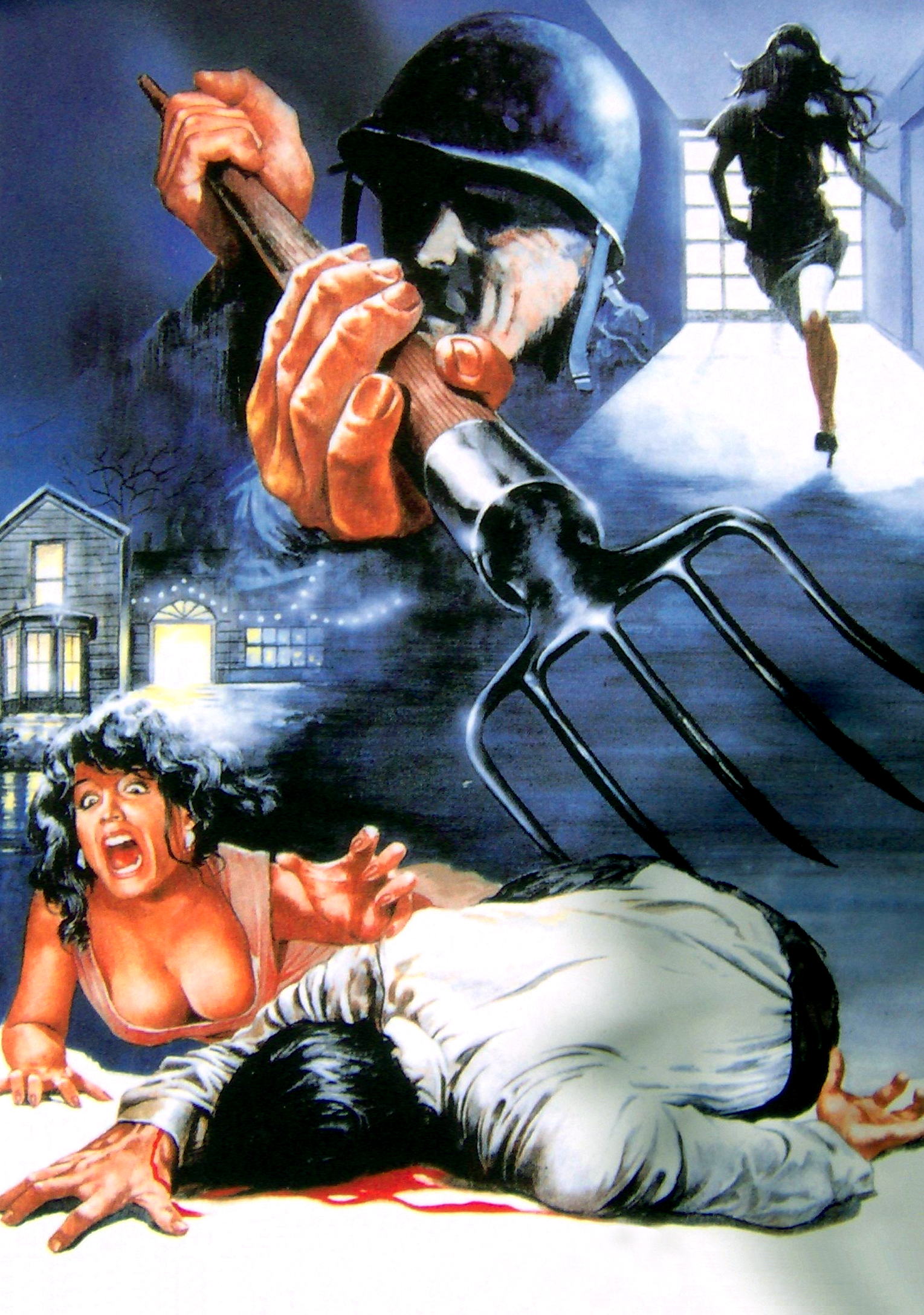
Image Entertainment brings this unique take of vampire horror to UK DVD on March 24. Check it out and come to a conclusion yourself, but be forewarned that you’ve never experienced a vampire film like this one. Don’t let the Image Entertainment cover fool you with a big breasted woman being covered in blood as there lies nothing similar to that at all in the film.
 It's Bloggin Evil!