
EVIL Terrorizes the Parisian Women of the Night! “A Woman Kills” reviewed! (Radiance / Blu-ray)

“A Woman Kills” Now Available on Blu-ray! Click the Cover Art to Purcahse!

The execution of Hélène Picard, a convicted murderer of prostitutes in Paris, France circa 1960s, is carried forth and thought to have snuffed out a string of brutal killings.  Louis Guilbeau carried out the execution orders that gave Pairs a moment of relief and a sense of safety for the working girls on the streets, but when the similar murders spark public fear and the newspapers compare the scenes as Hélène Picard handywork, Paris is once again thrown turmoil with a serial killer.  Is Hélène Picard really dead?  Is it a copycat?  Or did they not catch the real killer?  Guilbeau, unphased by the recent atrocities, begins an affair with the lead investigator into the murders and continues to always be one step behind the suspected female culprit with no remorse, no shame, and no limits to her brutality against prostitutes.
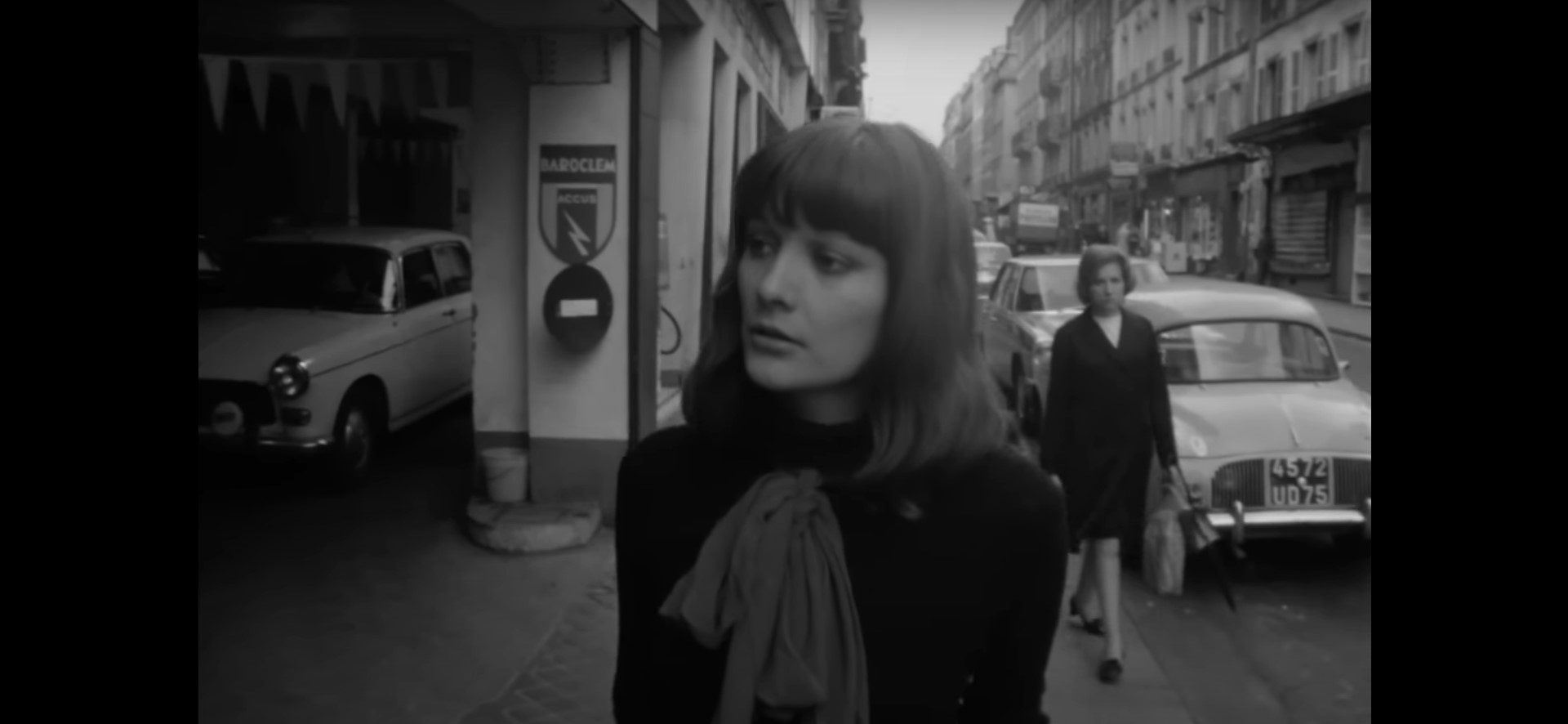
Thought to be lost in obscurity for forever, the reels for French director Jean-Denis Bonan’s “La femme bourreau,” aka “A Woman Kills” was discovered in 2010.  The master of the unfinished film became destined to be born again with a new home video release as Bonan’s debut directorial embodied parallelisms of the French sociopolitical unrest and protests, known as the Paris economic-stopping May 68 event, during the late 1960s, and hitched a ride on the narrative wave of post-“Psycho” gender identity complexes within the confines of a La Nouvelle Vogue, or the French New Wave movement.  Though “A Woman Kills” was the inaugural film of the young director’s career, Bonan simultaneously also became one of the few to document in real time the May 68 upheaving protests as he and the crew went back-and-forth filming a fiction story and nonfictional protests.  The film incorporates a semi pseudo-doc that treats the script like a mixture between a crime thriller and the experimental qualities of its playful, singsong soundtrack and harsh editing.  The 1968 film is a production of Luna Park Films and is self-produced by Jean-Denis Bonan.
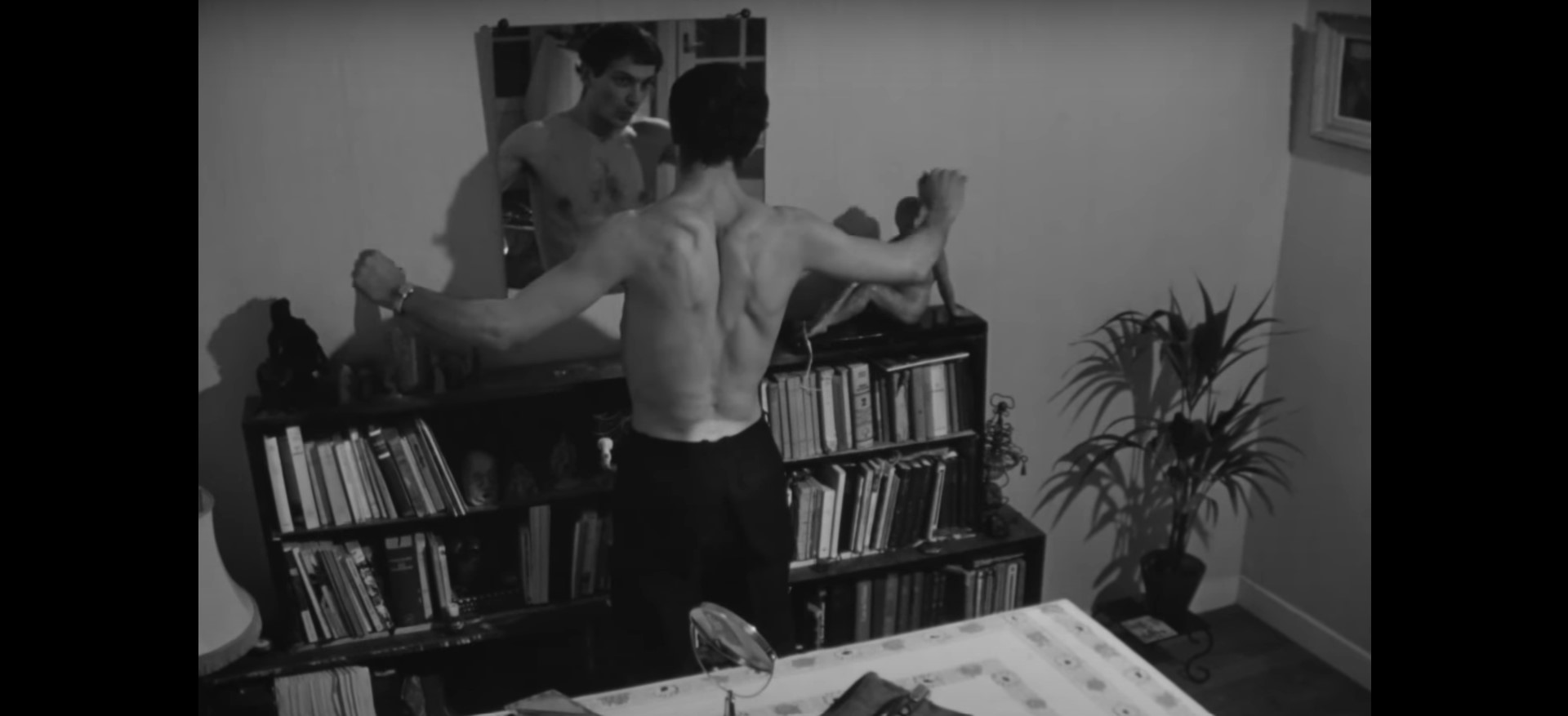
For those casted in film, “A Woman Kills” was there first auteur film if not their first feature film role all together. What could be considered as a blend between New French Wave and Neorealism, Bonan rarely has his cast express their own vocal cords. Lots of action and expressiveness devour the attention but that doesn’t go on to say Bonon completely nixed dialogue altogether with his montage of interviewees, a jest-and-jovial troubadour descriptive songs of the scenes, the narrator’s file readings of victims, the newsboys hawking of murder headlines, all become the dialogue in lieu of the real McCoy. The cast does have their voices heard in rare moments, often in scenes of great exposures and difficult in detail. A case in point is Claude Merlin as the prison executive Louis Guilbeau. Merlin, who went on to be involved in another May 68’s connected film from 2001, “Toutes les nuits” or “Every Night,” is eager and excited in character when going into the medical details of the various way his profession executes prisoners or falls into a somber regarding his mother’s abusive behavior to him when he was just a boy. Guilbeau’s dialogued moments are precise and point plots toward his character and toward the end game. The affair Builbeau has with police investigator Solange Lebas, from Jean Rollin’s “Rape of the Vampire” and Bruno Gantillo’s “Girl Slaves of Morgana Le Fay’s” Solange Pradel, provides roughly the equal amount of dialogue time in a role that’s typically casted for men, a lead investigator on a high-profile murder case. Gender reversal and identity themes are accentuated by Merlin and Pradel’s tenues of the characters. Myriam Mézières (“Spermula”), Jackie Raynal, Catherine Deville (“Rape of the Vampire”), and Velly Beguard (“Endless Night”) work out the remaining cast.
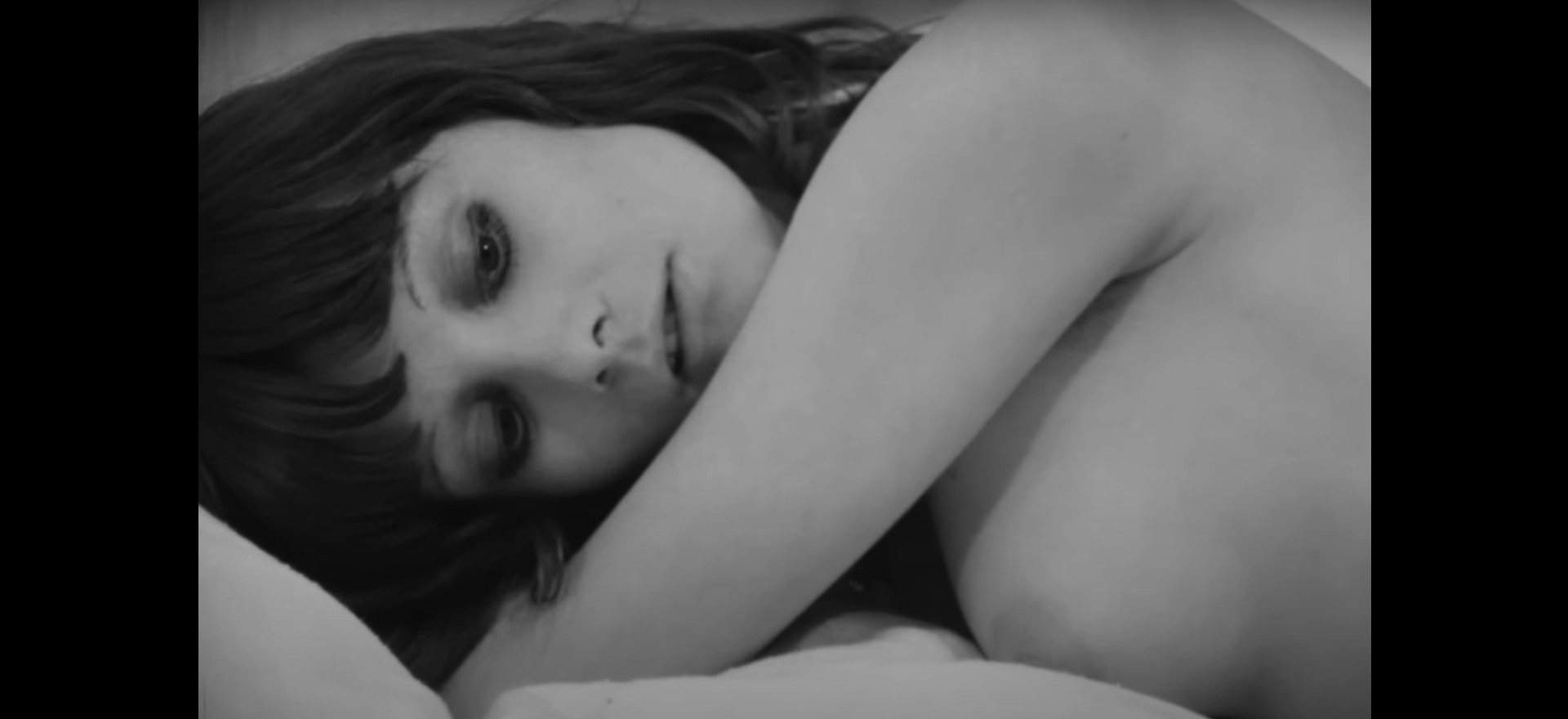
I wouldn’t necessarily call “A Woman Kills” avant garde.  In fact, I firmly believe the propagating audio and video experiments and the themes are far from it.  Bonan borrows a little here and there from different techniques and cinematic trends to fashion a stake in the French New Wave movement.  Splashes of eroticism, which are greatly descriptive visually and narratively, don’t warrant “A Woman Kills” to be a full-fledged erotica film.  The same can be said about the crime or investigator angle that too just seems to be woven sporadically through this melee of classification. Pseudo-documentary montages and script narrator push the labeling in another direction as well. “A Woman Kills” doesn’t exactly fit into a mold, wears patchwork pastiche, but also has flare ups of Bonan’s call to add chaos into the traditional scheme of filmmaking. More so linear than not, the narrative transitions between scenes without a care for being comprehensible early on. Heavily relying on the narrator to give exposition on the background of the notorious prostitute murderer Hélène Picard and how she became under the executioner’s thumb, this event provides framework in introducing the executioner Louis Guilbeau and his professional ups-and-downs that ultimately land him working in the prison system. The association that connects the murders, Louis Guilbeau, and Hélène Picard is all very vague during initial proceedings and Gérard de Battista’s freeholding over-the-shoulder camera work provides passim POV shots and agley angles to keep the wheels of motion mysteriously slipping in order to not fully grip the reality of the situation. Bonan borders the edge of German Expressionism toward the third act by disenchanting the way of guilty thinking aesthetics and to root the killer in insanity on various levels, ending with a chase sequence that is seemingly endless amongst a pile of building rubble and ruin.

A provocateur of storytelling and of the celluloid vision, director Jean-Denis Bonan finally has his film, “A Woman Kills,” released onto a limited-edition Blu-ray home video from Radiance Films twelve years as being unearthed. First released on DVD in 2016, distribution for the film was all but easy due to Bonan’s deemed unclassifiable feature by large scale and indie firms. Today, the original reversible 16mm elements have gone through a 2K restoration scan for the feature’s Blu-ray debut and the presented in the original 1.33:1 aspect ratio and black and white format. For being undiscovered for four decades, unfinished, and receiving literally no support from any state funds to complete, the image has remained nearly pristine with only a few dust specks and faint scratches being the worse of the wear. The Cinémathèque de Limousin and the restoration by producer Francis Lecomte doesn’t feel to have overcorrected the natural grain or go high on the contrast but rather retain much of the classic, original elements for an honest viewing aside from the liner notes mentioning a few special effects added to remove equipment from out of the picture. Father time has forgotten all about Bonan’s lost relic, staving off age degradation to those with more day-to-day exposure. The French language Dolby Digital mono track also retains a remarkable, near stainless net result. The absence of the camera whirring and lack of electrical interference points to a complete dub track of the actors’ voiceovers to which the dialogue is distinct with only a handful of crackling peppered in throughout. English subtitles are optional on the menu settings and offer an error free, well-paced synchronization. The bonus features include a video introduction to the feature by Virginie Sélavy, an audio commentary by Kat Ellinger and Virginie Sélavy, the trailer, and a 37-minute, newly updated 2015 documentary On the Margin: The Cursed Films of Jean-Denis Bonan featuring one-sided interview responses from Bonan, cinematographer Gérard de Battista, editor Mirelille Abramovici, composer Daniel Laloux, and actress Jackie Rynal. There is also Bonan’s short films – “la vie breve de Monsier Meucieu,” “Un crime d’amour,” “Tristesses des Anthropophages,” Mathieu-fou, “and “Une saison chez les hommes.” The limited to 2,000 copies release does not disappointment with tangible material within this clear snapper, untraditional Blu-ray case that doesn’t sport the Blu-ray logo at the top. Much like Bonan’s work, the Blu-ray, too, rebels against marketing norms with cover art that displays the film’s synopsis and documentary bons feature on the front cover. The reversible cover also has the original 2016 DVD art on the inside along with a limited-edition booklet featuring “A Woman Kills” essay by film author and scholar Catherine Wheatley and writer-broadcaster Richard Thomas regarding the film’s themes and Bonan’s short films. The 51-page booklet also includes newly translated interviews and offers film credits as well as black and white stills of “A Woman Kills” and other Bonan credits. The feature has a runtime of 69 minutes, the release is region free, and Unrated. Jean-Denis Bonan disrupts the narrative routine, but his film remains a timeless, psychosomatic portrayal with a contentious backdrop of French sociopolitical unrest that makes the context of “A Woman Kills” that much more engrossing.

“A Woman Kills” Now Available on Blu-ray! Click the Cover Art to Purcahse!

Bathor’s Battle of Evil Melodramatic Vampires! “Blood of the Tribades” review!


Bathor, the great vampire conqueror and provider of peace, had established a serene vampire village, driving out disorderly vampires from impeding conventions and rules. After two millennia, civil unrest has stricken the village. A plague has struck the male population, leaving nasty sores that disfigure their faces. With a religious and superstitious, power hungry megalomanic named Grando exploiting the plague and the name of Bathor, an uprising cult of desperate men seek to destroy all Bathor’s female vampires thought to be the cause of the mens’ ill misfortune. Lovers Élisabeth and Fantine survive brutal attack after brutal attack with the aid of banished vampires and the hunted vampires attempt a last chance endeavor to quickly preserve their once lost belief system instilled by the great one, Bathor, and rid the lands of Grando once and for all!

“Blood of the Tribades” is the 2016 homage powered, melodramatic social commentary vampire film from co-directors and co-writers Sophia Cacciola and Michael J. Epstein. As much as a micro-budget film as “Blood of the Tribades” is on paper, certain important attributes surface through the money constraints and convey a larger footprint such as elaborately classic locations in Massachusetts, Rhode Island, and New York that bring out the beauty in penny-pinching productions. Another notable quality from “Blood of the Tribades” is the large cast that exemplifies the scale of the story by tenfold and with an abundance of roles, there will follow a plentiful of deaths in a vampire film. Truth be told, Cacciola and Epstein’s film doesn’t have one single human in the bunch. That’s right, “Blood of the Tribades” is 100% vampire casted. Which, come to think of it, do vampires drink their own kind? In this film, the answer is yes and, as well as, staking their own kind.

Associate producer Chloé Cunha stars alongside another associate producer, Mary Widow, as the lesbian vampire couple Élisabeth and Fantine who seek to thwart Grando’s unwitting and cultish coup d’état. The characters represent two different, and well crafted, styles of vampiric women that are the dream-like, wanderer, such examples are pulled from films by Jean Rollin (“Fascination”) or Jesus Franco (“Female Vampire”), as well as the hard-nose, dark seductress from Hammer films that channel some great actresses such as Ingrid Pitt or Barbara Shelley. Cunha and Widow perfectly capture the essence of the distinctive styles more so than I could have ever thought possible. Élisabeth and Fantine are pitted against one of the more over-the-top performances of a villain I’ve seen in a while. Grando’s presence amounts to every inch of the screen from a very talented Seth Chatfield, who not only becomes a clear cut antagonist but does so with infectious enthusiasm. Topping of the main characters comes Bathor, who only receives a handful of screen time minutes. Tymisha Harris meshed well with the outlined characters, being equally extravagant in her own manner, and delivering the power Bathor must bestow upon her children. Kristofer Jenson, Zach Pidgeon, Stabatha La Thrills, Sindy Katrotic, Simone de Boudoir, and Dale Stones, plus many, many more, round out the cast.

Actually, “Blood of the Tribades” is a feminist movie that just happens to have vampires. Male oppression to keep the women from being themselves, from being outspoken, and from being open with their sexuality is clearly combated through the social commentary symbolism. Plus, touches on the suppression of sexuality and the outward projection of a society forbidden love, but however exposed the feminist versus complacency and closeted angst message might be, the script’s dialogue, despite the film’s 78 minute runtime, is extremely long winded with an unapologetic amount of exposition to explain the messages in various scenes where dialogue is not needed; one of the early scenes, with a man peeping outside the window of a very naked woman bathing before shooting an arrow through her bloodsucking heart, had the right message with that actioned a tone conversing the unspoken subplot of men against women. There’s also no telling which time period, or even universe, the story is set with various era styled garments from conservative nightwear, to bright red band-leader tops, to skin-tight, scantily night club outfits. The latter felt really out of place with Sindy Katrotic’s fighting wear.

Production company and distributor, Launch Over, presents “Blood of the Tribades” on high definition Blu-ray and is available for pre-order before the April 30th release date! Image quality of the 1080p picture, despite the number of filters used, still manages to pull off balanced and vivid hues of the forest and castle rooks, skin tones look too good for the plague makeup’s own well being, and thick black tones highlight the right amount of mise-en-scene without much aliasing or compression issues. Bonus features include a theatrical trailer and an in-depth behind-the-scenes with interviews from the directors, cast, and crew. Chock full of nudity and delivering a high body count, “Blood the Tribades” is an adoring, beautiful, and slightly satirical homage to the multifaceted 1970s female vampire by way of dogma masculinity and righteous fanaticism that isn’t far skewed in reality’s present day!

Evil Rises to Kill Teenagers! “Jonah Lives” review!

output_1JffGj

A group of bored teenagers decides to up their spirits by dusting off a $25 Ouija board and taking it for a supernatural spin to reach those beyond the grave. When deep in chant, a contact is made with the spirit of a murdered man named Jonah. The arrogant teens conjuring seeks to try and resurrect Jonah for relentless vengeance on his killer – his wife. The teens’ arrogance gets the best of them and Jonah does rise from the grave, but his thirst for murder homes in on the teens’ lives and Jonah traps them inside a basement with no way out and no way of calling for dire help.
vlcsnap-2015-05-11-17h38m47s13
“Jonah Lives” construction tends to be a respectful gothic budget horror film of meshed sub genres. Deep within the bone structures of the Luis Carvalho directed film lies a grab bag that includes zombies, possession, torment, and vengeance, but with a conglomerate of styles wrapped into one film, the difficult struggle of pinning down the motivation of our killer Jonah seems lost in translation. Certainly a force to be reckoned with who absolutely looks the part as a deteriorating dead guy, Jonah awakes from his angst-slumber to seek vengeance, but why take it out on the teenagers who resurrected him? That’s the million dollar question. Did the Ouija board inject evilness into Jonah to put him on such a murderous rage? What’s also odd is the character Zora, Jonah’s murderous ex-wife, is part of the cast but not necessarily included in harms way in the basement and isn’t a primary target for Jonah. Instead, Zora party-hardies upstairs with the rest of the intoxicated grownups.
vlcsnap-2015-05-11-17h37m46s165
B-horror vet Brinke Stevens headlines “Jonah Lives” as Zora. Stevens’ role is fairly minor when compared to the other cast members who names probably make the D-list film status and are not as recognizable as Brinke Stevens. However, there are some strong performances from the relatively unknown cast giving the film more girth than the story itself. Lead actor Ryan Boudreau’s acting style is very relaxed and smooth as a known-it-all jock with a guilt-ridden conscious that brings the character a full 180 degrees. I wanted to note Nicole LaSala’s character Lydia, who either has a breakdown after the brutal and gruesome death of her boyfriend at the hands of Jonah or she just shares some sort of Ouija board connection with Jonah that drivers her absolutely mad. The tell all about Lydia comes to no unfold. LaSala’s embodies the soul of the Joker from Batman for Lydia who constantly laughs and being mean spirited toward the remaining survivors. I didn’t necessarily feel the spiritual connection between Lydia and Jonah and lean toward nixing that theory.
vlcsnap-2015-05-11-17h40m29s6
The special effects are very minor, but appreciatively practical. The minute effects shouldn’t be unexpected due to budgetary constraints. Carvalho and his special effects team along with some simple editing tricks goes a long way. Not as bloody as hoped, but Jonah does commit to a classic zombie bite to the neck and takes a chunk out, stretching the skin and spewing blood out of the wound, chops an arm off Jean Rollin’s “Grapes of Death” style and bashes the victim with it, and caves in a few teen skulls. While there are moments of editing brilliance, there were many scenes that over edited and, basically, replayed the same scene from a different angle and this reoccured multiple times. Also, massive editing effect is like having an epileptic episode that numbs the brain.
vlcsnap-2015-05-11-17h38m12s175
“Jonah Lives” hit retail outlets this past April and this 2012 zombie revenge film is looking to rise above the rest of the new releases. I’m thinking it’ll stay grounded because it’s resembles much of the same we’ve all seen before. I’d found myself entranced more with the score by Russell Estrela as it blends tonal styles of Italian Giallo with the 80’s slasher such as the repetition of Harry Mandfredini to the synth’s of John Carpenter. Check it out yourself from Wild Eye Releasing.