EVIL Wants Your Brain Fluid! “Vile” reviewed! (MVD Visual / Blu-ray)

These “Vile” Atrocities are now on Blu-ray!

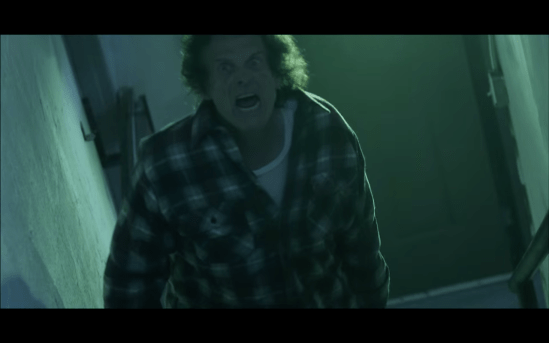
What was supposed to be a relaxing camping trip amongst friends has turned into a torturous nightmare when four friends wake up to find themselves in the company of five strangers in a basement and learn they’ve all been kidnapped for a purpose.  Behind the illicit arrangement is an illegal drug manufacture whose formula is produced from the byproduct of the brain’s fear and pain induced chemicals.  With a 22-hour clock counting down from the first act of violence, the puzzled lot must fill a 100% quota before time runs out in order to be set free from the reinforced house they awoke in and the only way to do that is by hurting each other to fill the vials connected to the backside of their heads.  Framing a plan, a vote proceeds a numerical order of voluntary participation of torture, each contributing a fraction of the pain percentage needed to survive and be free, but egos, fears, and secrets cost them more than a few moments of unbearable pain.   

Before becoming Paramount Network’s golden nugget for creating the more recent acclaimed American television drama with shows like “Yellowstone,” “1883,” “1923,” “Tulsa King,” and “Special Ops:  Lioness,” Taylor Sheridan had first directed a small-time horror movie over ten years ago in 2011.  The title “Vile,” a play on words used to not only describe the cruel atrocities done from one character to another but also alluding to vial containers used to fill up with fear and pain fluid, is the brainchild of scriptwriters Eric Beck and Rob Kowsaluk.  Certainly, a different tone compared to hardnosed westerners and high-profile casted thrillers, Sheridan filmmaking roots from “Vile” mold his next stage directions of cruel character dynamics.  Beck produces the feature with Noël K. Cohan (“Into the Void”), Tina Pavlides (“100,000 Zombie Heads”), and Kelly Andrea Rubin (“Skeeter”) with presumably father Larry Beck footing some of the funding under the LLC of Vile Entertainment in association with Bosque Ranch Productions and Signature Entertainment.

An ensemble cast thrusts strangers into the throes of do-or-die but amongst the cast of characters, a delicate introduction of a core four put forth the wheels in motion of the sick extraction technique all in the name of drugs and profit.  The preliminary meet-and-greet of Nick (Eric Beck), Tayler (April Matson, “Primrose Lane”), Tony (Akeem Smith, “Holla II”), and Kai (Elisha Skorman) sets up love interests, Tayler’s secret pregnancy, Kai’s drug problem, and a playfully semi-morbid game of would you rather that foreshadows another choice pick of torture later the group has to contend with when joined with the other five test subjects – a dark and cryptic Greg (Rob Kirkland), a subtly anxious Julian (Ian Bohen, “5 Souls”), a selfish hothead Tara (Maya Hazen, “Shrooms”), a young and frightened Lisa (Heidi Mueller) and a level-headed Sam (Greg Cipes, “Deep Dark Canyon”). The variety of character provides varying shades of distrust, betrayal, and hope as factions form and convictions are about-faced, jostling those steadfast at first and solidifying principals for those teetering on the edge.  As whole, the cast works well together to provide adequate and satisfying suspicion as well as selling a particular attitude despite a couple of red herrings that are hidden really well within the framework. As individuals, lots of the dialogue pertains to self-explanatory states of the obvious that stick out like a sore thumb of colloquial filler with a story set in one location with the same nine people for approx. an hour long. ”Vile’s” cast rounds out with McKenzie Westmore and the unmistakable Maria Olsen (“I Spit on Your Grave 2: Deja Vu”) in a procedure-nothing televised head. 

As much as I disfavor comparing one film to another outside of sequels, series, or franchises, “Vile’s” voice is lost as an individual. Seven years prior, James Wan and Leigh Whannell began what would become one of the biggest contemporary horror franchises with “Saw,” spanning sequels through two decades, and concluding, thus so far, with this past year’s “Saw X.” What does this have to do with “Vile?” ”Vile” follows much of the same formula Wan and Whannel concocted in the earlier 2000s with a very to-the-manual approach of “Saw’s” collaring of individuals, media announcing a timed-task, and the players of the game have to hurt themselves, or others, in order to be set free. Fundamentally different with “Vile” has more to do pure greed and profit at the expense of those unfortunate to be in the path of profiteers whereas “Saw” forces transgressors into rebirth through pain and suffering. ”Vile” is also not as explicitly graphic with much of the torturous violence done out of sight, off screen, or in a blink of an eye. Nevertheless, the intriguingly staid premise takes the human condition to the limit and steps across the line of no return of committing what is self-destructively necessary to survive. Beck and Kowsaluk tweak the formula by a narrow margin but the manner of how the narrative plays out distances “Vile” to almost unitary means. For example, “Saw” almost always had a dual storyline that eventually converges with a shocking twist-tie conclusion. ”Vile’s” straightforward with a singular storyline that isn’t dichotomized with a parallel storyline, a periodization storyline, or any other type of storyline to be a crutch for the other, leaving audiences in the undivided present that’s an around-the-clock time crunch to live or die by the hands of themselves or at the mercy of others, and with a palpable enough twist that you’ll kick yourself in the chin for not predicting it ahead of time. 

“Vile” comes to Blu-ray from MVD Visual on the company’s Marquee Collection label. The AVC encoded, 1080p High-Definition, BD25 has the film presented in a widescreen 1.78:1 aspect ratio. Limited to a two-tone grading of steely blues and canary yellows, picture quality range has spasmodic bursts of interiority to agreeable presentations. More of the pre-ensnarement night scenes appear granulated by macroblocking, degrading the image to pre-high definition pixelated rate. Bitrate decoding jumps sporadically from mid-teens to mid-30Mbps, most likely due to an unstable data compression transfer. Compression appears better, though not flawless, later in the runtime with tighter contouring and a finer detail on a grungy, dirty, dilapidated house where the main set takes footing. The English Dolby Digital 5.1 and the uncompressed LCPM 2.0 are the available audio options, both of which lack commodious conviction with a suppressed volume. While the dialogue renders sufficiently with discernibility and clarity, much of the eye-averting torture sound design, the milieu audio, and even the rock-hard rock soundtrack retains an undeliberate lo-fi quality. English subtitles are optionally available. Special features include two deleted scenes that expand on more of the earlier character interactions, a behind-the-scene moment of director Taylor Sheridan mopping the kitchen set and singing, and the feature trailer plus other MVD Marquee Collection trailers. Tangible features include a cardboard O-slipcover, first pressings only, vaunting the nastiness to come and, again, appropriates a “Saw” cover with that nastiness of an extracted, bloody tooth in a pair of vice grip, a nod to the “Saw III” poster/home video art. The Amary case has reversible cover art with the original “Vile” artwork on the inside. The unrated, 88-minute MVD Marquee Collection feature has a region free playback. If “Saw” is deluxe imperial crab, then “Vile” is the suitable imitation equivalent with a steady pace of group-wrenching contrition and contempt that forgoes the games for straight up blunt force trauma. 

These “Vile” Atrocities are now on Blu-ray!

Evocation of EVIL in “The Girl In the Crawlspace” reviewed! (ITN Distribution / DVD)


Jill escapes from the grip of a kidnapping-serial killer who kept her confined in a crawlspace under the house. Her courage brings lethal justice to the captor when the local marshal shoots and kills him upon confrontation. Jill struggles to reintegrate back into her local community in the aftermath, sleeping unconfined in the outdoors and withdrawing herself for social interaction, including from her weekly role playing game with friends. When Kristen moves back into her hometown from college, she aims to set up her therapy practice to assist families impacted by the serial killer as well as Jill by special request from the marshal, but Kristen’s rocky relationship with her substance abusive, off-Hollywood screenwriting husband on the mend drags out Jill’s much needed treatment. With Jill and Kristen preoccupied, they’re oblivious to the concealed threat that plots the next terrorizing exploit of kidnapping and tormenting young, beautiful women.

From under the grubby wooden floorboards to the strategic folding table of a role playing game, “The Girl in the Crawlspace” is the Midwest direct-to-video suspense thriller that tackles post-traumatic stress and marital strife while submersed in a looming trail left by a notorious mass murderer, written and helmed by first time director John Oak Dalton. Dalton, who has penned several low-budget grindhouse titles over the last decade and half, including titles such as “Among Us,” “Sex Machine,” and “Jurassic Prey,” returns once again to the genre with the repercussions of Podunk psychopath upon small town America, filmed in Indiana and release in 2018 hitting the ground running with film festival circuits. Indie filmmaker Henrique Couto, schlock horror director of “Scarewaves” and “Marty Jenkins and the Vampire Bitches,” signs on as producer, stepping back from his usual productional duties, and letting an occasional collaborator Dalton to completely engulf himself as the omnipotent auteur. Midwest Film Ventures serves as the production company, shot in Farmland, Indiana.

Erin R. Ryan has continuously sustained a low level hover on the indie horror radar after taking her in Dustin Mill’s “Bath Salt Zombies,” based on the Miami incident based on a naked man eating someone’s face induced by being high on bath salts, and the gooey-gory body horror, “Skinless,” that’s also a Mills production. Ryan expands her portfolio outside physical horror with Jill, a traumatized recluse derived from her abduction and torture, as a subdued component that’s contrary to previous roles, but Ryan capitalizes the opportunity of a scared kitten, recoiling from public gatherings, and slowly and silently emerging back into society while recalling chilling moments as the story progresses. However, there’s difficult pinpointing the head lead as the protagonist roles are shared between Ryan and depicted married couple, a pair of more Henrique Couto casted actors, in Joni Durian and John Bradley Hambrick as Kristen and her husband, John. Between the three, chemistry clicks better than cooking meth in a chemist’s unsanctioned laboratory and offer ample contention without the attending killer’s presence hanging over the whole town’s head. Rounding out the remaining cast is Chelsi Kern (“Scarecrow Count”), Joe Kidd (“Ouija Room”), Jeff Kirkendall (“Sharkenstein”), Clifford Lowe (“Scarecrow County”), and re-introducing Tom Cherry as the good old boy town officer, Marshal Woody.

With a title like “The Girl in the Crawlspace,” I would be remiss if I didn’t say there were some expectations of bodily torture, psychological terror, and teeth-clinching tension when sitting down to watch. The hype was high considering the post-after-post amount of positivity for “The Girl in the Crawlspace” on my Twitter feed. The catchy name and optimistic comments provided real temptation, but Dalton steers in another direction, the what follows in the state of everlasting shock and the reliving of moments seared into your psyche. The direction wasn’t as expected, but that’s necessary a bad thing. “The Girl in the Crawlspace” is exposition heavy with considerable amount of movie referencing peppered with some current event topics, such as the brief mentioning of killing of migrant children, throughout and continuously wanders off point, strolling more into Kristen and John’s crumbling marriage. Jill, the supposed centerpiece of the story, feels more like an afterthought, despite being the “girl” in “The Girl in the Crawlspace.” The cantankerous marriage supposedly jeopardizes those personally involved in Jill’s well-being as John exploits Jill’s idiosyncratic experiences from being a captive by turning them into inspirational junk food for his fading screenwriting career, but the catalyst incident doesn’t stick, becoming more of a weak opening for a more pronounced return of Jill’s haunting past.

From ITN Distribution and Mill Creek Entertainment, “The Girl in the Crawlspace” lands onto a not rated DVD home video release. The single layer DVD is presented in a full frame widescreen of an 1.78:1 aspect ratio. In a framing sense, Henrique Couto’s cinematography distinctly places small town in a spectrum view that highlights the soybean fields and farms, the rustic brick infrastructures, and the simplicities of a relaxed, old-fashioned town, using some drone shots to expose the green belt greenery. For an indie feature, the agreeable bitrate has a frank, clear image despite some consistent overexposure that softens details, especially on faces in the outside scenes. The Dolby Digital stereo 2.0 mix has also agreeable dual channel output. Some of the dialogue scenes suffer through an echo, but for the majority, the lines have clarity and unobstructed by ambient layers or the soundtrack. The depth discloses some distant ambiguities, such as in a train shot that’s not rendered in the background as it should, but the amount of range is palatable. English SHD subtitles are available. The only bonus features available on the release are the theatrical trailer and an commentary with producer Henrique Couto and director John Oak Dalton regarding their history together and going through the shot techniques as well as touching upon the actors. The road to recovery is paved in nightmares, psychological terror, and Midwest psychopaths in “The Girl in the Crawlspace,” but pitches away from the principal concern that turns second fiddle to one struggling screenwriter’s difficult assimilation into rural life while simultaneously rethreading a floundering livelihood and a tattered marriage.

Own “The Girl in the Crawlspace” on DVD

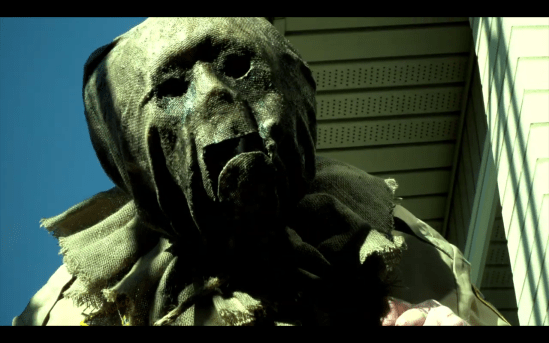
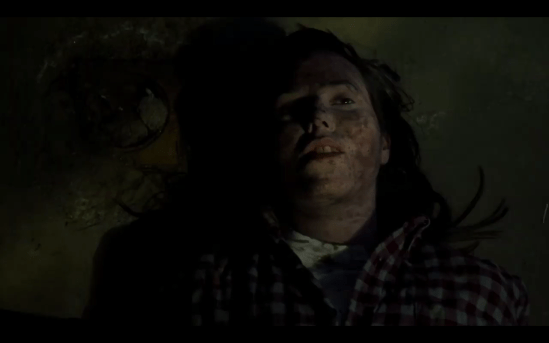
Two Lovers Become Entangled in Evil’s Child Abduction Web! “Hollow Creek” review!


Wyoming County, an economic crumbling West Virginia area, is the destination for a work and romantic getaway for popular horror novelist Blake Blackman and his book cover illustrating mistress Angie. As Blake continues to struggle with writer’s block on his next book, Angie attempts to relax in a town that’s outside her comfort zone, but immediately diagnosis trouble as she believes she is witnessing a crime in progress and not just any misdemeanor violation, but a child being abducted, a third abduction that has plagued Wyoming County for the last 18 months. Angie follows the kidnapper to an isolated farm house where she’s captured and imprisoned in the basement for five months along with two caged young boys. Blake becomes prime suspect number one in the case, but after five months of no evidence and Blake not vacating Wyoming County as he searches for the woman he loves, the frustrated police department finally open to new leads from Blake’s obsession in locating Angie, even if his theories and circumstantial evidence are churned from out of a supernatural presence that surrounds itself around the malevolently insane child kidnappers.

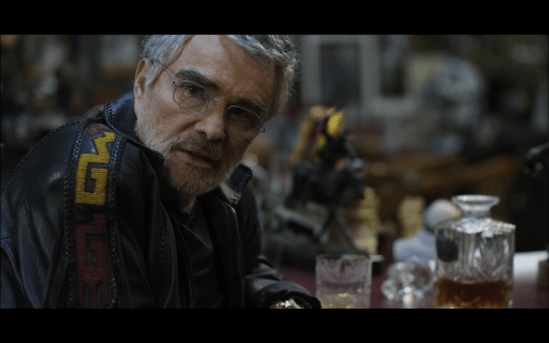
From this reviewers stand point, the last Burt Reynolds’ film to cross these glossy green eyes was perhaps in the year of 2005 with “Legend of Frosty the Snowman” and, even then, Reynolds’ casting was just voice work. “The Longest Yard,” starring that ridiculing funny guy Adam Sandler, was the last live action film, but the films I recall of the handsome mustache charmer sticking to me like glue and always coming to the forefront of my sometimes fried brain isn’t always “Smokey and the Bandit” or “The Cannonball Run.” No, the films that stay with me are “Cop and a 1/2,” “Boogie Nights,” and “Strip Tease.” A guilty pleasure comedy and two adult comedy-dramas overwhelm the light-hearted and comedy action of the 1980’s favorites and, perhaps, solely becomes I was more conscious of films in the 1990’s. In either case, Reynolds’ in any of the noted films was this charismatic and larger than life figure. That’s not the case in the 2016 thriller “Hollow Creek.” Written and directed by Guisela Moro, with Steve Daronn credited as a writing collaborator, “Hollow Creek,” also known as “Haunting at Hollow Creek,” displays a much more humble Burt Reynolds whose weak physique and agitated temperament more closely resembles his 81-years on this Earth and even though the enduring actor has only about 5 minutes’ worth of screen time as the region’s wealthy owner of coal mines, the fading A-lister shares a headlining credit alongside costars Moro and Daron.

Filmmakers Guisela Moro and Steve Daron also star as the lead characters Angie and Blake Blackman. The two have well enough chemistry to pull off incognito lovers, but regress when unable to feed off each other when they divide for more than most the runtime as they’re pitted against their respective oppositions and fed their individual motivations. For Daron, the Burt Reynolds protégée succumbs to his character’s desperation and eagerness to locate his missing lover, showing an earnest fiery ambition and displaying a softer side whenever Angie is paired with him on screen. For Moro, I wasn’t sold on her performance that shifts into many different gears and taps into a wide range of unwarranted expressions and actions, but Moro’s directing herself and in that mindset, a narrow envision of how your character should react, behave, or carry themselves comes off a bit skewed and that’s more or less what happens in Ben Stiller directed-and-starring movies. If you’ve seen “Zoolander,” you know what I’m talking about. Alyn Darnay and Earleen Carey steal the show right under the noses of Moro and Daron with an unstable older couple trying to recoup thee the loss of their twin boys with the snatching of other people’s children and the pair dive into two very different hostiles with Darnay exposing his character, Leonard Cunnings, as a paranoid and psychopathic hand of the couple while Carey sails a softer, yet still deranged, side with trying to hunt down the perfect children for their unsuitable home.

Guisela Moro’s “Hollow Creek” succumbs to a lack of genre identity. Meaning, the 2016 film wasn’t constructed with one genre in mind, does it want to be a ghost film, an exploitation, and even Blake Blackman goes through his segmented drama of searching for his mistress in Wyoming Counter. There’s even a quotational introduction referring to children being abducted every 40 seconds in the United States. Without an identifier, plot holes rear their ugly little heads. For example, a hazy dynamic between Angie and a ghost of one of the dead kidnapped boys doesn’t seem to add up to the film’s ultimate conclusion when Angie has briefly passes into death and she shepherds the dead boy’s ghost to the great beyond, ending his Earthly torment. The whole scene is out of place and significantly unimportant as the two really never had an interaction with the exception of a pair of extremely brief moments, but in Angie’s moment on the other side, the two are the best of friends. The story was also inarguably one sided with much of Cunnings’ mental stability and criminal escapades of kidnapping three young boys falling shamefully by the waist side.

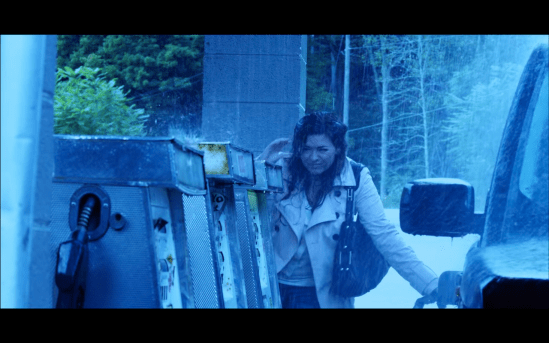
MVDVisual in association with FilmRise distributes the Guisela Moro directed “Hollow Creek” on DVD home video. The widescreen presentation is glorified by the lush West Virginia backdrop with intrinsic details in the greenery and the couples’ cabin, but darker scenes succumb to digital block interference and appears slightly washed over. Skin tones are a nice touch when in natural lens, but the back and forth between natural and a heavy blue filter, especially during scenes at the gas station, become a thorn in the side of continuity. Overall Jon Schellenger’s cinematography conveys a nice concoction of intrinsic beauty and hazy mystery. Audio quality pars well with some range issues that don’t really discourse the project. There are zero bonus features accompanying the disc. “Hollow Creek” flatters the Stephen King story telling imagination and Guisela Moro helms her first feature with rock solid determination with a touch of a cinematic spark that hooks you into the story, yet the unclassifiable stance mislays how the story is to be accepted, spooling an incomplete wash over Moro’s work as a whole. Still, “Hollow Creek” aims high and doesn’t miss and that’s the bottom line.

Own “Hollow Creek” on DVD today at Amazon.com!

All Evil Plans End Tragically. “Reckless” review!

vlcsnap-2015-07-24-12h40m25s189
Ex-cons Victor (Tygo Gernandt) and Rico (Marwan Kenzari) kidnap a young woman named Laura (Sarah Chronis) in hopes to extort a four million dollar cash payout from her wealthy father. The two men are methodical, precise, and focused on their task, constructing a sound proof room, buying burner cell phones, and keeping one step ahead of their captive’s thoughts on escape. Keeping her tied to the bed in a vacant apartment, Victor and Rico don specific roles in their plan; Victor leaves the apartment to negotiate the ransom while Rico oversees their money making hostage. When Laura cleverly works on getting the upper hand on one of them, she discovers that there might be a secondary plan involving her willing participation and leaving the other ex-con high and dry without a payday. Victor and Rico hold a surprising secret amongst themselves as well, making this crime thriller a cat-and-mouse game between the three where tensions are high, trust is low, and the end game won’t be pretty.
vlcsnap-2015-07-24-12h41m02s44
The Netherlands thriller directed by Joram Lürsen seems to be the polar opposite from the director’s previous directorial work. The “Reckless” niche focuses on being tight and concise. The film only credits three actors: Tygo Gernandt, Marwan Kenzari, and Sarah Chronis. That’s it and there isn’t even a voice over from a phone call or anything else of the sort, forcing the actors to only work off each other instead of being able to pick and choose who to bank off their banters and abilities. Secondly, the majority of the setting is in this small apartment that has become Laura’s cell which becomes another tight spot, literally. Finally, the story focuses on minor details with strict guiding dialogue that pieces together the story’s outcome and doesn’t make the plot wander into oblivion.
vlcsnap-2015-07-24-12h44m35s132
The story, which is a remake of the 2009 British thriller “The Disappearance of Alice Creed,” strives off being simplistic; a kidnapping for ransom gone awry. However, there lies a mid act twist that keeps the situation fresh where constantly guessing to the real intentions of the characters is more fun than actually watching the ploy play out. Tygo Gernandt perfectly fits into the shoes of Victor by portraying the role extremely well of a hardened and a rule rigorous ex-con. Marwan Kenzari as Victor’s accomplice Rico relieves the other half of the tension Tygo’s aura emits with his soft eyes and gentle appeal toward Laura, but Rico scrambles to keep Tygo under control and that creates nail biting scenes between the three actors. Sarah Chronis as Laura offers so much to the table being the golden nugget for Victor and Rico, being their ticket for a new life in another part of the world. Chronis conveys being naive, conniving, and afraid well and acts upon her forced nudity with proper accordance to the situation and also uses her nudity, seductively and convincingly, to plan her intended escape.
vlcsnap-2015-07-24-12h45m45s59
However, where “Reckless” strives on being a successful crime thriller, it’s also the film’s ultimate downfall and suffers sequentially from “Psycho” syndrome. Remember when Gus Van Sant remade Alfred Hitchcock’s “Psycho” nearly shot for shot and critics condemned Van Sant’s film? The same situation happens upon “Reckless” where nearly every character quality has become a carbon copy from “The Disappearance of Alice Creed.” Yes, “Reckless” is a true to form remake and a good reproduction as well, but for the Lürsen film to stand out, to be something more, “Reckless” doesn’t break the established mold. Instead, the film relies on it’s actors to accomplish a more riveting appeal and that’s hard to do when Eddie Marsan, Martin Compston, and Gemma Arterton already made a great first impression in the original.
vlcsnap-2015-07-24-12h45m59s204
The Artsploitation Films distributes “Reckless” in a widescreen 2.35:1 aspect ratio with super clear picture quality. The 5.1 Dolby Digital audio mix clearly appropriates the dialogue from the ambience form the soundtrack. The optional English subtitles sync well with the Dutch language track. I’m a little disappointed in the DVD cover as it resembles something that Dimension Films would have produced back in the early 2000s and doesn’t really speak to the film’s thrilling storyline. Overall, “Reckless” is a quality remake release for Artsploitation Films and for production company Topkapi Films that gave alternative, yet still quality, actors a chance to redo a role already grounded and established.

Evil Wants You to Be a Better Father! “In the House of Flies” review!

vlcsnap-2015-01-15-20h58m20s88

Heather and Steve take a trip into the city in June of ’88. Adversely, their romantic holiday turns into a nightmare of claustrophobia, torture, and a fear when a maniac abducts the couple and holds them in small, enclosed basement of a middle of nowhere house in a undisclosed location. Using a broken rotary phone that only receives inbound calls, the abductor plays a horrifying psychological game that will test the bounds of Heather and Steve’s strong relationship.
vlcsnap-2015-01-15-20h58m00s150
Director Gabriel Carrer and screenwriter Angus McLellan have proven that their diabolical host lives up to being the epitome of unsympathetic, unreasonable, and sadistic in “In the House of Flies”. The captor leaves no room for wiggle and makes the outlook for our hero and heroine look tragically bleak and sorrowful. The method on how Steve and Heather manage to overcome their host doesn’t jive well with me. Surely a smart and methodical person would not be so careless agains’t two individuals who have to be delirious and weak after weeks of isolation and starvation. Yet, somehow in a matter of a few minutes, the delirious and weak couple hardly break a sweat and barely struggle for victory. I hoped for a better ending, but I shouldn’t take away from the devilish qualities of their capture who lives up to other iconic insane captors such as John Kramer.
vlcsnap-2015-01-15-20h56m58s43
The subject matter is obviously dark and realistic. Heather and Steve are put into a position where their love for each other is tested to the brink of it’s limit. Will Steve kill himself to save Heather? Will Steve kill himself to save Heather and their unborn two-month term baby? Will Heather kill Steve to save herself? The couple reach breaking points and question their adoration. The host is firmly behind the wheel of his own sadistic game and wants only one thing and that is the destruction of Steve; his will knowns no limits when dealing with women or unborn children. Though the plot reeks of sinister events, the dialogue and the characters actions don’t reflect the film’s blunt storyline. Heather and Steve are a bit too comfortable in their newly dim basement home and kind of accept being kidnapped or give up far too quickly. Rated as unrated, “In the House of Flies” has a tame dialogue. The rap between Steve and Heather and the host doesn’t convey the aggression one may convey if frightened and angry. Graphic scenes are another tame portion of the film that I feel a movie of this caliber could have heightened, but I admire filmmakers that can provoke without having to visually exploit and that is what “In the House of Flies” does here.
vlcsnap-2015-01-15-20h57m17s230
The cast of three is fairly solid. Much can’t go wrong if you have a limit number of actors and actresses and other films have proven this such as Ryan Reyonlds in “Buried” or even the Sandra Bullock lost in space film “Gravity.” Surrounded by unbreakable nothing can be more unsettling than the most vicious and ruthless of villains and can bring out the greatness in most actors and actresses. While I believe Ryan Kotack (Steve) and Lindsay Smith (Heather) do an amazing job as struggling survivors, the characters are a bit overly dramatic very early in the film showing signs of weakness and lethargy too early for effect. Punk rocker legend Henry Rollins is the voice of the caller and I must say I couldn’t even tell it was the punk rock icon. Rollins delivers a monotone sardonic voice that could scare the shit out of anybody.
vlcsnap-2015-01-15-20h57m44s242
“In the House of Flies” shows that independent exploitation horror is not yet dead. This film will burn right into your brain leaving you scarred and scared of the cruelty in the world. Though still very Worthy of all the film festival nominations and wins, this thriller was given an 80’s retrofitted treatment that doesn’t quite live up to the video nasty era, but does invoke questions about love in dire situations and who would you save: Your unborn baby? The love of your life? Or yourself? Check out the Parade Deck Films feature distributed on DVD January 20th, 2015 by my pals at MVD!

Nudity Report

No Nudity 😦