This Movie is So EVIL, It’s Real! “The Paranormal” reviewed! (Visual Vengeance / Blu-ray)

“The Paranormal” is a 3-D Experience Without the Glasses!

Kyle Jennings is a struggling pro-paranormal scientist unable to convince the department head for more research funding without repetitive, physical evidence.  Jennings’ paranormal hypothesis is put the test when an old movie theater in Englewood, Ohio spikes to the cycles the eager researcher has previously recorded.  Accompanying his fact-finding examination of theater is the department head with her own theories to explain the phenomenon.  With the assistance of two theater employees, they experience unexplainable occurrences of movie reels coming alive and playing themselves, unlockable doors mysteriously locked, and a ghostly apparition lurking in the attic, all surrounding an old nitrite film reel with immense paranormal energy.  The foursome find themselves trapped inside a theater with the film reel causing rifts into another dimension through every reel change and splice of a cheap zombie movie.  Before movie zombies step into their reality from off the screen, Kyle must journey to the other side and stop them simply by locking an unlocked door but that’s easier said than done when every act Kyle does in film changes the narrative significant and not in their favor.   
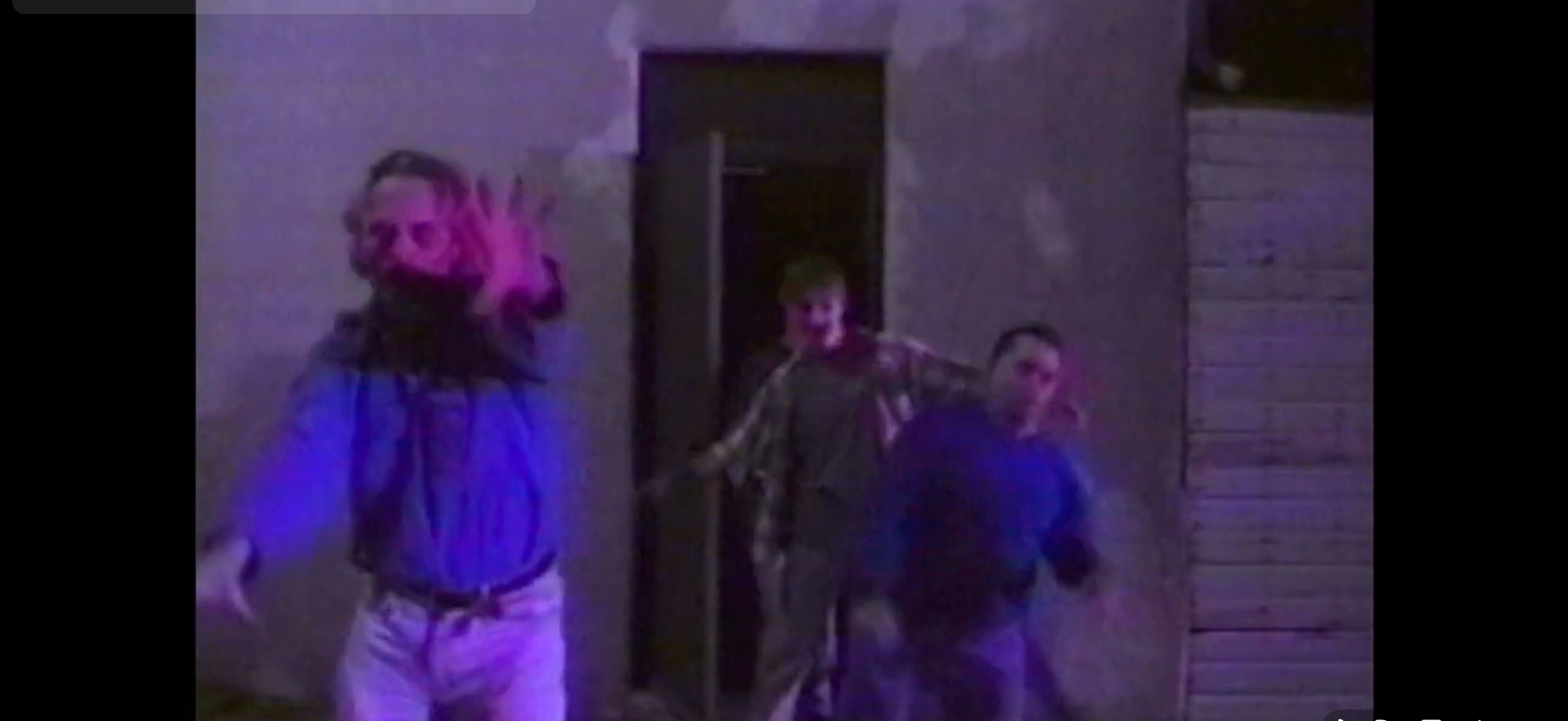
Every once and awhile you’ll come across an obscure, independent made film that just knocks your socks off in all categories.  Todd Norris’s “The Paranormal” is one of those very films.  Norris writes-and-directs the 1998 film alongside cowriter C. Wayne Owens, marking their first and only collaboration together.  Norris went on to do be an accomplished short film editor and cinematographer, working on select cheeky horror full-length features such as “Cadavella” and “Bonnie & Clyde vs. Dracula.”   “The Paranormal” is the debut film of Todd Norris, filmed in the America Midwest, Kansas City, Mirssouri to be specific.  Riding the device of being a mise en abyme, or more loosely described as a meta-film, “The Paranormal” has a novel concept that makes this film something special. 
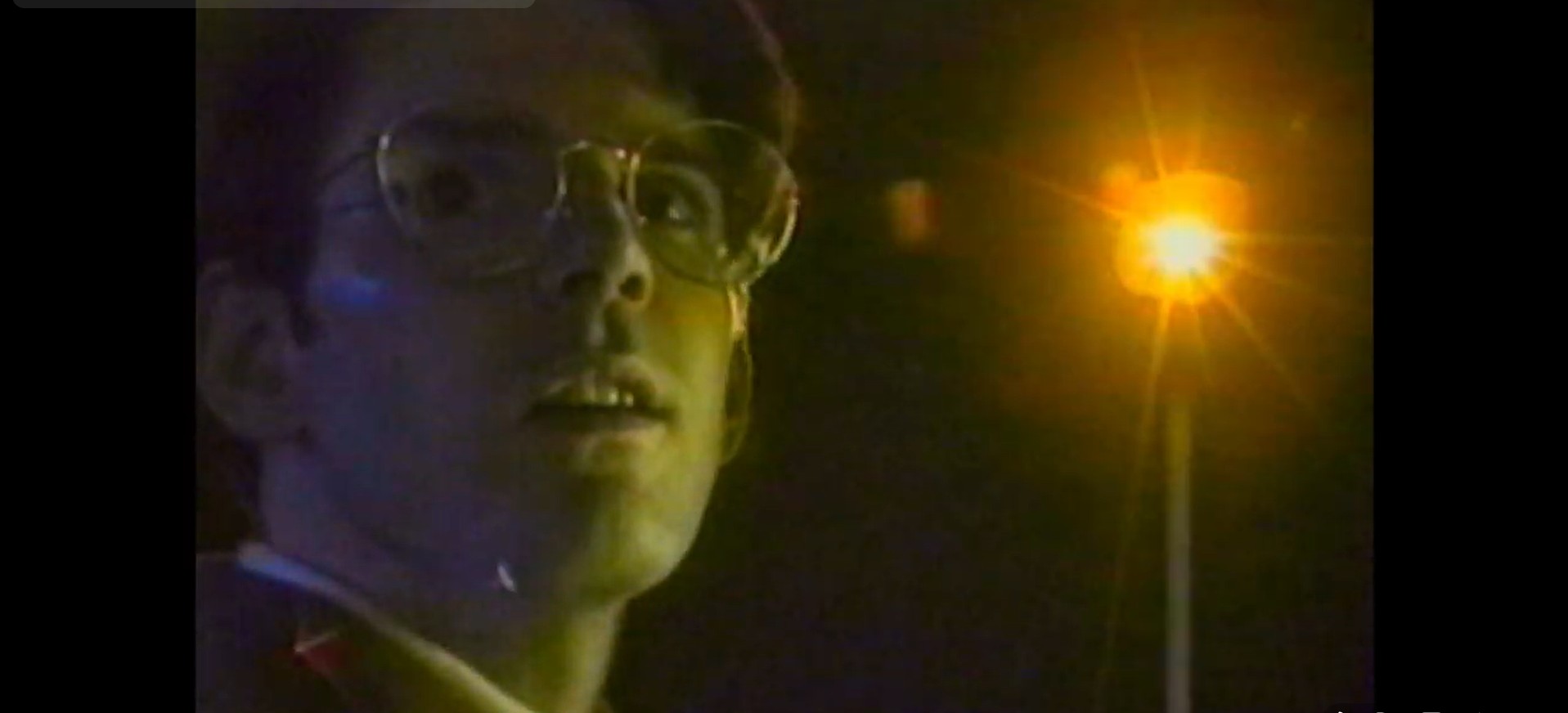
Norris not only writes and directs, the then late 20s filmmaker also starred as the lead character, a pro-paranormal scientist named Kyle Jennings who, from the opening, introductory scenes, struggles with validating his department and research that is seen as nothing more than a joke, or is even suggested to be a pseudoscience amongst cross-departmental peers at an undisclosed shared university.  As an actor, Norris never flinches from his nerdy-confident persona, dressed down to seem like a normal man with an equally dressed down obsession toward his research.  The approach and reaction of rejection is a very real-world view and response to being denied opportunity, but he’s given the chance once an unexplained occurrence in Englewood has a striking coincidence to his theorized research on paranormal activity.  Jennings is challenged by theoretical physics and science department chair head Cass Charbonneau (Lisa Winegar) who has this underlying want to believe, in a stoic, scientist indifference type way but can’t swallow the truth that something might more unexplainable out there.  We don’t really get a satisfying character arc with her character as she never really displays the change of heart or update from her rigid persona to welcome Jennings into the university scientific community.  Does he finally get accepted?  We don’t know.  Audry Crabtree and Gina Tarantino respectively play theater owner as well as Jennings’s love interest Lynne Meredith and projectionist Johnnie, providing additional strong female roles unafraid to face the supernatural front alongside Winegar.  The cast rounds out with Jennings’s colleagues and zombie movie characters with C. Wayne Owens, Carol Koehler, Brain Stubler, Jeffrey Sisson, and Davide Baldin who either support a broad pro-paranormal acceptance as we see with C. Wayne Owens moving persuasive speech to convince a reluctant Jennings to investigate Englewood and to support parts in a narrative that changes with every decisive action to keep movie zombies from entering reality. 
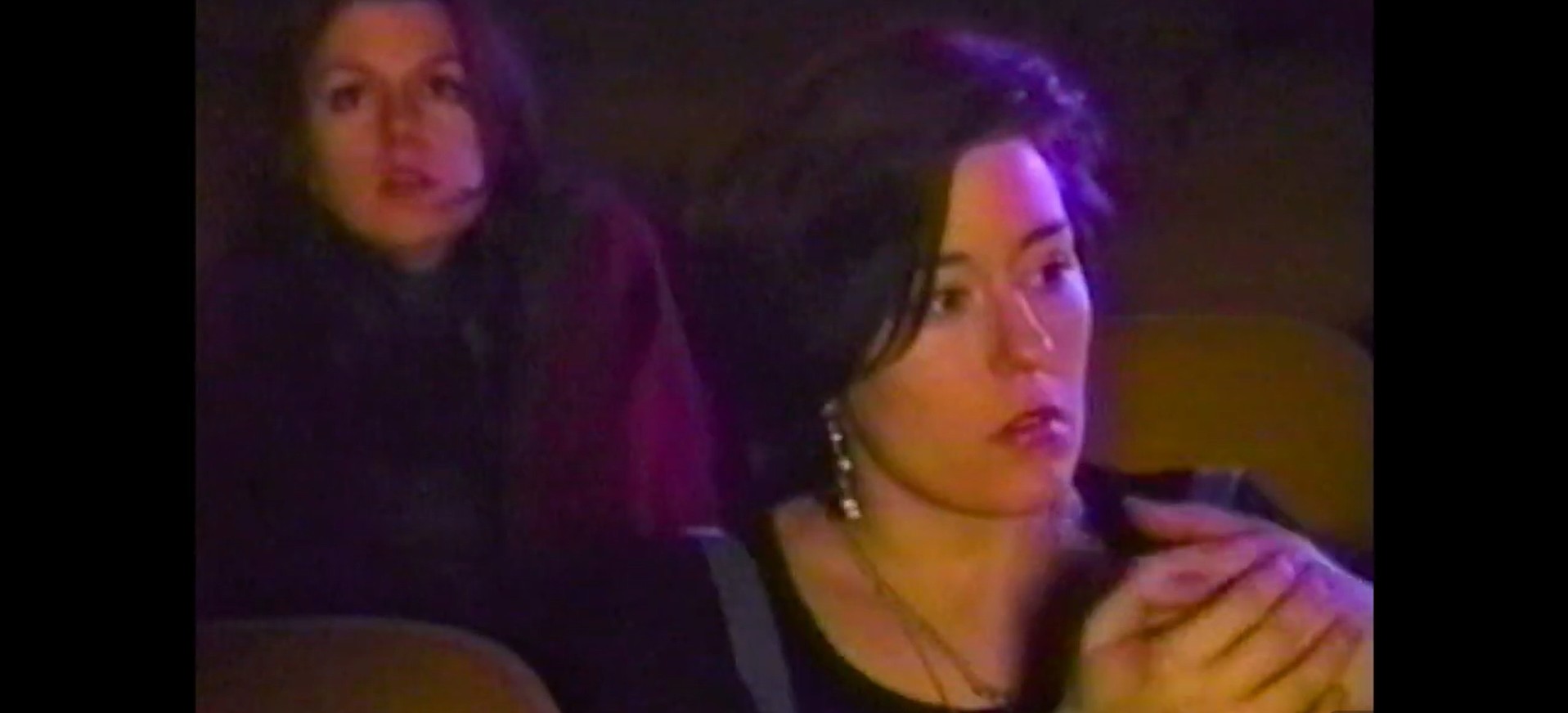
For a SOV film, “The Paranormal” is a case study for what to do right during principal and post photography.  Editing and special effects on tape can be cumbersome and clumsy, but Norris makes it look easy with effective sleight of hand tricks and use of multiple video tape recordings to provide overlapping effects that turned out quite well and was quite effective.  Couple that technical success with a fascinating, movie-within-a-movie storyline, there’s little to dislike about this indie feature with a big budget heart.  Horror fantasy becomes reality as supernatural forces bring the movie to life, an idea that germinated before Arnold Schwarzenegger’s 1994 action thriller “The Last Action Hero.”  While Schwarnegger’s narrative crossed realities in a bigger, more explosive way, “The Paranormal” teases the threat with brief windows of opportunity that could potentially send fleshing eating zombies into the real world.  Every time I thought the story would falter under its own narrative weight, Norris surprises me with continuous persistence in making the sequences work.  The only downside to “The Paranormal” is the mystical reel that generated the supernatural rift.  The nitrite-filmed reel didn’t receive much of a backstory on how and why it causes the in-movie movie “Z is for Zombie” to be the chosen destructor of the Englewood Theater inhabitants and, potentially, the world.  There’s a flash of a woman apparition that in conjunction with the reel’s unyielding power that, too, isn’t explained.  These inexplicable elements leave plot holes in a what is otherwise a near flawless picture. 
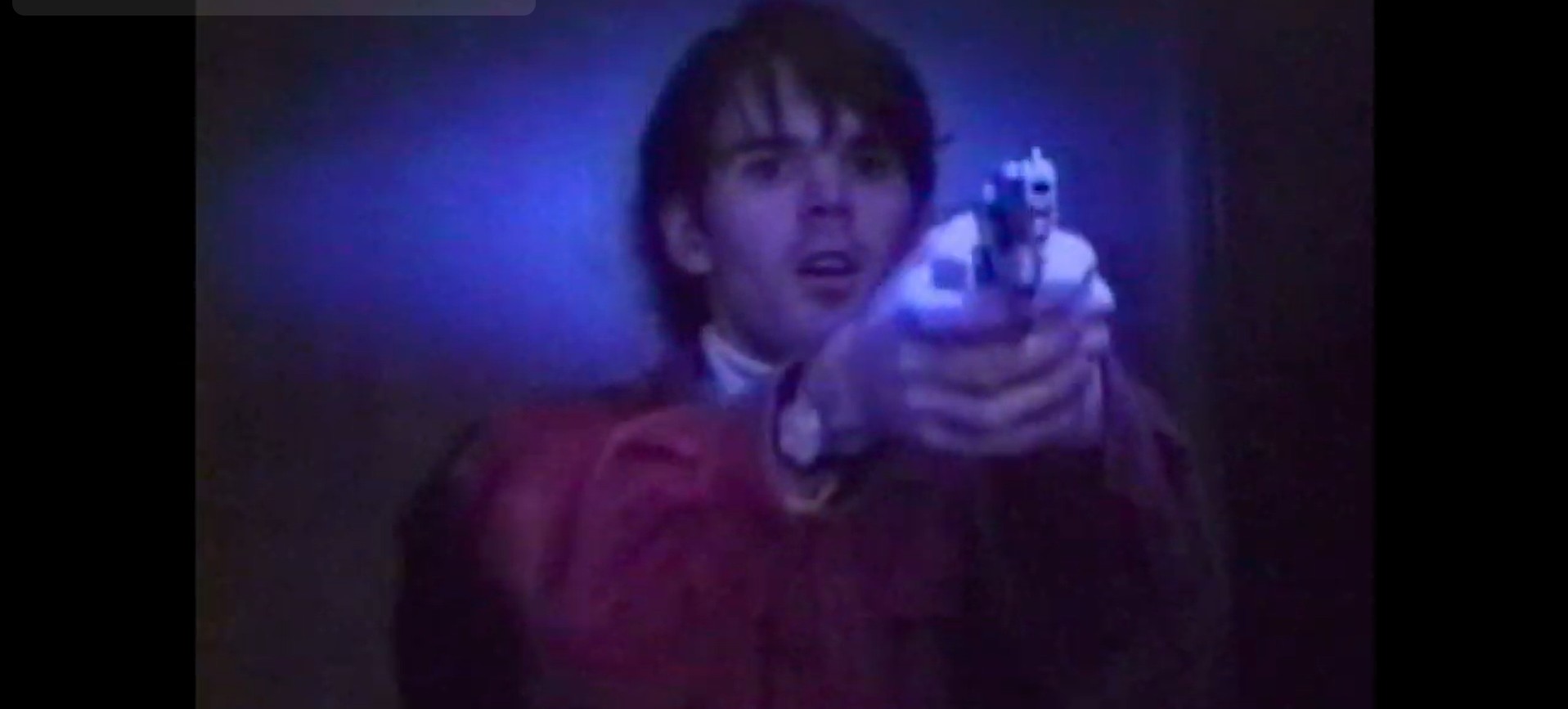
Visual Vengeance continues to drop SOV gold right into our hands.  “The Paranormal” is not only a fantastic meta-horror but now it has sex appeal with profound physical qualities.  The single disc, Blu-ray set comes AVC encoded with 1080p high-definition resolution, encoded on a BD50.  The original tape elements were scanned with director supervision and the quality of the tape retained for its original aesthetic, complete with tracking lines and a distorted, warm coloring amongst the analog anomalies associated with tape.  There’s clearly no hard-edge definition or textural allowance so you can get the feeling that you’re watching magnetic tape just as the media gods intended, exhibited in the full frame 1.33:1 with pillar boxes.  The English LPCM stereo cleanly discerns dialogue, soundtrack, and certain action aspects without the presence of sidetracking distortion, and that’s saying something for an innate original audio recording, but there’s noticeable subtle electrical interference in it’s not so robust reproduction of audio.  The A/V should come at no surprise as Visual Vengeance continues to be upfront with their releases with a precautionary statement before every feature regarding the commercial and inferior equipment used to make these types of films.  Optional English subtitles are available.  Special features are aplenty, as usual with Visual Vengeance, with a Todd Norris feature-length commentary, a second commentary with Norris and composer Paul Roberts, various cast and crew interviews produced by Norris a video interview between Norris and Lisa Winegar and subject interviews with Jeffrey Sisson and Davide Baldin, an interview session between Todd Sheets and Todd Norris as The Two Todds of Kansas City SOV filmmaking, “The Paranormal” channel 5 TV airing, blooper reel, deleted scenes, original script excerpts, a storyboard gallery, short films “The Closed, “I…,” “Night of the Growling,” and “Parallax,” and trailers for other Visual Vengeance at home releases.  The clear Amaray Blu-ray case comes with a limited-edition O-ring for the first pressing with art by graphic artist Uncle Frank.  The original sleeve art is done by The Dude and inside is a mini poster by Giorgio Credaro.  Three graphic artists given the chance to shine on one release is pretty neat.  There’s also the original VHS cover on the reverse side of the sleeve.  Inserts alongside the mini-folded poster include an faux advert for faux movie “Z is for Zombie,” a Ghost Finder for viewing entities (think a slim-downed Viewfinder but can’t see through it), and the usual retro VHS sticker sheet.  The 70-minute feature is unrated and is region free.

Last Rites: Acting, special effects, and the meta concept are all what makes “The Paranormal” a solid film of immersive fantasy becoming an on the verge of a zombie apocalyptic reality.

“The Paranormal” is a 3-D Experience Without the Glasses!

An Experiment Backfiring with EVIL Payback. “Moonchild” reviewed! (Visual Vengeance / Blu-ray)

“Moonchild” now on Blu-ray from Visual Vengeance!

An Inhuman government body of a dystopian future experiments with genetic splicing to create the ultimate weapon, known as Project Moonchild, against the human rebellion. That weapon, Jacob Stryker, is unaware of his newly encoded abilities when he escapes one of their holding labs to rescue his captive son from the very same apathetic regime. Stryker teams up with a group of human rebels and uncover by mistake Stryker’s hidden super solider talent of turning into an unstoppable beast – a werewolf. Hellbent on taking down his son’s brainwashing captives by any means necessary and to do it before an intestinal bomb explodes within 72 hours, Stryker convinces the rebels to assist him and now they have an ace in the pocket as they traverse in search for Stryker’s boy, encountering android and mutant bounty hunters, cannibalistic human survivors, and a surfeit of governmental soldiers hot on his tail, but when the werewolf comes out, Project Moonchild is out to seek and destroy those son-stealing son-a-of-bitches by ripping them to shreds.

Director Todd Sheets has long been considered one of the kings of SOV. The “Zombie Rampage” and “Clownado” Kansas City filmmaker writes and directs “Moonchild,” the 1994 direct-to-video, post-societal, lycanthropy actioner is Sheets’ attempt in splintering himself away from the gore. The American Prince of Gore and the Master of Splatter accomplishes the lessened bloodletting and liquid innards coming outwards werewolf feature with a dystopian rescuer that pits what remains of a separatist human society on a verge of collapse to go on a quest to cure a dividing mutation affliction and to go up against the malign immortals of killers and assassins constructed with nuts and bolts and sawblades on a super independent budget. The ambitious project comes with car chases, a large cast, and a hairy beast that fights for family! Executive producer Greg Petrak returns to Todd Sheets’ side after “Bloodthirsty Cannibal Demons” and is a production of Sheets’ very own Extreme Entertainment, a now 34-year standing product company based out of Kansas City, Missouri. Feel old yet?

Playing the lab rat, the werewolf, and the integral hero, Jacob Stryker, to the story is Auggi Alvarez (“Zombie Bloodbath”) as a widowed father who will stop at nothing to save his son Caleb (Stefan Hilt) in the hands of iron-hearted inhuman leader, Lothos (Harry Rose). Alvarez, like much of the rest of the cast, fall into a monotonal expositional black hole that can make “Moonchild” a slog between the excitement. While fleeing captivity, Stryker runs into Rocky (Julie King, “Zombie Bloodbath 2”), Talon (Dave Miller, “Violent New Breed”), and Athena (Kathleen McSweeney, “Violent New Breed), a band of underground resistant fighters who are desperate enough to overthrow the authoritarian ruling class that’s comprised of henchmen with duct tape masks and are skippered by a mustache wearing an unadorned samurai kabuto helmet – catching a tad resemblance to Mel Brooks’ Lord Helmet of “Space Balls.” If you have noticed already, the cast is an entourage of Todd Sheets regulars, a small niche of actors and actress with close ties to the Master of Splatter and have reoccurring roles in most the director’s early 90s indie gems. That trend continues with Carol Barta (“Prehistoric Bimbos in Armeggedon City”) as the bounty hunter, Medusa. Looking more like your next-door neighbor grandmother, Medusa is viper-tongued assassin with an unforgettable cackle and a throaty super ability that’ll inject nightmares for nights to come. Barta’s performance is one of those cliched it’s so bad, its good acts that you have to see to believe. Cathy Metz, Kyrie King, Rebecca Rose, Jody Rovick, and Mike Hellman round out the cast.

Character names drenched with Greek mythology inspiration and a contemporary take on the werewolf canon, “Moonchild” is an interesting and unorthodox story to say at least. Todd Sheets had obviously perfected the limited capabilities of S-VHS shooting or was confident enough to build in a lengthy car chase into a project that didn’t rely on disgusting audiences with blood and guts, but rather actionable thrills and singular characters of the post-apocalypse with only a smidgen of horror. You see, the werewolf doesn’t make too many appearances on screen, only surfacing from beneath Jacob Stryker’s human skin twice in total. The wolfish transformation is shoddy but for the budget, there is an appreciation for the amazing looking effect as well as the other practical effects throughout the feature. “Moonchild’s” pacing can be concernedly plodding to make sure the exposition covers aspect of Stryker’s intentions, slowing down the film to the point sluggishness. It doesn’t help that the scripted word-for-word, automaton performances are not tonally textured with droning dialogue that can’t captivate and contributes to the fatigue at times. Though “Moonchild” is an evolving project for Sheets with conviction in his ability to produce, there are still some editing continuity blunders that downgrade the overall result. Upward closeup shots of Julie King as she looks down when supposedly holding a rifle on Auggi Alvarez show her hand mock holding a rifle as it comes into the frame and then the next cut is the actress actually holding a rifle. Another scene involving King has her smash in the head of a traitor on a concrete floor and the next shot is of her running down the hallway away from where the body should be but wasn’t. The corpse had vanished. Howlers, pun intended, like these conspicuous examples are what depreciate an already discounted movie, curbing any kind of recognition for Todd Sheets going outside his blood and guts comfort zone.

As one of Visual Vengeance’s SOV cult-horror titles, we come to expect temperamental image and sound quality from the Wild Eye Releasing banner due to the consumer grade S-VHS equipment and the novicey of the filmmakers as, and mostly related to the former, Visual Vengeance warns of prior to the start of every feature so thus far, but the 50GB, MPEG-4 encoded, 2-disc Blu-ray set, that presents the feature in 1080p of the 1.33:1 aspect ratio, is the best technical-looking SOV to date for the company. Hardly any tracking issues, artefact issues, and any tape distortion of any kind and while still lacking premium quality as we all expect today, nothing is taken away from “Moonchild’s” original SD master transfer that is a director supervised. The single soundtrack audio option is an English analogue 1.0 mono mix and the dialogue as well as the score come over nicely despite a less punchy channel output. There’s a steady, feature length electrical interference from start-to-finish that is no surprise and is not terribly audio intrusive. Depth suffers mostly with the type of equipment that doesn’t filter and level out ambient noise, but the range of sound is pleasant with the added clip tracks. English subtitles are option. The bonus features include two new audio commentaries – director Todd Sheets and star Auggi Alverz and Todd Shoots and Visual Vengeance. Other bonus features include the alternate VHS cut, Wolf Moon Rising documentary, archival behind-the-scenes cast and crew interviews featurette, the original VHS trailer, deleted ending, the Todd Sheets’ directed music video Burn the Church by the now defunct Kansas City-based, goth metal band Descension, short film “Sanguinary Desires,” trailer for Todd Sheets “Bonehill Road,” and other Visual Vengeance trailers.” The phyical release comes with a 2nd disc, a bonus audio CD of the movie soundtrack, reversible cover art featuring original VHS cover on the inside, new art on the clear cased Blu-ray snapper, and original art on the cardboard slipcover by The Dude Designs aka Thomas Hodge. Inside the snapper lining are four-page liner notes by Matt Desiderio, folded mini poster of the snapper front cover, and the standard VHS throwback sticker sheet. “Moonchild” on a Visual Vengeance Blu-ray comes unrated, region free, and with a runtime of 87-minutes. Todd Sheets is a maniacal moviemaking machine with “Moonchild” being released a decade after the gorehound began and there’s plenty of admirable spirit and effects in the Kansas City werewolf in dystopia tale, but one can’t shrug off the oversights and the exasperating exposition that goes way off trail the turbulent path of indie filmmaking.

“Moonchild” now on Blu-ray from Visual Vengeance!