This Movie is So EVIL, It’s Real! “The Paranormal” reviewed! (Visual Vengeance / Blu-ray)

“The Paranormal” is a 3-D Experience Without the Glasses!

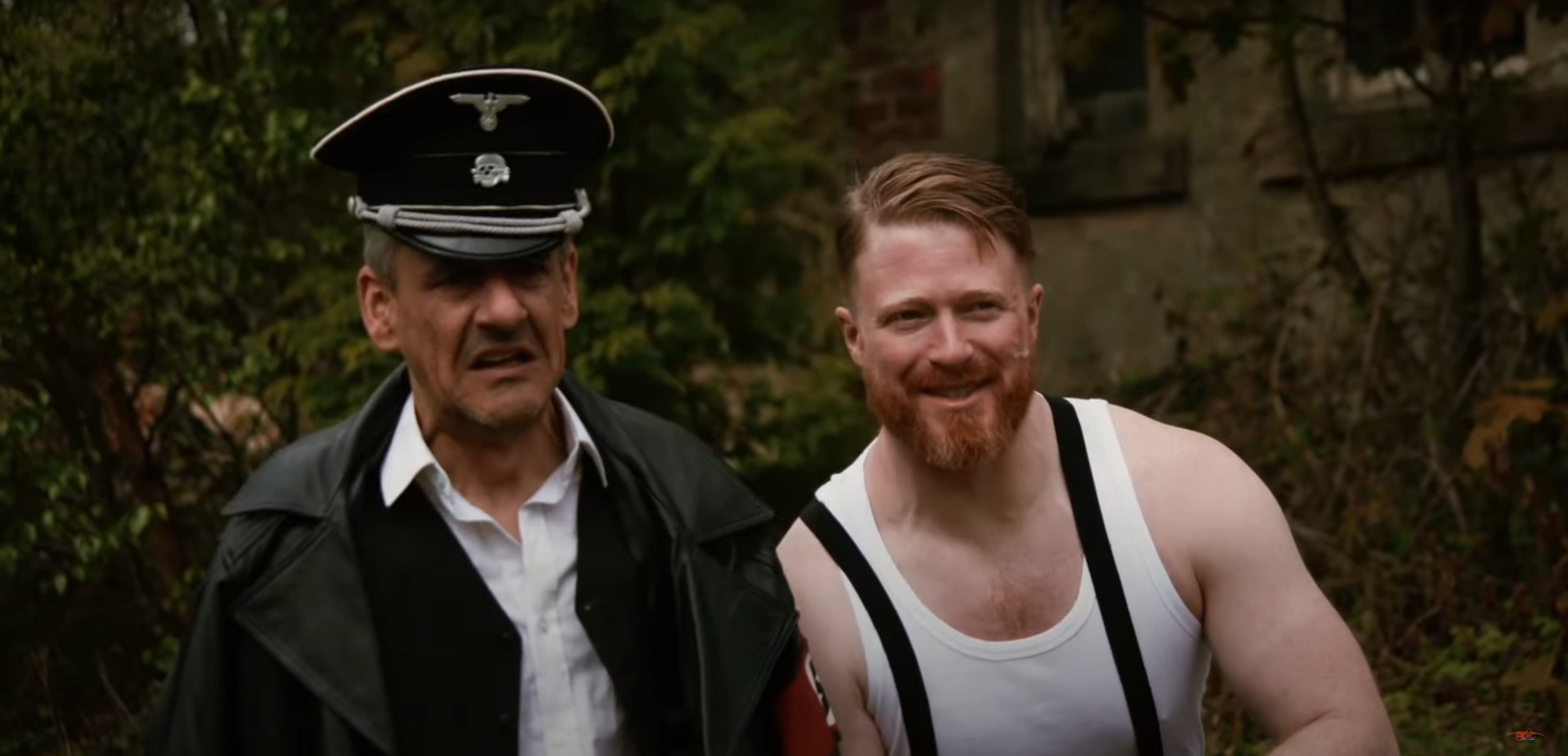
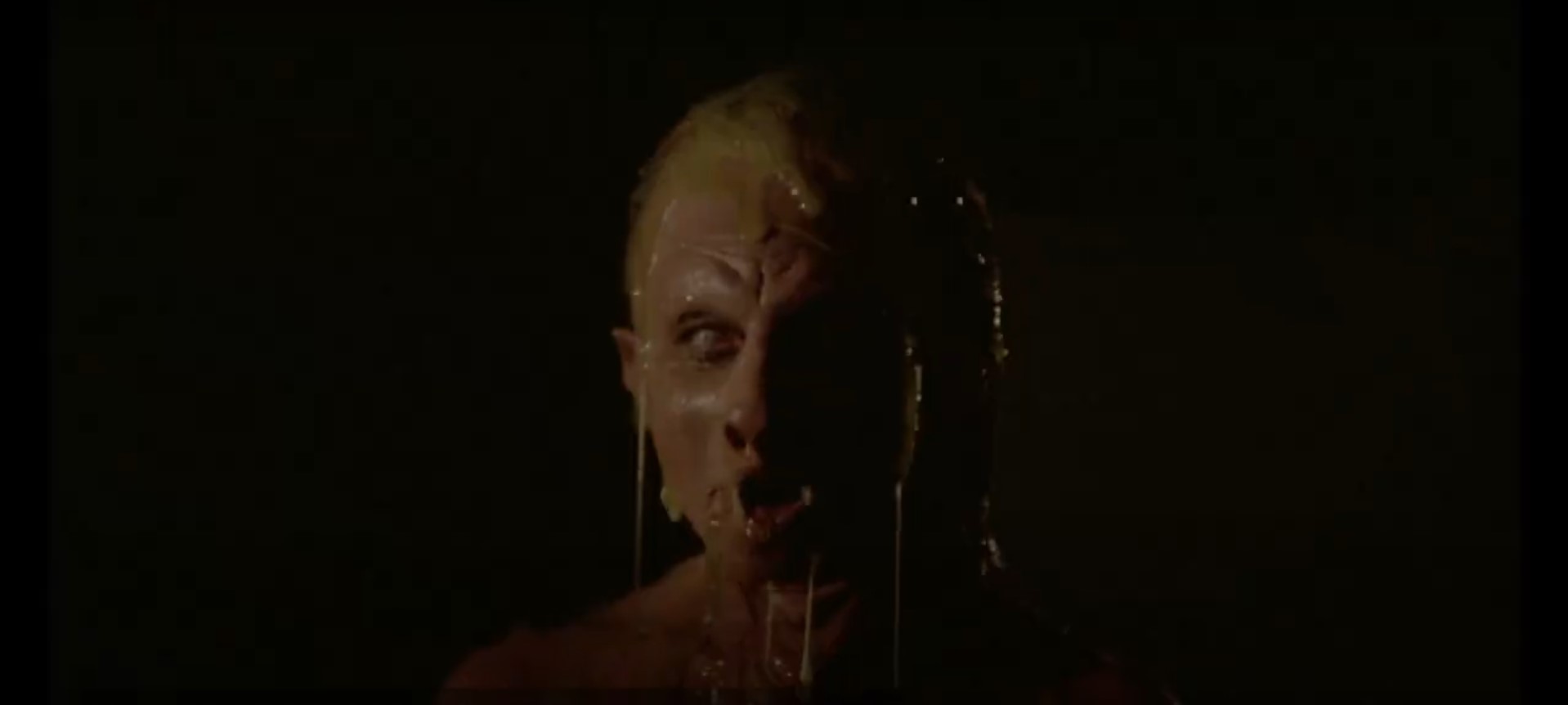
Kyle Jennings is a struggling pro-paranormal scientist unable to convince the department head for more research funding without repetitive, physical evidence.  Jennings’ paranormal hypothesis is put the test when an old movie theater in Englewood, Ohio spikes to the cycles the eager researcher has previously recorded.  Accompanying his fact-finding examination of theater is the department head with her own theories to explain the phenomenon.  With the assistance of two theater employees, they experience unexplainable occurrences of movie reels coming alive and playing themselves, unlockable doors mysteriously locked, and a ghostly apparition lurking in the attic, all surrounding an old nitrite film reel with immense paranormal energy.  The foursome find themselves trapped inside a theater with the film reel causing rifts into another dimension through every reel change and splice of a cheap zombie movie.  Before movie zombies step into their reality from off the screen, Kyle must journey to the other side and stop them simply by locking an unlocked door but that’s easier said than done when every act Kyle does in film changes the narrative significant and not in their favor.   
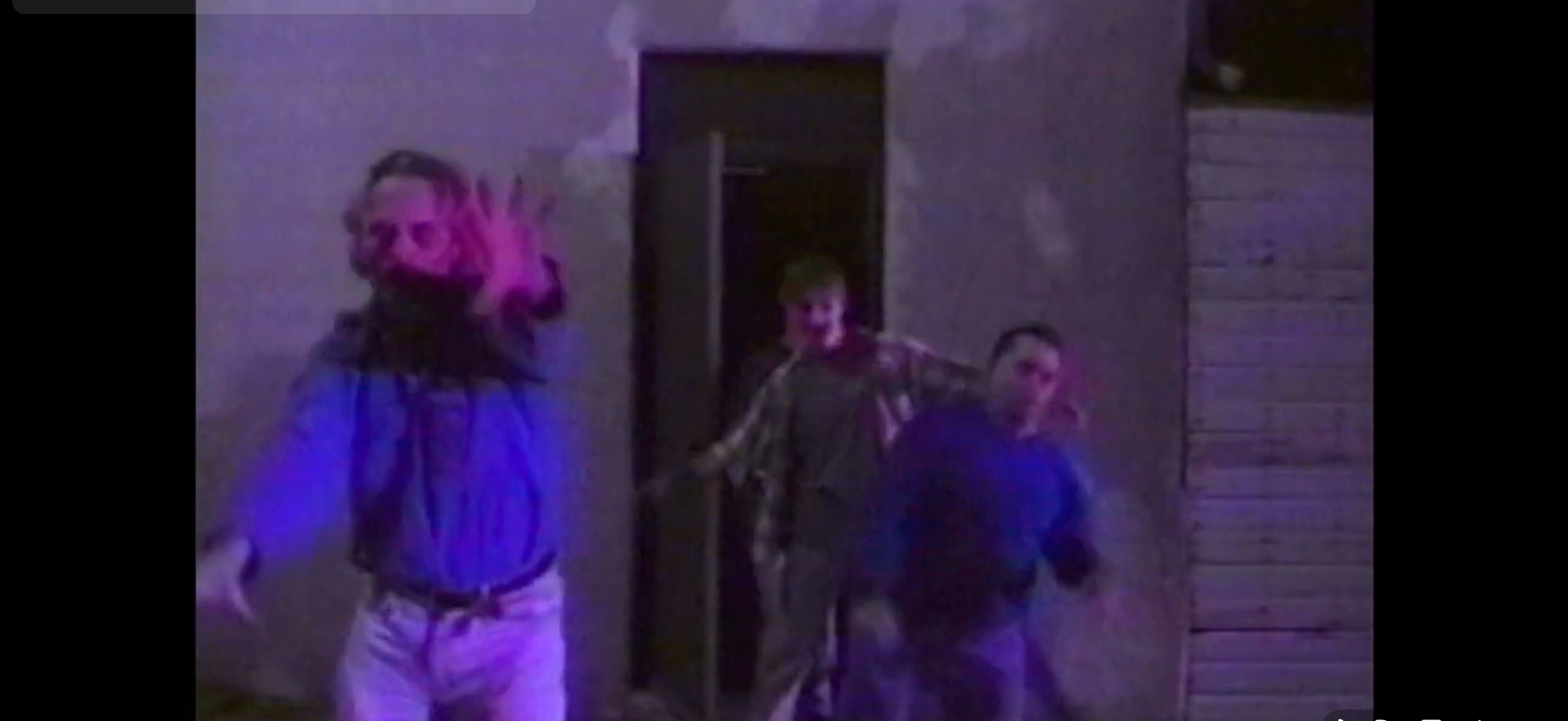
Every once and awhile you’ll come across an obscure, independent made film that just knocks your socks off in all categories.  Todd Norris’s “The Paranormal” is one of those very films.  Norris writes-and-directs the 1998 film alongside cowriter C. Wayne Owens, marking their first and only collaboration together.  Norris went on to do be an accomplished short film editor and cinematographer, working on select cheeky horror full-length features such as “Cadavella” and “Bonnie & Clyde vs. Dracula.”   “The Paranormal” is the debut film of Todd Norris, filmed in the America Midwest, Kansas City, Mirssouri to be specific.  Riding the device of being a mise en abyme, or more loosely described as a meta-film, “The Paranormal” has a novel concept that makes this film something special. 
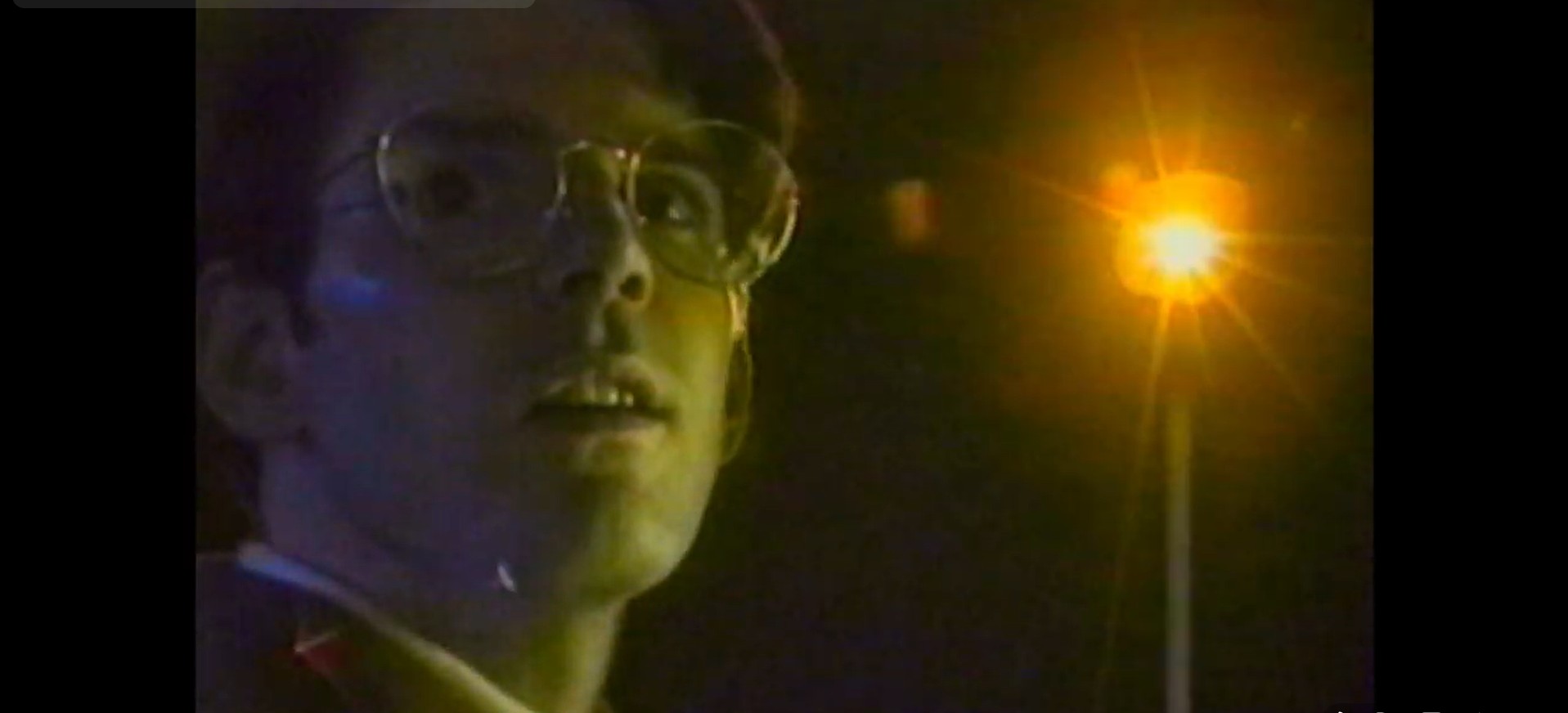
Norris not only writes and directs, the then late 20s filmmaker also starred as the lead character, a pro-paranormal scientist named Kyle Jennings who, from the opening, introductory scenes, struggles with validating his department and research that is seen as nothing more than a joke, or is even suggested to be a pseudoscience amongst cross-departmental peers at an undisclosed shared university.  As an actor, Norris never flinches from his nerdy-confident persona, dressed down to seem like a normal man with an equally dressed down obsession toward his research.  The approach and reaction of rejection is a very real-world view and response to being denied opportunity, but he’s given the chance once an unexplained occurrence in Englewood has a striking coincidence to his theorized research on paranormal activity.  Jennings is challenged by theoretical physics and science department chair head Cass Charbonneau (Lisa Winegar) who has this underlying want to believe, in a stoic, scientist indifference type way but can’t swallow the truth that something might more unexplainable out there.  We don’t really get a satisfying character arc with her character as she never really displays the change of heart or update from her rigid persona to welcome Jennings into the university scientific community.  Does he finally get accepted?  We don’t know.  Audry Crabtree and Gina Tarantino respectively play theater owner as well as Jennings’s love interest Lynne Meredith and projectionist Johnnie, providing additional strong female roles unafraid to face the supernatural front alongside Winegar.  The cast rounds out with Jennings’s colleagues and zombie movie characters with C. Wayne Owens, Carol Koehler, Brain Stubler, Jeffrey Sisson, and Davide Baldin who either support a broad pro-paranormal acceptance as we see with C. Wayne Owens moving persuasive speech to convince a reluctant Jennings to investigate Englewood and to support parts in a narrative that changes with every decisive action to keep movie zombies from entering reality. 

For a SOV film, “The Paranormal” is a case study for what to do right during principal and post photography.  Editing and special effects on tape can be cumbersome and clumsy, but Norris makes it look easy with effective sleight of hand tricks and use of multiple video tape recordings to provide overlapping effects that turned out quite well and was quite effective.  Couple that technical success with a fascinating, movie-within-a-movie storyline, there’s little to dislike about this indie feature with a big budget heart.  Horror fantasy becomes reality as supernatural forces bring the movie to life, an idea that germinated before Arnold Schwarzenegger’s 1994 action thriller “The Last Action Hero.”  While Schwarnegger’s narrative crossed realities in a bigger, more explosive way, “The Paranormal” teases the threat with brief windows of opportunity that could potentially send fleshing eating zombies into the real world.  Every time I thought the story would falter under its own narrative weight, Norris surprises me with continuous persistence in making the sequences work.  The only downside to “The Paranormal” is the mystical reel that generated the supernatural rift.  The nitrite-filmed reel didn’t receive much of a backstory on how and why it causes the in-movie movie “Z is for Zombie” to be the chosen destructor of the Englewood Theater inhabitants and, potentially, the world.  There’s a flash of a woman apparition that in conjunction with the reel’s unyielding power that, too, isn’t explained.  These inexplicable elements leave plot holes in a what is otherwise a near flawless picture. 
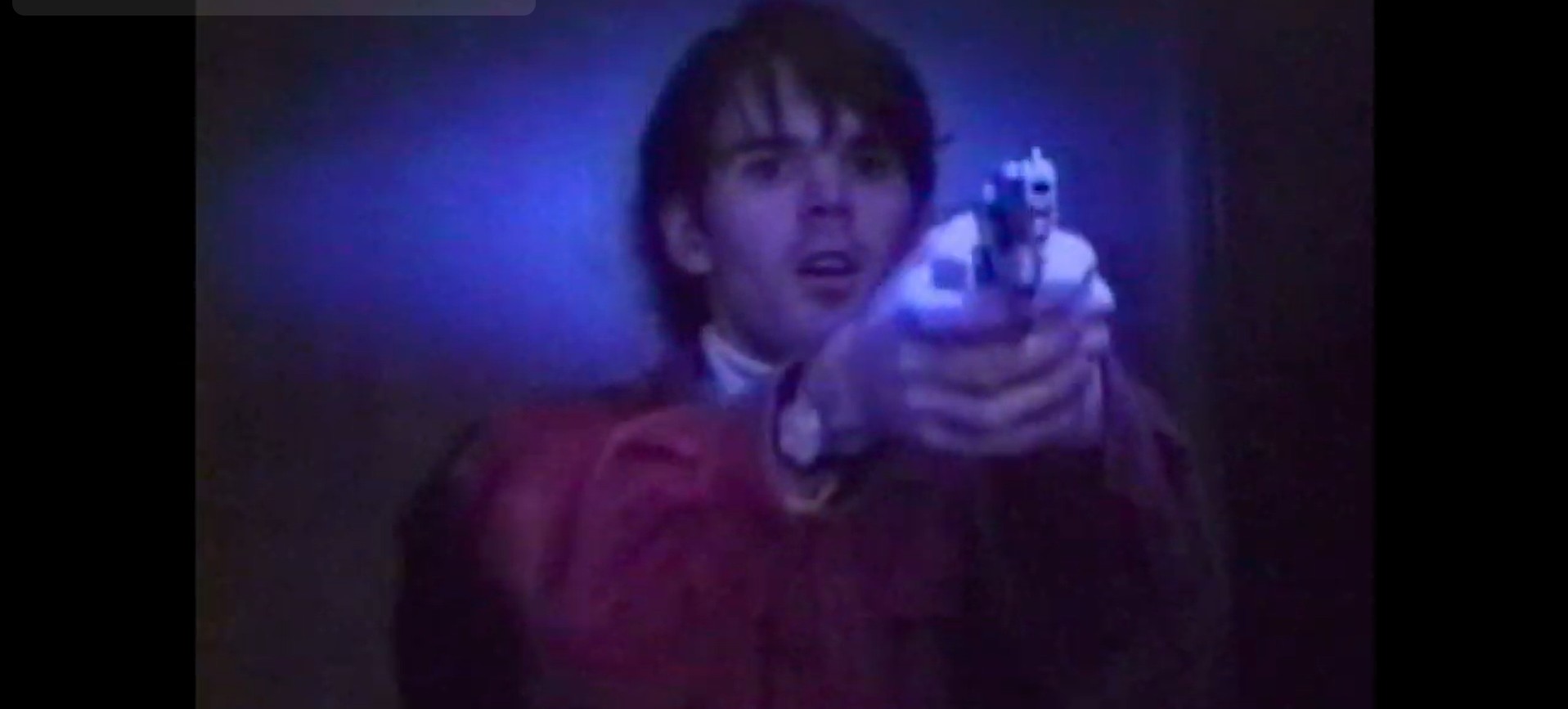
Visual Vengeance continues to drop SOV gold right into our hands.  “The Paranormal” is not only a fantastic meta-horror but now it has sex appeal with profound physical qualities.  The single disc, Blu-ray set comes AVC encoded with 1080p high-definition resolution, encoded on a BD50.  The original tape elements were scanned with director supervision and the quality of the tape retained for its original aesthetic, complete with tracking lines and a distorted, warm coloring amongst the analog anomalies associated with tape.  There’s clearly no hard-edge definition or textural allowance so you can get the feeling that you’re watching magnetic tape just as the media gods intended, exhibited in the full frame 1.33:1 with pillar boxes.  The English LPCM stereo cleanly discerns dialogue, soundtrack, and certain action aspects without the presence of sidetracking distortion, and that’s saying something for an innate original audio recording, but there’s noticeable subtle electrical interference in it’s not so robust reproduction of audio.  The A/V should come at no surprise as Visual Vengeance continues to be upfront with their releases with a precautionary statement before every feature regarding the commercial and inferior equipment used to make these types of films.  Optional English subtitles are available.  Special features are aplenty, as usual with Visual Vengeance, with a Todd Norris feature-length commentary, a second commentary with Norris and composer Paul Roberts, various cast and crew interviews produced by Norris a video interview between Norris and Lisa Winegar and subject interviews with Jeffrey Sisson and Davide Baldin, an interview session between Todd Sheets and Todd Norris as The Two Todds of Kansas City SOV filmmaking, “The Paranormal” channel 5 TV airing, blooper reel, deleted scenes, original script excerpts, a storyboard gallery, short films “The Closed, “I…,” “Night of the Growling,” and “Parallax,” and trailers for other Visual Vengeance at home releases.  The clear Amaray Blu-ray case comes with a limited-edition O-ring for the first pressing with art by graphic artist Uncle Frank.  The original sleeve art is done by The Dude and inside is a mini poster by Giorgio Credaro.  Three graphic artists given the chance to shine on one release is pretty neat.  There’s also the original VHS cover on the reverse side of the sleeve.  Inserts alongside the mini-folded poster include an faux advert for faux movie “Z is for Zombie,” a Ghost Finder for viewing entities (think a slim-downed Viewfinder but can’t see through it), and the usual retro VHS sticker sheet.  The 70-minute feature is unrated and is region free.

Last Rites: Acting, special effects, and the meta concept are all what makes “The Paranormal” a solid film of immersive fantasy becoming an on the verge of a zombie apocalyptic reality.
“The Paranormal” is a 3-D Experience Without the Glasses!

The Next WWII Hero to Tommy Gun Down Nazi EVIL Experimenters is “Dick Dynamite: 1944” reviewed! (Epic Pictures Group / Blu-ray)

“Dick Dynamite: 1944” is actioned-packed and now on Blu-ray!

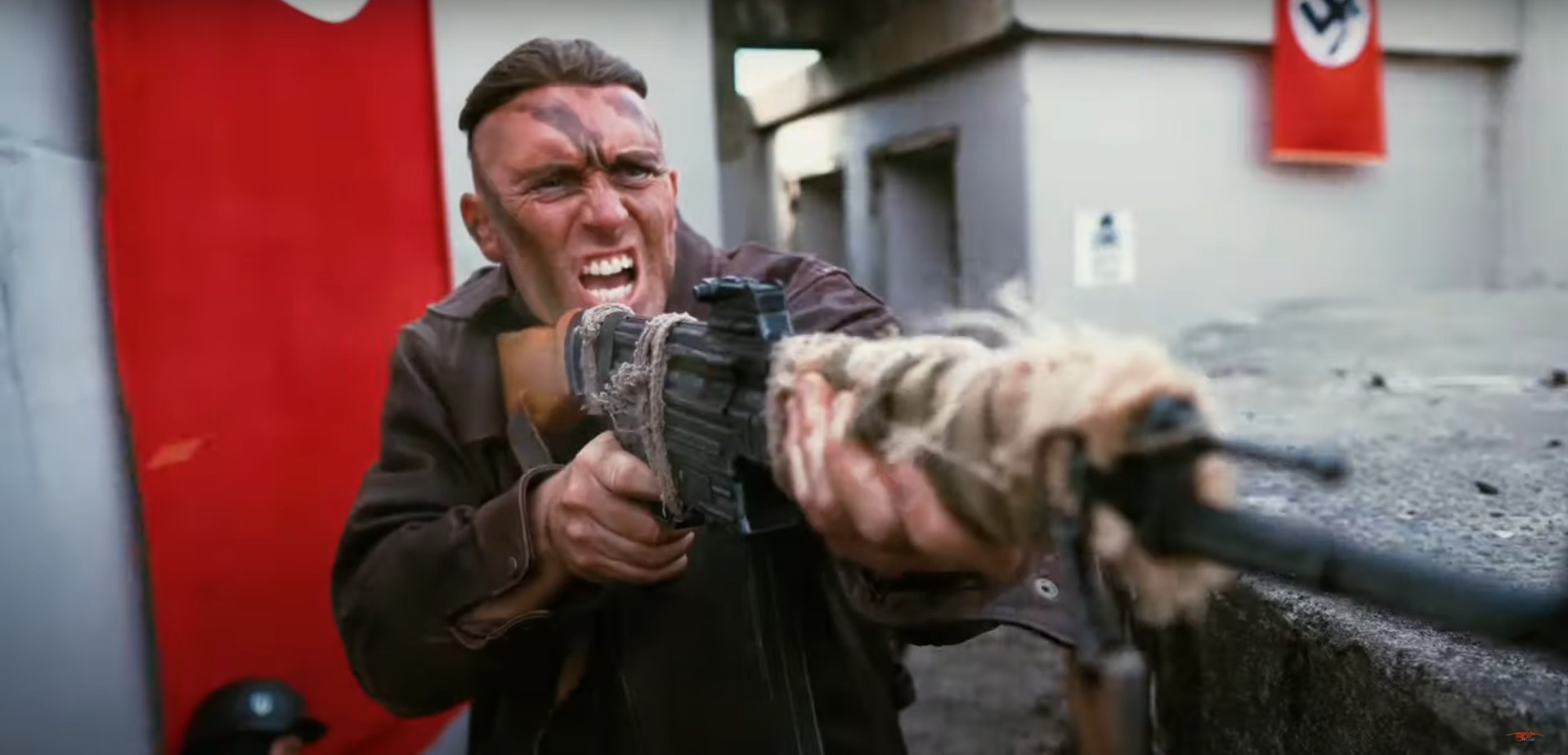
In an effort to extinguish and conquer the American people during World War II in 1944, depraved Nazis develop a transatlantic bomber to plane a devastating, zombifying,  nuclear weapon to the U.S. shores.  A special operation is devised by the U.S. command and intelligence to send their most prized, as well as disgraced, Nazi killer, Sargent Dick Dynamite, to be released from military prison and head a motley crew of rough and ready soldiers to destroy the bomber before taking off from Germany.  Under heavy fire and losing already a couple of soldiers, Dick must make contact with a British operative and an enemy infiltrating dame to root out the details and whereabouts of SS Colonel Schtacker’s diabolical plan for Hitler.  A score of bullets and blood wash over an already bloodied European battlefield as Dick Dynamite will stop at nothing to kill every single Nazi he can get his hands on to complete his mission.

“Dick Dynamite:  1944” is the first of possibly a string of blackly satirical, gory, and horrors of war and of creature World War II films to the uncouth tune of “Dirty Dozen” and “Inglorious Basterds,” or “inglorious Bastards.”  The 2023 released Scottish-made feature is written-and-directed by Robbie Davidson as the musician’s first feature film following a pair of shorts from the last decade in 2012’s “Vamplifier” and 2017’s “Radge Land.”  “Dick Dynamite” is a much larger film full of practical and visual effects, multiple locations, props, voiceover work, large cast and a lot more to create a mockup of wartime Europe of the mid-1940s.  The indigogo crowdfunded campaign accumulated $3500+ from 74 backers but that total may have increased to approx. $7500 per external review of the budget costs; either way, crowdfunding backed Davison, Ian Gordon, Alexander Henderson, and Adrian Smith cofounded Square Go Film production, produced fully by Davidson and Jeffrey J. Ellen, a serial campaign contributor.

So, whose to play the titular hero filled to the brim with machoism?  That role would fall upon Snars.  Snars?  What the hell is a Snars?  That would be the very large stature of Gary Snars Allen channelling his best Scharzenegger voice for the bomber jacket-donning, punch first ask questions later role of Dick Dynamite.  Dynamite’s an extremely faced-value character with not a lot of depth and Snars doesn’t bring much to the character in a way that makes the war action hero that remarkable, especially amongst the clandestine missions behind enemy line characters in war films, like Brad Pitt as Lt. Aldo Raine with a noose neck scar and his idiosyncratic way of saying Nazi.  Dick’s surrounded by a bunch of off-color, off-beat, dirty-dozen types that beam their leader tenfold but, in themselves, are a beacon of curiosity and comedy.  Between the wise guy, motormouth of Brooklyn (Mark Burdett), a pyromanic with a flamethrower in Naplam Jeff (Andy Moore) and a loud and overconfident British Agent in Dash Dalton (Shaun Davidson), there’s support dialogue and action to take the edge off of Dick Dynamite being the sole primary muscle and that’s a good thing because while Snars is okay as the role, he’s not exactly charismatic and having backup characters keep Dick Dynamite from a lot of wear and tear of being in every frame or sequence.  Unfortunately, there is a downside of an ensembled cast in an action war film and a few will be quickly axed off before being unraveled, even some of your favorites from the character’s title card rundown at command operations, such as with drug-addicted, old timer medic (Robert Williamson) as well as Lukas from Tuchus (Brian Jamieson), Tam the Bam (Leftie Wright), and, fan-favorite who gets a little more action, Motherfucker to say only say Motherfucker through the entire time.  Valerie Birss and Adam Harper deserve to be separated from the pack because of their broader arc with Harper playing timid war photographer Officer Wakowski popping his combat cherry after being pushed to the extreme limit and Birss in covert clothing as Agent Jennings pretending to be a Nazi socialite and though not explicit, she serves as potential love interest for Dick without a fling of amorous to be had.  Irvine Welsh, Graham Scott, Athol Fraser, Nigel Buckland, Erik Grieve, David R. Montgomery, and Colin Mcafferty, as the notorious war crime Nazi leader Hitler, rounding out the cast.

“Dick Dynamite” is modern day grindhouse that pays homage to the days over-the-top, suicide mission carnage.  Visual effects and practical gore elements are compositely tied but for the budget, VFX is surprisingly sound to match up against the layered objects or landscapes in the pith of grindhouse.  I found balloon toss squibs an effective choice for bullet-riddling, bloody body shots that explode with gusto and the editing is on point to not show the moment of balloon impact.  A large cast with extras in full Allies and Axis uniforms and weaponry, plus military vehicles, such as Ford GPWs and German vintage aircraft, are garnered and used to add not only to the realism side of the World War II film but also adds to the scale of Robbie Davidson’s debut feature.  Davidson’s story is uber lean for a very cut-and-dry shoot’em up, zombie-laden, Nazisploitation film with not a ton of depth by relying solely on black comedy gags that either hit or miss comedic marks but the gags that do land are outrageous and warrant laughs.  The finale definitively sets up the return of “Dick Dynamite” for a sequel with the hope this film generates enough revenue in conjunction with, perhaps, another crowdfunded campaign to see Dynamite back to smashing the faces of swastika-heiling goons again.

My first Epic Pictures release that isn’t a Dread sublabel, “Dick Dynamite:  1944” is released on standard Blu-ray, encoded AVC, 1080p high-definition in a 1.78:1 widescreen aspect ratio, onto a BD25, which is nothing new in comparison to the Dread catalogue.  Filled in with plenty of composite, visual effects shots, the feature has a plastic pulpy profile, especially in its plastique explosions overtop real and artificial layers, but the detail leveling, despite some smoothed-out areas of posterization, rides the cohesive imaging with singularity, keeping true to the grindhouse or pulp look all way through.  All the real scenes have a raw touch with not a ton of filters, gels, or distinct lighting techniques and that surfaces and houses skin tones and granular textures a lot more.  No issues with aliasing, ghosting, banding, or other compression eyesores on this lower capacity Hi-Def format nor anything that affect the deep black areas.  The English language audio mixes are either a Dolby Digital 5.1 surround sound or a Dolby Digital 2.0 stereo, both of which are lossy formats for a machine gun heavy, explosion-laden, exposition and dialogue-saturated, and war-atmospheric-envelope ranged film.  Depth struggles with long shots and wider scenes inside the context of post-production sound effects where everything audibly comes to the front and the lossy format has pale gunfire renditions and ambient uproar but there’s also a lot of Scottish or UK English yelling and screaming with caricature German accents accompaniments to ] add to the already amplified bangarang.  English subtitles are optional but for one Scottish character, they are forced for comic, translation effect.  One of the few Epic Pictures’ releases to be packed with extras, including a Robbie Davidson director’s audio commentary, a nearly hour long making-of documentary with cast-and-crew interviews, raw footage behind the camera, bloopers, and production stages, and post-production footage with ADR and visual effects, an interview with Leftie Wright,  an Adam Harper audition tape, a slew of deleted scenes, an F/X breakdown around explosions, a faux ad for Dick Dynamite action figures and toys, a Zombie Child ad, the Indigogo.com campaign ad, Dick Goes to JapanDick Dynamite & Company go to the Isle of ButelGloirous Basterts gungho advert, the official “Dick Dynamite:  1944” trailer, and the production trailer.  The standard Blu-ray Amaray keepcase depicts Snars in soldier gear with a BAR across his back shoulders and a lot of explosive chaos behind him.  Inside the disc pressed with faux bullet holes and there are no other physical extras.  The region free release has a runtime of 95 minutes and is not rated. 

Last Rites: “Dick Dynamite: 1944” is the World War II grindhouse picture that gets in your face and doesn’t let up. Robbie Davidson renders fans expectations by turning their contributions into a bloody, visual effects blitz of zombies, Nazis, and kickass allies with the hope for a sequel to follow.

“Dick Dynamite: 1944” is actioned-packed and now on Blu-ray!

Your Hopes and Dreams Come Down to Beating an EVIL Fitness Center in a Workout Marathon! “Heavenly Bodies” reviewed! (Fun City Video / Blu-ray)

Move Your Butt to this Fun City Edition of “Heavenly Bodies” on Blu-ray!

Working 9-to-5 has a secretary, Samantha quits her grinding job to pursuit her passion of owning her own dancercise studio.  Leasing a vacant building with her girlfriends, they form Heavenly Bodies to let the craze of group dancing and aerobics take hold of all those interested.  The success of her rapidly flourishing business persuades her to audition to host a regional workout show while at the same time juggling being a single mother and decrypting feelings for a new man in her life.  After winning the audition, Samantha is targeted by fellow finalist and rival aerobicize instructor from a bigger fitness center having felt deserving to be the television host.  With her relationship heading for the rocks and her fitness studio building being bought outright by the larger investor, Samantha insists on an all or nothing dancercise contest against the rival studio heads, challenging her best versus their best in an hours long workout made for the TV world to see.

Dancercise.  A craze I know all too well watching my mother high-knee kick, arm-twirl, and run-in-place to the programs hosted by Jane Fonda and Denise Austin right in the middle of our living room.  “Flashdance,” “Footloose,” and “Dirty Dancing” are just some examples of the dance centric subgenre that swept through the 1980s.  In the middle of that mix is 1984’s “Heavenly Bodies.”  Written-and-directed by Lawrence Dane, an actor, who had more of a horror lining with roles in “Scanners,” “Happy Birthday to Me,” and “Seed of Chucky, who tried his hand being behind the camera, co-wrote also his first script alongside Ron Base.  The Canadian feature was co-produced by Stephen J. Roth and Robert Lantos, both of whom shared a string of erotic dramas early in his career with “Paradise” starring Phoebe Cates and the sex-comedy “Scandale” but the two parted and became more mainstream on their paths with Roth financing “Scrooged” with Bill Murray and “Last Action Hero” with Arnold Schwarzenegger” while Lantos partnered off-and-on with fellow Canadian and body-horror director David Cronenberg on “eXistenZ,” “Eastern Promises,” and “Crimes of the Future.”  “Heavenly Bodies” is a production of Producers Sales Organization, Moviecorp VIII, and is one of the few less erotic features from Playboy Enterprises.  

Leading the casting headline like her character Samantha leading a group in a dancercise routine is Cynthia Dale.  The “My Bloody Valentine” actress with curly shoulder length brown hair, an infectiously joyful smile, and killer dance body is the heart and soul of what makes “Heavenly Bodies” truly worth watching.  Her long take choreographed dances are breathtakingly fun and gracefully executed, full of energy and sizzle with the camerawork angles that move along every part of her kinetic body.  Samantha embodies the strong, independent single mother who do it on her own terms after setting passion aside once for a man, her son’s father, and is determined to not make the same mistake twice nor back down from being intimidated, but her arc is to change, to fall in love again, and to make sacrifices for not only the sake of her dream but to let someone else into her heart by being flexible and compassionate to their needs.  That person ends up being Richard Rebiere (“Happy Birth to Me”) as the football player who falls for Samantha after his team’s instructed to attend her classes to shape up.  The duo is pitted up against an established, powerhouse fitness center managed by Jack Pearson (Walter George Alton, “10”) and his head aerobics instructor Debbie (Laura Henry) to marathon their way to the last person standing in a 8-versus-8 fitness free-for-all, not to forget some scandalous moments of smooching, swindling, and woman abusing in between.  Pam Henry, Cec Linder, and Patricia Idlette, round out the principal cast with a slew of backup dancers working their butts in shape and officiating contests. 

You think Playboy Enterprises, you think erotic, romantic sleaze with dumbed down dialogue, a half-cooked story, and jazzy, yet soulless soundtrack coupled with candle lit moments and insignificant drama a la carte.  That’s not the case here.  Yes, “Heavenly Bodies” has moments of tenderness between dancer Samantha and football star Steve and fleeting glimpses of nudity, but those bare skin moments are more of a garnish than a main course as the story dishes being a dramedy with a killer soundtrack and a solid acting from main street, legitimate actors, and liberal art performers.  Articles on the film accuse it of being a “Flashdance” imitator and I would be so bold to accuse the authors of those articles to have never seen “Flashdance.”  Dancing along to a hot track does not equivalate two features that share no other plot similarities.  “Heavenly Bodies” stands, or rather dances, on its own two peppy feet in its whimsical nature of an aerobics showdown that determines the fate of a single woman, single mother, and single business owner to topple the threatened-felt commercial giant in a desperation attempt to save face and be relevant. 

Fun City Video steps up to release a new, debut high-definition transfer of “Heavenly Bodies” on an AVC encoded, 1080p, BD50.  The film has been out-of-print for over three decades but now there’s a 4K scan and restoration of the original 35mm internegative presented in the widescreen 1.85:1 aspect ratio.  The new transfer is absolutely gorgeous and rejuvenates the dance-craze 80s right before our very eyes.  Hyper facticity of detail has remarkable texture and color, diffused nicely over all aspects of costume from the leg warming socks to the diversity hued headband assortments, and punctuated distinguishably when sweat soaks shirts and skin.  The grain has natural analog appeal with no hints of DNR or other types of video smooth over or manipulation.  Original elements appear mostly damage free with an occasional dust speckle here and there.  The sole English LPCM stereo 2.0 is suitable mix for this originally at home, premium cable title that pumps and spreads layers through a dual channel output.  Dialogue renders cleanly without a confluence of popping or hissing along the audio.  The integrated soundtrack has stepping and staying power, full-bodied to frenzy synthesizing sound and catchy ballads and motivation lyrics.  Faint crackling or interference in the background but nothing worth really concerning over as there are plenty of other elements audio senses with attune to.  English subtitles are optionally available.  Special features under a fluid menu of one of more ramping up dance scenes includes a new Cynthia Dale interview, a new feature-length audio commentary track with Atlanta based film programmer of cult and late-night cinema and podcaster Millie de Chirico and Jeffrey Mixed, aka Jeffrey Nelson, co-creator of the horror media label Scream Factory, and an image gallery.  The clear Amaray case showcases a retro vibe of multiple boxy colored lines underneath a framed, perspiring Cynthia Dale in low side crouch of her promotional shot for the film’s one sheet.  The reversible side has more artistic illustration of the same post with a tagline and Samatha striking anther aerobic pose in opposite.  The white disc is pressed with a two-tone, darker emphasized silhouette of a dancercise group.  A 15-page one-part faux channel guide, one-part essay by Cinema Studies academic Nathan Holmes is a nice touch of 80s nostalgia and historical context on dance movies of the era.  The region free release is rated R and has a 90-minute runtime.

Last Rites: By no means is “Heavenly Bodies” horror or sleazy sexploitation this reviewer usually injects right into his caustic-cinema arteries, but the Lawrence Dance directed, Cynthia Dale danced cult film embodies eighties elegance this guy grew up in. Those with similar nostalgia enthusiasms or those who find room in their hearts for ridiculous-raving, dancercising dramedies can’t miss out on this intense workout wonderment.

Move Your Butt to this Fun City Edition of “Heavenly Bodies” on Blu-ray!

Cartagena’s Secrets are Mountainous EVIL Aliens! “Top Line” reviewed! (Cauldron Films / Blu-ray)

When Everyone’s Out To Get You, You Get “Top Line” on Blu-ray!

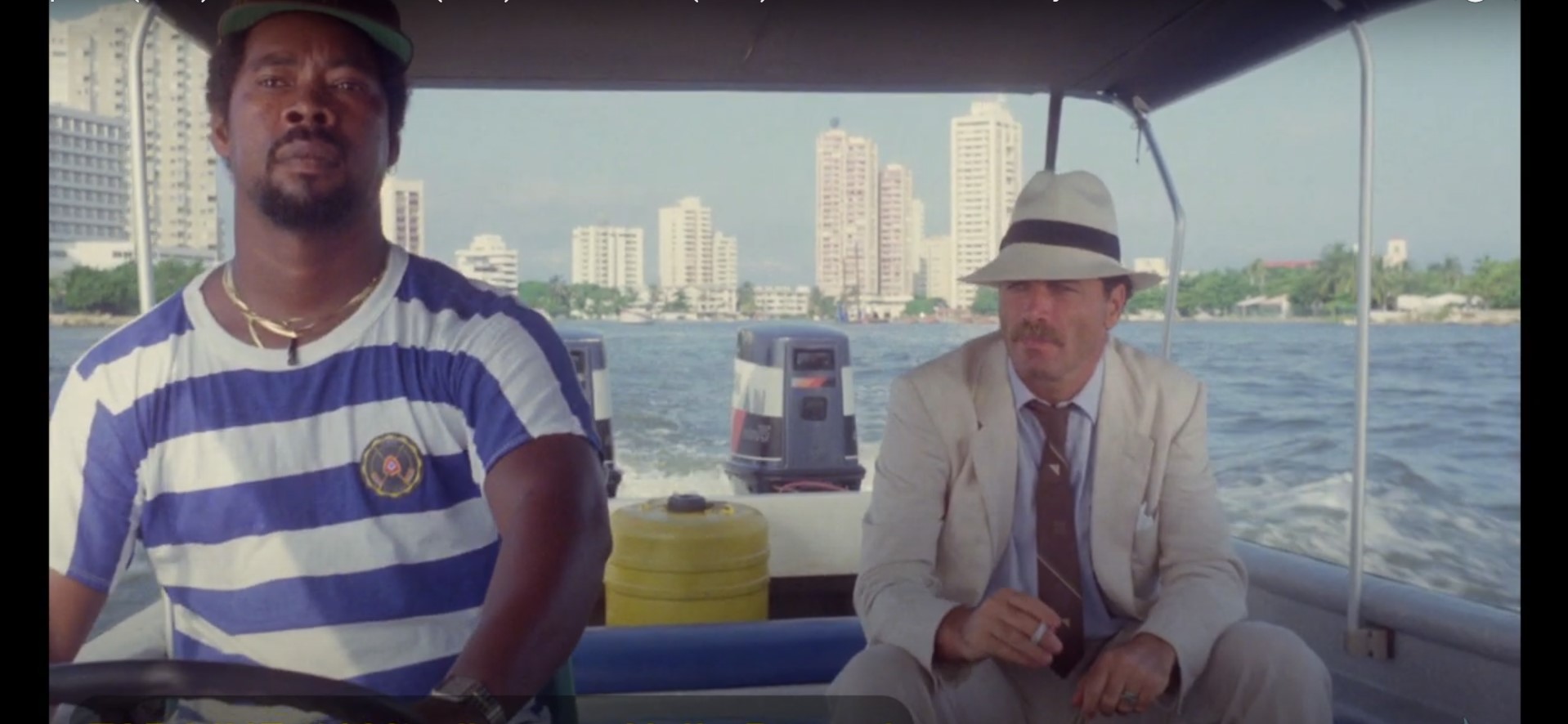
Washed up, alcoholic feature journalist Ted Angelo drinks himself into a stupor on the porticos of Columbia.  Having just been fired by his magazine editor for lack of content, Angelo scores big when led down the path of ancient tribal artifacts that proves the terminus of one of Europe’s famous new world explorers, rewriting history of the disappeared pioneer, but what he truly discovers is bigger, and more frightening, than history itself as he unearths a large alien spacecraft hidden within the Columbian mountains, big enough to enclose the explorer’s lost mast ship.  The discovery of a lifetime becomes the bane of Ted Angelo’s existence as he’s suddenly on a kill list and every organization, from the C.I.A., to the K.G.B., to former Nazis, is hunting him and wanting him dead.  Unable to trust anyone and nowhere to run and hide, the desperate writer is determined to expose the secret-to-kill-for to the world but not if the aliens have anything to say about it. 

Let’s talk about a film that is a bit of a smorgasbord with tapas plate tastings of just about every genre that exists.  That’s one way to serve the description of Nello Rossati’s “Top Line” with an inarguable action coating menu overtop the varietal lifeblood veins of science fiction, espionage, drama, parody, horror, and driven by a sensationalized historical context.  Directed under Rossati’s Americanized pen name, Ted Archer, and known alternatively as “Alien Terminator,” “Top Line” tries to appeal to western audiences with brazenly broad script cowritten by “The Woman in the Night” director and Roberto Gianviti (“Don’t Torture the Duckling,” “Murder Rock”) at the height of Italian ripping of popular American movies.  Filmed on site in Cartagena, Colombia, the Italian production was produced by Luciano Martino (“The Island of the Fishmen”) and productionally sanctioned under companies Dania Film, Reteitalia and the National Cinematografica. 

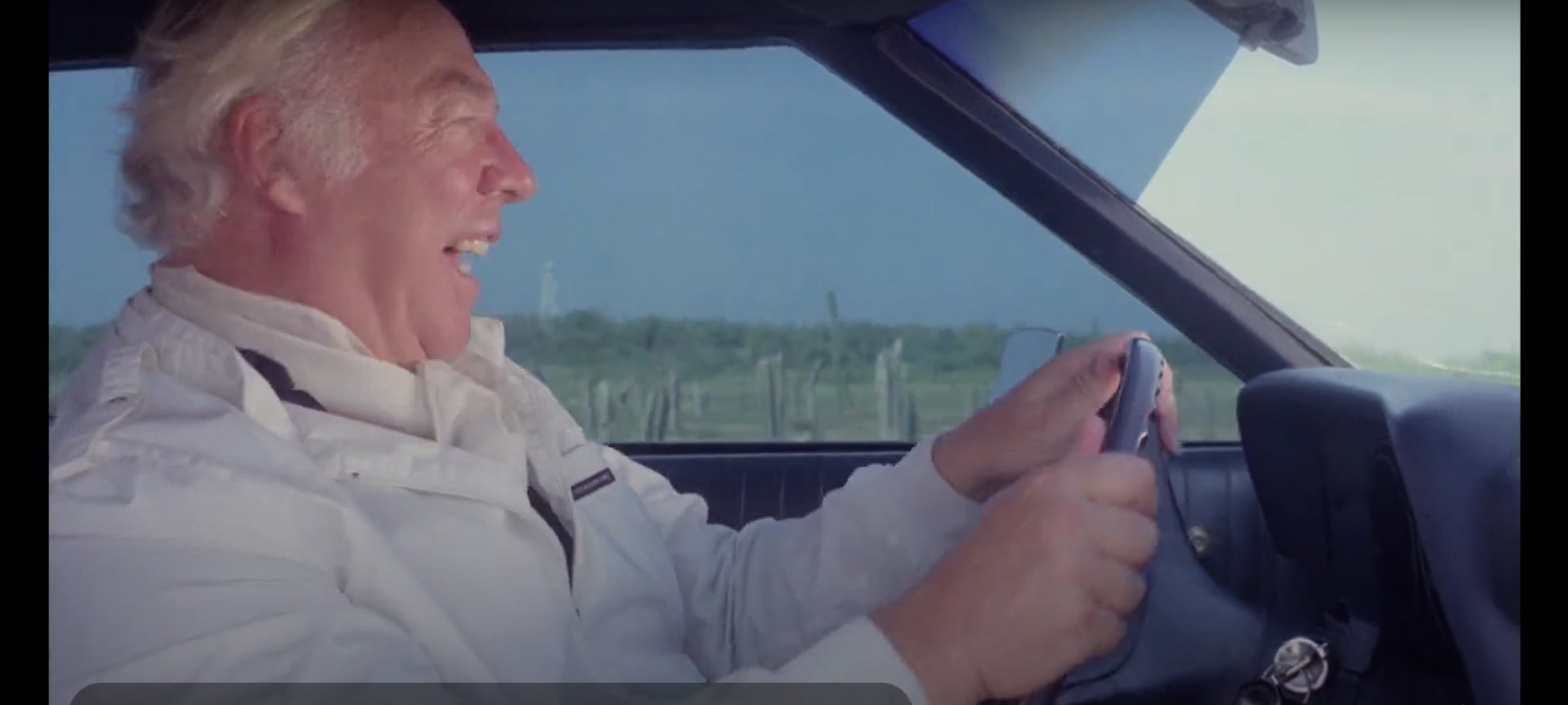
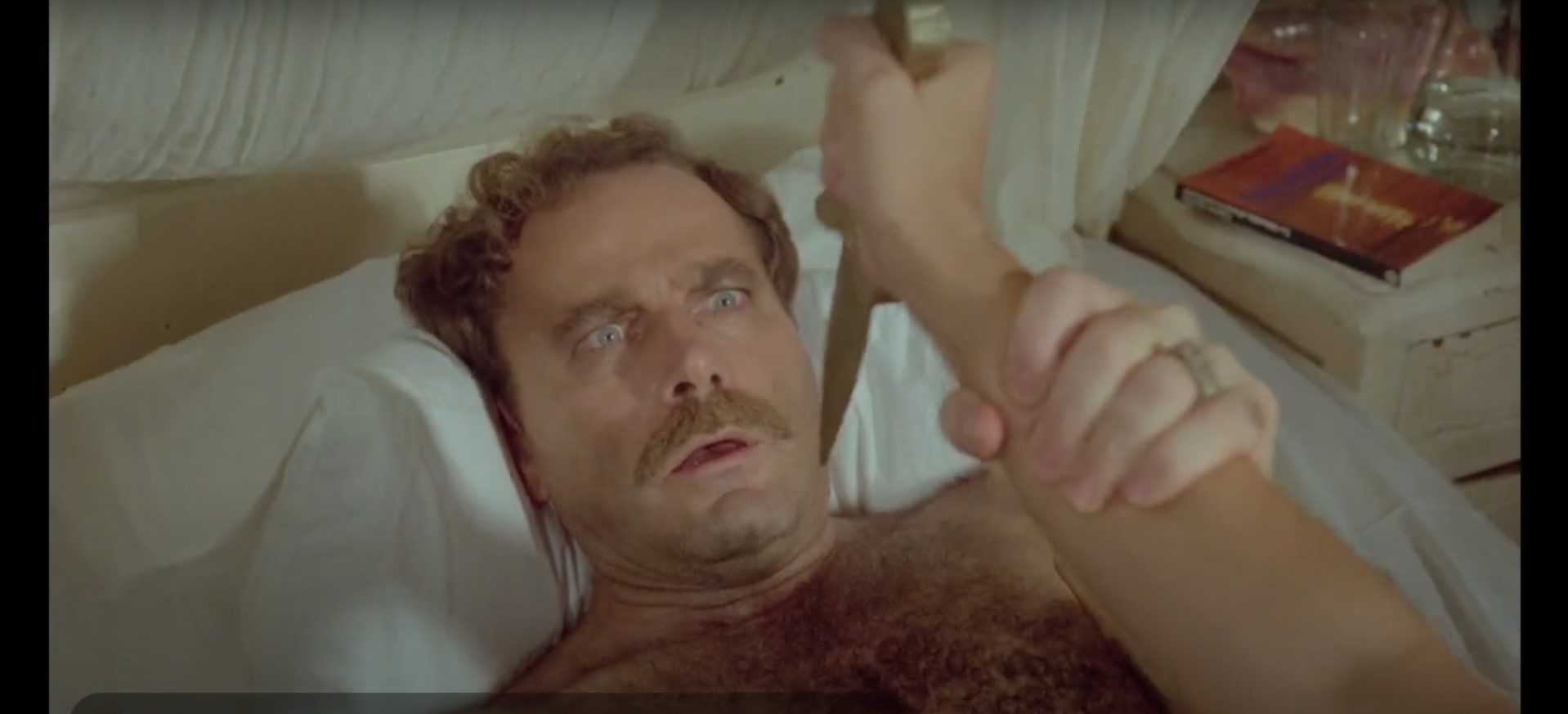
What’s likeable about Ted Angelo is he’s simply a writer.  He’s not a crack-shot, he’s not a world-class fighter, and he’s not one for conjuring up a complex master plan.  Instead, Ted Angelo is a flawed man under the influence of a bottle and is a low-level womanizer where the bedroom interests are more about local information than about the sexual activities.  Franco Nero (“Django,” “High Crime”) goes against his multifaceted ruggedness and muscular physique to be the more of an adaptable and instinctual hero that tries to make up for slouching about Columbia’s drink selection.  Nero’s the hero while Deborah Moore, of “Warriors of the Apocalypse” and daughter of former James Bond Roger Moore, tiptoes about the love interest trope after her character’s senior colleague, who is also Angelo’s good friend, is murdered in the plot and the two become intwined and more goal oriented in unearthing the reason in a minor ploy of revenge.  Yet, the trick is on them after discovering a U.F.O. right in their mountainous backyard and the hunt for their lives is on by a former Nazi and antiquities collector Heinrich Holzmann (George Kennedy, “Naked Gun”), a whole slew of clandestine organization spooks, and Rodrigo Obregón (“Savage Beach”) doing his best Arnold Schwarzenegger “Terminator” act as a large cybernetic man with a stoic and half-exposed face.  “Top Line” supporting cast includes William Berger (“Devil Fish”), Sherly Hernandez, Larry Dolgin (“Caligula:  The Untold Story”), Steven Luotto, Robert Redcross, and Mary Stavin (“House”) as Ted Angelo’s ex-blonde beauty editor girlfriend.

“Top Line” has one of those cinematic stories that’s all over the place pieced together by western inspiration like some sort of genre stitched together Frankenstein’s monster.  Unlike the flat top and bolt-necked creature born of electrical current and held together by suture and mad scientist sorcery, “Top Line” doesn’t have any hideous scars or an unfavorable attitude deterrent but what the Nello Rossati film does feature similarly are the monstrous best parts, such as unpredictability, a pendulum of excitements, and an everyone has grabbed their pitchforks and is out to get you sentiment.  “Top Line” is a wild, exciting, volatile ride set in the heart of a landscape and culturally showcased Cartagena and the ever game, Italian actor Franco Nero at the helm steering what at first appears to be an adventurous escapade of treasuring hunting and covert coverups in act one and two suddenly careens into an assault of astro-terrestrials forces to the tune of the fourth Indiana Jones film, “The Kingdom of the Crystal Skull, by crescendoing third act.  “Top Line” is just as theatrically thrilling without the whipcrackin’, fedora-wearing, family friendly archaeologist with multiple blood squib shootouts, a superb tongue-and-cheek car chase down winding mountainside road, and the hydraulics-driven special effects transfiguration your eyes need to see to below.

Cauldron Films proudly presents “Top Line” onto Blu-ray for the first time, the resulting 2K transfer sourced from the camera negative. The AVC encoded, 1080p high-definition, BD25 decodes a clean, color stable picture that feels organic around the diffused color scheme, and that palette pops without being artificially enhanced. Grain appears in check, natural, and consistent throughout. Presented in the original aspect ratio, a widescreen European ratio 1.66:1, does capture the grandiose of a 17th century exploration ship inside the cavernous mountain without a squeeze of the frame, providing more depth with the help of the art direction to visualize and construct an actual set. Textures, fibers, and other tactile s are limited around the jungle setting that does offer a nice leafy and lush setting that depicts a thicket of a developing country without just being a smear of the same color arrangement but outside of that, what does source de facto is sumptuous textural material. Two audio options are available to choose from with an English DTS-HD Master Audio 2.0 mono and an Italian DTS-HD Master Audio 2.0 mono. The Italian is done in post with ADR and has that nagging space between action and voice while the English track goes through less dubbing, or more exact dubbing, with Franco Nero, and other cast, having their voice heard in scene and in synch. The only issue concerning comes with George Kennedy’s dialogue which is dubbed to be more archetypical German of the Nazi-era; however, this route was not heavily travelled with very few lines being delivered by Kennedy, or rather Kennedy’s voiceover actor. Ambience travels amply and disseminates well for a single signal to travel through a stereo output and this jumps the eclectic range of action from the speakers to your ears. Granted, the action is very selective as you don’t every nuisance of jungle skirmishes and the other village landscapes, but there is enough and what’s not covered is often overlayed with Maurizio Dami’s tribal, tropical paradisio percussion and parallel synth with echoing vocal snips, such as whistling, and peppered with scene bytes – the chase sequence where the first batch of armed men running down Ted Angelo is audio composition gold. Special features on Cauldron’s standard Blu-ray contain an exclusive, new interview with lead man Franco Nero Black Top!, an interview with Eugenio Ercolani The Strange Case of Ted Archer, parapolitic researcher Robert Skvarla takes at examples of known alien sightings and speculations in Alien Terminated: The Alien Theories, an audio commentary by film historian Eric Zaldivar that includes interviews from Deborah Moore and Robert Redcross, and with additional insight on Italian cult films from actors Brett Halsey and Richard Harrison. The clear Amaray Blu-ray houses reversible cover art, both representing original artwork from the film’s release. The primary art is more adventurously exciting with Angelo’s arm wrapped around Moore and a rope, reminiscent of “Romancing the Stone,” while the interior cover plays to the science fiction side of the story, more “Terminator-y” to be exact. There are no inserts or other tangible items included. The 92-minute feature is presented unrated with a hard encoded region A playback.

Last Rites: “Top Line” is a top tier title with a little bit of everything for everybody that’s accentuated by a on-the-run Franco Nero performance with a new, gorgeous 2K transfer Blu-ray packed with special features from our friends at Cauldron Films.

When Everyone’s Out To Get You, You Get “Top Line” on Blu-ray!

Your Test Will EVILLY Hunt You! “Prey” reviewed! (20th Century Studios / Blu-ray)

The Hunt is On.  “Prey” Available on Blu-ray from 20th Century Studios!

Set in the Northern Great Plains of 1791, a young and fierce Comanche woman, Naru, craves to break conventional gender barriers as a tracker and hunter, separating herself from the assumed woman’s place in her tribe as a gatherer of medicine and food.  Naru tirelessly trains herself in the ways of the warrior and has become better than her male counterparts who often look down on her as an inequal; yet, she continues her pursuit to prove her worth not only to men hunting parties but also her own brother who, with all the love in his heart for her, doubts her abilities to meet and become victor over her tribe’s warrior test of hunting a predator that can hunt you back.  A big-game hunting alien with high-tech arsenal invades the land, tracking down the area’s biggest predators, and conquering them essentially his bare hands.  Naru comes face-to-face with the extraterrestrial predator that threatens her people but her cries of wolf fall on deaf ears until the tribe’s bravest war party is defeated and the nearby shrewish French fur trappers are slaughtered despite their gunpowder weaponry, Naru is all that is left between her people and a high-powered killing machine.

From a year and half after the success of its premier release on Hulu, “Prey,” the prequel to the highly popular “Predator” franchise has finally berthed onto the home video market.  “10 Cloverfield Lane” director Dan Trachtenberg helms what is essentially a primal and back to roots prequel with a screenplay penned by television writer-producer Patrick Aison set nearly 200 years prior to John McTiernan’s 1987 action-packed, science-fictional horror “Predator” starring Arnold Schwarzenegger battling a skull-trophy hunting alien with advanced and otherworldly armaments.  Though included as canon, “Prey” separates itself from the pack, especially from the string of “Alien vs. Predator” crossover and the 2018 Shane Black director “The Predator,” and not just in title alone but the title is certainly very significant with a focus on the developing heroine to become respected and an equal amongst the men of her tribe whereas the rest of the franchise focuses on the rudimentary conflict between the very best-of-the-best of tough man and a highly skilled, kill-efficient creature from another planet.  Original “Predator” screenwriters and brothers Jim and John Thomas return as executive producers alongside Ben Rosenblatt, Marc Toberoff, and Lawrence Gordon (“Predator”) with John Davis (“Predators”), Marty Ewing (“It”), and Comanche-Blackfeet American Indian Jhane Myers producing for production companies Davis Entertainment and Lawrence Gordon Productions with 20th Century Studios continuing its long history of distribution presentation of the game hunter. 

Much of the cast, as well as the crew, consists of people of indigenous people heritage, honoring First Nations with representation and authenticity.  At the very heart of the story, as the face of the principal hero, and as a young woman who unfortunately in this industry is the atypical-appearing action star is Amber Midthunder (“14 Cameras”) as Naru, a skilled hunter-tracker disparaged and scoffed at by most of her tribe for not following traditional suit.  Naru is an outsider thinking outside the box while still maintaining the traditions of her people, such as wanting to participate in the Kuhtaamia, a hunting rite of passage that leads to being a warrior.  Midthunder executes the character free from vanity but maintaining strength, courage, and quick thinking despite some inexperience which is a greatly adorned flaw to have in a grounded main character battling against the odds.  Naru is at odds with her younger brother Taabe, an adored and venerated hunter who wants to believe in his sister but edges more toward conformity or conventional ways.  Dakota Beavers tackles Taabe’s athleticism, showing no hesitation in battling the predator on horseback, while also softening the eyes and feeling compassion for his onscreen sibling handled a raw deal.  While Dane DiLiegro (“Monsters of California”) is no Kevin Peter Hall, the original actor donning the Predator suit in the first two films, the 6’8” former oversees professional basketball player fit into the large shoes of a new kind of a predator, one we haven’t seen on screen before, and giving the powerful alien creature a fresh take without breaking off too much of the character’s franchise stride and still being a monolithic monster of formidability.  “Prey” rounds out the cast with Stormee Kipp, Bennett Taylor, Michelle Thrush (“Parallel Minds”), Nelson Leis (“The Curse of Willow Song”), Mike Paterson (“Crawler”), Tymon Carter, Skye Pelletier, Harlan Blayne Kytwayhat, and Samuel Marty (“Don’t Say Its Name”).

From the very title, “Prey” is the analogous prequel and follow-up “Predator” story that strays away from the rough-and-tough, highly trained killers in harsh combat terrains and settings with overkill tech and firepower that blasts everything to smithereens path.  Instead, Dan Trachtenberg travels back in time, back when more primal and essential courses of survival were relied upon by grit and skill.  Even the predator is not as technologically advanced as his descending successors. Trachtenberg mentions in one interview that this particular predator, with a vastly different shaped head and having more low-tech gear, and I use that in the loosest of terms considering the predator’s technological advancements compared to 18th century man, may be from another hemisphere of his world, but I’d like to think this earlier version is more like earlier man prior to evolution, or else how can we explain the flintlock pistol connection with “Predator 2.”  This canonical link plus Taabe’s bordering cheesy throwback line, if it bleeds, we can kill it, give tribute to the acclaimed two films that paved the path to setup “Prey’s” success to stand on its own two monstrous feet being set not in a hot jungle, an urban heatwave, or in the midst of an alien race’s civil war or long historical combat with another race, but in the serene, idyllically raw landscape of Northwest America and that is faced with a lead hero we’ve never seen before in a Predator film.  Character driven elements provide a substantial arc in Naru’s story, encrusted by challenges, failures, and successes that make the Comanche woman worthy of the hunt. 

From its Hulu premier on July 22nd, 2022 to its at home, physical media release a year and change later on October 3rd, 2023, “Prey” has come home on Blu-ray home video from 20th Century Studios home entertainment.  The AVC encoded, 1080p, BD50 presents the film in a widescreen 2.39:1 that captures the vista survey with breathtaking sharpness in detail in the 4K scanned print, adding that ever-so-delicate crispness to each foliage-laden and mountainous range landscape.  Even the visual effects, such as a plain rabbit running from a wolf, the bear versus predator, or the deadly rattlesnake, had Its near immaculate rendering show every texturized detail albeit very minor clunky movements.  Color and lighting result in natural tones and sources except for the ashen dead timber sequence that reduces the saturation to make the added fog denser and provide an area of casualty when the predator comes to call.  “Prey” has an outstanding five language audio tracks to choose from:  An English DTS-HD 7.1 master audio, an English Dolby digital 2.0 descriptive audio, a Spanish Dolby Digital 5.1, a French Dolby Digital 5.1, and, for the first time ever, a Comanche Dolby Digital 5.1.  From one of the bonus feature’s deleted scenes, Trachtenberg’s voiceover commentary suggests, at one point in time, the dialogue was going to be fully Comanche, and some scenes, such as the deleted one on the Blu-ray, was filmed in the native tongue.  However, English was decided upon for the final product, but the full-bodied English DTS-HD 7.1 track is masterclass with great attention to extracting those detail elements, such as the serrating gore moments, the whizzing and blips of the predator’s gadgets, and the action associated between minor and major scuffles that build to “Prey’s” one-on-one climax.  Depth elements has space between background and foregrounds, channeling nicely through side and back setups, and the range is extensive in those aforesaid moments of detailed instances plus a few LFE moments of explosions and a thunderous ship landing and takeoff.  Dialogue is clean, clear, and prominent between the audio’s varied language blend of mostly English sprinkled with Comanche and French.  What’s missing from “Prey” that’s a staple through all of the “Predator” films is a rendition of Alan Silvestri’s iconic score, but that omission will likely feel more heartfully loss with diehard fans of the franchise.  However, composer Sarah Schachner’s (“Remains”) orchestra composition is of epic storytelling that pulls similar grand dramatics from another similar time period, Native American film, “Last of the Mohicans.”  English SHD, Spanish, and French subtitles are available to the feature only.  Bonus extras include an audio commentary with director Dan Trachtenberg, actress Amber Midthunder, cinematographer Jeff Cutter, and film editor Angela M. Catanzaro, a Making of Prey behind-the-scenes with cast and crew clip interviews and action footage, Prey FYC Panel with cast and crew discussion, and deleted scenes and alternate openings with a Trachtenberg commentary that explains why the scene was shot and left cut on the editing room floor as well as a visual storyboard of Naru and the predator in a chase in the treetops.  20th Centry Studio’s Blu-ray comes in a conventional snapper amaray with a rigid O-slipcover of Naru’s warpainted eyes overtop one of the original first key arts released of the film – predator in the background of the decaying timber forest ready to strike with its large wristblades as a Comanche warrior, presumably Naru, in a defensive crouch with tomahawk in hand.  The amaray’s front cover sports the same image.  Inside there is a NECA advert for a 7” figure of the feral predator with a matte red disc print with the title and the three target dots reflected in mirror.  “Prey” is rated R for strong blood violence, has a runtime of 100 minutes, and is surprisingly region free, a solid additional to anyone’s Predator film collection. Dan Trachtenberg is on to something here, guiding the extolled Predator toward a new, yet familiar path in what has become an exciting new beginning or pivot for the trophy hunting alien race just begging for the big screen one more time.

The Hunt is On.  “Prey” Available on Blu-ray from 20th Century Studios!