

Former war veteran and hot rod enthusiast Larry and his wife, Carmel, take a weekend off from the children to vacation in Paradise, a retreat on the outskirt, rural area of Australia that includes pleasurable amenities such as fishing, swimming, and being an ideal location for a dirty weekend between two lovers, but an Earthquake triggers a major nuclear leak at Waldo, an international nuclear waste storage facility who aims to coverup to radioactive contamination. Heinrich Schmidt, an engineer who was deeply exposed to the waste flees from Waldo’s goons to reveal to anti-nuclear agencies the corporation’s dastardly concealments and warn locals of the tainted public water supply. With not much time to live and suffering from a serious head injury, Schmidt, with partial amnesia, is sheltered by an unsuspecting Larry and Carmel as they help him piece together his life while Waldo sends recovery and murderous thugs to quiet those who wish to leak information. Paradise is anything but as trouble brews between the vacationing Larry and Carmel, the witless locals, and Waldo in disclosing radioactive waste streaming through the water passage ways.
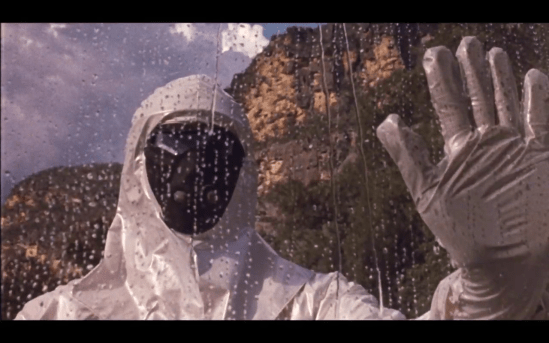
“The Chain Reaction” is the freshman film of writer-director Ian Barry released in 1980. Produced by “Mad Max’s” George Miller, “The Chain Reaction” was considered an unrelated companion piece that also starred a number of the same actors, but the action-thriller aligned more with the populistic nuclear disaster genre of the late 1970s and early 1980s. Whereas George Romero focused on accidental biological effects in his 1973 science fiction horror, “The Crazies,” Barry honed in on nuclear waste disaster and the reaction of those responsible, to what length of measures would be necessary and taken to keep exposure from happening. Caught in the middle are locals and unfortunate vacations, who actually take more a stand against tyrannical, above the law organizations. “The Chain Reaction” is packed with exciting car chases and glazed with testosterone enriched standoffs on a nuclear level.
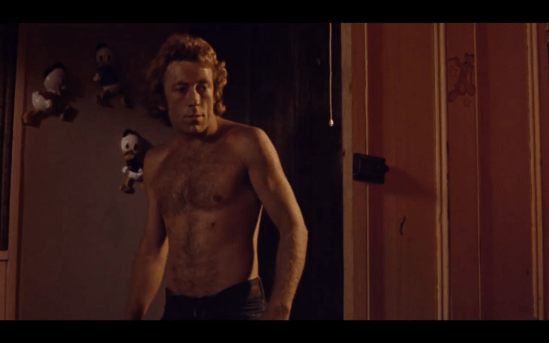
Steve Bisley steps into the lead role of hot shot Larry Stilson working his solid strong physique with a general moral, but still bad boy composure when unravelling and thwarting the Waldo conspiracy. Bisley costars alongside the late Arna-Maria Winchester. Winchester screams screen time sauciness, but as a mother of two, Winchester’s Carmel Stilson comes off as promiscuously uncharacteristic as a mother but, to be fair, Larry doesn’t necessarily yell conventional father either. However, I’m impressed by the turncoat engineer Heinrich Schmidt played by Ross Thompson, an Australia actor who can really accent well the German language and puts into his role a languishing, broken man trying to do the right thing. Together, the Stilson’s and Heinrich are tracked down by Waldo henchman Gray, portrayed by English actor Ralph Cotterill (“Howling III”). Cotterill’s menacing, stodgy dagger eyes make him a suitable villain, but falters in the screen time department, seeing not much action as needed to take care of monumental business against possible exposure. Huge Keays-Byrne (“Mad Max: Fury Road”), Richard Moir (“The Odd Angry Shot”), Laurie Moran, Lorna Lesley (“The Survivor”), and a cameo of Mel Gibson round out of the cast.

The overall problematic crux with “The Chain Reaction” stems from that director Ian Barry is no George Miller when presenting his own version of pacing a film. The narrative is casually abrupt and edited shoddily with very rough and hard to follow sequential events that are supposed to be a fiery ball of nuclear mishandling and underhandedness fury. Though highly doubtful Umbrella Entertainment took the censorship scissors to this Ozploitation flick, there are moments of bizarre, if not expurgated, cuts that debase the illustrative graphic violence. One particular moment in the climatic third act, a shotgun was only aimed to intimidate would be attackers, but never discharged. However, a character is seemingly gunned down with a blood splattered mid-section being the only clue of his demise, but like aforementioned, the shotgun was never fired. Barry’s riveting action story plays out mostly like this, reducing the action to a meager narrative withstanding only a few good car chase sequences, some character intimacy, and laced with some shrouded mystery.

Umbrella Entertainment presents under their Ozploitation Classics’ sublabel, Ian Barry’s “The Chain Reaction” onto a full High definition, 1080, region free Blu-ray with a widescreen 1.85:1 aspect ratio. Honestly, a slightly cleaner and re-refined release was expected. Natural grain is expected, but the lossy definition and blurriness could have been tweaked for optimal results on the print. No edging enhancements nor print damage detected surrounding the fair natural coloring, skin tones, and, sometimes, vivid photography from Russell Boyd (“Picnic at Hanging Rock”), which is surprisingly rather bland overall. The DTS-HD Master Audio dual channel track is excellent with upfront and clear dialogue, ample ambient range, and a clean harrowing and resonating classic disaster scenario score composed by Andrew Thomas Wilson in his sole composure credit. Bonus features are aplenty with extended Not Quite Hollywood interviews with stars Steve Bisley and Arna-Maria Wichester, director Ian Barry, and producer Ross Matthews, a couple of featurettes entitled Thrills & Nuclear Spills and The Spark Obituary, deleted and extended scenes, an early cut with alternate title of “The Man at the Edge of the Freeway,” and media spots from theatrical release, TV, VHS trailer, and image gallery. “The Chain Reaction” is far from noxious, but the nuclear disaster piece could have been more radiant, a quality very difficult to achieve deep in the midst of so many great titles similar in the genre category; yet, the Ian Barry action thriller is an entertaining adversity excursion nonetheless.
Tag Archives: nudity
Evil Asks, Why Haven’t You Checked the Children? “When A Stranger Calls” and “When A Stranger Calls Back” review!

High schooler Jill takes a babysitting job, overseeing two sleeping children while the parents have date night. The phone rings and an assumed prankster tries to scare Jill, either asking why she hasn’t checked the children or doesn’t say a word, but as Jill fields calls throughout the night with the same terrorizing voice, the terrified sitter phones the police whom trace the call from inside the house. Jill barely escapes the deadly encounter that left two children victims to a psychopath; yet the now happily married, mother of two small children is faced with the same killer seven years later after he escapes from a mental institution. Hot on his trail is detective turned private eye John Clifford who will stop at nothing from stopping a maniac who will kill again. Years later, Jill and Clifford team up once more to investigate a similar case of a co-ed being specifically terrorized by an obsessive stalker through the span of five years to the point where his next move could be her last.

Perhaps one of the best, if not the best, openings to a horror movie ever, Fred Walton’s “When A Stranger Calls” puts a freeze on the heart, forces to choke down the breath, and tightens the already painfully clenched fists with sheer, thick tension bred from an urban legend of the babysitter and the man upstairs. Walton, and co-writer Steve Feke (“Mac and Me”), develop two successful thriller from script to screen, spanning over the course of 14-years. Walton’s uncanny ability to invoke fear through a conduit of simple objects, such as a telephone ring or in the thicket of dead silence, and leading a direction of motivational hesitation or slowness to the story and through it’s characters is dread absolute. There’s similarities between Fred Walton and “The Driller Killer” director Abel Ferrara with a scent of realism and grittiest blanketed with a knack for the abstract in certain facets. Though slightly fluffier to Ferrara’s shock value, Walton builds anticipation in not just his hit first film in 1979, but also in his made for TV movie in 1993.

Starring as the lead in both films is Carol Kane. The “Scrooged” actress shells out a white knuckling performance in Jill, the terrorized babysitter phoned inside the house by man upstairs. The harrowing night that will scar for Jill for life will continue through into the sequel, “When A stranger Calls Back.” As Jill grows through both films, so does Kane who builds the character a tougher exterior to match wits with second psychopath stalking a hapless co-ed. She’s teamed with legendary actor Charles Durning. Essentially in Walton’s “When A Stranger Calls,” Kane and Durning never have any scenes together, performing in almost two separate stories until the climatic that intertwined that collaboration. During’s a fine actor and can be the bull of any detective and/or private dick lead, but, to be honest, Durning always carried a hefty, front-heavy load that didn’t quite fit his character, John Clifford, chasing on foot a much leaner foe. “When A Stranger Calls” cast also includes Ron O’Neal (“The Final Countdown”), Tony Beckley (“In the Devil’s Garden”), and Colleen Dewhurst (“The Dead Zone”) while “When A Stranger Calls Back” also includes Jill Schoelen (“The Stepfather”) and Gene Lythgow.

A fleeting glimpse of brilliancy can go relatively unnoticed in Fred Walton’s “When A Stranger Calls.” Much of what makes the film so effective is essentially obsolete; for example, rotary phones are dinosaurs or even landlines for that matter. Also, the way Walton breaks up the film into a definitive three separate acts perfectly stretches the urban legend much more than warranted and the director also completes the story and character arcs. Dana Kaproff’s sophomore score can be characterized as menacing, suspenseful, and aesthetically unfit to the point of inspiring dreadful sensations that heighten the story’s already engrossing nature. In “When A Stranger Calls Back,” the opening is basically a mirror image of the original film with a slight (of hand) change and the narrative itself is captivating enough to get engrossed with, but there’s something about the made for TV movie that doesn’t quite sit right. Perhaps, the killer’s underdeveloped motives doesn’t make things crystal clear or just maybe the killer’s use of a ventriloquist and body art into his perverted and obsessive arsenal is too zany. Despite being a made for television movie, Walton’s followup film was premiere on Showtime back in 1993, giving the movie a not-so-diluted and PG-13 appeal; instead, bits of grittiness and some strip club nudity rivals the tone of it’s predecessor.
Second Sight presents “When A Stranger Calls” and “When A Stranger Calls Back” double feature on Blu-ray home video in the United Kingdom. Despite the upgrade, a DVD-R was provided for the review so technical aspects will not be reviewed. The disc did include bonus features such as Fred Walton’s inspirational short film “The Sitter” and interviews with director Fred Walton, Rutanya Alda, and Dana Kaproff, and Carol Kane. Carol Kane has more recently been the quirky and city-salty landlady that’s quick to whip sarcasms and clobber any hipster with a gentrifying agenda with a baseball bat in “The Unbreakable Kimmy Schmidt,” but Fred Walton saw Kane for how the actress could truly perform under a realistically terrifying moment, a moment that savors being on tenterhooks and frozen in time for almost the last 40 years as a classic and iconic scene in horror movie history. “When A Stranger Calls” and “When A Stranger Calls Back” is simple, yet deploys effective thrills with pure impending loom and dread in massive, lucrative quantities that may have been antiquated by time, but is epitomized as vintage and elegantly construed horror.
Evil Isn’t Home. “Death House” review!

Top law enforcement agents, Boon and Novak, achieve special access through steep sacrifice during job assignments and are permitted to tour their upcoming placement in the highly exclusive Death House, the ultimate maximum and multi-level penitentiary home to the nastiest criminals known to society and the deadly threat to mankind in a metaphysical way. Death Houses uses virtual reality to keep inmates stimulated to the point of calm submission as well as drugging the homeless and the unwanted to supply killers with victims upon victims in an their personalized virtual surroundings, but when an outsider uses an EMP to knock out all power within the facility, the cages are open and the ruthless animals are free to overrun, beating to death the guards and staff. Boon and Novak must fight their way to the bottom level that hold the Five Evils, criminals with grotesque supernatural abilities and a wickedly grisly past, where the two agents believe the Evils are their best hope for survial against a Five Evils acolyte named Sieg and his faithful jailhouse followers.

Considered as “The Expandables” of horror, “Death House” had gained almost instant fandom solely from the long-list of horror icons in the cast. Director B. Harrison Smith (“Camp Dread”) re-writes most of Gunnar Hansen’s original “Death House” story produced by Cleopatra Entertainment and Entertainment Factory. Cleopatra Entertainment is more notably a music label that has delved into films the last few years and, in my opinion, haven’t faired positively in the horror genre, but “The Texas Chainsaw Massacre” star fought tooth and nail to try and get his script off the ground, even in the face of death. “Death House” saw release after Hansen’s death, but from interviews with the filmmakers, Smith had almost totally revamped the original treatment, leaving The Evil’s at Hansen’s request if his script was to be entirely cleaned. Shot right in this reviewer’s backyard of Philadelphia, Pennsylvania at the historic Eastern State Penitentiary, the defunct prison is an ideal location as the “Death House” due in part to John Haviland’s separate cell design and gritty appeal that was once of the home of Al Capone, but more of the focus is on the interior than exterior with green scenes and Los Angeles shots constructing the story-lined scenes.

Like aforementioned, “Death House” has been called the “The Expendables” of horror. An immense, if not soaked, cast of horror fan favorites are peppered about around the main characters of Agent Boon and Novak. “Sushi Girl” and “Zombeavers” star Courtney Palm embodies the Agent Boon character with G-man toughness, but finds difficulty leaving that b-horror mentality with shakiness in working climatic scenes. Palm’s also roped into doing an extremely gratuitous shower scene with Cody Longo (“Piranha 3D”) as Agent Novak. Novak’s a hotshot and Longo has the looks and the talent to out perform his character, but Smith’s script doesn’t do justice to either Boon or Novak’s character that blatantly underwhelms their performances with cameo star power and a shoddy narrative. Dee Wallace (“Cujo”), Barbara Crampton {“Re-Animator”), and Kane Hodder (“Jason Goes to Hell”) have prominent roles that are pertinent to the story and are enjoyable to see them in more of a supporting capacity. Andrenne Barbeau {“The Fog”), Sid Haig (“The Devil’s Rejects”), Vernon Wells (“The Road Warrior”), Bill Moseley {“The Devil’s Rejects”), Lloyd Kaufman (Mr. Troma), Michael Berryman (“The Hills Have Eyes”), Tony Todd (“Candyman”), Sean Whalen (“The People Under the Stairs”), Debbie Rochon (“Killer Rack”), Bill Oberst Jr. (“Deadly Revisions”), Felissa Rosa (“Sleepaway Camp”), Danny Trejo (“Machete”), Tiffany Shepis (“Abominable”), Brinke Stevens (“The Slumber Party Massacre”), Camille Keaton (“I Spit On Your Grave”), Gunnar Hansen (“The Texas Chainsaw Massacre), and R.A. Mihailoff (“Leatherface: Texas Chainsaw Massacre”). Whew. Rounding out the remaining cast is Lindsay Harley (“Nightmare Nurse”), Vincent M. Ward (“The Walking Dead”), and Bernhard Forcher.

While the genre star-studded ensemble cast is a wet dream for horror fans, “Death House” fails in numerous filmmaking categories with the first being the most important, the script. Smith’s re-work of Hansen’s original story requires another drastic once-over, or two, as the final result attempts to push, stuff, and cram 100 lbs of multi-subgenre elements into a 10 lb, inflexible bag, cramping the ambitious project with dis-connective storyline tissue braced together with shoddy visual effects, like the two agents free-falling down a bottomless elevator shaft and able to precisely shoot their targets on each level. The overall result of “Death House” just endures an unfinished varnish and seems slapped together with pre-schooler glue and claggy spit. Singular moments surface as diamond specks amongst cubic zirconias, like the Mortal Kombat fatality-esque practical effects, but are too far and in between to muster up an enjoyable film. The Five Evils definitely and desperately needed more presence in the story instead of just flexing the talking heads muscle; well, the only two Evils to say anything at all were Bill Moseley and Vernon Wells. The Five Evils didn’t quite have that oomph to be a force to be dealt with as Gold-described beings who philosophical interpretations on the concept of good and evil.

Cleopatra Entertainment and MVDVisual present B. Harrison Smith’s long-anticipated “Death House” onto DVD home video. The unrated, all-region DVD is presented in a widescreen format that displays some frayed flaws like contrast; there’s way too much inky black in the dark scenes and little-to-no definition in more visible sequences. The compression suffers from blotchy artefacts at times too and lacks hues, which works with the gritty tone inside the Eastern State Penitentiary’s decomposing walls of rubble and decay. Visual effects are glossy with virtually no textures to give detail or, essentially, life amongst the continuous death. Bonus features include multiple interviews with director B. Harrison Smith, Courtney Palm, and more. Also included is a behind-the-scenes feather, a gallery slideshow, and theatrical trailer. Despite being true to the title and highly anticipated since it’s inception into the public market, “Death House” ultimately disappointments as an unfurnished mess enlisted with big names in the horror domain that’ll unfairly sell the film on it’s own, but all-star cameos won’t establish “Death House” as a solidified cult favorite, being unfortunately one of the biggest release flops of 2018.
Political Extremist Molds An Evil Spawn! “Trauma” review!

In 1978 Chile, a powerful political extremist exploits the Chilean army to conduct and carrier out the physical and sexual abuse against the people of Chile, including forcing his own son, Juan, to have sex with his tortured mother and executing her right in front of him while in the fornicating act. Juan’s father continues to further the abuse with fear, terror, and misogynistic berates until he’s finally fatally coup. Fast forward to 2011, Juan’s an unstoppable madman as he terrorizes the locals over the years without authoritative regulation and also four female outsiders on holiday for a girls’ weekend. Juan and his son force their way into their residence, tyrannizing, raping, and even killing one of them before leaving his cruel mark in his wake, but with the help of a local officer, the remaining three survivors seeks to make sure Juan, and his equally screwed up family, never harm anyone again. However, Juan is prepared, held up inside a compound subterfuge, well-armed and well-unhinged.

Perhaps based loosely off the atrocities of of former Chilean President Augusto Pinochet in the 1970’s, Artsploitation Films’ distributed “Trauma” goes to the unapologetic extreme, building upon an already unsavory narrative into the bred morbid disposition of the human psyche. Written and directed by “Zombie Dawn’s” Lucio A. Rojas, “Trauma” is a cold, blunt object with a razor sharp bite and has a penchant for the twisted. The Chilean director’s film isn’t the only game in the market of extreme movies, but does manage to create a motive of separation between most with the offending character experiencing traumatic corruption by someone close; in this case, Juan’s father 40-years earlier by oppressing the boy through physical pain and scrambling his son’s mental state by removing any humility, compassion, and reasoning that manufactures the perfect ruthless butcher. Pinochet used his military power to be a lethal strong hand when desired; Rojas spices it up by adding forced incest, rape-after-rape, and implementing a subconscious malevolency.

“Trauma” stars “To Kill A Man’s” Daniel Antivilo as the despicable Juan. Antivilo is patient and soft in his approach to a deranged character that doesn’t display that wild abandonment in psychotics. Juan goes on to slowly terrorize four lovely outsiders from the city in Andrea (Catalina Martin), Camila (Macarena Carrere), Julia (Ximena del Solar of “Perfidy,” another Rojas film), and Magdalena (Dominga Bofill). The four actresses offer up different character perspectives and personality that should divide the dynamic or, at least, complicate it; there’s a strong sense of lesbianism between them, even exhibiting traits in those who don’t identify as such. Antivilo macho savagery pitted against the four stunning, but strong women does create a black and white, stark-producing character placement. Outside that dynamic, one character has no dialogue and, yet, manages to high level physical role that’s barbaric, humiliating, and spacey and that role is inside of Juan’s schizoid son, Mario, is donned by Felipe Rios who has the strung out appearance of a long, drawn out face and muscularly thin. Eduardo Paxeco, Claudio Riveros, and Florencia Heredia round out the cast.

Rojas does a beautiful job in the juxtaposition department, paralleling the bleak, grimy, and yet agreeable life of Juan and his equally as certifiable family next to the full of life and vigor in the unsuspecting women that Rojas’ introduces off with Camila and Julia engaging in a steamy girl-on-girl love making scene that doesn’t leave much to the imagination and, then, slides into their instant road trip the day after. Rojas had built up Juan’s pain and suffering toward being molded into a monster whereas the women fly by the seat of their pants, churning out memorable moments in a flash whereas Juan’s unfortunate course was a slow burn throughout his long, hard life. The parallelism flips from Juan to the women up until the moment their lives intertwine and this is where things get messy with Roja’s script. Between Julia, Camila, Magda, and Andre, three of whom are related, tension builds as Julia plays the flirtatious and brazen field between hooking up with the cousins as stroppy Andrea steams in a passive stew on the sideline. This subplot never goes explored, going uncooked right in the middle of a hot flame where passions and couples’ plights evolve the story. The abrupt presence of Juan puts a cease and desist on any other subplot that ultimate funnels “Trauma” to be a rape-revenge flick with a graphic content.

Artsploitation Films continues to distribute internationally provocative films that always delight as well as disgust (in a good way). With Lucio A. Roja’s 2017 film, “Trauma”, casualties pile high and damage control is non-existent, fitting the Philadelphian-based company’s axiom that presents the film onto a high-definition Blu-ray. With a widescreen, aspect ratio 2.35:1, the image quality is quite good. Details are very promising here and really need to be with the gore. The face explosion and the jaw unhinging deaths are certainly not stodgy as the scene on these moments linger more than most would, soaking up the full effect of the viscous covered chunks out from the face crater by a high caliber handgun is a thing of beauty. The Spanish 5.1 surround sound syncs up well in all aspects from dialogue to ambiance. English subtitles are available and line up well enough though speedy at times. Dialogue is clear and present, Ignacio Redard score is heard, and no signs of any kind of distortions or other issues. Bonus features are limited to just the theatrical trailer. “Trauma” might have vastly skewed the actual events the film is based off of to pen a story, but what a gorgeously gory-filled and exploitively-charged narrative that can be a tell all for the cause and effect of political extremism at it’s worse. Director Lucio A. Rojas puts Chile on the controversial and extreme horror map.
Evil That Shall Not Be Named! “The Unnamable” review!
Miskatonic University students Howard Damon and Randolph Carter investigate the disappearance of a missing friend last seen making good a dare to stay the night in a century-old, dilapidated house, right in the middle of a cemetery and with the caveat of a ghastly, creature legend. In the same instance, two colligate hunks try to fraternize with two freshman women within the dark and gloomy walls that seem to reposition themselves into an unescapable maze. Lurking through the inky corridors, an ancient and horrifying beast, thirsty for blood and hungry for flesh, continues to roam freely in the house, unleashed from it’s confined room a century ago, and hunting the students down one-by-one. Their only hope to get out alive is Howard’s haphazard bravery and Carter’s unrivaled intelligence that aim to rescue survivors and decipher the house’s resident Necronomicon to defeat an evil monster’s night of carnage.

Campy, brazen, and inspired, Jean-Paul Ouellette’s 1988 “The Unnamable” is every bit of an 80’s teen comedy rolled up into a bona fide ball of barbed madness shrouded with heaps of highly anticipated mystery. Unravels like a truly classic H.P Lovecraft story, Ouellette, who also penned the script, shows great patient to give the monster a grand finale revealing that leaves the characters left standing face-to-face with the fear that’s been stalking them. While “The Unnamable” strays away from more of Lovecraft’s prolific Cthulhu literary works, the story is drive by the theme of the unknown that partially, if not all, gives Ouellette motivation to not put the monster on full display. The fact that “The Unnamable” is also gory retells the tales of how horror used to be pure gold back in the Golden Age of the genre despite budget restraints and executive naivety in the audience ratings game.

“The Unnamable” finds their unlikely star for the unassertive character in Howard Damon. Soulcalibur series voice actor, Charles Klausmeyer, lands the role as his sophomore film about 8 years after Vanna White’s “Gypsy Angels.” Klausmeyer’s surefooted unsureness and comical desperation of Howard Damon makes him a likable character, likable enough to be opposite whatever has been locked away from over a century. Damn finds an arrogant cohort in Randolph Carter, a conceited fellow freshman whose a bit of a know-it-all, well versed by Mark Kinsey Stephenson. Stephenson, or rather his character, reminds me of a babyface John Glover (“Gremlins 2” and “Scrooged”). A pair of love switcheroo love interests in Alexandra Durrell, in her sole credited performance, and Laura Albert, who went from nude supporting roles to being one of the top stunt women in Hollywood, fair well as the standoffish and damsel-in-distress opposite the vibrant and lively Damon and Carter. Rounding out the remainder of the cast is Blane Wheatley, Eben Ham, Colin Cox, and Katrin Alexandre who did an impeccable gesticulation performance of the creature.

Ouellette story isn’t all that complex; a group of young students are trapped inside the black heart of a folklore notorious cemetery house. However, the breakneck narrative certainly needed something more extensive to the creature’s confinement and unholy backdrop, warranted to fulfill just what the hell these kids were getting into. The house has been doused with shielding dark magic, a fact barely mentioned until the final moments of the monster’s exposition, unveiled through the pages of the Necronomicon which becomes weaponized by quick study Carter. Spells and passages envelope the monster within the house’s old bones, like a prison cell constructed of two-by-fours, wood panelling, and asphalt shingles. While the story could have opened up more in that regard, the lack of dark mysticism doesn’t uproot an entertaining creature feature strongly braced with gory, character demising allegories, and peppered with misogynistic innuendos and campy skirmishes with the damned.
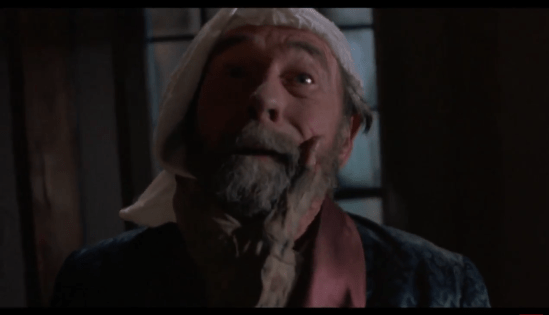
Unearthed Films and MVDVisual proudly present “The Unnamed” as part of their sub-label entitled Unearthed Classics and lands onto 1080p Blu-ray home video. Horror fans will thoroughly enjoy the newly restored 4k transfer presented in widescreen, 1.85:1 aspect ratio and the image quality is remarkably detailed with absent compression artifacts and edging enhancements. Skin tones look natural during outside shots while a blue tint, overlaying a dark backdrop, inside the rickety house isn’t overexposed and makes for quite the grim atmosphere. The English 5.1 Surround Sound DTS-HD, 2.0 PCM, audio track was resonating with a range of ambient sounds; however, an unfortunate mishap of ambient duplication followings about half a second from the initial sound. The dialogue track and soundtrack are no affected by this issue and the dialogue is clear in the forefront, not terrible interfered by the technical boo-boo. The extras are packed with audio commentary with Charles Klausmeyer, Mark Stephenson, Laura Albert, Eben Ham, Camille Calvet, and R. Christopher Biggs. There’s also a video interviews with actors Charles Klausmeyer, Mark Stephenson, Laura Albert, Mark Parra, R. Christopher Biggs, Camille Calvet, and Eben Ham, a vintage audio track, photo gallery, and trailers. The Blu-ray comes in a limited edition slip cover with the beautifully illustrated gothic-esque poster from Tongdee Panumas courtesy of the M. Wright Collection. “The Unnamable” was endangered; a potentially lost classic that quickly went to being out of print as soon as it was released onto DVD in Europe and never actually saw the digital upgrade light of day Stateside from it’s VHS predecessor. Luckily for us fans, Unearthed Films, living up to label moniker, unearths “The Unnamable” from the depths of obsolete format hell, revamping for a new generation of horror fans and re-transfixing fans who once thought Jean-Paul Ouellette’s film would never, ever see a glorious rebirth.
 It's Bloggin Evil!