

Top law enforcement agents, Boon and Novak, achieve special access through steep sacrifice during job assignments and are permitted to tour their upcoming placement in the highly exclusive Death House, the ultimate maximum and multi-level penitentiary home to the nastiest criminals known to society and the deadly threat to mankind in a metaphysical way. Death Houses uses virtual reality to keep inmates stimulated to the point of calm submission as well as drugging the homeless and the unwanted to supply killers with victims upon victims in an their personalized virtual surroundings, but when an outsider uses an EMP to knock out all power within the facility, the cages are open and the ruthless animals are free to overrun, beating to death the guards and staff. Boon and Novak must fight their way to the bottom level that hold the Five Evils, criminals with grotesque supernatural abilities and a wickedly grisly past, where the two agents believe the Evils are their best hope for survial against a Five Evils acolyte named Sieg and his faithful jailhouse followers.

Considered as “The Expandables” of horror, “Death House” had gained almost instant fandom solely from the long-list of horror icons in the cast. Director B. Harrison Smith (“Camp Dread”) re-writes most of Gunnar Hansen’s original “Death House” story produced by Cleopatra Entertainment and Entertainment Factory. Cleopatra Entertainment is more notably a music label that has delved into films the last few years and, in my opinion, haven’t faired positively in the horror genre, but “The Texas Chainsaw Massacre” star fought tooth and nail to try and get his script off the ground, even in the face of death. “Death House” saw release after Hansen’s death, but from interviews with the filmmakers, Smith had almost totally revamped the original treatment, leaving The Evil’s at Hansen’s request if his script was to be entirely cleaned. Shot right in this reviewer’s backyard of Philadelphia, Pennsylvania at the historic Eastern State Penitentiary, the defunct prison is an ideal location as the “Death House” due in part to John Haviland’s separate cell design and gritty appeal that was once of the home of Al Capone, but more of the focus is on the interior than exterior with green scenes and Los Angeles shots constructing the story-lined scenes.

Like aforementioned, “Death House” has been called the “The Expendables” of horror. An immense, if not soaked, cast of horror fan favorites are peppered about around the main characters of Agent Boon and Novak. “Sushi Girl” and “Zombeavers” star Courtney Palm embodies the Agent Boon character with G-man toughness, but finds difficulty leaving that b-horror mentality with shakiness in working climatic scenes. Palm’s also roped into doing an extremely gratuitous shower scene with Cody Longo (“Piranha 3D”) as Agent Novak. Novak’s a hotshot and Longo has the looks and the talent to out perform his character, but Smith’s script doesn’t do justice to either Boon or Novak’s character that blatantly underwhelms their performances with cameo star power and a shoddy narrative. Dee Wallace (“Cujo”), Barbara Crampton {“Re-Animator”), and Kane Hodder (“Jason Goes to Hell”) have prominent roles that are pertinent to the story and are enjoyable to see them in more of a supporting capacity. Andrenne Barbeau {“The Fog”), Sid Haig (“The Devil’s Rejects”), Vernon Wells (“The Road Warrior”), Bill Moseley {“The Devil’s Rejects”), Lloyd Kaufman (Mr. Troma), Michael Berryman (“The Hills Have Eyes”), Tony Todd (“Candyman”), Sean Whalen (“The People Under the Stairs”), Debbie Rochon (“Killer Rack”), Bill Oberst Jr. (“Deadly Revisions”), Felissa Rosa (“Sleepaway Camp”), Danny Trejo (“Machete”), Tiffany Shepis (“Abominable”), Brinke Stevens (“The Slumber Party Massacre”), Camille Keaton (“I Spit On Your Grave”), Gunnar Hansen (“The Texas Chainsaw Massacre), and R.A. Mihailoff (“Leatherface: Texas Chainsaw Massacre”). Whew. Rounding out the remaining cast is Lindsay Harley (“Nightmare Nurse”), Vincent M. Ward (“The Walking Dead”), and Bernhard Forcher.

While the genre star-studded ensemble cast is a wet dream for horror fans, “Death House” fails in numerous filmmaking categories with the first being the most important, the script. Smith’s re-work of Hansen’s original story requires another drastic once-over, or two, as the final result attempts to push, stuff, and cram 100 lbs of multi-subgenre elements into a 10 lb, inflexible bag, cramping the ambitious project with dis-connective storyline tissue braced together with shoddy visual effects, like the two agents free-falling down a bottomless elevator shaft and able to precisely shoot their targets on each level. The overall result of “Death House” just endures an unfinished varnish and seems slapped together with pre-schooler glue and claggy spit. Singular moments surface as diamond specks amongst cubic zirconias, like the Mortal Kombat fatality-esque practical effects, but are too far and in between to muster up an enjoyable film. The Five Evils definitely and desperately needed more presence in the story instead of just flexing the talking heads muscle; well, the only two Evils to say anything at all were Bill Moseley and Vernon Wells. The Five Evils didn’t quite have that oomph to be a force to be dealt with as Gold-described beings who philosophical interpretations on the concept of good and evil.

Cleopatra Entertainment and MVDVisual present B. Harrison Smith’s long-anticipated “Death House” onto DVD home video. The unrated, all-region DVD is presented in a widescreen format that displays some frayed flaws like contrast; there’s way too much inky black in the dark scenes and little-to-no definition in more visible sequences. The compression suffers from blotchy artefacts at times too and lacks hues, which works with the gritty tone inside the Eastern State Penitentiary’s decomposing walls of rubble and decay. Visual effects are glossy with virtually no textures to give detail or, essentially, life amongst the continuous death. Bonus features include multiple interviews with director B. Harrison Smith, Courtney Palm, and more. Also included is a behind-the-scenes feather, a gallery slideshow, and theatrical trailer. Despite being true to the title and highly anticipated since it’s inception into the public market, “Death House” ultimately disappointments as an unfurnished mess enlisted with big names in the horror domain that’ll unfairly sell the film on it’s own, but all-star cameos won’t establish “Death House” as a solidified cult favorite, being unfortunately one of the biggest release flops of 2018.
Tag Archives: nudity
Political Extremist Molds An Evil Spawn! “Trauma” review!

In 1978 Chile, a powerful political extremist exploits the Chilean army to conduct and carrier out the physical and sexual abuse against the people of Chile, including forcing his own son, Juan, to have sex with his tortured mother and executing her right in front of him while in the fornicating act. Juan’s father continues to further the abuse with fear, terror, and misogynistic berates until he’s finally fatally coup. Fast forward to 2011, Juan’s an unstoppable madman as he terrorizes the locals over the years without authoritative regulation and also four female outsiders on holiday for a girls’ weekend. Juan and his son force their way into their residence, tyrannizing, raping, and even killing one of them before leaving his cruel mark in his wake, but with the help of a local officer, the remaining three survivors seeks to make sure Juan, and his equally screwed up family, never harm anyone again. However, Juan is prepared, held up inside a compound subterfuge, well-armed and well-unhinged.

Perhaps based loosely off the atrocities of of former Chilean President Augusto Pinochet in the 1970’s, Artsploitation Films’ distributed “Trauma” goes to the unapologetic extreme, building upon an already unsavory narrative into the bred morbid disposition of the human psyche. Written and directed by “Zombie Dawn’s” Lucio A. Rojas, “Trauma” is a cold, blunt object with a razor sharp bite and has a penchant for the twisted. The Chilean director’s film isn’t the only game in the market of extreme movies, but does manage to create a motive of separation between most with the offending character experiencing traumatic corruption by someone close; in this case, Juan’s father 40-years earlier by oppressing the boy through physical pain and scrambling his son’s mental state by removing any humility, compassion, and reasoning that manufactures the perfect ruthless butcher. Pinochet used his military power to be a lethal strong hand when desired; Rojas spices it up by adding forced incest, rape-after-rape, and implementing a subconscious malevolency.

“Trauma” stars “To Kill A Man’s” Daniel Antivilo as the despicable Juan. Antivilo is patient and soft in his approach to a deranged character that doesn’t display that wild abandonment in psychotics. Juan goes on to slowly terrorize four lovely outsiders from the city in Andrea (Catalina Martin), Camila (Macarena Carrere), Julia (Ximena del Solar of “Perfidy,” another Rojas film), and Magdalena (Dominga Bofill). The four actresses offer up different character perspectives and personality that should divide the dynamic or, at least, complicate it; there’s a strong sense of lesbianism between them, even exhibiting traits in those who don’t identify as such. Antivilo macho savagery pitted against the four stunning, but strong women does create a black and white, stark-producing character placement. Outside that dynamic, one character has no dialogue and, yet, manages to high level physical role that’s barbaric, humiliating, and spacey and that role is inside of Juan’s schizoid son, Mario, is donned by Felipe Rios who has the strung out appearance of a long, drawn out face and muscularly thin. Eduardo Paxeco, Claudio Riveros, and Florencia Heredia round out the cast.

Rojas does a beautiful job in the juxtaposition department, paralleling the bleak, grimy, and yet agreeable life of Juan and his equally as certifiable family next to the full of life and vigor in the unsuspecting women that Rojas’ introduces off with Camila and Julia engaging in a steamy girl-on-girl love making scene that doesn’t leave much to the imagination and, then, slides into their instant road trip the day after. Rojas had built up Juan’s pain and suffering toward being molded into a monster whereas the women fly by the seat of their pants, churning out memorable moments in a flash whereas Juan’s unfortunate course was a slow burn throughout his long, hard life. The parallelism flips from Juan to the women up until the moment their lives intertwine and this is where things get messy with Roja’s script. Between Julia, Camila, Magda, and Andre, three of whom are related, tension builds as Julia plays the flirtatious and brazen field between hooking up with the cousins as stroppy Andrea steams in a passive stew on the sideline. This subplot never goes explored, going uncooked right in the middle of a hot flame where passions and couples’ plights evolve the story. The abrupt presence of Juan puts a cease and desist on any other subplot that ultimate funnels “Trauma” to be a rape-revenge flick with a graphic content.

Artsploitation Films continues to distribute internationally provocative films that always delight as well as disgust (in a good way). With Lucio A. Roja’s 2017 film, “Trauma”, casualties pile high and damage control is non-existent, fitting the Philadelphian-based company’s axiom that presents the film onto a high-definition Blu-ray. With a widescreen, aspect ratio 2.35:1, the image quality is quite good. Details are very promising here and really need to be with the gore. The face explosion and the jaw unhinging deaths are certainly not stodgy as the scene on these moments linger more than most would, soaking up the full effect of the viscous covered chunks out from the face crater by a high caliber handgun is a thing of beauty. The Spanish 5.1 surround sound syncs up well in all aspects from dialogue to ambiance. English subtitles are available and line up well enough though speedy at times. Dialogue is clear and present, Ignacio Redard score is heard, and no signs of any kind of distortions or other issues. Bonus features are limited to just the theatrical trailer. “Trauma” might have vastly skewed the actual events the film is based off of to pen a story, but what a gorgeously gory-filled and exploitively-charged narrative that can be a tell all for the cause and effect of political extremism at it’s worse. Director Lucio A. Rojas puts Chile on the controversial and extreme horror map.
Evil That Shall Not Be Named! “The Unnamable” review!
Miskatonic University students Howard Damon and Randolph Carter investigate the disappearance of a missing friend last seen making good a dare to stay the night in a century-old, dilapidated house, right in the middle of a cemetery and with the caveat of a ghastly, creature legend. In the same instance, two colligate hunks try to fraternize with two freshman women within the dark and gloomy walls that seem to reposition themselves into an unescapable maze. Lurking through the inky corridors, an ancient and horrifying beast, thirsty for blood and hungry for flesh, continues to roam freely in the house, unleashed from it’s confined room a century ago, and hunting the students down one-by-one. Their only hope to get out alive is Howard’s haphazard bravery and Carter’s unrivaled intelligence that aim to rescue survivors and decipher the house’s resident Necronomicon to defeat an evil monster’s night of carnage.

Campy, brazen, and inspired, Jean-Paul Ouellette’s 1988 “The Unnamable” is every bit of an 80’s teen comedy rolled up into a bona fide ball of barbed madness shrouded with heaps of highly anticipated mystery. Unravels like a truly classic H.P Lovecraft story, Ouellette, who also penned the script, shows great patient to give the monster a grand finale revealing that leaves the characters left standing face-to-face with the fear that’s been stalking them. While “The Unnamable” strays away from more of Lovecraft’s prolific Cthulhu literary works, the story is drive by the theme of the unknown that partially, if not all, gives Ouellette motivation to not put the monster on full display. The fact that “The Unnamable” is also gory retells the tales of how horror used to be pure gold back in the Golden Age of the genre despite budget restraints and executive naivety in the audience ratings game.

“The Unnamable” finds their unlikely star for the unassertive character in Howard Damon. Soulcalibur series voice actor, Charles Klausmeyer, lands the role as his sophomore film about 8 years after Vanna White’s “Gypsy Angels.” Klausmeyer’s surefooted unsureness and comical desperation of Howard Damon makes him a likable character, likable enough to be opposite whatever has been locked away from over a century. Damn finds an arrogant cohort in Randolph Carter, a conceited fellow freshman whose a bit of a know-it-all, well versed by Mark Kinsey Stephenson. Stephenson, or rather his character, reminds me of a babyface John Glover (“Gremlins 2” and “Scrooged”). A pair of love switcheroo love interests in Alexandra Durrell, in her sole credited performance, and Laura Albert, who went from nude supporting roles to being one of the top stunt women in Hollywood, fair well as the standoffish and damsel-in-distress opposite the vibrant and lively Damon and Carter. Rounding out the remainder of the cast is Blane Wheatley, Eben Ham, Colin Cox, and Katrin Alexandre who did an impeccable gesticulation performance of the creature.

Ouellette story isn’t all that complex; a group of young students are trapped inside the black heart of a folklore notorious cemetery house. However, the breakneck narrative certainly needed something more extensive to the creature’s confinement and unholy backdrop, warranted to fulfill just what the hell these kids were getting into. The house has been doused with shielding dark magic, a fact barely mentioned until the final moments of the monster’s exposition, unveiled through the pages of the Necronomicon which becomes weaponized by quick study Carter. Spells and passages envelope the monster within the house’s old bones, like a prison cell constructed of two-by-fours, wood panelling, and asphalt shingles. While the story could have opened up more in that regard, the lack of dark mysticism doesn’t uproot an entertaining creature feature strongly braced with gory, character demising allegories, and peppered with misogynistic innuendos and campy skirmishes with the damned.
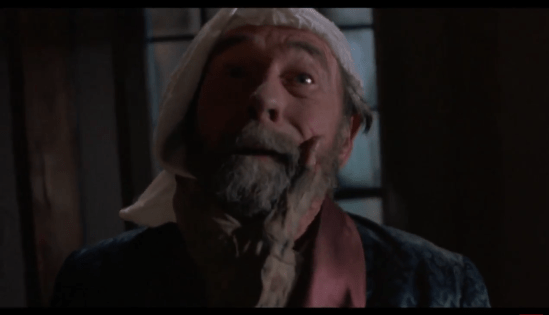
Unearthed Films and MVDVisual proudly present “The Unnamed” as part of their sub-label entitled Unearthed Classics and lands onto 1080p Blu-ray home video. Horror fans will thoroughly enjoy the newly restored 4k transfer presented in widescreen, 1.85:1 aspect ratio and the image quality is remarkably detailed with absent compression artifacts and edging enhancements. Skin tones look natural during outside shots while a blue tint, overlaying a dark backdrop, inside the rickety house isn’t overexposed and makes for quite the grim atmosphere. The English 5.1 Surround Sound DTS-HD, 2.0 PCM, audio track was resonating with a range of ambient sounds; however, an unfortunate mishap of ambient duplication followings about half a second from the initial sound. The dialogue track and soundtrack are no affected by this issue and the dialogue is clear in the forefront, not terrible interfered by the technical boo-boo. The extras are packed with audio commentary with Charles Klausmeyer, Mark Stephenson, Laura Albert, Eben Ham, Camille Calvet, and R. Christopher Biggs. There’s also a video interviews with actors Charles Klausmeyer, Mark Stephenson, Laura Albert, Mark Parra, R. Christopher Biggs, Camille Calvet, and Eben Ham, a vintage audio track, photo gallery, and trailers. The Blu-ray comes in a limited edition slip cover with the beautifully illustrated gothic-esque poster from Tongdee Panumas courtesy of the M. Wright Collection. “The Unnamable” was endangered; a potentially lost classic that quickly went to being out of print as soon as it was released onto DVD in Europe and never actually saw the digital upgrade light of day Stateside from it’s VHS predecessor. Luckily for us fans, Unearthed Films, living up to label moniker, unearths “The Unnamable” from the depths of obsolete format hell, revamping for a new generation of horror fans and re-transfixing fans who once thought Jean-Paul Ouellette’s film would never, ever see a glorious rebirth.
Evil’s Crimes Against Nature Will Not Go Unpunished! “Long Weekend” review!

Peter coerces his begrudging wife, Marcia, to forgo the luxurious hotels and chauffeured holidays for a long weekend of camping on a remote beach in Australia. An enthusiastic Peter packs the jeep with thousands of dollars worth of outdoor gear, including a surf board, a spear gun, and a hunting rifle. Marcia loathes the outdoors, can’t stomach the very thought, and she lets Peter know her distaste of his plan every other second while on holiday. Yet, this trip for them isn’t just a routine getaway, but, instead, a trip to get away from the swinging friction of close and very intimate friends, to rekindle their relationship, and save what little is left at a frayed string. The already awkward and complaint-riddle holiday turns from bad to worse when nature looms a foreboding shadow over the estranged couple, unleashing one ill-fated omen to the next that checks their nonchalant attitude toward nature with eco-radical discipline.

“Long Weekend” is an eco-horror film by “Innocent Prey” director Colin Eggleston. Alfred Hitchcock, perhaps, birthed the horror subgenre with his 1963 film “The Birds” that led to such films as “Day of the Animals” and “Grizzly.” Nearly 15-years later, Eggleston hones in on his inner Hitchcock by expanding the background on why nature turns cold and unsettlingly supernatural like. Working off a powerfully detailed and haunting script by “Razorback’s” Everett De Roche that circles around two characters like a hungry vultures, Eggleston vitalizes De Roche’s script with a paper to screen bleak, unsettling imagery on a monumentally minimalistic scale. “Long Weekend” could be considered a Hitchcockian film, and most likely is, but can stand firmly by itself as an extension on how mother nature can be a bitch when push comes to shove.

Two characters and the wilderness. That’s all “Long Weekend” boils down to on brass tacks, leaving two actors on the line to act off each other and off of the ominous presence that has fully engulfed them on an isolated stretch of beach and shoreside forestry. “The One Angry Shot’s” John Hargreaves tackles the conceited Peter with a full-bodied combination of heedless gusto and desperation that Hargreaves can seamlessly become lost in Peter’s self-worth. The Sydney born actor is paired with an English actress by way of Briony Behets from the 1980 film “Stage Fright,” a film also co-written by Colin Eggleston. Behets’ Marcia epitomizes the stereotypical enigma that men all think is the inner workings of a woman’s brain; Marcia is hot and cold with fleeting moments of passion for Peter, yet ready to kill him in the next scene. Behets converts the baffling intertwinement of Marica’s energy and channels it well into the dynamic that is their failing marriage.

What’s really special about Eggleston and De Roche’s film is the overloading symbolism. From subtle to simple, “Long Weekend” has the money betted on working on an underlying moment-to-moment, scene-to-scene in each act; a method tirelessly schlepped through with many modern features of today. Using non-threatening animals, such as a small possum and a sea cow or dugong, to be part of a menacing force driving the ominous presence across the narrative just sets the feng shui mindset of an unadulterated evil genius. Instead relying heavily on a physical entity, Eggleston heavily coincides creature imagery with the use of audible creature cues, whether a baby-like wail in the distance or the overpowering cacophony of animal growls and sneers, to invoke panic, fear, and paranoia to divide the already fragile pair into an atomic disaster of their undoing. “Long Weekend” will overshoot some viewers as piecing the puzzle together can be a slow and long process, but one aspect is certain, the off-camera animalistic stare has a powerful affect.

Second Sight delivers the ozploitation classic, “Long Weekend,” onto Blu-ray home video for the first time in the UK this November. Unfortunately, a review DVD-R disc was provided for this critique and audio and visuals components will not be covered. Bonus material was included on the review disc with audio commentary with executive product Richard Brennan and Cinematographer Vincent Monton, an Umbrella Entertainment produced panel discussion with film historians Lee Gambin, Alexandra Heller-Nicholas, Emma Westwood, and Sally Christie, Uncut “Not Quite Hollywood” interviews with Briony Behets, Vincent Monton, and Everett De Rocha, an extensive still gallery with an John Hargreaves audio interview, and original theatrical trailer. “Long weekend” is man versus nature at it’s best with sheer, unrivaled terror in a quaint eco-horror thriller package with a powerful message that nature will seek extreme judgement against Mother Earth criminals.
Evil’s Ultimate Climax. “Gorgasm” review!

A low on the totem poll detective receives the chance to get out from behind a paperwork overloaded desk to investigate the gruesome death of a seemingly BDS&M gone array. The case lures the investigator through the muck of the sleazy and sexy underground to where an independent zine lists GORGASM as the ultimate climax. With every lead, GORGASM connects them all and there’s one person, one suspect, on his radar and her name is Tara, the face of GORGASM. Tara’s a psychopathic call girl, aiming to dish out a finitely pleasurable zenith to those who want more than just sex, and the unlikely hero detective embraces the case personally to put a stop to Tara’s gruesome delusional calling before he’s sucked into an inescapable world blended with lustful carnalities and death.
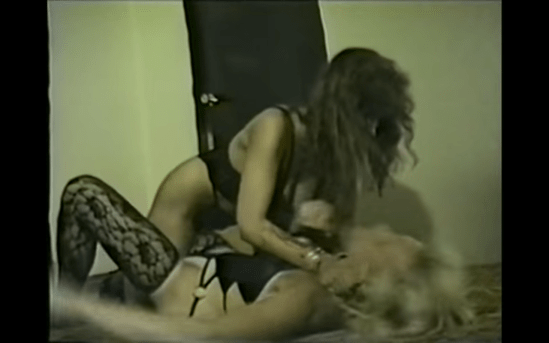
“Gorgasm.” By title alone, “Gorgasm” has already peaked interest and paved for a path of optimism and delight despite the inkling in the back of the mind about the film’s low-budget shlock. In any case, the title comes from the imagination of creator, writer, director of “Dead Silence,” a one Mr. Hugh Gallagher, and is his 1990 sophomore feature that showcase plenty of violence in an ostentatious psychosexual thriller. Gallagher, perhaps, isn’t the first to delve into porn’s mucky and sleazy underworld that’s universally stigma in many cultures, but, and again perhaps, is the first to explore the many facets that porn has to offer and highlights the habituating circumstances porn has to morph into to keep up with customer demand, whether it involves whips, clips, and chains or to be more specific in the realm of fetishes.

Gallagher didn’t manage to make any old, run-of-the-mill low-budget venture, but managed to do so with a professional lead in Rik Billock. The name might sound familiar to horror fanatics. Billock has been a stock regular in George Romero films: “Dawn of the Dead,” “Knightriders,” “Monkey Shines,” and in “The Dark Half.” He also had a small, yet door knocking down roll in Tom Savini’s “Night of the Living Dead.” Billock’s a bright star with an organic singularity amongst a mechanical lineup, popping out like a child’s pop-out book that solidifies his presence. Even his co-lead, introducing an actress only known as Gabriela, a former wrestling-affiliated performer in her first feature film. Gabriela is stunning, beautiful, and well-endowed, perfectly casted to be the personal-placing killer call girl with dark features and though her method is a bit monotoned and monologuing, Gabriela’s looks really do standalone. “Gorgasm” also co-stars Paula Hendricks who puts a real damper into the ebb and flow of being a strict and condescending sergeant to Billock’s character, but the silver lining is that this Hendrick’s sole credited role. Rounding out the cast includes Paula Gallagher, Kevin Patterson, Denis Hellrung, and co-producer Flint Mitchell in a show-stopping slimeball performance as a sleazy magazine owner.

With an extreme and inviting title like “Gorgasm,” there comes a usual, if not blatantly given, perception that blood will flow and guts will be strung and plastered on forefront of the featured scenes, but to an extent, the gore and the blood splatter were surprisingly granular results and doesn’t ultimately champion an autassassinophilia effect. However, don’t be scornfully turned away from Gallagher’s film if “Gorgasm” isn’t locked and loaded with blood drenching entrails and other body fluids and fleshy tissue. Gallagher executes tasty scenes of violence and mortality on a budget with examples being a garage door decapitation and a kill shot to the vagina. There’s also a weed whacker chewing through a pervs face. “Gorgasm,” perhaps, does find space in the gore and shock subgenre pie, even if only a sliver of a piece.

MVDVisual and SRS Cinema release the Draculina Productions film, “Gorgasm,” onto DVD home video and present the film on the original SOV, full-frame format that’s pleasantly held up over the last 28 years. Aliasing is quite common on shot-on-vide, even on Super VHS that director Hugh Gallagher shoots the film, and the coloring has a slight washed look, but considering the VHS monstrosities out in the world today on DVD, “Gorgasm” has no ill-will toward this release. The uncompressed PCM 1.0 mono track has limited depth and range with a consistent static hiss throughout, but generally adequate with clear dialogue upfront. The “bloody” bonus features include a commentary with Hugh Gallagher, behind-the-scenes footage, and trailers. Also, the grisly-gorgeous illustrated cover art by Mike Mez Phillips is exquisitely killer and on point. While director Hugh Gallagher mediocrely went through the nuts and bolts of vehement slasher violence without really thickening already deep pool of gore, the director did manage to fulfill a promising title with meshing sexual deviancy and blood in an entertainingly provocative feature. Rik Billock and Gabriela, whose half naked through more than half the 82 minute runtime, embraces their twisted characters that you’ll love to death!

