Kissing Cousins and a Foreboding EVIL Feline in “Seven Deaths in the Cats Eye” reviewed! (Twilight Time / Blu-ray)


“Seven Deaths in the Cat’s Eye” now available on Limited Edition Blu-ra from Twilight TIme!

Set in the 1970s, the aristocratic McGrieff is on the verge of collapse with financial ruin that’ll cost the once respectable family their castle set in a small Scottish village.  Full of intrigue and ominous mystique, foreboding supernatural superstitions surrounding the McGrieff name, but that doesn’t frighten the young London residing Corringa from visiting her aunt Lady Mary’s castle.  Not before too long, Corringa’s mother, Lady Mary’s sister, mysterious dies in her bed and in the wake of her death more bodies are found with their cut throats all in the presence of the Castle’s roaming domestic feline.  Suspects range from Lady Mary herself in desperation for her sister’s sudden fortune to her unstable, gorilla-saving son James to also her in-house doctor lover who’s also sleeping with a live-in promiscuous woman intended for the young James.   Melodrama runs rampant and so does a killer who cuts down McGrieff Castle residents one-by-one in the dark corridors and gothic-laden rooms.

The Gothic-“Clue” of the 1970’s, “Seven Deaths in the Cat’s Eye” is the wildly entertaining Italian-produced giallo horror from the “Castle of Blood” and “The Long Hair of Death” director Antonio Margheriti credited under his more English-sounding pseudonym of Anthony Dawson.  Otherwise known with more animal ferocity as “Cat’s Murdering Eye,” as well as simply “Corringa, or in the native tongue as “La morte negli occhi del gatto, this mad family murder-mystery thriller is speculatively based off a novel by Peter Bryan, an extremely English sounding author whose original novel has yet to be revealed as the adapted base for Margheriti’s film or if a book even ever actually existed on what is more than likely, in my opinion, based off an obscure Italian author’s oral narrative or short story since the country at that time had laxed or nonexistent copyright laws – a method that produced a mass amount of unauthorized piggyback sequels for quick cash in on the popularity.  Either way, “Seven Deaths in the Cat’s Eye” is a thrilling, uncontained, and verbose black letter giallo co-written by Margheriti and Giovanni Simonelli (The Crimes of the Black Cat), produced by Luigi Nannerini (“A Cat in the Brain”), and is filmed in Italy under Capitole Films who appealed to westernized audiences with low-budget popular genre films at their peaks. 

At the heart of the story is Corringa, a progressive and modern Londoner travelling to join her mother and aunt at Castle McGrieff a few days earlier than expected after being kicked out for sneaking out on late nights from her all-girl Catholic boarding school and consorting with boys.  The “Dark Places’” English actress Jane Birkin embodies Corringa’s free-loving and innocent spirit becoming the white sheep amongst the Castle’s broody and plotting inhabitants.  Corringa is thrusted into the happenstance heroine of unravelling a mystery that causes her to freak out upon every discovery whether be the gruesome and distressing visual she walks into to the mere mention of someone’s throat being sliced open that sends her running and screaming into the arms of her cousin James, played confidently cool with a hint of madness in a red herring role by American actor, Hiram Keller.  The “Smile Before Death” actor had a small stint working in the Golden Age of Italian cinema with “Seven Death’s in the Cat’s Eye” being one of those projects, but his role of James is an interesting one as the Lord of the Castle who is considered mad, uninterested in either women or continuing the family lineage, and keeps a former circus gorilla caged up in his room.  One other at a loss and gross side of James, and also of Corringa, is their incestuous affair.  Yes, that’s right, the first cousins get it on like Donkey Kong as they share the bedsheets whilst embroidered in another arcana that’s more in the life and death taboo category.  Yet, all the characters are essentially in some wanton fashioned relationship with each other.  While cozying up to the Lady of the Castle, French actress Françoise Christophe (“Fantômas”) in order to gain favor within lordliness, physician Dr. Franz (Anton Diffring, “The Man Who Could Cheat Death”) also porks the “French Tutor” Suzanne on the downlow for some lust and relaxation.  German actress Doris Kuntsmann plays nomadically alluring to the dark-haired red herring outlier who is hired off the streets from her solicitating sex position by Lady Mary and Dr. Franz to be James’ break from his internal shell, bedfellow companion.  Meanwhile, the promiscuous Suzanna tries to sack up with Corringa in this full house of varied sexual appetites.  The ensemble cast continues with Dana Ghia (“My Dear Killer”), Serge Gainsbourg, Luciano Pigozzi, Venantino Venantini, Konrad Georg, and Bianca Doria. 

With an international cast, “Seven Deaths in the Cat’s Eye” enlists heterogeneous talent to continuously keep one on their toes surrounding every dead body that winds up throat mangled or moved from the original death stroke spot and Margheriti certainly has a firm grip on our attention between the polyamorous and dissolute sexual anarchy and the tension toned suspiciousness that ceaselessly keeps not only the characters on edge of each other but also rattles audiences anxiously squeezing their pressurized minds wrapped tightly around a castle-sized amount of distrust and suspects. “Seven Deaths of the Cat’s Eye” evokes the mad family subgenre with Margheriti’s family contending to be one of the most psychosexually and depraved group of backbiters and backstabbers of its time. Margheriti and Simonelli’s story is sensationally complex without being terribly complicated by beginning with the death of an unknown man where rats gnaw and eat away his decaying flesh. From then on, the narrative works ever so hard to purposefully not touch upon or identifying the mystery man’s demise until the bitter encounter end with a revealing finale exposure of a shocking killer that speaks volumes on the filmmakers’ intrinsic misdirection, a machination that keeps characters endlessly on the fence with their motives, and a conversation that is indecorous in a gothic setting.

If you’re looking for a different kind of giallo, “Seven Deaths in the Cat’s Eye” is that atypical wild card and now the Antonio Margheriti 1973 film has been released onto a limited-edition Blu-ray from Twilight Time and distributed by MVD Visual. The unrated, region A Blu-ray runs 95 minutes long in a 1080p high-definition resolution, presented in a widescreen 2.35:1 aspect ratio. I wouldn’t say the image is a complete polished look, but the transfer restoration from Rewind Film and the Screen Archives Entertainment has excellent detail surrounding the textural complications of the cast, interiors, and exterior settings, especially the graveyard. There are minor instances of banding around the skin in low lighting and the illuminating contrasts is rather low, leaving quite a few frames in the dark so to say. Although an Italian production, English is the language spoken and amongst an international cast, dubbing over certain performances was more than likely done, but the overall dialogue track didn’t match precisely the image in about a quarter of a second delay on the English LPCM 2.0 stereo track which also very muffled like being underwater. However, the “Cannibal Holocaust” composer Riz Ortolani has a score of majestically inspirational proportions as far as horror soundtracks go with a tingling guitar riff that sits heavy in the pit of your stomach as the master of orchestration compositions brings this feature to ahead with this arrangement. The Italian LPCM 2.0 is a more obvious lips out of synch dub but offers an equally robust Ortolani soundtrack. While there are no bonus features on the release, the Blu-ray package itself comes with a 11-page color booklet with images and an essay by author Mike Finnegan along with a reversible Blu-ray cover art containing images from the film and a snazzy disc cover art designed by Twilight Time. Much deserved and sorely underrated, “Seven Deaths in the Cat’s Eye” is back on the prowl with a new limited-edition release to sink your teeth into.

“Seven Deaths in the Cat’s Eye” now available on Limited Edition Blu-ra from Twilight TIme!

Classy Brothel Girls Bring Dirty EVIL Secrets to “Madame Claude” reviewed! (Cult Epics / Blu-ray)

A high end Paris brothel ran by the influential Madame Claude sends the most beautiful and sophistical women to wealthy and powerful dignitaries all over the world to satisfy their most sexual desires.  Her lucrative business becomes a governmental target seeking to collect back taxes on the illicit business.  However, the French government is the least of her worries when a playboy-aspiring rake and amateur photographer snaps photos of Madame Claude’s clients in compromising situations that can be ruinous to their status.  The CIA becomes involved when unscrupulous business dealings involving an American and Japanese companies connect to Madame Claude and her potentially persuasive young women after rumored photographs put the Madame Claude in the middle.  Two governments, big businesses, a jet setting brothel, wealthy socialites and a nosy photographer become involved in lies, secrets, and the potential for murder.

Part biography, part fiction, “Madame Claude,” also known as “The French Girl,” is the 1977 released erotic and political thriller based off the real Madame Claude, Fernande Grudet, as her life of prostitution management and scrutiny unfolded before the public eyes in the mid 1970’s.  Erotically and elegantly sexy with gorgeous women groomed into lust and ensnared into the lion’s den of exchanging powers, “Madame Claude” became the third film from the immensely successful erotic French director, Just Jaeckin, following 1974’s “Emmanuelle” and 1975’s “The Story of O.”  Jaeckin, pressured by his financiers to continue his success in the highly sought eroticism, returns to the randy genre, but this time with a story to his liking, one that is embroiled in the background of a bribery scandal involving aerospace company, Lockheed, at the heart of it. From a script by crime-action writer André G. Brunelin, based off the book of memories of Madame Claude by Jacques Quiorez, Jaeckin splices visual elements of each story together to form not only an arousing sexual lamination but also a cloak-and-dagger tenser of a film. Shot primarily in Paris, with minor shoots in the Bahamas and Washington, D.C., especially the scenes on the faux White House, “Madame Claude” is a production of Orphée Arts of Paris with Claire Duval on as executive producer.

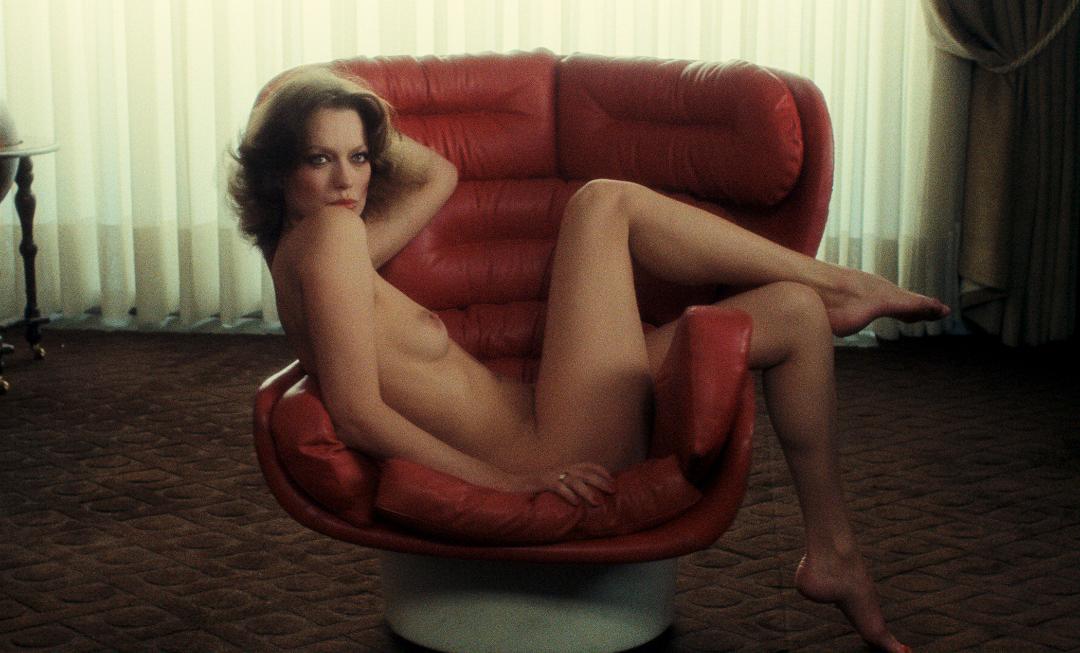
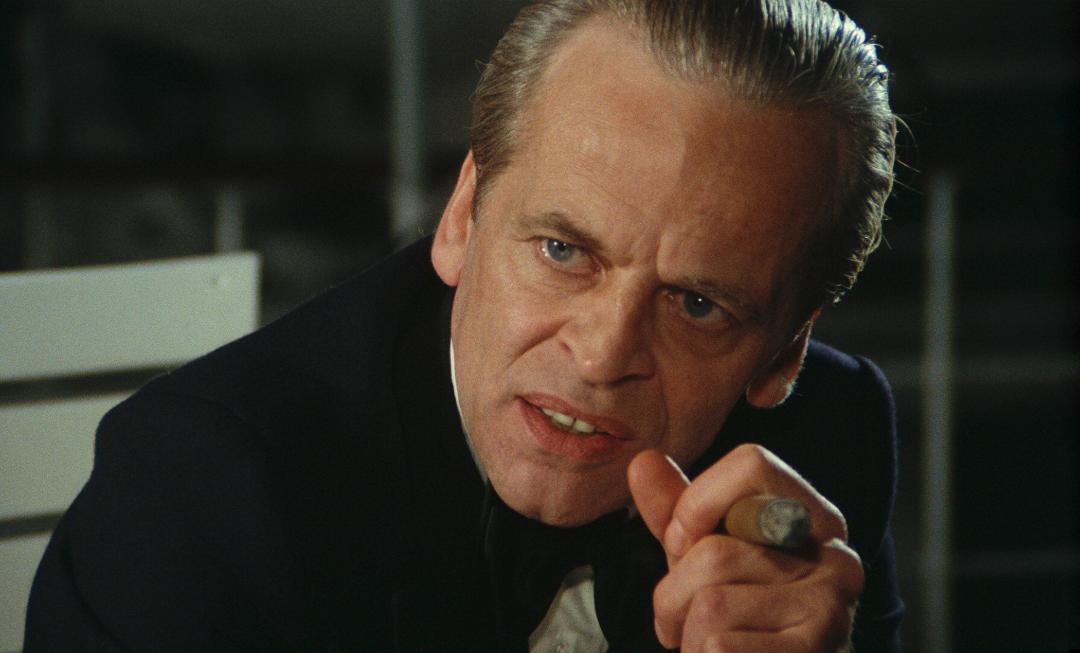
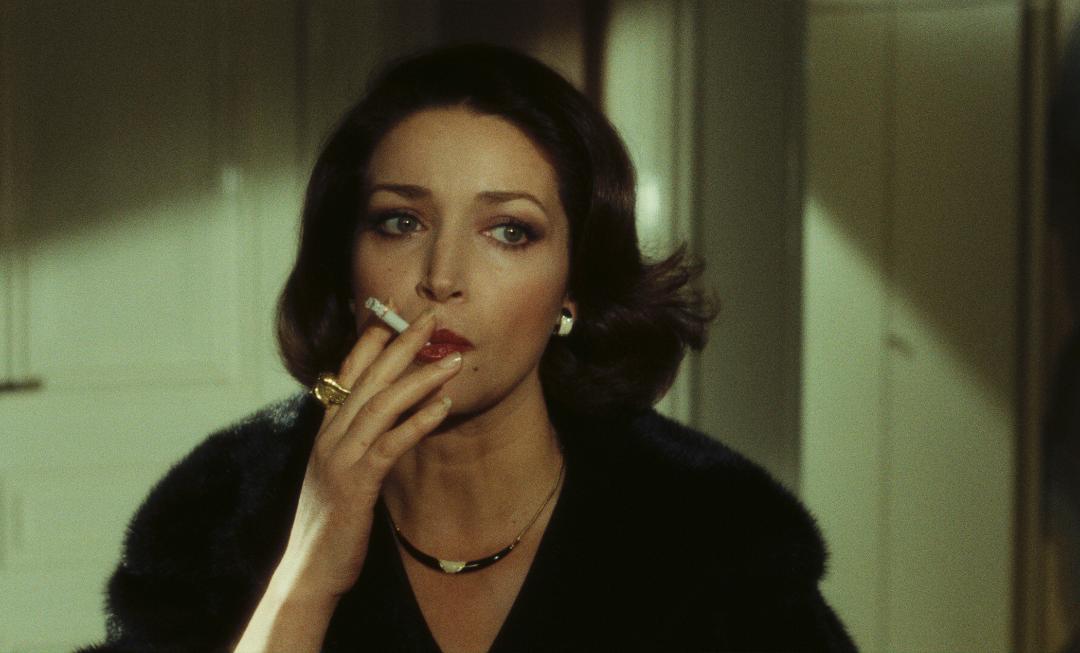
While the titular character is the obvious centerpiece, Jaeckin mingles the characters around each other in a game of espionage chess toward the endgame of checkmate. Keystone to everyone’s problems is Madame Claude, played by renowned French actress and early onscreen sex object, Françoise Fabian, who previously had roles in the paranormal pubescent horror, “Expulsion of the Devil,” a more comedy-friendly brothel film, “Holiday Hookers,” and among many other films predating 1977, but not until later in Fabian’s career did show rocket to success, playing older, more aligned, women that strongly championed feminism, such as portraying “Madame Claude” who used sex as a means to gain control and power of men, and pushed it to the brink of the era’s cinematic limits. “Horsehead’s’ Murray Head plays the photographer schmo, David Evans, making Madame Claude’s life complicated. An about town ladies man, Evans goes to each of Claude’s girls one-by-one and, for some reason or another, they invite the handsomely charming, but brutish, amateur porn photographer into their bedrooms, sleeping his way into blackmail scheme that will bring down the most powerful brothel head in all of Paris while also lining his pocket with not only money but power among the socialites who treat him like the village idiot. Head’s nails down the fast-and-loose aspect of Evan’s personality that treats his stratagem like a game he’s already won, but when the government agencies come knocking on doors, Head about faces Evan’s waggish incompetence to a frightened man looking around every corner for danger. It’s wonderful to see Head interact with Klaus Kinski (“Nosferatu the Vampire”) and Marc Michel as a ridiculed subordinate in an examination of social status as Kinski and Michel flaunt expensive taste and lavish orgies in lieu of decency, but it’s Murray Head, playing the fool with cemented proof that would put all them of into shame, as the aspirer to their life of luxuries. The beautiful Dayle Haddon (“Cyborg”), Vibeke Knudsen-Bergeron (“Spermula”), and Ylva Setterborg stun in just a handful of the very elegant, and very naked, women acting as Madame Claude’s international bound employees. Other cast of characters in “Madame Claude’s” game of lies and spies include Robert Webber (“Death Steps in the Dark”), Jean Gaven (“The Story of O”), François Perrot, André Falcon, and Maurice Renot.

Following his films “Emmanuelle” and “The Story of O,” Jaeckin’s “Madame Claude” strays into an atypical kind of formulaic eroticism downplaying the sexual excursions and discoveries for a more typical crime drama affair. Jaeckin’s directorial abilities can take you on an exotic tour around the world and onto the fleshy planes of some of the most gorgeous and provocative women to ever grace the screen. Yet, “Madame Claude” trims substantially the skin with a more precise execution to be more of an oil lubricating the machine rather than the gear that actually operates the mechanism to entail sex as a misused tool for motivation and bribery. These scenes of fleeting eroticism outright shine Just Jaeckin’s proclivities with mirrored reflections and becoming lost in the entanglement of sexually enflamed bodies and these scenes outright shine Jaeckin’s intent on delivering a corkscrew crime drama with double-dealings, wiretapping, and counterintelligence gathering as what unfolds isn’t clearly delineated between Madame Claude, David Evans, the French and U.S. Governments and the Lockheed scandal that actually becomes sidetracked at times by the infiltrated sex-training of Madame Claude business as the brothel head has to train an alternative misfit new girl and send her to the Bahamas work trip shortly after a quick one-night-stand initiation with one of the Madame’s trusted former beaus. We wholeheartedly become more intrigued and fascinated with Madame Claude’s feminist principles, recruiting subjugated women to use their sexuality to dominate and become wealthy in the process. In more than one scene, Madame Claude flaunts self-admiration in transforming star-crossed girls into young women fortune bound with their promiscuous ways. Madame Claude’s murky backstory caresses her complexities of anti-man without detail delving into the turning point catalyst that made her become who she became to be, an affluent Madame, other than a seemingly emotionally and controllably invalidating romantic experience with a long time friend and business companion, Pierre (Maurice Renot).

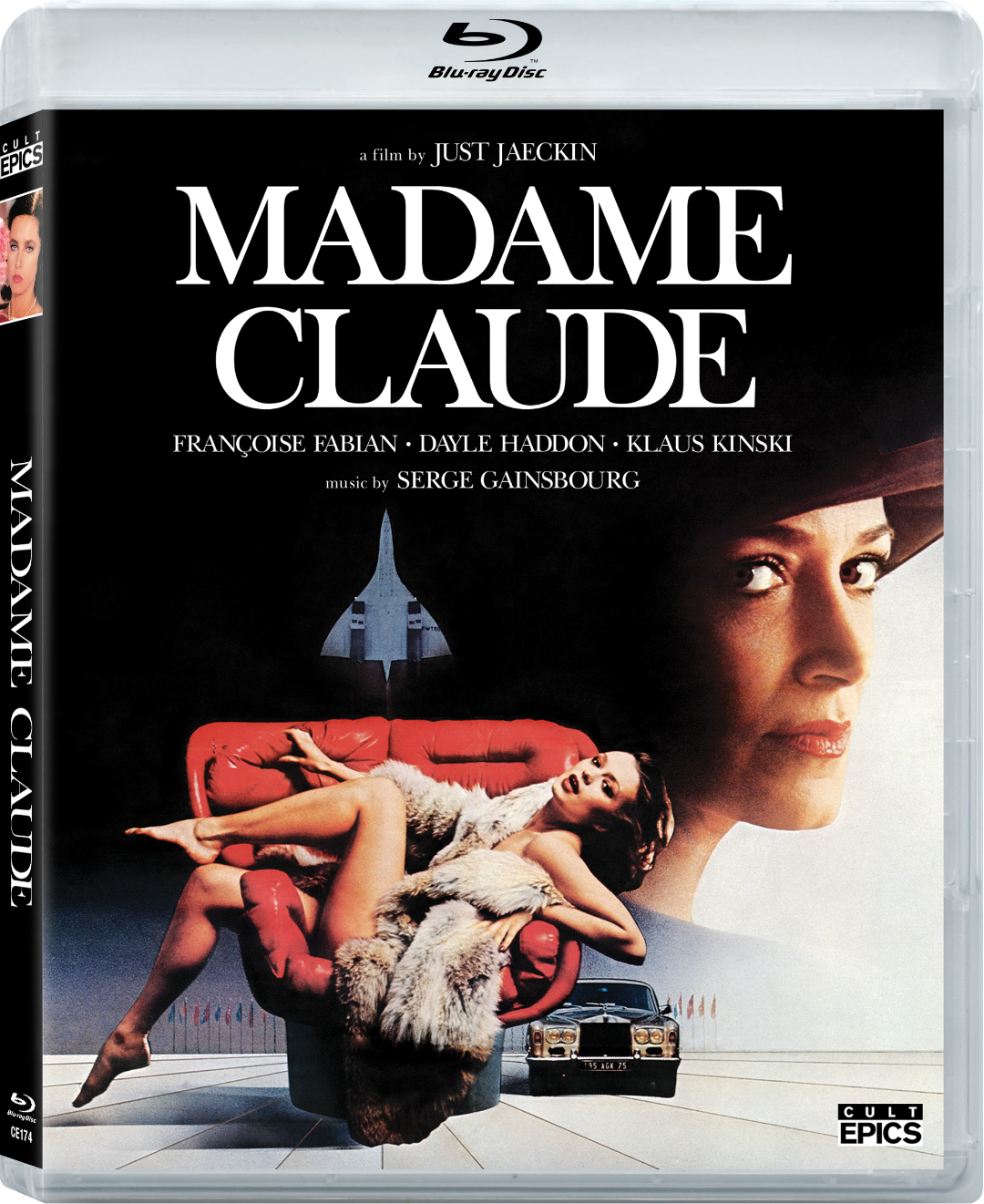
Cult Epics sustains another forgotten classic into a celebrated Blu-ray release with a new 4K HD transfer of “Madame Claude” from the original 35mm negative, supervised by the original cinematographer, Robert Fraisse. Housed on a BD50, the region free release maintains the impeccable coloring under Fraisse’s soft glow with no cropping or undue enhances that tries to put out fire with gasoline and, aside from a discolored yellow-greenish, translucent stripe, perhaps a loose film roll, during the opening scene, the image quality is clean and pleasing in it’s natural 35mm grain. The English and French language audio tracks come with three options: LPCM 2.0 mono, DTS-HD Master Audio 2.0 mono, and a Dolby Digital 2.0 Stereo. The DTS-HD Master Audio had the highest marks, slightly topping Dolby Digital stereo with a little more gusto in the pipes. Audible dialogue is clean and forefront, but the engineered dubbing laid over Murray Head and, even, the self-dubbing of Dayle Haddon can be off-putting at times when actors’ voices seem to not be sharing the same vocal space with others on screen. French composer Serge Gainsbourg’s lounge, yé-yé score tuned into that erotic soufflé of light and airy pop music that can be often dreamy with singsongy female vocals, complimenting the softer, sexier side of Jaeckin’s film while also playing into period melodies of the 1970’s. Cult Epics always has down right with resurrecting obscure erotica for not only quality sake but also to arm the hell out of the releases with bonus material. Included with “Madame Claude” is an audio commentary by Jeremy Richey (author of the upcoming book entitled Sylvia Kristel: from Emmanuelle to Chabrol), a high definition, Nico B. produced interview with director Just Jaeckin from 2020, the vintage French theatrical trailer, a promotional photo gallery, and Cult Epics previews. Not the most sensual film shot by the renowned maestro of venereal visuals, Just Jaeckin explores his versatility by acclimatizing familiarity with new horizons surrounding brothel delights with shadow games and the new 4K Blu-ray from Cult Epics is the one, and only, way to experience it all in “Madame Claude.”

Cult Epic’s “Madame Claude” on Blu-ray. Available at Amazon – click the poster!