Before Careful What Hotel You Book Online. There Just Might be an Ancient EVIL Lurking in the Basement! “The Ghosts of Monday” reviewed! (Cleopatra Entertainment / Blu-ray)

 “The Ghosts of Monday” is now on Blu-ray Home Video!  Click to Cover to Purchase!

A small film crew of ghost hunters travel to the Grand Hotel Gula, a magnificent resort that accommodated tourists from all over the world, to document the hotel’s horrible past on a rare 53rd Monday of a year when the hotel befell into notorious tragedy as guests attending a party were poisoned and the three owners had committed suicide soon after.   Eric, the director of the show, is on his last leg to make the show a success as he becomes pressured by local benefactors and even the show’s host personality, Bruce.  At the request of Bruce, Eric brings his wife Christine who Bruce raised as a child.  From day one, the empty stunning foyer and luxurious accommodates pale against the ambient creepiness of the dark corridors and basements and the ominous sounds that lurk from within the shadows.  When the shooting commences into an investigation, the unsuspecting filmmakers find themselves in an ill-boding situation with an ancient evil that has been kept hidden away from the world for eons.
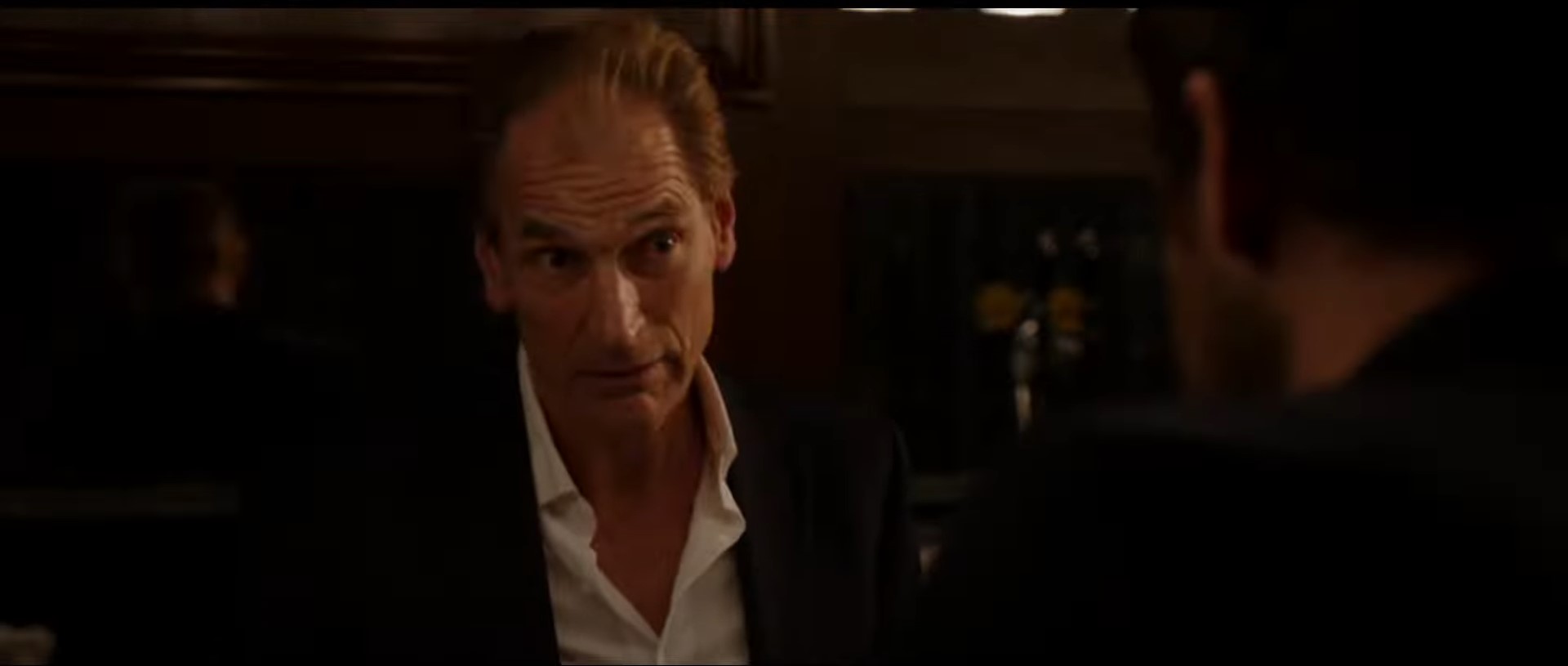
I want to prelude this review by saying that my thoughts are with Julian Sands family and if there is any hope left to grasp onto, we want sincerely to yearn for the outcome of Julian Sands disappearance in the hiking region of Mount Baldy, California to be a positive one and see the actor, the husband, the father of three alive and well.  As an entertainer, Sands gave us a malevolent sorcerer in the “Warlock” trilogy and providing us with notable performances in David Lynch’s “Naked Lunch” and the fear of spiders-inducing “Arachnophobia.”  Since the turn of the century, Sands has more-or-less fell out of the limelight with sustaining his presence mostly on direct-to-video releases and appearances on TV series.  The British actor’s latest low-budget horror “The Ghosts of Monday” is a film helmed by Italian director Francesco Cinquemani on the little-known getaway island of Cyprus, a country located in the Mediterranean Sea.  Cinquemani, who typically directs his own scripts, co-writes the film with Andy Edwards (“Zombie Spring Breakers,” “Midnight Peepshow”), Mark Thompson-Ashworth (“POE 4:  The Black Cat”), and Barry Keating (Killer Mermaid,” “Nightworld: Door of Hell”).  “The Ghosts of Monday” appears to be a blend of region myth and cultural belief pulled locally and from the stories of Greeks Gods into one abandoned hotel horror full of cult sacrifice and betrayal, produced by the “S.O.S.:  Survive or Sacrifice” producing team of Loris Curci (“The Quantum Devil”), Marianna Rosset, and Vitaly Rosset under the Cyprus production company, Altadium Group.

Julian Sands might not be the principal lead of the story but is a major player in what culminates into an ambuscade of doomsday deliverance at the expense of others.  As the documentary’s host and a Cyprus local, Sands plays the eccentric, often frisky, heavy drinker Bruce who has been a father, or the adopted father-figure as it’s not entirely clear, to Sofia (Marianna Rosset, “S.O.S.:  Survive or Sacrifice”).  Christine is distant and disordered returning to her Cyprus homeland with her husband Eric, the director, played by “The Turning’s” Mark Huberman.  Almost seemingly estranged from each other, Eric and Sofia display some noticeable pensive and tension-riddled issues between them that the story never fully fleshes out for the audience.  Christine is under medication for a sleep disorder, Eric’s feeling the pressure from powerful producers, and none of that external strain has defined or even as much delineated itself in full in their aloof relationship that has glimmers of hope and smiles as the wall between them is more up than it is down despite Eric’s constant vigil over her.  Performances from Rosset and Huberman meet the need of concern, desperation, and pressure forced upon them more from in the outside than in, especially in Huberman with a slightly better angle on his creative-driven, project-lead sudden derailed from his narrow focus to deliver a quality product as his career careens out of control and that brings out his rougher edge we see in the latter half of the story.  In comparison, the more iconic and recognizable figure, Julian Sands, doesn’t land his role well in what could be seen as if his performance landing gear only had one wheel down before touching pavement but was able to jerry-rig a not-big-enough wheel to get him safely through.   “The Ghost of Monday” has some mysteriously odd and menacing individuals in hotel owner Frank (Anthony Skordi, “Carnal Sins”), his wife Rosemary (Maria Ioannou, “Waiting Room”), and the producer couple Dom (Loris Curci), and Pat (Joanna Fyllidou, “Girls After Dark”) as hovers, prowlers, and the overall conventional creeps in the corner, watching you.  On the other side of the coin, you have a film crew who are more or less victim fodder for the evil powers to be with Anna (Kristina Godunova) and suspected lesbian lovers in sound designer Christine (Elva Trill, “Jurassic World:  Dominion) and cinematographer Jennifer (Flavia Watson) because A/V is just another acronym for LGTBQ+.  With the exception of Frank and Rosemary’s background on why they bought the forsaken hotel, none of the other characters constitute a piece of the pie as they are thrown into the mix, sprinkled with tidbits of intrigue, before their dispatched into the feast or famine categories.
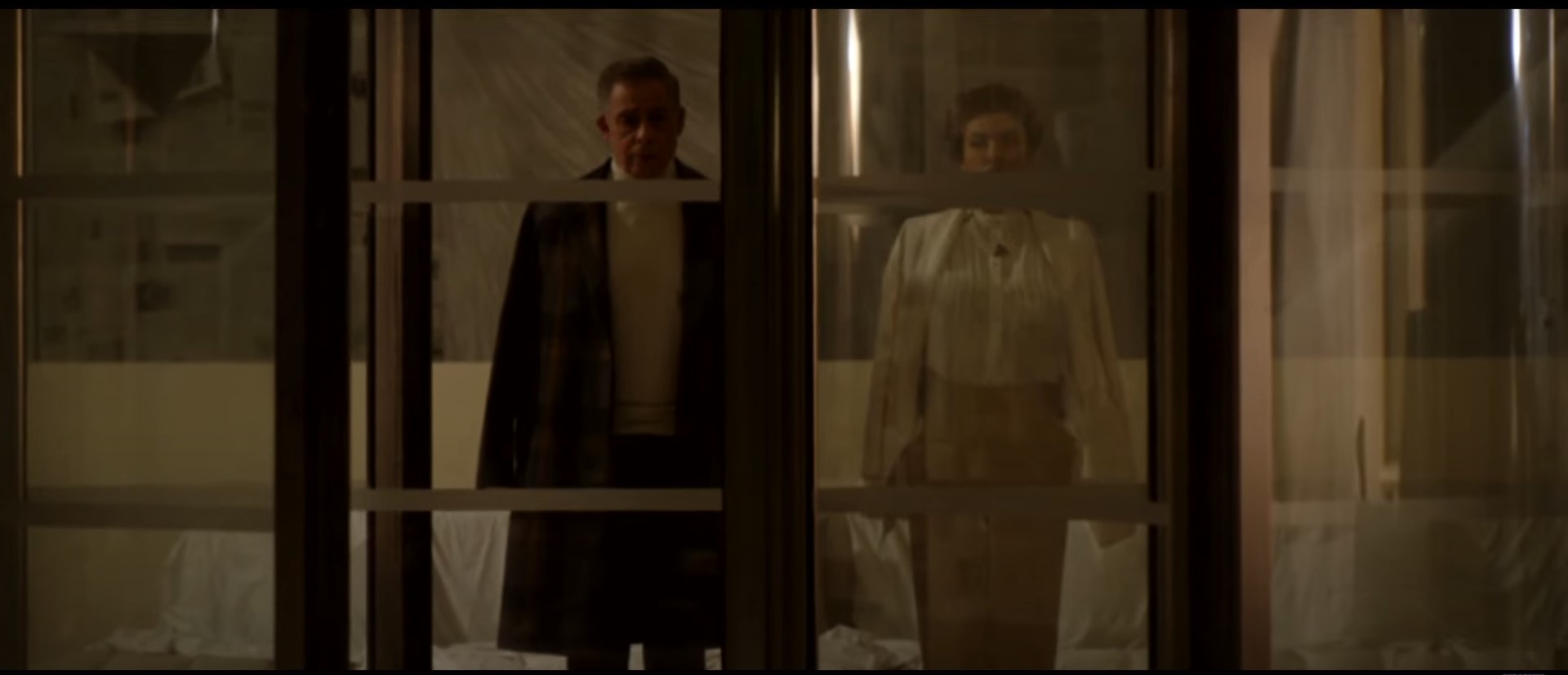
We have ghosts in the title. There are cult members, sometimes shrouded in obscuring clothing, sometimes just lingering exposed outright. We have silent but deadly twin girls with kitchen knives. There is also a slithering creature lurking in the basement. “The Ghost of Monday” is a variety show of vile villains with very little coherence to bring the elements together, but what is clear is a mythical being at the center of the surrounding maelstrom that’s quickly closing in on the protagonists. With the script penned by a cohort of writers experienced in resort massacres and killer aquatic creatures, all director Cinquemani has to accomplish is the effectuation of ideas, but what results is haphazard derision from what feels like “Ghostship” in a hotel and looks like “The Shinning” without the isolating madness all in the confines of a very shaky and marred cinematography. The core of the story is inadvertently lost amongst the competition of where audiences should retain their attention which is a shame because at the core is a deeper, broader, and more mythically rich in Grecian horror with a gorgon immortal that’s equated as the devil itself and linked to life’s destruction if not sacrificed a corporeal shell.  Viewers will be treated to only a glimpse of that circling terror during the climatic end and, more than likely, budgetary reasons ground the story’s larger-than-life concept with only a mixed bag clash of content leading up to the end.
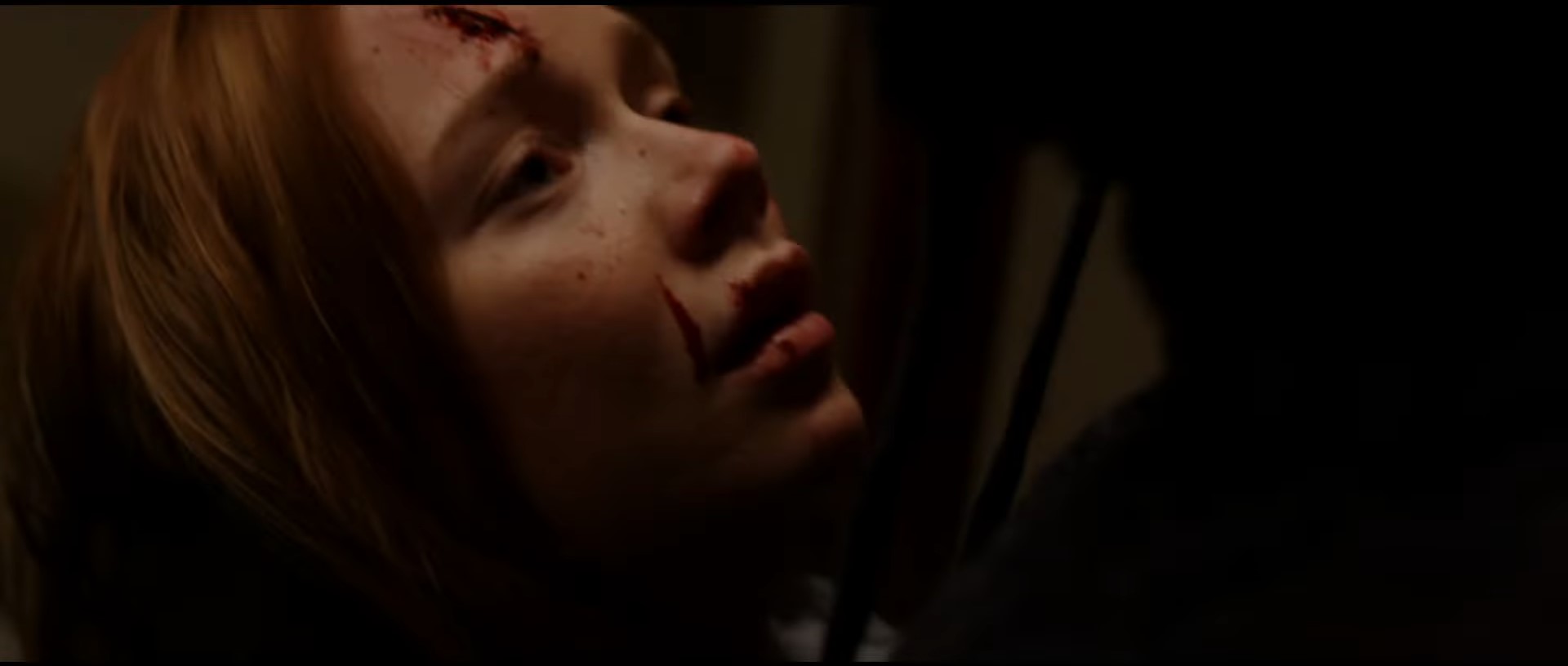
Plugged as Cyprus’s first native horror production, “The Ghosts of Monday” arrives onto a Blu-ray home video release from the Cleopatra Entertainment, film division of Cleopatra Records, and Jinga Films with MVD Visual distributing.  The featured release is presented in a widescreen 2.35:1 aspect ratio, shot on what IMDB has listed as the Sony CineAlta Vince with a Zeiss Supreme Prime Lens.  The AVC encoded Blu-ray retains a quite a bit of compression issues throughout the entire digitally recorded package as video ghosting is the biggest image culprit.  I’m sure that type of ghost was not what “The Ghosts of Monday” were referring to in the title.  Aliasing, banding, and small instances of blocking also appear occasionally and in conjunction with the ghosting which makes this transferred format nearly impossible to watch with hardly any detail in what should be a high-definition release that renders closer to 480 or 720p as the video decodes at a low 22 to 23Mbps average.  The Blu-ray has two audio options, an English 5.1 Dolby Digital and a LPCM Stereo 2.0. Though both outputs render nearly identical because of the lack of explosions or an extensive ambient track, the surround sound mix offers a better side to the A/V attributes with a barren-disturbance sound design and a solid score that keeps the concerned glued to the television sets, waiting for something spooky to pop out from behind. Dialogue doesn’t perceive with any issues with clear and clean conversation, as expected with most digital recordings, and is greatly centered and balanced without sounding echoey and out of depth’s scope. The bonus features are scantily applied with only an image slideshow and feature trailer, plus trailers from other Cleopatra Entertainment productions, such as “The Long Dark Trail,” “Frost,” “A Taste of Blood,” “Baphomet,” “Scavenger,” “The Hex,” and “Skin Walker.” The physical attributes of the release come with a traditional Blu-ray snapper cast with latch and cover art, that’s slightly misleading, of a glowing apparition. The region free release has a runtime of 78 minutes and is unrated. “The Ghosts of Monday” doesn’t buck the trend for Cleopatra Entertainment’s string of C-grade horror but is an unusual, new venture in the sense of strictly being a horror story without an eclectic soundtrack of signed artists to carry it through to the end.

 “The Ghosts of Monday” is now on Blu-ray Home Video!  Click to Cover to Purchase!

Forcing Conformity on EVIL is a Violent Cause. “Murder in a Blue World” reviewed! (Cauldron Films / Blu-ray)

“Murder in a Blue World” now available on Blu-ray!  Purchase a Copy Here at Amazon.com!

Nurse Ana Vernia lives in an authoritarian, dystopian world where she just received a commendation for her work, but beneath the archetype of a scrutinizing society seeking to acculturate deviants by way of involuntary electroshock treatments, Ana moonlights in her own violent behavior as an act of mercy. Under the pretense of disguises, Ana seduces men aberrant to the social norms, returns them to her luxurious mansion, sleeps with them, and to then only murder them with precision before they can be subjected to imperious judgement for being different. All the while, societal dissentient David, an exiled member of a brutal gang, witnesses Ana’s exploits and infiltrates her home, her life, to garner incriminating evidence in order to blackmail her for money, but when David is tracked down for his former gang and beaten to near death, he comes ironically under the care of nurse Ana who plans to fix David before his fate before the electroshock treatments.

Get ready to dial high on voltage on the social commentary scale, “Murder in the Blue World” is a fascinating, dystopian look at social disorder. Heavily influenced in more ways than one by Stanley Kubrick’s “A Clockwork Orange,” the Eloy de la Iglesia 1973 picture was once entitled “Clockwork Terror” in the U.S. to ride the lucrative coattails of Kubrick’s symphony to violence. Also known in other parts of the world as “To Love, Perhaps to Die,” “Satansbrut” (“Satan’s Fiend”), and “La clinique des horreurs” (“The Clinic of Horrors”), Iglesia’s original penned script and title actually “Una gota de sangre para morir amando” (“A Drop of Blood to Die Loving”), co-written with José Luis Garci (“El Teroso”), Antonio Artero (“El tesoro del capitán Tornado”), George Lebourg, and Antonio Fos (“Panic Beats”). The Spanish film goes internationally by many monikers but has one objective and that is to counter the dictation of free-thinking individuals with violence. “Murder in a Blue World” is produced by José Frade under his self-titled production company, José Frade Producciones Cinematográficas S.A.

“Murder in a Blue World” is so much so in the Stanley Kubrick wake, the film stars Sue Lyon who played the titular character in Kubrick’s “Lolita.”  More than a decade later, the “End of the World” and “The Astral Factor” actress enters another emotionally lacerating role of a woman, a nurse, sworn to do no harm who sees that a quick euthanization is the only possible mercy she can offer to spare societal downcast souls from a fate far worse than death in a cold and cruel condemnatory world.  Lyon’s excellent in curating her different disguises and looks, taking on a variety of personas with subtle mannerisms despite how comical or implausible they may appear on screen, such as the idea of being an old, gray-haired woman.  Lyon is fair and small in stature compared to her male counterparts but commands the screen with her confident approach to Ana’s advantageous beauty and eroticism that can turn a gay man straight apparently.  Former gang member David shares her ideology to an extent, to the extent of capitalizing off her nightly murder for mercy escapades in order to survive on the street alone.  Christopher Mitchum, son of the late Golden Age of Cinema actor Robert Mitchum (“El Dorado,” “The Longest Day,” “Scrooged”), plays the nihilistic gangbanger with aversion to any or all rules that tell him how to think.  Mitchum’s impressive motorbike skills are utilized for an impressive chase sequence that incorporates ramp jumps and car crashes at a high speed velocity, a talent Mitchum and film producers utilized often in his other credits, such as “Sumertime Killer” and “Big Jake.”  Lyon and Mitchum don’t have much screen time until later in the story but their interactions are playful, flirtatious almost, but in a predator-prey kind of way and we’re not really sure which-is-which in that shifty relationship.   French actor Jean Sorel (“A Lizard in a Woman’s Skin”) rounds out the three-prong principal characters as a diehard representative of the authoritarian body and a potential love interest for Ana.  Playing Victor Sender, a neurologist experimenting on the criminally insane with electroshock therapy and working at the same hospital as nurse Ana, Sorel is the epitome of the calculating stability and clean-cut coldness of the ruling class that’s doesn’t see what they’re doing to be a unjust, cruel, or even a problem at all. “Murder in a Blue World” rounds out the cast with Ramón Pons (“Scarab”), Charly Bravo (“The Cannibal Man”), Alfredo Alba, Antonia del Rio, Domingo Codesido Ascanio, and Fernando Hilbeck (“The Living Dead at Manchester Morgue”).

On the surface, director Eloy de la Iglesia carves a rib right out of Stanley Kubrick’s “A Clockwork Orange” with themes of exquisite, unprovoked violence sparked by the very basis of rebellion against authority. Not to also forget to mention the elaborately dressed gang of four, the electroshock treatment that aims to cure the criminal cerebrum, and the dystopian, futuristic guild with hints of fascism. “Murder in a Blue World” is a mixture that’s two-third post-Kubrick and one-third part pre-Paul Verhoeven, the latter reaching into fascist imagery as well as extreme commercialism that has surely inspired the “Robocop” and “Starship Trooper” director. Blue wellness drinks and panther-primitive men’s underwear are just a few the commercials fabricated for Iglesia’s coloring of an influential culture as the filmmaker uses the motif to symbolize and parallel brainwashing that becomes more severe when the government attempts to force a cure for criminality down incarcerated individuals’ throats. Even David announces to the world in multiple scenes how he doesn’t care what others think and he’s a free thinker. Homosexuality, prostitution, and physical imperfections suggest master race ideology amongst the domineering class hierarchy. Those who Ana seduce, as well as David, struggle in poverty and are considered inferior though not explicitly mentioned in the story. Iglesia integrates his trademark graphic violence, closeups of stabbings and throat slitting, but only really visualizes post-third act climax to keep more of an implied violence, off screen, and quickly edited to maintain an unclear vagueness of what’s right and what’s wrong in what Ana’s accomplishing.

A phenomenal companion piece and second bill to Stanley Kubrick’s “A Clockwork Orange,” Eloy de la Iglesia’s “Murder in a Blue World” finds Blu-ray love with a high definition, 1080p release from the genre film eternizing Cauldron Films. The Blu-ray debut is a 2K restoration of the 35mm transfer that has held up fairly well over the decades to only show pockets of wear and tear. Presented in a widescreen 2.40:1 aspect ratio, there’s no edge enhancement or digital noise reduction to clear out the natural stock grain, leaving the picture quality with more texture. Skin tones are, for the most part, natural and popping color grade doesn’t stray too far from its integrity until one brief scene goes full Oompa-Loompa orange before reverting back to normal. Light scratching is common throughout but not obtrusive to the viewing. Two audio options come with the release, an English dub dual mono and a Spanish dub dual mono. Since the cast is comprised of American, French, and Spanish native actors, neither track appears attractive from a lip-reading and audio-hearing perspective. Preferably, I went English dub as Sue Lyons and Chris Mitchum monopolize the lion’s share of screen time. There’s quite a bit of hissing and popping on the single channel output that can render dialogue almost indistinct but passes with a D+. The English subtitles synch well and show no sign of inaccuracy or grammatical issues. English SDH captions are available as well. Special features include a 2008 archive interview with Chris Mitchum, an interview with dubbing guru Ben Tatar Dubbing in a Blue World, a video essay read by Spanish Gothic film and literature scholar Dr. Xavier Aldana Reyes who dives into the themes and constructs of Iglesia’s film, audio commentary by film historian Kat Ellinger, the VHS cut of “Clockwork Terror” in 720p standard definition, and image gallery. The physical release comes in a clear Blu-ray snapper with a colorfully illustrated cover art that is reversible with one of the more notable and beautifully shot scenes on the inside. With a runtime of 97 minutes, the release is region free and is unrated. “Murder in a Blue World” receives a gorgeous Blu-ray restoration and debut as it’s an eclectic work of inspired and pioneering visual art from one of Spain’s most individualist directors.

“Murder in a Blue World” now available on Blu-ray!  Purchase a Copy Here at Amazon.com!

EVIL Surfs the Fresh Powder. “Shredder” reviewed! (Ronin Flix / Blu-ray)

“Shredder” on Blu-ray at Amazon.com

Mount Rocky Summit ski resort has been closed and abandoned for years because of the tragic death of a young skier at the hands of intoxicated snowboarders not following the resort’s rules.  Years later, a group of snowboarders sneak onto the resort property to snow surf the untouched slopes despite the local’s steep warnings of a haunted mountain and an easily influenced sheriff’s waning attempt to remove them from trespassing.  The snowboarding teens should have heeded the ominous warnings as a masked skier dressed all in black begins a massacre on the mountain, brutally killing the ignorant and reckless snowboarders one-by-one for defying the resort and lift safety guidelines and rules.  Before realizing what was happening, accusations and panic set in as trust and survival become key to surviving a total gnarly wipeout. 

“Shredder” – no, I’m not talking about master Oroku Saki aka The Shredder, high leader of the criminal ninja syndicate known as the Foot Clan and main antagonist for the Pizza-loving crimefighters, the Teenage Mutant Ninja Turtles.  The “Shredder” that I’m referring is the unheeded 2001 slasher from writer-director Greg Huson and co-written by Craig Donald Carlson.  “Shredder” is every bit the essence of the late 90’s slasher-dash made in the early 2000s with a pop-punk soundtrack, radical attitudes, and an incorporated extreme sport built-in to stand out amongst the others in the genre with its snowboarder and skier themed horror model.  Filmed in and around the Silver Mountain Ski resort in Kellogg, Idaho and known as Jason Z and Ski Weekend in other parts of the world, “Shredder” comes during a slasher renaissance that began with Wes Craven’s game-changing “Scream” designed to plant the killer in plain sight and keep the audience guessing and analyzing who just might be the masked murderer blazing the bunny slope. Idahoans Rory Veal (“Lover’s Lane”) and Geof Smith (writer of “DeepStar Six”) produce the cult feature distributed direct-to-video by MGM.

Though “Shredder” is a campy horror-comedy, the feature does take itself rather seriously and the actors soak themselves into their stoked, stoner, and sex-driven characters of a variety volitions. Scott Weinger, the voice actor whose claim to fame is being the original voice of Aladdin in Disney’s 1992 animated “Aladdin” and its various sequels and spinoffs, finds himself on the opposite side of the spectrum in a not-so-kid-friendly film about a skier who axes, beheads, hangs, and stabs inappropriate snowboarders to death. Weinger plays the lead principal character as the lead on a leash boyfriend, Cole, with a veil that keeps him from seeing his trollop rich girlfriend Kimberly Van Arx, played by Lindsey McKeon (“Indigenous”). Weinger and McKeon wear their roles well enough to feel Cole’s good guy mold, his hero of character, being cuckolded by Lindsey’s wondering eye and brazen attempts to sleep with the hot European hitchhiker Christophe (Brad Hawkins, “From the Dark”). Kimberly Van Arx isn’t the only lady sex cuckoo for Christophe as Kimberly’s friend Robyn (Holly Towne) slathers on the seduction by hanging out of her clothes for much of the interior scenes. Much of the flirtation and hanky-panky is fairly overboard to the point that even the imbedded amateur cam-recording videographer and virgin Skyler (Billy O’Sullivan but credited as Billy O) becomes involved and handsy with another trespassing skier outside of their group who takes a shine to him instantly. Now, you can’t have an early 2000s slasher film without the token druggie and that role Peter Riggs (“Roulette”) as Kirk, professional snowboarder testing out new boards to dislodge himself as number two snowboarder in the world. Individually, the characters a fine. Together, the cast creates a body of personalities to sympathize and hate and also not bog down what’s really a mediocre-made slasher with decent gore. “Shredder’s” cast rounds out with Juleah Weikel, Candace Moon, Ron Varela, and Seth Reston.

When I say mediocre-made, I mean script sets up characters to die arbitrarily. There’s no means to their ends and the majority of the kills are as quick as a snowboarder finishing a run down the slalom. That’s not to say that “Shredder” doesn’t bring the gore with an opening and an ending that’ll make you lose your head or just become shredded skier meat in a giant snow grinder truck that has entertainable yet questionable visual effects results. What’s admirable about “Shredder” is the production doesn’t skimp out on landscapes and ski equipment to sell the whole winter resort theme. This partly becomes why “Shredder” is a cult horror hit with skiers and snowboarders. Doesn’t hurt that the filmmakers were able to utilize the Silver Mountain Resort complete with ski lift and lots of fresh snow for the spliced in shots of snowboarding runs with character stand-ins. Alongside the postmodern human and the cliched tropes lies the mystery maniac just waiting to be exposed in a coda showdown with the final girl or boy, but the problem with “Shredder’s” obscurity is its very transparent. Designed by force to misdirect our attention to a potential person was poorly crafted and made Cole seem foolish when he struggles to make a case about the killer’s identity with no foundation to stand on. Instead, Huson and Carlson write in a minor role that quickly evolves into the unmasked major player but unlike “Shredder’s” predecessors, such as “Scream” or “Urban Legend,” picking out the killer is made-easy and takes the fun out narrowing out the suspects. There’s plenty to like about “Shredder” – motley crew of characters, solid kill scenes, and Holly Towne checking the nudity box – but the cult worthy film definitely deserved to go direct-to-video as an average archetype of the subgenre.

Hit the sanguinary slopes with “Shredder” now on a 1080p, high-definition Blu-ray from Ronin Flix, Scorpion Releasing, and distributed by MVD Visual. Presented in a widescreen 1.85:1 aspect ratio, the AVC encoded BD25 has softer details that are not amply delineated but are suitable as a lot of light bounces off the snow and washes away some of the depth. Far and near exterior landscapes are breathtakingly immersive in the scale and textures and the interior scenes are kept dark and claustrophobic with only dancing flashlights and fires to light the anxiety mood. I find fascinating that in early 2000s, 35mm celluloid film was still be used here and the transfer appears to have weathered any kind of wear or aging, granted we’re only talking about two decades worth of time passed. There’s light, natural grain with some white speckled moments here and there that don’t affect viewing and no real issues with compression on the lower storage disc that maintains bright color, blacks, and an overall stabilized picture. The Blu-ray comes with a single audio option, an English DTS-HD 2.0 master audio, that manages appropriately an ample amount of output through the dual channels. All tracks are rich and robust with dialogue clear, clean, and audible, a punk rock soundtrack that underscores and supports the exterior snowboarding runs with vitality, and a plentiful range of sound effects that might have been better suited with more defined depth. Optional English subtitles are available. Special features include a brand-new interview with actress Lindsey McKeon that chiefly and briefly goes through her career up until now, a brand-new audio commentary with director Greg Huson, outtakes aka deleted scenes, and the original theatrical trailer. The physical features include the traditional Blu-ray snapper case with illustrated artwork by Devon Whitehead with his trademark style of the main villain looming overhead a chaotic mixture of scene depictions. The 86-minute, region A encoded release is rated R for violence, gore, sexuality, language and some brief drug use. Not a downhill yard sale as one would expect and if you happen to be not a regular mountain adrenaline junkie, director Greg Huson does helm a fairly resilient and agreeable masked slasher with a winter avocational theme.

“Shredder” on Blu-ray at Amazon.com

Never Cry EVIL Unless You Mean It! “Night Visitor” reviewed! (Ronin Flix / Blu-ray)

“Night Visitor” Creeping Onto Your Doorstep!  Now on Blu-ray!

Never-on-time high school senior Billy Colton can’t seem to catch a break in arriving to class on time. To make matters worse, Billy makes up a lame excuse for every tardy to his surly history teacher, Mr. Willard. On thin ice with Mr. Willard with only a few weeks left to graduation, Billy must keep his nose clean in order to not make any more waves that’ll cost him his diploma. When a new, extremely sexy, call girl neighbor moves in next door, Billy becomes entranced by her casual sexual affairs. So much so, Billy sets up a telescope from out his bedroom window to spy on her and convince his naysaying friends of her profession by sneaking a rooftop picture catching her in the middle of a tryst. What Billy sees is his neighbor being stabbed to death and the culprit is none other than his history teacher, Mr. Willard, continuing his conducting of Satanic rituals and sacrifices on local prostitutes. Because of his reputation for making up stories, no one believes Billy, not even the police, and he’s forced to attend Mr. Willard’s class with both parties having the knowledge of what really occurred. Billy’s desperation sends him to seek the help of a retired detective, Ron Devereaux, a close friend of Billy’s late father, and extreme measures must be taken by Billy to prove a killer’s identity and to stop Mr. Willard from coming after him.

“Night Visitor” is the 80’s alteration of the classic Aesop fable, “The Boy Who Cried Wolf.” The 1989 teen-campy cult horror is the first venture into feature length films by Rupert Hitzig, producer of “Wolfen” and “Jaws 3-D.” The twisted, modernized story derived from the fable was penned by Randal Viscovich to sought to provide nods to other films, one film in particular, “Fright Night,” shares a story parallel or likeness of an older teenage boy spying on the carnal rendezvouses of his alluring neighbor and ends up becoming involved in something far more sinister. At one point in time the film was under the working title, “Never Cry Devil,” a spin on the fable idiom cry wolf, Hitzig’s final product eventually landed on “Night Visitor” and the graphic nudity and cannibalism pared down for general audience consumption. Premier Picture Corporation served as the production company with Alain Silver (“Kiss Daddy Goodbye,” “Mortuary Academy”) producing, Randal Viscovich and Richard Abramites associate producing, and Tom Broadbridge (“The 13th Floor”) and Shelley E. Reid (“Nine Deaths of the Ninja”) as executive producers with United Artists serving as film rights distributor.

At the center of the story is a coinciding dual lead. One might be more prominent in the beginning, but the second soon catches up to run alongside in an even dichotomy of good and evil. Derek Rydall (“Popcorn”) plays into the stereotype of a hang loose teenage boy named Billy Colton on the edge of adulthood with a penchant for voyeurism as he spies on the late-night sexual commerce of her blonde bombshell neighbor. Rydall introduces mis makings of an energized, poofy-haired hunk who might be a little bit naive as a closeted peeping tom and looks to score with an older woman despite exhibiting and declaring feelings for his longtime friend Kelly (Teresa Van der Woude, “Killer Workout”). Who can blame Billy when Billy’s new neighbor was a Playboy Playmate? Shannon Tweed (“Cannibal Women in the Avocado Jungle of Death”, “Of Unknown Origins”) seduces, arouses, and paints by the numbers in what she does best – to be the sexiest woman on screen. Having never really dug herself out of being typecasted, Tweed humble horror beginnings is about the extent of her range before being cornered in the sex-thriller market and the Playmate of the Year 1982 is great fun to watch onscreen as her sex-working-kittenishness character, Lisa Grace, causes Billy Colton to steam in his pants. As much as it was a joy to watch Rydall and Tweed chart a possible older woman, younger man fling (fun fact: Tweed was supposedly playing a 26-year-old but was actually 31-32 and very much looks her age in the film), I thought Allen Garfield (“Diabolique”) and Michael J. Pollard (“Scrooged”) as brothers rollicking as Satan acolytes or rather just Garfield’s character Mr. Willard is the Satanist and Pollard as brother Stanley is just insane and fancies mentally manipulating the furniture as he calls the working girls him and his brother abduct and hold in the basement. Pollard is absolutely demented! All of the snarky quirks, plus a slew of scampish facial expressions and remarks, turn the fun-loving eccentric into a total maniac of truly scary proportions. Garfield’s method approach offers a different kind of demented, one that’s calculating and cunning to counter his brother’s outward lunacy. “Night Visitor” rounds out the cast with more gifted, recognizable talent in Elliot Gould (“Dead Men Don’t Die”), Richard Roundtree (“Shaft”), Scott Fults (“Hide and Go Shriek”), Brooke Bundy (“A Nightmare on Elm Street 3: Dream Warriors”), Henry Gibson (“The ‘burbs”), and adult film actress Teri Weigel giving Shannon Tweed a run for her money in the skinemax department as the basement-bound prostitute.

If you had told me “Night Visitor” was a strictly a chilling cut thriller, I would have not believed you and would recommend psychiatric help. Aside from the opening scene of a hooker being violently snatched and grabbed into a gothic black car, “Night Visitor” has the hallmarks of a teen comedy amped up on sex-driving hormones, teenage melodramatic antics, and parades light-hearted teen comedy up until throats are slit, chests, are daggered and Michael Pollard wildly wields a chainsaw with an impish grin. The blithe spirit soon turns dark and grim as the carefree attitude of the hero goes toe-to-toe with stern and Satanic teacher, a wonderfully metaphorical relationship to the extreme that’s universally relatable as everyone has had an encounter with a discontented classroom instructor at least once growing up. Surprisingly stark how bleak the film turns, an overwhelming sense of dread lingers after that second prostitute meets her maker in a ghastly way that, as far as kills go, isn’t very radical but the true nature of the subject matter is shaded so well that the moment literally hooks you into the story as you start to connect what just might happen next to the new neighbor. One aspect that felt lacking was that there isn’t much depth to the Willard brothers’ Satanism; a few upside-down pentagrams, a goat’s head, Baphomet’s goat head statue, a topless sacrifice with chant, and Allen Garfield’s robe and elaborate horned masked, which is an excellent design, are all the thin layer of thematic elements but still retains sufficiently the Willards connection to Satanism. Whenever the story moves from Billy Colton’s obsession to expose Mr. Willard, much of the narrative then focuses on the interrelationship of Zachary and Stanley Williard which is mostly a nonaggressive superior and subordinate kinship. Stanley, who caters to Zachary’s every request and even squeezes for him fresh orange juice, plays along with his brother’s inadequate display of being a disciple just to get his own malevolent kicks out of tormenting women of the night. There’s this unexplained fixation with prostitutes that puts forward less a Satan worshipper and puts forward more a pair of mania driven maniacs quenching a thirst for blood by offing the lower class of society that no one will miss. A brief scene backs up this theory of an angry prostitute chewing Captain Crane’s ear off about protecting the girls on the street and he just casually strolls along, waving her off as if to say, yeah whatever.

Ronin Flix, in association with MGM and Scorpion Releasing, urges you to never cry wolf in this tale of terror as “Night Visitor” lands on a Blu-ray home video, distributed by MVD Visual. The 1080p, high-definition release comes with a brand 2019 transfer master that’s clean as Mr. Willard’s rap sheet with no 35mm celluloid impurities, no aged wear or tear, and a healthy amount of unadulterated grain, presented in a widescreen 1.78:1 aspect ratio. Color grading has excellent appeal and defines the natural color palette greatly amongst the delineated details and appeasing textures. The DTS-HD Master Audio 2.0 stereo is on the only audio mix on the release and while it provides clean and clear dialogue track, the depth is often disproportion to the characters on screen. Much of the dialogue is in the forefront channel of the dual outputs, making every sentence feel closer than it should actually be in the stationary location of the character. Other than that, transfer’s hyper free of hiss, pops, and other audio blights. Option SDH subtitles are available. Bonus content has the original theatrical trailer and brand-new interview with director Ruport Hitzig, editor Glenn Erickson, and writer Randal Viscovich who all share a commonality regarding “Night Visitor,” the story was trimmed down of all of Viscovich’s nasty bits and shocking ending and made more upbeat for a better sell. Physically, “Night Visitor” comes in the traditional blue snapper keep case with brilliant red and illustratively glowing cover art of the sacrificial mask. The back cover claims the cover art is reversible, but it is not. The Blu-ray is region A encoded, has a runtime of 93 minutes, and is rated R. The cast alone is worth the price of admission as “Night Visitor” preys on the inculpability of Satan’s most righteous worshipper and on the power position of a role model with a secret life who has it out for the boy who cried wolf too many times.

“Night Visitor” Creeping Onto Your Doorstep!  Now on Blu-ray!

To Death Do Us EVILLY Part! “Savage Vows” reviewed! (SRS Cinema / DVD)

“Savage Vows” on DVD at Amazon.com

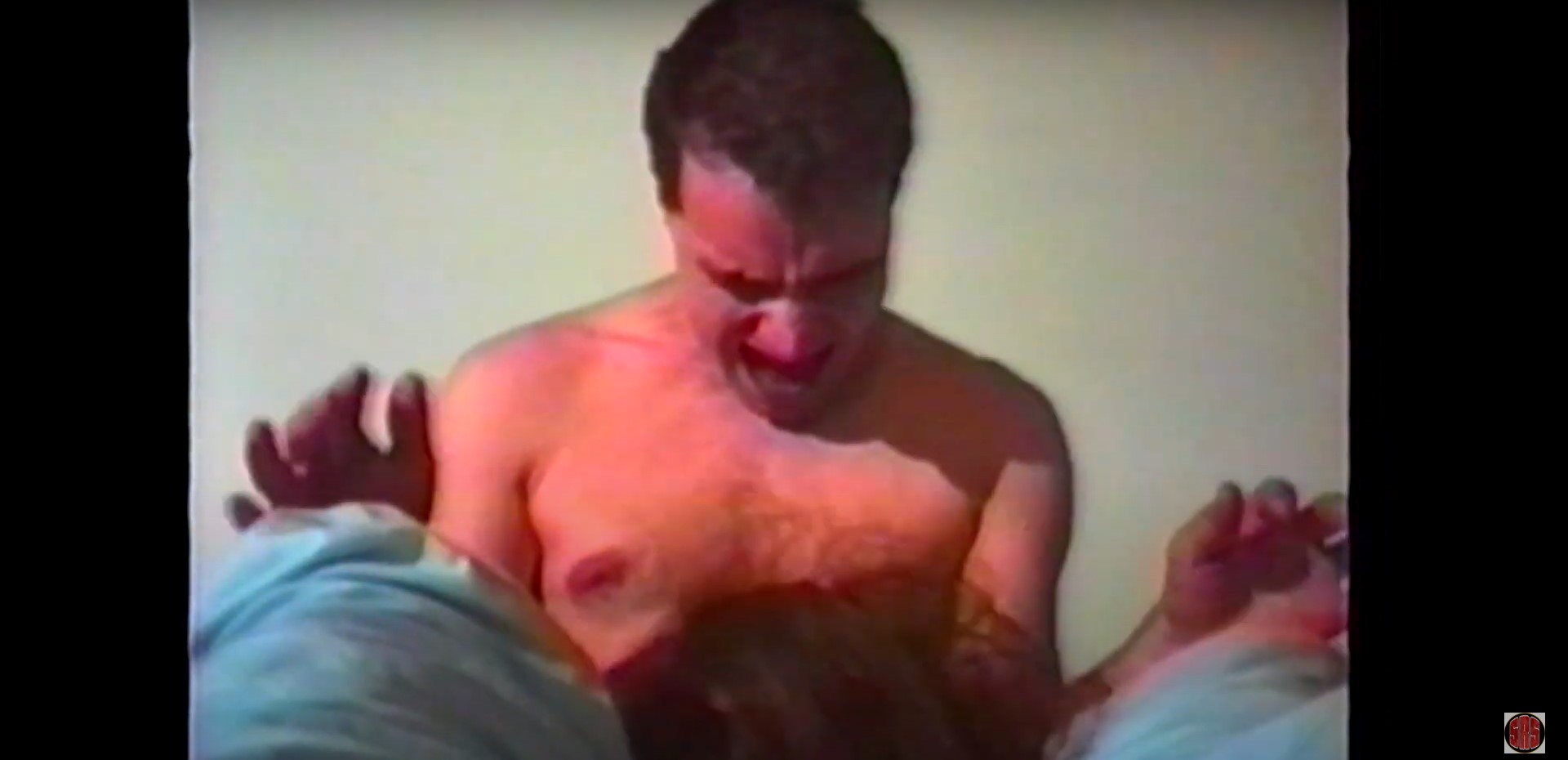
A fatal car crash claims the life of Mark’s wife.  Plagued by vivid nightmares of death and grief-stricken by the loss, Mark finds comfort in his closest friends who have come to console and stay with him after the funeral.  Slowly, Mark’s friends begin to thin out.  Thinking they’ve gone home or stepped out briefly, Mark continues to spend time with his remaining friends, watching horror movies, and eating fast-food hamburgers while contemplating how to handle the sorrow for the rest of his life without his wife by his side.  Other than a select few of his friends attempt to take advantage of his vulnerability, what’s really happening behind the scenes is a crazed killer is taking out his friends one at a time and while Mark continues to sink deeper into self-pity and become contentious with the greed of others, the killer mercilessly works closer to him by wiping out his entire friend network before he even comprehends what’s going on.

Let me take you back in time to the archaic and fashion disreputable (or maybe just plain questionable) year of 1995 where the hair was bigger, the cars were more manual, and where Blu-rays, DVDs, and those godawful streaming services were a futuristic glimmer in the eye as cassette videotapes were stocked the shelves. One of those physical retail locations was a brick-and-mortar store owned by Robert (Bob) Dennis who became enticed to stick his hand into the movie making machine and convinced to direct his one and only full length feature film, a shot-on-video slasher indie entitled “Savage Vows.” Bob Dennis’s then wife-now-ex, Carol Dennis, co-wrote the 80-minute script of an obscured death dealer racking up a body toll of Mark’s disputable friends who secretly despise each other and have sub rosa intentions. Shot in and around Wilkes-Barre, PA, where Dennis operated and shared ownership alongside brother Michael J. Dennis his video store, Full Moon Video (no relationship that I can deduce to Charles Band’s Full Moon aside from selling his hot horror commodities on tape), “Savage Vows” retains a two-location shoot encompassing Mark’s house and an always tight budget cinema staple cemetery for full blown low-budget honors. Gage Productions funds the project under another Dennis relation, executive producer Gage Dennis, along Carol Dennis wearing the dual hat of producer.

“Savage Vows” transposes the family affair from behind the camera into the forefront of the camera as Bob and Carol Dennis not only nurture widowed-slasher concept into a full-fledged video feature but also take on principal, yet ill-fated roles themselves while also employing Bob’s brother, Mike Dennis, and Jamiece Dennis into the background and extra fatality-fodder to fill in where needed. The scene interactions transcend through naturally as suspected with having family members mimic being mincemeat for the grotesque grinder and to put forth their best foot in the dialogue despite the rather cliched and trite rap. Though Bob Dennis and his cohort crew of closely related cast member might not be the marquee glowing luminaries of low-budget lore, there is one name, a singular cast member, that sticks out as a present-day household name in rinkydink D-movie horror. The filmmaker who has made a notorious name for himself for his schlocky and shoddy sharksploitation films, has trespassed and exploited the property of Amityville on more than one occasion, and continues to be an unfazed direct-to-video deity amongst the bedrock in the bottom of the barrel genre pool is none other than Mark Polonia, the director, who often collaborated with his late twin brother John Polonia, brought us “Splatter Farm” and has also a defacing sharksploitation rut-rack with the so-bad-it’s-drinking game good grievousness of “Land Shark,” “Virus Shark,” and, most recently, “Sharkula.” Mark Polonia has more than just the role of Adam, Mark’s best friend, in this story as the then just hitting his stride Polonia encouraged Bob Dennis to expand beyond his wishful thinking of creating a horror movie and also provided creative notes during principal photography. Just being this far down in the character-cast paragraph section, you know “Savage Vows” Armando Sposto (“Night Crawlers”) barely makes a blip on the radar as the widowed Mark, but the shame of it all is that Sposto provides fathoms of depth when juxtaposed to any other in the cast. Having just lost his beloved, Mark’s up against the wall of grief and Sposto does his damnedest to convey that without flinching as the young actor has to teeter between misery and another self-conscious emotion pivotal to the endgame. Kelly Ashton, Adam Bialek, Jackie Hergen, Grand Kratz, and Sally Gabriele make up the rest of the “Savage Vows.”

To death do us part” is the ceremonious idiom that signifies an everlasting commitment to one another. For Bob Dennis, it’s the marginally grim phrase that also drives the plot, but “Savage Vows” wanes nearly entirely from matrimony motifs, never really genetically incorporating the sacred act of bonding two people itself into its slasher anatomy.  Instead, Bob Dennis (and Mark Polonia) land on the ghastly side, or rather the latter side, of a marital life span with the untimely splitting of a union and this particular union, Mark’s marriage, ends in tragedy and therefore a gothic-cladded funeral of gloom and despair are rooted and entrenched into the story.  Though perfectly suitable to drown oneself woes, “Savage Vows” reaches further into that dispirited nature with Mark having fallen into negativism and his friends lend their sympathy with a sleepover offer of consolation. That’s where the comradeship becomes icky at best with friends who disguise their underhanded true intentions with a show of spurious sympathy and that kind of malevolence benevolence within the closeness of others mirrors itself, in a foreshadowing type of way, in the heart of the plot that lacks the pith of solid slasher kills. The kills scenes are of the run-of-the-mill stratification that slowly ascend to a not so bigger or better rehashed versions of themselves. The finale cap sets the bar a little too late in my book with a deserved kneecapping kill that simultaneously sums up “Savage Vows” skin-deep concept.

A longtime leader in resurrecting obscure SOV horror back from the 80s and 90’s analog grave, SRS Cinema does what SRS Cinema does best with a supremely graphic and retro-approached DVD of Bob Dennis’ “Savage Vows.” The NTSC encoded, region free DVD5 presents the film in the original aspect ratio of a matted 1.33:1 with a shot on video quality that’s high on fuchsia hue in what’s a warm, inflamed, infrared color palette that obtrudes in a non-stylistic choice. Certain trope-filled nightmare scenes have a catered good synth score and stay ablaze with visual terror fuel in which the hot pink-purple palette would have worked to the scenes advantage. As expected, as these imperfections add that wonderful je ne sais quoi to the shot-on-video epoch, the subpicture white noise and tracking lines are a welcome treasure trove for trashy rare cinema albeit the gargling of quality. The English Mono track never flushes or levels out with any promise due to a lack of a boom recording and far-removed mic placement. The dialogue remains boggled down also by e-interference with a slog of hissing issues, but still manages to be intelligible. Bonus features includes an 80-minute, feature length, commentary track with supporting star Mark Polonia on the phone with writer-director Bob Dennis, a bloopers reel, and theatrical trailer. Say, I do to “Savage Vows,” a love-it or hate-it, little known, SOV slasher with a can-do attitude of stab-happiness of the unprincipled so-called nearest and dearest.

“Savage Vows” on DVD at Amazon.com