
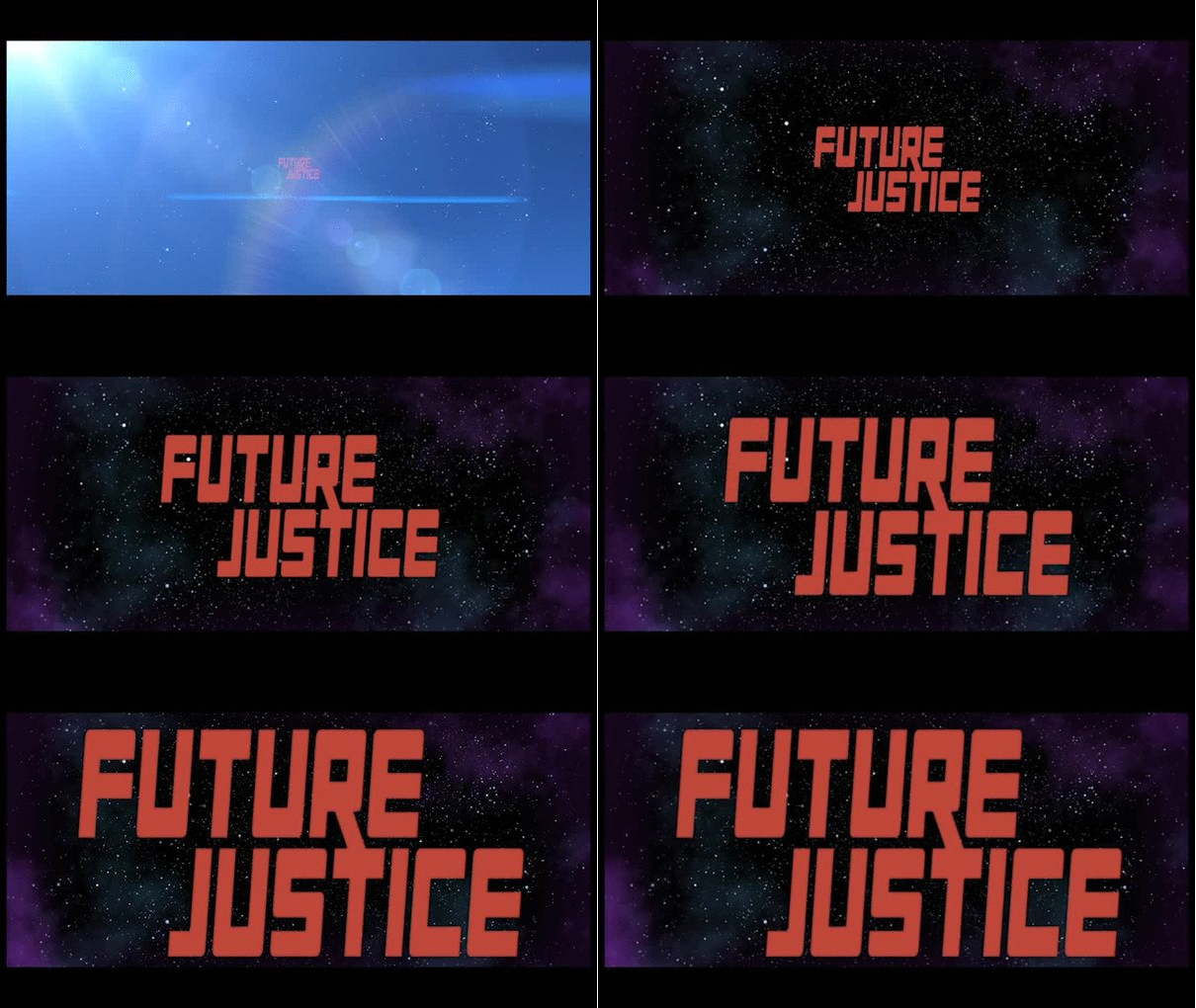
After five years of cryogenic solitude, Python Diamond returns on a heavily armored military escort ship, returning from Saturn where a maximum prison holds Earth’s most dangerous convicts until their execution date. As they close in on home, Earth has gone dark, communications have gone silent, and massive radiation cover most of the populated soil. A faint signal of power draws the crew down to a manageable radioactive portion of scorched Earth where they discover a small band of people, surviving in an underground bunker and striving to live in a post nuclear fallout. The exploration of life search doesn’t go unnoticed as a violent, more dominant group of survivors seek to take the military’s possessions, if not their lives too, and when war breaks out between them, another mutated and dangerous player enters the game.

Another Richard Griffin directed project and another great example of a superbly self-reliant genre film thats sharp-witted, off-colored, and, of course, entertaining to horror and post-apocalypse fans. Though Griffin and his usual cast of cast members tackle the homage with full-brute strength, Griffin places a gently new-used spin upon each of his inspired works in the form of great absurdity that’s hard to refute or dislike no matter what genre of movie fits your fancy. His post-apocalyptic, science-fiction, horror film “Future Justice” revolutionizes the homage by stripping iconic films of their popularities and mashing them together into a very coherent and comprehensible story without seeming like a total rip off. Instead, Griffin takes the Nathaniel Sylva written story and runs with it like a powerful running back whose hugging on tight to that pigskin ball and charging like hell to the end zone for his first touchdown, treasuring that first score and making it his own unique success even though scoring touch downs has been down countless times before.

The underwhelming title, “Future Justice,” doesn’t speak much to the film’s overall enthusiastic gesture. Yet, the witnessing of gung-ho filmmakers given only an inch to work with and stretching that into a long mile, or even two, is always an amazing length. Nathaniel Sylva didn’t only write the film, he also starred as the lead character, a confident and calculating convict named Python Diamond which is a bit of a play on the John Carpenter Snake Plissken character from “Escape from New York” and “Escape from L.A.” Then, the story embarks on a motley crew, like you would see in a “Mad Max” movie, group of scavengers looking to take all and leave nothing for the rest. Finally, “Future Justice” takes an unexpected turn by introducing a radiation mutated, humanly doctored, one pissed off person-creature that hungers to seek and destroy every last living being in the underground bunker.

The successfulness of character actor Steven O’Broin’s Gazeebo, head of the blood thirsty gang, makes him ruthlessly enjoyable to watch on screen. O’Broin and Griffin have worked previously together on “Sins of Dracula;” O’Broin aspired to be similar to Vincent Price in the Hammer Horror influenced Dracula film. Michael Thurber, more notable one of Griffin’s entourage of actors and also co-stars in “Sins of Dracula,” delivers a phenomenal and intentionally excessive method acting skill that always fits into, in every which way, all of Griffin projects. Working with an estimated $20,000 budget and limited locations doesn’t translate over to O’Broin or Thurber who can transform a small production into the illusion of a bigger ordeal, causing a mind altercating effect with their viewership. “Future Justice” delivers movie magic at its finest.

Speaking of movie magic, visual effects supervisor John Dusek works along side again with Griffin and meshes a blend of practical effects with campy computer generated imagery. The result only adds to the unique charm, capturing the zany essence of this world gone dark story and running with it to take the zaniness one step further, but also respecting the Italian post-apocalyptic films of the 1980s. Exploding heads, detaching limbs, brain-splattering head shots keep the violence fresh when various effect methods are implemented and Dusek tunes right into his entire arsenal to deliver. The effects go hand-and-hand with Daniel Hildreth’s space epic score, striking the composer analogue of other Sci-Fi film greats.

The MVDVisual region free DVD release is presented an in unrated 16:9 widescreen format at a runtime of 83 minutes. The extras include a commentary with cast and crew, a short film entitled “Mutants of the Apocalypse,” and a theatrical trailer of the film. The clear picture defines the details and vividly displays the colors, especially when the mutated creature emerges. The 2.0 audio mix hinders a little in the dialogue by the overpowering score and ambient tracks, but doesn’t disrupt much at all. “Future Justice” doesn’t apologize for laying down the law by smacking action and thrills right to the face. I’d recommend this title to any Sci-Fi or horror buff in a need of a necessary relapse into the post-apocalypse.
Tag Archives: Steven O’Broin
Acting Evil Isn’t Necessarily Evil. “Sins of Dracula” review!
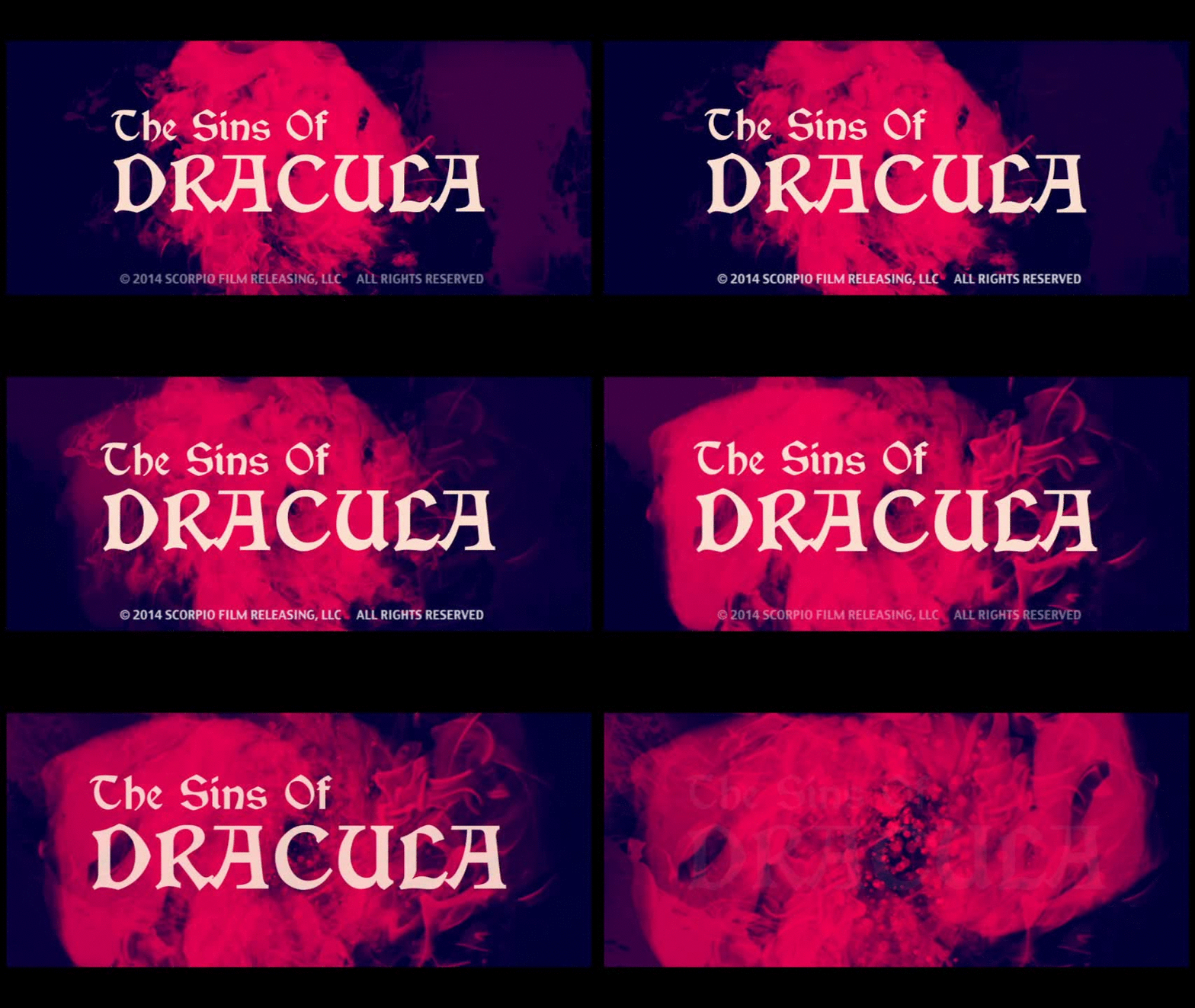 Billy, a good church-going man, reluctantly leaves his choir to join the community theater at the request of his girlfriend Shannon. What Billy doesn’t realize is that there are all different kinds of characters who partake in the community theater – the nerdy gamers, the anti-establishment antagonizers, the gays, and, of course, Dracula. Yes, Dracula – the Prince of Darkness. The theater’s director is a satanic worshipper who feeds off the sins of his actors to resurrect Dracula and start a whole new world order of vampires.
  “The Sins of Dracula” film is a homage to multiple horror genre branches. Decades including the 1970s and the 1980s source the brilliantly colored and expression heavy of the Hammer horror era and combine it with the gore of video nasties marking all present and accounted for in this ode to classic horror and that’s the creative style of director Richard Griffin and his Scorpio Film Releasing company which quickly produces many independent films that hit many media platforms. My previous film experience with Griffin includes “The Disco Exorcist” that implements film stock imperfections and the hardcore porn of the 1970’s. The other Griffin film, “Murder University,” aims to create a satirical look at a murderous cult gone collegiate. Lastly, my very first Richard Griffin film was Feeding the Masses wanted to be a social political zombie following in a George A. Romero fashion. So there is no surprise here that Griffin does what he does best, but after seeing “The Disco Exorcist” and “Murder University” both which I liked in previous reviews The Disco Exorcist review here and Murder University review here, “The Sins of Dracula” warranted high hopes for Griffin to do something new and cut ties with the old, regurgitated scenes.
 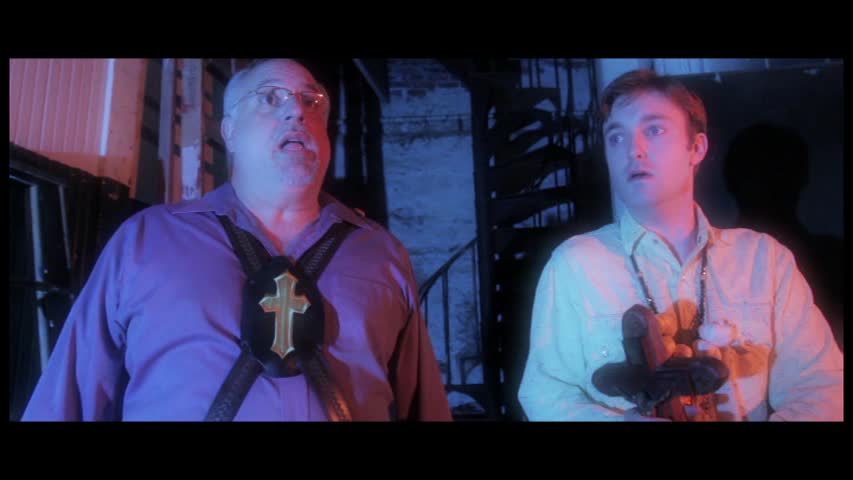 Enough about Griffin, let’s talk about “The Sins of Dracula.” Just from reading the synopsis alone, one can conclude that this horror-comedy will come off as a bit outrageous, delving into and dissecting the sins of certain kinds of people who walk in all kinds of life and exploiting them for the sake of our good boy Scott’s heroic journey and also exploiting them to awake the evil Dracula. The story doesn’t waste any time putting to waste the sinfully deemed characters and going on a Godsend vampire hunting spree. At the end, most peoples’ personal views are made light of in a satirical fashion.
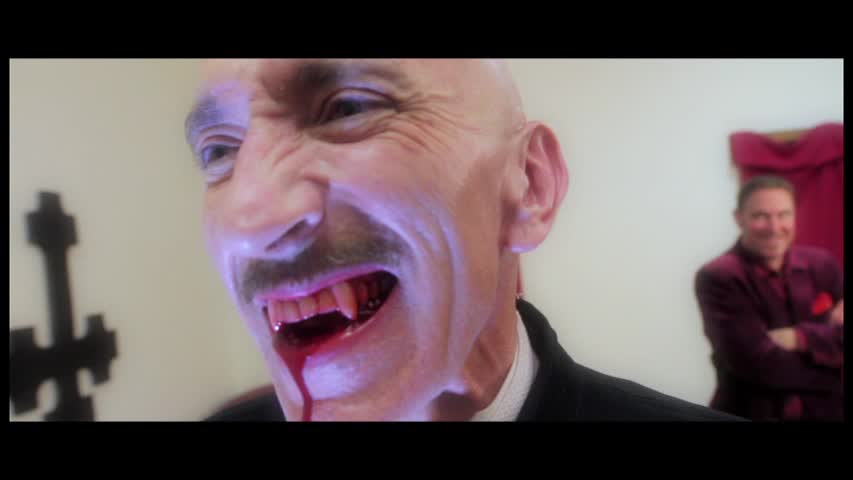
 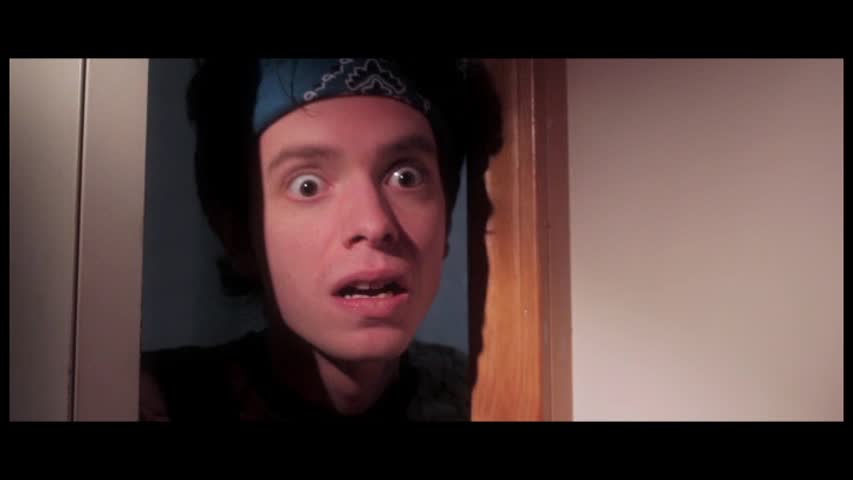 Michael Thurber, a staple actor of Griffin’s, does a solid job as a Hammer horror Dracula mirroring the likes of the vampire exposed Christopher Lee. Steven O’Broin, as Lou Perdition the satanist devotee theater director, had some excellent lines and quips and made his Vincent Price-esque character enjoyable when on screen. Another of Griffin’s minions, Aaron Peaslee pranced around fairly well as a gay theater actor and his raunchy sex scene with fellow actor Johnny Sederquist was the most controversial aspect of the film. I can’t say that about the other characters. Other characters fell a bit flat and didn’t convey their characters intentions well enough to pull off a spoofy-stereotype. The fact that their characters where put to death way too early in the film doesn’t give the character a chance to make their presence more well established.
 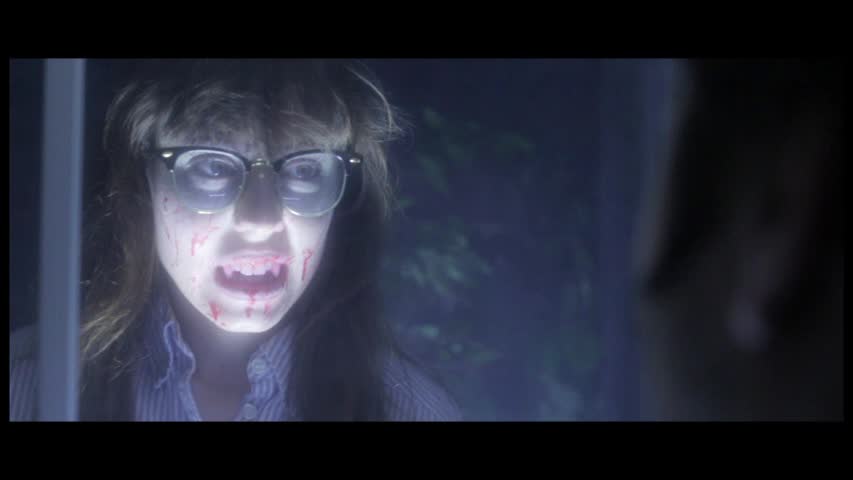 The blood letting could have been, well, bloodier, but there is enough letting to super soak and saturate one’s thirst. Some of the scenes are restaged from the likes of “Fright Night” and “Buffy the Vampire Slayer” the movie. Like I was saying early in the review about the film’s originality, the lack of new material makes the likelihood of repeating a viewing of “The Sins of Dracula” very unlikely which is difficult to say about a solid homage.
  “The Sins of Dracula” is good for a one time single viewing and but lacks new and fresh material to really captivate attention. The MVDVisual DVD cover also doesn’t explicitly want you to go out and rent this title, but the disc art is amazingly detailed and you shouldn’t judge a film’s material by the cover. I do strongly suggest to check out “The Sins of Dracula” if you’re into the Hammer horror scene and into Griffin’s Quentin Tarantino homage style of directing.
 It's Bloggin Evil!