When Trying to be Good, EVIL Will Always Pull You Back In! “Streets of Darkness” reviewed! (SRS Cinema / DVD)

Just Look at this “Streets of Darkness” Cover!  It’s a Must Own!  

After avenging the death of his friend and sister, Danny completed his prison stint and was released back into his Miami neighborhood to restart his life.  Looking to stay clean of violence, Danny doesn’t want to connect himself to any crime organization but when a cruel Cuban drug lord assaults his mother due to his father’s past transgressions, Danny’s seek for solitude drives him into the embracing arms of the Italian mafia who also has a grudge against their rival drug trader.  One hit leads to another and Danny finds himself back in the criminal world rising quickly to become one of the mafia’s profitable enforcers.  Danny has everything he’s ever wanted – money, respect, and the woman of his dreams – but when a pre-affiliation sexual tussle with one of the crime boss’s young vixens come to light, a division between the family turns the tide on Danny’s uncertain future when a target is placed on his back.

If you’re looking for that Miami Vice feel of a movie with hot locations, hot bods, and hot criminal action, look no further with “Streets of Darkness” having been rightly resurrected from video obscurity, lost to Father Time since the mid-1990s.  The 1995 crime thriller comes from director James Ingrassia who hasn’t cinematically published a movie since his double billed features of 1988 – a surfing themed sex comedy entitled “Hot Splash” and an island survival slasher in “Kiss of the Serpent.”  “Streets of Darkness,” paying titular tribute to and cashing in on perhaps the popular stage fighting game “Streets of Rage,” is also a direct sequel to “Just a Chance” of 1992, a semi-biographical story of Danny’s descent into the depths of criminal syndicates told anecdotally while in his incarceration  Both stories are the pen presentation of Creative Productions’ Vincent LaRusso, the creative wordsmith, producer, and star of both films trying to capitalize on the market’s desire for toned bodies and gang dramas with treachery and murder. 

Vincent LaRusso isn’t just the leading man of his own film, he’s also a workout enthusiast that helped his own cause in creating a chiseled mafioso who’s smooth with women and even smoother laying down criminal keystones to the way he runs operations.  Yet, LaRusso’s character Danny can often talk-the-talk but can’t seemingly walk-the-walk with his own principles as he quickly turns against his own rules of operations by joining the mafia with dollar signs in his eyes after repeating himself, at least three times, noting how he doesn’t want to be attached to anyone or anything.  Repeating himself also becomes a running motif, or maybe a running joke, as much of LaRusso’s script recycles a ton of aforementioned material.  You can even make “Streets of Darkness” a drinking game on how many times Danny, or any character in general, says, “you understand me?”  If you do make it a drinking game, the possibility of being drunk half-hour in is very possible.  You’ve been forewarned.  Commingle the script spiraling with LaRusso’s one note performance and what churns out only scratches the surface of potential in what could have been a lucrative gem of indie filmmaking.   Instead, what’s achieved is a lifeless centric character in the midst of decent supporting players, such as Armand Cassis as the ruthless Cuban Hector, Jerry Babij as a cuckold crime boss, and Christine Jackobi as the cuckolding and scorned Diabolique.  Speaking in regard to the latter’s veneer that LaRusso aims for, “Streets of Darkness” offers that sexy, supermodel, Andy Sidaris-type of female principals, including a Hawaiian Tropic contestant.  Monique Lis and Jennifer Cole (a Miss Hawaiian Tropic), along with Christine Jackobi, fit that busty and beautiful bill that solidifies that beach body and vice viscera.  “Streets of Darkness” fill out with Joseph Cappello, Peter Gaines, Stanley Miller, Frank Palanza, Gennaro Russilo, Louisette Geiss, Lou Rebino, Angelo Maldonado, and Patrick Berry.

LaRusso’s “Just a Chance” was a made for CTN, the Christian Television Network, to deliver a religious message of strength of endurance and overcoming the cause-and-effect in turning toward a life of violence and crime.  For the sequel, LaRusso wanted to embark on a more entertaining product for the public with edgier content, hence the naked women and graphic violence which most of the Christian community won’t understand, shy away, and definitely wouldn’t fund a financial base.  With a budget doubling “Just a Chance,” LaRusso is able to obtain through private funding a higher production value with areal cigarette boat footage in and around Miami and its waters, decent lighting in a broad and focal sense, camera movement work, variety of locations though many look like hotel rooms, and achieving the overall Miami mise-en-scene cinematography.  For a 90’s indie production, “Streets of Darkness” reaches that particular look of tropical turmoil and drug scene, the perfect beachy bodies, and the complex story of one man’s reluctant return to the savage, dark streets but the picture doesn’t take the elements to the next level beyond other Miami-based gang/cartel movies like “Scarface” or “Cocaine Cowboys” where there’s a continuous blanket of thick aired intensity and explosivity of big shootouts.  “Streets of Darkness” is more expositional and story driven, likely due to budget reasons, to integrate gangster Danny’s plight into our own understanding of this character’s vow to do the right thing but ultimately destines him in the opposite direction.  The editing starts off funky with a clunky fast forward scene that comes around later to then slowly but eventually, level out to a chin high in too deep path of no return from life of crime.

Due to some shady dealings with a corrupt distributor, the Beta SP master was lost but Ron Bonk and SRS Cinema was able to obtain the VHS master tapes for an Apple Hi-Def ProRes digital remastering of “Streets of Darkness” onto DVD.  What results is a beautifully slick and clean appearance of Vincent LaRusso’s vision, especially for a standard definition 480p, sourced almost impeccably from one of the best possible VHS format options, the Beta SP.  Though virtually wear free with no signs of VHS degradation issues, details are generally and expectedly soft presented in the letterbox 1.33:1 full frame but not overwhelming glossy smooth to the point of splotchy or granularly patchy.  Remastered coloring, along with the innate lighting, sell “Streets of Darkness’s” semigloss South Beach brushstroke and achieving LaRusso’s production value desire tenfold.  Audio options only include an English Dolby Digital 2.0 stereo mix has been augmented with additional score and soundtrack by Tim Ritter (“Truth or Dare?,” “Killing Spree”) and Toshiyuki Hiraoka (“Clownado,” “Cannibal Claus”).  From the commentary track, a few of original soundtracks had expired copyrights and so additional music was needed to rescore the film but, honestly, the additional pieces delved too much into Tim Ritter’s gore-and-shock territory with heavy low-frequency tones that rattle the eardrums and don’t necessarily scream Miami’s synth-beat rock or Latin flair.  I would have been interested to hear the original music and compare to the newly supplemented release.  However, dialogue protrudes into the forefront with lesser force than normal but still clean, clear, and prominent other than the heavy duty, reverberating bass notes.  There’s slight static feedback throughout but doesn’t hinder the audio senses.  The Brutal special features include a second film, the Vincent LaRusso’s “Just A Chance” along with video commentaries and interviews with both films featuring video discourse between LaRusso, Tim Ritter, and filmmaker Larry Joe Treadway and Ritter and LaRusso only on the audio commentaries.  The bonus content ends with theatrical trailers of both films.  While not chockablock with physical fixings, the SRS release has one of the more amazing cover arts sourced from the original poster elements of a shirtless and ripped Vincent LaRusso in between two model women for the front cover.  Immediately eye-fetching and intriguing, the image is accentuated by SRS’s mock retro designed DVD casing with a round ACTION and BE KIND REWIND stickers and an image bordering encompassment to make the appearance of a VHS cover.  Disc pressed art is the same image but cropped to focus on the three individuals on the front cover.  The not rated film has a runtime of 102 minutes and is region free.  “Streets of Darkness” is a win-win for SRS Cinema and Vincent LaRusso in its newly remastered form that revives the Miami mania even if it’s only for one more heat and beach encore.

Just Look at this “Streets of Darkness” Cover!  It’s a Must Own!  

Amongst the EVILs of Digital, Analog Rises from the Grave! “Night of the Zodiac” reviewed! (SRS Cinema / DVD)

A Mock VHS Retro on a Mock VHS Retro DVD!  “Night of the Zodiac” from SRS Cinema!

A bizarre and grotesque dream about the once notorious Zodiac killer inspires Richard Gantz to create a movie worthy of his idol’s praise.  With little income and having just lost his girlfriend and his job, Gantz is on the brink of being homeless and unable to materialize his dream into reality until he receives a mysterious, unexpected phone call.  The Zodiac killer got wind of his project and is offering support to finance and bestow guidance to Gantz’s film as long as the struggling, yet eager, filmmaker can crack Zodiac’s cipher and stomach the enigmatic task before him.  Gifted the Zodiac’s iconic mask and murder knife, Gantz sets out to record his first kills that pays homage to his aging idol but his mentor wants him to be creative with the new chapter worthy of the Zodiac name and gathering a whole new set of slaves for his paradisal afterlife.  When Gantz hits a barrier of inspiration, he solely becomes reliant on the Zodiac’s encouragement that has become few and a far in between. 

Susana Kapostasy is who I like to label a mad genius.  Many filmmakers have attempted to create antiquated formats of yore with watered down imitations, but for the Michigan-born videographer and editor-by-trade Kapostasy, what has been a challenge to most to faithfully recreate has simply become second nature for the video production enthusiast.  Scraping up any and all elderly video camcorders she could find, the “Metal Maniac” director wrote-and-directed her sophomore feature film “Night of the Zodiac,” pulling inspiration from one of the most notorious unsolved murder cases in America by the Zodiac Killer in San Francisco.  From the West Coast to the Midwest, “Night of the Zodiac” is filmed in and around the backdropped Detroit area for the Zodiac’s next round of sliced-up slaves – only in the creative, moviemaking sense, of course.  The 2022 film has the spitting image of a 1980s/1990s SOV with ghastly, gory effects, a killer hair metal soundtrack, and video characteristics that’ll have you trying to adjust the tracking setting on your DVD/Blu-ray player.  The Johnny Braineater Production is produced by star Philip Digby with Kapostasy serving as executive producer alongside co-cinematographer Apollo David Zimmerman.

Stepping into the shoes of the infamous serial killer to embark on a theoretical continuance of the real life mass murdering character is Philip Digby.  Channeling his best Jeffrey Dahmer vibe in looks alone with a crazed and obsessive personality suited for Charles Manson, Digby plays a hodgepodge of America’s most notorious killers, adding his own flare for film into the fold to make him a full-fledged psychopath, as he internally celebrates the moniker after his disparaging roommate/Landlord (Victor-Manuel Ruiz) labels him with an ear-to-ear grin and a nearly whoopie jump for joy.  Digby’s eccentric mania thrusts us beyond a threshold we didn’t even realized we had crossed from the very first opening dream sequences of a rotting, coffin-thronged corpse oozing maggots and putrid viscera and, believe it not, my opinion is this thrust doesn’t do justice to Gantz’s character because of the lack of foundation of setting up viewers with an inbred psychosis that puts into question, how did he survive this long without killing someone before?  Dreams are power but are they powerful enough to twist a seeming normal film lover into a frantic frenzy of vile fates and videotapes?  I think only Freddy Krueger can answer that.  Gantz goes around town slaughtering people in parks, in their driveways, and even makes one very bad magician (Derek Dibella) wish he requested to hire Gantz as a videographer for a promotional video disappear as Gantz strangles him to death.  “Night of the Zodiac” completes the cast with Logan O’Donnell, Mark Polonia (director of “Splatter Farm”), Tim Ritter (director of “Truth or Dare?”), and Benjamin Linn as the voice of the Zodiac.

From the video production veneer to the set decorations and locations to the characters themselves, “Night of the Zodiac” perfectly captures SOV horror in this modern day time capsule.  Not until the credits, when I see master craftsman of SOV horror filmming, Tim Ritter and Mark Polonia, appear in the cast credits did it dawn on me that what Susana Kapostasy had accomplished was a labor of love for the niche market, resurrected four decades later and revered by horror fans who were likely still in diapers or weren’t even born yet – maybe to go as far as not even a twinkle in their parents’ eyes.  Yet, there were clues to “Night of the Zodiac’s” contemporary construction, such as the opening title which had a clean, well-polished illustration and Kapostasy’s film is very self-aware by slathering horror in every recessed corner with mountainous stacks of VHS tapes, posters, and  and often, perhaps every other scene, displayed tribute to filmmakers, like Ritter and Polonia, who were still counterparts and establishing themselves as independent videotape artists during the 80s-90s.  This self-awareness harnesses more comedic relief than horror, accentuated by Gantz’s matter-of-fact imbalance, and the humor loosens the reins on “Night of the Zodiac’s” cold cruelty a tad but what the gore spools back in audiences by spilling lots of blood. 

SRS Cinema releases “Night of the Zodiac” onto DVD with a single layer encoding and presented in a throwback letterbox 1:33:1 aspect ratio.  Kapostasy uses a slew of equipment – Cannon XL2, Sony Video 8 AF, Panasonic AG 450, JVC GY X2BU, JVC GY X3, Panasonic AG 456, Panasonic AG 196, Sony CCD FX 330, and a Sony VO 4800 U-Matic S VTR – with some be more present-time cams run through U-matic VHS playback to degrade for SOV quality.  The intentional SOV has a variety of distinct looks with distinct quirks that flexes higher magenta levels in earlier scenes as well as tracking lines and aliasing artefacts.  Detail levels also vary but the overall VHS brands generally remain the same with soft, indistinguishable contours with also a surprising amount of depth and hue range.  The English Dolby Digital 2-channel (2.0) mix can sound boxy at times and come accompanied with a piercing, underlining interference.   Telephone conversations have no distortion depth so the other person on other line sounds present in the room.   The soundtrack from Anguish, Locust Point, and the brunt of it provided by Stoker is metal madness but does overshadow the dialogue when shredding through the scenes.  Dialogue is often clear, but again, no depth and echoey.  There are no subtitles available for this release.  Bonus Features include an audio commentary by director Susana Kapostasy, star Philip Digby, and costar Victor-Manuel Ruiz that goes over a lot of technical aspects of “Night of the Zodiac’s” look and how they obtained the gore and blood for the film, a Tim Ritter conversation about how he became involved with Kapostasy’s video enthusiasm and provided analog input, a blood cannon showcase that’s instructionally descriptive as well as you’ll see Kapostasy’s foot accidently go into the 5 gallon Homer bucket, a gore score Ouija board gag, recreating the Zodiac cipher, and the trailer.  SRS Cinema’s release dons a retro VHS design front cover with an exact and beautiful illustration of Gantz’s copycat Zodiac attire with a cropped version of the front cover on the disc art inside the traditional black snapper case.  “Night of the Zodiac” has a runtime of 86 minutes, is not rated, and has an all-region NTSC playback. Difficult to immerse oneself into a half-a-century old unsolved murder while sticking to glorifying merely the guts and gore, “Night of the Zodiac” stuns more qualitatively with video techniques thought archaic and obsolete but Susana Kapostasy steadfast proves otherwise in her undying love for the flawed, yet nostalgic format.

A Mock VHS Retro on a Mock VHS Retro DVD!  “Night of the Zodiac” from SRS Cinema!

EVIL Wants You to Be Mindless! “Night Feeder” reviewed! (SRS Cinema / Blu-ray)

“Night Feeder” Is a Brainless Trip Through the New Wave Eighties! 

A woman is found dead on the city streets.  The cause of death is the same as two others before with similar wounds; their brains are sucked out completely through a slit in the eye socket.  As the neighborhood community cowers in fear, Jean Michaelson, a female magazine journalist and who also just moved to the residential city district, takes it upon herself to uncover the truth before her new home becomes an unlivable nightmare.  At the center of suspicion is Bryan Soulfield, a musician a part of the band Disease, previously involved in the death investigation of three women groupies who overdosed on a drug called DZS that shares the same phonetic name Soulfield’s band.  Inspector Alonzo Bernardo spearheads the investigation with an ever-watchful eye on his best suspect, Bryan Soulfield, and an even keener interest in Jean Michaelson as they both feel the grip of public pressure and come intimately closer to each other and to the unsuspecting and shocking truth as the bodies become more frequent around Jean’s apartment.

Obscure, one-and-done horror can often be worth the viewing calories and 1988’s “Night Feeder” is definitely the epitome of those hidden gem genre films from America’s exploration into the video format and stemming into another branch of liberal arts.  “Night Feeder” was the result of an assemblage of a painter and a pair of novelists who, out of the blue, decided they wanted to make a movie.  A gouache and oil painter of portraits, often nude, Jim Whiteaker tries his talented brush stroking hand at directing a full length shot-on-video feature with mystery writers Linnea Due and the late Shelley Singer crafting a murder whodunit in a grisly brain slurping fashion that conveys heavily on the theme of misjudging a book by its disfigured and notorious cover and end with a killer you never see coming – because it’s sucking out your brain through your eye socket!  “Night Feeder” is also emblematic amongst other spoiler-inducing concepts that we’ll dive into later in the review.  Shot in the dark corners of the San Francisco Bay area at the liberal arts focused Dutch Boy Studios, “Night Feeder” is glam horror ripe for attention, produced by James and Jo Ann Gillerman under the production banner of Gillerman-Whiteaker-Gillerman.

For an investigative horror-thriller in the crevices of a phasing new wave and post-punk era, the low-budget production has a remarkably versed cast of unknown, likely hyper regional, actors.  Kate Alexander (“Kamillions”) cut her teeth as principal character, journalist Jean Michaelson, and instills a healthy dose of raw emotion into an unlikely B-flick, tamping her performance firmly into the role caught in a love triangle between punk musician and prime brain-sucking suspect number one, Brian Soulfield  (Caleb Dreneaux) and by-the-book police inspector, Alonzo Bernardo (Jonathan Zeichner) confounded by killer’s strange methods.  Not to forget to mention the ominous presence that possible lurks around every corner that drives shivers up Michaelson’s tattered spine, making her vulnerable and blind to what’s really in front of her, romantically and threateningly.  We’re briefly introduced to support characters, aka soon to be victims, and then eventually snowball into the quickly dispatched before having a chance to steal or swallow the protagonist predicament for their own, but these support characters are engaging enough to be either drug pushing scoundrels, intolerant jerks, or spaced-out mothers so you can tell from the beginning their level of likeableness before their fatal end, but at least they’re not benign, vanilla cogs in the machine. The cast fills out with Lissa Zippardino, Jac Trask, Ginger Seeberg, Roger J. Blair, Robert Duncanson, Robert Hogan, and the Bay-born cultural critic Cintra Wilson and a special soundtrack performance by the new wave rock band, The Nuns as the fictitious band, Disease. On top of that, Dutch Boy artists fill the gaps in minor roles like waiters, party guests, and concerns citizens as a public gathering.

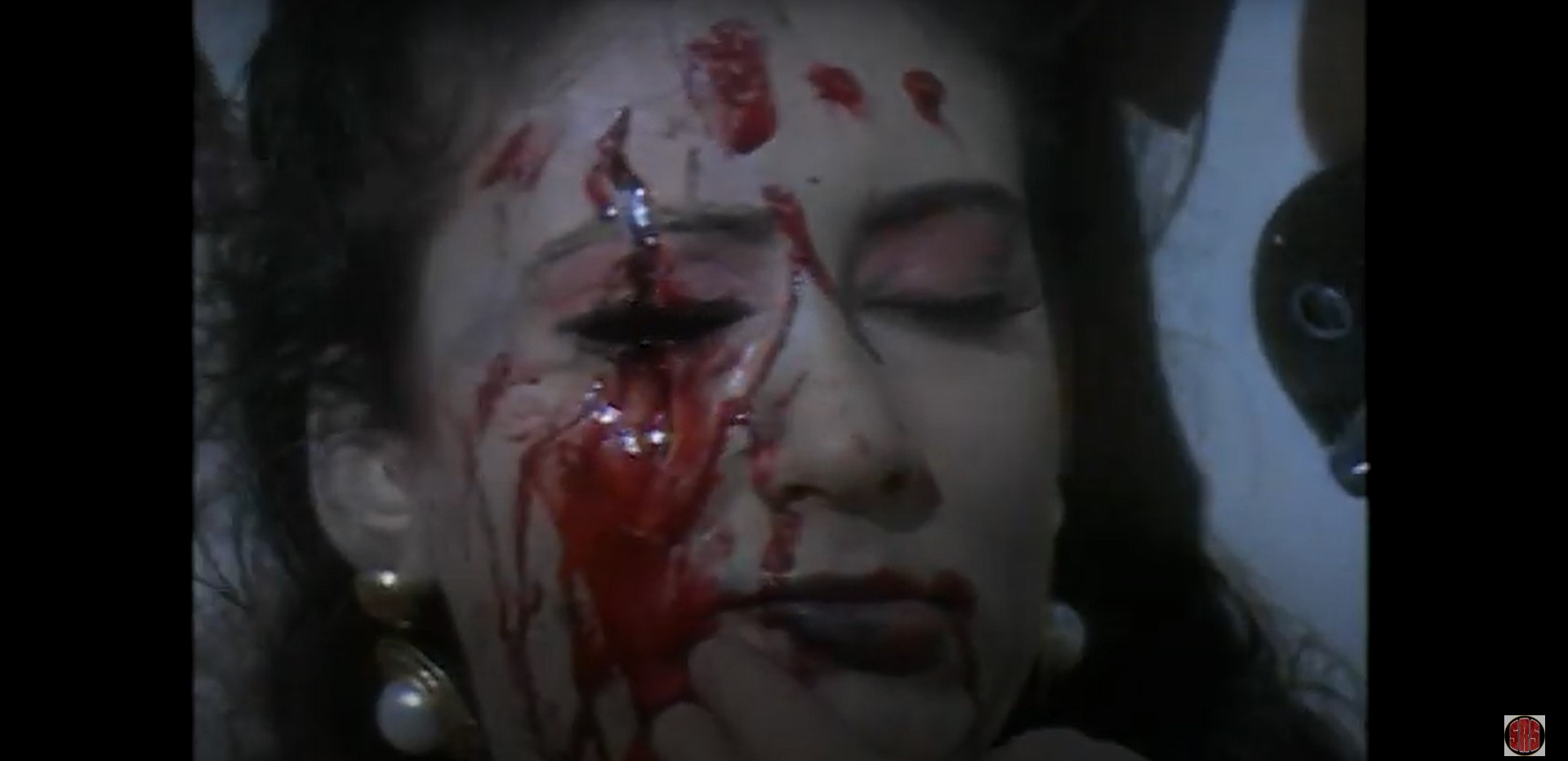
Despite playing out like a police procedural investigation that narrows down suspects until the killer is unearthed and either arrested or gunned down in a harrowing, desperate moment, we all know ahead of time “Night Feeder” is cladded with more than just plainclothes of cops and robbers.  The big tell is the brain being liquified and sucked out from the eye cavity like a Slurpee minus the brain freeze because, well, there’s no brain!  “Night Feeder” sounds like a mindless Z-grade film and while the narrative involves mindlessness in a way, the 80’s creature feature is anything but a ponderous film with an immense underground punk presence, eccentric personalities, and a standoffish and reticent romance brewing in the background sandwiching the strange deaths of unconnected murders piling up around the heroine’s noir-esque, urban jungle neighborhood and perplexing the lone law authority on the case.  Whiteaker and his writing team thoroughly include the residents and residents’ concerns which makes “Night Feeder” bigger than it really is as it is often with lower-budget creature features will neglect to include the angry, scared mobs into the conversation.  The narrative intends to spark public fear and uses it to drive Jean into a rabbit hole of truth that has now become more personal than professional since her space has been affected by an invading killer.  Her best friend ending up dead in the tub of her apartment during a neighborhood party and with her ex-husband found slumped out of the driver’s seat of his car shepherds violently out her old life into a new, scary territory of relationships.  A director having an artistic background and working with creative storytelling minds lends to a more than average physical special effects and becomes a Jonathan Horton (“Enemy Mine”) showcase of skill that removes “Night Feeder” from the average pool of shoddy effects films and into a higher class of eye-catching, detailed creepiness that is unique and can’t be unseen with an autopsy that’s all too realistically educational and with its climatically exposed humanoid creature and it’s protruding cerebral sucking device.

Strong effects, strong story, and a strong female character serve the “Night Feeder” as a secret menu item in the SRS Cinema catalogue!  The Cursed to Crave Forbidden Flesh tag lined film is presented on a single disc, AVC encoded, 1080p high definition Blu-ray with a letterboxed full frame aspect ratio of 1:33:1.  One of the better looking 80’s film on a budget, “Night Feeder” is tremendously insignificant SOV interference, which makes me believe Whiteaker and director of photography, Paul Kalbach, had their hands on non-commercial grade video camcorder and after doing some research, the camera used was a BetaCam SP that increased the horizontal likes to over 340, likely from to Whiteaker and Gillermans’ artistic music videos and seemingly at the advantage of Kalbach’s Artichoke Productions in the Bay area that gained him a reputation as a visual artist and “Night Feeder” very much plays into being a vision of New Wave horror with a glowing aura, vibrant warm, almost neon-like lighting hues, and, of course, the two semi-music videos of The Nuns making their way in front of the camera.  Virtually no technical issues with the image albeit a flat coloring, a blip here and there with a brief blip screech, and softer details with the glow haze outline that provides the movie a prolonged dreamy coating or an inescapable nightmarish ethereal within the context of the scene.  The English language Dolby Digital 2.0 stereo carries a lo-fi but sustainable level that celebrates the dialogue and divvies the other tracks to accommodate the little depth it can muster with the BetaCam recording. English subtitles are not available on this release.  Special bonus features include a commentary by director Jim Whiteaker who provides the genesis of the film and gives background on the characters and actors, a movie still slide show, and SRS trailers that include “Day of the Reaper,” “Garden Tool Massacre,” “The Son of the Devil,” “Hellbox,” “Truth or Dare?” Physical features are housed in a traditional Blu-ray snapper case with new composition artwork with the original embossed title and a still one of the more gory-ladened victims, but the reversed side carries the one of the original key arts that embodies the true essence of “Night Feeder” in illustration of a monstrous hand in the foreground of skyscrapers, reaching up and over a sensuously positioned lifeless woman who resembles the lead actress. The disc art is printed with the same illustrated image. The region free Blu-ray has a runtime of 95 minutes and is region free but is listed as a 2020 film in the same design grouping where usually the date listed is in the production release date, which in this case would be 1988. Tidied up and polished, SRS Cinema Blu-ray of “Night Feeder” is a quarried gem by a group of diverse artists bringing their leathery inlaid and new wave touch of artistic licenses to develop a subgenre standout in the 80’s creature feature category.

“Night Feeder” Is a Brainless Trip Through the New Wave Eighties!