EVIL is a Giant Cockroach Trying To Bite Your Head Off…Man! “Love and Monsters” reviewed! (Paramount / Blu-ray Review)

For seven years, monsters have ravaged the human race to nearly extinction after nuclear nations destroyed an planet killing meteor in space, but the radioactive debris that fall back to Earth mutated the smallest creatures into monstrous killing machines.  Humans have been divided into colonies forced into underground bunkers.  Joel Dawson has been barely surviving with bunk mates who see him as a liability in his inability to act when faced with a monster situation and has been unable to connect, romantically, with another person.  When Joel discovers his high school sweetheart is 85 miles away in another colony, Joel decides to leave the bunker safe haven and journey across the dangerous surface for seven days for the sole purpose of love.  Forced to face his fears and adapt to survive a perilous land full of giant centipedes, hungry massive toads, and a crusty crab the size of a two story building, Joel must rely on his instincts and the help of rule-following topside survivors to see again the girl he thought he lost.

Add “Love and Monsters,” a monstrously romantic creature feature, right up there with “Warm Bodies” as this decade’s version of horror and love dancing the tangled tango in this kill or be eaten comedy-love pursuit directed by Michael Matthews.  The 2020 release is Matthews’ sophomore directorial from a script co-written between Brian Duffield and Matthew Robinson off a Duffield’s original “Monster Problems” script.  Duffield is best known for penning last year’s water leviathan success, “Underwater,” starring Kristen Stewart, with “Monster Trucks’” Robinson coming aboard to finesse the grand adventure mechanism that makes “Love and Monsters” a singular trek through heart-thumping terrorland.  The Canadian production filmed in the amalgam terrain of Australia is produced by Dan Cohen and Shawn Levy, who both know a thing or two about doomsday premises in producing Netflix’s “Stranger Things” and the Denis Villeneuve sleeper sci-fi first contact film, “Arrival,” under 21 Laps Entertainment in association with Entertainment One and Paramount Pictures distribution in North America.

A singular journey of bushwhacking and survival falls upon the shoulders of a young man who hasn’t yet transitioned to be an adult. From the time he was 16 years old, Joel Dawson knew love, but didn’t know how to fend for himself when life gets tough….really tough, like, full of carnivorous creatures in an end of humanity and heading to extinction tough. Yet, as adults, we thrive on challenges as our brains have learned to adapt with each new level of adversity and obstacle. For Joel, being stuck in the past, reliving a swift romance, has suspended him in nowheresville as he struggles to find love and age-appropriate interaction with of his kind peers. Dylan O’Brian captures Joel’s inability to see the clearly world around him because, literally, he hasn’t seen or experienced the world for about a third of his young life. Portrayed early on in young adult fiction with his feet firm in the heartthrob remake of “Teen Wolf” television series and coming out of adapted for film “The Maze Runner” trilogy, O’Brien discovers that being feeble and lonely can be just as powerful as being a werewolf or a dystopian survivalist; instead, O’Brien up-plays the quirky, quick-witted, outcast with delusions about his solitary and unpopularity as he finds fortitude by trekking seven days through a monster-riddled hell to rekindle his relationship with Amiee, the last person he personally felt a connection to who hasn’t been squished under the foot of a Granddaddy Long Leg. “The Head Hunter” and “Underwater” star, Jessica Henwick, retunes her vocal chords to present her best American English accent in order to be Joel’s live-or-die love interest, if she hasn’t changed in the last seven horrible years. Yet, before Joel and Amiee reunite in what’s a finger-crossable moment of love again at first sight, the meek Joel Dawson needs to go through, what half the monsters outside have already gone through, is a metamorphosis of sorts to be bigger, tougher, and more self-reliant. This is where MCU alums, Michael Rooker (“Guardians of the Galaxy”) and Ariana Greenblatt (“Avengers: Infinity War”) step in. As Clyde, Rooker’s the Bear Grylls of monster land, knowing all the tips and tricks of topside survival all the while sporting a Richard Simmons perm, whereas Greenblatt, as the orphaned Minnow traveling in companion with Clyde, is just rugged despite her pintsize. “Love and Monsters” really focuses on these four individuals that mainly perpetuate only one of them, Joel, to be the best survivor he can be at the bottom of the food chain, but other minor characters do arise and nudge brash action that requires the solidity of an unbroken community chain. Dan Ewing (“Occupation”), Ellen Hollman (“Asylum”), Pacharo Mzembe, Tre Hale, Senie Priti, Amalie Golden, and “The Road Warrior’s” Bruce Spence makes a cameo appearance as Old Pete.

What I find interesting about “Love and Monsters,” that’s more prevalent in most post-apocalypse themed plots, is the lack of dog-eat-dog between humans.  While the story mainly skirts around the concept with a running gag that the real reason Joel left his colony is because he’s a no-good food stealer, Joel’s interactions with his and Amiee’s colonies, plus in his travels with Clyde and Minnow, showed no sign of deception or greed, a rare and humbling dynamic when starved, weary, and scared people are backed against a wall and cutthroat advantages are at arm’s length; instead, a real sense of community and compassion is committed that brings a sense of hope, not for just Joel in a world conquered by monsters, but for also audiences with pessimistic views about the volatility of man.  Even with all the fears of A.I hostile takeover, tender moments of man face-to-face with machine seals that threat into inexistence as Joel comes across a damaged MAV1S unit, an anatomical automaton built for servicing humanity, borders that plane of complex human emotions with all the right things to say and able to read what Joel needs to here to keep him moving in a sacrificial scene of the androids’ last hurrah before complete battery drain.  “Love and Monsters” doesn’t do a complete withdrawal from the hypodermic needle of inhuman poison, but the concept is certainly not the emphasis.  With a title like “Love and Monsters,” you want the monsters to be, at the very least, half of the story, as promised, and we’re treated to a slew of different monsters with different personalities and with different innate weapons. Not all the monsters are blood thirsty. Some are gentle, but judged for their immense size and scary physical attributes and Matthews points this important theme out in a trope about-face, signifying that just because this is a monster movie, doesn’t mean all monsters have been unjustly deemed vicious and terrorizing. In a way, these monsters parallel in being judged just as inaccurately as Joel is by his survivalist peers without so much as the benefit of the doubt and only when a trust evolves from out of being scared is when judgements wash away with sheltered conventional thinking. Diminutive inside a fantasyland of behemoth horrors, “Love and Monsters” has a tremendous heart with an interpersonal message about understanding connections with people inside the mixed-messaged confines of coming into adulthood.

If we don’t nuke ourselves out of existence first, the lifeforms underneath the soles of our shoes will gladly seize dominance for an easy, human-sized, snack in Michael Matthews’ “Love and Monsters” now released on Blu-ray plus digital, as well as 4K Ultra HD and DVD, courtesy of Paramount Pictures. The PG-13 action-adventure creature feature is presented in high definition, 1080p, widescreen 2.35:1 aspect ratio. Australia is already a futuristic land of gorgeous overgrowth and untouched wonder, Lachlan Milne trades in the practical (zombie horde) aesthetics of “Little Monsters” to a transcending larger types of monsters to scale an open world environment to eventually be combined with post-production visual effects of Kaiju-sized myriapods, crustaceans, and amphibians to just name a few. Award winning VFX company, The Mill, has seamless and organic creations that blend truth and deception with the scariest of ease as creatures explode out of the ground or lumber above head with no angle left uncovered or underdeveloped in giving audiences unmistakable visuals of our nightmares. The English language 7.1 DTS-HD master audio mix is the epitome of well balanced with clear dialogue, a complimentary soundtrack, and a long range and diverse depth of sound engineered monsters being monsters from low, sonorous gutturals to the high cracks and pops of creature movements. Inside a cardboard slipcover, The Paramount Pictures Blu-ray comes with a digital movie code to add to your digital movie collection to watch anywhere, but the release also comes with deleted scenes, a “Bottom of the Food Chain” featurette feature snippet interviews with the cast and crew, and “It’s a Monster World: Creating a Post-Apocalyptic Landscape” that dives into the natural preserve combined with production design to create the apocalypse illusion. Adventurously invigorating and outside the norm of telling story patterns, “Love and Monsters” romanticizes the post-apocalypse with a self love theme in a hope-inspiring and fun creature-crammed monster movie.

Blu-ray of “Love and Monsters.” Click poster to purchase at Amazon.com!

This Little EVIL Piggie Went to the Post-Apocalypse Human Meat Market! “Bullets of Justice” (The Horror Collective / Digital Screener)

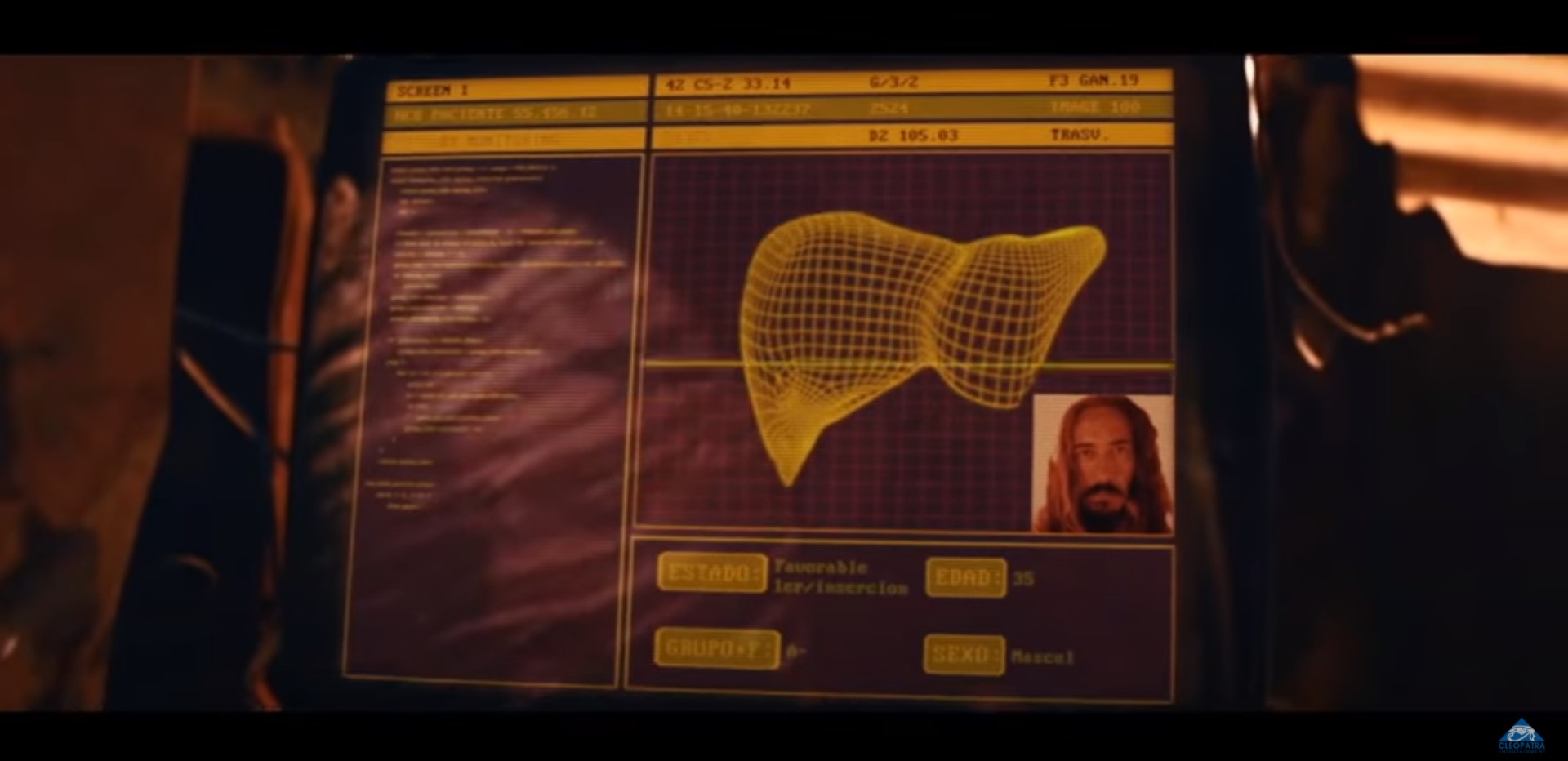
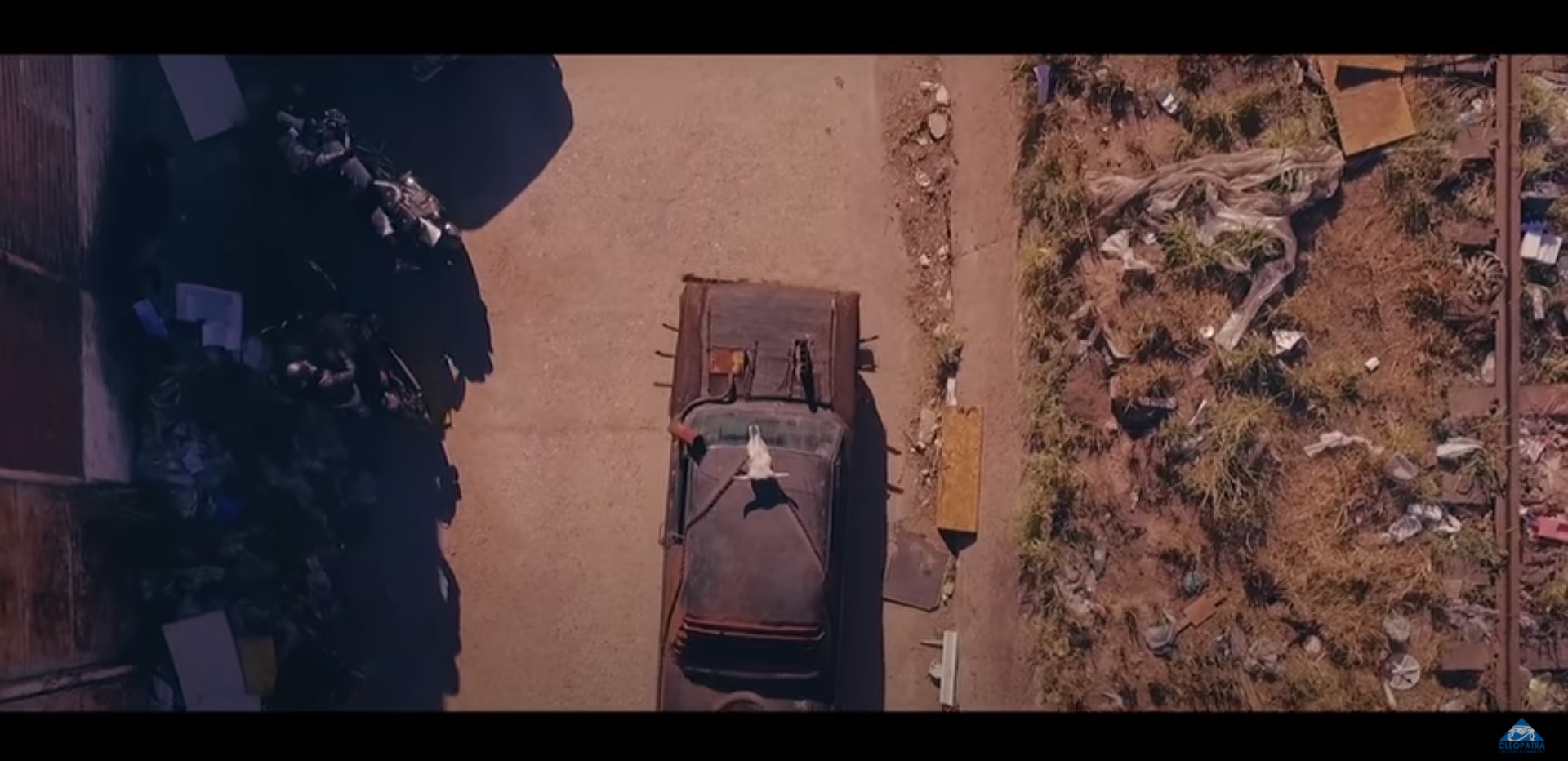
The years following the third World War, America has been overrun by the Governments very own super soldier weapons project involving splicing the human genome with pig DNA.  The creatures, dubbed Muzzles, have occupied the country 25 years later and have turned the tables on the human species, capturing, breeding, slaughtering, and eating their packaged to serve meat.  When humanity created a toxin to combat the Muzzles, they inadvertently released a gas that sterilized the entire human population and the last of the human survivors have formed a resistance who aim to seek out and destroy The Mother, the continuous Muzzle breeder no man has ever seen, but is supplied large volumes of man meat in order to maintain Muzzle production.  The task to root out the mother’s trough of carnage falls upon Rob, a human bounty hunter working for the resistance, and his mustache sporting Raksha, who never loses a fight.  Together, Rob and Rahska butcher their way through a pigsty to locate and kill The Mother, but not every human shares their hope for mankind. 

“Bullets of Justice” is a hog wild, Bulgarian-made, bulldozing bloodbath of a post-apocalyptic exploitation may-ham from the warped (or genius?) minds of co-writers Timur Turisbekov and Valeri Milev with the latter sitting in the director’s chair.  Milev, who directed the 6th installment, “Last Resort,” of the “Wrong Turn” franchise, collaborates with first time filmmaker Turisbekov and pulled out all the stops in this outrageously funny, insanely gross, and eyebrow raising delicatessen of deprave cold cuts.  Initially considered as a pilot for a television series and later tossed around as a potential short film, “Bullets of Justice” found invigoration and traction as a feature length film from premise’ author Timur Turisbekov that led to a crowdfunding campaign on Indigogo to cover the remaining post-production costs of all the material shot by Turisbekov and his friends.  Zenit TT serves as the production company.

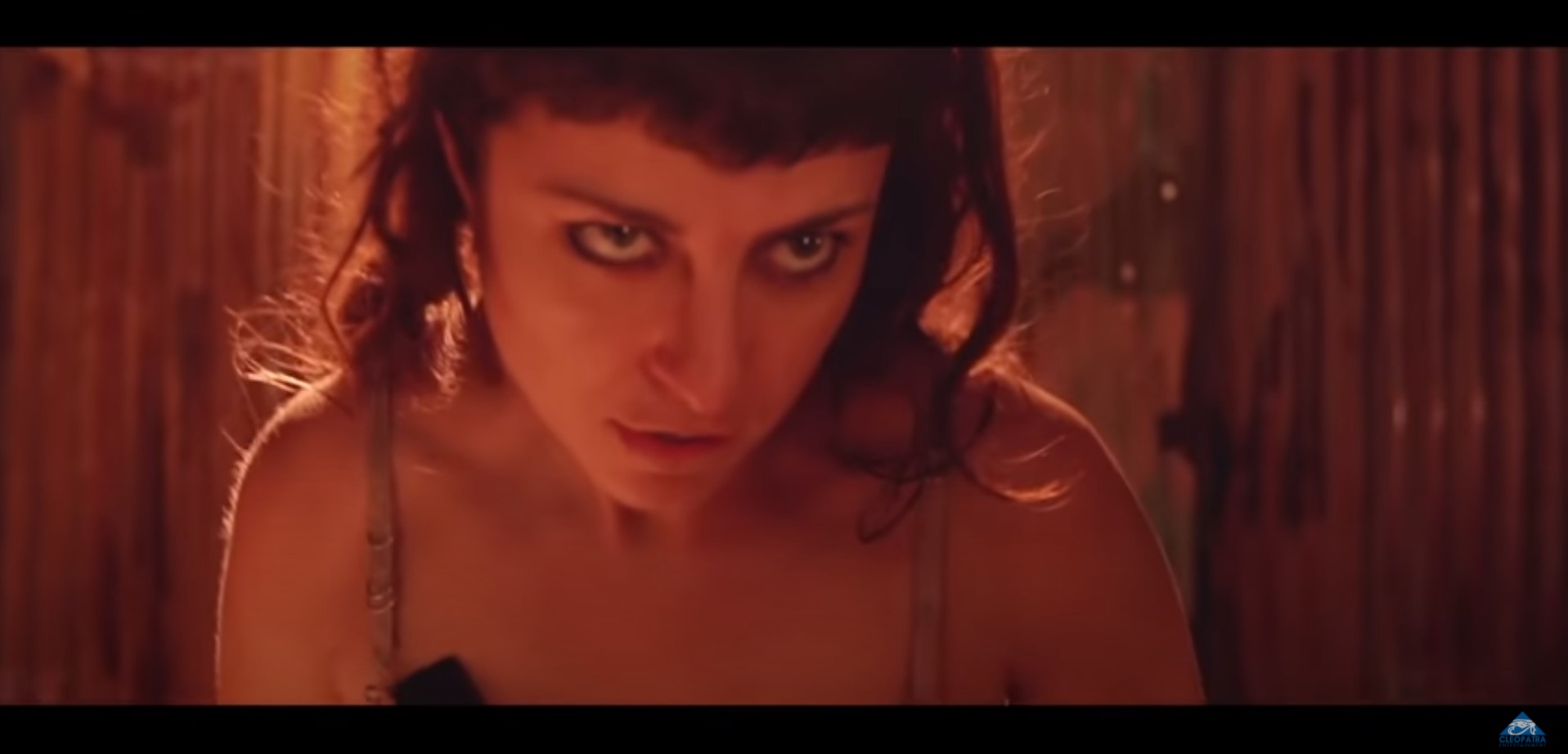
Blasting away sounders of swine, graced with the visual effects washboard abs, and is able to score tail of every single last human woman he comes across in this dog-eat-dog world, even his sister’s, is Timur Turisbekov as humanity’s last hope, Rob Justice – hence, “Bullets of Justice.”  Rob’s a stone-faced and skilled Muzzle gravedigger with a penchant for being one step ahead of everyone else and Turisbekov can act out the part of an untouchable 80’s action hero with relative ease complete with fancy fighting choreography  and a thousand yard stare and though the dubbing track is undesirable, it satirically plays into the black comedic satire of the man versus pig post-war consequence conflict narrative and there’s a score of characters with all sorts of dialect dubbing that doesn’t single out just Turibekov.  Rob’s sister, Raksha, stuns even with a stache on the upper lip of the darker attributes of Doroteya Toleva in what is perhaps her most memorable, if not most bizarre, performance that adds more of an aggressive balance to Rob’s stoic demeanor.  “Bullets of Justice” freely offers up plenty of nudity to go around from male full frontal to female full frontal though neither Turisbekov or Toleva bare them true selves as body doubles and movie making magic fill in the private parts, but there’s plenty of dirty, glistening in sweat, real skin from actresses, such as stuntwoman and actress Yana Marinova (“Lake Placid 2”) and the introduction of Ester Chardaklieva, to fill that authenticity void plus a few heftier and plump extras in the roles of slaughterhouse pig fodder.  What’s most frustrating about these quintessential apocalypse and ostentatious characters is that their development and arcs never, ever come to term of a poorly knitted post-production. I wanted to learn more about the antagonist with “the most beautiful ass,” Rafeal, played by male belly dancer Semir Akadi, I wanted to understand Askar Turisbekov’s General Askar betrayal, and even dive into what drove “Machete’s” Danny Trejo’s Godless dogma as a single parent to young Rob and Raksha in his small bit role. “Bullets of Justice” rounds out with Dumisani Karamanski, Alexander Ralfietta, Neli Andonova, Gregana Arolska, Svetlio Chernev, Dessy Slavova, and Doroteya’s twin sister, Emanuela Toleva, in a small dream role.

Being spurred as a potential television series or a short film, “Bullets of Justice” barely formulates a step-by-step story as the genesis of a surreally articulated full length embattlement with pre-scripted, pre-funded, and pre-shot scenes full of head turning high cost stunts, explosions, and with World War II replica weaponry (50 caliber, MP 40, STEN, etc) of already completed shots for a particular medium in mind, which was unfortunately not a feature. This is where post-production needed to step up to fill in the gaps, to muster visual segues, in order to piece the unsystematic scenes into a single unit of thought, but the second act inevitably goes off the rails as taut tangents snap like over tightened cable cords when Rob and Raksha team up to flush out The Mother and then one of the next scenes has Rob smack dab in the middle of being teleported, his future has developed the mode of travel through time and space, and while the viewer tries to interpret whether this is a dream or a style of the director’s auteur expression, Rob is actually teleporting to, well, we don’t really know where initially. Crucial backstory elements come whirling in to explain Rob trying to go back to the year just after the third world war to unearth where the mother might be hiding, but keeps missing the exact date. How Rob gets back to his own time is not known; Yet, these series of unexplained inconsistencies reap the benefits of such a gory good time that includes midgets firing submachine guns and dropping grenades out of the jetpack of a flying pig-man wielding a minigun on each arm – an entirely insane concept. Is “Bullets of Justice” a well-made, well-rounded film that would make your film professor proud? Probably not. Yet, here’s the kicker, a theory of mine that might explain everything. Rob Justice is actually daydreaming the entire degrading society where he is the lone savior of mankind, never missing a target, bedding all the women, idolizing a villain, and that end shot ties those concepts all together. Again, just a theory but it’s a damn good one.

A highly-recommended blood, sex, and pigs with machine guns exploitative romp and ruckus, “Bullets of Justice” overindulges with vice transfixing visual and imaginative dexterity that can now be experiences on multiple VOD platforms such Amazon Prime, Apple TV/iTunes, Google Play, Xbox, and Vimeo distributed courtesy of The Horror Collective (“Blood Vessel”). Orlin Ruevski’s cinematography is impressively expensive without actually costing an arm and leg with a well stocked cache of wide shots that capture the simulated war-torn world and girth of rural landscapes while simultaneously, through the use of low contrast and darker color tones, harness shots of grime and graveness of the Turisbekov’s pig-utter chaos that ensues. Combine Ruesvki’s expeditiously confident totalitarian style with the campy visual sfx from the Bulgarian based Cinemotion LTD, same visual effects company on “Tremors 5,” a rare and beautiful species of film emerges from the edge of rotoscoping to the go-big-or-go-home ludicrous-speed composites. Since this is a digital release, there were no accompanying bonus materials or scenes. With non-stop melees and a flavor for the tasteless, “Bullets of Justice” rattles along as a pure, uncut dystopian fantasy big on the pig and galore on the gore.


Must Watch “Bullets of Justice” on Amazon Prime!

The Dying Baltic Traditions Live in the Ashes of EVIL. “Cult Girls” (Umbrella Entertainment / DVD)

The pagan Cult, the Golden Path, remains nearly all that is left of the ancient practice as Lithuania becomes one of the last countries to be converted to Christianity in the late 14th century.  Led by an archaic, yet powerful, goddess named Ragana, the Golden Path promises to flourish once again with the power of death, reincarnation, and control through sordid misdeeds.  When Dalia and her two young sisters become prepped for a ritual of an important role in the cult, potentially leading them down the path of sex and sacrifice, a traitorous follower helps the sisters attempt to escape their emmeshing fate as the police raid the Golden Path compound ensuing a firefight that leads to the death Ragana and Dalia’s getaway, but her sisters are kidnapped and held captive by the remaining cult members.  Years later and riddled with guilt, Dalia must know what happened to her sisters and she tracks down a death metal cultist, Moloch, who seemingly has a connection to Golden Path, with the help of Samoth, a black metal fanatic, but Moloch forestry hermit lifestyle cuts off Dalia and Samoth from the rest of the world and the convicted arsonist against all things Christianity may have more up his sleeve than what meets the eye.

With a title that sounds like an all-girl goth band from the grunge era of the 1990’s, or maybe even more so from the “Scooby Doo” franchise (Hex Girls anyone?), “Cult Girls” summons the actuality of being an acute quasi-historical and dark fantasy thriller hailing from the Ozploitation capital of the world, Australia.  “Cult girls” is the second, non-documentary film from “The Matrix’ inspired “Narcosys” director, Mark Bakaitis, who directed, wrote, and edited his the multi-location sophomore film that has on location scenes from not only in Australia, but also in Lithuania, at the notable Hill of Crosses landmark, and in the indiscernible urban locations of Germany.  Bakaitis serves as producer alongside executive producer Douglas Kaplan of the diverse arts platform production company, All Edge Entertainment, based in Santa Monica, California. 

The Australian production casts an American to star as Ragana, the brood matriarch destined to rejuvenate Golden Path’s permanence, with “V’s” very own Jane Badler.  Badler brings an international presence to the feature and isn’t a stranger to films from the down under.  With the actress’s soul-seducing cutting eyes and demonic empress allure, the New York born Badler exacts Ragana’s clutching strength as an underground Pagan seeking unlimited decadent power.  However, Badler is overshadowed by the timorousness of Dalia whose polar opposite presence is granted a more favorable chunk of screen time.  Finnish born Saara Lamberg plays the humbled Dalia, living her life out of a covenant while searching out the cult that once almost stitched her into the sew of sleazy affairs to unearth the whereabouts of her younger sisters.  Dalia’s a bit of a dull principle with no substantiated efforts in finding her siblings and it isn’t until Samoth stalks her one night, recognizing the Golden Path’s symbol tattooed on her wrist and offering his manhunt services to find the expelled Moloch, an exaggerated black metal anti-Christianity anarchist in a saturating performance by Albert Goikhman.  In the middle, masked brutes, half naked women, and, fallen by the waist side, Dalia’s sisters in standalone plot point narratives that, as far as story structure goes, does nothing to motivate the narrative other than be an ostentatious aesthetic of locations and debauchery.  “Cult Girls” rounds out the cast with Tony Markulin (“MurderDrome”), Algias Karazija, Dean Kirkright, a handful of Bakaitis’s family, and Simay Argento, a distant relative to Dario Argeno playing a Cult Auntie in the film.

“Cult Girls” borders being avant-garde of an unfiltered auteur’s will in a mesh of artistic polishes and prose dialogue, but the film slides into being more of an 83 minute music video over staying it’s welcome and drudges through a repetitive stylistic cycle to an almost nearly unwatchable extent.  Yet, “Cult Girls” somehow manages to retain attention despite the chewy acting and it’s ambling story that hits a dam wall of uncertainly of where the script should head. Bakaitis shoulders the story for modern Gothicism tapped with half naked occultist, sometimes bathing in blood, and a plague of nightmare imagery that director of photography Trent Schneider tunes into well with noir vitality despite being the cinematographer’s debut feature film, but through the shiny exterior of a handful of solid mise-en-scene work, “Cult Girls” numbs the impact of the soul corrupting Pagan syndicate, that may or may not be shrouded with supernatural foundations, and the anti-Christian propaganda with half-baked violence from geriatric men, masked with Dia de los Muertos style masks, able to be kingpins of an untouchable prostitution ring façade for their occult sacrifices in broad public without a bat of an eyelash.  Granted, prostitution is likely legal in Germany and Lithuania so authorities might turn a blind eye, but brothels are a convenient opportunity for police investigations. “Cult Girls” treasures the fact of Lithuania’s languishing heritage without being overly filmic heresy by blending in shaded sleaze and death, but there lies no story in Dalia’s unenthusiastic search for her sisters in a much more preacherly themed death metal horror that confuses cult with religion.


Apocalyptic reincarnations and traditional folklores collide in Mark Bakaitis’s “Cult Girls” on DVD now from Umbrella Entertainment. The Australian release is a single layer DVD with region 4, PAL encoded format, presented in a widescreen 2.40:1 aspect ratio. Trent Schneider’s keen eye captures a grim fairytale surface of black magic masochism and, at the same time, breathtaking in the pure nature scenes, but the imagery is mostly in devoid of richer color that lingers around a bluish-gray monochrome tone and struggles with hazy details, especially around facial features, that smoothly fuzz over. The English, German, and Lithuanian Dolby Digital 5.1 surround sound mix battens down with shiplap genres of traditional Lithuania folk and modern metal from composing sound designer Erin McKimm, implementing the traditional songs of Lithuania sung by the Melbourne-Lithuania community singers, The Lost Clogs. Industrial action fills in every nook and cranny of the remaining score with decent range and depth of ambiance. While the dialogue is prominent and clear, there are spelling errors and tiny text issues with the English subtitles when the narrative lands in Germany and Lithuania. The DVD’s bonus features includes audio commentary, making of featurettes with cast and crew interviews, Bakaitis’s short film, “Mercy Kill” that serves one of the founding themes for “Cult Girls,” and music videos directed by Mark Bakaitis. For an Australian film, “Cult Girls” will feel more worldly, unlike anything else that comes out of Australia, and have partisan propaganda against Christianity, but in the end, the insidious Pagan evil, on the precipice of resurrecting, wearies on, like a tireless sermon of doom.

EVIL’s Off the Train and onto the “Peninsula” reviewed! (Well Go USA / Digital Screener)


For four years after the initial zombie outbreak, a unified Korean peninsula is completely quarantined from the rest of the world with the remaining survivors having to fend for themselves. A former Korean Captain, Jung Seok, who was one of the last survivors to escape pre-quarantine and now lives in Hong Kong, is hired for a four man team to return to the peninsula and retrieve an unmarked and abandoned truck stowed with $20 million dollars in U.S. currency. With a promise from a Hong Kong mafia boss to keep part of the loot for their recovery services in order to start a new life, the team agrees to the terms and embarks on the seemingly succeed mission only to find survivors who have gone mad, pillaging their mission and conscripting them into a malicious betting game of survival in a watery pit full of zombies.

The highly anticipated sequel to South Korea’s 2016 sleeper zombie hit, “Train to Busan,” docks into U.S. theaters and VOD services on August 21st and is entitled simply, “Peninsula.” From the bullet train rails to the a devastated Korean port, the predecessor film’s director, Yeon Sang-ho, returns with a zombie overrun post-apocalypse that completely metastasized Korean derived from a biological agent quickly spreading throughout the two cinematically unified, North and South Korea. Joo-Suk Park returns as co-writer alongside Yeon to provide heart clenching, brutal action-horror suspense and a human sense of selfless compassion that won the hearts of many genre fans with “Train to Busan.” Zombie hordes rampage down streets, alleyways, and toppling over cars, fences, and other structures as a collective flesh easting unit that specializes in dominating and ravaging for the pure motive of infection and while that sounds all hip and cool that the “War World Z” and “I Am Legend” running zombie pandemonium makes for a glitzy entertainment feedbag, the Next Entertainment World and RedPeter Film production punches down on the gas pedal of gaslighting audiences with more of a “Fast and Furious: Tokyo Drift” with zombies, revving more to the tune of an exasperated exhaust rather than finishing strong with gripping storytelling.

As a standalone film, the story doesn’t return the surviving characters from “Train to Busan.” Instead, a whole new set of characters reset the parameters of expectations, starting with the guilty conscious of the grief-stricken ex-soldier, Jung Seok, played by Dong-won Gang, who will star in Scott Mann’s upcoming disaster film “#tsunami.” Seok’s a reserved and stoic individual whose good a gun play, but isn’t the thinker when a plan is needed in place and while Dong-won Gang gives a par performance, the overall package of the lead character is sorely two-dimensional. This leaves room for other characters flourish, such as the mother and children Seok attempts to save on a second go-around. The mother, played by Lee Jung-hyun, has more grit that clearly defines her underlining hope for not only her salvation, but also her children who’ve known nothing but death, destruction, and meaning of being devoured growing up in the midst of a zombie apocalypse. On the slim change of success, she implements a plan to infiltrate Unit 631, former military turned murderous scavengers, to steal back a satellite phone and a truck full of cash while not becoming zombie chow or get caught in Unit 631’s sadistic survival methods. That brings us to the villains, the real villains, where are not the zombies, but the section 8 soldiers of Unit 631, Captain Seo (Koo Kyo-hwan) and Sergeant Hwang (Kim Min-jae). Though Seo and Hwang bring internal tension to the table, a mental game of cutthroat chess, they’re inevitably soft against the main threat, a combined effort of Jung= Seok and Min-jung, and don’t spill enough blood and craziness onto the screen to make them worthy of the antagonist position. “Peninsula” rounds out the cast with Kim Do-yoon, Lee Re, Lee Ye-won, Moon Woo-jin and Bella Rahim.

As almost methodical as it is with any second film in a series, “Peninsula” failed to be a rejuvenating and transcending sequel to “Train to Busan,” abandoning the first story’s benevolence for CGI flair that extends to not only the zombie hordes, but to the car chases. As excellent as the rendered zombies are slammed against the drifting cars can be represented, in what “Peninsula” can be described as an “Escape from L.A.” meets “Land of the Dead” meets “Mad Max: The Road Warrior,” the cars themselves are a product of computer imagery with little authentic driving happening. While the effects are not bad (they’re pretty good chiefly obscured by dim lit night scenes), the sensation of being scammed can’t be ignored as the vehicles operate unnaturally and maneuver in impossible situations without blowing a tire or upending or just frankly be dead in the water with an overheated and stress tussled engine that frags zombies left and right, becoming a collective character to have the highest kill count. That disingenuous feeling also spreads to the overly long-winded ending that tries really, really hard to capture a courageously defiant and heroic moment of family and personal redemption and much of the blame lies on director Yeon Sang-ho with a drawn out awkwardness and edit that made it seem satirical. In light of some positive words for “Peninsula,” the zombies are a greater, gigantic force that swarm on a colossally epic scale more so than the much more compact “Train to Busan” and, as aforementioned, the structured CGI isn’t of the degraded detail variety so the hordes never look cheap or obviously artificial alongside the more palatable, practical versions. What’s also interesting about “Peninsula” and what makes it separate from “Train to Busan,” which perhaps laid the foundation for, is “Peninsula” has integrated the western counterparts as English speaking actors chime in as U.S. Military, U.N. peacekeepers, or English mafia bosses based in the U.K. This challenges the Korean actors to speak a few different languages, especially English, inclining “Peninsula” as more of a global problem than an isolated Korean one.

The zombie genre isn’t just defined by the ungodly amount of undead bodies reaping the world of every living soul, but is also defined by the diversity of chaos-driven social structures people find themselves confronted with in the action-heavy “Peninsula,” arriving into U.S. theaters on August 31 and distributed by Well Go USA Entertainment. This review will not contain the A/V aspects of the release as it’s a theatrical screening of the feature, but the theater specs will look something like this: projection is in scope lens format at an aspect ratio of a widescreen 2.39:1, a surround sound 5.1 stereo mix, Korean/English/Cantonese language with English subtitles, and has a runtime of just under two hours at 116 minutes. I will note that some scenes are very dark, but this only adds to the complete blackout of a civically desolated Korean peninsula. From fast trains to fast cars, “Peninsula” has retained the adrenaline popping rampant style with weaving, bobbing, and chassis chucking zombie bodies like the ball in a pinball machine despite a facile approach, but is ultimately missing that down-to-Earth social context complexity aimed to provoke thought and shed a few tears as an inferior part two of the “Train to Busan” universe.

A Crush Can Be EVIL’s Best Instrument of Earth Devouring Destruction! “Day 13” reviewed! (Digital Screener / Breaking Glass Pictures)


Colton has grown up more quickly than he expected. His father has abandoned him, his younger sister, Rachel, and mother, he’s become responsible for the daily chores, and has taken over partial parental duties when comes to Rachel, especially when their mother escapes to a 16-day getaway to decompress. While overseeing his daily errands and sister-sitting duties, the old, vacant house across the street shows signs of life when a father and daughter move in. Curiosity gets the better of Colton as he snoops around the house and bumps into Heather, the reclusive daughter who he immediately takes a shine to, but when he witnesses peculiar activity from the father, Colton is convinced of ill-intentions toward his daughter. Colton and Heather scheme ways to prove his wickedness and the mysteries behind the old house and previous family disappearances, but when her father’s grasp grips tighter, Colton’s decides to take Heather’s safety to the next level even if he doesn’t know or understand exactly the occult dealings he’s charging himself into.

Debuting her first full-length feature film, “Day 13” is the upcoming occult horror film that has reckless teenager whims, satanic sacrificial rituals, cat delicacies, and an Earth conquering demon from director Jax Medel from a script penned by Dan Gannon and Walter Goldwalter. Distributed by the genre bending Breaking Glass Pictures, which will be released August 8, 2020 on Video on Demand, “Day 13” simmers vehemently with teenage romance coursing through ominous waters that exploded violently with an archaic doomsday-apocalypse of brimstone and hellfire. Shot in and around Beverly Hills, Burbank and other suburbanite locations of the greater Los Angeles area of California, “Day 13” gleams with a West Coast vibe that quickly clouds over darkly, casting an ominous sensation like a lurking, shark shape shadow gliding through surfer saturated beach waters throughout. “Day 13” is a production on KAPOW Entertainment, which is founded by Jax Medel along with Richard C. Brooks, giving the filmmaker complete omnipotent over her project.

Hot off the coattails of hit Amazon Prime (“Transparent”) and Netflix (“13 Reasons Why”) series, Alex MacNicoll expands his portfolio further in the feature film market beyond his roles in “The 5th Wave” and “The Last Rampage,” tackling the occult playing a high schooler. The then 18-year-old during production, MacNicoll just left the grades of 9 through 12, but has been an actor since the age of 14. “Day 13” marks his second time playing a character named Colton who has eerily the same personality traits as his “Transparent” Colton that exudes the nice kid persona. As Colton Fremont, MacNicoll has to grow up sooner than he should when his father skips out on the family, a fact that’s barely divulged of any detail. MacNicoll is sure footed in his portrayal of a young, dumb, but great kid, bored out of his mind with the best intentions at heart. When a father and daughter move into the neighborhood’s spook house next door under surreptitious conditions, Colton becomes that old idiom, the mice will play while the cat is away, as he begins to spy on his neighbors, become enthralled by the recluse daughter, Heather (Genevieve Hannelius), and begins to routinely break into her house to see if she is okay from her strange and strict father. The father, who all we know is her adoptive father and has those strict rules we mentioned, is played by “Karate Kid’s” very own Cobra Kai master, Michael Kove. Kove’s relatively hidden away from the camera, given the perception his character, Magnus Travold, is up to no good behind the drapes until he’s hunting for intruders with an axe through the creaky halls and staircases of his new home. The dynamic between Travold and Colton is non-existent and the dynamic between Travold and Heather also sparks little hesitation about the old man’s intentions, but we’re privy to his cloaked dealings of rite and Heather’s unexplained abdominal pangs and it’s as if Jax Medel is literally drawing a picture of a visual 2+2 for audiences who may not connect the dots, fabricating devil perversity for the sake of story structure. “Day 13” rounds out with a supporting cast that includes “Angel 4: Undercover’s” Darlene Vogel, Meyrick Murphy (“The Walking Dead”), and JT Palmer.

While Medel’s experience hovers around the realm of the short film, there’s immense growing pains in her transition into feature film for the young filmmaker. Style, story structure, perception of time, and character development bare the brunt of Medel’s inexperience. The style is ultimately the best out of the four talking points as it’s just a personal opinion and observation that points out the plain rudimentary look of the picture that isn’t establishing a personal touch or a voice of her own talents. Medel can piecemeal a film together, but without any substance to stand out amongst the fray. As for the story structure, it collapses on itself nearing the end of act 2. Colton is now seemingly obsessed rather than concerned with Heather, purchasing nearly $1000 (on who’s credit card and not have the bank ping it?) worth of video equipment to spy on her and her father. Heather, even though she’s aware of Colton’s spying, only embraces on baseless accusations toward her father which blurs the line on Colton and Heather’s bond. At this point is where the perception of time goes into hyperdrive that accelerates their young teenage coupling into a quizzical love for each other without so much of a courtship of any sort, Colton’s deranged obsession with the house and residents that structures more curious enigma barriers over the house itself rather than Heather, and the nights leading up to the twisted climatic finale that skips stirring up suspense with frantic bewilderment of the players wondering the house looking for one another. When Colton’s best friend, Michael, decides to help him spy on and infiltrate into the neighbors house without so much batting an eye, I think he was also caught up in Colton’s infectious mania because all Michael wants to do is go out on his boat and be with his girl.

Countdown the days until “Day 13” hits online video on demand retail shelves, such as Amazon, iTunes, Google Play, Xbox, Playstation, Vudu, Fandango & Vimeo, courtesy of Breaking Glass Pictures. Since the screener was digital, video and audio technical specs will not be critiqued. A couple of things to point out about the inherent A/V aspects are important to note if deciding to stay in one Friday night to watch a scary movie. Though much of the film bares little effect of any kind and relies more on practical realism for the majority, when the visual effects by Mat Fuller (“ABCs of Death 2”) do come into the fold, they are slightly clunky, but by and large, not bad considering “Day 13’s” indie budget and are sorely underused when the full of demon apocalypse takes shape. The other takeaway from this review is about the odd ambient soundtrack as I wasn’t sure if I was watching Colton, Heather, and Travold in a house or on an 18th century mast ship. The house’s creaky hardwood floors sounded more like the swaying of a the Santa Maria pulling up into Plymouth Rock. There were no bonus material included with the digital screener nor were there any bonus scenes during or after the credits. “Day 13” has an intriguing premise of fraught young love topped with black magic, but, like the old superstitions of the number 13, Jax Medel’s debut fell upon bad luck, bad timing, and bad basics.