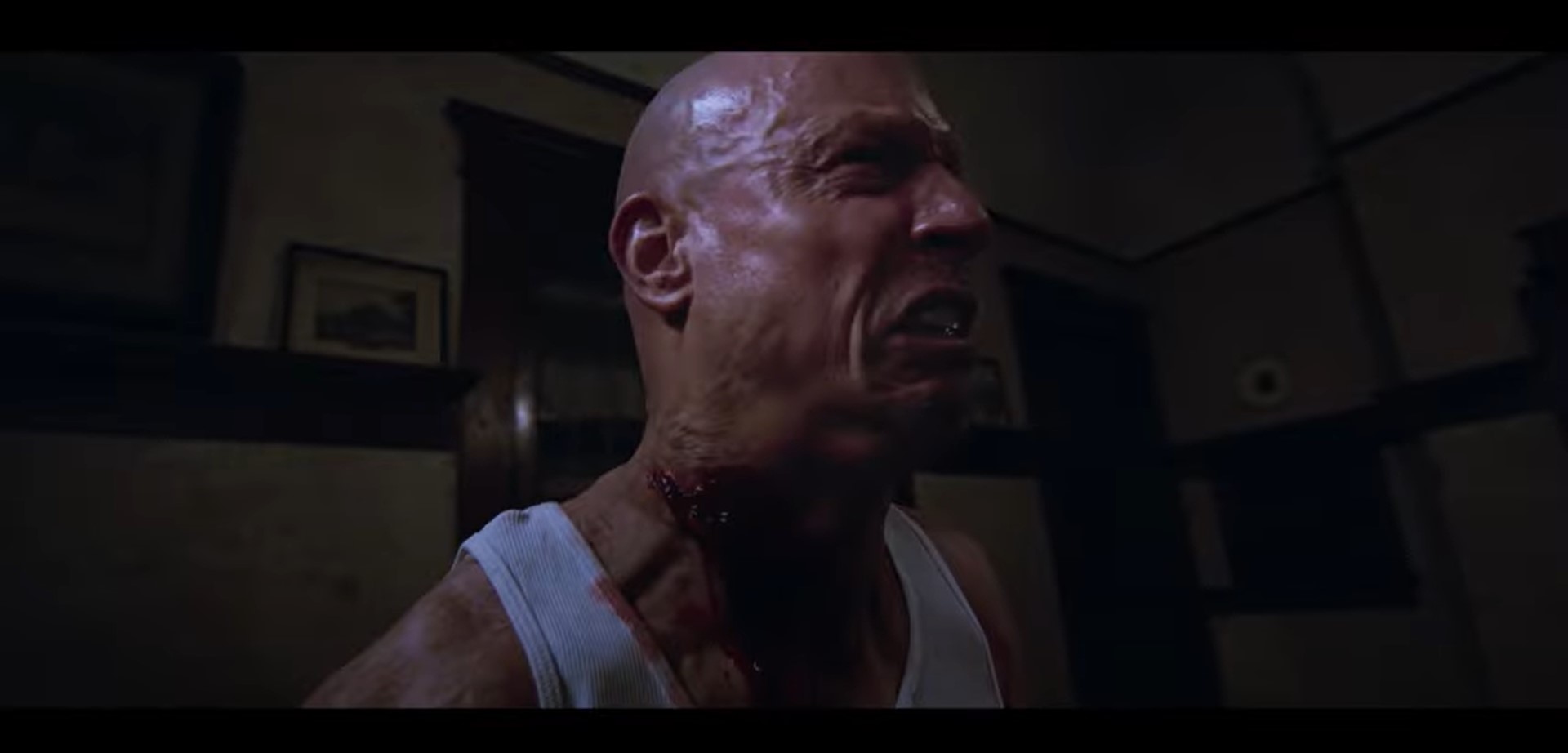
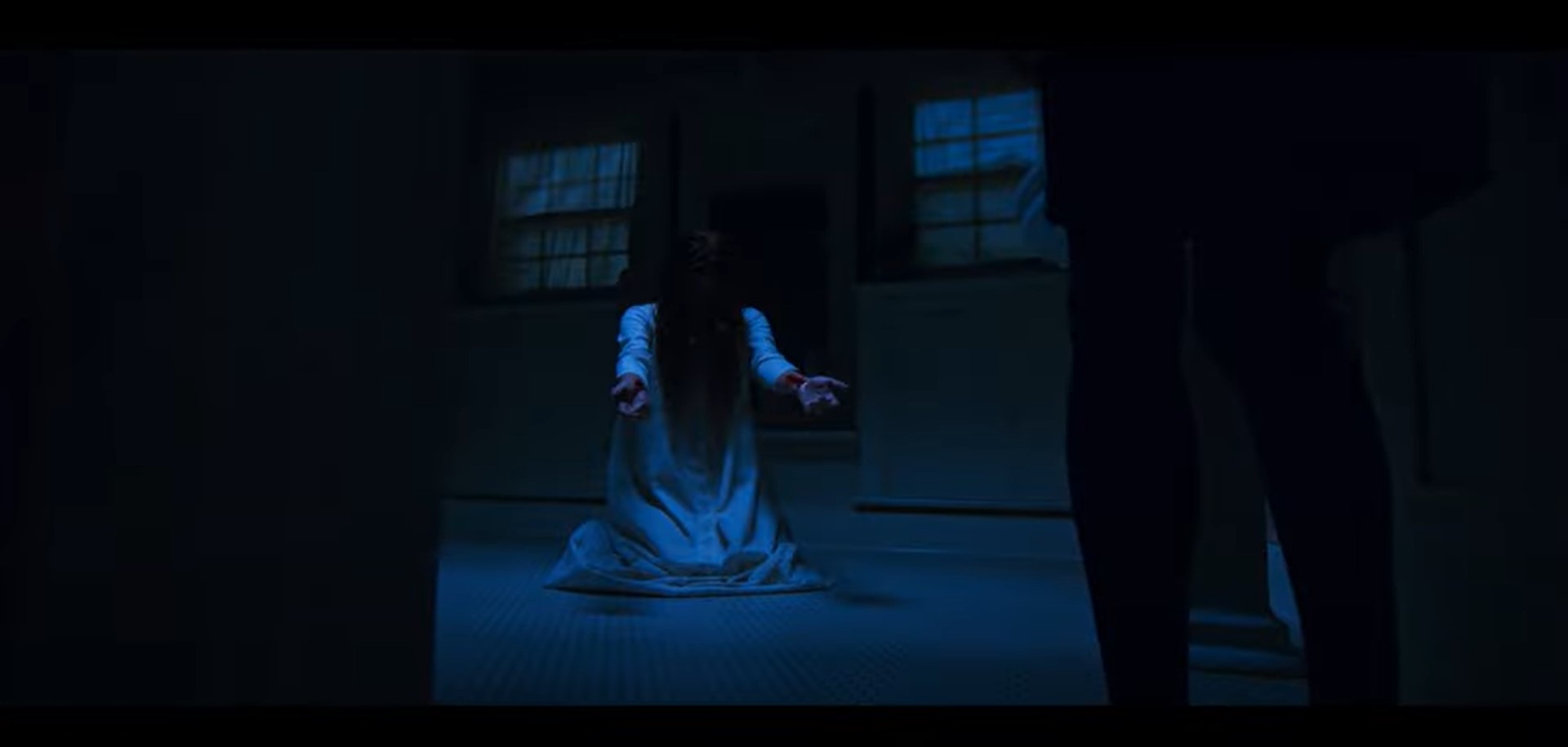
Open Up Your Mind to EVIL! “Conjuring the Beyond” reviewed! (DVD / Breaking Glass Pictures)

“Conjuring the Beyond” on DVD at Amazon.com!

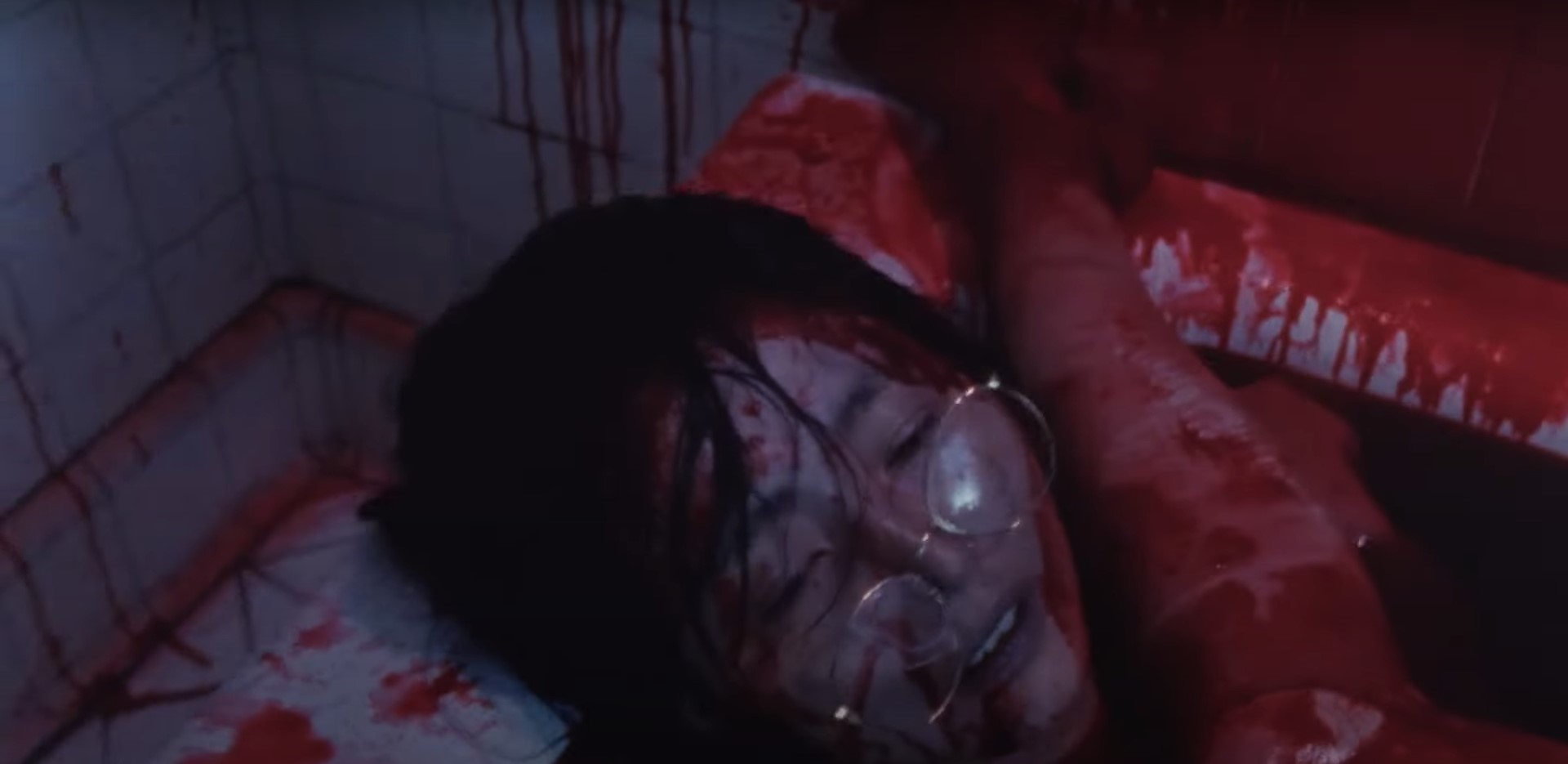
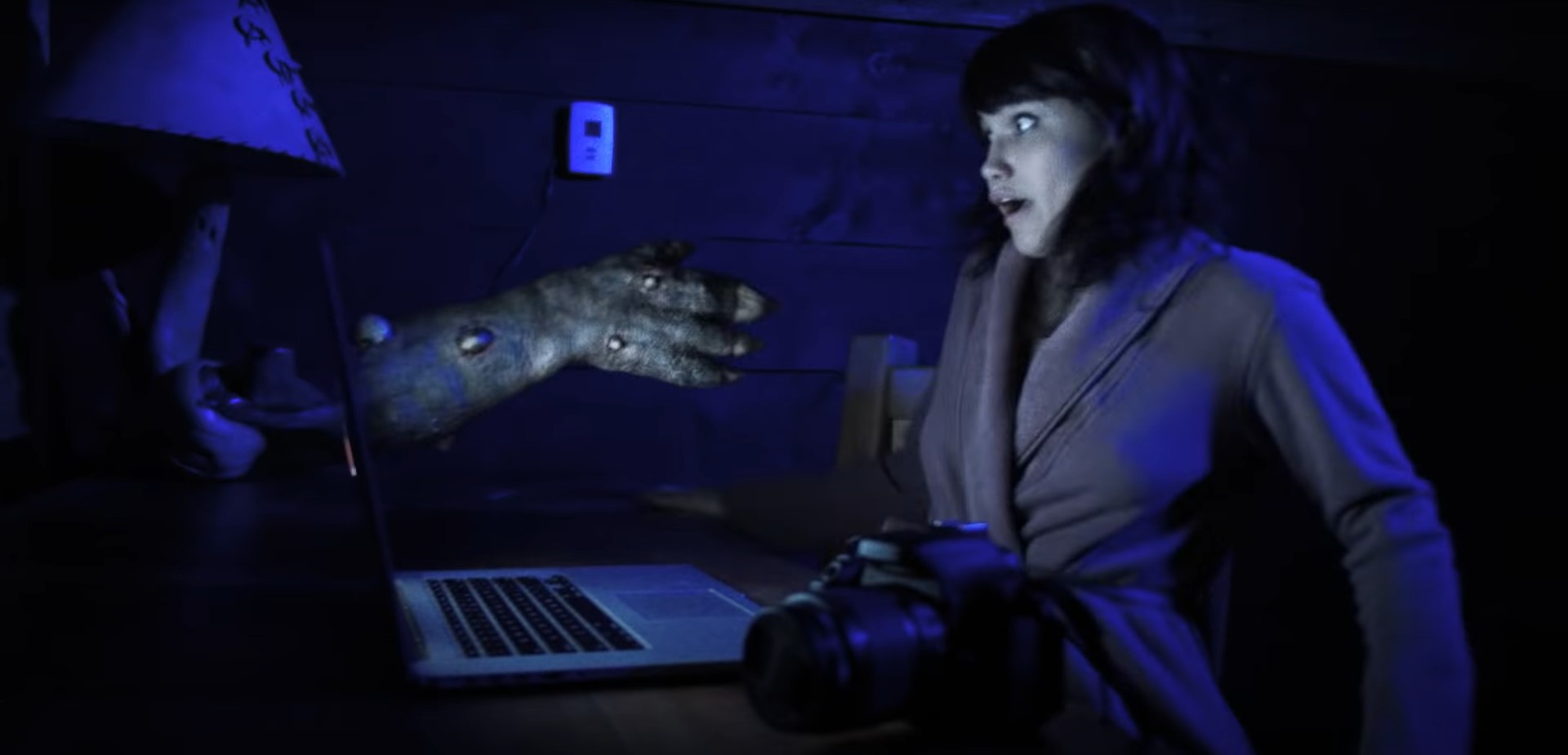
Divorced and left to wallow in her own self-pity, Wanda Fulcia moves into her brother and wife’s house but her inability to secure a job and act responsible has proved difficult with her hosts as she continues to ask for favors, such as borrowing her brother’s car to drive to a paid sleep study in the middle of a nearly deserted small town.  Dr. Pretorious, the head clinician of the study, seeks to hypnotize his four, sleep paralysis unaffected, participants to open their portion of the brain to produce night terrors and sleepwalking in order to treat the condition.  What the participants are really opened to is a nightmare state of being paralyzed while aware of an old, animalistic hag surveying them as they lie powerless to move.  At dawn, they all convey recalling the same dream and realize one of them is missing.  The recorded video shows the missing participant sleepwalking from his room without a trace of where they’ve gone.  The next night, the ordeal repeats itself and another member of their party goes missing.  Wanda and those left must uncover the mystery behind their night terrors before they back to sleep again. 

Borrowing from the tall story superstitions that sleep paralysis was the work of demons while also plucking ideas from Stuart Gordon’s perceptually other-dimensional horror film, “From Beyond” and James Wan’s spirit-investigating “The Conjuring,” Calvin Morie McCarthy writes and directs his own unofficial, unauthorized, and unsanctioned sublevel spinoff with “Conjuring the Beyond.” The Vancouver, Washington born 30-year-old filmmaker has been through his fair share of direct-to-video horror refuse, even etching himself into the running joke of “Amityville” titled cheapies with his entry “The Amityville Poltergeist” that has garnered a general public rating of 2.2 on IMDB.com. That low score doesn’t tarnish our objective goal to look at “Conjuring the Beyond” impartially without the blatant cash-in title affecting our sound judgement because, trust me, we’ve seen our lion’s share of reused, reworked, and rehashed titles. The film marks the first 2022 release for McCarthy and is produced by Chad Buffet of the Renton, Washington based special effects and props company, Raptor FX Studio, along with Joe Dietrich’s co-created company 7th Street Productions with McCarthy and Richard Wolff of Breaking Glass Pictures who distributes the film with an at-home release.

At the heart of the story is Wanda Fulcia played by Victoria Grace Borrello in her feature film debut. The Loyola University graduate of the arts, Borrello offers a new face and a serious craft performance toward a recently divorced person who has become lost in themselves. Wanda’s written to be entrenched into any kind situation that befalls her whether be with her own troubles of self-discovery or the beleaguering troubles of a cerebral doorway opened to let a malevolent entity into her subconscious. Who opened that mental gateway is the potentially guileful psyche-physician, Dr. Richard Pretorious. Pretorious, as all horror fans know, is a homage to “From Beyond’s” Dr. Edward Pretorious, the main antagonist who used a machine called The Resonator to expand a person’s mind into other dimensions. “Mutant Vampire from the Planet Neptune’s” Steve Larkin certainly does not portray the diabolism in her version of a Pretorious Doctor but there is this underlining itch that can’t exactly be scratched regarding the character’s true intentions. This unfinished business happens between both Wanda Fulcia and Dr. Richard Pretorious and that takes away from completing well-rounded characters who never see themselves cross that arc finish line. Essentially, both are stuck in a disappointing stasis of unfulfillment, and their morals and their emotional baggage are carelessly left to the wind. I found the secondary principals more impressive and a little more understandable with tidbits of themselves being dropped like breadcrumbs through the variable time on screen. Cocky boxer Porter (Jon Meggison, “The Haunting of Ravenwood”), a tarot card floozie Margo (Jax Kellington, “Cross Hollow”), and midwestern drunkard Theo (Tim Coyle, “I Need You Dead!”) are the other three participants of the sleep study and each provide a unique image that continues to keep us interested and where they possible might end up retired on the runtime scale. Neil Green, Erik Skybak, and Chynna Rae Shurts as the skulking Sleep Demon.

With an amusing banter of well-written dialogue, a passable night terror demoness, and a nodding homage or two to a couple of horror powerhouse films, “Conjuring the Beyond” has scrappy potential to be something a touch more than just a capitalizer of better and already completed novel ideas. “Conjuring the Beyond” ends like an unfinished thought that asks more questions than provides answers in its thematic night terror framework. Shurts’ Sleep Demon is sorely underused and mostly not present to be invoking scares from the feature. Shurts is cladded on a budget but well adequate to eerie up the antagonist enough with fake long nails, fake gnarly teeth, and a dark shawl or robe attire that slinks and creeps in-and-out of alert sleep paralysis patients. McCarthy also dives into another theme of shared experiences or mutual dreams that then send a shiver of petrifying terror zipping through a collective’s inner being. More precisely in that theme is one’s person’s affliction affects or infects the surrounding others; we also see this at the beginning with a Wanda’s brother Nick and his wife negatively feeling Wanda’s ability to rebound from an ugly divorce. However, not all scenes make complete sense. The prologue of a man trembling in his bed and watching the Sleep Demon slither into his room before snatching him from his bed is detached from the trunk of the story much like a dead branch lying next to not it’s tree provenance. Yes, the branch part of a tree, just not this tree. Other aspects of the film also don’t make much sense or lack explanation is the participants who disappear reappear as sleep walking zombies under the control, possession, or will of the Sleep Demon and to what purpose is far from being seen.

“Conjuring the Beyond” evokes images of demons and terror onto a DVD home video from the Philadelphia based, provocative independent film distributor Breaking Glass Pictures.  The MPEG-4 encoded DVD5 is a NTSC, region 1, unrated U.S. release presented in a CinemaScope widescreen 2.35:1 aspect ratio.  The lossy codec compression appears to sustain a relatively good picture throughout the 90-minute runtime with little-to-no banding or issues and toned-down artifacts concentrated more so around darker scenes around the delineation of objects in the background. Noticeable post-production issues don’t go unnoticed when the visual effect of compositing CCTV footage on a computer screen was left undone and so there is a scene where the sleep study participants and Dr. Pretorious are huddled around a laptop staring at a blank, black screen while providing commentary on the disappearance of a fellow member of their group. The lossy English dual-channel stereo mix offers a mediocre, yet still strongly inclusive, audio output that has slight issues maintaining consistent decibel levels at times. Dialogue can sound muted at times or distant and then suddenly be more robust in the same breath. English subtitles are available if opted. Depth and range work well with the fear atmospherics and environments. The release is feature only with only a static menu on the DVD that’s encased in a normal black snapper case with egregiously deceptive artwork of a woman floating above her bed; no floating happens in the film. Perhaps less misrepresentative if titled something more original, “Conjuring the Beyond” holds tightly to the coattails of other iconic horror films but tweaks the story just enough to tease a fresh take toward the unharnessed and terrifying dimensions stemmed by the power of the mind.

“Conjuring the Beyond” on DVD at Amazon.com!

Hypothermia is EVIL’s Coldest Best Friend. “Frost” reviewed! (Cleopatra Entertainment and MVD Visual / Blu-ray)

Get the Bluray and Soundtrack for “Frost!”

Seeking to reconnect with her estranged father, Grant, after five years, pregnant Abby drives up the mountainous rural cabin.    Though not the warmest welcome she was expecting with the sudden pregnancy announcement dropped into her father’s lap, the two manage to find common ground and connect again while reliving memories of Abby’s mother.  Their threadbare bond sparks an impromptu finishing trip to the local creek and as the begin to open up a little more with each other, their car accidently runs off the road and declines down a gradual mountain decline before becoming wedged in a thicket of tree branches.   Abby, stuck in the passenger seat facing a steep cliffside dropoff, is trapped and injured.  As Grant goes for help up the mountain, a severe storm rolls in bringing harsh weather and freezing temperatures down upon Abby who desperately tries to keep warm and prays to not go into early labor before emergency rescue can come to her aid. 

Snowy winter thrillers can be harrowingly exciting as much of the plot is fused with the icy and treacherous environment that make lives at stake higher. The snow and the ice become threatening characters and when combined with, at times, a more conventional and concentrated story antagonists, foreseeing path for survival can often feel frigidly impossible. There’s little room for error, there’s little room for warmth, but there’s always an unpredictable heap of bone-chilling snow as far as the eye can see and the elements are only but nature’s natural attributes man has yet to confidently conquer. “Frost” plays into mother nature’s strength when squalling down below freezing wind and snow upon a woman trapped in her own car. The 2022 released, Brandon Slagle (“Attack of the Unknown”) directed “Frost” goes for the jugular in a woman versus nature survival suspenser penned by frequent Slagle aide-de-camp Robert Thompson. The “Aftermath” and “Crossbreed” screenwriter adapts “Frost” from a story by “From Jennifer” writer-director James Cullen Bressack. Shot during the winter in the San Bernardino mountains, “Frost” is produced by the film’s star Devanny Pinn and Cleopatra Music’s Vice President Tim Tasui under the bankroll and production support of Bressack’s JCB Pictures, Inc., Snow Leopard Entertainment, Sandaled Kid Productions, Multiverse Cinema, and Cleopatra Entertainment founders Brian and Yvonne Perera along with Pinn’s co-star Vernon Wells and The Asylum’s Jarrett Furst serving as associate producers.

“Frost” fits into the solo survivalist subgenre category and only characterizes with three actors and a trained wolf. At the tip of the cast spear is independent film producer and broad-brush horror actress and filmmaker Devanny Pinn (“Nude Nuns with Big Guns,” “The Dawn”) in the principal role of Abby, a woman seeking to rekindle her relationship with her reclusive father living in the mountains because of her pregnancy. Genre legend actor Vernon Wells (“Innerspace, “Commando”) opposites Pinn as Abby’s estranged father who’s happy to see his daughter but feels initially threatened by the pregnancy announcement. Understanding the dynamic between Abby and her father was easy as we’ve seen this type of teetering relationship before from a slightly rebellious, new age child returning home to find familiarity with a widowed and waning parent. Pinn and Wells pull off the several stages of reconnecting from the heated exchanges to the sappy moments of loss to the unexpected joy the two characters can bring out of each other, but what’s more difficult to comprehend is the source material. What causes the father and daughter to divide in the first place and how does that division’s role play out in the perilous predicament of an isolating car crash during a severe winter storm? For the sake of critique, one could say that their dissolving disputable divisiveness ends in irony as if the cosmos ultimately pulls them a part in a fitful storm of rage. Wells does what he can to make the initial crash scene comforting while exuding a positive outcome, but the veteran actor appears blank to severity, especially as a woodsman father soon to be a grandfather. Much of “Frost’s” edge of your seat trepidation is shouldered upon Devanny Pinn to take reins of providing the emotional embattlement against the unforgiving weather elements and animal food chain. Armed with nothing more than the dwindling car’s battery to provide heat and a charged lighter as well as whatever lures and first aid accompaniments in her father’s tacklebox, a rather lightly dressed, nearly to term pregnant Abby is pinned to her seat, backed to the edge of a cliff, and must face the cold and wolves until her father retrieves a rescue party. Pinn does what she can to fill in a quivering battle between life and death with a story that’s heavily reliant on a cigarette outlet to ward off a snarling wolf and can burn through seat belts in a single charge. That’s independent move magic for you, folks!

Any kind of solo act surrounding a single location, remote at that, with no other actor or other mobile organic object to feed off and bounce off its energy is a difficult task to undertake, especially on a hyper cost-efficient production.  Slagle’s “Frost” is certainly not immune to the difficulties and the filmmakers, and his crew and cast are well aware of the challenges to make the survival thriller engaging despite fluffing and padding the story with filler clichés and needless setup.  The production and location value are comparatively impressive against the limitations of the budget with a practical and computer-generated encroaching tundra of snow, ice, and wind that can insidiously invade a cold snap into the viewers bones, creating that intended atmospheric of a hell freezing over complete with the teeth of a hungry wolf, a biting rime, and deadly falling icicles.  More obvious than what perhaps Slagle and creative team realize is that “Frost” relies terribly on the shocking climatic scene, a scene so unimaginable and so appalling that it hits all the right gut-checking spots, but the setup to the scene and all the trials and trepidation Abby has to endure doesn’t quite mesh with a well-rounded plight that usually cradles an emotional pull string for the viewer to continuously root for and support those in the thick of the predicament.   Honestly, that heaviness for empathy never provides the emotional weight toward the character and never sparks that flame of hope to keep us warm and fuzzy on the inside to then quickly be extinguished by merciless mother nature. There’s also the plausibility of survival and the way that survival instinct is applied that makes “Frost” too far-fetched to be a strong contender in the subgenre. At near subzero temps, Hypothermia can set in in under an hour. In “Frost,” three days of severe snowstorm pummeling has past, segued by scene time stamps, before Abby becomes a popsicle and is delusional. I’m pretty sure with almost nothing to eat and very little warmth, Abby would have expired in under 48 hours. Yet, the 72-hour mark becomes the most chilling, literally and figuratively, in “Frost’s” invigorating third act snack that’s more abominable than it is nutritional!

Cleopatra Entertainment, the cinematic subsidiary of Cleopatra Records delivers a 2-disc Blu-ray set for Brandon Slagle’s icy thriller “Frost.” Presented in a widescreen 2.35:1 aspect ratio, the 91-minute film has a crisp, lively picture compressed without much to complain about. Banding issues are held to barely any and the details don’t whiteout during the wintery whiteout, leaving key delineations to be present in bold contrasts, especially during the severe snowstorm scenes. Foliage looks thick and green before for the storm with a lot of good textural details on the impaling branches that perforate the car and Abby. The English language 5.1 surround mix conveys the problematic sound design issues that have been consistently found in many of Cleopatra’s releases. Mostly in regard to the dialogue tracks, the dialogue tracks pick up static and other minute ambient noise during microtonal intervals, creating an unwelcoming and stark contrast with a dialogue mix that cuts obviously cuts in and out between character speak and isn’t simultaneous with the score. However, much like with other Cleopatra releases, the score is production and distributor company’s best trademark with a full album including music from various artists, such as L. Shankar, Big Electric Cat, Terry Reid, Rick Wakeman, and amongst others. The 2nd disc, an audio CD, contains the 15-song soundtrack. Other physical noteworthy aspects of the release include the double-sided cover art – one filmic and the other CD listing with both include different variations of the front cover as well as a translucent Blu-ray snapper cast that adds to the snowy theme. Software bonus features include only the theatrical trailer and a still gallery slideshow. Exposure to “Frost” is deep freezing frills for most of the picture but if able to withstand the coldshoulder of cliches, the mare peaks with a blood-filled and tasty horrific morsel that makes the frippery first half worth the wait.

Get the Bluray and Soundtrack for “Frost!”

All You Will See is EVIL if Blinded by Grief. “They Live in the Grey” reviewed! (Acorn Media / DVD)

Not the Blue, Not the Red, but the Grey!  “They Live in the Grey” on DVD!

CPS investigator, Claire Yang, struggles to cope with the untimely loss of her young son.  The tragedy forces her to push away her husband and have suicidal thoughts.  What’s also driving Claire further from the edge of sanity is her ability to see glimpses unhinged, and sometimes physically harmful, spirits.  When a child-protective case comes across her desk to look into the possible abuse of a young girl, Claire learns quickly that it might not be girl’s parents abusing her.  Tormented by an angry supernatural entity, Claire walks careful and hesitant thin line of keeping the girl with her family and attempt to prove that the parents are not responsible for the bruises and cuts, but when upper management pressures her to close the case at the school’s behest and a variety of ghastly come and go across her path, the churning burn of hurt and guilt grows inside her as she confronts her personal demons while trying to do the right thing for the abused girl in the middle of it all. 

“The Sixth Sense” meets “The Conjuring” in The Vang Brothers’ 2022 supernatural thriller, “They Live in the Dark.”  As the sophomore written-and-directed project for the Fresno, California raised Abel and Burlee Vang, following up on their 2016 release of the moderately successful supernatural and social media mashup debut, “Bedeviled,” continuing to venture off their solo work and into a collaborating unit, “They Live in the Dark” tackles various topical concepts and troubles with overwhelming grief and how it manifests negatively on an individual and family level.  Previously once titled as “The Uncanny,” the story is set in nowheresville, U.S.A., the brothers really set the tone that this story, or more realistically its themes and messages, are broad and non-exclusive and we also see that in the cast for the film, a segment that we’ll dive into further in the next paragraph.  The Shudder exclusive film, “They Live in the Grey,” is a production from Standoff Pictures in association with Whiskey Stream Productions with the Vang Brothers producing alongside former filmmaker-turned-film academic-turned-filmmaker Stephen Stanley.

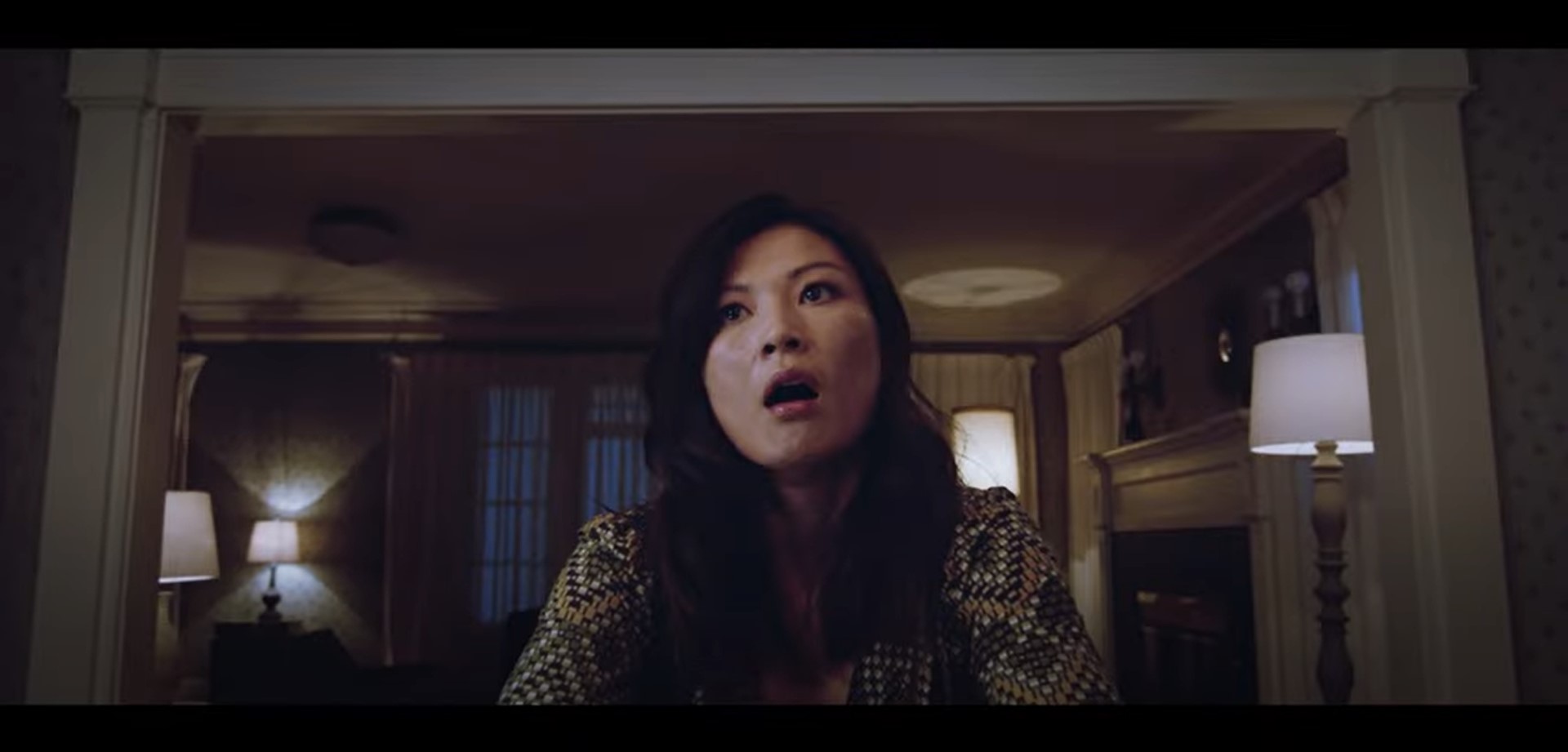
Coming from Hmong ancestry, The Vang Brothers found personal importance to cast mostly Asian-Americans for the film.  Taiwan born Michelle Krusiec (“The Invitation,” “The Bone Box”) plays the lead and is the very first character we meet in an awkward and frightful position as a woman attempting suicide by hanging herself near the home staircase.  Immediately, we don’t know what we’re exactly in for, but we know when we’re introduced to the threadbare Clair, she has a major depressive factor that beleaguers her existence to the point of removing it from the equation all together.  The Vang Brothers thoughtfully shroud details into exactly what’s devouring Claire from the inside out and keep close to the chest in securing that ace of revelation in the back pocket until the time is just right in the story to unveil the dealt bad hand.  As the details trickle and we learn more about Claire’s disintegrating family life, we also learn of her ability to see lost spirits and how she handles those more than often visceral visions is dose up on medication that ultimately factors into her current state of mind.  Though I wouldn’t say the performance pops offscreen, but Krusiec does cruise through the role with meticulous character conditioning and the actress can tremble and look scared with the best in the business, anchoring Claire as the rooted principal and establishing a tone that works with the casted cohort.  Ken Kirby, who plays Clair’s estranged beat cop officer husband Peter, goes outside the usual comedy element for the Vancouver-born actor-comedian, walking the emotional pathway of a husband on the ousts by no fault of his own.  The heartbreaking tension that’s both expressed outward and internalized between the teetering from loss parents, husband and wife, fills the scenes with raw and relatable emotion and barrier-laden endeavor to fix what is thought hopeless. As Claire becomes closer to the case of Sophie Lang (Madelyn Grace, “Don’t Breathe 2”), nothing is as it seems from a family already on shaky ground with not only the school system’s case of suspected abuse, but also inwardly as past troubles fester toward a frenzy. Ellen Wroe (“Final Destination 5”), J.R. Garcia, Willie S. Hosea, and Mercedes Manning fill out the cast.

The Vang Brothers accomplish phenomenal representation in a female leading role with the talented Michelle Krusiec. Reaching back into my mind to access the cache of catalogued films I’ve watched over the decades, I find myself in extreme difficulty in recalling an American made story where an Asian woman female lead is not a martial arts expert. The Vang Brothers with “They Live in the Grey” expand the palette with a supernatural scenario that could curse not just the single white female rearing and protecting their child from a plethora of supernatural predators, but also afflict a person of color who has already suffered tremendously and who has to still have to find and work on themselves in the muck of overcoming a millstone. Instead of a double whammy, “They Live in the Grey” is a triple whammy of pitfalls that rival similar grief-stricken genre films like “The Babadook” and “The Orphanage.” “The Vang Brothers elicit a stillness in their shooting of an extremely melancholic yarn by not being too fancy with their camera footwork that doesn’t track or follow, no hand-held or drone, and is allowed to have a more natural tone with an unfiltered gravitate toward the austere and the tormented. Though nothing too striking to make a spectacle from Jimmy Jung Lu’s cinematography but each shot is carefully setup and the slow zoom in and out is effective enough in breath-holding moments. Early into the story, the first can be choppy and disorganized with the back and forth of present and past and though heavily focus or strict on the narrative’s virgin veneer, there’s distinguishable indication to the audience that we’re looking into the present viewfinder or the past’s. As a whole, the scenes blend together in a seamless patchwork that hinders more than helps.

“They Live in the Grey” extends that lack of light and vitality for the living and the dead. Now, you yourself can experience the saturnine of atmosphere of the film that lives on DVD from Acorn Media International. The region 2, PAL encoded, 124-minute DVD comes from our overseas friends in the United Kingdom with an 18 certification for strong injury detail – aka – stabbing and blood. Presented in a 2.39:1 widescreen aspect ratio, the 2-hour runtime coupled with a compressed presentation appears to have shepherd in some compression issues, such as banding and fuzzy details. The picture is not the sharpest it should be with old wooden house’s textures could have added texture to the nerve-wracking tension builds. The English Dolby Digital 5.1 track represents a solid audio inlay with clear dialogue and a diverse depth and range. The musical soundtrack is subtle but works hand-in-hand with the story. Optional English subtitles are available. Bonus features include only a behind-the-scenes photo gallery. When it comes down to brass tacks, a strong story is a good story and “They Live in the Grey” may miss a few technical marks, but the horrid truth of grief is personal, potent, and packed full of demons.

Not the Blue, Not the Red, but the Grey!  “They Live in the Grey” on DVD!

The EVIL Anti-Abortion Film You Never Knew You Wanted. “Evil Dead Trap 2” reviewed! (Unearthed Films / Blu-ray)

Aki is a self-solitude movie theater projectionist who avoids talking to men and to pretty much everyone in general.  Her high school friend, Emi, is the complete opposite, a socialite of sorts, with a previous celebrity career as a singer and a high profile television news reporter.  While Emi thrusts her unusual interests upon encouraging her married boyfriend, who is more than game, to sleep with Aki, the projectionist has a secret of her own in being the culprit of a string of grisly murders involving young women with their ovaries ripped from the inside out.  When these murders occur, Aki is in a feverish, yet reserved state of mind that borders being sexually and dangerous uninhibited and totally blackout deranged.  She discovers mementos of the night before in her home and questions her actions, especially as the kill count grows and Aki’s mind wanders between reality and the supernatural as a mysteriously eerie boy keeps popping up everywhere, even at the crime scenes.  Emi’s dangerous game and her smug prodding of Aki sends her friend down a rabbit hole of a disturbing past. 

If you’ve seen “Evil Dead Trap” then essentially forget everything you knew about the first film as the sequel is not a direct follow-up and concerns a different tale of prenatal byproduct revolving around a common moniker that connects both films.  That name of evil that binds would be Hideki with the sequel titled “Evil Dead Trap 2:  Hideki,” bestowed the subtitle to ensure proper acknowledge.  Another aspect that’s different is the person in the director’s chair as “Akira’s” screenwriter Izô Hashimoto helms the 1992 sequel from a script cowritten between Hashimoto and the then early in career Chiaki Konaka who would go on to pen teleplays for a number of Ultraman series and get his hands colorfully deep within various anime project, such as the Digimon series.  With such anime talent behind one of the more brutally savage renditions to sow the seeds early in the J-horror supernatural genre that incited the widely popular “Ringu” and “Ju-on” franchises less than a decade later, “Evil Dead Trap 2” pelts a supernatural and homicidal esoteric storyline riddles with themes of abortion, guilt, and deriding judgement.  Naokatsu Itô and Mitsuo Fujita produce the Japan Home Video production, the company behind metal-horror “Tetsuo” and the Yakuza-zombie film “Junk.” 

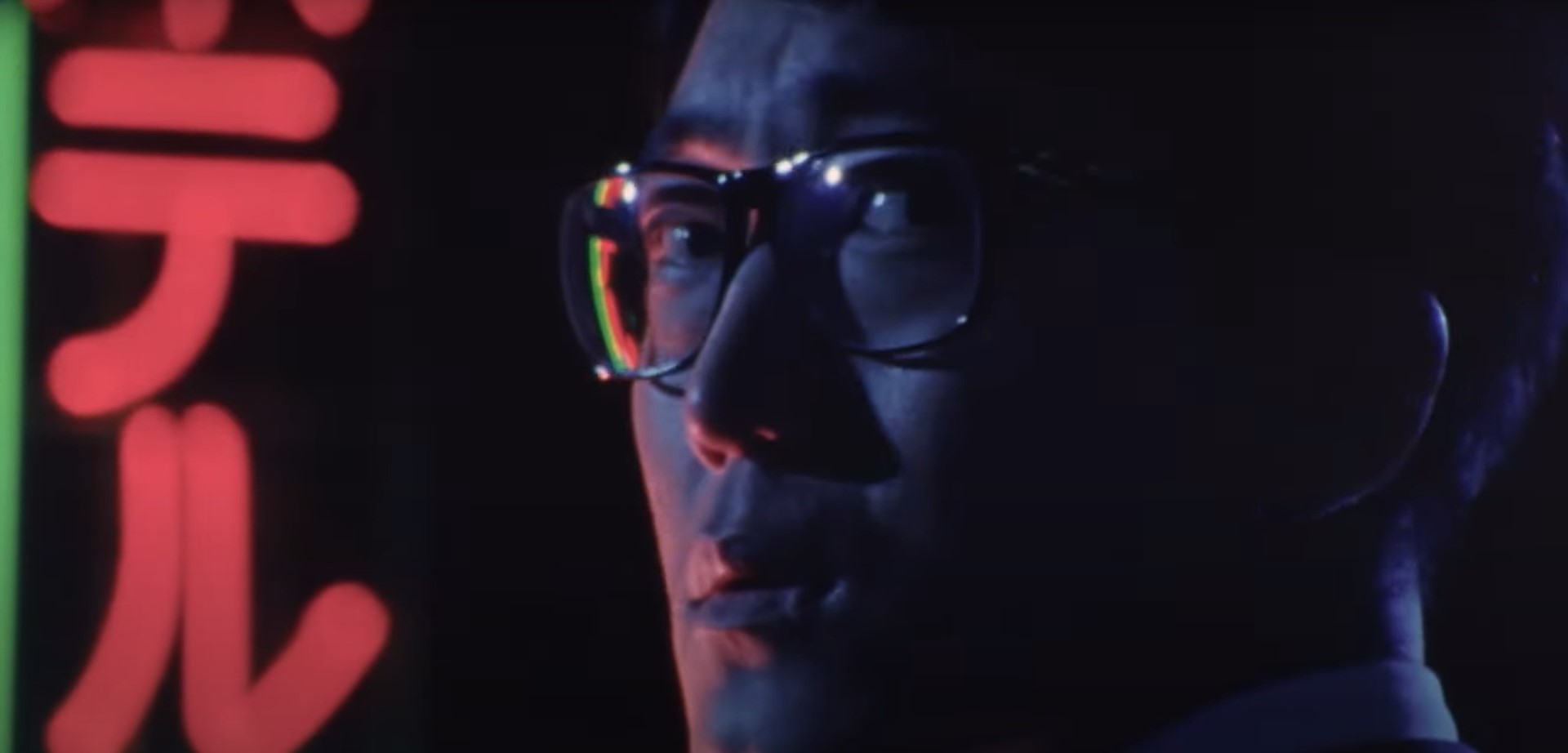
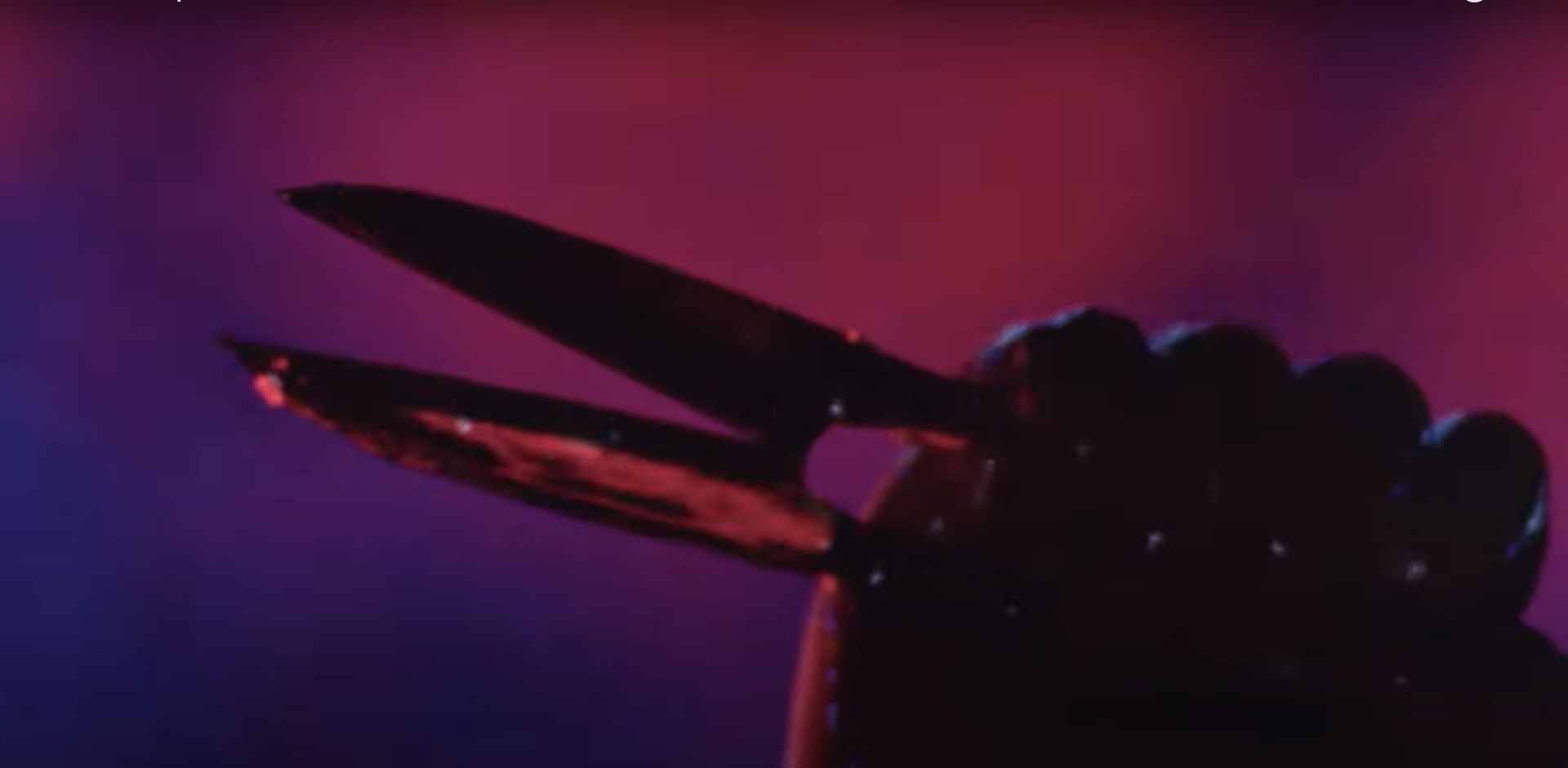
“Evil Dead Trap 2” washes the slate clean with a new cast enveloped into a ghastly chaos the abhorrent an the unnatural.  The story takes on a bold female lead in Shoko Nakajima at the beginning of her career and the fresh faced actress doesn’t also have the typical physique of leading lady.  Nakajima is not only a fascinating and curious choice to be the centerpiece principal but her performance is rock solid with an unsettling, mild-manner manic approach of a night stalker of women opposite her appearance.  Now, whether Hashimoto intended juxtaposition is completely unknown to me, but I find the affect potent nonetheless in unification with Nakajima’s near-subdued and muted act.  On the flipside, there’s “Last Frankenstein’s” Rie Kondoh as Aki’s good friend Emi.  Emi’s a hotshot in her mind fabricated from the television reporter’s brief stint with fame and is cavalier in nature when it comes to her friends and flings.  The contrast between the two is often playfully contentious that never settles on firm ground about how these two become to be friends to begin with, but when their friendship comes to a head in a heated and bizarre one-on-one skirmish with a boxcutter and film sheers, all bets are off and all our conclusions about the two friends are thrown to the wind.  What sets them off is a man, Kurahashi to be exact, a role filled in by Shirô Sano (“Infection”) playing a boyish-behaving philanderer between the two women.  The character of Kurashashi, much the same as Aki and Emi, have his own offshoot piece of the narrative pie with an unsound wife who waits for son to return home – the only problem is, Kurashashi’s wife never had a child.  This is where the 3 characters arcs begin to meld together in a disorder of surrealism between reality and nightmare and those entangled in that web are, for lack of a better phrase, entering a consuming darkness from which they can’t escape, and Hideki is in the middle of it all.  Performances are perfectly unhinged and coy, a variety of personas that make “Evil Dead Trap 2” engaging enough until the end, with a cast list that fills out with Sei Hiraizumi (“Orgasm: Mariko”), Kazue Tasunogae (“Ring 0:  Birthday”), and Shôta Enomoto as the ominous, tangible presence of Hideki.

Comparing the original to the sequel is like comparing worn infested apples to bloody rotten oranges.  The melding of the characters in the third act succumbs to an arthouse avalanche of symbolism, upon symbolism, upon symbolism.  The audience is expected to piece together the chunks of sinew and connect the dots of sibylline secrets of a past contrition. There are strong themes of abortion that persist up into every other few scenes and mostly allude to Aki as the one who gave up a child that has somehow manifested into living, breathing, perceptible and tangible man-child. Aki’s haunted under her fragile, if not delusional, state and while making sense of the manifestations, that hasn’t quite come clear, yet the mental noise leads her to murder when provoked and has her staggering out into the middle of the night to be willingly ravaged by strange men. A logical response to Aki’s action is that internally grieved recluse has snapped, coming unhinged outside the guise of regret as she kills exclusively around a maternity ward that has since closed and is under heavy construction. However, you can’t disregard the supernatural element so easily as Aki visits a miko, a Japanese shaman of sorts, who is senses Aki’s connection to the other side. Multivocal like primordial Hell, Hashimoto works in beautifully shot scenes with brilliant urban lighting that collocates looming, in-your-face figure over the head of the antisocial Aki and shepherds the characters’ darkest secrets to summit before the entity rips them a part in a bloody showcase of madness.

Unearthed Films continues to reverse coagulation and let the blood flow once again with another obscure Japanese gory horror, “Evil Dead Trap 2: Hideki,” onto a new Blu-ray home video coming in at number nine on the spine for company’s Unearthed Classics banner. The release’s image is presented in a widescreen 1.85:1 aspect ratio and retains much of the luminescent coloring of heavy neon-lighting and intended gel filters to play down the story moment’s stitch in questioned reality. Skin textures appear really defined and that also translates into much of the other details as well. No bulky discolorations, splotchiness, or banding stand to say that there were no real compressions with this release albeit having virtually no special features to go along with the single layered feature. The release comes with two audio options, a lossy Japanese LPCM mono and a far more robust LPCM stereo. Both tracks outline a clean and clear passage with no real threats to the audio with only minor white noise in the background. Optional English subtitles provide an error-free experience and pace well with the film. Aforementioned, a lack of bonus features is reduced to only a photo gallery of scene stills and Unearthed trailers, “Evil Dead Trap 2: Hideki” included. “Evil Dead Trap 2: Hideki” challenges each and every one of us to think outside its basket case box and dredge up reason from an addled, abortion-deviled, and serial murdering narrative.

“Evil Dead Trap 2:  Hideki” on Blu-ray Home Video from Unearthed Films!

Another Cabin of EVIL in the Woods. “Exposure” reviewed! (Scream Team Releasing / Blu-ray)


Get exposed ot “Exposure” on Blu-ray at Amazon.com!

A rough patch in an abusive relationship opens up an opportunity for Myra and Owen to reconnect on a retreat at Owen’s family mountain cabin.  With wilderness for miles around, not a soul can disturb their serene getaway in retrieval what is lost in their relationship.  What they find is a biotic evil that has cursed Owen’s family once before and has returned to build a divide between the struggling lovers as a single, break-the-skin nip can transform anyone into a beastly monster.  Myra and Owen’s love for one another is put to the test when the monster blood insidiously begins to take over, leaving nearly nothing recognizable left behind the eyes. 

A complete monster movie bred out of the indie spirit with a callback to prosthetic practical effects that evokes a mental and emotion psychological theme around the durability of a relationship after being compromised by internal abuse and, possible, heredity mental health.  That’s the deep dive, suppositional story surrounding Austin Snell’s 2018 sophomoric feature film “Exposure” with a script penned by Snell and first-time screenwriter Jake Jackson.  “Exposure” is filmed in the wooded mountains of scenic Leadville, Colorado just outside the city limits of the quaint, stuck-in-time downtown where annual skijoring is a popular attraction right in the heart of town on mainstream.   Snell and Jackson produce the film alongside Clayton Ashley, who has worked as a gaffer on Snell’s debut feature “Erasure,” under their Kansas based LLC production company, Sunrunner Films.  

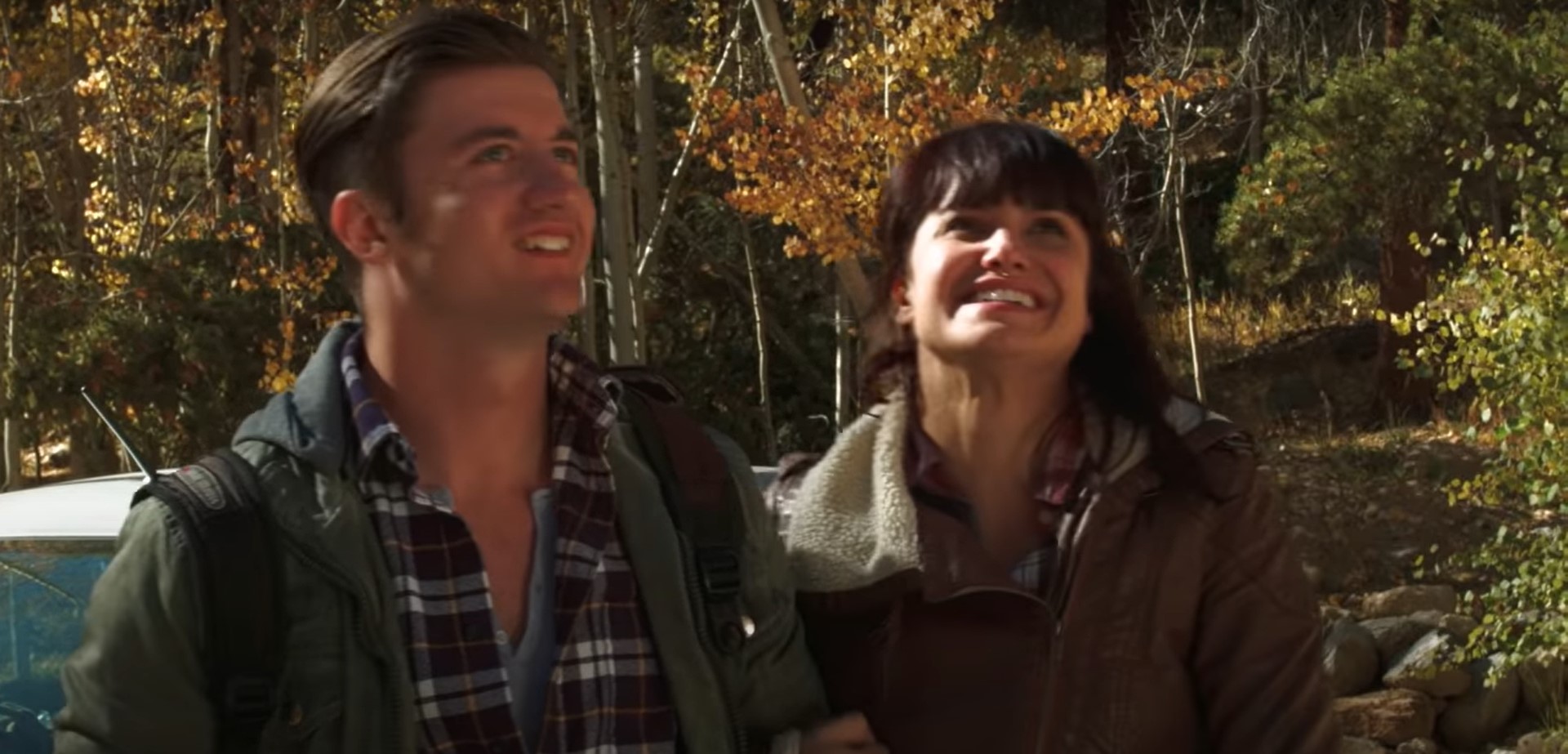
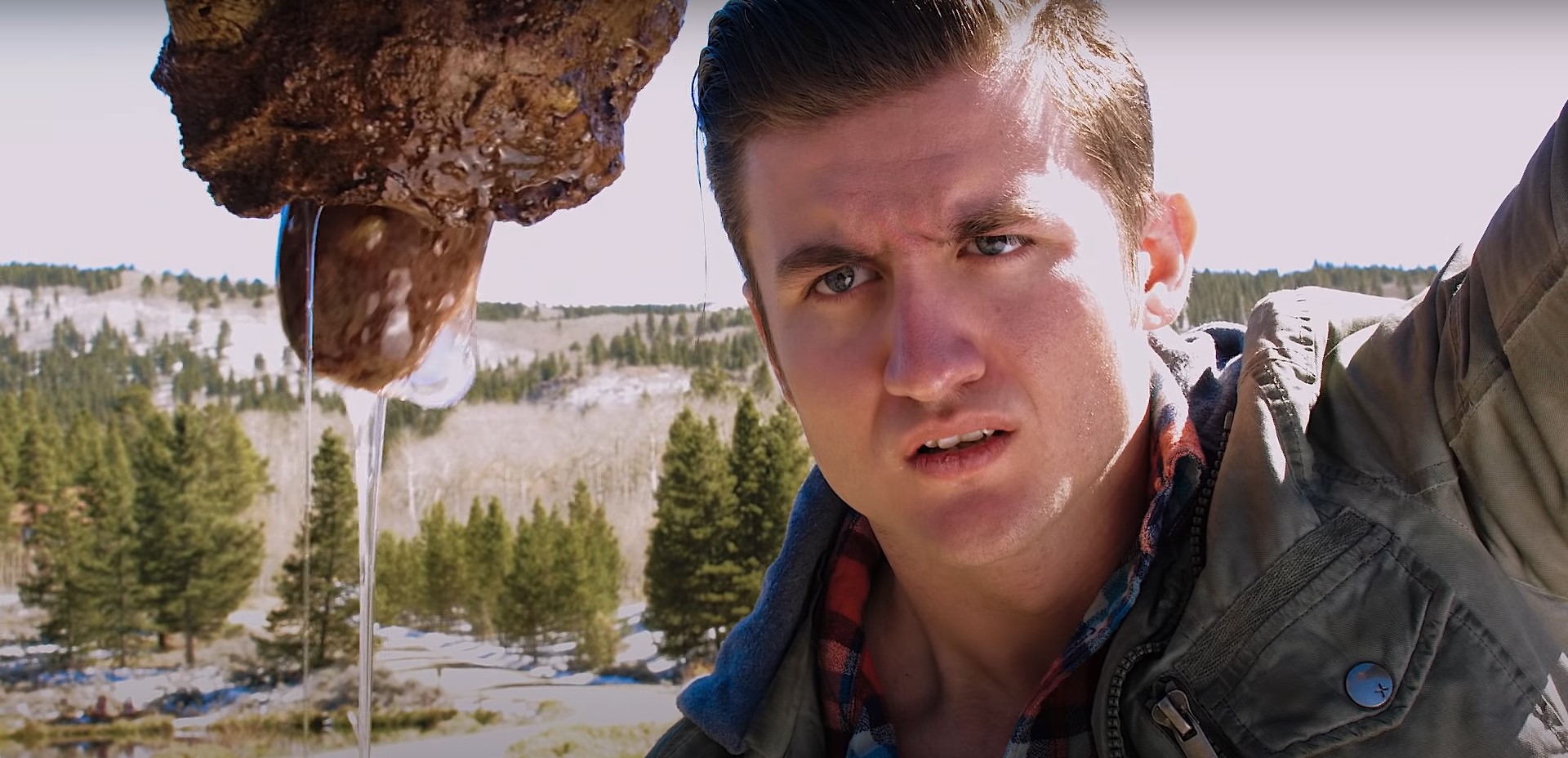
You can bet your lift ticket that the cast of “Exposure” is not strapping on skies and gripping to a rope for their dear life as a horse pulls the skier through the streets of downtown to go over manmade slopes and obstacles.  I wouldn’t think Snell would want to risk his four-person cast to such revelry actions that could result in injury.  Instead, a quiet, cabin-in-the-woods shoot leaves the actors to focus on the story at hand where a ingrained woodland evil infects and destroys an already bridle relationship between young couple Myra (Carmen Anello, “Zombie Beauty Pageant” and “I Am Lisa”) and James (Owen Lawless, “Hell Town”).  Anello and Lawless make a cute couple with some baggage hanging over their heads that is mostly implied rather than fully divulged and they sell well what their characters are struggling with, which is mainly trust.  Afraid of Owen’s temper, Myra is reluctant about moving forward in their relationship whereas Owen’s trust lies with Myra separating herself from an affair with a doting fling with a penchant for sending her sweet nothing texts she tries desperately to ignore.  I honestly don’t feel the immense love and hate tension in the room between Anello and Lawless who are more like best friends with an occassional spat than lovers going through a severe rough patch.  The more show of passion between them clings to the insincerity but that’s the high note for the connection between them.  Lynn Lowery (“I Drink Your Blood,” “The Crazies”) has a small role in flashbacks as Owen’s grandmother and Bruce Smith as the grandfather.

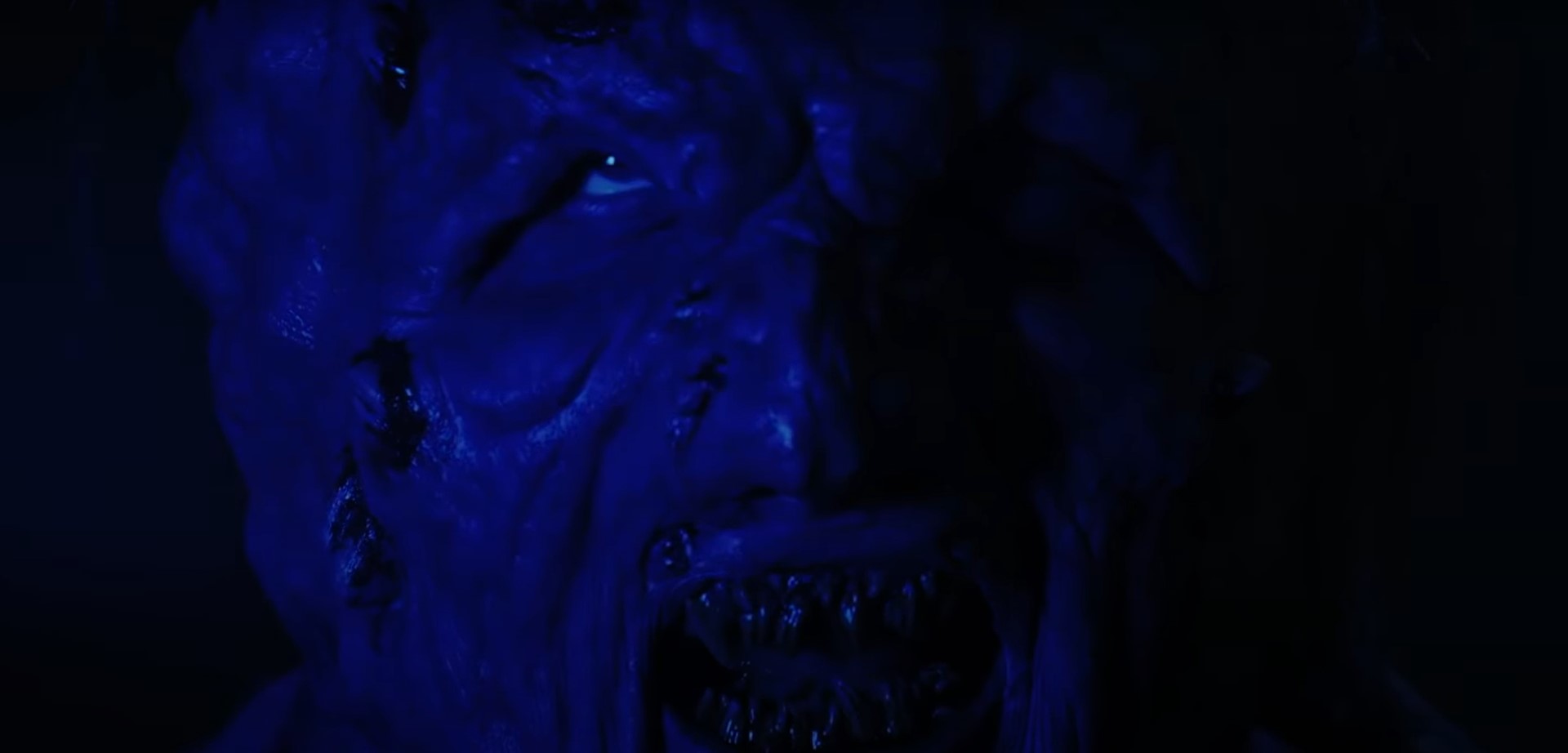
If you have already viewed Austin Snell’s “Exposure” then you likely know that the title is entangled in a double meaning. Perhaps even a triple meaning. Mountainous woods surrounded by frigid air with little-to-no help in sight leads to the vulnerability against the natural elements. In this case, the evil is the element, an unnatural one, that has laid claim to the area and sought the generational organic matter of Owen and Myra for its vile purposes – to spread its wickedness through the veins and mutate its victim into a hideous, baleful beast with a mind to match. The third meaning is more metaphorical as the term exposure can also be defined as the revelation of a typically bad thing that wasn’t clear before. In the film, Owen and Myra are going through a tough period in their romance with one of the inimical causes is Owen’s explosive and hurtful anger. Slithers of his masked morose behavior bubble to the surface in a motif view of just why they need to sort out the turbulent present in order for their possible future to resemble their merry past. The flashback story about Owen’s grandparents shed some light that what Owen may be going through is inborn, hereditary, and unchangeable; Owen’s reason and love mutates toward a gradual descent into monstrous behavior and that’s what the evil symbolically represents. Snell just happens to spin genuine relationship woes into an emblematic story with campy practical creature feature prosthetics and makeup. What most will dislike about “Exposure” is Snell’s true indie, natural approach to the special features that relies heavy on the cheesy, rubbery prosthetics and tangible tube and rod special effects without a lick of visual imagery for a smoothed over appearance. I applaud Snell for his raw, if not antiquated, choice that nods the throwbacks in the absence of contemporary conveniences.

For the first time on home video, “Exposure” makes a Blu-ray debut courtesy of Scream Team Releasing and distributed by MVD Visual. The not rated, NTSC region free, AVC encoded Blu-ray is presented in a widescreen 16X9 (1.78:1) aspect ratio. The 1080p, high-definition resolution looks pretty good and detailed, despite the heavy blue tint and gels, with negligible compression issues, especially with the heavy use of fog machine and a number of night scenes that don’t display noticeable banding or fuzzy/blotchy pixelation. The English language PCM 2.0 stereo audio provides a lossy amplitude that’s definitively detrimental to “Exposure’s” teetering success with audiences and the tracks don’t punch like that should for an atmospheric creature feature. The dialogue also sounds a bit boxy and artificial at times but, nonetheless, the dialogue track is still clear and discernible. Special features include cast and crew audio commentaries, a quick glimpse featurette into the behind-the-scenes of the special features, production stills, theatrical trailer, and retro VHS trailer. The physical Blu-snap case comes with reversible cover art, which, if you ask me, the secondary cover is the best with the illustrated, shadowy monster looming over a brightly lit heroine carrying a flashlight and a small axe. “Exposure’s” tribute veneer to the 80’s creature feature is spectacular without a doubt but lacks the energy to fully come to terms with its theme that’s become caught in the throes of a throwback rather than in the throes of relationship reconciling.

Get exposed ot “Exposure” on Blu-ray at Amazon.com!